
News
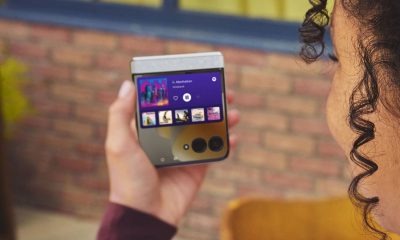
Motorola razr 5G now official
A minor refinement


Motorola re-ups their foldable with a few improvements here and there but also equipped it with the next generation of connectivity. The Motorola razr 5G is here and it smoothens out any rough edges from its predecessor.
Quick View display
Building on feedback from the previous model, the 2.7-inch Quick View display lets users access the phone even while it’s close. Even better, users have full control on what shows up there.
It now has a navigation bar that mimics the gestures of Android 10. You can also use it to reply to messages either with speech-to-text, smart reply, or even a full keyboard all on Quick View.
You also have access to Google Maps, Spotify, and YouTube Music. razr pre-selected the apps that will show up by default. These are camera, messages, calculator, Keep, Google News, Google Home and YouTube. However, users have the ability to change these based on their usage.
Updated design
Some of the design changes include a tapered chin, rear-mounted fingerprint sensor, and an updated hinge. These changes were all made to make it even easier for one-handed use. These were all taken from direct customer feedback.
The Motorola razr 5G is made of polished 3D glass and 7000 series aluminum. It will come in three colors: Polished Graphite, Liquid Mercury, and Blush Gold.

When flipped open, there’s still the same sized 6.2-inch Flex View display with a 21:9 CinemaVision aspect ration. The hinge is still zero gap but has been built to be stronger. Motorola says it can now do up to 200,000 flips. Based on usage study, this should be enough to last power users up to five years.
Faster with 5G
The biggest obvious improvement is the addition of 5G capability. It’s now equipped with the Qualcomm Snapdragon 765G processor.
Naturally, that’ll take more battery power so it’s been upped from 2510mAh to 2800mAh. Still not a lot, but at least there’s some improvement.
Better camera
Replacing the paltry 16MP shooter is a 48MP one with f/1.7 aperture and optical image stabilization. They also added another 20MP camera for selfies.





News
FIFA World Cup: Lenovo’s Referee View received positively by fans
Unique first-person perspective brings action closer to viewers


Lenovo has revealed that technological advancements at the FIFA World Cup 2026 has made viewers “feel closer” to the action than ever before.
Surveying fans across Australia, Canada, India, the United Kingdom, and the United States, Lenovo bared that 87% say technology is improving the viewing experience.
Close-to-action camera perspectives have also help 84% of surveyed viewers, making them feel they’re right on the pitch.
Of course, Lenovo AI has introduced Referee View throughout the World Cup. This AI-powered technology gives viewers a first-person POV of the match from a referee’s perspective.
Lenovo Referee View has been featured on an average of three times per match across the tournament in over 220 countries and territories worldwide, according to preliminary FIFA data.
Through a lightweight camera mounted on the match official, the technology gives a first-person POV of the match.
And while raw footage is fast-moving and sometimes unstable, Lenovo’s AI-powered video analytics platform automatically transforms the clips into smooth, broadcast-quality video in real-time.
Other findings from Lenovo’s research include:
- 76% of viewers have seen or heard about Referee View
- 91% say the close-to-action Referee View POV is appealing
- 88% say smooth and stable footage is an important part of viewing sports footage
- 98% say clear picture quality has been important when watching the FIFA World Cup 2026
- 91% are interested in seeing more technology that creates immersive or close-to-action sports experiences


Over the weekend, a report emerged about Disney+ allegedly considering a new tier offered to users for absolutely free. Apparently, Disney isn’t the only one. Netflix is now resurrecting its free trial program in select countries.
Back in the day, it was easy to get into Netflix. With a 30-day free trial, you can watch the shows you’ve always wanted to catch. If you liked what you saw, you can pay the monthly fee to access the entire library without constraints. Eventually, the platform got rid of this system to favor a cheaper ad-supported tier.
Perhaps not seeing the benefits of ad-supported tiers, Netflix has suddenly resurrected its free trial program. Spotted online (via Android Authority), some countries, including Brazil and India, are experimenting with the program again. New users can get 30 days of free Netflix access.
Because only regular users are spotting this (rather than an official announcement), we don’t have a list of where the free trials are available.
Still, it’s an interesting move. Cable isn’t a thing anymore so “cutting the cable” isn’t a popular phrase anymore, but people are definitely cancelling subscriptions over rising prices. Some even rely on short clips from YouTube to catch up with their shows. Having a free trial opens up more possibilities for users, but it remains to be seen whether it’s enough for users to return to Netflix.
SEE ALSO: Netflix expands its cheaper ad-supported tier to Southeast Asia
In a world disappointingly obsessed with increasing prices beyond our means, Disney+ has miraculously remembered the phrase, “free sample.” According to a report, the streaming platform is considering making a free subscription tier.
As of late, it’s been difficult to maintain a healthy collection of streaming services. When you have to pay the equivalent of a full-course meal every month for just a single platform, you start to evaluate which ones really matter.
Perhaps feeling the sting of users leaving the platform over pricing, Disney+ is reportedly experimenting with a tier that comes at no cost to users (via Business Insider). According to two sources, adding such a tier might help the platform reach customers more.
Now, it’s still a mystery how this tier might work. Disney+ already offers an ad-supported tier, so it’s unlikely to be another one like that.
One possibility is a heavily curated feed of content either designed specifically for free users or limited exactly to give users a free sample. For the latter, think of the limited content you get on a plane. Sure, you might get the first three episodes of The Mandalorian, but you’ll have to fork over cash if you want to see the rest of the story.
And for the former, you can imagine short-form content available for free. Going back to Star Wars, you might see a short anthology series like Star Wars: Visions.
Either way, it’s an interesting concept. If the tier does offer full content, it’s a great way to get into franchises you were thinking of trying without the need to spend for a taste.


realme C100: Enduring and durable in spite of entry-level realities
Enough power but needs more agility
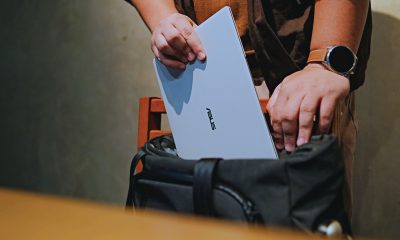

The ASUS ExpertBook Ultra wins you over
The laptop sneaks up on you


vivo X300 Ultra review: A “Whole Different Animal”
Got the beast (finally) unleashed!

GoTyme Bank grows to 10 million users in the Philippines

Spotlight: HUAWEI WATCH GT Runner 2 Racing Legend Edition

FIFA World Cup: Lenovo’s Referee View received positively by fans

Assassin’s Creed Black Flag Resynced comes to life at Skypark Macau

Netflix suddenly resurrects 30-day free trials

Buyer’s Guide: TECNO SPARK 50 Pro vs SPARK 50 5G

TECNO’s SPARK 50 Pro is the latest budget smartphone battery beast
vivo X300 Ultra review: A “Whole Different Animal”

DJI Osmo Pocket 4P launches with dual lenses and a 1-inch sensor

Lenovo says RAM prices are not coming back down again


-

 News5 days ago
New York becomes first state to ban smart glasses
-

 Singapore4 days ago
Sony launches IER-M500 in-ear monitors
-
Laptops2 weeks ago
The ASUS ExpertBook Ultra wins you over
-

 Gaming2 weeks ago
PlayStation goes all-digital in 2028
-

 Computers6 days ago
GIGABYTE releases new AORUS RTX 5080 INFINITY graphics cards
-

 Gaming5 days ago
Microsoft dictates that a new Fallout game is coming
-

 Laptops2 weeks ago
ASUS launches the ExpertBook Ultra
-
 Gaming2 weeks ago
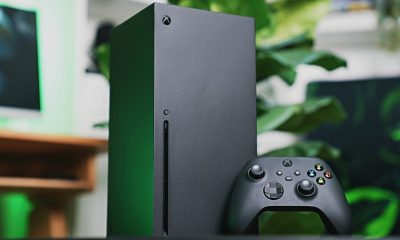
Xbox might get rid of physical discs too