
Enterprise
PeopleCount by Bosch is made for social distancing
Another smart solution to the challenges of the pandemic


Tech has played a key role in the battle against the Coronavirus pandemic. While we wait with bated breath for a vaccine, tech companies have given us ways to detect the virus, properly contact trace, and limit its spread. Now, Bosch, in partnership with Globaltronics and Philips, launches PeopleCount for social distancing.
PeopleCount is a customizable security system. It lets facility managers track, control, and manage the number of people entering a particular area. This lets them operate efficiently while guiding people to follow and maintain social distancing measures.
What is it exactly?
It uses Bosch’s intelligent camera solution and Philips’ Android System on Chip (SoC) display that allows real-time monitoring and analysis of people flow with minimal human intervention.
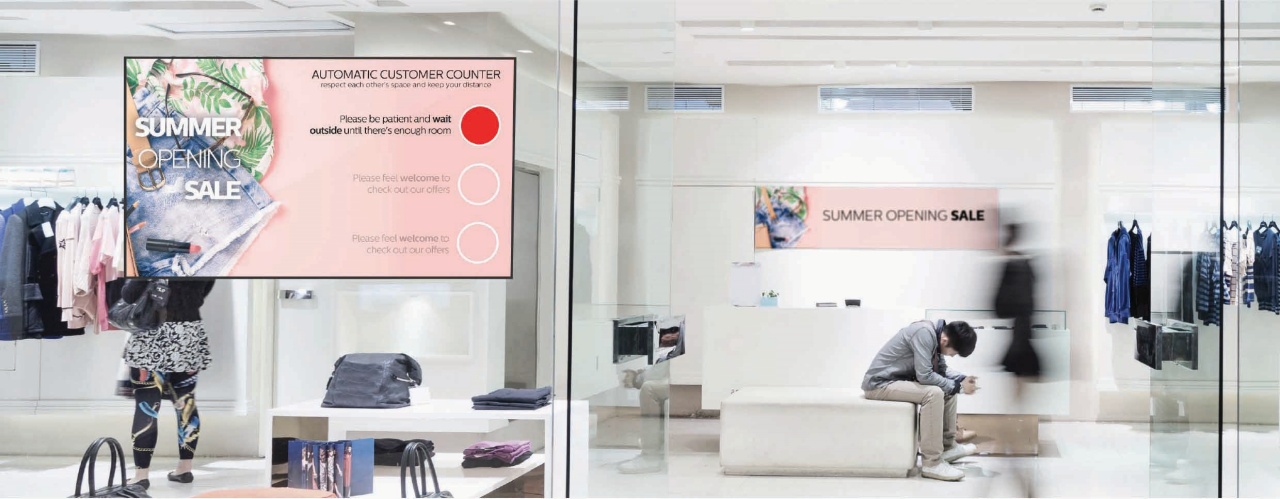
The system can be used for single entrance or multiple entrances simultaneously and displays the data through a simple traffic light system. PeopleCount also keeps customers informed and engaged through both promotional and safety messaging displayed on its system.
Bosch and Philips believe this system can be an effective tool for enforcing social distancing protocols. They see it as a solution that requires minimum investment, is quick and easy to deploy, can be operated remotely, is customer-friendly, and has the ability to record data and statistics.
How does it work?
It functions with three main components: a standalone application as the main control, a camera to track and analyze movements, and a monitor that displays communication for customers.
Bosch’s intelligent camera counts the number of people entering and exiting the facility using its video analytics features. Meanwwhile, the Philips Android SoC display keeps the customers informed with visual alerts prior to entering a facility.
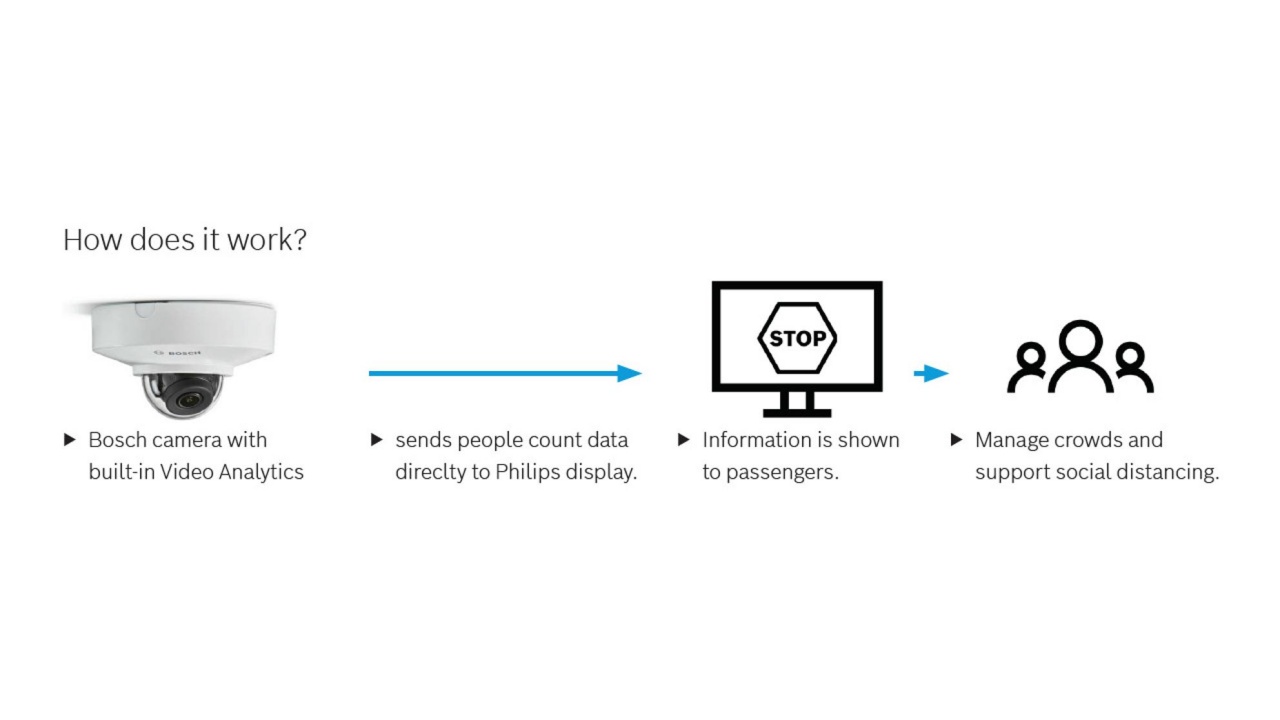
Users can install single or multiple cameras and monitors across different entries or individual stores. The cameras can process information and able to generate the status of occupancy real-time.
This, then will be displayed in any browser-enabled display such as tablet or an android TV. This gives users the advantage of controlling access to various points of a building.
When using multiple cameras, the system can also aggregate the counts from different cameras to monitor the occupancy of individual shops, floors, and even areas covered by multiple entries and exits.
Comes with an alert system
When the occupancy has reached its maximum number, the system can alert or trigger the facility’s building access control system to secure the entrance until the occupancy is reduced.
The system also delivers real time information to the display for customer queue communications, alerting visitors whether they must wait or if they can enter.
The screen display can be used in three formats:
- The entire screen can be used to signal individuals to wait or enter.
- It can also be divided 50/50, where one part is used for entry instructions and the other may include promotional or instructional videos and even special products on discount.
- The third option is the use of a traffic light display for entry management while having a large area of the monitor to display other content.
Bosch and Philips are actively marketing this to private companies. During the launch, they also said they have projects lined up with the Philippine government to rollout this tech.





Enterprise
Cebu Pacific becomes 1st SEA low-cost carrier with Starlink Wi-Fi
Rollout expected to begin in 2027

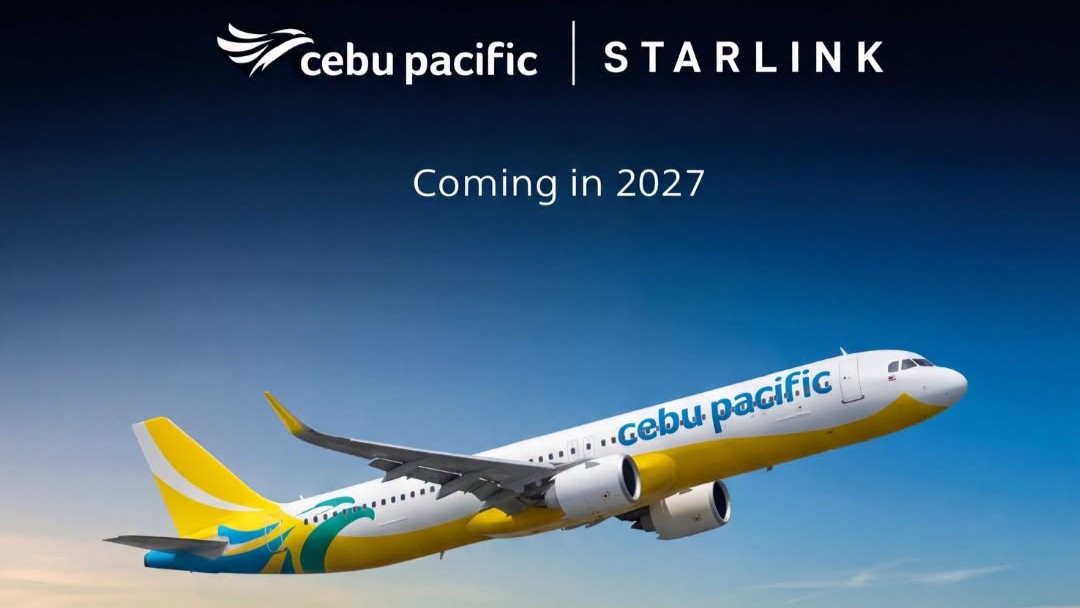
Cebu Pacific has introduced Starlink, making it the first low-cost airline in Southeast Asia to bring Wi-Fi in the sky for passengers.
The rollout is expected to begin in 2027. Starlink delivers an unparalleled broadband experience inflight, with high-speed, low-latency Wi-Fi capable of HD streaming, online gaming, productivity and more.
Beyond enhancing the passenger experience, Starlink will also support improved operational connectivity for Cebu Pacific’s flight crews and operational teams. This enables better operational efficiency.
The collaboration is a significant milestone for Philippine aviation. The rollout forms part of Cebu Pacific’s continued investment in customer experience and digital innovation.
As part of the partnership, Cebu Pacific and Indigo Partners portfolio airlines, Wizz Air, and JetSMART expect to install Starlink on over 1,000 aircraft.
Enterprise
Google ordered to pay EUR 4.1 billion in fines
The EU alleges that Google uses its apps to establish an unfair dominance.

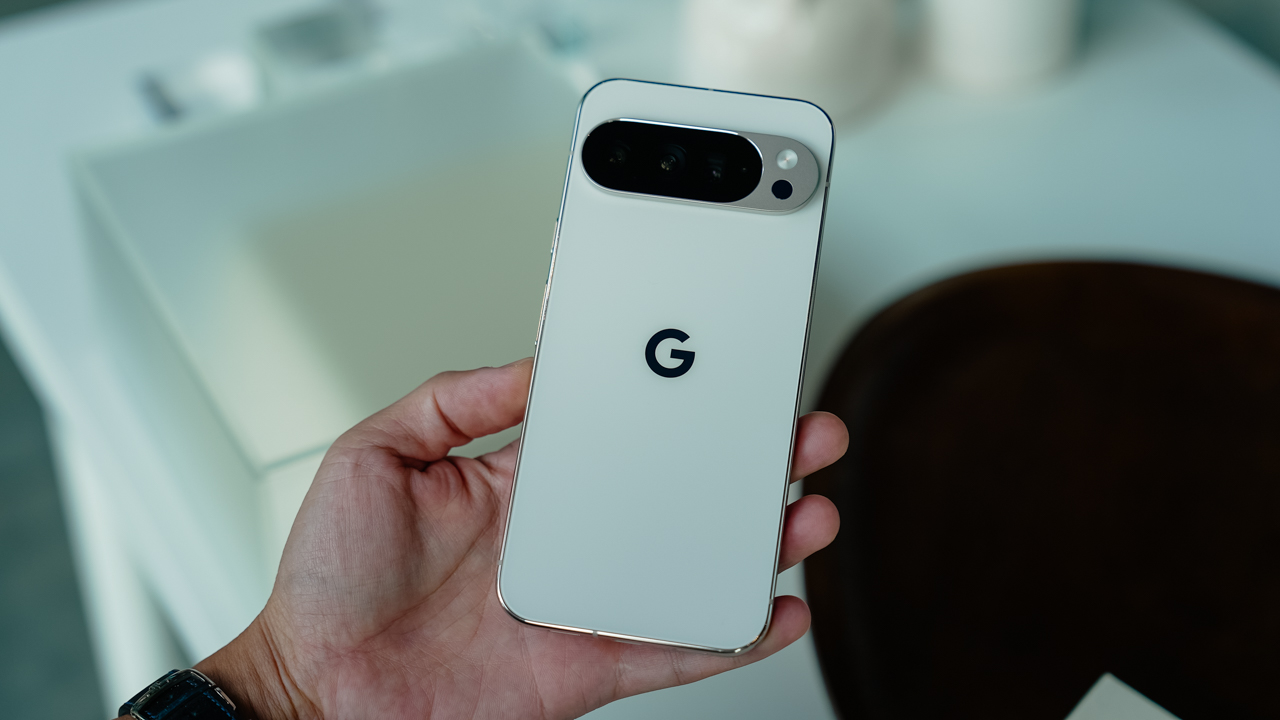
European fines have unintentionally become a normal part of doing business in the American technology space. For too long have American companies paid paltry fines to prevent harsher regulation in the European Union. Now, for the first time, Google is about to pay a record-breaking fine that goes beyond “paltry.”
Today, via CNBC, Google has been ordered to pay an astonishing EUR 4.1 billion (or approximately US$ 4.67 billion) in fines. The fine is in response to an anti-competition case.
This has been a long time coming for Google. The original case started in 2018. At the time, the European Union accused the brand of using anti-competitive practices to ensure its dominance in the smartphone market. According to the courts, the company’s bundling of first-party apps for every Android smartphone gives them an unfair advantage in the market and lessens the user’s choice in selecting apps.
For years, Google has fought the fine to seemingly no avail. Now, the company has lost its final attempt, which means that the fine still stands. On the bright side, they did get it reduced from the original EUR 4.34 billion fine.
The European Union is the scourge of every American tech company (and a godsend to consumers). Most notably, the continent’s government forced Apple to adopt USB-C, leading to a more universal experience across brands.
Google’s hefty fine aims to do the same. And it is quite hefty. Whereas previous fines were in the millions (and hence, negligible for most companies), a fine in the billions is more tangible.
Apps
foodpanda relaunches cult-favorite roast chicken brand after 8 years of persistent search queries
Heritage chain Andok’s returns to the platform, driven entirely by long-term user analytics.


In the world of e-commerce and food delivery, platform algorithms usually dictate what consumers see. But occasionally, consumer behavior is so relentless that it shapes the platform’s strategy.
In a move driven entirely by long-term user analytics, foodpanda has officially relaunched Andok’s, one of the Philippines’ most iconic heritage rotisserie chains, back onto its platform after an eight-year absence.
The search bar as a digital wishlist
The decision to ink the partnership wasn’t just a marketing play. It was a response to an ongoing data anomaly. Despite being offline from the foodpanda platform for eight years, Andok’s consistently ranked as one of the most-searched merchants on the app.
Year after year, users treated the empty search results page as an unofficial wishlist. This persistent search intent gave foodpanda a clear, data-backed signal of pent-up demand.
Prior to the official digital rollout, teaser campaigns on social media validated this demand, generating thousands of organic interactions from users anticipating the return.
Bridging heritage flavor with digital infrastructure
For foodpanda, onboarding a merchant with this level of built-in demand fits its broader strategy of marketplace optimization and hyper-local network expansion, turning a heritage brand into another data point for how legacy retail plugs into delivery infrastructure.
For Andok’s, the integration works as a fast track to digital scale. A legacy quick-service chain skips years of independent app development and reaches customers already using foodpanda’s existing logistics network, on a platform they already check daily.
Andok’s built its following on charcoal spit-roasted chicken, a slow-cooked technique that’s stayed largely unchanged since the brand’s early days, alongside seasoned grilled pork belly.
More recently, the Dokito line extended that following into crispy fried chicken and chicken burgers, broadening the brand’s appeal beyond its original rotisserie format and giving foodpanda a menu with both heritage pull and everyday fast-food convenience.

realme C100: Enduring and durable in spite of entry-level realities
Enough power but needs more agility

The ASUS ExpertBook Ultra wins you over
The laptop sneaks up on you

Nexal Watch Sport review: A rugged watch for small budgets
I couldn't believe that watches this good could come for this cheap.

GCash future-proofs MSMEs with new payment innovations

Smart announces postpaid offers for Samsung Galaxy Z8 series

OPPO Reno16 Series 5G is coming soon to the Philippines

Resident Evil movie reboot finally gets a scary trailer

FINAL FANTASY X | X-2 HD Remaster launches on Nintendo Switch 2

New York becomes first state to ban smart glasses

DJI Osmo Pocket 4P launches with dual lenses and a 1-inch sensor

Lenovo says RAM prices are not coming back down again

Sony launches IER-M500 in-ear monitors

The vivo X Fold6 is the first foldable to support teleconverter lens


-

 News1 week ago
Samsung releases teaser with Spider-Man: Brand New Day Easter eggs
-

 Wearables3 days ago
Garmin launches its first screenless fitness band
-

 Gaming1 week ago
Most of the world’s PlayStations will be officially useless by 2028
-

 News2 weeks ago
FIFA World Cup: Lenovo’s Referee View received positively by fans
-
 Apps1 week ago
Plot twist: Starbucks PH is letting you actually pick your reward now
-

 Gaming2 weeks ago
Assassin’s Creed Black Flag Resynced comes to life at Skypark Macau
-
 Features2 weeks ago
Spotlight: HUAWEI WATCH GT Runner 2 Racing Legend Edition
-

 Apps1 week ago
iOS 27 public beta gives us our first taste of Siri AI