


Explainers
The importance of artificial intelligence in smartphones
Is this still the future of technology?

Have you ever wondered what smartphone brands actually mean when they tell you that their cameras use artificial intelligence (AI)?
With AI now becoming a significant part of our daily lives, we start to look into how this technology found its way into the market, and see whether or not AI truly is the future.
What is Artificial Intelligence?
Artificial intelligence, or AI for short, is a not-so-fairly new concept in the world of technology. What it basically means is that machines are given human-like intelligence through a system of information and programs or applications that are built into machines.
Machines with AI built inside can perform a variety of tasks mostly observed through human intuition like problem solving, gathering knowledge, and logical reasoning — among others. It’s basically making machines smarter and, in a way, more human-like.
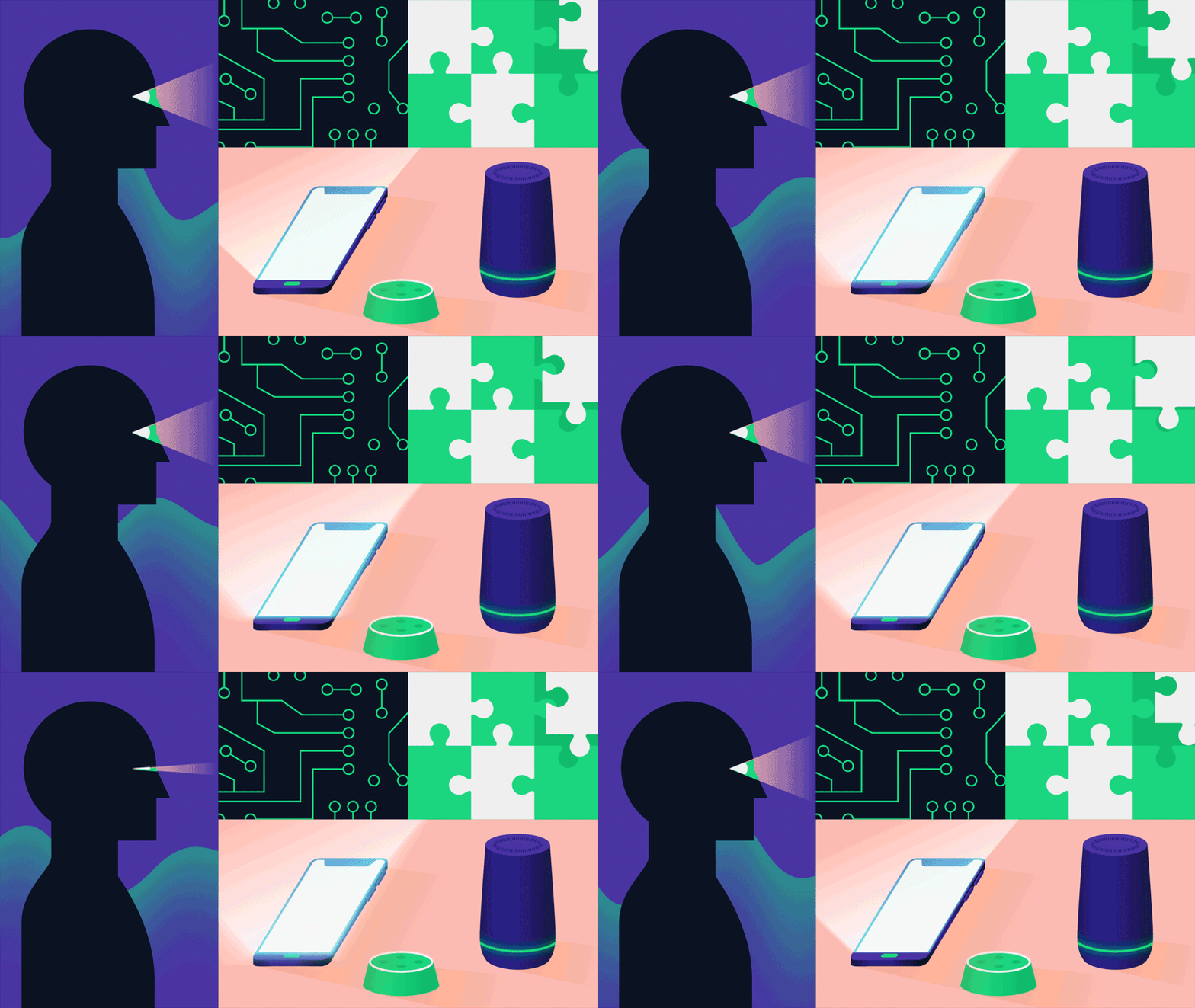
Illustrations by Kimchi Lee
AI has been a part of many devices over the past few years, from smart homes to applications on your smartphone. Companies like Amazon and Google have come up with smart home devices that assist people with their day-to-day tasks such as Alexa and Google Assistant.
Businesses with online presence through company websites have also integrated chat boxes and online assistance bots that automatically answer any customer concerns depending on the information given.
How AI found its way to smartphones
Artificial intelligence was often associated with creating robots to perform human-like functions at a much faster, more efficient rate — which is heavily portrayed on mainstream media. Through AI, these machines learn more about the environment they’re in, and carefully adjust to meet the needs of the users. Such a process is called machine learning.
Nowadays, machine learning isn’t just limited to AI robots that learn what people are doing, but has now branched out to what people are thinking, inquiring about, and saying to other people. AI has slowly made its way into other devices that are much more accessible to us, primarily through the internet.

Machine learning is now incorporated into smart home devices, online video streaming websites like YouTube and Netflix, social media websites such as Facebook and Twitter; basically, the technology behind AI constantly learns more about people, their interests, and day-to-day activities.
The newest member of AI-integrated devices are smartphones themselves. Companies like Apple and Google have looked into integrating AI into the processors of their flagship phones — the iPhone and Pixel series, respectively. Early 2018 saw most Android smartphone brands integrate AI within their phones as a way of enhancing the user experience even further; Huawei and ASUS released their new flagship phone lines with their cameras utilizing AI for smarter responses to the environment around the user.
It’s quite possible that smartphones could very well lead the transition of all devices towards machine learning and AI in the near future.
Smartphones with AI
As mentioned, two companies have integrated AI into their smartphones to provide enhanced user experiences in a totally different way. One of these companies is ASUS, with their recently released ZenFone 5 series of smartphones with cameras powered by AI. Its shooters focus primarily on taking better photos and adjusting to the environment around you. The ZenFone 5’s AI Photo Learning allows the phone to learn how you like your photos and adjust the settings accordingly so you don’t have to.
Apart from its cameras, the ZenFone 5 series uses AI to boost overall performance. The base model is powered by a Qualcomm Snapdragon 636 processor, which enables the full utilization of AI features on the phone. The AI Boost technology allows the handset to have an instant hit in performance when running heavy-duty applications and games. Of course, AI in the ZenFone 5 also predicts which apps you will use next and learns which apps you use regularly.

Another company that integrates AI in its smartphones is Huawei, with the Mate 10 and P20 series. They’re powered by the Kirin 970 processor — which boosts overall performance and efficiency using integrated AI. This means that the phones will adjust to how much you use them and maximize performance every step of the way. They also come with Huawei’s EMUI 8.0 with its own set of AI features such as Smart Screen for multitasking and real-time translation during calls.
Much like the ZenFone 5, the Huawei Mate 10 and P20 phones also have cameras powered by AI. This powers the phones’ dual-lens camera setups for scene and object recognition, automatically adjusting the camera’s settings to suit the situation. Huawei also emphasizes producing professional-grade photos by allowing the AI to adjust the camera’s focus on the subject. That way, you are able to achieve a perfect-looking selfie or portrait — without the need to manually adjust the settings for a long period of time.
What we get from AI
Artificial intelligence opens up many opportunities for technology to be like humans in terms of processing thoughts and insights. What AI does is it allows machines to learn more about humans and tailor-fits its processes and capabilities to match us, from search engines to smarter applications. When treated properly, AI can actually deliver better and more efficient ways of dealing with the problems people face almost every single day.
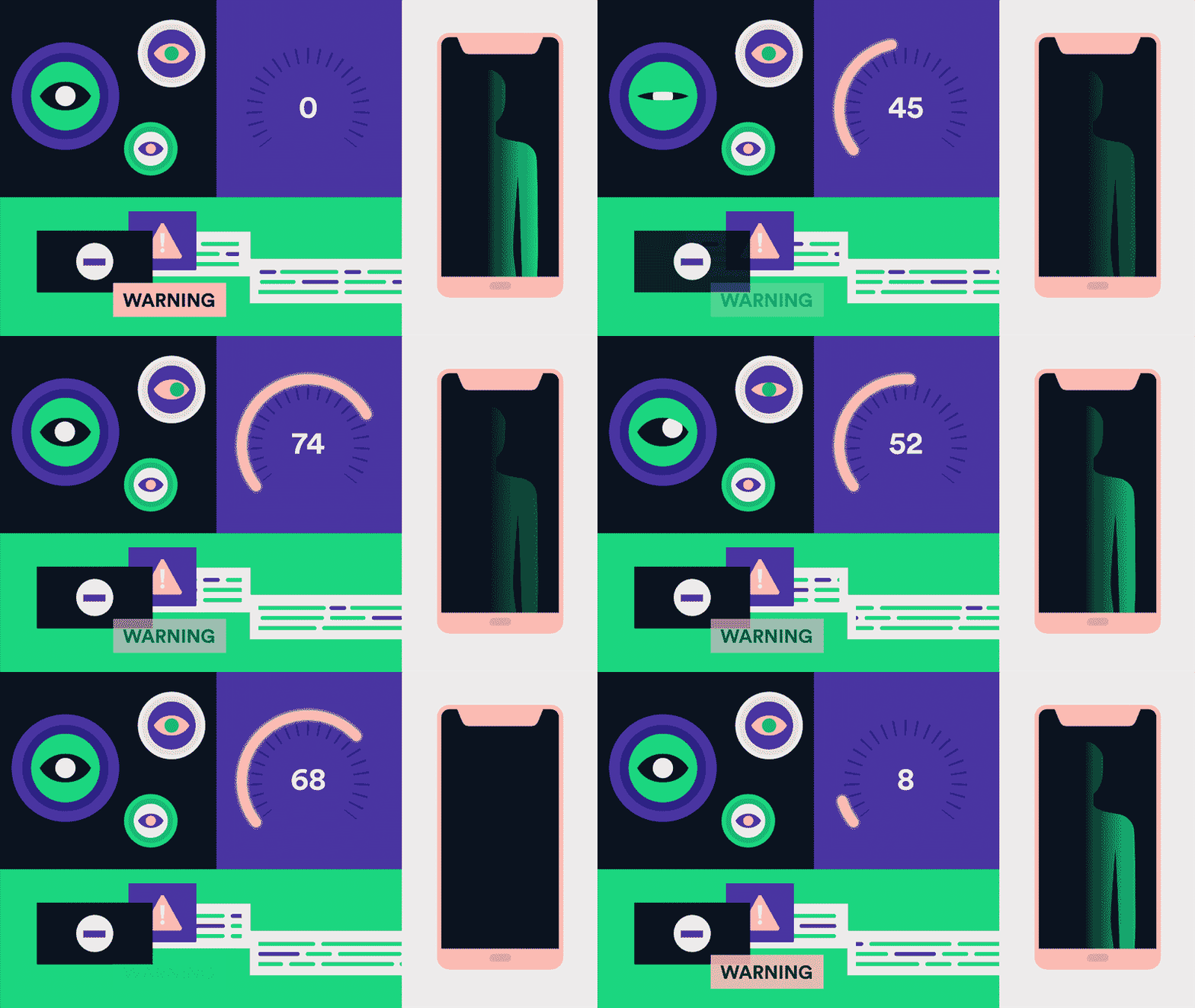
The only downside is AI has the potential to even invade one’s privacy, especially through one’s smartphone. Because the technology is constantly learning more about its user through his or her devices, this opens the door for the data to be retrieved by, quite literally, anyone on the internet.
Because people nowadays access their smartphones almost every chance they get, people who truly know how AI works have the potential to abuse what they know and use it for their own personal gain, either through malicious activities like cyberstalking and cyberbullying, or online attacks like hacking or phishing.
The future of AI
2018 is looking like the year of AI with the unveiling of smartphones and revamped smart devices to upgrade the user experience. The possibilities for artificial intelligence are endless, given its wide usage across any available platform.

For now, it’s intelligent cameras on your smartphones that adjust settings for you to save the hassle of getting the perfect image. Some time in the future, AI could very well exist even on a gaming controller or mirrorless camera to adjust to your needs. However, we have to be aware about the dangers of using AI to its fullest as it can also lead to our own careless actions.
Indeed, the future is bright for artificial intelligence — as long as we use it for the right reasons.








With a huge change in naming scheme, Apple promises a big leap ahead.
The all-new Liquid Glass design isn’t just breath of fresh air — it’s a bold redesign ever since the iOS 7 came out.
It’s not limited just to the iPhone. It’s coming to the iPad, Mac, and even the Apple Watch!
And with latest Public Beta now available across all devices, now is the perfect time to try ’em out.
Here are our favorite features, design updates, and hidden gems in Apple’s latest OS 26 series of software updates.
Namely iOS 26, iPadOS 26, watchOS 26, visionOS 26, and macOS Tahoe.
Shopping for a new Windows laptop?
With so many choices out there, it can be tough to know where to start.
Should you prioritize performance, battery life, or portability? Can you find something affordable and premium-looking?
In this video, we break down everything you need to know about the new Snapdragon X Series laptops — a new category of Windows PCs that promise power, efficiency, and sleek design in one package.
Whether you’re a student, creative, or just looking to upgrade, this buyer’s guide will help you decide if a Snapdragon X Series laptop is right for you.

Apple dropped a ton of surprises in this year’s WWDC — and there’s more than just the Liquid Glass redesign.
From Workout Buddy, to game-changing Apple Intelligence features.
All the way to collaborative visionOS updates, and the next generation of iOS 26, macOS 26, and iPadOS 26.
Watch to see the top announcements NEED to know from the WWDC 2025 keynote!
Here are Michael Josh’s biggest takeaways from WWDC 2025 in one video — with the help of some TechTuber friends!




Jackery SolarSaga series: Free power for small devices

UGREEN adds new Nexode Pro power bank, charger to lineup

nubia to launch new Neo 5 series gaming phones on March 28

SHINOBI: Art of Vengeance’s SEGA Villains Stage out on April 3

AMD poised to lead agentic AI era with high-performance CPUs


-

 Reviews5 days ago
POCO X8 Pro Max review: A new beast from the far east
-

 News5 days ago
POCO X8 Pro Series: Price, availability in the Philippines
-

 Laptops1 week ago
Apple MacBook Neo Review
-

 Computers2 weeks ago
GIGABYTE collaborates with Capcom for RE Requiem custom PC
-

 Apps1 week ago
Google Maps is finally getting a 3D mode
-

 Entertainment1 week ago
The internet is thirsting over the One Piece Season 2 cast
-

 Features1 week ago
Galaxy AI on the Samsung Galaxy S26 Ultra
-

 Automotive2 weeks ago
BYD is reportedly considering an F1 team