



What is cute and adorable but also fierce and beastly when set loose? No, the answer is not a rabid puppy — it’s the all-new 2019 Suzuki Jimny.
When we talk about extreme off-roading, normally we would think of big, bulky, expensive SUVs with massive tires, monstrous lift kits, and a gas-guzzling engine. No one will think of a small, Japanese kei car to be a good off-roader, but that’s where most are wrong.

The 2019 Suzuki Jimny is probably one of the most anticipated 4x4s this year and is one capable off-roader in the market today. We were given the chance to bring the 2019 Jimny All Grip Pro to our favorite off-road testing grounds at Jungle Base in Tanay, Rizal — a renowned playground in the off-road community.

Let’s begin with the looks. The styling will not fit everybody’s taste. There is not much to look at with the exterior since it’s basically a box on wheels. Though it stays true to its styling heritage and looks more like a modern second-gen Suzuki Samurai.

Personally, though, I like it. It’s simple, rugged, and I actually find it kind of cute. Being the way it is, there is so much potential to personalize it to your preference and needs and it excites me to see differently customized Jimnys on the road. It’s a blank canvas waiting to be modified.
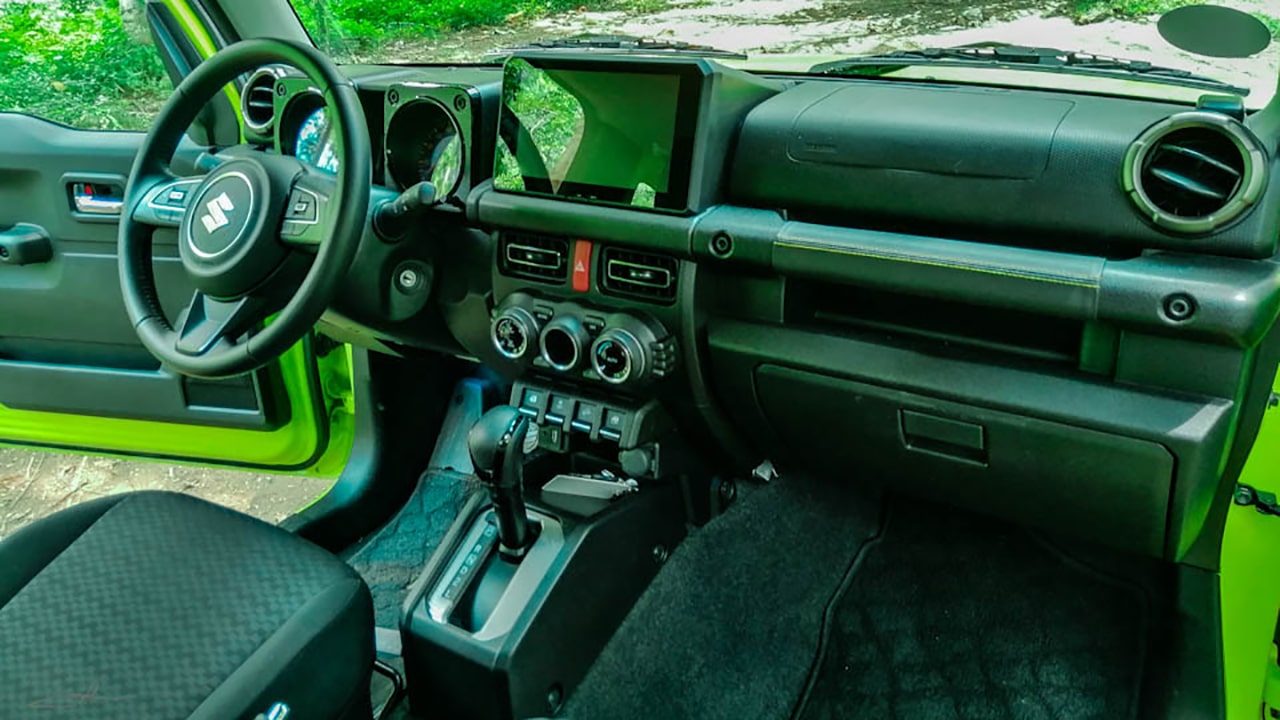
The interior is also pretty basic and really has no luxury features but we can easily overlook that since this small SUV is not built for luxury; it’s built to be tough. Mounted on the center is a very decent infotainment system. It spans nine inches across but it does not support Android Auto and Apple Car Play.

Other features include Cruise Control, Hill Descent Control with Hill Hold, Traction Control, and Power Windows. You have loads of headroom, decent legroom for the front but a bit cramped at the back. Seats are also fairly comfortable.

On a personal note, I really liked how the B-pillar is placed behind the driver giving you an unobstructed panoramic view of the side of the car — advantageous for offroading.

Driving the Jimny on paved roads felt bouncy and jiggly, while cornering had to be done carefully. Body roll is an issue and being a narrow and tall car, you kind of feel like you could roll when taking on tight corners with speed. It also struggles to gain speed even with a new and more powerful engine. This means you sometimes need to catch the right timing when overtaking.
No one will be buying the Jimny for racing, anyway, as speed is not its best asset. This car truly shines when the pavement ends.

Once we got to the dirt road, we were amazed by how smooth it suddenly felt. Driving at around 40kph on soft gravel felt like driving on butter. It was unbelievably quiet and smooth, gliding through the trail and absorbing the bumps.
Switching to 4-Low when the trail got tougher impressed us even more. The little Jimny tackled large rocks, ditches, and mud effortlessly. Thanks to its trailing arm coil spring suspensions up front and at the rear, as well as its improved approach and departure angles, articulation was beyond impressive.

On paper alone, it even has a better approach, departure, and break-over angles than a stock Jeep Wrangler and I honestly did not expect that much wheel travel.

Its new 1.5-liter K15B DOHC VVT engine produces only 101 horsepower and 130nm of torque which may seem small. Although you have to remember this car weighs only a little over a thousand kilos giving it a better power-to-weight ratio than most SUVs out there.

Even on engine idle speeds, this little monster on steroids crawls without even having to step on the throttle. It has solid axles both front and rear but it lacks any type of locking differentials. However, the vehicle will sense when a wheel is losing traction and will automatically apply the brakes to distribute power to other wheels. It’s not as good as differential locks but it will still get you going.
Its rigid ladder frame can handle any twists and uneven terrain without having to worry. Water wading is a downside, however. Being very light, the Jimny can easily be swept away in strong currents when river-crossing and is highly discouraged. Rollover angle is also very limited since it’s tall and narrow, but not to worry as you get a digital clinometer display to make sure you don’t exceed the limits.

An important note to remember is that the Jimny has quite a small tank. When over landing, make sure you bring enough extra fuel for the trip the back. Consumption on average is 12-15 kilometers per liter and around nine kilometers per liter when offroading.
Priced at PhP 1,095,000 pesos for the GLX All Grip model, the Suzuki Jimny is probably the most affordable off-road SUV that is truly capable. Now that I’ve driven and tested it, I want one for myself more than ever. It’s extremely fun, tough, efficient and I highly recommend it.
















Automotive
New EV player XPENG to launch in the Philippines in September
XPENG to unveil two models in the market

AI-driven mobility company XPENG is launching in the Philippines next month, adding to the list of smart electric vehicle (EV) players in the market.
XPENG Philippines will commence operations as the country’s direct subsidiary, as well as national sales and marketing company.
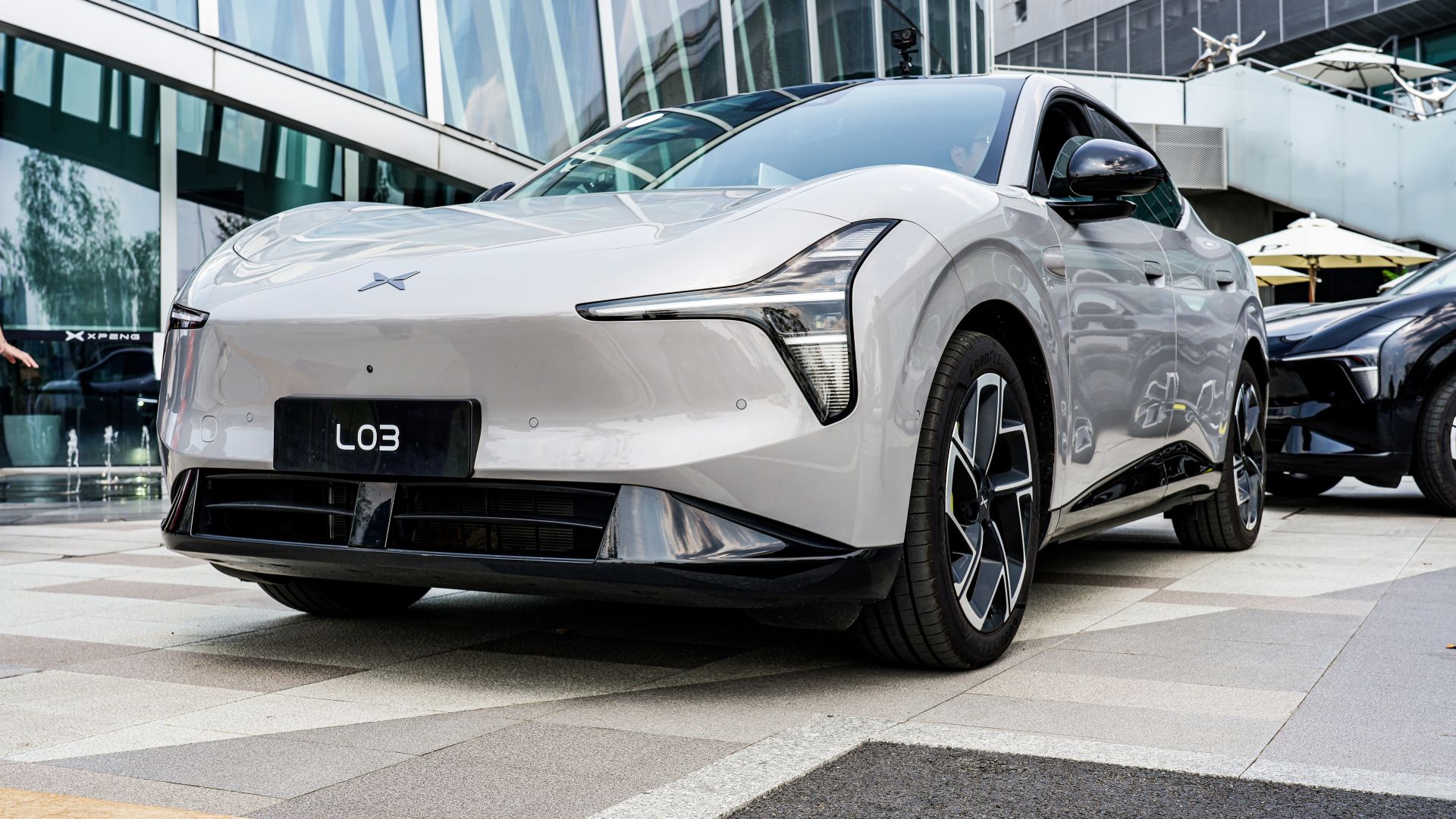
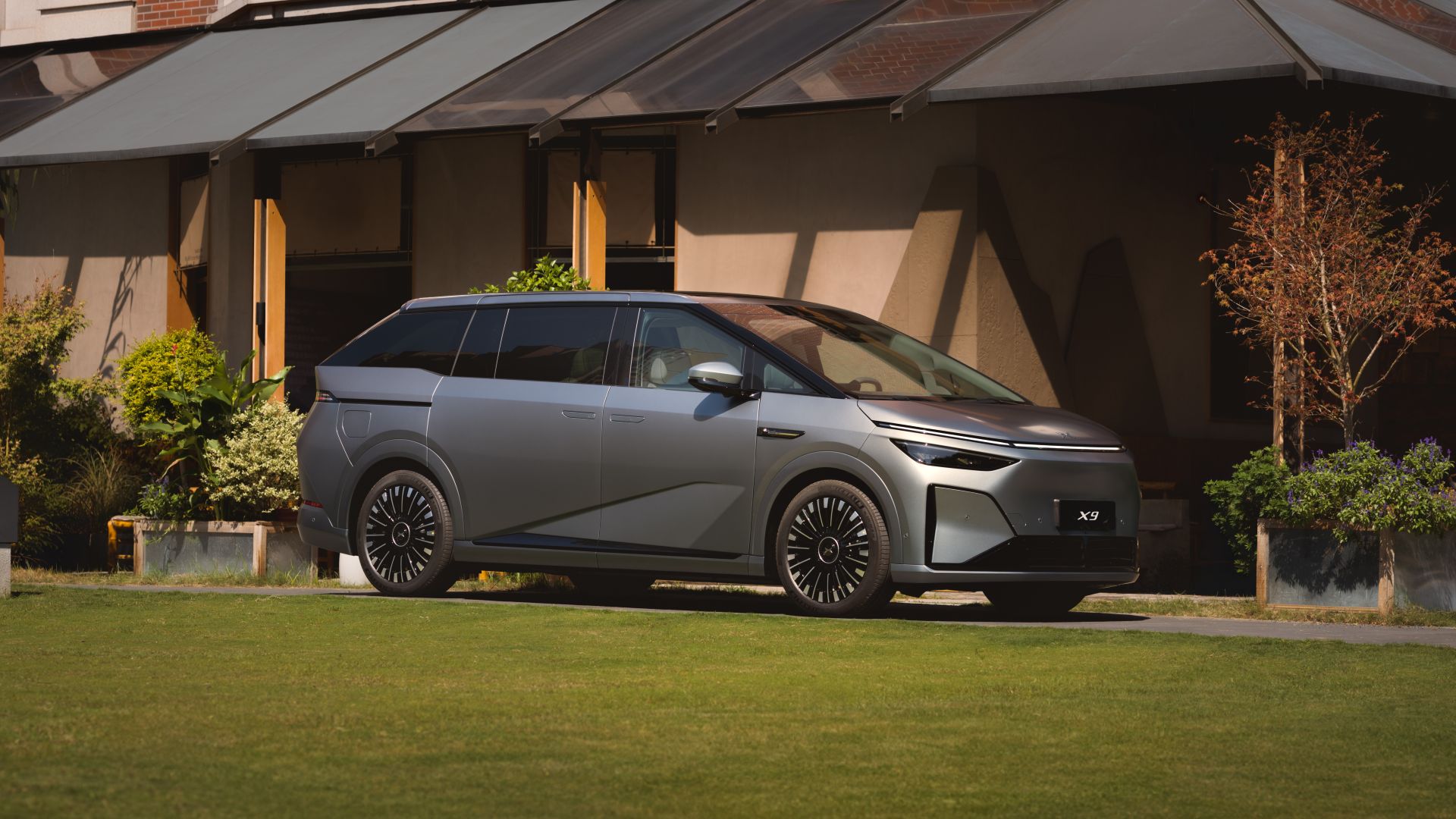
As part of the launch, XPENG will launch two smart EV models: the XPENG X9 and XPENG L03.
The XPENG X9 is the brand’s flagship intelligent seven-seater. It is positioned as an EV for executive-class comfort, featuring AI-powered technologies and a premium cabin for modern families, businesses, and professionals.
Meanwhile, the XPENG L03 is an intelligent SUV coupe that brings together a contemporary design, AI-powered innovation, and software-defined mobility. It promises to deliver a smarter, more intuitive driving experience for today’s car owners.
Additional pricing details, variants, and complete specifications of each model, as well as their availability, will be unveiled soon.
XPENG is a global AI technology company based in Guangzhou, China. It specializes in smart EVs, driven by a mission to shape the future of mobility through innovation.
The company designs, develops, manufactures, and markets such vehicles, supported by its in-house, full-stack, advanced driver-assistance system, smart in-car OS, and core vehicle technologies.
The brand has a presence in more than 60 countries and regions across Europe, the Middle East, Southeast Asia, Oceania, and Latin America.
Automotive
VinFast debuts two-wheeler models, opens 21 e-motorcycle showrooms
Evo, Feliz II, Viper officially launched
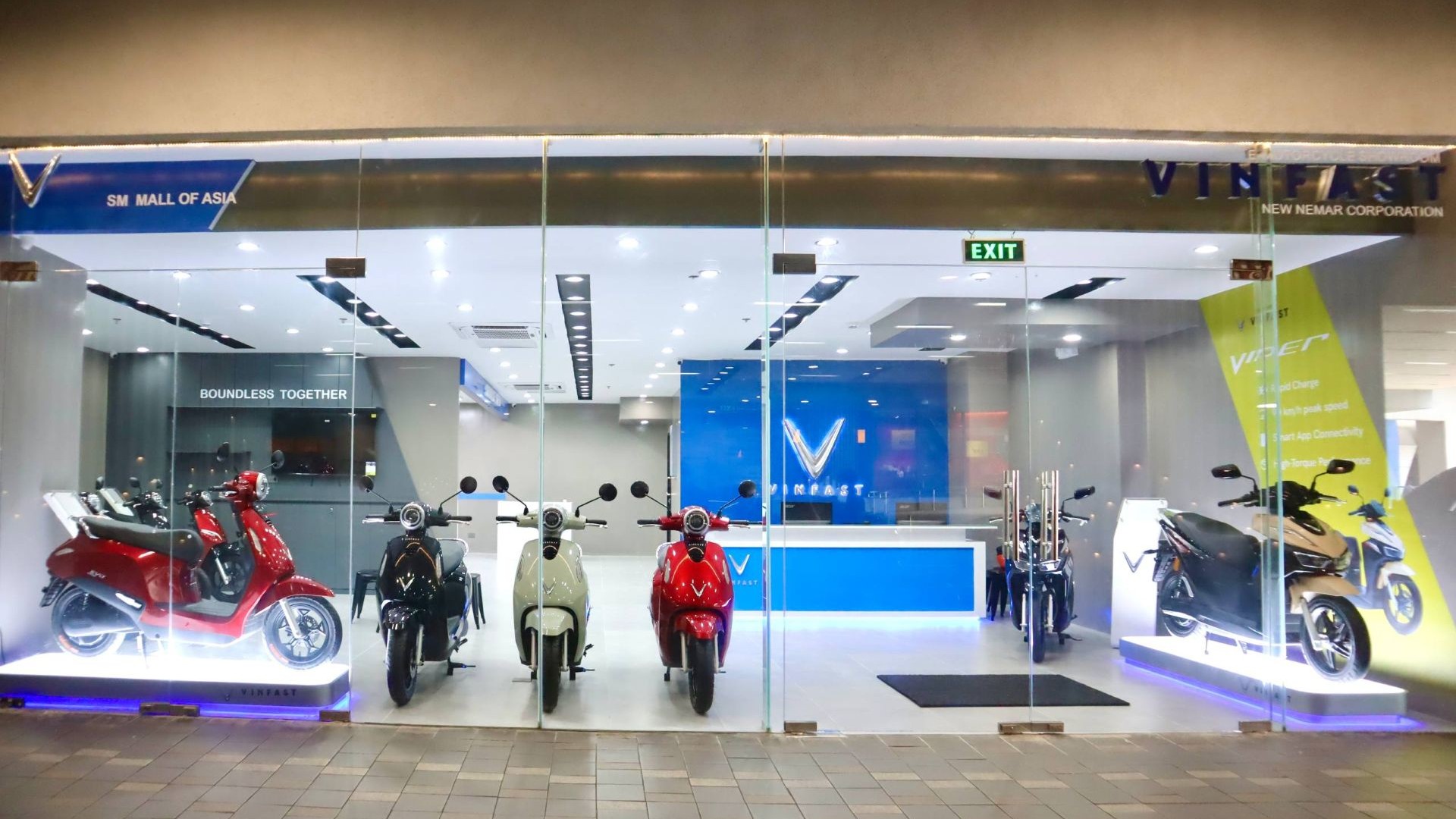
VinFast is pouncing on its growing presence in the Philippines, expanding with 21 electric motorcycle showrooms housing its new two-wheeler offerings.
The electric vehicle company just launched three two-wheeler offerings in the market: the VinFast Evo, Feliz II, and Viper.
Such milestone marks an important step in VinFast’s expansion in one of Southeast Asia’s largest two-wheeler markets.
The introduction of the three VinFast two-wheeler models offer drivers a modern, cost-effective, and sustainable mobility alternative.
Evo, Feliz II, and Viper each offer distinct characteristics designed to meet a wide range of mobility needs and riding styles.
Evo has a top speed of 80 km/h and a range of up to 150 km with two fully charged batteries. The Feliz II emphasizes practicality and versatile performance, with a top speed of 90 km/h.
Rounding out the lineup is Viper, featuring a sporty design, maximum power output of 5,200W, and a top speed of 90 km/h.
The aforementioned 21 pioneer dealerships will begin operations in major cities nationwide. This allows VinFast to offer products and authorized services directly to consumers.
The network is expected to grow further in the coming period, progressively expanding with VinFast’s presence in the country.
Just over a month ago, VinFast’s early booking program drew thousands of customers nationwide.
The strong market response can be attributed to VinFast’s battery-swapping approach, contributing to the appeal of the e-scooters.
Following the launch, the public can expect immersive experience activities across the new dealerships throughout August 2026.
Customers will be able to see and test ride the three models. They can also learn about battery technology and sales policies, and explore flexible ownership options.
Automotive
Xiaomi debuts SkyNomad Series featuring new Kunlun platform
Intelligent, reconfigurable large-space SUV

Xiaomi EV is ushering in a new era with the launch of the Xiaomi SkyNomad Series in China, the first model built on the new Xiaomi Kunlun Platform.
The new EV is positioned as an intelligent, reconfigurable large-space SUV built around on three core strengths: expansive interior space, completely flat cabin floor, and reconfigurable seating.
It is paired with the Xiaomi Kunlun HyperRange, Xiaomi Armor Scale Battery, and Xiaomi Kunlun Total Safety.
The SkyNomad’s cabin electronics run on a four-in-one domain control model built on the Snapdragon 8 Gen 3 platform. It features Dual 5G and Wi-Fi 7 connectivity.
The launch unveiled two models: the first is the flagship 7-seater extended-range SUV Xiaomi SkyNomad N90 Max (RMB 299,900) while the other is the 5-seat AWD SUV Xiaomi SkyNomad N70 Max (RMB 259,900).
These EVs have a battery capacity range of 52 to 76kWh. On CLTC, the N70 Max can reach up to 505 kilometers of EV-only range. Dual-motor all-wheel delivers 310kW of peak power.
Design born for space

The Xiaomi SkyNomad’s design philosophy is based on prioritizing function, while form complements it.
Every design feature traces back to a specific spatial need. And the spatial logic shows up directly in the body, through squared-off proportions.
Three lines define the upright stance: a flat roofline for maximized second and third-row headroom, a continuous waistline, and a rising sill line to lift the visual center of gravity.
A rounded-rectangle motif carries theough the headlights, taillights, door handles, and side cameras for a cohesive design language that features over 140 aerodynamic optimizations.
Smart electric doors open by touch or voice, while rear doors open to nearly 90° for easy passage.
Xiaomi Kunlun built for space
Where the Xiaomi Kunlun architecture comes in is for optimizing packaging across three axes to minimize structural intrusion in the cabin.
The front cabin integration includes a five-in-one EREV system, integrated water-cooling module, mid-mounted HVAC unit, and PTC-compressor two-in-one, compressing the front cabin length to just 1,265mm.
Springs and shock absorbers, on the other hand, are separated into a split layout. This releases 15mm of wheel-arch height for the third row.
Moving the shock absorbers outward optimizes the overall wheel-arch packaging for a full-cabin spatial experience.
Lastly, the rear electric drive unit comes with a highly integrated rear coaxial electric drive to free up 145mm of vertical space.
An integrated-linkage independent suspension uses an H-arm structure to lower the floor by an extra 37mm. Additionally, the large battery pack control module relocated inside reduces floor thickness by 180mm.
The N90 Max comes with 2,760mm of total occupant space and 1,831L of cargo space.
The cabin also includes 34 storage compartments, including an 18.4L front passenger glove box and extended door-panel storage.
Elevated cabin experience
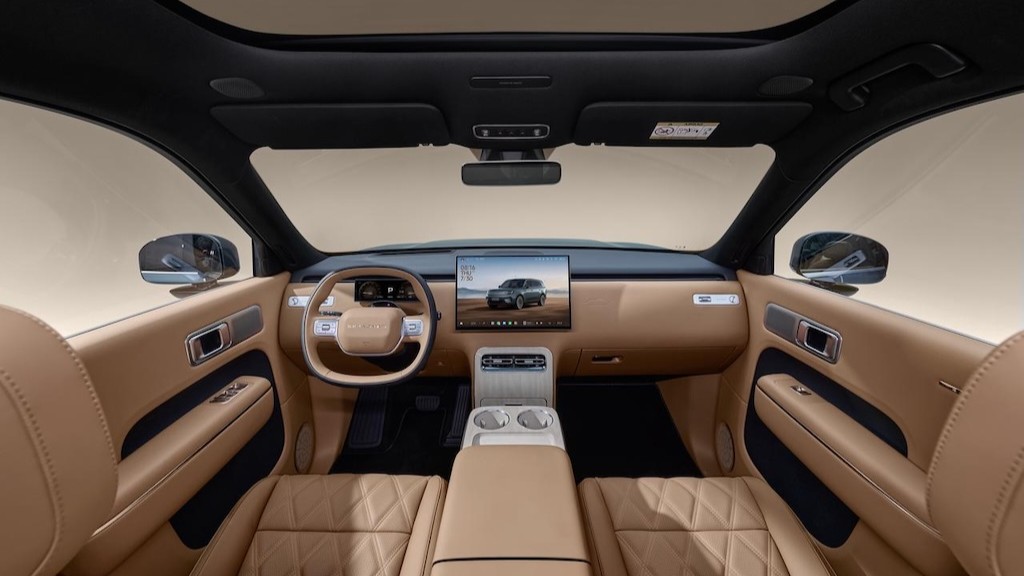
Inside, the SkyNomad’s cabin has an elevated and homelike atmosphere. A cabinet-style center console extends 1,530mm horizontally for a wider visual and physical footprint.
Hidden mechanical air vents keep the dashboard clean while retaining precise manual adjustment. There’s also an accessory port for 27W fast charging, along with mounts for phones, action cameras, and more small devices.
There is a customizable head-up display, 25-speaker audio system, and 6.9-inch rear control screen for full control from the back seat.

Moreover, the front and second row backseats use a 12-layer comfort structure, with the front seats coming with 16-point massage ventilation and heating.
Built on a flat floor, every model comes with extra-long seat slide rails with up to 900mm of travel for both second and third rows.
These rails use aerospace-grade 7-series reinforced aluminum alloy, validated through 15,000 cycles.
The entire interior varries OEKO-TEX certification, applying to infant-grade safety standards.
Extensive personalization options
The Xiaomi SkyNomad comes in three colorways: Volcanic Gray, Mountain Green, and Valley Blue.
Meanwhile, owners can choose from Cream Beige and Mocha Brown for the interior.
The N90 Max wheel options include standard 21″ Prism-shaped Rims, plus optional 21″ Beam-shaped Rims, and 21″ Starbust-shaped Rims Stealth Black Edition for a sportier look.
The variable space inside is designed around real usage patterns. There are plenty of seating configurations, which can all be accessed through the Xiaomi HyperXiaoAi AI assistant.
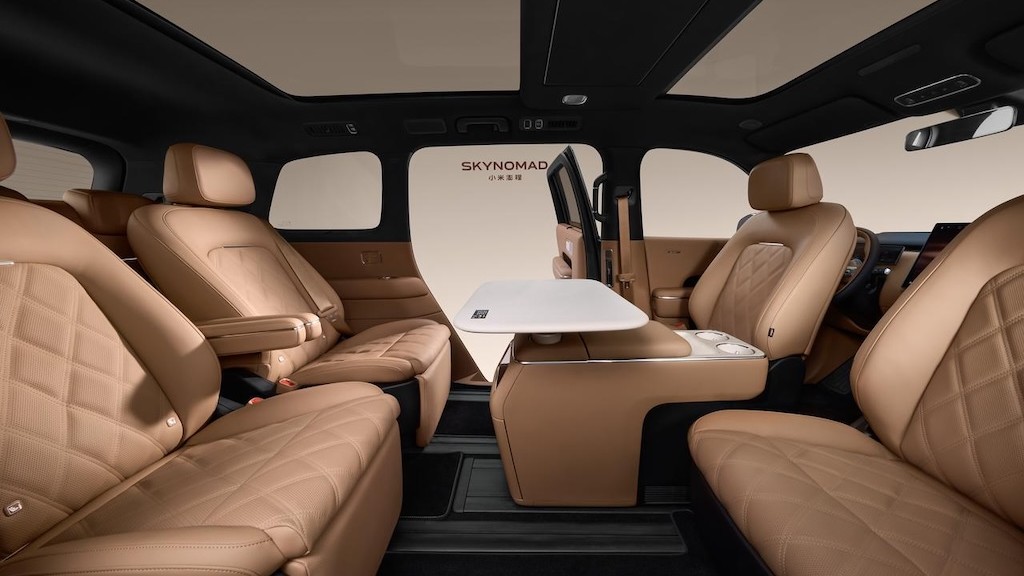
The independent first and second row seats can face each other. The second and third rows can slide all the way back for even more leg room like a first-class cabin.
Moreover, one touch can turn the second and third rows into a bed. The front seats can be rotated as well to extend the bed’s length.
For transporting plenty of cargo, one touch can activate Ultimate Storage Mode as well.
Safety features
Through Xiaomi Kunlun Total Safety, the SkyNomad’s engineering comes with a system spanning materials, structure, airbags, battery, and the variable-space design itself.
Safety features include:
- high-strength steel and aluminum alloy (90.4% of the EV’s body)
- 2,200 MPa ultra-high-strength steel in 16 critical locations
- 2,200 MPa embedded roll cage for roof-crush load of nearly 14 tons
- 2,200 MPa anti-collision beams
- 13-in-1 integrated hot-formed door ring
- 2,000 MPa integrated hot-formed front floor frame
- 12 airbags across all rows
- 9 collision sensors including added front and C-pillar sensors
- triple-redundant door handles
- dual emergency pull handles
- emergency wading up to 750mm
- 26 standard driver assistance safety features
- 39 anti-pinch points
- Sentry Mode


Samsung Galaxy Z Fold8 Review
8 Galaxy Folds later, Samsung finally nailed It!


30 days later with the ASUS ExpertBook Ultra: Like seeing an ex
Felt exactly as I remembered.


ROG STRIX G16 Review: Building for the moment
Setting it up however you want to make the most out of it

OBSBOT Meet Flip Hands-on
Samsung Galaxy Z Fold8 Review

Smart showcases cloud gaming platform in partnership with Blacknut

What your smartphone color choice reveals about you

New EV player XPENG to launch in the Philippines in September

Hands-on: Samsung Galaxy Z Fold8, Flip8, Ultra

VinFast debuts two-wheeler models, opens 21 e-motorcycle showrooms

Garmin launches its first screenless fitness band

Samsung releases teaser with Spider-Man: Brand New Day Easter eggs

Most of the world’s PlayStations will be officially useless by 2028


-
 Automotive2 weeks ago
VinFast debuts two-wheeler models, opens 21 e-motorcycle showrooms
-

 Automotive2 weeks ago
Xiaomi debuts SkyNomad Series featuring new Kunlun platform
-

 News1 week ago
OnePlus officially leaves the United States and Canada
-

 Gaming2 weeks ago
Call of Duty: Modern Warfare 4 clip shows Losing Ground 1st look
-

 Automotive2 weeks ago
GAC launches new trio of MPVs
-

 Gaming2 weeks ago
Genshin Impact opens Snezhnaya in Version 7.0 this August 12
-

 News1 week ago
Google will force Android users to use Gemini next month
-

 Gaming1 week ago
Tides of Annihilation opens first public demo at Gamescom 2026