
News
Next iPhone SE is canceled, report says
Because of failing demand

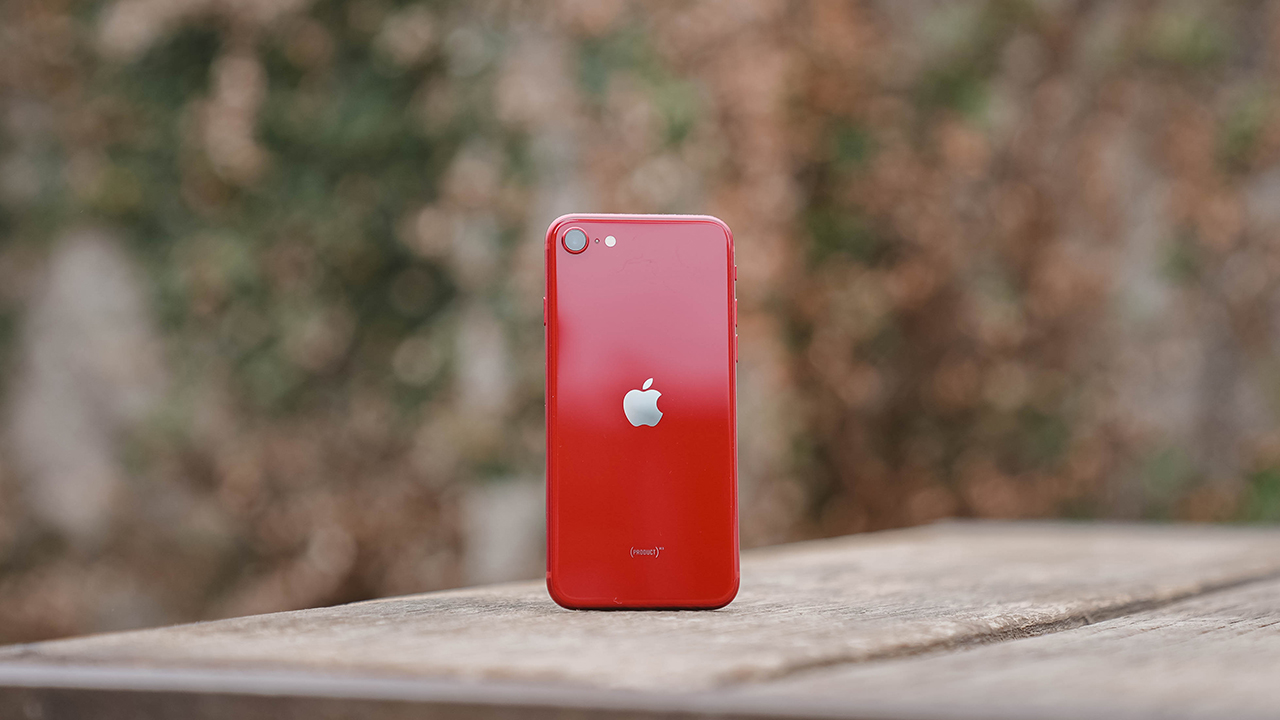
Right before 2022 ended, a bombshell of a rumor hinted at the potential postponement and even cancelation of the iPhone SE series. Time certainly moves fast. Only a few days into 2023, the same source has changed course and pivoted towards outright cancelation of the affordable lineup.
According to a new post from Ming-Chi Kuo, Apple’s supply chain has received instructions to cancel any development for a future iPhone SE. The new report doesn’t go into details as to why the lineup was canceled. However, Kuo’s last report indicates that demand for lower-end iPhones was lower than expected.
For the past few years, Apple struggled to peddle its other devices outside of the Pro lineup. While the two Pro models always did well, the regular duo didn’t pull as much in sales. For example, the company changed strategies between the iPhone 13 and the iPhone 14 series, changing from the iPhone 13 mini to the iPhone 14 Plus. Meanwhile, the iPhone SE series, despite enjoying a modicum of success, slowly followed in the same footsteps.
With December’s report, Apple was reportedly delaying the next iteration of the series to focus on more development. Apparently, the company was going to use the series to test a new in-house baseband chip. If the lineup is doomed, Qualcomm will likely remain as Apple’s main supplier for the component going forward.
It’s still the start of 2023, though. With 2024 miles away, anything can happen.







The OPPO Find X10 Series is now available in the Philippines, bringing Hasselblad-powered cameras and upgraded imaging features to the company’s flagship smartphone lineup.
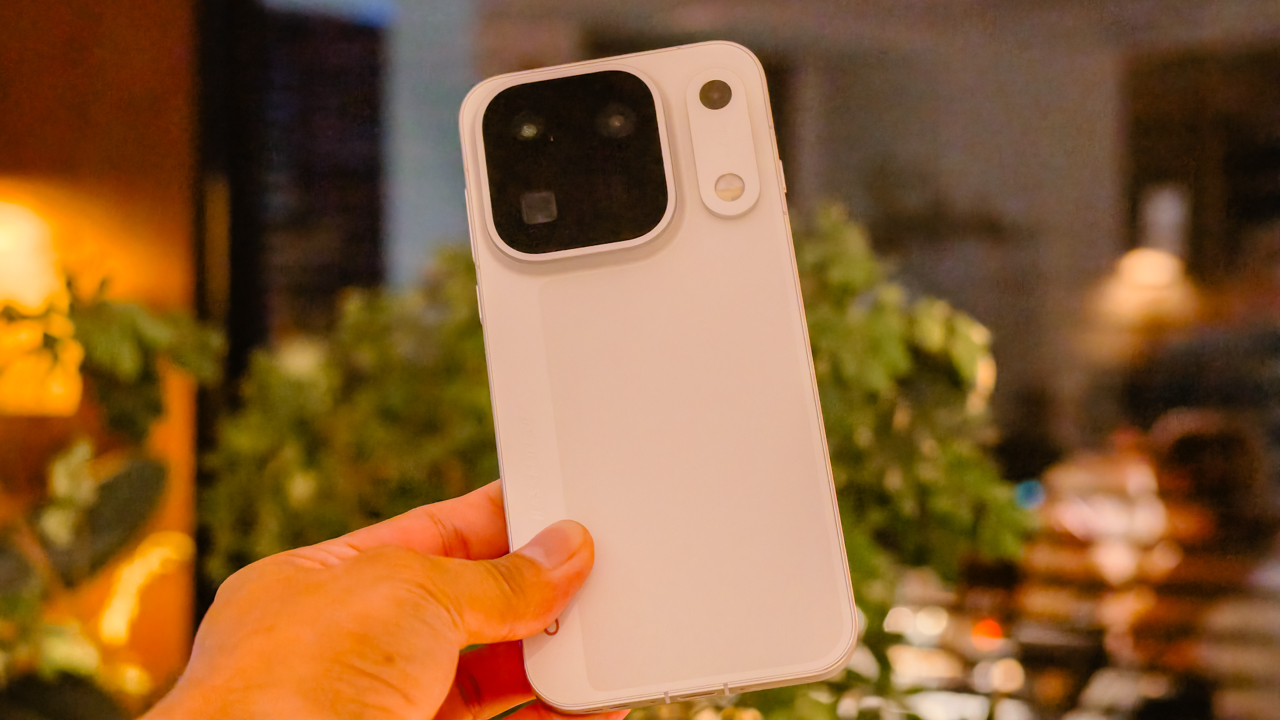
The series consists of two models: the OPPO Find X10 and OPPO Find X10 Pro Max. Both feature OPPO’s LUMO True Image Engine for more natural-looking photos, an 8,000mAh silicon-carbon battery, and support for high-resolution video recording.
The OPPO Find X10 features a Dual 200MP Camera System, while the Find X10 Pro Max takes things further with three 200MP rear cameras.
Here’s how much the OPPO Find X10 Series costs in the Philippines, along with its specifications, availability, and pre-order offers.
OPPO Find X10 Series price in the Philippines
The OPPO Find X10 Series is available in the Philippines at the following suggested retail prices:
- OPPO Find X10 (12GB + 512GB): PHP 99,999
- OPPO Find X10 Pro Max (16GB + 512GB): PHP 129,999
The OPPO Find X10 comes in Glacier Blue, Glow Coral, and Mist Grey. The Find X10 Pro Max is available in Titanium Grey and Luna White.
The OPPO Hasselblad Teleconverter Kit for both models is also available exclusively through the OPPO Online Store for PHP 15,999.
OPPO Find X10 Series pre-order offers
Customers can take advantage of exclusive offers when they pre-order the OPPO Find X10 Series through participating channels until December 3, 2026. Freebies are available while supplies last.
OPPO Online Store
Customers who pre-order through the OPPO Online Store receive the following benefits:
- Free OPPO Enco X3s
- Free OPPO 5,000mAh Slim Magnetic Powerbank
- PHP 3,000 discount on participating Hasselblad Teleconverter Kits
- PHP 3,000 total discount on OPPO Bubble through stacked vouchers
- Two-year extended warranty
- Raffle entry for a chance to win a DJI Mini 5 Pro
Shopee
Shopee pre-orders come with the following perks:
- 10% discount voucher
- Free OPPO 5,000mAh Slim Magnetic Powerbank
- PHP 200 GCash cashback for eligible product reviews until December 7, 2026
- PHP 3,000 discount on participating Hasselblad Teleconverter Kits, redeemable on the OPPO Online Store
- PHP 3,000 total discount on OPPO Bubble through stacked vouchers, redeemable on the OPPO Online Store
- Two-year extended warranty
- Raffle entry for a chance to win a DJI Mini 5 Pro
OPPO Concept Stores
Customers who purchase the phones at OPPO Concept Stores can enjoy 24-month installment terms at 0% interest, alongside other perks:
- Free magnetic power bank
- Two-year extended warranty
- PHP 3,000 discounts on the Hasselblad Teleconverter and OPPO Bubble
- Raffle entry for a chance to win a DJI Mini 5 Pro
Globe
Starting November 20, both color options of the OPPO Find X10 with 12GB RAM and 512GB storage will be available through Globe under GPlan 2499, with a PHP 56,600 cash-out.
The first 20 customers will receive a free OPPO Hasselblad Teleconverter Kit. Customers will also qualify for a raffle entry for a chance to win a DJI Mini 5 Pro, subject to the promotion’s terms and conditions.
OPPO Find X10 Series specs
| Specification | OPPO Find X10 | OPPO Find X10 Pro Max |
|---|---|---|
| Display | 6.59-inch flat display | 6.78-inch flat display |
| Refresh rate | Up to 144Hz | Up to 144Hz |
| Processor | MediaTek Dimensity 9600M | MediaTek Dimensity 9600 Pro (2nm) |
| Rear cameras | 200MP main, 200MP telephoto, 50MP ultra-wide | 200MP main, 200MP ultra-wide, 200MP telephoto |
| Video recording | Up to 4K at 120fps and 8K at 30fps on its two 200MP cameras | Up to 4K at 120fps and 8K at 30fps across all three rear cameras |
| Battery | 8,000mAh silicon-carbon | 8,000mAh silicon-carbon |
| Operating system | ColorOS 17 | ColorOS 17 |
| Dust and water resistance | IP66, IP68, IP69 | IP66, IP68, IP69 |
| RAM and storage (Philippines) | 12GB + 512GB | 16GB + 512GB |
| Price | PHP 99,999 | PHP 129,999 |
Both phones also support Open Gate Capture, feature displays with BT.2020 wide color gamut support, and carry SGS Five-Star Drop Resistance Certification.
Dual 200MP and Triple 200MP camera systems
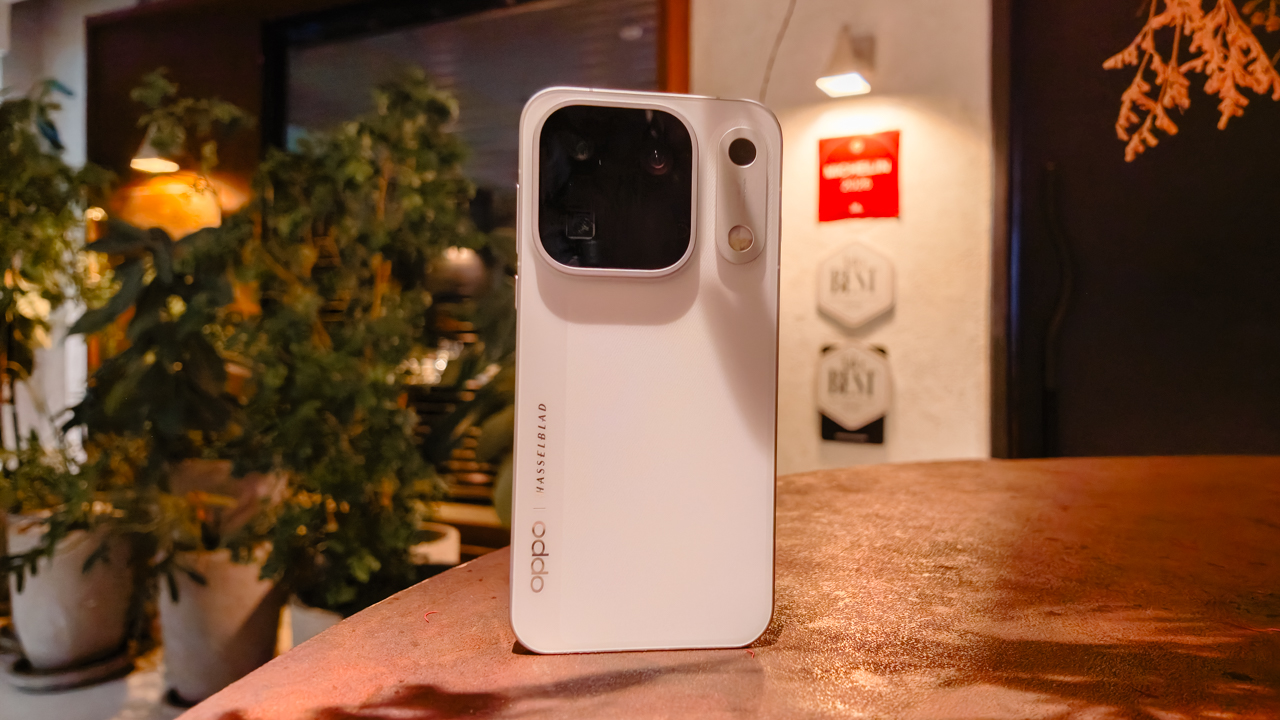
The OPPO Find X10 Series focuses on delivering high-resolution photography across different focal lengths.
The standard Find X10 combines a 200MP Ultra-Clear Main Camera and a 200MP Ultra-Sensing Telephoto Camera with a 50MP ultra-wide camera. This setup lets users capture detailed shots of everyday subjects, distant objects, and wider scenes.
The Find X10 Pro Max takes a different approach by equipping all three rear cameras with 200MP sensors. Its main camera uses a large 1/1.3-inch sensor, while its 124-degree ultra-wide camera supports autofocus for close-up macro photography. The telephoto camera is designed to capture distant subjects while retaining detail.
Both models also let users crop and reframe high-resolution photos, giving them more flexibility when composing images after taking them.
LUMO True Image Engine aims for natural-looking photos
OPPO’s LUMO True Image Engine is designed to reproduce colors, lighting, and textures more faithfully.
The system combines computational photography with OPPO’s True Color Camera and Hasselblad Master Mode. Its True Color Camera uses 24-channel multispectral capture and delivers 5.5 times the dynamic range of its predecessor, according to OPPO.
This helps the phones interpret colors across different lighting conditions and preserve details such as natural skin tones and subtle color variations.
The imaging system also aims to retain the balance between highlights and shadows. It takes a more restrained approach to sharpening and noise reduction to preserve textures in subjects such as skin, hair, fabrics, and architecture.
On the Find X10 Pro Max, DeepPix technology supports the custom 200MP ISOCELL HPC main camera sensor co-developed by OPPO and Samsung. OPPO says the system supports up to 17 stops of dynamic range to help retain details in scenes with bright highlights and deep shadows.
Hasselblad imaging and teleconverter support
The OPPO Find X10 Series continues the company’s collaboration with Hasselblad. The partnership influences the phones’ color reproduction, tonal balance, and Hasselblad Master Mode.
Both models also support dedicated Hasselblad Teleconverter accessories for users who want greater reach when photographing distant subjects.
With the accessory attached, the Find X10 Pro Max supports true 10x optical zoom, while the Find X10 delivers 11x optical zoom, according to OPPO. These accessories can be useful for photographing concerts, wildlife, and other subjects that are difficult to approach.
The Hasselblad Teleconverter Kit is sold separately for PHP 15,999 through the OPPO Online Store.

4K 120fps and 8K video recording
The Find X10 Series also offers high-resolution video recording for creators.
The Find X10 Pro Max supports 4K recording at up to 120fps and 8K recording at 30fps across all three rear cameras. On the Find X10, these recording options are available on its two 200MP cameras.
Both models introduce Open Gate Capture, which uses the sensor’s full imaging area to capture more of a scene. This gives creators more flexibility to crop and reframe footage for landscape, portrait, and other formats during post-production.
Up to 144Hz displays
The Find X10 features a 6.59-inch flat display, while the Find X10 Pro Max has a larger 6.78-inch flat display.
Both support adaptive refresh rates of up to 144Hz and the BT.2020 wide color gamut. These features are designed to deliver smooth interactions and vivid colors when browsing, gaming, watching videos, or reviewing photos.
8,000mAh battery and durability
Both phones pack an 8,000mAh silicon-carbon battery designed to support extended use.
The Find X10 Series also carries IP66, IP68, and IP69 dust and water resistance ratings. Both devices have SGS Five-Star Drop Resistance Certification, offering additional protection for everyday use.
ColorOS 17 and AI Mind Pilot
The OPPO Find X10 Series runs ColorOS 17, which introduces a refreshed interface called Living Flow Design.
The software also features AI Mind Pilot with Agent Mode. It connects agentic AI with files and photos stored on the phone, helping users handle more complex tasks through a single prompt.
For more information about the OPPO Find X10 Series, visit the official OPPO Philippines website, OPPO Online Store, or participating OPPO stores nationwide.
Laptops
ASUS ProArt P14, P16 laptops with NVIDIA RTX Spark now available
Powerful AI, wherever you create


ASUS has introduced the ProArt P14 and P16, two creator laptops powered by NVIDIA RTX Spark. They combine high-capacity unified memory, RTX graphics, and AI tools to help creators and developers run demanding workloads locally.
The new laptops pair NVIDIA’s Blackwell RTX GPU and Grace CPU architecture with up to 128GB of unified memory. ASUS says the platform delivers up to one petaflop of AI performance, enabling users to run large AI models and generative workflows without relying entirely on cloud services.
Portable workstations for creators
The ProArt P16 measures 12.9mm thick and weighs 1.77kg, making it the thinnest 16-inch ProArt laptop to date. The ProArt P14 measures 13.9mm thick and weighs 1.48kg, making it the lightest ProArt laptop currently available.
Both models feature ASUS Lumina Pro OLED displays with a 120Hz variable refresh rate, Delta E<1 color accuracy, and peak brightness of up to 1,600 nits. The P16 supports up to 4K resolution with NVIDIA G-SYNC, while the P14 offers up to 3K resolution.
The P16 packs a 99Wh battery, while the P14 has a 90Wh battery. Both laptops also feature high-speed connectivity and haptic touchpads designed for photo editing, video production, and 3D modeling.
Run AI workflows locally
The ProArt P14 and P16 support local AI workloads through NVIDIA’s CUDA ecosystem and RTX acceleration. Their unified memory configurations allow users to run larger AI models and more complex generative workflows directly on their laptops.
ASUS also offers several creative and productivity tools. MuseTree supports local image generation using FLUX and WAN models, while StoryCube uses AI to organize media and manage creative assets. Zenni Claw provides an AI assistant for everyday productivity, content management, and ASUS device controls.
Users can also work with third-party tools such as ComfyUI and Hermes Agent. The laptops support hybrid workflows, allowing creators to switch between local processing and cloud-based services based on their performance, privacy, and project requirements.

Pricing and availability
The ASUS ProArt P14 and P16 are now available at select ASUS Exclusive Stores, including locations in Glorietta, SM Makati, SM Mall of Asia, SM Megamall, and SM North EDSA.
Here are the available configurations and their suggested retail prices:
- ASUS ProArt P14 (32GB RAM, 1TB SSD): PhP 224,995
- ASUS ProArt P16 (48GB RAM, 1TB SSD): PhP 269,995
- ASUS ProArt P16 (128GB RAM, 1TB SSD): PhP 429,995
The 128GB ProArt P16 configuration is available by special order.
Both laptops include three months of Adobe Creative Cloud and Google AI Pro with 5TB of cloud storage. Buyers also receive a lifetime license for Office 2024 Home, one year of Microsoft 365 Basic with 100GB of cloud storage, and up to 700GB of ASUS cloud storage.
ASUS includes a three-year local and international warranty with local on-site support, a 14-day extended replacement policy, up to six free device-cleaning claims, and one year of accidental damage protection.

After Apple unveiled the iPhone Duo, it’s safe to say that the foldable wars are finally on. Apple and Android fans are now drawing the battle lines between their respective devices. Now, for the smartphone makers themselves, it’s time for Samsung to prepare its next salvo. Right on cue, a new leak has hinted that the South Korean brand is preparing for its most extensive foldable lineup next year, including a mysterious device called the Galaxy Z Slide.
Based on a new leak on X, Samsung is reportedly launching a total of six foldable devices next year. Naturally, three of those are the next iterations of Samsung’s main foldable lineup: Galaxy Z Fold9, Fold9 Ultra, and Flip9.
A fourth device, however, teases a sequel to the Galaxy Z TriFold. Earlier this year, Samsung launched its first tri-fold device. Although, despite the hype, the TriFold never really made it as a consumer-ready device, opting instead for a limited release for early adopters. A second release might mean that Samsung is ready to unleash a friendlier device next year, which the leak claims will be the first one out the gate.
Now, the other two releases are more of a mystery. For one, Samsung is allegedly launching a Galaxy Z Fold9 Pro, presumably a middle ground between the passport-style and the book-style foldable.
Finally, the sixth device (and arguably the most mysterious) is something called the Galaxy Z Slide. If true, the Slide will likely introduce an all-new form factor for the lineup. If anything, though, we know that Samsung has been experimenting with sliding screens. Is this what the Slide will look like?
SEE ALSO: Samsung: Galaxy Z Fold8 demand rose because of iPhone Duo







OPPO Find X10 Series: Price, availability in the Philippines

Cyberpunk: Edgerunners 2 now streaming, Cyberpunk 2077 update coming

ASUS ProArt P14, P16 laptops with NVIDIA RTX Spark now available

Now Playing: Clayface

Now Playing: Final Fantasy Resonance

vivo X500 Series launches with major imaging upgrades

OPPO Find X10 Pro Max is the first phone with a triple 200MP camera system

TECNO CAMON Slim 5G: Price, availability in the Philippines

TECNO CAMON Slim 5G review: Slim on size, big on surprise

HONOR Magic9 Pro Max launches in China with ARRI-powered imaging


-

 News2 weeks ago
OPPO Find X10 Series launches globally October 21
-

 Wearables2 weeks ago
Garmin Enduro 4 promises up to 320 hours of battery life
-

 Gaming1 week ago
Dragon’s Dogma 2: Dark Arisen launches with new Official Pawns
-

 News5 days ago
vivo V80 debuts with ZEISS cameras
-

 Deals1 week ago
Score PhP 22,000 in guaranteed freebies when you pre-order the iPhone 18 Pro at Beyond the Box
-

 Wearables1 week ago
Garmin Approach S72 brings swing metrics, green reading to your wrist
-

 Philippines5 days ago
TECNO CAMON Slim 5G gets launch discounts, free MagBadge
-

 Laptops2 weeks ago
ASUS Zenbook 14 lineup expands with new colors and processors