


Automotive
What it’s like to spend a day at BYD’s All-Terrain Circuit
It’s a showcase of extremes and a reminder that driving dreams evolve with technology.

I never realized I’d love learning and testing cars, at least not until a rally driver sat beside me during a slalom run, speaking words that would calm even the most restless heart.
“Don’t worry about the cones,” he said as I wobbled through my first lap. And when I drifted into something close to perfection, he whispered “you’re good” more times than I deserved.
Those words stuck more than the speed, and definitely more than the skid marks.
This wasn’t in my bingo card. After winning at the 24th Henry Ford Awards, I thought I’d already said my parting words to automotive coverage.
I poured myself into a passion project tied to my life as an endurance athlete, and when that wrapped, I thought I’d simply move on.
Yet here I was, in Zhengzhou, China — invited by ACMobility — to witness BYD’s first all-terrain circuit, one of the first in the country built exclusively for new energy vehicles.

Arriving at a playground built for new energy vehicles
It was a cold Thursday morning when I boarded a bus to the circuit. The ride stretched over an hour, the kind that lulls you into a half-sleep, half-reverie.
My head bobbed against the window, eyes occasionally opening to marvel at the changing landscape outside. Blue skies meeting industrial romance.

When we finally arrived, I was greeted not just by the sheer expanse of the All-Terrain Circuit but also by the stars of the day: the BYD eMax 9 and Sealion 8, parked like models awaiting their cue.
Before diving into the schedule, I warmed myself with a familiar oatmilk latte from the BYD Café and gawked at the base version of the Yangwang U9 — one of the world’s fastest production car — gleaming under the lights as if to remind us that speed, too, can be art.

We were told the facility housed eight experience zones, each a playground for machines and a test of our courage. And with that, the adventure began.
The world’s tallest artificial dune, now a test track
The first stop was the Indoor Sand Dune, a 29.6-meter vertical drop with a 28-degree slope, certified by Guinness World Records as the highest and largest dune-climbing facility in existence.

Constructed with 6,200 tons of sand, it was designed to mimic the Alxa Desert. Watching the Yangwang U8 command the terrain was nothing short of cinematic. Its wheels tore through the sand with authority, moving like a predator that knew no fear.

We didn’t get to try it ourselves, but my mind drifted to the dunes of Ilocos back home. I wondered how it would feel to tame our own desert with a machine like this, if the U8 ever makes its way to Philippine shores.
What driving through water looks like in the future
The Yangwang U8 returned to center stage at the Wading Pool, a 70-meter stretch of water that felt more like a flood zone than a testing ground.

Through the underwater glass, we watched the vehicle maneuver forward, reverse, and even turn while afloat, all thanks to BYD’s E4 platform.

It was an eerie yet comforting sight, technology meeting something similar to a calamity head-on. In a country like ours, where typhoons strike as often as heartbreaks, such a feature could be a lifeline.

For a moment, I wasn’t just watching a demo; I was imagining families safe inside, crossing flooded streets with grace instead of fear.
Riding shotgun in one of the fastest production cars in the world
Then, came the Yangwang U9. On paper, it’s a beast with 1,290 horsepower and 960 kilowatts. In reality, it was an experience that rewrote my understanding of speed.

I strapped myself in, buff and helmet in place, choosing the Moonlight Stone colorway with interiors in regal purple, which perfectly matched my lavender Nike jacket.

The acceleration was like a trail run on steroids. The heartbeat I feel when descending a mountain trail — reckless yet alive — was the same beat that coursed through me as the U9 devoured the 1,758-meter track with its nine curves and long straight stretch.

The seats hugged me like a co-conspirator, keeping me steady even as the world outside blurred. I didn’t even realize how fast we were going until I glanced at the dashboard.

Fear and euphoria danced together in my chest. Now, I get the high and adrenaline from racing cars.
Learning to let go while machines take over
The off-road testing area spanned 27 scenarios, though time only allowed us to try the Fangchengbao Bao 5 in the junior section.

Still, it was enough to excite me. The car climbed 27-degree slopes, crawled down stairways (and not feel anything), and tiptoed over rocks as if they were pebbles.

I had to fight the instinct to control everything. But these machines were designed to carry you safely even when your nerves frayed.

It was a strange kind of intimacy and learning to surrender. I realized that sometimes, letting go is the only way forward.
Drifting in circles I had no business being in
At the heart of the circuit lay a 15,300-square-meter dynamic paddock, our next stop.

The Kick-Plate simulated icy roads, throwing the car into sudden skids while professional drivers demonstrated how NEV safety systems took over with precision.
It was held in a controlled emergency situation, simulating scenarios we pray never happen but feel grateful to be prepared for.

Later, I took the Denza Z9 GT onto the Low Friction Circle, a 44-meter-diameter track laid with 30,000 basalt bricks covered in water. I had no business drifting — let alone in front of a crowd of seasoned drivers — but BYD’s millisecond-level control and Drift Mode made it possible.

For a few seconds, I found flow, spinning in rhythm with the machine. Until the instructor told me to “maintain,” and pressure snapped me out of it, spinning me like I was in a film getting in an accident.

My knees were shaking when I stepped out, equal parts embarrassed and exhilarated.
How a slalom course became my favorite part
What surprised me most was how much I loved the slalom. Maybe it’s because obstacles have always defined my life, on and off the Spartan course.

Driving the BYD Seal EV through cones and curves felt oddly personal. I wasn’t the best.
I hit cones and I apologized to the rally driver guiding me. Yet when I drifted through U-turns and roundabouts, something familiar sparked in me.

It reminded me of growing up on highways filled with those very curves, sneaking in practice at midnight when no one was watching.

This time, though, the sun was setting, and the moment felt bigger. The course ended not just with applause but with reflection. Life, like a slalom, is about moving through obstacles with grace, even when you stumble

The bigger dream behind the Zhengzhou circuit
The BYD Zhengzhou All-Terrain Circuit is more than a playground. It’s a vision of what driving could become in an age of new energy vehicles.
It democratizes technology, making once-distant innovations something you can touch, feel, and experience.

Soon, another BYD circuit will rise in Shaoxing, with a sprawling off-road area set 500 meters above sea level.
Alongside CAMF, BYD is also launching the “New Track Scheme,” a program meant to cultivate 100 professional racers and introduce racing culture to more people.

As I left the circuit, lavender jacket still smelling faintly of rubber and adrenaline, I realized that this wasn’t about cars alone.
It was about rediscovering joy in places I never thought I’d find it. Maybe that’s what the road ahead is about. Not just speed or power, but new ways of dreaming.




Automotive
Ford revs up Truck Month with extended 5-star care offers
Explore exclusive cash discounts, flexible downpayment plans, and showroom activations in the Philippines.

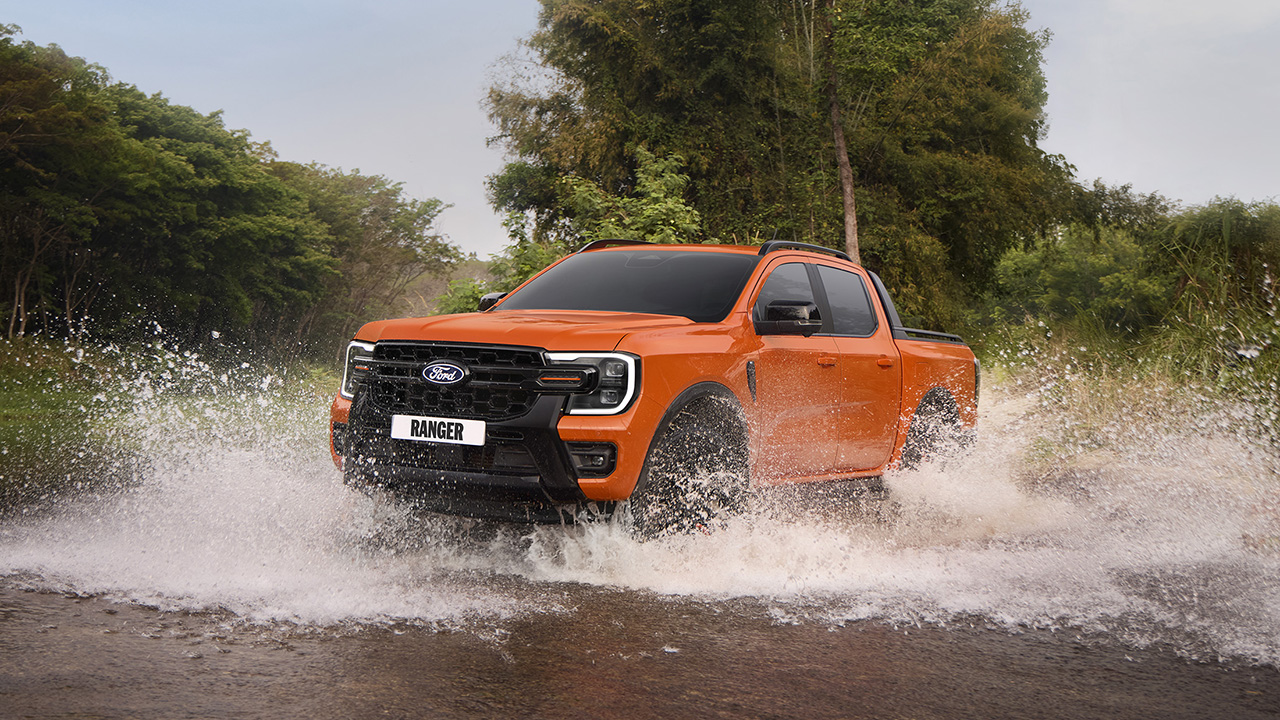
Ford Philippines brings back its annual Truck Month this September, pairing special financing and cash savings with extended service coverage across the updated Ranger and Everest lineups.
The month-long program shifts the focus toward long-term ownership peace of mind. This ensures drivers feel supported well beyond the showroom floor.
Comprehensive coverage for every journey
For drivers who view their truck or SUV as an essential partner for travel and daily routines, maintenance clarity brings genuine confidence.
Select variants in the lineup now include Ford’s 5-Star Care Package, bundling a five-year warranty, five-year scheduled service plan, and five-year roadside assistance.
Flagship performance models built for challenging roads, including the Ranger Raptor 3.0L V6, Ranger Wildtrak X 3.0L V6, and Ranger Wildtrak 3.0L V6, pair this complete service coverage with PhP 20,000 in cash savings. On another note, the Raptor 3.0L V6 also offers a PhP 150,000 all-in downpayment option.
Versatile family vehicles receive identical long-term backing, with the Everest Platinum 3.0L V6, Everest Wildtrak 2.0L, Everest Sport+ 2.0L, and Everest Active 2.0L all bundling the five-year care plan. Meanwhile, the Everest Wildtrak 2.0L Turbo includes an additional PhP 20,000 cash discount.
Financing designed around daily routines
Flexibility plays a central role in fitting a vehicle into personal budgets and busy lifestyles.
For the first time, the practical Ranger XLS 4×2 introduces access to the 5-Star Care Package, allowing buyers to select between long-term maintenance coverage, a PhP 50,000 cash discount, or a PhP 49,000 all-in downpayment.
Drivers drawn to the Ranger Sport 4×2 can opt for a PhP 59,000 all-in downpayment or zero percent interest financing. By providing multiple ownership paths, Ford aligns purchase incentive options directly with driver priorities, prioritizing lasting value throughout the lifetime of the vehicle.
Bringing the experience to dealerships and malls
The Truck Month celebration extends further with the Super September event, taking place from September 16 to 20 across nationwide dealerships and key shopping centers.
Customers who reserve any Ford vehicle during this five-day showcase receive an extra PhP 20,000 in cash savings on top of ongoing Truck Month offers.
Display venues including Virra Mall Greenhills, SM Southmall, SM Seaside Cebu, Robinsons Dumaguete, and SM City Sta. Rosa feature interactive showroom activities and refreshments, offering drivers an accessible way to explore their next vehicle companion.

BYD Cars Philippines has launched the BYD Cool & Fresh Combo aircon care promo, happening from September 9 to October 31, 2026.
Under the promo, customers who avail of the Vehicle Aircon Cleaning Package will receive a free cabin air filter and free CarTul Air & Surface Disinfecting Mist.
This gives BYD the time to introduce the new ancillary product as well, which comes in a three-steps cleaner package.

It kills bacteria and viruses, enhances airflow efficiency, and eliminates unpleasant odors. And that’s without having to remove the dashboard.
So owners who avail of the aircon cleaning package throughout the promo period will be able to try the product first hand, without having to spend for it.
For reference, the aircon cleaning package is priced at PhP 5,262.
The offer is available to all BYD vehicle owners who are due for their 1-Year Preventive Maintenance Service (PMS) or have reached 20,000 kilometers on their odometer.
Automotive
ACMobility launches EV safety program to help drivers make the switch
The new “Drive Electric” curriculum covers everything from charging safety to actual EV ownership costs.
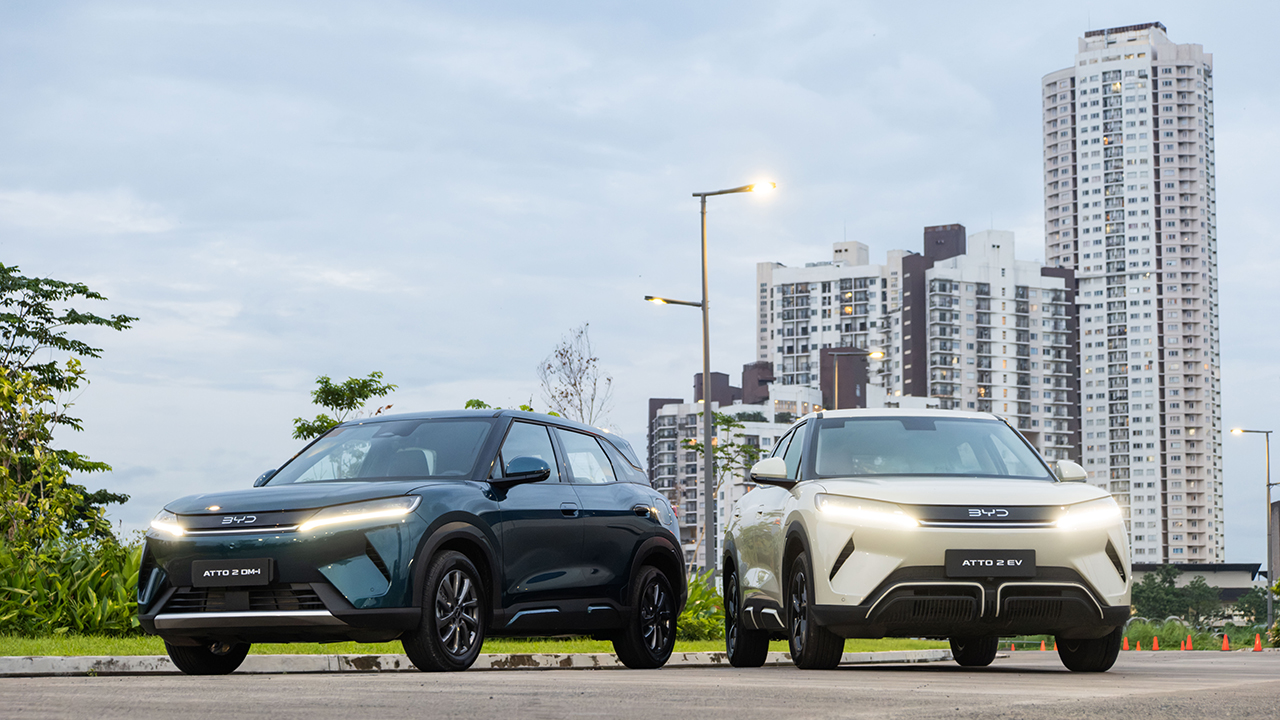
ACMobility, the Ayala Group’s mobility arm, launched its “Drive Electric. EV Safety Program,” and it’s aimed at pretty much anyone curious about EVs.
That means advocates, people thinking about buying one, fleet operators, and just regular folks who want to understand what they’re getting into.
The goal is straightforward: clear up the misconceptions around EVs by giving people practical, easy-to-follow information on how the technology and charging infrastructure actually work.
The program covers safety guidelines, the real costs of ownership, and how charging works, so people can decide for themselves if going electric makes sense for them.
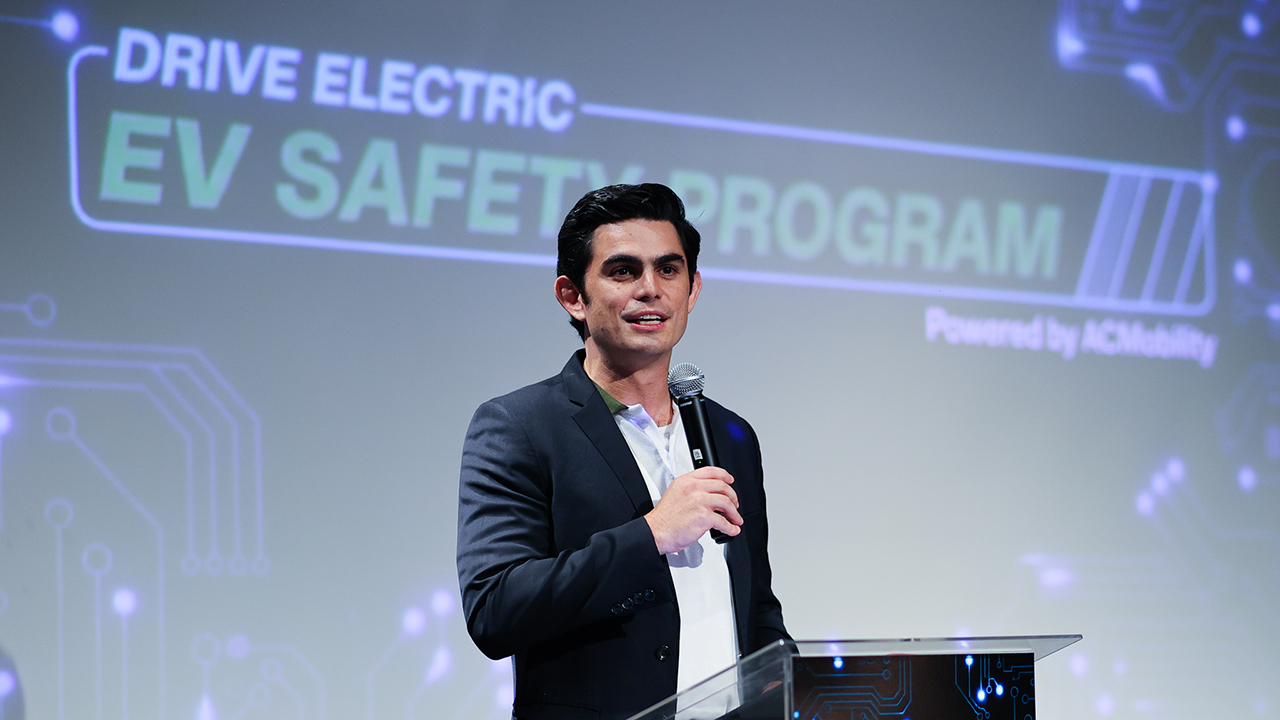
At the launch, ACMobility CEO Jaime Alfonso Zobel de Ayala talked about the bigger picture, saying the company’s priority is to empower drivers to shift to a more sustainable and cost-effective transport option.
He framed the program as part of that commitment, aiming to give drivers practical tools and accessible technical knowledge on EVs.
Building the curriculum with actual experts
ACMobility didn’t build this alone. The program came together with professional instruction partners and close coordination with the Department of Energy, the Bureau of Fire Protection, the Electric Vehicle Association of the Philippines, and the Philippine EV Community.
The curriculum runs five modules deep, and it tackles the questions people actually ask before buying an EV: what it really costs to own one long-term, how much you can save, how to charge safely, what to do in an emergency, and how the technology itself works.
What comes after the launch
ACMobility says this is just the start. The company plans to roll out educational seminars nationwide for drivers looking to make the switch, expanding into corporate sessions, community workshops, and showcases at bigger industry events.
Future sessions will pair the technical side with actual test drives, so people get hands-on time with EVs alongside the expert guidance.


DJI Lito X1 review: Is this the best lightweight drone for creators?
Making a strong case as a travel companion and a capable B-cam!


REDMI Note 17 Pro Max review: A new breed born from AI greed
Welcome to the new normal


Marvel’s Wolverine review: When the claws come out
A brutal, cinematic superhero adventure

vivo introduces OriginOS 7 with smarter multitasking and AI features

vivo X500 Series launches with major imaging upgrades

Manila turns up the volume at COVE

Epson Lifestudio Grand Plus EH-LS970B with 4K projection, more launches

Jackery Explorer 300D: Power and portability in one

realme 16T 5G with 8000mAh battery, IP69 Pro rating launches in PH

HUAWEI Pura X View is 2026’s first WIDE slab-type smartphone

REDMI reveals the refreshed Note 17 and Note 17 Pro series

REDMI Note 17 Series: Price, availability in Singapore

The CAMON Slim 5G is TECNO’s latest ultra-slim smartphone


-

 News2 weeks ago
iPhone 18 Pro series: Price, availability in the Philippines
-

 Singapore2 weeks ago
iPhone 18 Pro series: Price, availability in Singapore
-

 News2 weeks ago
iPhone Duo: Price, availability in the Philippines
-

 News2 weeks ago
vivo introduces refurbished versions of X300 FE, X300 Ultra for less
-

 News2 weeks ago
iPhone Duo: Price, availability in Singapore
-

 Accessories2 weeks ago
CASETiFY upgrades iPhone 18 cases, teases iPhone Duo lineup
-

 News2 weeks ago
HONOR teases Magic9 Pro Max at Venice
-

 Editors' Choice2 weeks ago
GadgetMatch Awards: Best of IFA 2026