
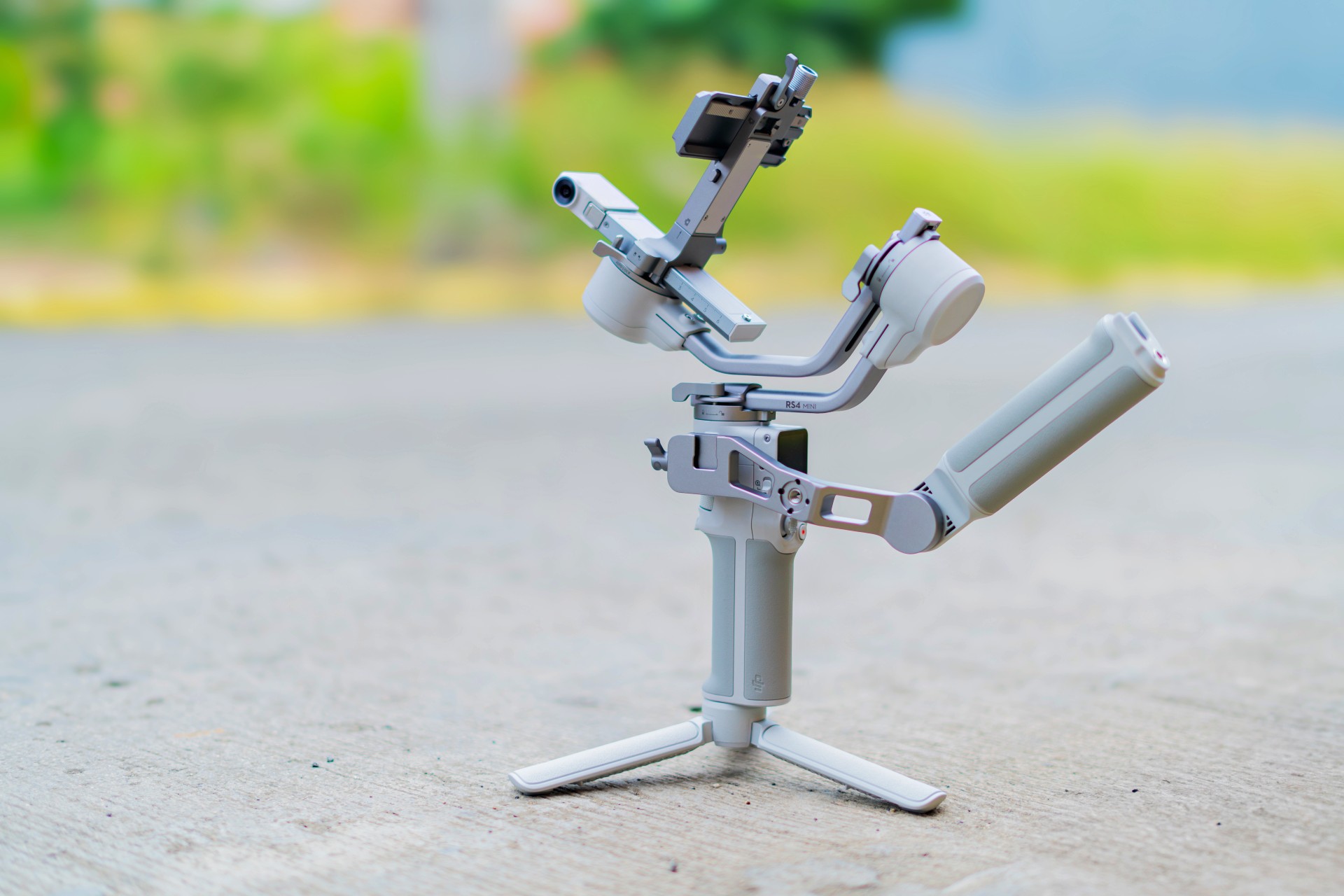
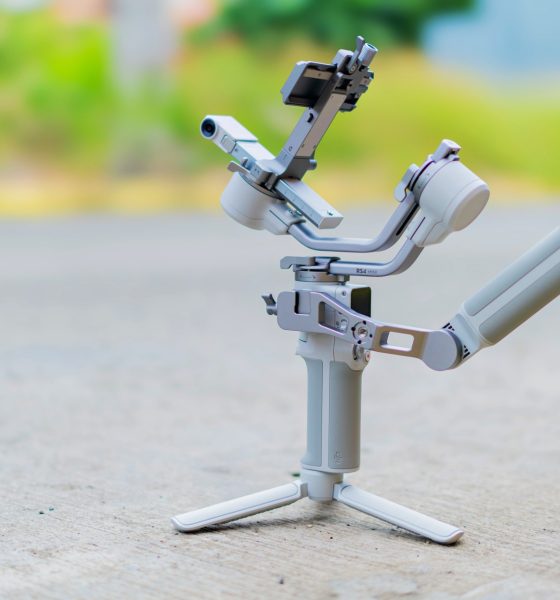

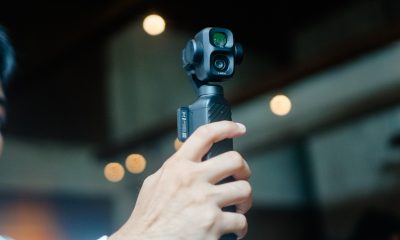
We’re not exactly gimbal virgins but it’s been a while since we’ve used one. So, when DJI reached out for us to try the DJI RS 4 Mini, we had our reservations. Still, it seemed like a nice addition to our set of production tools so we dove in headfirst.
The DJI RS x Mini series is meant for full-time content creators who have to deal with a plenty of movement in their shots and want the movement to be smoother and steadier. In the review guide provided by DJI, they listed the following as potential uses:
- Travel Portrait Vlogs
- City Hopping Vlogging
- Wedding Filming
- Real Estate Video
We had to bring in our production specialist Deric for this review. He’s a DJI RS3 user. We’ll sprinkle in his comments as we tackle what it’s like to use the RS 4 Mini.
Balancing Act
Like most things, it’s gonna be somewhat easier to set up if you have experience with Gimbals. If not, you’re probably gonna need YouTube to show you how. Here’s a quick one we found:
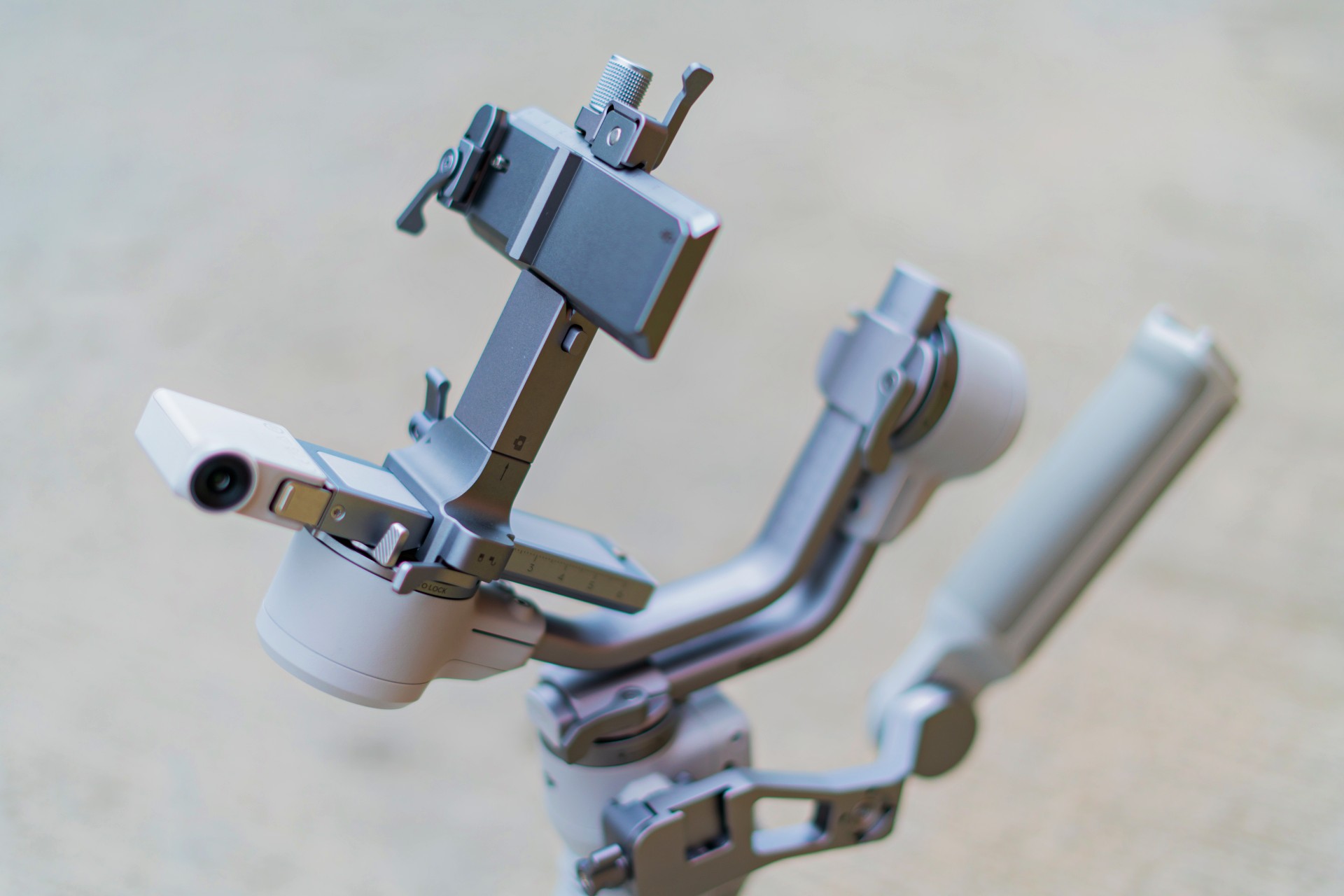
Setting up is a balancing act. There are levers you have to adjust to make sure the gimbal works properly with the camera you’re mounting.
There are a significant number of moving parts that you have to add to the main body. Once you figure that out, you’re not going to want to take it apart anymore.
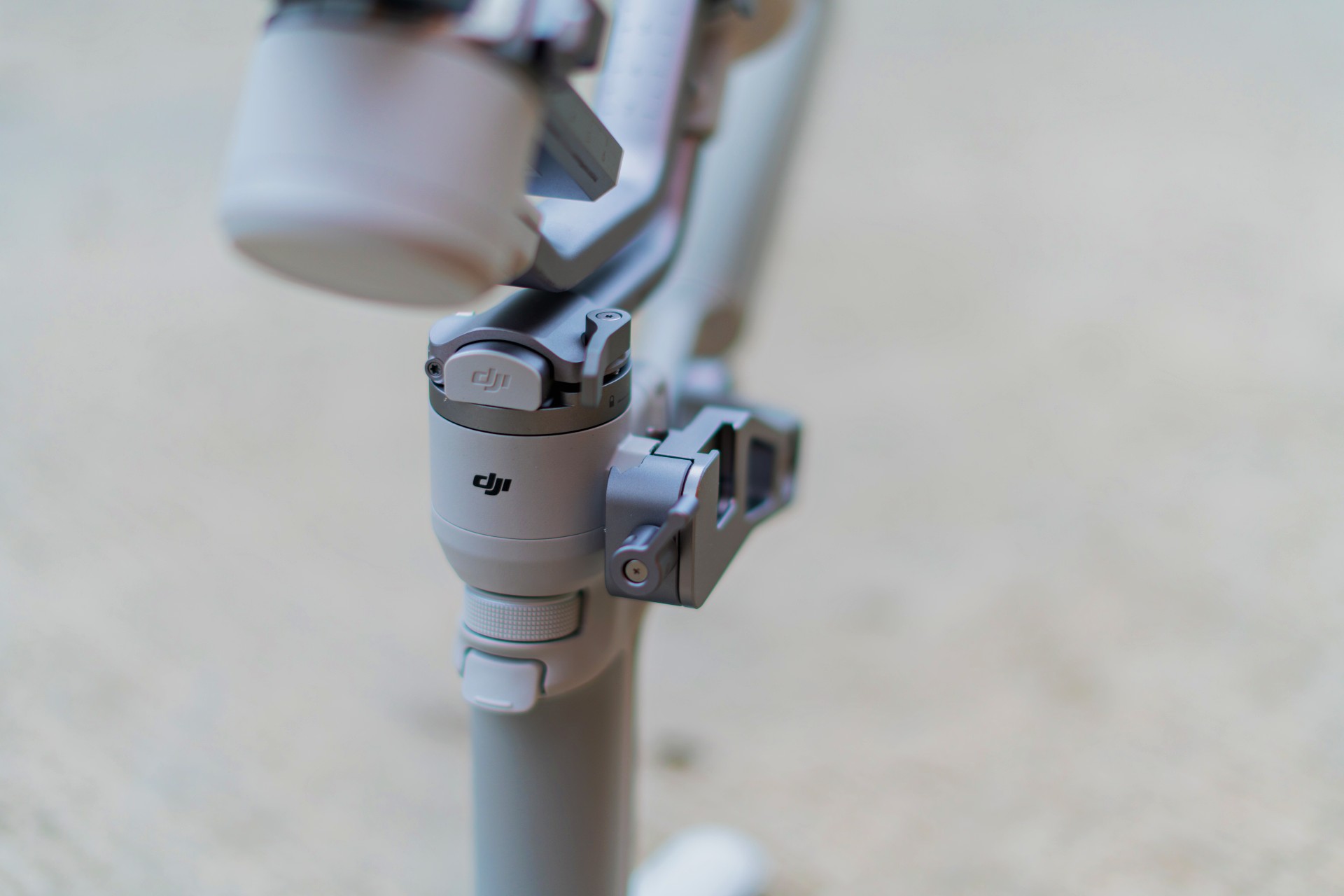
Set-up time depends on how comfortable you are with gimbals. For us, it took roughly around seven minutes to set up initially. That’s a rough guesstimate.
Seven minutes is a significant amount of time to set-up depending on the scenario you’re shooting in. Naturally, that would be faster as you grow more familiar with the RS 4 Mini. This should certainly play a part in the decision to get one.
DJI noted that it did have workflow in mind. Its 2nd-Gen auto-axis locks can unlock the gimbal’s three-axis locks in one second to speed up the filming, transition, and storage processes.
A key thing to remember is that it’s only able to balance and carry cameras/phones that weigh up to 2kg. It’s a key consideration especially when choosing which gimbal is the right one for you. Most mirrorless cameras with non-superzoom lenses should fit this category.
For our part we shot with both an a6500 with 35mm lens and another full-frame Sony Alpha camera and lens that weighs around 1.5kg. Still well within the weight limit.
Watch this unboxing, quick setup and showcase reel:
Handling and usage
Once everything has been set up, the actual usage mostly feels like a breeze.
The thing about this gimbal being mini means it’s incredibly lighter than most other gimbals. At just 890g, the DJI RS 4 Mini should be easy to carry for most people.
DJI hit the nail on the head with who they are targeting this for. If you’re a solo shooter, it won’t feel as strenuous using this on your planned shoots.
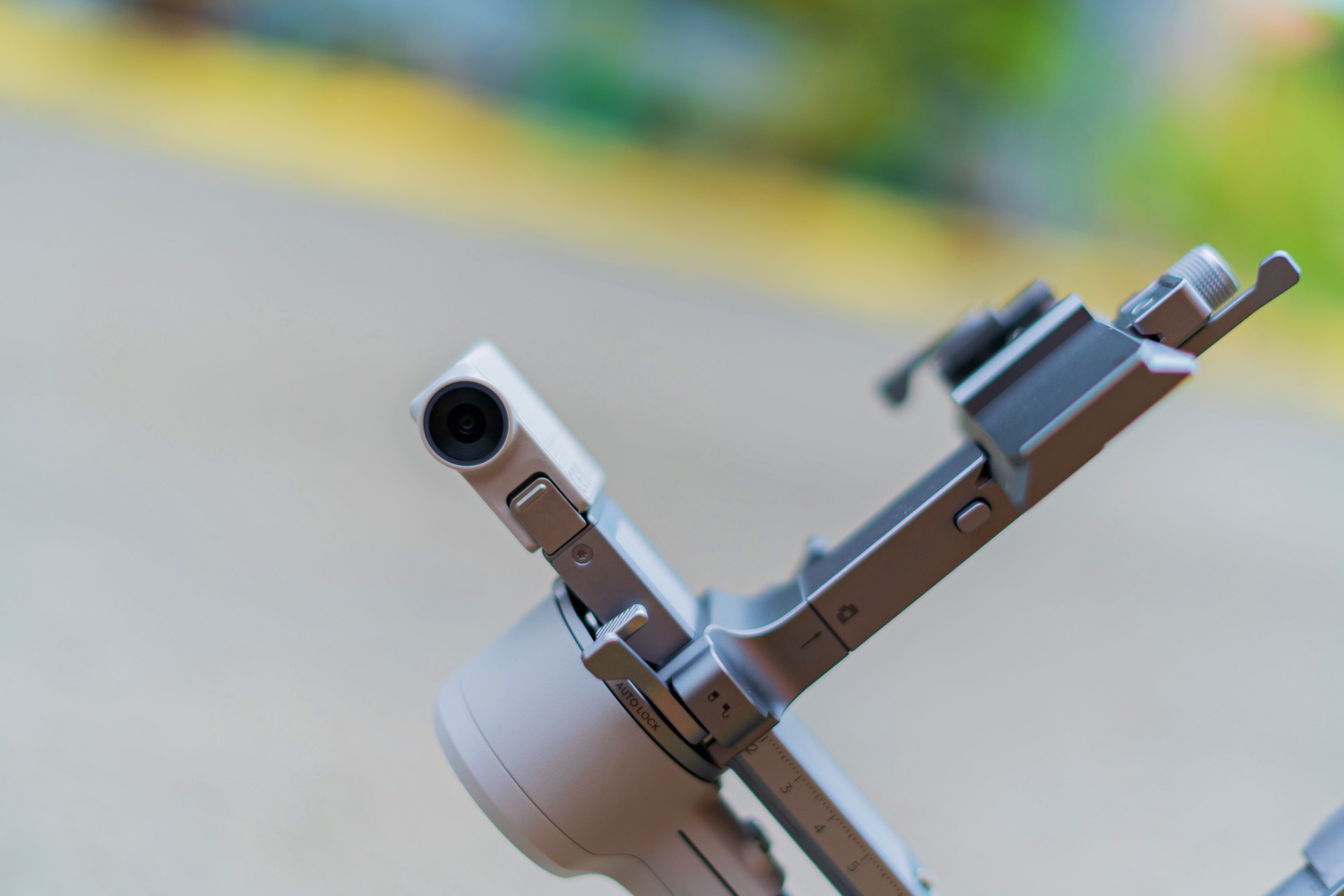
The tracking is superb. If you’re the type who needs shots where you have to be in the frame for vlogs and what not, you will absolutely love the tracking feature. It keeps you in frame and follows along quickly and accurately. On paper, it’s supposed to be able to keep the subject in frame for up to 10 meters. Our experience is mostly consistent with this metric.
It also helps that it works in either landscape or portrait orientation. So, whether you’re shooting long form stuff for YouTube or short form Reels, you’ll find that the DJI RS 4 Mini will be extremely helpful.
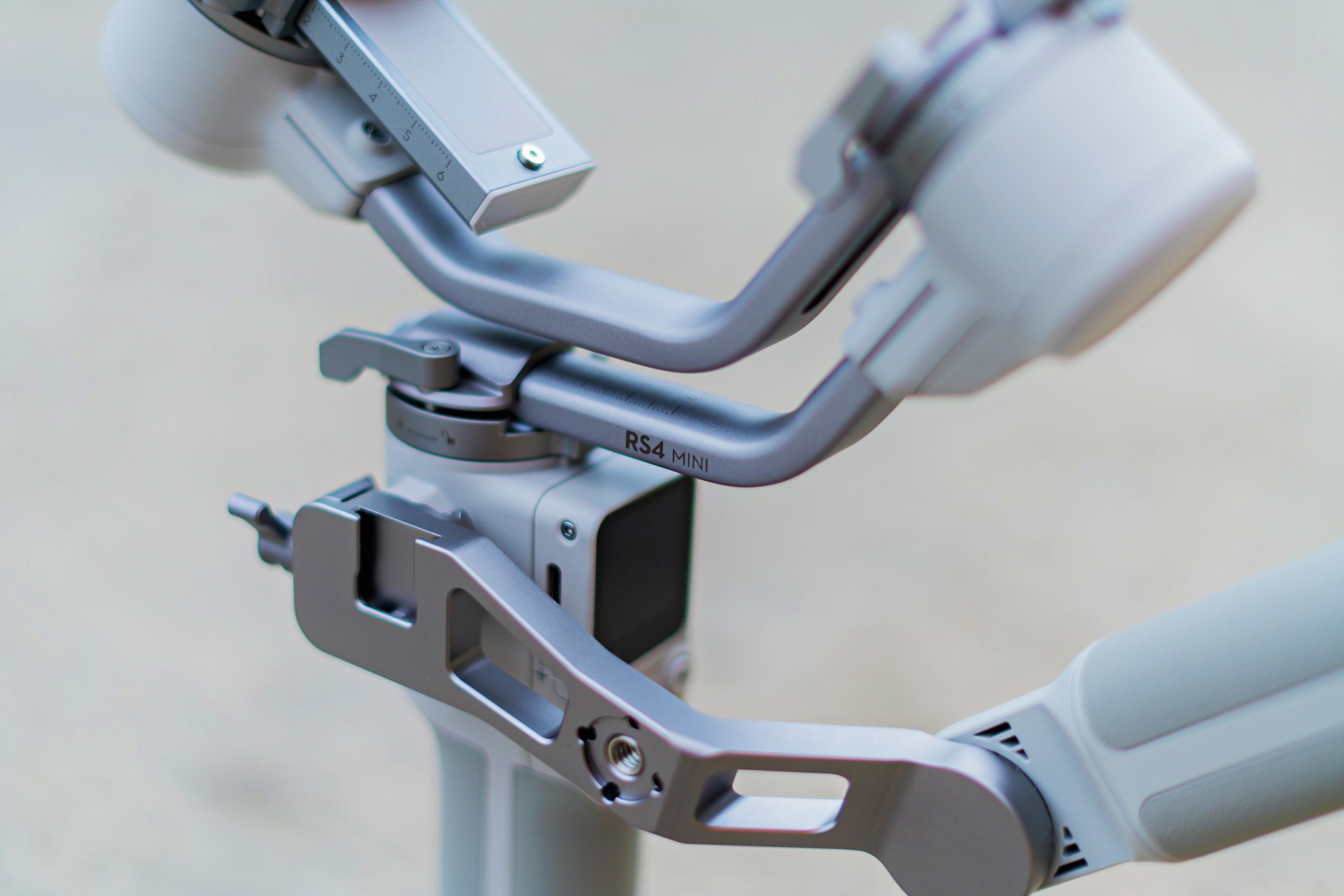
We did run into a minor issue. If you’re using the extra arm for balancing, it blocks parts of the screen on the gimbal. It’s a minor inconvenience that we mostly didn’t mind since we didn’t really make much use of that particular screen when taking footage.
Here’s a quick sample of how steady shots look with the DJI RS4 Mini:
Is the DJI RS 4 Mini your GadgetMatch?
The DJI RS 4 Mini is a swipe right. It would certainly be a nice addition to your production arsenal. However, only consider getting it if you know you really, absolutely need it.
This gimbal is for solo or small team video creators who want to elevate their production value. Starting at PhP 16,590 (The Combo sells for PhP 20,690), it’s a relatively affordable addition depending on where you are in your content creation journey.
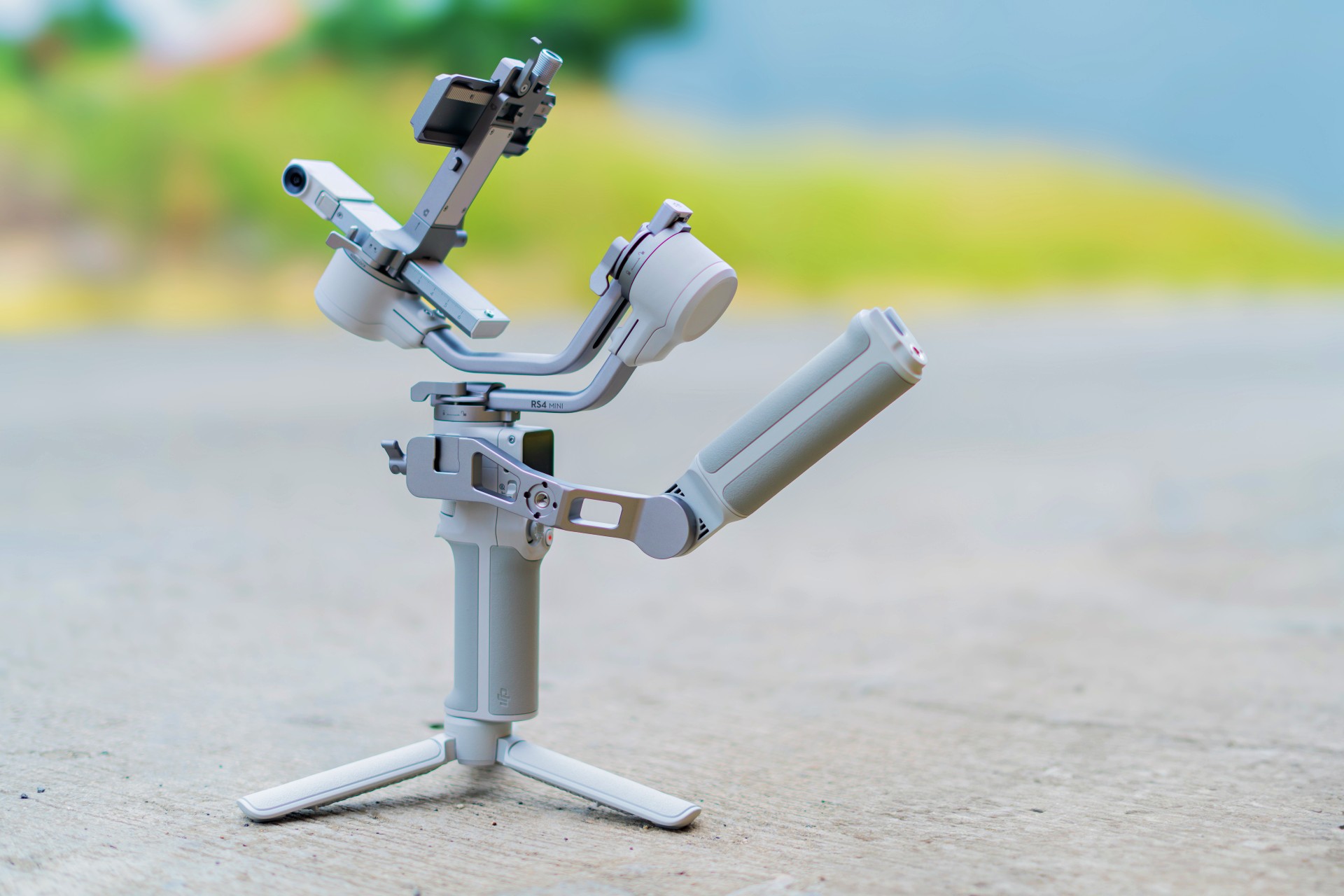
Only get this when you feel like you have absolutely maximized the current set of tools you already have. If that’s the case, you’ll know for sure when and where you’ll need a tool like this and how it can elevate the production value of your videos.



Accessories
Apple is reportedly working on its own gaming controllers
It might launch under the Beats brand.

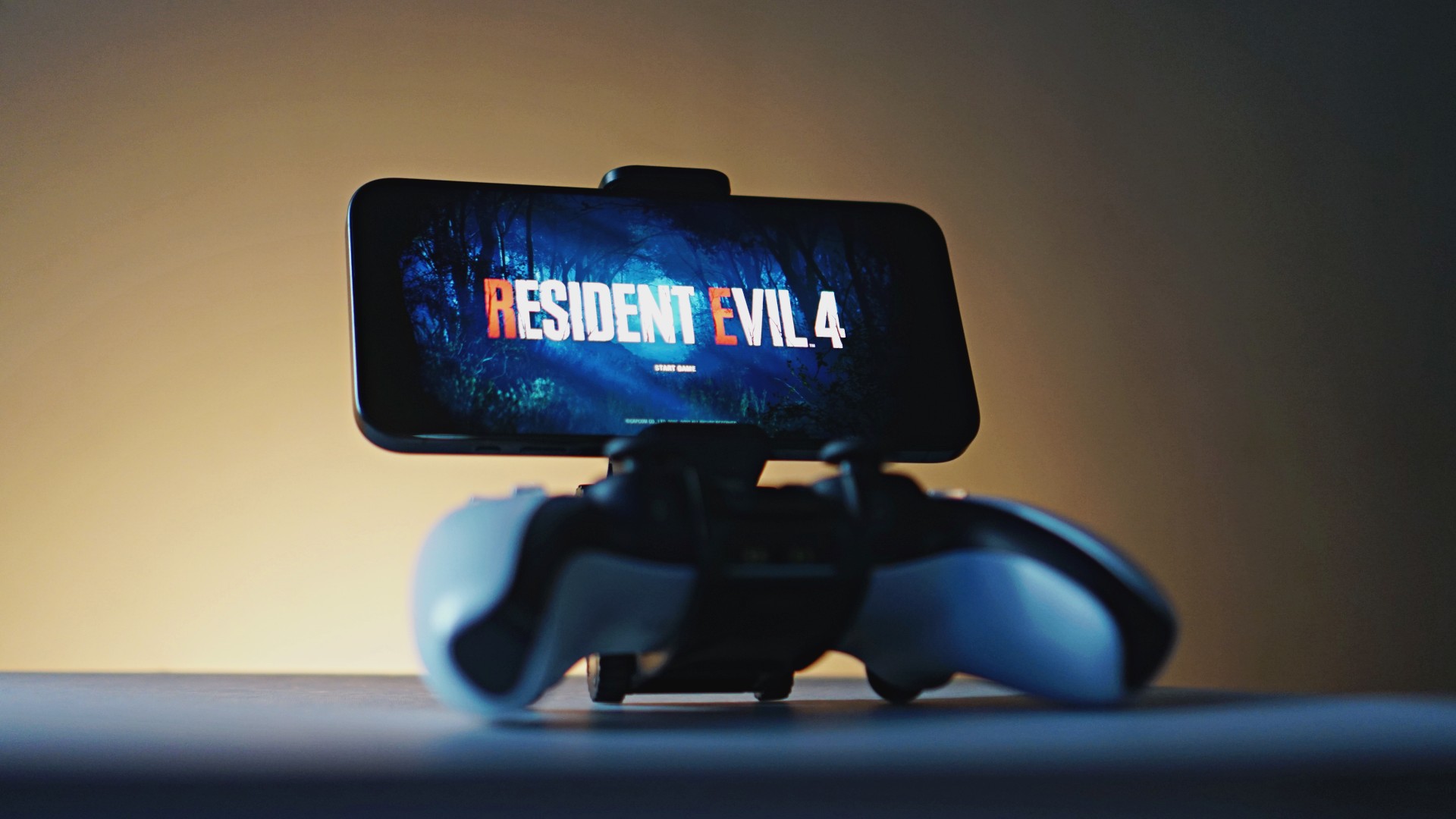
Last week, the iPhone Duo changed how you look at the ubiquitous smartphone. Foldables are in, and Apple is right there with it. But the company isn’t stopping with the foldable segment. Apple is reportedly working on its own branded game controllers.
According to Bloomberg, Apple has been working on a controller since last year. Further, a piece of code linked to macOS 27.4, spotted by MacRumors, includes references to two unknown gaming controllers.
Because Apple just concluded its huge event this month, it will likely be a while before we see confirmation of this controller. And it could be anything. Of course, because the Duo is fresh on our minds, the easiest answer is a mobile controller than can maximize the foldable’s ability to stand by itself. It could also use Apple’s larger screens like the iPad, the MacBook, or the Mac. Some even speculate that this could be Apple’s stronger push into the gaming market.
Outside of the actual hardware, the reports are also claiming that the controller will arrive by way of Beats, rather than from Apple itself. At first, the branding comes off as a surprise, but then again, Beats hasn’t really evolved past an audio brand in a long, long time. Is it time to revitalize Beats as something more than just a peddler of headphones?
SEE ALSO: First Look: Apple iPhone Duo
Accessories
New AGON gaming monitor features up to 1000Hz refresh rate
New level of speed, flexibility for competitive gaming

AGON by AOC has released the new AGON Pro AGP277QK dual-mode gaming monitor for the competitive segment.
This new offering features up to 1000Hz refresh rate at HD and 540Hz at QHD so gamers have the flexibility to prioritize either clarity or speed.
The 27-inch IPS gaming monitor comes with NVIDIA G-SYNC, synchronizing the monitor’s refresh rate with the GPU to help minimize screen tearing, stuttering, and input lag.
This is combined with 0.3ms MPRT and 1ms GtG response times for fast-moving action that is sharp and responsive, giving competitive players a clear visual advantage.
Moreover, the AGON Pro AGP277QK features VESA DisplayHDR 400 certification for enhanced contrast and more vivid, lifelike visuals.
Delta E < 1 color accuracy also provides precise color reproduction not just for gaming but even other scenarios like content creation.
For even smoother high frame-rate gameplay, MBR Sync combines motion blur reduction with variable refresh rate (VRR) technology. This helps maintain clarity during rapid movements.
The monitor also includes Low Input Lag, customizable Light FX ambient RGB lighting, Gaming Mode presets, and Shadow Control.
The display comes with HDMI 2.1 and DisplayPort 2.1 connectivity, along with a height-adjustable stand and G-Menu support.

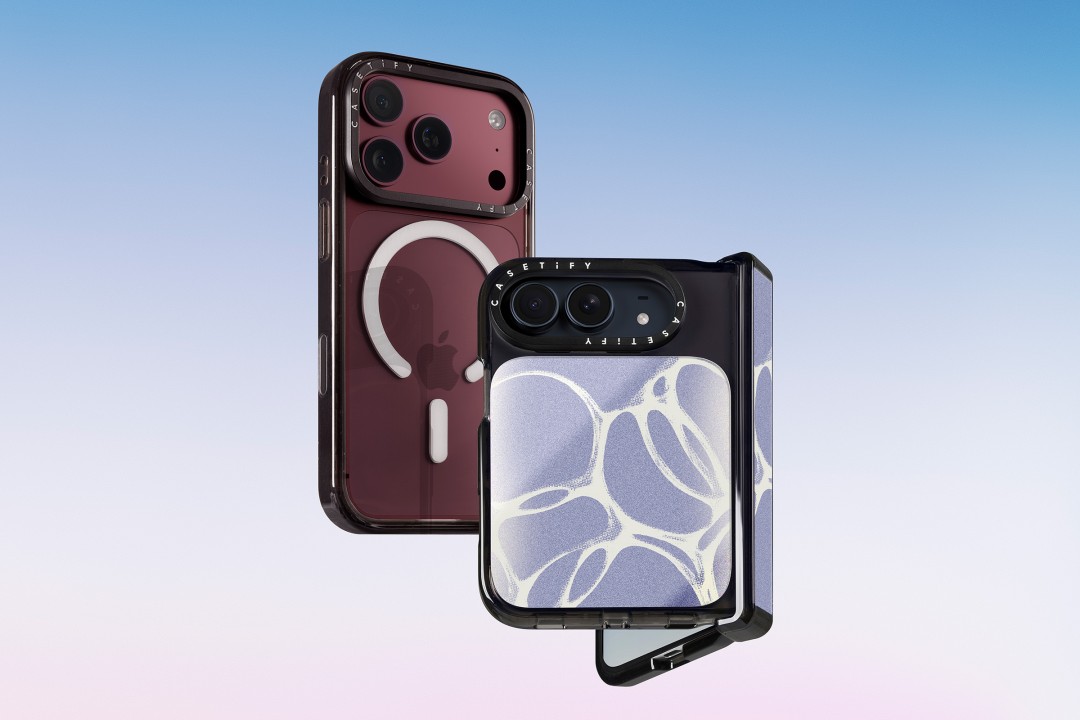
CASETiFY is launching a new collection of cases and accessories for the iPhone 18 series, updating some of its most popular designs with refined finishes, new protection features, and expanded customization options.
Impact Case
The collection is led by the Impact Case, CASETiFY’s best-selling case with more than 19 million units sold worldwide. It uses an internal EcoShock™ design and Duo-Lock by CASETiFY™ bonding for impact absorption and dispersion. The case is tested for drops of up to 8.2 feet and 4x Military Standard 810G. It also features a scratch-resistant Glaze finish, raised bezel, precision-engineered camera control button, and MagSafe and wireless charging compatibility.
The Ultra Impact Case builds on the same family with redesigned, more rounded corners and reinforced structures with internal air cells. It is tested for drops of up to 11.5 feet and 6x Military Standard 810G. It also has a slimmer profile, multiple design options, and MagSafe compatibility.
Both cases are available in Ring Stand variants. These feature a built-in metal camera ring stand that adjusts up to 150 degrees, with a screwless hinge designed for durability and stable hands-free viewing. Select models are also available with Glitter and Mirror finishes.
Ripple Case
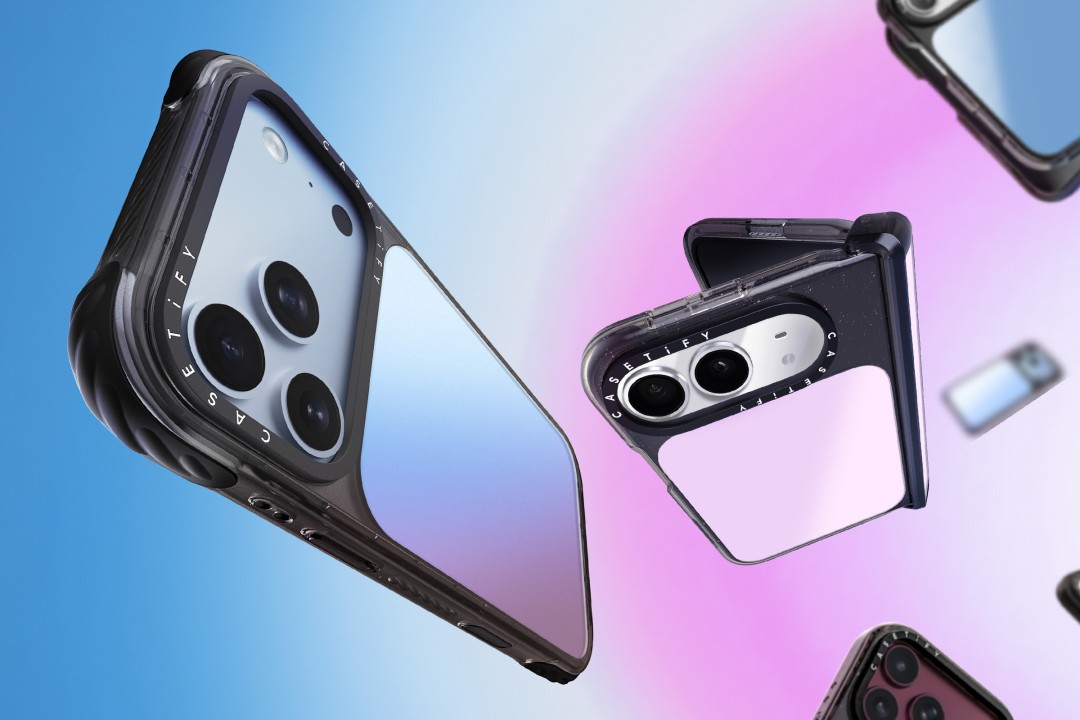
CASETiFY is also bringing its Ripple Case to the iPhone 18 lineup. The soft-touch silicone case features rippled edges and puffed corners, with protection tested for drops of up to 6.6 feet and 3x Military Standard 810G. New colorways include Banana, Dusty Blue, Blush Pink, and Fig, alongside Black and White.
For users who want more protection, the Bounce Case offers CASETiFY’s highest level of drop protection in the collection. Its Expanded Bounce Corners, TesseLock™ design, and enhanced Duo-Lock bonding support drop protection of up to 21.3 feet and 7x Military Standard 810G.
Alloy Ripple Case
The lineup also includes the Alloy Ripple Case, which reworks the Ripple’s sculptural design in aluminum with an EcoShock™ design and Duo-Lock bonding. It is tested for drops of up to 8.2 feet and 4x Military Standard 810G. The Cloud Case uses a quilted soft-touch design with pillowy bumpers and up to 6.6 feet of drop protection.
Beyond cases, CASETiFY is expanding its accessories with the Ripple Wallet, Grip Stands, Loop Grips, Jelly Wristlets, Bow Charm Wristlets, and other charm-compatible straps. The iPhone 18 cases range from USD 50 to USD 90 , while accessories range from USD 25 to $USD 45.
The collection is available beginning September 10 through CASETiFY. The company is also preparing a case lineup for the upcoming iPhone Duo, with its waitlist already live.


DJI Lito X1 review: Is this the best lightweight drone for creators?
Making a strong case as a travel companion and a capable B-cam!


REDMI Note 17 Pro Max review: A new breed born from AI greed
Welcome to the new normal


Marvel’s Wolverine review: When the claws come out
A brutal, cinematic superhero adventure
DJI Lito X1 review: Is this the best lightweight drone for creators?

Now Playing: Resident Evil

HONOR, Fidesmo partner for contactless payments across Europe, Middle East

Ford revs up Truck Month with extended 5-star care offers
REDMI Note 17 Pro Max review: A new breed born from AI greed

TECNO MEGAPAD 2 review: Eyes on the size

realme 16T 5G with 8000mAh battery, IP69 Pro rating launches in PH

HUAWEI Pura X View is 2026’s first WIDE slab-type smartphone

REDMI reveals the refreshed Note 17 and Note 17 Pro series

REDMI Note 17 Series: Price, availability in Singapore


-
 News1 week ago
HUAWEI Pura X View is 2026’s first WIDE slab-type smartphone
-

 News2 weeks ago
The CAMON Slim 5G is TECNO’s latest ultra-slim smartphone
-
 News1 week ago
iPhone 18 Pro series: Price, availability in the Philippines
-

 IFA 20262 weeks ago
TECNO’s POVA 8 Pro gets a stealthy makeover
-

 Automotive2 weeks ago
Ford’s new Everest lineup brings V6 engine to the top, tech down the line
-

 Gaming2 weeks ago
Now Playing: Elden Ring Tarnished Edition
-
 Singapore1 week ago
iPhone 18 Pro series: Price, availability in Singapore
-

 Philippines2 weeks ago
Smart cuts 5G Home WiFi price