
Gaming
MARVEL Tōkon: Fighting Souls review: Easy to pick up, hard to put down
Welcomes casual and experienced fighting game players

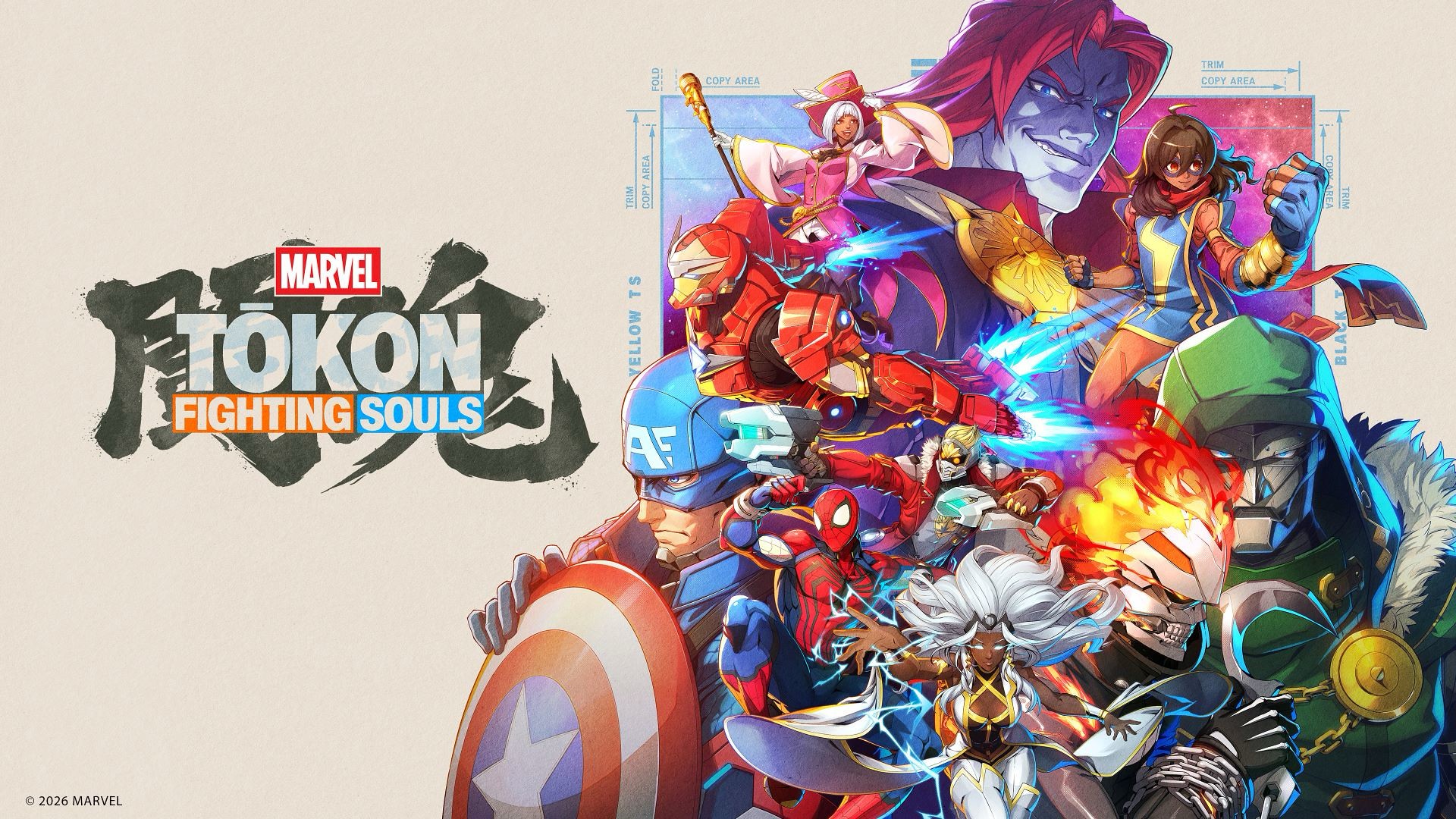
MARVEL Tōkon: Fighting Souls feels like a spiritual successor to the Marvel vs. Capcom fighting games of old — just without the Capcom bit, obviously.
That comparison isn’t just because it features a roster of Marvel heroes and villains throwing hands at each other. Tōkon captures that same feeling of putting together a team of characters you love, watching them bounce off one another, and slowly figuring out how to make them work together.
I’ve always been a casual fighting game player. I can play a little bit, but I’m a benchwarmer at best. I do watch tournament matches every now and again, though, and I can tell when real skill is involved.
It’s kind of like basketball to me. I may not be particularly good at it, but I know a good play when I see one.
After spending some time with Tōkon, I can see the appeal.
It’s welcoming enough for someone like me to jump in and have fun, but there’s enough depth underneath the simple controls to reward players who want to take the time to master it.
The tutorial is important
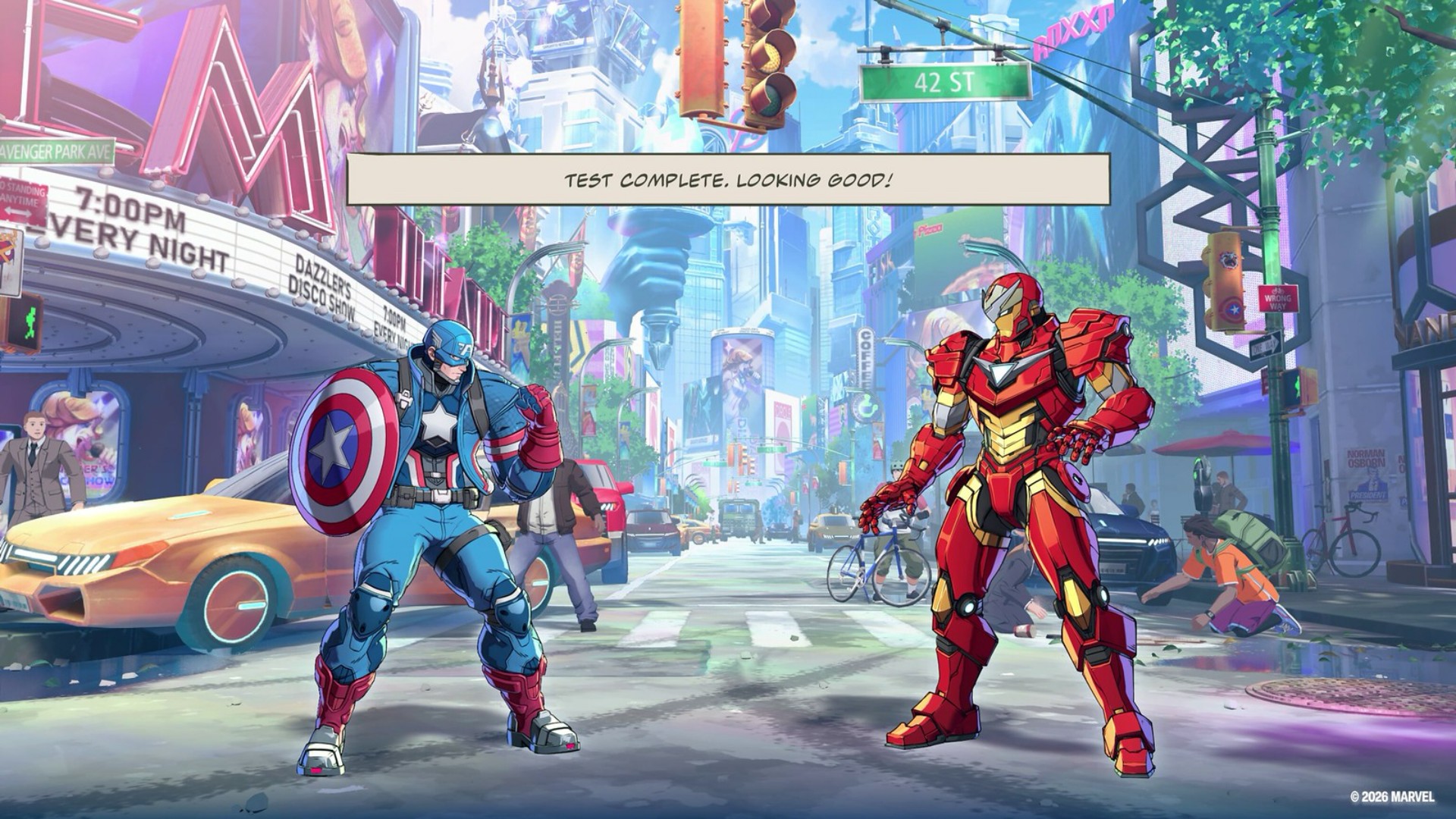
I handled the tutorial portion during the demo, so when I got the full game I jumped straight into Story Mode.
That said, the tutorial is very important.
The button presses seemed easy enough to follow at first. But the deeper the tutorial went, the more complex it started to feel.
That’s not necessarily a bad thing. In fact, it does a good job of gradually guiding you through the game’s mechanics instead of throwing everything at you at once.
Anyone who’s ever played a fighting game at any capacity will have an understanding of how the general mechanics work.
But Tōkon layers its own systems on top of those familiar fundamentals.
The tutorial essentially takes you through the Training Mode. It’s great for getting a feel for how to execute the unique moves per character.
I’m a firm believer that you should just throw yourself at a match and only go back to training if you hit a wall and can’t advance or seem unable to overcome your opponent.
That’s how I prefer to learn.
MARVEL Tōkon: Fighting Souls OPEN BETA_20260726134748
And Tōkon makes that approach viable because the fundamentals don’t feel intimidating.
The game’s official materials also emphasize this balance. It offers adjustable controls, traditional and quick inputs, easy chain combos, character guides, training, and other ways to learn the game’s systems.
There’s more than enough here that the game should feel welcoming to both casual and hardcore fighting game fans.
Four characters, one fight
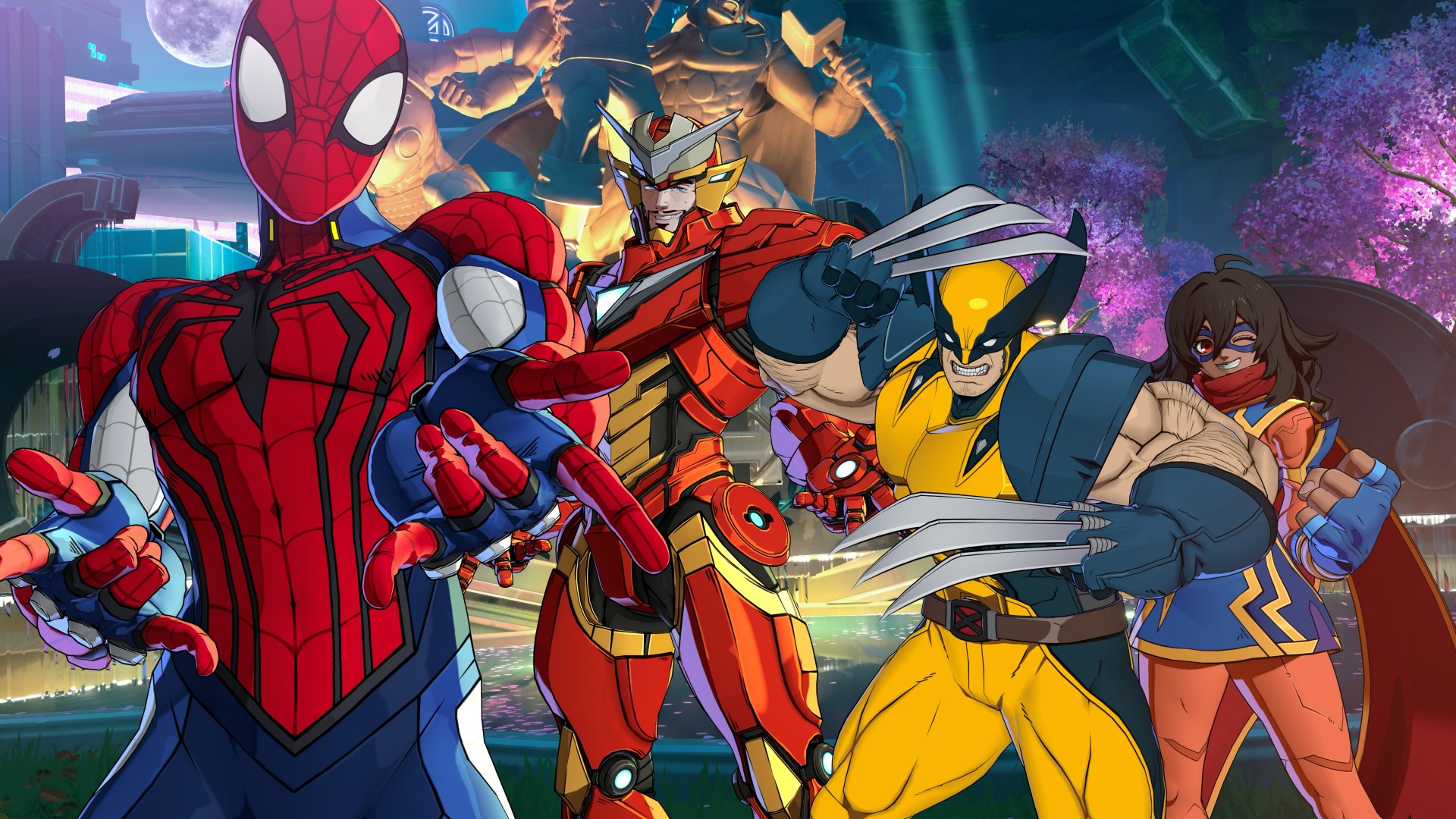
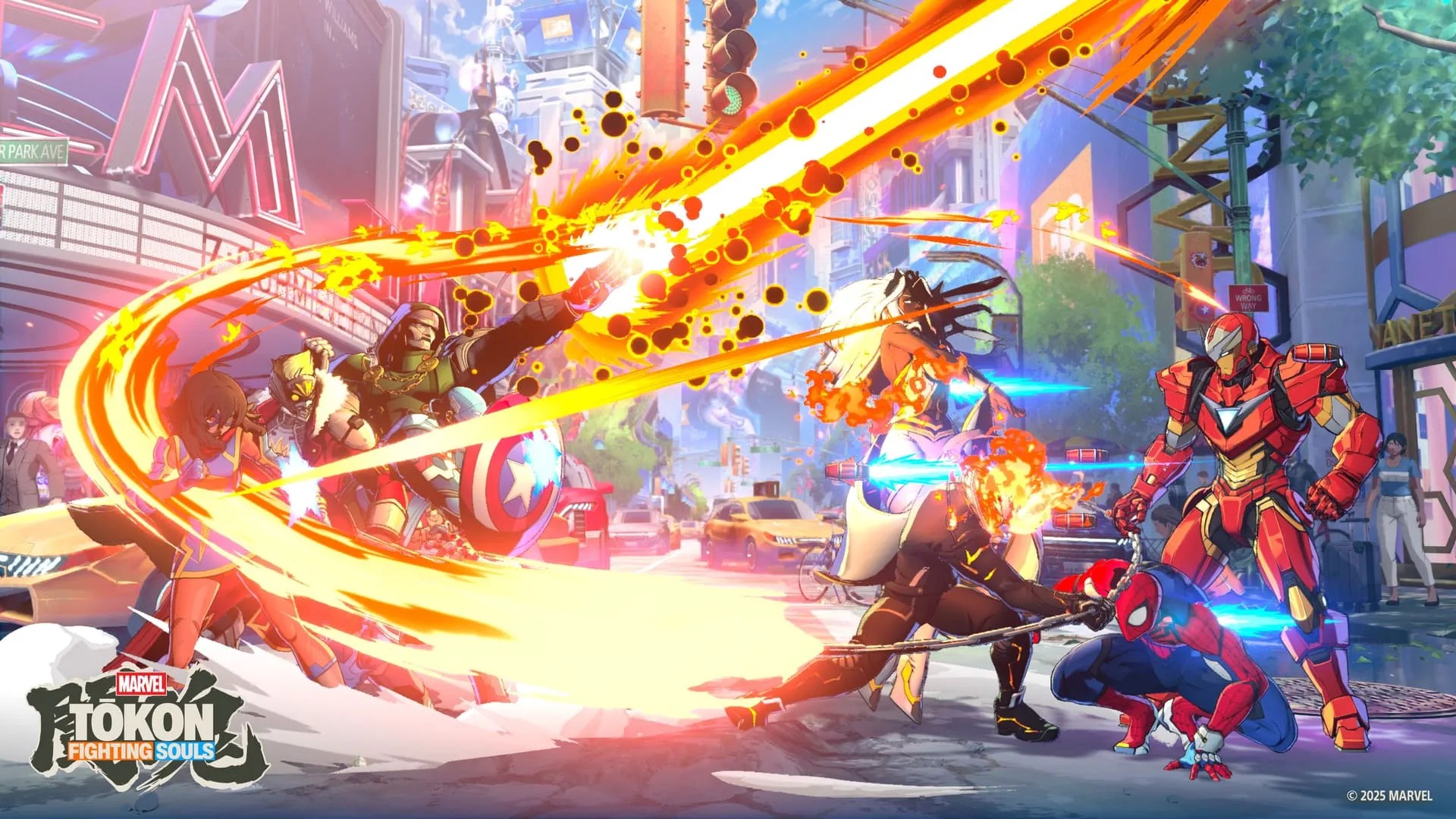
The biggest thing to wrap your head around is probably the game’s 4v4 structure.
You pick four characters: one main fighter and three assists. But you don’t immediately have access to your entire team.
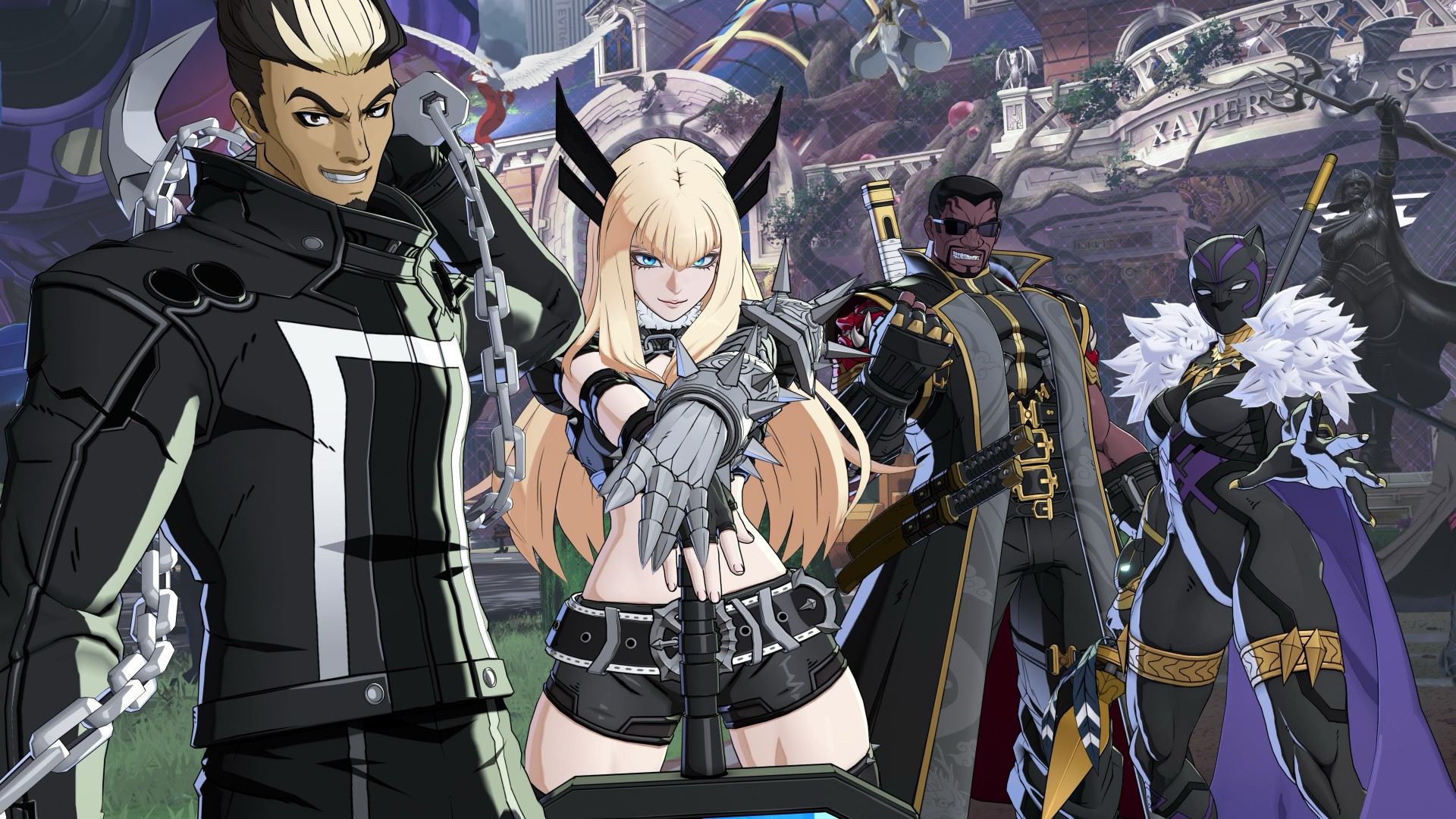
You only get access to the first assist initially. You unlock the other two after a Stage Break happens in a match. A Stage Break is when you finish a combo with the opposing character flying through an extended area of the fighting stage.
So it’s entirely possible to go an entire match without unlocking all your assist characters.
Now that I’ve spent more time with it, though, getting to a Stage Break is actually fairly easy. Landing and chaining combos doesn’t feel too complicated to pull off, so you can get access to the rest of your team without having to perform some impossibly technical sequence.
The assists are great.
You simply hit X or Cross (or the bottom-most face button) for a generic assist, but combining right + X or down + X gives you long-range and air-launch assists.
These are great for opening up your opponents to combos or countering their moves.
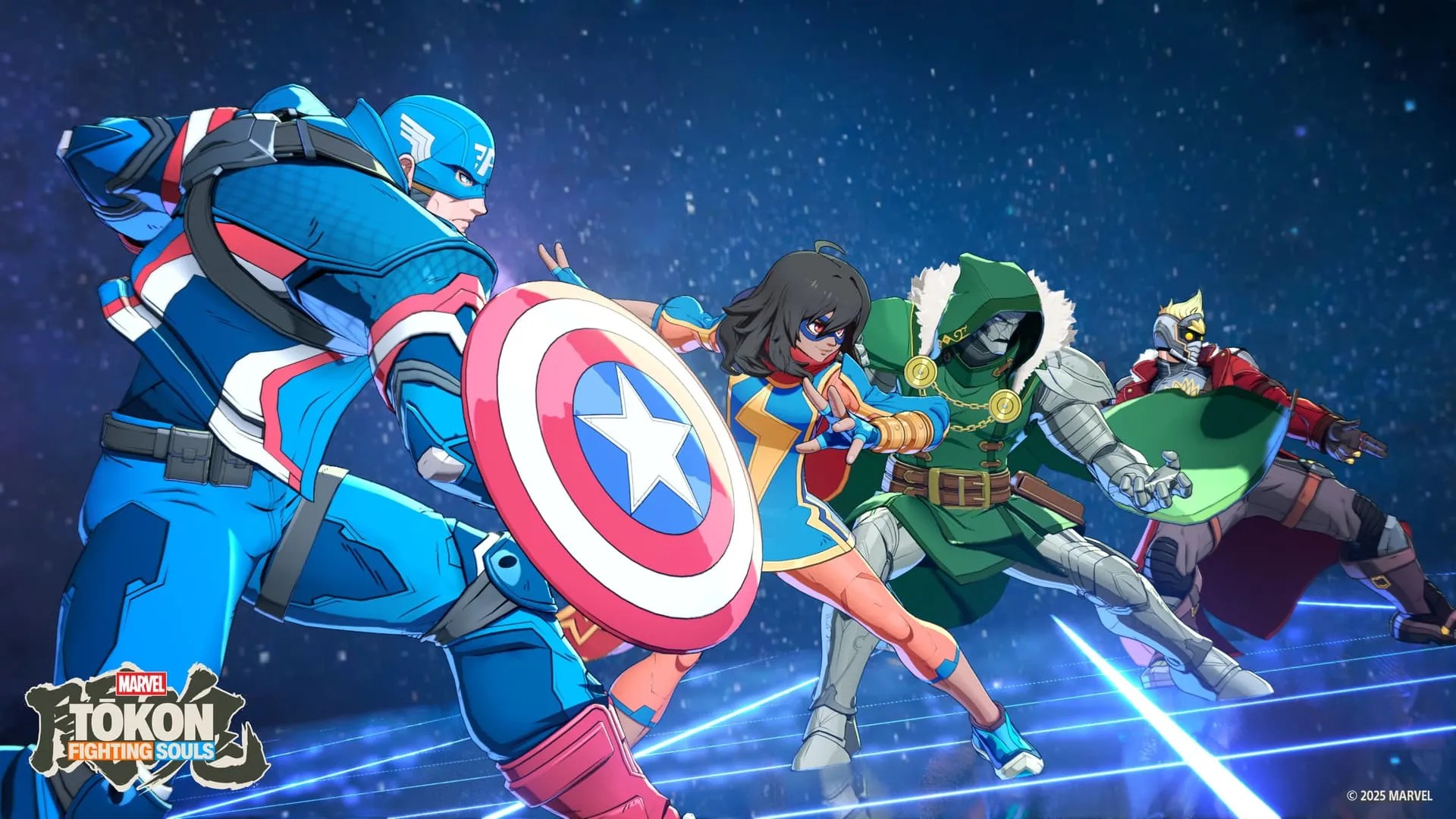
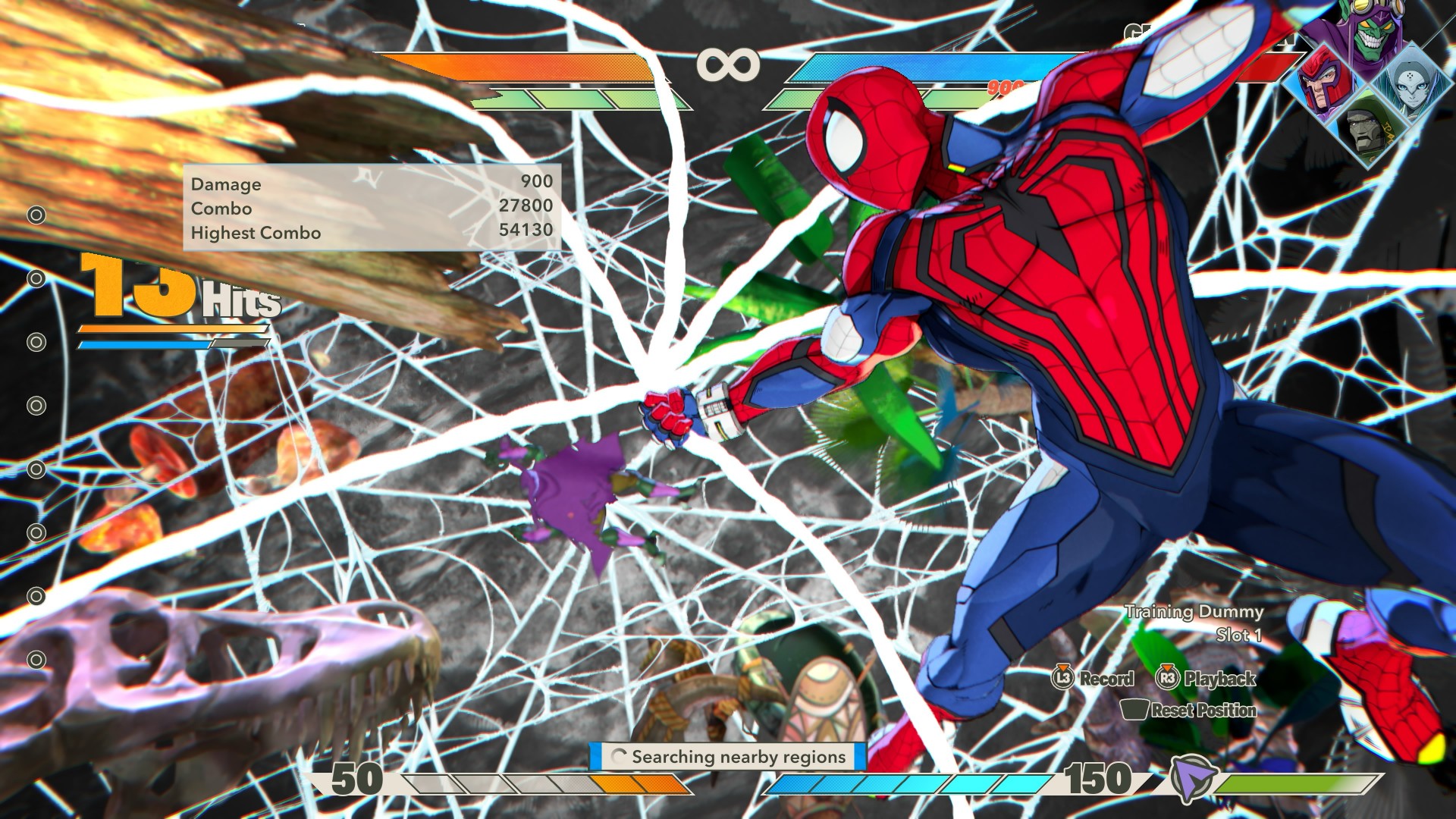
Once you have all your assists available and fill the gauge all the way up to 150, you can execute a Super Attack with every single one of your characters joining the assault.
It’s a fantastic payoff for building up your team.
This is also where Tōkon starts feeling like more than a simple fighter.
The controls are easy enough to understand, but the deeper you get into a fight, the more you start thinking about when to call an assist, how to extend a combo, when to counter, and when to save your resources.
It’s the same kind of satisfaction I get from Dragon Ball FighterZ or Guilty Gear Strive.
Simple controls can get you started.
The complexity comes from figuring out what you can actually do with them.
Spider-Man is my guy
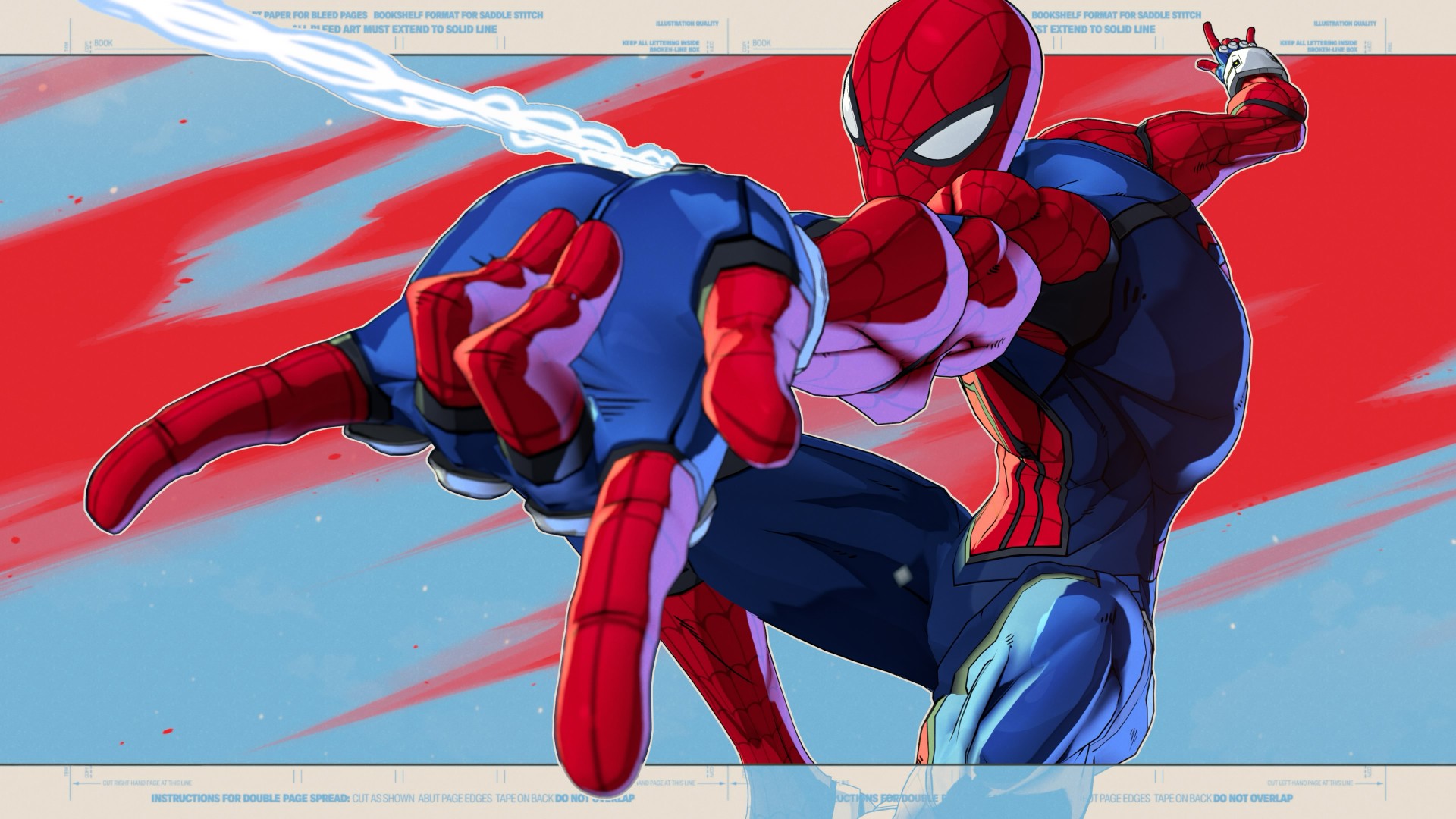
I spent most of my play time using my favorite character of all time: Spider-Man.
Honestly, he feels a little trickier to play than most.
His special move involves him shooting a web, and you can either follow it up with a combo or use it to swing away from attacks.
That little bit of flexibility makes him feel very Spider-Man.
You’re constantly darting around the fight, looking for an opening while also having a way to get yourself out of trouble.
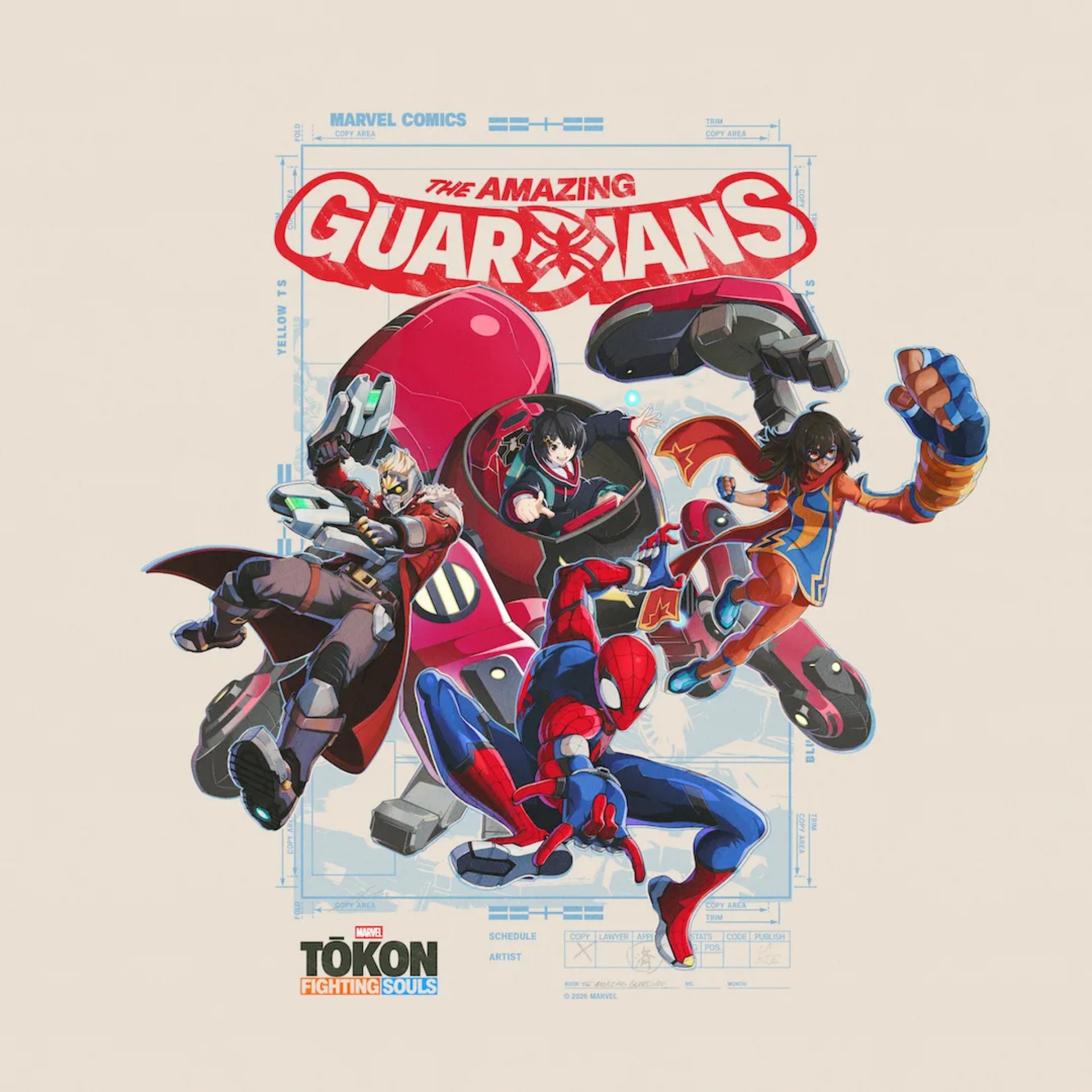
I initially played him with his teammates set by the game: Ms. Marvel, Peni Parker, and Star-Lord.
But outside of the story, I usually always have Wolverine up next.
He’s an aggressive damage dealer and a button masher’s delight.
That’s part of what makes Tōkon’s roster work.
Going through Story Mode gives you a chance to get a feel for how each character handles and who fits your style the most.
With 20 characters available at launch, there’s enough here to mix and match, and you’re bound to find a set that you feel at home using.
And sometimes the character you expect to like isn’t the one you end up enjoying the most.
The characters change how you play
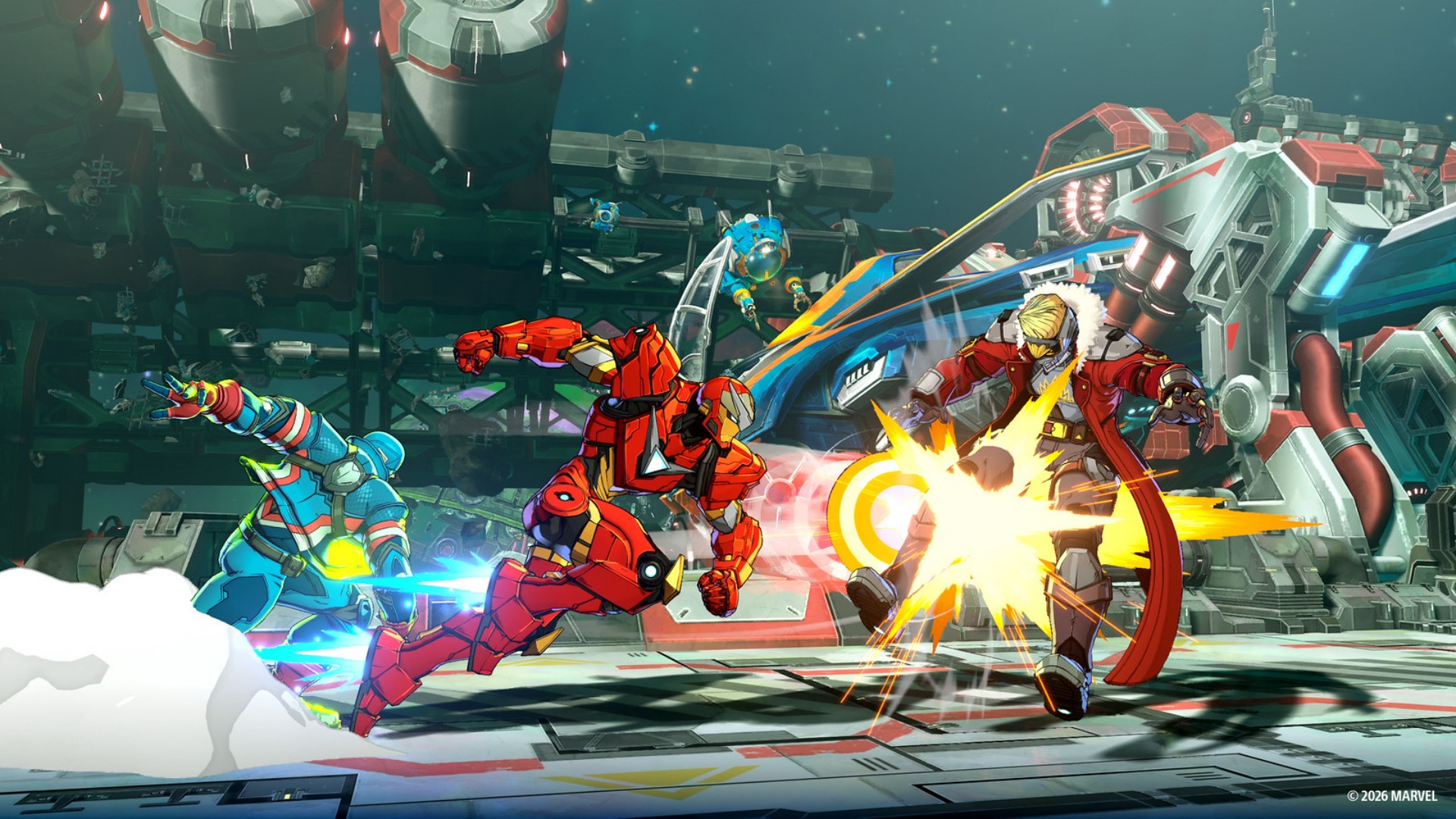
The character I wasn’t particularly interested in but was surprisingly fun for me to use was Blade.
It probably has to do with the types of movement I associate with each character.
With Spidey, I’m always darting around.
With Wolverine, I’m always rushing the enemy.
But with Blade, I suddenly move with more measure.
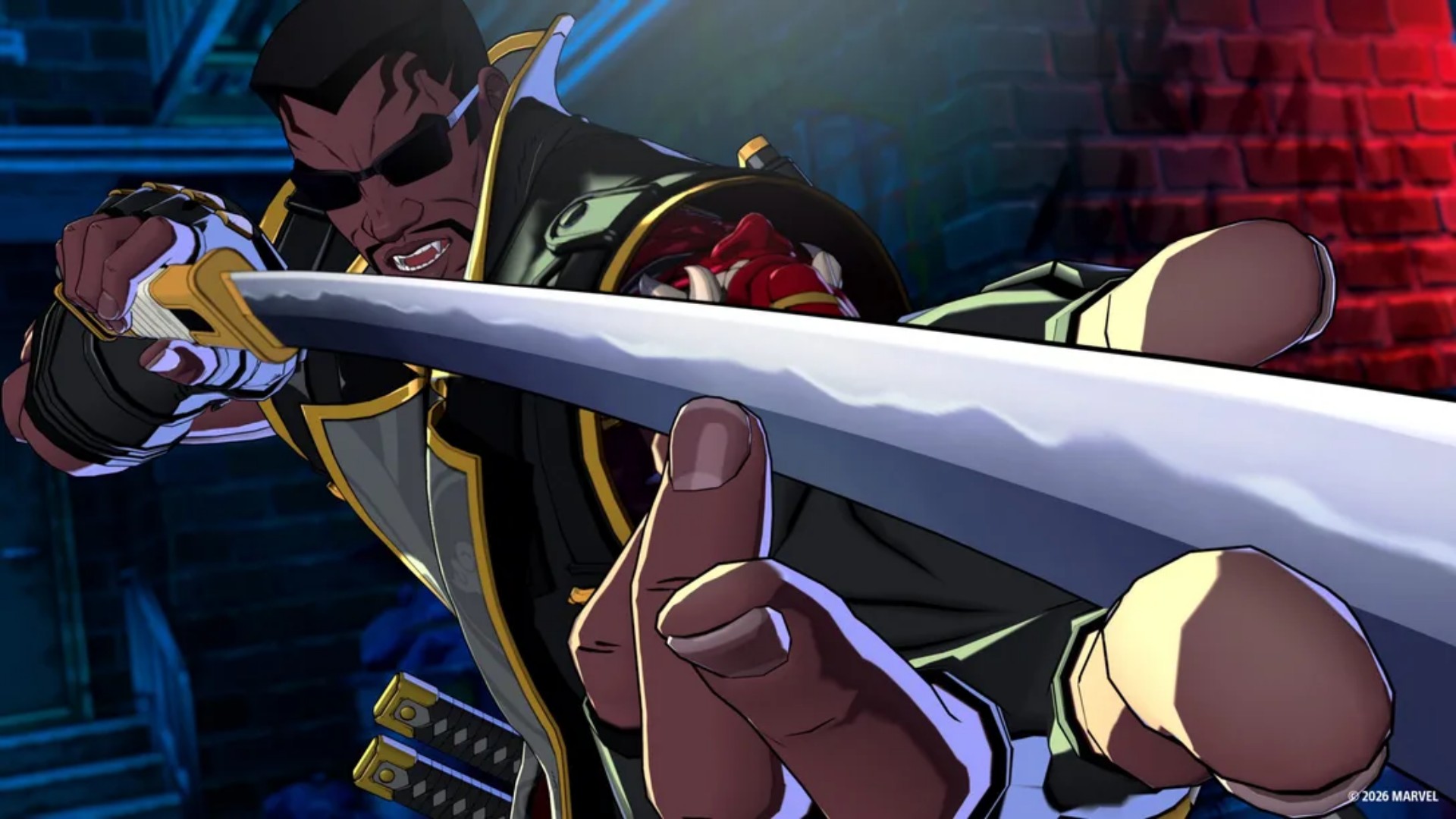
Something about his stance and attacks makes me want to approach the fight a little more deliberately.
Ms. Marvel was also a character I didn’t care much for at first but ended up enjoying using.
Mostly also because she forces me to dial back a bit and be more deliberate with my movements.
That’s one of the more enjoyable things about Tōkon.
The roster doesn’t just give you different characters with different movesets. It encourages you to approach fights differently.
You’re not necessarily going to play the same way with every character. And that makes finding the right team more rewarding.
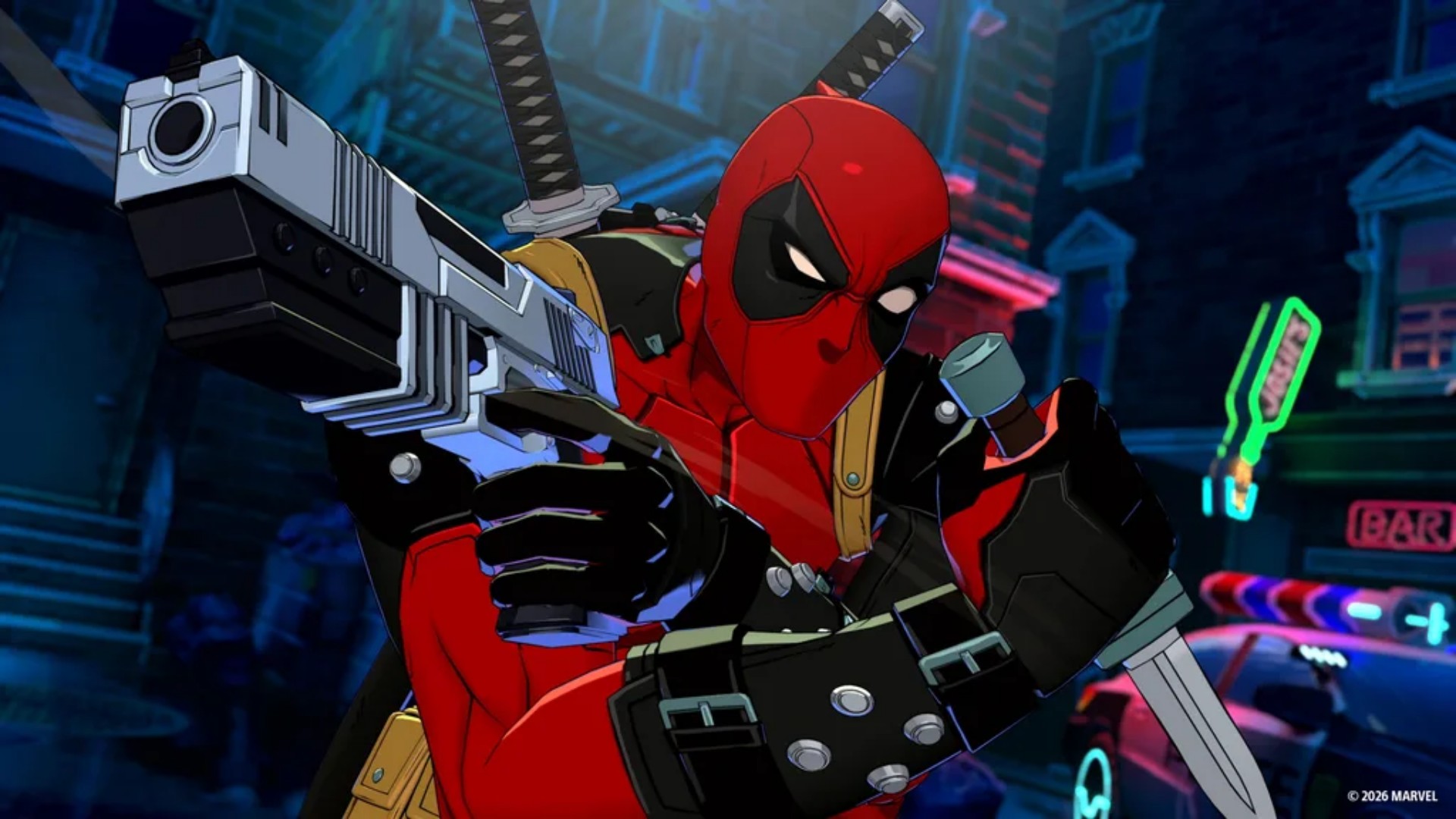
Deadpool, meanwhile, has a lot of Easter egg references from other games and franchises.
I haven’t seen them in my own playthrough, though, so it’s frustrating me a bit.
View this post on Instagram
That probably says something about how much Marvel fan service Arc System Works has packed into the game.
Even when I’m not finding the references myself, I know I’m probably missing something.
Losing doesn’t feel cheap
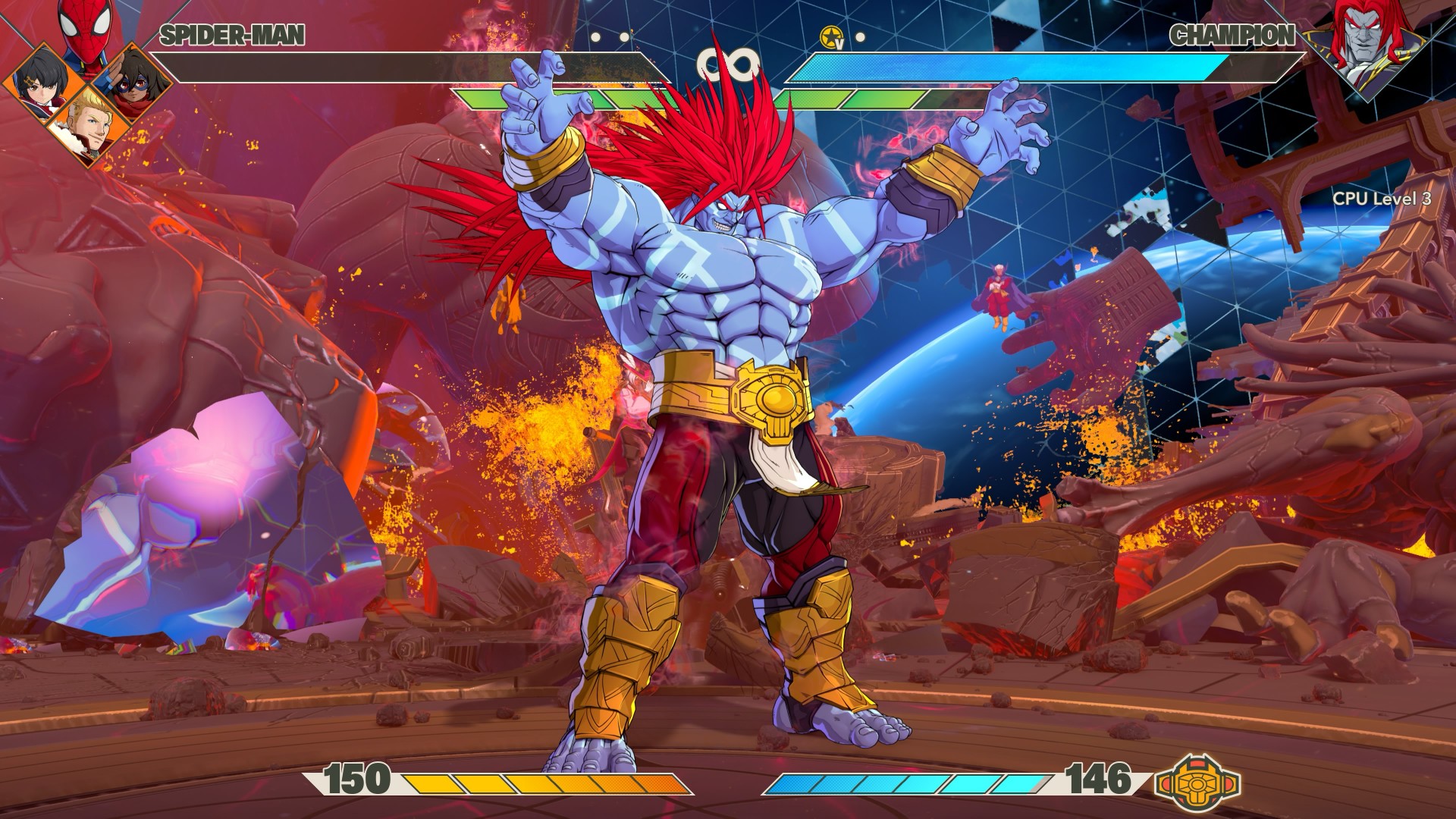
This might be one of the biggest compliments I can give Tōkon.
When I lose matches, it never feels like it’s because the opponent got some sort of buff or something.
I can clearly see where I mistimed a block or a counter, and that led to a devastating string of combos that led to my demise. I don’t mind losing when I understand why I lost.
There’s a difference between getting beaten and feeling like the game simply decided that you were going to lose. Tōkon generally makes me feel like the former.
I’m not suddenly going to pretend I’m good at fighting games. I’m still a casual player. But I can recognize when I made a mistake.
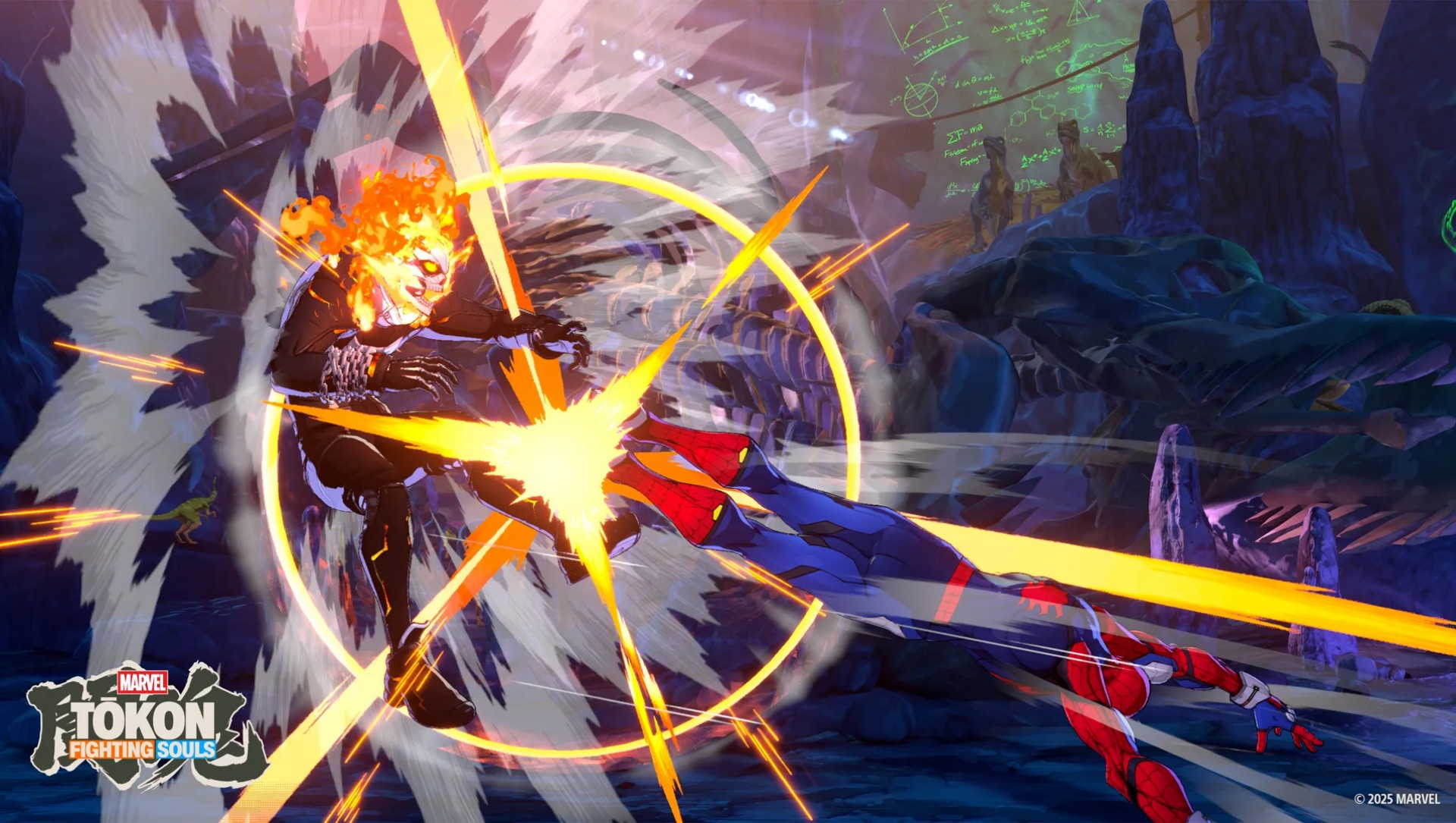
And when I watch a really good player put together a sequence, I can appreciate the skill involved even if I have absolutely no idea how to replicate it.
That’s where I think Tōkon strikes a good balance.
The game lets me enjoy fighting games at my level while leaving the door open for players who want to take things much, much further.
It’s anime as hell
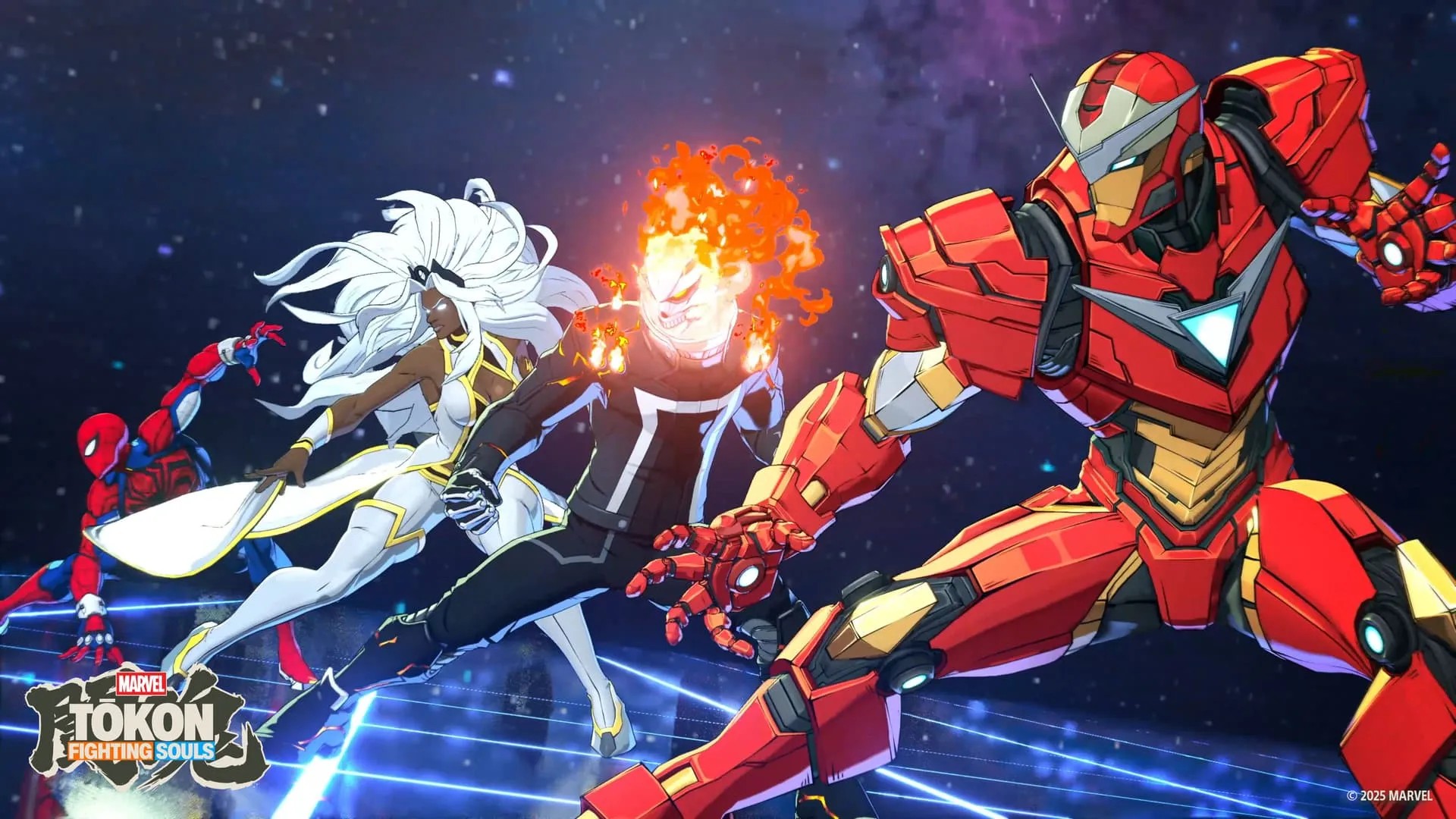
The anime-coded art style has been telegraphed since the game was first announced, so there shouldn’t be any surprises here.
There are plenty of character costume color combinations to choose from, while the animations are truly eye-popping without feeling extremely overwhelming.
The characters move with the kind of exaggerated energy you’d expect from an Arc System Works fighter, but it still feels distinctly Marvel.
Every fight feels like a comic book panel suddenly came to life.
The presentation is particularly good at making the big moments feel big without turning every attack into visual noise.
And then there’s the opening sequence. It is so anime intro-coded and I NEVER skip it. It’s so hype!
Don’t expect a deep Marvel story
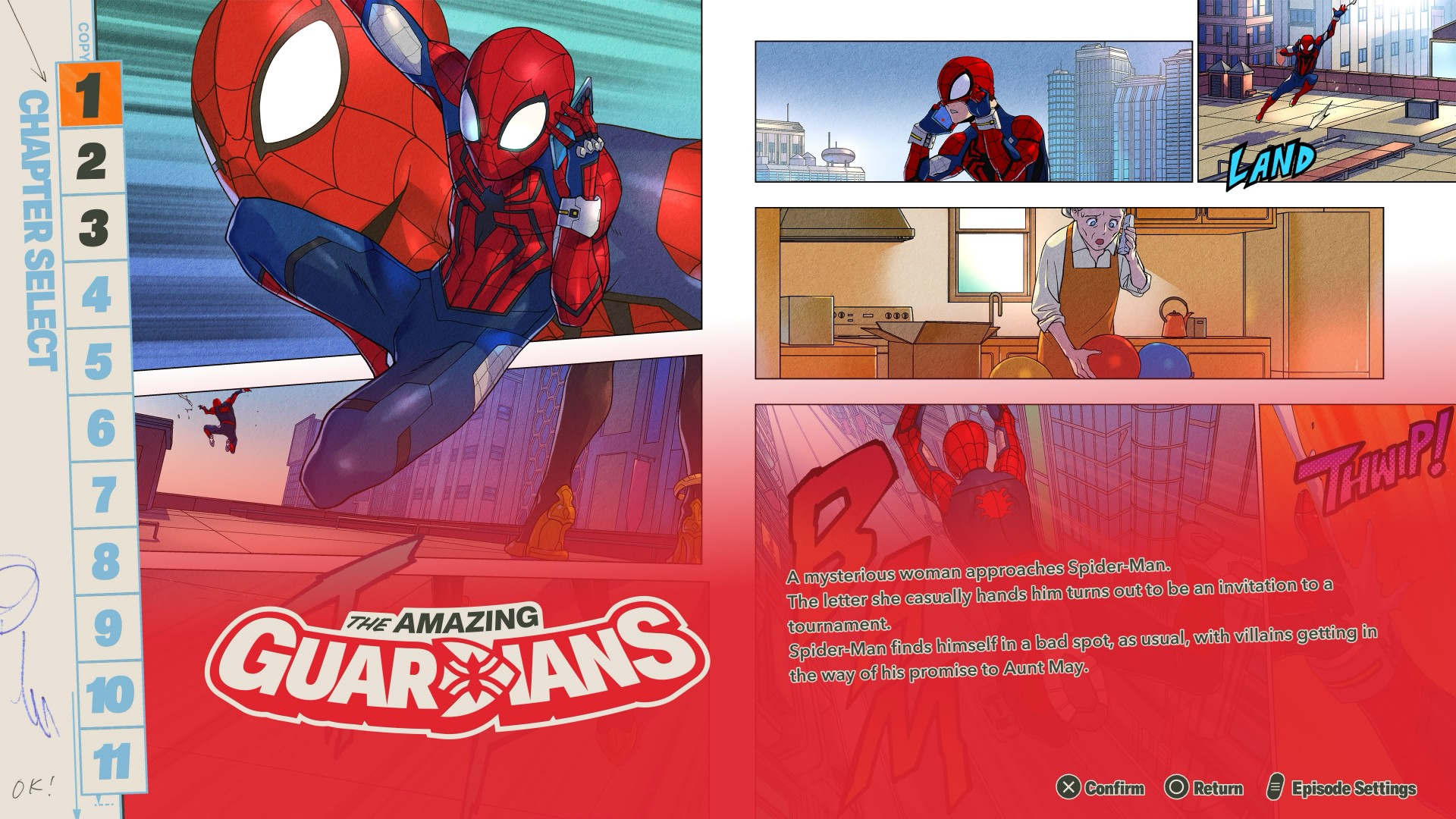
You don’t have to play through each character for Story Mode.
The characters are divided into teams of four, giving each group its own story. The presentation is a mix of anime cutscenes and comic-book-panel-style storytelling.
It’s… alright.
If you’re after any real deep storytelling here, you’re not playing the right game.
There’s enough to keep you mildly entertained, but halfway through your third team you’d probably be over it and would want to just jump straight into fighting — which is the core of the game anyway.

The story gives you an excuse to spend time with different teams and characters.
It lets you learn how they play while giving you a little context for why they’re fighting together.
But Tōkon’s real appeal isn’t its story. It’s what happens when the fight starts.
The fighting is the story

The more time I spend with Tōkon, the more I think this is where the Marvel vs. Capcom comparison makes the most sense.
You pick characters you love, put them together, and figure out how they work.
Then you discover that the character you weren’t interested in is suddenly the one you can’t stop playing.
That’s the loop. And it’s a good one.
Tōkon feels like it understands that a fighting game doesn’t need an elaborate narrative to make you care about its characters.
Sometimes all you need is a character you like, a team that feels good, and a fight that makes you want to hit rematch.
The sound of a good fight
I have to be honest — and a bit embarrassed — I love listening to music, but audio is almost always the last thing I notice when I review games.
I want to say the audio here perfectly complements the visuals.
Nothing feels jarring or out of place.
The music feels appropriate for every stage of the fight, while the in-fight dialogue matches the reactions to what’s happening on screen.
(My setup is an LG C2 TV with a Samsung soundbar. Suffice it to say, I FEEL every hit adequately).
Arc System Works also specifically called out music and sound as areas of focus for Tōkon. After playing it, I can see why.
It runs excellently on PS5
MARVEL Tōkon: Fighting Souls OPEN BETA_20260726110851
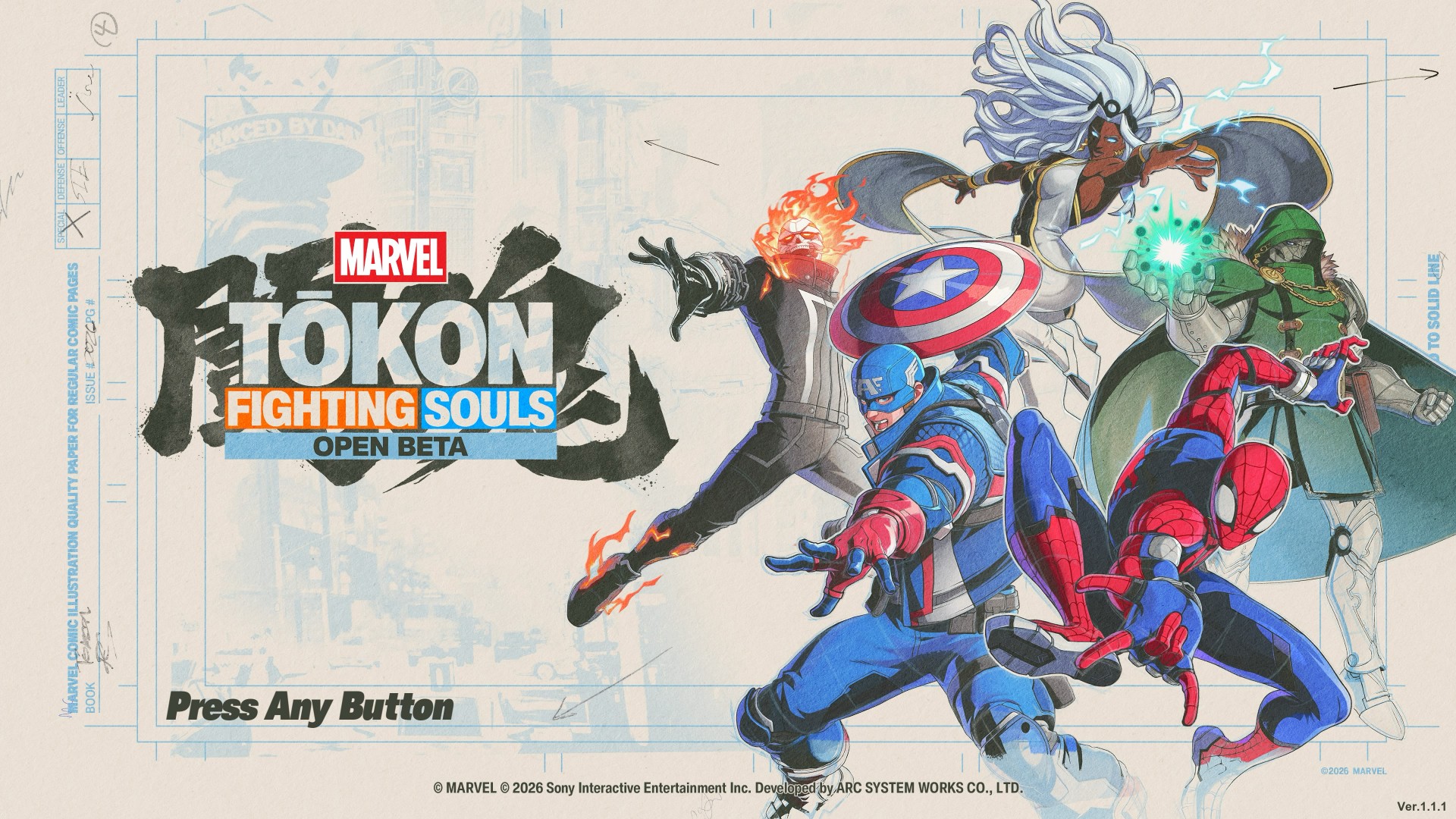
On PS5, MARVEL Tōkon: Fighting Souls runs excellently.
My runs were mostly PvE, and I encountered no issues whatsoever.
Any input lag is just me having stubby fingers — nothing to do with the game’s performance.
The game also benefits from the PS5’s presentation, with its colorful effects and huge character animations looking particularly good on a big screen.
I played on a 55-inch TV and it made those big super attacks especially satisfying to watch.
The PC version, however, had a much rougher launch.
It was only recently that a patch was released, and we also had challenges redeeming the PC version.
So if you’re deciding between platforms, the PS5 version is the one I can comfortably speak for based on my experience.
Online is where I struggle
MARVEL Tōkon: Fighting Souls OPEN BETA_20260726140314
I don’t like talking about this. I get my ass handed to me too much. But if you’re talking about getting into matches, it does get challenging.
I wait a good five to seven minutes before I can hop into online matches.
And once I do get into a fight, let’s just say my win rate isn’t exactly something I’m going to frame on the wall.
The game’s online offering includes Casual and Ranked matches, along with online lobbies and Room Matches.
The real question for more competitive players will be whether the online community can sustain quick matchmaking as the player base settles after launch.
For a casual player like me, though, the bigger hurdle is simply finding someone willing to beat me up.
A cute little detour
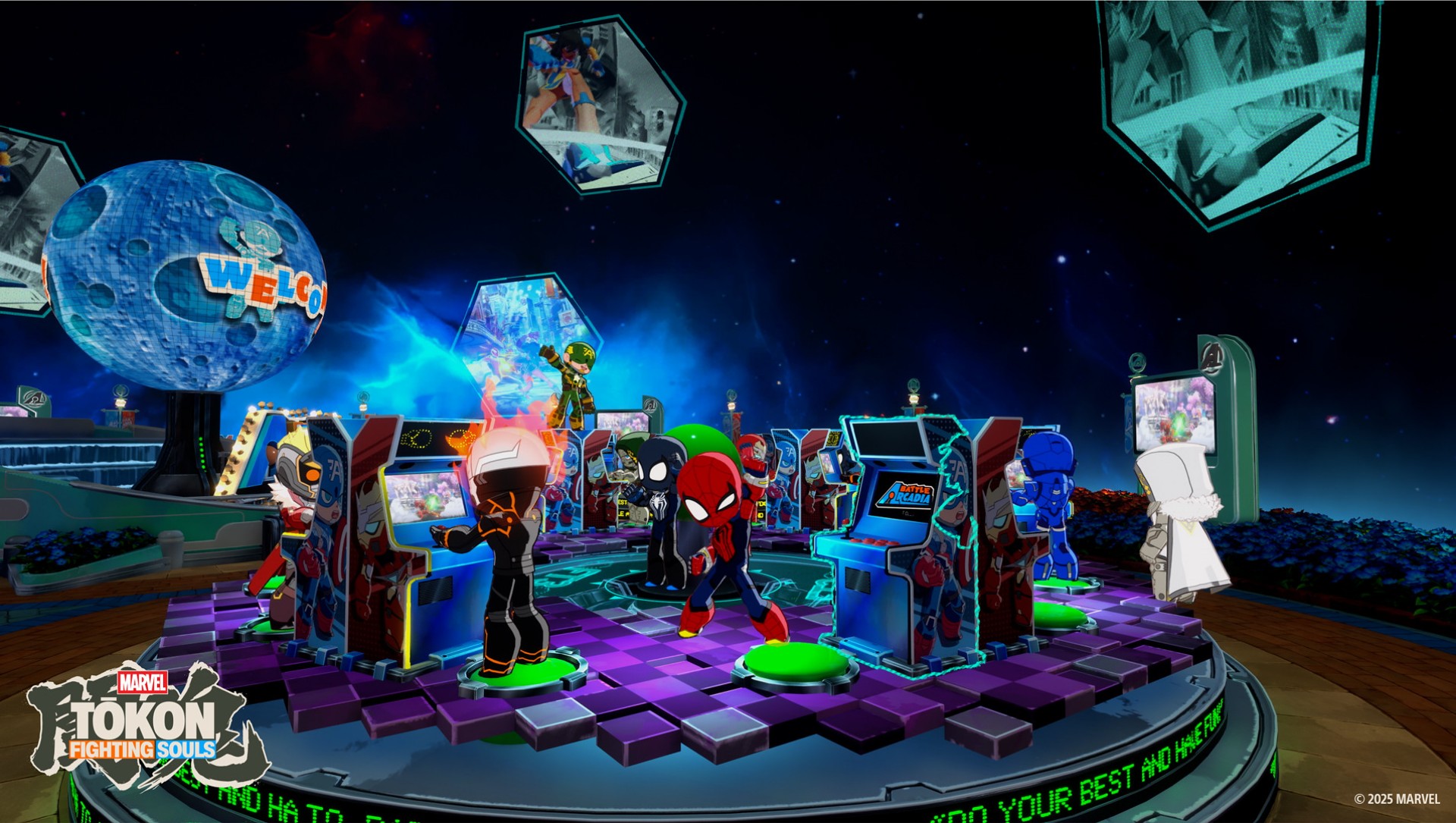
There’s also Arcadia Rumble, a bit of a platformer-type game with the characters rendered in chibi form.
It’s nothing groundbreaking. But I particularly enjoyed the chibi looks as a chibi enjoyer.
The chibi version is an Arc System Works staple, and it’s a cute little change of pace from the much more intense main game.
You don’t need to play it to appreciate Tōkon. But I like that it’s here.
I’m already looking forward to more
The launch roster is already substantial, but I’m particularly excited about the first DLC character: Phoenix Cyclops.
Scott Summers is my guy. And we’re getting the cosmic version? I am waiting with bated breath.
That’s probably the best place to leave Tōkon.
I came into this expecting a fun Marvel fighting game.
What I got was a fighter that is easy enough for a casual player like me to pick up, while constantly reminding me that there is a much deeper game waiting underneath.
It’s not that Tōkon is simple.
It’s that it does a good job of making complexity feel approachable.
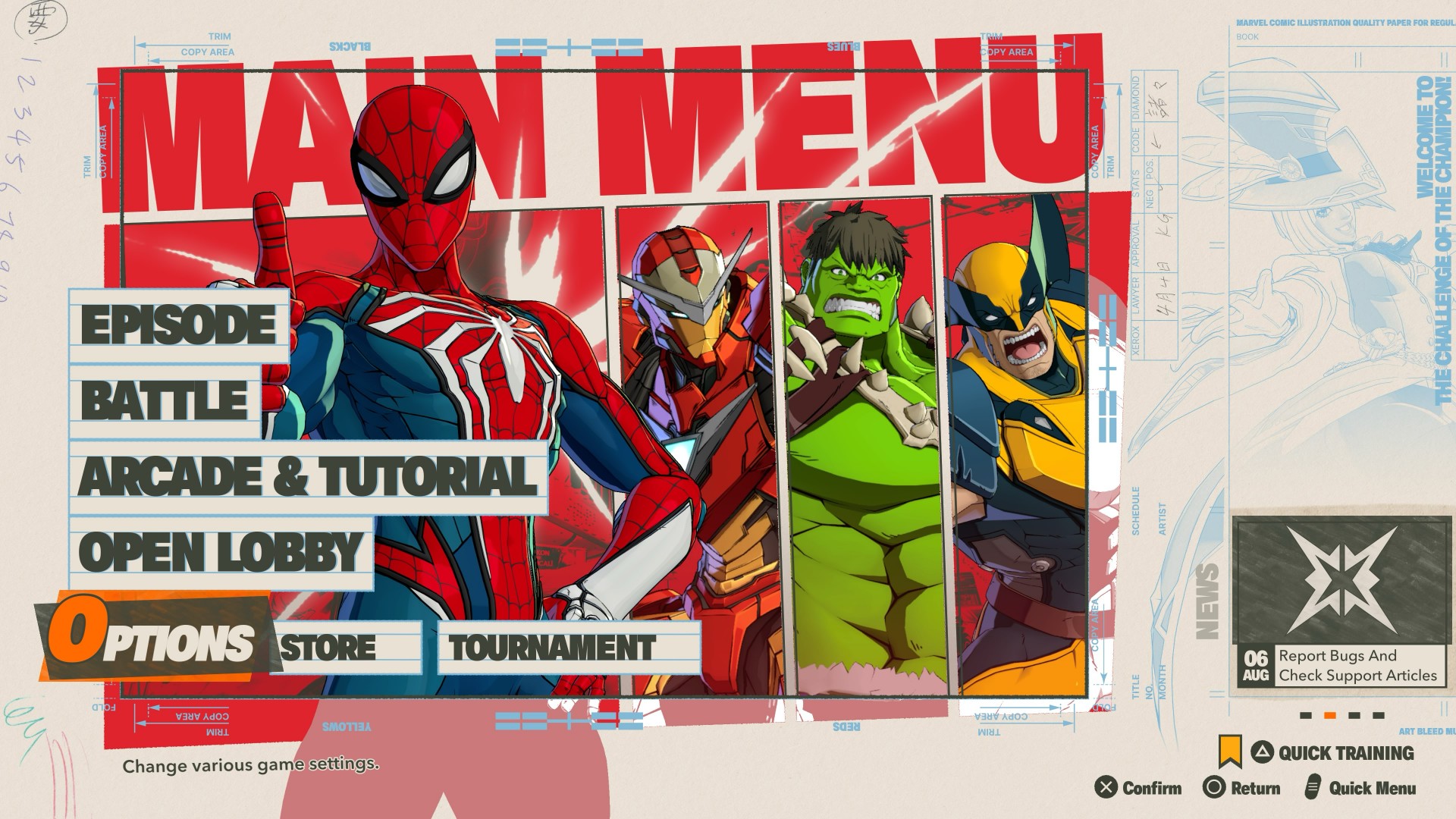
You can mash buttons with Wolverine and have a great time. You can swing around with Spider-Man and look for openings. And you can slow things down with Blade or Ms. Marvel and learn to be more deliberate.
If you want to go deeper, the systems are there waiting for you.
Now pickup a controller and take on MARVEL Tōkon: Fighting Souls





Computers
ROG brings out the ultra-stylish G1000 gaming desktop
Plus, here’s a couple of sleek transport options from ROG.

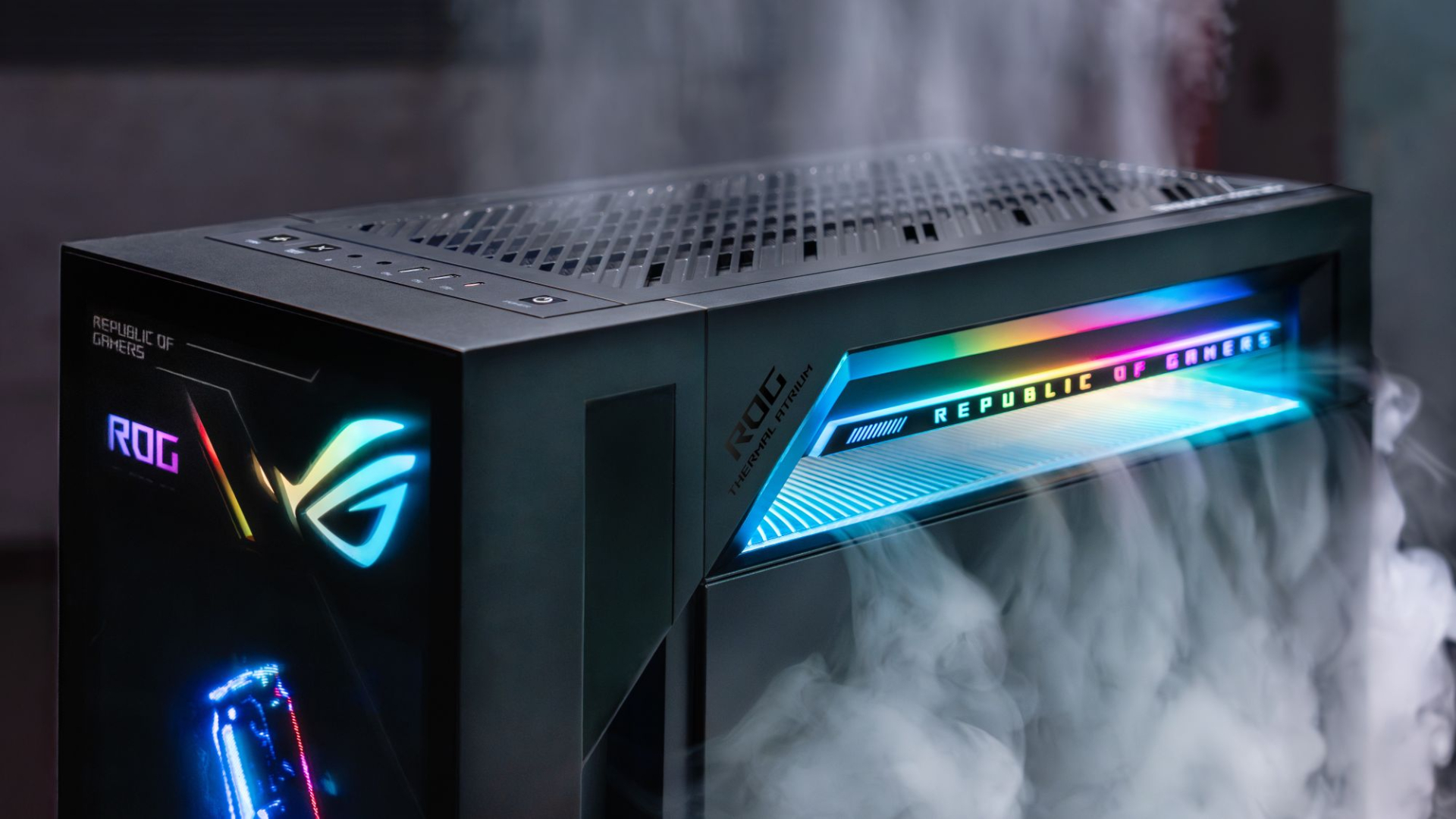
Despite how much higher prices are going today, there are still so many options if you want a PC for yourself. However, only a handful of brands will offer you quite as much style doing so as ASUS. Today, ROG has revealed the new G1000 gaming desktop.
For the first time ever in a prebuilt PC, the ROG G1000 comes with a built-in AniMe Holo, a holographic fan with customizable visuals using Armoury Crate and Aura Sync. Additionally, the holographic fan is inside its own chamber, preventing it from interfering with the main system. Instead, the desktop uses the ROG Thermal Atrium, which uses three fans to channel fresh air through a 420mm AIO liquid cooler.
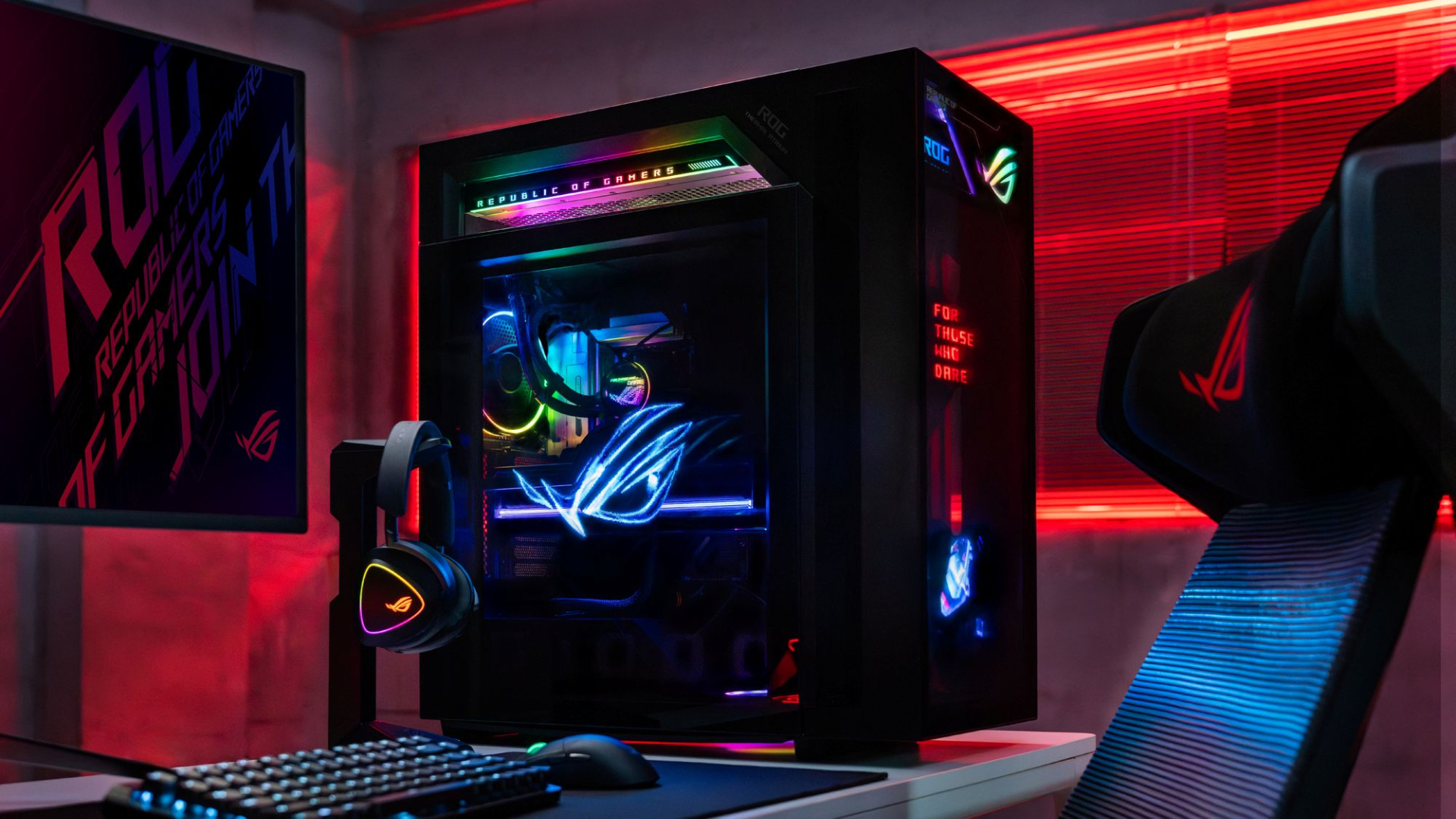
Now, the ROG G1000 isn’t just a pretty face. Inside, the 104L desktop comes with a Ryzen 7 9800X3D processor. It also comes equipped with the ROG Astral GeForce RTX 5080, up to 128GB DDR5 memory, and 1TB SSD for storage. New purchases will also come with a gaming keyboard and mouse, a year of Microsoft 365 Basic, Office Home 2024, and an ASUS No. 1 Quality and Service warranty.
The ROG G1000 will be available from ROG Exclusive Stores and will start at PhP 399,995.
Celebrating ROG at 20
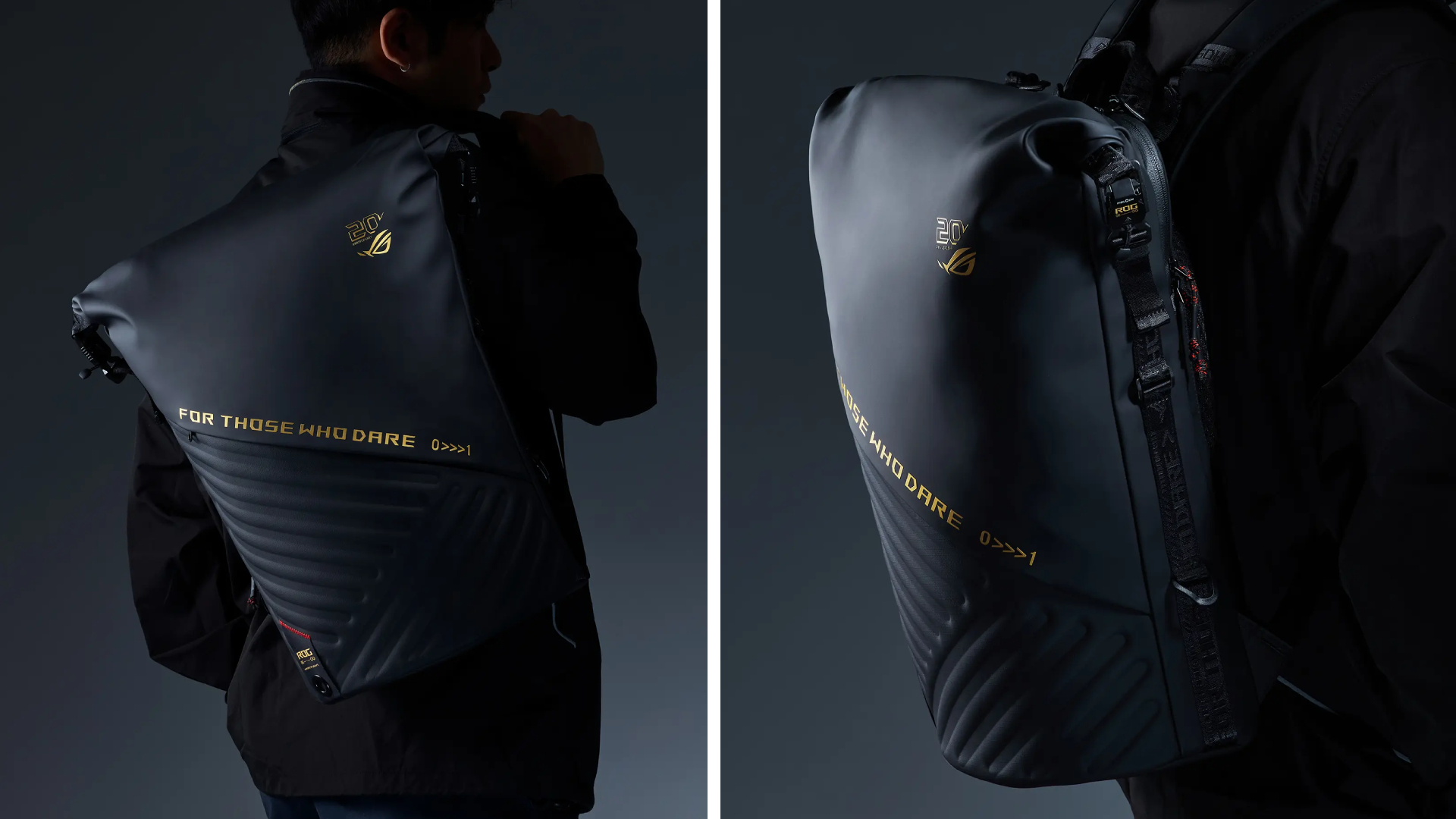
Besides the new desktop, ROG is also launching a couple of storage and transport options for your prized gaming possessions. The ROG SLASH Backpack Edition 20 is a sleek backpack that can fit an 18-inch laptop with enough room for peripherals and accessories. It also comes with a custom FIDLOCK Magnetic quick-release, black-and-translucent-gold buckle. It will be available next quarter for PhP 10,995.
Meanwhile, the ROG SLASH Hard-Case Luggage Edition 20 is designed specifically for transporting your hard-earned gaming devices. The light-but-durable aluminum frame comes with a specialized compartment for laptops, handhelds, and accessories. It also has removalbe foam dividers to better customize the case for your needs. Finally, it has 360-degree silent skate wheels for smoother rolling. The luggage will be available starting next quarter for PhP 15,995.

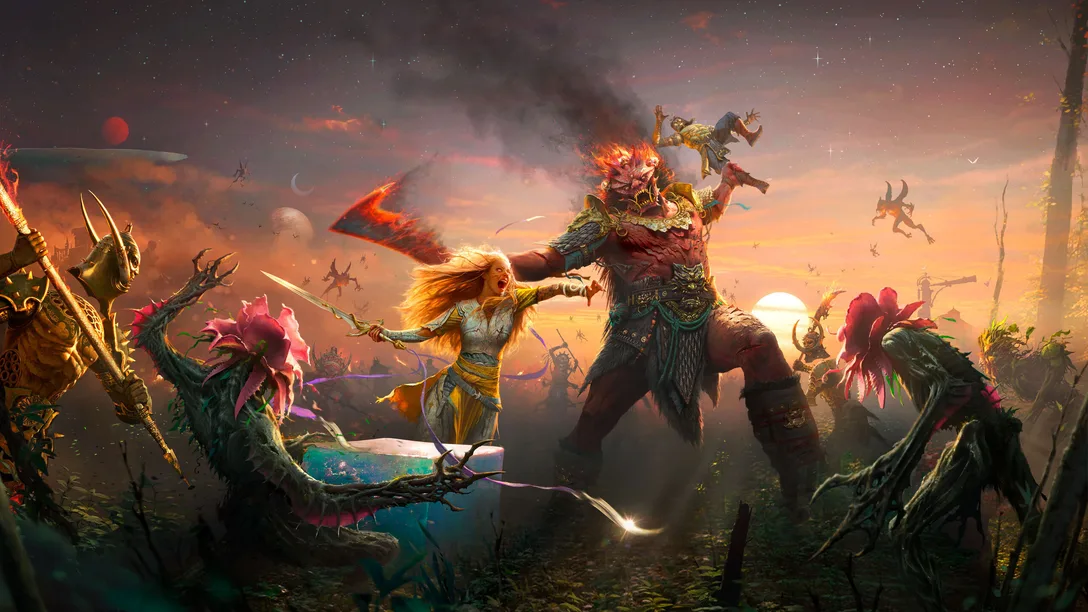
Pre-orders for God of War Laufey pre-orders are now live with new details on editions and Faye’s Serpent Bow. are now live on the PlayStation Store and at participating retailers across Southeast Asia ahead of its February 16, 2027 release on PlayStation 5.
Sony also detailed the game’s pre-order bonuses and Digital Deluxe Edition, alongside new footage and information about Faye’s combat abilities.
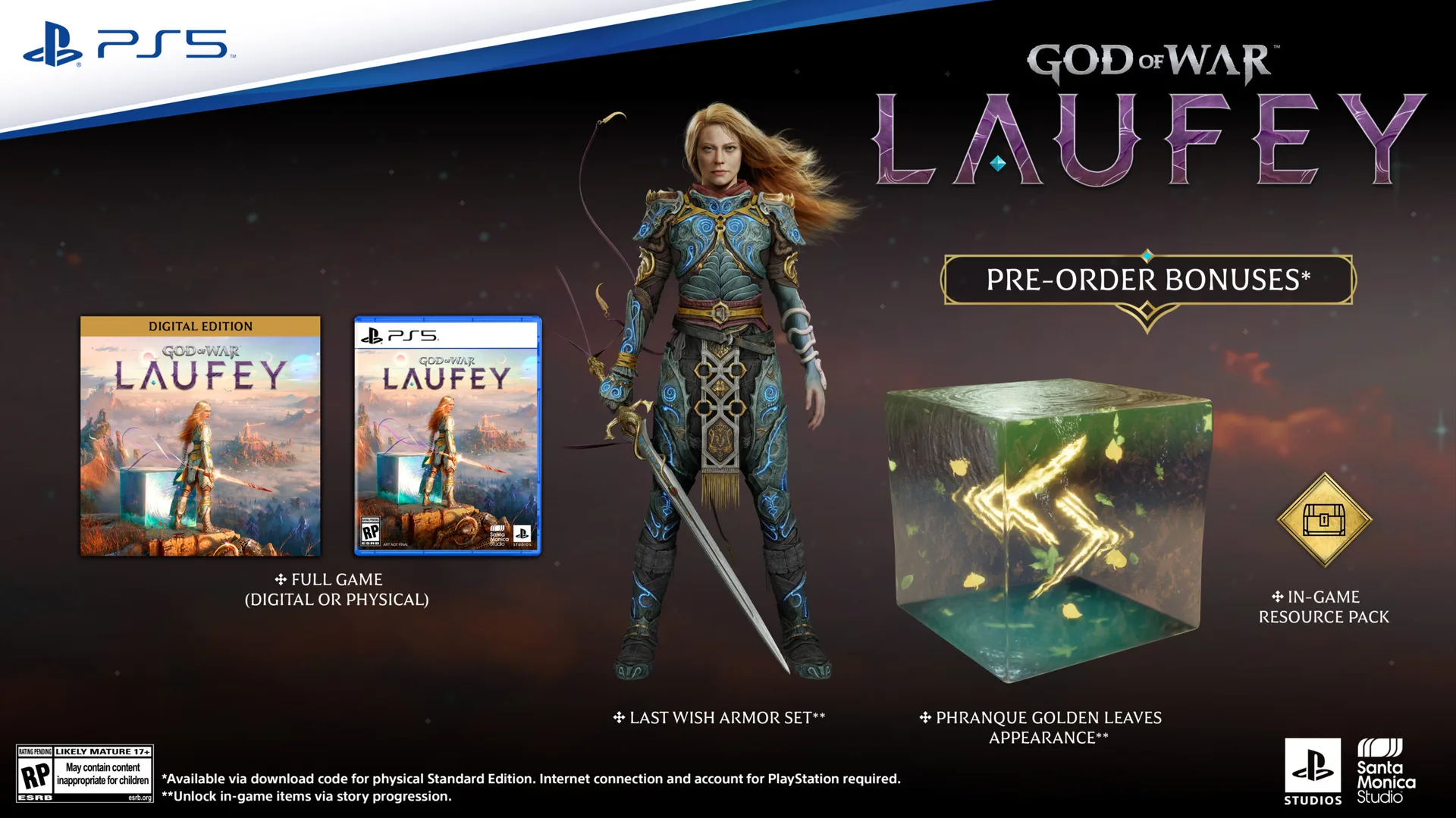
Players who pre-order God of War Laufey will receive the Last Wish Armor Set, Phranque Golden Leaves Appearance, and an in-game resource pack. The physical Standard Edition includes these items through a download code.
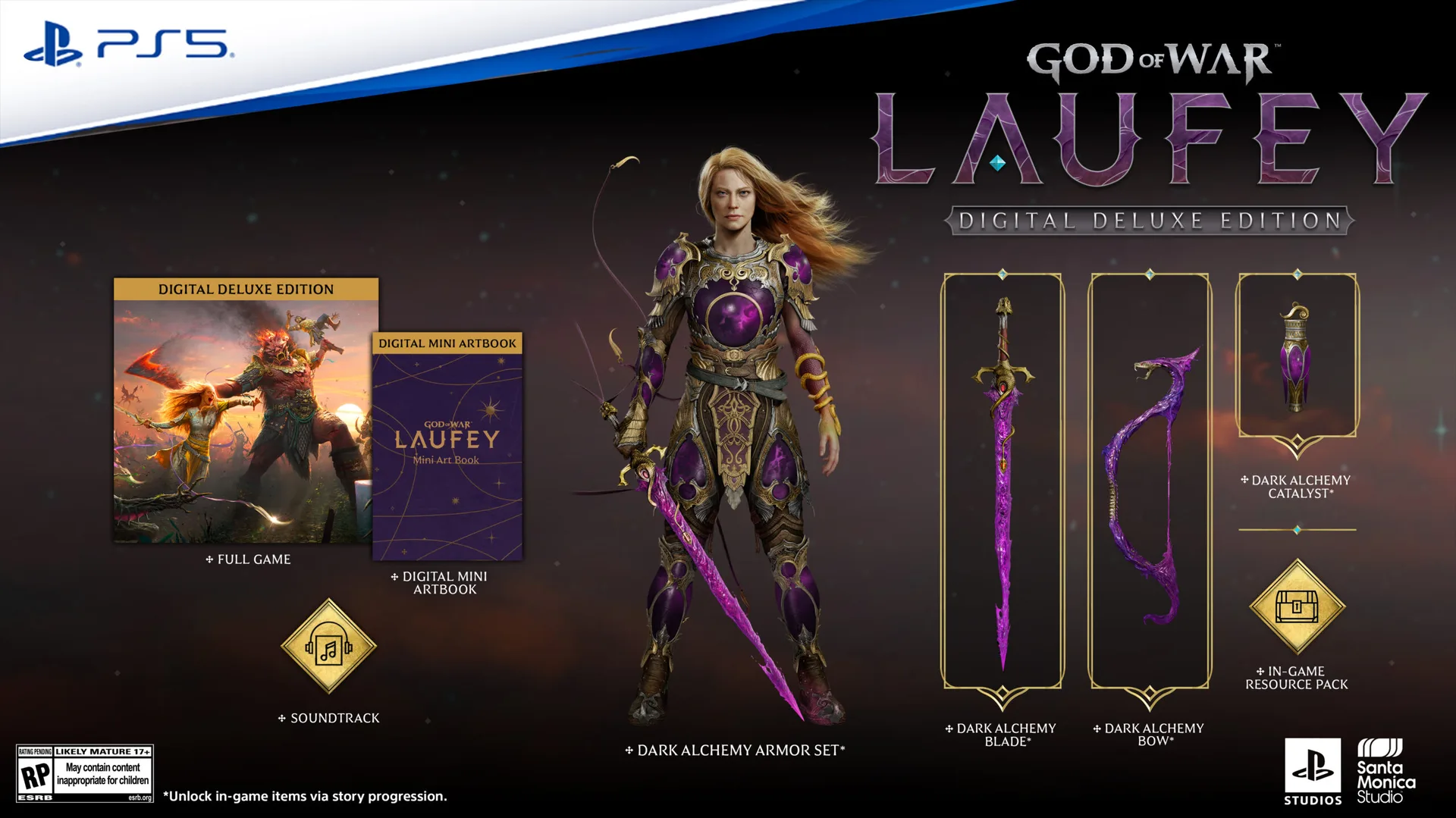
The Digital Deluxe Edition adds the Dark Alchemy Armor Set, Dark Alchemy Blade, Dark Alchemy Bow Scales, Dark Alchemy Catalyst, an in-game resource pack, a digital mini artbook, and the official digital soundtrack.
Faye gets a new weapon
Faye will wield the Serpent Bow, an enchanted weapon that lets her switch between close-range and ranged attacks.
The bow has two firing modes. Full-aim provides more precise shots and greater range, allowing Faye to target specific parts of enemies and charge up to five arrows for a powerful volley. Half-aim switches to a more mobile hip-fire stance for rapid attacks at close range.
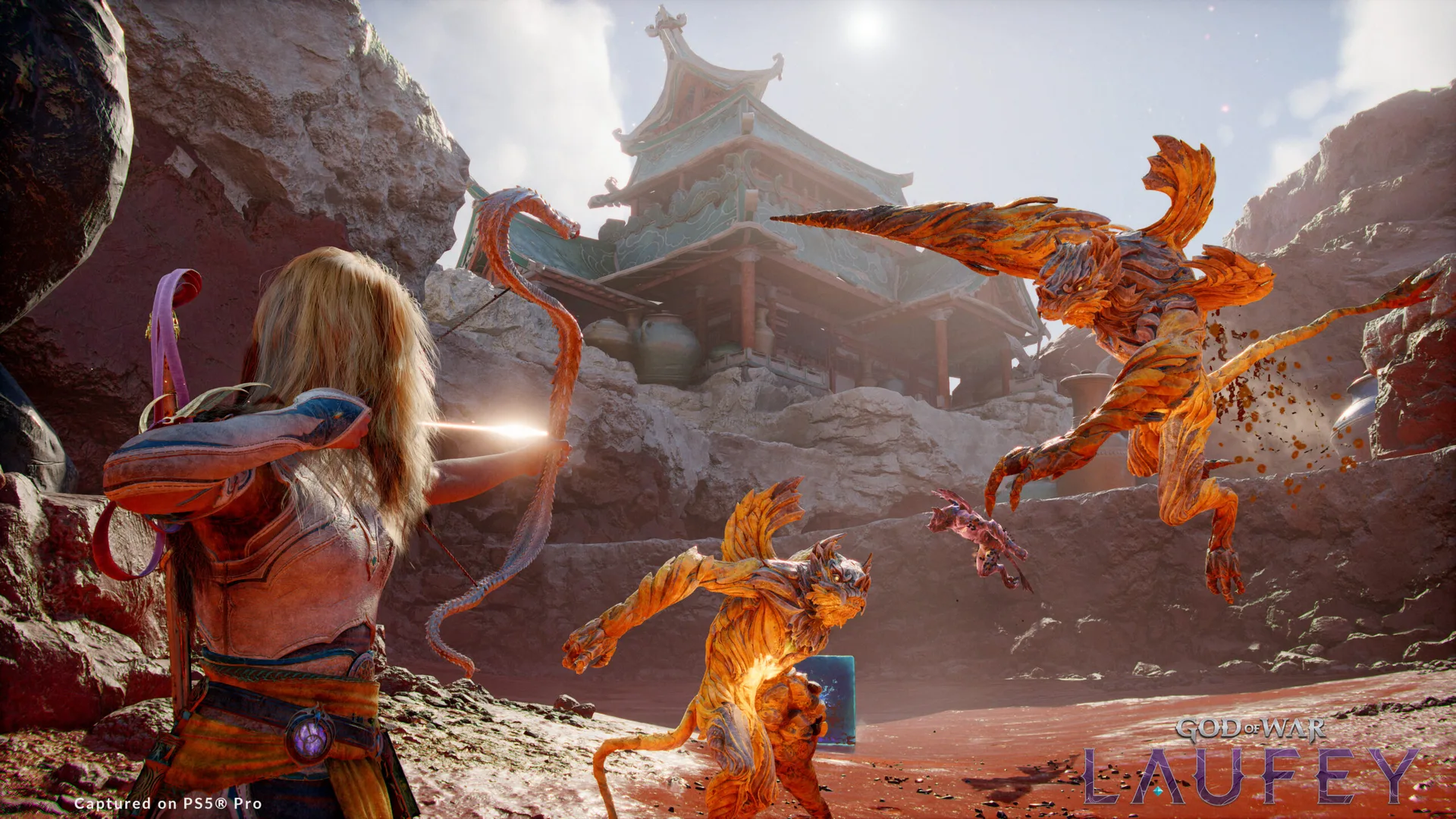
Different arrow types support various combat approaches, including rapid-fire, explosive, and multi-target attacks. Players can also equip different Serpent Scales, which change the bow’s appearance and provide unique perks. Additional skills further expand its capabilities.
Faye’s other equipment can also be customized. Her Blade, Serpent Bow Scales, and Catalysts can be configured to support different playstyles.
God of War Laufey follows Faye after her death as she awakens in the Everywhen, an afterlife where gods and creatures from different mythologies converge. Santa Monica Studio previously revealed that Faye will fight through the realm alongside Phranque and Rue as she searches for a way home.
God of War Laufey launches exclusively on PS5 on February 16, 2027.
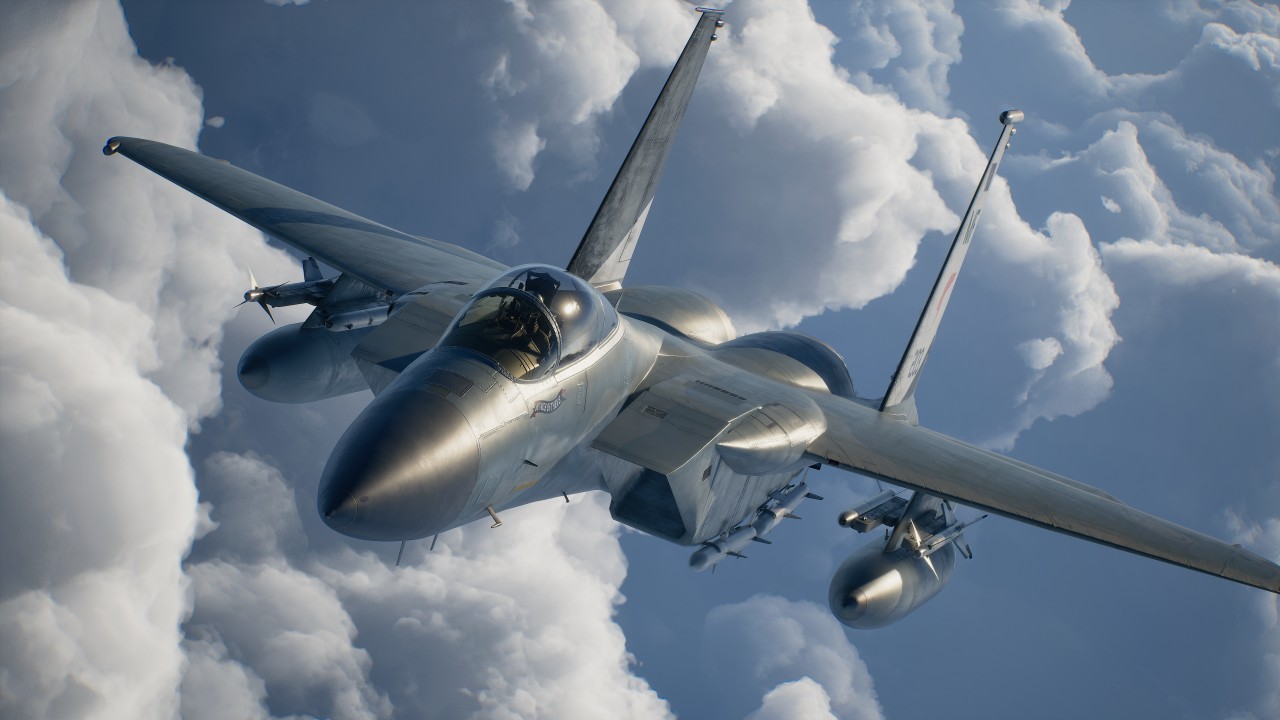
I came into ACE Combat 8: Wings of Theve completely blind.
I knew very little about the franchise outside of the fact that it’s a fighter plane game. My entire exposure was limited to a handful of press releases from Bandai Namco and, of course, the noise the pink-haired character made on social media when she was first revealed.
So, I had no idea what to expect when I climbed into the cockpit.
What surprised me most wasn’t the flying. It was everything that happened outside of it.
A surprisingly beautiful presentation
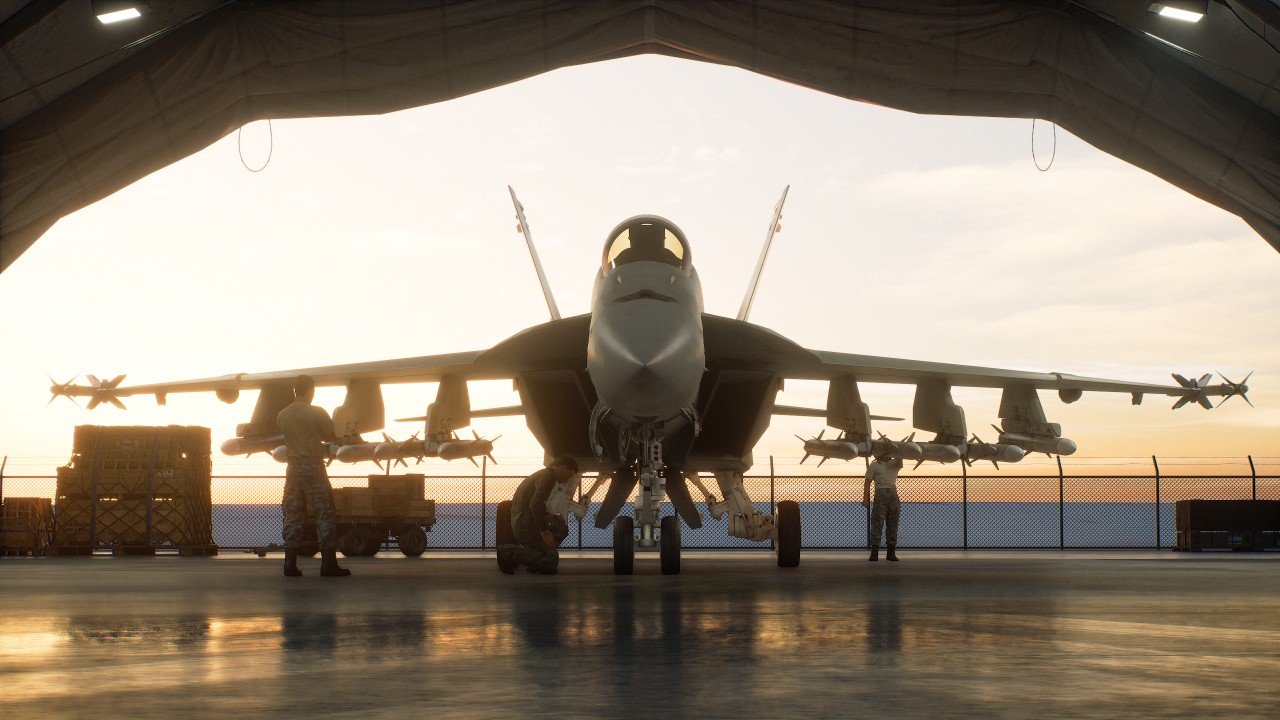
I was floored by the story segments of the game, particularly the visuals and presentation.
A lot of these scenes are presented from a first-person perspective. The characters and environments you interact with are beautifully rendered, and there’s an impressive level of detail to the world around you.
It looks like a AAA game. It just doesn’t move like your typical AAA action game or RPG. That threw me off a bit.

There’s something intentionally different about how ACE Combat 8 presents its story and world. You’re not controlling a character running around a beautifully rendered environment. Instead, you’re mostly observing the world from a grounded first-person perspective before getting back into the cockpit.
It’s an unusual approach, but one I found myself appreciating.
Learning how to fly

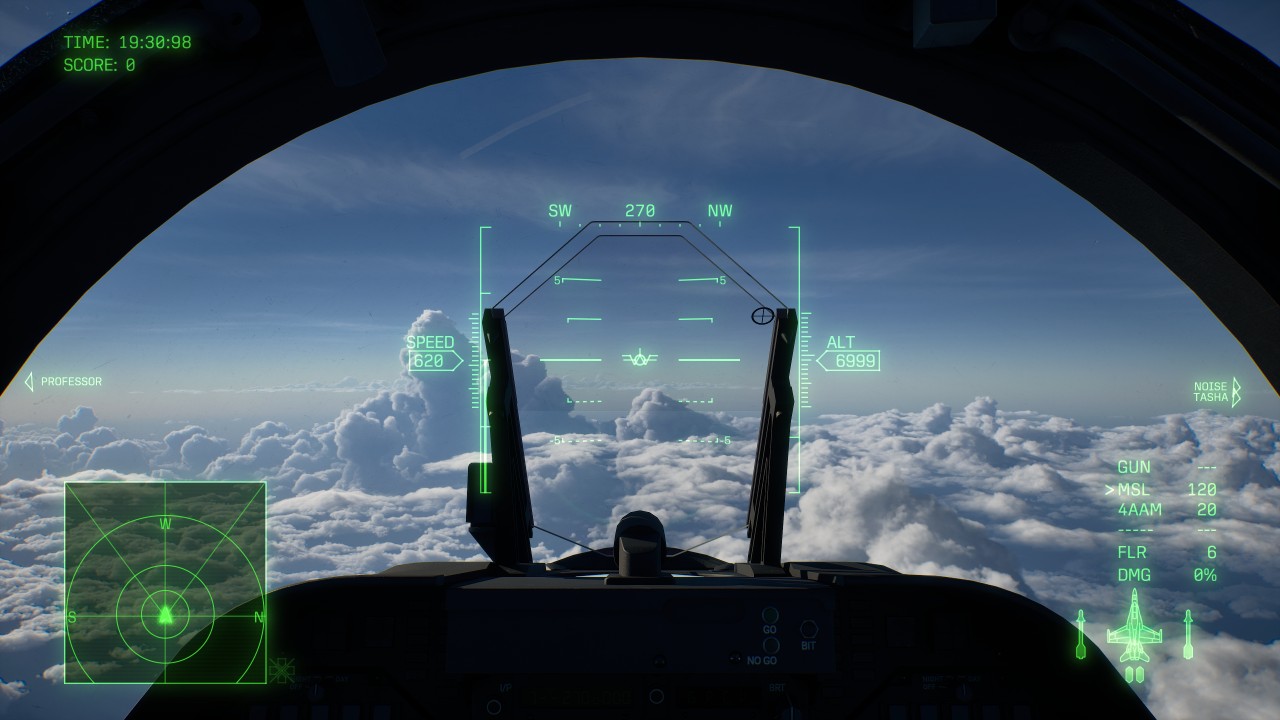
The bigger adjustment was actually flying the plane.
I had trouble getting used to the controls and the structure of the missions. I failed the first one quite a few times because I couldn’t fully understand the radar or the environment I was flying in.
It took plenty of getting used to on my part.
Even after a few hours of play, I can’t say I got fully used to it.
The game offers STANDARD and EXPERT control schemes. STANDARD is designed to be more intuitive, while EXPERT gives you more control over the aircraft through traditional roll-and-pitch inputs.
I still had plenty to learn regardless of the control scheme. There’s a lot of information to process at once: your aircraft’s position, altitude, speed, radar, targets, incoming missiles, objectives, and everything happening around you.
It takes time to develop a feel for how everything moves.
Missions aren’t just about shooting everything
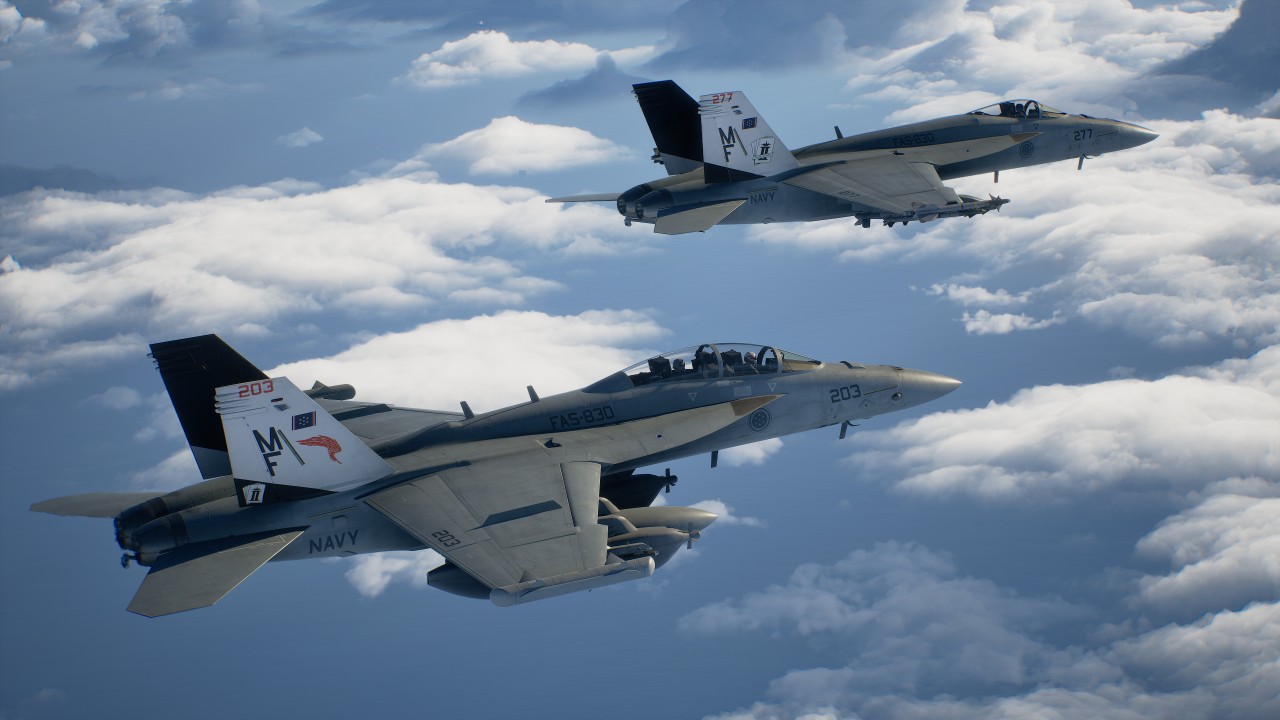
The mission structure is quite specific.
You have to do things a certain way in each mission. It’s not just “blast everything in your path.”
That offered a lot of variety and made the game more engaging.
Some missions asked you to maintain a certain altitude to avoid detection. Others demanded expert flying. Some also felt like full-on aerial combat.
Objectives can range from destroying targets and protecting allies to earning a certain number of points, with some missions changing objectives while you’re already in the air.
That keeps the campaign from feeling like a series of identical dogfights.
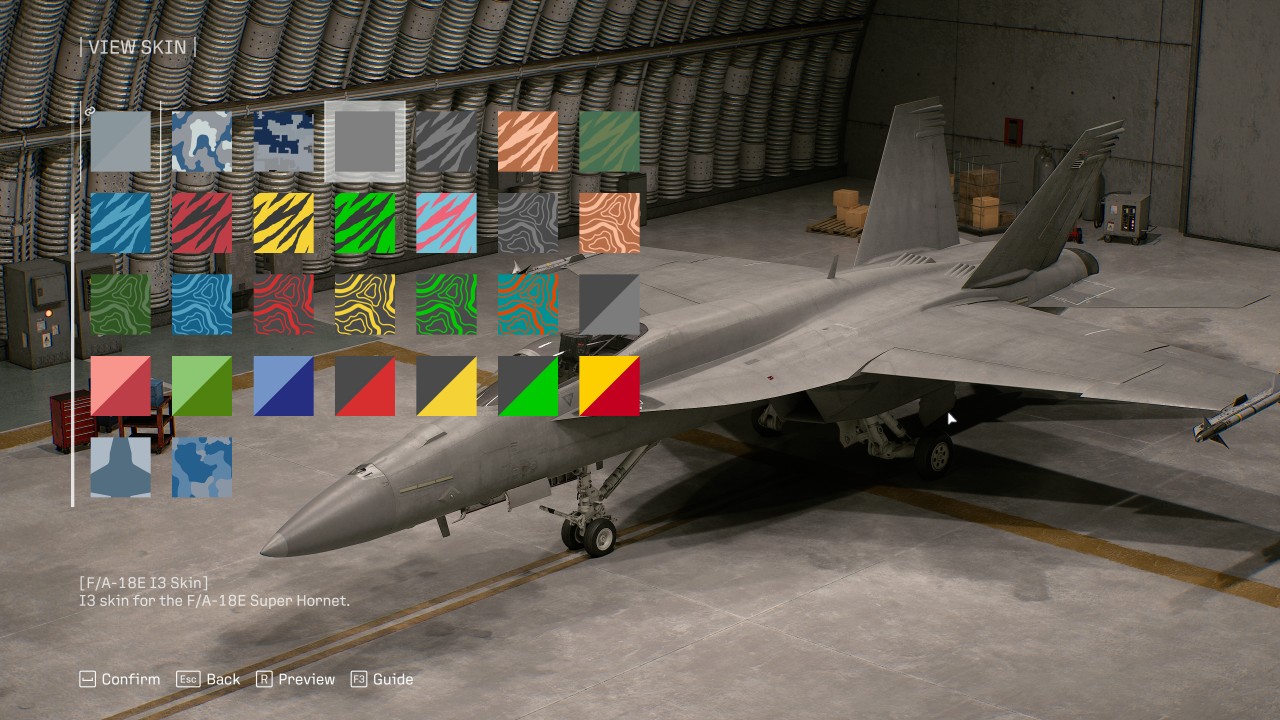
There’s also a progression system built around different aircraft types, including fighters, attackers, multirole aircraft, and electronic warfare planes. More than 30 aircraft are available, with new planes, upgrades, and special weapons unlocked through the Aircraft Tree.
Your choice of aircraft and weapons can also change how you approach a mission. A fighter makes sense when the skies are packed with enemies, while an attacker can be better suited to ground targets. Multirole aircraft offer a middle ground when you’re unsure what you’ll encounter.
Wingman commands add another layer to combat. You can order your pilots to attack, spread out, provide support, or use their special weapons.
The result is a game that asks you to pay attention to what’s happening instead of simply holding down the trigger.
A story worth sticking with
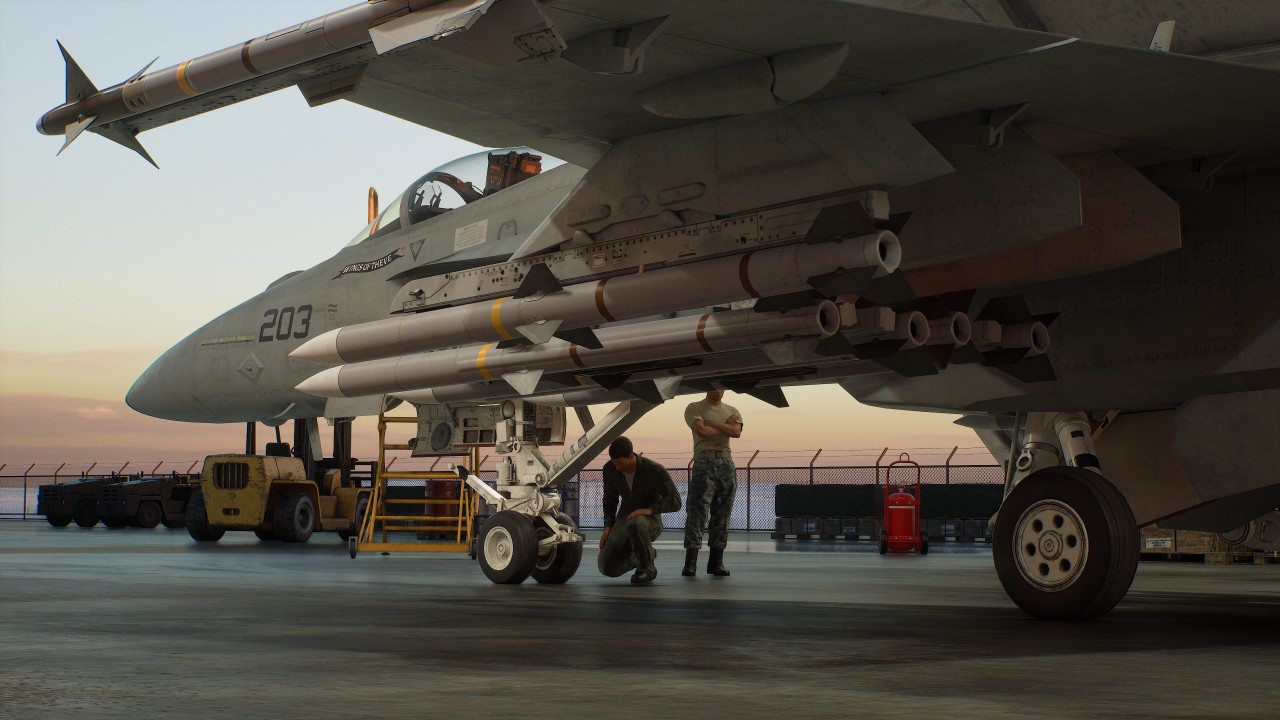
The story I’ve encountered so far isn’t something to write home about.
Its presentation, however, is engaging enough that I feel a lot of people can easily soldier on to see it through to the end.
The first-person story segments, radio chatter, briefings, and events that unfold during missions give the campaign more personality than simply jumping from one dogfight to another.
There’s clearly a larger conflict unfolding, and the game does a good job of making its missions feel like part of something bigger.
The presentation does a lot of the heavy lifting here.
Is ACE COMBAT 8: Wings of Theve your Play Match?
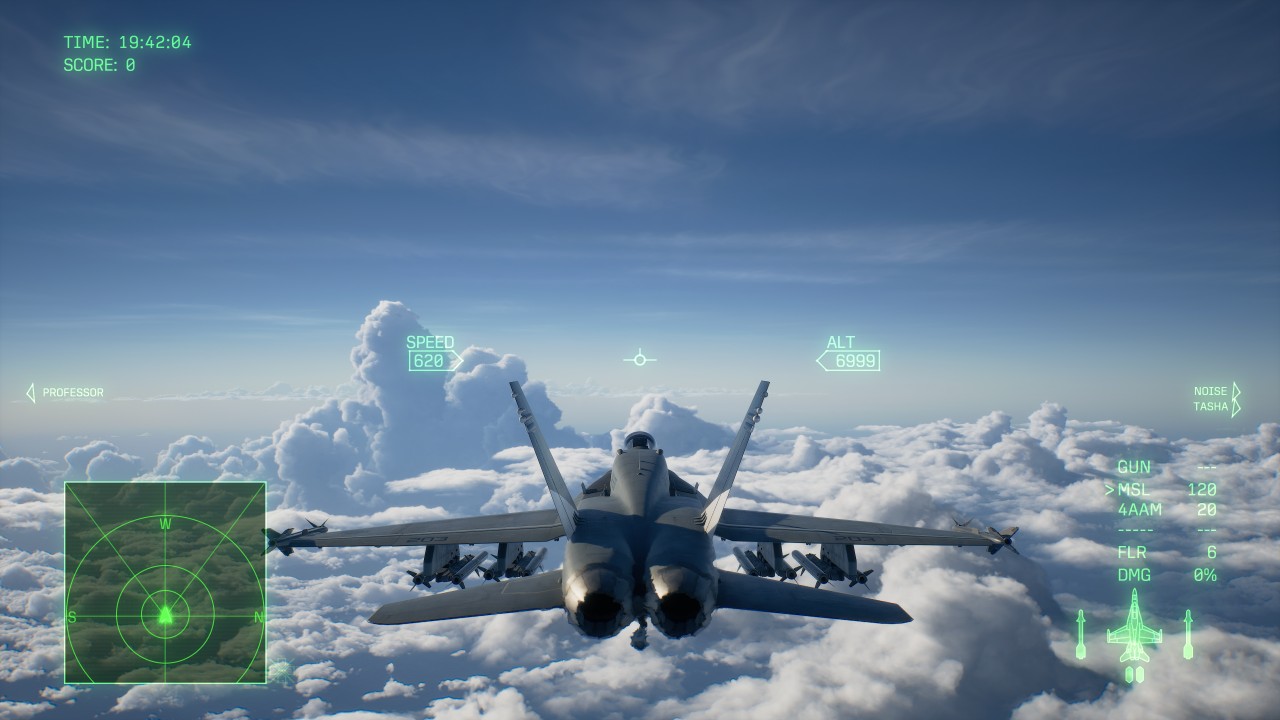
The campaign has 30 missions that run at around 15 minutes each, give or take. Your mileage, naturally, will vary.
For me, those first few hours took longer because I was still trying to figure out how to move, where to look, and what the game actually wanted me to do.
ACE Combat 8 isn’t immediately intuitive if you’re coming into it completely blind like I did. The game does give you training options for practicing flight controls and special weapons, which can help you get comfortable before throwing yourself into tougher missions.
Once things start clicking, though, the experience becomes quite distinct from the type of game most people gravitate towards.
Overall, ACE Combat 8: Wings of Theve feels like a nice break from the usual games where you control a single character and go through linear levels or an open world.
It’s the perfect palette cleanser.
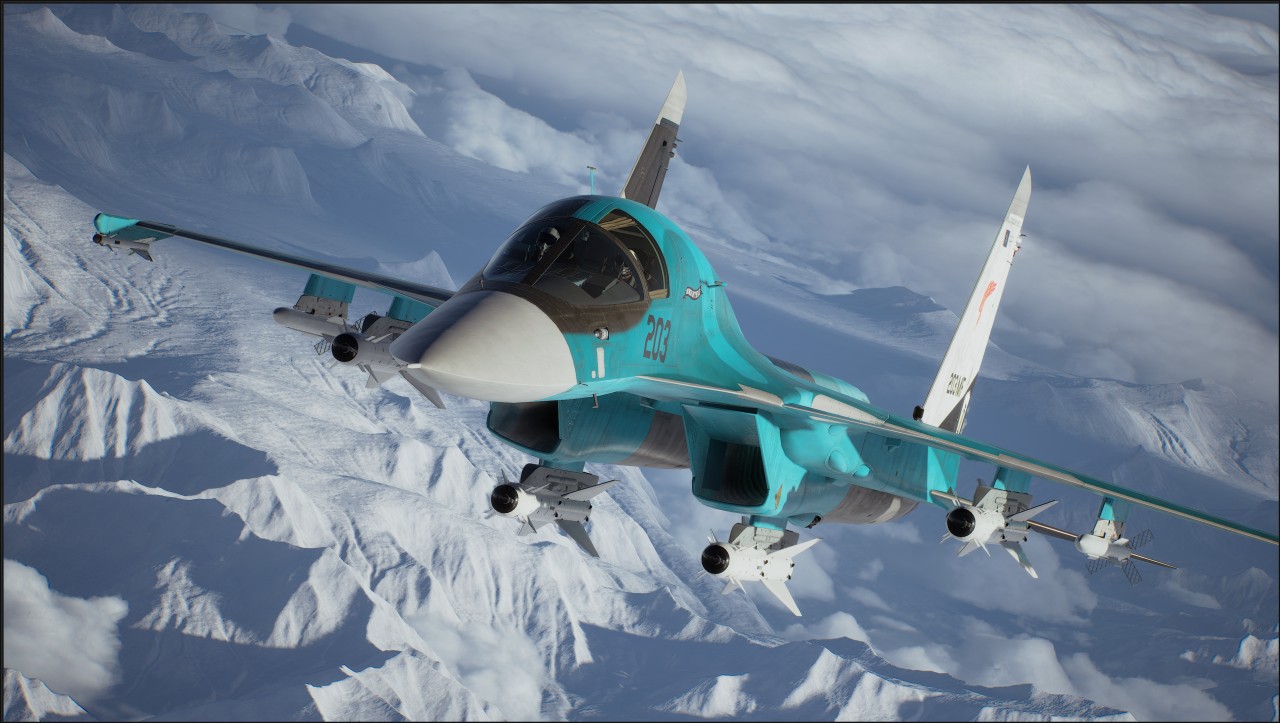
I didn’t expect to spend my first few hours struggling with radar, movement, altitude, and mission objectives. Those struggles also made the moments when I finally understood what I was supposed to do feel more rewarding.
I’m still not fully comfortable in the cockpit.
I’m also ready for another sortie.
Verdict: Swipe Right.




Samsung unveils Galaxy Tab S12 series for work, creativity, and life on the go

JBL brings a soundtrack to every room

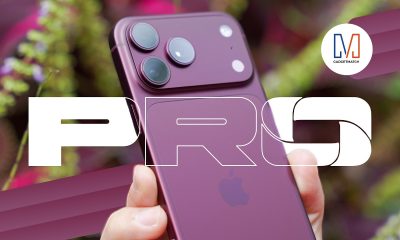
Apple iPhone 18 Pro Series review

UGREEN launches new MagFlow and Nexode Pro charging accessories to Southeast Asia

Apple might not have given up on the Vision Pro yet

HUAWEI Pura X View is 2026’s first WIDE slab-type smartphone

The CAMON Slim 5G is TECNO’s latest ultra-slim smartphone

iPhone 18 Pro series: Price, availability in the Philippines

DJI Osmo 360 II review: Going all-in on the ecosystem

iPhone 18 Pro series: Price, availability in Singapore


-

 News1 week ago
vivo X500 Series launches with major imaging upgrades
-

 News1 week ago
OPPO Find X10 Pro Max is the first phone with a triple 200MP camera system
-

 Automotive2 days ago
BYD says that way better EV batteries are coming next year
-
 Singapore2 weeks ago
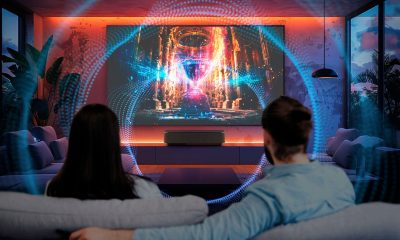
Epson Lifestudio Grand Plus EH-LS970B with 4K projection, more launches
-

 Drones2 weeks ago
DJI Lito X1 review: Is this the best lightweight drone for creators?
-

 News1 week ago
vivo introduces OriginOS 7 with smarter multitasking and AI features
-
 Smartphones4 days ago
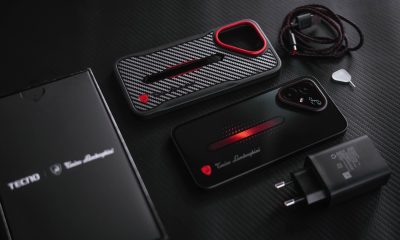
When TECNO-logy meets Tonino Lamborghini legacy
-
 Accessories1 week ago
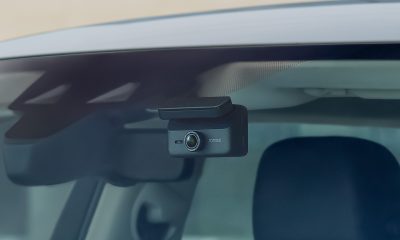
70mai launches the A900 series with 4K front, rear recording