
Smartphones
Porsche Design HONOR Magic6 RSR now in Europe
Pricing, availability


The Porsche Design HONOR Magic6 RSR is now official in Europe. It is the second HONOR flagship developed jointly with Porsche Design, after the HONOR Magic V2 RSR.
The Porsche Design HONOR Magic6 RSR will be available in the United Kingdom from £ 1,599 on both the HONOR and Porsche Design websites. It is available in two colorways: Agate Grey and Frozen Berry. The first color is reminiscent of the iconic 911 sportscar, while the latter is a reflective, bold shade of pink originally designed for Porsche models like the Taycan.
Excellence meets smartphone innovation
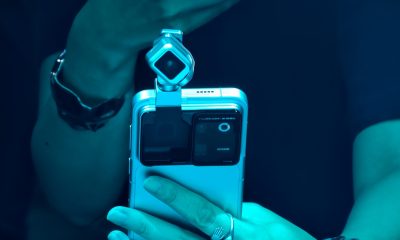
The Porsche Design HONOR Magic6 RSR immediately stands out with its camera setup at the back embraced by Porsche’s iconic hexagonal structure. The phone boasts of a titanium frame, so users can be assured that it is still lightweight.
Moreover, the phone features a symmetrical peakline, adding to the device’s dynamic appearance while also improving its grip. Furthermore, the handset uses anti-scratch NanoCrystal Shield both in front and at the back, improving its shock absorption capacity by up to 10 times.
SEE ALSO: I took the HONOR Magic6 Pro to a basketball open practice
For its cameras, the Porsche Design HONOR Magic6 RSR features a 50MP H9800 image sensor. This 1/1.3-inch sensor has an improved 15EV dynamic range. The camera system also uses LiDAR Matrix Auto Focus to speed up smartphone photography.
All in all, users are promised of better accuracy and speed when taking high-precision and ultra-sharp photos and videos. That goes for both action shots and even stills and films under challenging lighting conditions.
For its display, this phone has an industry-first dual-layer OLED Tandem Display. It can last up to 600% more than a regular OLED panel, and provides an astonishing peak brightness of 5,000 nits.
Unparalleled performance
Of course, the Porsche Design HONOR Magic6 RSR is equipped with a Qualcomm Snapdragon 8 Gen 3 processor for exceptional performance and AI capabilities. It runs on the MagicOS 8.0, and supports Magic Portal and MagicRing for cross-device connectivity. The device has a second-generation 5,600mAh silicon-carbon battery that supports 80W wired and 50W wireless SuperCharge.
The Porsche Design HONOR Magic6 RSR was previously announced in China for CNY 9999. (US$ 1390 / EUR 1276 / GBP 1090 / SG$ 1858 / PhP 77,173 / INR 115,144)





For years, the pitch for a foldable smartphone was remarkably simple: look, it folds.
That was enough when the category was new. Samsung had to prove that a smartphone could have a hinge, bend in half, and still work like a phone.
Eight years later, that is no longer the interesting part.
The question has shifted from can a smartphone fold? to what does folding actually let people do?
For Samsung, the answer increasingly seems to be about making the phone fit the person, rather than asking the person to adapt to the phone.
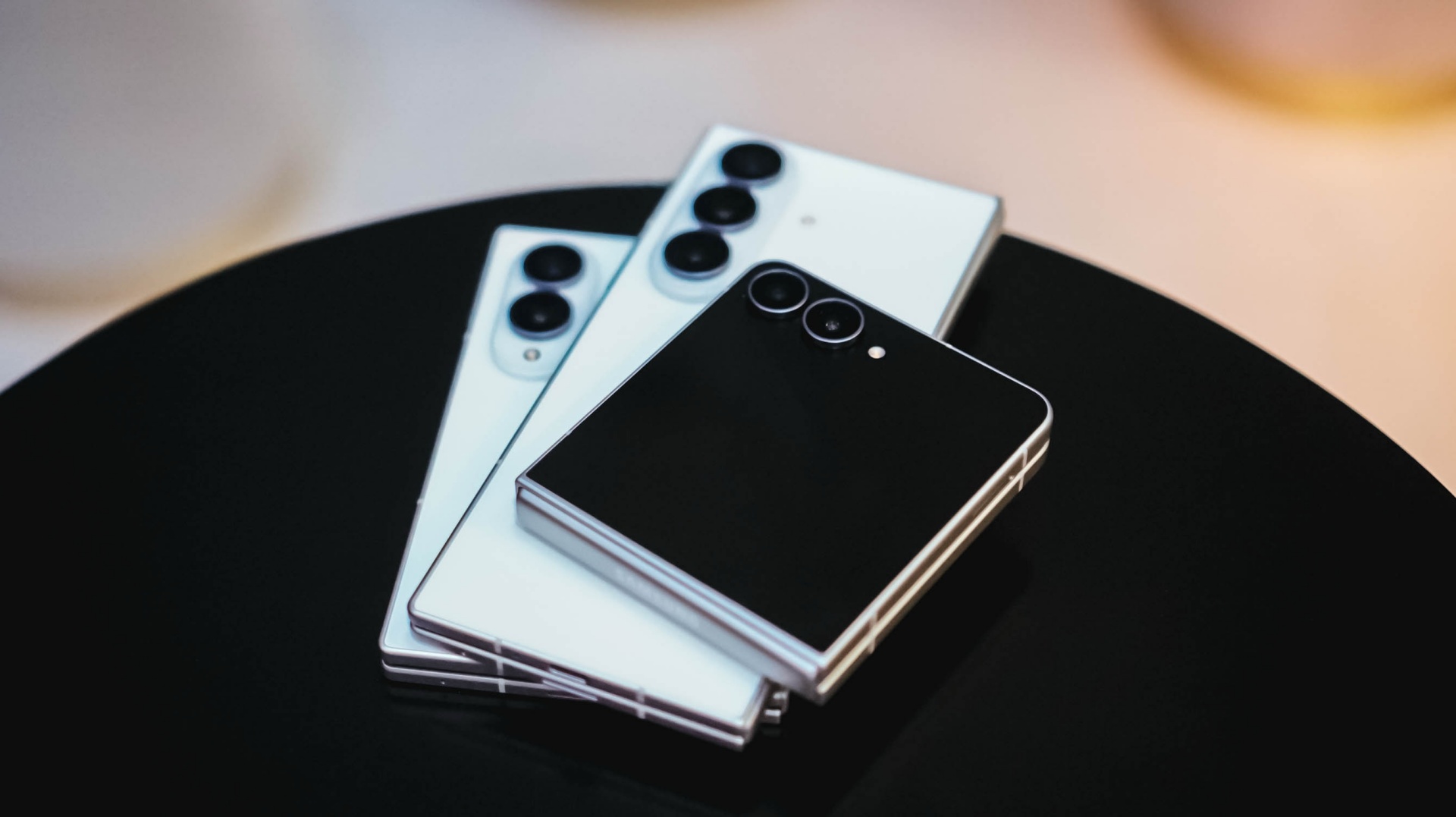
That shift is reflected in the latest Galaxy Z lineup. The Galaxy Z Fold8, Galaxy Z Fold8 Ultra, and Galaxy Z Flip8 don’t simply offer different specifications or screen sizes. Samsung sees them as different expressions of how people use their phones — whether that means watching, working, creating, communicating, or simply carrying the device around.
Jun Guevara, Head of Corporate Marketing at Samsung Philippines, says this reflects a broader change in how people think about smartphones.
“Before, it’s always about the specs — what the camera is like, how big or heavy it is, what’s the process, etc. But now with AI in the picture and it becomes more personal, contextual and action-oriented, people will expect their devices to adapt more closely to what they are trying to do.”
That makes the foldable form factor particularly interesting.
A foldable can be compact when portability matters, then become larger when more space is useful. It can change how you interact with the same device depending on the task at hand.
In other words, the screen doesn’t have to stay the same just because the phone does.
Eight years of listening
Samsung’s foldable journey began with a much more fundamental problem: convincing people that the concept was viable in the first place.
The company says it has spent more than seven years making thousands of engineering decisions across materials, displays, hinges, software, and overall design. But some of its most important lessons didn’t come from the lab.
They came from people actually using foldables.
Durability, in particular, became a major area of focus. Samsung says real-world usage helped inform improvements to display durability, crease visibility, the opening experience, materials, and overall device thickness and weight.
That accumulated experience has also changed what people expect from a foldable.
Consumers now judge them against the same fundamentals they expect from any flagship: can it hold up, can I carry it comfortably, is it powerful enough, and will it remain useful over time?
For Samsung, that means the foldable experience can’t be reduced to the hinge or the display. It has to work as a whole.
That sounds obvious. But it is also a meaningful shift.
The novelty of folding can get someone to try a device once. Making it a daily driver requires everything around the fold to work naturally.
That may be the biggest lesson from Samsung’s years of listening: people don’t use their phones in exactly the same way. So why should every foldable be designed to serve them the same way?
There isn’t one way to fold
Samsung isn’t trying to establish a single “best” foldable. Instead, its latest Galaxy Z lineup is built around different ways people want to use their phones.
The Galaxy Z Fold8 Ultra is positioned as the most capable option of the three. Samsung describes it as a device for people who need to do more, combining expansive multitasking and pro-level creation with its most advanced foldable design.
The Galaxy Z Fold8 takes a slightly different approach. Samsung sees it as the next evolution of the traditional Fold, balancing flagship performance with greater everyday usability and an immersive viewing experience.
Then there’s the Galaxy Z Flip8, which goes in the opposite direction. It is about portability, quick interactions, personal expression, and bringing AI experiences closer to the moments when you actually need them.
The distinction is important because Samsung isn’t arguing that everyone needs the biggest screen or the most powerful foldable.
Instead, it is arguing that there should be a foldable that makes sense for you. Your foldable match, if you will.
“We do not believe a single foldable form factor can meet the needs of every user,” Guevara says.
That idea runs through Samsung’s broader approach to the category. When evaluating new form factors, the company says it starts with real-world user value — whether a design meaningfully improves portability, productivity, content consumption, multitasking, or AI experiences.
The hardware, in that sense, is becoming a means to an end.
The right screen for the right moment
This is where Samsung’s vision for foldables starts to extend beyond simply having more screen.
Guevara describes a future where the mobile experience becomes less about having one fixed screen and more about having the right screen for the right moment.
Need something pocketable? Keep it compact.
Need more room to work? Open it up.
Want a more immersive viewing experience? Give yourself a larger canvas.
Want a quick interaction? Use the screen that’s already available.
The physical flexibility of a foldable gives AI more ways to respond to those situations, too. Samsung sees larger displays enabling deeper multitasking and content experiences, while cover screens can make interactions more glanceable and immediate.
“The mobile experience will become less about one fixed screen and more about giving users the right screen for the right moment.”
That also explains why Samsung isn’t predicting that foldables will replace traditional smartphones altogether.
Bar-type phones will remain important because they’re familiar, powerful, and portable. The point isn’t necessarily to eliminate one form factor in favor of another.
It’s to give people more choice.
And, perhaps more importantly, to make that choice feel right.
Technology in action
Samsung’s partnership with Spider-Man fits into that idea in an interesting way.
Rather than treating the devices purely as technology products, Samsung describes its cultural collaborations as “Technology in Action.” The goal is to place its products inside stories and narratives where their different capabilities can be demonstrated in context.
In the Spider-Man partnership, that means seeing a Galaxy Z Flip used for portability, a Galaxy Z Fold used for seeing the Spider-tracker map bigger, and a Galaxy Watch notifying Ned Leeds that Spider-Man is in the vicinity.
It’s a very literal demonstration of Samsung’s argument: the form factor matters because of what it lets people do.
A Flip can disappear into a pocket. A Fold can give you more room to work. A Watch can help you stay connected without reaching for your phone.
In that sense, Spider-Man becomes more than a backdrop for the latest Galaxy Z devices. It’s a way for Samsung to show its technology in action, inside a story about connection, community, and self-expression.
Making the foldable fit
There is still a perception that foldables are niche products.
Samsung doesn’t see it that way anymore.
Guevara points to repurchase rates for the previous generation — 32 percent for Fold7 and 37 percent for Flip7 — as evidence that once people adopt foldables, many choose to stay with the category. He also points to Fold7 attracting more former Ultra users, suggesting the category is expanding beyond its traditional early adopters.
Whether foldables eventually become the default smartphone remains to be seen.
Samsung isn’t betting on that, either.
Instead, it is betting on something more flexible: that people will choose devices that match how they actually live.
That’s a different proposition from the one Samsung made when the first Galaxy Fold arrived.
Back then, the company had to prove that a smartphone could fold.
Now it has to prove that a foldable can belong in everyday life.
And after eight years of engineering refinement and listening to how people actually use these devices, Samsung believes the next step isn’t making people adapt to the foldable.
“Our goal is not to make users adapt to foldables. It’s to make foldables fit more naturally into how people work, watch, create and communicate.”
It’s making the foldable match them.
Perhaps that’s where the Galaxy foldable story is heading next.
Not toward a phone that can do everything.
But toward a phone that knows when to become what you need.

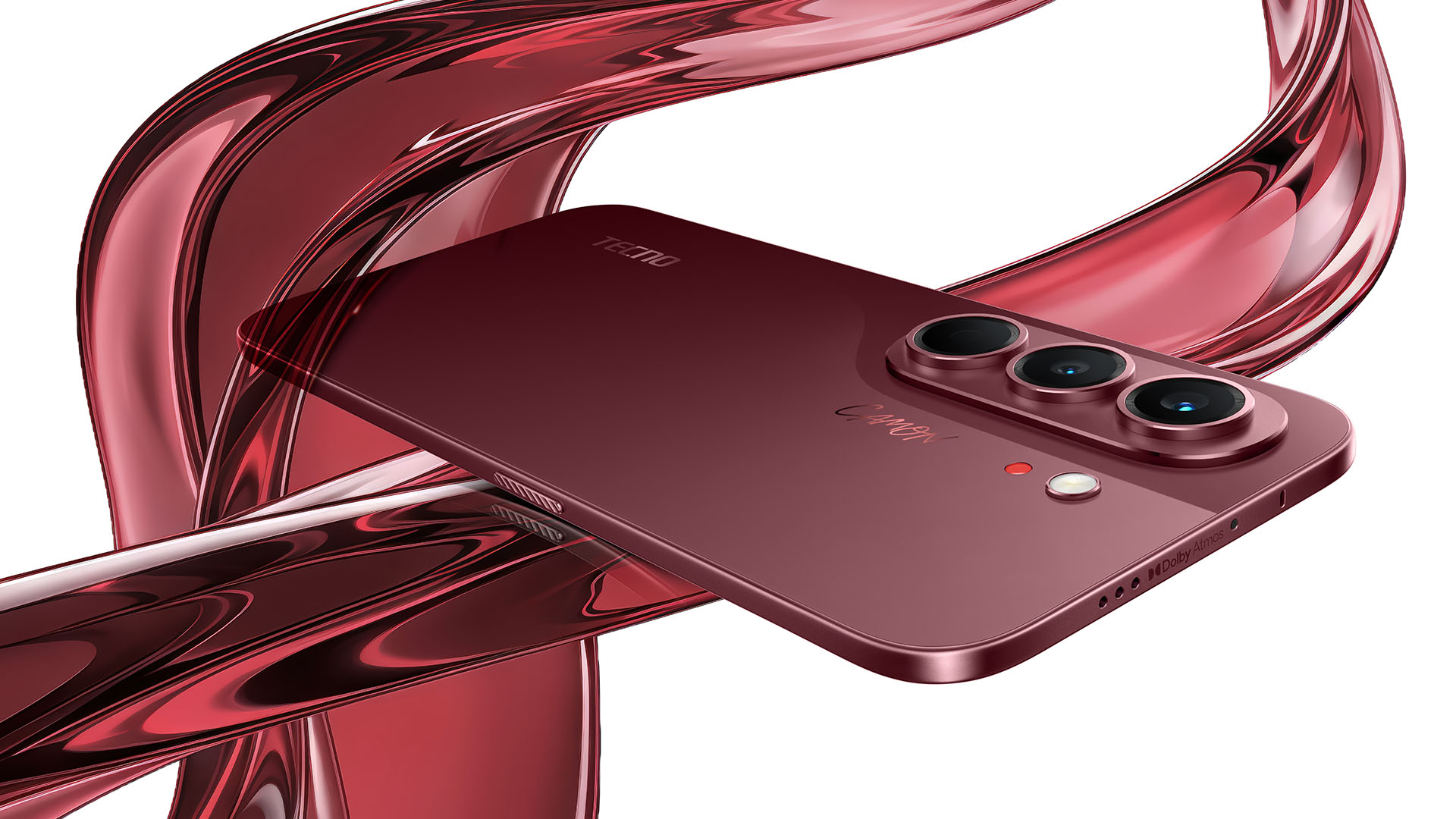
TECNO has been focused on making super-slender smartphones for the masses.
Their first “Slim” phones made their debut with the SPARK and POVA series. This time, it has also arrived towards the CAMON line.
Same slimness but with differences
The TECNO CAMON Slim was announced not too long ago. ICYMI, it’s rocking a MediaTek Helio G200 Ultimate SoC. That also meant that this phone is limited to 4G.
That’s about to change with the newer TECNO CAMON Slim 5G.
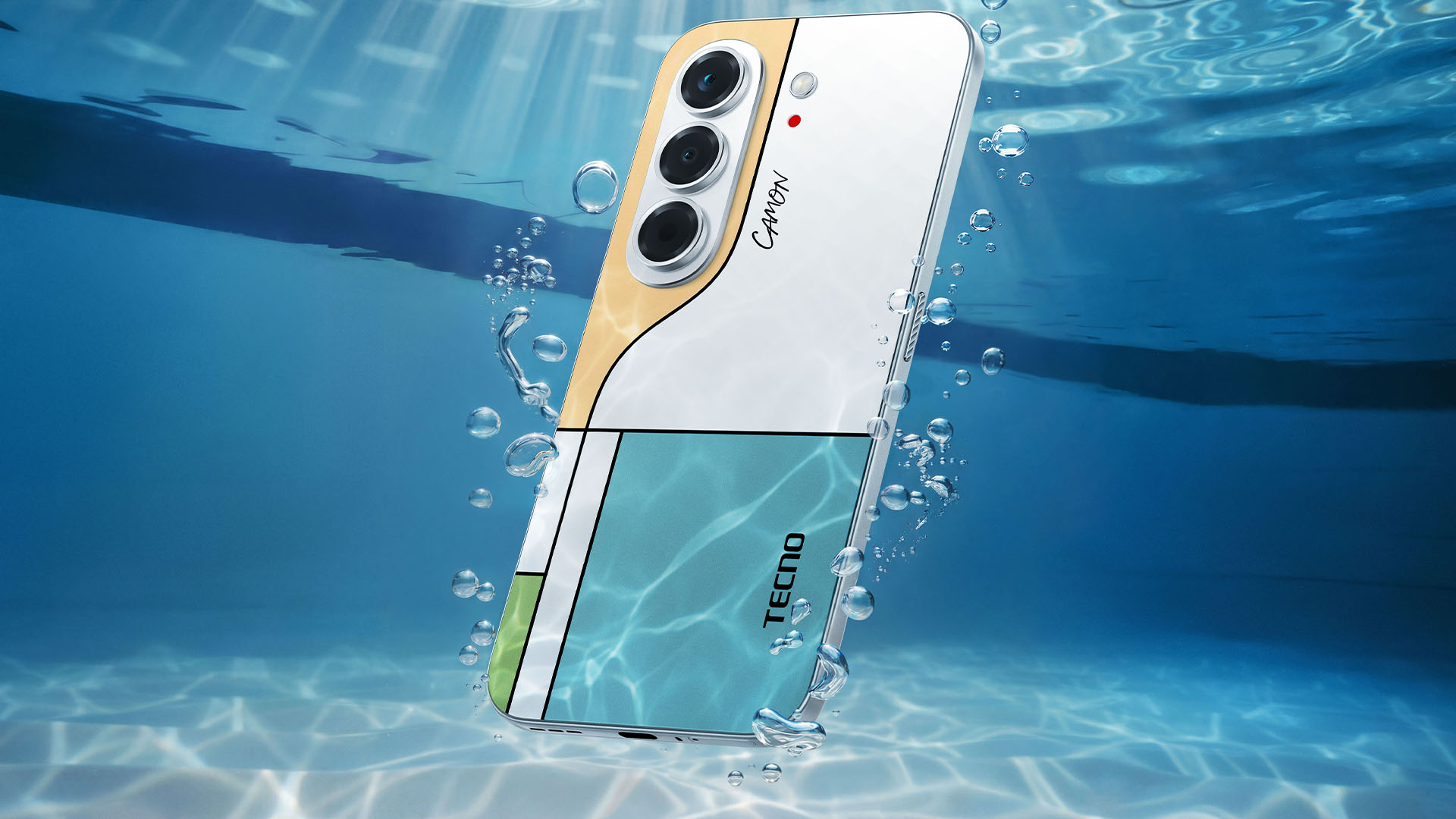
Despite the same slim chassis at 6.39mm, they changed the core to MediaTek’s Dimensity 7300e chipset. This enables faster 5G speeds in a more powerful octa-core processor.
Definitely, the battery of the CAMON Slim 5G is quite bigger at 6000mAh over the 5600mAh. Albeit, charging speed is slower at 45W versus 60W of its 4G counterpart.
Utmost durability was also given importance with its quadruple IP66, IP68, IP69, and IP69K water and dust resistance ratings. It has passed military-grade MIL-810-STD certifications as well as a TÜV SÜD certification for 60 months of sustained fluidity.
Back-to-back changes
The changes don’t end just with internals alone.
While both share the same 6.78-inch 1.5K 144Hz AMOLED screen, the CAMON Slim 5G possesses a flat display over the curved ones of the regular CAMON Slim.
Other display feats remain such as TÜV Rheinland’s low blue light certification, as well as Rain Touch, Waterproof Case Touch, and even Wet & Oily Hand Touch Recognition 2.0 Rain Touch that boosts touch sensitivity even under watery conditions.
Flipping to the back, you’ll see the biggest change.
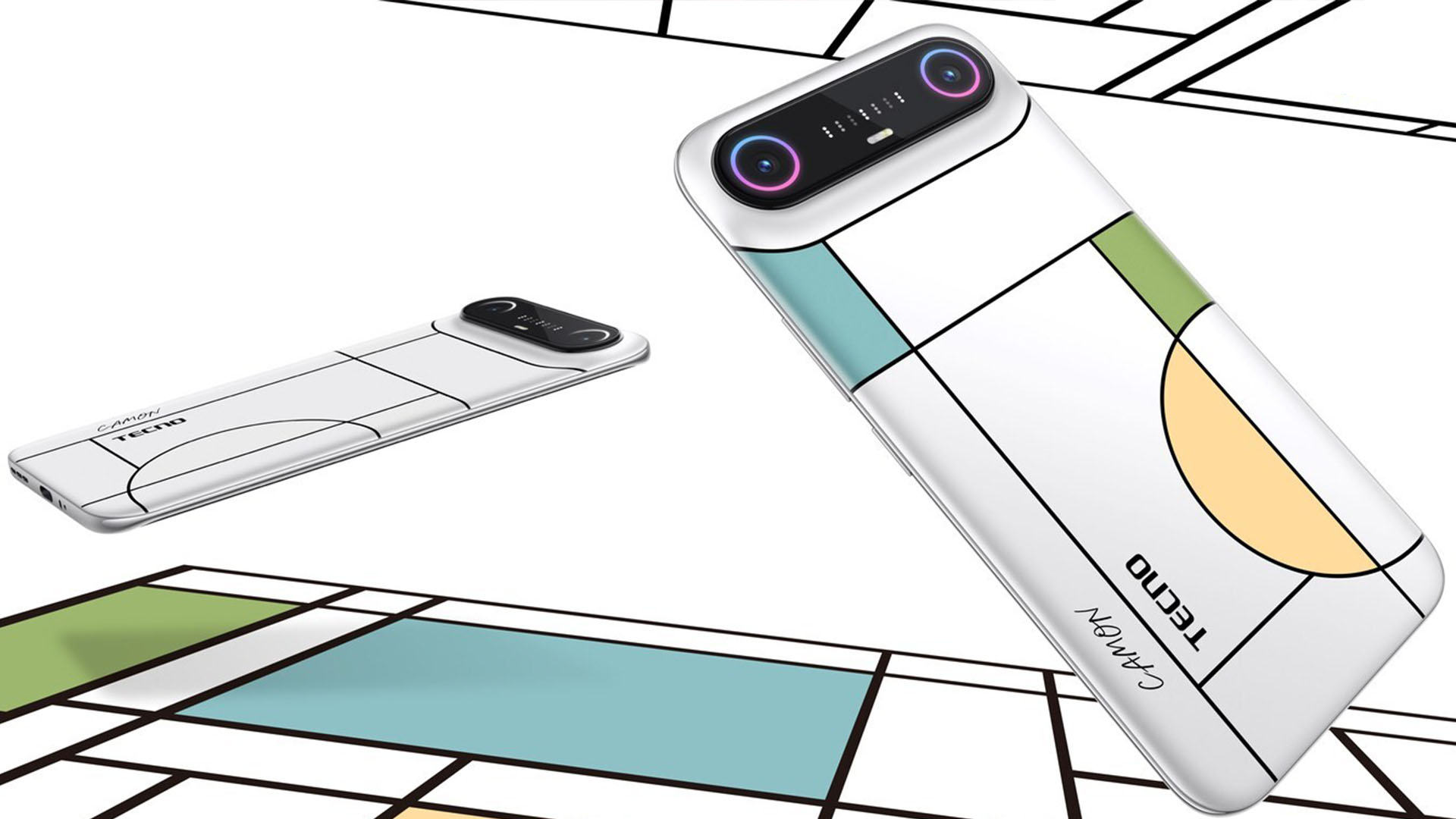
TECNO CAMON Slim 4G
The fun-looking camera bar with its AI Mood Light was removed in favor of a vertical-styled camera placement together with the iconic swan-neck curve design like the rest of the CAMON 50 line.
The reason? TECNO CAMON Slim 5G features a better 1x main camera courtesy of Sony’s LYTIA 700C Ultra (LYT-700C) 1/1.56-inch sensor. The CAMON Slim 4G relies on a smaller 1/2-inch Sony LYT-600 Ultra shooter.
For context, the better camera module was used in a lot of recent midrange and flagship phones — including the latest TECNO CAMON 50 Ultra.
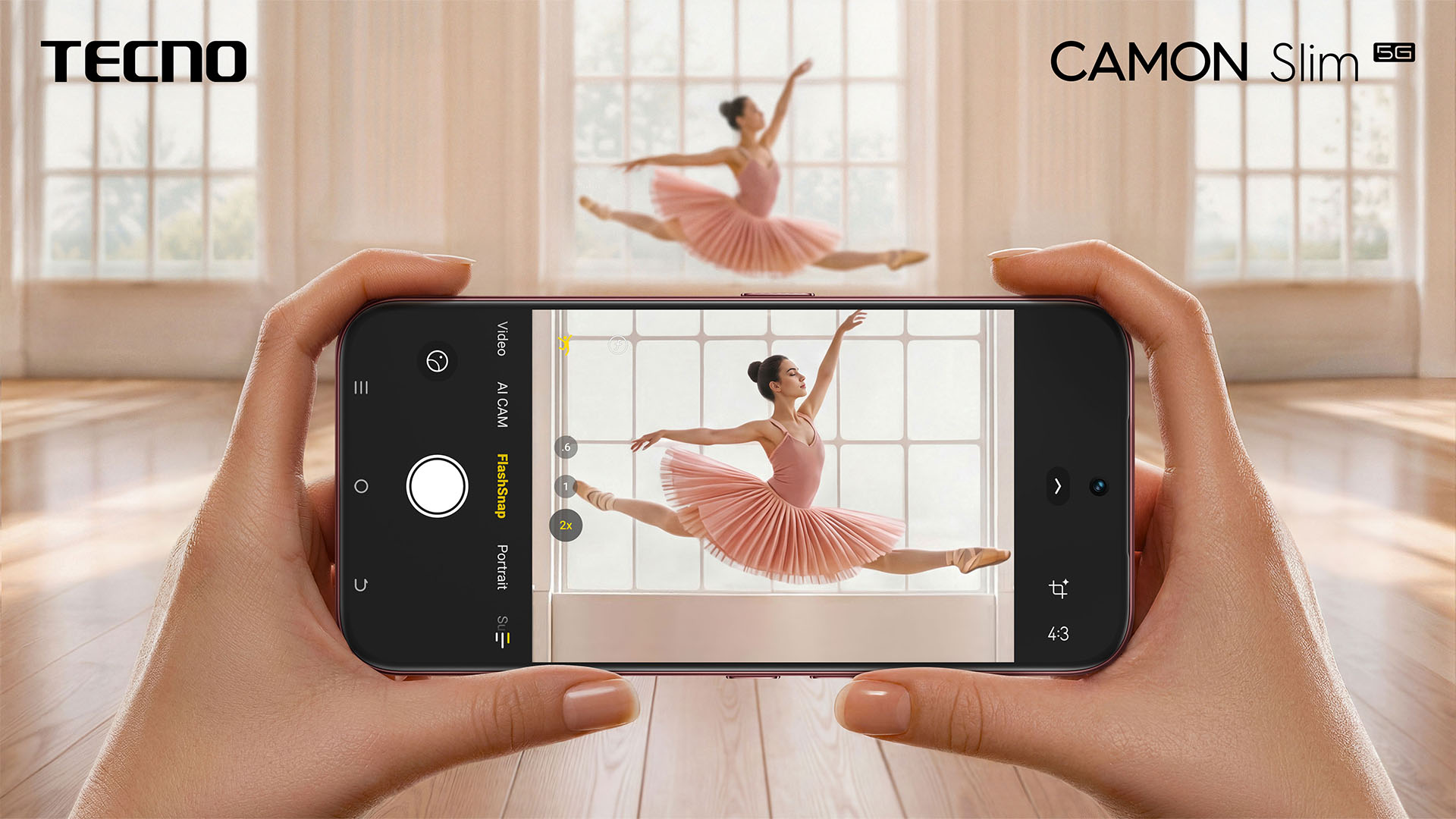
Multi-focal length portraits are supported at 24mm, 35mm, and 50mm. Speaking of Super-Zoom FlashSnap is also supported for those fast-filled action shots.
Selfie cameras of both phones are capped at 32MP.
Colors are similar yet different as well. Retained are the special Neo Mondrian and Van Gogh Blue colorways.
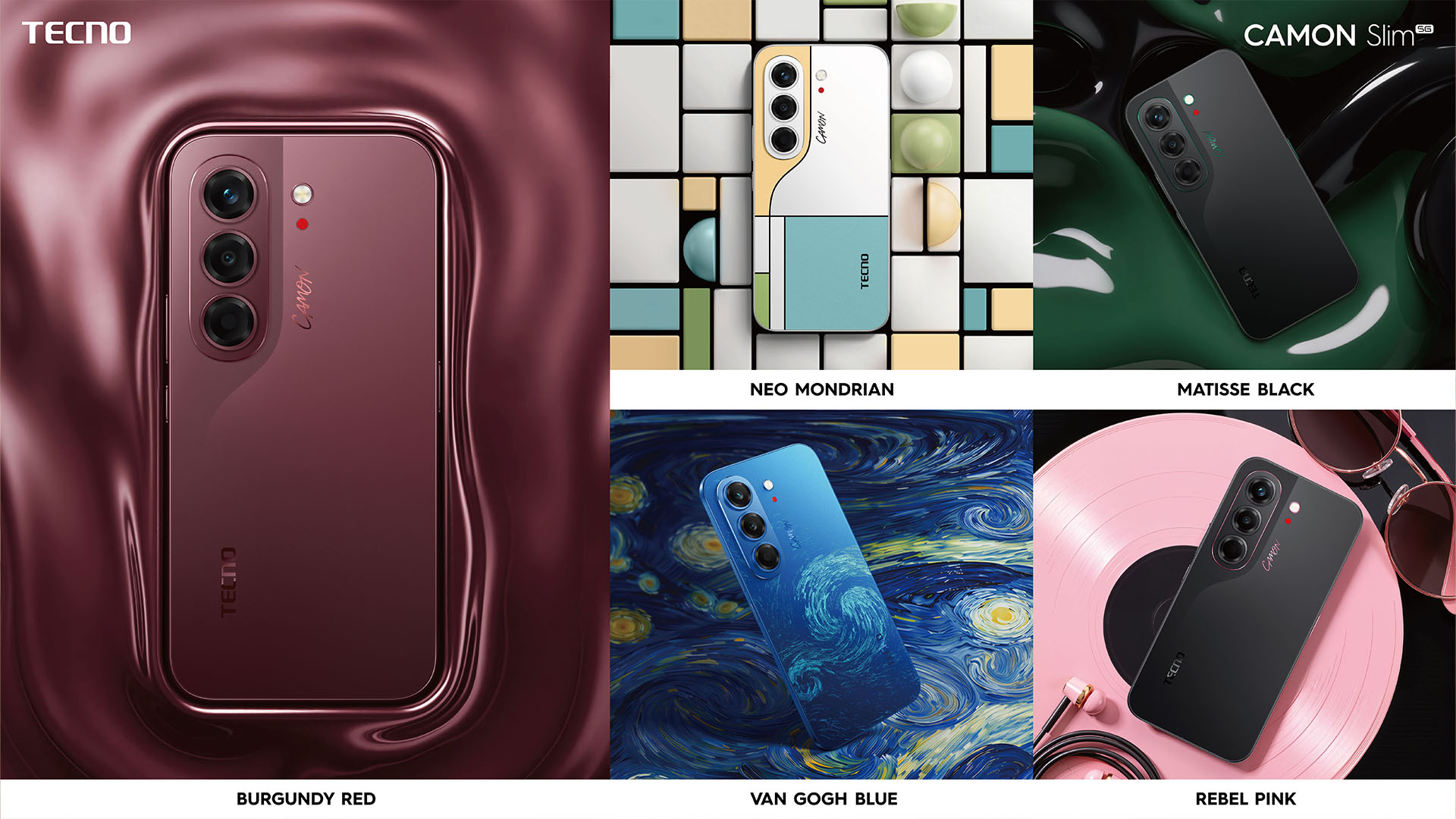
There’s also the hero Burgundy Red shade along with Rebel Pink and Matisse Black shades.
The CAMON Slim 5G runs the latest HiOS 16 based on Android 16 with all the latest AI Tools that TECNO has to offer. The brand is also promising five years of security updates and three major Android OS upgrades.
Pricing and Availability
TECNO did not release any specific pricing for the CAMON Slim 5G. However, they say the phone is rolling out across various markets with local pricing yet to be announced.
In select markets, prospective buyers can also receive a 3-month trial of Google AI Plus’ 2TB subscription plan at no extra charge.
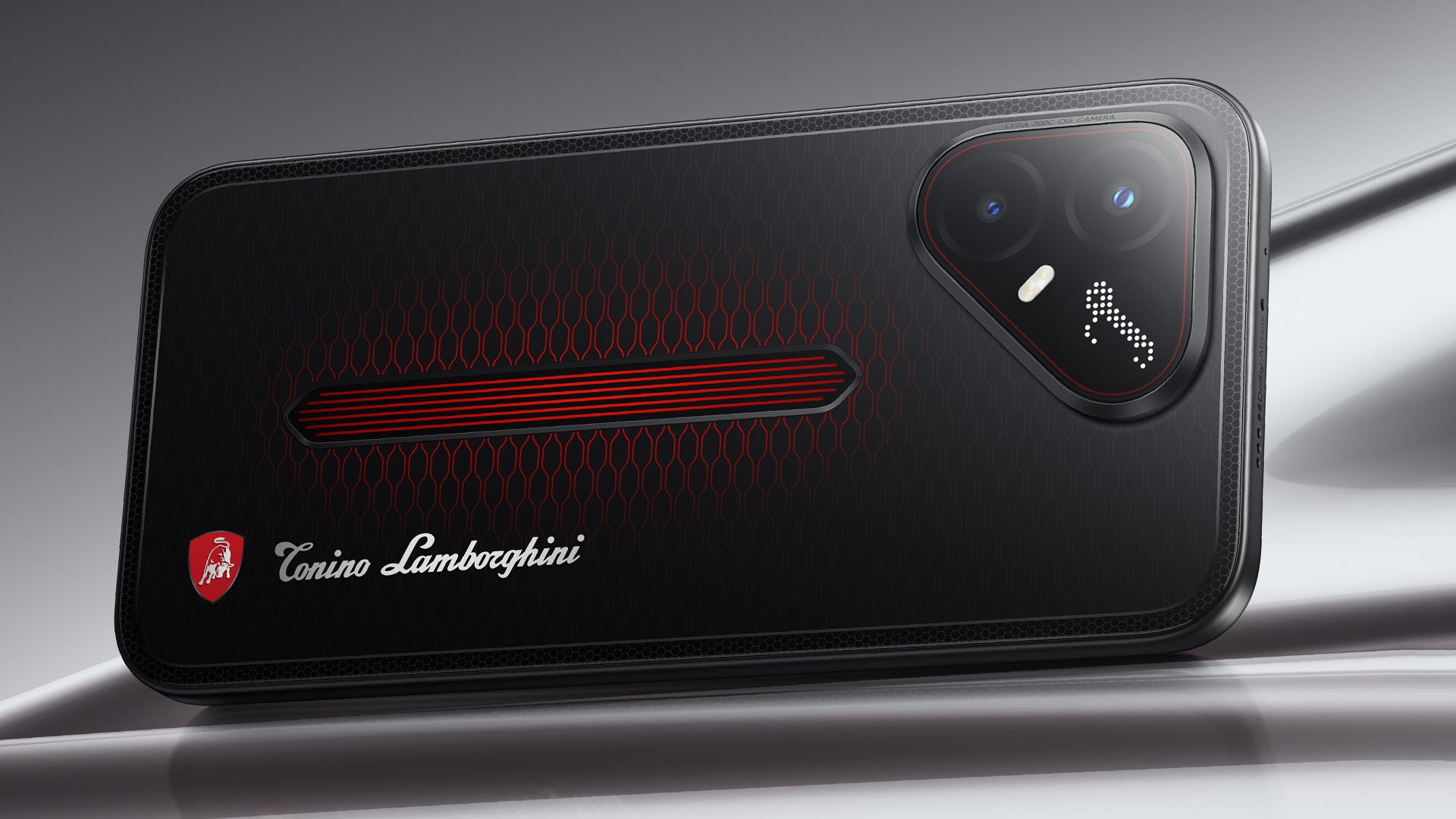
The POVA 8 Pro 5G was unveiled not too long ago. This time, TECNO is giving it a different kind of makeover.
Stealthy makeover
TECNO officially launches the all-new POVA 8 Pro 5G Tonino Lamborghini Limited Edition as a consumer-ready smartphone.
ICYMI, this collaboration was first teased and introduced at MWC 2026 last March as a multi-year partnership between the two brands.
This limited edition model uses a black-and-red color scheme inspired by Tonino Lamborghini. The rear panel has an incorporated hexagonal pattern and uses a dual-layer construction with internal mirror structures that reflect light as the phone moves.
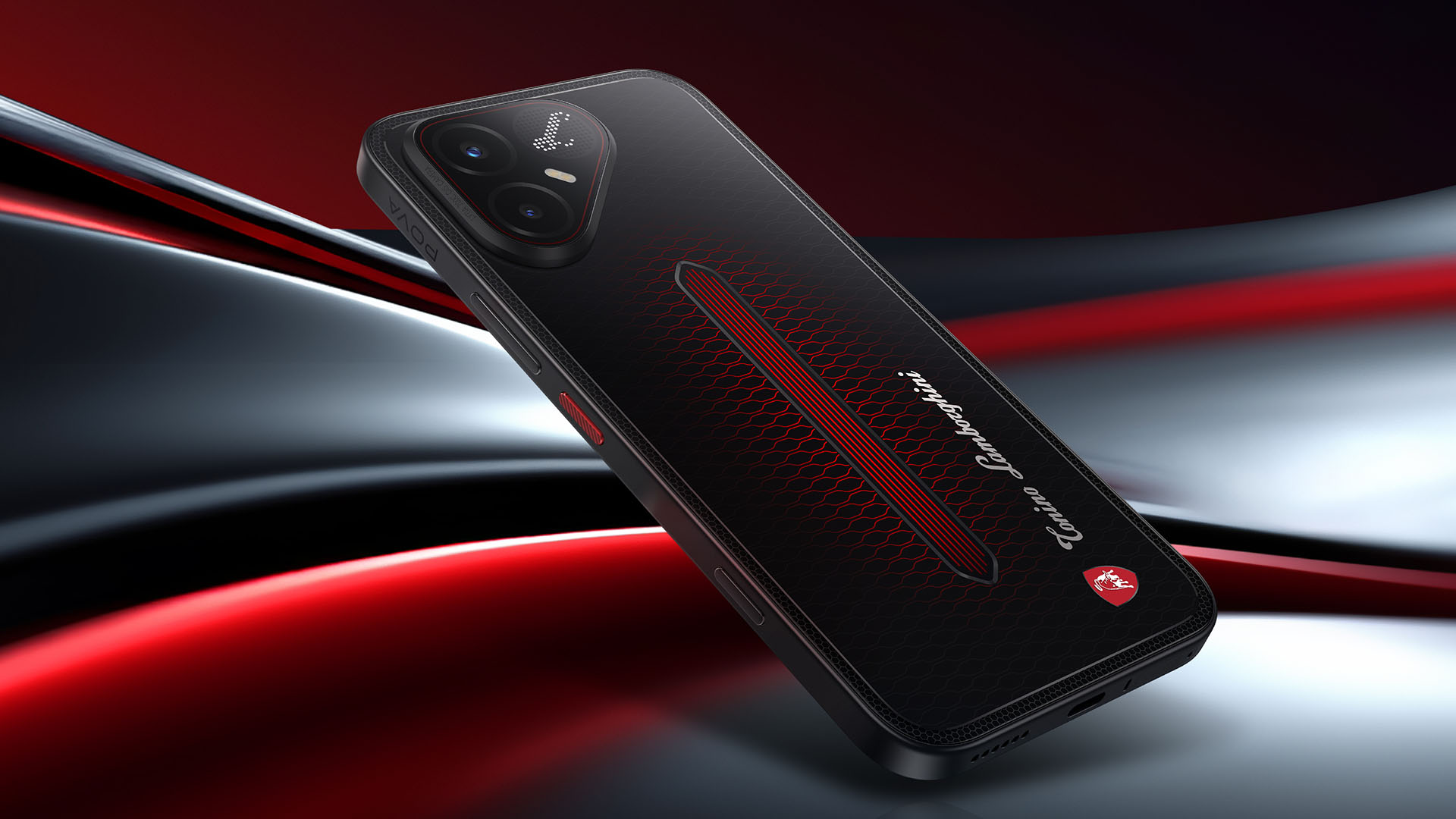
At the center is what TECNO calls the Pulse Line that’s surrounded by a Signature Shield pattern. A metallic Tonino Lamborghini logo completes the design.
The design extends to the software too with its customized black-and-red interface, redesigned icons, a dedicated boot animation, as well as a bespoke ringtone. There’s even a customized “L” signature for the Alive Matrix Display.
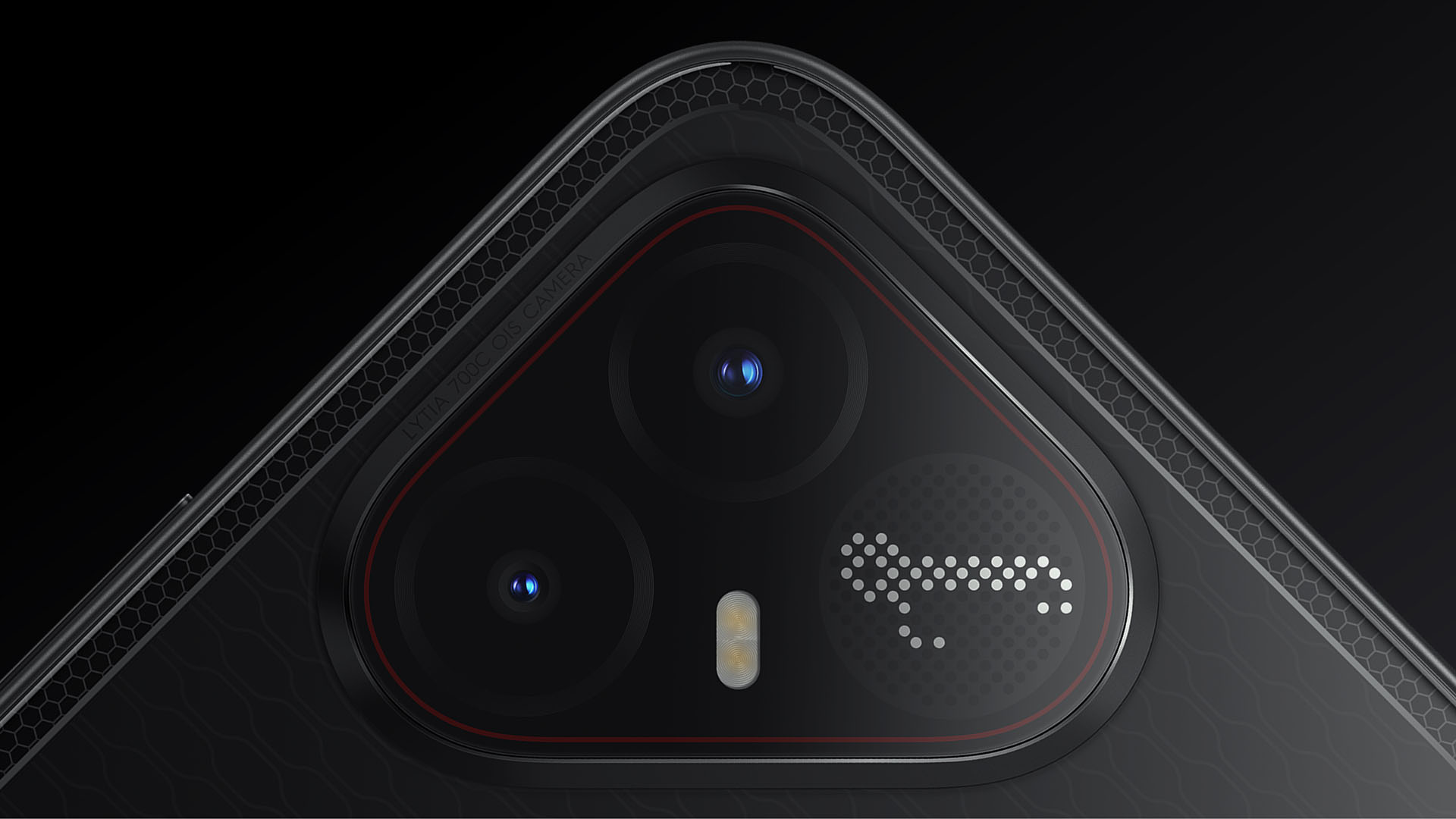
Despite the redesign, it remains recognizable as a POVA device, including its trinity camera module and side-mounted One-Tap Button for launching any specific apps, gaming actions, and shortcuts.
Undoubtedly POVA
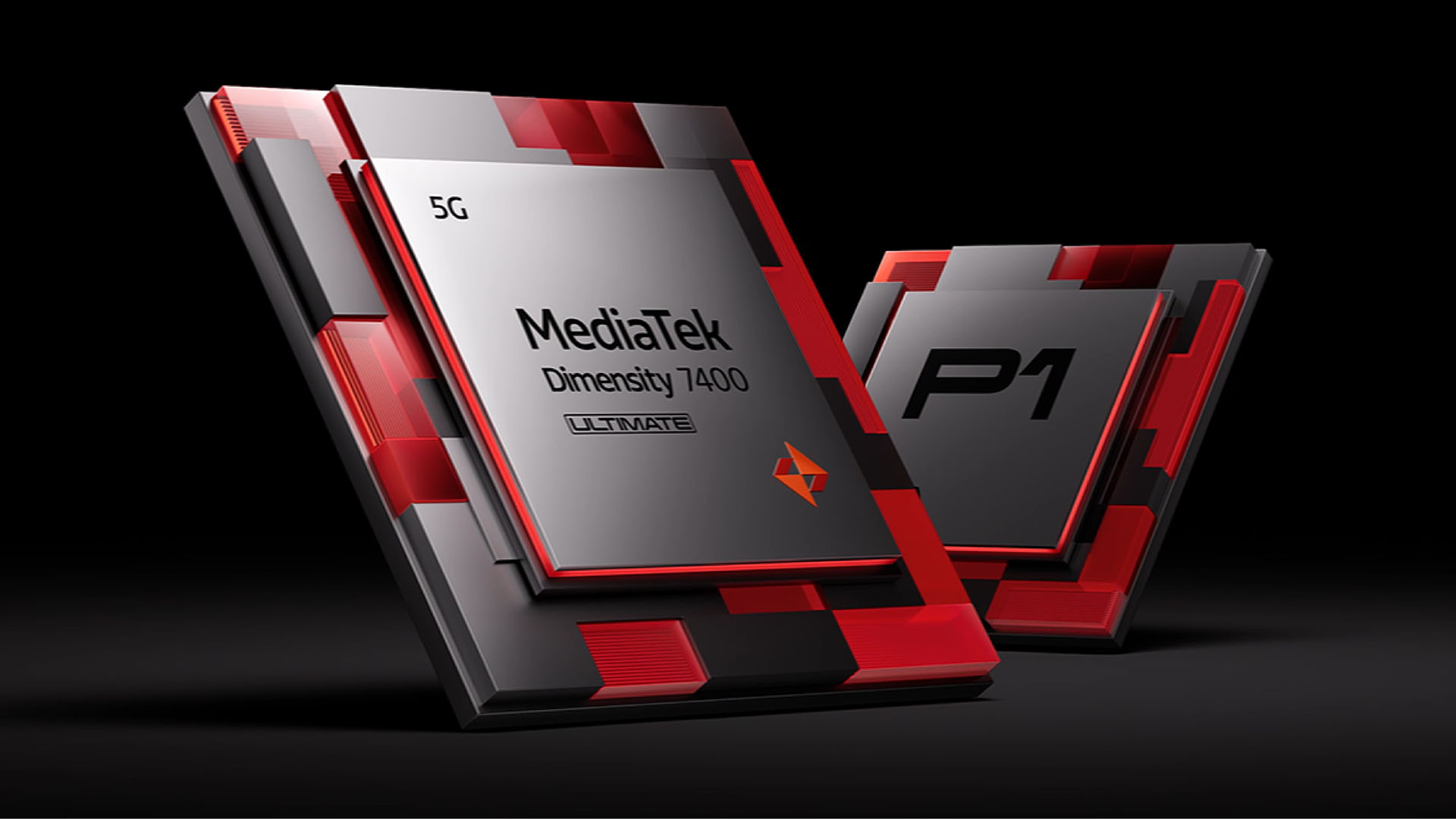
Just like the regular TECNO POVA 8 Pro 5G model, the Limited Edition Tonino Lamborghini also rocks a MediaTek Dimensity 7400 Ultimate 5G SoC paired with TECNO’s own P1 Graphic Chip.
The latter handles some of the GPU workload — with TECNO claiming up to 144fps in supported games such as MLBB (Mobile Legends: Bang Bang), PUBG, CoDM (Call of Duty: Mobile), and HOK (Honor of Kings).
For heavier games like Genshin Impact, Honkai: Star Rail, and Wuthering Waves, TECNO says the phone can reach up a frame rate of 90fps.
Speaking of, the display is neither a slouch.
It features a 6.78-inch HyperLux 144Hz AMOLED display with DCI-P3 wide color gamut and up to 4500 nits of peak brightness.

The phone also supports 1.5K resolution across more than 30 games, with HDR available where supported.
It’s truly gaming-friendly with its 240Hz touch sampling rate and instantaneous touch sampling of up to 2800Hz.
TECNO has even added Wet & Oily Finger Touch Recognition 2.0. This is designed to keep the screen responsive even when your fingers are wet, sweaty, or oily.
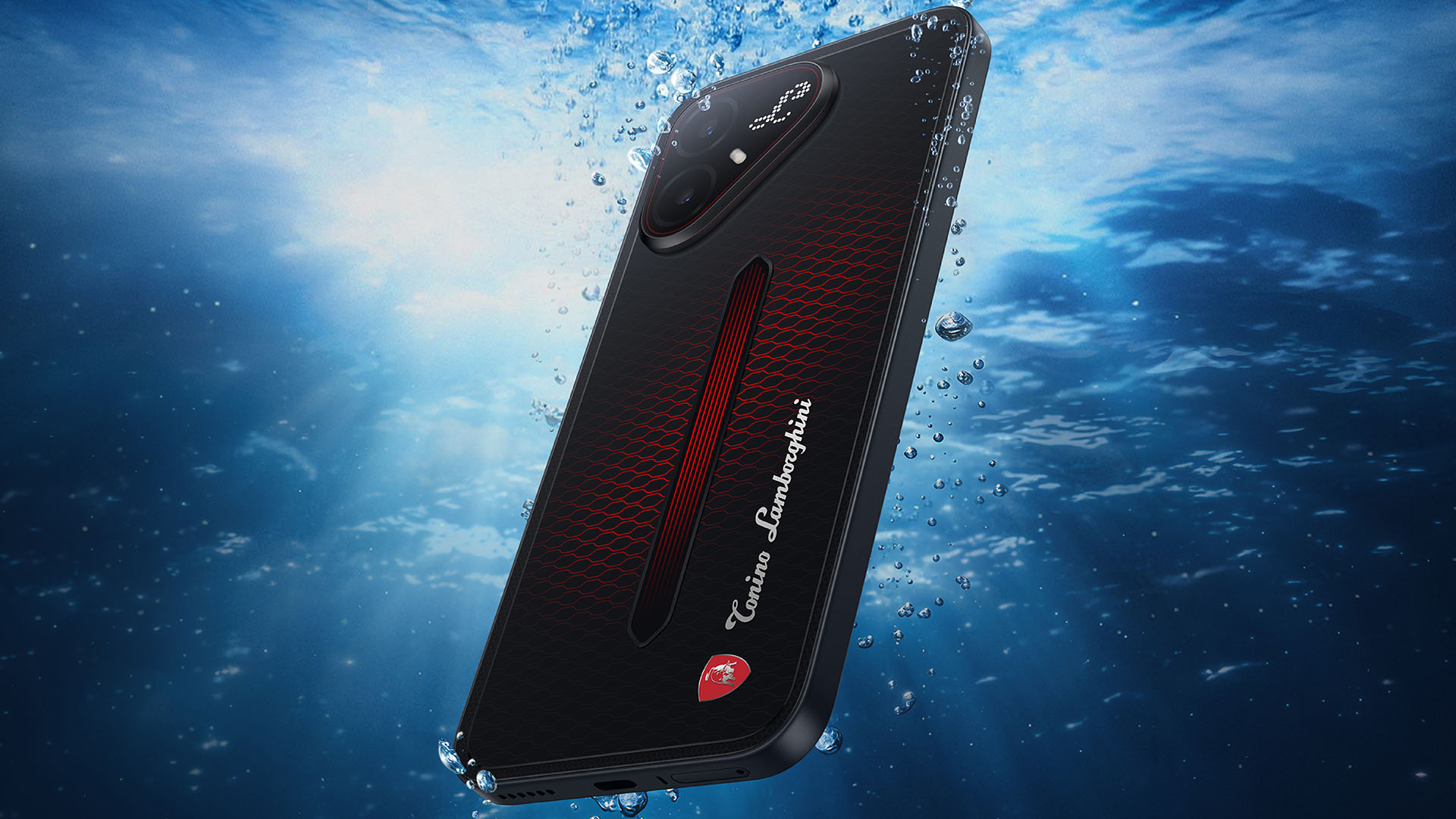
That front display is protected by the Corning Gorilla Glass 7i backed by quadruple IP69/69K/68/66 ratings plus an SGS 5-Star Drop Resistance certification.
Keeping all that hardware from getting too hot is a 5,000mm² vapor chamber and nine-layer thermal architecture. The brand says the entire cooling system provides more than 22,000mm² of heat dissipation area.
For photo shooting, the main camera uses Sony’s 1/1.56-inch LYTIA 700C (LYT-700C) sensor with OIS. This particular sensor was chosen for better light capture and autofocus performance, particularly in difficult lighting conditions.
The camera setup also supports 2× lossless zoom and a dedicated 50MP mode. An 8MP ultra-wide and 13MP selfie camera complete the setup.
With a slim form factor of just 7.39mm, this phone was still able to pack a 6500mAh battery. They say the battery can operate normally between -20°C and 60°C and retain more than 80 percent of its capacity after 2000 full charge cycles.
More than just hardware
The POVA 8 Pro Tonino Lamborghini Edition runs the latest HiOS 16 based on Android 16 with AI features baked in such as
- AI YouTube Summary
- All-Scenario Noise Cancellation
- AI Lightmaster 2.0
- AI Writing
- AI Theme Generator
In select markets, TECNO is also offering AI Health. This can estimate metrics like blood pressure, blood oxygen, heart rate, and respiration just with a face scan. Though it’s worth noting that this feature is only for reference and isn’t a medical device.
Lastly, TECNO promises two major Android OS upgrades as well as three years worth of security updates.
Pricing and Availability
The POVA 8 Pro 5G Tonino Lamborghini Limited Edition only comes in this lone exclusive colorway.
TECNO didn’t announce specific pricing as of writing although it will be available in three configurations:
- 8+256GB
- 12+256GB
- 12+512GB
When you purchase this device though, it comes with three years of free 256GB cloud storage. Select markets also get a three-month Google AI Plus trial with 2TB of cloud storage.





How Samsung folds the Galaxy into people’s lives

The CAMON Slim 5G is TECNO’s latest ultra-slim smartphone

Civilization VII is finally adding a fourth Age

ASUS laptops now come with three months of Google AI

GUNDAM ROGUE ORBIT launches in March 2027

TECNO MEGAPAD 2 review: Eyes on the size

realme 16T 5G with 8000mAh battery, IP69 Pro rating launches in PH

REDMI Note 17 Series focuses on long-term reliability

realme 16T to come with 8,000mAh battery, 7-year battery health guarantee

HUAWEI Pura X View is 2026’s first WIDE slab-type smartphone


-
 News1 week ago
realme 16T 5G with 8000mAh battery, IP69 Pro rating launches in PH
-
 Singapore2 weeks ago
REDMI Note 17 Series: Price, availability in Singapore
-
 News2 weeks ago
REDMI reveals the refreshed Note 17 and Note 17 Pro series
-
 Cameras2 weeks ago
Insta360 Luna Ultra review: My new solo coverage camera
-
 Reviews2 weeks ago
REDMI Note 17 Pro review: What a rollercoaster ride!
-
 News2 weeks ago
HONOR Magic V6: Price, availability in the Philippines
-

 Features1 week ago
The designated photographer’s new favorite phone: OPPO Reno16 Series 5G
-
 Cameras5 days ago
DJI Osmo 360 II review: Going all-in on the ecosystem