
Gaming
Where Winds Meet Hexi expansion now available
Explore massive new maps, fight new bosses, and claim exclusive rewards and bonuses


The first major expansion for Where Winds Meet, the Hexi expansion, is now available. The open world action RPG’s most ambitious free-to-play expansion since its release is now accessible across PC, PlayStation, and mobile.
The Hexi expansion invites players to leave the familiar heartlands behind and step into a breathtaking, unforgiving new frontier.
Included are three major maps and nearly 20 sub-regions, urging players explore vast and diverse environments.
These massive new areas are divided into three chapters: the ancient ruins of Jade Gate Pass, the snow-capped mountain region Liangzhou, and a vast grassland area Qinchuan.
The expansion takes players back to the Tang Dynasty, which exists outside of the main game’s premise.
Here, players can battle 11 unique bosses and take part in several side quests. New gameplay mechanics will also allow them to surf on sand faster or reverse time to rebuild ruins and solve puzzles.
To celebrate the massive milestone, the title is also giving away a wave of exclusive free rewards and in-game bonuses. There’s 30+ Lingering Melodies and 90+ Resonating Melodies.
Furthermore, there is a wide range of cosmetics, including outfits, accessories, and even emotes. These rewards will be spread out from March to May.
Players simply have to log in and claim their launch gifts and gear up for the desert.








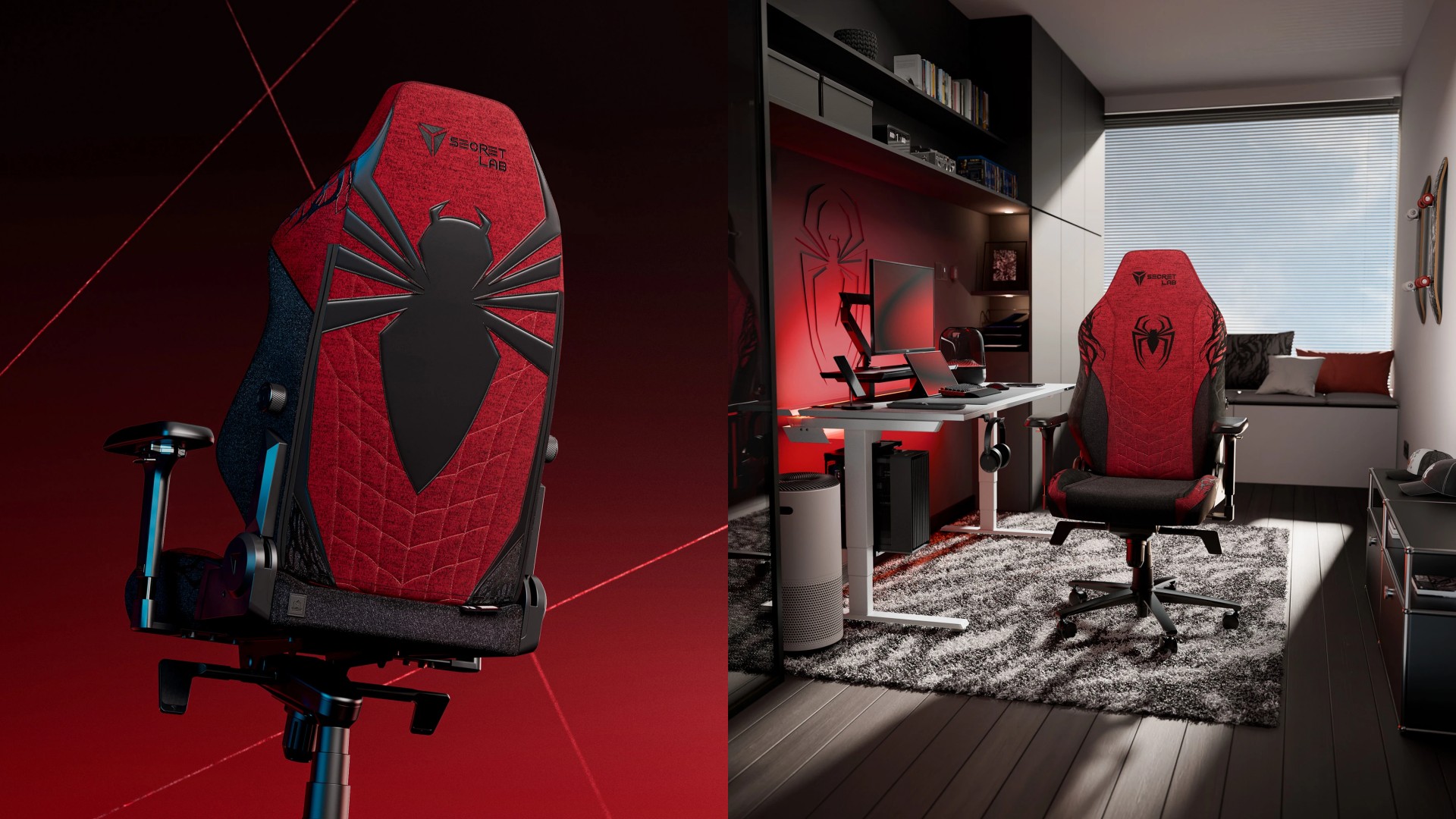
Secretlab is teaming up with Marvel for the first time to launch the Secretlab TITAN Evo Marvel Spider-Man Edition.
The new gaming chair draws inspiration from Spider-Man’s enduring legacy. It has a red-and-black design, Spider-Man emblems, and web-inspired detailing across the backrest. It launches alongside Sony Pictures Entertainment and Marvel Studios’ Spider-Man: Brand New Day.
The chair is upholstered in Secretlab SoftWeave Plus Fabric. Its backrest features a web of silken lines rendered through an advanced knitting process that gives Secretlab control over every thread. The design also includes dark tendrils along the side wings and seat base as a nod to Venom.
Built for long hours
The Spider-Man Edition retains the TITAN Evo’s ergonomic features. It uses high-density cold-cure foam designed for long hours of sitting, with a medium-firm formulation intended to distribute weight evenly and relieve pressure.
It also features Secretlab’s sculpted pebble seat base, which guides users toward the middle of the seat while allowing natural movement. The 4-way L-ADAPT lumbar support adjusts up, down, in, and out to follow the natural curvature of the lower back.
Secretlab says the collaboration marks its first partnership with Marvel. The company currently has more than three million users worldwide. It says its chair and desk designs have received more than 90 Editor’s Choice and Best Hardware Awards.
The Secretlab TITAN Evo Marvel Spider-Man Edition is available through Secretlab’s website.
Gaming
Now Playing: The Blood of the Dawnwalker
The game lovingly cobbles together inspiration from past games.


Imitation is the sincerest form of flattery, or so they say. However, for a gamer, imitation is the sad state of the industry today. Every game is a copy of another. Every game today is a survival simulator, an extraction shooter, or a cozy organization title. The Blood of the Dawnwalker is no different. However, while it does draw inspiration from so many past titles, the unique blend makes it one of the most unique RPG experiences today.
A tale of darkness
The Blood of the Dawnwalker touts itself as the next project of the minds who came up with The Witcher 3. Rebel Wolves, a relatively small outfit, is the new home of several developers who worked on the aforementioned game. That, in itself, is already a strong reason why you should get Dawnwalker.
But it goes much deeper. And it starts with the story.

Coen of Laslea lives a relatively peaceful life in a valley called Vale Sangora. But that peace is dependent only on the whims of the valley’s vampiric rulers, a cabal of four brutal vampires who keep the peace in exchange for a monthly blood tithe, called a Blood Mass, extracted from every villager from every village once a month.
Unfortunately for Coen, this month’s Blood Mass doesn’t end as usual. Events have drawn the vampires’ ire, and — surprise, surprise — Coen gets turned into a vampire himself. Faced with a new reality, Coen goes on a rescue mission to save his family as a newly turned vampire.
Dawnwalker reverses the old trope of the hunter hunting the monster. Do you embrace the vampire within or keep being human?
A dark world
The Blood of the Dawnwalker roots itself as a traditional RPG. As a newly turned vampire, Coen doesn’t have awesome vampiric powers yet. Though he’s stronger as a vampire, a more ferocious monster can easily take him on at lower levels.
He does have a diverse skill tree pronged into three sections: Witchcraft which works only in the daytime, Vampirism which works at night, and Swordplay which works in both. Every section has its share of overpowered skills. One of my favorites heals Coen every time he executes a perfect block while in his vampire state. Coen essentially becomes invincible with some of these skills.
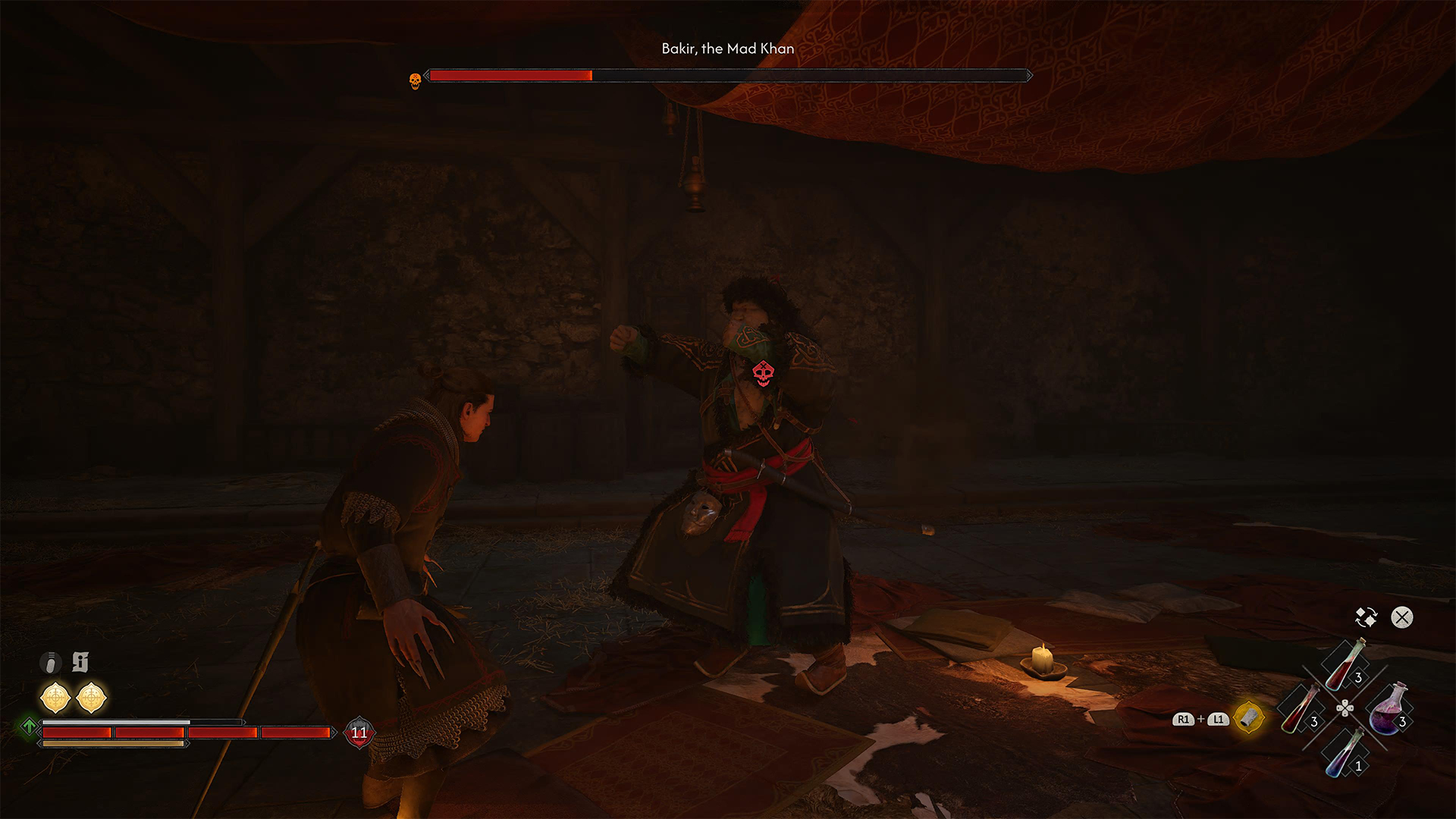
To level up, Coen must fight enemies or accomplish missions. Both of which add to how fun the game is. But let’s start with fighting.
Dawnwalker draws inspiration from Kingdom Come: Deliverance. Specifically, the game has a direction system of attacking and blocking. You can pick which of the four cardinal directions to attack and block. Pick a direction that your enemy doesn’t, and the attack lands. Alternatively, pick the direction that your attacking enemy does, and you block their attack.
Unlike Kingdom Come, Dawnwalker is much more accessible, especially with an icon that explicitly tells you where attacks are coming from. Fighting in Dawnwalker feels fun, regardless of how overpowered Coen is. Even at high levels, I don’t find it boring to enter another encampment and fight an entire army.
The Ubisoft way
Another way to bring Coen to those higher levels is by accomplishing missions. The Blood of the Dawnwalker does this in a way typical of most Ubisoft-inspired RPGs. Brencis, the big bad of the vampire posse, is supported by three lesser bosses. Each lesser boss has their own dominion with a set of objectives to “anger” their respective ruler. To fight Brencis, Coen must first kill all three lesser bosses.
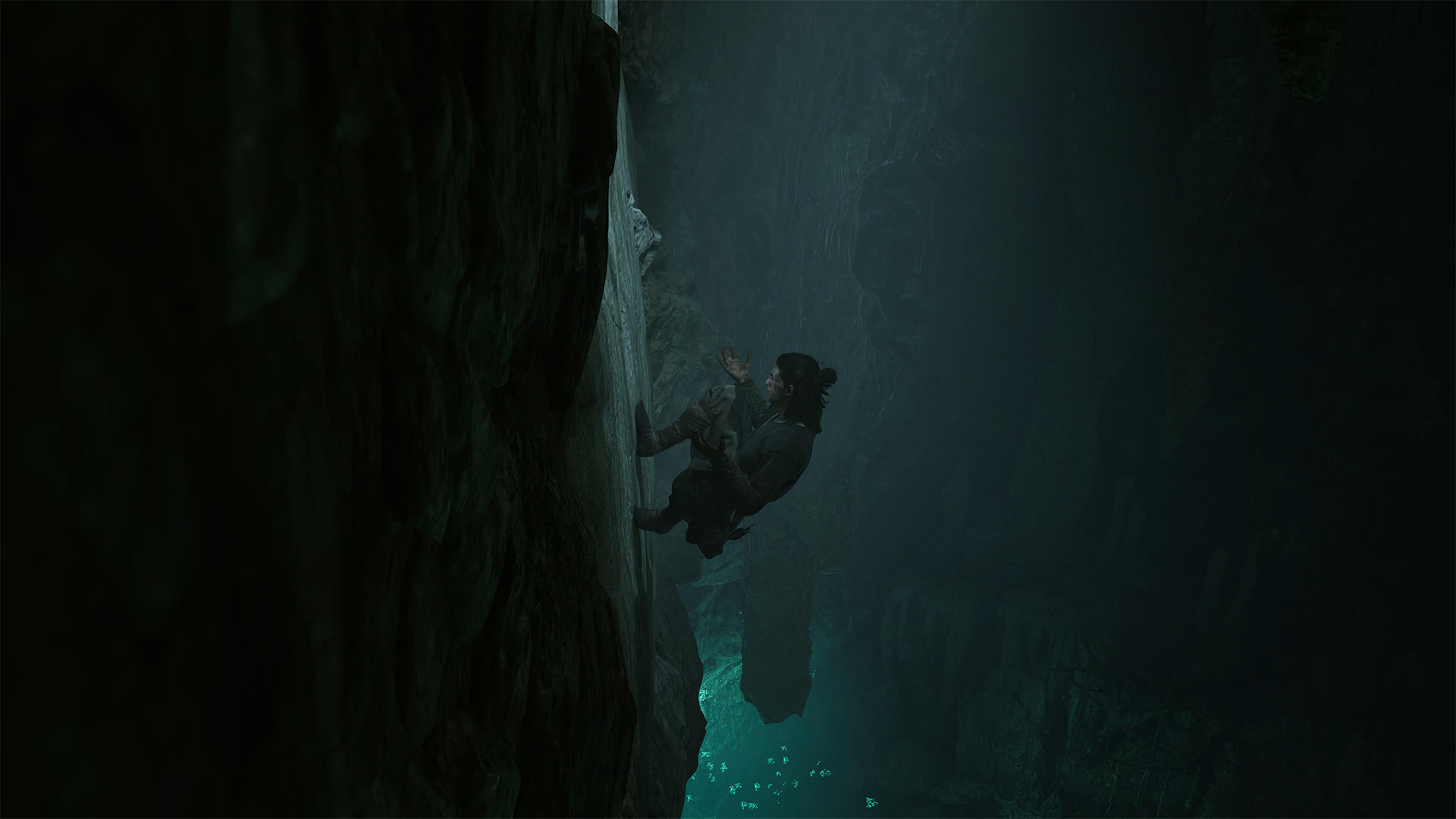
Alongside these three goals, Coen can also recruit rebels to fight against Brencis or find powerful weapons that will help against the fight. You can also reminisce about your family’s past or romance the local witch.
If Dawnwalker were just a typical RPG (and, in some cases, it is), then you can cross off these objectives like a checklist. But Dawnwalker doesn’t do that. Time is a resource here.
Losing time
Once you finish the prologue, Coen will have thirty in-game days to rescue his family from Brencis. Time doesn’t move regularly, though. It moves only after every accomplishable activity: finishing objectives and levelling up. Each day has sixteen segments, divided into two halves for day and night. A time-progressing activity can move time up by one increment (or the equivalent of one or two hours) or even six. Some activities can even progress time from day to night (or vice versa).
On a similar note, Coen has different abilities depending on the time of day. During the day, Coen uses witchcraft. During the night, he can use his vampiric claws and suck his enemies dry as a vampire.
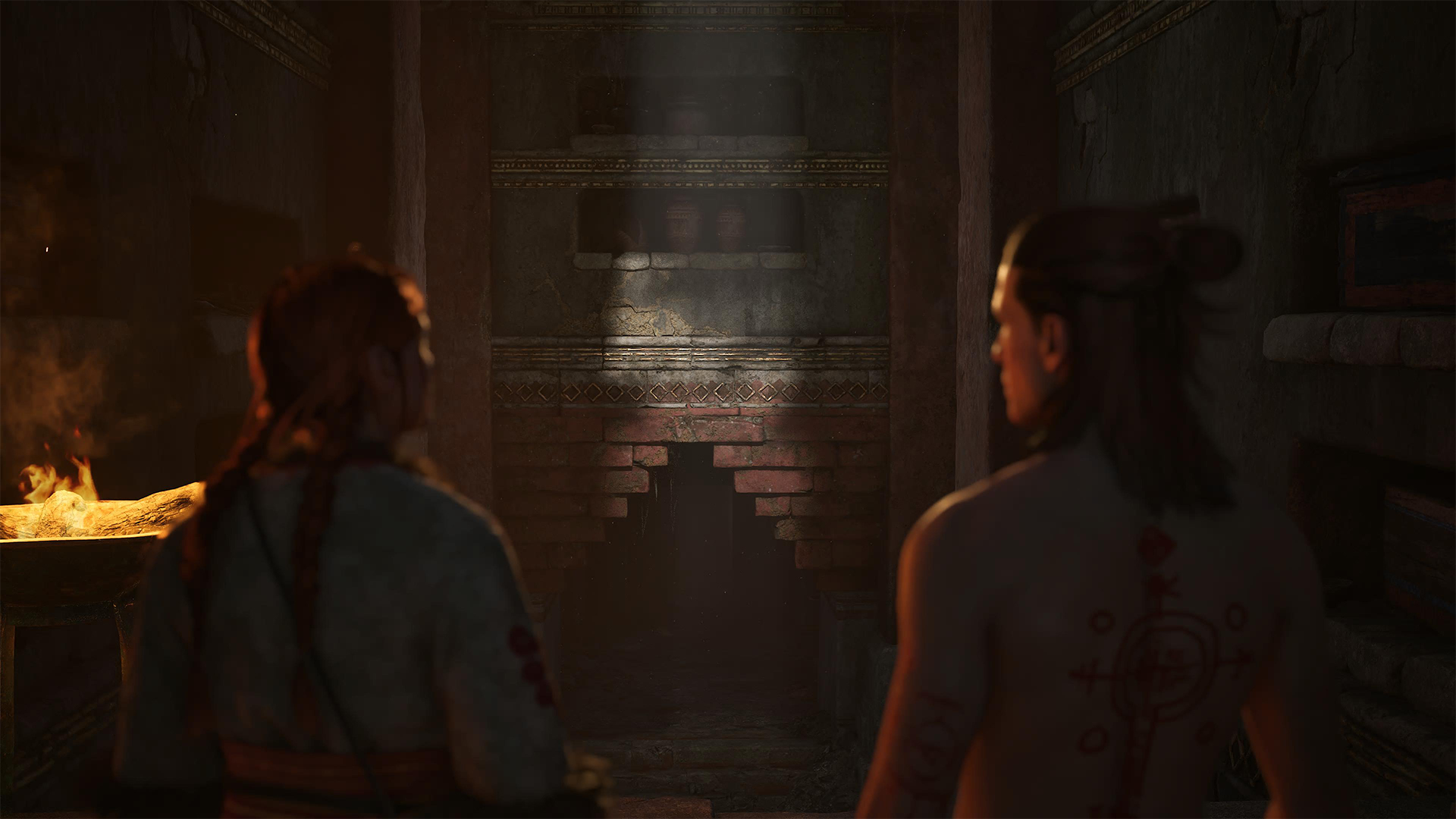
Using time as a resource is hardly a novel idea. I’ve seen it in Dead Rising and Dying Light. Dawnwalker, however, makes the march of time feel more pressing. Often, it’s a strategy game of figuring out which objectives to prioritize. Should I prioritize the other vampiric bosses? Should I hunt for more supporters to the rebel cause? Should I give time for Anca, my love interest?
Plus, with the differences between day and night, it’s important to plan when I wanted to do certain objectives. Am I strong enough during the day to beat a high-level monster, or should I wait until night when I’m much stronger?
Time is an illusion
Though the feeling of time’s passing is palpable throughout, Dawnwalker eventually makes it all an illusion. Thirty days is enough time to get stronger, find allies, and defeat all three lesser vampires. In fact, there are even ways to save a lot of time.
On my first playthrough, I accidentally discovered a way to break the sequence of the traditional RPG experience. After beating my second vampire lord, I wanted to explore the map a bit more before tackling the third and final lord. The next mission on my docket was hunting for a powerful silver sword in a cathedral, a supposedly low-stakes mission. Apparently, the third lord likes hanging around the cathedral. So, while I was minding my own business, the game gave me the opportunity to fight the third lord without needing to anger her. And why wouldn’t I take that chance?

With eighteen full days left before the deadline, I beat all three lords and angered Brencis enough to trigger his mission. I also felt strong enough to take him on.
Now, this isn’t to say that the game’s time-based mechanic is a failure. You can’t take away that feeling of having to strategize objectives, even if it’s ultimately moot. Besides, there’s still that day-night mechanic.
In that way, Dawnwalker’s time mechanic is still a success. Yes, it could have gone further, but you can’t ignore that it’s a unique approach to RPGs.
Choice is an illusion
Being a vampire, Coen is always prone to that hunger for blood. To materialize this, he has a blood hunger meter, which naturally depletes as time goes by. This is further highlighted by a “give in to the hunger” option with several NPC dialogues, which gradually becomes more difficult to ignore when the hunger gets higher. At one point, it becomes impossible to resist, so Coen feeds on that NPC and essentially kills them off.
On the choices-definitely-matter level, the game ideally wants you to balance Coen’s hunger for blood. It wants you to drink blood before NPC encounters, so you don’t accidentally drink them dry.
In my opinion, the system just doesn’t land. There was never a time when I felt crippled by that hunger. At times, I even forgot that it existed. It could be because I wasn’t shy about feeding during combat. After all, feeding has a very strong healing mechanic, which works extremely well in fights.
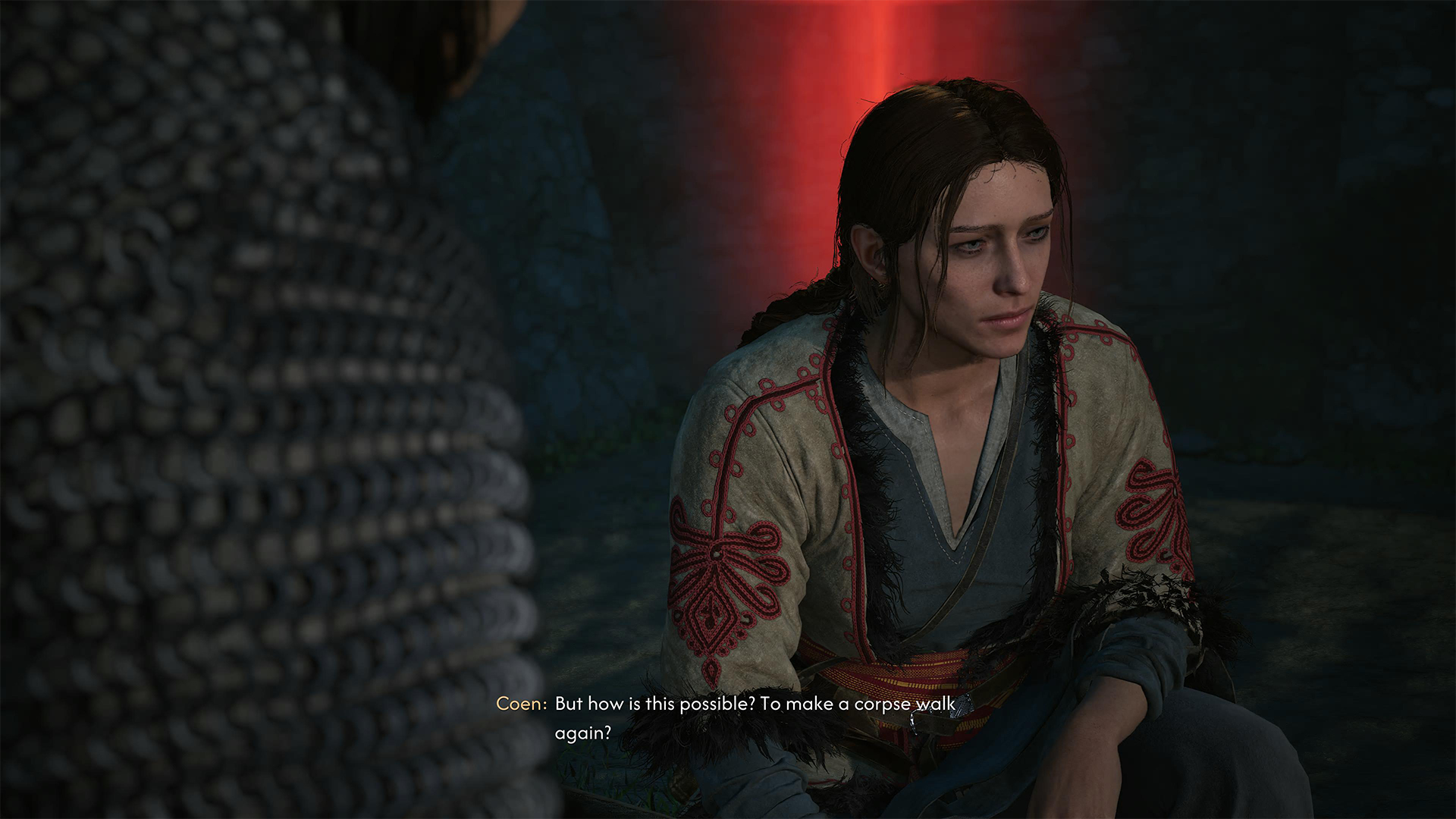
Although, I still tried the NPC feeding option on some annoying characters. And it was… meh? Sure, the drawback is that I lost dialogue options which could have led to something amazing. But I also didn’t get anything in return. I didn’t feel more powerful, nor did I feel Coen becoming more corrupted by vampirism. In essence, the hunger is more for roleplaying than something mechanically rewarding.
It’s unfortunate because Dawnwalker has something called a corruption level. The more you drink blood, the more this stat increases. The higher it is, the more vampiric powers you can unlock. If the game offered more rewards for drinking NPCs like better corruption increases (as in Vampyr, a similar vampire game), then the hunger might be more interesting.
Is The Blood of the Dawnwalker your PlayMatch?
The Blood of the Dawnwalker is easily one of the most mechanically interesting RPGs of 2026. The game patches together several unique mechanics from the past, which already worked on their own but shine even brighter when cobbled together.
Sure, it doesn’t go far enough with a few mechanics, but that’s fine enough. It’s a dark fantasy tale that keeps itself fresh throughout the playthrough. For that, this game gets a Swipe Right and a Super Swipe for those craving for a semi-lengthy, go-through-all-the-bosses RPG.

Insomniac Games has shared more details about Marvel’s Wolverine, highlighting Logan’s combat abilities, progression systems, exploration features, customization options, and accessibility settings.
The developer shared the details alongside a new Features Trailer ahead of the game’s September 15 release on PlayStation 5.
Wolverine fights with momentum
Marvel’s Wolverine puts aggressive combat at the center of its gameplay.
Logan can attack enemies with his claws, kicks, barrages, and critical strikes. Players can also unlock Techniques to enhance his combat moves.
Special Techniques add more options during fights. Players can equip up to four at a time, including moves such as Tornado Spin, Knee Breaker, and Spiral Strike.
Logan can further customize his combat style through Adaptations. These can improve his ability to absorb bullets, increase the effectiveness of Rage, expand parry windows, and provide other combat advantages.
His Rage system has three tiers. It focuses on survivability, resilience, and fury. Players can use it to survive dangerous encounters or unleash more brutal attacks.
Logan travels around the world
The game features an original story that takes Logan across different locations.
He and Jean Grey will work alongside members of Team X to stop Bolivar Trask and his plans against mutantkind. Logan will also face enemies such as Omega Red and Deathstrike.
Exploration will offer activities outside the main story. Players can discover Nightmare Doors with combat and traversal challenges. They can also find whisky bottles that reveal more about Logan’s forgotten memories.
Material crates can unlock suits inspired by Wolverine’s appearances across comics, movies, and animation.
Suits and claws add customization
Players can unlock a variety of Wolverine suits, including versions inspired by Weapon X, Old Man Logan, Ultimate Wolverine, and Patch.
The game also features more casual looks, including a tank top and leather jacket. Players can toggle some cowls and hats on or off.
Different claw designs are also available. These include bone, notched, curved, reflective, and angled claws.
The game will also feature Logan’s Nightmare Cabin. It includes New Game Plus with exclusive Techniques and level caps, Mission Replay, Nightmare Challenges, and Photo Mode. Photo Mode will be available through a day-one update.
More accessibility options included
Insomniac says Marvel’s Wolverine will include more than 100 new, returning, and improved accessibility features.
These include High Contrast visuals, English audio description, Global Game Speed, and Strong Haptic Signals.
The game also gives players more control over its violence and adult language. Separate options can alter dynamic blood and dismemberment, while language filters can limit adult language in English.
Marvel’s Wolverine launches on PlayStation 5 on September 15, 2026.


DJI Osmo 360 II review: Going all-in on the ecosystem
I'm finally leaving my Insta360 X5 behind!


Now Playing: The Blood of the Dawnwalker
The game lovingly cobbles together inspiration from past games.


POCO F9 Pro: True ‘premium’ performer in a midrange shell
All-around performer with upgrades across various departments
DJI Osmo 360 II review: Going all-in on the ecosystem

Secretlab unveils Spider-Man-themed TITAN Evo
Now Playing: The Blood of the Dawnwalker

Sony expands ULT POWER SOUND with three new speakers

POCO F9 Series: Price, availability in the Philippines

TECNO MEGAPAD 2 review: Eyes on the size

REDMI Note 17 Series focuses on long-term reliability

realme 16T to come with 8,000mAh battery, 7-year battery health guarantee

realme 16T 5G with 8000mAh battery, IP69 Pro rating launches in PH

HUAWEI Pura X View is 2026’s first WIDE slab-type smartphone


-
 Reviews2 weeks ago
TECNO MEGAPAD 2 review: Eyes on the size
-
 News5 days ago
realme 16T 5G with 8000mAh battery, IP69 Pro rating launches in PH
-
 News2 weeks ago
HUAWEI Pura X View is 2026’s first WIDE slab-type smartphone
-

 Cameras2 weeks ago
30 days with the DJI Osmo Pocket 4P
-

 Singapore7 days ago
REDMI Note 17 Series: Price, availability in Singapore
-

 News7 days ago
REDMI reveals the refreshed Note 17 and Note 17 Pro series
-

 Cameras1 week ago
Insta360 Luna Ultra review: My new solo coverage camera
-

 Reviews7 days ago
REDMI Note 17 Pro review: What a rollercoaster ride!