


Enterprise
Everything you need to know about the congressional big tech hearing
Why are Apple, Amazon, Facebook, and Google in trouble?

Congressional hearings are uniquely American, and you’ve surely seen them in a movie or show. It’s often the crux, dramatizing a room filled with politicians, media, and the country. Everyone’s attention is glued to the protagonist, who sits in front of the committee and answers their hard-hitting questions. If you really want to see a classic, I’d recommend seeing The Aviator.
Coming back to the point, a similar hearing has grabbed the world’s attention. Often referred to as “big tech”, American internet giants Apple, Amazon, Facebook, and Google are working hard to defend their enormous size, arguing that their dominating position in the market doesn’t stifle competition.
In simpler terms, “big tech” has a market capitalization of more than US$ 4.85 trillion. And, this gives them enough clout to discourage competition and continue their virtual monopoly. When companies become too big, the consequences can be radical since the government will find it harder to regulate them.
Data is the new oil
The American economy has witnessed similar situations before and there are precedents available to curtail a company’s influence. For instance, Standard Oil was among the world’s first and largest multinational companies. It started when oil was a fresh discovery and the world was slowly realizing the fuel’s potential. Officially started in 1870, it grew exponentially in the coming years by acquiring smaller companies, controlling market supply, and chasing maximum efficiency while ignoring antitrust regulations.
By 1890, Standard Oil controlled almost 90 percent of the refined oil business in the US. In the coming years, the company would restructure itself into a holding company that controls more than 40 smaller companies. While these smaller companies were separate entities, all profits went to one parent company. In turn, the parent ensured all the kids work in tandem to improve efficiency and control market dynamics.

Finally, in 1911, Standard Oil’s control came to an end after the US Justice Department prosecuted it via the Sherman Antitrust Act. Standard Oil was dismantled into smaller companies, again. But, they had an independent board of directors and each was left to fend for its own. It essentially meant that Standard Oil, as one entity, no longer existed and the market had dozens of autonomous companies. For consumers, this ensured healthy competition and innovation, while supply chains and associated trade partners were no longer dealing in a pseudo-mafia regime.
Standard Oil of New Jersey and Standard Oil of New York are predecessors of ExxonMobil, Standard Oil of Kentucky became Chevron, and South Penn Oil is known as Shell today. A similar breakup was enforced on telecom giant Bell Systems in 1982 when the parent AT&T, was split into regional companies. One of these sping-offs was Bell Atlantic, today called Verizon.
Big tech and its influence
Data is equivalent to oil or gold. The three together are fundamental pillars of the twenty-first century. Just like Standard Oil started out at the cusp oil discovery, Amazon and Google can be called the early pioneers of the consumer internet.
Equipped with instant connectivity, Amazon created online shopping as we know it today. The internet becomes a stressful place without Google helping us discover basic information. Facebook is quite literally our personal life and everyone around you uses it.

Lastly, Apple is the only significant hardware maker here, but it has surprisingly more control over software thanks to its closed eco-system. These companies are very similar to Standard Oil and can pose a serious threat to encouraging competition. Free market principles also go out the window when someone has majority control.
Apple and its greed for more
The Cupertino-based giant revolutionized music playback thanks to the iPod and iTunes. When Apple sold you the iPod, it made a profit. But you need music to utilize your purchase. So, you buy a track from iTunes, that’s also controlled by Apple. Ultimately, you end up paying more and more to the same company. Thankfully, the system is partially restricted and you can sideload MP3 files, but it’s a cumbersome and discouraging process.
Coming to 2020, apps are everywhere. Apple’s App Store comes pre-installed on iOS devices shipped in the last decade. Apple takes a 30 percent cut on whatever you sell via the App Store. Whether it’s an app or an in-app purchase, Apple will get its share of the revenue. Apple says the store acts as a perfect marketplace for developers as well as users. But, how can a newly started developer or company afford to give away 30 percent of its revenue to Apple as a “service charge?”

Keep in mind, this “big tech” has more than US$ 190 billion in cash. Spotify has publicly called-out Apple for this practice numerous times because it sells monthly streaming plans on its app and can’t afford to part a huge chunk of the payment to Apple. Instead of using Apple’s payment system, it manages its own subscription to save “Apple tax”, an informal slang for Apple’s revenue cut. Even Netflix follows a similar approach. The point is, bigger companies are capable of bypassing Apple’s ecosystem lock, albeit with considerable expenses. Then how can new competition come up from scratch?
It’s practically a monopoly because the developer has two options — take it or leave it. Now, if you’re in the market to sell your app, all iOS devices are out of scope if you don’t adhere to Apple’s demands. And, if you skip the App Store, you’re missing out on all the potential revenue. If you agree with Apple, by an optimistic outlook, you’ll at least get 70 percent of something as revenue? This is the basic working of a monopoly.
The operating system market is a duopoly controlled by Apple’s App Store and Google’s Play Store. While third-party app stores like Amazon App Store, AppGallery, and more exist, ask yourself when was the last time you downloaded something off them?
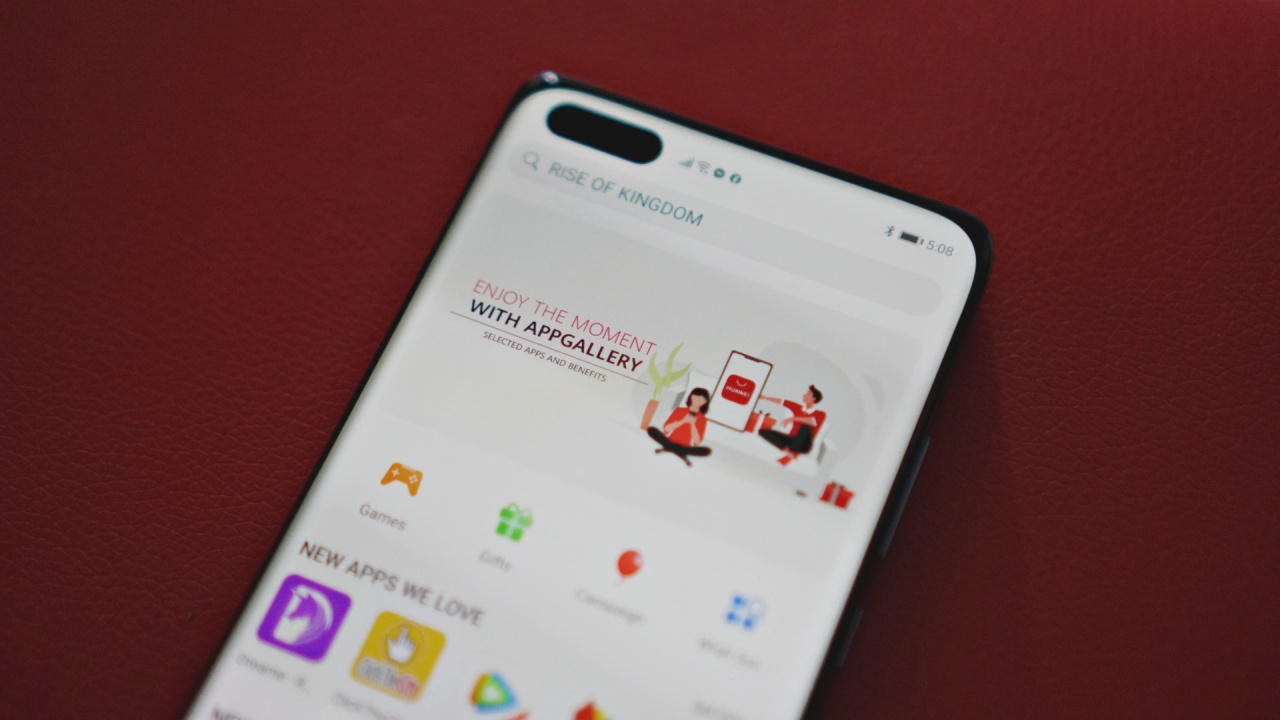
In Apple’s defense, the company feels it should be able to collect its 30 percent share because it created the current ecosystem. With the launch of the iPhone, the company created a virtual marketplace out of nothing. The company invested in building an ecosystem that has stood the test of time and brings both, the user as well as developer, on the same page.
The company announced earlier this year that it has paid US$ 155 billion to developers since 2008. That’s a lot of money. There’s no denying that Apple kickstarted the “app as a product” philosophy, creating a brand new arena in the digital age. But is it’s control justified after a decade?
Apple has always been conservative about its ecosystem, but it’s efforts to accomplish that are often far-fetched. Recently, the company barred Xbox Gamepass on iOS devices because it “it can’t review every game” that’s being offered by Microsoft. Going by this logic, Apple should also screen or review every show or album that debuts on OTT (over the top) players like Netflix, Prime Video, Spotify, and more.
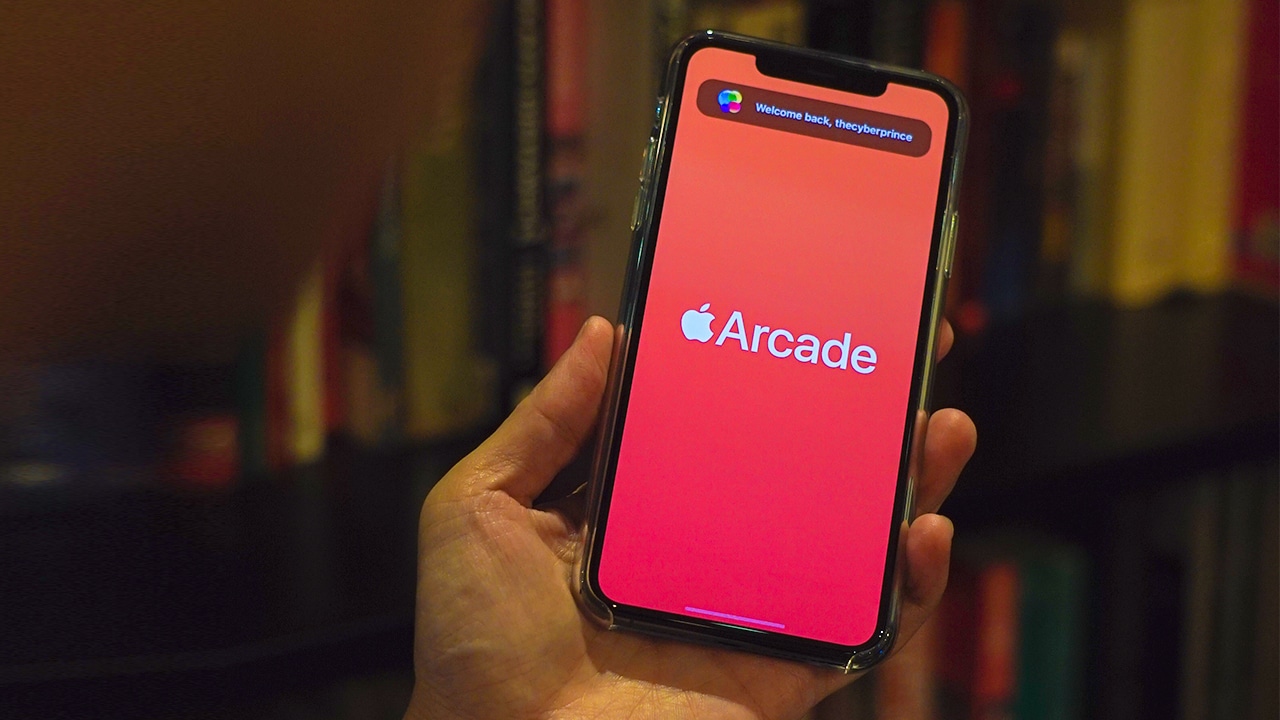
It’s clear that Apple wants to defend its Apple Arcade subscription service and doesn’t want Microsoft to steal the show with Project xCloud. This means that Xbox Gamepass will be available on Android only. If Apple can strong-arm a giant like Microsoft, isn’t it very obvious that smaller players stand no chance against the brand?
Amazon and its influence on customers
Starting out with just books, today the site has millions of products listed, ranging from a unique screw to a full-fledged air conditioner. What started out as an online marketplace has grown into a tech giant that has dominance in cloud computing, voice assistants, and even video streaming.
Critics say Amazon has frequently used its funding to undercut the competition. It took some losses in the short-term by trying to retain users. Once the user was accustomed to Amazon, a process that lets them avoid visits to a store, the loss turned into profit. With a yearly Prime subscription, you’d get free delivery on the smallest of products. Eventually, the user has recovered its Prime subscription fee in terms of convenience and Amazon has processed more orders than ever.
This model ensured that Amazon has an edge over everyone else. The site closely monitors your movement on the site and can intelligently suggest new products to purchase. The more one buys, the more Amazon earns. And, so do the sellers. This seems like a fair game.
But then, sellers realized Amazon has started recognizing categories that can be directly dominated. The user data they collect shows them precisely how much demand a product has, the price vs sales comparisons, and more. It leveraged this rich and unique data to launch its own product brand called Amazon Basics. If you’d normally buy a USB-C wire for US$ 10, Amazon Basics provided that for a lesser price. And, the Amazon tag garnered trust, luring the buyer away from third-party sellers to Amazon’s in-house accounting.
Now, sellers realized that Amazon used its internal sales data to indirectly push out the competition. Amazon follows a similar strategy in other markets like India. Obviously, a seller can try to sell directly via their own platform using simpler tools like Shopify, but will that match the reachability of Amazon? Can any individual seller match Amazon’s marketing and brand recognition?

The company grew as an e-commerce website but is involved in much more than selling books today, the prime reason why it’s one of the “big tech.” The marketplace’s dominant position helped it start brand new investment streams like Kindle hardware, Alexa speakers, and AWS cloud computing. The e-commerce model had worked very well and investors were fine with the company diversifying, even if it meant losing some projects like the Fire Phone.
Today, the company is bigger than physical establishments like Walmart. It’s going up against eBay, Flipkart, Lazada, AliExpress, and Rakuten in the e-commerce space. AWS is challenging Microsoft Azure, Google Cloud, as well as Alibaba Cloud. Alexa is fighting against Google Assitant, Siri, and Cortana. And lastly, Prime subscription is taking on Netflix and Spotify in one go.
What’s common?
In this article, the most frequently mentioned companies are Apple, Amazon, Google, and Microsoft. Facebook sits in an entirely different vertical, filled with its own unique challenges. However, if you’re trying to do something on the internet, you’ll end up using one of their technology or platform in some way or the other.
And that’s the whole point of the “Big Tech” debate. These companies have grown too much, too quickly. They dominate the publicly known internet and have barely left any space for newcomers. Even if someone dares to do the unthinkable, they’ll be either acquired or pushed into infinite losses.
This is Part 1 of the series. Read Facebook and Google’s involvement in Part 2.


Apps
Salesforce introduces Slack Frontline for deskless workers
Simple, secure, mobile-first way for deskless teams across retail, healthcare, manufacturing, field service

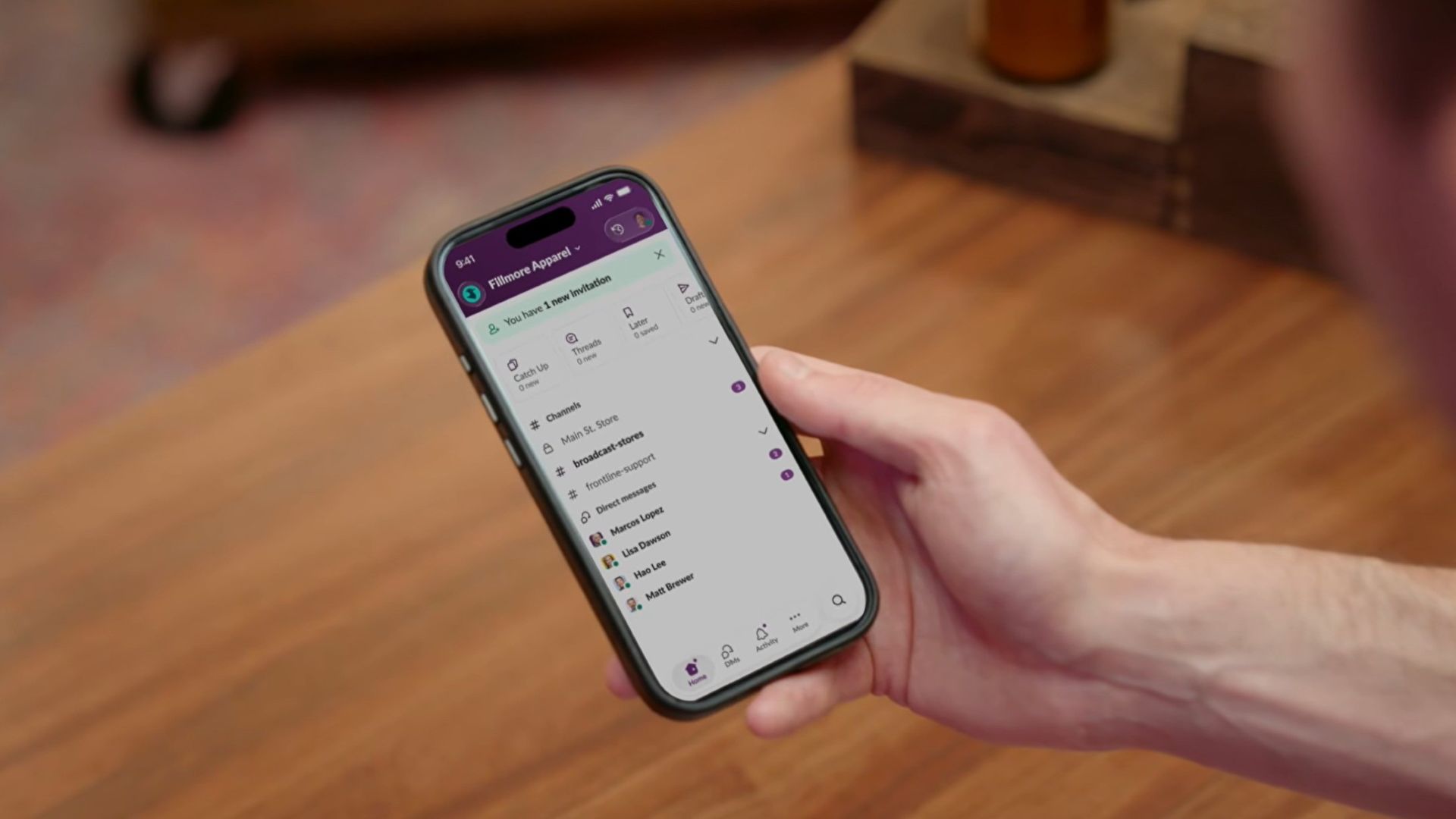
Salesforce is bridging the massive divide between corporate headquarters and deskless workers with the launch of Slack Frontline.
This new solution is designed specifically for retail associates, healthcare providers, factory workers, and field crews.
The mobile-first workspace brings communication, data, role-specific tools, and AI together in a single clutter-free app.
While frontline employees make up about 80 percent of the global workforce, they have historically been left out of workplace transformation, often relying on paper checklists, group texts, and broken communication loops.
Slack Frontline addresses these challenges by giving mobile workers up to 10 role-relevant channels, instant Huddles with headquarters, on-demand AI agents, and automated workflows.
Backed by Salesforce data and enterprise-grade security, the platform lets IT teams govern the entire workforce under one secure layer with employee ID sign-ins, multifactor authentication, and compliance configurations like HIPAA.
This ensures that critical updates, training materials, and shift handoffs reach workers directly in their pockets without needing corporate email addresses or shared terminals.
Moreover, the platform is tailored to transform operations across multiple industries, including retail, home healthcare, manufacturing, hospitality, and field services.
For instance, retail teams can instantly sync promotions and monitor inventory, while healthcare professionals can securely review patient histories and coordinate care on the go.
Manufacturing and hospitality teams benefit from drastically reduced downtime and faster issue resolution, cutting response times significantly.
Slack Frontline is available now as an add-on for businesses on the Slack Enterprise+ plan.
Enterprise
Google illegally destroys 250,000 trees for a single AI data center
This is what we stand to lose with data centers.

In the Philippines, it’s illegal to cut down a single tree without a permit. It’s a constant reminder that the preservation of nature should be a civil, besides being a moral, obligation. And yet, corporations are seemingly immune from obligations and morals. Google, the company that used to stand for “Don’t be evil,” shows off its true colors by illegally cutting down 250,000 trees in Finland for a datacenter.
As first reported by The Guardian, Finland is now staring at 330 hectares of land suddenly denuded of around 250,000 valuable trees, all thanks to Google. A local ecologist has also said that the company killed a further 150,000 trees at a separate site.
The environmental desecration is part of Google’s multibillion-dollar push to build data centers all over the world for artificial intelligence. Google has since been ordered to stop the development in the country after Finland found that the company acted without securing the needed assessments and permits to clear the area.
Google brushed away the report by saying that they acted “on the best understanding we had of the legislation at the time.” The company also said that they are protecting the water quality at the affected sites and committed to replanting trees across 130 hectares, a pale comparison to the total area affected.
Other AI companies are also trying to weasel their way into other countries to build data centers. An example is the controversial Pax Silica in the Philippines. Finland now stands as a cautionary tale against the unimpeded and unsupervised growth of data centers for a service that no one asked for.
Don’t be evil, my ass.
Enterprise
Chimelong’s newest attraction might be the robots themselves
The future of travel is here, and it knows tai chi!

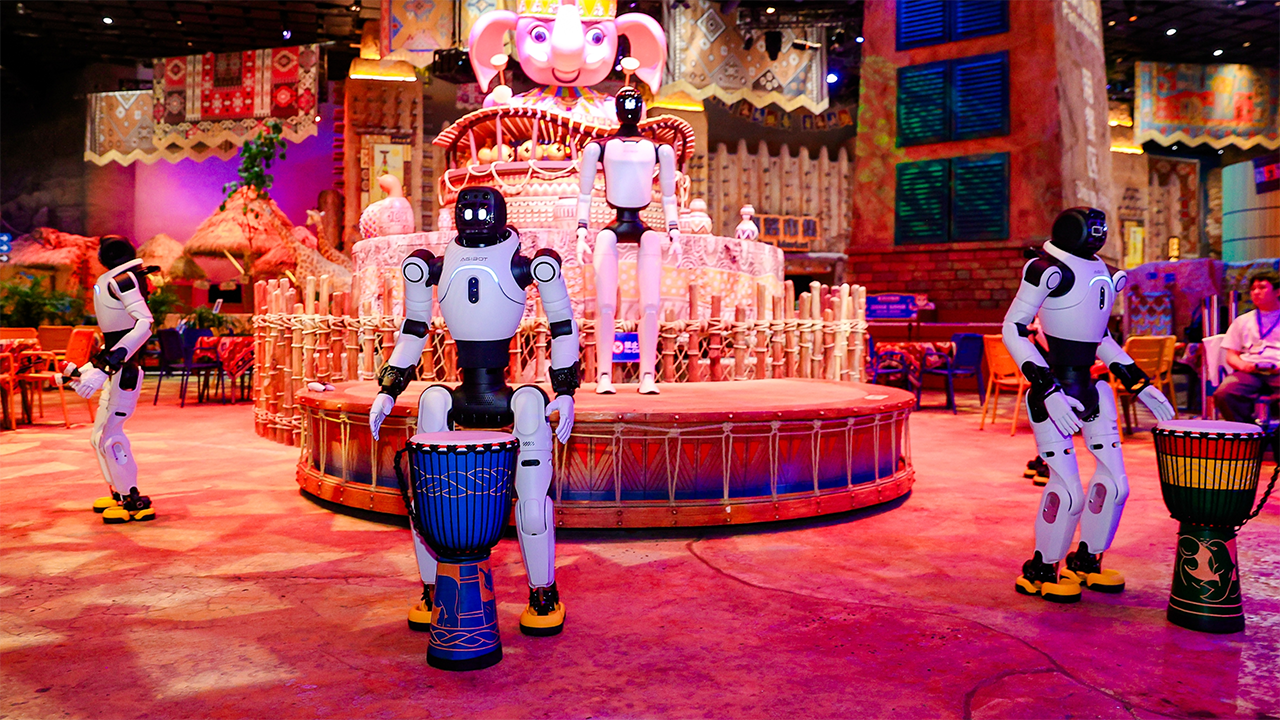
Imagine checking into a theme park and greeting a humanoid robot. A few hours later, you watch one perform tai chi. Another challenges you to table tennis. Yet another helps you navigate to the next attraction. By nightfall at your hotel, robots enhance the experience again.
This vision drives the latest collaboration between AGIBOT and Chimelong Group. Together, they brought over 300 robots to Chimelong Spaceship Park in Zhuhai, China.

This launch represents a massive real-world application of embodied AI in tourism. AGIBOT and Chimelong integrated these robots across entertainment, education, visitor services, retail, and hospitality. They act as active participants rather than remaining confined to a single demonstration area.
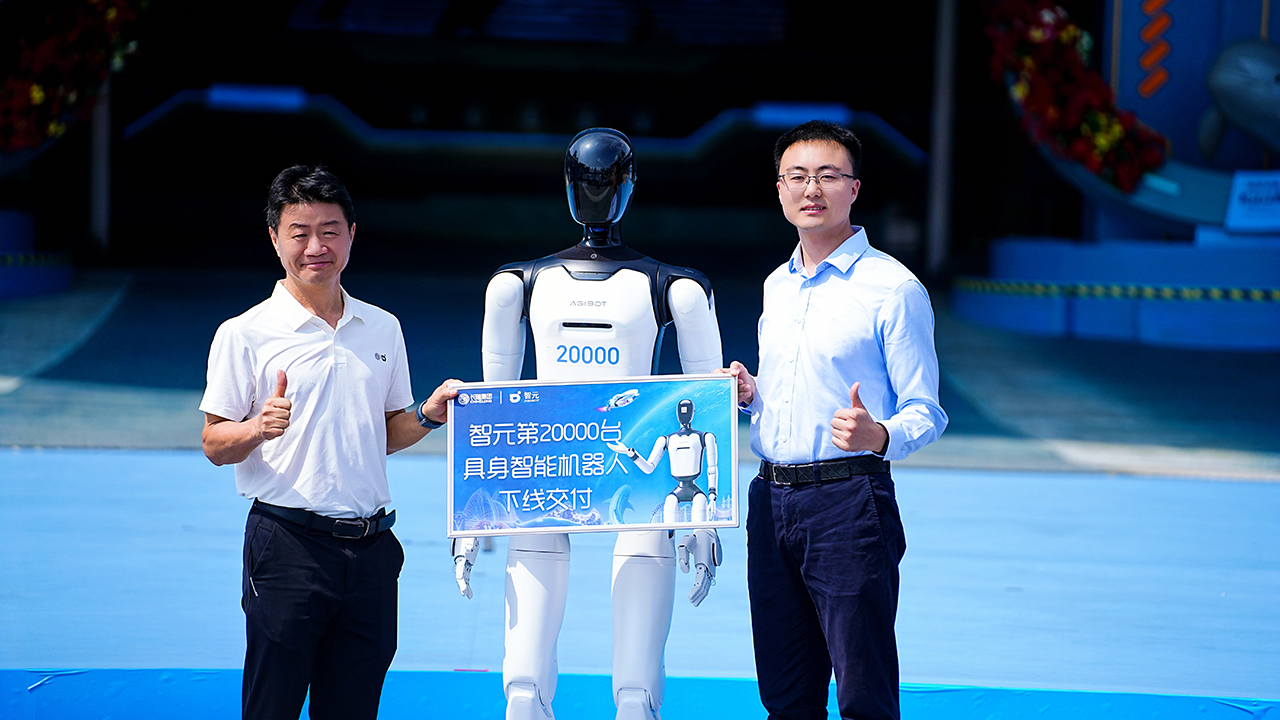
The timing celebrates a notable milestone, too. During the launch, Chimelong received the 20,000th robot to roll off AGIBOT’s production line.

Your next theme park companion could be a robot
At Chimelong Spaceship Park, robots act as part of the total visitor experience. Guests don’t just stop to watch them from afar.
Some take on entertainment roles by performing martial arts, gymnastics, and tai chi. Others interact directly with guests through table tennis and hands-on manipulation challenges.
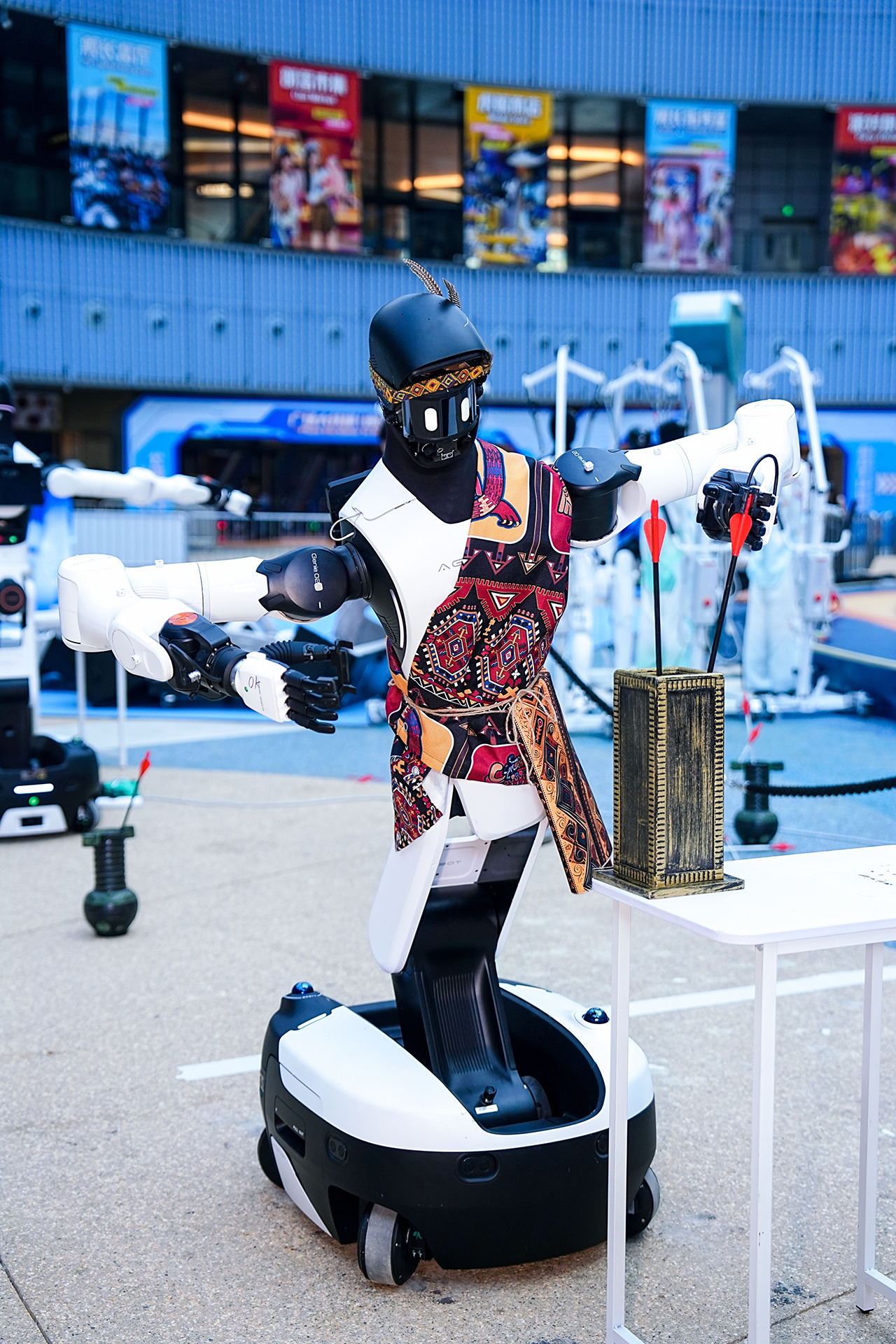
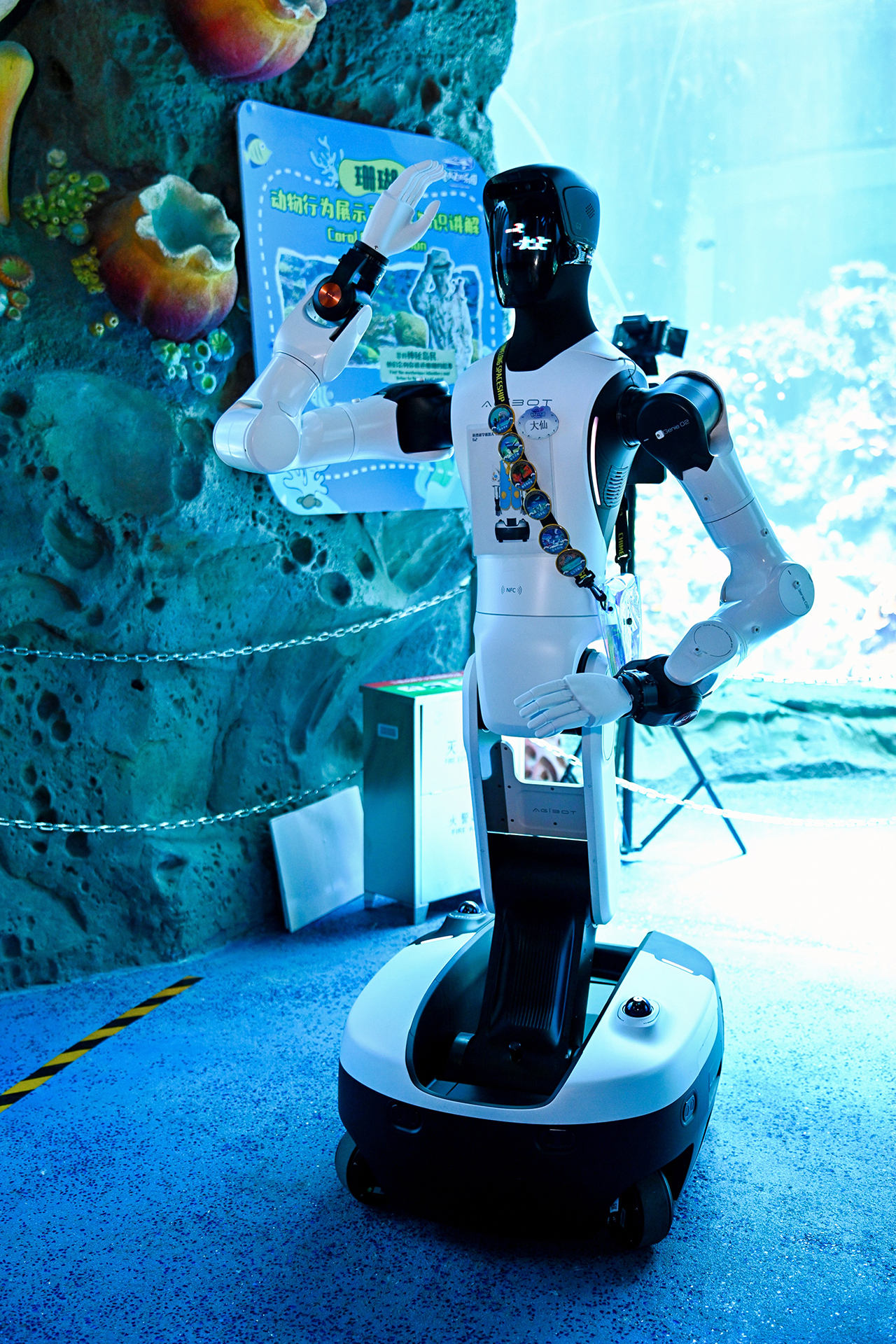
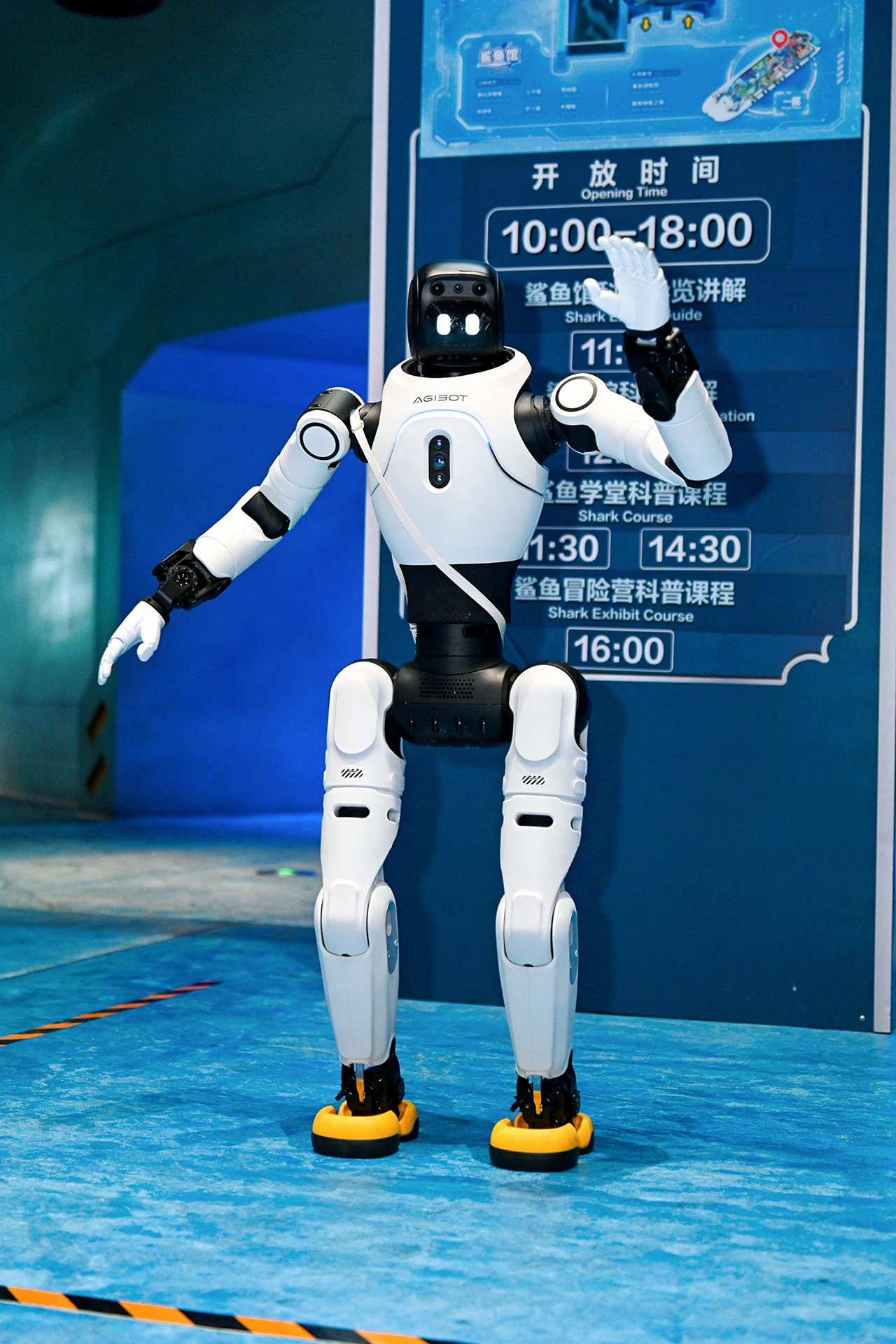
Designers also created robots for the quieter moments of a park day. They answer questions, introduce exhibits, and guide visitors through designated areas.
In retail settings, robots assist shoppers with their purchases. Meanwhile, hotel deployments place them in guest-facing roles to welcome visitors and hold multi-turn conversations.
Consequently, your trip involves encountering robots in several different contexts. The journey stretches seamlessly from your park arrival to your hotel return.
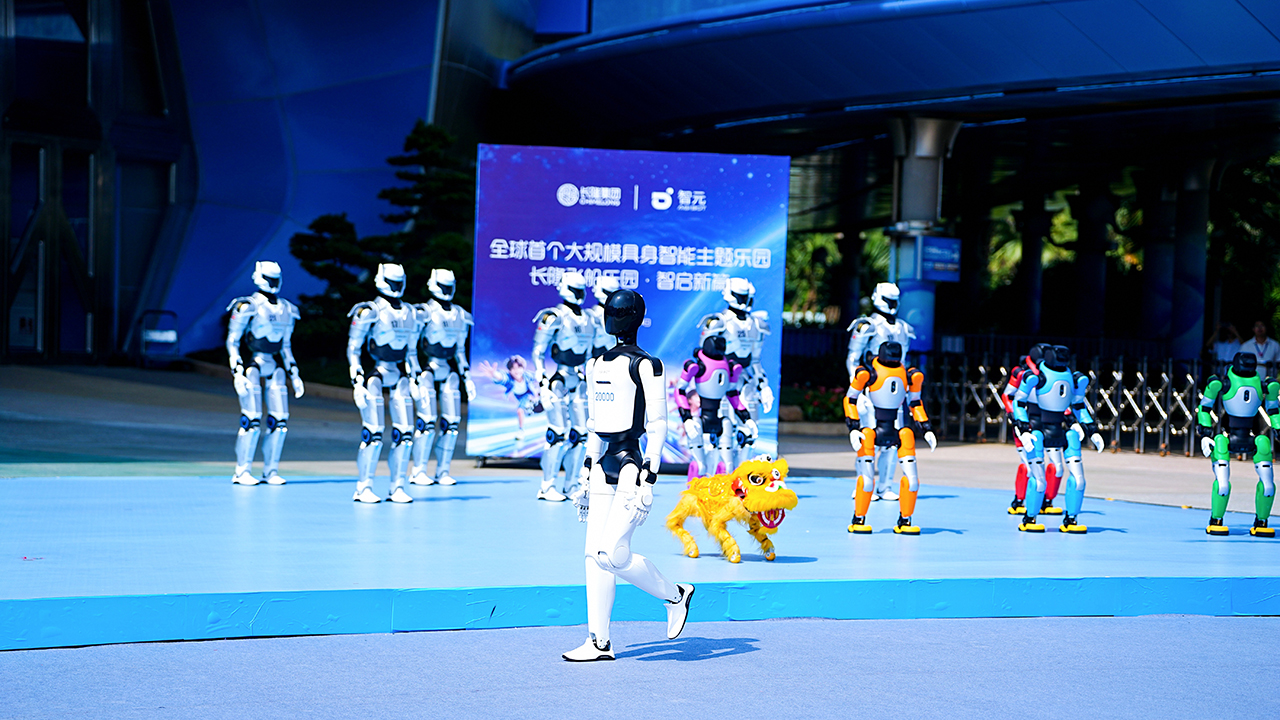
When the robots become part of the show
Theatrical applications are perhaps the easiest to picture. AGIBOT and Chimelong incorporate robots into live performances alongside human actors, music, and lighting.
Rather than treating a humanoid robot as a mere technological curiosity onstage, creators coordinate multiple robots into fluid routines.

Elsewhere, visitors engage with robots through games and educational activities. This creates a highly interactive, hands-on introduction to embodied AI.
Theme parks offer a perfectly fitting setting for this technology. Parks historically excel at making technology disappear into the magic. Engineers design animatronics, immersive environments, special effects, and automated rides to serve the story.
Humanoid robots push this idea into new territory. They communicate, navigate physical spaces, respond to people, and adapt to different settings with ease.

A robot-filled day does not stop at the park gates
The collaboration naturally extends into Chimelong’s hospitality operations.
Robots welcome hotel guests, hold complex conversations, and offer highly personalized interactions. This introduces an interesting possibility for resorts. Technology can now follow visitors beyond the main attraction and enhance the broader destination.

Travelers will soon experience trips where the boundaries between attraction, service, and technology blur entirely.
A robot might serve as your tour guide. Next, you could watch a robotic entertainment performance. Finally, a mechanical host could wait downstairs in your hotel lobby.
Potentially, the robot you meet in one area connects directly to the wider system operating backstage.
Making hundreds of robots work together
Deploying over 300 robots into a busy tourism destination requires massive coordination.
AGIBOT, Chimelong, and China Mobile established a dedicated 5G network. This ensures stable connectivity across high-traffic areas. The team uses centralized coordination to manage robots moving through various park and hotel environments.

Comprehensive operational systems also handle network security, privacy protection, charging, and fire safety.
Guests easily overlook this infrastructure while watching a robot perform tai chi. Yet, this backend framework remains one of the most fascinating aspects of the project. A theme park represents a highly complicated environment. Thousands of people constantly move through spaces shifting rapidly from one experience to another.
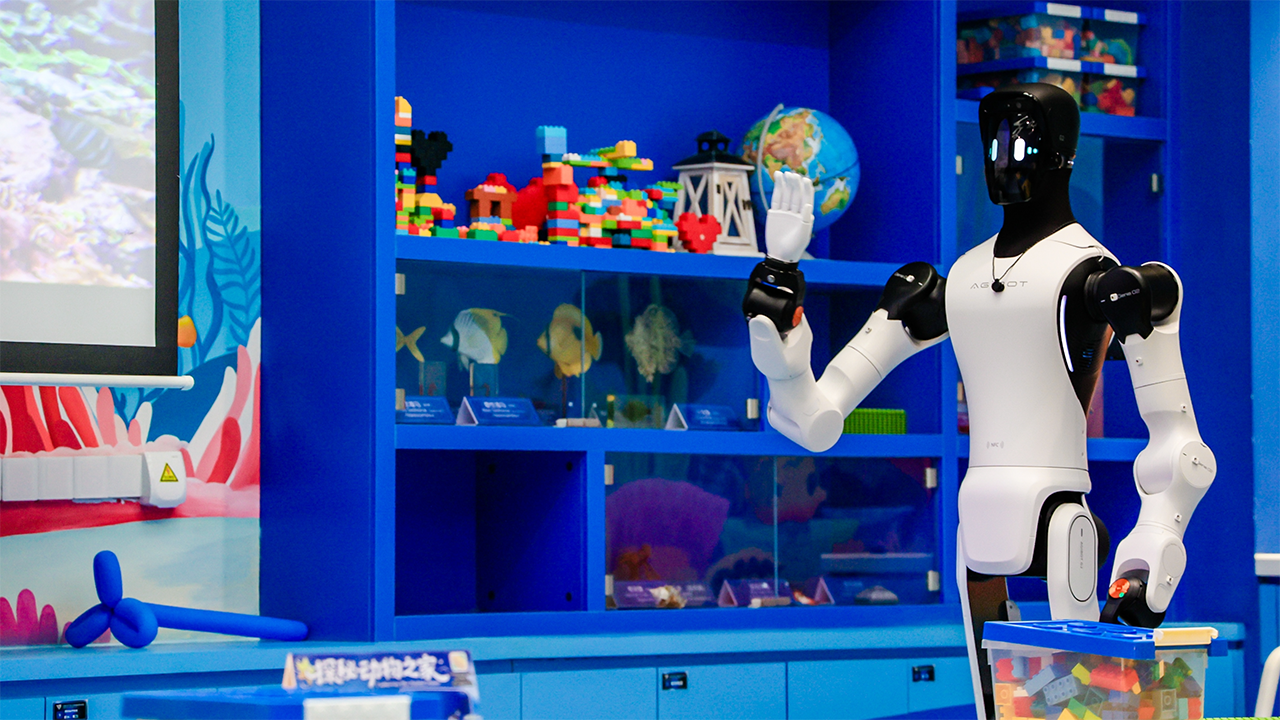
Making robots useful here means teaching them to embody the destination itself.
The beginning of a bigger experiment
AGIBOT and Chimelong are establishing a joint research institute for embodied AI in tourism.
This institute will explore new applications, operating models, and technologies. Researchers will draw directly from the experience of this massive deployment. The first project phase lays the groundwork to expand robot usage across all Chimelong properties.
For now, the appeal remains fairly simple. Creators build theme parks on the promise of making ordinary life feel extraordinary.
Chimelong bets that humanoid robots will increasingly spark that exact magic.


Apple iPad mini OLED review
Has the mini gone PRO?!

ROG G700 review: The best prebuilt PC you can get off the shelf
This PC will make you stop worrying about specs.


HP OMEN Max 16 review: Gamer-maxxing in deep black
Peripherals deemed necessary to max this out

Sony revives classic Walkman headphones with USB-C MDR-3R

IKEA, Xbox launch nine-piece YXSTABY gaming collection

Smart Infinity launches PureVoice

The Fellowship of the Ring in Concert finally arrives in Manila
Apple iPad mini OLED review

OPPO Find X10 Series launches globally October 21

vivo V80 debuts with ZEISS cameras

Your coffee nook is getting a makeover with Starbucks’ holiday collections

Garmin Enduro 4 promises up to 320 hours of battery life

Dragon’s Dogma 2: Dark Arisen launches with new Official Pawns


-
 Lifestyle4 days ago
Your coffee nook is getting a makeover with Starbucks’ holiday collections
-

 Lifestyle6 days ago
Sticker season is back, and so is the planner your ~friends~ might fill in for you
-

 Gaming4 days ago
Wild Rift Patch 7.3, celebrates K/DA comeback
-
Gaming1 week ago
ROG G700 review: The best prebuilt PC you can get off the shelf
-

 Gaming1 week ago
PlayStation unveils Prism Collection
-

 News2 weeks ago
Apple unveils its biggest iPad mini update yet
-

 Laptops1 week ago
Apple unveils MacBook Pro with PROLED XDR display and Touch
-

 Gaming1 week ago
FromSoftware’s The Duskbloods delayed to 2027