
Enterprise
Indian telco Jio and Qualcomm successfully test 5G
Sidelining the Chinese


In a major breakthrough for the Indian telecom industry, equipment maker Qualcomm and Indian telco Jio have announced a partnership to deploy 5G solution in the country. The two announced their network will be based on indigenous technology, indirectly shunning Chinese contenders like Huawei.
Backed by India’s top conglomerate Reliance, Jio has gained a massive share in one of the world’s most crucail telecom markets. The telco aims to deploy high-speed 5G that can offer speeds up to 1 Gbps.
Jio acquired Radisys in 2018 and the company is expected to play a critical role in developing the company’s 5G solutions. When combined with Qualcomm’s gear, the partnership can scale 5G networks throughout the country without depending on foreign tech stacks. Adding to this, Jio has also said it’s considering options of selling its in-house technology to other carries for a seamless transition.
“This achievement not only supports Jio’s 5G credentials, but also signifies the entry of Jio and India into the Gigabit 5G NR product portfolio,” the two companies said in a statement.
The company is leveraging NR or New Radio technology that is similar to 4G’s LTE. It’s a globally accepted standard and many phone makers have already announced support.
At present, only a few countries are capable of offering 1 Gbps speeds and this includes the US, South Korea, Australia, Germany and Switzerland. 5G is expected to launch in India soon, although these claims are countered by critics for being too optimistic.
India’s mobile telecom industry has only three players left and Jio is considered the mightiest. It raised tens of billions from marquee investors like Facebook, Google, and Qualcomm. However, established players like Vodafone-Idea were on the verge of bankruptcy and Airtel has managed to find solid ground only recently.
Read Also: This Indian telco has raised more than $20 billion during the pandemic





Enterprise
NVIDIA CEO admits to having an affair with alleged Chinese spy
The company is currently investigating the allegations.

In one of the craziest headlines this year, NVIDIA CEO Jensen Huang has admitted to having an affair with an alleged Chinese spy.
Over the weekend, a heavy allegation claimed that the NVIDIA CEO had a relationship with a person actively involved in Chinese intelligence. Since Huang is involved in business globally, the accusation isn’t a light one. In fact, it’s serious enough that Huang admitted to the affair late this past Sunday.
In an internal letter reported by Associated Press, the CEO acknowledged the existence of the affair with a business executive. Of note, Huang did not confirm the executive’s ties to Chinese intelligence. NVIDIA, however, will conduct its own investigations regarding the allegations. Despite the allegations, Huang will remain as the company’s CEO. The company is also confident that the alleged spy did not compromise NVIDIA’s secrets.
According to The New York Times, the executive, Alice Huang, was reportedly feeding information back to Beijing, despite being an executive of the Singapore-based Megaspeed, which is already a serious customer of NVIDIA.
Now, NVIDIA is currently in a prime position when it comes to the industry today. Formerly a huge proponent of gaming peripherals, the company is now one of the biggest names in AI hardware, allotting a lot of its products for data centers. Huang’s allegations come at an interesting time.
Apps
Salesforce introduces Slack Frontline for deskless workers
Simple, secure, mobile-first way for deskless teams across retail, healthcare, manufacturing, field service

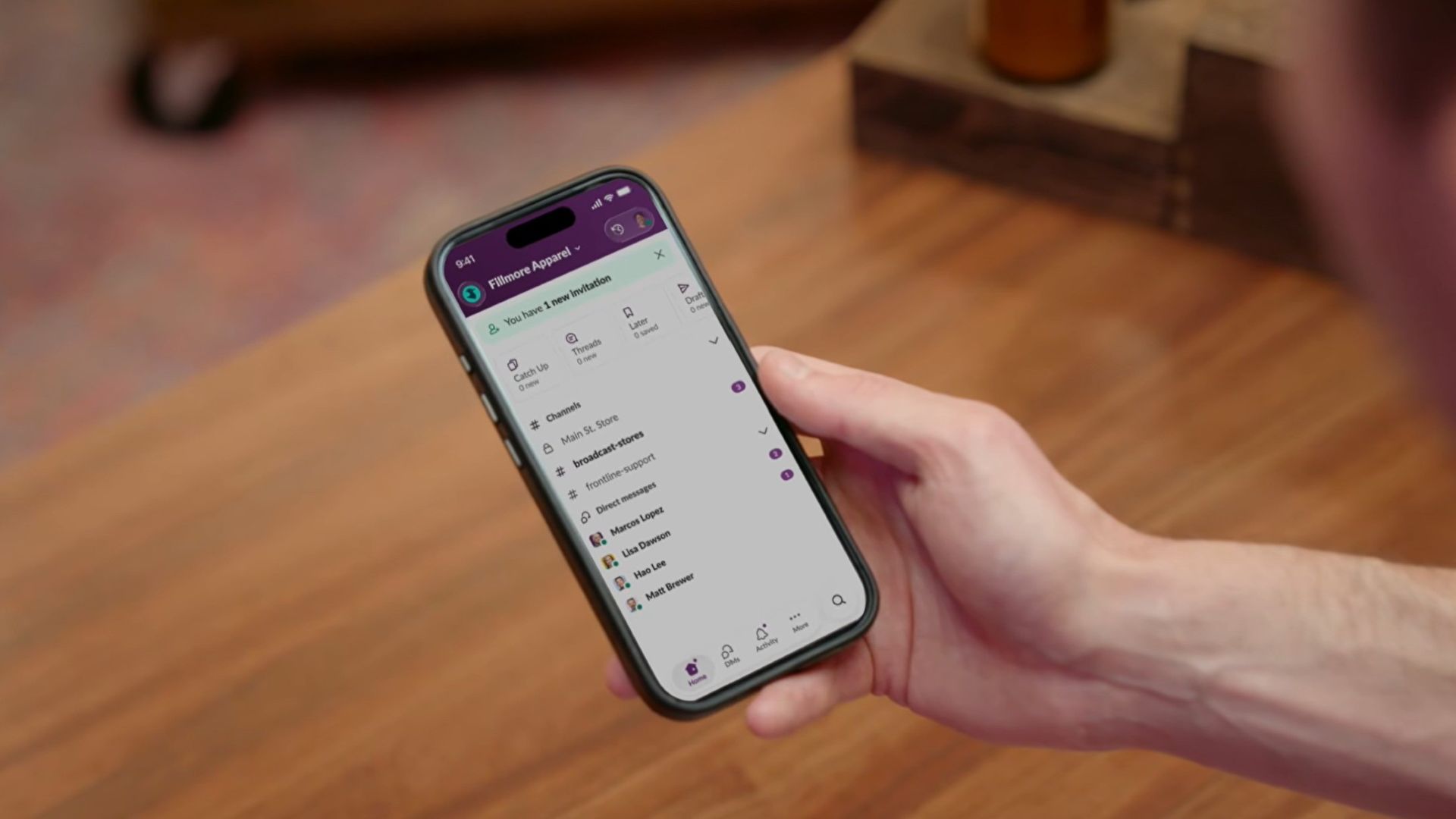
Salesforce is bridging the massive divide between corporate headquarters and deskless workers with the launch of Slack Frontline.
This new solution is designed specifically for retail associates, healthcare providers, factory workers, and field crews.
The mobile-first workspace brings communication, data, role-specific tools, and AI together in a single clutter-free app.
While frontline employees make up about 80 percent of the global workforce, they have historically been left out of workplace transformation, often relying on paper checklists, group texts, and broken communication loops.
Slack Frontline addresses these challenges by giving mobile workers up to 10 role-relevant channels, instant Huddles with headquarters, on-demand AI agents, and automated workflows.
Backed by Salesforce data and enterprise-grade security, the platform lets IT teams govern the entire workforce under one secure layer with employee ID sign-ins, multifactor authentication, and compliance configurations like HIPAA.
This ensures that critical updates, training materials, and shift handoffs reach workers directly in their pockets without needing corporate email addresses or shared terminals.
Moreover, the platform is tailored to transform operations across multiple industries, including retail, home healthcare, manufacturing, hospitality, and field services.
For instance, retail teams can instantly sync promotions and monitor inventory, while healthcare professionals can securely review patient histories and coordinate care on the go.
Manufacturing and hospitality teams benefit from drastically reduced downtime and faster issue resolution, cutting response times significantly.
Slack Frontline is available now as an add-on for businesses on the Slack Enterprise+ plan.
Enterprise
Google illegally destroys 250,000 trees for a single AI data center
This is what we stand to lose with data centers.

In the Philippines, it’s illegal to cut down a single tree without a permit. It’s a constant reminder that the preservation of nature should be a civil, besides being a moral, obligation. And yet, corporations are seemingly immune from obligations and morals. Google, the company that used to stand for “Don’t be evil,” shows off its true colors by illegally cutting down 250,000 trees in Finland for a datacenter.
As first reported by The Guardian, Finland is now staring at 330 hectares of land suddenly denuded of around 250,000 valuable trees, all thanks to Google. A local ecologist has also said that the company killed a further 150,000 trees at a separate site.
The environmental desecration is part of Google’s multibillion-dollar push to build data centers all over the world for artificial intelligence. Google has since been ordered to stop the development in the country after Finland found that the company acted without securing the needed assessments and permits to clear the area.
Google brushed away the report by saying that they acted “on the best understanding we had of the legislation at the time.” The company also said that they are protecting the water quality at the affected sites and committed to replanting trees across 130 hectares, a pale comparison to the total area affected.
Other AI companies are also trying to weasel their way into other countries to build data centers. An example is the controversial Pax Silica in the Philippines. Finland now stands as a cautionary tale against the unimpeded and unsupervised growth of data centers for a service that no one asked for.
Don’t be evil, my ass.


Apple iPad mini OLED review
Has the mini gone PRO?!

ROG G700 review: The best prebuilt PC you can get off the shelf
This PC will make you stop worrying about specs.


HP OMEN Max 16 review: Gamer-maxxing in deep black
Peripherals deemed necessary to max this out

ASUS and ROG Grand Tech Fair 2026 offers holiday deals

Next iPhone might get rid of the Action Button

NVIDIA CEO admits to having an affair with alleged Chinese spy

Sony revives classic Walkman headphones with USB-C MDR-3R

IKEA, Xbox launch nine-piece YXSTABY gaming collection

Your coffee nook is getting a makeover with Starbucks’ holiday collections

vivo V80 debuts with ZEISS cameras

Dragon’s Dogma 2: Dark Arisen launches with new Official Pawns

vivo V80 review: Good phone, tough sell

Score PhP 22,000 in guaranteed freebies when you pre-order the iPhone 18 Pro at Beyond the Box


-
 Lifestyle1 week ago
Your coffee nook is getting a makeover with Starbucks’ holiday collections
-

 Lifestyle1 week ago
Sticker season is back, and so is the planner your ~friends~ might fill in for you
-

 Gaming1 week ago
Wild Rift Patch 7.3, celebrates K/DA comeback
-
Gaming2 weeks ago
ROG G700 review: The best prebuilt PC you can get off the shelf
-

 Gaming2 weeks ago
PlayStation unveils Prism Collection
-
 News4 days ago
Sony revives classic Walkman headphones with USB-C MDR-3R
-

 Laptops2 weeks ago
Apple unveils MacBook Pro with PROLED XDR display and Touch
-

 Gaming2 weeks ago
FromSoftware’s The Duskbloods delayed to 2027