
News
POCO F3 now official, a flagship phone with a midrange price tag
AKA Redmi K40


The POCO F1 was a legendary phone that kickstarted a new segment called “affordable flagship.” After a year-long sabbatical, the brand has made a quick recovery in 2020 and is now all set to launch its third top-notch offering. Dubbed the POCO F3, it has many expectations to meet.
It’s obvious that the phone doesn’t have a very lucrative price like the POCO F1 due to the ongoing semiconductor shortage and the final cost of incorporating a flagship chipset. However, POCO has achieved a midrange price stag that offers maximum bang for the buck.
The POCO F3 sports a 6.7-inch AMOLED display with Full HD+ resolution, a 120Hz refresh rate, HDR 10+ support, and a peak brightness of 1300 nits. The display, as well as the back, is wrapped in Gorilla Glass 5.

Powering the phone is a Snapdragon 870 processor with Adreno 650 GPU, up to 8GB LPDDR5 RAM, and 256GB UFS 3.1 storage. The fingerprint scanner is located on the side, and it runs on MIUI 12, based on Android 11, out-of-the-box. It’s clear that POCO is focusing on performance and intends to continue the POCO F1 legacy.
The brand stressed on its LiquidCool Technology 1.0 Plus, allowing the device to deliver sustained peak performance. It also has 5G connectivity and WiFi 6 support, making it a solid future-proof phone.
On the back are a 48-megapixel primary camera, an 8-megapixel wide-angle lens, and a 5-megapixel macro sensor. There’s an in-display 20-megapixel front camera that’s located in a punch-hole cut-out.

Backing these internals is a 4520mAh battery with 33W fast charging. Xiaomi claims it can fully charge the phone in 52 minutes. It doesn’t have a 3.5mm headphone jack, which it covers up by Dolby Atmos support and dual physical speakers.
Pricing and availability
Philippines
- 6GB+128GB — PhP 17,990
- 8GB+256GB — PhP 20,990
Color options include Arctic White, Night Black, and Deep Ocean Blue, and sales are exclusive to Lazada. If the POCO F3 is ordered on March 27, an early bird discount will be applicable of PhP 2,000 on both variants.
Global
- 6GB+128GB — EUR 349 (early bird price — EUR 299)
- 8GB+256GB — EUR 399 (early bird price — EUR 349)







Enterprise
Google ordered to pay EUR 4.1 billion in fines
The EU alleges that Google uses its apps to establish an unfair dominance.

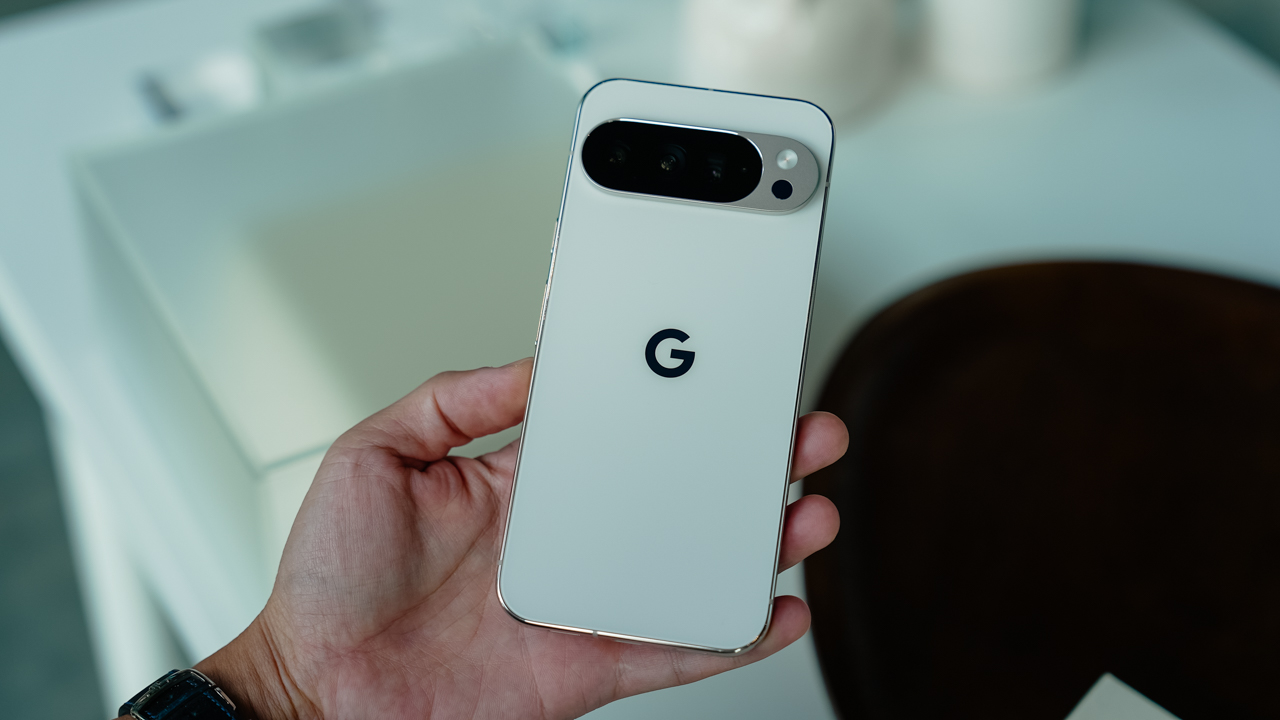
European fines have unintentionally become a normal part of doing business in the American technology space. For too long have American companies paid paltry fines to prevent harsher regulation in the European Union. Now, for the first time, Google is about to pay a record-breaking fine that goes beyond “paltry.”
Today, via CNBC, Google has been ordered to pay an astonishing EUR 4.1 billion (or approximately US$ 4.67 billion) in fines. The fine is in response to an anti-competition case.
This has been a long time coming for Google. The original case started in 2018. At the time, the European Union accused the brand of using anti-competitive practices to ensure its dominance in the smartphone market. According to the courts, the company’s bundling of first-party apps for every Android smartphone gives them an unfair advantage in the market and lessens the user’s choice in selecting apps.
For years, Google has fought the fine to seemingly no avail. Now, the company has lost its final attempt, which means that the fine still stands. On the bright side, they did get it reduced from the original EUR 4.34 billion fine.
The European Union is the scourge of every American tech company (and a godsend to consumers). Most notably, the continent’s government forced Apple to adopt USB-C, leading to a more universal experience across brands.
Google’s hefty fine aims to do the same. And it is quite hefty. Whereas previous fines were in the millions (and hence, negligible for most companies), a fine in the billions is more tangible.
Gaming
Xbox might get rid of physical discs too
The experimental disc-to-digital feature will digitize your physical library.
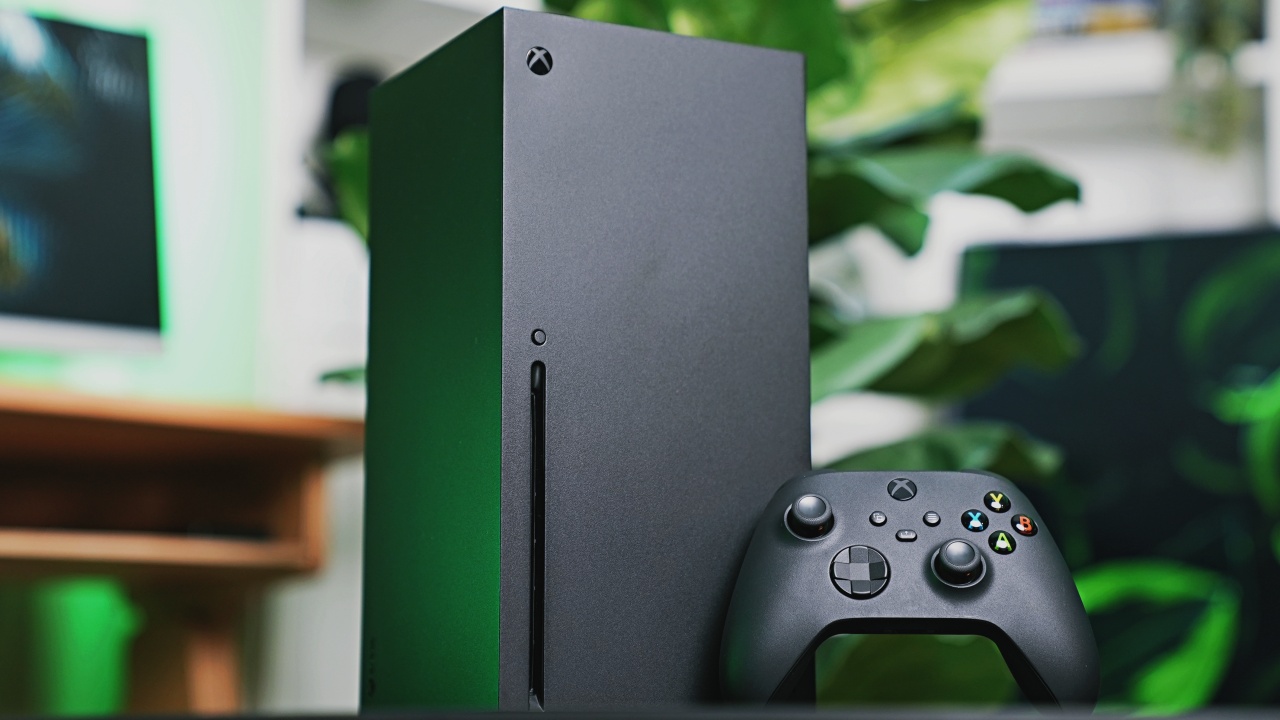
Sony and Microsoft are seemingly locked in a farcical battle to sink their own ship first. Just today, the PlayStation fired its most damaging salvo yet by cancelling physical games starting 2028. Not to be outdone, the Xbox is going pound-for-pound through an experimental disc-to-digital feature to digitize physical games.
According to The Verge, Microsoft is currently testing a feature which will allow users to completely digitize their collection of physical games on the Xbox One and the Series X. Upon inserting the disc, the Xbox will create a digital copy attached to the physical disc.
Being attached to the disc means that the digital copy can move from console to console. Once the disc is inserted to another console, the digital copy transfers with it.
The feature will prevent more than a single person from using the disc at the same time. It sounds similar to Nintendo’s Virtual Game Card but without the ability to lend games out to friends and family.
It’s still an experimental feature, so there’s no schedule for a global rollout yet. Still, the disc-to-digital feature sounds like an eerie prelude to Microsoft similarly eliminating physical discs for the future. If it’s any consolation (but it’s probably not), Nintendo already got the ball rolling by introducing the Virtual Game Card feature, but the Switch 2 mercifully hasn’t removed physical cartridges.
SEE ALSO: Xbox CEO admits Game Pass is too expensive right now


The ASUS ExpertBook Ultra is now available in the Philippines. It is ASUS’ latest AI-powered business laptop for professionals who want a lightweight machine without sacrificing performance.
Positioned as the flagship of the ASUS ExpertBook lineup, it combines a sub-1kg chassis with Intel Core Ultra processors, enterprise-grade security, and AI features. ASUS is targeting executives, business users, and creators with the new laptop.
Built for portability and performance
The ASUS ExpertBook Ultra weighs as little as 0.99kg. It measures just 10.9mm thick. The laptop uses an aerospace-grade magnesium-aluminum chassis with ASUS Nano Ceramic Technology. ASUS says the finish delivers five times greater scratch resistance than the industry standard.
Despite its slim profile, the laptop packs a 70Wh battery. ASUS rates it for up to 26 hours of battery life.
Power comes from Intel Core Ultra Series 3 processors. The lineup is topped by the Intel Core Ultra X9-388H. Buyers can configure the laptop with up to 64GB of LPDDR5X memory running at 9600 MT/s and up to a 2TB PCIe Gen 5 SSD.
ASUS also highlights its ExpertCool Pro thermal system. It allows the processor to sustain up to 50W of CPU performance while keeping fan noise low.
Tandem OLED display and premium hardware
The ExpertBook Ultra features a 14-inch 3K Tandem OLED touchscreen. It offers a 120Hz refresh rate and up to 1,400 nits of HDR brightness. Corning Gorilla Glass Matte helps reduce reflections while preserving image quality.
Other hardware highlights include:
- 1.5mm travel spill-resistant keyboard
- Edge-to-edge haptic touchpad
- Six-speaker Dolby Atmos audio system
- Dual Thunderbolt 4 ports
- Two USB-A ports
- HDMI 2.1
- 3.5mm audio jack
AI and enterprise security
As a Copilot+ PC, the ASUS ExpertBook Ultra includes AI-powered tools through the MyExpert suite. These include AI ExpertMeet and a local Knowledge Hub.
The laptop also focuses on enterprise security. Features include dual biometric authentication, a physical webcam shutter, self-healing BIOS, TPM 2.0, Microsoft Pluton, and compliance with the NIST SP 800-193 firmware security standard.
Price and availability
The ASUS ExpertBook Ultra is now available through ASUS authorized stores and select retailers nationwide.
Pricing starts at PhP 129,995. Higher-end configurations go up to PhP 215,995.
ASUS is also offering an Early Bird Bundle until July 31, 2026. Eligible purchases include an ASUS 100W GaN charger and PhP 10,000 worth of SSI gift vouchers.




Project Hail Mary now on Prime Video

Google ordered to pay EUR 4.1 billion in fines

The ASUS ExpertBook Ultra wins you over

Sony brings 1000X THE COLLEXION to the Philippines

Everyone’s angry at PlayStation’s new no-disc policy, and this is why

TECNO’s POVA 8 5G is both futuristic and future-ready

Buyer’s Guide: Xiaomi Pad 8 Series

HONOR Magic V6 review: The best version of a book-style foldable?

TECNO’s SPARK 50 Pro is the latest budget smartphone battery beast

Kingdom Hearts IV gets new trailer, confirms Switch 2 release


-

 Reviews2 weeks ago
vivo X300 Ultra review: A “Whole Different Animal”
-

 Cameras5 days ago
DJI Osmo Pocket 4P launches with dual lenses and a 1-inch sensor
-

 News6 days ago
Lenovo says RAM prices are not coming back down again
-
 Camera Shootouts2 weeks ago
Camera Shootout: HONOR 600 Pro vs OPPO Reno15 Pro
-

 Singapore1 week ago
Xiaomi opens largest Singapore store yet at VivoCity
-

 News1 week ago
The vivo X Fold6 is the first foldable to support teleconverter lens
-

 Apps2 weeks ago
HONOR, Xiaomi are working on their own Privacy Displays
-

 Smartphones2 weeks ago
HONOR continues APAC expansion, to launch 600 series in Taiwan