
Gaming
ASUS ROG Strix GL702VM Review: Portable gaming powerhouse


ASUS’ ROG line of gaming laptops has an updated entry to the fast-growing gaming market. Let’s a take a look at the ROG Strix GL702VM with its NVIDIA GTX 1060 graphics unit.
We recently reviewed the ROG Zephyrus, and it set the bar for a true portable gaming laptop. It doesn’t cut corners with its high-end specs, but it has a ridiculously high price tag at the same time. The laptop we have now wants to set the right balance.
At first glance, the laptop already shows its gaming characteristics. Let’s first have a tour of the laptop’s body.
It’s no doubt an ROG laptop with its design and colors

The lid lights up!
Like most gaming laptops, it has striking red accents

It’s gray overall with red accents
We have red backlit chiclet keys with a relatively small trackpad

No mechanical keys here
There is a plethora of I/O ports for your convenience

USB 3.0, USB-C with Thunderbolt 3, HDMI, Ethernet, SD card reader, and DisplayPort
Even its bottom bestows its gaming characteristics

Modern patterns on the bottom plate
Great gaming performance on the go
The 17.3-inch display of the ROG Strix GL702VM doesn’t make it a portable PC, but by gaming laptop standards, its size packs in a lot of power. For one, the display is a 4K anti-glare panel which has great saturation levels and wide viewing angles. It makes all kinds of content pop, from high-resolution videos to colorful gaming titles. The processor inside is a quad-core Intel Core i7-7700HQ with 16GB of DDR4 memory. As for storage, it gets a combo drive: 1TB HDD and 128GB SSD.

To pump up its gaming prowess, ASUS put in an NVIDIA GeForce GTX 1060 chip with 6GB memory as its dedicated graphics processing unit — the lightweight member of the NVIDIA 10-series graphics card. Both the latest and future titles will be playable on the laptop, plus it has support for virtual reality. During the course of our time with it, we were able to enjoy Grand Theft Auto V with smooth frame rates of around 80fps on high settings and 1080p resolution. Bumping things to 4K consumed a lot of power and memory, but it’s still manageable when you tone down some of the graphics settings like shadows and anti-aliasing.
It also doubles as an everyday multimedia laptop
Gaming aside, the laptop is a beast for everyday tasks. It would be overkill to turn it into an everyday work laptop, but it can handle processing really well, thanks to its compelling specs. Multimedia consumption is also something you can enjoy with its 4K display and powerful speakers.

Without mechanical keys, hitting the keyboard (whether for typing or gaming) didn’t feel as tactile as I’d want. ASUS promotes 1.6mm travel on the laptop, which I found a bit mushy during actual usage. What I enjoyed about the keyboard is the space between each key. The trackpad is a different story, as it’s kinda small but very responsive.
Not exactly super portable, but it’s not that bulky
The king of portable gaming laptops is still the ROG Zephyrus, but the ROG Strix GL702VM could be a good runner-up. It may not have the slim waistline of an Ultrabook (thin but definitely not for gaming) or the average size of an everyday 14-inch laptop, yet it has the power of a dedicated gaming machine. The term “laptop” is still applicable.

Keep in mind that it doesn’t have an optical disc drive. That shouldn’t pose a problem, since we download our games online nowadays. Too bad, though, since you’ll need to find a spare external DVD drive if you want to play the classic games you already purchased.
Is this your GadgetMatch?
It won’t be an easy choice to go for a 17.3-inch laptop when you’re just looking for a laptop that can do more. The ROG Strix GL702VM is targeted at those who want a gaming laptop that isn’t ridiculously heavy. For wallets, however, it’s quite hefty.

This gaming machine retails in the Philippines for PhP 119,995 (US$ 2,335) with the configuration we reviewed. With this amount of cash, you can already build a good desktop rig with even more power, but it won’t give the portability a laptop like this can offer. The 4K display is also a good selling point; however, it’s not necessary for gaming, since we stick to 1080p most of the time.
SEE ALSO: ASUS ROG Zephyrus Review: So thin, so powerful
[irp posts=”16053″ name=”ASUS ROG Zephyrus Review: So thin, so powerful”]








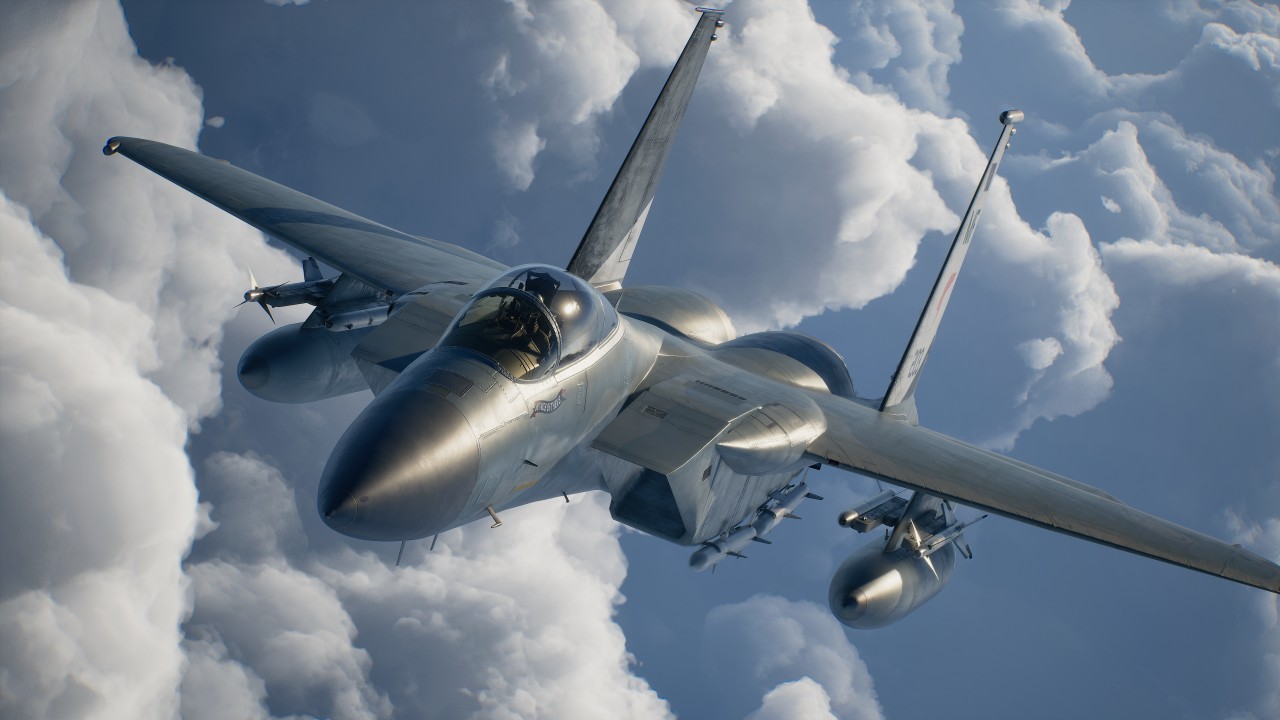
I came into ACE Combat 8: Wings of Theve completely blind.
I knew very little about the franchise outside of the fact that it’s a fighter plane game. My entire exposure was limited to a handful of press releases from Bandai Namco and, of course, the noise the pink-haired character made on social media when she was first revealed.
So, I had no idea what to expect when I climbed into the cockpit.
What surprised me most wasn’t the flying. It was everything that happened outside of it.
A surprisingly beautiful presentation
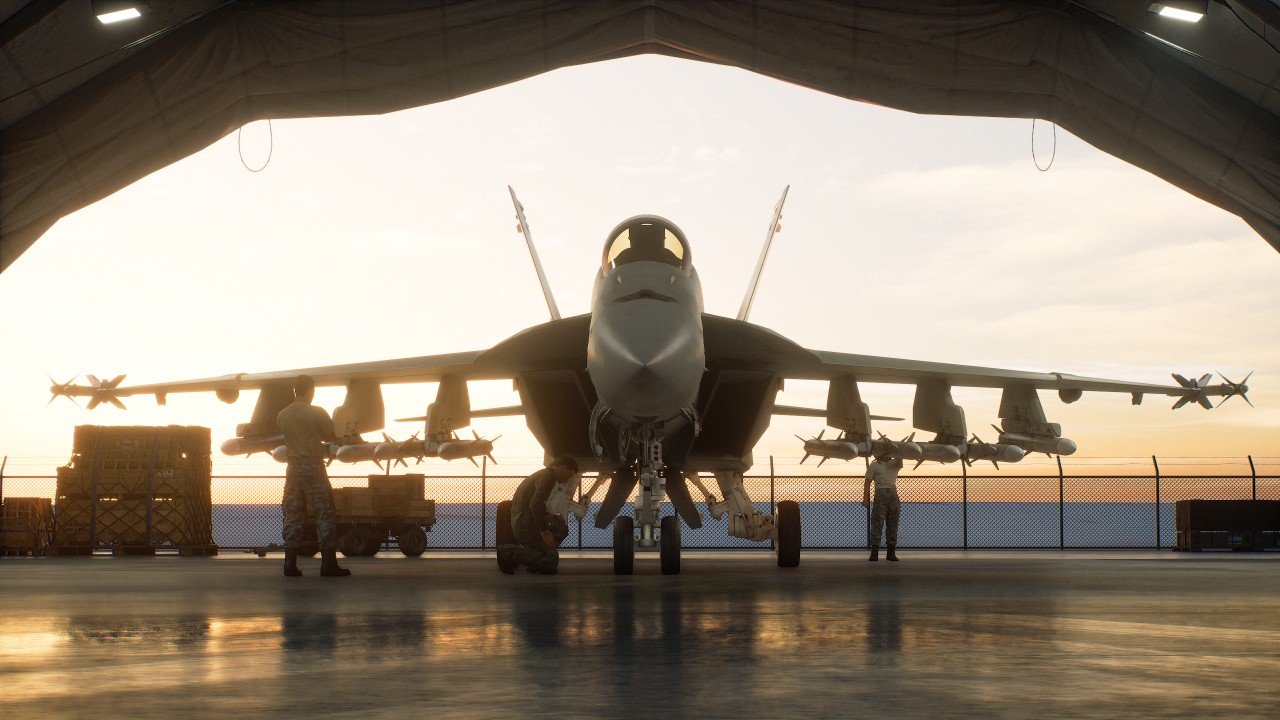
I was floored by the story segments of the game, particularly the visuals and presentation.
A lot of these scenes are presented from a first-person perspective. The characters and environments you interact with are beautifully rendered, and there’s an impressive level of detail to the world around you.
It looks like a AAA game. It just doesn’t move like your typical AAA action game or RPG. That threw me off a bit.

There’s something intentionally different about how ACE Combat 8 presents its story and world. You’re not controlling a character running around a beautifully rendered environment. Instead, you’re mostly observing the world from a grounded first-person perspective before getting back into the cockpit.
It’s an unusual approach, but one I found myself appreciating.
Learning how to fly

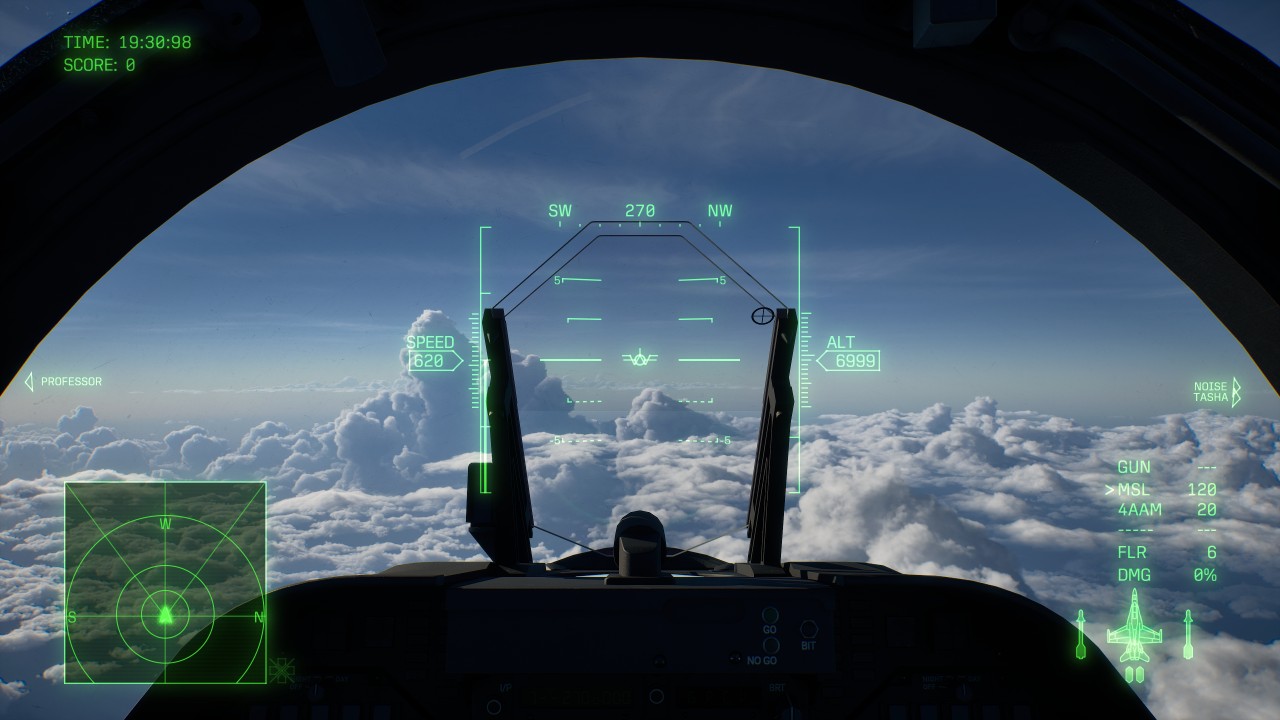
The bigger adjustment was actually flying the plane.
I had trouble getting used to the controls and the structure of the missions. I failed the first one quite a few times because I couldn’t fully understand the radar or the environment I was flying in.
It took plenty of getting used to on my part.
Even after a few hours of play, I can’t say I got fully used to it.
The game offers STANDARD and EXPERT control schemes. STANDARD is designed to be more intuitive, while EXPERT gives you more control over the aircraft through traditional roll-and-pitch inputs.
I still had plenty to learn regardless of the control scheme. There’s a lot of information to process at once: your aircraft’s position, altitude, speed, radar, targets, incoming missiles, objectives, and everything happening around you.
It takes time to develop a feel for how everything moves.
Missions aren’t just about shooting everything
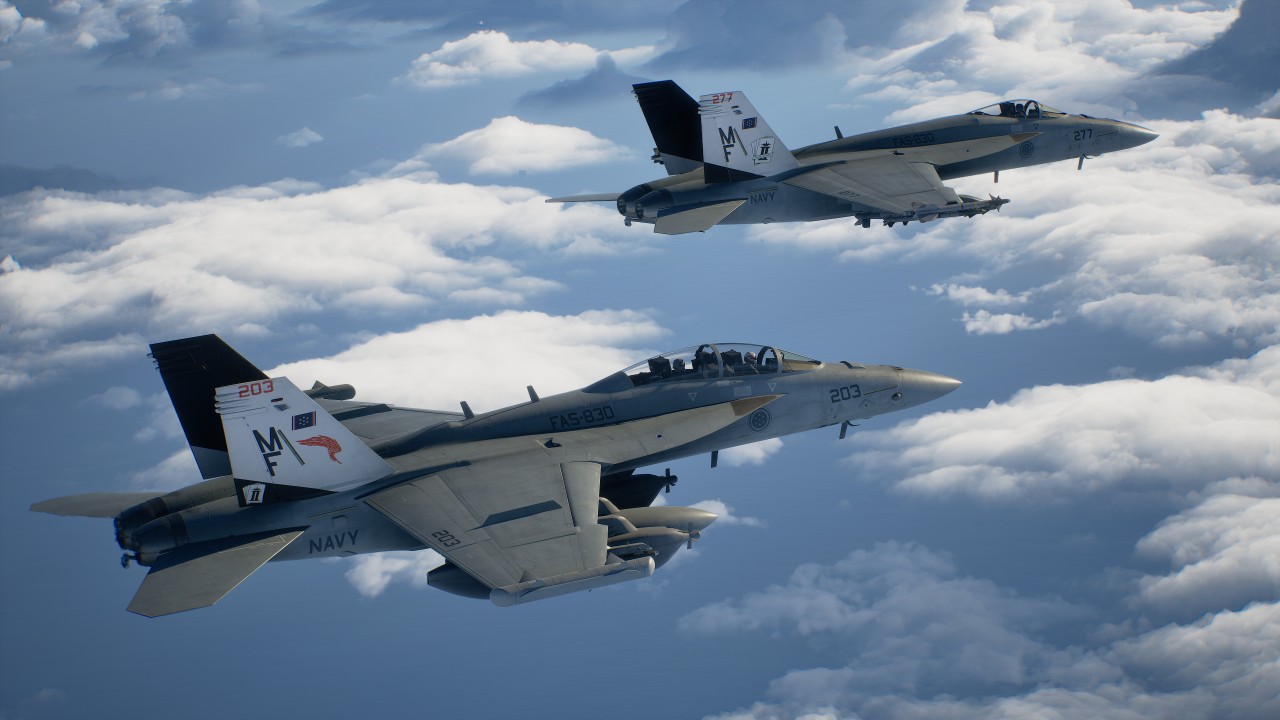
The mission structure is quite specific.
You have to do things a certain way in each mission. It’s not just “blast everything in your path.”
That offered a lot of variety and made the game more engaging.
Some missions asked you to maintain a certain altitude to avoid detection. Others demanded expert flying. Some also felt like full-on aerial combat.
Objectives can range from destroying targets and protecting allies to earning a certain number of points, with some missions changing objectives while you’re already in the air.
That keeps the campaign from feeling like a series of identical dogfights.
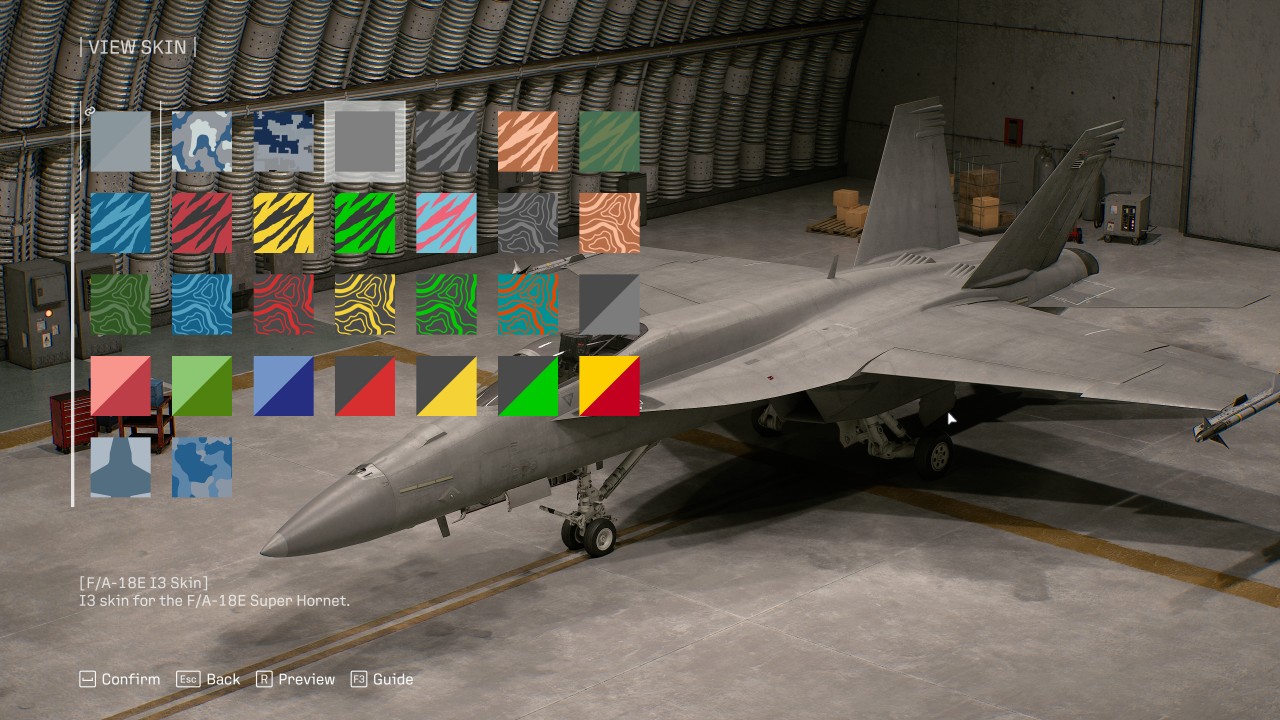
There’s also a progression system built around different aircraft types, including fighters, attackers, multirole aircraft, and electronic warfare planes. More than 30 aircraft are available, with new planes, upgrades, and special weapons unlocked through the Aircraft Tree.
Your choice of aircraft and weapons can also change how you approach a mission. A fighter makes sense when the skies are packed with enemies, while an attacker can be better suited to ground targets. Multirole aircraft offer a middle ground when you’re unsure what you’ll encounter.
Wingman commands add another layer to combat. You can order your pilots to attack, spread out, provide support, or use their special weapons.
The result is a game that asks you to pay attention to what’s happening instead of simply holding down the trigger.
A story worth sticking with
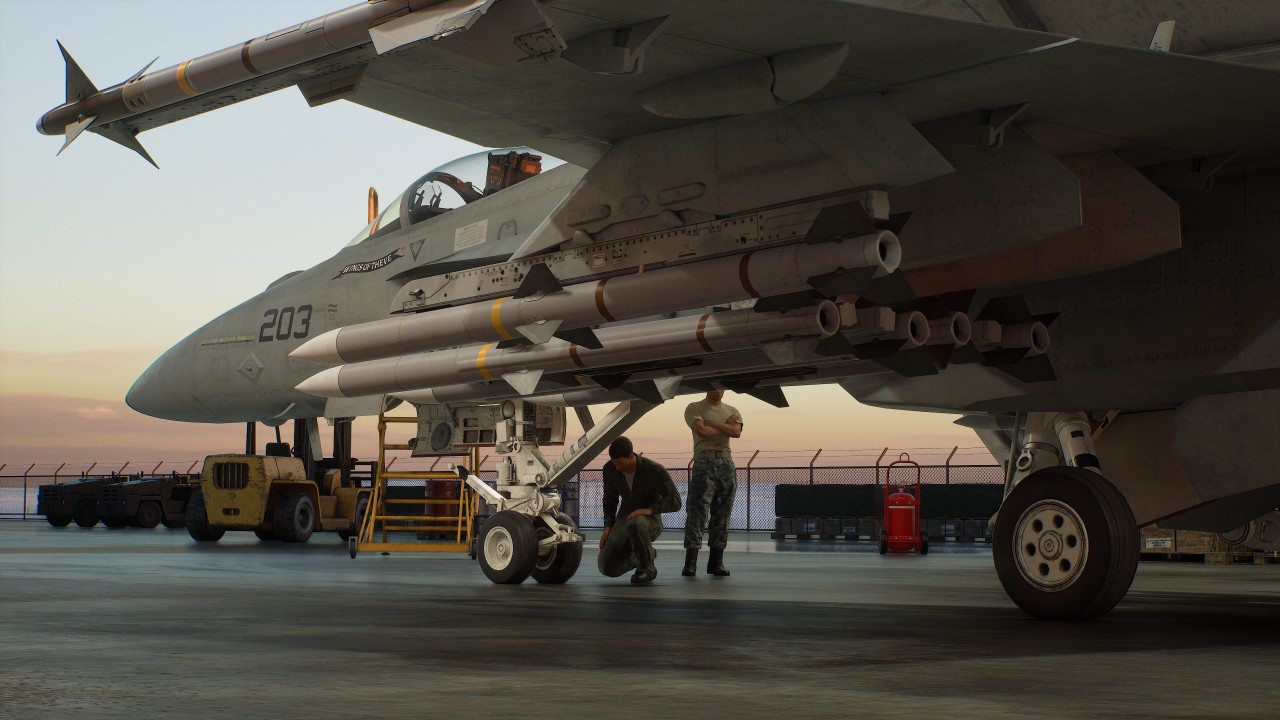
The story I’ve encountered so far isn’t something to write home about.
Its presentation, however, is engaging enough that I feel a lot of people can easily soldier on to see it through to the end.
The first-person story segments, radio chatter, briefings, and events that unfold during missions give the campaign more personality than simply jumping from one dogfight to another.
There’s clearly a larger conflict unfolding, and the game does a good job of making its missions feel like part of something bigger.
The presentation does a lot of the heavy lifting here.
Is ACE COMBAT 8: Wings of Theve your Play Match?
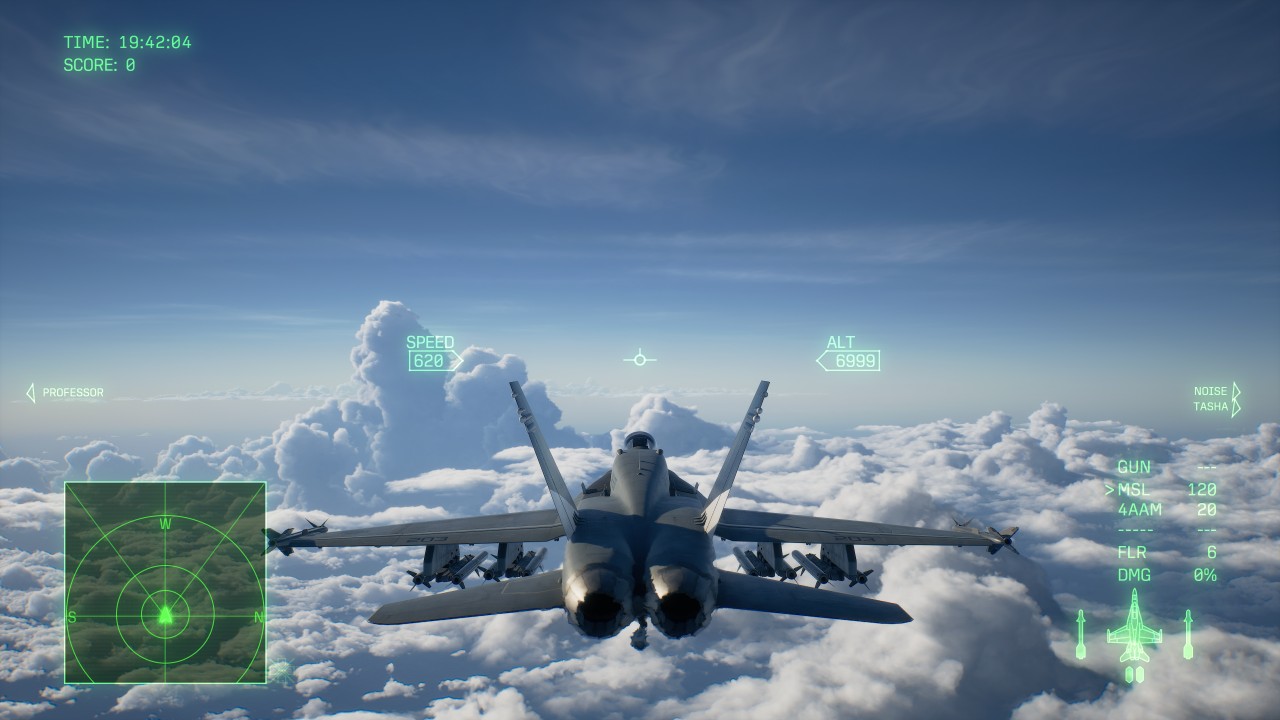
The campaign has 30 missions that run at around 15 minutes each, give or take. Your mileage, naturally, will vary.
For me, those first few hours took longer because I was still trying to figure out how to move, where to look, and what the game actually wanted me to do.
ACE Combat 8 isn’t immediately intuitive if you’re coming into it completely blind like I did. The game does give you training options for practicing flight controls and special weapons, which can help you get comfortable before throwing yourself into tougher missions.
Once things start clicking, though, the experience becomes quite distinct from the type of game most people gravitate towards.
Overall, ACE Combat 8: Wings of Theve feels like a nice break from the usual games where you control a single character and go through linear levels or an open world.
It’s the perfect palette cleanser.
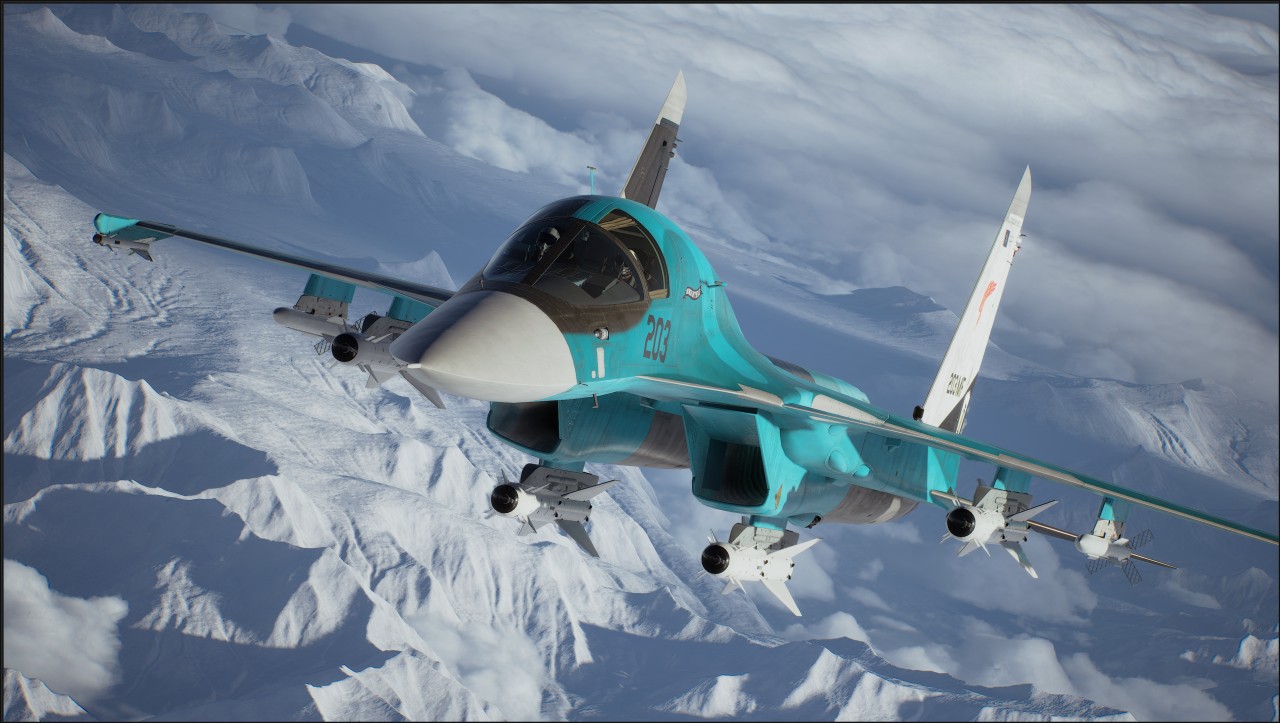
I didn’t expect to spend my first few hours struggling with radar, movement, altitude, and mission objectives. Those struggles also made the moments when I finally understood what I was supposed to do feel more rewarding.
I’m still not fully comfortable in the cockpit.
I’m also ready for another sortie.
Verdict: Swipe Right.
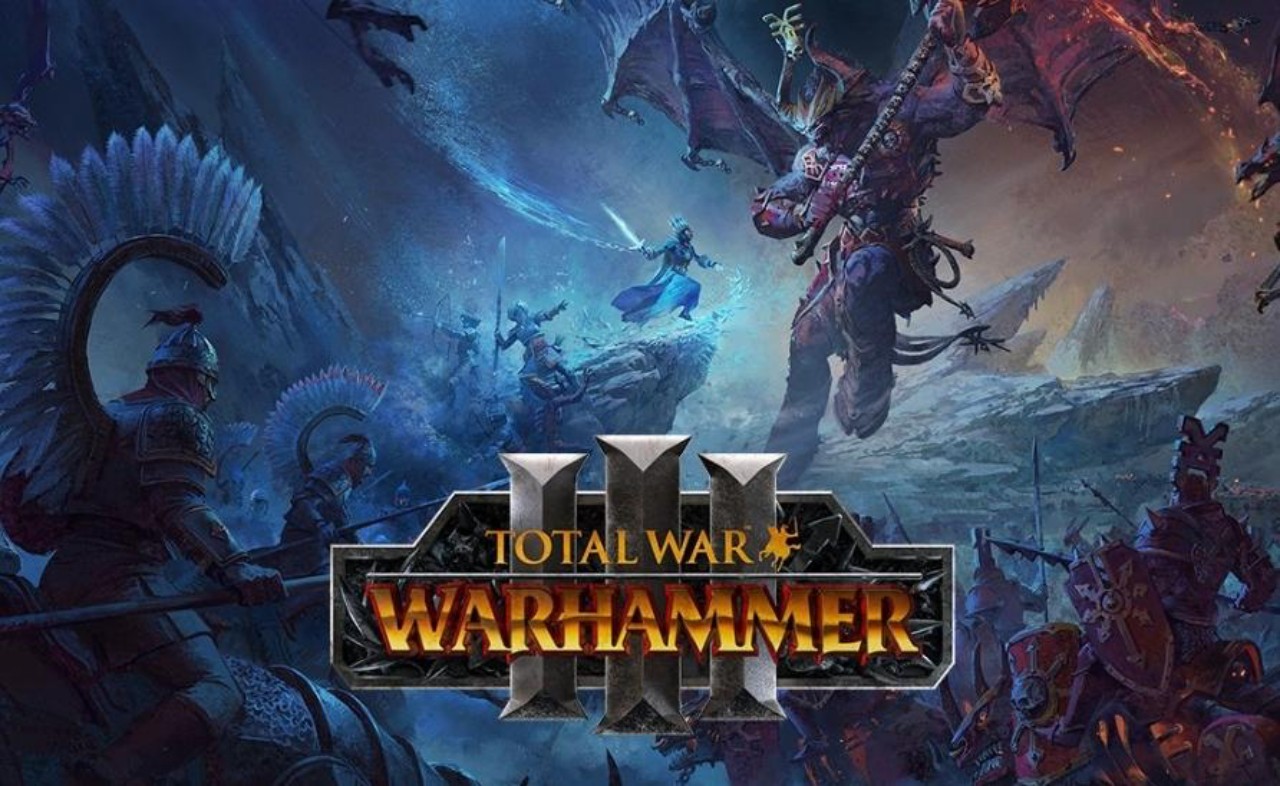
Lords of the End Times brings four new Legendary Lords, new units, and a major update to Total War: Warhammer III. More importantly, it gives players another excuse to return to the sprawling Immortal Empires campaign.
For anyone who has spent time with Total War, the appeal is familiar. You spend turns building your empire, managing armies, negotiating with rival factions, and deciding where to strike next. Eventually, all that planning leads to the part where thousands of soldiers meet on the battlefield and you have to make those decisions work in real time.
That combination remains the core of Total War: Warhammer III. Lords of the End Times doesn’t fundamentally change that formula. Instead, it gives the existing sandbox more characters, units, and ways to approach its battles.
Two layers of strategy

The campaign map is where much of Total War‘s strategy happens.
You have time to consider where to move your armies, which provinces to develop, what to build, and how to deal with other factions. Those decisions can seem slow compared to the battles themselves, but they’re what give the real-time encounters their weight.
A battle isn’t happening in isolation. The army you bring with you reflects the choices you’ve made on the campaign map. Your available units, resources, reinforcements, and strategic position all affect what happens once the fighting starts.
That creates a useful rhythm. The campaign gives you room to plan before the pace suddenly changes when two armies collide.
It also means a victory isn’t simply about having more units. Bringing the right army to the right fight matters, and the battlefield can quickly punish a poor decision.
The battlefield is where things get hectic
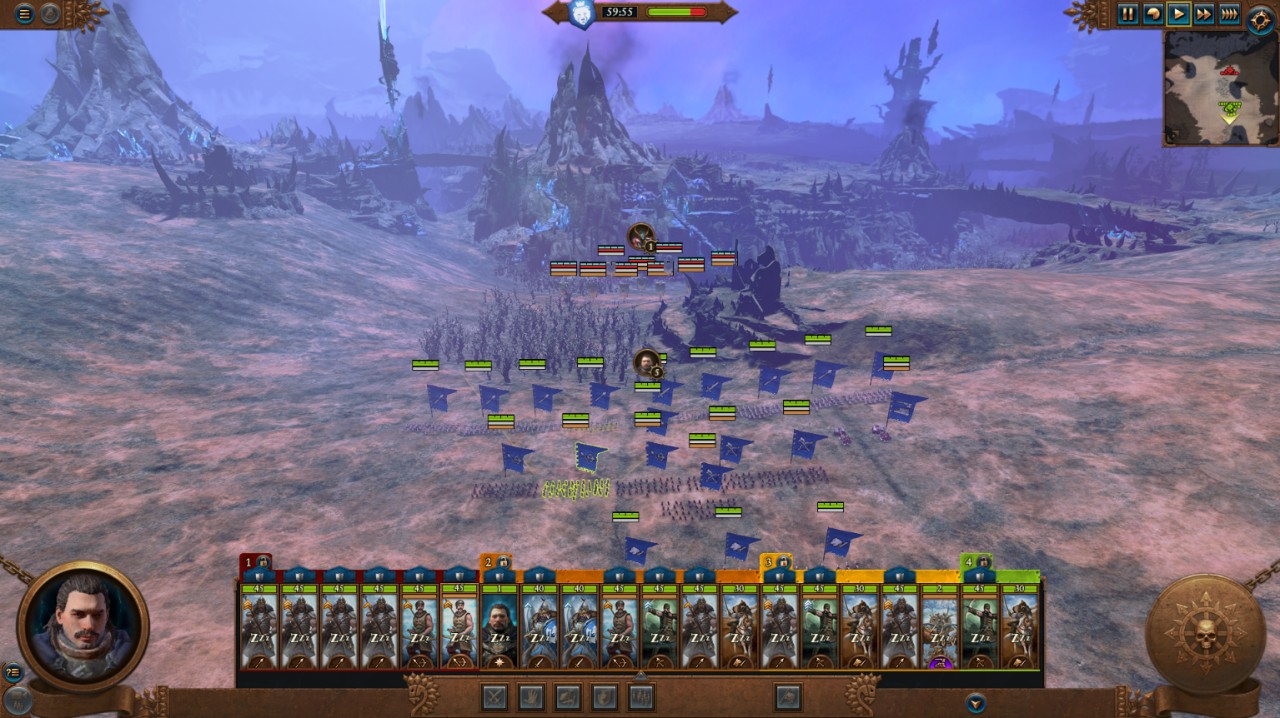
Once the fighting begins, Total War: Warhammer III becomes much more immediate.
Positioning matters. Infantry can hold a line while cavalry looks for an opening. Ranged units become more effective when placed where they can actually see their targets. High ground can give artillery a better angle, while terrain can create opportunities for a flank.
There is also plenty to manage once the battle gets moving.
You can adjust formations, move individual units, cycle cavalry charges, control flying creatures, and time spells around the rest of your army. The amount of information on screen can be intimidating at first, but it becomes easier to read once you understand what each unit is supposed to be doing.
That’s where the comparison to older real-time strategy games makes sense. The fundamentals of positioning, unit control, counters, and timing are still here. Total War simply operates at a much larger scale.
The difference is that battles can become considerably more chaotic. A plan that looked sensible a few minutes earlier can fall apart once several units engage at once.
Warhammer is doing a lot of the heavy lifting
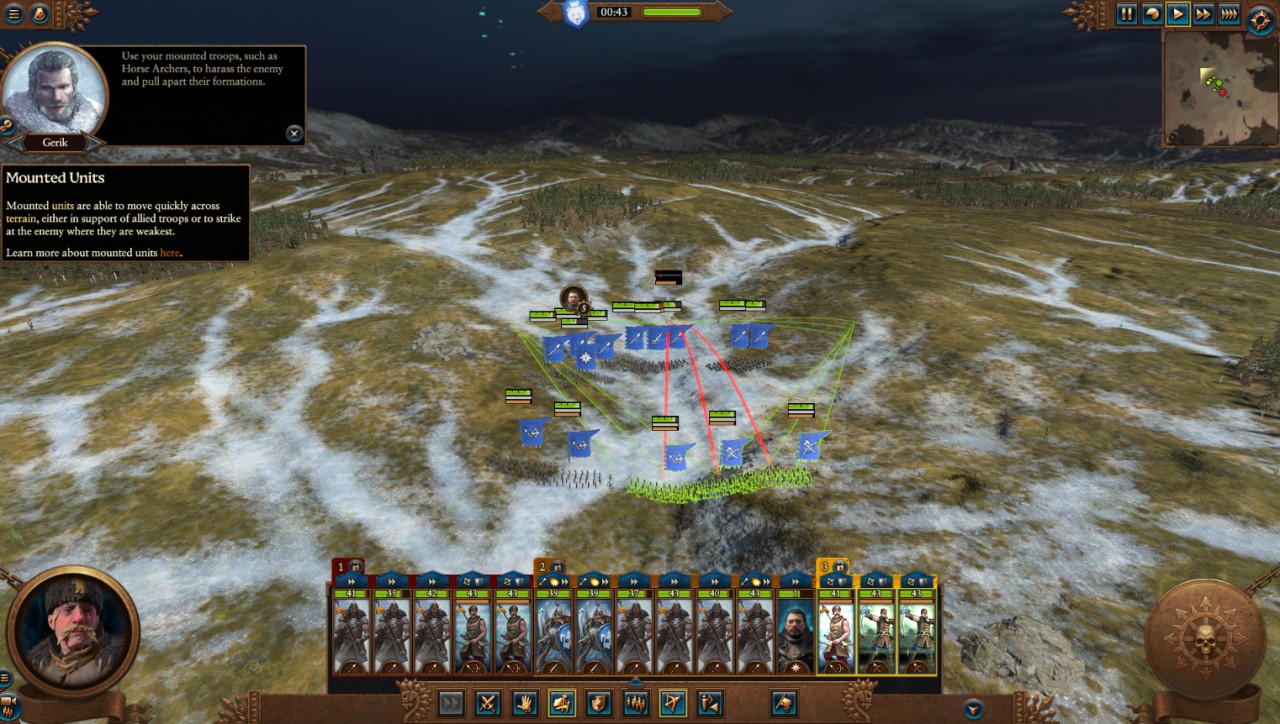
The biggest strength of Total War: Warhammer III is arguably how much variety the Warhammer setting gives the formula.
Different factions don’t simply use different models. They can change how you approach the campaign and the battlefield.
The undead, for example, play very differently from the Skaven or the Empire. Their units, abilities, heroes, and mechanics encourage different approaches to combat. That variety gives the Immortal Empires campaign plenty of room for experimentation.
It’s also where the spectacle comes into play.
There is something inherently entertaining about watching enormous monsters, heavily armored troops, magic users, and entire infantry formations collide in the same battle. Spells can reshape an engagement in seconds, while a well-timed charge can turn a losing fight around.
The Warhammer setting gives Creative Assembly plenty of toys to work with, and Lords of the End Times adds even more of them.
A lot to take in for newcomers

The scale can also make Total War: Warhammer III look more intimidating than it actually is.
You don’t need to know every faction or understand decades of Warhammer lore before starting a campaign. There is certainly a lot of lore to discover, but the game can be enjoyed simply by learning what your army does and figuring out how to make it work.
The visual spectacle helps, too.
Seeing enormous creatures fight alongside conventional troops makes even routine battles feel distinctly Warhammer. A battlefield can go from an organized formation to complete chaos surprisingly quickly once magic and monsters enter the equation.
That doesn’t mean the game is immediately simple. There are a lot of systems to learn, particularly once you start digging deeper into the campaign. But there’s a natural progression from figuring out basic formations to experimenting with more complicated strategies.
Lords of the End Times gives the sandbox more room to play

Lords of the End Times works best when viewed as another expansion of the Total War: Warhammer III sandbox rather than a reinvention of it.
The appeal is still the same: plan on the campaign map, build an army, pick your battles, and then try to execute that plan once everything starts moving.
The new Legendary Lords and their accompanying mechanics give players more ways to approach that loop, while the scale of the battles remains one of the game’s biggest attractions.
For longtime Total War players, that’s probably the most important thing. Lords of the End Times doesn’t need to reinvent the series to be interesting. It just needs to give players another reason to start another campaign and see what happens.
And, considering how easily a carefully planned campaign can descend into battlefield chaos, there is usually plenty to see.
Gaming
CRISIS CORE -FINAL FANTASY VII- REUNION physical edition now available for Switch 2
Zack Fair’s story comes to Switch 2.

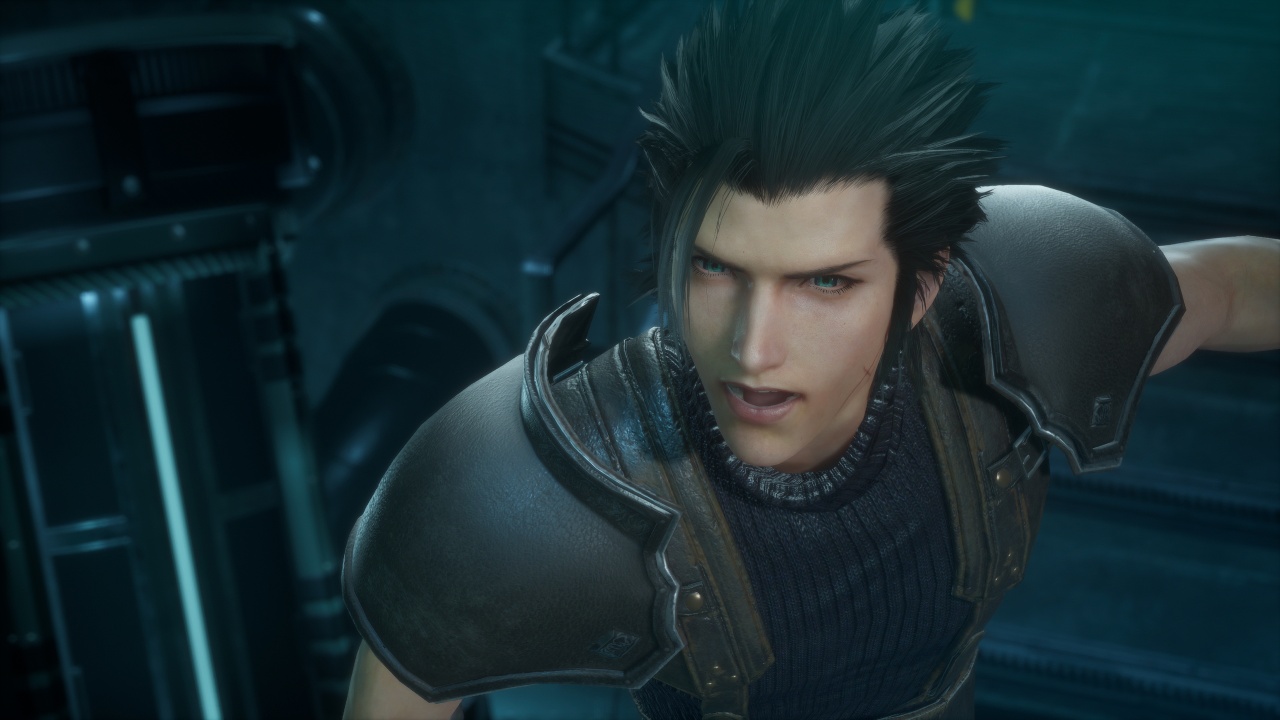
Bandai Namco Entertainment Asia and SQUARE ENIX have released the physical edition of CRISIS CORE -FINAL FANTASY VII- REUNION for Nintendo Switch 2 in Southeast Asia.
Players can also purchase the game digitally on the platform. Availability may vary by region and retailer.
Zack Fair’s story returns
Set in the mako-powered metropolis of Midgar, CRISIS CORE -FINAL FANTASY VII- REUNION follows Zack Fair, a young operative in Shinra’s elite SOLDIER unit.
Zack investigates the mysterious disappearance of SOLDIER operatives alongside his mentor, Angeal, and the legendary Sephiroth. His journey reveals the events that shaped the world of FINAL FANTASY VII and his connection to Cloud Strife.
The game revisits Zack’s story with an HD graphical overhaul of its character models, user interface, and environments. It also features fully voiced dialogue in English and Japanese, alongside an updated action-combat system.
Players can trigger Limit Breaks and Summons as they battle their way through the story. The game also supports handheld and docked play on Nintendo Switch 2.
A look back at Zack’s legacy
Originally released as a remaster of the PSP classic, CRISIS CORE -FINAL FANTASY VII- REUNION offers a refreshed take on one of the franchise’s most significant prequel stories.
In our GadgetMatch review, we explored how the remaster brings Zack Fair’s journey to modern platforms while preserving the emotional core of his story.
The release also gives players another way to experience the events leading into FINAL FANTASY VII, ahead of the upcoming FINAL FANTASY VII REVELATION, the third and final entry in the FINAL FANTASY VII Remake series.
For more information about CRISIS CORE -FINAL FANTASY VII- REUNION and other Bandai Namco Entertainment Asia titles, visit the official website.

Now Playing: ACE Combat 8: Wings of Theve
A refreshing change of pace


TECNO POVA 8 Pro Tonino Lamborghini review
Truly a rare gem in 2026

DJI Lito X1 review: Is this the best lightweight drone for creators?
Making a strong case as a travel companion and a capable B-cam!

HONOR Magic9 Pro Max launches in China with ARRI-powered imaging

TECNO and Angélica Dass visit the Philippines next for its grand portrait project

BYD says that way better EV batteries are coming next year

Globe records fastest average download speed of 2026 in August
Now Playing: ACE Combat 8: Wings of Theve

HUAWEI Pura X View is 2026’s first WIDE slab-type smartphone

The CAMON Slim 5G is TECNO’s latest ultra-slim smartphone

iPhone 18 Pro series: Price, availability in the Philippines

DJI Osmo 360 II review: Going all-in on the ecosystem

iPhone 18 Pro series: Price, availability in Singapore


-

 News1 week ago
vivo X500 Series launches with major imaging upgrades
-

 News6 days ago
OPPO Find X10 Pro Max is the first phone with a triple 200MP camera system
-

 Reviews2 weeks ago
REDMI Note 17 Pro Max review: A new breed born from AI greed
-

 Singapore1 week ago
Epson Lifestudio Grand Plus EH-LS970B with 4K projection, more launches
-

 News1 week ago
vivo introduces OriginOS 7 with smarter multitasking and AI features
-
Drones2 weeks ago
DJI Lito X1 review: Is this the best lightweight drone for creators?
-
 Gaming2 weeks ago
Valve unveils price of the Steam Frame
-

 Philippines2 weeks ago
REDMI NOTE 17 Series: Price, availability in the Philippines