

Entertainment
Now Playing: Resident Evil
Horror and comedy join forces in Zach Cregger’s latest masterpiece.

The intersection between horror and comedy is separated by a thin wall of air. In modern times, we’ve seen comedy legends, such as Jordan Peele and John Krasinski, make the successful jump into horror. Some have theorized that laughter is a pain response, which links it to the adrenaline-filled thrill of experiencing horror. Personally, I believe that mastering comedic timing also complements the timing of scary moments in horror. Comedy-trained directors just get it. That’s why the melding of the two genres is always something to look for, and that’s why Zach Cregger’s Resident Evil is a must watch.
Coming from last year’s Weapons, Cregger established himself in the annals of horror history, despite learning the art of filmmaking from cult comedy classics like Miss March and The Whitest Kids U’Know. Weapons (and Barbarian before it) expertly balances the essentials of horror with dark comedy. If you’ve seen either of these movies, then you know what you’re in for with Resident Evil.
Based on the games or the past movies?
Resident Evil is tagged as second reboot of the movie franchise after 2021’s disastrous attempt, starring Kaya Scodelario, which barely registered a hiccup in the oeuvre of Resident Evil films. However, like 2021’s failure, Cregger’s take bases itself primarily on the events of the games, specifically around the plot of Resident Evil 2.
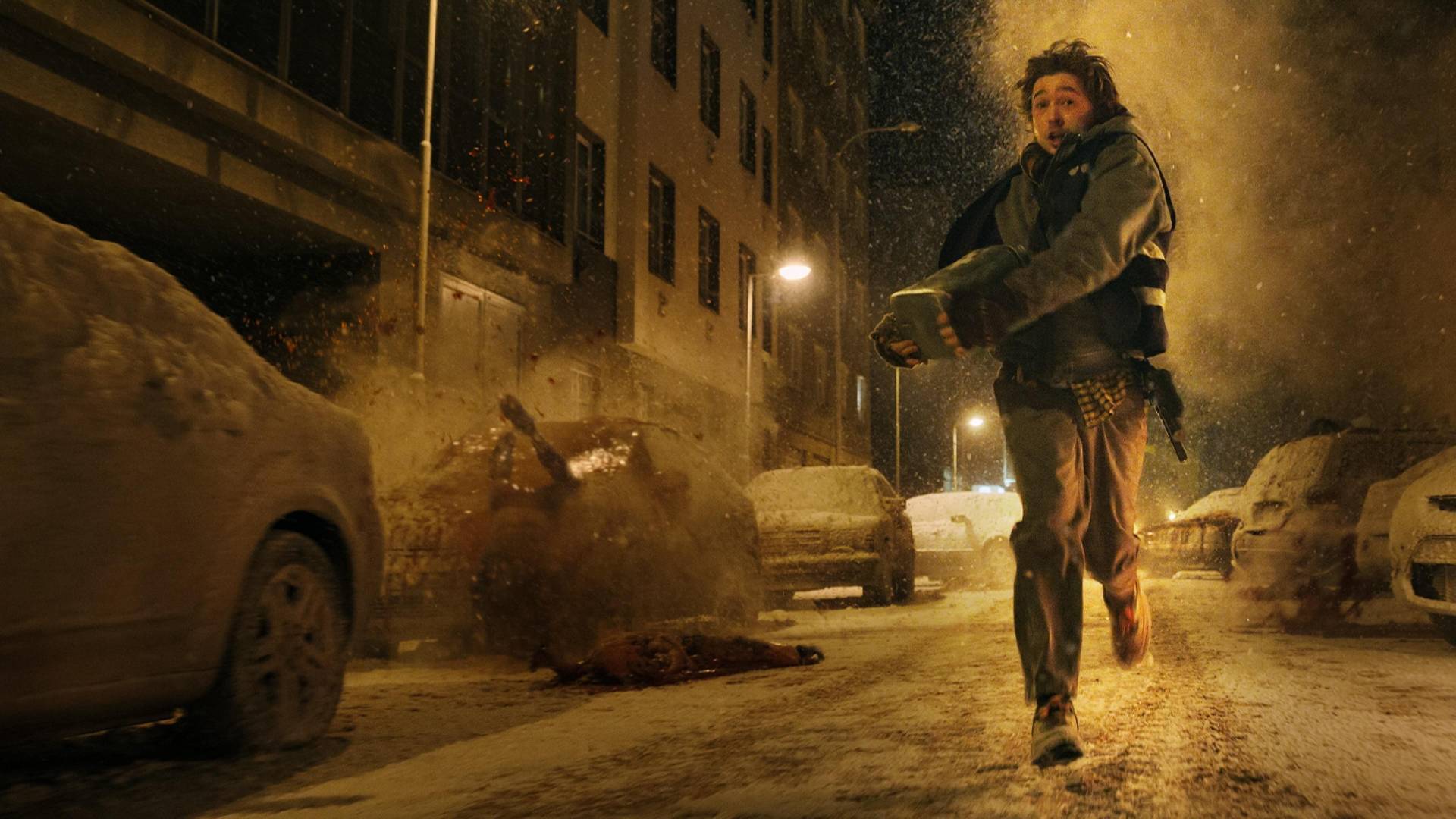
Bryan, a medical courier played by Austin Abrams, is tasked with delivering a top-priority package to Raccoon City. Unbeknownst to him, the way leading into Raccoon City (and the fabled city itself) is already overrun with mutated monstrosities.
And so, Bryan, a courier inexperienced with combat (much less surviving against zombies), must fight his way into the city to deliver his charge.
A worthy protagonist
Over the years, the franchise has seesawed between capable action heroes, like Leon Kennedy, and those who can barely survive, like Biohazard‘s Ethan Winters. On that scale, Bryan falls deeply into Winters’s side of the spectrum. He’s ill-equipped to survive a zombie apocalypse. He even admits that his barebones knowledge of guns comes from videogames. He attempts to shoot locks, thinking they’d work as they do in games. He is not a character you’d want to follow if you’re looking for a gruff man gunning down hordes of zombies with a machine gun.
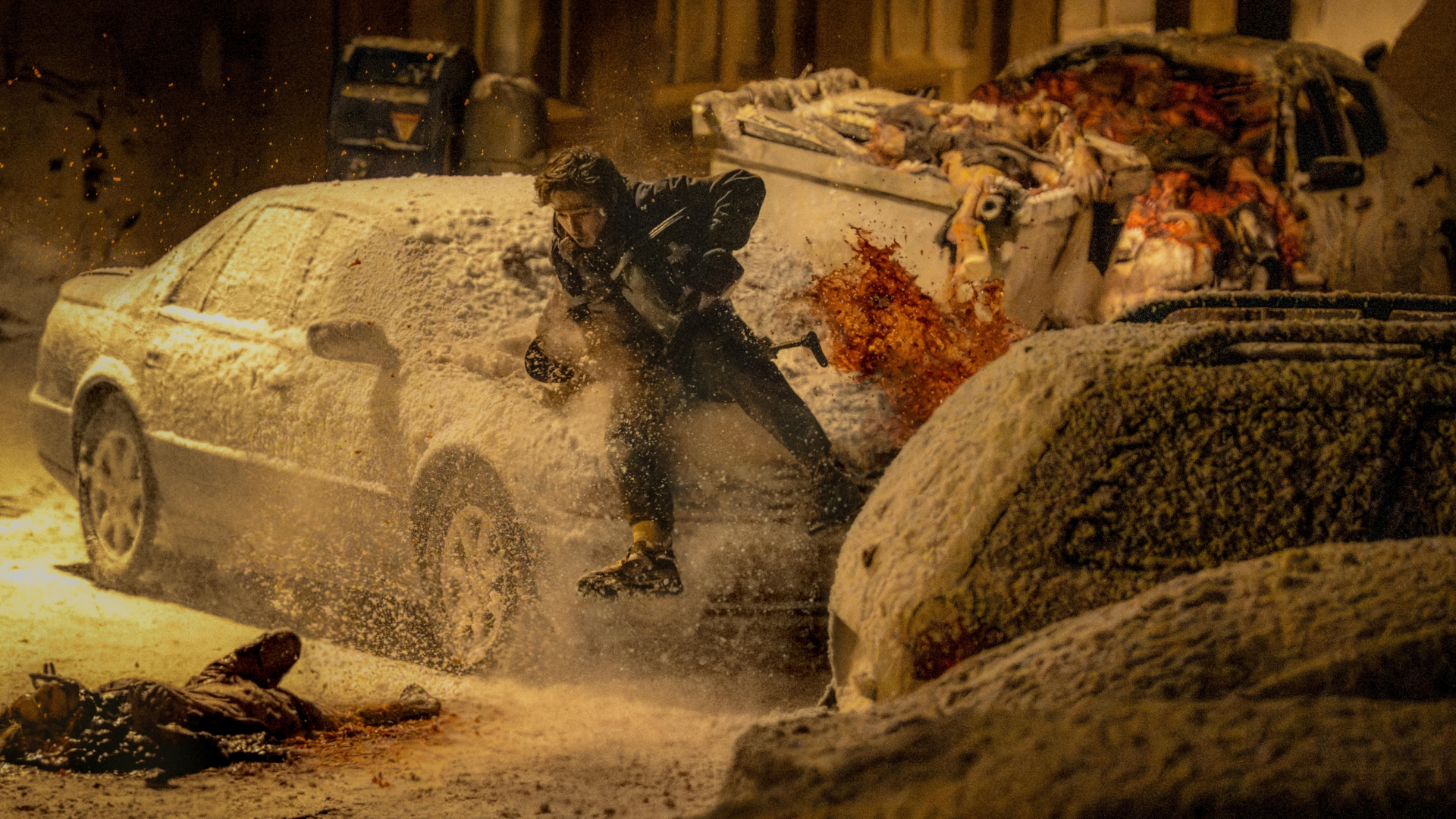
But that’s exactly what makes this horror film worth watching. Bryan is us. Though there were times I was screaming at the screen because he wouldn’t do the obviously logical thing of running away from blatant traps, our fragile protagonist mimics how we would all react in a horrific situation: a deer in the headlights stuck staring.
Every situation feels more frightful. You don’t know how you’d react. He doesn’t know how he’d react. We’re just stuck trailing along for his ride. If he lingers too long looking at a zombie about to bite him, you have no choice but to look along with him. As a horror protagonist, he’s perfect.
When a camera does the work
Of course, inept protagonists aren’t new to horror. Practically all good horror films will feature a helpless hero standing up to the monster. See: the “final girl” era of horror.
Resident Evil elevates this trope by allowing the camera to do the heavy lifting. The film’s expert transitions into first-person perspectives and over-the-shoulder ones amp up the frights. When Bryan sweeps a room with a gun, the camera takes you down to the muzzle. You become the one sweeping along with him. You see the darkness as he does. The style creates an impressive layer of immersion that brings you into his trauma. Plus, if we’re going with comparisons, the transitions feel like a game taking you from a cutscene back into control of your character.
And it’s not just the perspectives, too. The film mimics several tense moments oft found in horror games, like gingerly creeping through a thin ledge when one false move can mean plummeting to your death. Resident Evil also has scenes in a dark tunnel, the sewers, and an overrun hospital. It’s a veritable who’s who of horror settings. But they all just work. It’s like you’re in a Resident Evil game.
When goofy becomes scary
But that’s enough of how the movie was made. How scary is it?
Taking them from their respective contexts, each monster is goofy. There’s an infirm zombie spewing acid bile that Bryan just bullies around. There’s a seemingly innocent young girl with a tentacle foot. There’s a zombie katamari.
And if that’s not enough, the casting is filled with masters of comedic timing like Paul Walter Hauser, Zach Cherry, and Austin Abrams himself. The first two play bumbling representatives of Umbrella Corporation, people who are too incompetent to do their job. Abrams is the bumbling everyman who can’t make heads or tails of what’s happening. Comedy is a living, breathing presence in this film.
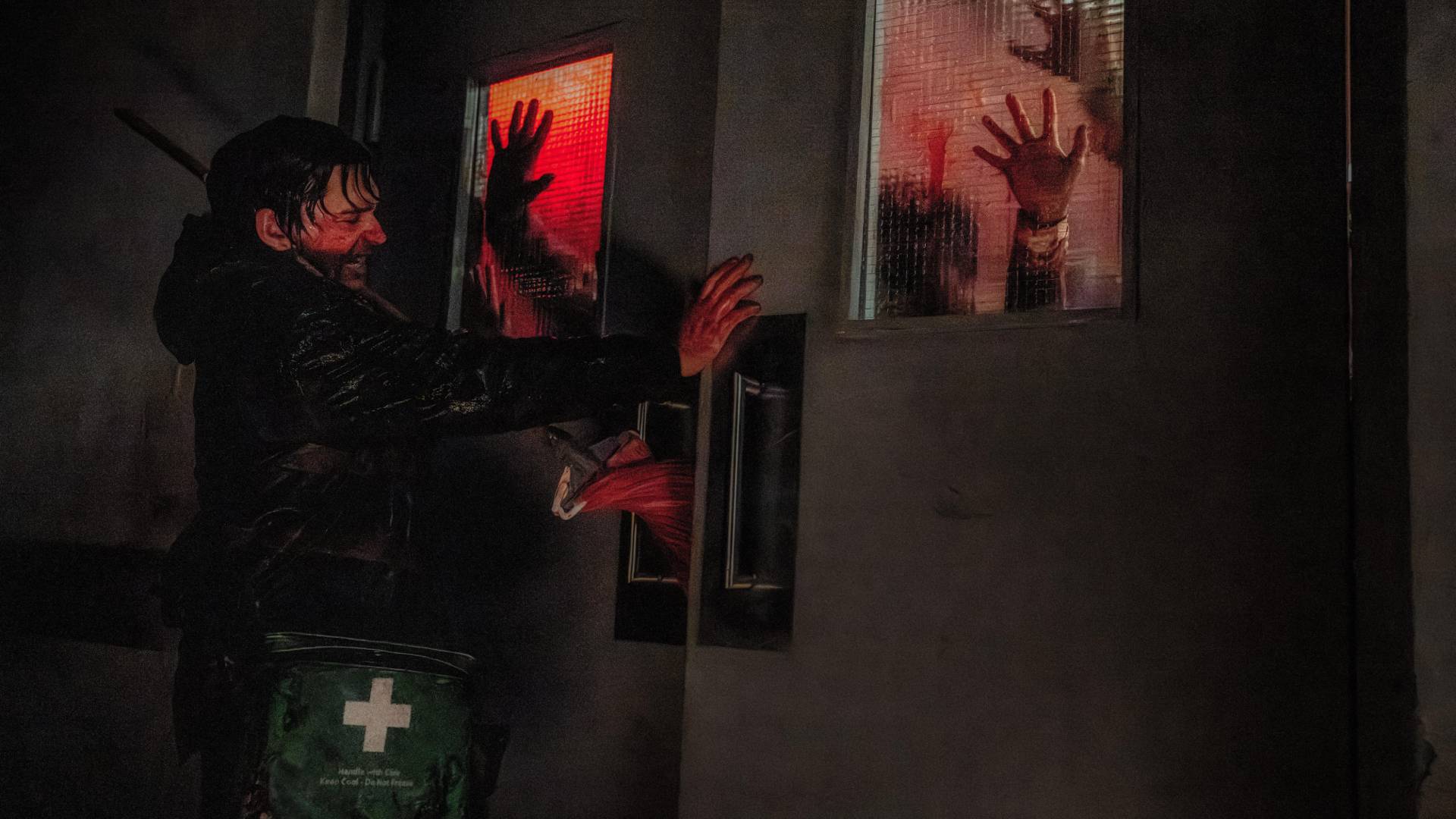
But that’s not to say that this is a comedy film. The horror is still top notch. Cregger just knows how to time everything right.
Unlike modern films today, like in The Conjuring universe, Resident Evil is not a scare-a-minute film. It will not bombard you with jumpscares.
Now, to be fair, there are a fair bit including fakeouts. In fact, under normal circumstances, I’d dislike how many there are. But here, each jumpscare comes with a lengthy period to catch your breath. The film gives you time to relax, to laugh, and, eventually, lower your guard for the next scare. It’s a balanced pace that’s kept up throughout the entire film.
This is exactly how you should pace a horror movie.
Should you watch Resident Evil?
Even with its uniquely comedic style, Resident Evil is one of the most faithful adaptations of a video game I’ve ever seen. Like a game, Cregger’s pacing knows when to let you, the viewer, breathe and when to thrust you back into its monstrosities.
Humor will always go hand in hand with horror. Though the responses to these two categories are technically different, they’re both genres about facing the unexpected. On the box, Resident Evil says that it’s a horror film, but it’s so much more. If you want to laugh, cry, and cower in fear all in the same movie, this is the movie to watch.




Entertainment
Cyberpunk: Edgerunners 2 now streaming, Cyberpunk 2077 update coming
Edgerunners returns to Night City


Cyberpunk: Edgerunners 2 is now streaming on Netflix, with all 10 episodes available to watch. CD PROJEKT RED and animation studio TRIGGER have also announced a new update for Cyberpunk 2077, bringing content inspired by the anime to the game.
The Edgerunners 2 Update (Update 2.5) launches on October 22, 2026, for PC, PlayStation 5, and Xbox Series X|S. A Nintendo Switch 2 release will follow shortly.
Edgerunners returns with a new cast
Set in the world of Cyberpunk 2077, Cyberpunk: Edgerunners 2 tells a standalone story through an entirely new cast of characters. The series follows a veteran edgerunner, a young cinephile, a chrome-obsessed delinquent, and a Snake Nation netrunner as their stories explore vengeance and redemption in Night City.
Director Kai Ikarashi leads the new installment, with Kanno Ichigo serving as lead character designer. Masahiko Otsuka returns as a collaborator, while Bartosz Sztybor serves as showrunner, story writer, and producer.
Both Cyberpunk: Edgerunners and Cyberpunk: Edgerunners 2 are available exclusively on Netflix.
Cyberpunk 2077 gets a new update
CD PROJEKT RED announced the Edgerunners 2 Update alongside the anime’s premiere on October 20. The free update will introduce new items and features to Cyberpunk 2077, including content inspired by the new series.
The update launches on October 22 for PC, PlayStation 5, and Xbox Series X|S. CD PROJEKT RED has yet to announce the Nintendo Switch 2 release date beyond confirming that it will follow shortly.
The studio will reveal more details during a special episode of REDstreams on October 21. The broadcast will air on Twitch, YouTube, and Steam, with official patch notes scheduled for release on the same day.

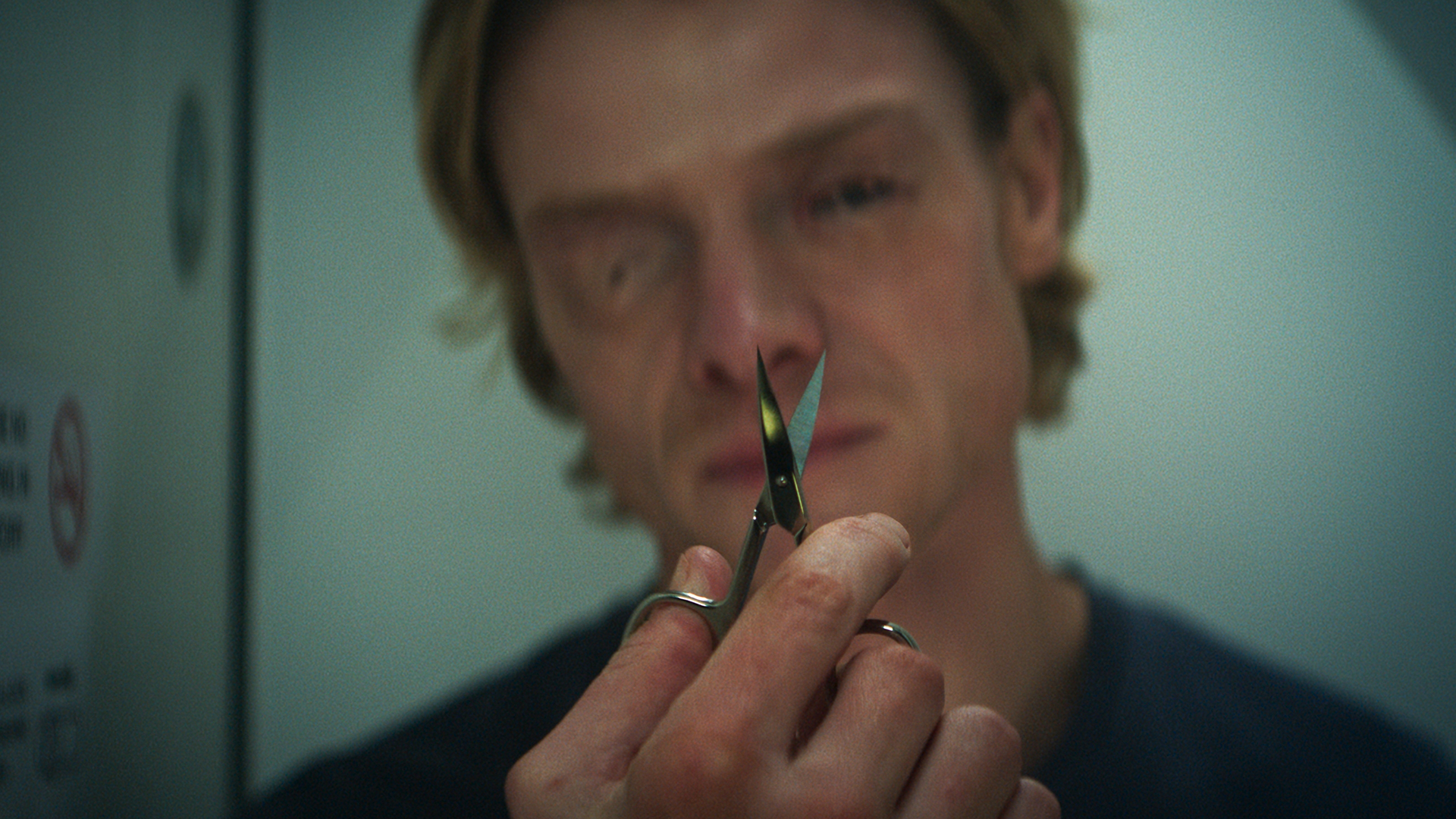
The thing about supervillain movies is that they rarely let their villain be a villain. From Venom to Kraven the Hunter, they’re contrarian dreck that reframe a mass murderer as a “misunderstood anti-hero” who’s overshadowed by a corny do-gooder. Boo hoo. Thankfully, Clayface got the memo to not do that, even if it came pretty close.
Clayface reimagines how rising actor Matt Hagen becomes one of Batman’s most (literally) monstrous enemies. Here, Matt is horribly disfigured by gangsters then abandoned by his friends. He finds hope in Dr. Caitlyn Corr’s genetic experiments, but loses his body, mind and soul as her miracle cure enables his worst impulses.
Basically, Clayface is everything Joker failed to be. It’s a sympathetic origin story for a twisted Batman villain, but it doesn’t make excuses for them. If Joker scapegoats Arthur Fleck’s madness and anarchy on the nebulous enemy that is Society the way an aimlessly rebellious teenager would, Clayface throws all the blame and consequences on Matt — and Matt alone.

I like how Matt’s story is a tragedy of his own making. He wasn’t always evil, and he really was wronged by scum. Worse, his identity is cracking, which is a bit of psychological torment that I wish the movie dwelled on more. And yet, he always had a way out. He just keeps choosing the cruelest and greediest options instead.
This is the kind of agency most supervillain movies — or any movie about a juvenile anti-hero fighting The System, really — lack, but Clayface has an abundance of. There was a moment I thought that the movie would still side with Matt despite everything he’s done, only for him to cross a line. In the end, he can only blame himself when he loses everything and everyone.
However, I was let down by Clayface’s violence. There’s blood and guts, alright, but they’re too inconsistent. For every morbidly satisfying disemboweling or close-up of a nasty scarring, there’s a moment where the movie cuts away from these too early. I lost count of how many times Clayface jumped to the next scene before really letting blades sink into flesh, or how many of Matt’s kills were done offscreen.

Minus the pivotal deaths, the kills are also not as diverse as I’d hope from a killer powered by Play-Doh and imagination. It’s just variations of stabbing and bludgeoning. My issue isn’t a lack of brutality, but that this reluctance to push it further or just show it gives the well-built tension a lackluster payoff. A movie about superpowered revenge in one of fiction’s vilest hellholes should be more depraved and creative.
To be fair, this is more the fault of the movie’s constraints, not a lack of skill or thought. Effects cost time and money that Clayface clearly didn’t have a lot of. This would also explain why Matt is limited to identity theft not by molding himself, but via clever camera work. For what it’s worth, I see and respect the smart workarounds the movie found to deliver the dread.
Still, I like Clayface. It’s the rare supervillain movie that’s self-aware and honest about its darkness. It humanizes its villain, but commits to their monstrosity while rejecting forced redemption. It’s also a grisly thriller that works on its own merits, yet complements DC Comics’ latest growing cinematic world. That said, Batman can’t arrive sooner to beat Matt’s melted face in.


I went into Whalefall with relatively low expectations. My initial assumption was something along the lines of a Discovery Channel or National Geographic documentary. Perhaps, with a biblical twist inspired by Jonah and the whale.
Learning about marine life and having a mildly existential moment about the ocean seemed plausible enough. What I wasn’t prepared for was being physically thrown around in a cinema while watching a man get swallowed whole by a sperm whale.
Based on the novel of the same name, Whalefall follows Jay Gardiner (Austin Abrams), who dives off the coast of California in search of his father’s remains. What begins as a deeply personal mission turns into a fight for survival when Jay finds himself trapped inside the very creature that could end his life.

(L-r) Director Brian Duffield and Austin Abrams as Jay Gardiner in 20th Century Studios’ WHALEFALL. Photo by Jennifer Clasen. © 2026 20th Century Studios. All Rights Reserved.
Watching it in 4DX made the experience all the more harrowing. My seat moved and the tension mounted. I found myself gripping the armrests as though I had personally signed a waiver to become whale food.
I went in expecting an underwater adventure and left with a renewed appreciation for dry land, breathable air, and the many reasons to stay out of a sperm whale’s digestive system. More surprisingly, I left thinking about my father.
Oh, the questionable decisions we make when we’re hurting
Anyone who has spent time diving knows that going underwater alone is a risk. Conditions can change in an instant. Having nobody around to help when something goes wrong can turn a manageable situation into a life-threatening one.
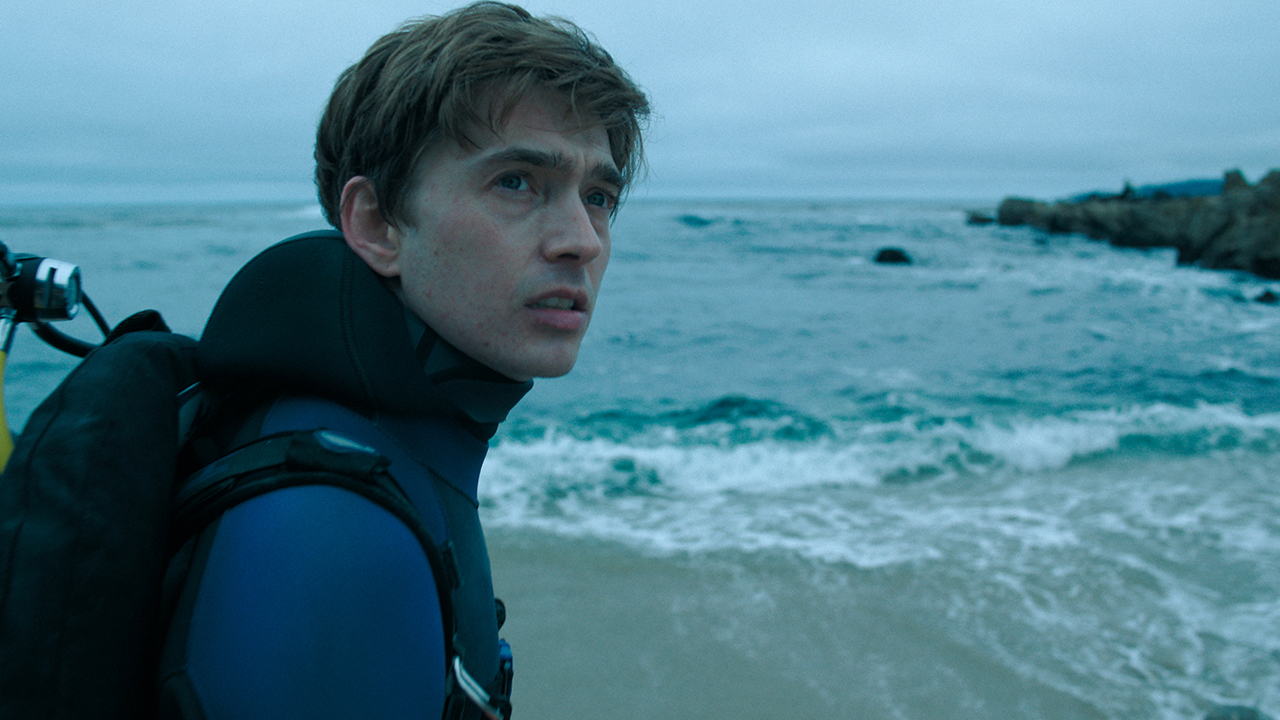
Jay, unfortunately, has other things on his mind. His decision to dive alone is frustrating to watch, particularly when you can see how much trouble his stubbornness is going to cause him.
There were moments when I wanted to reach through the screen and confiscate his diving equipment. I wanted to tell him that grief is not an excuse to abandon every survival instinct he has ever learned.
Then again, grief has a rather unpleasant way of making sensible people do questionable things. Jay is still carrying the weight of his father’s death, compounded by the memory of their last fight.

Diving was something they shared, and returning to the water becomes his way of reconnecting with a man he can no longer speak to.
His search for his father’s remains is also a search for something less tangible: closure, forgiveness, and perhaps, a chance to make peace with the things left unsaid.
That part hit a little too close to home. My own attempt to reconnect with my father involved tennis. Apparently, when daddy issues meet a sports hobby, the brain starts entertaining the idea that a shared activity might somehow repair years of complicated feelings.
Baggage you can’t breathe away
I haven’t read the original novel, so I can’t speak to how closely the film follows the book. What I can say is that Whalefall uses its survival premise to explore the kind of emotional baggage that no amount of deep breathing can magically dissolve.
Jay is fighting to stay alive, but he is also confronting the guilt that has kept him emotionally tethered to his father’s death. The whale becomes a fascinating extension of that struggle.
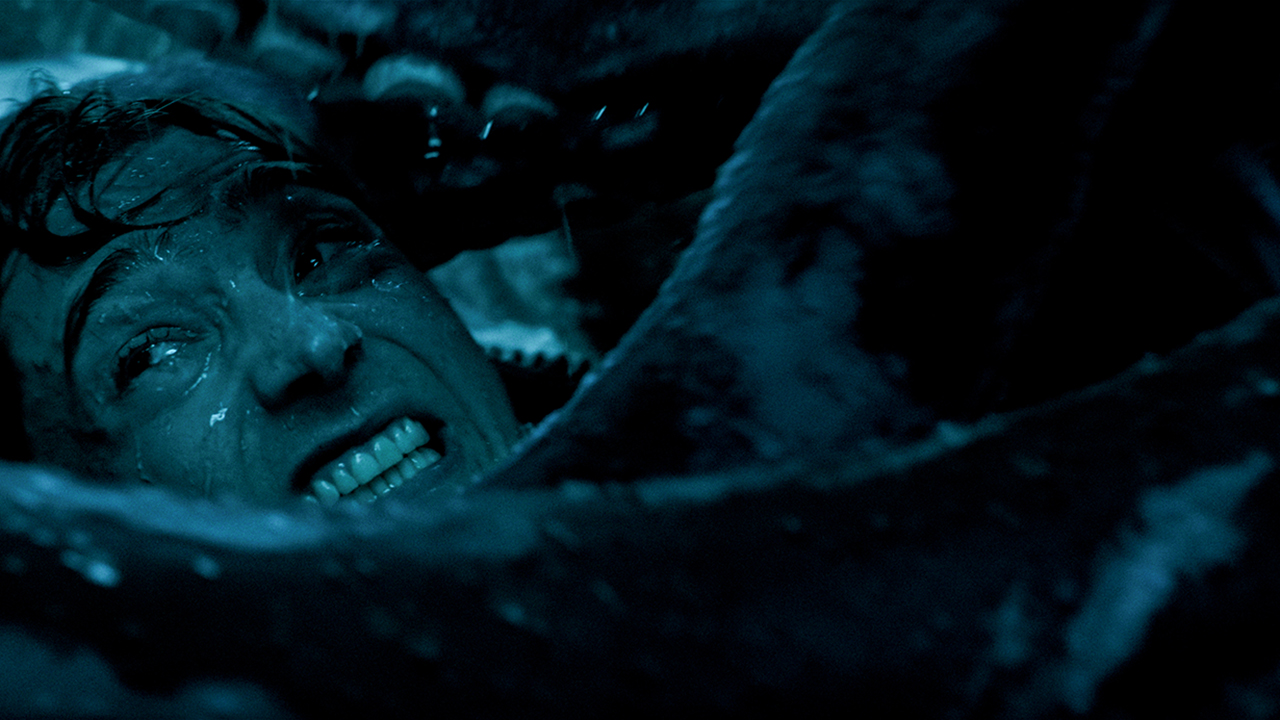
As Jay fights his way through its body, the physical obstacles begin to mirror the emotional ones he has spent so long avoiding.
The creature sometimes feels more like a manifestation of his father. It forced him to confront memories he has buried along with his grief. Survival, in this case, means more than finding a way out. Jay must also find a way to forgive himself.
Suspense that gets under your skin
It’s so deeply unsettling watching a person trapped inside a living creature. I can handle the occasional horror movie, but the human imagination has its limits. Mine would very much prefer not to picture what happens when the walls around you are made of whale.
Jay’s ordeal is brutal. He suffers serious injuries, struggles with dwindling oxygen, and has to work through one terrifying obstacle after another with very little room for error.
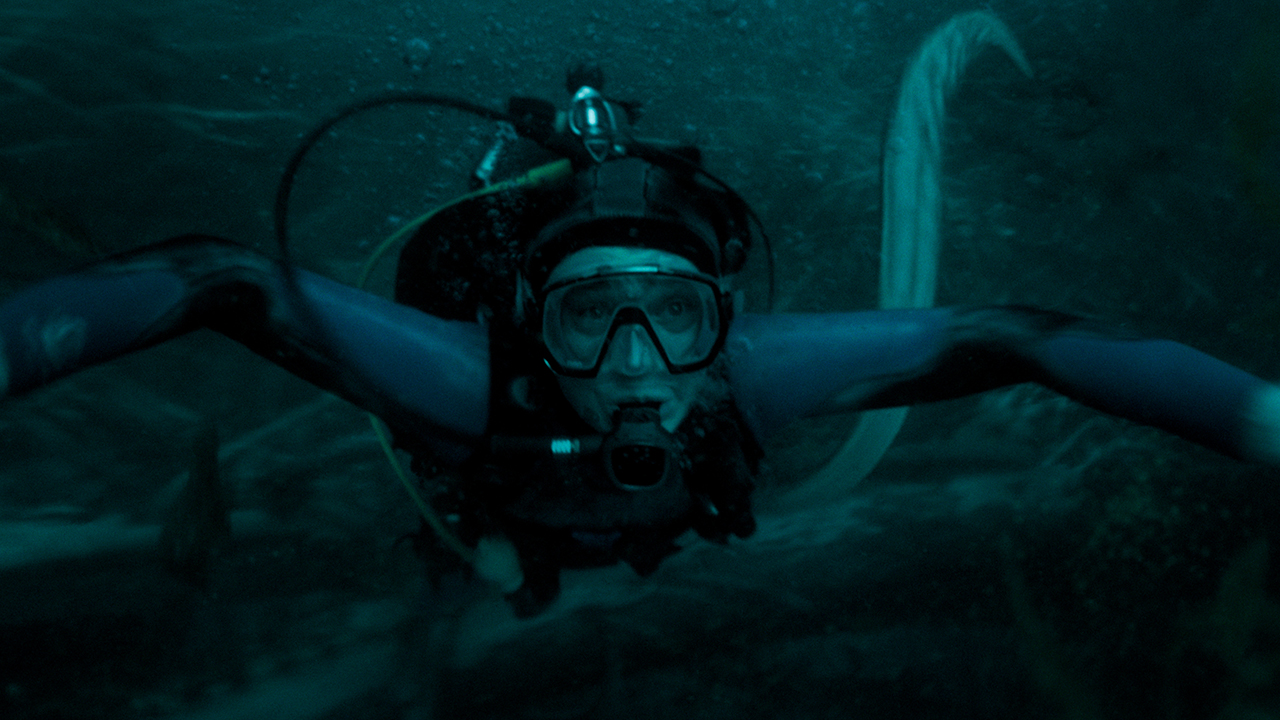
The film makes the environment feel claustrophobic and unpredictable, keeping you painfully aware that his body is running out of time.
The 4DX presentation makes all of this considerably harder to watch. Every jolt and movement pulled me further into Jay’s predicament. The physical effects heightened the sense that something could go wrong at any moment.
I was no longer comfortably observing a survival thriller from my cinema seat. Apparently, I was a passenger on the world’s worst underwater excursion.
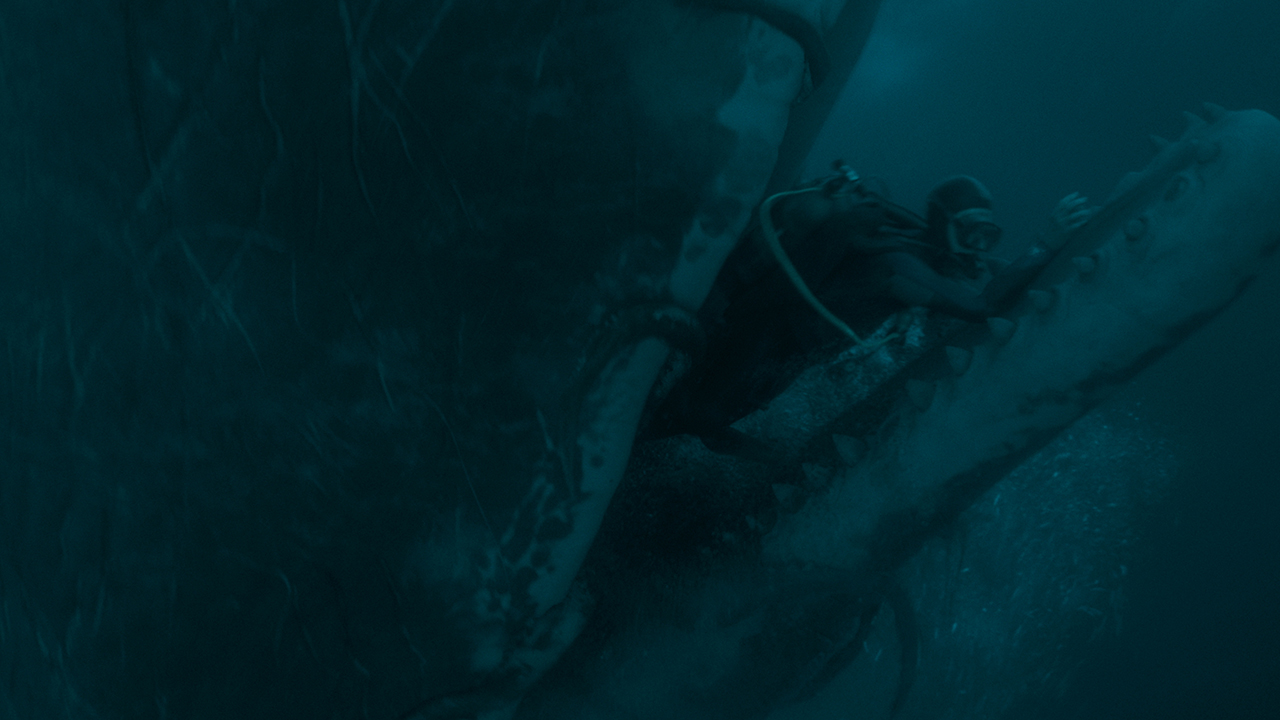
There were moments when I genuinely wanted to look away and ask someone to tell me when it was safe to look again. I knew Jay was the protagonist, and a small, sensible part of my brain assumed the story would find a way to keep him alive.
The rest of me remembered that films can be cruel. That being the main character isn’t always a legally binding guarantee of survival.
Between hope and hopelessness
What kept me watching was the tension between hope and helplessness. Jay has knowledge that could save him, much of it drawn from lessons his father taught him. But remembering what to do is difficult when panic takes over.
His chances seem to improve just enough to make you hopeful before another complication threatens to undo everything.
The film doesn’t rely solely on the spectacle of a man being trapped in a whale. Its suspense comes from watching Jay piece together what he knows while confronting everything he has spent years trying not to feel.
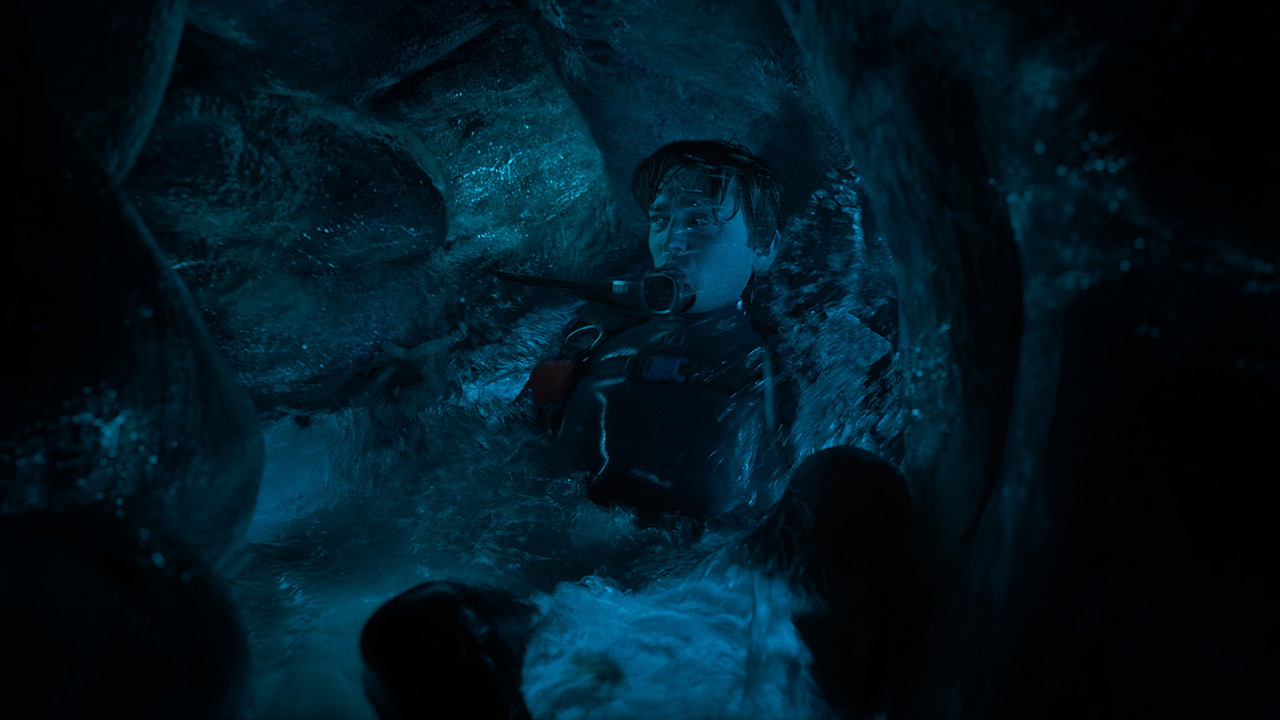
And no, this is not Moana. There is no helpful manta ray carrying the spirit of a dead grandmother to guide our hero through his darkest hour. Jay has to do the work himself, even when the memory of his father becomes the closest thing he has to a guide.
That is what makes the whale’s presence so compelling. It feels as though Jay is being forced into an encounter with his father, except the reunion comes with broken bones and a ticking oxygen supply.
A survival story with grief at its heart
I expected Whalefall to be a survival thriller about the sheer terror of being swallowed by a sperm whale. It certainly delivers on that front, particularly in 4DX, where every movement makes the experience feel uncomfortably immediate.
What I didn’t expect was to leave the cinema thinking about my own relationship with my father. The film’s most affecting moments emerge when the physical struggle and Jay’s emotional journey begin to converge.

(L-R): Austin Abrams as Jay Gardiner and Josh Brolin as Mitt Gardiner in 20th Century Studios’ WHALEFALL. © 2026 20th Century Studios. All Rights Reserved.
The whale and the memories of his father all become part of a story about learning to live with loss. Its imagery gives the audience room to consider how grief can trap us in the past, even when we desperately want to move forward.
It’s painfully familiar to hold on to the last argument, the final conversation, or the version of a relationship we wish we could have changed.
We replay those memories as though enough mental editing might eventually produce a different ending. Sometimes, we even try to revisit the things we once shared with someone, hoping the familiarity will bring us closer to them again.
Making peace with who we were
Jay’s journey suggests that making peace with a person who is gone also requires making peace with the person we were when they were still here.
That’s a difficult thing to accept, especially when the relationship itself was complicated. Forgiveness doesn’t necessarily mean every wound disappears or every unanswered question finds a neat resolution.
Sometimes, it means acknowledging what happened and allowing yourself to keep living. Whalefall surprised me with how much emotional weight it carried beneath its survival-thriller premise.
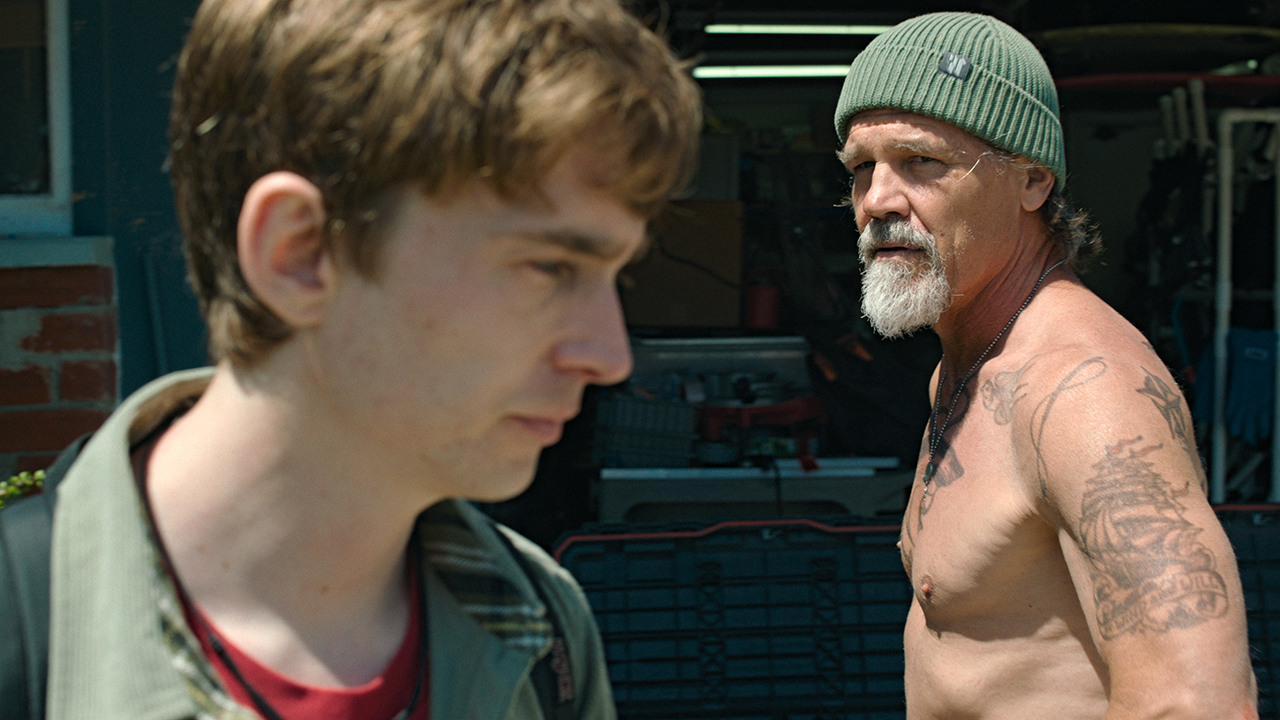
(L-R): Austin Abrams as Jay Gardiner and Josh Brolin as Mitt Gardiner in 20th Century Studios’ WHALEFALL. © 2026 20th Century Studios. All Rights Reserved.
The cinematography and storytelling give its more introspective moments room to settle, making the experience linger long after the credits roll.
If you’re looking for a survival thriller that will leave you gripping your cinema seat, Whalefall is worth the trip. The 4DX experience makes its claustrophobic ordeal all the more visceral. Consider this your reminder to bring your strongest stomach.
If you have a complicated relationship with your father, the film might leave you with something heavier to carry home.
I arrived expecting to watch a man fight his way out of a whale. I left thinking about the things we carry long after the people we love are gone, and the difficult business of learning to let them go.


ROG G700 review: The best prebuilt PC you can get off the shelf
This PC will make you stop worrying about specs.


HP OMEN Max 16 review: Gamer-maxxing in deep black
Peripherals deemed necessary to max this out


vivo V80 review: Good phone, tough sell
A capable travel companion

FromSoftware’s The Duskbloods delayed to 2027

Yes, you can turn off the MacBook Pro’s touchscreen display

Demon Slayer: The Hinokami Chronicles 2 launches on Switch 2

What the MacBook should touch on instead

realme 16 Pro 5G Harry Potter Edition: Price, availability in the Philippines


-
Reviews2 weeks ago
vivo V80 review: Good phone, tough sell
-

 Gaming2 weeks ago
KINGDOM HEARTS Collection [I–III] now available on PS5, Switch 2
-

 News1 week ago
OPPO Find X10 Series: Price, availability in the Philippines
-

 Buyer's Guide2 weeks ago
iPhone Duo Philippines: Prices, installments, and where to buy
-

 Cameras1 week ago
DJI Osmo Pocket 4P Pearl White now available globally
-

 News1 week ago
OPPO Find X10 Series: Price, availability
-

 News2 weeks ago
Sony unveils three premium Walkman music players
-

 Entertainment1 week ago
Cyberpunk: Edgerunners 2 now streaming, Cyberpunk 2077 update coming