


I went into Whalefall with relatively low expectations. My initial assumption was something along the lines of a Discovery Channel or National Geographic documentary. Perhaps, with a biblical twist inspired by Jonah and the whale.
Learning about marine life and having a mildly existential moment about the ocean seemed plausible enough. What I wasn’t prepared for was being physically thrown around in a cinema while watching a man get swallowed whole by a sperm whale.
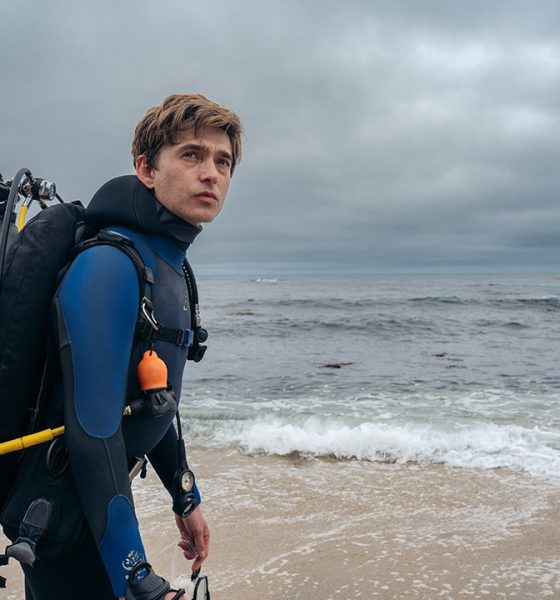
Based on the novel of the same name, Whalefall follows Jay Gardiner (Austin Abrams), who dives off the coast of California in search of his father’s remains. What begins as a deeply personal mission turns into a fight for survival when Jay finds himself trapped inside the very creature that could end his life.

(L-r) Director Brian Duffield and Austin Abrams as Jay Gardiner in 20th Century Studios’ WHALEFALL. Photo by Jennifer Clasen. © 2026 20th Century Studios. All Rights Reserved.
Watching it in 4DX made the experience all the more harrowing. My seat moved and the tension mounted. I found myself gripping the armrests as though I had personally signed a waiver to become whale food.
I went in expecting an underwater adventure and left with a renewed appreciation for dry land, breathable air, and the many reasons to stay out of a sperm whale’s digestive system. More surprisingly, I left thinking about my father.
Oh, the questionable decisions we make when we’re hurting
Anyone who has spent time diving knows that going underwater alone is a risk. Conditions can change in an instant. Having nobody around to help when something goes wrong can turn a manageable situation into a life-threatening one.
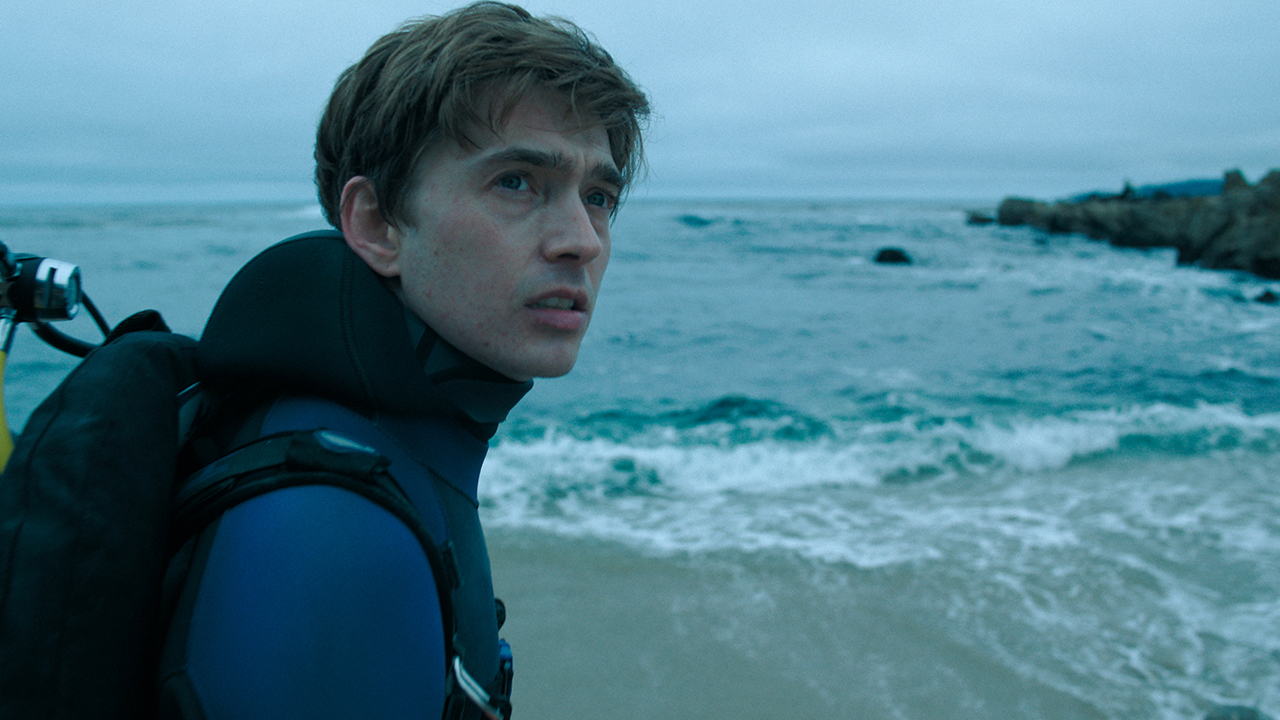
Jay, unfortunately, has other things on his mind. His decision to dive alone is frustrating to watch, particularly when you can see how much trouble his stubbornness is going to cause him.
There were moments when I wanted to reach through the screen and confiscate his diving equipment. I wanted to tell him that grief is not an excuse to abandon every survival instinct he has ever learned.
Then again, grief has a rather unpleasant way of making sensible people do questionable things. Jay is still carrying the weight of his father’s death, compounded by the memory of their last fight.

Diving was something they shared, and returning to the water becomes his way of reconnecting with a man he can no longer speak to.
His search for his father’s remains is also a search for something less tangible: closure, forgiveness, and perhaps, a chance to make peace with the things left unsaid.
That part hit a little too close to home. My own attempt to reconnect with my father involved tennis. Apparently, when daddy issues meet a sports hobby, the brain starts entertaining the idea that a shared activity might somehow repair years of complicated feelings.
Baggage you can’t breathe away
I haven’t read the original novel, so I can’t speak to how closely the film follows the book. What I can say is that Whalefall uses its survival premise to explore the kind of emotional baggage that no amount of deep breathing can magically dissolve.
Jay is fighting to stay alive, but he is also confronting the guilt that has kept him emotionally tethered to his father’s death. The whale becomes a fascinating extension of that struggle.
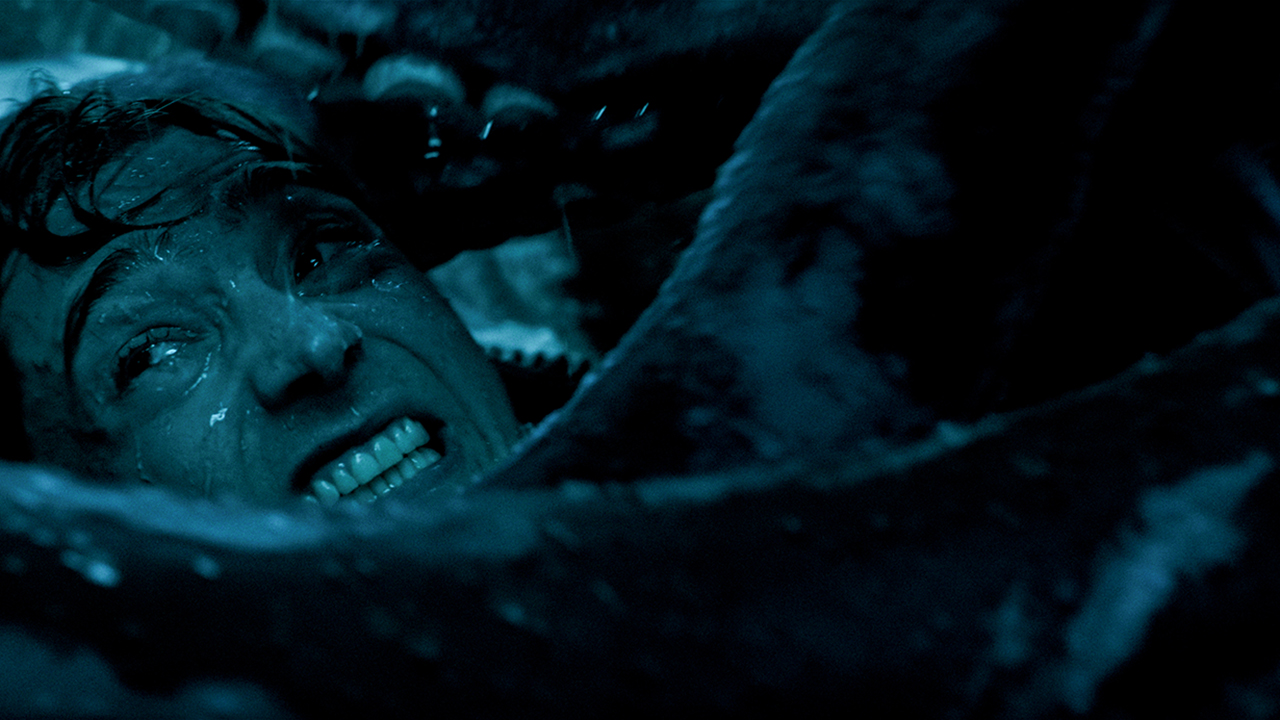
As Jay fights his way through its body, the physical obstacles begin to mirror the emotional ones he has spent so long avoiding.
The creature sometimes feels more like a manifestation of his father. It forced him to confront memories he has buried along with his grief. Survival, in this case, means more than finding a way out. Jay must also find a way to forgive himself.
Suspense that gets under your skin
It’s so deeply unsettling watching a person trapped inside a living creature. I can handle the occasional horror movie, but the human imagination has its limits. Mine would very much prefer not to picture what happens when the walls around you are made of whale.
Jay’s ordeal is brutal. He suffers serious injuries, struggles with dwindling oxygen, and has to work through one terrifying obstacle after another with very little room for error.
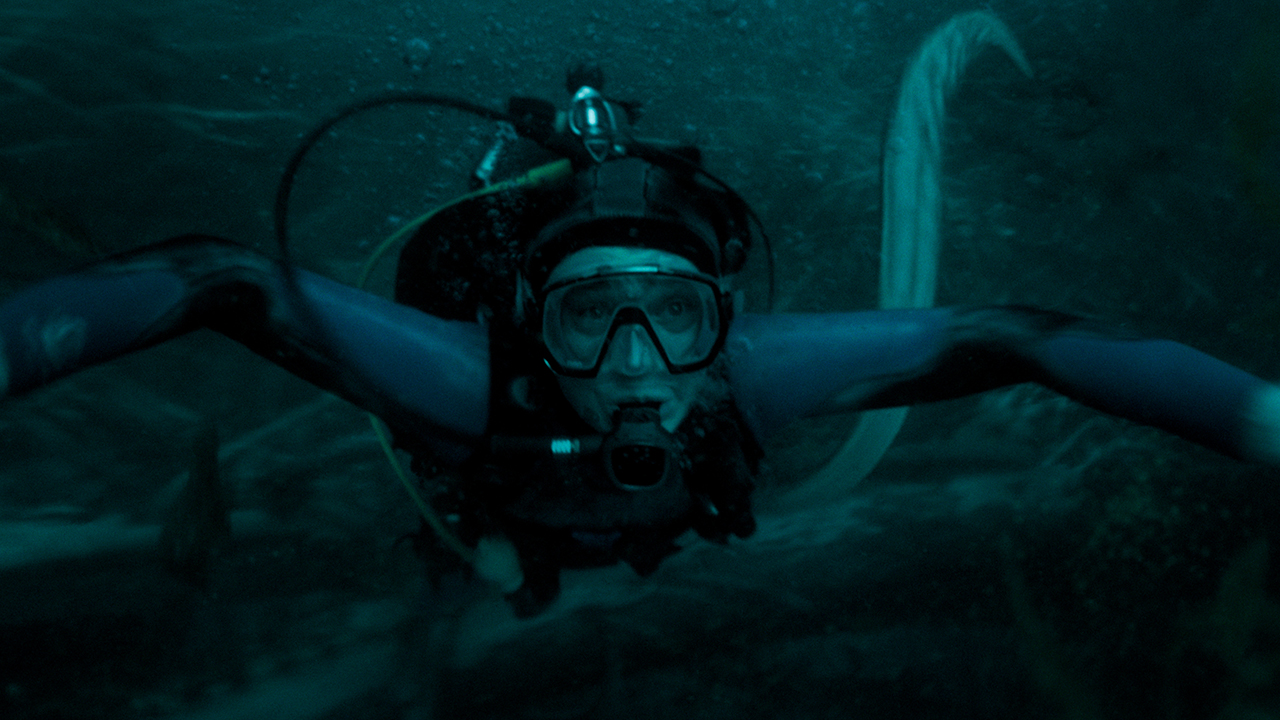
The film makes the environment feel claustrophobic and unpredictable, keeping you painfully aware that his body is running out of time.
The 4DX presentation makes all of this considerably harder to watch. Every jolt and movement pulled me further into Jay’s predicament. The physical effects heightened the sense that something could go wrong at any moment.
I was no longer comfortably observing a survival thriller from my cinema seat. Apparently, I was a passenger on the world’s worst underwater excursion.
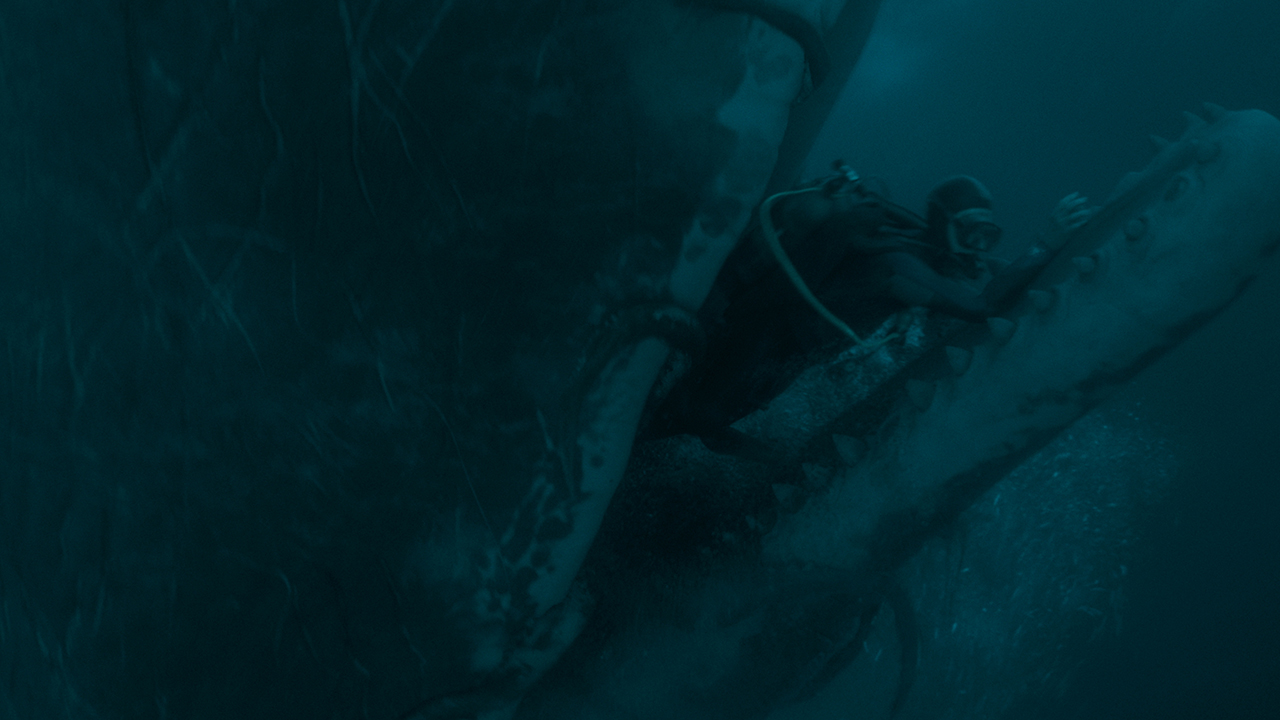
There were moments when I genuinely wanted to look away and ask someone to tell me when it was safe to look again. I knew Jay was the protagonist, and a small, sensible part of my brain assumed the story would find a way to keep him alive.
The rest of me remembered that films can be cruel. That being the main character isn’t always a legally binding guarantee of survival.
Between hope and hopelessness
What kept me watching was the tension between hope and helplessness. Jay has knowledge that could save him, much of it drawn from lessons his father taught him. But remembering what to do is difficult when panic takes over.
His chances seem to improve just enough to make you hopeful before another complication threatens to undo everything.
The film doesn’t rely solely on the spectacle of a man being trapped in a whale. Its suspense comes from watching Jay piece together what he knows while confronting everything he has spent years trying not to feel.
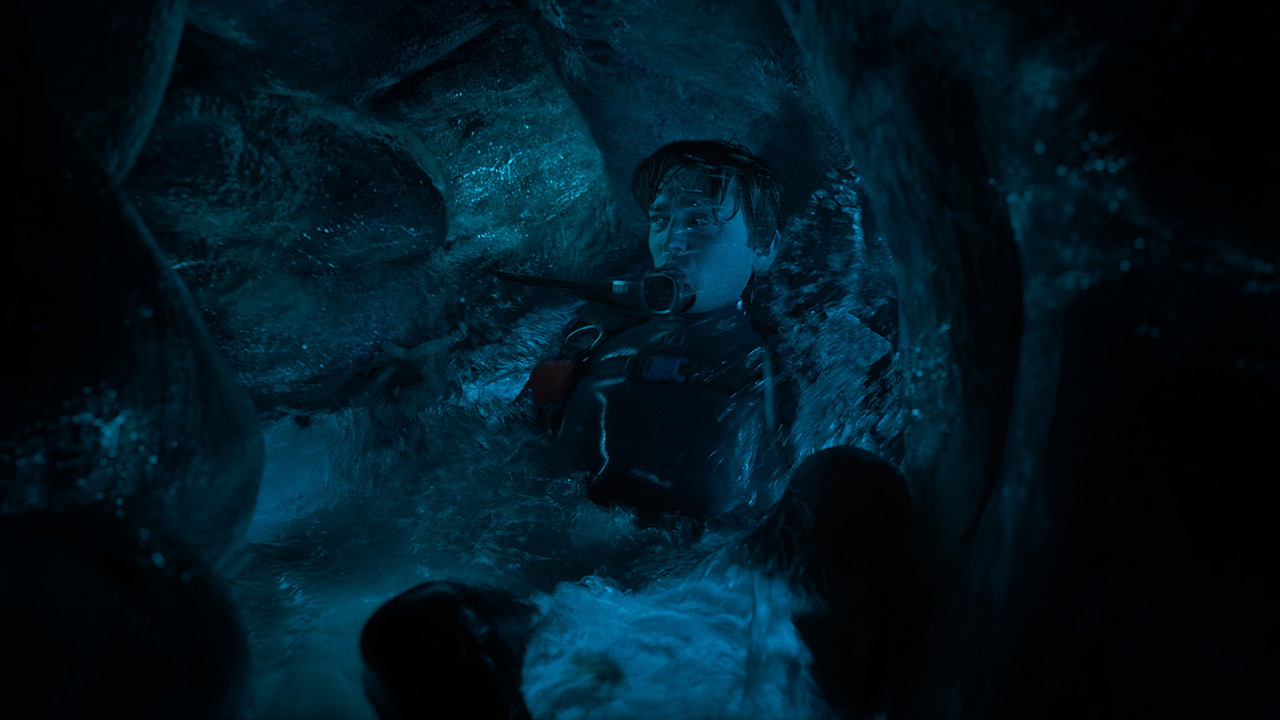
And no, this is not Moana. There is no helpful manta ray carrying the spirit of a dead grandmother to guide our hero through his darkest hour. Jay has to do the work himself, even when the memory of his father becomes the closest thing he has to a guide.
That is what makes the whale’s presence so compelling. It feels as though Jay is being forced into an encounter with his father, except the reunion comes with broken bones and a ticking oxygen supply.
A survival story with grief at its heart
I expected Whalefall to be a survival thriller about the sheer terror of being swallowed by a sperm whale. It certainly delivers on that front, particularly in 4DX, where every movement makes the experience feel uncomfortably immediate.
What I didn’t expect was to leave the cinema thinking about my own relationship with my father. The film’s most affecting moments emerge when the physical struggle and Jay’s emotional journey begin to converge.
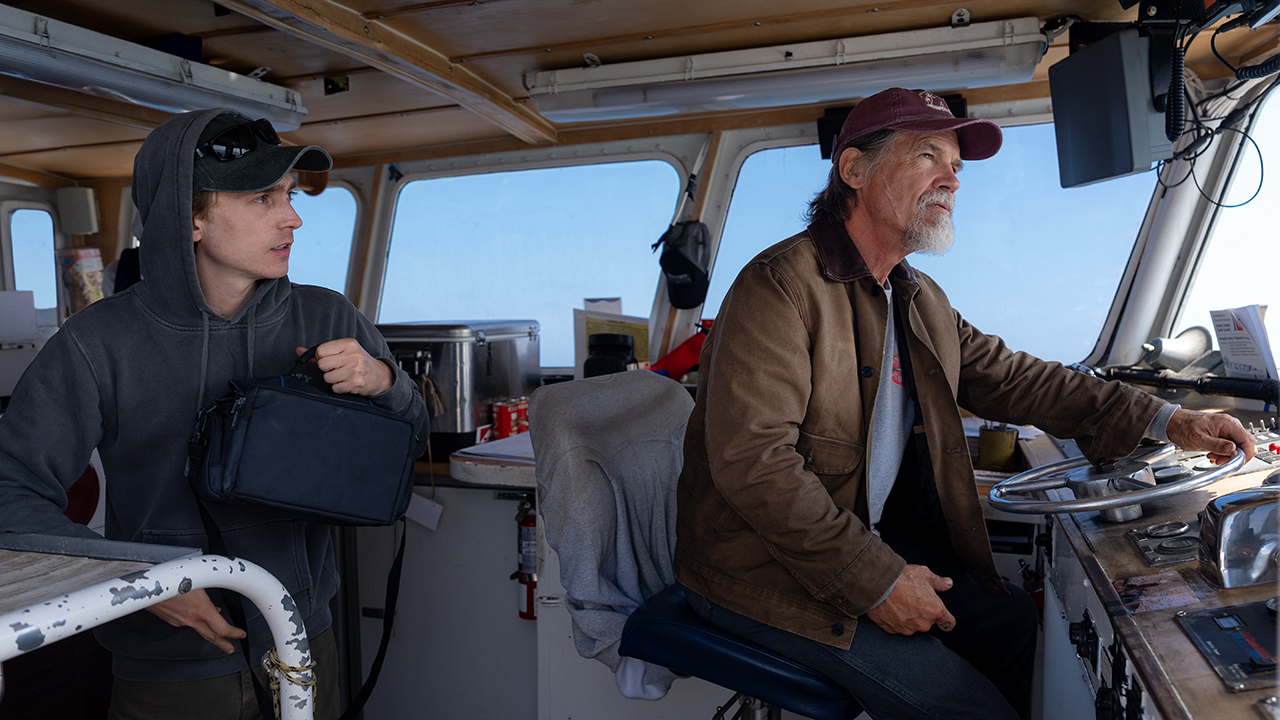
(L-R): Austin Abrams as Jay Gardiner and Josh Brolin as Mitt Gardiner in 20th Century Studios’ WHALEFALL. © 2026 20th Century Studios. All Rights Reserved.
The whale and the memories of his father all become part of a story about learning to live with loss. Its imagery gives the audience room to consider how grief can trap us in the past, even when we desperately want to move forward.
It’s painfully familiar to hold on to the last argument, the final conversation, or the version of a relationship we wish we could have changed.
We replay those memories as though enough mental editing might eventually produce a different ending. Sometimes, we even try to revisit the things we once shared with someone, hoping the familiarity will bring us closer to them again.
Making peace with who we were
Jay’s journey suggests that making peace with a person who is gone also requires making peace with the person we were when they were still here.
That’s a difficult thing to accept, especially when the relationship itself was complicated. Forgiveness doesn’t necessarily mean every wound disappears or every unanswered question finds a neat resolution.
Sometimes, it means acknowledging what happened and allowing yourself to keep living. Whalefall surprised me with how much emotional weight it carried beneath its survival-thriller premise.
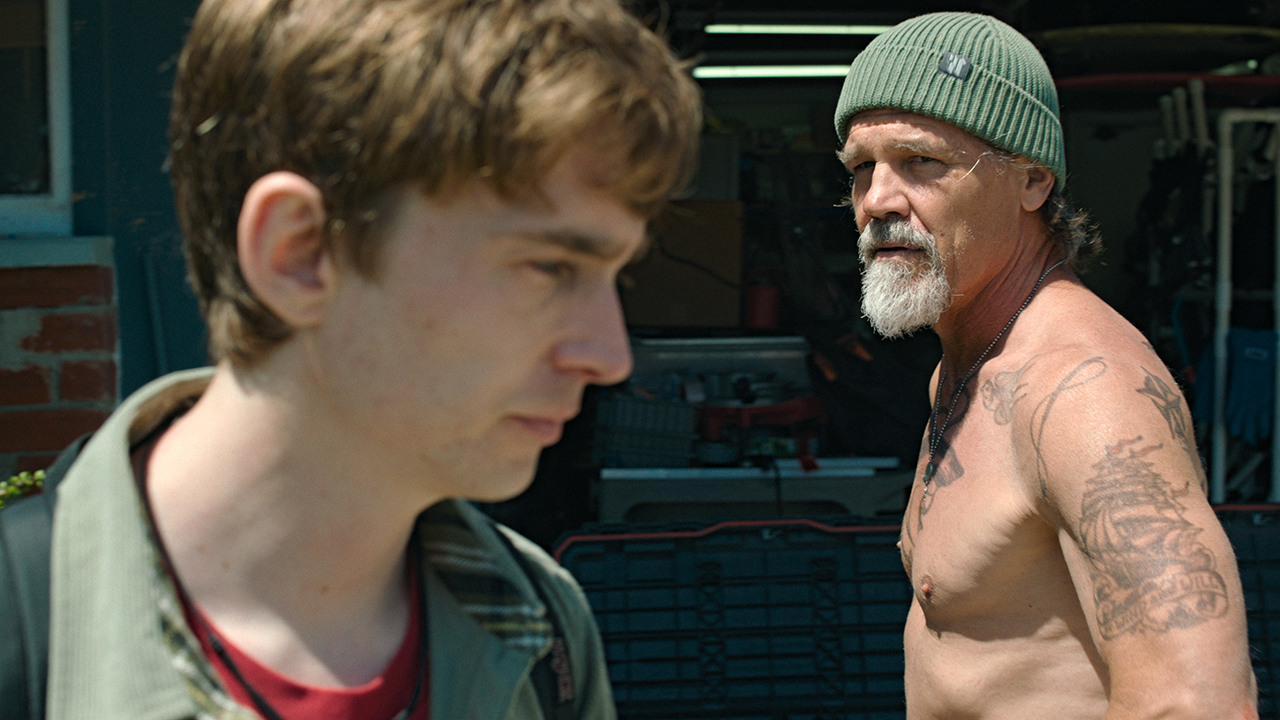
(L-R): Austin Abrams as Jay Gardiner and Josh Brolin as Mitt Gardiner in 20th Century Studios’ WHALEFALL. © 2026 20th Century Studios. All Rights Reserved.
The cinematography and storytelling give its more introspective moments room to settle, making the experience linger long after the credits roll.
If you’re looking for a survival thriller that will leave you gripping your cinema seat, Whalefall is worth the trip. The 4DX experience makes its claustrophobic ordeal all the more visceral. Consider this your reminder to bring your strongest stomach.
If you have a complicated relationship with your father, the film might leave you with something heavier to carry home.
I arrived expecting to watch a man fight his way out of a whale. I left thinking about the things we carry long after the people we love are gone, and the difficult business of learning to let them go.


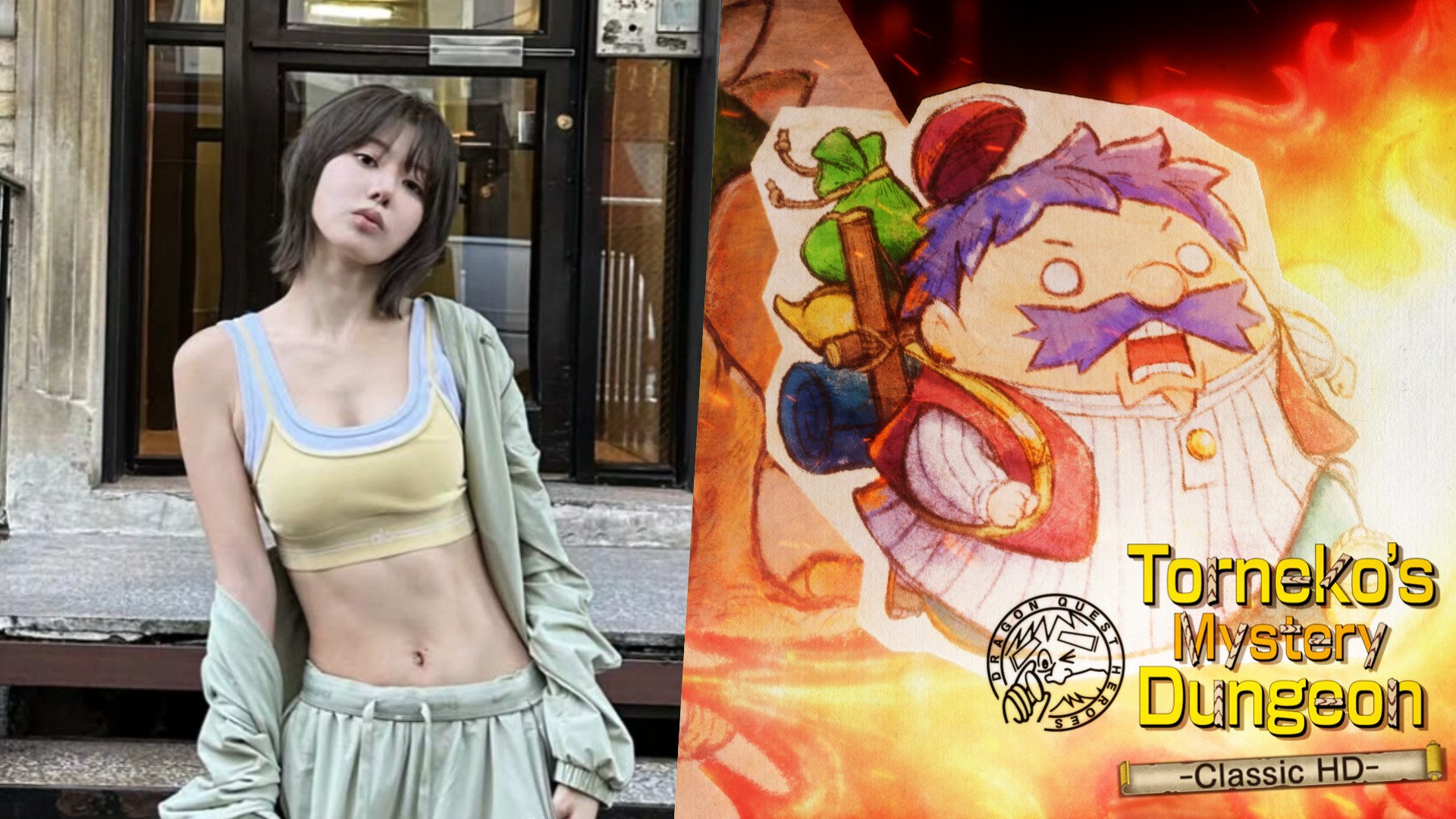
LE SSERAFIM member Sakura has a game recommendation for Nintendo Switch 2 owners, and it is an unexpected pick for fans looking for something to play.
During a fan send-off at the group’s PUREFLOW tour stop in Newark, New Jersey, a FEARNOT reportedly asked Sakura which Switch 2 game she would recommend. She pointed the fan toward Torneko’s Mystery Dungeon, a classic RPG from Square Enix.
The Newark concert took place at the Prudential Center on October 8, 2026. The game Sakura mentioned is now available internationally as Dragon Quest Heroes: Torneko’s Mystery Dungeon -Classic HD-.
What is Torneko’s Mystery Dungeon about?
The game follows Torneko Taloon, a merchant from Dragon Quest IV who dreams of becoming the world’s greatest weapons dealer.
Torneko hears rumors of a mysterious dungeon filled with incredible treasures. He ventures inside to collect valuable items, bring them home, and expand his shop.
The premise is straightforward, but surviving the dungeon is another story. Each expedition brings a new layout, different items, and new monsters. Torneko must make it out alive if he wants to keep the treasures he finds.
Source: Official Dragon Quest website
What kind of game is it?
Torneko’s Mystery Dungeon is a turn-based roguelike dungeon crawler with RPG and resource-management elements.
Every step counts as a turn. When Torneko moves, enemies move too. Players must decide when to fight, when to use items, and when to retreat. Poor decisions can quickly turn a promising run into a disaster.
Death also carries a hefty penalty. Torneko loses the items collected during a failed expedition and returns to the first floor at Level 1. However, successfully bringing items home helps expand his shop and provides a sense of long-term progression.
The game originally debuted in Japan in 1993. Its Classic HD release brings the pioneering dungeon crawler to international audiences with updated visuals, an official English localization, and adjustable difficulty options.
The game is available on Nintendo Switch 2, Nintendo Switch, PlayStation 5, Xbox Series X|S, and PC.
How long does it take to beat?
According to HowLongToBeat estimates reported by M4 Games, the main story takes around 7.5 hours to complete. A playthrough that includes additional content takes approximately 16 hours.
Those estimates offer a useful starting point, but the game’s procedural dungeons and punishing mechanics can affect how long individual players need to finish it.
What do critics and players think?
Torneko’s Mystery Dungeon -Classic HD- has received a mixed-to-positive response from critics.
Review aggregator listings put its critical reception around the high 60s to low 70s out of 100, depending on the platform and the aggregator. RPGFan awarded it an 80/100, praising its strategic dungeon runs, charming Dragon Quest monsters, and satisfying progression.
However, the game also shows its age. Critics have pointed to dated presentation, limited quality-of-life improvements, and pacing issues. Its demanding mechanics may also frustrate players who prefer more modern, forgiving roguelikes.
The general sentiment is that the core gameplay remains engaging, particularly for fans of classic RPGs and dungeon crawlers. However, this is a 1993 game at heart, and its remaster does not completely modernize the experience.
Sources: RPGFan, CriticDB, Steam player reviews
Would you play it because of the game or because of Sakura?
Let’s be honest. A recommendation from Sakura might be enough to make some FEARNOTs curious about a game they would otherwise overlook.
From a gameplay perspective, Torneko’s Mystery Dungeon -Classic HD- offers a glimpse into the roots of a genre that continues to thrive today. Its turn-based combat, randomly generated dungeons, and risk-reward loop could appeal to players who enjoy methodical RPGs.
Still, the game isn’t necessarily for everyone. Its old-school design and punishing mechanics may require some patience, especially for players accustomed to more modern dungeon crawlers.
Personally, I’d be tempted to give it a shot because of Sakura. 👀
Whether the game itself can keep me playing is another question. But if a FEARNOT is looking for a new Switch 2 game and Sakura recommends this one, that might be reason enough to take a closer look.
Would you play Torneko’s Mystery Dungeon because of the gameplay, or because Sakura recommended it?

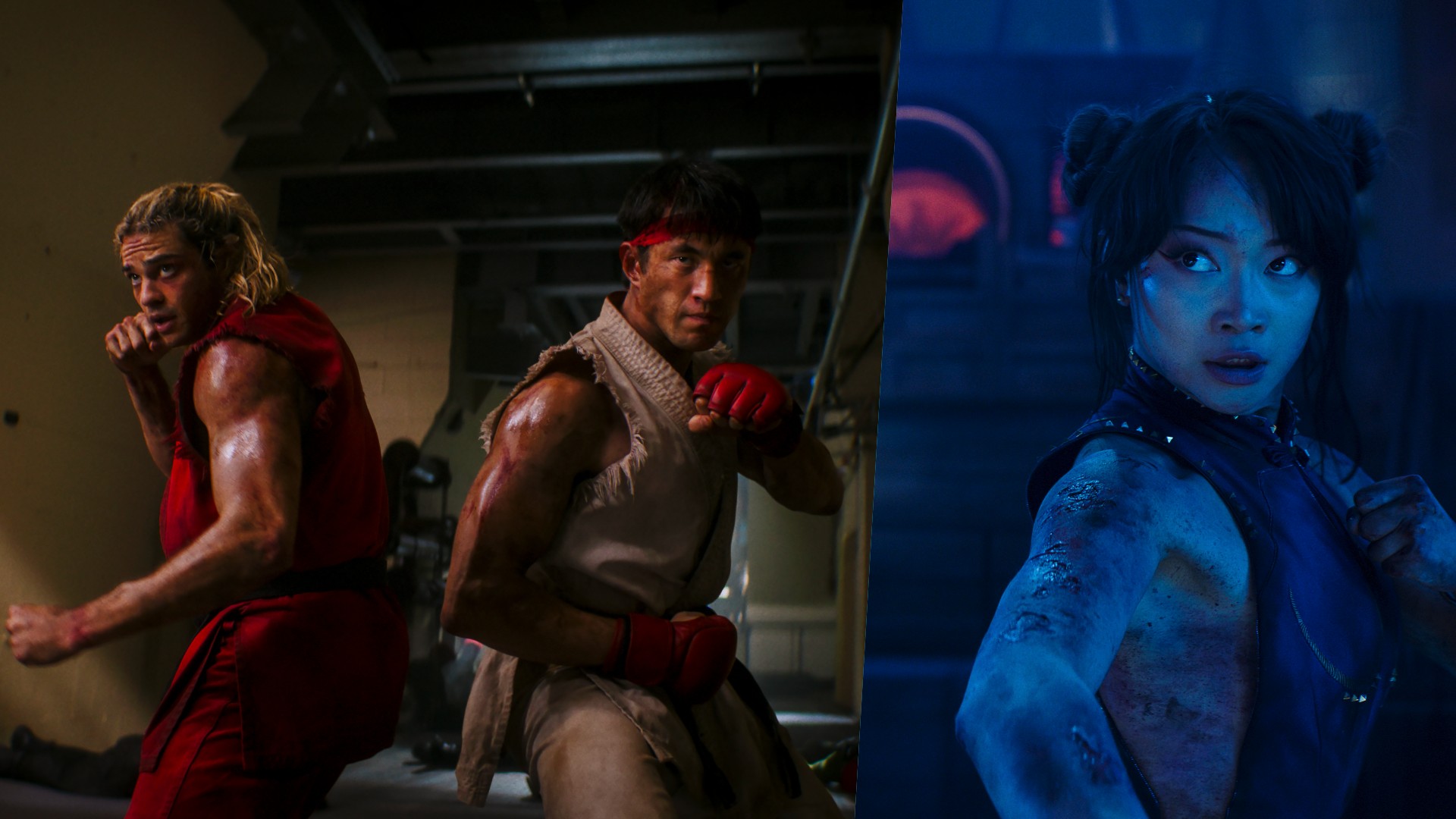
Grab your fight sticks, charge your Super Meters, and warm up those quarter-circle inputs! The long-awaited live-action Street Fighter movie, starring Callina Liang (Chun-Li), Andrew Koji (Ryu), and Noah Centineo (Ken Masters), has officially arrived in theaters. This cinematic brawl is built from the ground up for fans who grew up spending their spare change at arcades packed with explosive martial arts, hyper-stylized action, and a deep reverence for Capcom’s golden legacy.
The film makes its intentions crystal clear right from the opening sequence: This is an undeniable love letter to the legendary 1994 Street Fighter II: The Animated Movie. The transition between fluid, high-octane anime inserts and live-action choreography proves just how deeply Kitao Sakurai understood what made the original anime a holy grail for the fandom.
That homage reaches peak hype in the opening montage, which masterfully recreates the iconic clash between Ryu and Sagat—including the chest-scarring Shoryuken—before dramatically teasing Akuma’s ominous, dark energy. It’s an opening sequence guaranteed to give longtime fans immediate goosebumps.
Arcade nostalgia brought to life
Andrew Koji, left, and Noah Centineo star in PARAMOUNT PICTURES AND LEGENDARY PICTURES In Association with CAPCOM.
A LEGENDARY PICTURES Production “STREET FIGHTER”
As a viewer, you’re here for one primary reason: pure, unadulterated nostalgia, maximum nerdgasms, and that jaw-dropping wow factor every time a classic special move lights up the screen. The sheer satisfaction of watching these legendary techniques translated into visceral, surprisingly realistic combat choreography is the film’s absolute highlight.
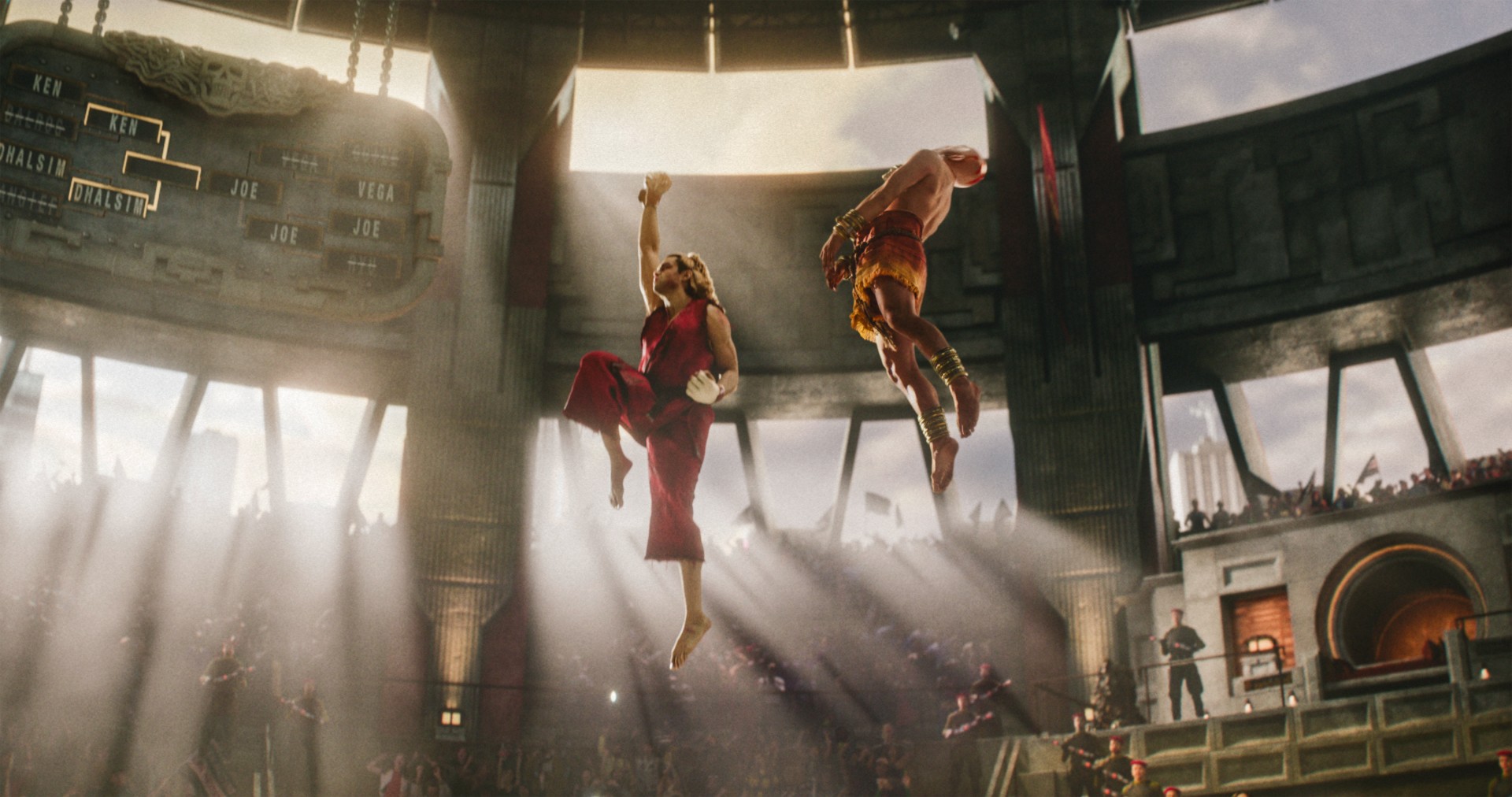
Watching Andrew Koji step into his stance to throw a devastating Shinku Hadoken or Noah Centineo leap into a fiery, rising Shoryuken feels like watching an arcade cabinet come to life.

Callina Liang stars in PARAMOUNT PICTURES AND LEGENDARY PICTURES In Association with CAPCOM.
A LEGENDARY PICTURES Production “STREET FIGHTER”
The rest of the iconic roster gets its moments to shine in the ring, too. Callina Liang delivers a jaw-dropping physical performance as Chun-Li, executing her signature gravity-defying Hyakuretsukyaku (Lightning Kick) and devastating Spinning Bird Kick with incredible impact and precision.
From Guile’s gravity-defying Flash Kick and Sonic Boom to Zangief’s ground-shattering Spinning Piledriver, seeing these famous moves translated into believable, physics-grounded martial arts makes every fight sequence feel like a high-stakes tournament match. However, at the end of the night, I’d still say Liang’s Chun-Li carried the entire movie.
Fan service that speaks to the FGC
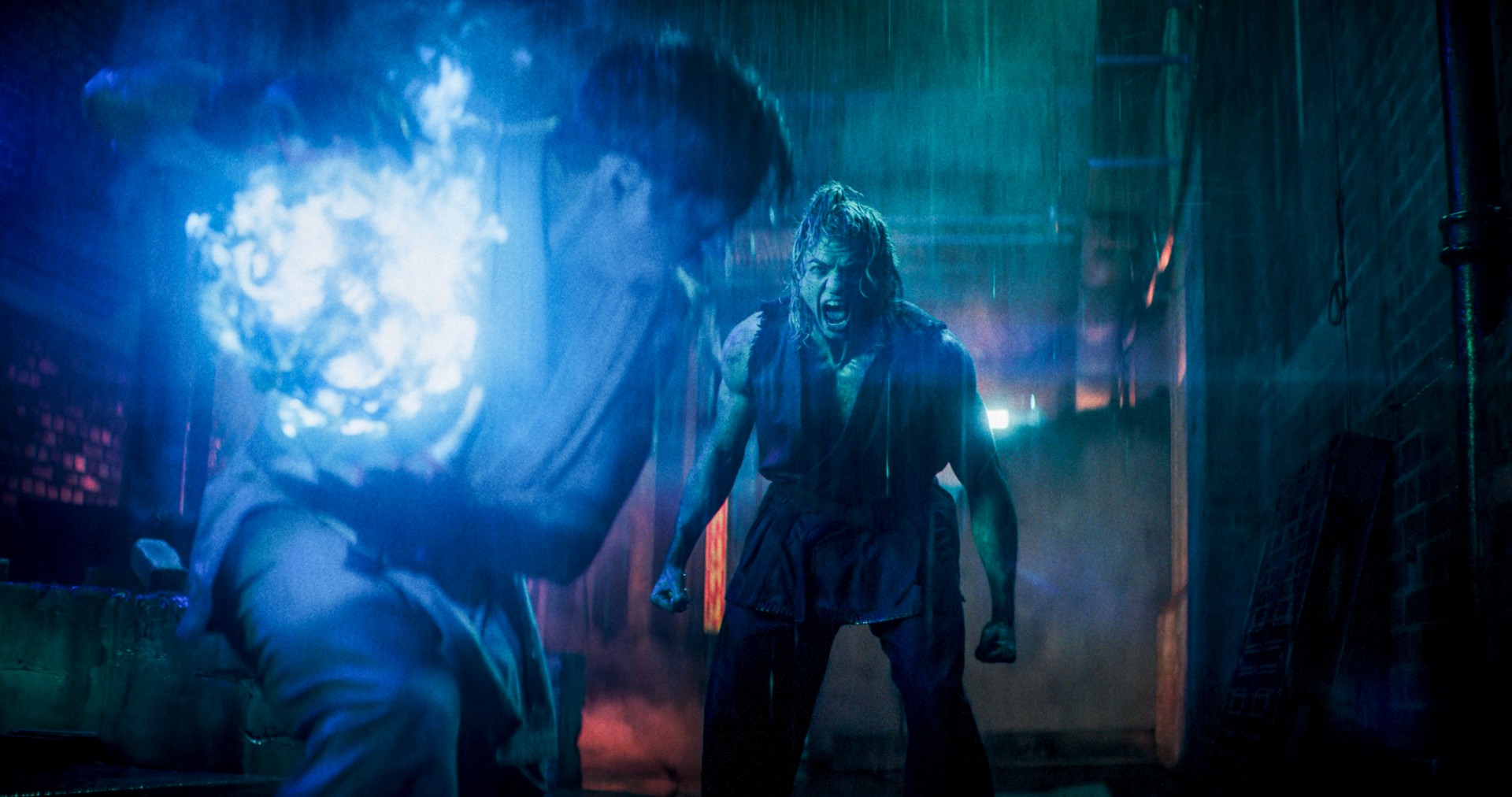
Noah Centineo stars in PARAMOUNT PICTURES AND LEGENDARY PICTURES In Association with CAPCOM.
A LEGENDARY PICTURES Production “STREET FIGHTER”
Fighting game community (FGC) veterans will also be grinning from ear to ear thanks to some incredible meta Easter eggs sprinkled throughout the film.
Keep your eyes peeled during the prison brawl in Metro City between Ryu and Blanka. Inside one of M. Bison’s prisoner cages sits none other than legendary Street Fighter pro Justin Wong! Watching Justin trapped in a cage with other inmates while a high-stakes match unfolds below them is an unforgettable tip of the hat to “Evo Moment 37.”
Sakurai even squeezes in a hilarious running joke referencing Daigo Umehara’s full-health-bar parry.
Brotherhood amid the chaos
At its core, the narrative functions primarily as an emotional test of brotherhood between Ryu and Ken. The film explores their shared training under Master Gouken, framing their dynamic not just as rivals competing for mastery but as sworn brothers forced to rely on one another as the corruption of Satsui no Hado threatens to pull them apart.
Andrew Koji and Noah Centineo share an infectious, charismatic chemistry that grounds the chaotic martial arts spectacle in a genuine sense of a fighter’s heart and honor.
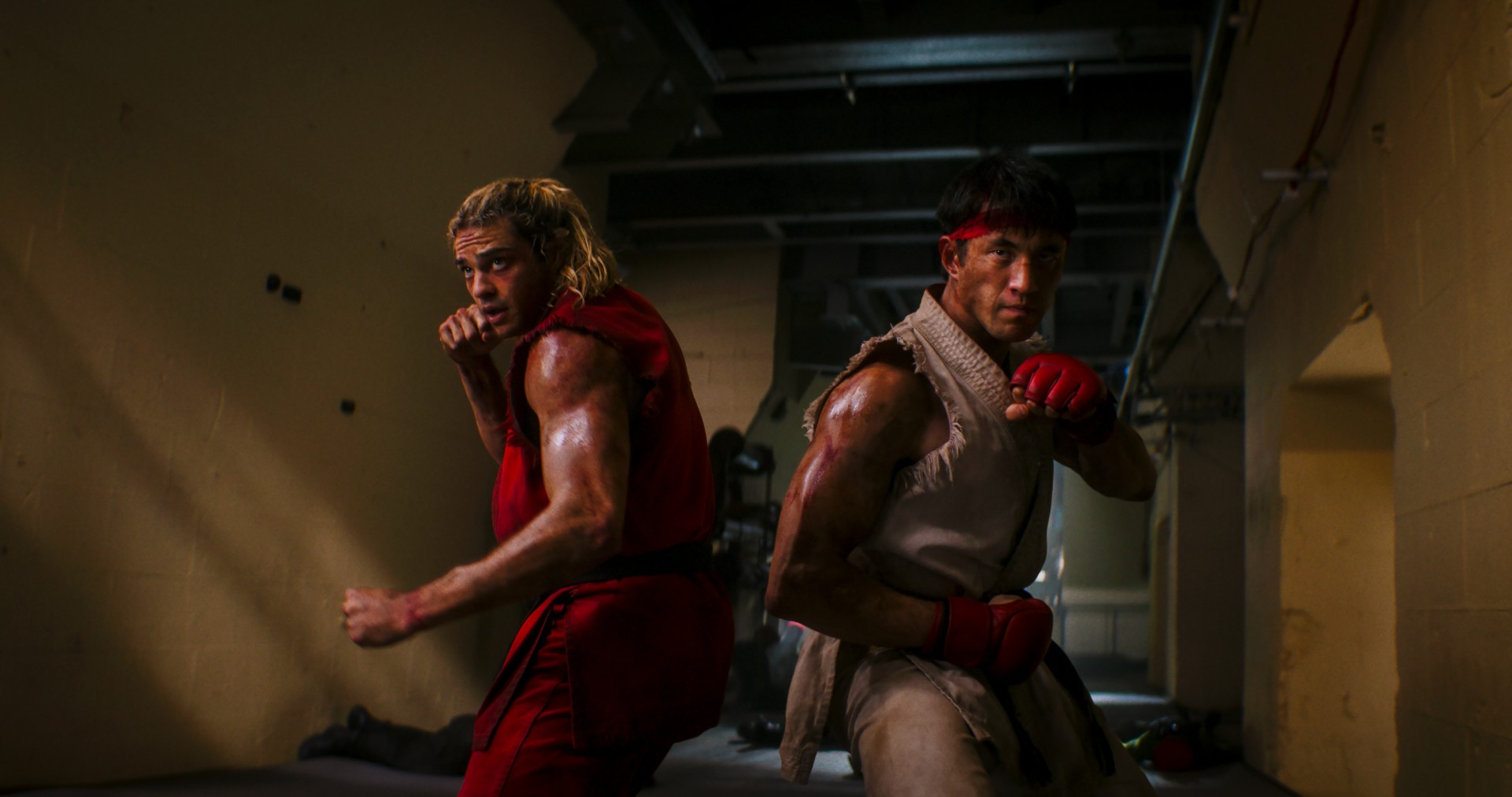
Noah Centineo, left, and Andrew Koji star in PARAMOUNT PICTURES AND LEGENDARY PICTURES In Association with CAPCOM.
A LEGENDARY PICTURES Production “STREET FIGHTER”
However, once you strip away the spectacular martial arts and glossy fan service, the actual storyline falls noticeably flat. The narrative devolves into a run-of-the-mill, shoehorned “good versus evil” plot that exists purely to shuffle fighters from one brawl to the next. Some events also unfold simultaneously, potentially leaving viewers confused about what’s happening.
The stakes feel routine, serving as a paper-thin framework for M. Bison’s global tyrannical ambitions and Akuma’s overwhelming power. Rather than forming a clichéd villainous alliance, Akuma acts as an independent wild card. He eventually faces off against Ryu, who embraces Dark Ryu to cheers from the audience during the special screening, in an all-out, earth-shattering duel.
Even after unleashing his ultimate Shun Goku Satsu (Raging Demon) technique, Akuma falls to Dark Ryu’s unbridled Hado power. M. Bison then captures Akuma after the battle, setting up a thrilling cliffhanger for a potential sequel.
M. Bison and the supporting cast
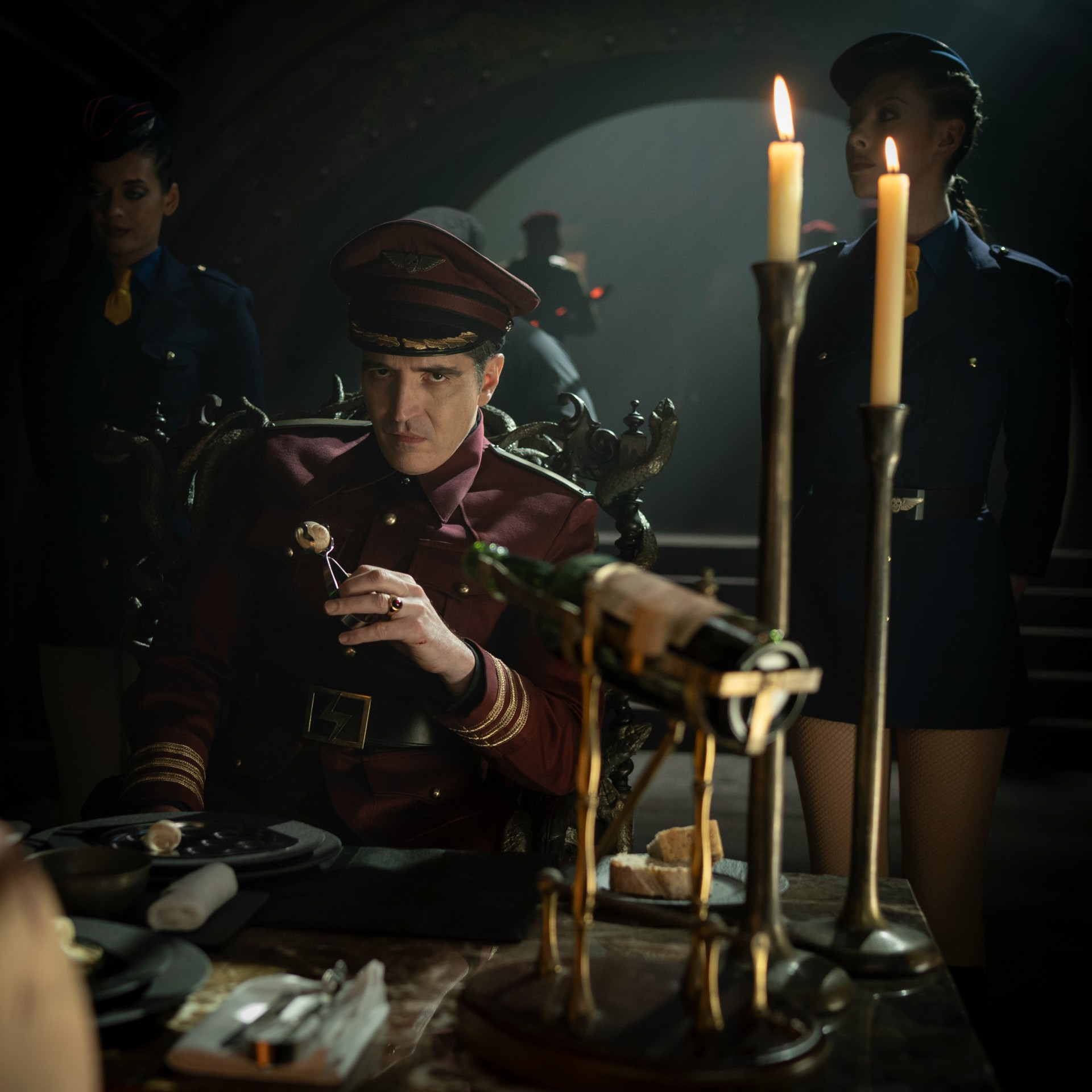
David Dastmalchian stars in PARAMOUNT PICTURES AND LEGENDARY PICTURES In Association with CAPCOM.
A LEGENDARY PICTURES Production “STREET FIGHTER”
Speaking of M. Bison, David Dastmalchian gives a delightfully theatrical performance as the dictator of Metrolao City, but his portrayal struggles under the immense shadow of the late Raul Julia’s legendary 1994 performance.
Julia’s Bison remains an untouchable benchmark for physical intimidation, commanding presence, and iconic villainy. Dastmalchian brings sinister, unhinged intellect to the role, but he lacks the physically imposing menace that made Julia’s portrayal so memorable. Julia famously delivered timeless lines like, “For you, the day Bison graced your village was the most important day of your life. But for me, it was Tuesday.”
When it comes to the supporting cast, the results are a bit of a mixed bag. Fan-favorite operative Cammy (played by Mel Jarnson) unfortunately sees little action throughout the runtime, spending most of her time on secondary security duty while the main heroes take center stage.

Orville Peck stars in PARAMOUNT PICTURES AND LEGENDARY PICTURES In Association with CAPCOM.
A LEGENDARY PICTURES Production “STREET FIGHTER”
On the flip side, the movie treats us to a stunning, beautifully choreographed showdown between Chun-Li and Vega. The fight serves as a magnificent live-action homage to their iconic clash in the 1994 anime.
Eric Andre also steals every scene he steps into as Don Sauvage, the unhinged underground fight commentator. His hilarious, high-energy ringside commentary keeps the cinematic tournament buzzing with energy.
A knockout for the fans
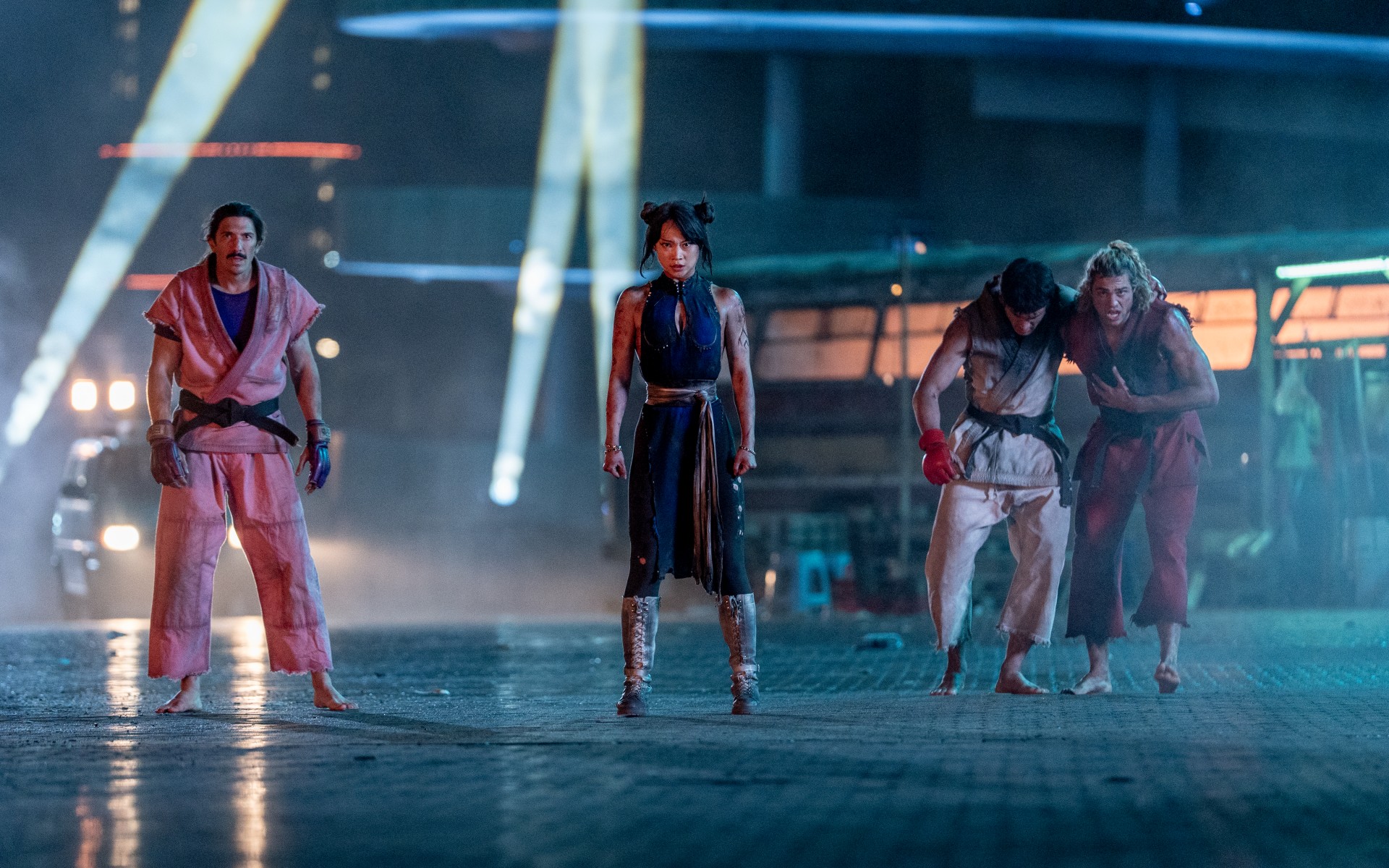
Andrew Shulz, Callina Liang, Andrew Koji and Noah Centineo star in PARAMOUNT PICTURES AND LEGENDARY PICTURES In Association with CAPCOM.
A LEGENDARY PICTURES Production “STREET FIGHTER”
Ultimately, Street Fighter knows exactly what its core audience wants and delivers it in spades. While its script won’t be picking up screenwriting awards anytime soon, the electrifying choreography, anime-inspired stylistic choices, and jaw-dropping homages to arcade lore make it a total blast to watch on the big screen with a theater full of fans.
Pick your main, get ready for a cinematic KO, and may your combos stay true!

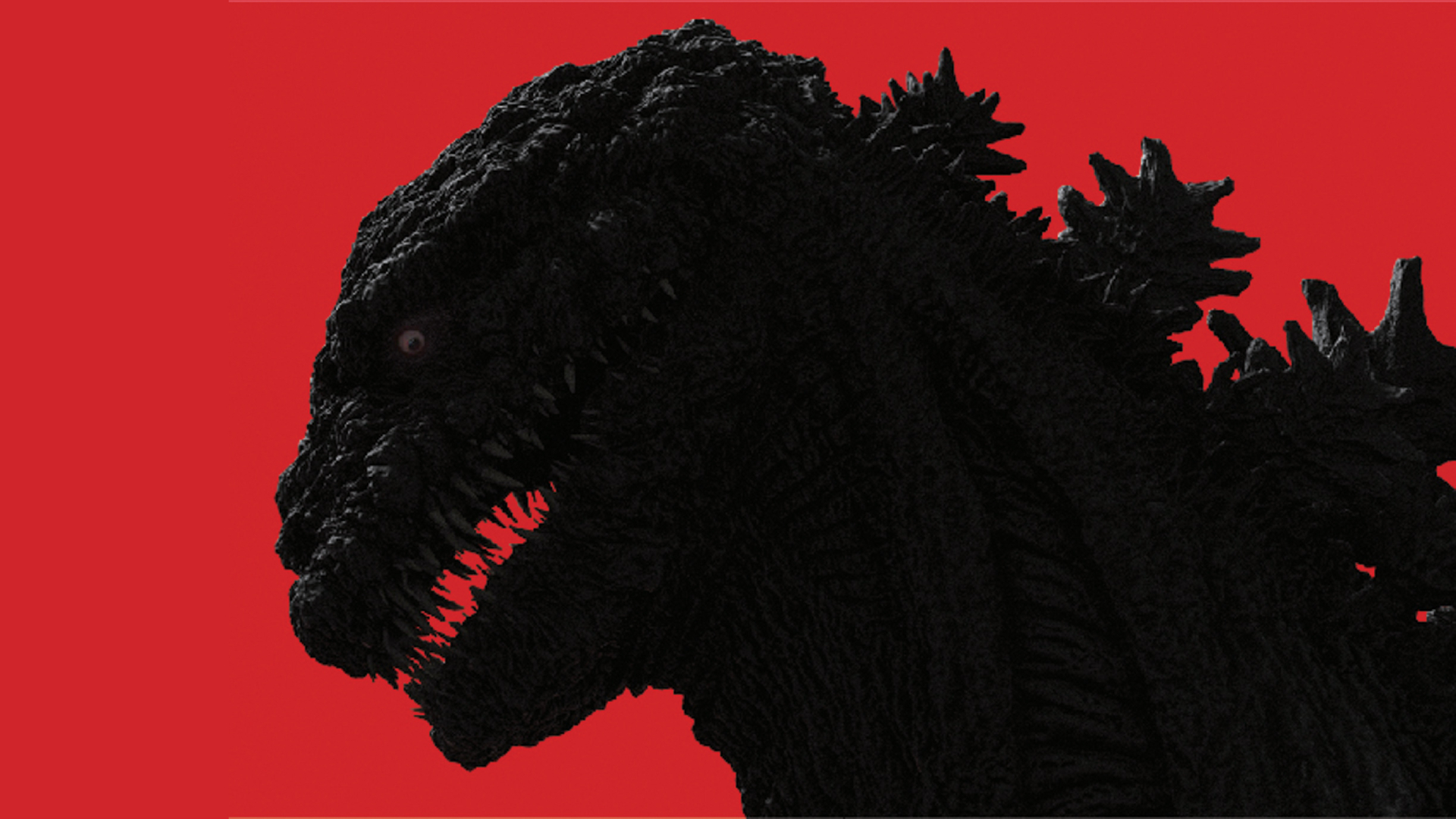
No, this isn’t a review we forgot to publish in 2016. Shin Godzilla is back in the news for a reason that will tickle every Godzilla fan in the Philippines. Starting October 14 through 20, Go Asia Entertainment is holding its inaugural Godzilla Film Festival featuring five films from all four eras of the world’s most famous kaiju.
As a taster, here’s our review of Shin Godzilla, one of the five films available for the blockbuster week.
The government versus Godzilla
Directed by Neon Genesis Evangelion‘s Hideaki Anno, Shin Godzilla is a completely different beast compared to the other movies in the kaiju’s oeuvre. Rather than building towards a titanic confrontation against Godzilla, 2016’s caper focuses on the ineptitude of the government responding to the crisis. Ultimately, it’s supposed to be a critique against Japan’s response to 3/11, a series of disasters on March 2011 that includes an earthquake, a tsunami, and a nuclear meltdown. But ten years since its premiere, Shin Godzilla remains an important film for today’s political climate.
Now, despite how critically well-received the film was, Shin Godzilla is polarizing because of how slow the plot moves. Godzilla isn’t always terrorizing Japan in this film. Instead, the beast stops, giving the government much-needed time to respond to the crisis. But, oh boy, the Japanese government keeps getting bogged down with seeking approvals from higher ups, scrambling for the proper department to solve an issue, and just general inaction.
Given how some governments today act, this tenuous back-and-forth, as slow as it is, makes for an interesting comedy for their ineptitude but also a source of hope for those who just want to get things down. Played by Hiroki Hasegawa, Rando Yaguchi is a deputy chief cabinet secretary, tasked with finding an alternative solution for the Godzilla problem outside of the government’s normal responses.
A new hope
The best character arc in Shin Godzilla is Rando’s team learning to properly address Godzilla. Instead of rushing towards military action, his team studies the beast and learns its biology, allowing for a solution that won’t involve dropping a nuclear bomb on Japan. Though it’s still wishful thinking at this point, it’s optimistic to imagine that governments can support non-traditional solutions, especially when faced with a crisis.
It feels natural to root for them. It feels natural to see them win against all odds.
A different take on the legendary beast
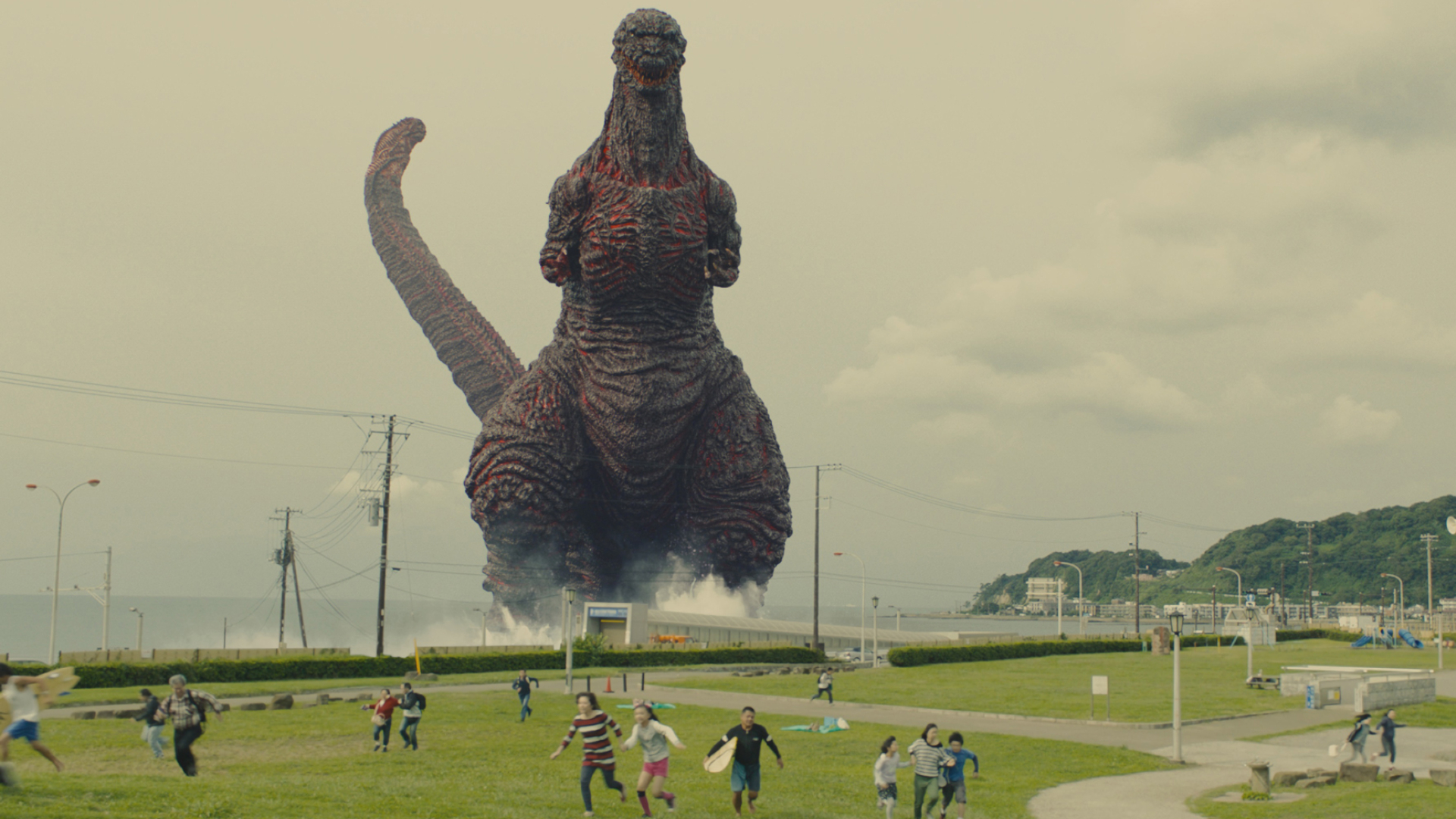
But let’s not forget about Godzilla itself. In Shin Godzilla, the titular beast feels more frightening than most iterations. And this includes Hollywood’s version, bolstered as it is with CGI.
It’s not just the advancement of technology. Godzilla here is visceral and uncanny. Though you have the traditional dorsal fins and the ginormous tail, Anno’s Godzilla is striking because of its lack of eyelids. Godzilla’s piercing stare feels like it belongs in an anime, but, when rendered in a realistic space, it’s frightening.
Additionally, Godzilla seems like it has less free will than other depictions. The kaiju’s rampage is unabated with nary a hint of its motivations, except for the few moments it defends itself. The monster is just a unstoppable force of nature. And that’s what makes Godzilla more terrifying in this depiction.

Should you catch Shin Godzilla and the other Godzilla films?
There are only a few things that hasn’t been said about 2016’s Shin Godzilla. If you’re already a fan of the kaiju, regardless of era, the film is a must-watch. It’s different but therein lies its value. It’s not just a disaster movie or a kaiju vs. kaiju adventure. It has something to say about society.
Shin Godzilla is showing now as part of the first Godzilla Film Festival in the Philippines. For as low as PhP 275, fans can catch the 2016 film, Mothra vs Godzilla (1964), Godzilla vs Biollante (1989), Godzilla 2000: Millennium (1999), and Godzilla: Final Wars (2004). The festival runs from October 14 through 20.
And if that’s not enough, Godzilla Minus Zero premieres next month as a follow-up to 2023’s award-winning Godzilla Minus One.





Now Playing: Whalefall

vivo V80 review: Good phone, tough sell

Apple reveals iPhone Duo’s 4883mAh battery

Lenovo expands Yoga lineup with new AI PCs and tablets

TNT wins gold at SMARTIES Philippines

vivo X500 Series launches with major imaging upgrades

OPPO Find X10 Pro Max is the first phone with a triple 200MP camera system

TECNO CAMON Slim 5G: Price, availability in the Philippines

TECNO CAMON Slim 5G review: Slim on size, big on surprise

HONOR Magic9 Pro Max launches in China with ARRI-powered imaging


-

 News2 weeks ago
OPPO Find X10 Series launches globally October 21
-

 News2 weeks ago
Sony teams up with Hello Kitty for exclusive limited-edition collection
-

 Wearables1 week ago
Garmin Enduro 4 promises up to 320 hours of battery life
-
 Gaming1 week ago
Dragon’s Dogma 2: Dark Arisen launches with new Official Pawns
-

 Deals1 week ago
Score PhP 22,000 in guaranteed freebies when you pre-order the iPhone 18 Pro at Beyond the Box
-

 News4 days ago
vivo V80 debuts with ZEISS cameras
-
 Wearables1 week ago
Garmin Approach S72 brings swing metrics, green reading to your wrist
-
 Gaming2 weeks ago
FFVII Revelation: 11 things you missed