
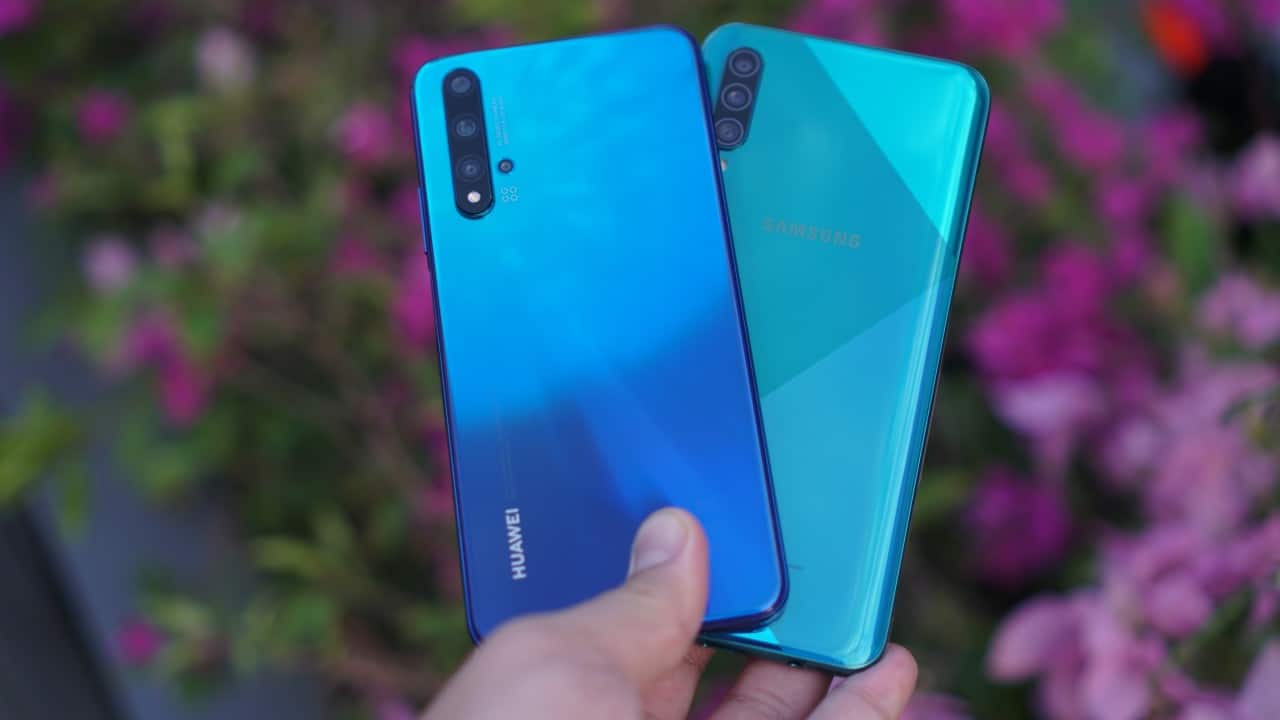

We’re entering the fourth quarter of the year and that means there’s a second wave of smartphones that are ready for your purchase just ahead of the holiday rush. Two of those are these heavy-hitting midrangers: the Huawei Nova 5T and the Samsung Galaxy A50s.
Before we go on any further, take a look at how the two stack up on paper.
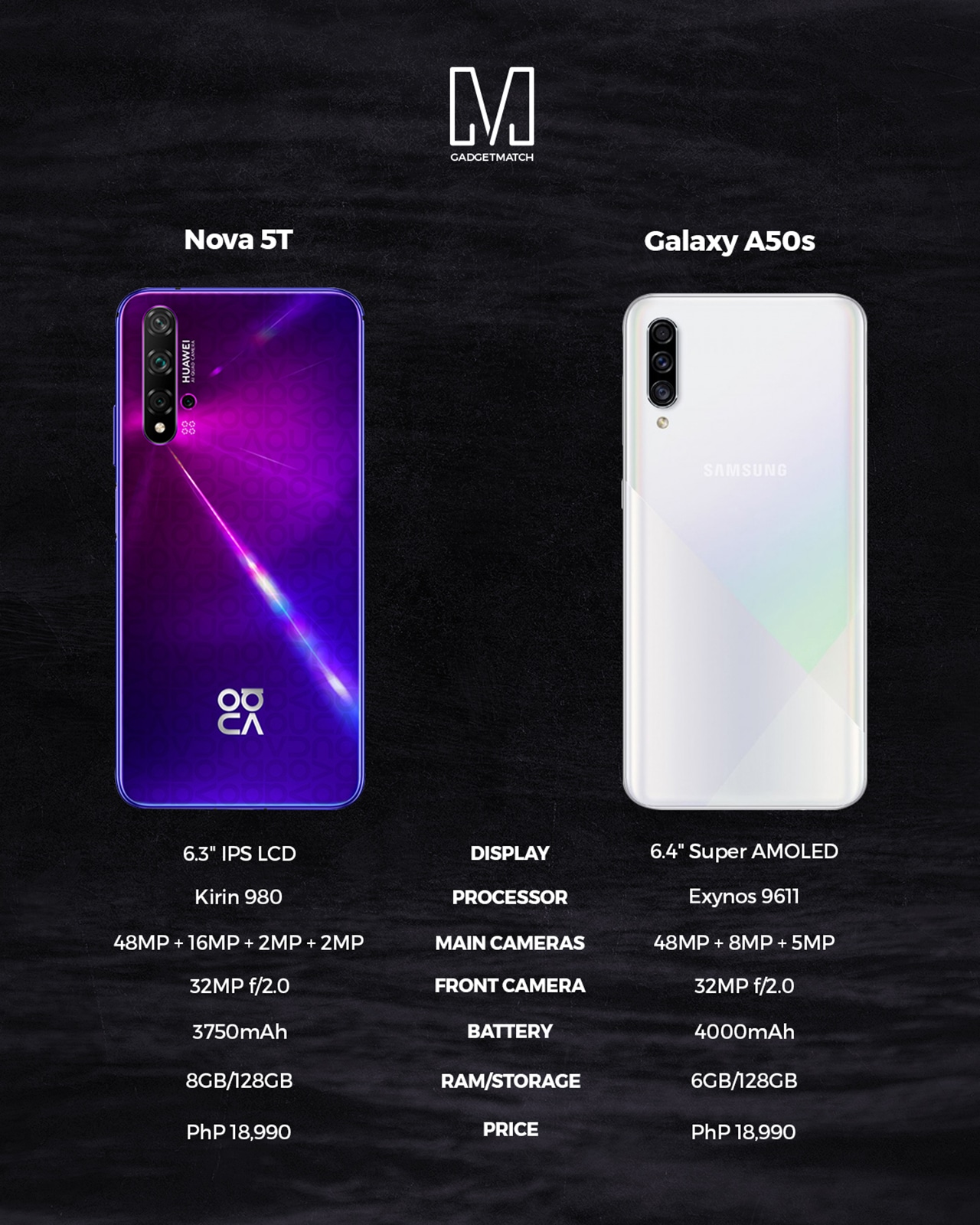
There’s a fair number of similarities and differences and we’ll try to break them down for you one by one.
Display and UI
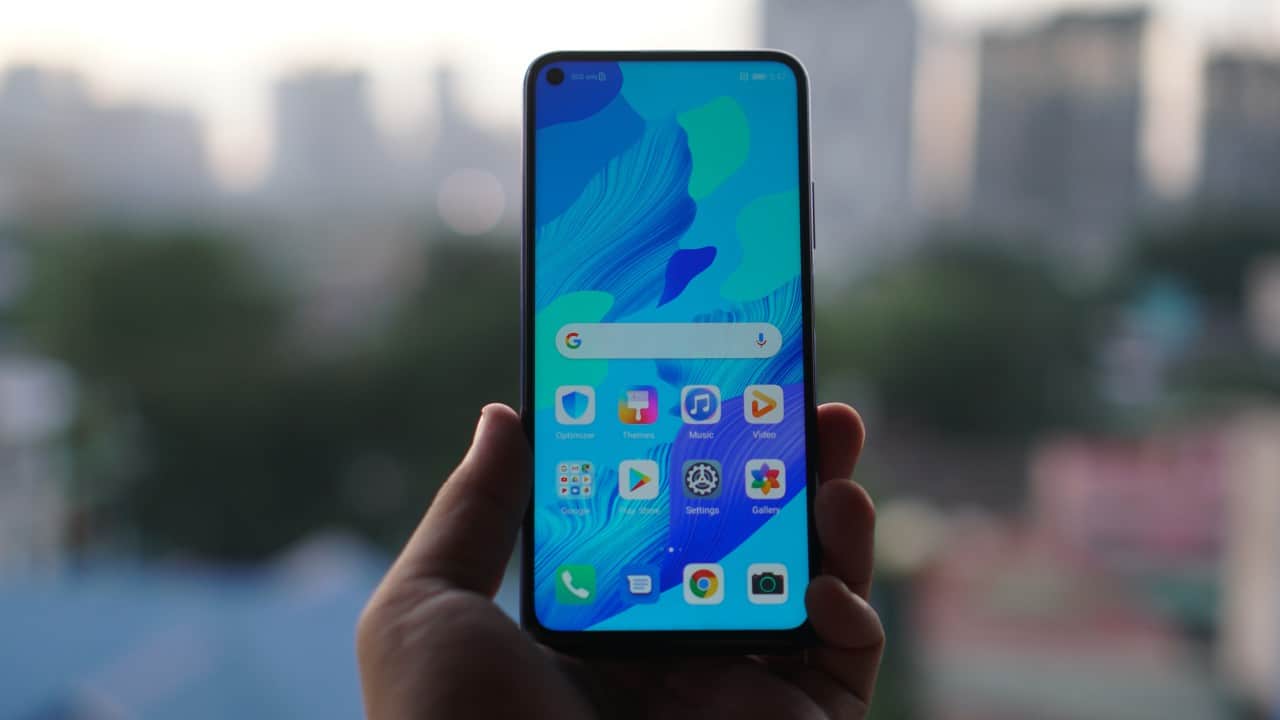
The differences in the display are almost negligible. Whether you’re indoors or underneath bright sunlight, the displays of both the Nova 5T and the Galaxy A50s are more than adequate.
As it is right now, the EMUI version on the Nova 5T currently doesn’t have a night mode even if you enable developer options. Which is why we can’t wait for EMUI 10 to arrive on this phone as an update. The new and improved UI should take the Nova 5T to another level.
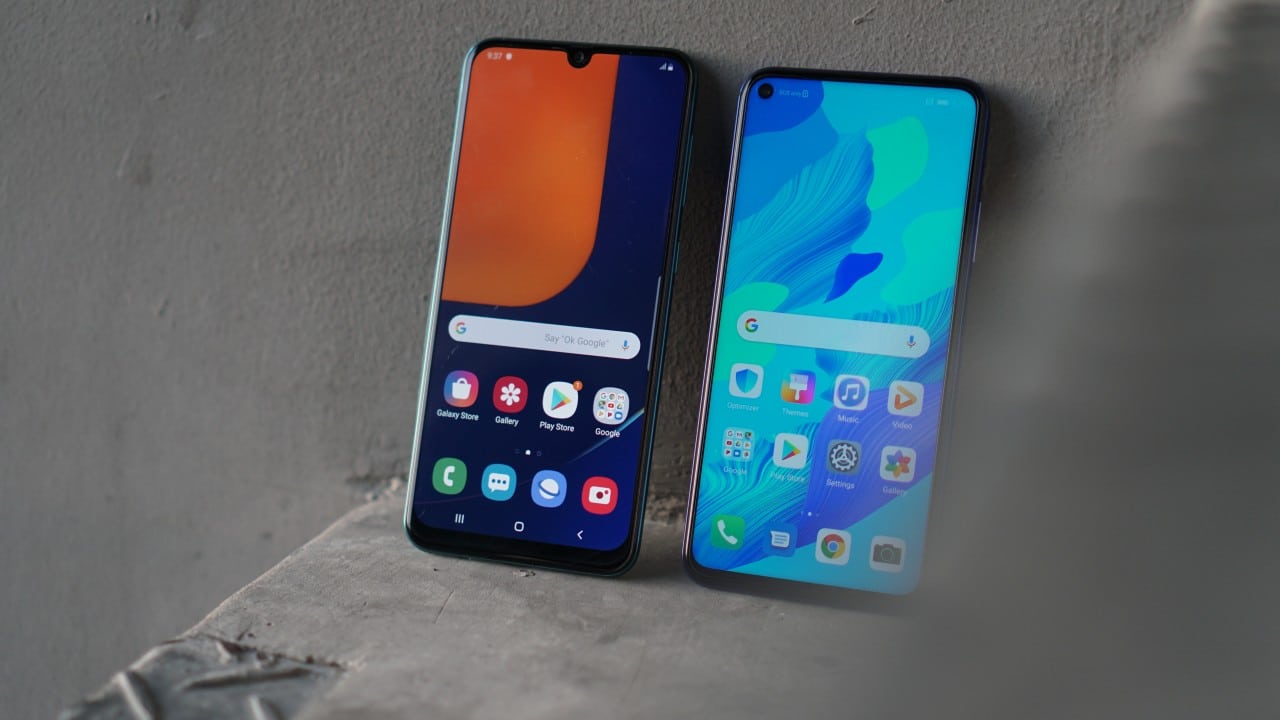
In terms of bells and whistles on EMUI and ONE UI, this one ultimately comes down to preference. We have a whole other output in mind for different Android UIs but that’s a topic for another day.
We’ve transitioned to using full screen gestures and really like EMUI’s implementation better. It’s a lot closer to Android 10. You can swipe from either side to go back, swipe up one to go to the home screen, and hold and swipe up for recent apps. The one on the ONE UI is closer to Android 9 in that it just essentially hides the navigation bar and asks you to swipe up from where the recent apps, home, and back buttons used to be.
Processor and performance
This where the Nova 5T looks so much better at first glance. It’s literally carrying the internals of the P30 Pro — that’s Huawei’s flagship for the first half of the year. And that chip is no joke. It literally can handle anything you throw at it.
However, the Exynos 9611on the Galaxy A50s is no slouch either. We noticed some slow down — which has addressed via a software update — of the Exynos 9610 on the Galaxy A50. But we’re inclined to believe the same thing won’t happen to the Galaxy A50s. This chip is flagship grade and can more than hold its own.
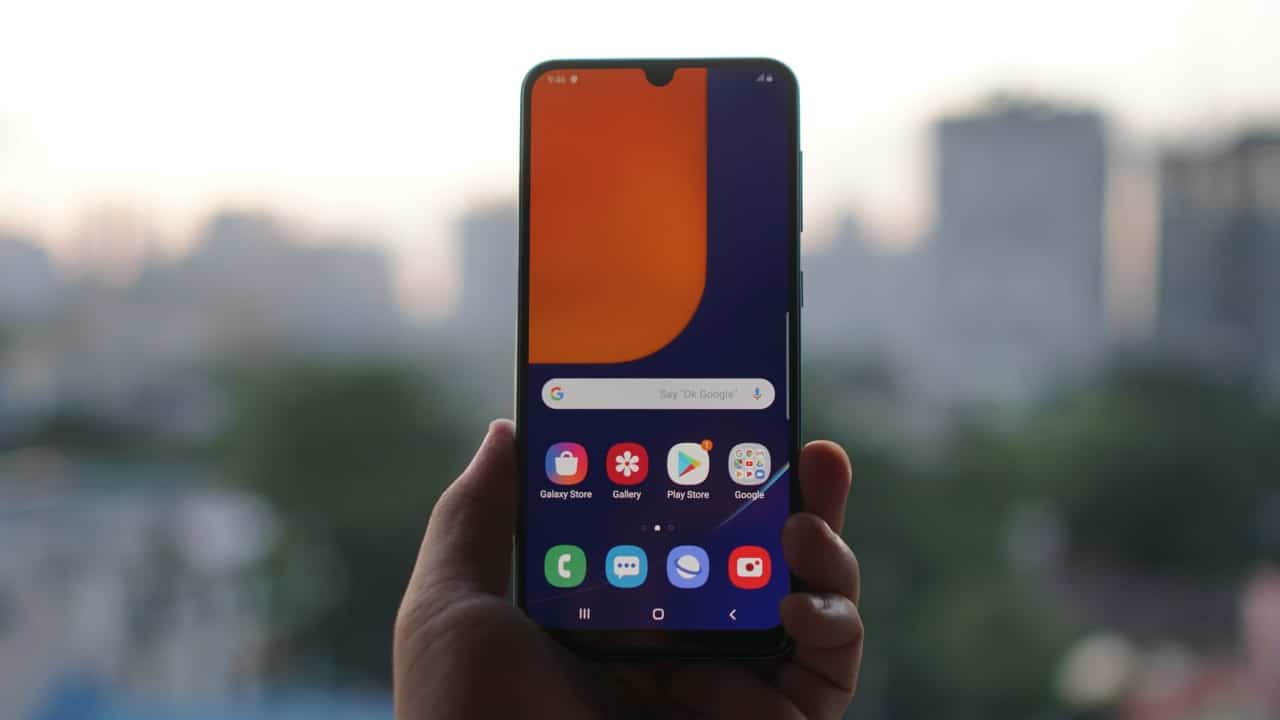
We tried a few games on both devices and the Nova 5T was ahead by a hair. The Nova 5T seemed to launch some games a few milliseconds faster. Titles like Honkai Impact 3 and Asphalt 9 ran smoothly. Curiously, the Galaxy A50s edged the Nova 5T in launching PUBG mobile. But again, only by a few milliseconds. Mobile Legends isn’t a particularly difficult game to run so both phones had no trouble running it.
For other regular tasks, these midrangers are more than capable of handling them. We even watched a VLIVE on both phones with the video player floating on top of Twitter and the apps ran flawlessly.
Multi-camera showdown
We didn’t have enough time to dig too deep into all of the cameras. We’ll reserve that for a more detailed look in a separate camera shootout.
But to give initial impressions, the few shots we’ve taken so far suggest that the Nova 5T captures more detail with its main cameras. This is especially true with the wide angle camera which we find more useful than the telephoto lens.
-

- Taken with the Nova 5T
-

- Taken with the Galaxy A50s
-
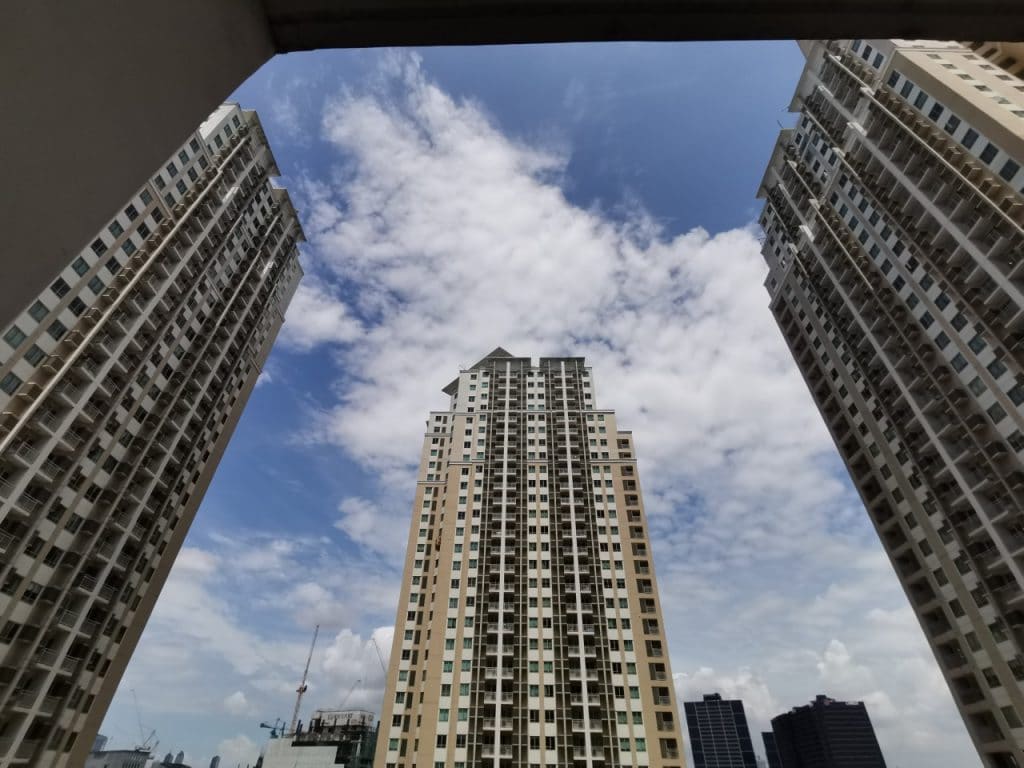
- Taken with the Nova 5T
-
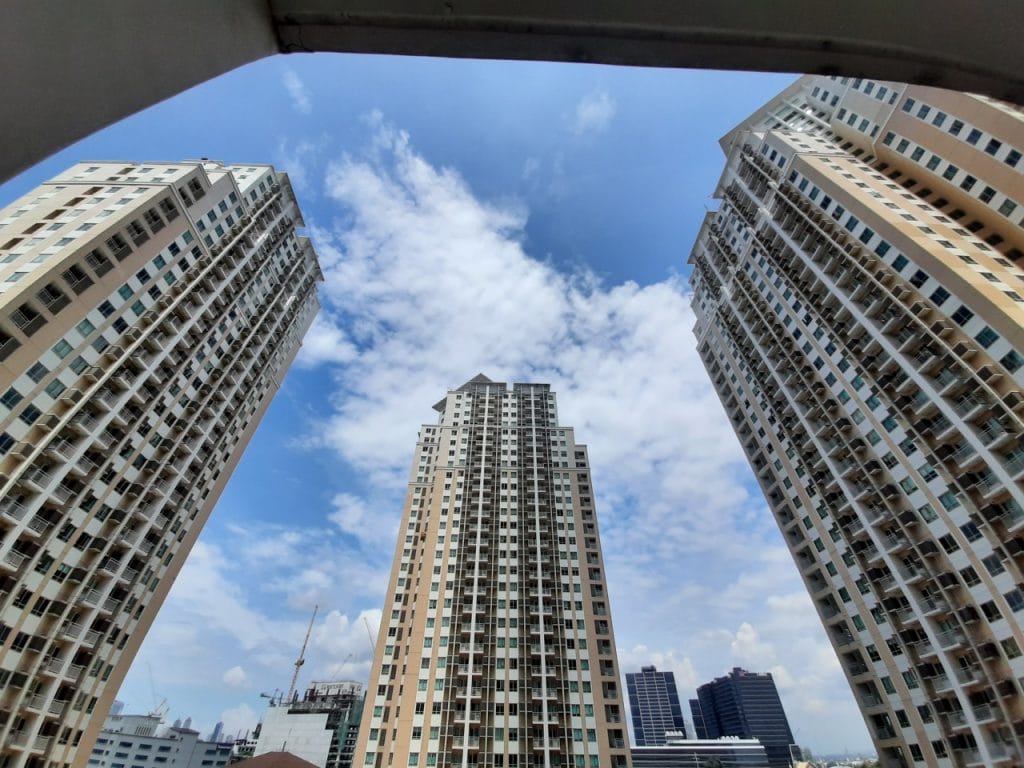
- Taken with the Galaxy A50s
-

- Taken with the Nova 5T
-
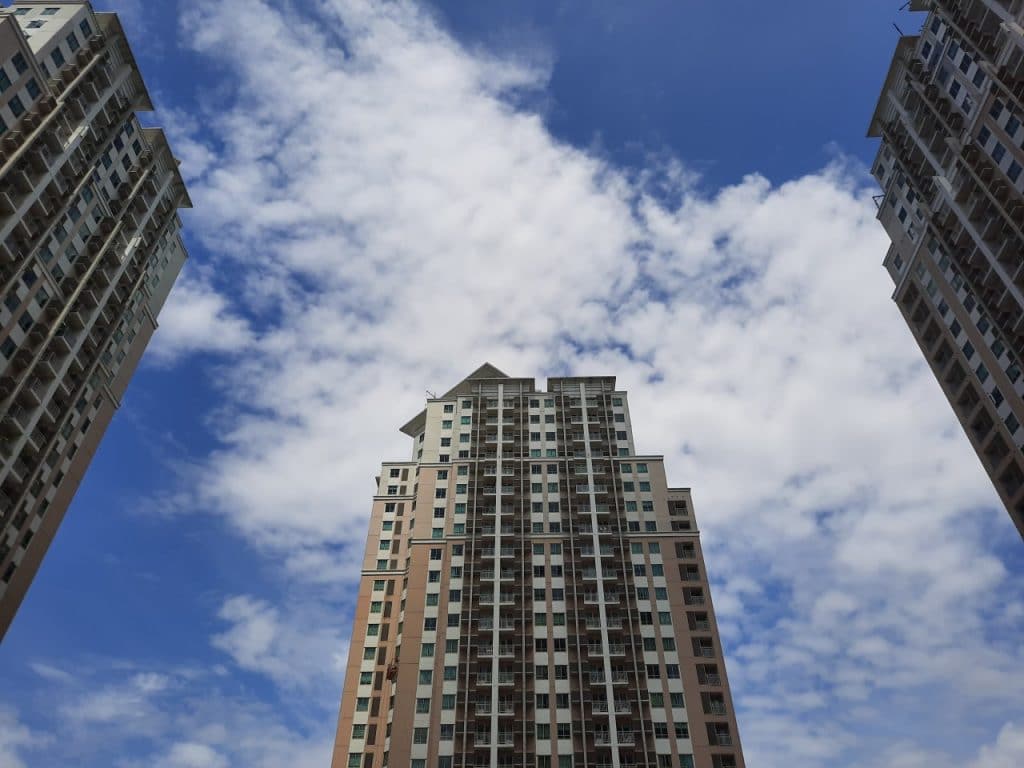
- Taken with the Galaxy A50s
Selfies are about the same and will mostly be decided by the software’s post-processing. Again, watch out for the upcoming camera shootout to really scrutinize images.
-

- Taken with the Nova 5T
-

- Taken with the Galaxy A50s
Design and other features
We’ve talked about the Nova 5T’s design identity and it appears Huawei put more thought into it than Samsung did with the Galaxy A50s. While both phones strived for a standout look, the Nova 5T’s approach — especially with the Midsummer Purple variant — appear more deliberate in targeting those that truly value self-expression.
The Samsung Galaxy A50s is made of plastic which helps push costs down but the Huawei Nova 5T is able to do this despite sticking to a metal body.
The Nova 5T doesn’t have the heft you feel from some premium phones, but we can argue that it’s a good thing. Nobody wants to carry around a heavy phone for no apparent reason.
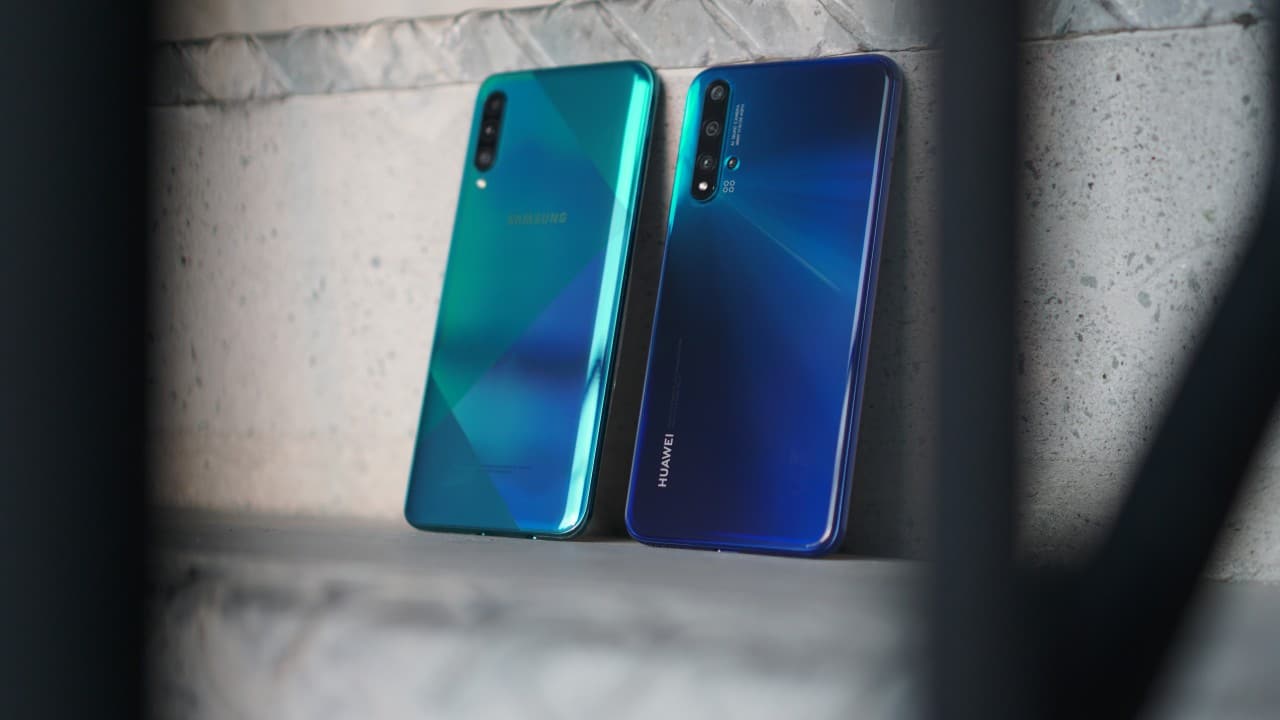
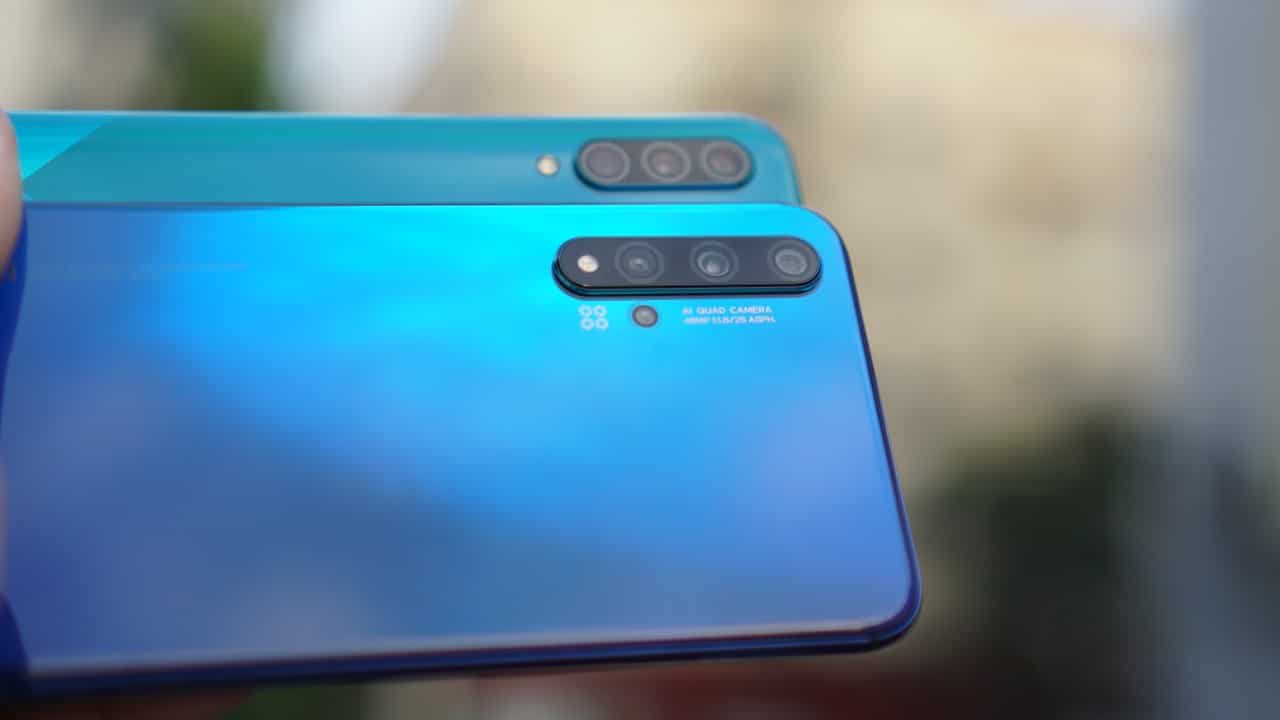
The Huawei Nova 5T goes for a 3D back and one that builds upon the changing colors that it has been known for. In this regard, Huawei has distinguished itself, pioneering this kind of look. The Galaxy A50s has a curious shattered glass like design that we’ve seen before from OPPO.
This ultimately will go down to what speaks to you aesthetically. But we’re giving Huawei some plus points for sticking to its identity.
Both phones also have a fingerprint unlock system. On paper, the Galaxy A50s looks more advance with its in-display sensor. However, in practice, the fingerprint sensor on the Nova 5T situated on the power button is way faster and makes a lot of sense ergonomically.
You can unlock your phone whether the display is upright or facing down. That’s convenience at its finest.
Which one is your GadgetMatch?
The Huawei Nova 5T and Samsung Galaxy A50s have very little difference in terms of overall performance.
The Galaxy A50s has battery life and the dying headphone jack going for it, but the Nova 5T more than makes for it in other departments. It has more RAM (8GB vs 6GB), can potentially do more with its quad-cameras, takes better low-light selfies, and charges faster thanks to SuperCharge. Huawei’s 22.5W SuperCharge system can take you from zero to 50 percent in just 30 minutes. It’s fast and efficient.
The decision might come down to aesthetics and comfortability with the UI. You’re gonna have to pick as well which notch you prefer — you have the Infinity-U on the Galaxy A50s and a punch-hole that sits on the top left side on the Nova 5T.
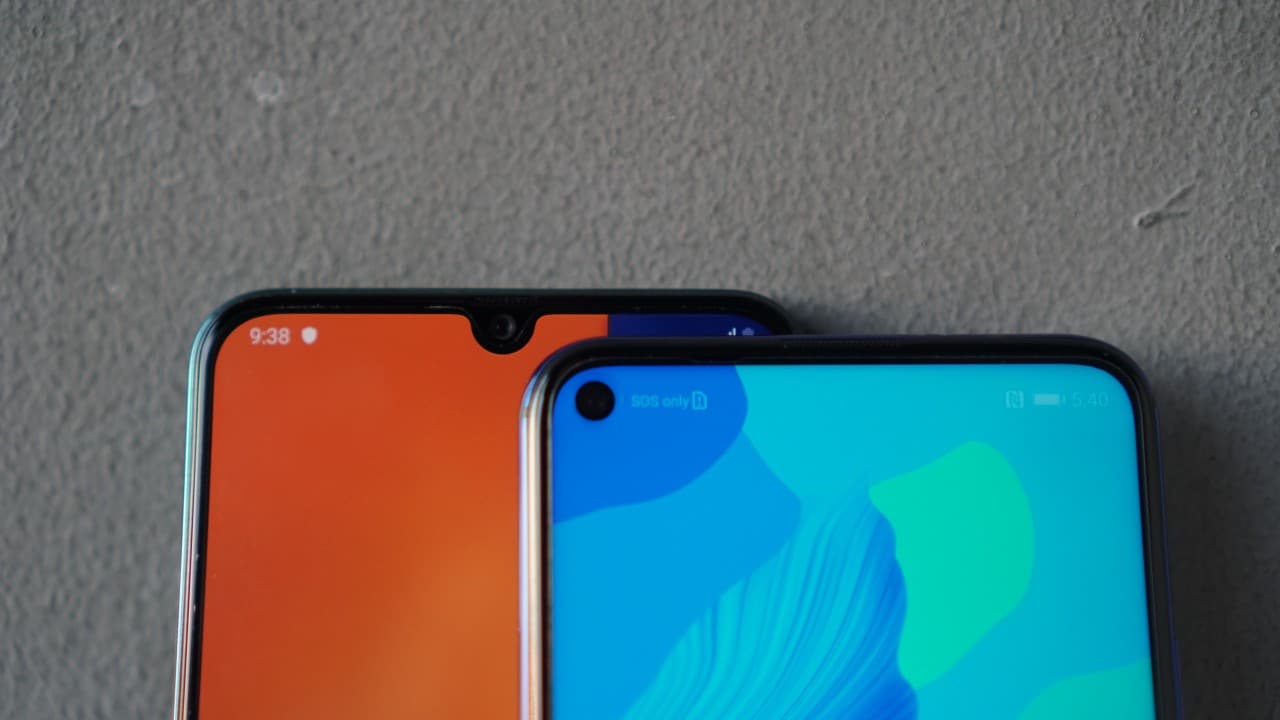
Whichever one you choose, know that you’re getting a phone that can more than keep up with all your tasks, social media usage, gaming and look good while it’s at it.
This feature was produced in collaboration between GadgetMatch and Huawei Philippines.








The first leg of Spartan Race’s Philippine National Series doesn’t wait for anyone.
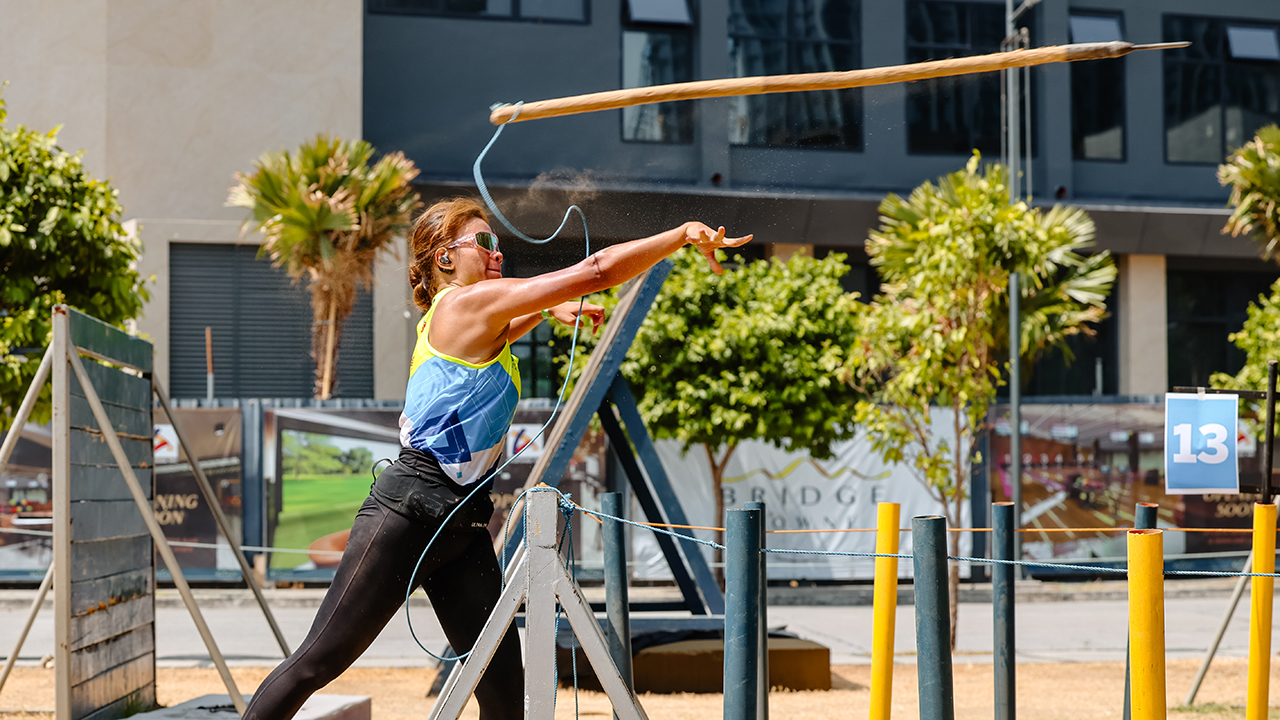
We joined an OCR team, BGY BYG aka Bring Your Game, at Bridgetowne Obstacle Park as they put themselves through an obstacle course race simulation. I brought the Canon EOS R6 Mark III to document every athlete giving their best.
Shooting under direct midday sun is its own challenge. The 32.5MP sensor handled the harshness of open daylight without blowing out detail. The 40fps electronic shutter and Pre-continuous shooting meant we were already in the frame before the moment fully happened.
Athletes were moving fast and in every direction, but the 8.5-stop IBIS kept every shot steady as we moved alongside them.
The Dual Pixel CMOS AF II stayed locked mid-sprint, mid-climb, and everywhere in between.
This is what race prep looks like up close.

Abegail Manzano, UAAP Season 85 Rookie of the Year in women’s athletics at UP Diliman, leading the warm-up session.



Jeri Vega Oro from All-female Pop-Rock Band, ROUGE.

In photo: Georgii Brisuela










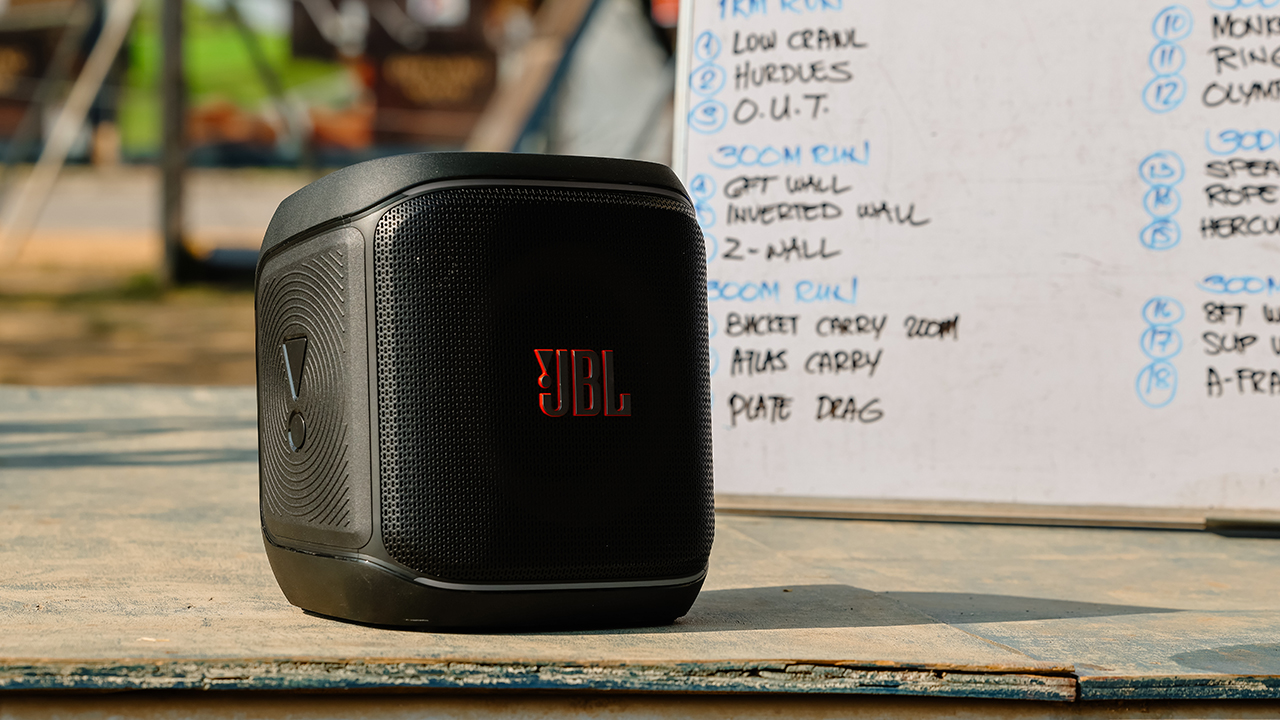
In photo: JBL PartyBox Encore Essential 2

BGY BYG/Bring Your Game’s Team Captain, Aldrin Collantes


SEE ALSO: What HYROX Hong Kong looks like up close
Words and photos by MJ Jucutan.
Computex 2026
Why is AI loved in COMPUTEX but hated in the rest of the world?
Two sides of the same coin.


To cover COMPUTEX 2026, I found myself staying in the Grand Hilai Taipei, a 5-star hotel right beside the Taipei Nangang Exhibition Center (TaiNEX), the historical home of the annual conference. I can’t help but think of The Grand Budapest Hotel, a Wes Anderson flick about a similarly decadent hotel. But it’s not the plush hotel rooms, the hospitable staff, or the Romanesque public sauna that has me thinking of the iconic 2014 film. Rather, it’s the man of the hour himself, NVIDIA’s Jensen Huang, the king of today’s AI.
In The Grand Budapest Hotel, Ralph Fiennes plays Monsieur Gustave, the eponymous hotel’s flamboyant concierge. Always the life of the party, Gustave blends seamlessly into the hotel’s luxurious pink decor as he cavorts willy-nilly with the elder clientele. While the film flings Gustave around a thrilling chase for a deceased friend’s inheritance, the film’s subtext is one of politics, mistrust, and war. Around the hotel, the world haplessly descends into the geopolitical turmoil that brought about the Second World War. And yet, Gustave remains indifferent, content as he is to be atop his lofty pulpit while luxuriating in L’Air de Panache.

The amicable Gustave as he lures you in.
Jensen Huang, clad in his trademark leather jacket, is our story’s Monsieur Gustave. Much like Gustave, Huang revels in the fanfare around him. In COMPUTEX, he’s a hero adored by the masses. Wherever he goes, fans bend over backwards to take a selfie. His merchandise (and yes, it exists), touting AI-generated versions of him, is constantly sold out. It’s a stark contrast to the world and all its doom-and-gloom for a future bloated with AI.
The silence behind the applause
Before the official start of COMPUTEX, Huang conducted his own keynote speech for NVIDIA. If you’ve been to one of his keynotes in the past, you’ll hardly recognize what it’s become. There’s no more talks of realistic graphics or faster gaming performance. It’s all about AI.
Most of his time was dedicated to Vera Rubin, a multi-rack AI supercomputer destined to power the future’s data centers. Amid the drone of technical jargon (almost bordering on technobabble), I was quietly asking myself what I was doing here. Meanwhile, beside me, an enthusiastic woman clapped with as much fervor as if Huang was the second coming of Christ himself. Even if Huang could hear her individual applause (and he most certainly didn’t), he couldn’t have seen her Googling frantically what a multi-rack AI supercomputer was.

NVIDIA’s Vera Rubin
After what felt like forever on the Vera Rubin, Huang finally talked about a consumer-ready product: the new RTX Spark laptops. Admittedly, my interest was piqued. After all, it’s supposed to be the next evolution of PCs. Cue: more applause.
Although, the subtext here is as loud as the clamor. Though it’s certainly impressive that a single RTX Spark notebook can deliver 1 petaflop of AI performance and 192GB of unified memory, this next big thing is not for you and me. No one wanted to talk about the price of these things; not a single OEM, not even Huang himself.
All the hype is on productivity and profitability. It will make more work and more money… but not for you. If anything, you’ll probably end up worse.
The price of progress
Building a PC these days can bankrupt you just as easily as visiting an American hospital. A decent stick of RAM is no longer as accessible as it was a few years ago. And it’s all thanks to AI.
Touting them as humanity’s next evolution, the world’s biggest tech companies want you, a regular consumer, to believe that the technology is coming to your home. But first, they need acres of real estate for data centers. Several states in America have already relegated land to put up these centers, much to the chagrin of their residents. Despite assurances that newer ones can more effectively balance the load on the grid, these same data centers need a lot of space, power, and water. All three of which are coming from the communities surrounding them. At the time of this writing, some state governments are pushing back against the incoming infrastructure, perhaps realizing the mistake of unimpeded data center developments. The outside world is slowly turning on AI, but it’s not a global crackdown.
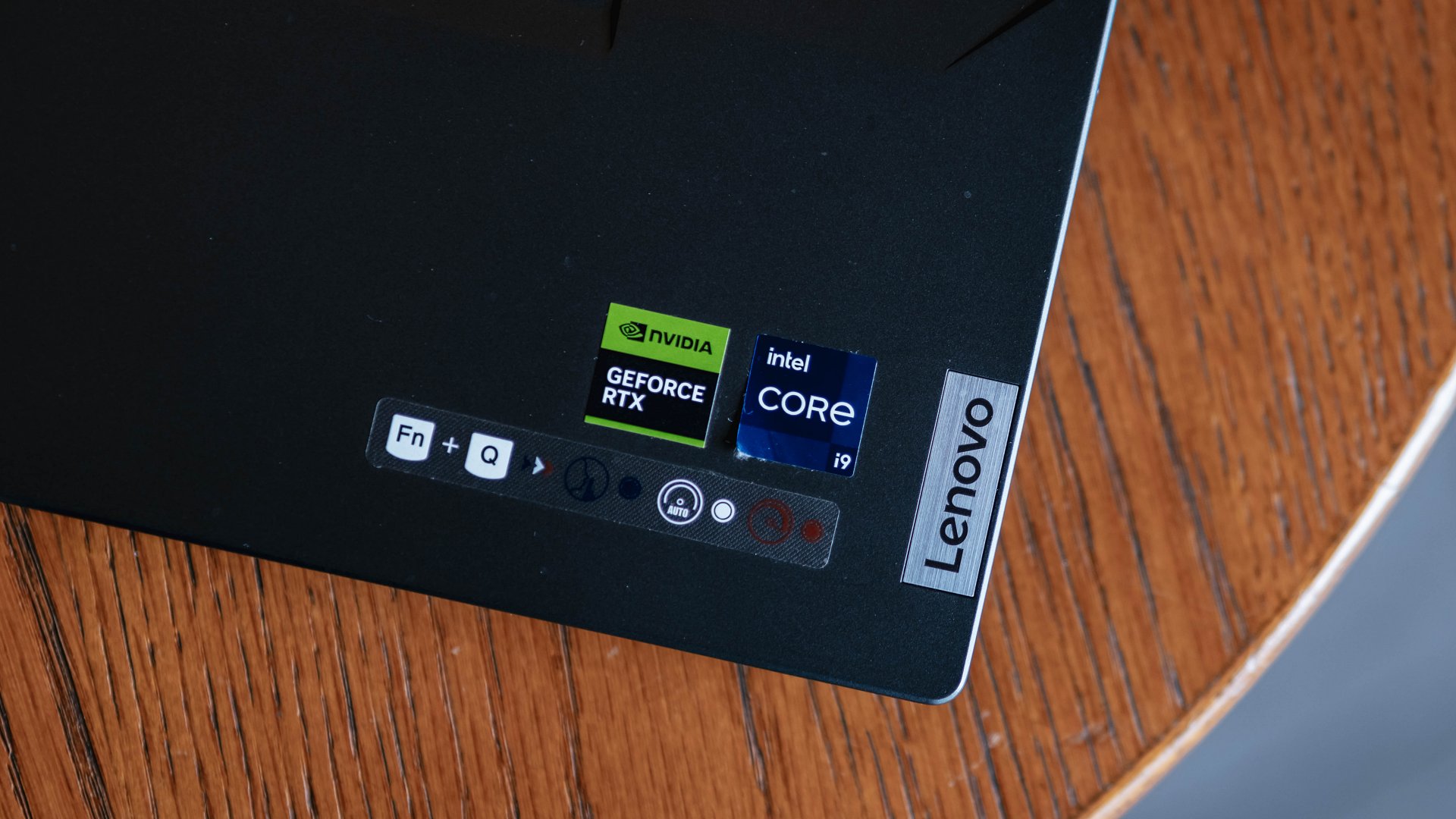
These stickers are getting more expensive.
And that’s before the effect of these data centers on regular consumer technology. Besides all that land, they need a horde of silicon. That’s why NVIDIA has stopped positioning itself as a GPU company, and that’s why all the chips just disappeared. All those data centers are buying up the world’s stock of chips. It’s all a matter of supply and demand at that point; scarcity drives prices up, and we’re left to pick up the pieces. The GPU that was supposed to go to your new PC is now inside a data center somewhere in the States.
Even if you don’t live near a data center, you’re still not safe. Companies, especially in the Western world, believe that AI can replace human workers, leading to mass layoffs. To be clear, while AI can help with productivity when used as a tool, a full replacement isn’t the most feasible option yet. In fact, according to Fortune, AI is just a convenient scapegoat when companies simply want to cut labor expenses by any means necessary.
And yet, the party goes on. Huang is adamant that you are on the ground floor of a revolution that will change the world. But, sorry, bucko; that elevator is going up without you.
The mask falls
As tempting as it is to pick on a single target, the NVIDIA CEO wasn’t the only Monsieur Gustave gallivanting around COMPUTEX. Qualcomm’s Cristiano Amon had his own keynote speech to herald the annual conference. But, opposed to decadence of Huang’s optimism, Amon lets his mask fall just a tiny bit.
To his credit, Amon didn’t extol Qualcomm’s developments exclusively. Rather, he spoke of the overall effects of AI on our world. It’s, of course, the usual optimistic accoutrements of harder, better, faster, stronger for society. Eventually, his excitement gets the best of him and lets slip some shadier effects.
“6G will turn us all into walking cameras,” he said, talking about how AI will affect connectivity.
Now, to be fair, radio frequency sensing isn’t new technology. It’s already been possible to detect objects using only radio signals. 6G, bolstered by AI, will expand this to cover a much wider area for more possible uses.
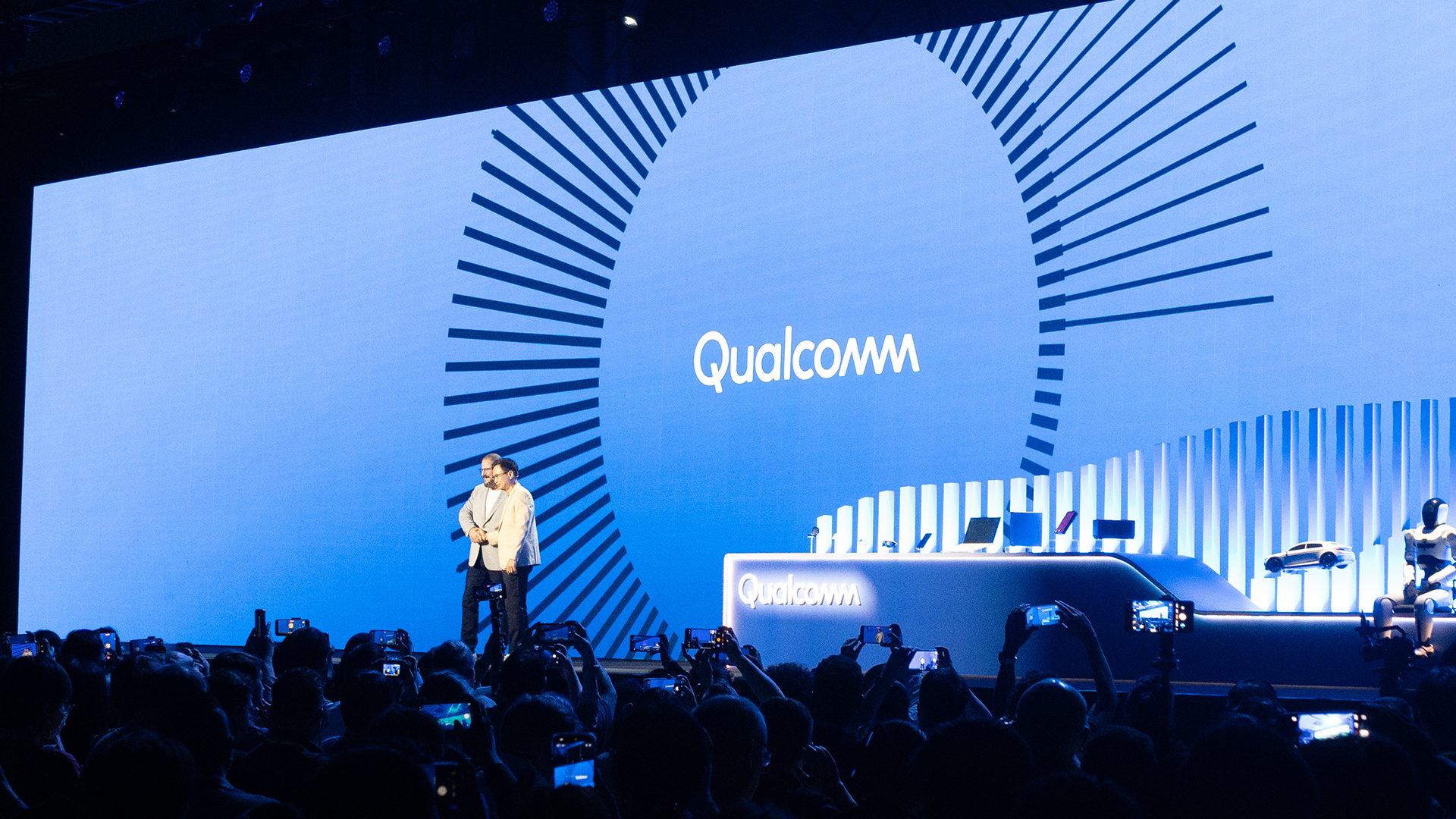
Amon himself admits that it was a controversial statement. But perhaps, he doesn’t know (or care) about any potential invasions of privacy. He remains ever-so-confident that the use of 6G for surveillance will ultimately help with public safety and infrastructure.
All I can think of is The Dark Knight‘s Lucius Fox doing the moral thing and shutting off Batman’s mass surveillance system after finding the Joker.
It’s a tiny slip, but it speak volumes. Your privacy is a sacrifice that they’re willing to take.
As if that’s not enough, Amon signs off on his diatribe with a succinct “resistance is futile,” talking to those who still oppose AI.
An odd way to start off a celebration of AI, isn’t it? Traditionally, that phrase is one oft used by villainous characters, but that’s just par for the course in today’s AI-infested world. Peter Thiel, one of the moguls of AI, infamously named his company Palantir, the same malevolent surveillance tool used by Sauron in The Lord of the Rings. For some, masks don’t really exist.
The other concierge
Speaking as someone who keeps his finger on the pulse of AI more on the Western side of the world, it’s strange to see a different side of the coin. Huang and Amon are icons. You can’t last two seconds without seeing a single mention of AI somewhere on the show floor. There’s a palpable electricity when talking about the potential of AI.
And to be fair, when I talked to a few developers and engineers, I can feel the optimism. One talked about a voice assistant that would suggest better gift ideas for her spouse based on their history. Another one passionately talked about how much gaming has been better with DLSS 4.5. They truly believe that AI can work to their (and our) benefit, and I believe them. Underneath the smarminess of tech billionaires are ordinary people who found ways to better society. That’s where the conversation about AI should start.
But that’s not what the people want. The people want the parties, the glitz and the glamor. And all these billionaires desperately want to be the next Steve Jobs, the next Great Gatsby. And everyone else wants someone to hate.
In Taiwan, it’s not easy to hate a Monsieur Gustave that wants to make you feel welcome. It’s much easier to come for a monster taking your land, your jobs, and your money.
In Taiwan, Monsieur Gustave can have his parties, his adoring friends, and his fancy leather jacket. But in the rest of the world, he finds in himself the caretaker of an entirely different hotel, The Shining’s Overlook Hotel. Beneath Monsieur Gustave is Jack Torrance, and he’s always been the caretaker.
“Here’s Jensen!”

The other concierge.

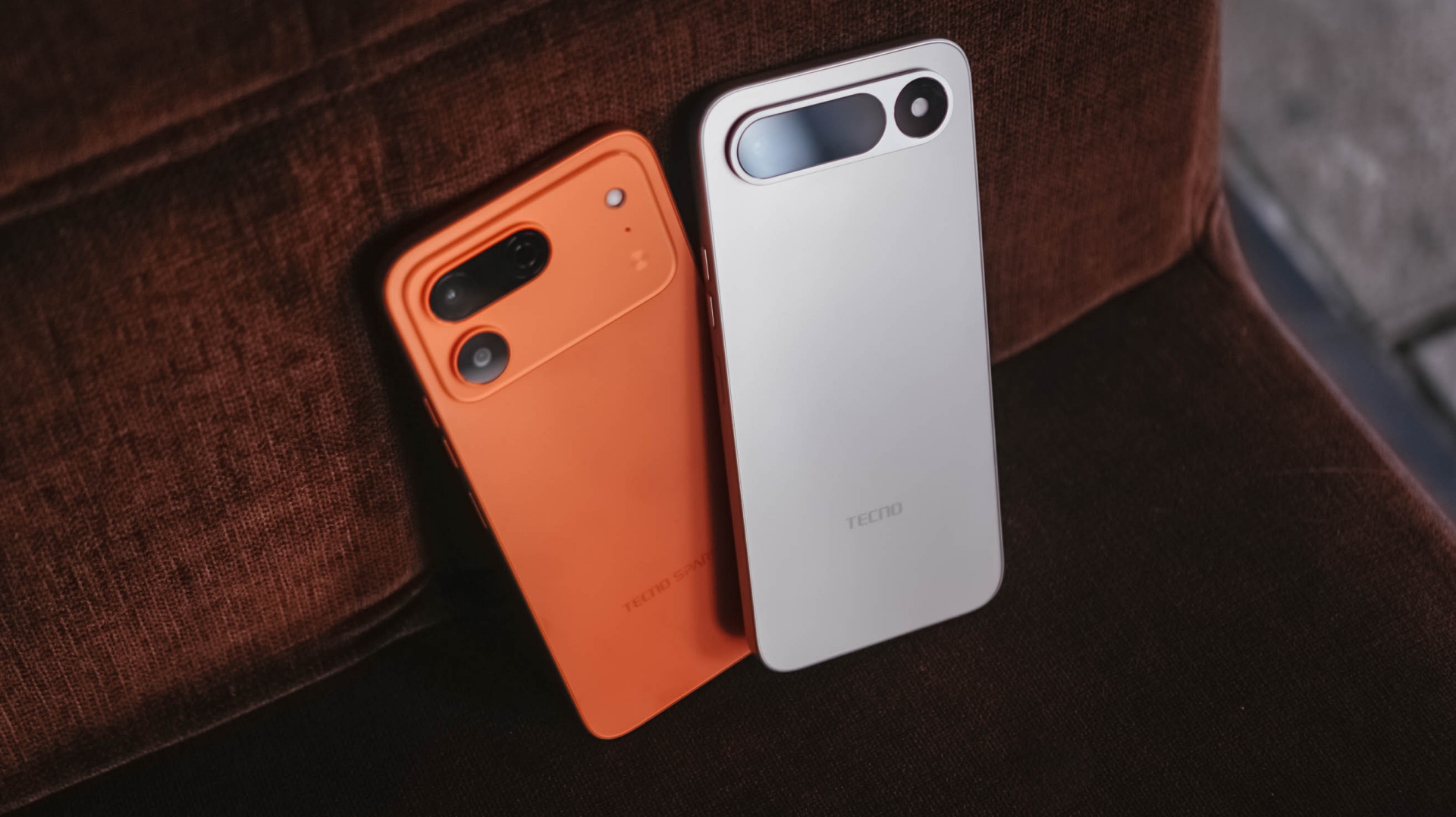
Within two months, TECNO separately launched the SPARK 50 Pro and SPARK 50 5G.
Clearly, the uprising brand aims to target consumers who want to buy a shiny new smartphone within their means. This also meant budget buyers might get confused which to get between the two.
Interested yet still confused? Read more to know which SPARK is your GadgetMatch.
Design
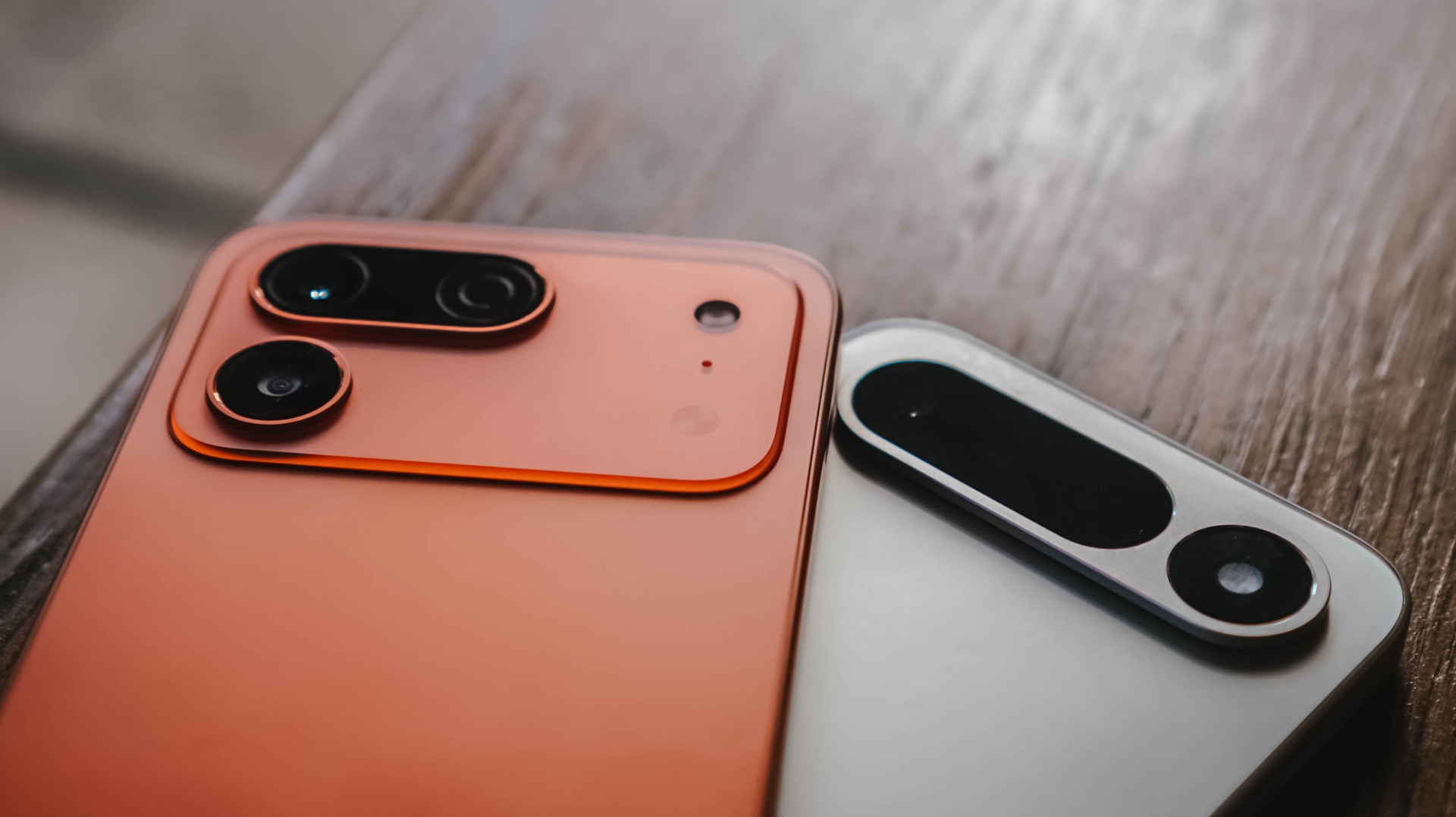
While design is (and will always be) subjective, the design of the TECNO SPARK 50 Pro and SPARK 50 5G are on two different sides of the coin.
The newer SPARK 50 Pro is offered in stronger color choices — from Midnight Blue to the Dynamic Orange I own. Albeit, there are the less flashy Ink Black, Titanium Grey, and Cloud White shades.

On the other hand, the SPARK 50 5G has classier colorways: Champagne Gold, Mint Green and Fantasy Purple. That’s alongside the subdued Ink Black and Titanium Grey options.

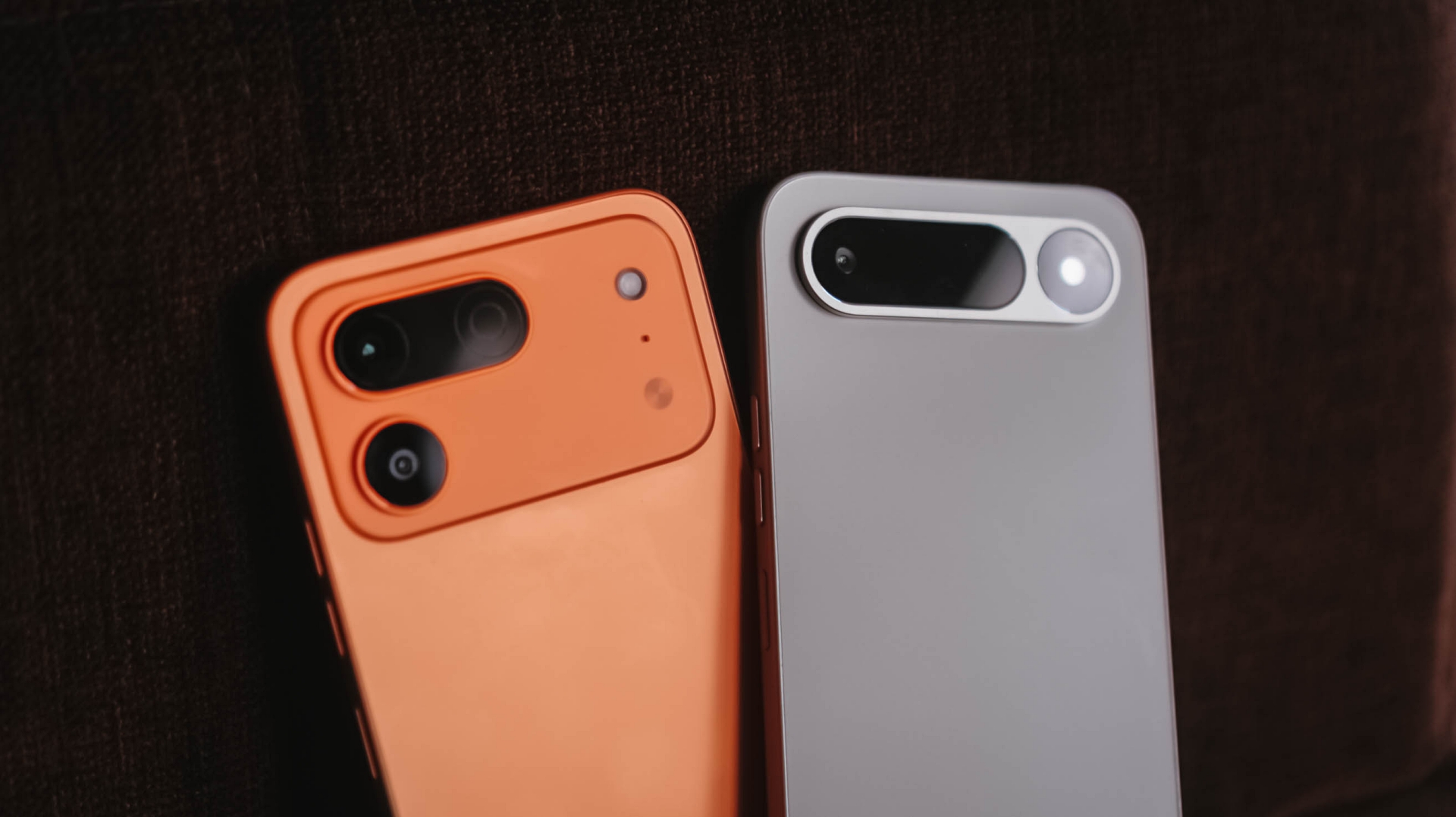
Personally, the SPARK 50 5G’s clean-looking horizontal camera bar design was the clear giveaway. While the SPARK 50 Pro is a bit slimmer at 7.8mm, the SPARK 50 5G is still comfortable to hold despite being thicker at 8.18mm.
Furthermore, the Champagne Gold unit I rock looks more premium and doesn’t try to be in with the unnecessary “orange” trend.
Editor’s Choice: SPARK 50 5G
Durability
Usually, design and durability coincide with one another. But, that’s not always the case.
Despite the SPARK 50 5G having an aviation-grade body, it only has an IP64 rating. It can withstand dust particles but, only water splashes and light sprays. Good to note though that it is MIL-STD-810H compliant.
Meanwhile, the less premium-looking SPARK 50 Pro actually boasts the sturdier IP68 and IP69 water and resistance ratings. This means it can withstand dust, water immersion, and even stronger, high-pressure sprays.
This makes the SPARK 50 Pro one of the few phones to have an IP rating previously limited to flagships and higher-end midrangers.
Editor’s Choice: SPARK 50 Pro
Audiovisual
Both the SPARK 50 Pro and SPARK 50 5G share a 6.78-inch IPS LCD display. Both are also 720p in resolution and refresh rate maxes out at 120Hz.
Obviously, these phones don’t have the best in class displays. But, for such segment and price, having such display tech alongside a punch-hole cutout (instead of a raindrop notch) means a lot.

Stereo speakers are also powered by DTS sound. Undoubtedly, these two phones are like identical twins in this segment.
The only thing that the SPARK 50 5G has the upper-hand is none other than its inclusion of 3.5mm audio jack that the SPARK 50 Pro lacks. Still beneficial for people who fully rely on wired audio.
Editor’s Choice: SPARK 50 5G
Performance
While the front part is harder to distinguish from one another, each inner core is what separates these phones apart.
The TECNO SPARK 50 5G is powered by the MediaTek’s Dimensity 6400 SoC.
Of course, it’s not the most powerful out there. But, for its league, it’s a capable chipset that can multitask and run most game titles. Even 5G support never forgotten.
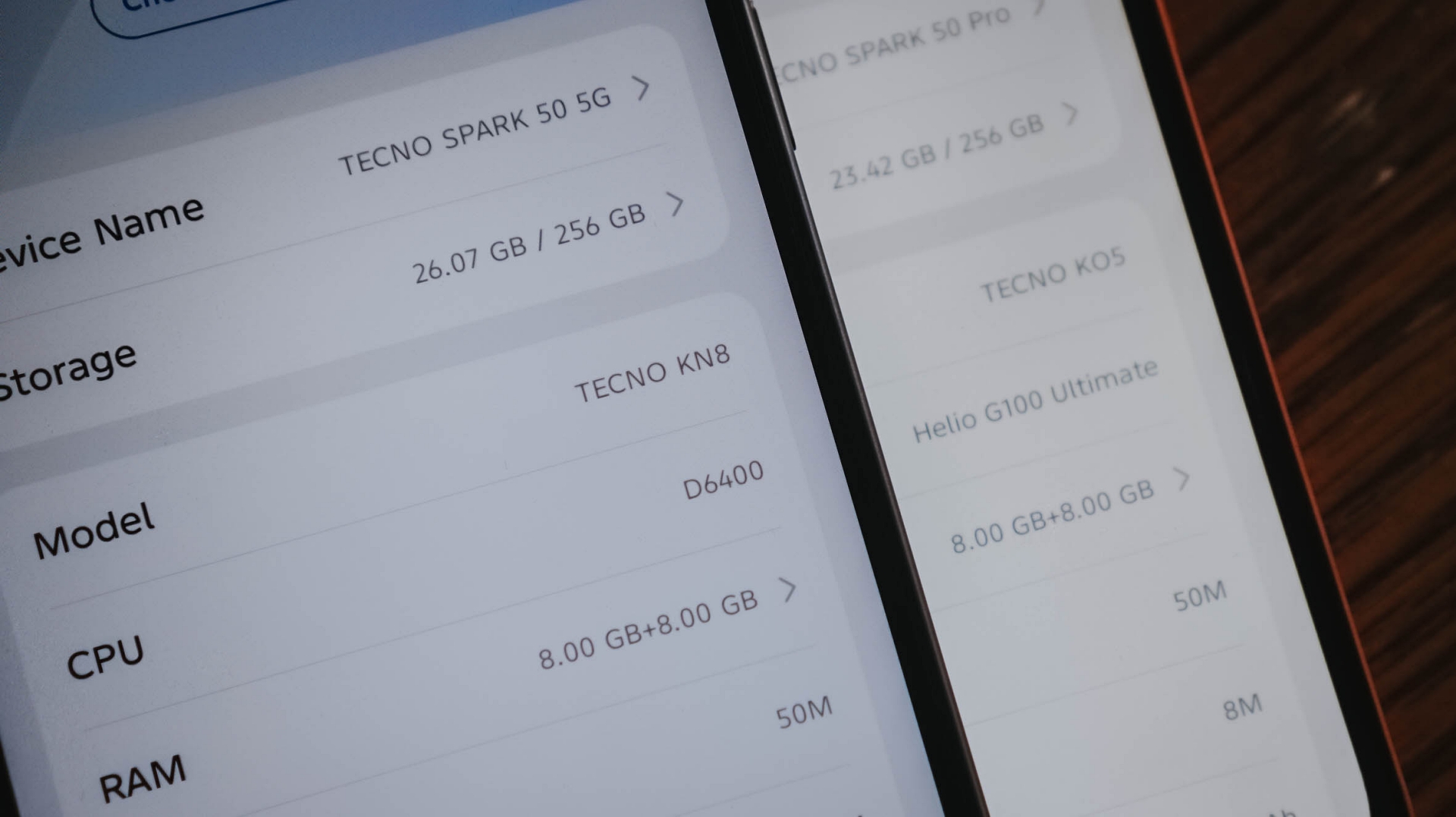
Meanwhile, the SPARK 50 Pro, despite having that “Pro” superlative, only runs the Dimensity G100 Ultimate. CPU speeds are obviously lower. Worse? It’s only limited to 4G speeds.
On the positive note, it gives better camera support.
Memory sizes are available in 4,6, and 8GB with storage options in either 128 or 256GB. Fortunately, these phones still have a dedicated microSD slot.
Editor’s Choice: SPARK 50 5G
Camera
With the camera talk already mentioned, most would think that the 50MP main rear camera of the SPARK 50 Pro and SPARK 50 5G are just the same. Well, they’re not.
Photography duties of the SPARK 50 Pro are mainly handled by Sony’s LYTIA 600 (or LYT-600) image sensor. For reference, that’s the same image sensor found on most modern midrangers.

The SPARK 50 5G uses an older Sony Exmor sensor. Aperture slightly differ at f/1.9 and f/1.8 respectively.
For further context, here’s how the two smartphones produce photos.






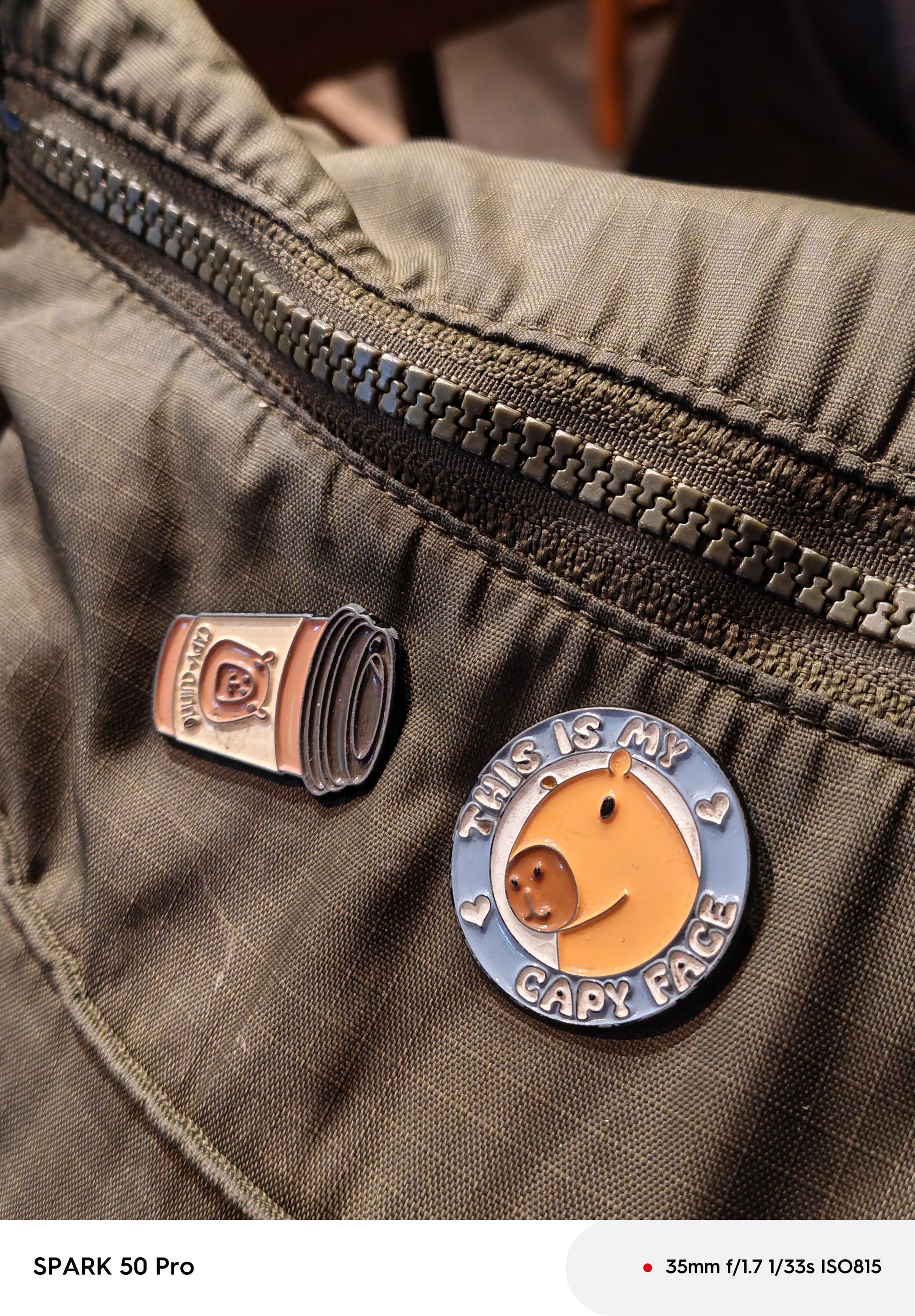



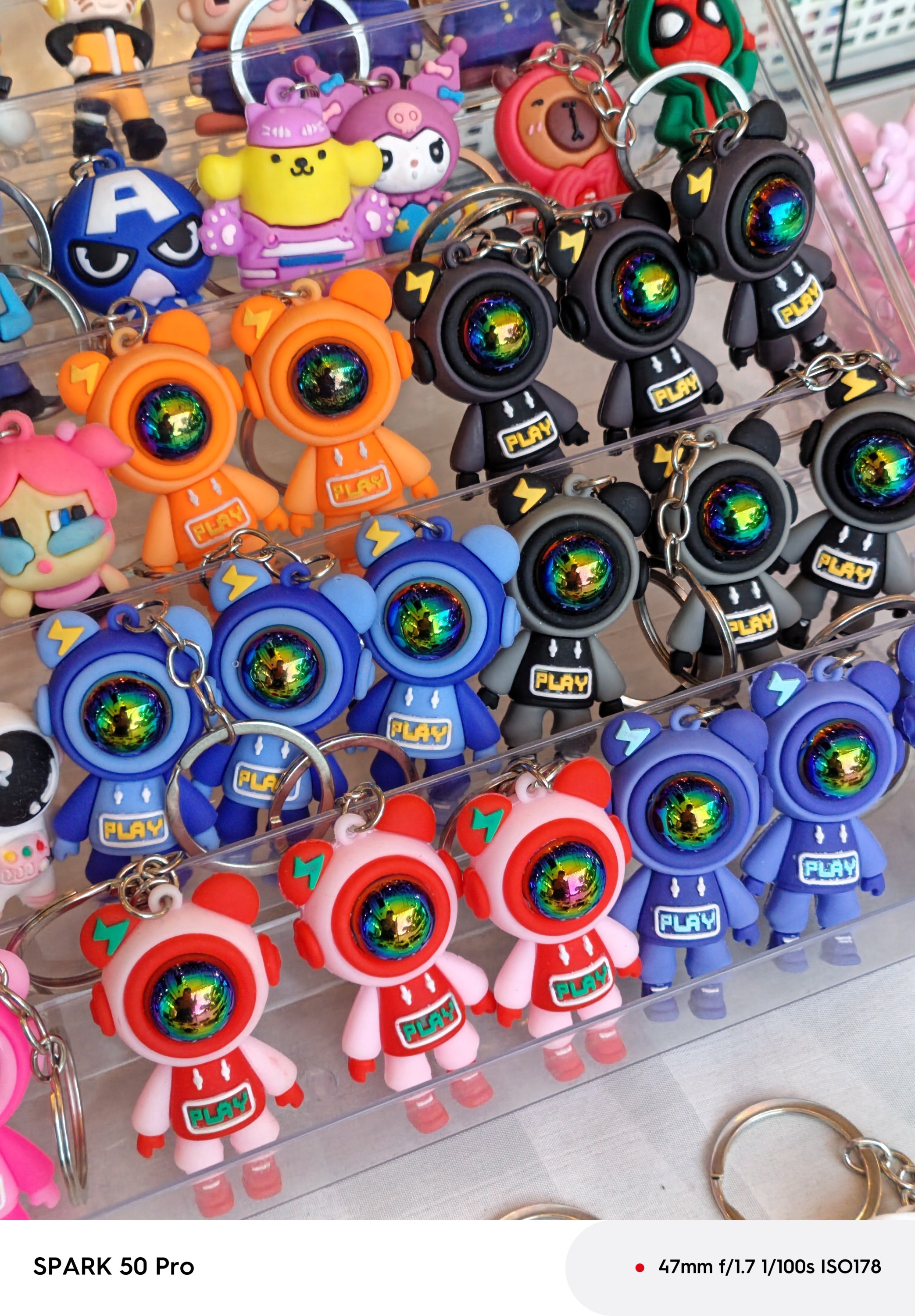
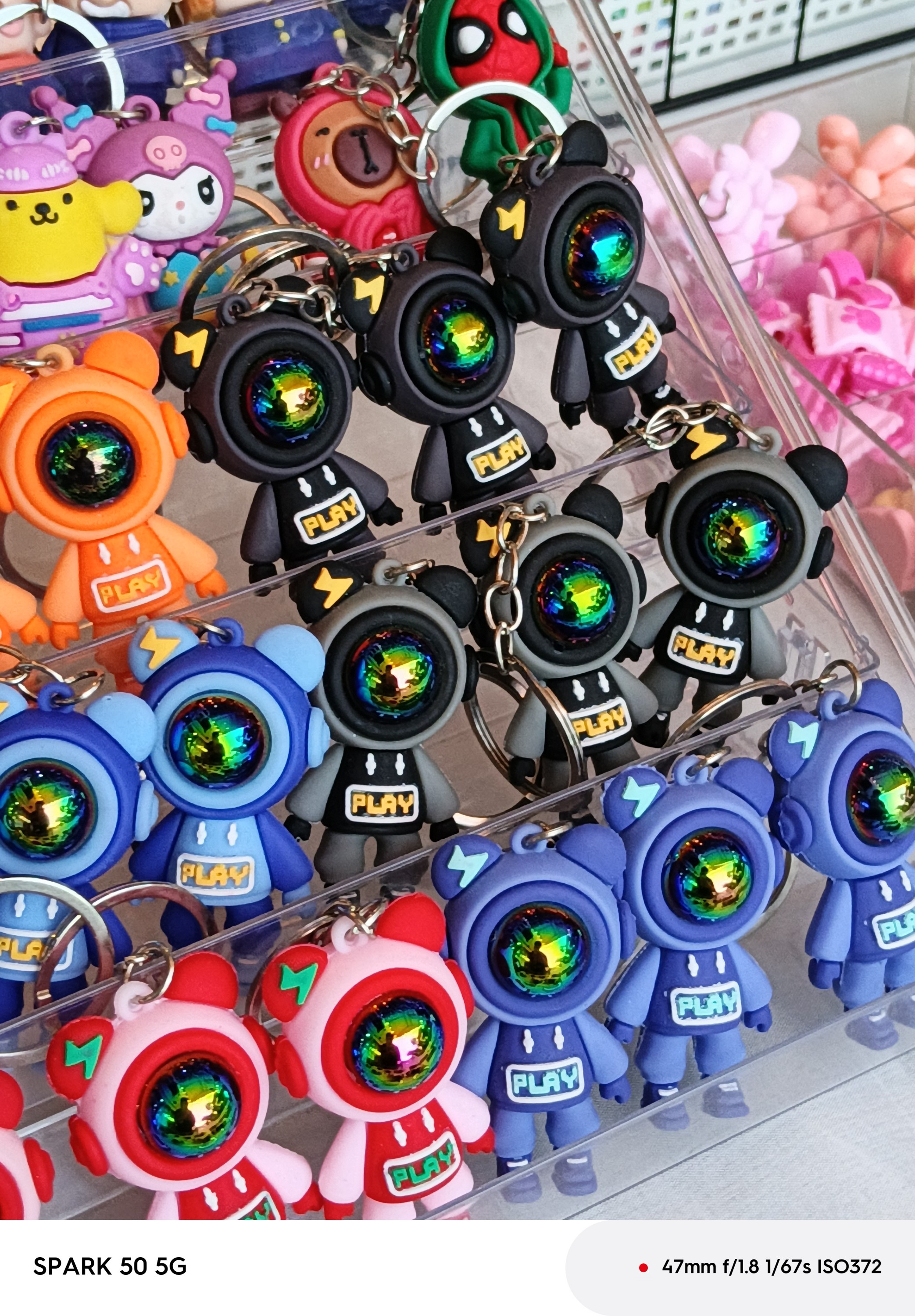

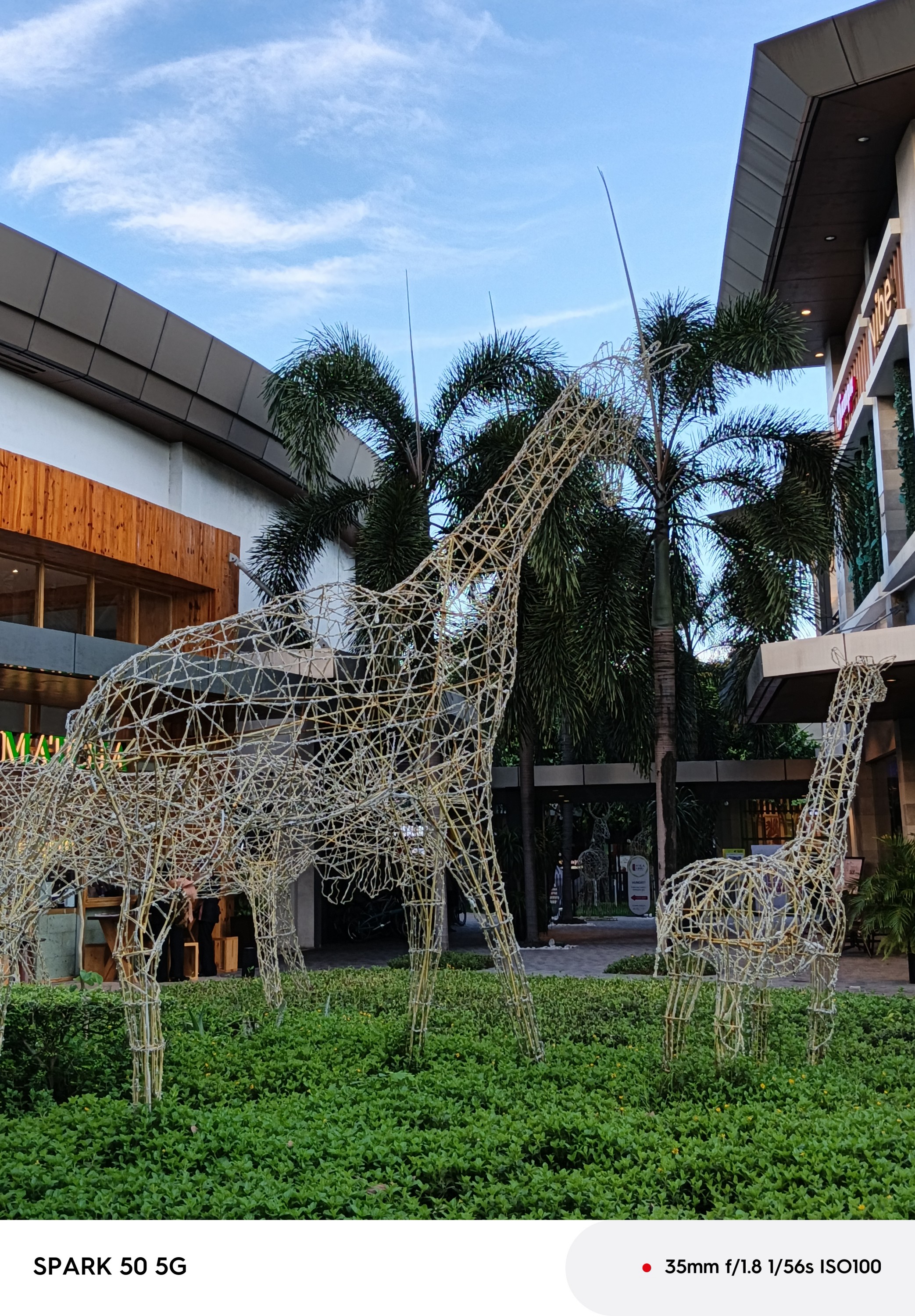
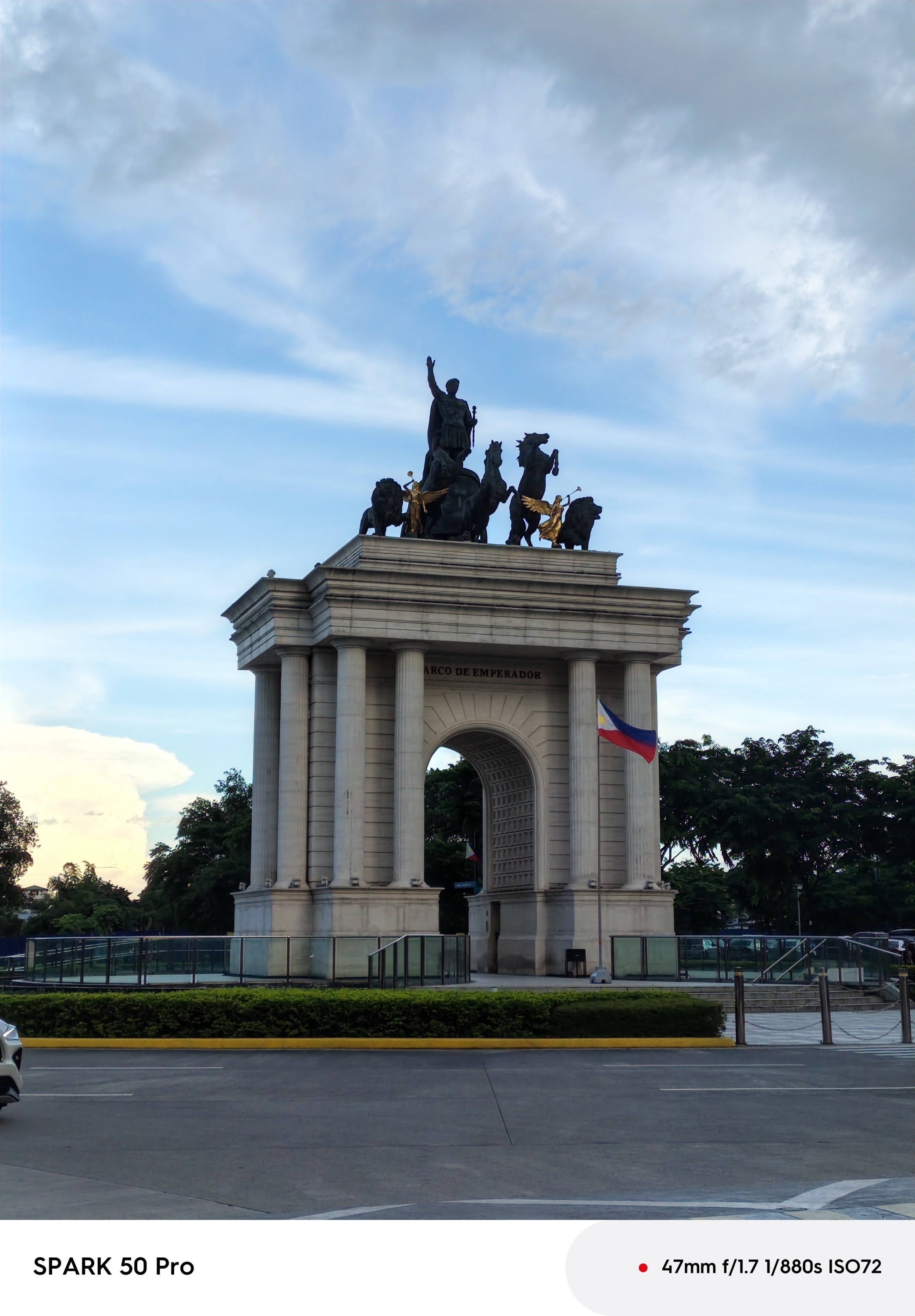





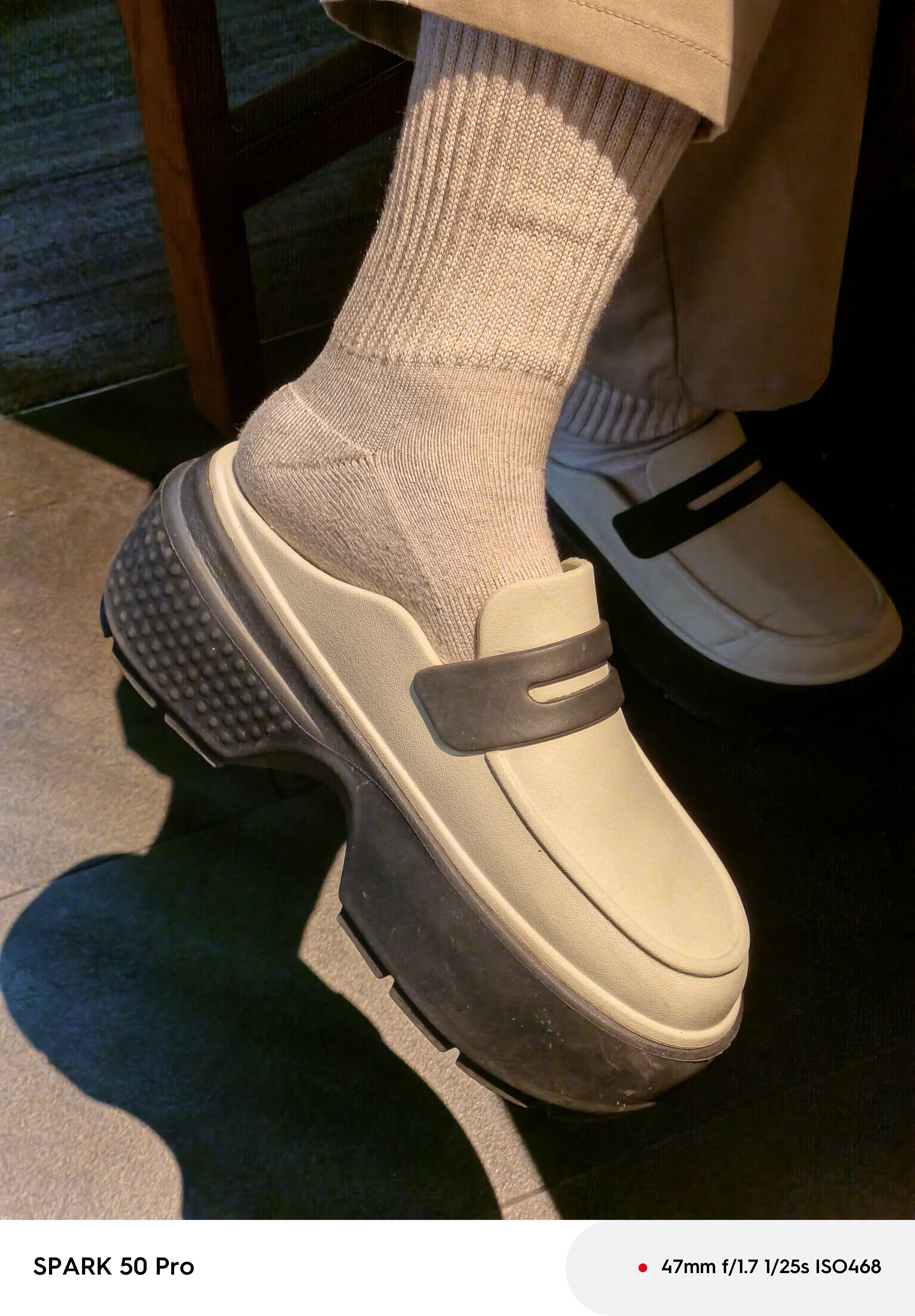
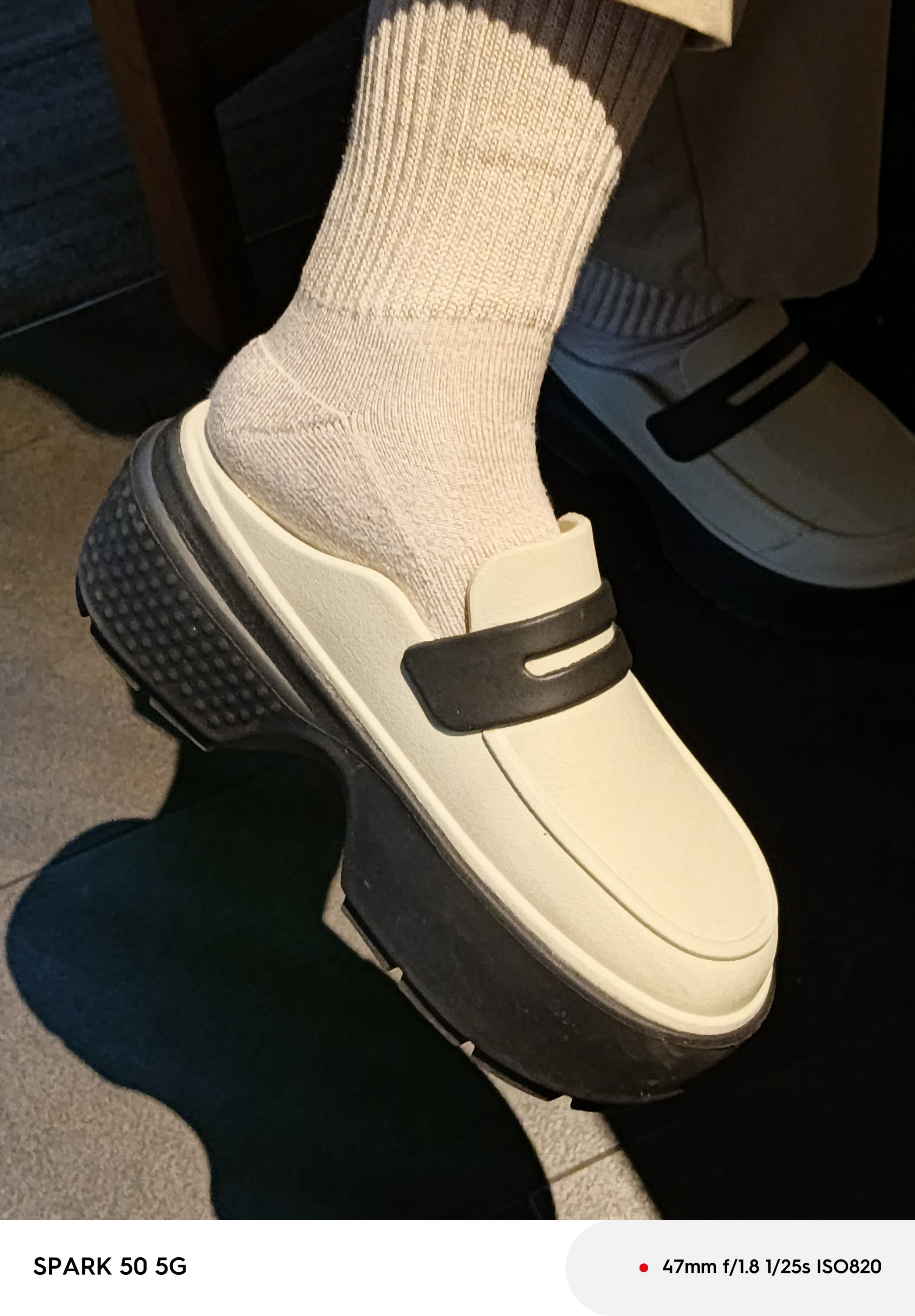
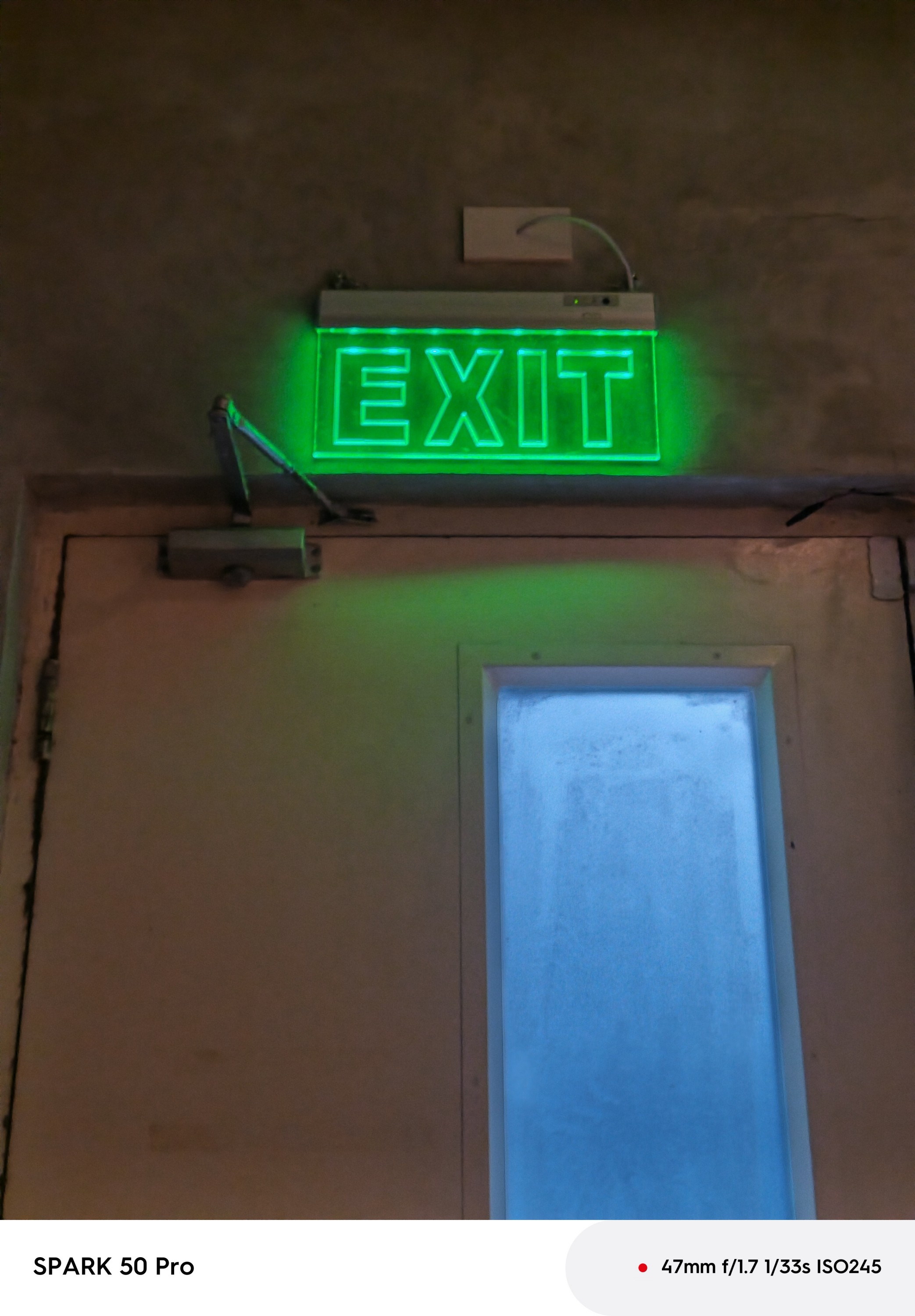
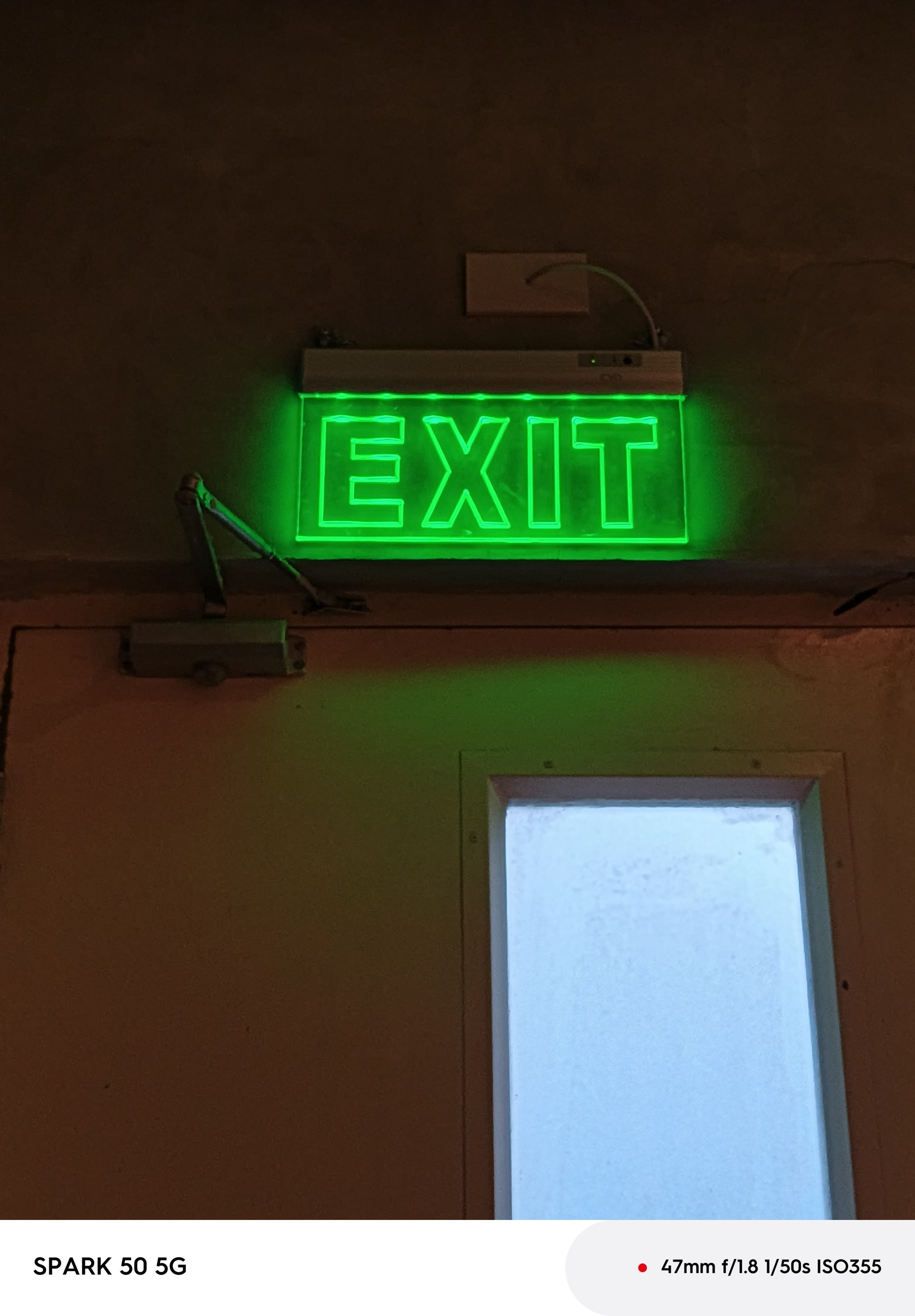
To compensate for that, the SPARK 50 5G tends to over-sharpen and color boost its photo output over SPARK 50 Pro’s natural image rendering.
The SPARK 50 Pro also has a better-looking bokeh falloff than its 5G counterpart.
Editor’s Choice: SPARK 50 Pro
Power
Finally, the highlight of both phones: battery capacity.
ICYMI, the TECNO SPARK 50 Pro has two versions: a single-cell 5600mAh model and a bigger 6000mAh dual-cell version.
The SPARK 50 5G takes it up a notch with an even bigger 6500mAh capacity.

Although that is only a 500mAh (or 900mAh) discrepancy, that battery boost still means a lot for an every day user.
Charging-wise, the SPARK 50 Pro has a faster 60W speed over the regular 45W charging in the 5G version.
IMHO, I would still choose a bigger battery over faster charging speeds. Still, it’s great to have both in a single package.
Editor’s Choice: SPARK 50 5G
Which afforda-phone SPARKs more joy?
If we are going to tally the scores, the clear afforda-phone choice is none other than the TECNO SPARK 50 5G.
It ticks 4 out of 6 boxes — from that classier design to its beastly battery despite that thin chassis. Even better, a 5G-capable chipset and 3.5mm audio jack inclusion that the “Pro” variant simply lacks.
However, that doesn’t mean the SPARK 50 Pro is lackluster.
If you value the cameras and durability more than anything else, the TECNO SPARK 50 Pro is clearly the one you should get.
At the end of the day, it all boils down to how much of your hard-earned savings you are willing to let go.


vivo X300 Ultra review: A whole different animal
Got the beast (finally) unleashed!

The realme P4 Power: realme’s midrange power play?
A power bank and a phone — and more


HONOR Watch 6 Review: Less guessing, more knowing
Beyond educated guesses

Mercedes-Benz holds a Welcome Home campaign to celebrate 140 years

Ubisoft co-founder dies in plane crash

No new CMF phones this year, Nothing confirms
vivo X300 Ultra review: A whole different animal

What being a Superbod looks like in 2026

TECNO’s POVA 8 5G is both futuristic and future-ready

Close without crossing: A Xiaomi 17T Pro photo essay

realme launches P4 Series 5G, including Power with 10,001mAh battery

The Xiaomi Watch S5 proves you don’t have to take it off

Buyer’s Guide: Xiaomi Pad 8 Series


-
 India2 weeks ago
TECNO’s POVA 8 5G is both futuristic and future-ready
-

 Reviews2 weeks ago
HONOR Magic V6 review: The best version of a book-style foldable?
-

 Gaming2 weeks ago
Kingdom Hearts IV gets new trailer, confirms Switch 2 release
-

 Gaming2 weeks ago
Final Fantasy fans have two big reasons to look forward to 2026
-

 Smartphones2 weeks ago
Upcoming realme C100 series to feature 8,000mAh battery
-

 Gaming2 weeks ago
Nintendo officially announces Ocarina of Time remake
-
 News7 days ago
TECNO’s SPARK 50 Pro is the latest budget smartphone battery beast
-

 News2 weeks ago
WWDC26: Siri AI, parental controls, and more