
Smartphones
HONOR 600 Series officially launches in the Philippines
Starts at PhP 25,999

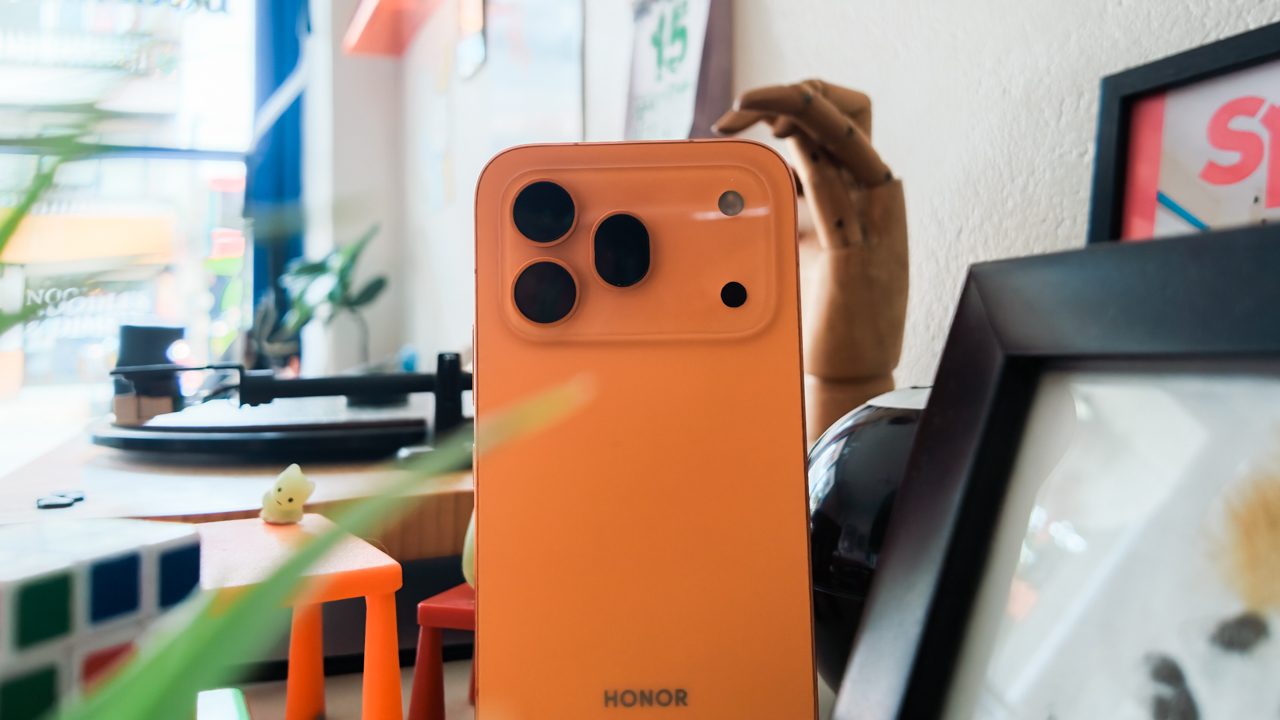
The HONOR 600 Series has officially made its debut in the Philippines. The powerful mid-rangers are available in the standard HONOR 600 and HONOR 600 Pro variants, with plenty of storage configurations available.
HONOR’s latest AI-driven smartphones are available for the following prices:
HONOR 600 5G
- 8GB+256GB: PhP 25,999
- 12GB+256GB: PhP 32,999
- 12GB+512GB: PhP 37,999
HONOR 600 Pro 5G
- 12GB+512GB: PhP 49,999
As part of the launch offer, customers can get a chance to win a brand-new Mercedes-Benz EQA 250 when they place pre-orders from May 14 to 29.
In addition, they can receive a free HONOR Gift Box worth PhP 1,499 plus a free HONOR Choice Earbuds Clip worth PhP 4,999. This is when they claim on May 30.
AI redefined
At the heart of the series is AI Image to Video 2.0. This is powered by the industry’s first unified multi-modal video generation model, a system that integrates video generation, editing, and comprehension into a seamless workflow.
Users can combine up to three images with natural language prompts to produce stunning 3-8 second video sequences, define both opening and ending frames for narrative control, and access the industry’s most extensive library of cinematic templates for stylized film-quality results.
Here’s an overview of each model’s specs:
HONOR 600 5G
- Processor: Snapdragon 7 Gen 4
- System: MagicOS 10
- Display: 6.57-inch AMOLED, 120Hz, 3840Hz, HDR Vivid, 8000 nits peak brightness, 458 ppi
- Camera: 200MP f/1.9 OIS main, 12MP f/2.2 ultrawide, 50MP front
- Battery: 7,000mAh, 80W SuperCharge, 27W wired reverse
- IP68/IP69/IP69K dust and water resistance
HONOR 500 Pro 5G
- Processor: Snapdragon 8 Elite
- System: MagicOS 10
- Display: 6.57-inch AMOLED, 120Hz, 3840Hz, HDR Vivid, 8000 nits peak brightness, 458 ppi
- Camera: 200MP f/1.9 OIS main, 50MP f/2.8 3.5x OIS telephoto, 12MP f/2.2 ultrawide, 50MP front
- Battery: 7,000mAh, 80W SuperCharge, 50W wireless, 27W wired reverse
- IP68/IP69/IP69K dust and water resistance





After Apple unveiled the iPhone Duo, it’s safe to say that the foldable wars are finally on. Apple and Android fans are now drawing the battle lines between their respective devices. Now, for the smartphone makers themselves, it’s time for Samsung to prepare its next salvo. Right on cue, a new leak has hinted that the South Korean brand is preparing for its most extensive foldable lineup next year, including a mysterious device called the Galaxy Z Slide.
Based on a new leak on X, Samsung is reportedly launching a total of six foldable devices next year. Naturally, three of those are the next iterations of Samsung’s main foldable lineup: Galaxy Z Fold9, Fold9 Ultra, and Flip9.
A fourth device, however, teases a sequel to the Galaxy Z TriFold. Earlier this year, Samsung launched its first tri-fold device. Although, despite the hype, the TriFold never really made it as a consumer-ready device, opting instead for a limited release for early adopters. A second release might mean that Samsung is ready to unleash a friendlier device next year, which the leak claims will be the first one out the gate.
Now, the other two releases are more of a mystery. For one, Samsung is allegedly launching a Galaxy Z Fold9 Pro, presumably a middle ground between the passport-style and the book-style foldable.
Finally, the sixth device (and arguably the most mysterious) is something called the Galaxy Z Slide. If true, the Slide will likely introduce an all-new form factor for the lineup. If anything, though, we know that Samsung has been experimenting with sliding screens. Is this what the Slide will look like?
SEE ALSO: Samsung: Galaxy Z Fold8 demand rose because of iPhone Duo

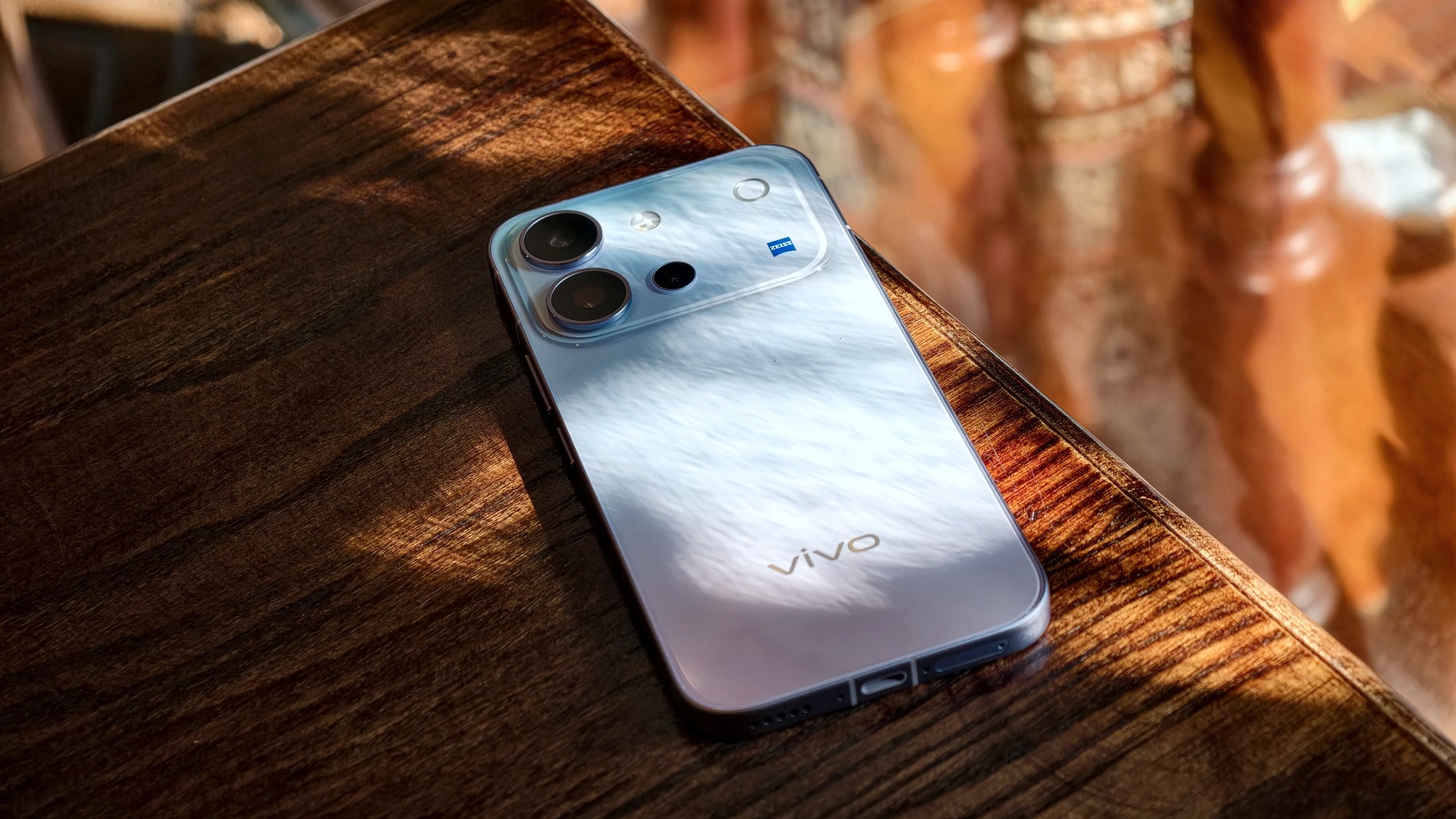
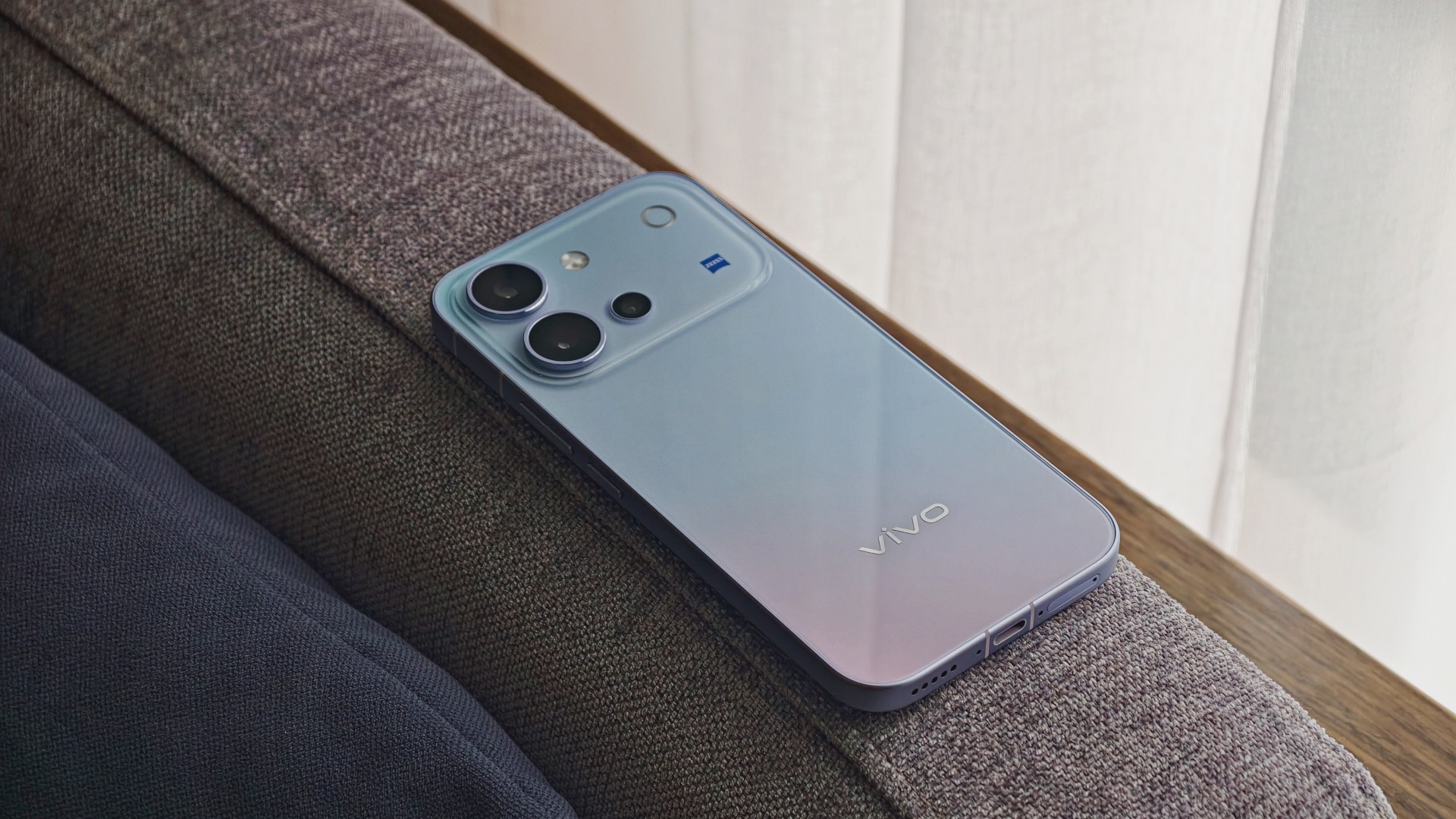
The vivo V80 is a capable midrange smartphone with a versatile camera system, excellent battery life, and a display that works well even in bright daylight. However, some camera quirks and its asking price give you a few things to think about.
vivo V80 specifications
| Component | Specifications |
|---|---|
| Display | 6.59-inch AMOLED, 1.5K (2750 × 1260), up to 144Hz, 5,000-nit local peak brightness |
| Processor | Qualcomm Snapdragon 7 Gen 4, 4nm |
| RAM / storage | 8GB RAM; 128GB, 256GB, or 512GB storage options vary by market |
| Rear main camera | 50MP Sony LYTIA 700V, OIS, f/1.88 |
| Telephoto camera | 50MP Sony IMX882, OIS, 3× optical zoom, up to 10× digital zoom |
| Ultra-wide camera | 8MP, 115° field of view |
| Front camera | 50MP autofocus, f/2.0, 92° field of view |
| Video | Front and rear cameras support 4K at 60fps |
| Battery | 7,200mAh typical capacity; 90W FlashCharge |
| Charging | Advertised 50% charge in 30 minutes; Multi-Scenario Bypass Charging |
| Operating system | OriginOS 7, based on Android 17 |
| Durability | IP68 and IP69 water and dust resistance |
| Build | Cold-carved glass back, aerospace-grade metal frame |
| Dimensions / weight | 157.52 × 74.33 × 7.69mm; 203g |
| Security updates | Six years of annual security updates, according to the launch materials |
A pretty face, but nothing fancy
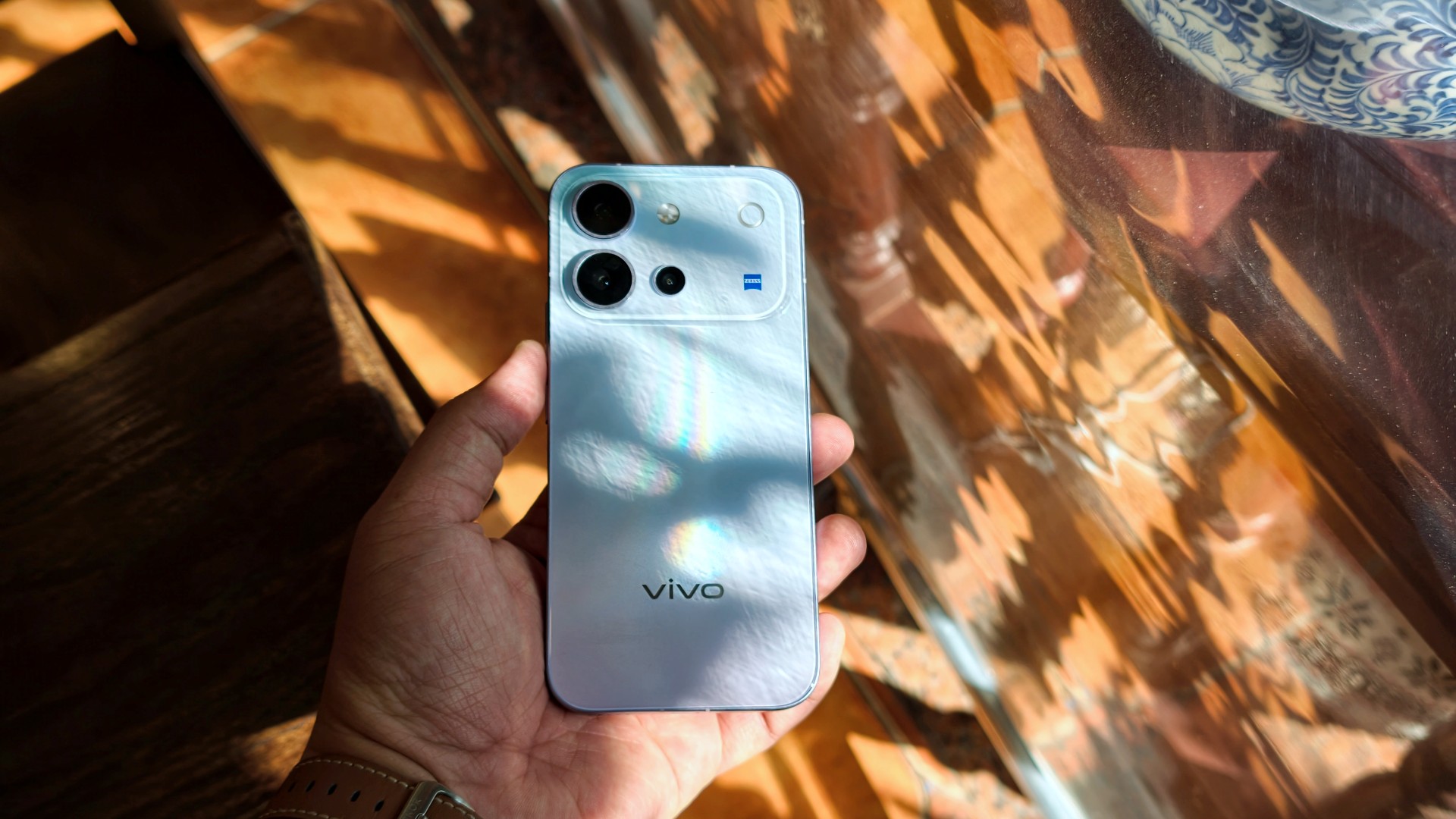
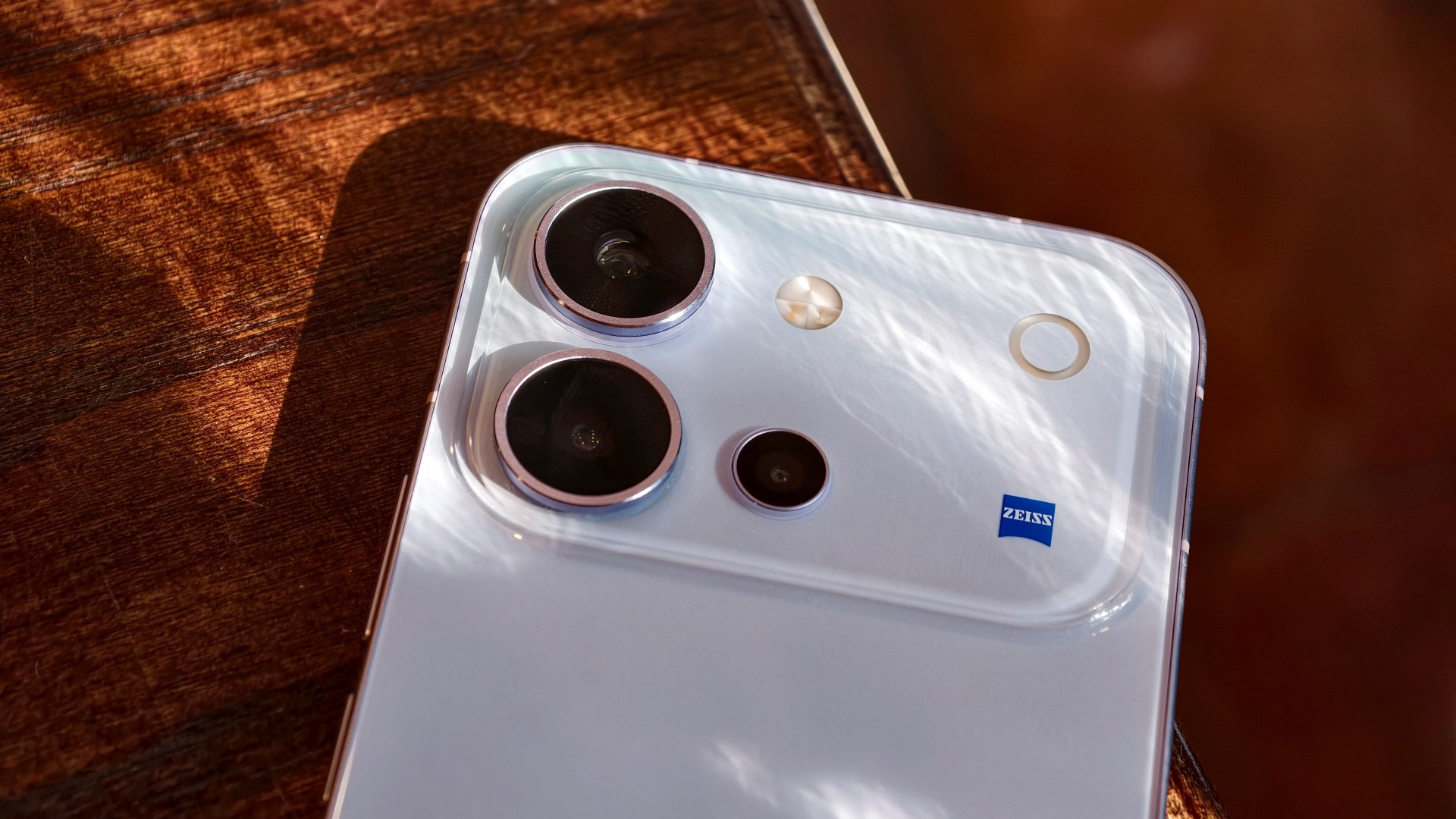
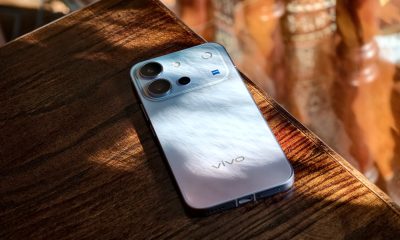
The vivo V80’s design goes from “wow” when you first unbox it to subtly eye-catching the more you use it.
I used the phone primarily with a case, although I didn’t feel like I needed one. Overall, it has a plastic-like feel. Nothing I would call premium, but it doesn’t feel cheap either. It’s par for the course for a base-model midranger.
It’s light and easy to hold. I’d say it feels like your prototypical base-model midranger, just with a poppy back design.
A travel buddy with a few quirks
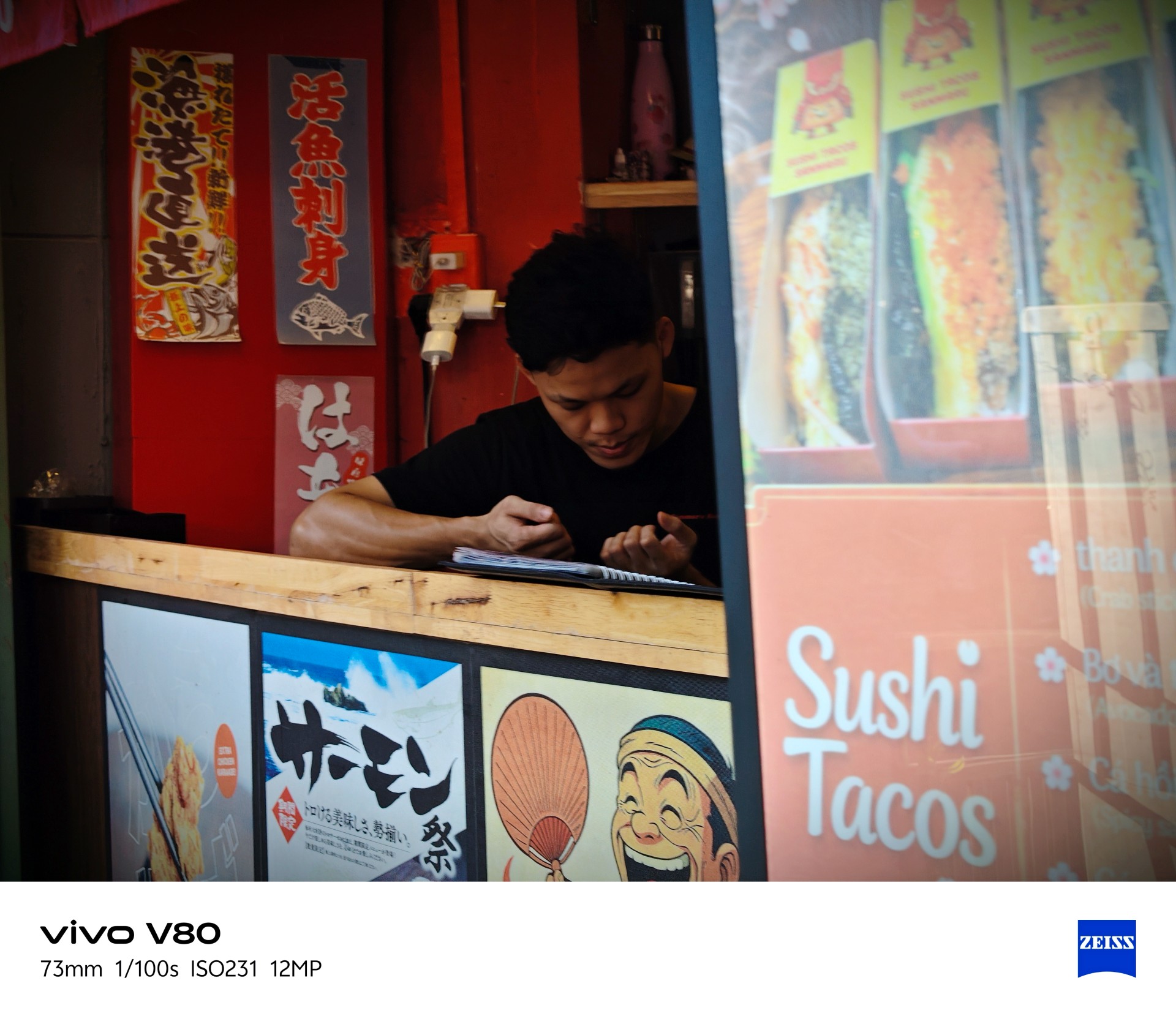
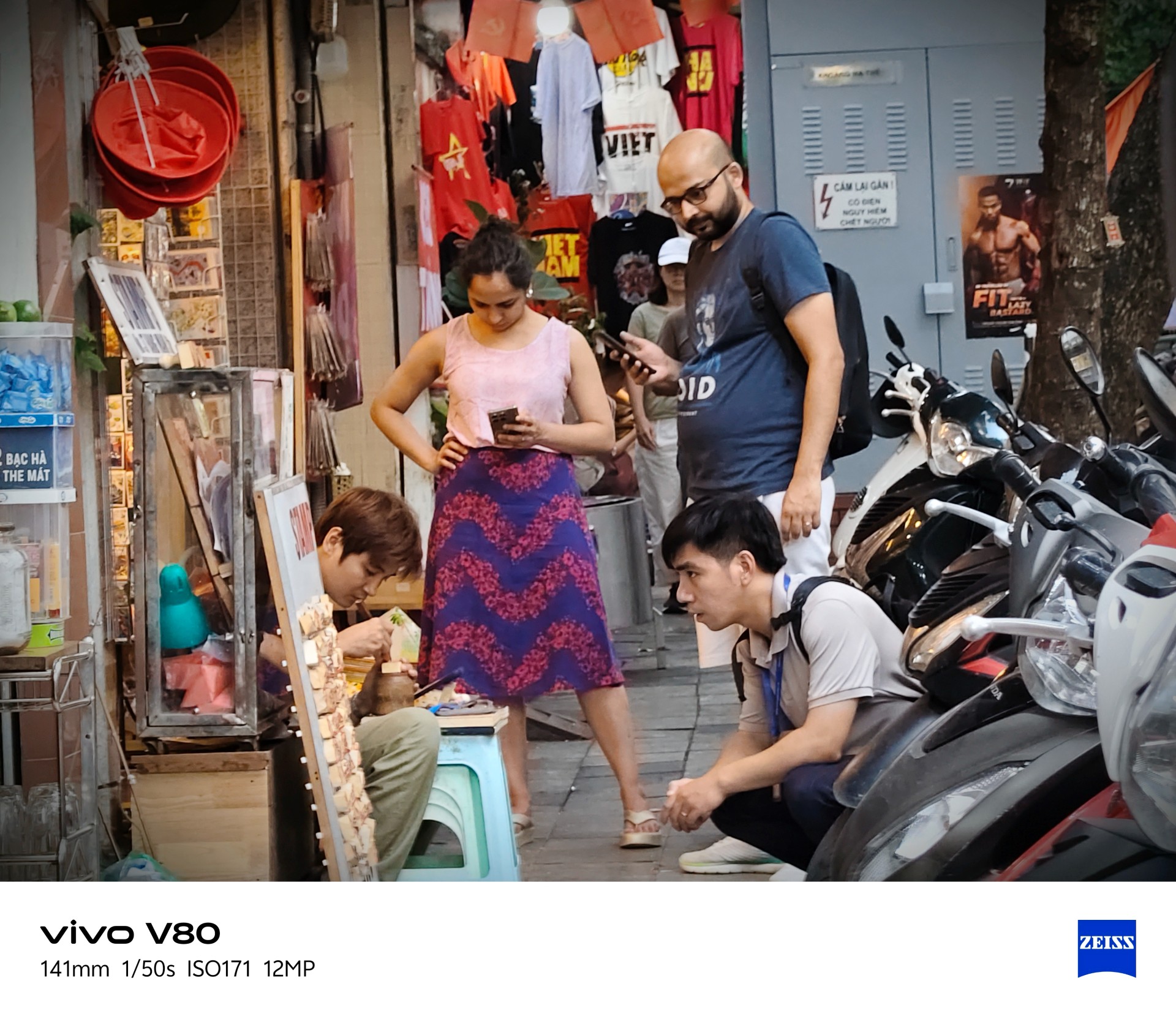
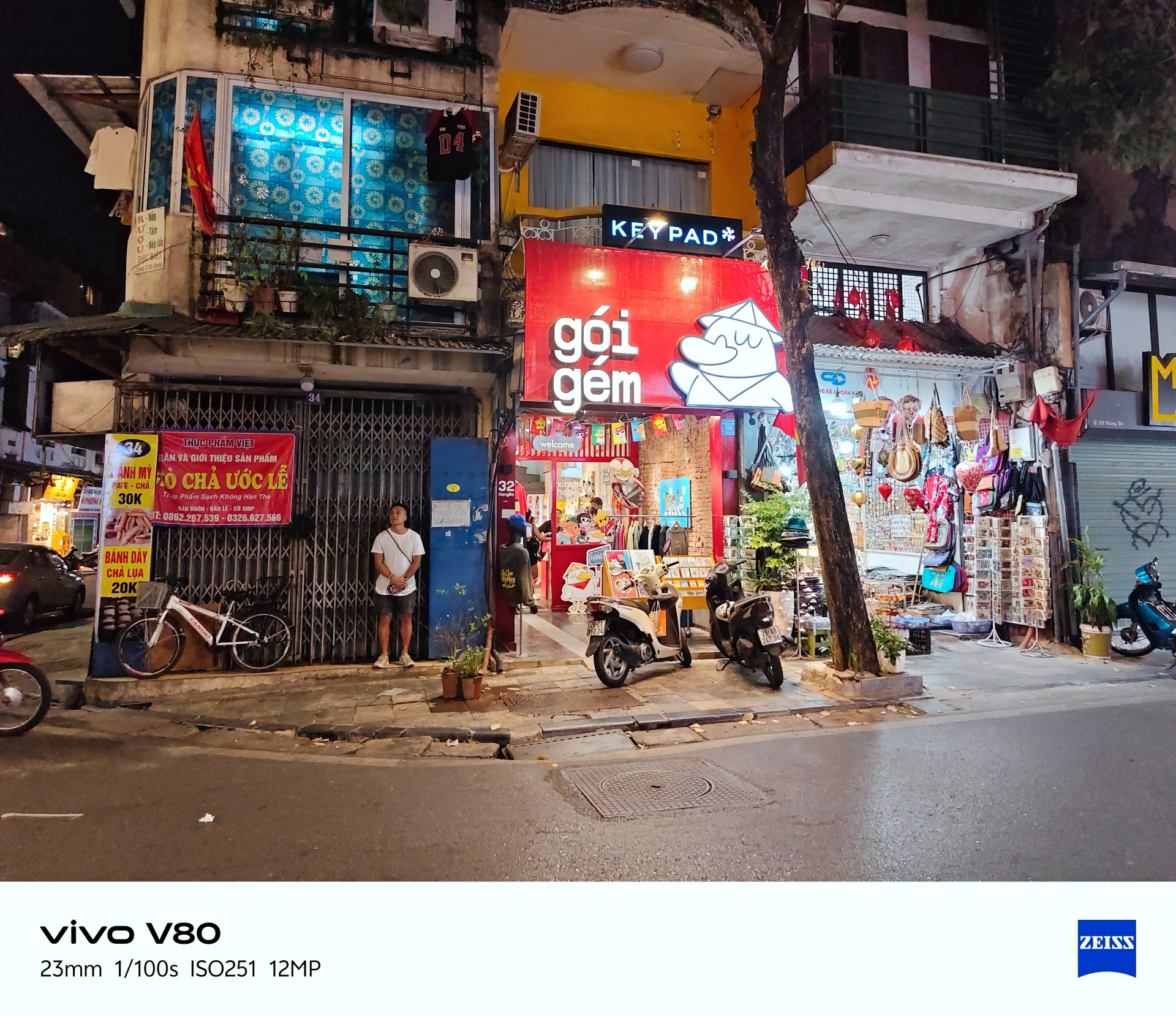
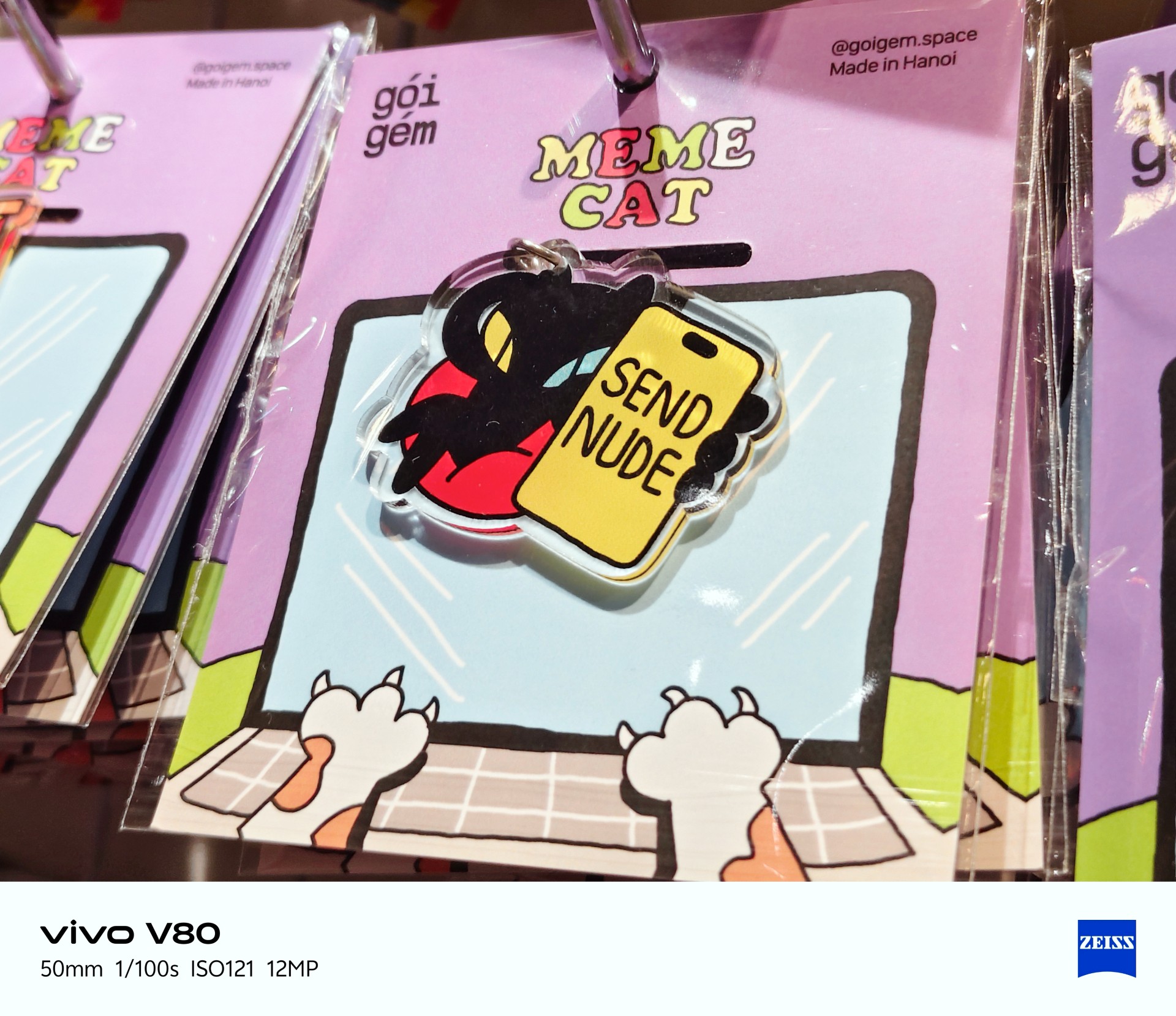
I took plenty of photos during my trip to Hanoi, Vietnam.
It’s worth noting that the phone received around three updates during my testing. Some of these included camera improvements. If there’s some unevenness in my experience and the resulting photos, I would attribute it to this.

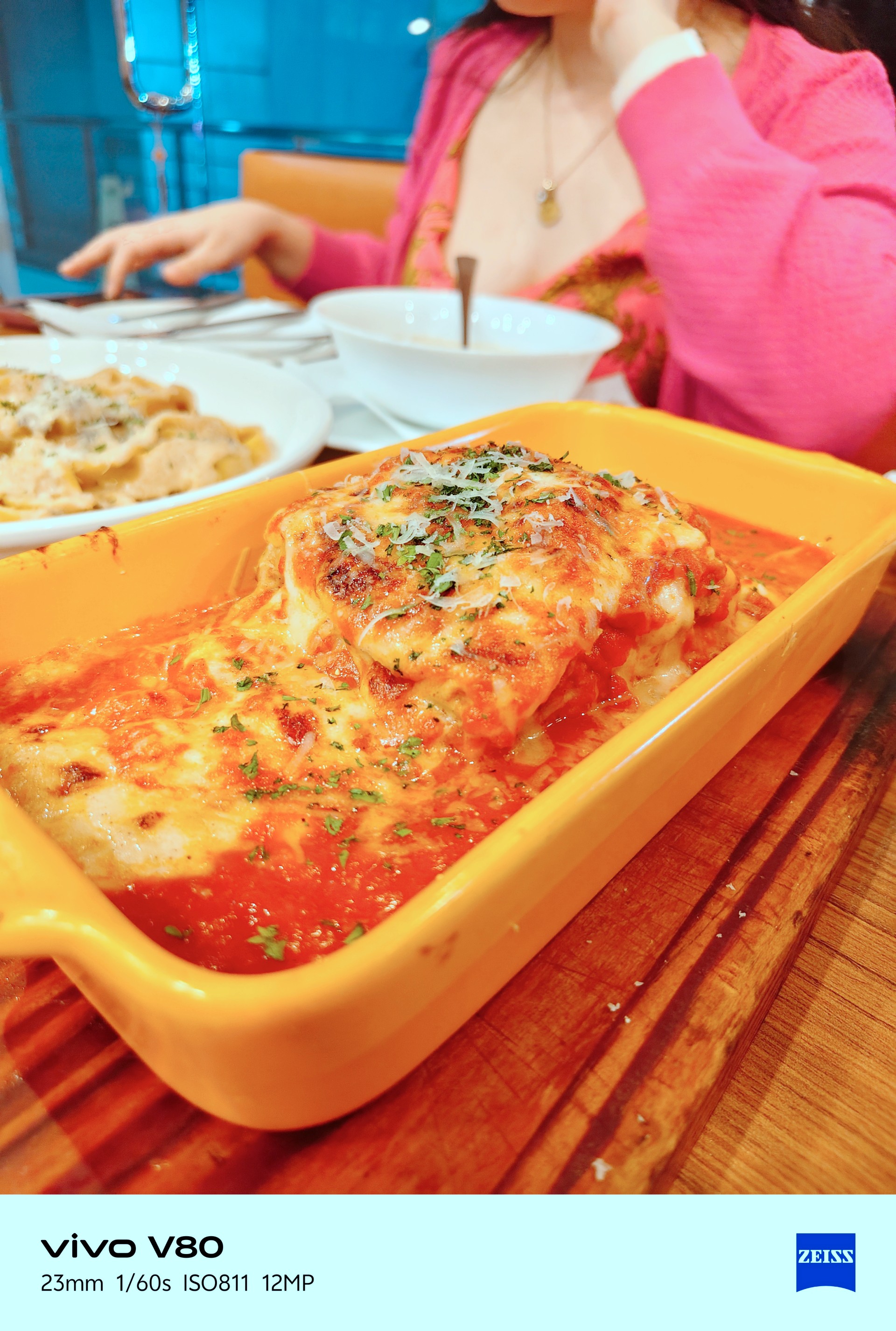
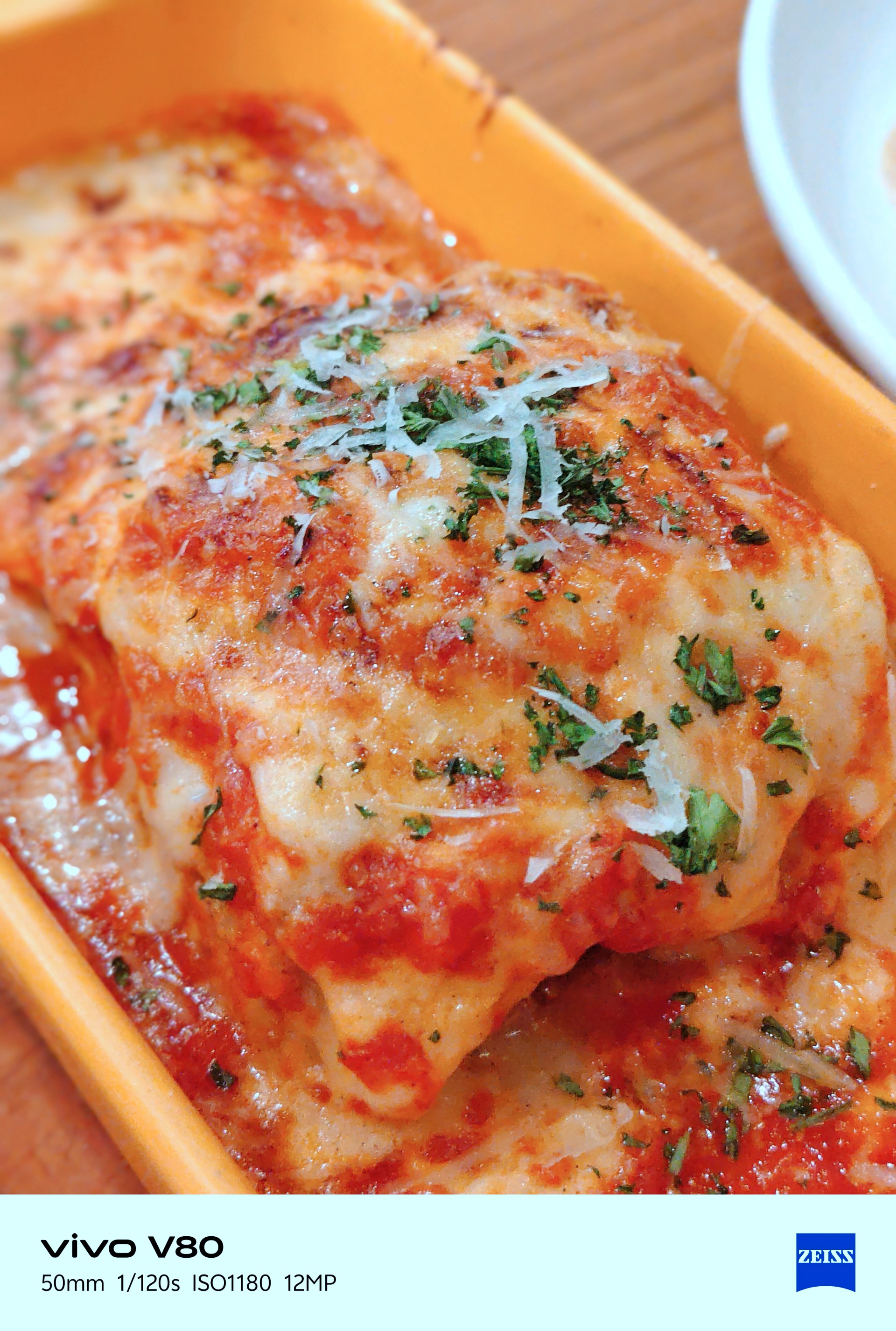
Overall, though, the vivo V80 is a serviceable travel companion. I took plenty of food photos, and this is one of the few phones where I genuinely preferred Food Mode over the regular camera settings.
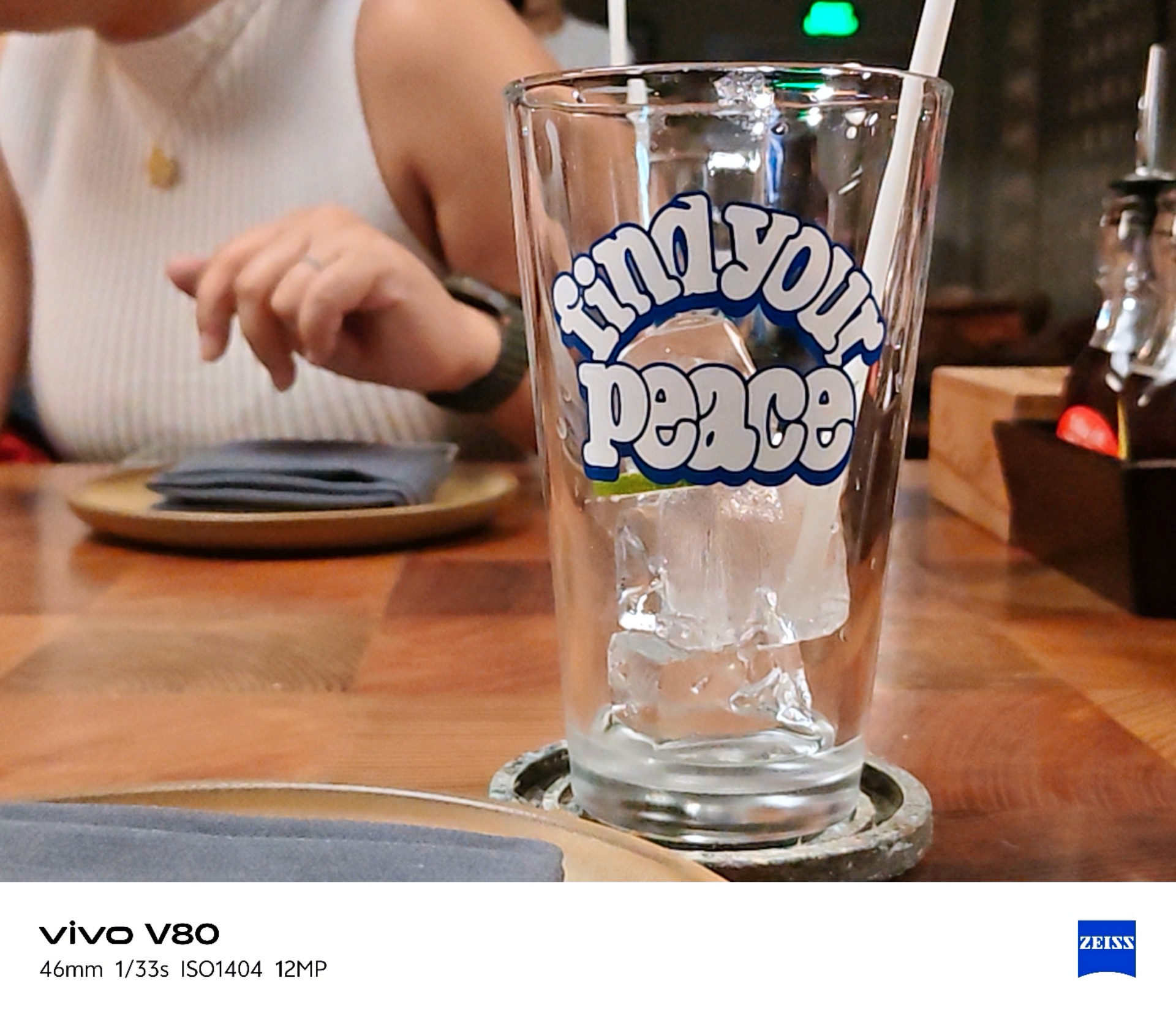

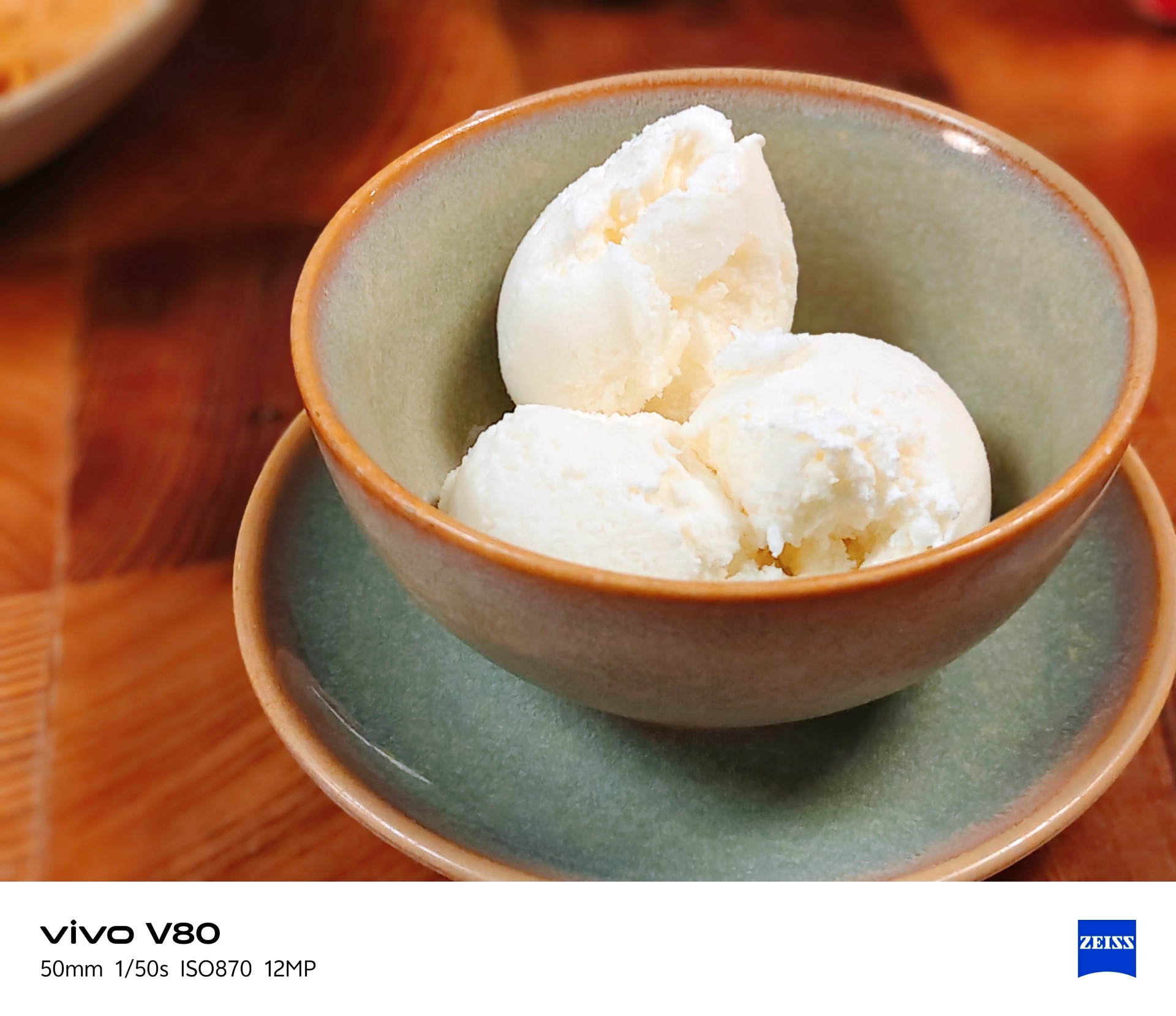
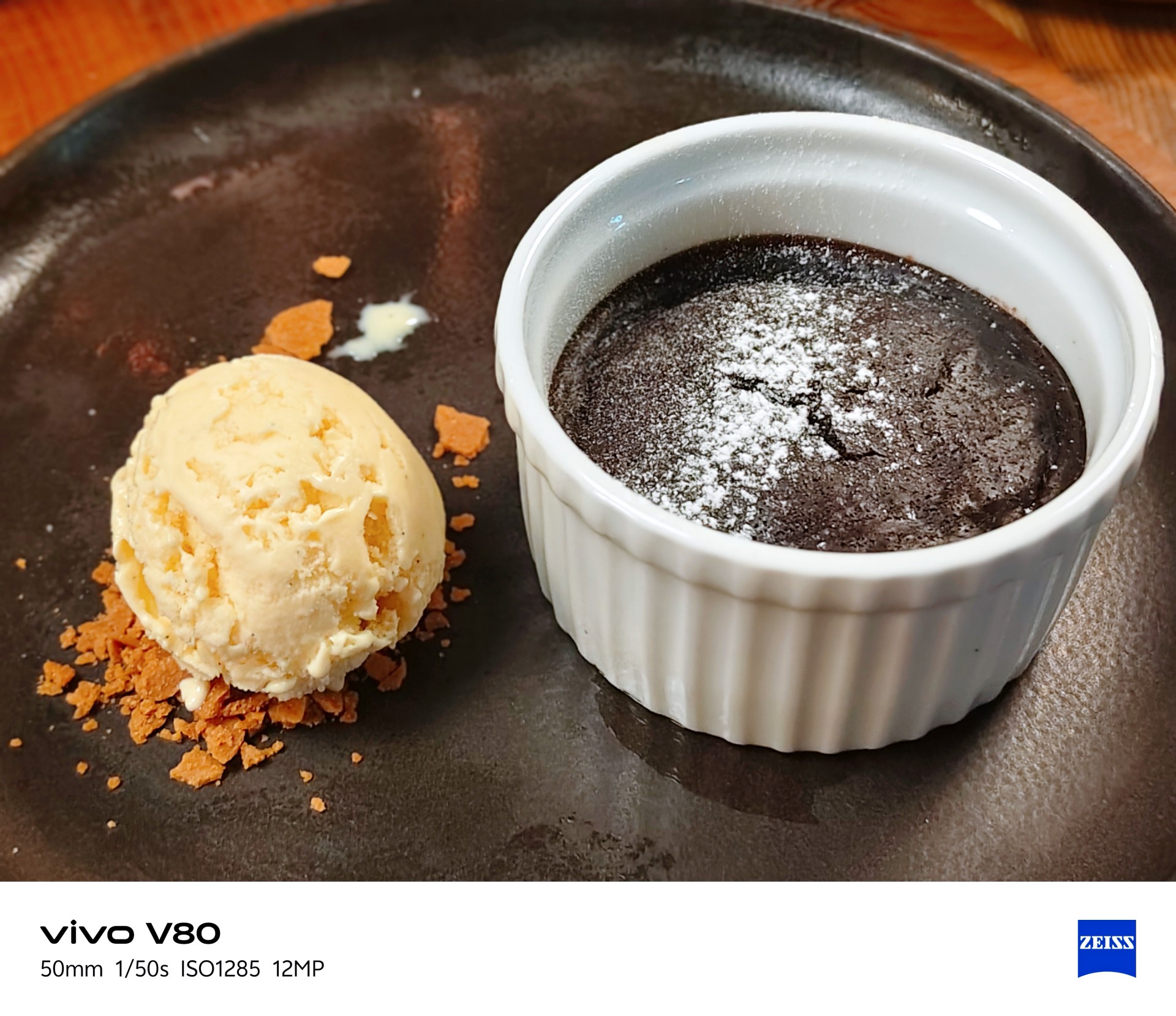
It made the many satisfying Vietnamese dishes I had during this trip look even more appetizing.
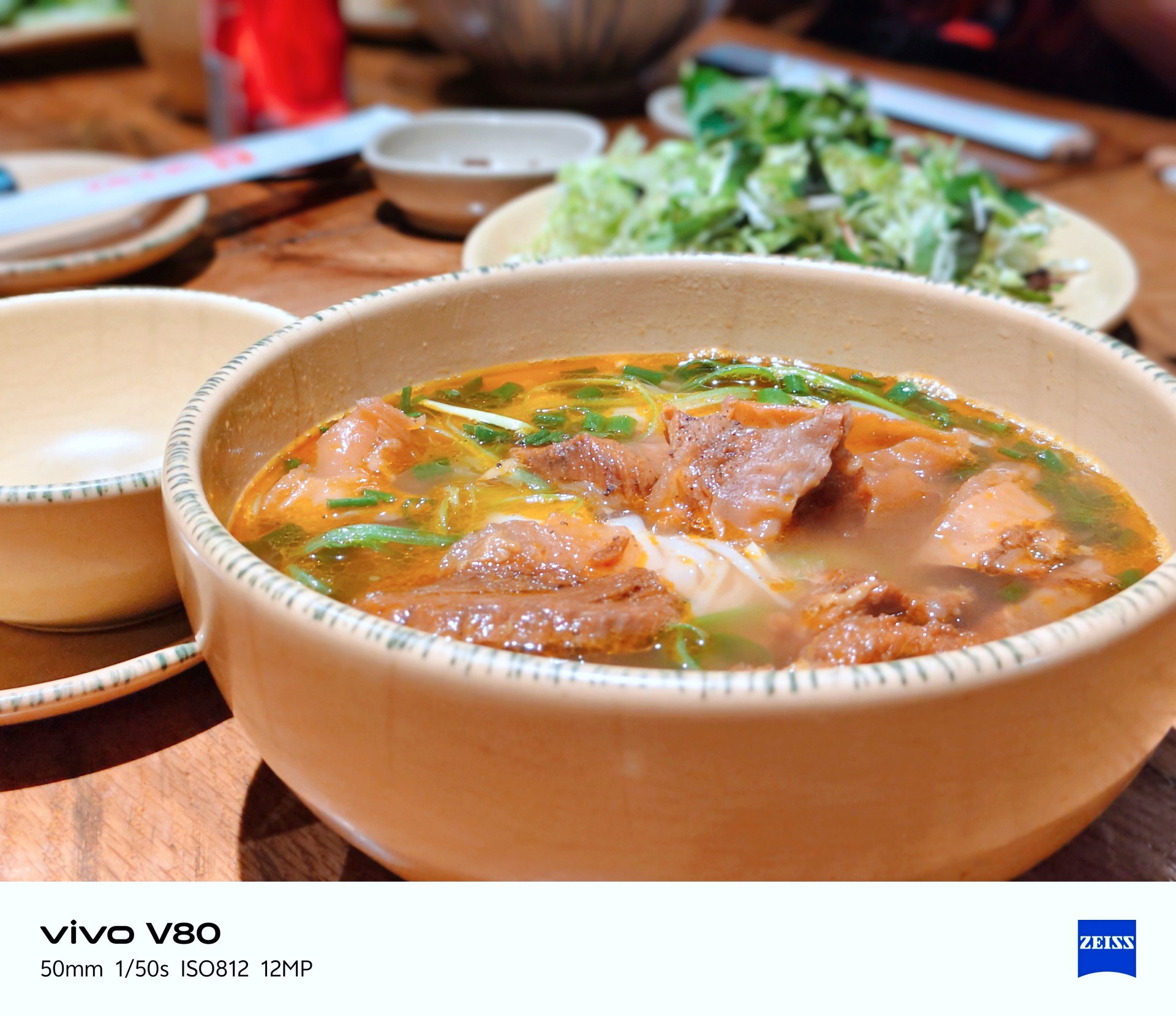

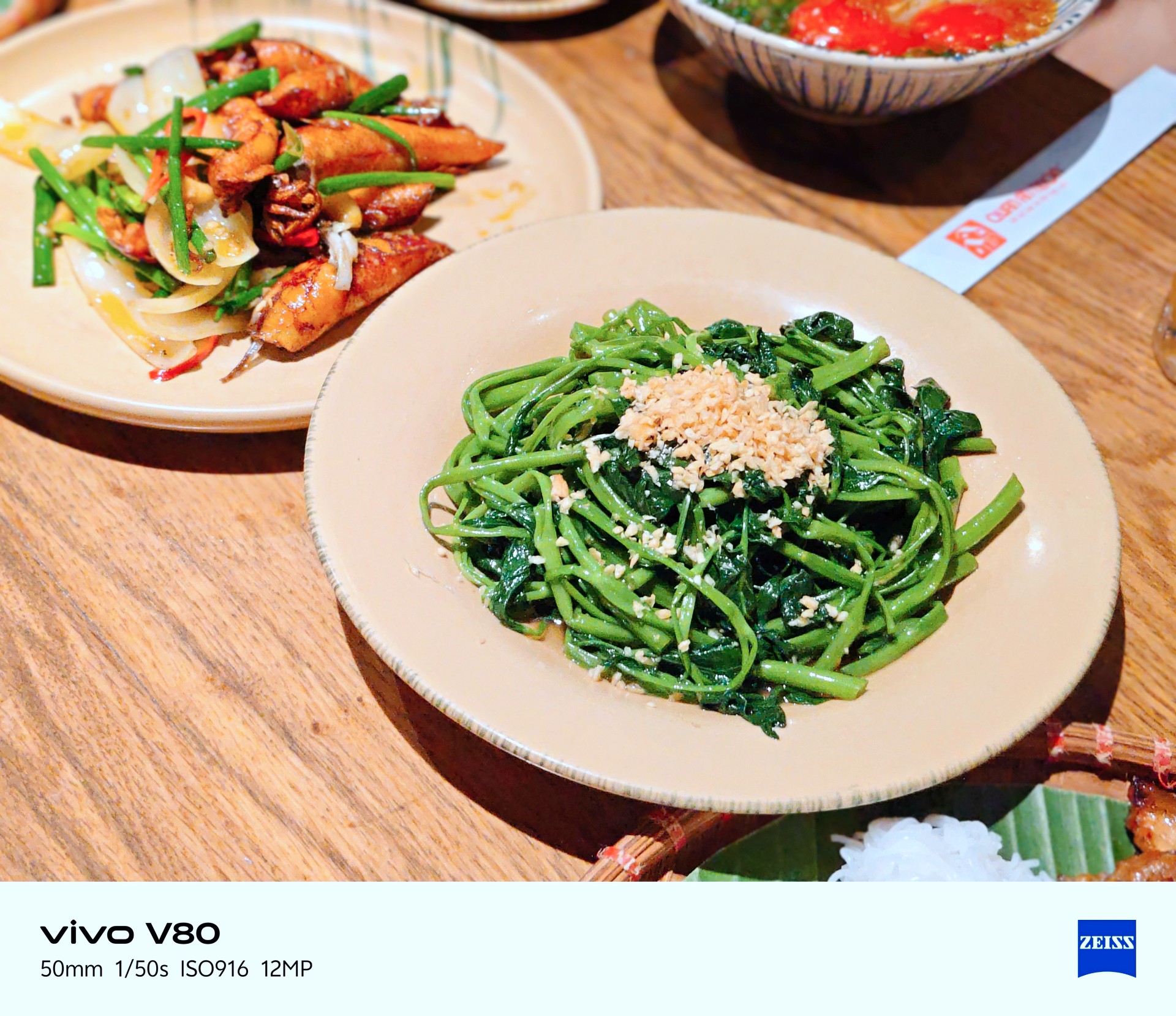
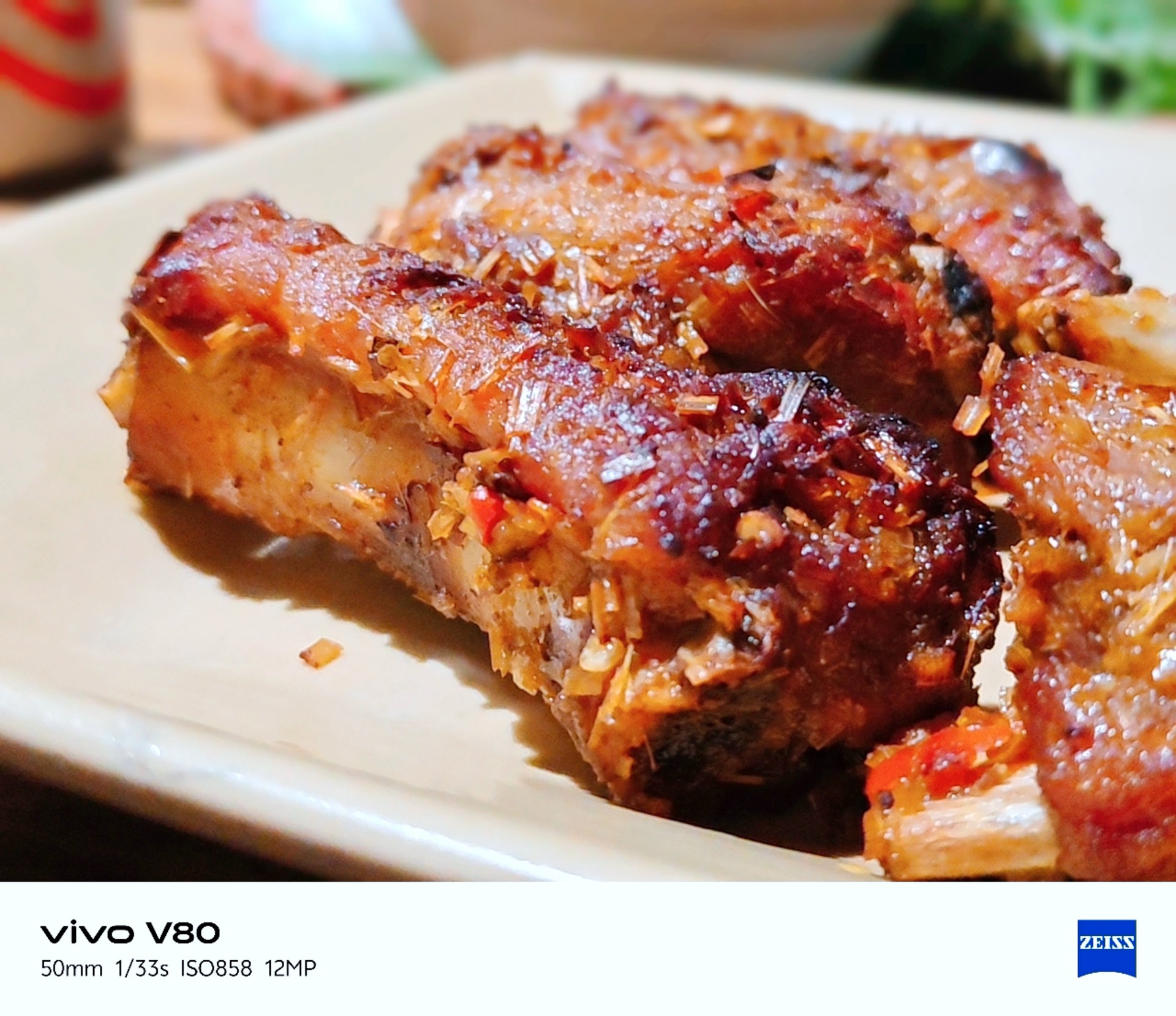
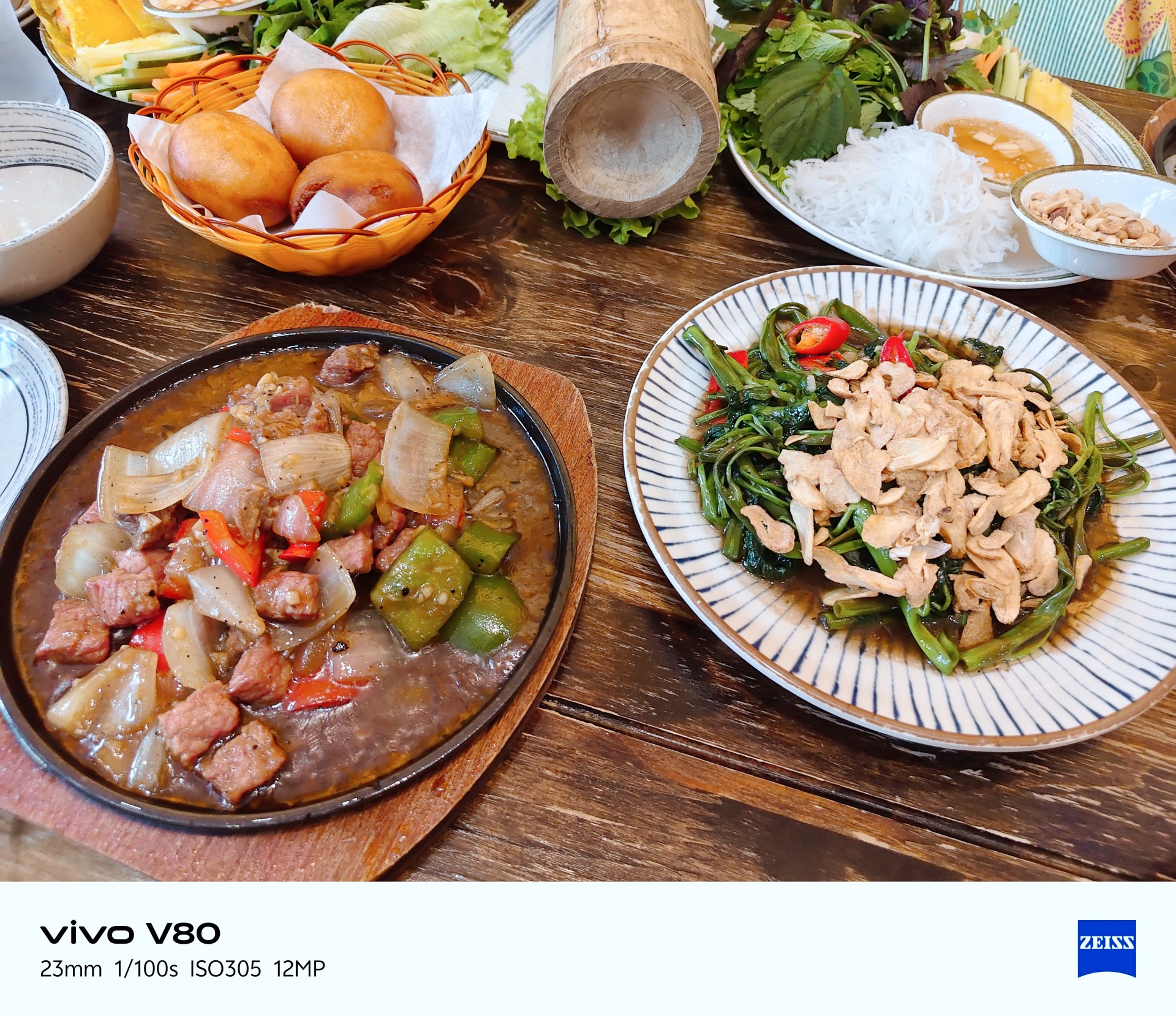

The camera can be quite hit or miss in certain lighting conditions. One thing I noticed is that it tends to brighten scenes more than I would like. My advice is to adjust exposure compensation between -1 and -3 when the situation calls for it. This can help keep scenes from looking too bright, but you don’t need to change the setting for every shot.
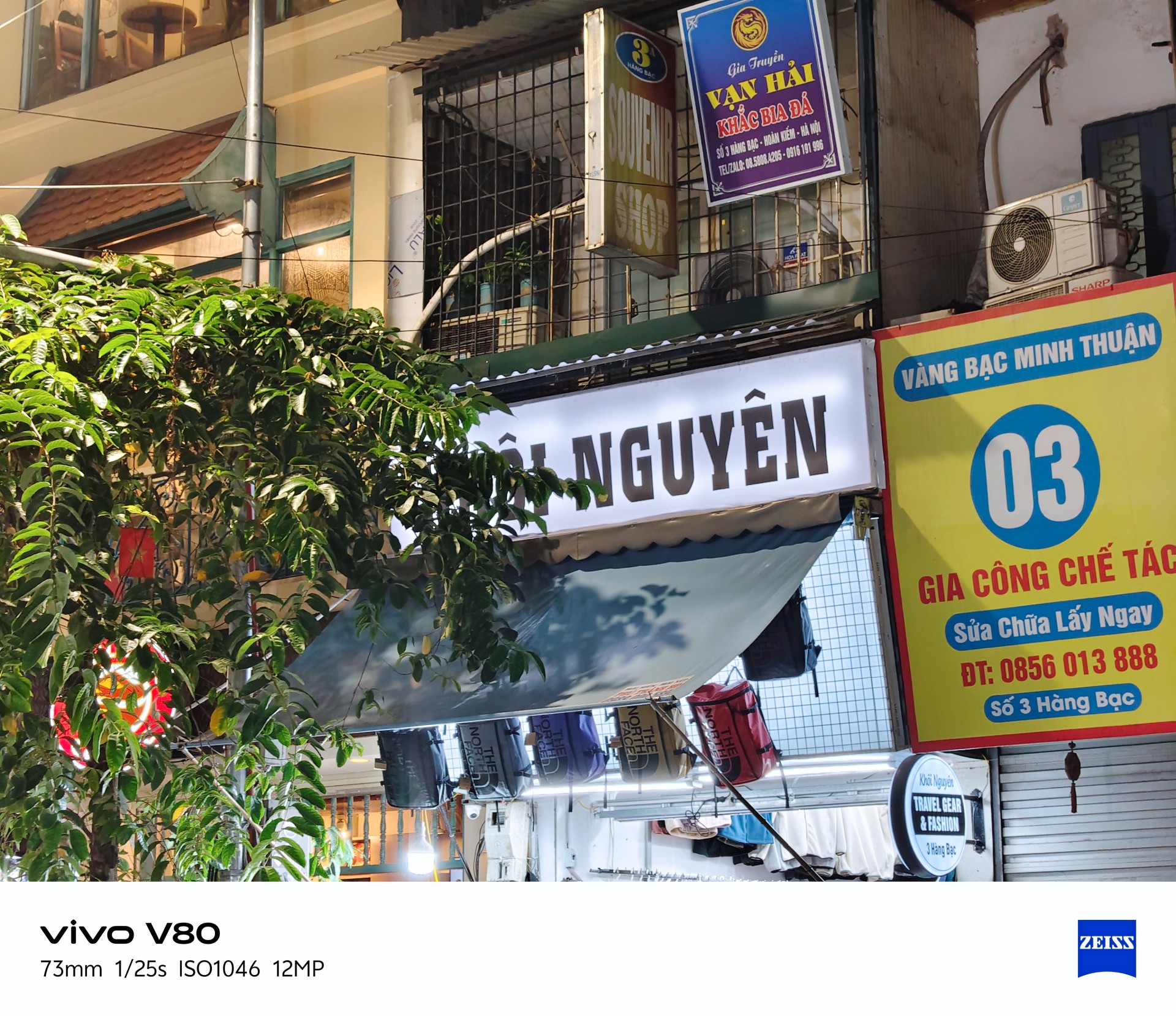


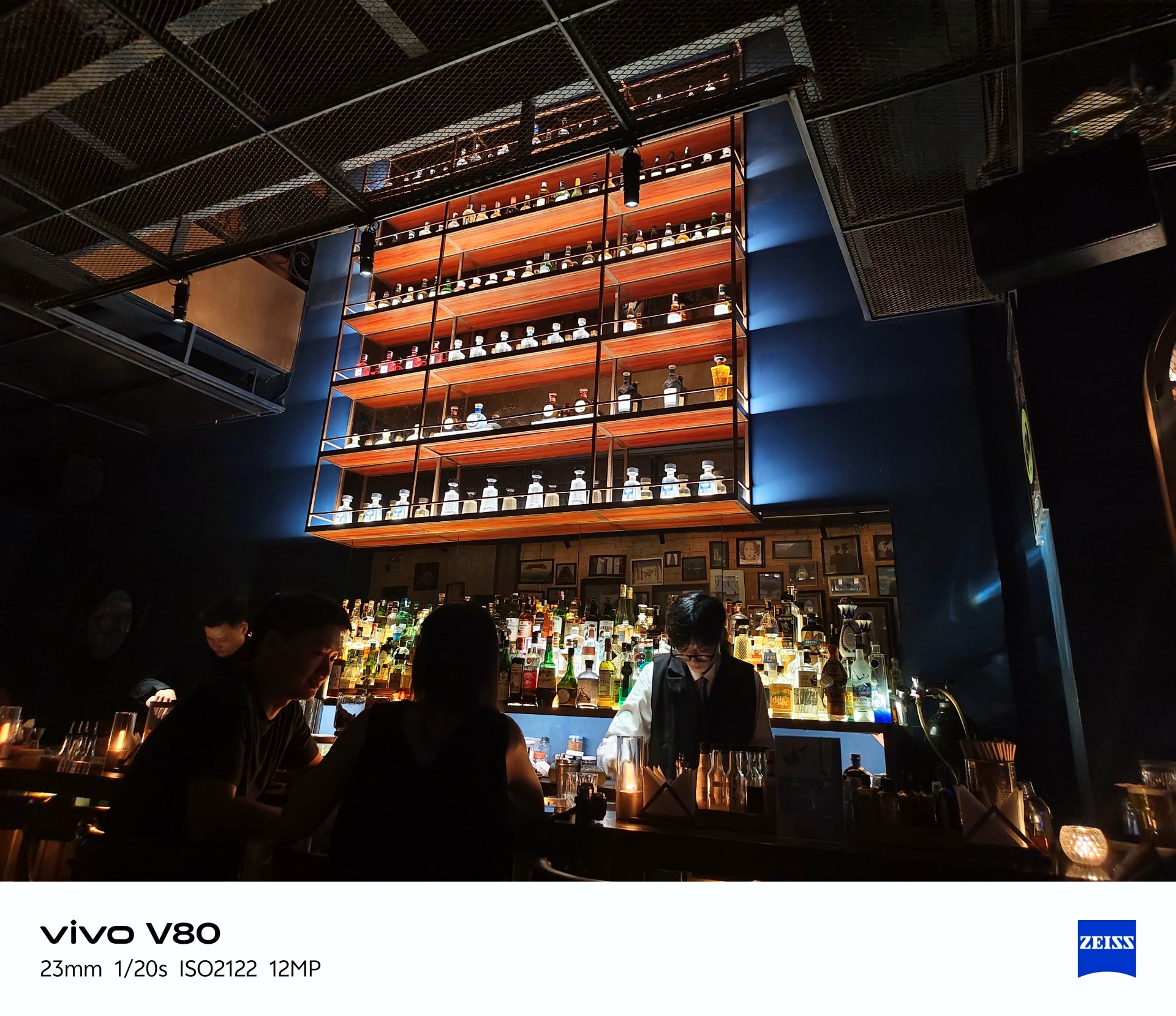
Beyond exposure issues, I also noticed considerable lag when opening the camera after the phone had been idle. There’s a noticeable wait before the camera app becomes usable.
This could mean missing the moment, which is crucial when taking photos. The solution is to stay ready, although a software patch to address this wouldn’t hurt.
Despite those two issues, I enjoyed taking photos with the vivo V80. More samples below.
Quaint little cafe
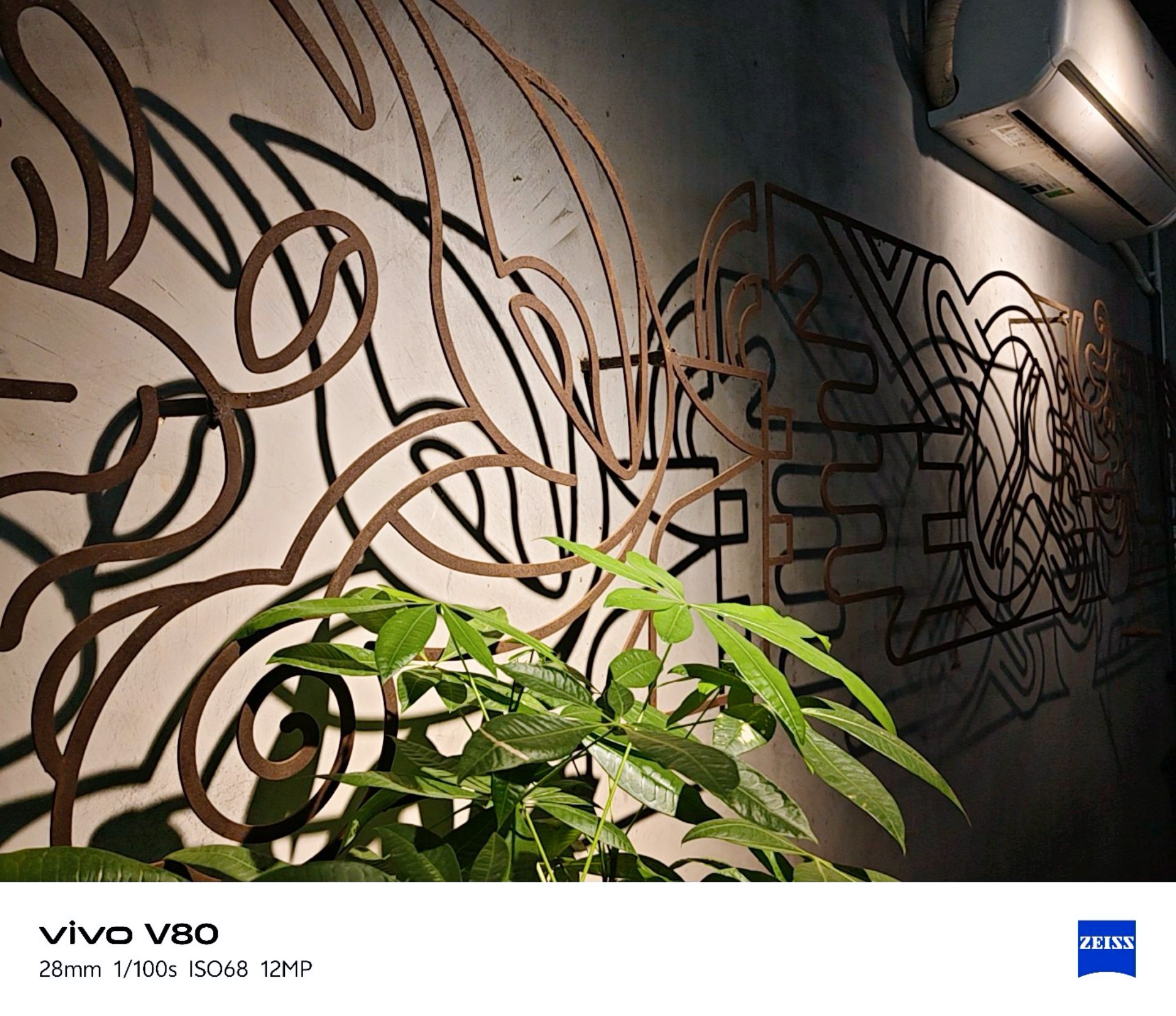


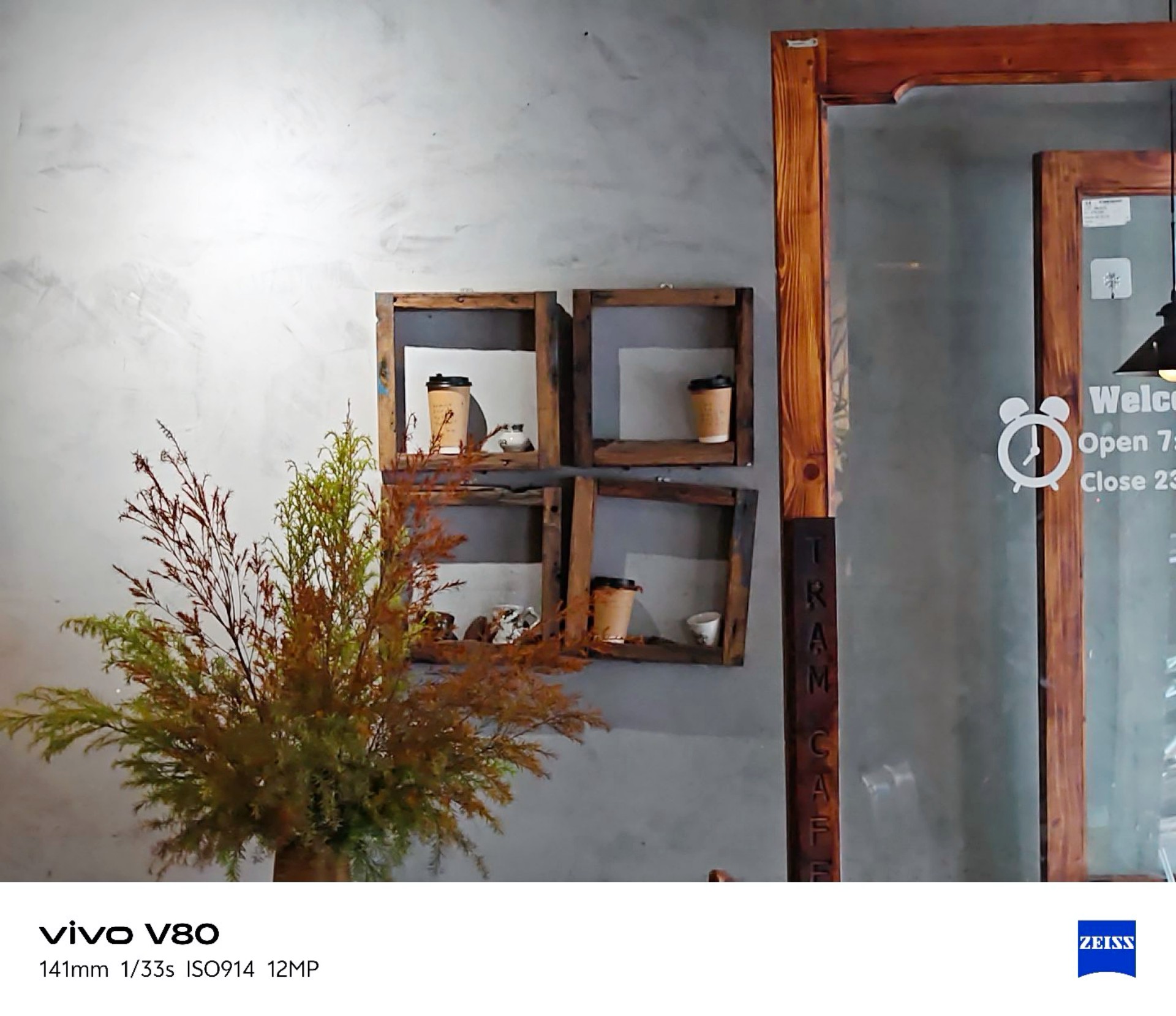
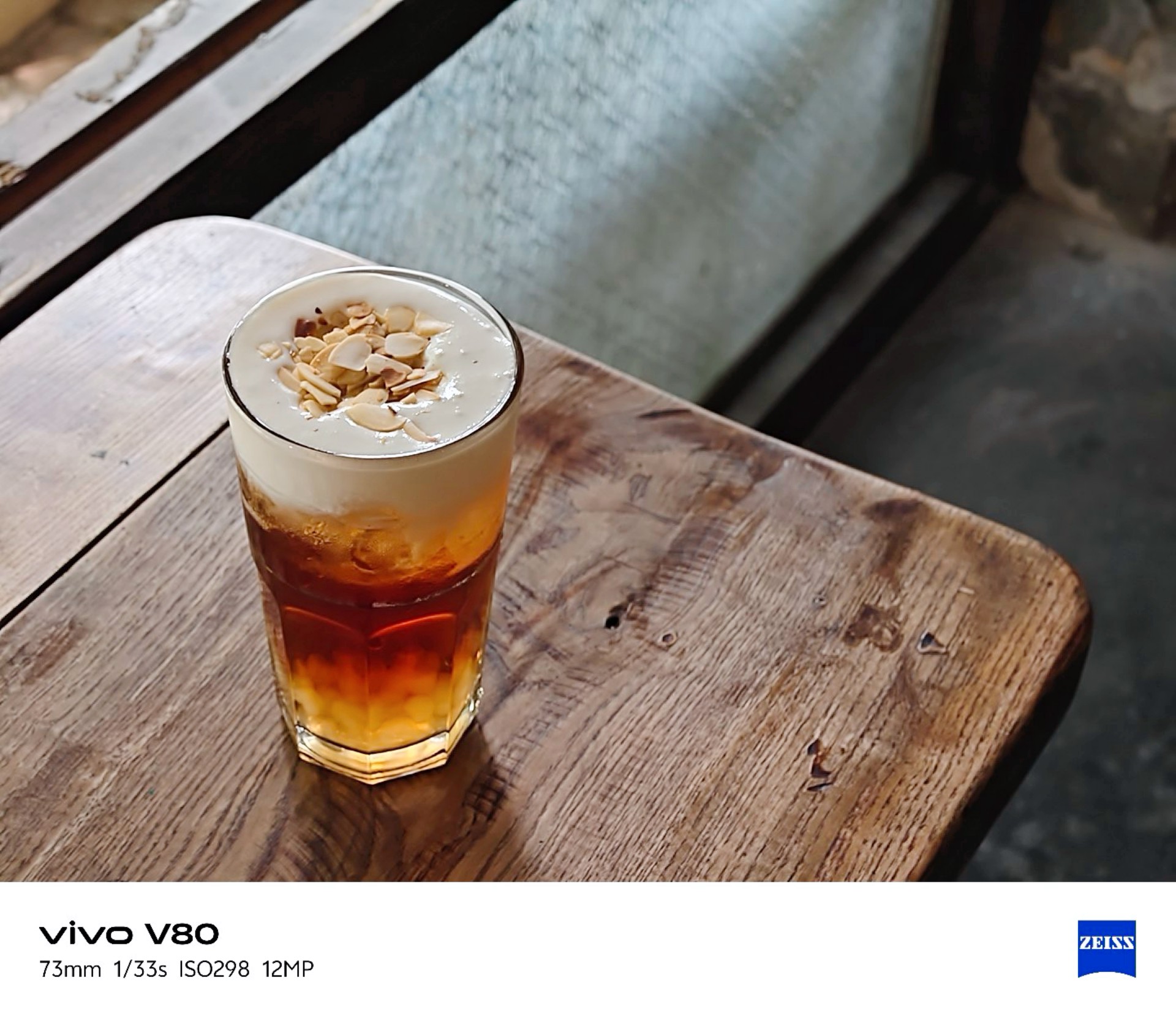
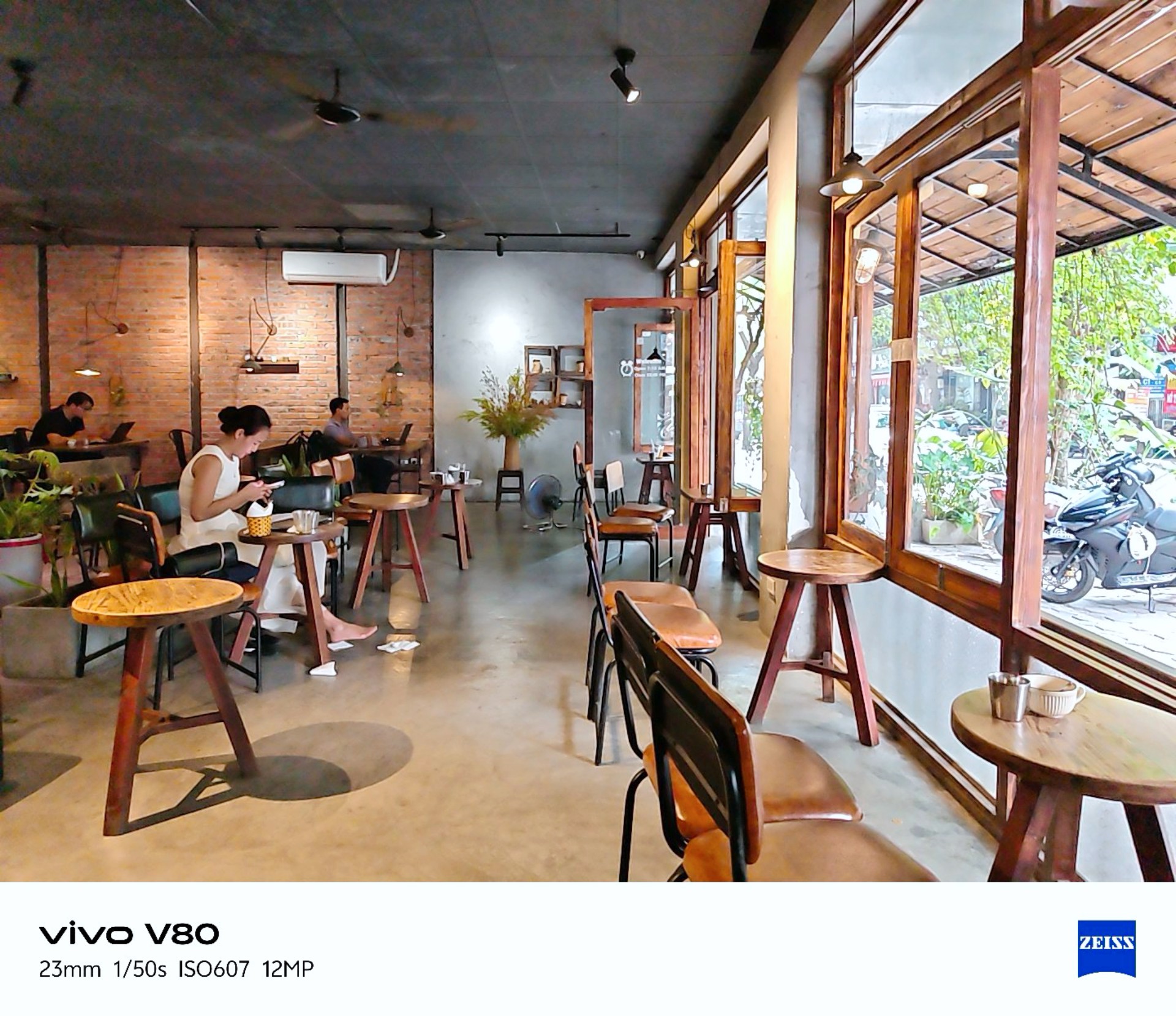
vivo Textured
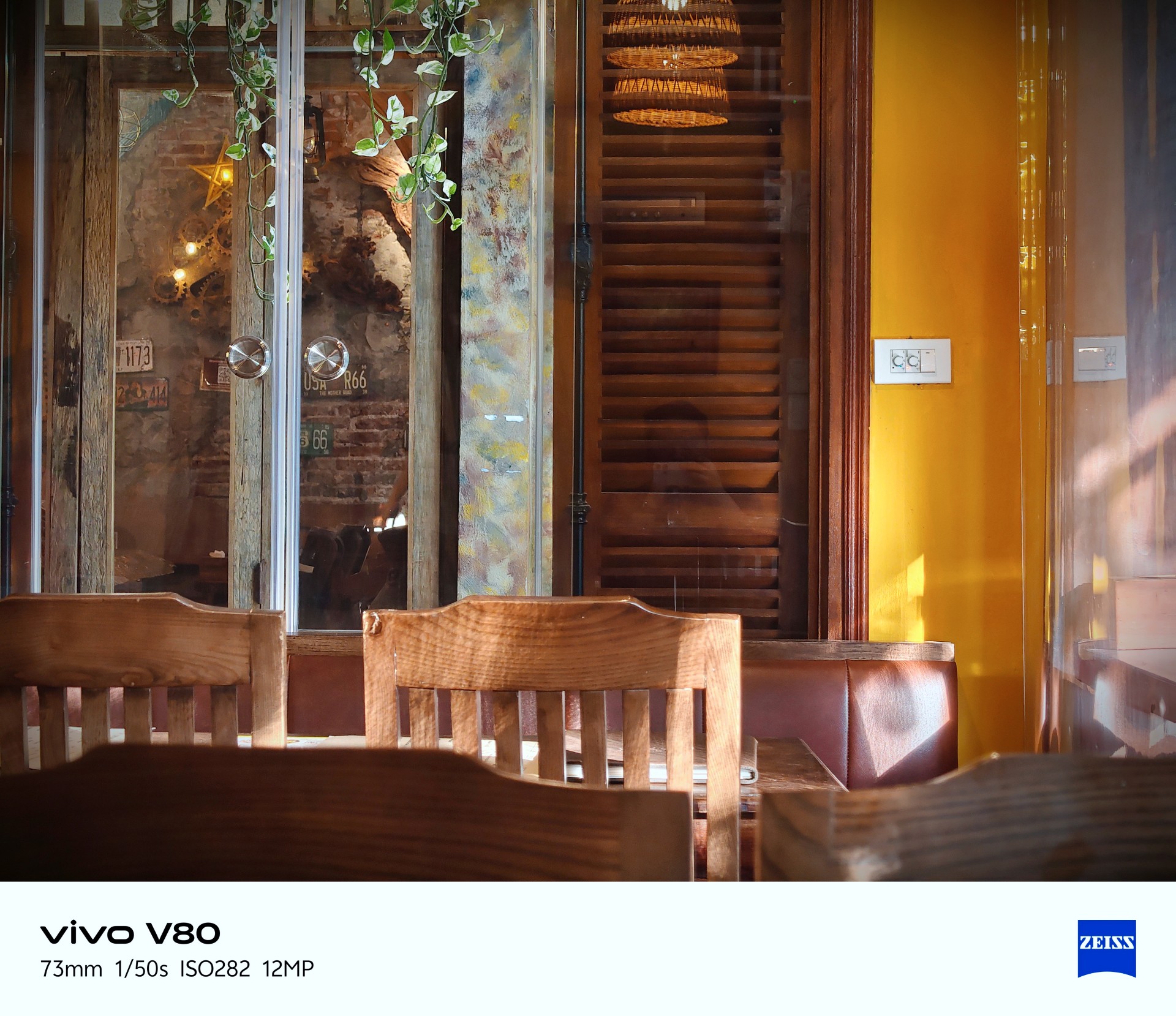
I realized I was shooting mostly in Vivid mode so I tried textured for a while. Here are the results.
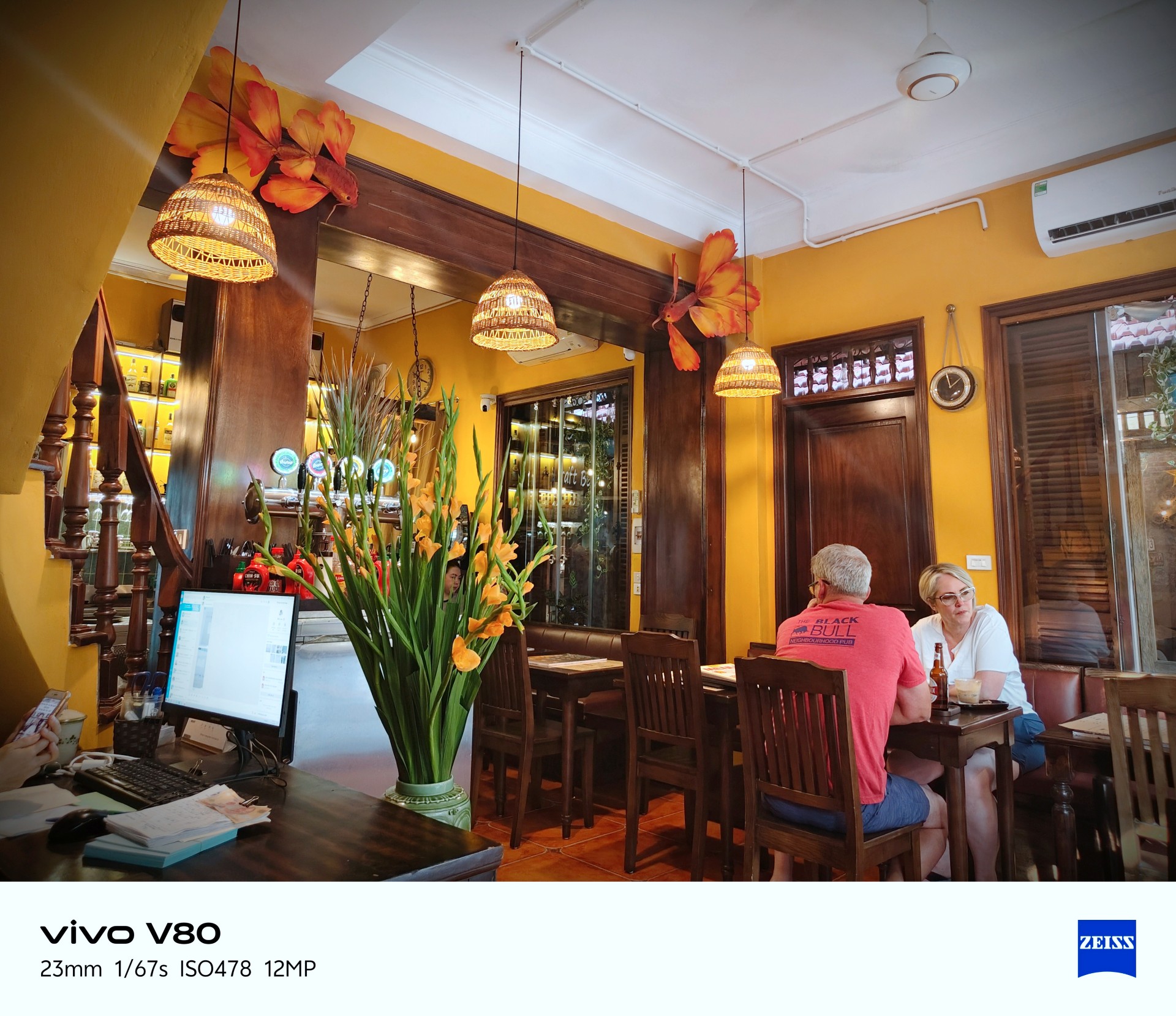
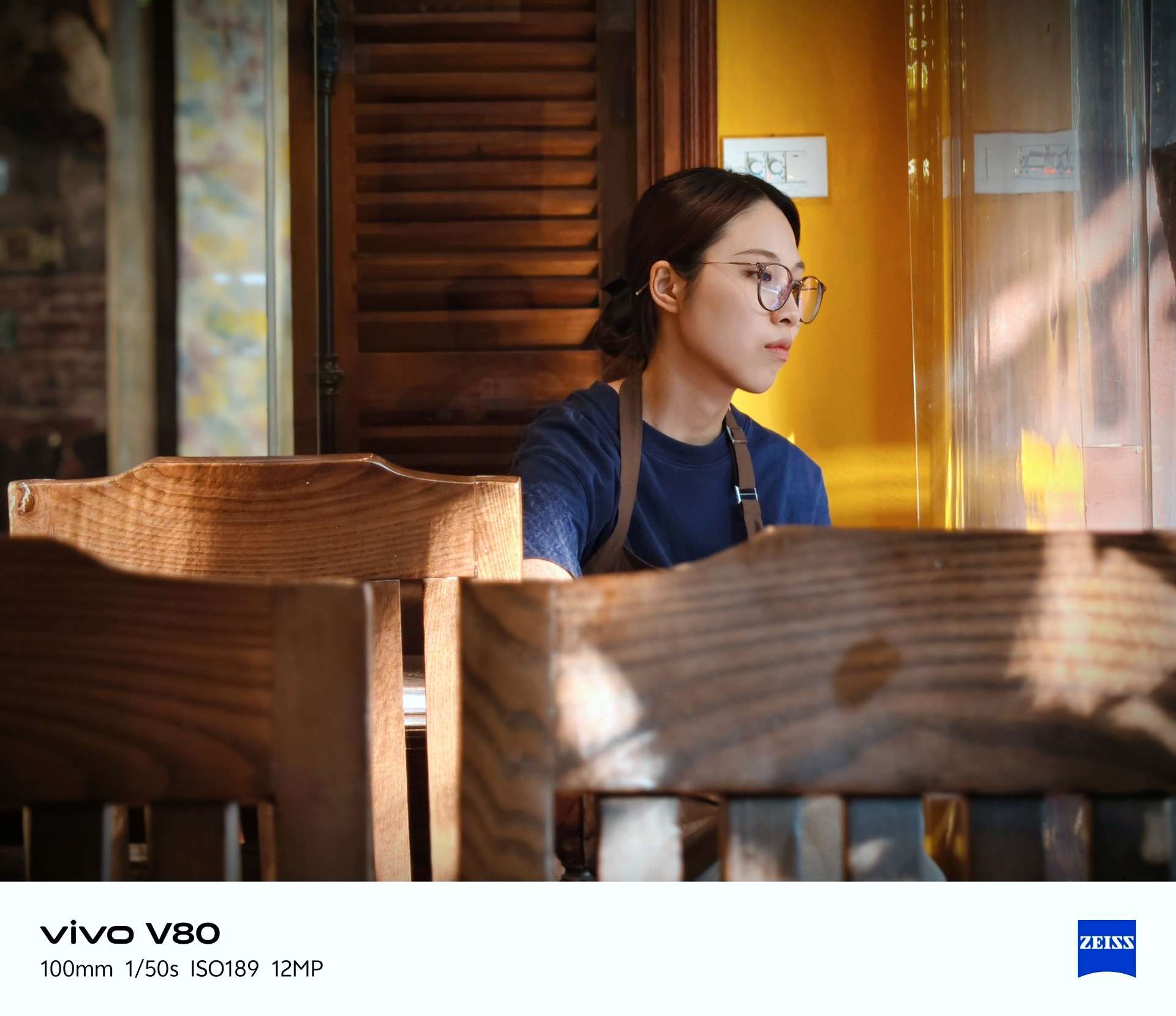


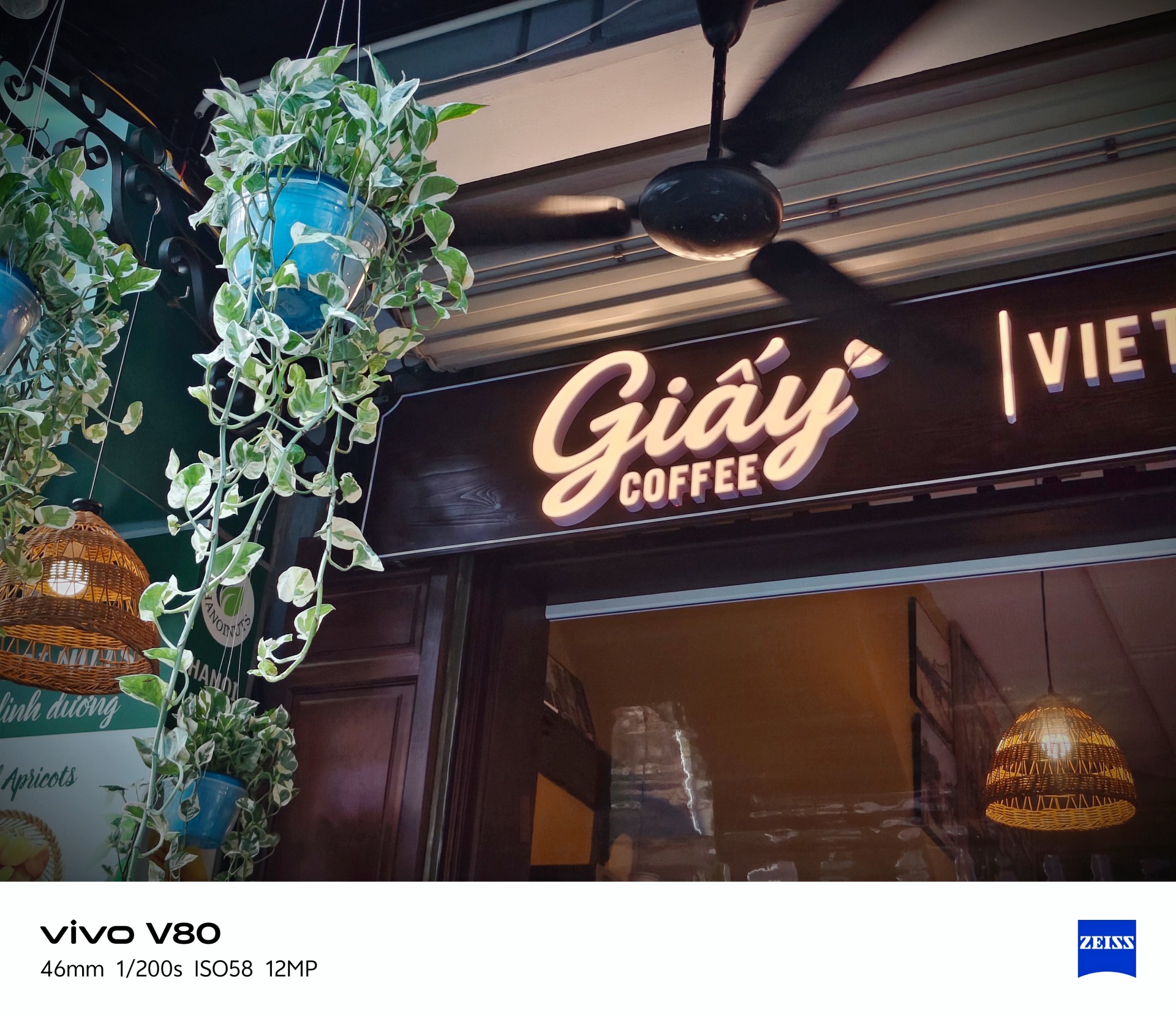

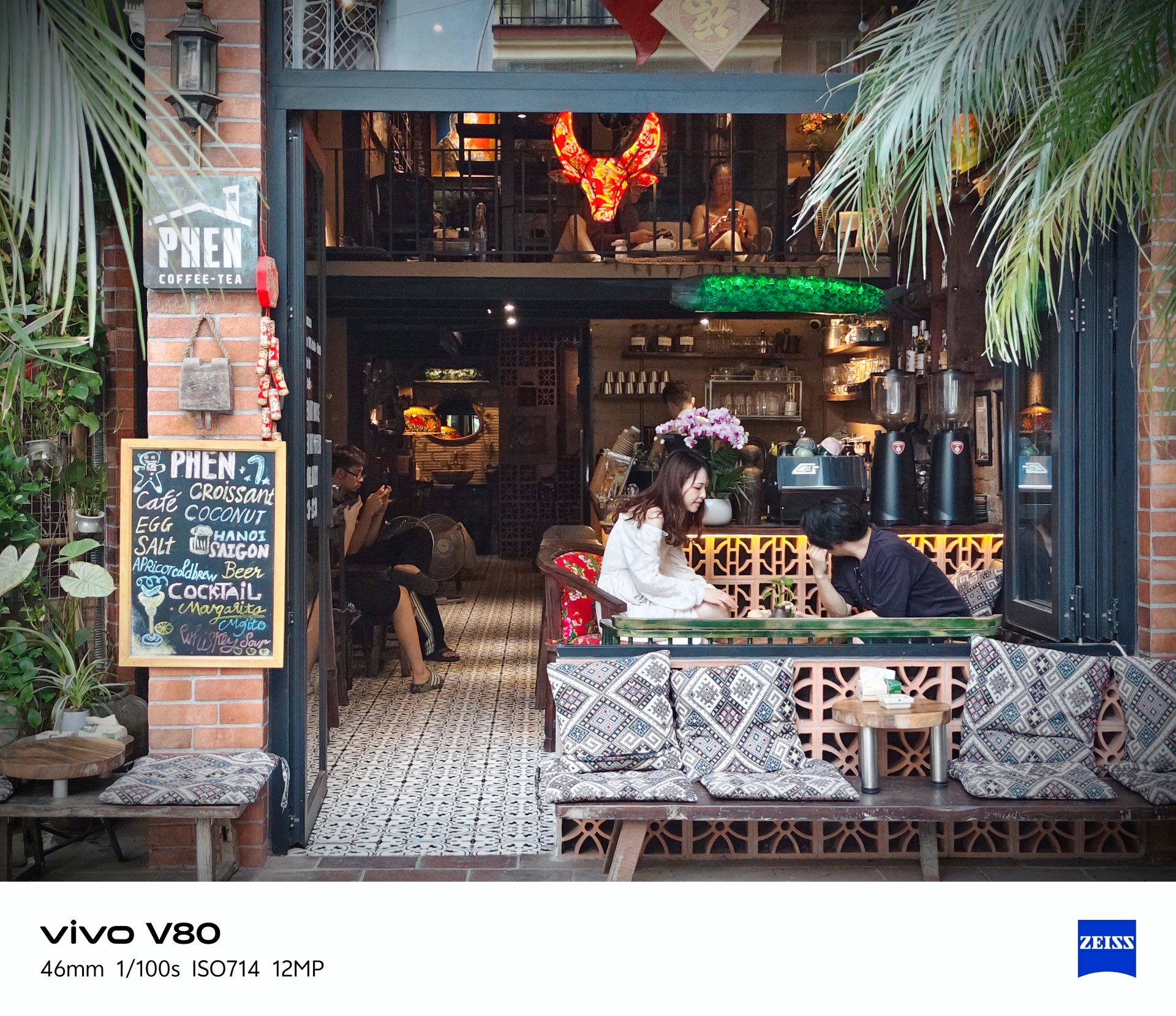


Best souvenir shop: Goi Gem


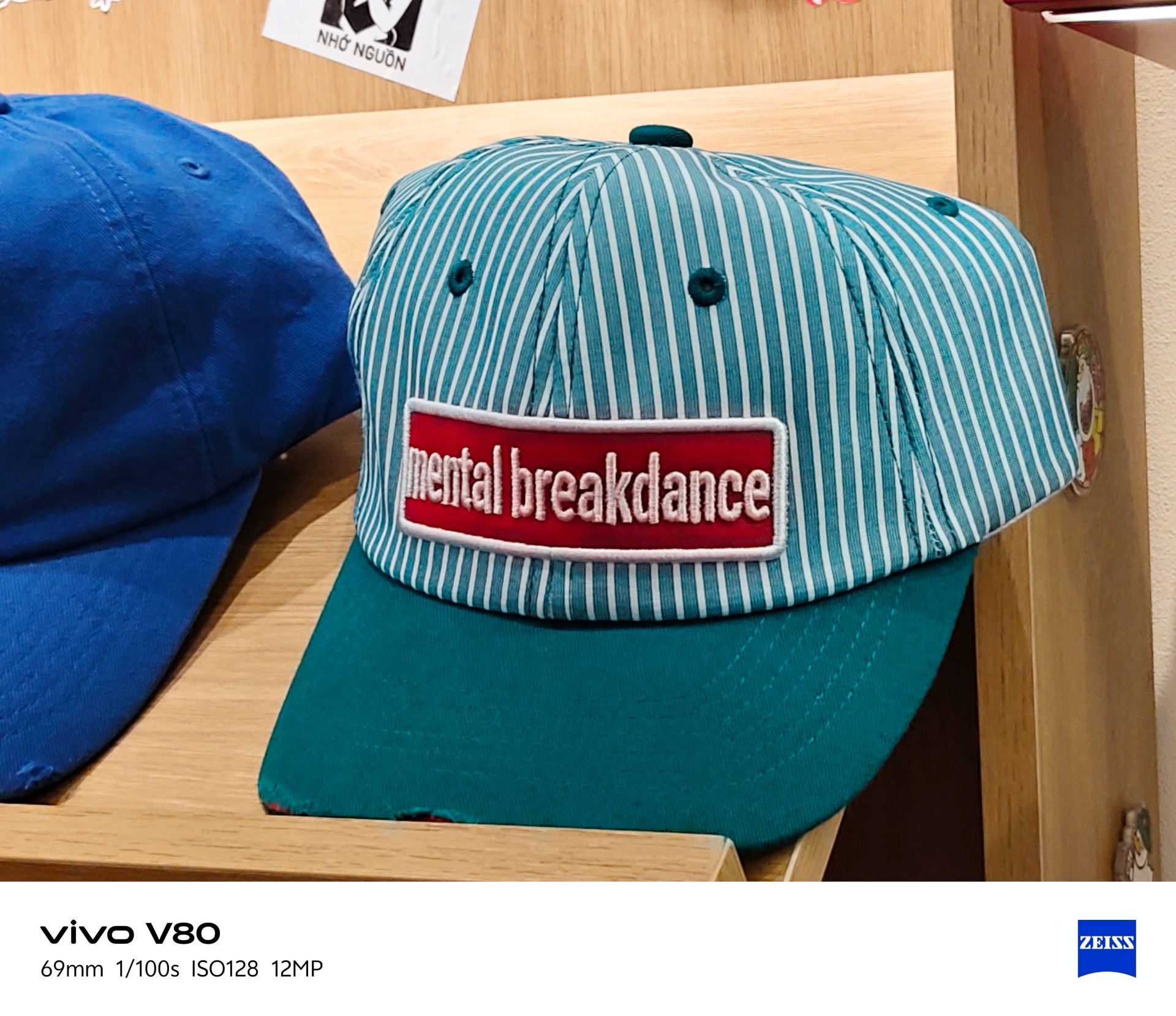
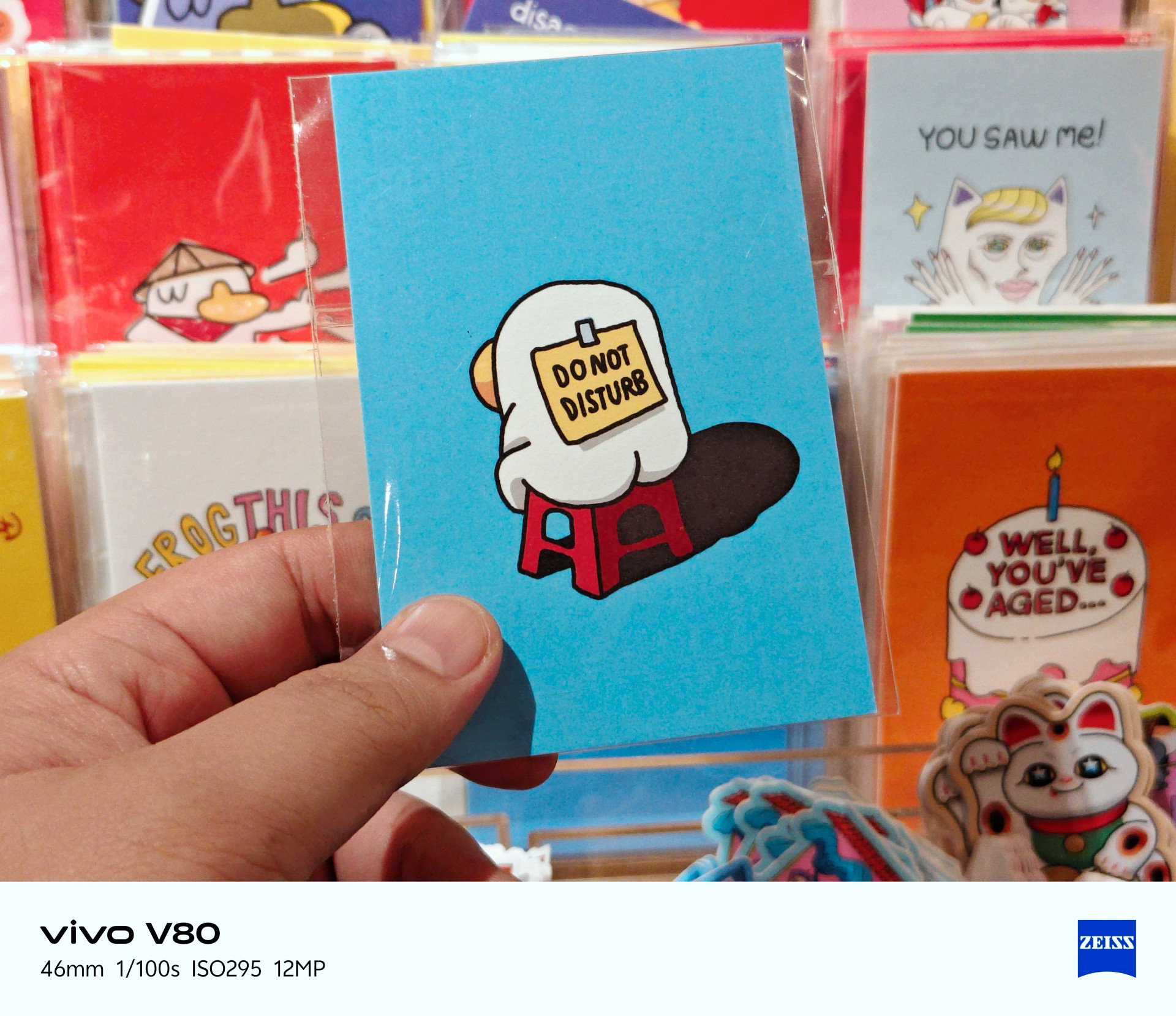
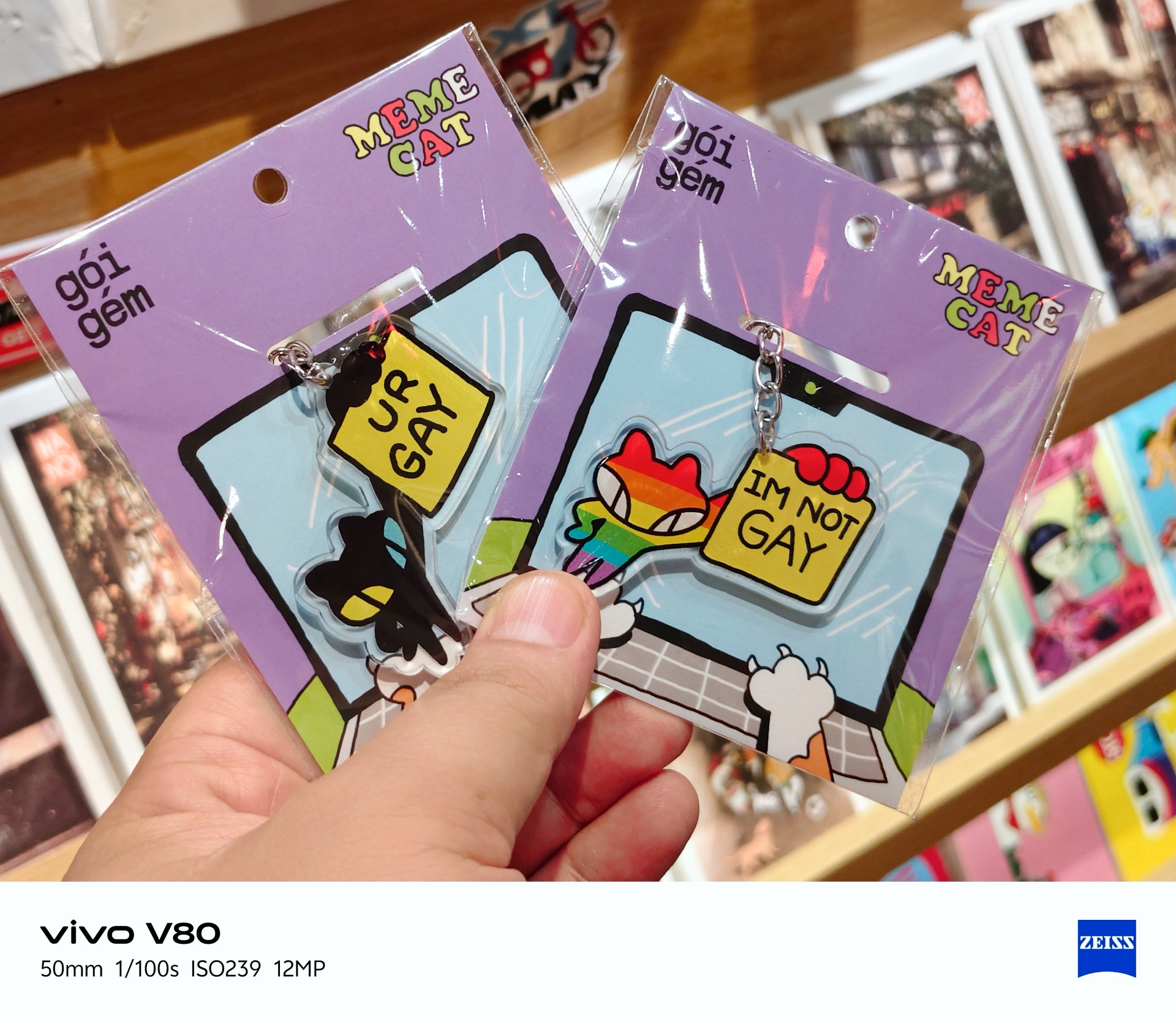


Portrait photography
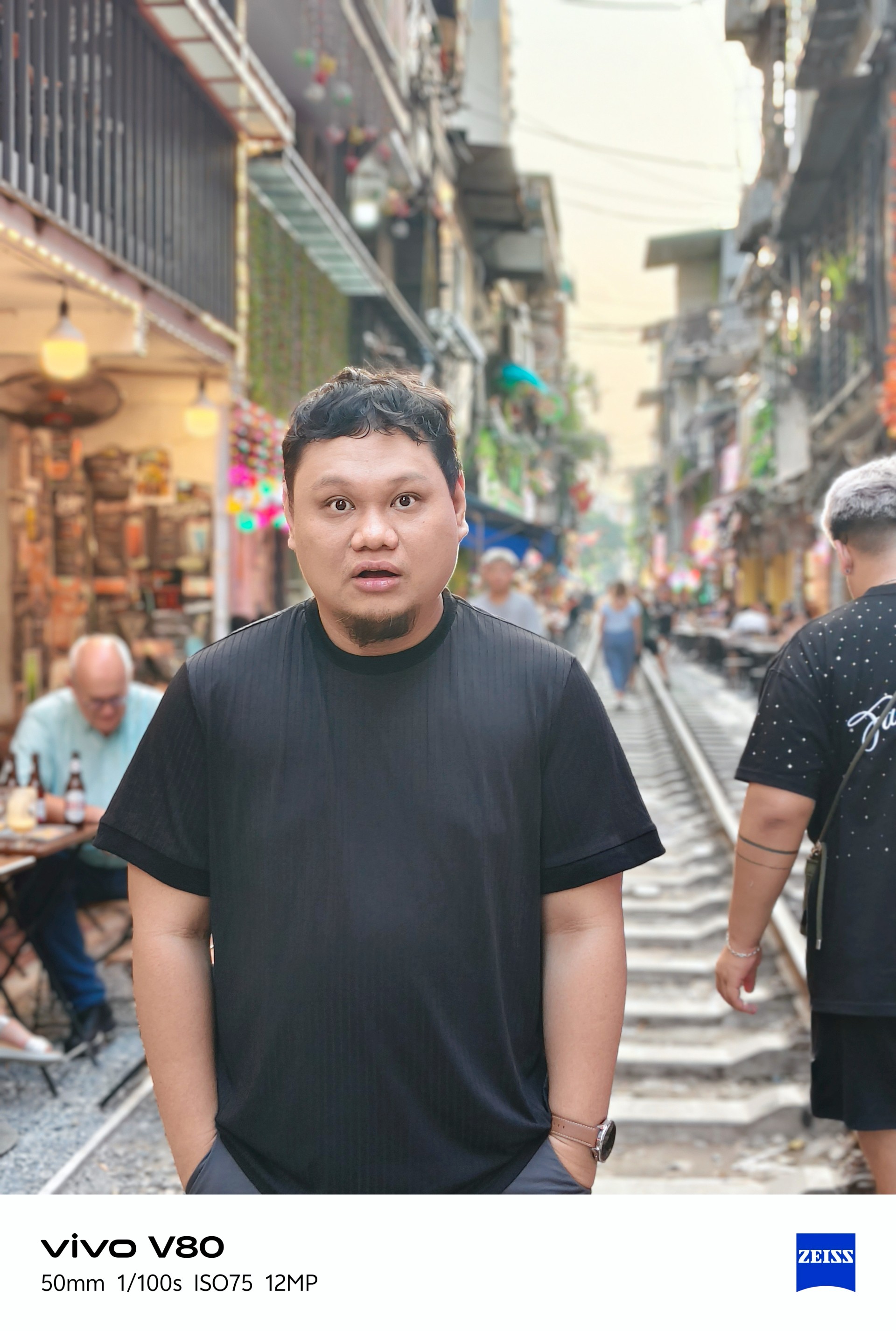

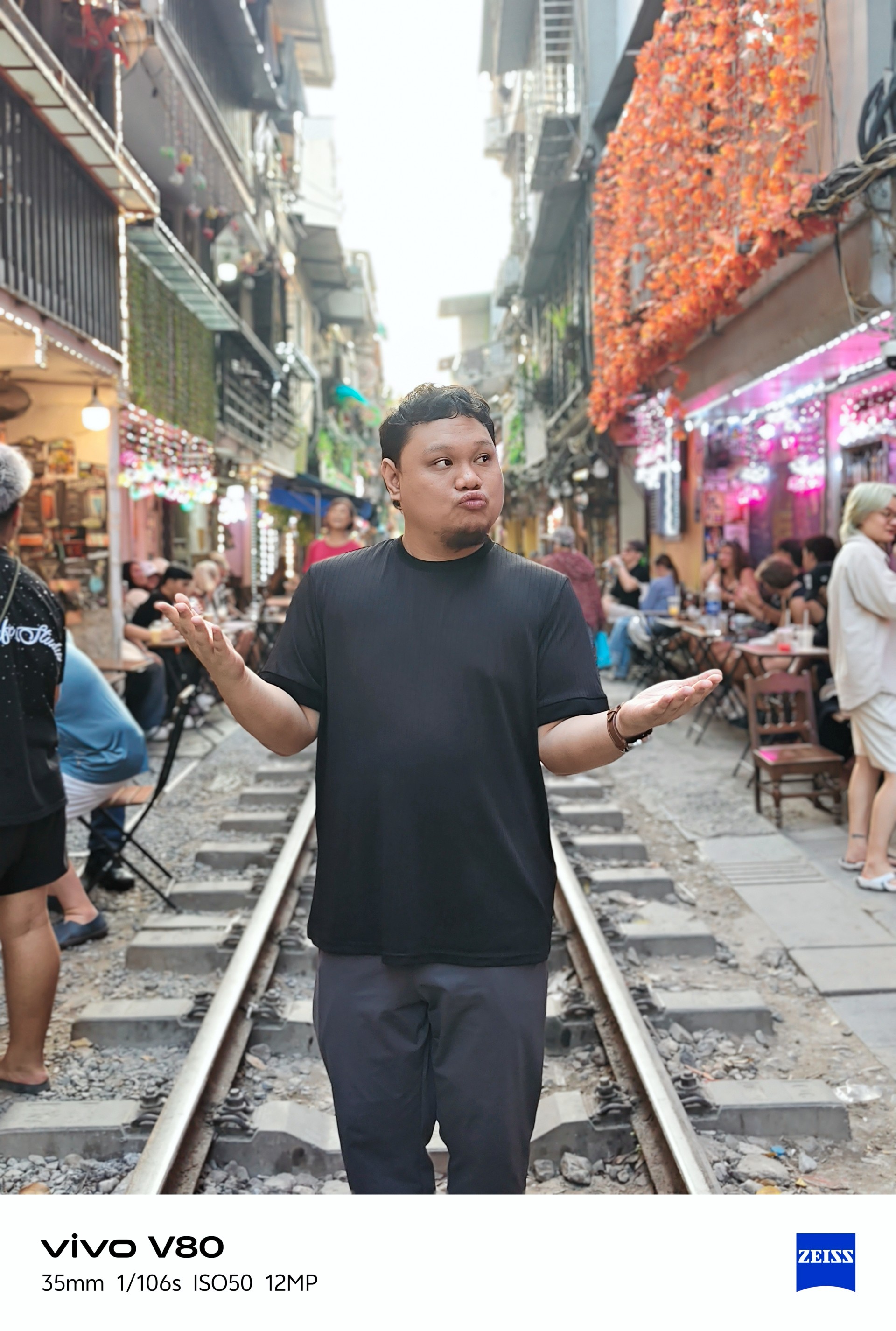
Portraits weren’t my main focus during my time with the device. I only took four regular portrait shots while visiting a train-themed tourist attraction with some friends.
Lighting was a hit or miss here, too.
Time to talk games
Ha. Here we go.
I realized I can’t cop out anymore and keep saying I don’t play mobile games. To address this, I identified three games I would use in my smartphone reviews. Some may change from time to time.

Battle Cats was the most casual game I tried and probably the most fun I had playing. The phone had no trouble running it. The experience was smooth.
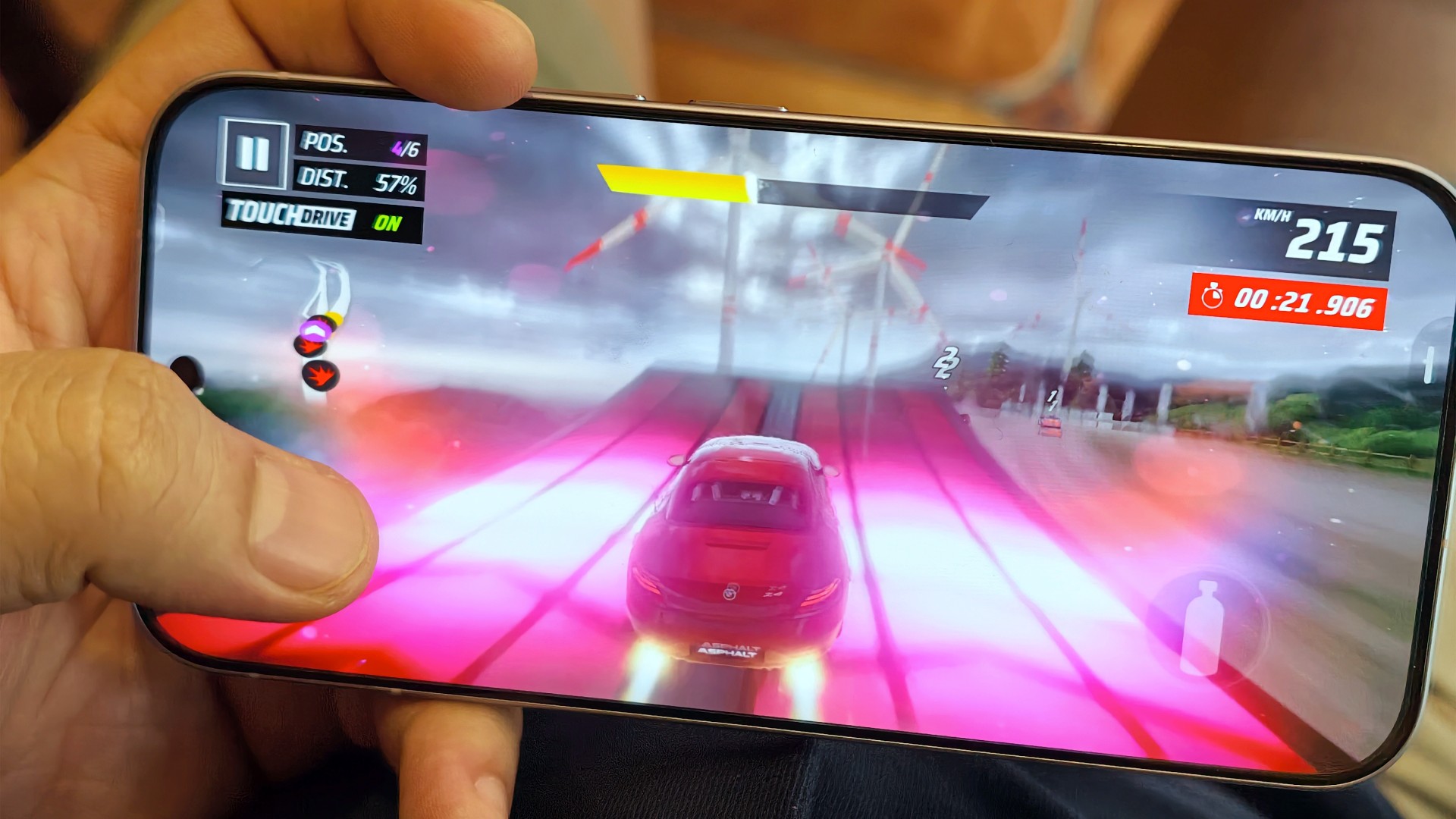
The same can be said about Asphalt Legends. Even when the graphics settings weren’t at their highest, the game still looked good and played well.
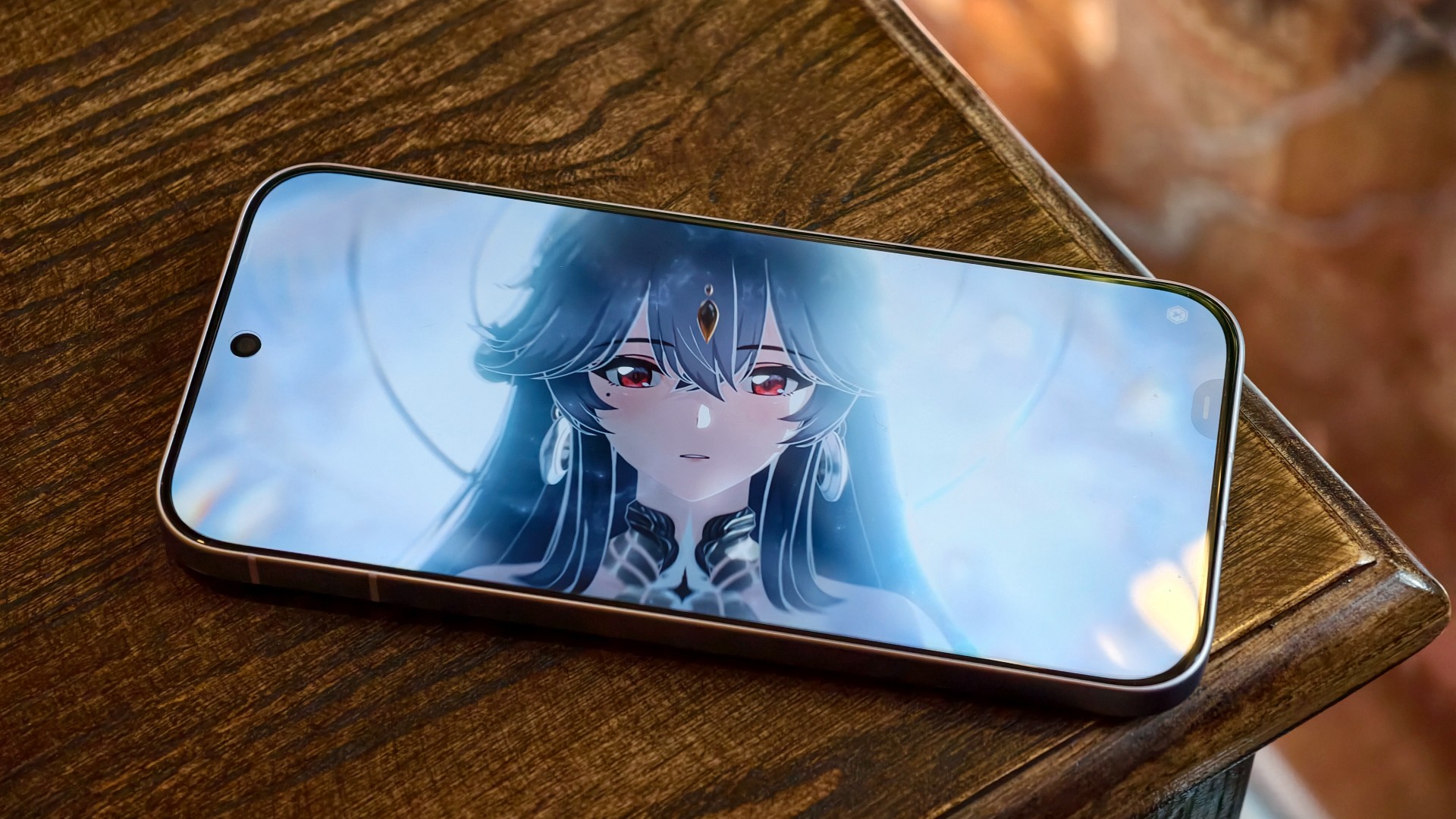
Wuthering Waves, meanwhile, defaulted to medium graphics settings. The game still looked decent, but you could already tell it could look better. The phone’s default settings prioritized a consistent and mostly lag-free experience. I wouldn’t push it beyond that.
I’m still on the lookout for mobile games I can include in these tests. Preferably, I’d like something that plays as simply as Battle Cats but offers peak graphical fidelity. I’m open to recommendations!
A screen that gets it right
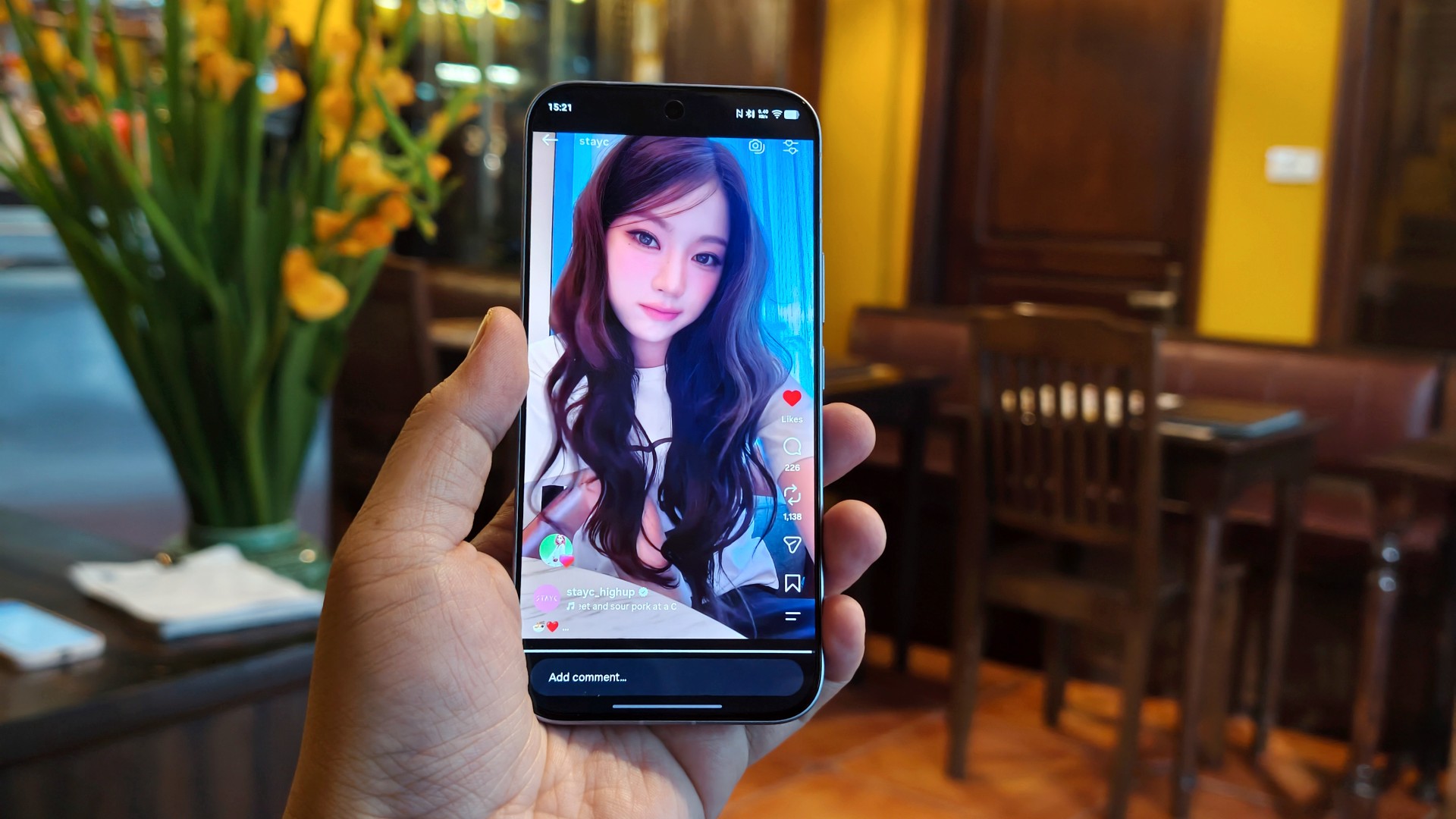
Still Isa-holic after a few reviews
The vivo V80’s display is pretty darn good.
Even in broad daylight, I had no trouble seeing what was on the screen. I spent time at a cafe near a window in the early afternoon, watching STAYC Isa content and catching up on Doctor X: Mafia in White on Netflix.

I wanted to watch Merry Berry Love and see Imada Mio, too, but Disney+ wasn’t available in Vietnam during my trip. I settled for watching some trailers instead.

The display also performed well during gaming. I didn’t notice anything in particular that stood out, and I mean that in a good way. Everything looked and played as expected.
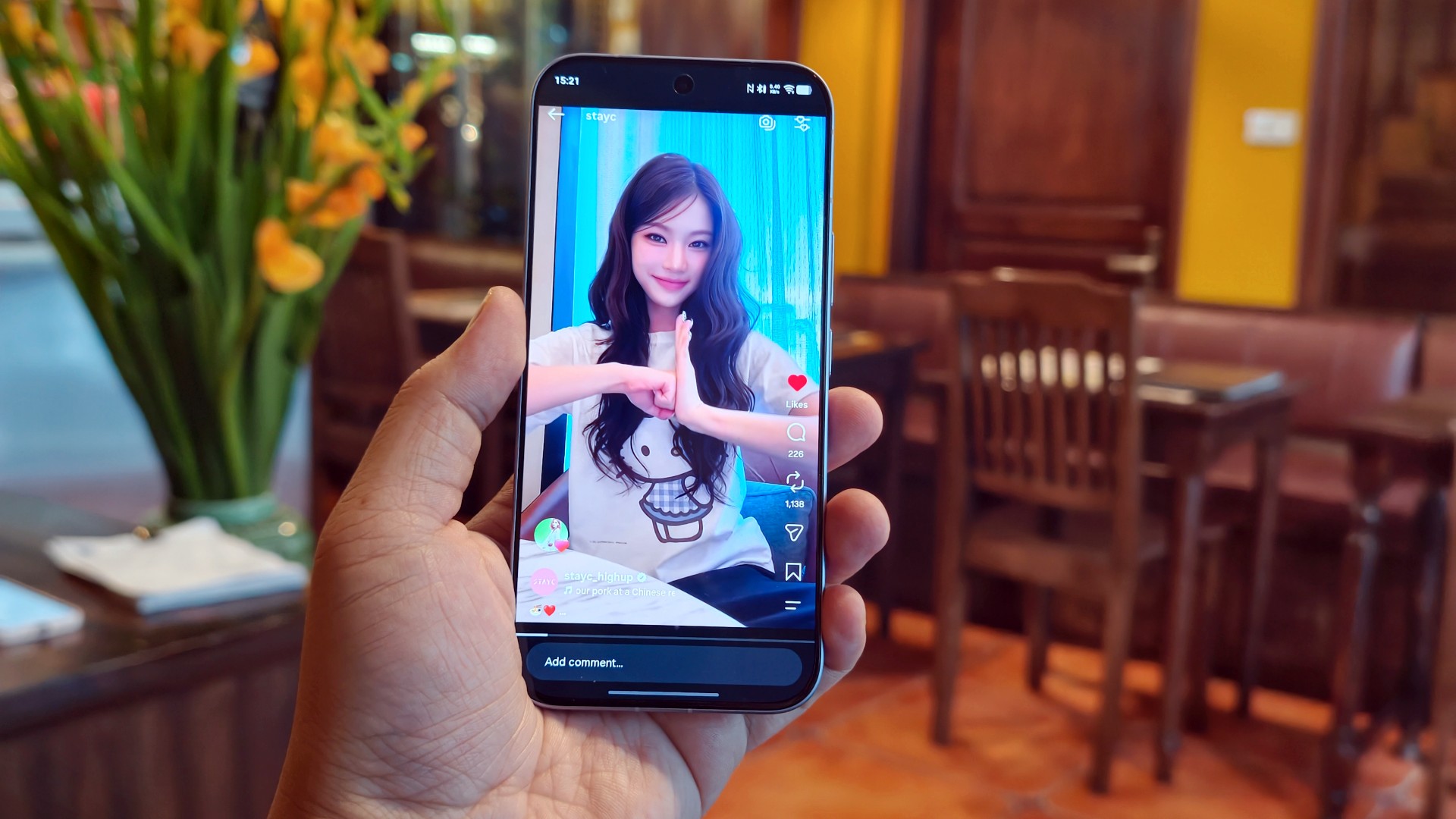
To me, that means the display technology worked to perfection. It delivered a clear, smooth experience without drawing attention to itself for the wrong reasons.
Two days? Maybe. One day? Absolutely
YES. Very dependable.
I had a hard time curating photos for this review because I took hundreds of them during my trip to Hanoi.

Between taking photos, testing games, doomscrolling, watching STAYC Isa content across different platforms, and catching up on shows like Doctor X: Mafia in White on Netflix, I never felt like I needed to find a plug or charge the phone in the middle of the day.
I typically ended the day with around 40–45% battery remaining. The vivo V80 can endure heavy days and likely more. Battery performance is excellent.

And you won’t feel like you’re away from the phone for too long when you finally need to charge it after a long day out. Topping it off takes roughly the time it takes to watch an episode and a half of anime, or about one episode of The Rookie. That’s around 30–40 minutes for a full charge.
The battery life and charging speeds are likely among the better ones in its class. Having both in a phone that’s relatively light and compact is quite a feat. I suppose this is the new normal for midrangers now.
OriginOS still feels a little offbeat

I’ve been using OriginOS sparingly for the last year or so. Something about it still feels offbeat to me.
Although, if you use phones from other Chinese manufacturers, you shouldn’t have too much difficulty adjusting. They all have subtle differences here and there, mostly in their icons and animations. However, the general feel will be familiar to most Android users.
Is the vivo V80 your GadgetMatch?
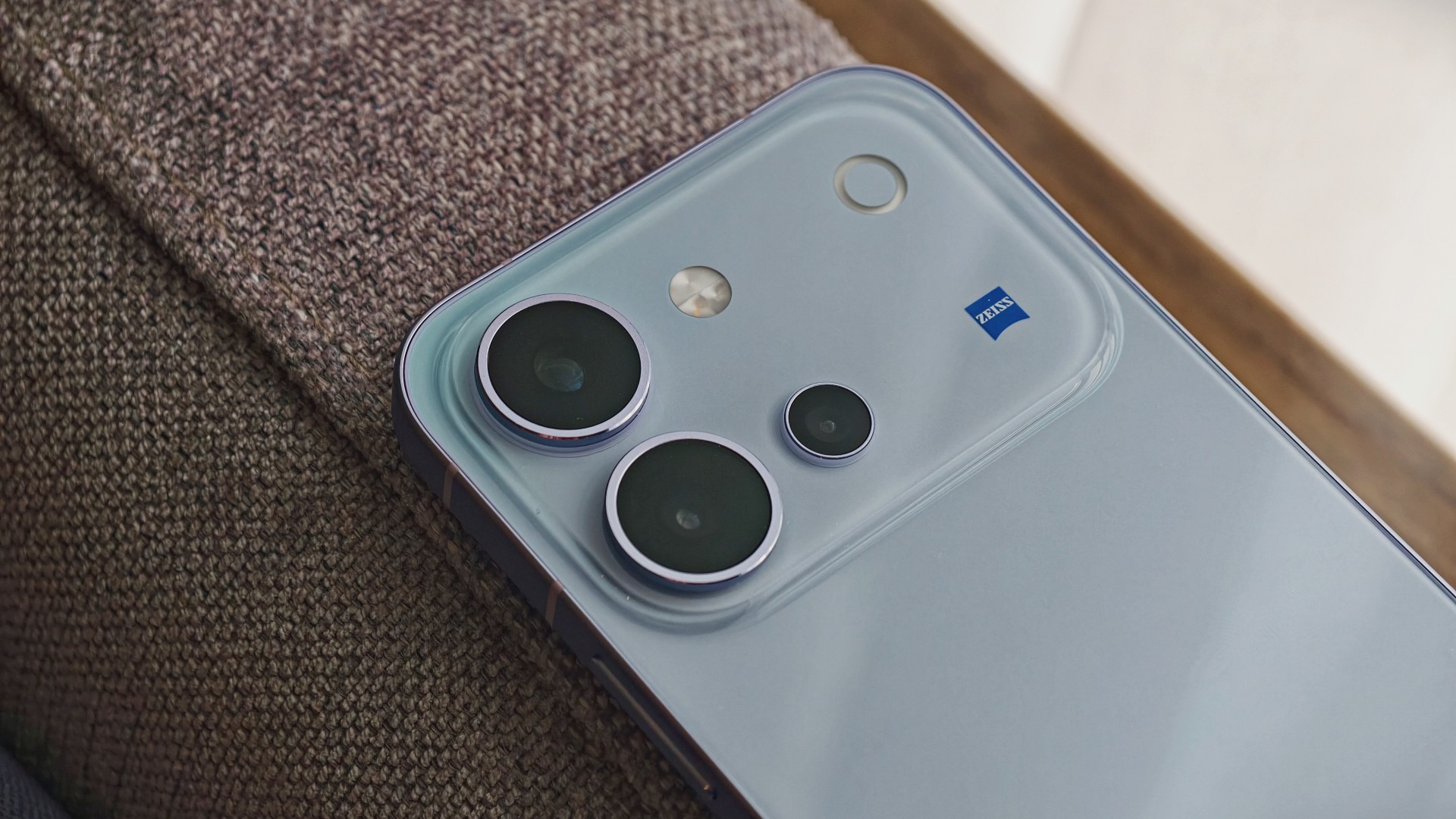
The vivo V80 is a good phone. It’s serviceable for mobile gaming, more than decent for everyday browsing and social media scrolling, mostly fantastic for taking photos, and capable of staying powered throughout all those activities.
The display is another highlight. It remains easy to see in bright daylight and delivers a smooth gaming experience without calling attention to itself. Meanwhile, the battery easily keeps up with heavy days of photography, gaming, and entertainment.
The kicker, like in most things, is usually the price.
Midrange phones have become harder to place of late. In a vacuum, they’re really good smartphones. But the asking price, which can be influenced by multiple factors, will give you pause.
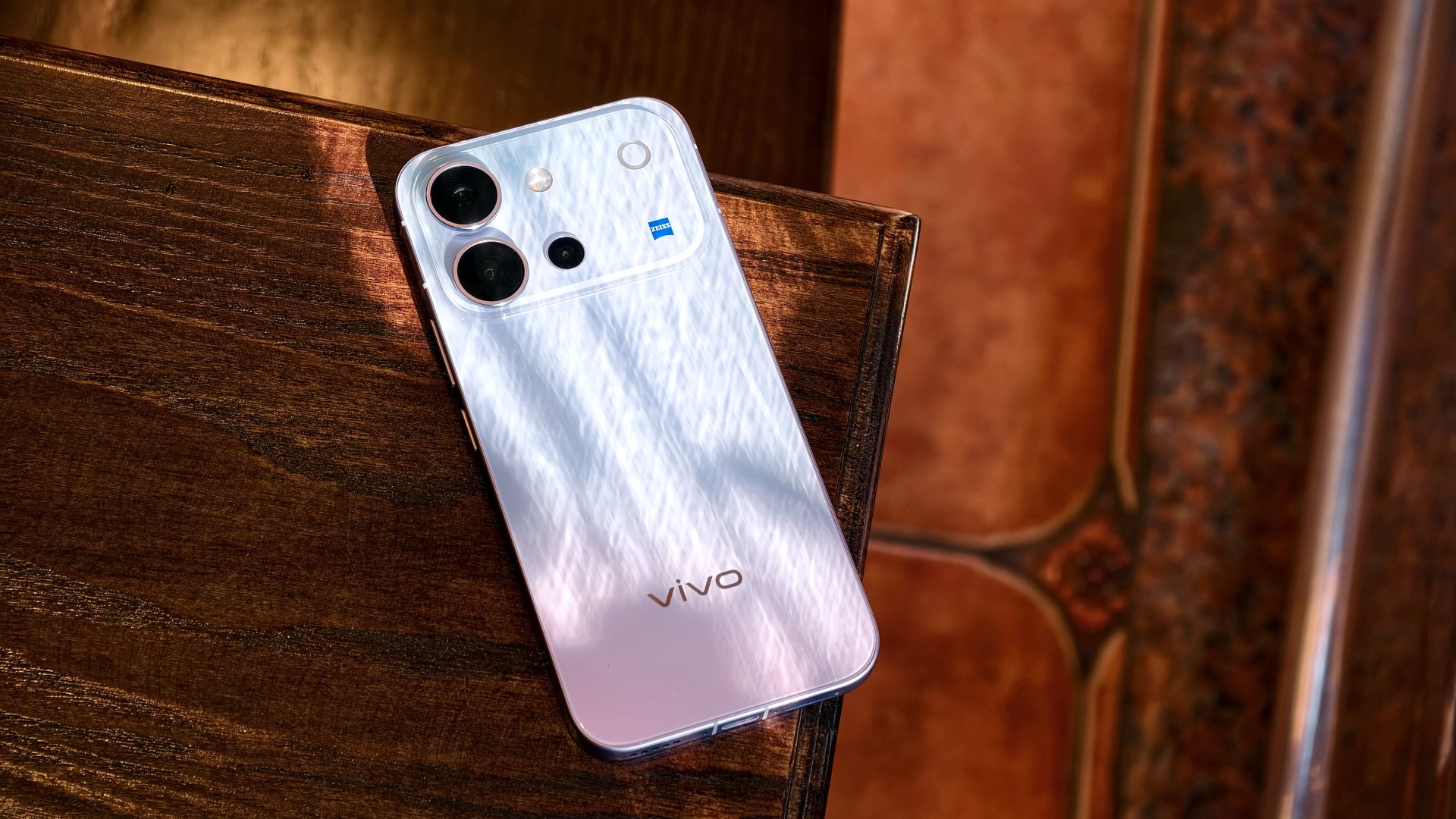
The vivo V80 is listed at PhP 42,999 for the 8GB + 128GB model in the Philippines. In India, the same base storage configuration starts at INR 62,999. That’s quite a lot, especially for a smartphone that feels like it should be priced closer to its predecessor, which started at PhP 31,999.
It’s still a Swipe Right, but a shaky one at that. At this price point, I’m thinking I’d rather start saving up for a more premium smartphone. It’s easier to justify a higher price tag for something that performs excellently across the board and that I know I’ll use for years.
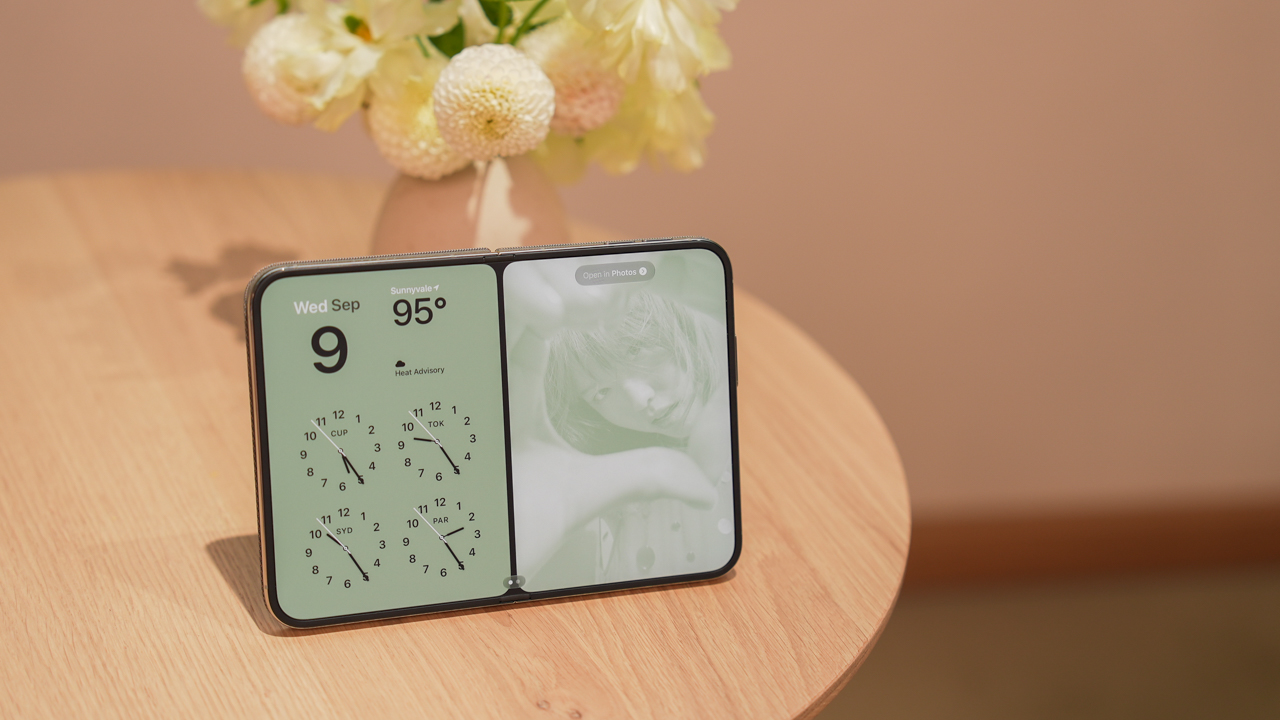
When you get your hands on a foldable phone, you should be able to expect a large battery. After all, powering two screens takes some juice. The numbers, however, might not be what you’d expect. Today, an official energy label has confirmed that the newest entry in the foldable space, the iPhone Duo, touts only a 4883mAh battery.
As required by Europe, new smartphones have to publish their information for transparency. Apple is no different. In its label for the iPhone Duo, the company listed 4883mAh as the official capacity of its very first foldable phone. Previous rumors have likewise speculated that the device will have two battery cells totalling the above rating.
If we’re talking relative capacity, a sub-5000mAh battery feels too low for such a big device. But does that mean that users will run into battery issues? Right now, it’s too early to tell.
Despite the size, the device itself might be efficient when it comes to managing battery life. For reference, the Samsung Galaxy Z Fold8 Ultra has a 5000mAh battery but still offers impressive battery life for all-day use. And besides, the iPhone Duo’s folded screen is much smaller than other phones. Since users will likely stick with the smaller screen most of the time, the smaller battery should still last the whole day.
SEE ALSO: Apple iPhone 18 Pro Series review





Now Playing: Final Fantasy Resonance

Disney+ strengthens footing as go-to sports streaming app with UFC, NBA, more

Samsung will reportedly launch a Galaxy Z Slide next year

Apple is hosting another “Pro” event this October

Now Playing: Whalefall

vivo X500 Series launches with major imaging upgrades

OPPO Find X10 Pro Max is the first phone with a triple 200MP camera system

TECNO CAMON Slim 5G: Price, availability in the Philippines

TECNO CAMON Slim 5G review: Slim on size, big on surprise

HONOR Magic9 Pro Max launches in China with ARRI-powered imaging


-
 News2 weeks ago
OPPO Find X10 Series launches globally October 21
-
 Wearables2 weeks ago
Garmin Enduro 4 promises up to 320 hours of battery life
-

 Gaming1 week ago
Dragon’s Dogma 2: Dark Arisen launches with new Official Pawns
-
 News5 days ago
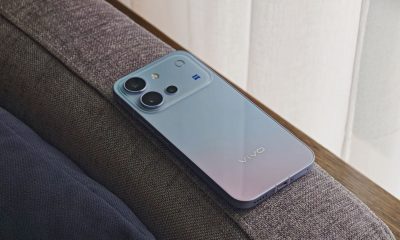
vivo V80 debuts with ZEISS cameras
-
 Deals1 week ago
Score PhP 22,000 in guaranteed freebies when you pre-order the iPhone 18 Pro at Beyond the Box
-

 Wearables1 week ago
Garmin Approach S72 brings swing metrics, green reading to your wrist
-
 Philippines5 days ago
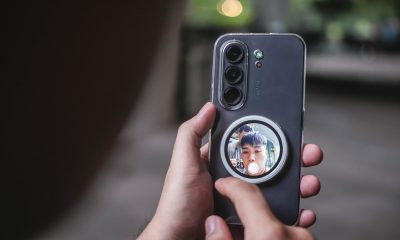
TECNO CAMON Slim 5G gets launch discounts, free MagBadge
-

 Laptops2 weeks ago
ASUS Zenbook 14 lineup expands with new colors and processors