
News
HUAWEI Mate XT 2 tri-fold launches with Kirin 9050 Pro
Pushes performance and durability

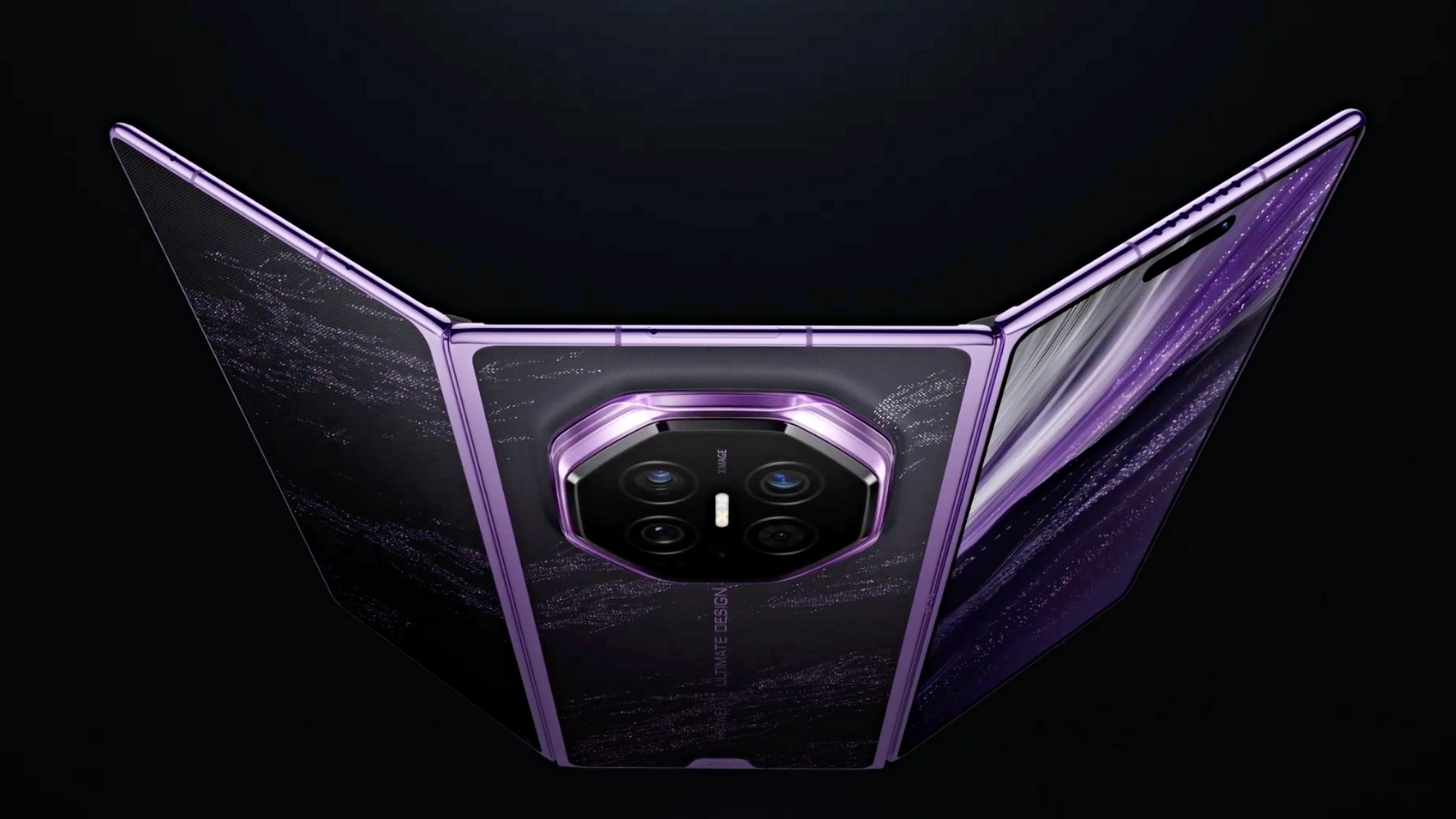
Huawei has officially unveiled the HUAWEI Mate XT 2 | ULTIMATE DESIGN, its latest tri-fold smartphone. The new device is the first smartphone to feature the LogicFolding Tau (τ) Chip and marks the technology’s entry into mass commercialization.
The Mate XT 2 introduces a wing-like tri-fold design that opens from both sides. It also brings the Kirin 9050 Pro chipset, Xuanwu Ultra-Durable Tri-Fold Architecture, Smart Shield Privacy Screen, True-to-Color Camera 3.0, and HarmonyOS 7.
A wing-like tri-fold design
The HUAWEI Mate XT 2 | ULTIMATE DESIGN uses a wing-like form that folds from both sides for what Huawei describes as a more intuitive unfolding experience.
The design draws from Chinese aesthetics. Its back panel features a cloud pattern created using Brocade Cloud craftsmanship. The phone comes in Purple, White, and Black.
Its camera ring continues Huawei’s Star Diamond Glow design. It uses Yttrium Crystal fired at 1,800°C and undergoes eight polishing steps to create 33 star diamond facets.
Huawei also redesigned the phone’s durability system. The Xuanwu Ultra-Durable Tri-Fold Architecture reworks the hinges and display structure to provide protection across multiple layers.
The Mate XT 2 is the first tri-fold phone to support IP58 and IP59 dust and water resistance. Its cover display uses Xuanwu Kunlun Glass with scratch and impact resistance, along with anti-glare technology.
The main display uses a multi-layer composite structure with a large UTG glass layer, aerospace-grade ultra-thin high-strength steel, and a carbon fiber support layer.
The Advanced Precision Hinge System 2.0 uses a five-curved-arm structure and synchronized linkage mechanism to distribute force more evenly.
Kirin 9050 Pro powers the tri-fold
The Mate XT 2 is the first smartphone to use Huawei’s Kirin 9050 Pro chip. Huawei claims overall device performance improves by 42 percent over the previous generation through closer integration between its hardware, software, chipset, and cloud technologies.
The LinxiCore CPU works with the HUAWEI Ark Engine to improve large-file loading and multitasking. The Maleoon GPU doubles its computing units and cache, while gaming supports up to 50 MRPS hardware-level real-time ray tracing.
The HUAWEI Da Vinci Architecture NPU also boosts on-device AI performance. Huawei says the phone natively supports its Pangu 30B-A2B MoE large language model, enabling features such as on-device AI album management through Celia.
Huawei has also spread the Mate XT 2’s heat sources across its three frames. Large vapor chambers and thermally conductive graphene help move heat across the device.
The phone uses 32 distributed antennas and multiple communication systems for 5A connectivity. It also supports Tiantong satellite communication and Beidou satellite messaging.
For security, the Mate XT 2 combines a Mobile Security Processor with an independent security chip. Huawei says the system supports post-quantum cryptography algorithm detection and has passed EAL5+ CCRC security certification.

Privacy comes to the foldable display
The Mate XT 2 introduces Huawei’s Smart Shield Privacy Screen, which the company calls the industry’s first foldable privacy screen with hardware-level protection.
The system uses an independent dual-pixel design to maintain the same screen resolution before and after Privacy mode is activated. It can also detect situations such as entering airports or train stations and provide privacy reminders.
Users can activate the mode by double-tapping the cover screen or using the Smart controls button.
The phone also includes ECG analysis software and has received an NMPA Class II Medical Device Registration Certificate. Users can perform an ECG measurement by holding the unfolded display with both hands, after which Celia can interpret and analyze the results.
True-to-Color Camera 3.0
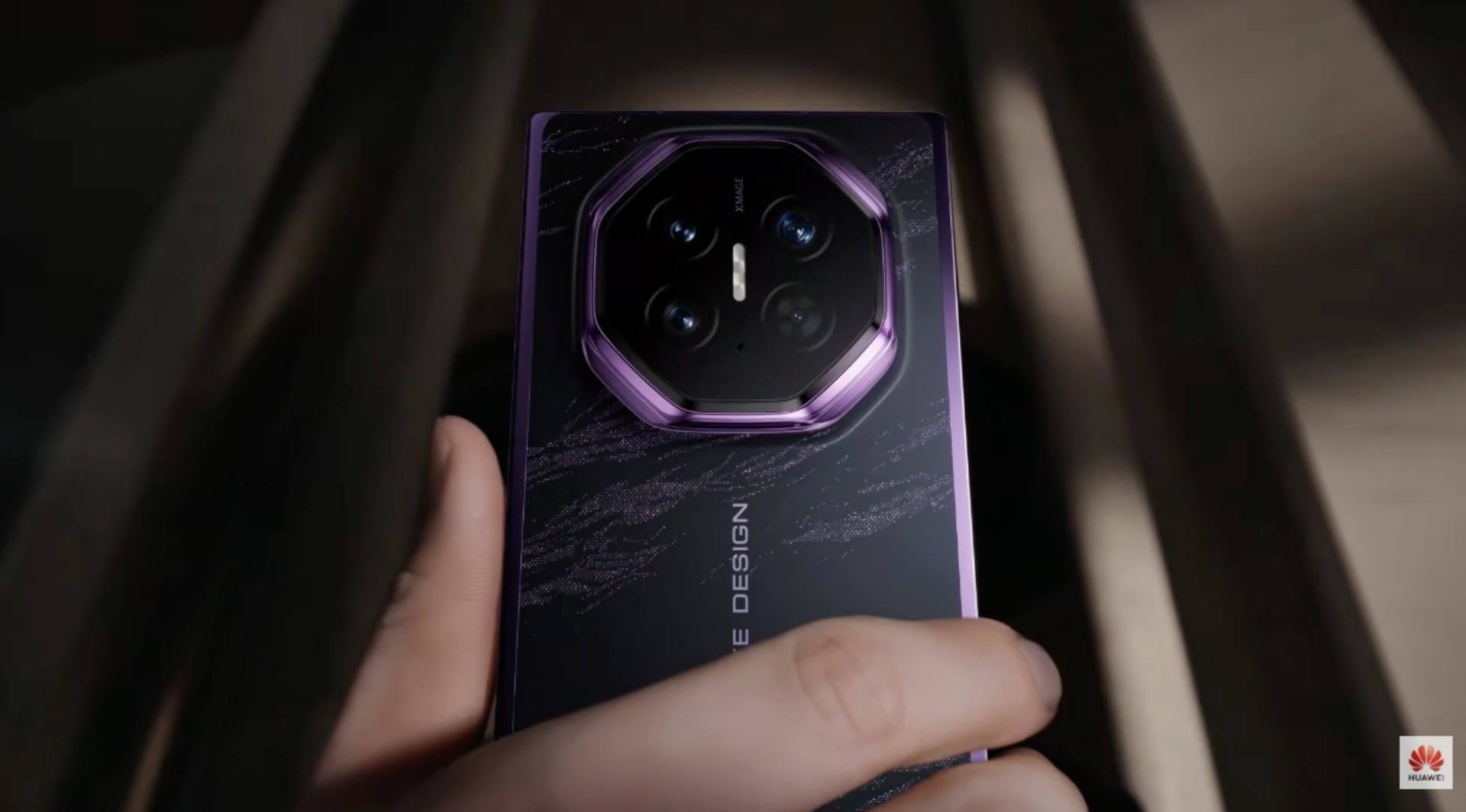
Huawei has also upgraded the Mate XT 2’s camera system with True-to-Color Camera 3.0.
The system is designed to filter infrared light interference and improve color reproduction by 95 percent compared with the previous generation, according to Huawei.
The camera setup includes an ultra-HDR main camera, an ultra-wide-aperture periscope telephoto camera, and an ultra-wide-angle camera. Huawei says the system is designed to deliver more accurate colors, realistic portraits, and clearer night shots.
Video recording supports an ultra-high dynamic range of 18 EV.
XMAGE SmartCapture can recognize people, scenery, and food, while AIGC-powered real-time previews provide composition and lighting recommendations.
The tri-fold design also enables a Desk-calendar mode for taking selfies and group photos.
HarmonyOS 7 for the large screen
The HUAWEI Mate XT 2 runs on HarmonyOS 7, which adds new large-screen features to take advantage of its tri-fold display.
Its Live-Multitask feature supports three windows displayed in parallel. Users can adjust the size of each window and control their volume independently.
Huawei says the experience has been optimized for scenarios including financial management, social entertainment, office work, shopping comparisons, and travel planning. The company has also adapted the device for major apps as it continues expanding its tri-fold ecosystem.
The HUAWEI Mate XT 2 | ULTIMATE DESIGN starts at RMB 19,999. It will also be available with a stylus set, with sales beginning at 10:08AM on September 12.






Gaming
Next Xbox might cost double the price of an Xbox today
The most expensive Xbox Series X costs $900. The next Xbox’s price might double that.

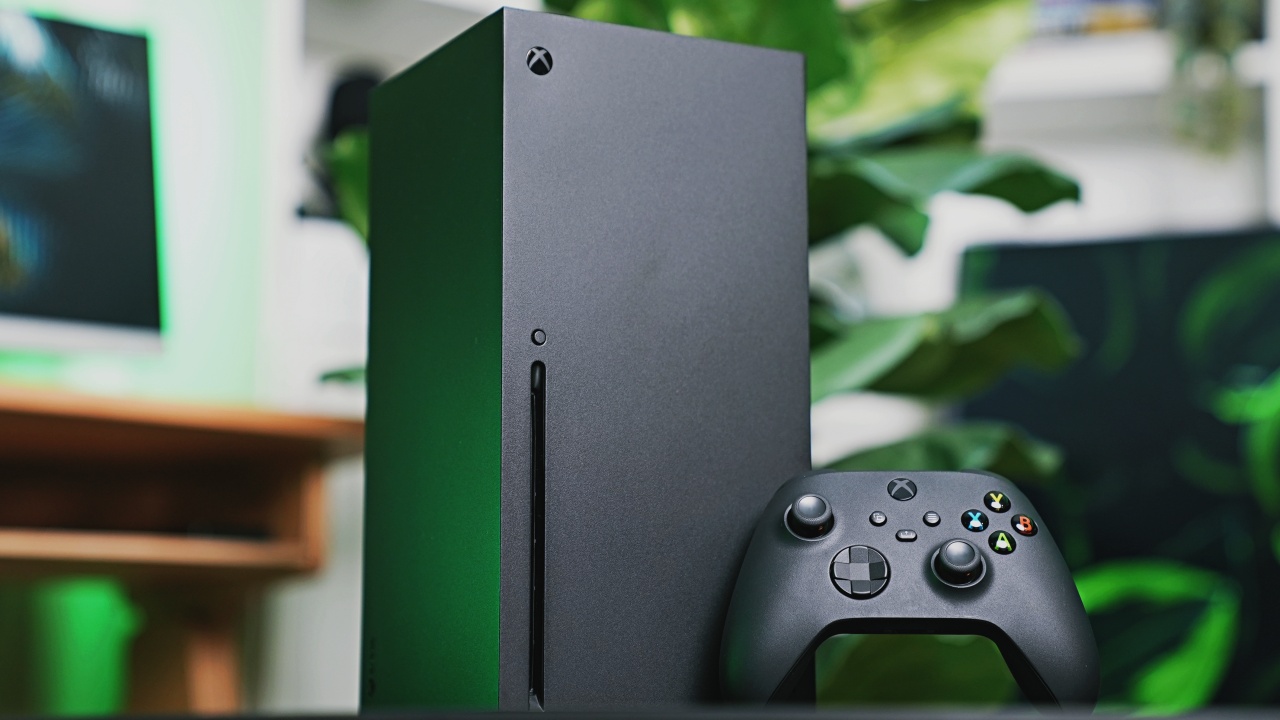
Buying a new gaming setup must be one of the most torturous things you can purchase these days. The rising price of chips has hampered the buying ability of many a consumer today. Sadly, that trend isn’t changing anytime soon. According to new reports, the next Xbox might cost double of what an Xbox costs these days.
The next console is currently codenamed Project Helix. Spearheaded by relatively new Xbox CEO Asha Sherma, Project Helix has hopes of being an all-around gaming machine capable of playing PC games besides console exclusives. Sharma obviously wants the platform to come back as a worthy destination for gamers.
That’s a monumental task, though, especially after the rising prices of chips are constantly threatening the prices of new devices. Now, according to a profile of Sharma published by Fortune, the next Xbox might cost as high as US$ 1,800. For reference, the limited 25th anniversary edition of the Xbox Series X currently costs US$ 899.
Should Fortune’s estimate hold true, a new console in the coming years is double the cost of the most expensive Xbox Series X variant available today. The next generation of gaming might be even more of a luxury than it already is.
Unfortunately, things aren’t getting better across the board. Gaming on PC and on PlayStation aren’t going to be much cheaper as the RAM crisis continues.
SEE ALSO: Xbox might get rid of physical discs too

Apple Music is getting a revamp. In one of the tamer things going on with the brand today, Apple has introduced a new design language for its native music streaming platform.
In the midst of all the hubbub surrounding the iPhone Duo, Apple released a change in the visual identity of Apple Music. Rather than a static logo, the platform’s newest evolution offers a dynamic look that melds Liquid Glass and the power of sound together.
Confirmed through a behind-the-scenes video, Apple says that the new aesthetic was made with practical effects. Music producer Fred Again and NEST Acoustics submerged the platform’s logo in a tank of mineral oil and creating ripples with sound. The new language matches well with the chrome aesthetic typical of today’s trends and… well, Liquid Glass, of course.
Apple says that the more ripple-filled version will play before longer content like concert recordings (similar to Netflix’s startup stinger). Meanwhile, a black-and-white version will replace the app’s icon currently colored red and white. Current previews show off a simple logo, but it’s unknown whether Apple is adding a but more elements when the final version drops.
The updated version will debut for users after next week’s iOS 27.2 and macOS 27.2 updates.
SEE ALSO: Apple iPhone Duo Unboxing and Hands-on

One of the giants has fallen. After blessing the world with several of the biggest franchises in gaming, BioWare is shutting down for good.
If you were a big gamer in the late 00’s through the early ‘10s, BioWare was a household name for you. The studio is responsible for the Dragon Age and the Mass Effect franchises. Those two franchises defined the modern choice-driven RPG landscape today.
Unfortunately, the landscape is changing. Over a year ago, a conglomeration of entities entered acquisition talks over Electronic Arts, which owns BioWare. As the ink finally dries on the contract, some studios are facing the chopping block. After struggling with the lackluster sales of Anthem and Dragon Age: The Veilguard, BioWare finds itself as the biggest name for a shutdown.
And that’s where we are now. As a result of the shutdown, BioWare’s upcoming project, an untitled Mass Effect title, is also cancelled.
Obviously, Dragon Age and Mass Effect are on top of everyone’s minds. However, the studio’s shutdown also takes away the legacy of Baldur’s Gate (before Larian Studio revamped the series with the award-winning Baldur’s Gate 3) and Star Wars: Knights of the Old Republic.
Likewise, BioWare won’t be the only casualty. Electronic Arts is also looking into altering its entire lineup of studios and upcoming projects.
SEE ALSO: Electronic Arts is getting bought out





Next Xbox might cost double the price of an Xbox today

Apple Music is getting a Liquid Glass makeover

Electronic Arts shuts down BioWare for good

Apple iPhone Duo Unboxing and Hands-on

OPPO Find X10 Series: Price, availability

OPPO Find X10 Pro Max is the first phone with a triple 200MP camera system

TECNO CAMON Slim 5G: Price, availability in the Philippines

TECNO CAMON Slim 5G review: Slim on size, big on surprise

HONOR Magic9 Pro Max launches in China with ARRI-powered imaging

BYD says that way better EV batteries are coming next year


-
 News2 weeks ago
OPPO Find X10 Series launches globally October 21
-

 Wearables2 weeks ago
Garmin Enduro 4 promises up to 320 hours of battery life
-

 Gaming1 week ago
Dragon’s Dogma 2: Dark Arisen launches with new Official Pawns
-

 News6 days ago
vivo V80 debuts with ZEISS cameras
-
 Deals1 week ago
Score PhP 22,000 in guaranteed freebies when you pre-order the iPhone 18 Pro at Beyond the Box
-

 Philippines6 days ago
TECNO CAMON Slim 5G gets launch discounts, free MagBadge
-

 Wearables2 weeks ago
Garmin Approach S72 brings swing metrics, green reading to your wrist
-

 Laptops2 weeks ago
ASUS Zenbook 14 lineup expands with new colors and processors