
News
Infinix to redefine smartphone charging with Cheetah X1 chip
A new era of power efficiency


Infinix has announced the launch of its first self-developed chip: The Cheetah X1. This innovative chip will be the foundation for the new All-Round FastCharge 2.0 for the brand’s upcoming NOTE 40 series smartphones.
Infinix’s NOTE series is known for its FastCharge technology, catering to the needs of younger users. With the Cheetah X1, battery life and power availability in various usage scenarios will be optimized even further.
The chip will allow future Infinix NOTE phones to have cutting-edge functionality in control protocol circuits, charging applications, and AI integrations.
Highly-customized, robust power management ‘brain’
The Cheetah X1 is tailor-made to power Infinix’s FastCharge 2.0 feature. It functions as a central information hub that streamlines processes related to charging. Intelligent algorithms assess which components require power and efficiently distribute it.
Three modules backstop the Cheetah X1: the Support, Safety, and Power Monitor modules. First, the all-round Support module accommodates eight charging scenarios and consolidates functions by gathering protocols and adjusting charge accordingly.
These eight scenarios include the following:
- 100W multi-speed wired charging
- wireless charging
- wired reverse charging
- wireless reverse charging
- bypass charging
- AI charging protection for night charging
- extreme-temp tech for -20 degrees Celsius
- multi-protocol charging
This integration ensures consistent performance across demanding use cases.
On the other hand, a precise Power Monitor module detects current and voltage in real-time. This adjusts charging volume to ensure balance between charging efficiency and temperature control. That way, the system will lead to a better battery life and shall maintain the phone’s overall health.
It can be recalled that the Infinix NOTE 30 VIP offered 68W of wired charging, with technologies promising better maintenance and longevity.
Lastly, the Safety module integrates 63 protection measures to cover nearly all potential unsafe charging scenarios. The chip’s monitoring and recognition ability automatically activates these protections. It then relays the information to other protocols in the phone. Furthermore, it alerts users of such cases for added convenience.
Design meets innovation
Infinix said it dedicated two years of research and development for the chip. The company also assembled a special team to leverage advanced packaging technology and comprehensive functional integration.
By adopting wafer-level packaging technology, Infinix also significantly reduced the chip size to become one of the smallest. This technology shortens signal transmission paths and minimizes electrical signal delays, leading to better electrical performance. Users will feel this change particularly in high-speed data transmission and high-frequency applications. Consequently, the chip’s processing efficiency per unit has increased by an impressive 204%.







Apple has unveiled a redesigned iPad mini, introducing an OLED display, a faster processor, and improved durability. The update brings significant changes to Apple’s smallest tablet while retaining its compact form factor.
The new iPad mini features an 8.5-inch OLED display, up from the previous model’s 8.3-inch LCD screen. The upgrade promises deeper blacks, improved contrast, and a better viewing experience for videos, games, and other content.
Apple has also equipped the tablet with its A20 Pro chip, delivering improved performance and enhanced capabilities for artificial intelligence tasks.
Bigger OLED display, improved performance
The new iPad mini features a Super Retina XDR OLED display with a peak brightness of 1,200 nits for HDR content. It can also reduce its brightness to just 1 nit, making it more comfortable to use in darker environments.
Apple has reduced the tablet’s thickness to 5.4mm while retaining its compact design. The redesigned model also features slimmer bezels.
For video calls, the tablet features a 12-megapixel Center Stage front-facing camera positioned along its landscape edge. This makes video calls more convenient when using the tablet horizontally.
The new model also introduces IP67 water and dust resistance, offering additional protection against everyday accidents.
Improved AI capabilities
The A20 Pro chip powers the new iPad mini, bringing improvements to CPU and graphics performance.
Apple says the processor delivers up to 60 percent faster multithreaded CPU performance and up to 4.5 times faster AI performance compared with the previous generation.
These improvements support Apple’s expanding Apple Intelligence ecosystem and its latest Siri capabilities.
The upgraded hardware should also benefit users who edit photos, multitask across applications, and run demanding games on the compact tablet.
Pricing and availability
The new iPad mini starts at US$699 for the Wi-Fi model and US$849 for the Wi-Fi + Cellular variant in the United States.
In Singapore, the tablet starts at S$999 for the Wi-Fi model and S$1,229 for the Wi-Fi + Cellular version. Eligible customers can get the Wi-Fi model starting at S$929 with education pricing.
In the Philippines, the new iPad mini starts at PhP 49,990 for the Wi-Fi model and PhP 59,990 for the Wi-Fi + Cellular variant. Eligible customers can purchase it with education pricing starting at PhP 45,990.
The tablet comes in midnight and starlight finishes, with 128GB, 256GB, and 512GB storage configurations.
In the United States, preorders begin October 28, 2026, with availability starting November 6. Singapore preorders open October 29, with availability also beginning November 6.
Apple has yet to announce a specific preorder or release date for the Philippines. The company says the new iPad mini will be available soon through its Philippine online store and authorized resellers.
Enterprise
Google illegally destroys 250,000 trees for a single AI data center
This is what we stand to lose with data centers.


In the Philippines, it’s illegal to cut down a single tree without a permit. It’s a constant reminder that the preservation of nature should be a civil, besides being a moral, obligation. And yet, corporations are seemingly immune from obligations and morals. Google, the company that used to stand for “Don’t be evil,” shows off its true colors by illegally cutting down 250,000 trees in Finland for a datacenter.
As first reported by The Guardian, Finland is now staring at 330 hectares of land suddenly denuded of around 250,000 valuable trees, all thanks to Google. A local ecologist has also said that the company killed a further 150,000 trees at a separate site.
The environmental desecration is part of Google’s multibillion-dollar push to build data centers all over the world for artificial intelligence. Google has since been ordered to stop the development in the country after Finland found that the company acted without securing the needed assessments and permits to clear the area.
Google brushed away the report by saying that they acted “on the best understanding we had of the legislation at the time.” The company also said that they are protecting the water quality at the affected sites and committed to replanting trees across 130 hectares, a pale comparison to the total area affected.
Other AI companies are also trying to weasel their way into other countries to build data centers. An example is the controversial Pax Silica in the Philippines. Finland now stands as a cautionary tale against the unimpeded and unsupervised growth of data centers for a service that no one asked for.
Don’t be evil, my ass.

As one of the wisest sages of the 2000s once said, “He was a punk, she did ballet. What more can I say?” Sometimes, opposites attract. Now, two of those opposites in the audio space are coming together: the punk Skullcandy and the ballet-loving Bose.
Today, Bose has announced its acquisition of Skullcandy. The latter will continue to operate as a separate brand but now officially under the Bose umbrella. Although, it’s not a new collaboration as the two brands have previously worked together on devices before. Skullcandy will just have more access to Bose’s technologies moving forward.
Alternatively, Bose will now have access to Skullcandy’s more varied audience. Compared to Bose’s focus on premium products, Skullcandy caters to more alternative lifestyles. Though the brand has since mellowed from its more radical roots, it is still known as one of the alternative brands.
Bose, on the other hand, is still a household name for home audio and noise-cancelling headphones. The new relationship between two polar opposites might be seen as a weird one, but it’s ultimately beneficial to both parties. Besides, both brands were very strong in the 2010s. Keeping both brands going is a boon to audiophiles of the past decade.


HP OMEN Max 16 review: Gamer-maxxing in deep black
Peripherals deemed necessary to max this out
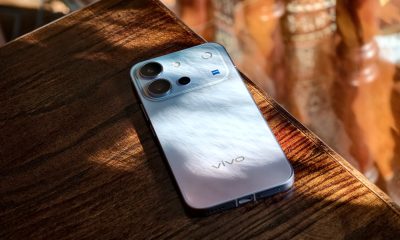

vivo V80 review: Good phone, tough sell
A capable travel companion


Ghost of Yōtei Complete Edition review: More of a great thing
Picking up where Atsu left off

Apple unveils its biggest iPad mini update yet

TechLife’s Pad Neo SE is coming with a 10.1-inch screen built for learning

Visa: 79% of Filipinos want to learn about stablecoins

CASETiFY Match: Finding the right case for your Galaxy Z8 Series phone
HP OMEN Max 16 review: Gamer-maxxing in deep black

TECNO CAMON Slim 5G review: Slim on size, big on surprise

TECNO CAMON Slim 5G: Price, availability in the Philippines

HONOR Magic9 Pro Max launches in China with ARRI-powered imaging

BYD says that way better EV batteries are coming next year

HONOR 600S review


-

 News2 weeks ago
vivo V80 debuts with ZEISS cameras
-
 Philippines1 week ago
TECNO CAMON Slim 5G gets launch discounts, free MagBadge
-
 News1 week ago
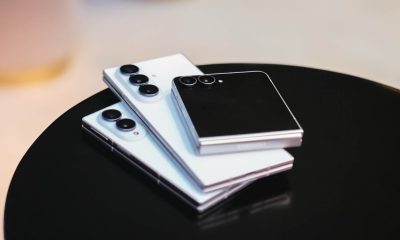
Samsung: Galaxy Z Fold8 demand rose because of iPhone Duo
-
Reviews1 week ago
vivo V80 review: Good phone, tough sell
-

 Features2 weeks ago
I don’t want a phone that unfolds — the Galaxy Z Fold8 gets why
-
 News5 days ago
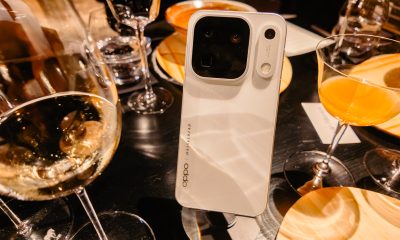
OPPO Find X10 Series: Price, availability in the Philippines
-

 Buyer's Guide1 week ago
iPhone Duo Philippines: Prices, installments, and where to buy
-
 Philippines1 week ago
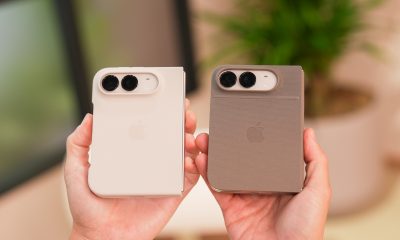
Smart opens iPhone Duo pre-orders today