
News
OPPO is finally getting AirDrop support
The update for the Find X9 series rolls out this month.

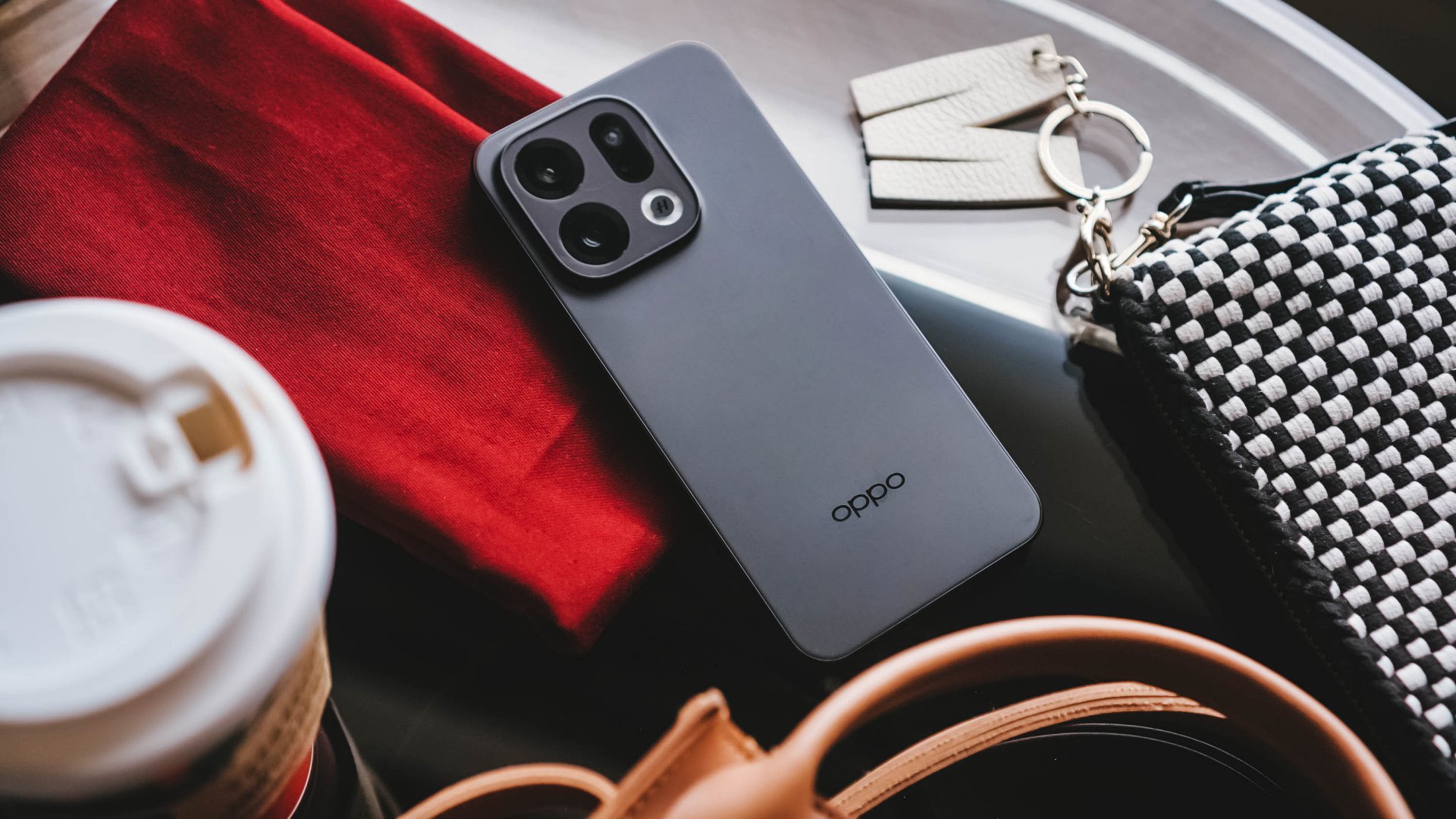
One of the biggest developments late last year was Android finally supporting AirDrop. Android users can finally counter the age-old “oh, your phone can’t do what my iPhone can do.” Unfortunately, when the announcement first dropped, it applied only to Pixel 10 users. Now, the feature is finally coming to more brands.
Today, OPPO has confirmed, via Android Authority, that its phones will get the ability to share files with Apple users. Specifically, the Find X9 and Find X9 Pro will receive an update later this month that will enable the feature. With the update, users can go through Quick Share to send files to AirDrop.
Like the initial implementation of the feature on Google, OPPO’s version will not need another app for it to work. Previously, Apple users also needed to install another app to connect with Android users. Now, the feature works natively through Quick Share.
Of course, there’s still a bit off finagling involved. As per Google’s instructions previously, the receiver, regardless of whether they’re on Android or iOS, must set their visibility to “everyone for 10 minutes.” It’s not the most elegant solution, but it sure beats all those jeers from iPhone users about how inflexible Android is when it comes to sharing files.



Apple has unveiled its new iMac powered by the M6 chip, bringing faster performance, enhanced on-device AI capabilities, and improved connectivity to its all-in-one desktop computer.
Announced on October 27, the new iMac retains its slim design and 24-inch display while introducing hardware upgrades for everyday productivity, creative workflows, and AI-powered applications.
Apple claims the M6-powered iMac delivers up to 18 times faster performance than the most popular Intel-based iMac. It also offers up to five times faster on-device AI performance than the previous-generation M4 model.
The new iMac comes in seven colors: blue, green, pink, yellow, purple, orange, and silver.
M6 brings faster performance and AI capabilities
The new iMac features Apple’s M6 chip, with configurations offering either a 10-core CPU and 10-core GPU or a 12-core CPU and 12-core GPU.
The 12-core CPU delivers improved performance for everyday applications, multitasking, and demanding workloads. Meanwhile, the GPU now features Neural Accelerators in every core to accelerate AI processing and graphics-intensive tasks.
Apple claims the new iMac delivers up to twice the graphics performance of the M4 model. Users can expect improvements in photo editing, video production, and gaming, including titles that use ray tracing.
The M6 also features a Dual 16-core Neural Engine, which delivers up to twice the AI computing performance of the previous generation. Combined with memory bandwidth of up to 170GB/s, the chip can handle demanding on-device AI workloads, including running large language models.
Apple highlights several performance improvements over previous generations:
- Up to 2.5 times faster performance in Microsoft Excel compared to the M1 iMac.
- Up to 3.3 times faster graphics performance in applications such as Affinity compared to the M1 iMac.
- Up to 12 times faster on-device AI prompt processing in LM Studio compared to the M1 iMac.
- Up to twice the gaming performance with ray tracing compared to the M4 iMac.
These improvements make the iMac a more capable desktop for professionals, students, and creators who need additional computing power without moving to a separate desktop tower.
A desktop built for AI
Apple is positioning the new iMac as a platform for its expanding AI ecosystem.
Running macOS 27, the desktop supports Apple Intelligence features and Siri AI, Apple’s next-generation assistant. Users can ask questions, search for information across their messages and emails, and perform actions across supported applications.
Siri AI is also integrated into Spotlight, allowing users to search for information and ask follow-up questions. Visual Intelligence lets users interact with content on their screen, whether it’s a chart in a spreadsheet or an image in a browser.
Other AI-powered features extend to everyday applications. Safari can automatically organize tabs into topics and notify users about website changes, including product restocks and price drops. Users can also create Shortcuts automations by describing what they want to accomplish.
For creative professionals, Apple Intelligence adds tools for photo editing and other productivity tasks. The iMac also supports third-party AI applications optimized for Apple silicon, including LM Studio and Topaz Studio.
Apple says these capabilities allow users to run supported AI workloads locally, helping preserve privacy by processing certain tasks directly on the device.
Siri AI is available in beta in macOS 27.2, with language and regional availability restrictions applying to some Apple Intelligence features.
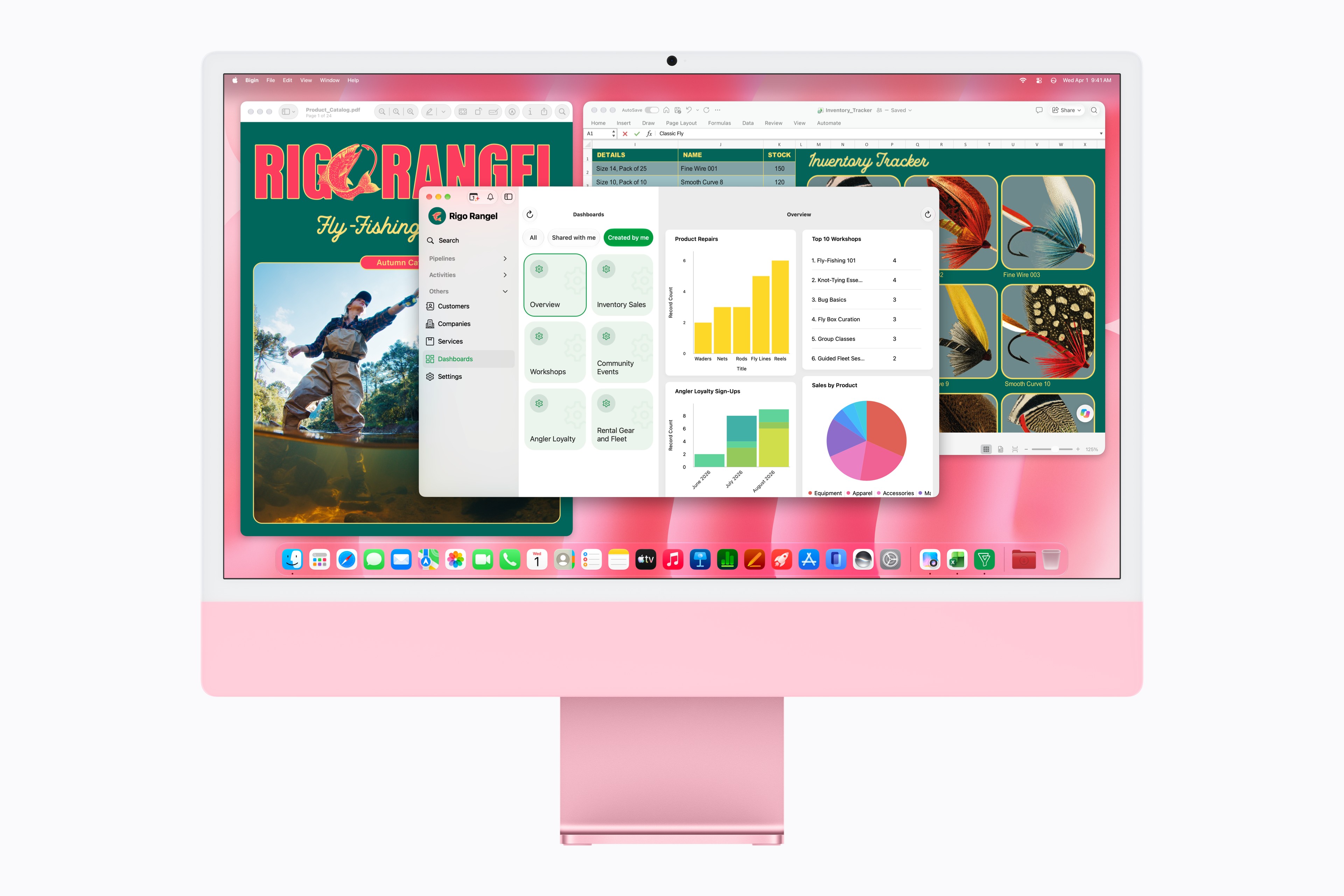
24-inch 4.5K Retina display
The new iMac retains its 24-inch 4.5K Retina display, which offers a resolution of 4,480 x 2,520 pixels and 500 nits of brightness.
The display supports the P3 wide color gamut and more than one billion colors, making it suitable for photo editing, video production, and everyday entertainment.
Apple also offers an optional nano-texture display finish on supported configurations to reduce reflections and glare in challenging lighting conditions.
For video calls, the iMac features a 12-megapixel Center Stage camera with Desk View. Its three-microphone array and six-speaker sound system deliver an integrated audiovisual setup without requiring additional peripherals.
The speakers feature force-cancelling woofers and tweeters, with support for Spatial Audio and Dolby Atmos.
Wi-Fi 7, Bluetooth 6, and faster storage
Connectivity receives an upgrade with Wi-Fi 7 and Bluetooth 6.
The higher-end configuration can also be equipped with 2.5 Gigabit Ethernet, offering up to 2.5 times faster wired connectivity than the previous generation.
Apple claims the new iMac delivers up to twice the SSD read and write performance of its predecessor, helping applications launch faster and large files load more quickly.
Port availability depends on the configuration. The higher-end model includes four Thunderbolt 4 ports, allowing users to connect external storage, docks, and other accessories.
The iMac also supports up to two external 6K displays, providing additional screen space for demanding workflows.
Apple continues to bundle color-matched accessories with the desktop. Depending on the configuration, these include a Magic Keyboard with Touch ID and either a Magic Mouse or Magic Trackpad. The accessories feature USB-C charging ports.
macOS 27 and sustainability
The new iMac runs macOS 27, which brings refinements to the Liquid Glass interface, system performance, and search.
Users can adjust the transparency of Liquid Glass through a new setting, choosing an appearance that ranges from clearer to more tinted. Apple has also refined app icons and other interface elements.
The iMac continues Apple’s sustainability efforts. Its stand uses 100 percent recycled aluminum, while its magnets use 100 percent recycled rare earth elements. Apple-designed printed circuit boards also use 100 percent recycled gold plating and tin solder.
Apple says the new iMac is manufactured using renewable electricity across its supply chain. The company continues working toward its goal of becoming carbon neutral across its entire footprint by 2030.
iMac with M6 pricing and availability
In the United States, the new iMac with M6 starts at US$1,499 for the configuration with a 10-core CPU and 10-core GPU. Education pricing starts at US$1,449.
The higher-end configuration, featuring a 12-core CPU and 12-core GPU, starts at US$1,699, with education pricing starting at US$1,599.
Pre-orders in the United States and 34 other countries and regions begin on October 28, 2026. Availability starts November 6.
In the Philippines, the new iMac with M6 starts at PHP 109,990 for the 10-core CPU and 10-core GPU configuration. Eligible students and educators can purchase it for PHP 105,990.
The higher-end configuration with a 12-core CPU and 12-core GPU starts at PHP 124,990, with education pricing at PHP 117,990.
Apple says the new iMac will be available soon through the Philippine Apple Store online and Apple Authorized Resellers. Local availability dates have yet to be announced.
In Singapore, the new iMac starts at SGD 2,099 for the 10-core CPU and 10-core GPU configuration, with education pricing at SGD 2,029.
The 12-core CPU and 12-core GPU configuration starts at SGD 2,399, with education pricing at SGD 2,259. Pre-orders in Singapore begin on October 29, with availability starting November 6.
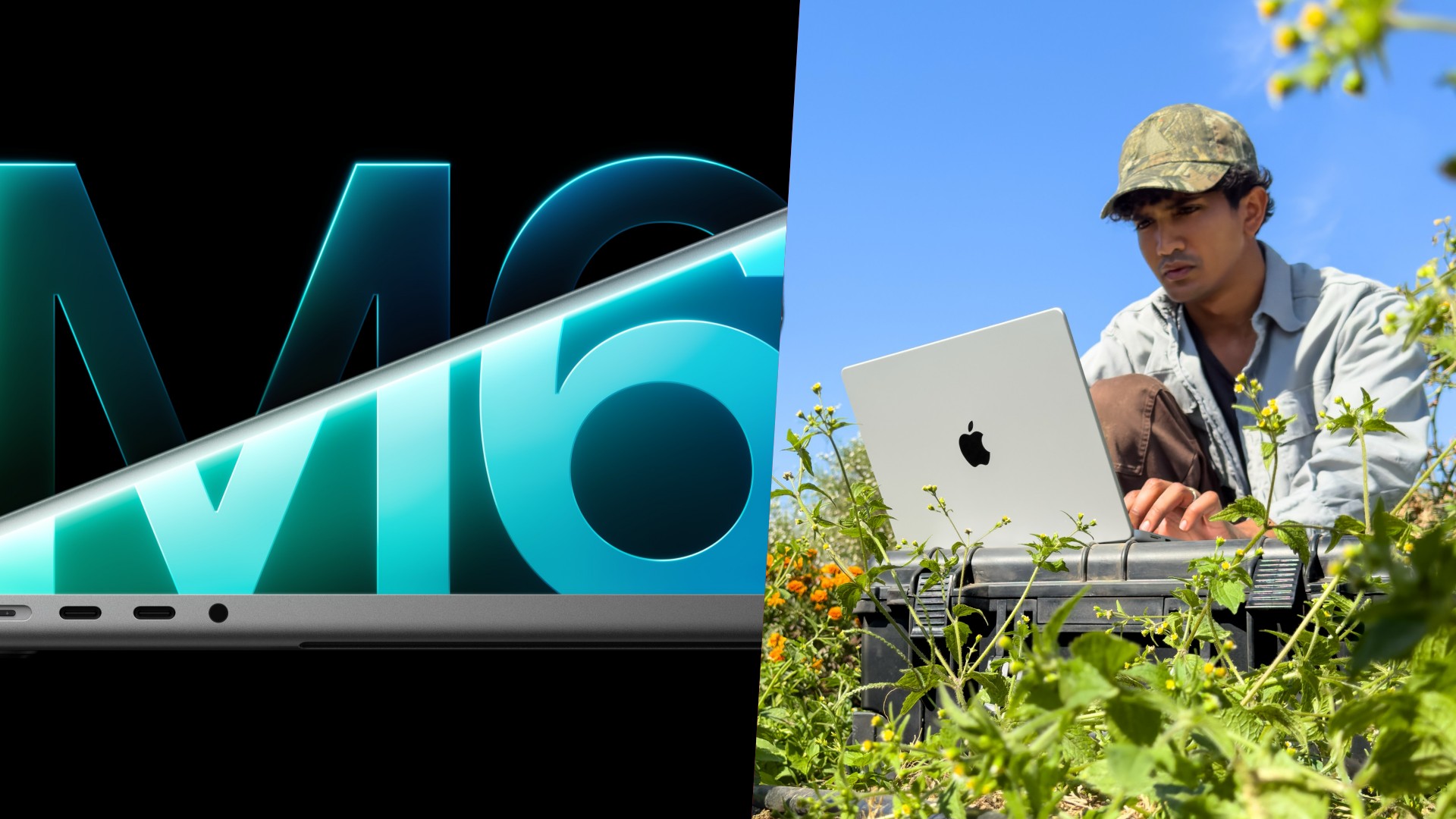
Apple has introduced the new 14-inch MacBook Pro with its M6 chip, bringing faster CPU and GPU performance, improved on-device AI capabilities, and up to 24 hours of battery life.
Announced on October 27, the latest MacBook Pro is designed for students, business professionals, developers, and content creators who need more computing power for demanding workloads.
The M6 chip features a 12-core CPU and a 12-core GPU, each with two more cores than its predecessor. Apple claims the new processor delivers up to 30 percent faster graphics performance and up to 25 percent faster on-device AI performance compared to the M5.
For users upgrading from an M1-powered MacBook Pro, Apple promises even more substantial gains, with up to 11 times faster graphics performance and up to 13 times faster AI performance.
M6 brings faster performance and AI capabilities
The M6 chip is built to handle demanding workloads, from multitasking and software development to video editing, 3D rendering, and gaming.
Its 12-core GPU features Neural Accelerators in every core, alongside a third-generation ray-tracing engine and Dynamic Caching. These technologies help accelerate graphics-intensive applications and AI-powered tasks.
The chip also features a Dual 16-core Neural Engine, which Apple says delivers up to 1.9 times faster performance than the M5. This helps accelerate workloads such as image generation, image upscaling, and super-resolution processing.
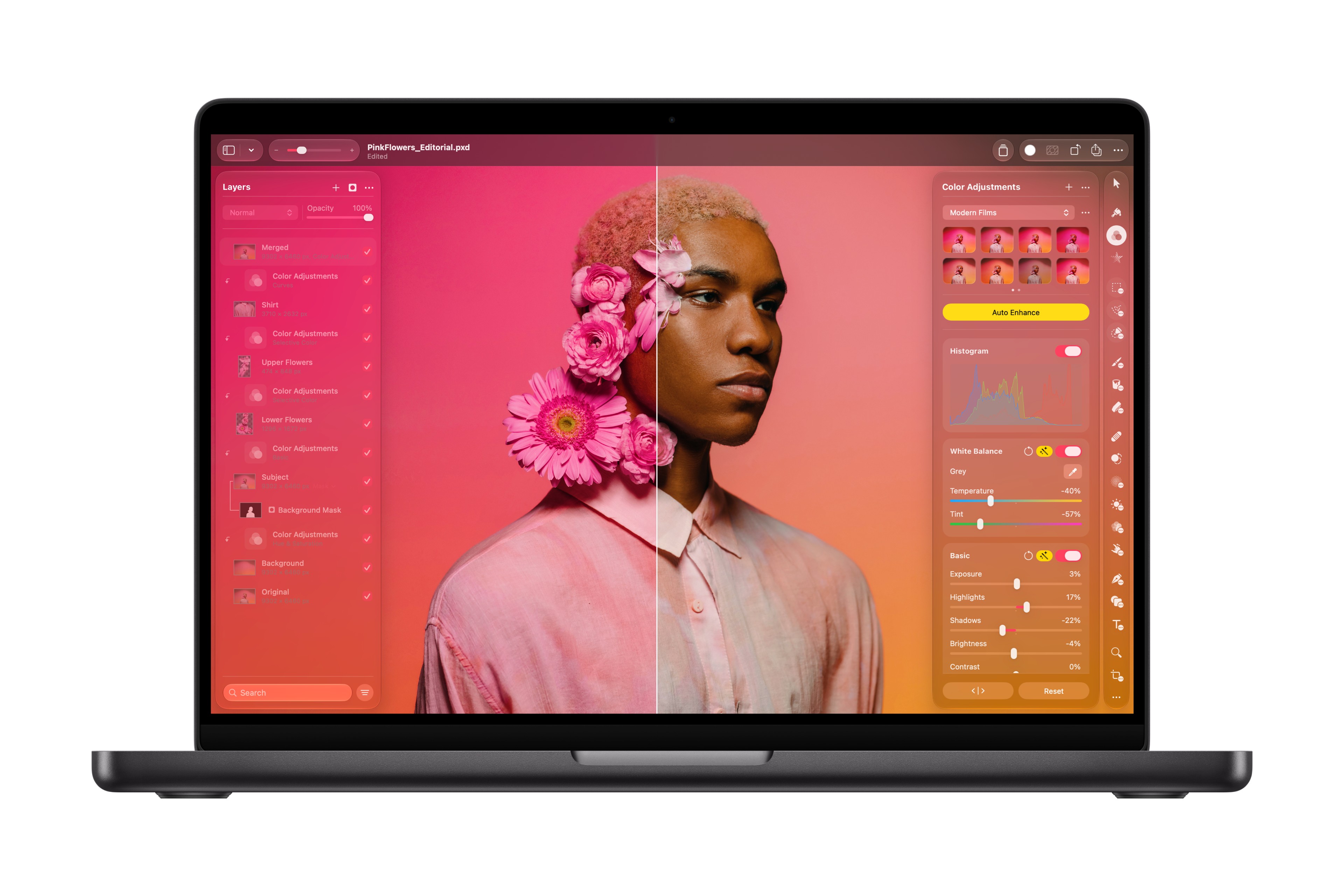
Apple highlights several performance improvements in specific applications. Compared to the 13-inch MacBook Pro with M1, the new model delivers up to 13 times faster time-to-first-token performance for large language model processing, up to 11.7 times faster ray-traced rendering in Blender, and up to 3.3 times faster image processing in Affinity.
Developers can also expect faster builds in Xcode, with Apple reporting up to 2.5 times faster project compilation compared to the 13-inch M1 MacBook Pro.
The new MacBook Pro starts with 16GB of unified memory and can be configured with up to 32GB. Memory bandwidth reaches up to 170GB/s.
Up to 24 hours of battery life
Apple says the new 14-inch MacBook Pro delivers up to 24 hours of battery life, the longest ever in a Mac.
The company claims users upgrading from an Intel-based MacBook Pro can gain up to 14 additional hours of battery life. Those moving from an M1-powered model can expect up to four additional hours.
The laptop supports fast charging, allowing it to reach up to 50 percent battery capacity in 30 minutes when paired with a compatible higher-wattage USB-C power adapter, such as Apple’s 96W adapter.
Liquid Retina XDR display and improved connectivity
The new MacBook Pro retains its 14-inch Liquid Retina XDR display, which offers up to 1,600 nits of peak HDR brightness and a 1,000,000:1 contrast ratio.
Apple also offers an optional nano-texture display finish designed to reduce reflections and glare in challenging lighting conditions.
For video calls, the laptop features a 12-megapixel Center Stage camera with Desk View. A three-microphone array and six-speaker sound system with Spatial Audio round out its audiovisual features.
Connectivity receives an upgrade with Wi-Fi 7 and Bluetooth 6. The laptop also includes three Thunderbolt 4 ports, an HDMI port, a MagSafe 3 charging port, an SDXC card slot, and a headphone jack. It supports up to two external displays.
The MacBook Pro is available in space black and silver.
macOS 27 and sustainability
The new MacBook Pro runs macOS 27, which brings improvements to system performance, search, and the overall user experience.
Apple has also refined the operating system’s Liquid Glass interface, adding options to adjust its transparency and appearance. Updates to Spotlight, Photos, Mail, Safari, Maps, Notes, and Podcasts aim to make everyday tasks more responsive and convenient.
The laptop continues Apple’s sustainability efforts. Its enclosure uses 100 percent recycled aluminum, while the device contains 45 percent recycled material overall. The battery uses 100 percent recycled cobalt, and multiple capacitors use 100 percent recycled tantalum.
Apple says the new MacBook Pro is manufactured using renewable electricity across its supply chain and is designed to be durable and repairable.
MacBook Pro with M6 pricing and availability
The new 14-inch MacBook Pro with M6 starts at US$1,999 in the United States. Education pricing starts at US$1,899.
Pre-orders in the US and 34 other countries and regions begin on October 28, 2026. The laptop will arrive at customers’ doors and Apple Stores, as well as authorized resellers, starting November 6.
In the Philippines, the 14-inch MacBook Pro with M6 starts at PHP 144,990. Eligible students and educators can purchase it at the education price of PHP 137,990.
In Singapore, the new 14-inch MacBook Pro with M6 starts at SGD 2,699, with education pricing starting at SGD 2,499. Customers can order the new MacBook Pro soon through the Apple Store online and the Apple Store app in Singapore. Availability details are available through Apple’s local store.
Apple says the new MacBook Pro will be available soon through the Philippine Apple Store online and Apple Authorized Resellers. Local availability details have yet to be announced.
Apps
Firefox ad reunites all your favorite memes from decades ago
The Numa Numa Guy, Annoying Orange, and Chocolate Rain are back!

Before Tung Tung Tung Sahur and Skibidi Toilet, the early internet was populated by charismatic personalities looking to make their presences felt in a land that didn’t have a lot of rules yet. As early users, we danced to “Dragostea din tei,” belted out “Chocolate Rain,” and copied “Shoes” word-for-word. Today, Firefox is bringing all those good memories back for a grand reunion.
In a new ad, the web browser featured ten of the biggest stars of the early internet including the aforementioned Numa Numa Guy, Tay Zonday, and Shoes’ Kelly. You can also see Annoying Orange, Chuck Testa, Overly Attached Girlfriend, Bad Luck Brian, Where the Hell is Matt?, the Apparently Kid, and the Success Kid.
Now, this isn’t just a reunion. The ad has a clear message about today’s most concerning issue: AI. Everything has “built-in AI, always asking, asking, asking,” as the Annoying Orange said.
“They make money by following us, and somehow, I’m the creepy one?” the Overly Attached Girlfriend asked.
All these famous personalities are asking what happened to the internet today. Obviously, the big takeaway is that we should all go back to Firefox.
Compared to other browsers, Firefox has a lot of built-in features that offer a lot of control for users. For one, it has its own VPN for privacy. Secondly, reflecting the ad’s message against AI, the browser has a toggle to minimize AI features.
SEE ALSO: Google illegally destroys 250,000 trees for a single AI data center


HP OMEN Max 16 review: Gamer-maxxing in deep black
Peripherals deemed necessary to max this out


vivo V80 review: Good phone, tough sell
A capable travel companion


Ghost of Yōtei Complete Edition review: More of a great thing
Picking up where Atsu left off

Apple unveils new iMac with M6 chip

Apple introduces 14-inch MacBook Pro with M6 chip

Anker soundcore AeroClip 2 brings open-ear audio to everyday life

adidas debuts ENERGYRIM carbon tech in the Adizero Adios Pro 5

Firefox ad reunites all your favorite memes from decades ago

TECNO CAMON Slim 5G review: Slim on size, big on surprise

TECNO CAMON Slim 5G: Price, availability in the Philippines

HONOR Magic9 Pro Max launches in China with ARRI-powered imaging

BYD says that way better EV batteries are coming next year

HONOR 600S review


-

 News2 weeks ago
vivo V80 debuts with ZEISS cameras
-

 Philippines2 weeks ago
TECNO CAMON Slim 5G gets launch discounts, free MagBadge
-

 News2 weeks ago
Samsung: Galaxy Z Fold8 demand rose because of iPhone Duo
-
Reviews1 week ago
vivo V80 review: Good phone, tough sell
-

 Features2 weeks ago
I don’t want a phone that unfolds — the Galaxy Z Fold8 gets why
-

 News6 days ago
OPPO Find X10 Series: Price, availability in the Philippines
-
![KINGDOM HEARTS Collection [I-III]](https://www.gadgetmatch.com/wp-content/uploads/2026/10/kingdom-hearts-colletion-I-III-202610-400x240.png)
![KINGDOM HEARTS Collection [I-III]](https://www.gadgetmatch.com/wp-content/uploads/2026/10/kingdom-hearts-colletion-I-III-202610-80x80.png) Gaming2 weeks ago
Gaming2 weeks agoKINGDOM HEARTS Collection [I–III] now available on PS5, Switch 2
-

 Cameras7 days ago
DJI Osmo Pocket 4P Pearl White now available globally