
Smartphones
World’s fastest: realme unveils 320W SuperSonic Charge
4-minute miracle

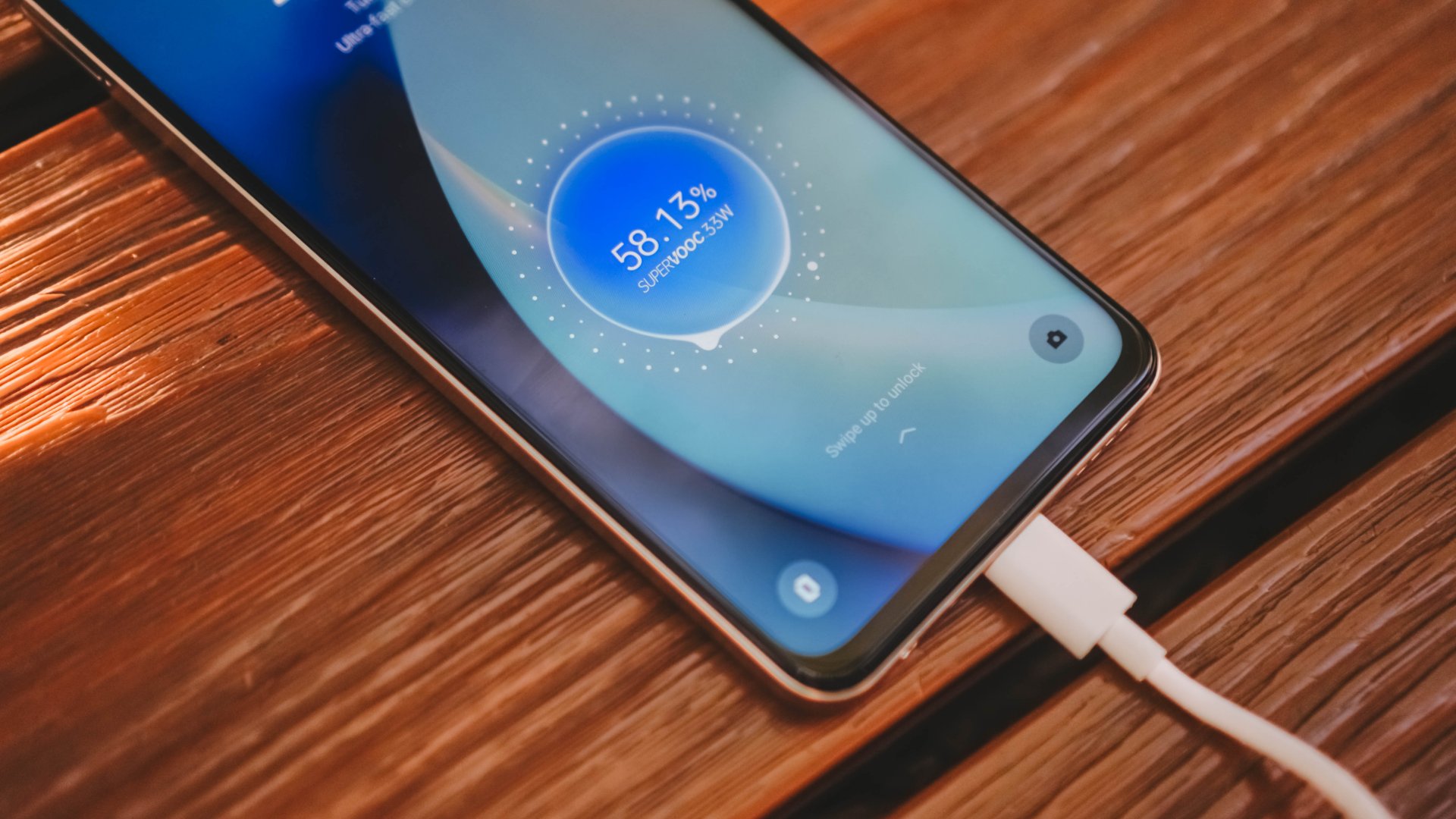
Fast-charging technology has been around Android phones for a while now. And every cycle, companies all push the boundaries of what’s possible as far as this feature is concerned.
Now, realme has just announced a 320W SuperSonic Charge, promising a full charge in just four minutes.
You read that right: in case you’re out of time and all you’ve got is four minutes — like that Madonna and Justin Timberlake song — then this technology is for you.
Conversely, you can also just listen to fromis_9’s “Supersonic” to fill that four minutes. Just a suggestion.
On paper, it is the world’s fastest charging technology yet. The 320W fast charge eclipses the previous 240W charging tech on the realme GT3 last year, and sets a new benchmark for charging experiences.
realme claims that the 320W SuperSonic Charge can replenish smartphones to full in just four minutes and 30 seconds. Over 100 media representatives witnessed realme testing the charger firsthand in Shenzhen, China. Moreover, the 320W charger can power a device up to 26% in just a minute, and over 50% in just two minutes.
Once it officially rolls out, users can fully charge their phones just as they’re grabbing coffee or listening to a song. What’s great about the 320W charger is it’s not exclusive only to realme devices.
Also known as the “Pocket Cannon”, the 320W charger is not exclusive only to realme devices. The charger boasts an incredible power density of 3.3W per cubic centimeter. It has a similar size to the previous 240W charger.
Furthermore, it supports majority of advanced mainstream charging protocols, from UFCS to PD and SuperVOOC. It also comes with dual USB-C outputs for simultaneous charging — 150W for your realme phone and 65W for compatible laptops.
The science behind
To make it possible for realme to pull off such a groundbreaking charging technology, it took the company years of research to address associated problems.
First, realme drew inspiration from foldable device mechanics, and introduced a folded battery. This quad-cell battery has a 4,420mAh capacity, with cells that can be charged simultaneously. The sleek form factor leads to faster charging speed.
As for safety concerns, realme also introduced the AirGap Voltage Transformer. This utilizes advanced contact-free electro magnetic conversion for smartphones. In severe faults like circuit breakdowns, it ensures that high voltage remains isolated from the battery. It is also backed up by a suite of patented innovations.






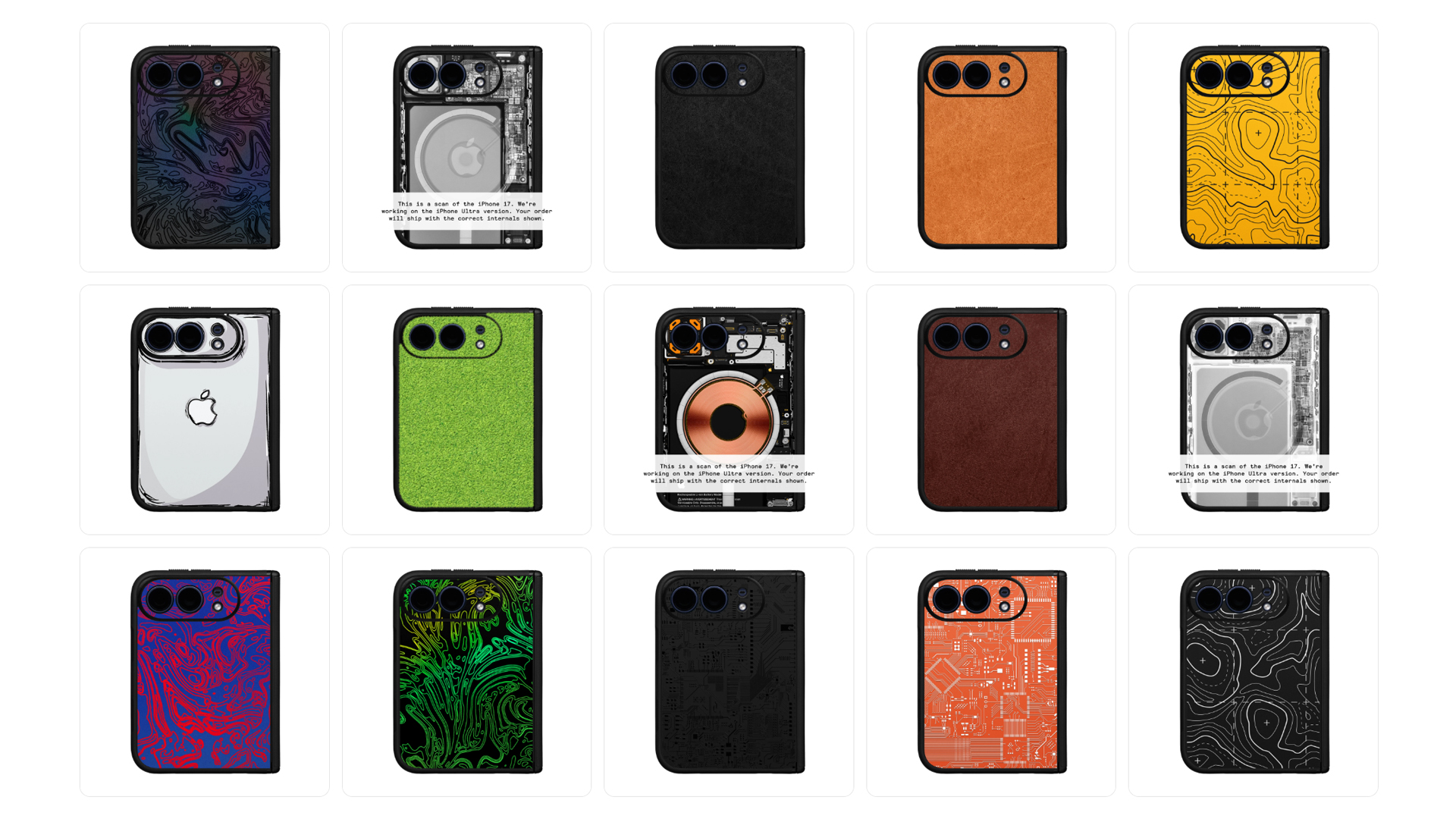
As of now, we’re still around 12 hours ahead of the most anticipated event of the month, the launch of the iPhone 18 series. Besides the ubiquitous flagship lineup, the event is also heavily rumored to reveal the upcoming foldable iPhone Ultra. Well, while Apple has been secretive about the device itself, Dbrand has just spoiled the surprise for fans.
The often-sarcastic casemaker has just released a series of phone cases for the iPhone Ultra. The series doesn’t stray at all from Dbrand’s usual slew of designs. You’ll still get the traditional Teardown skins (which offers a peek into the iPhone’s internals) and the Leather skins (with real leather).
The main point here, of course, is that it’s already available ahead of the scheduled launch. As for looks, the cases confirm that the foldable will have the passport-style format popularized by the Galaxy Z Fold8. The device will also have a slightly elevated camera bump and two buttons on top of the bump.
Other than that, there’s still a lot to be revealed in the upcoming event. There are high hopes that the iPhone Ultra will fix the persistent pain points of the foldable segment. Unfortunately, it will likely come with a pretty exorbitant price tag, making it a much harder buy for regular iPhone users.

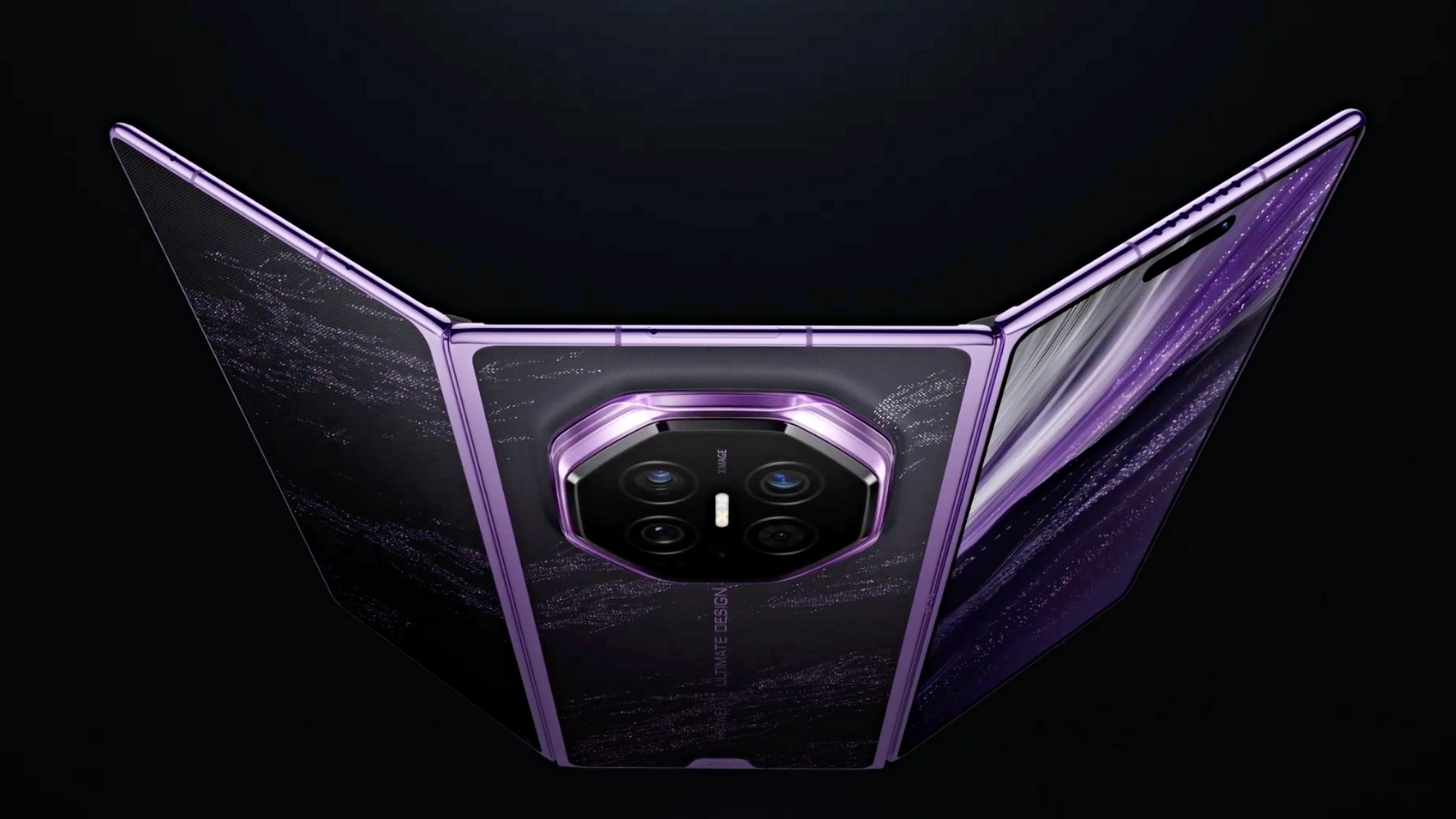
Huawei has officially unveiled the HUAWEI Mate XT 2 | ULTIMATE DESIGN, its latest tri-fold smartphone. The new device is the first smartphone to feature the LogicFolding Tau (τ) Chip and marks the technology’s entry into mass commercialization.
The Mate XT 2 introduces a wing-like tri-fold design that opens from both sides. It also brings the Kirin 9050 Pro chipset, Xuanwu Ultra-Durable Tri-Fold Architecture, Smart Shield Privacy Screen, True-to-Color Camera 3.0, and HarmonyOS 7.
A wing-like tri-fold design
The HUAWEI Mate XT 2 | ULTIMATE DESIGN uses a wing-like form that folds from both sides for what Huawei describes as a more intuitive unfolding experience.
The design draws from Chinese aesthetics. Its back panel features a cloud pattern created using Brocade Cloud craftsmanship. The phone comes in Purple, White, and Black.
Its camera ring continues Huawei’s Star Diamond Glow design. It uses Yttrium Crystal fired at 1,800°C and undergoes eight polishing steps to create 33 star diamond facets.
Huawei also redesigned the phone’s durability system. The Xuanwu Ultra-Durable Tri-Fold Architecture reworks the hinges and display structure to provide protection across multiple layers.
The Mate XT 2 is the first tri-fold phone to support IP58 and IP59 dust and water resistance. Its cover display uses Xuanwu Kunlun Glass with scratch and impact resistance, along with anti-glare technology.
The main display uses a multi-layer composite structure with a large UTG glass layer, aerospace-grade ultra-thin high-strength steel, and a carbon fiber support layer.
The Advanced Precision Hinge System 2.0 uses a five-curved-arm structure and synchronized linkage mechanism to distribute force more evenly.
Kirin 9050 Pro powers the tri-fold
The Mate XT 2 is the first smartphone to use Huawei’s Kirin 9050 Pro chip. Huawei claims overall device performance improves by 42 percent over the previous generation through closer integration between its hardware, software, chipset, and cloud technologies.
The LinxiCore CPU works with the HUAWEI Ark Engine to improve large-file loading and multitasking. The Maleoon GPU doubles its computing units and cache, while gaming supports up to 50 MRPS hardware-level real-time ray tracing.
The HUAWEI Da Vinci Architecture NPU also boosts on-device AI performance. Huawei says the phone natively supports its Pangu 30B-A2B MoE large language model, enabling features such as on-device AI album management through Celia.
Huawei has also spread the Mate XT 2’s heat sources across its three frames. Large vapor chambers and thermally conductive graphene help move heat across the device.
The phone uses 32 distributed antennas and multiple communication systems for 5A connectivity. It also supports Tiantong satellite communication and Beidou satellite messaging.
For security, the Mate XT 2 combines a Mobile Security Processor with an independent security chip. Huawei says the system supports post-quantum cryptography algorithm detection and has passed EAL5+ CCRC security certification.
Privacy comes to the foldable display
The Mate XT 2 introduces Huawei’s Smart Shield Privacy Screen, which the company calls the industry’s first foldable privacy screen with hardware-level protection.
The system uses an independent dual-pixel design to maintain the same screen resolution before and after Privacy mode is activated. It can also detect situations such as entering airports or train stations and provide privacy reminders.
Users can activate the mode by double-tapping the cover screen or using the Smart controls button.
The phone also includes ECG analysis software and has received an NMPA Class II Medical Device Registration Certificate. Users can perform an ECG measurement by holding the unfolded display with both hands, after which Celia can interpret and analyze the results.
True-to-Color Camera 3.0
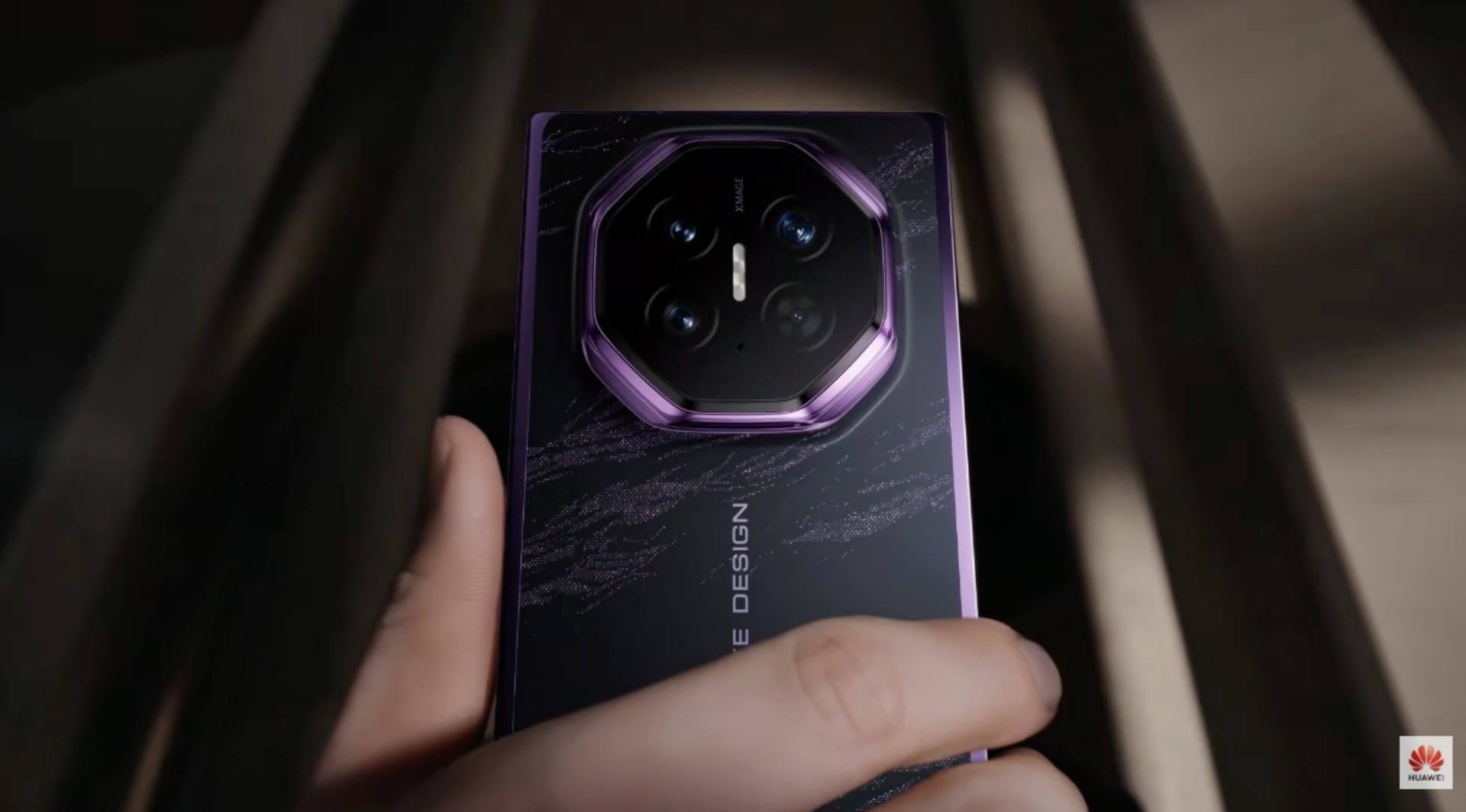
Huawei has also upgraded the Mate XT 2’s camera system with True-to-Color Camera 3.0.
The system is designed to filter infrared light interference and improve color reproduction by 95 percent compared with the previous generation, according to Huawei.
The camera setup includes an ultra-HDR main camera, an ultra-wide-aperture periscope telephoto camera, and an ultra-wide-angle camera. Huawei says the system is designed to deliver more accurate colors, realistic portraits, and clearer night shots.
Video recording supports an ultra-high dynamic range of 18 EV.
XMAGE SmartCapture can recognize people, scenery, and food, while AIGC-powered real-time previews provide composition and lighting recommendations.
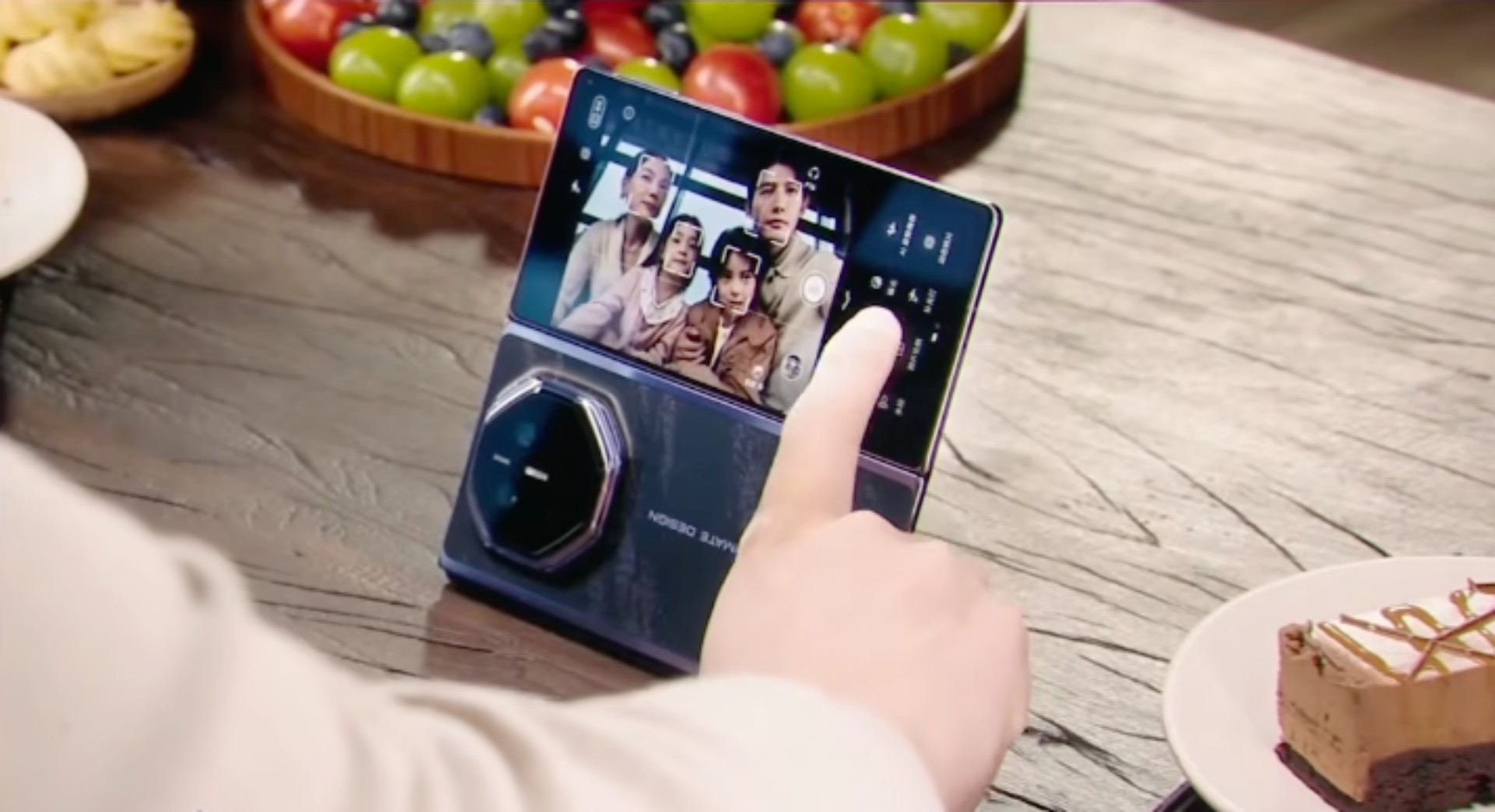
The tri-fold design also enables a Desk-calendar mode for taking selfies and group photos.
HarmonyOS 7 for the large screen
The HUAWEI Mate XT 2 runs on HarmonyOS 7, which adds new large-screen features to take advantage of its tri-fold display.
Its Live-Multitask feature supports three windows displayed in parallel. Users can adjust the size of each window and control their volume independently.
Huawei says the experience has been optimized for scenarios including financial management, social entertainment, office work, shopping comparisons, and travel planning. The company has also adapted the device for major apps as it continues expanding its tri-fold ecosystem.
The HUAWEI Mate XT 2 | ULTIMATE DESIGN starts at RMB 19,999. It will also be available with a stylus set, with sales beginning at 10:08AM on September 12.
News
Xiaomi 18 Fold is the next foldable to go WIDE
Just days before the official launch of Apple’s iPhone Ultra

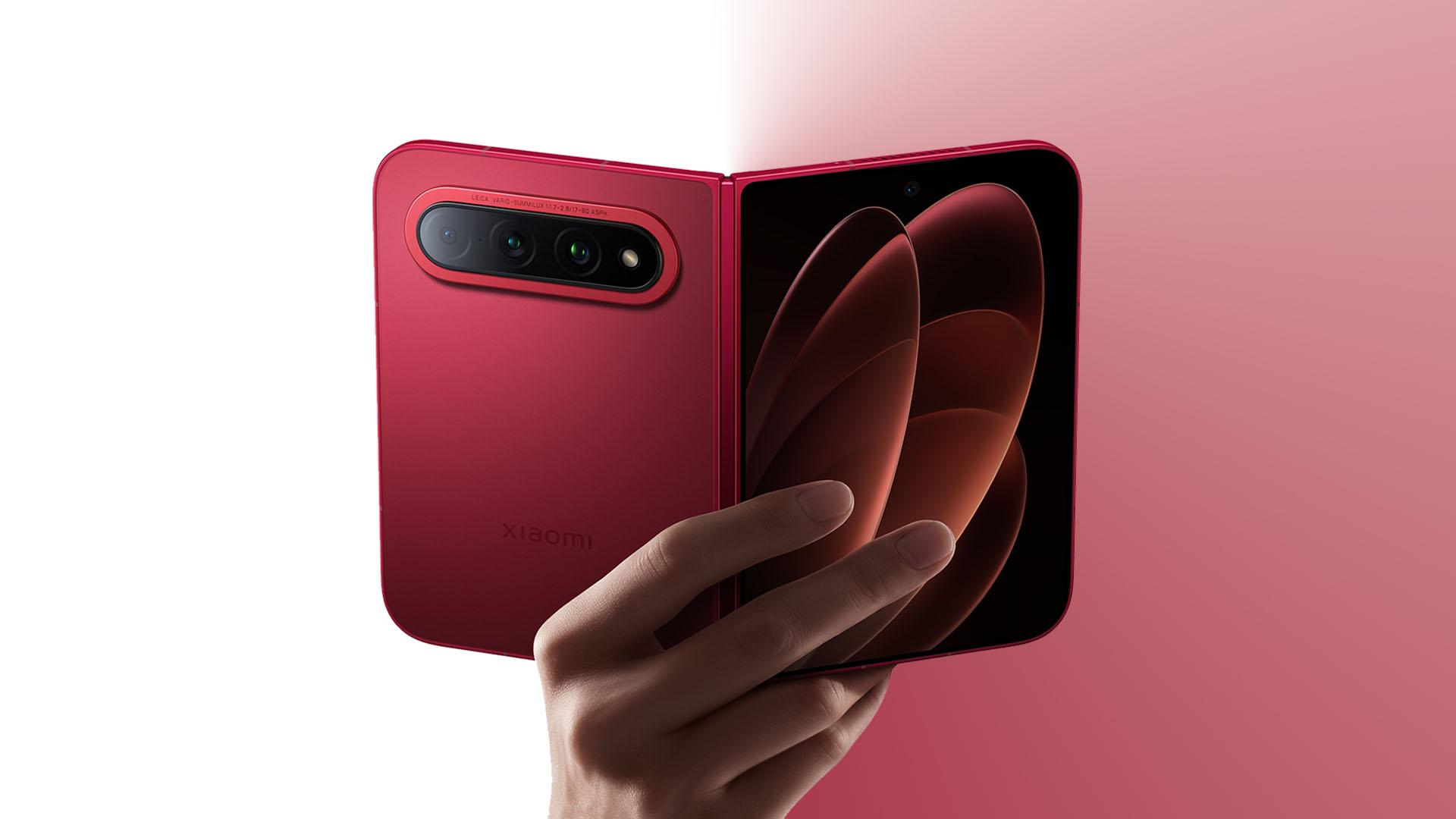
From the HUAWEI Pura X Max to Samsung’s Galaxy Z Fold8, it seems like WIDE foldables are inevitable at this point.
The latest to enter the battlefield is none other than the Xiaomi 18 Fold.
A fold of firsts
First teased inside a glass casing at IFA 2026 in Berlin, Germany, the Xiaomi 18 Fold finally makes its official debut — just days before the official launch of Apple’s highly anticipated iPhone Ultra.

While it’s not the first WIDE foldable to exist, it’s still the first WIDE foldable made by Xiaomi. They even skipped two years and a generation of the very last MIX Fold to welcome this transition.
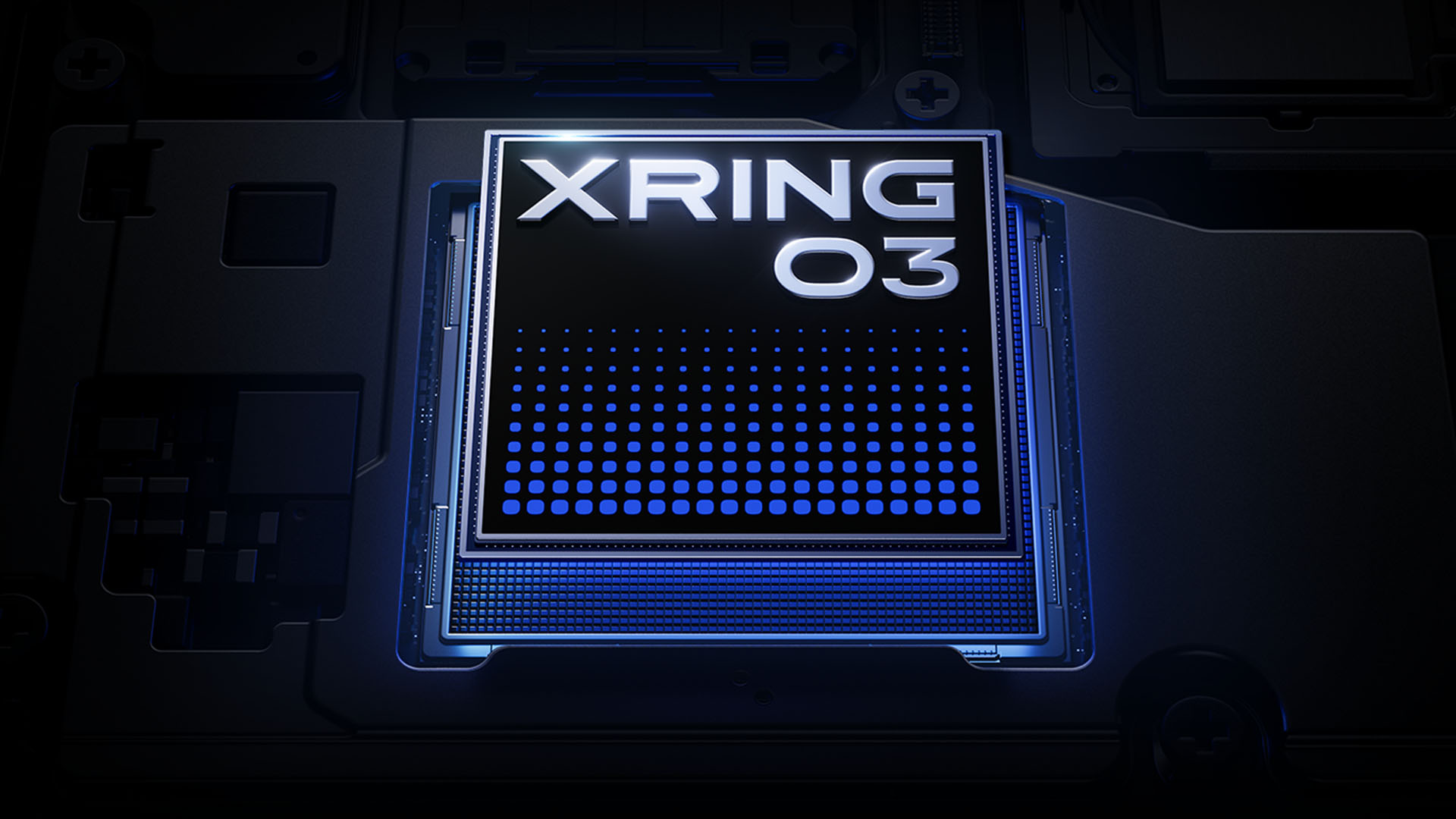
And by that, it’s also their first device to run the Xiaomi XRING O3 SoC built on a 3nm process with a 10-core CPU plus a 16-core G2-Ultra NX GPU.
This chip promises 52% faster CPU and 84% greater GPU performance than Apple’s A19 Pro chips. All while drawing less power.
Meanwhile, there’s a newer 4-core NPU that can deliver 45% faster on-device decoding performance compared to Xiaomi’s first-gen chip.
This second-generation chipset is also the first SoC that supports the all-new LPDDR6 RAM interface.
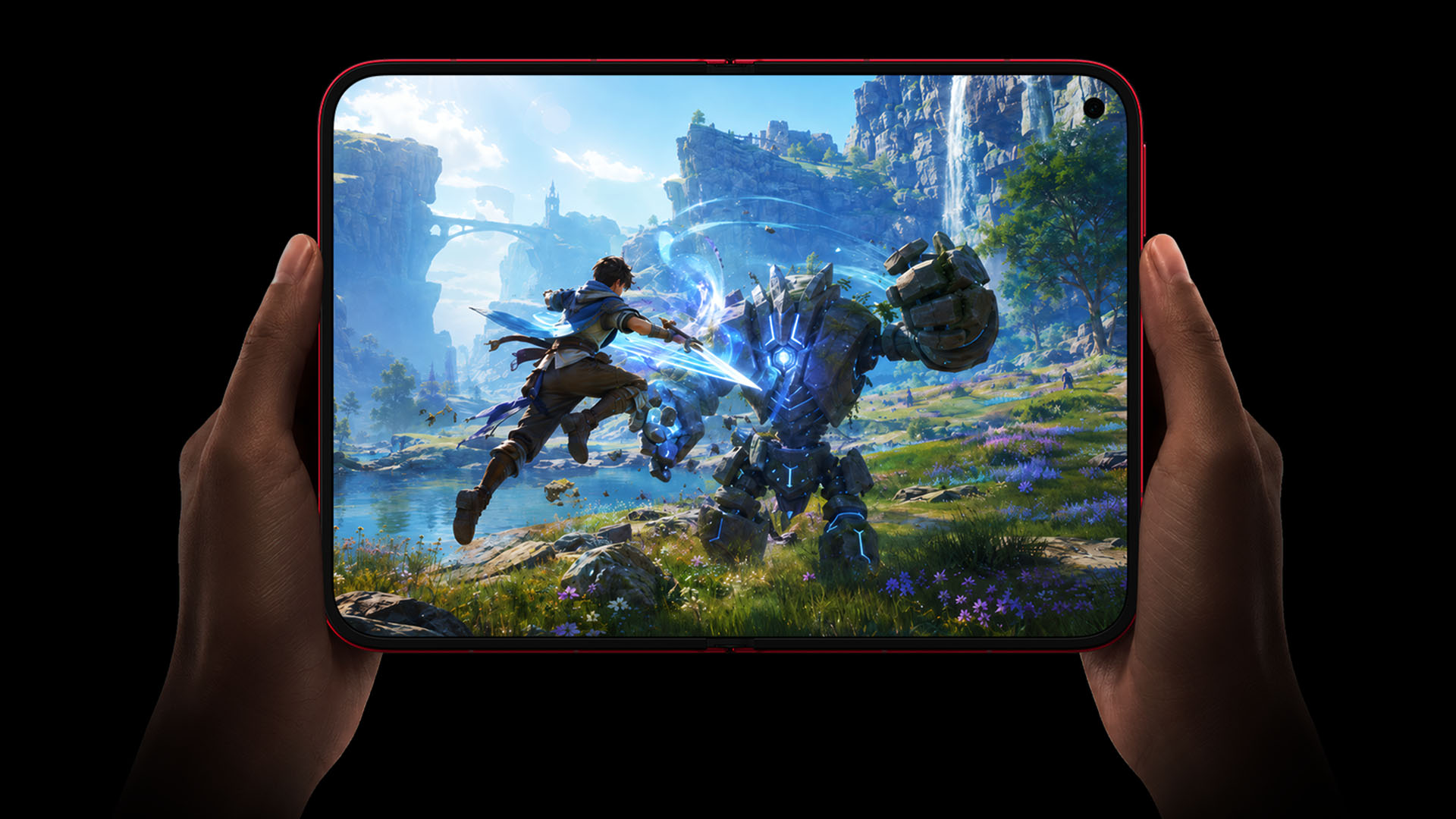
This new foldable also packs a 6000mAh battery, the largest in any WIDE foldable so far. Its Pura and Galaxy rivals are capped at 5300mAh and 4800mAh respectively.
Filling it up fast will all depend on Xiaomi’s 67W HyperCharge and 50W wireless HyperCharge standards.
Another first in the Xiaomi 18 Fold lies on the back of its special Ceramic Edition colorway.
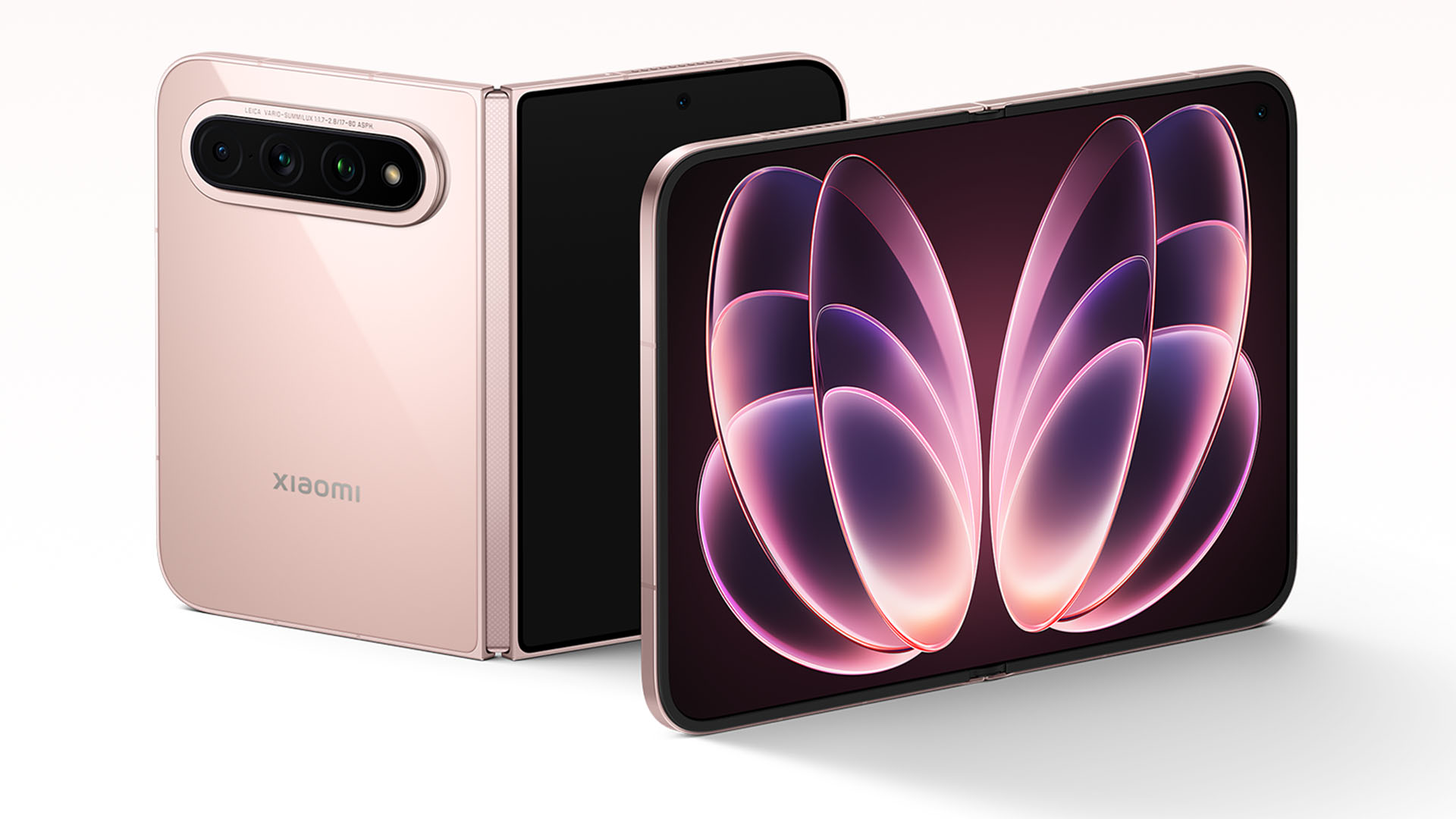
The use of Silicon nitride ceramic marks the first time for this material to be used as a smartphone’s back panel.
ICYMI, Silicon nitride is an advanced ceramic material that is widely used in automotive and aircraft engines especially for its high-temperature resistance.
This material combines a warm yet smooth ceramic feel but with a high amount of hardness. All while weighing approximately 50% less versus a traditional zirconia ceramic.
Pretty inside and out
Other than its powerful core and mechanism, the Xiaomi 18 Fold is pretty both inside and out.
When folded, it features a 5.38-inch cover display. Unfolded, it has an expansive 7.58-inch flexible screen. They feature Xiaomi’s new HyperRGB screen technology that uses a full RGB subpixel structure to make complete use of red, green, and blue subpixels.
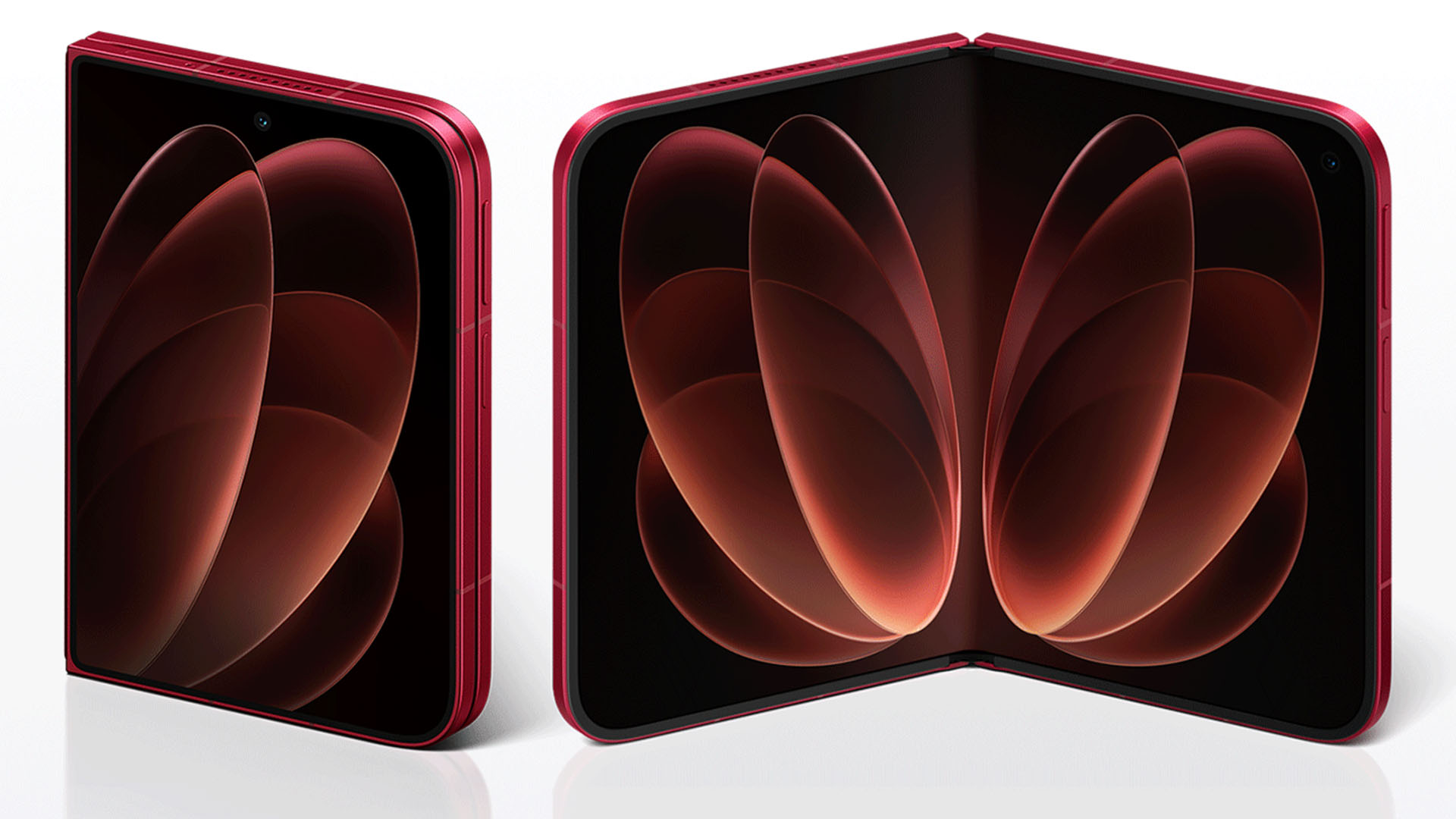
Both screens also have an adaptive 1~120Hz LTPO AMOLED displays with a maximum brightness of 4000 nits.
This passport-like form factor adapts a √2:1 aspect ratio close to a standard A4 paper. Both create higher screen utilization when consuming content regardless if one is reading, watching, or even gaming.
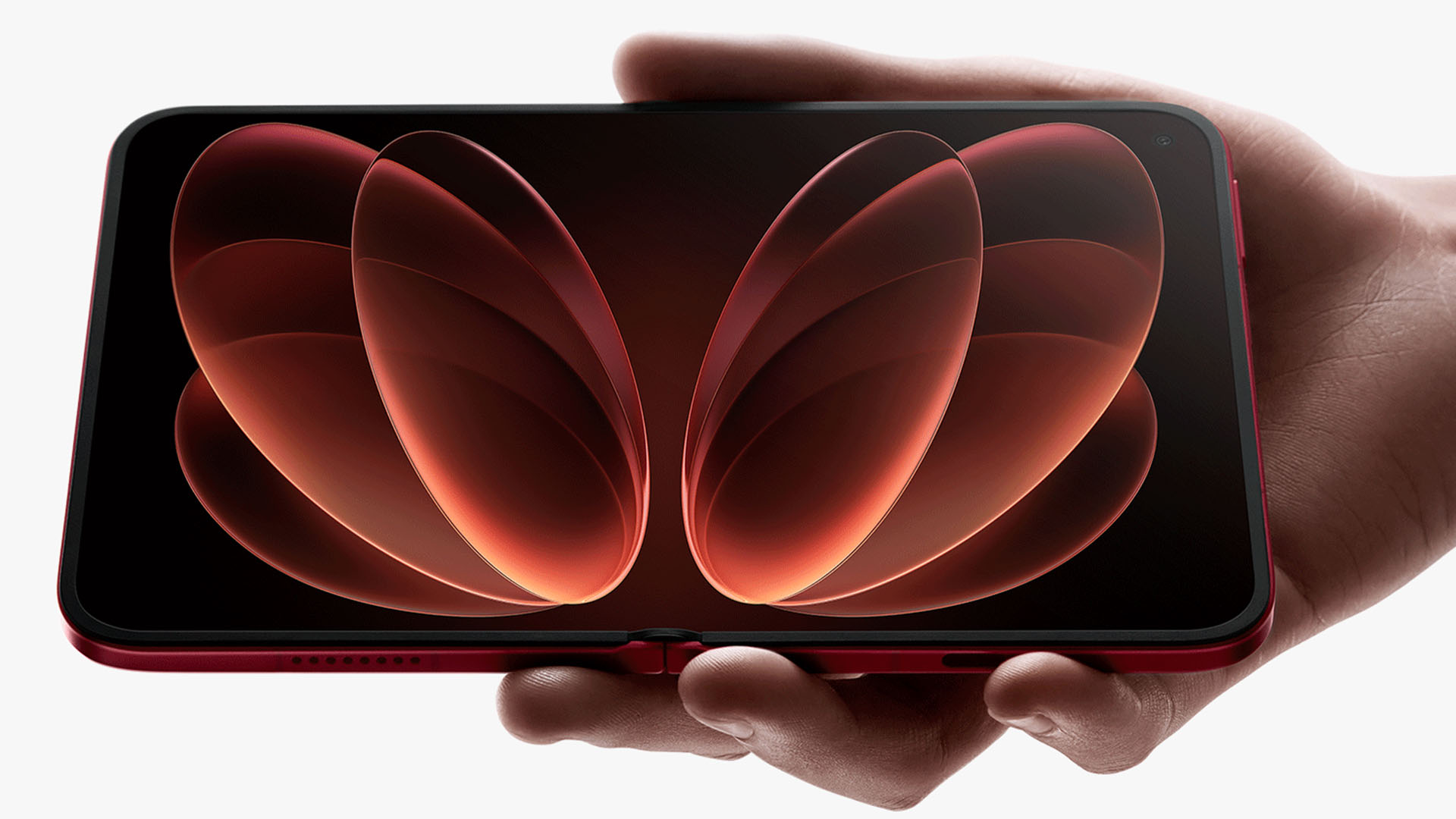
Xiaomi 18 Fold’s inner screen also boasts minimal creasing all thanks to its double-layer UTG (Ultra-Thin Glass) where the surface UTG is 50µm while its support layer underneath is at 30µm.
There are also organic flexible insulating materials that are 6x more ductile than rigid materials alongside a stronger impact resistance.
Flipping to its back, the Xiaomi 18 Fold boasts a triple Leica camera system.
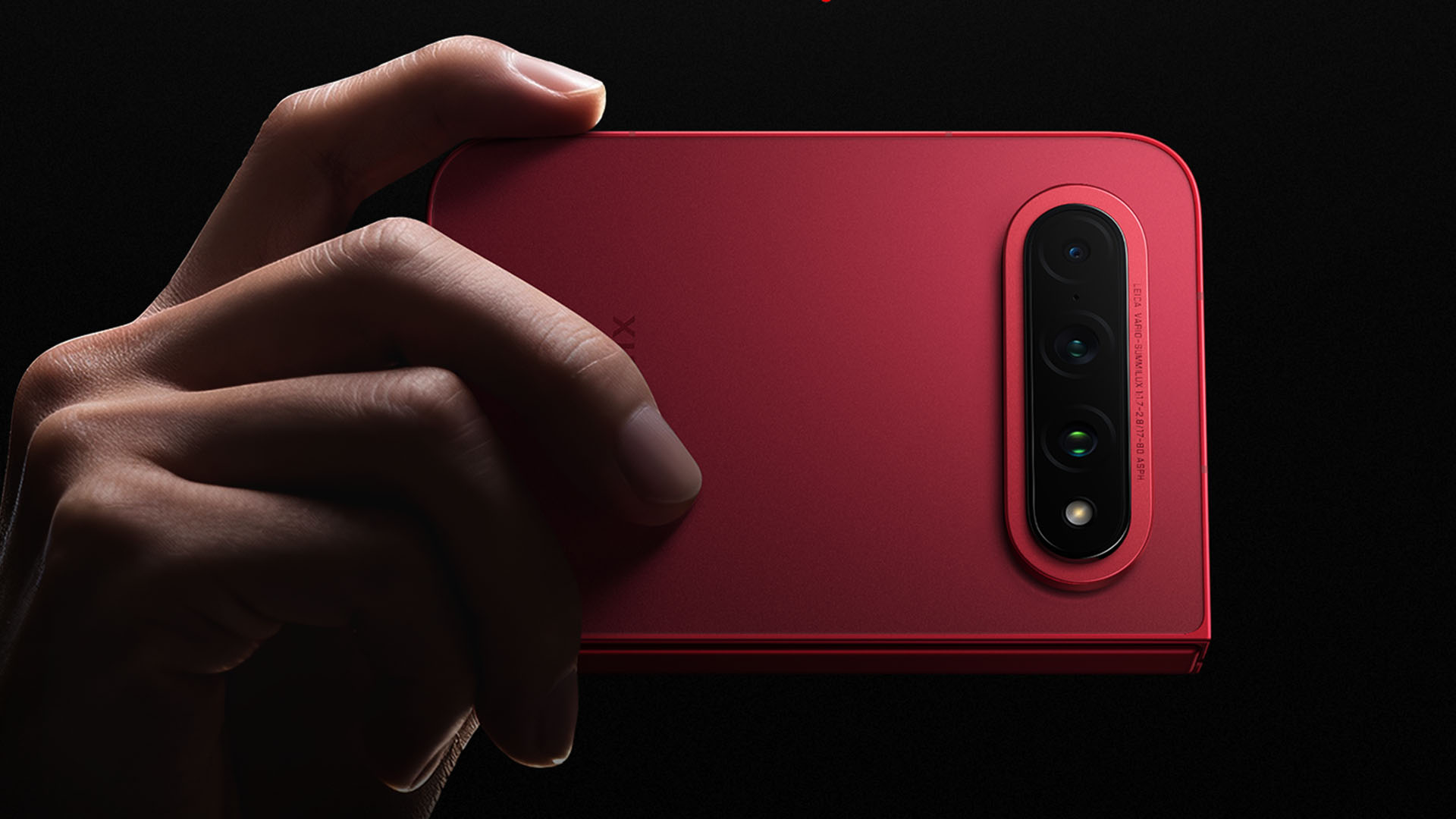
Specifically, it packs a 200MP f/1.7 main camera based on Samsung’s 1/1.56-inch ISOCELL HP5 sensor. Additionally, there’s a 50MP f/2.4 UWA and a dedicated 50MP f/2.8 periscope telephoto module with 3.5x optical zoom capabilities.
All cameras come with Leica’s Summilux optics that are also found on the last Xiaomi 17 Ultra.
The Xiaomi 18 Fold is the second WIDE foldable to pack a triple camera setup that its current Korean counterpart and the upcoming American contender both lack.
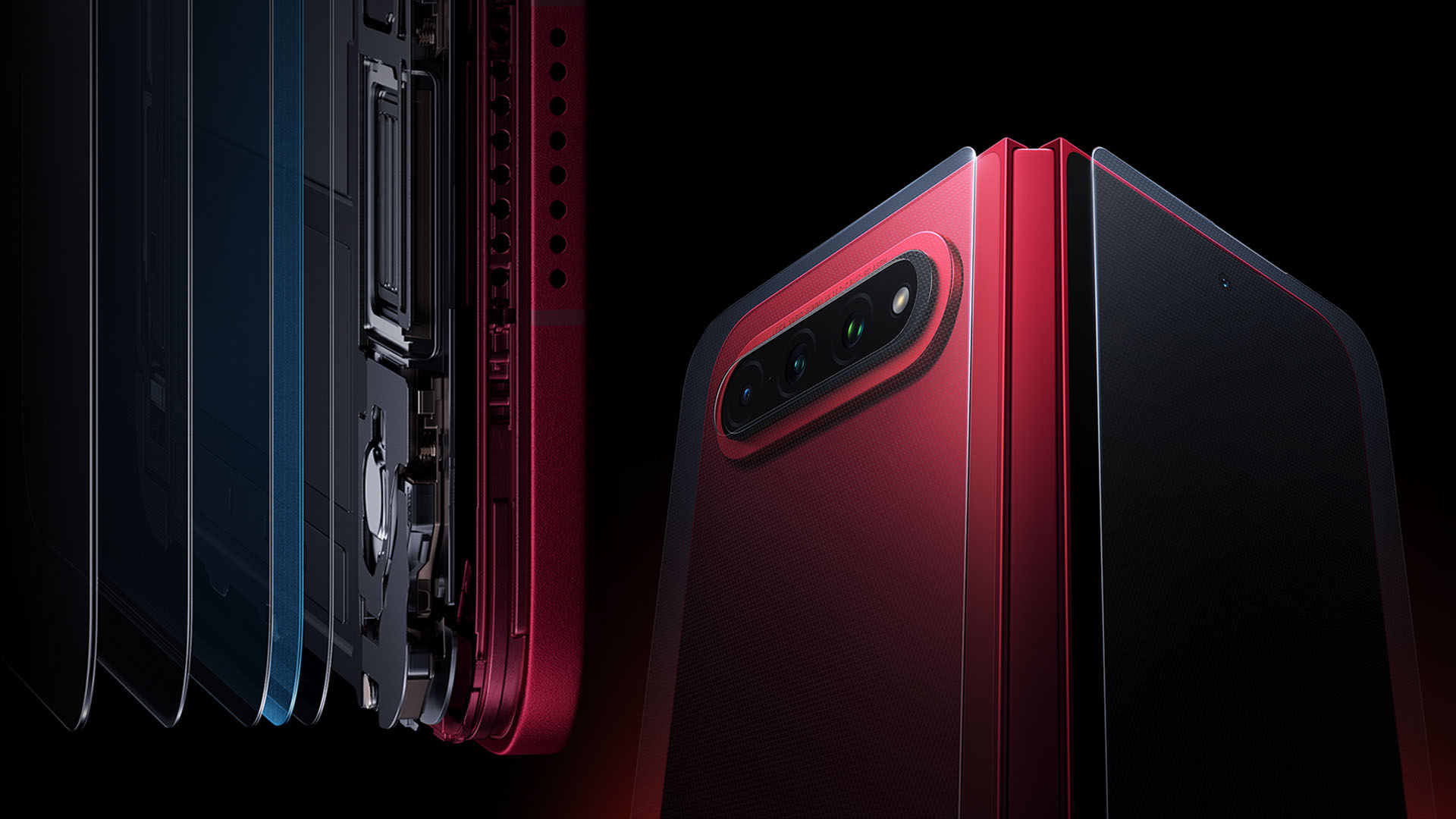
Graphics by Vincenz Lee | GadgetMatch
Now that we’re here, the chassis is made from a 7000-series aluminum alloy frame with Xiaomi’s very own Shield Glass 3.0 glass protection for both the outer display and back panel (not to be confused with the exclusive Ceramic Version).
The cover glass is further strengthened through ion implantation for improved drop resistance.
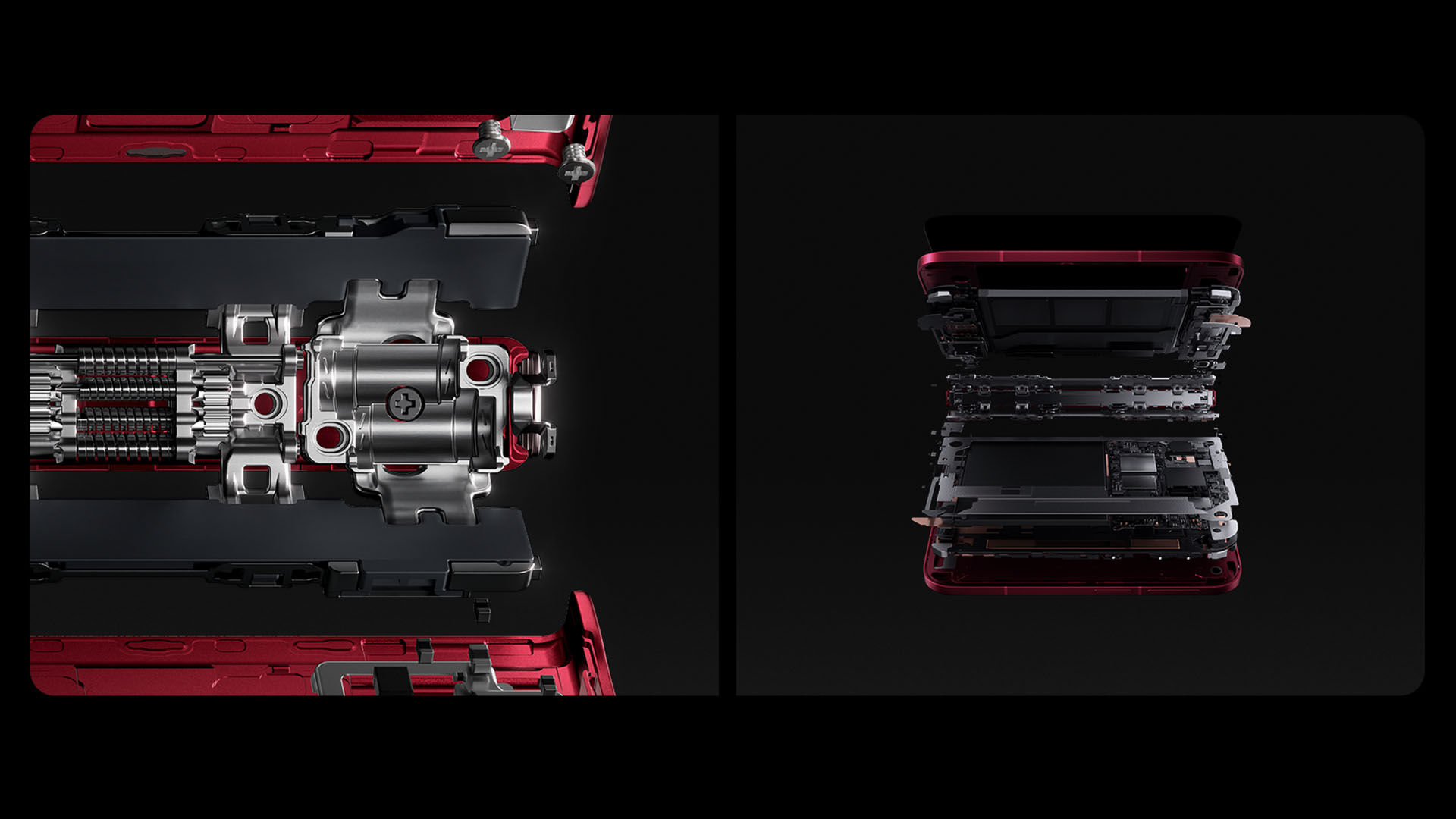
Also, Xiaomi’s new-gen hinge also has a patented three-link design that wraps around the screen and provides more protection.
While we’re already at it, the Xiaomi 18 Fold relies on IP58 and IP59 water and dust resistance ratings.
Pricing and Availability
The Xiaomi 18 Fold is available in Black, White, Red, and a special Ceramic Version.
Pricing and configuration are as follows:
- 12+256GB = CNY 10,999 (US$ 1640 / EUR 1410 / GBP 1215 / SG$ 2075 / MYR 6615 / PhP 102,330 / INR 154,680)
- 12+512GB = CNY 11,999 (US$ 1785 / EUR 1540 / GBP 1325 / SG$ 2265 / MYR 7220 / PhP 111,630 / INR 168,740)
- 16+512GB = CNY 12,999 (US$ 1935 / EUR 1665 / GBP 1435 / SG$ 2455 / MYR 7820 / PhP 120,935 / INR 182,810)
- 16+1TB = CNY 14,999 (US$ 2235 / EUR 1920 / GBP 1655 / SG$ 2830 / MYR 9020 / PhP 139,540 / INR 210,930)
- 16+1TB Ceramic Version = CNY 15,999 (US$ 2380 / EUR 2050 / GBP 1765 / SG$ 2425 / MYR 9625 / PhP 148,845 / INR 225,000)
Unfortunately, several outlets have already reported that Xiaomi does not plan to bring the 18 Fold outside China.

Setting your bedsheets ablaze with the Lovense Solace Pro
The closest proxy I could find where I'm guilty as sin


Now Playing: Elden Ring Tarnished Edition
Is the Switch 2 port worth the price?


NBA 2K27 review: A two-way All-Star
Better ball game, same 2K?

CODE VEIN II launches Mask of Idris DLC with free Version 2.0 update

A casemaker just revealed the foldable iPhone Ultra ahead of time

The Legend of Zelda: Ocarina of Time remake launches November 5

adidas’ hybrid training shoe gets a Solar Turbo makeover

How to spot scam emails and messages before they get you

TECNO MEGAPAD 2 review: Eyes on the size

realme 16T 5G with 8000mAh battery, IP69 Pro rating launches in PH

REDMI Note 17 Series focuses on long-term reliability

HUAWEI Pura X View is 2026’s first WIDE slab-type smartphone

realme 16T to come with 8,000mAh battery, 7-year battery health guarantee


-
 News2 weeks ago
realme 16T 5G with 8000mAh battery, IP69 Pro rating launches in PH
-
 News2 days ago
HUAWEI Pura X View is 2026’s first WIDE slab-type smartphone
-
 News2 weeks ago
REDMI reveals the refreshed Note 17 and Note 17 Pro series
-
 Singapore2 weeks ago
REDMI Note 17 Series: Price, availability in Singapore
-
 Cameras2 weeks ago
Insta360 Luna Ultra review: My new solo coverage camera
-
 Reviews2 weeks ago
REDMI Note 17 Pro review: What a rollercoaster ride!
-

 Features1 week ago
The designated photographer’s new favorite phone: OPPO Reno16 Series 5G
-
 Cameras7 days ago
DJI Osmo 360 II review: Going all-in on the ecosystem