
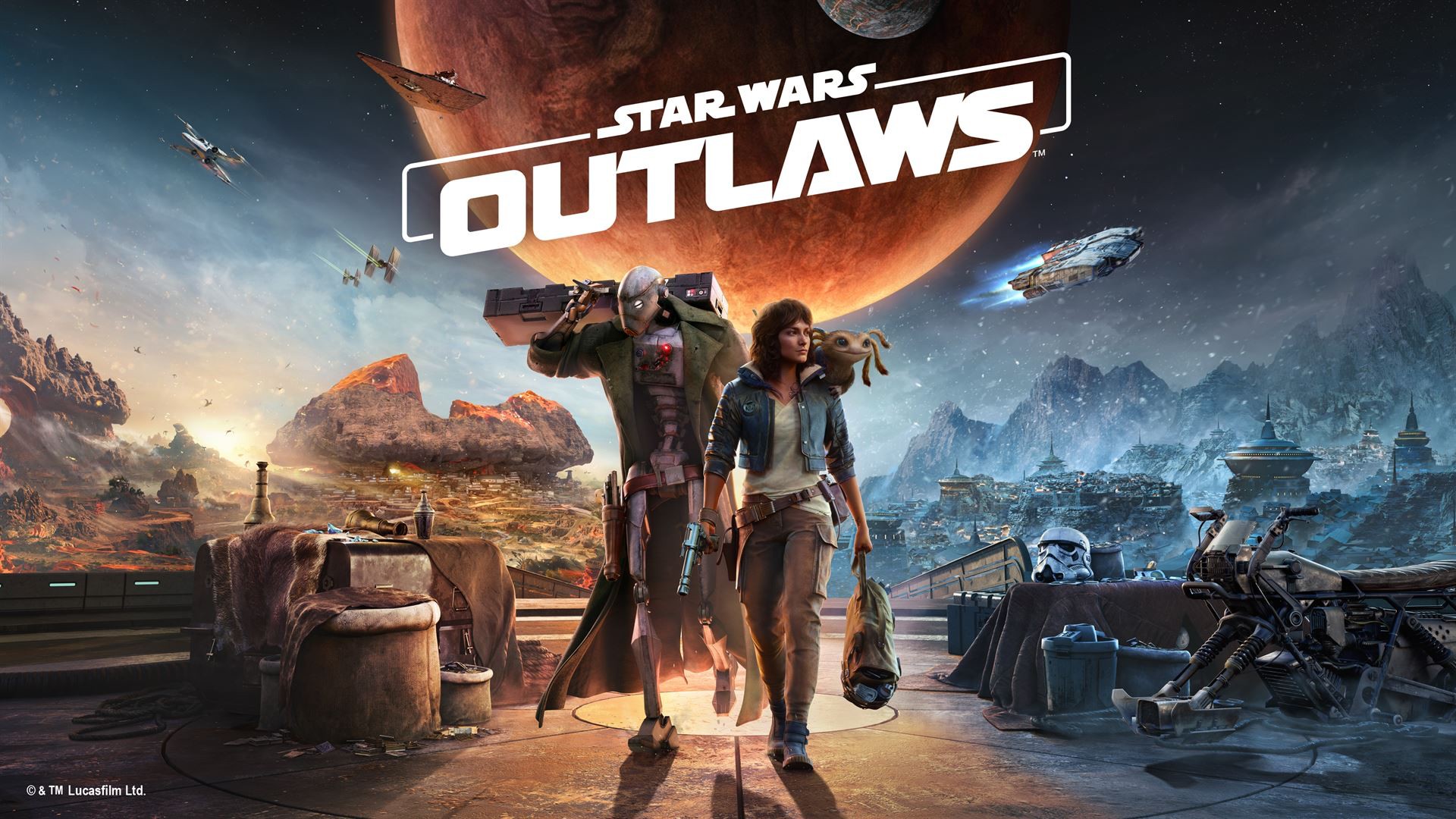


Star Wars Outlaws bills itself as the first-ever truly open world Star Wars game. Set between the events of The Empire Strikes Back and Return of the Jedi, it follows Kay Vess, an emerging scoundrel fighting for scraps and looking for the next big job that will set her up for life.
The game is both ambitious and self-contained. An open world Star Wars game definitely sounds attractive for both casual and dedicated fans of the franchise. It’s a tall task that may not have been possible in previous generations of gaming.
And instead of telling a Jedi story like the most recent and prominent Star Wars games, we step into the shoes of a Han Solo-like character who’s simply trying to survive. Kay Vess has no stake in the struggle between the Empire and the Rebel Alliance. She’s only looking after herself and her trusty companion, Nix, in a world where the odds are stacked against her.
Nails the Original Trilogy vibes

Massive Entertainment, the Ubisoft Studio responsible for this game and other titles like Tom Clancy’s The Division and Avatar: Frontiers of Pandora, built an intergalactic setting that truly captures the vibes of the original Star Wars Trilogy.
Each location that you will spend significant time in feels dense and lived in. Everything from known locations like the freezing outdoors of Kijimi, the deserts of Tatooine, and the lush greens of Akiva were on point. And even the new location called Toshara screams Star Wars.
Inside these locations you’ll find City Hubs, small towns, and many other spots that are prime for exploration. The City Hubs, in particular, feel exactly like what towns would be like if under the rule of a tyrannical government. At every corner you see people from different walks of life just trying to survive in a world where the Galactic Empire reigns. The term it’s a “dog-eat-dog” world perfectly encapsulates the inhabitants of such a setting with people just trying to get by.
It’s the perfect setting for the story Star Wars Outlaws is trying to tell and also sets up an interesting set of mechanics to keep the gameplay loop engaging.
Reputation System
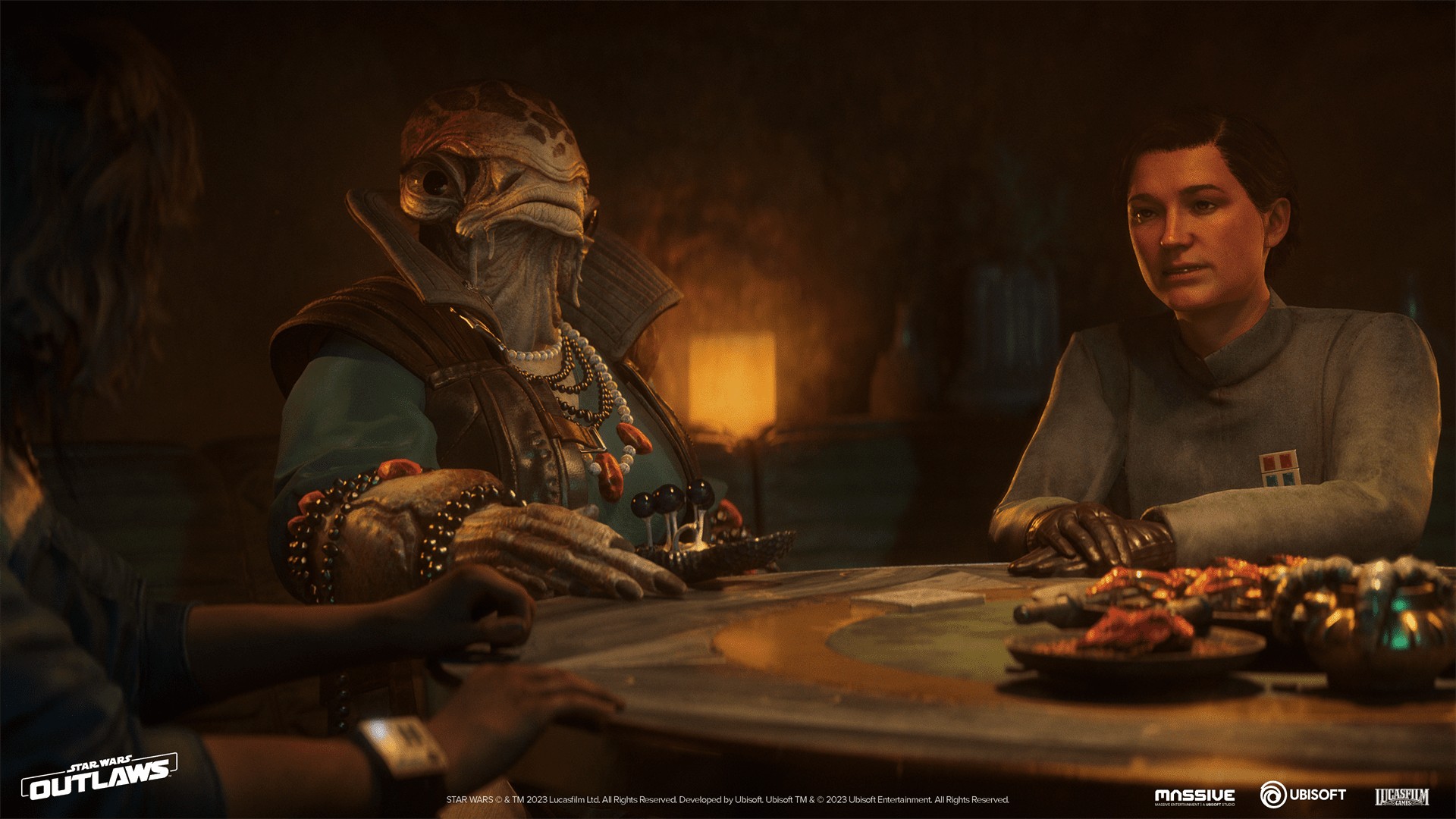
The Reputation System is the backbone of both the main and side quests of Star Wars Outlaws. It will influence your decision-making in which jobs to tackle, which intel to follow, and which tasks you should prioritize.
It consists of four factions who lord over different sectors in the Galaxy. They’re allowed to operate as such under the watchful eyes of the Galactic Empire. The four factions are:
- Pykes
- Crimson Dawn
- The Hutts
- Ashiga Clan
You have five levels of reputation with each faction and always start in the middle which is “Poor”. An “Excellent” reputation in each of the factions will award you gear that has both the aesthetics of the faction as well as buffs unique to each of them.
Getting a “Good” reputation will net you cosmetic items to change up how Kay Vess struts around the galaxy. Other rewards in this reputation level include jobs from the faction’s main brokers. These jobs will net you either Credits or Materials for upgrading the various weapons, gear, and rides in your arsenal. They also increase your reputation in that particular faction.
But it’s not that simple. Oftentimes you’ll be offered jobs that are in direct competition with each faction. This means your reputation between factions will fluctuate throughout the game. Some of these jobs will have you deciding which faction to favor and it will affect the outcome of certain storylines.
“Good” and “Excellent” reputations in these factions will also grant you access to their strongholds in various locations of the galaxy. Access to these strongholds also affect the quests and loot you’re able to collect.
It’s a tough balancing act that has massive consequences in how you progress throughout the game.
Open Galaxy
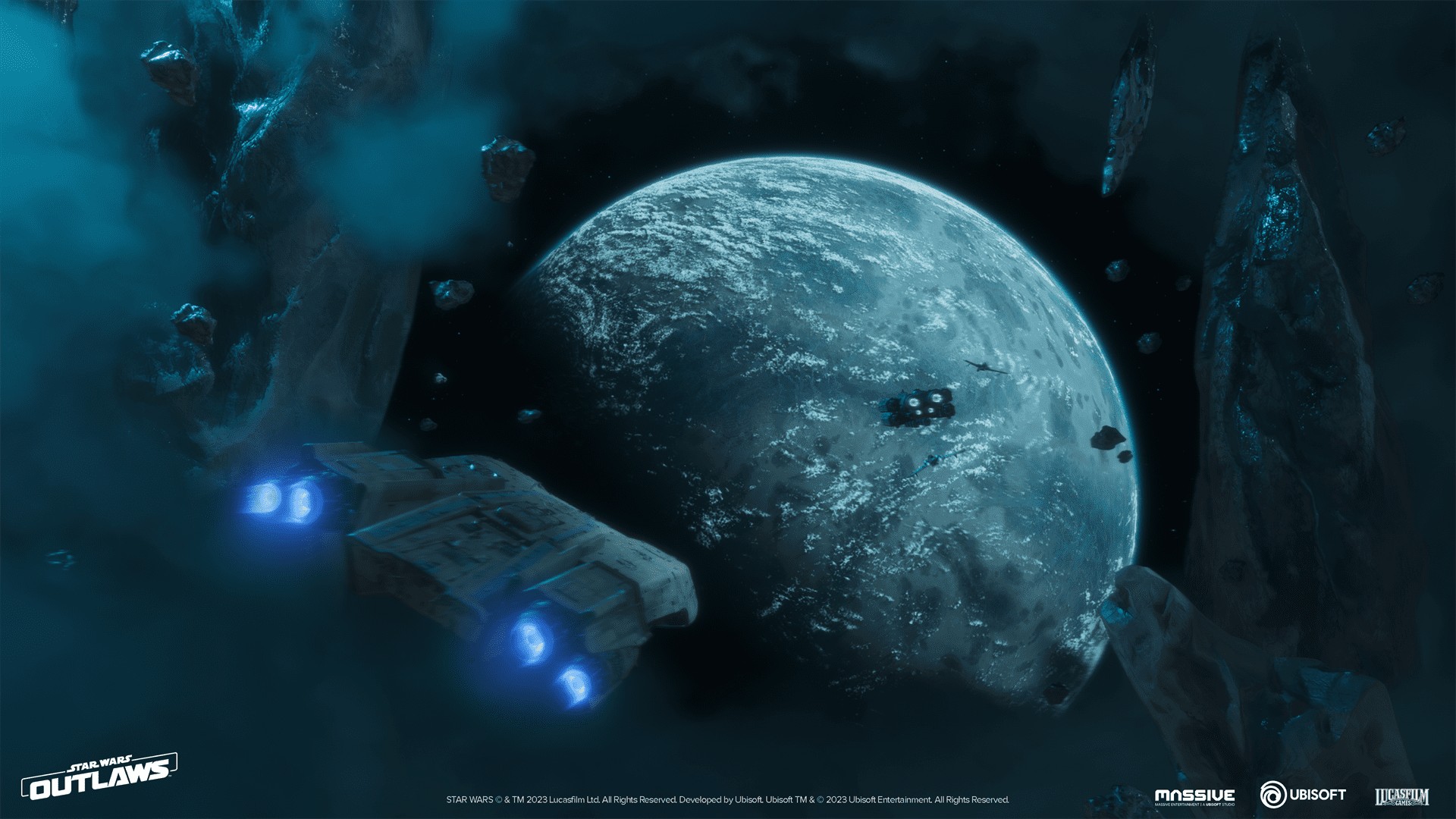
Instead of being strictly an “Open World” game, Star Wars Outlaws feels more like an “Open Galaxy” game.
To get from one world to another, you have the Trailblazer ship. With it you can jump from world to world as well as traverse deep space. Some jobs will have you collecting stuff and doing battle missions in space while onboard the Trailblazer.
Once you land on one of the planets, your main mode of transport is your Speeder. Your Speeder gets you from different places within a main planet hub. Like the Trailblazer, you’ll also have battle encounters while riding.
Both the Trailblazer and the Speeder can be upgraded throughout the game. Ship and Speeder parts can be collected all throughout main and side quests.
These will improve everything from how they handle as you drive, their firepower, defense, and many more. Some upgrades also include cosmetic changes to make each vehicle feel truly yours even though Kay just stole them to start the game.
Overall, this approach lends itself to being a world that’s built for exploration. It’s through these exploration that you tackle the more moment-to-moment gameplay mechanics.
Neither one handle particularly well especially in the beginning. The Trailblazer parts feel like a modern graphics version of one of the arcade mini games found in city hubs. Not sure how space exploration should feel like and while this is functional, it’s mostly forgettable.
The Speeder would have also been great if the battle encounters were handled better. The only way to deal with enemies pursuing you is through “bullet-time” shots that aren’t always available. Most of the time we just resorted to speeding and maneuvering from them to escape.
Gathering Intel, Stealth, Combat, and Traversal

The different variety of quests in Star Wars Outlaws are all contained in the Journal. On it you’ll find the Main Story Quests and sub-quests, Intel for treasures scattered throughout the different locations in the game, Expert Contracts, Job Contracts, and more.
Each Journal entry is a quest. Many of the intel you gather by eavesdropping on the people around City Hubs and Towns lead to treasure. Meanwhile the contracts are jobs that earn you credits and reputation on each faction.
You can choose to track whichever journal entry or quest you like. It all depends on what you want to prioritize. It’s a great way of managing the open-world aspect of the game instead of just waypoints on a map – which still exists, by the way, but you’ll only find myself consulting the map when you feel like you’re pressed for time to complete certain quests.
Intel threads, quests

Many of the quests in Star Wars Outlaws feel like actual story threads. Some will have you jumping around a hub area while others have you going hyperdrive from one world to another.
There’s also enough variety here to keep you busy. Some quests can be strictly stealth where any time you get caught, you can’t go all guns blazing to finish it off. It’s an automatic mission failure. There’s a surprisingly hefty amount of stealth sections in the game and they can be pretty challenging.
But as you progress and upgrade your skills and gear, some of these quests become easier to deal with. Missions where you raid certain locations to steal items offer the most tense moments.
Uncharted in a Galaxy far, far away
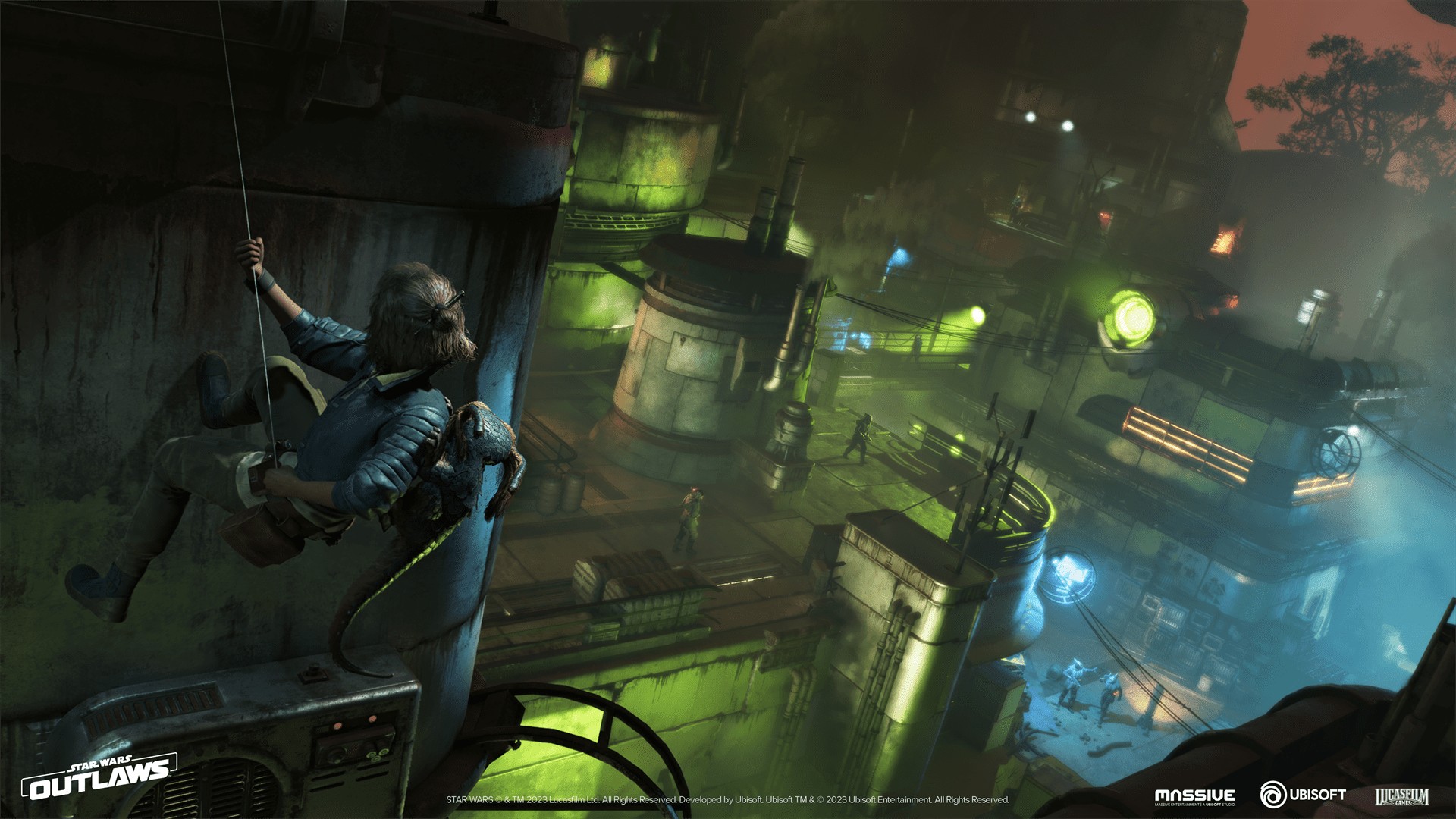
Some sections of the game are very reminiscent of the Uncharted franchise. There are missions both in maid and side quests where you’ll do a fair bit of platforming. This includes a lot of jumping, swinging with your grappling hook, and hanging from yellow-marked areas.
The gunplay will also remind you of Uncharted. It’s a standard cover, dodge, and shoot affair. It does offer some variety with you needing to change between blaster-types for certain opponents. It’s nothing too difficult nor strategic like say changing stances in more action-focused games. But there’s a fair bit of change-up to keep the blaster fights interesting.
You can even pick-up enemy weapons to use against them. The catch is you can’t use them for too long and you often have to drop them once you go into some platforming sections.
Presentation, mini games, and more
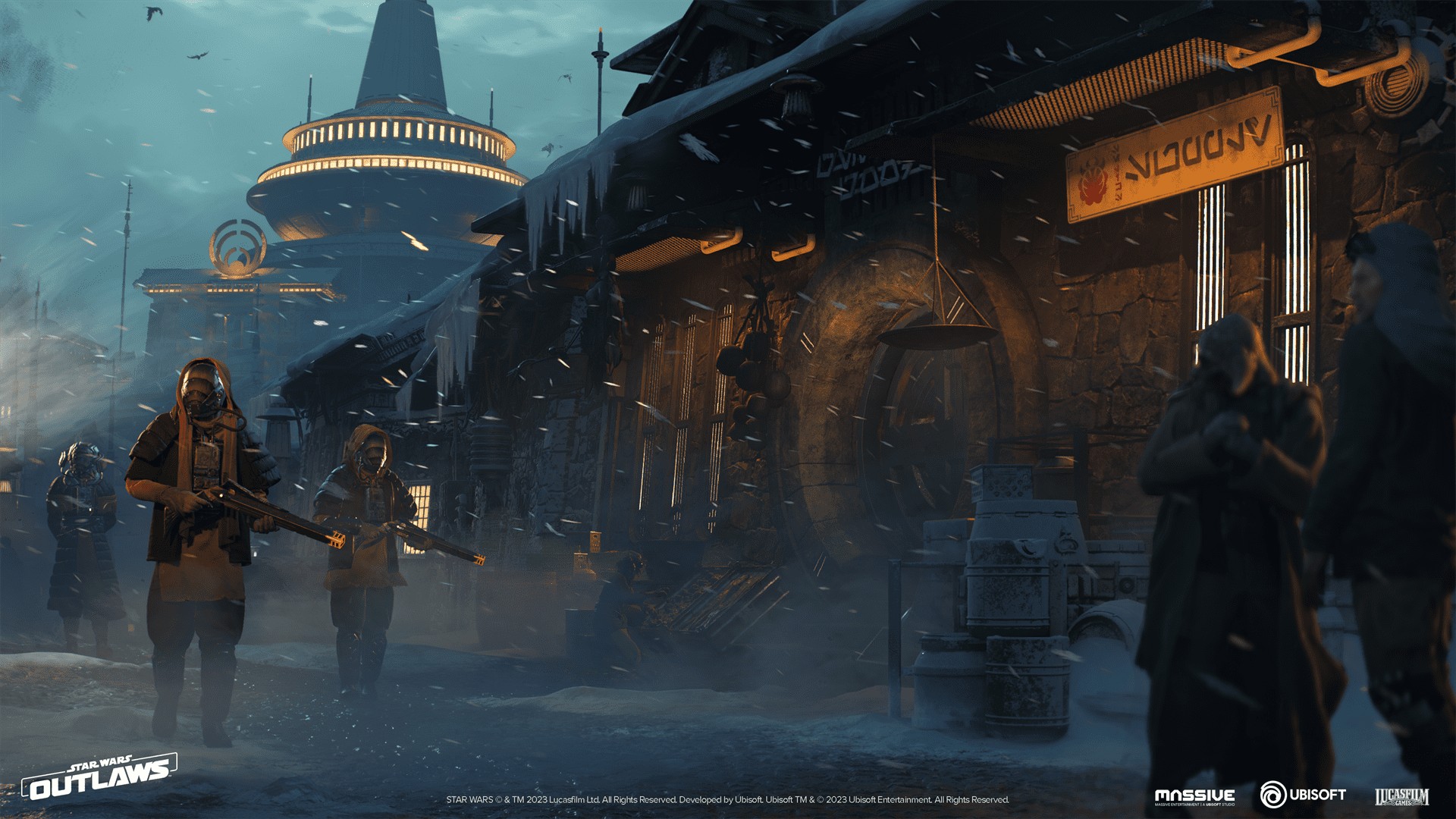
In many parts of the game, Star Wars Outlaws definitely nails the Star Wars vibe. Everything from the City Hubs to its inhabitants, and even its atmosphere and music is undeniably Star Wars. Technically speaking, though, things stand on hollow ground..
Perhaps this is the challenge of developing for multiple platforms, but the graphical presentation of the game feels shaky in a lot of the non-main story sections of the game. They’re not terrible, but they’re certainly not stellar either. It’s a good thing the game has plenty of good voice acting performances to carry some of the jankier facial animations.
This not being a graphical marvel shouldn’t take away from the amount of effort that was put into all the details of each area to make it feel truly Star Wars. Mini-games like the arcades, the race betting, and even the Sabacc game show how much passion was put into making this a true part of the Star Wars franchise.
Is Star Wars Outlaws your GameMatch?

Star Wars Outlaws nails the vibes of the original trilogy films it’s set in despite being technically shaky in some parts. The Open World game is founded on the Reputation System that helps tie together the main and side quests. The moment-to-moment gameplay isn’t revolutionary but there should be enough here to keep you engaged.
When you hit a wall in one quest or intel thread, it’s easy to jump to a different one and you might even find that completing one leads to a breakthrough into another. They aren’t exactly seamlessly interconnected, but they do feel grounded in the world that Massive Entertainment established from the get go.
The world-building of Star Wars as a franchise is fascinating. It’s given birth to a myriad of stories that can be told in its universe. As a story, Star Wars Outlaws feels just one of many. But as an interactive experience, it’s one that has a chance to be remembered fondly even in just the quieter corners of the franchise’s galaxy.
The game was reviewed on a PlayStation 5. The Review Code was provided by the publisher.






I grew up in the PlayStation era, when Final Fantasy was already starting to move beyond its 2D roots. And while I’ve come to appreciate how much the franchise has contributed to role-playing games, I’ve always considered myself a casual fan. I don’t have quite the same attachment to its pixel-art adventures as someone who grew up playing them.
Turn-based RPGs, though? Those I’m very much a fan of.
That’s what drew me to Final Fantasy Resonance, which pairs the series’ old-school battles with an HD-2D makeover. Its story originated in the mobile game Final Fantasy Brave Exvius. Square Enix has since rebuilt that adventure for consoles and PC, leaving behind the gacha system of randomized character pulls.
About 12 hours in, I’ve found plenty to enjoy, particularly in the combat and character customization. The story hasn’t quite made the same impression. It’s a familiar adventure that, so far, gives me more reasons to experiment with my party than to care about where their journey takes them.
A familiar adventure
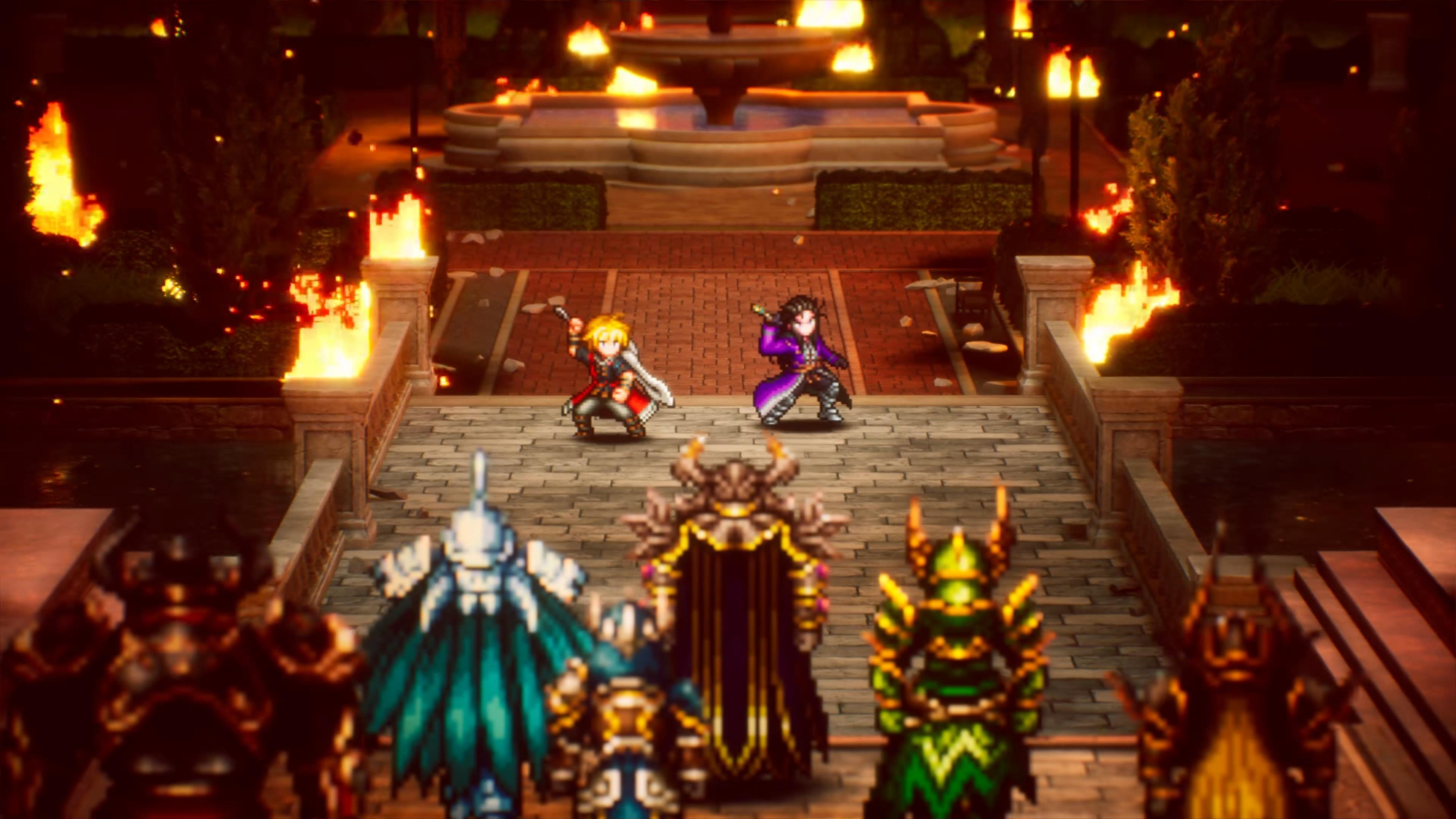
Resonance follows Rain and his fellow knight Lasswell as they try to stop a mysterious enemy from destroying their world’s crystals. Joining them is Fina, a young woman with no memory of her past, whose identity adds another mystery to their journey.
It’s a setup that has its charm. Crystals to protect, a looming threat, and an unlikely group of companions are all fitting ingredients for a Final Fantasy adventure. But in the early hours, the game does little to make those ingredients feel particularly distinct.
Most of the characters are likable enough. Still, they often feel like familiar character types rather than being people I’m eager to learn more about. There’s a difference between recognizing the kind of character someone is and becoming invested in what happens to them. Resonance hasn’t quite bridged that gap for me yet.

Some of the dialogue doesn’t help. Characters spend a lot of time explaining their feelings, when I’d rather see those feelings come through in their actions or interactions. The writing can be a little too eager to tell instead of show, leaving less room for me to feel like I’m discovering the characters for myself.
I wouldn’t call the story bad. Somewhat unremarkable, perhaps, especially for a Final Fantasy game. There’s still plenty I haven’t seen, and I hope the cast becomes more interesting as the journey progresses. For now, though, the battles are doing more to hold my attention.
Making each turn count
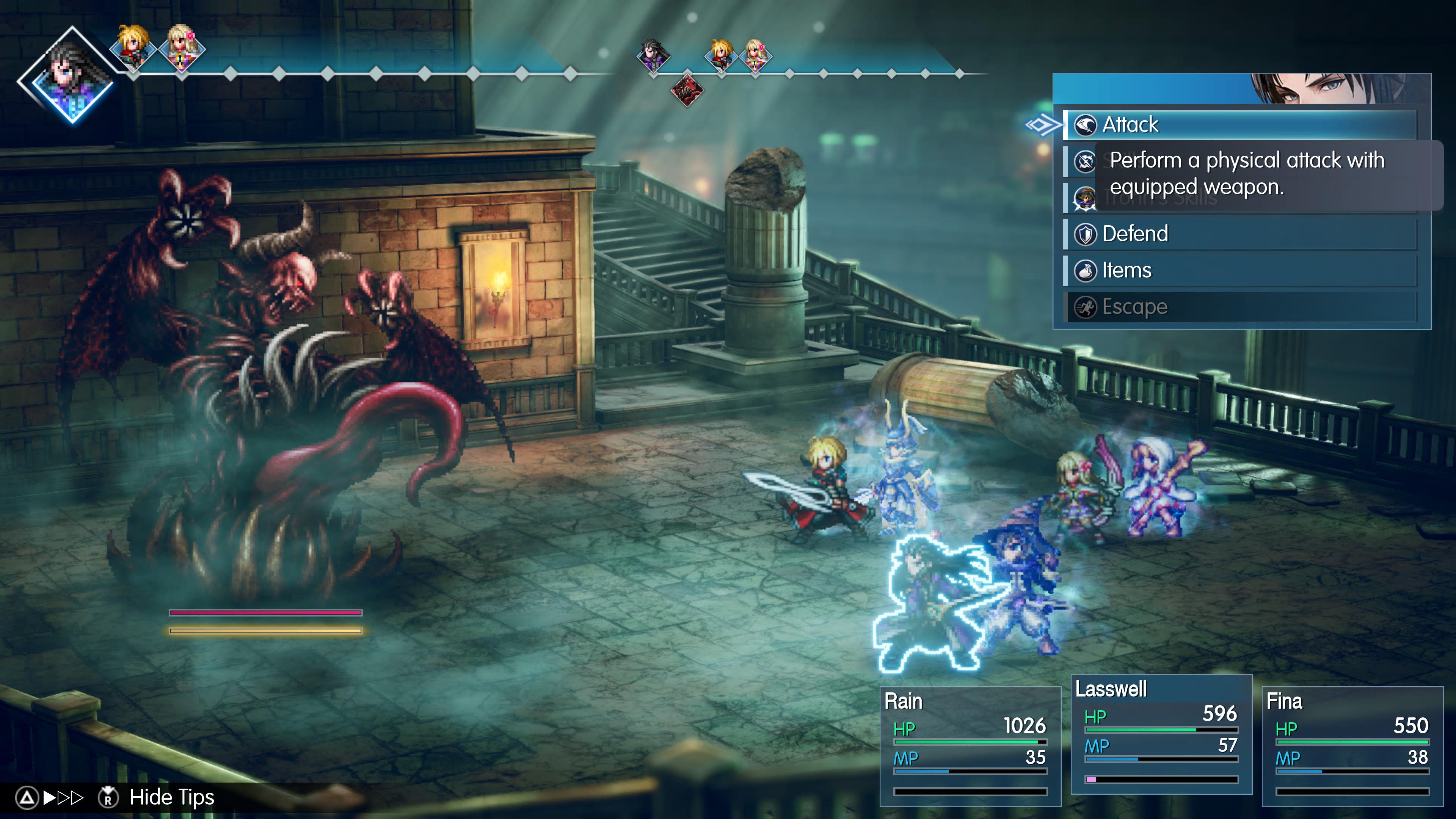
The combat is very much rooted in turn-based RPG tradition. You choose your party’s actions, pay attention to who moves next, and exploit elemental weaknesses. It’s a familiar foundation, but the Stagger system gives you something more to consider beyond which attack deals the most damage.
Enemies have a stagger gauge that you can deplete through attacks. Hitting an elemental weakness helps you stagger them more effectively. Once staggered, an enemy loses its action and becomes more vulnerable, while you gain an opportunity for an extra action.
This reminds me a little of Octopath Traveler’s Break system. The appeal lies in working out when to disable an enemy and how to make the most of that opening. An attack’s value isn’t only in how much health it takes away. Preventing an enemy from acting can be just as useful.
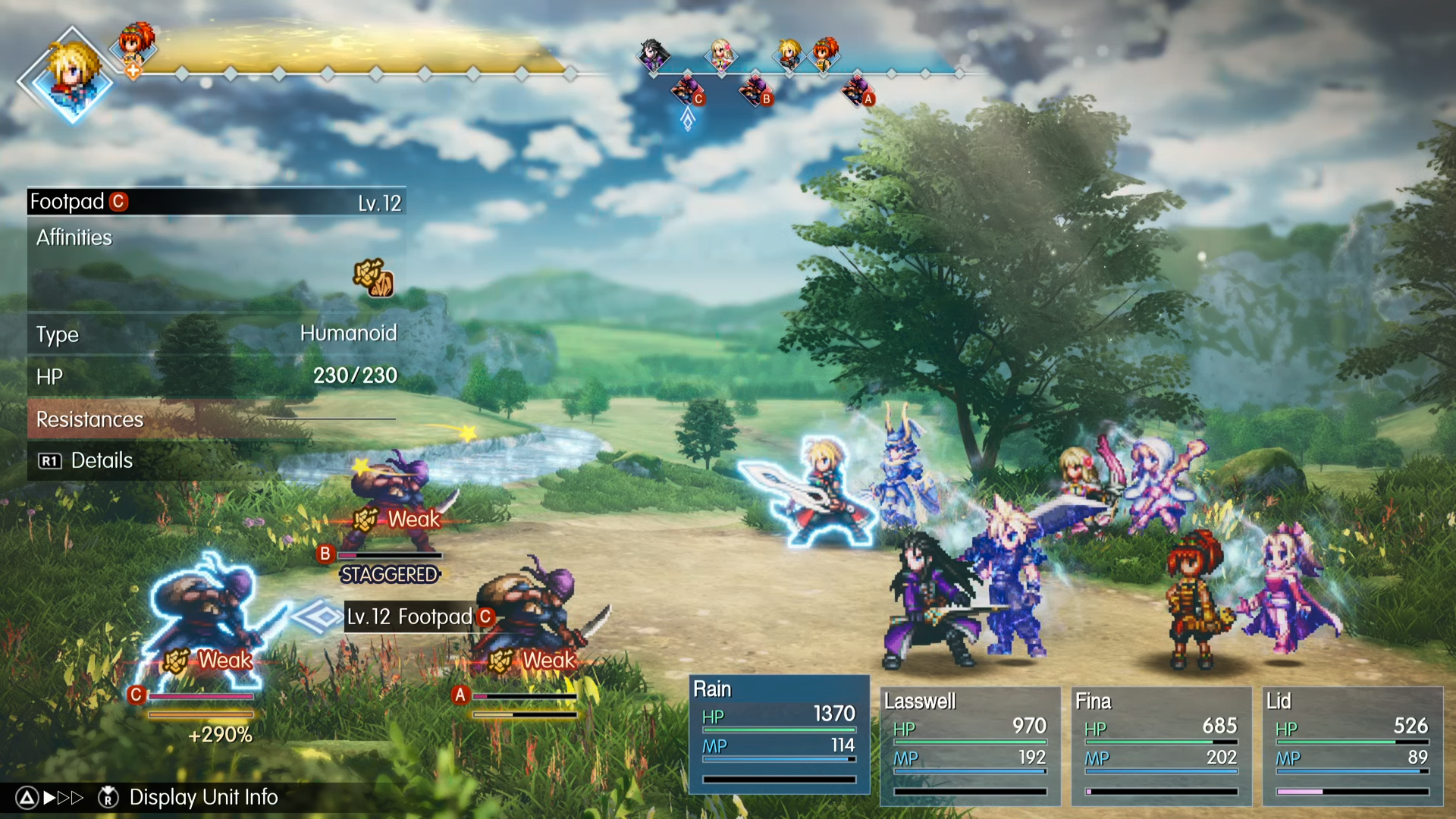
That adds another consideration to the party’s turn sequence. Do you focus on the enemy closest to defeat, or stagger another before it gets the chance to attack? Those decisions give the familiar command-based battles a welcome sense of give and take. And for me, figuring out how to make the most of each turn is incredibly satisfying.
This being Final Fantasy, there are summons and limit breaks, too. Calling on a legendary creature to help your party or unleashing a character’s powerful signature attack is always a treat. I love watching these flashy moves play out. They bring a welcome burst of spectacle to all that careful planning, while the smaller decisions between those big moments keep the combat interesting.
Old heroes, new possibilities
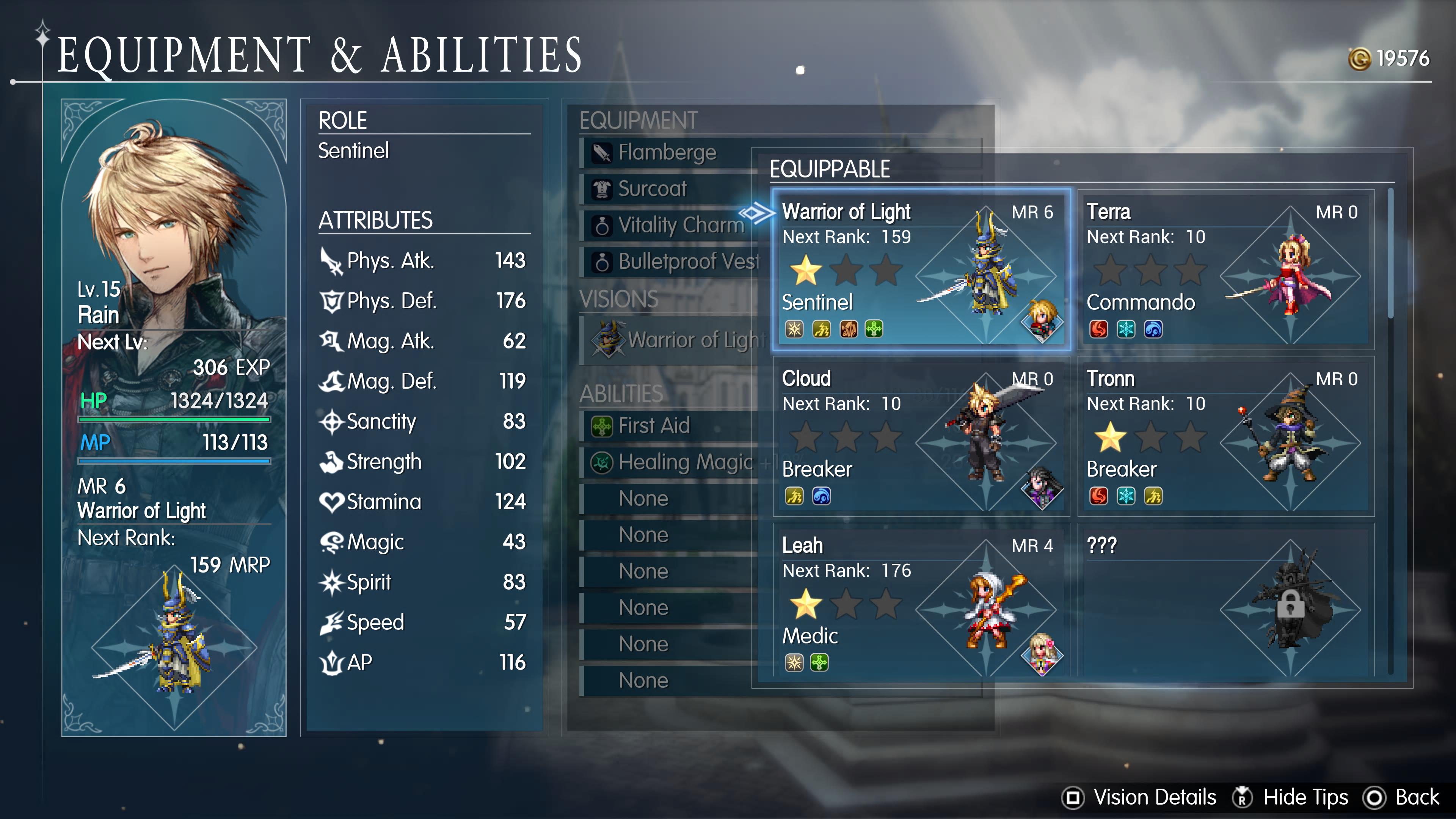
Beyond the spectacle, some familiar Final Fantasy faces also help shape how you build your party through the Visions system. These equippable characters grant your party members additional abilities, letting you reinforce their strengths or cover gaps in their skill sets. They include beloved heroes from previous games such as Cloud Strife and Squall Leonhart.
The idea reminds me of Fire Emblem Engage, which also lets characters draw on the powers of heroes from earlier games. It’s a cool way to make the franchise’s history part of how you play, rather than simply something you recognize. And I love that about it.
For longtime fans, seeing a favorite hero return will naturally be part of the attraction. But what I like most is the flexibility the system gives you. A party member’s starting role doesn’t have to define everything they can do.
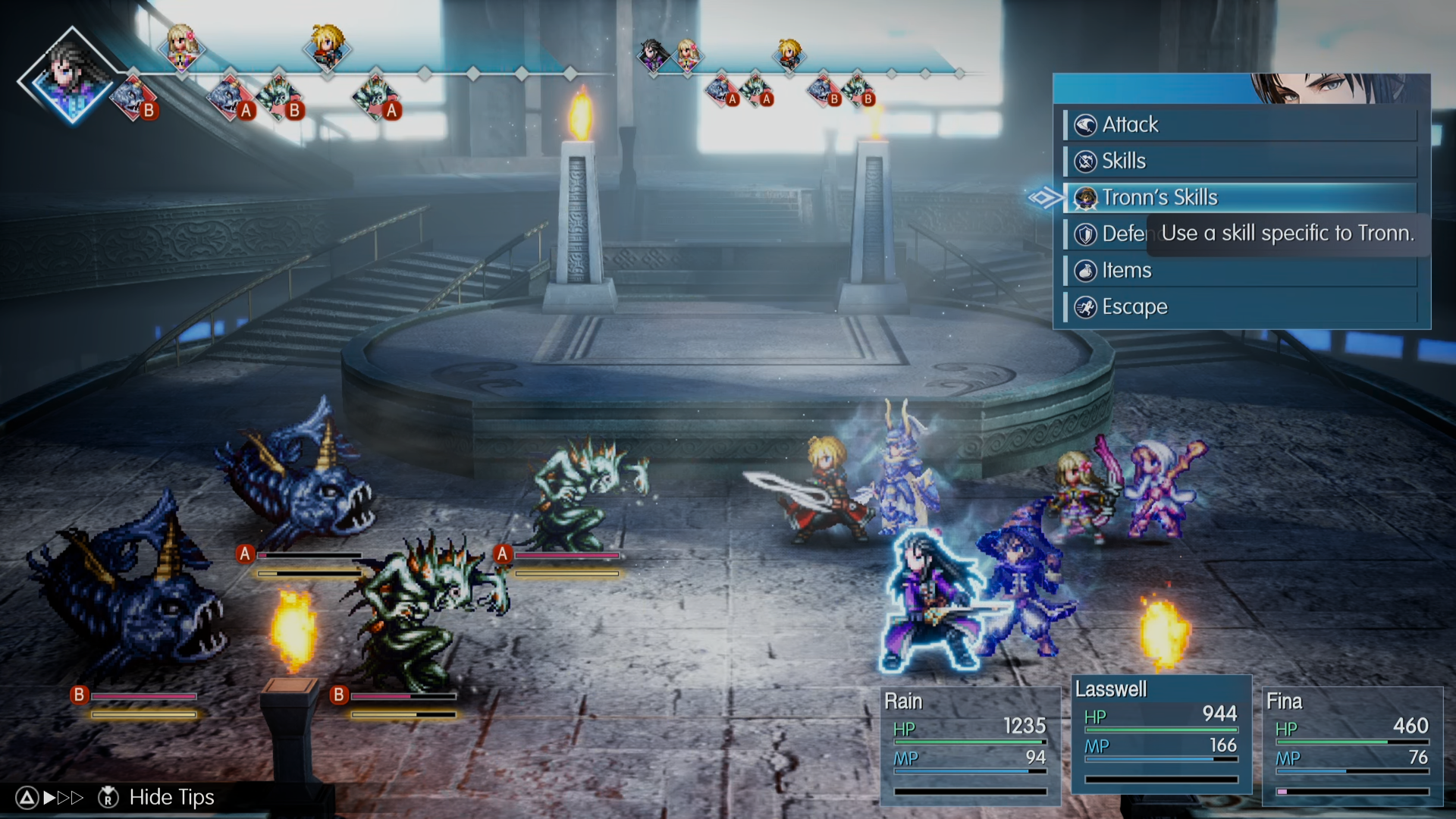
You can pair Visions with characters whose abilities already complement them. But you can also try a less obvious combination to give someone an option they otherwise wouldn’t have. Both approaches have their uses, and figuring out what suits your party is part of the fun.
Some abilities are so useful that I end up wanting them on every character. For example, I used Visions to give all my characters the ability to recover MP whenever they stagger an enemy. I felt that MP recovery was too useful to pass up. It also gave me another reason to prioritize staggering enemies, since doing so now helped replenish my party’s resources.
For me, this has been one of Resonance’s strongest features. I enjoy having a reason to reconsider my party beyond simply equipping something with better stats. Choosing a familiar face is fun, but finding a combination that works is more rewarding.
A beautiful change in perspective
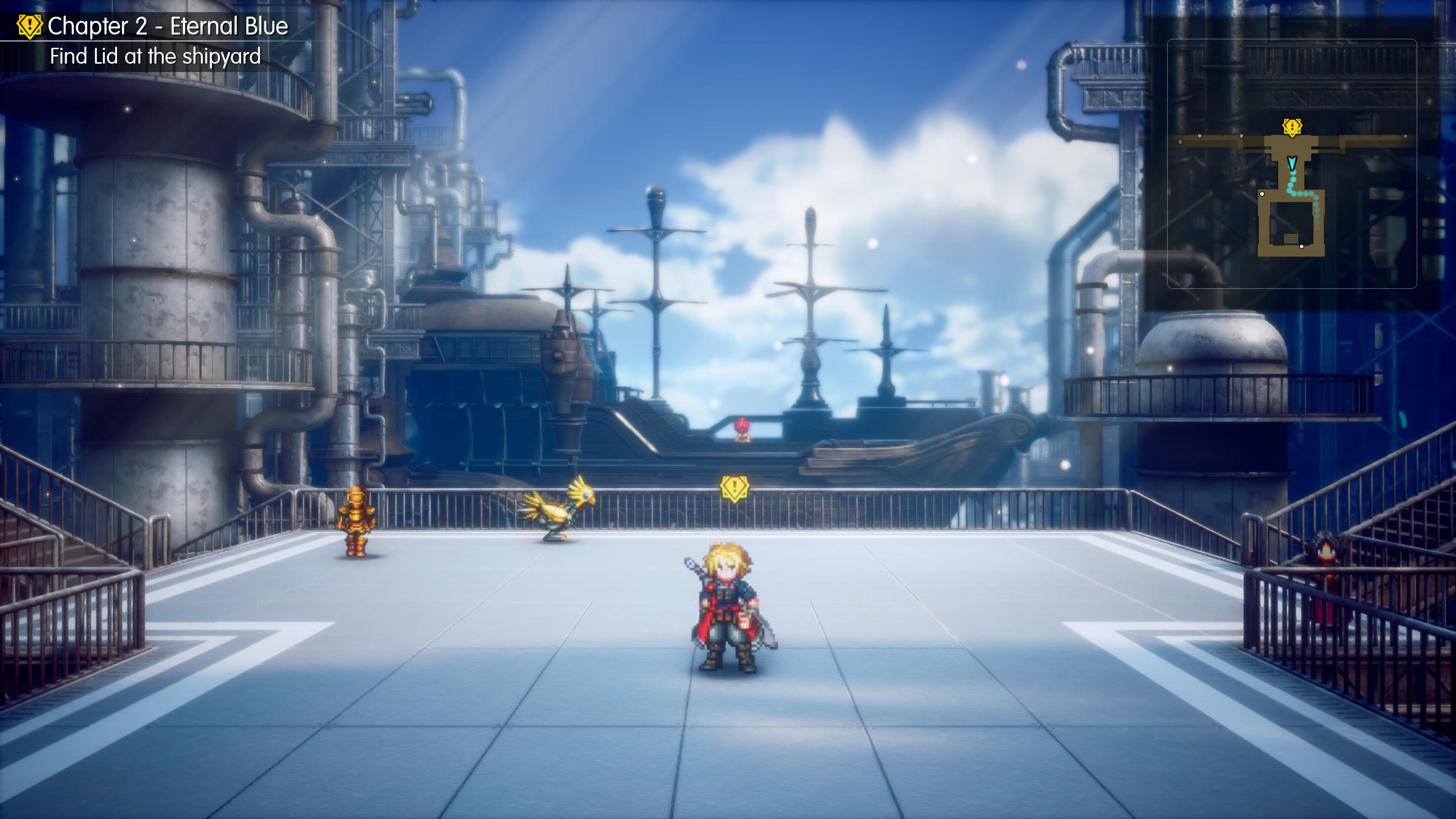
Resonance is also gorgeous to look at. Its HD-2D presentation combines pixel-art characters with three-dimensional environments, giving the game a look that feels both retro and modern. Like the combat, it reminds me of Octopath Traveler, though it has its own approach to presenting that world.
However, what stands out most to me is the camera. Rather than relying entirely on the elevated, diorama-like views I associate with this style, Resonance uses more varied and dynamic angles. Those changes in perspective give the colorful environments a greater sense of depth and scale.
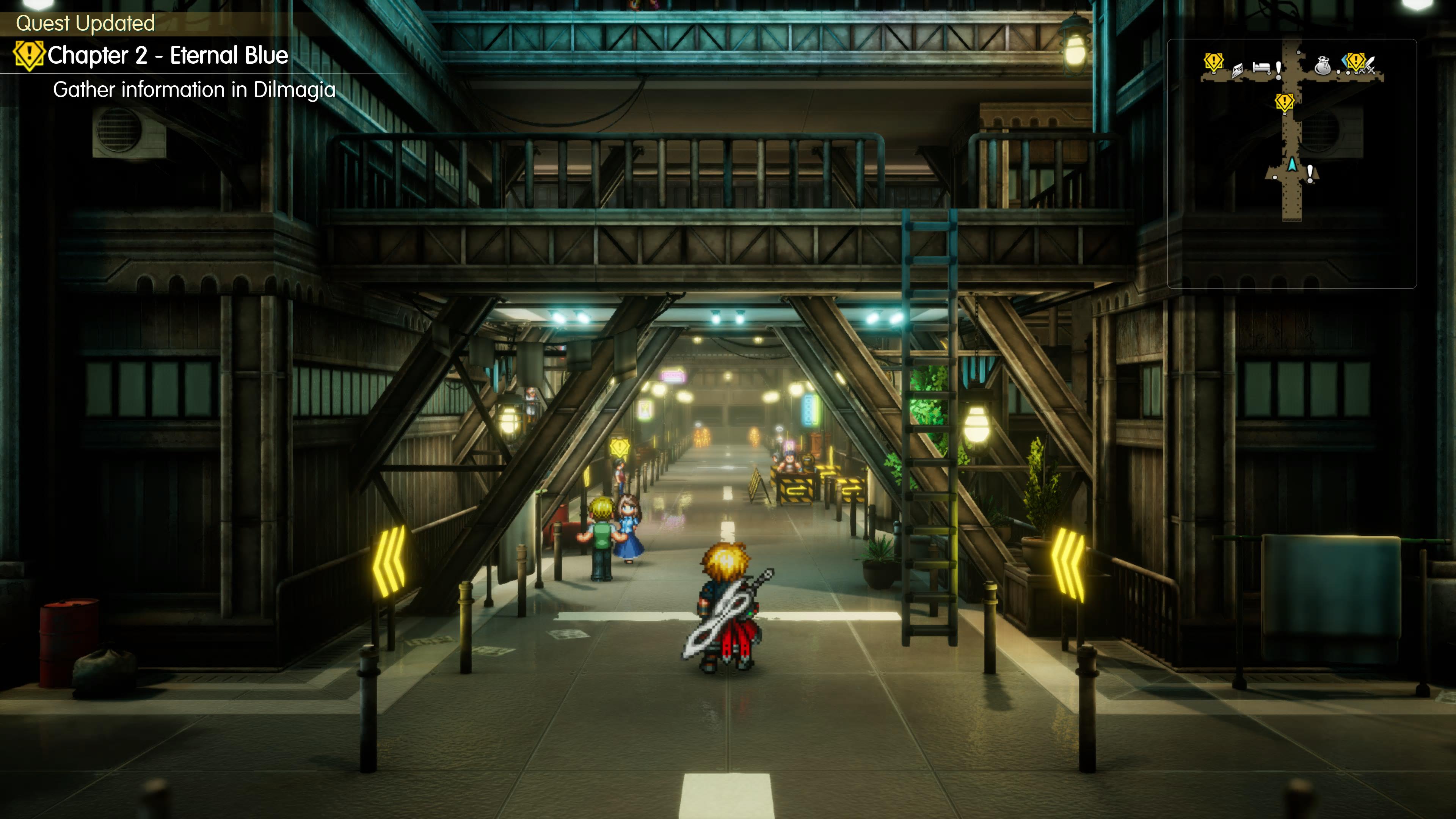
It’s a creative decision that works tremendously in the game’s favor. The environments already look beautiful, but how the game frames them helps sell the size of the adventure. Pixel-art heroes can still feel small against the world around them, and the camera makes good use of that contrast.
I may not have much nostalgia for the older games’ visuals, but I don’t think you need it to appreciate what Resonance does here. The presentation is a highlight in its own right.
Is Final Fantasy Resonance your Play Match?
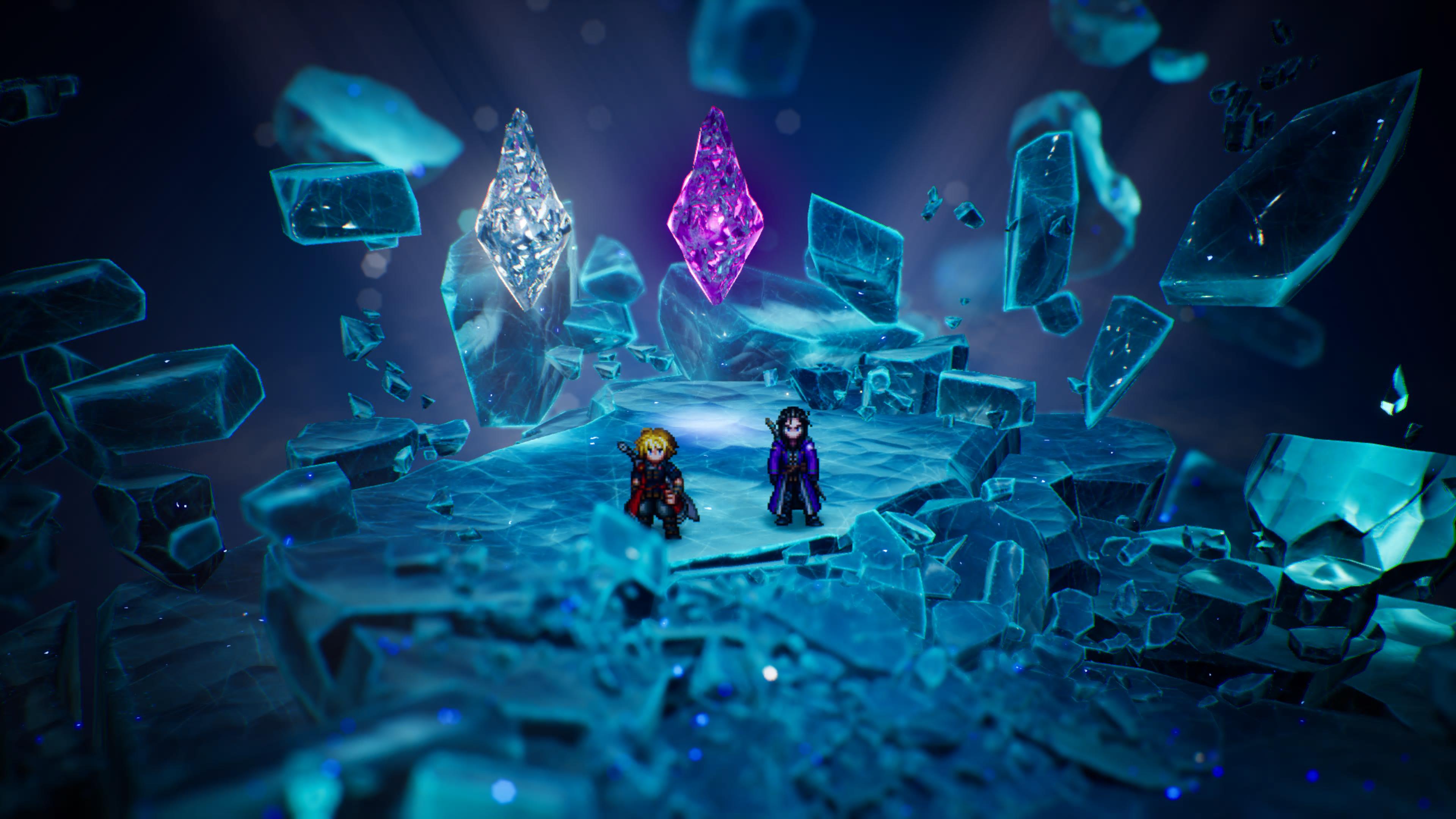
So far, Resonance’s combat and customization have been the highlights for me. I’ve enjoyed experimenting with Visions, and the Stagger system gives me a reason to think carefully about how my party’s actions fit together. The beautiful presentation makes the adventure that much easier to enjoy.
The story feels familiar, but, again, it has its charm. I’m still waiting for the narrative to hook me, though I’m only about two chapters in. So there’s plenty of room for the adventure and its characters to grow.
I suspect longtime fans will get more out of its callbacks than I do. That familiarity may be exactly what they’re looking for. But even as a casual Final Fantasy fan, I’ve found plenty here to enjoy.
For me, Final Fantasy Resonance is a Swipe Right, especially if you enjoy turn-based battles and traditional RPGs.
I’m happy to keep experimenting with my party and see where the journey takes them.
Gaming
KINGDOM HEARTS Collection [I–III] now available on PS5, Switch 2
All-in-one collection launches

![KINGDOM HEARTS Collection [I-III]](https://www.gadgetmatch.com/wp-content/uploads/2026/10/kingdom-hearts-colletion-I-III-202610.png)
The KINGDOM HEARTS Collection [I–III] is now available on PlayStation 5, Nintendo Switch 2, Xbox Series X|S, and PC. Bandai Namco Entertainment Asia and Square Enix announced the collection’s launch on October 15, 2026, alongside the release of physical editions for PS5 and Nintendo Switch 2 in Southeast Asia.
The collection bundles three releases: KINGDOM HEARTS -HD 1.5+2.5 ReMIX-, KINGDOM HEARTS HD 2.8 Final Chapter Prologue, and KINGDOM HEARTS III + Re Mind (DLC). These include multiple games and cinematic compilations from the franchise, offering newcomers and returning fans a convenient way to experience Sora’s adventures.
The collection is available on Nintendo Switch 2, PS5, Xbox Series X|S, Steam, Xbox on PC, and the Epic Games Store. Individual titles are also available, while KINGDOM HEARTS -HD 1.5+2.5 ReMIX- will be available natively on the original Nintendo Switch.
Try Kingdom Hearts III for free
Newcomers can also try the free KINGDOM HEARTS III + Re Mind (DLC) demo on Nintendo Switch 2. It features two playable sections inspired by Disney’s Hercules and Disney-Pixar’s Toy Story.
Progress from the opening section through the early stages of Olympus carries over to the full game. However, save data from the Toy Box section does not transfer.
The Nintendo Switch 2 version also supports Japanese voiceovers through a separately downloadable Japanese Voice Pack DLC.
Platform-exclusive Keyblades
Players who purchase eligible editions of the collection or KINGDOM HEARTS III + Re Mind (DLC) can receive a platform-exclusive Keyblade.
- Nintendo Switch 2: Long Night
- PlayStation 5: Midnight Blue
- Xbox Series X|S: Phantom Green
The physical edition requires an internet connection to download additional game data. Digital pre-orders on PS5 and Xbox Series X|S also included 48-hour early access.
Players who own digital versions of the games on Nintendo Switch (Cloud Version), PS4, or Xbox One are eligible for discounts on digital purchases of the corresponding releases on Nintendo Switch 2, PS5, and Xbox Series X|S.
Nintendo Switch Cloud Version owners can also transfer their save data to Nintendo Switch 2. Other platforms do not support save data transfers.
The KINGDOM HEARTS series will celebrate its 25th anniversary in 2027.
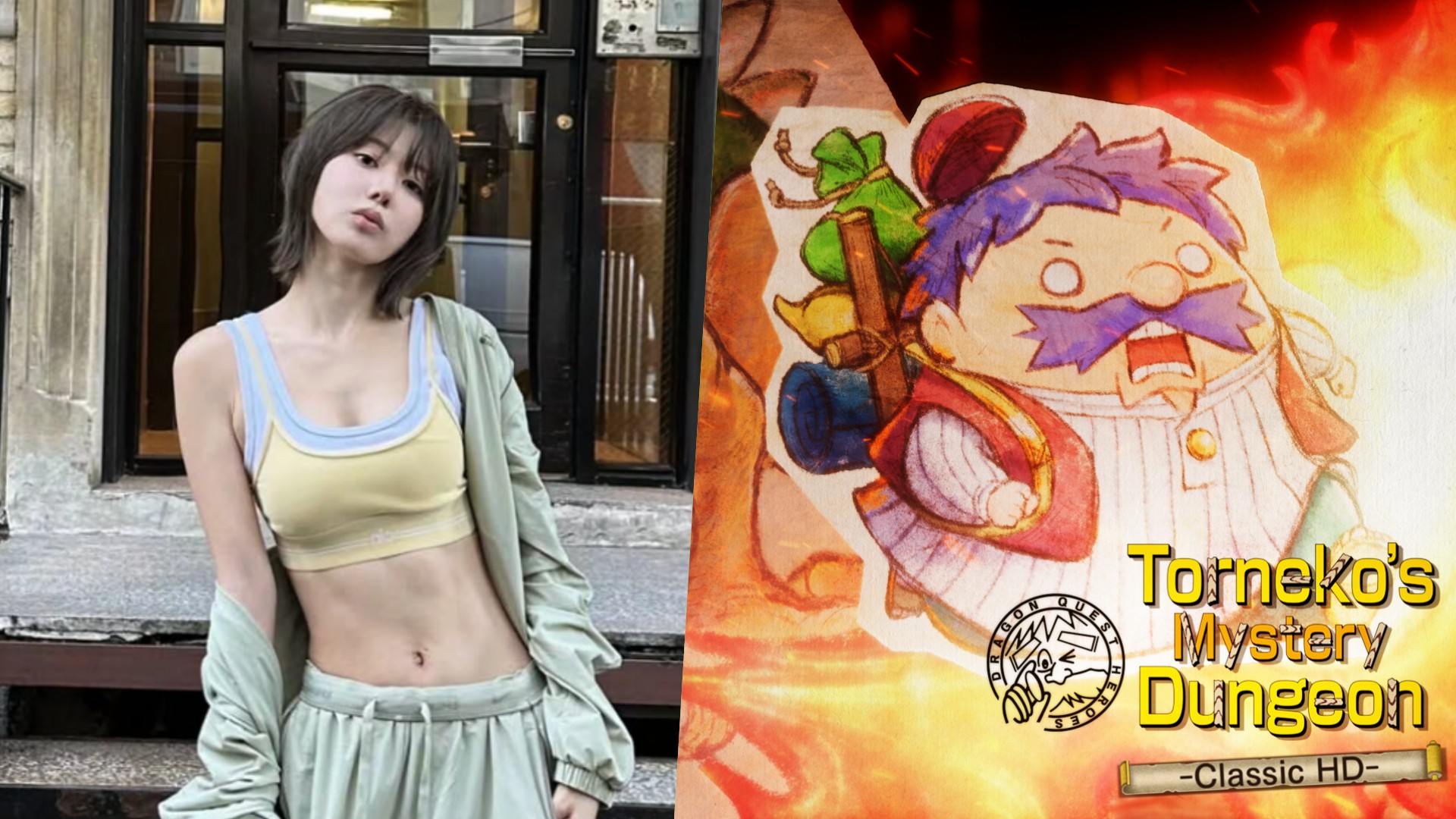
LE SSERAFIM member Sakura has a game recommendation for Nintendo Switch 2 owners, and it is an unexpected pick for fans looking for something to play.
During a fan send-off at the group’s PUREFLOW tour stop in Newark, New Jersey, a FEARNOT reportedly asked Sakura which Switch 2 game she would recommend. She pointed the fan toward Torneko’s Mystery Dungeon, a classic RPG from Square Enix.
The Newark concert took place at the Prudential Center on October 8, 2026. The game Sakura mentioned is now available internationally as Dragon Quest Heroes: Torneko’s Mystery Dungeon -Classic HD-.
What is Torneko’s Mystery Dungeon about?
The game follows Torneko Taloon, a merchant from Dragon Quest IV who dreams of becoming the world’s greatest weapons dealer.
Torneko hears rumors of a mysterious dungeon filled with incredible treasures. He ventures inside to collect valuable items, bring them home, and expand his shop.
The premise is straightforward, but surviving the dungeon is another story. Each expedition brings a new layout, different items, and new monsters. Torneko must make it out alive if he wants to keep the treasures he finds.
Source: Official Dragon Quest website
What kind of game is it?
Torneko’s Mystery Dungeon is a turn-based roguelike dungeon crawler with RPG and resource-management elements.
Every step counts as a turn. When Torneko moves, enemies move too. Players must decide when to fight, when to use items, and when to retreat. Poor decisions can quickly turn a promising run into a disaster.
Death also carries a hefty penalty. Torneko loses the items collected during a failed expedition and returns to the first floor at Level 1. However, successfully bringing items home helps expand his shop and provides a sense of long-term progression.
The game originally debuted in Japan in 1993. Its Classic HD release brings the pioneering dungeon crawler to international audiences with updated visuals, an official English localization, and adjustable difficulty options.
The game is available on Nintendo Switch 2, Nintendo Switch, PlayStation 5, Xbox Series X|S, and PC.
How long does it take to beat?
According to HowLongToBeat estimates reported by M4 Games, the main story takes around 7.5 hours to complete. A playthrough that includes additional content takes approximately 16 hours.
Those estimates offer a useful starting point, but the game’s procedural dungeons and punishing mechanics can affect how long individual players need to finish it.
What do critics and players think?
Torneko’s Mystery Dungeon -Classic HD- has received a mixed-to-positive response from critics.
Review aggregator listings put its critical reception around the high 60s to low 70s out of 100, depending on the platform and the aggregator. RPGFan awarded it an 80/100, praising its strategic dungeon runs, charming Dragon Quest monsters, and satisfying progression.
However, the game also shows its age. Critics have pointed to dated presentation, limited quality-of-life improvements, and pacing issues. Its demanding mechanics may also frustrate players who prefer more modern, forgiving roguelikes.
The general sentiment is that the core gameplay remains engaging, particularly for fans of classic RPGs and dungeon crawlers. However, this is a 1993 game at heart, and its remaster does not completely modernize the experience.
Sources: RPGFan, CriticDB, Steam player reviews
Would you play it because of the game or because of Sakura?
Let’s be honest. A recommendation from Sakura might be enough to make some FEARNOTs curious about a game they would otherwise overlook.
From a gameplay perspective, Torneko’s Mystery Dungeon -Classic HD- offers a glimpse into the roots of a genre that continues to thrive today. Its turn-based combat, randomly generated dungeons, and risk-reward loop could appeal to players who enjoy methodical RPGs.
Still, the game isn’t necessarily for everyone. Its old-school design and punishing mechanics may require some patience, especially for players accustomed to more modern dungeon crawlers.
Personally, I’d be tempted to give it a shot because of Sakura. 👀
Whether the game itself can keep me playing is another question. But if a FEARNOT is looking for a new Switch 2 game and Sakura recommends this one, that might be reason enough to take a closer look.
Would you play Torneko’s Mystery Dungeon because of the gameplay, or because Sakura recommended it?






Now Playing: Final Fantasy Resonance

Disney+ strengthens footing as go-to sports streaming app with UFC, NBA, more

Samsung will reportedly launch a Galaxy Z Slide next year

Apple is hosting another “Pro” event this October

Now Playing: Whalefall

vivo X500 Series launches with major imaging upgrades

OPPO Find X10 Pro Max is the first phone with a triple 200MP camera system

TECNO CAMON Slim 5G: Price, availability in the Philippines

TECNO CAMON Slim 5G review: Slim on size, big on surprise

HONOR Magic9 Pro Max launches in China with ARRI-powered imaging


-

 News2 weeks ago
OPPO Find X10 Series launches globally October 21
-
 Wearables2 weeks ago
Garmin Enduro 4 promises up to 320 hours of battery life
-
 Gaming1 week ago
Dragon’s Dogma 2: Dark Arisen launches with new Official Pawns
-

 News5 days ago
vivo V80 debuts with ZEISS cameras
-

 Deals1 week ago
Score PhP 22,000 in guaranteed freebies when you pre-order the iPhone 18 Pro at Beyond the Box
-

 Wearables1 week ago
Garmin Approach S72 brings swing metrics, green reading to your wrist
-
 Philippines4 days ago
TECNO CAMON Slim 5G gets launch discounts, free MagBadge
-

 Laptops2 weeks ago
ASUS Zenbook 14 lineup expands with new colors and processors