
Features
When your internet ruins the moment
The worst interruptions happen when you’re already invested.

A fast internet connection means little if it fails when you need it most.
We often think about internet quality in terms of speed. How quickly can a page load? How fast can a file download? How quickly can a video start streaming?
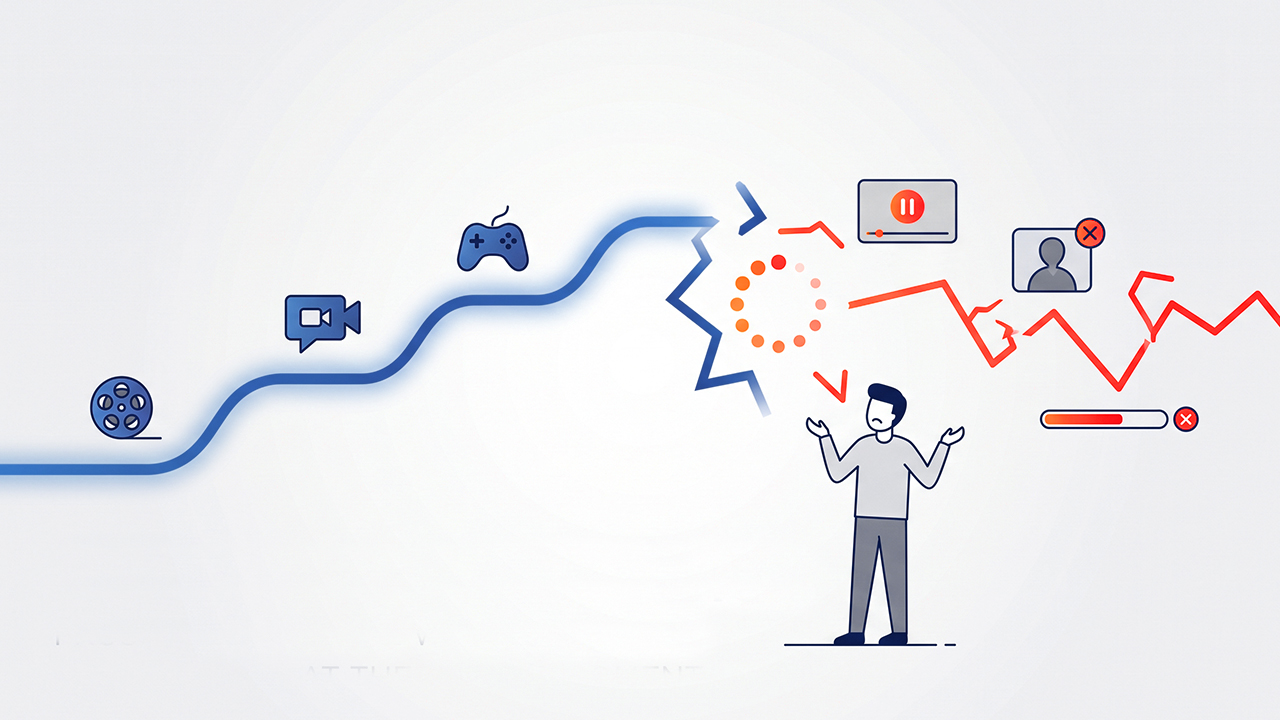
Those numbers matter, but they only tell part of the story. A connection can feel fast when everything is working and still become frustrating when it suddenly drops, stalls, or struggles to maintain a stable connection.
That is the idea behind this series of short videos, which looks at familiar moments where a connection can suddenly get in the way. From watching a K-drama and catching up with someone on a video call to gaming, dancing, and sharing travel memories, each scenario shows how frustrating an interruption can become when it happens at the worst possible time.
When the episode gets good
You have been following a K-drama all episode, waiting for the moment when everything finally comes together. The characters are finally about to reveal something important when the video suddenly buffers.
@gadgetmatchA good internet connection isn’t the fastest one. It’s the one that doesn’t stop. ✨♬ original sound – GadgetMatch
The frustration comes from more than the interruption itself. You were already invested in the story, and the connection stopped you just when you wanted to see how it unfolded.
When a conversation gets interrupted
A video call can make distance feel a little smaller, especially when you are catching up with someone you have not seen in a while.
The conversation is flowing until the other person starts telling you something important. Then the call freezes.
@gadgetmatchA good internet connection isn’t the fastest one. It’s the one that doesn’t stop.♬ original sound – GadgetMatch
You can wait for the connection to come back, but you have might already missed a lot.
Conversations do not always pause neatly when the internet does. When a call freezes in the middle of a thought, you can miss a reaction, a story, or even a few seconds that change the context of what someone was trying to say.
When you are about to win
Few things are more frustrating in gaming than losing control when victory is within reach.
You and your team have pushed through the match. The opposing team is almost down, and you are ready to make the final move. Then your character stops responding.
@gadgetmatchA good internet connection isn’t the fastest one. It’s the one that doesn’t stop. ✨♬ original sound – GadgetMatch
The problem is not simply that the connection slowed down. It failed at the moment when you needed it to stay consistent.
You were almost there, and the interruption took that moment away.
When you find the perfect travel shot
Going through photos after a trip can bring the experience back to life. You scroll through your camera roll, find a photo you love, and decide that it is the one you want to share.
You start the upload and watch the progress bar move.
Then it stops.
@gadgetmatchA good internet connection isn’t the fastest one. It’s the one that doesn’t stop. ✨♬ original sound – GadgetMatch
The frustration comes from more than a failed upload. You had already found the moment you wanted to share, but an unreliable connection put it on hold.
When the music cuts out
A good song can pull you completely into the moment. You start dancing casually, get more into the beat, and eventually find yourself waiting for the next big part of the song.
Then the music stops.
@gadgetmatchA good internet connection isn’t the fastest one. It’s the one that doesn’t stop. ✨♬ original sound – GadgetMatch
The sudden silence breaks the momentum. It feels frustrating because the song had already taken you somewhere, and the connection interrupted that experience just before the payoff.
A reliable connection should let you stay in the moment instead of making you wait for it to come back.
How much speed do you actually need?
For many everyday online activities, you may need less speed than you think. Netflix recommends 5 Mbps for Full HD streaming and 15 Mbps for 4K, while Zoom recommends around 3 Mbps download and 3.8 Mbps upload for a 1080p one-on-one video call.
Those numbers show that speed is only one part of the equation. A connection can meet the recommended speed for an activity and still feel frustrating if its performance fluctuates or drops when you need it most.
That is why a speed test does not always tell the whole story. What matters is whether your connection can consistently deliver the performance you need while you are streaming, gaming, making a call, or sharing files.
Keep the moment going
These situations have one thing in common: the interruption happens after you have already invested in the experience.
We rely on the internet for much more than simply getting information from one place to another. We use it to watch the shows we follow, stay in touch with people, play games, listen to music, preserve memories, and share those memories with others.
In each of these situations, speed can help you get started. Consistency is what helps you stay in the experience.
A connection that starts quickly but keeps dropping can still disrupt a video, interrupt a conversation, affect a game, stop a song, or prevent a photo from uploading. The impact may only last a few seconds, but those seconds can matter when they happen at the exact moment you are most engaged.
That is why a good internet connection is not only about how quickly it gets you started. It also needs to stay consistent when you are watching a show, talking to someone, gaming, listening to music, or sharing memories.
Reliability gives these experiences room to continue without forcing you to stop, reconnect, or wait for the moment to return. It lets you focus on what you are doing instead of thinking about whether your connection will hold.
A good connection should not just get you there. It should help you stay there.



Features
A Morning with the Galaxy Wellness Club
An endurance athlete takes on high-intensity interval training with the Galaxy Watch9.


It has taken me more than four weeks to sit down and write this confession… primarily because my cardiovascular system required atleast thirty-day grace period before it could revisit the trauma.
I have spent more than half a decade in the fitness world, which means I mastered the art of pacing and calculated effort. Most importantly, I developed an absolute refusal to exert myself at sunrise.
As an endurance athlete, I belong on mountain trails. I prefer spending an entire day navigating winding inclines. Out there, I can micromanage my cadence and treat my heart rate like an agreeable, soft-spoken acquaintance.
When Samsung invited me to the inaugural Galaxy Wellness Club in Makati, I arrived fully prepared for an aesthetically pleasing Saturday.
I had imagined a breezy morning run through Salcedo Village or a graceful, low-impact barre session where one stretches delicately in coordinated athleisure.
The schedule promised three distinct paths across the city: Train with Galaxy, Run with Galaxy, and Recover with Galaxy. The universe, however, had other plans for my dignity.
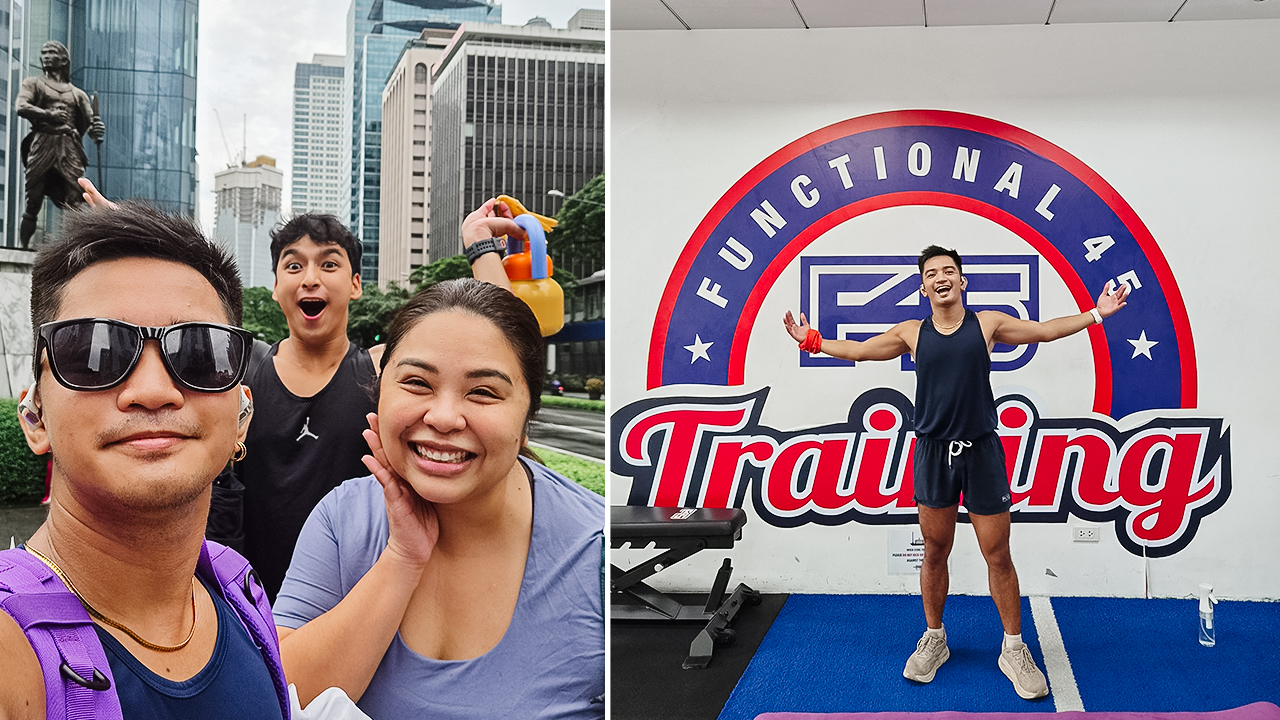
In photo: MJ Jucutan, Kyle Vergara, and Anna Abjelina (Samsung Philippines)
Samsung didn’t hand me a scenic running route or a calming studio mat. Instead, I discovered that I had been assigned to a high-intensity interval training session at F45. At nine in the morning!
To make matters considerably more perilous, I hadn’t even eaten breakfast. I stood on the studio floor in matching workout gear, clutching my morning optimism, and realized that my fate was already sealed.
When my watch decided to tell the whole truth
My saving grace was my workout partner, Kyle Vergara, whom I had met during the Galaxy Summer Club.
Misery truly loves company! Having a familiar face in the room provided a brief sense of security before the first timer started counting down.
The intervals began immediately, and any lingering composure vanished within ninety seconds.
HIIT is built on rapid bursts of violence followed by rests that are insultingly short. My endurance background had prepared me to run for hours at a steady rhythm. But it hadn’t prepared me for the sudden shock of explosive plyometrics on an empty stomach.
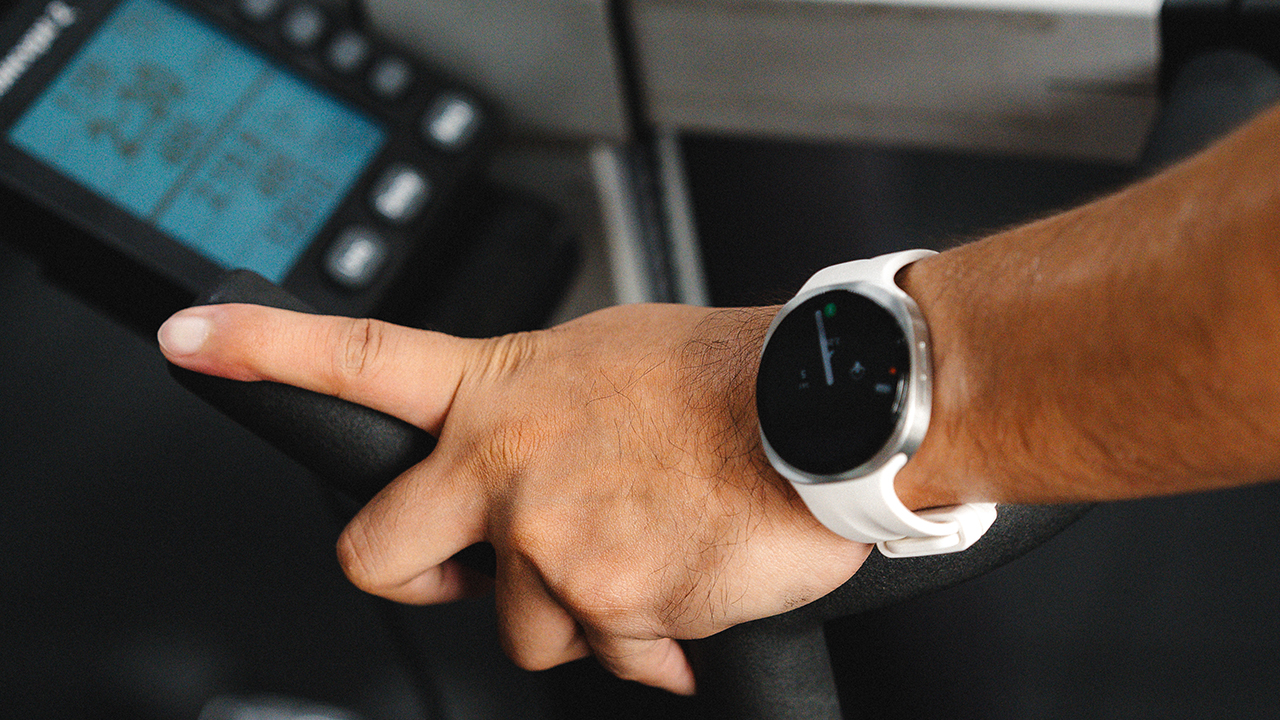
My wrist began vibrating with theatrical urgency. Glancing down at the Samsung Galaxy Watch9, I found a bright display practically begging me to reconsider my life choices.
The watch was showing numbers that belonged in an emergency room triage unit, informing me that I was operating far beyond my target heart rate zone.
I wanted to dispute the reading, but my chest felt like an over-caffeinated bass drum. My body was just as offended by the workout as my mind was.
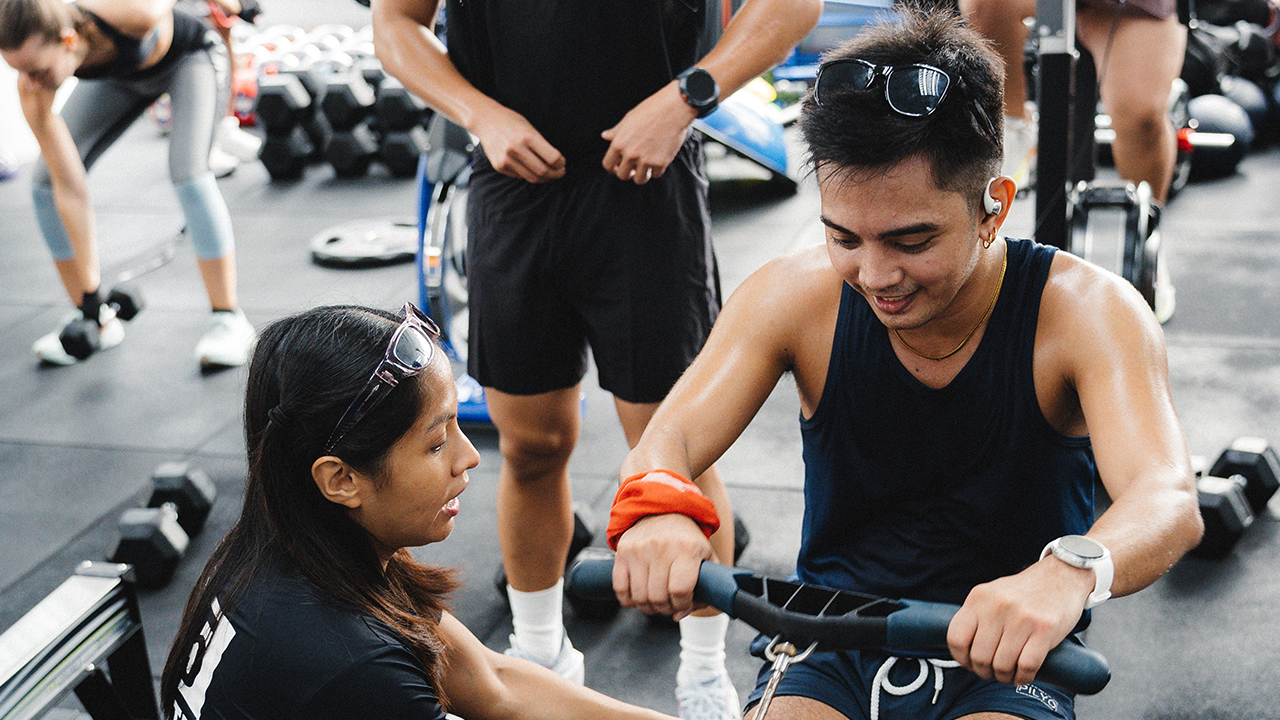
The saving grace of the session arrived when Kyle and I rotated to the ergs. The moment we reached the stationary bike, the rowing machine, and the ski erg, my muscle memory returned.
These machines offered fixed time blocks where I could finally establish my own cadence instead of matching the frenetic energy of the room.
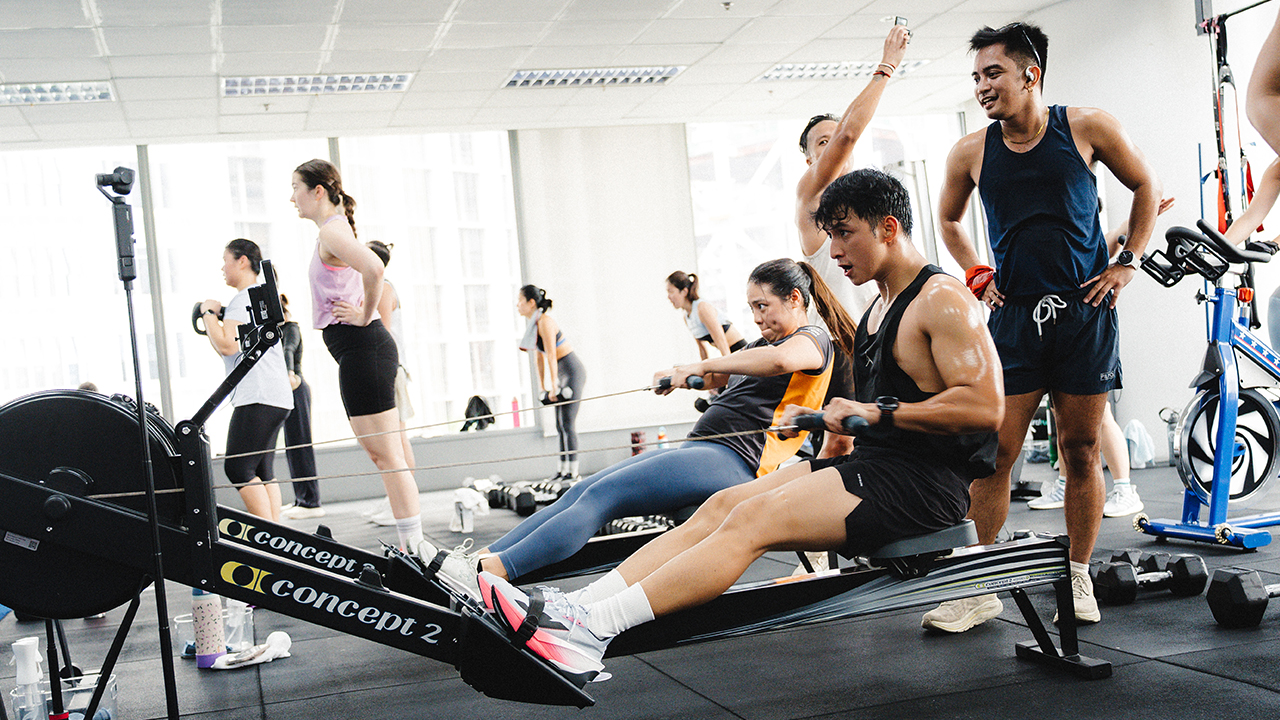
I took comfort in checking the display between intervals. The screen remained sharp and clear through the sweat, giving me immediate visibility over my pace, output, and heart rate without requiring me to break my rhythm.
I don’t enjoy being forced into someone else’s tempo, but I do expect my wearable to follow mine without missing a beat.
By minute forty, the novelty had thoroughly expired. My supersets in the gym usually wrap up within forty-five minutes, but those sessions allow room to breathe.
This class offered no such luxury, and I spent the final rounds mentally drafting a formal letter of complaint to whoever invented interval training.
Sugar cravings and receipts
The immediate aftermath was remarkably unglamorous. My vision swam and my gut protested. I found myself seated on the floor feeling the familiar, hollow dizziness that usually only arrives during brutal track repeats or HYROX simulations.
I’ve made peace with the reality that looking effortless during speed work is simply not my aesthetic. My engine was built for aerobic endurance, and there is no reason to fight my own biology.
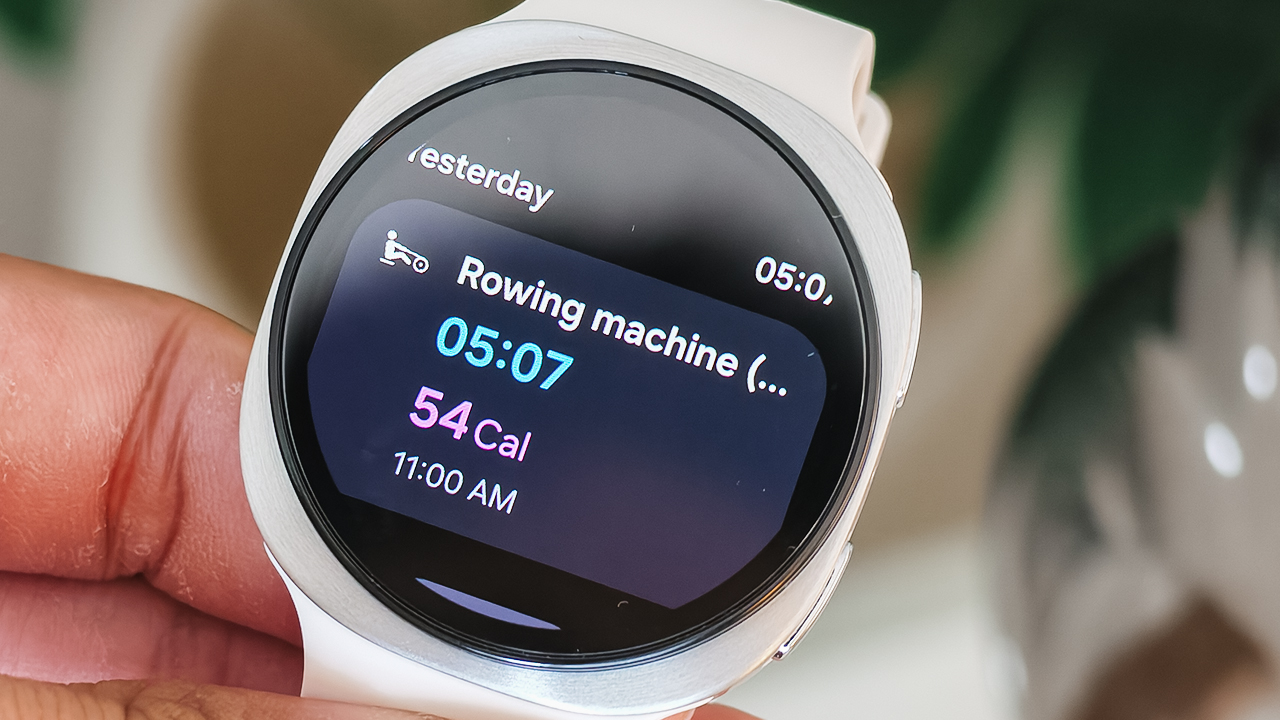
While Kyle and I caught our breath and contemplated our desperate need for refined sugar, I flipped open my Samsung Galaxy Z Flip8 to inspect the damage on Samsung Health.
This is where the Galaxy Watch9 redeems the suffering. It doesn’t just hand you a collection of cold, terrifying heart rate spikes; it organizes your physical output into meaningful context.
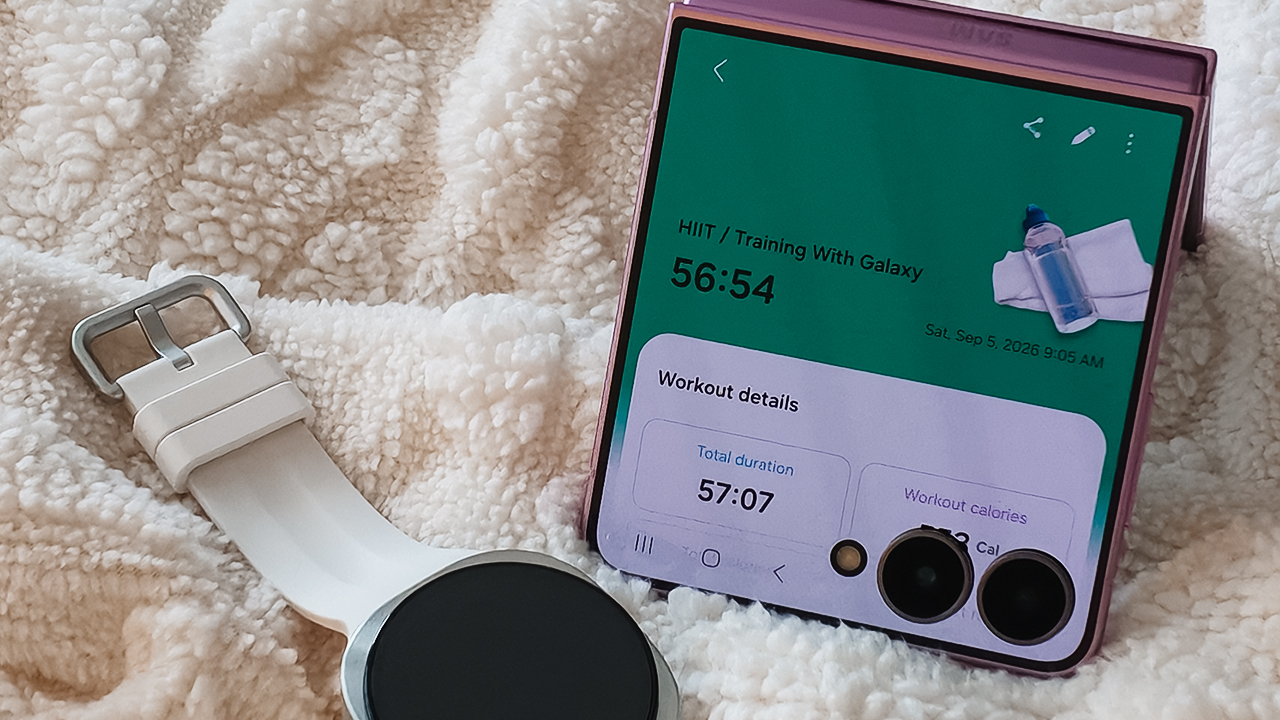
The Fitness Index offered a clear snapshot of my cardiovascular response under acute stress. Meanwhile, the Daily Cardio Load feature accounted for how much structural strain that sudden forty-five-minute shock placed against my ongoing weekly training block.
The Heart Health Score provided a broader perspective on my recovery and overall cardiac trends, confirming that while the workout felt lethal, my body was already adapting.
Finding balance beyond the numbers
We eventually relocated to brunch to reunite with the rest of the Galaxy Summer Club crew, exchanging war stories over plates of food that vanished within minutes.
The runners delivered glowing accounts of their pacing data through Salcedo Village. Then, the group assigned to the barre class looked rested and radiant. (How are they entirely unbothered by mortality?)

Kyle Vergara and I en route to Wildflour for a much-needed brunch
Every activity had been tracked through either the streamlined Galaxy Watch9 or the rugged Galaxy Watch Ultra2, with all metrics feeding neatly into the Samsung Health ecosystem.
Browsing through the dashboard reminded me of how far fitness tracking has evolved. Beyond workout stats, the platform pulls together continuous vital tracking, sleep apnea insights, and overall energy management into a daily narrative.
A month has passed since that morning. I have happily returned to my heavy strength supersets and my unhurried mountain trails.
I have zero intention of signing up for another HIIT class anytime soon.
Even so, that morning left me with a renewed appreciation for looking at health through a wider lens. When you spend years obsessing over performance metrics, you easily forget that real longevity is about balance and recovery.
The right technology doesn’t exist to push you to exhaustion every morning. It exists to help you understand your limits and respect your rhythm. And sometimes, they remind you when it’s time to sit down, order brunch, and let your body rest.
@gadgetmatch Samsung kicked off the Galaxy Wellness Club with a HIlT Session that puts the #Galaxy Watch9 to work, tracking heart rate and effort in real time. The event showcased how Samsung’s newest wearable fits into an active lifestyle, from high-intensity training to everyday movement, helping you train, run, and recover with Galaxy. #UnlockWellness #GalaxyWatch9 #TrainWithGalaxy @hemjaye ♬ som original – mishDd

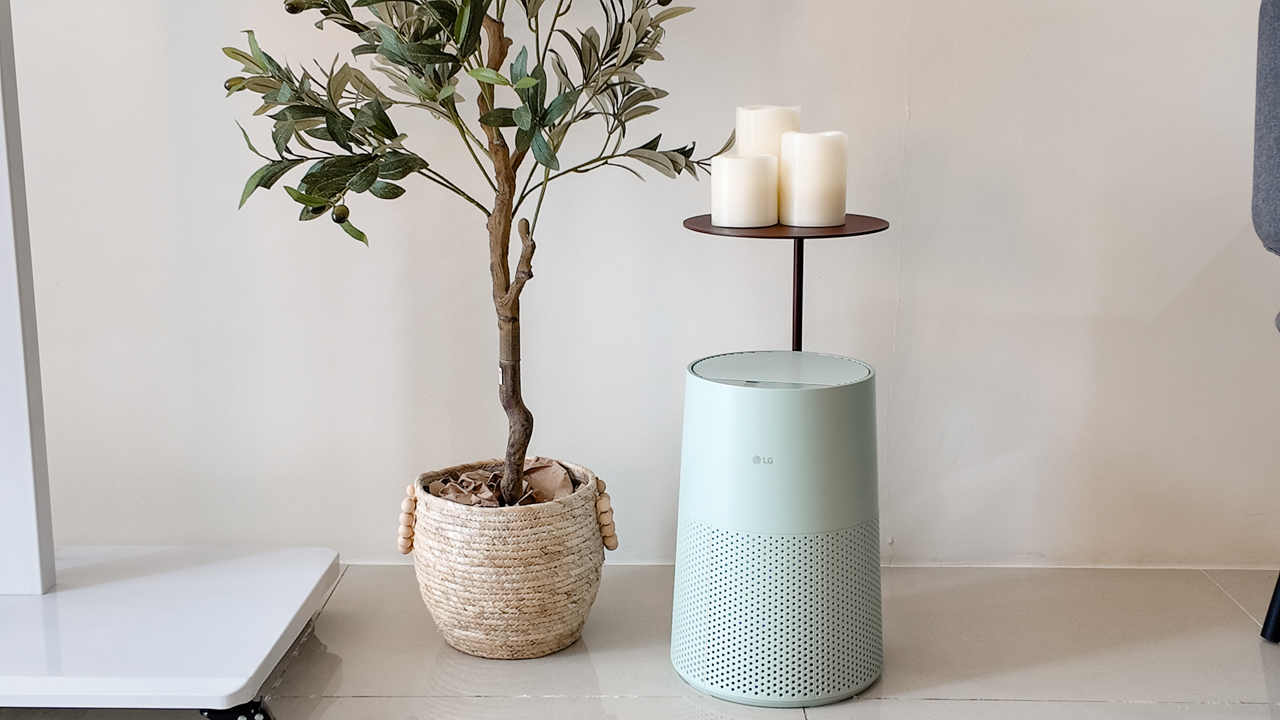
Moving into a new space comes with a long list of things to figure out, and lately, I’ve been paying more attention to something that’s easy to overlook: air quality.
After using the LG AeroMini for about a month, it has become a subtle but welcome addition to my space. It helps make the room feel fresher, while its compact and stylish design fits naturally into my setup. Here are the things that stood out to me most after living with it for a month.
360° purification for a fresher space
One of the things I appreciate about the AeroMini is its 360° air purification, designed to bring purified air in every direction.
For me, this is particularly useful in a new space where I’m spending a lot of time working, relaxing, and just settling in.
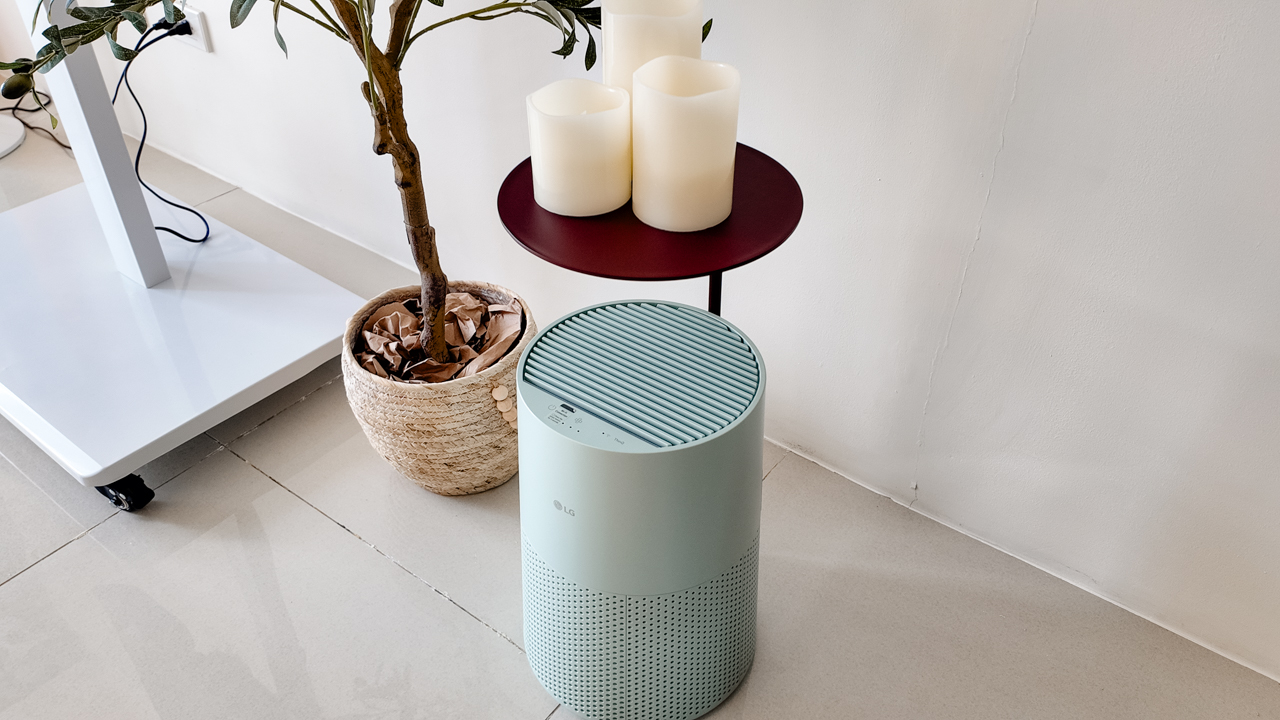
Combined with its True HEPA filter, which is designed to remove 99.999% of 0.01μm fine dust and allergens, it gives me added peace of mind about the air I’m breathing every day.
After a month, I can genuinely say that the space feels fresher with it running.
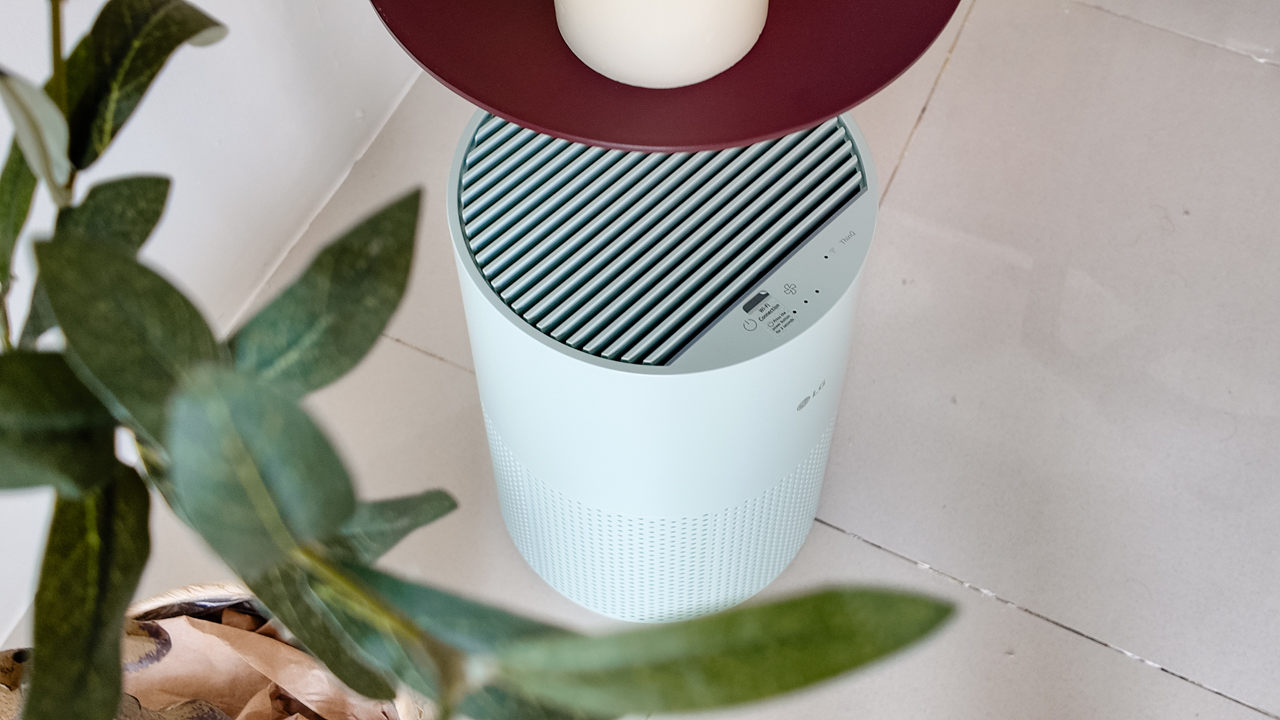
Surprisingly quiet
This is probably my favorite feature.
The LG AeroMini operates at just 26dB, and after using it for a month, what stands out is how easy it is to forget that it’s even running.

I can have it running while I’m working or sleeping without the noise becoming a distraction. For an appliance that’s designed to continuously improve the air around you, I think that’s a big deal.
Sometimes, the best feature is the one you barely notice.
Design that fits my space
Since I recently moved, I’ve been pretty conscious about what I bring into the space. I want things to be functional, but I also don’t want appliances that feel like they’re taking over the room.
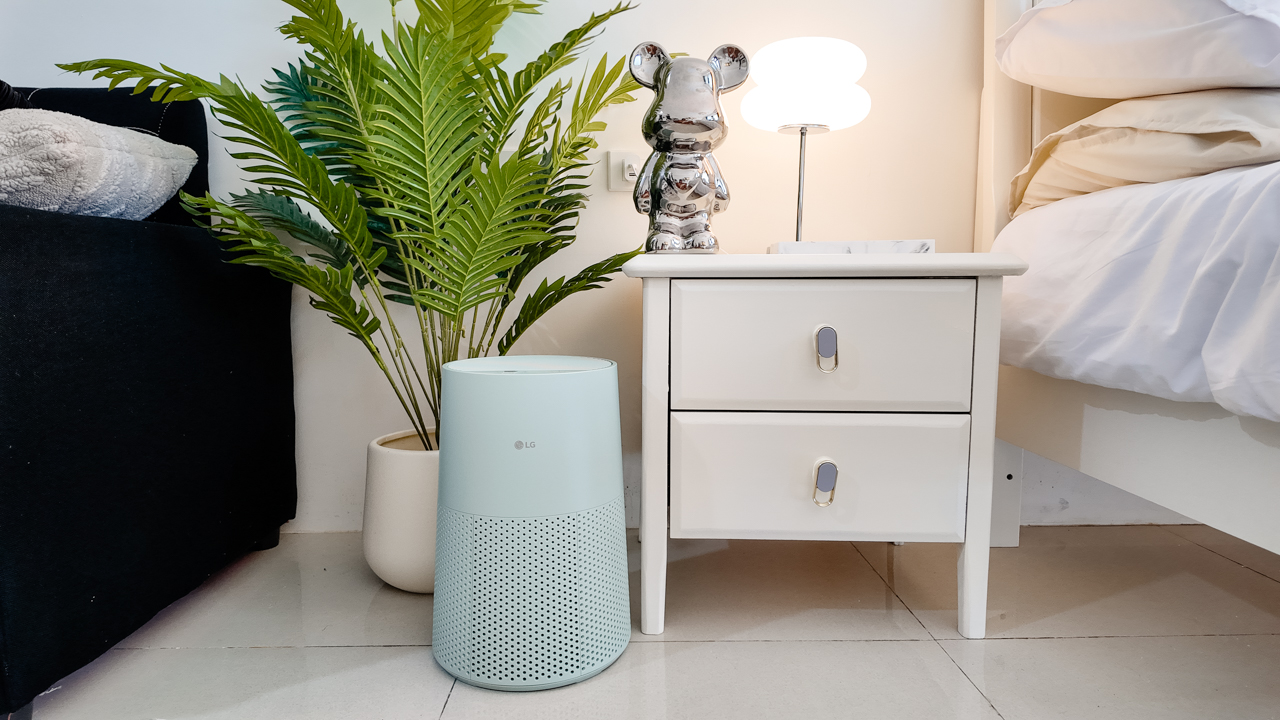
The AeroMini’s slim and compact design makes it easy to incorporate into my setup. It doesn’t feel bulky or industrial, and I like that I can leave it out without feeling like I need to hide it away.
For me, that balance between functionality and aesthetics makes it feel more like part of the space rather than just another appliance.
Air quality at a glance
Another feature I’ve found convenient is its Smart Control. Through the app, I can monitor and control the AeroMini while getting real-time updates on the indoor air quality.
It’s a small convenience, but being able to check the air quality without having to interact with the purifier directly makes it easier to keep track of what’s happening in the room.

Easy to maintain
I also appreciate that the AeroMini is designed with an all-in-one dust and deodorization filter that makes replacement and maintenance easier.
That matters to me because the best home gadgets are the ones that don’t create another complicated chore. I want something I can set up, use regularly, and maintain without too much fuss.

After a month, would I keep it?
Yes, and mainly because it quietly fits into my everyday routine.
The LG AeroMini has helped make my new space feel fresher and more comfortable, while its compact design means it doesn’t compromise the look of the room. But if I had to pick just one thing I appreciate most, it’s still how incredibly quiet it is.

It’s one of those upgrades that doesn’t demand your attention. It simply works in the background.
If you’re also looking to make your home a fresher and more comfortable space for yourself and your family, visit https://www.lg.com/ph/ to learn more about the LG AeroMini and how it can fit into your everyday life.
Features
Nike’s new race-day system, explained
Apex, Alphafly, and Swooshfly are each built around a different goal at the starting line.
Every starting line has a few moods running at once. A runner near the front is thinking about splits, while someone in the middle is calculating whether they trained enough.
Then, someone toward the back is checking their laces for the fourth time and feeling perfectly happy to be there.
Nike’s new race-day system was built around that range, and it also gives you a perfectly good reason to look at new shoes. (Which I’m choosing to treat as research.)
Because if there’s one thing runners understand, it’s that a race is never simply a race. It’s a training plan, a playlist, a breakfast strategy, a weather forecast, and potentially, a completely new pair of shoes.
The big idea
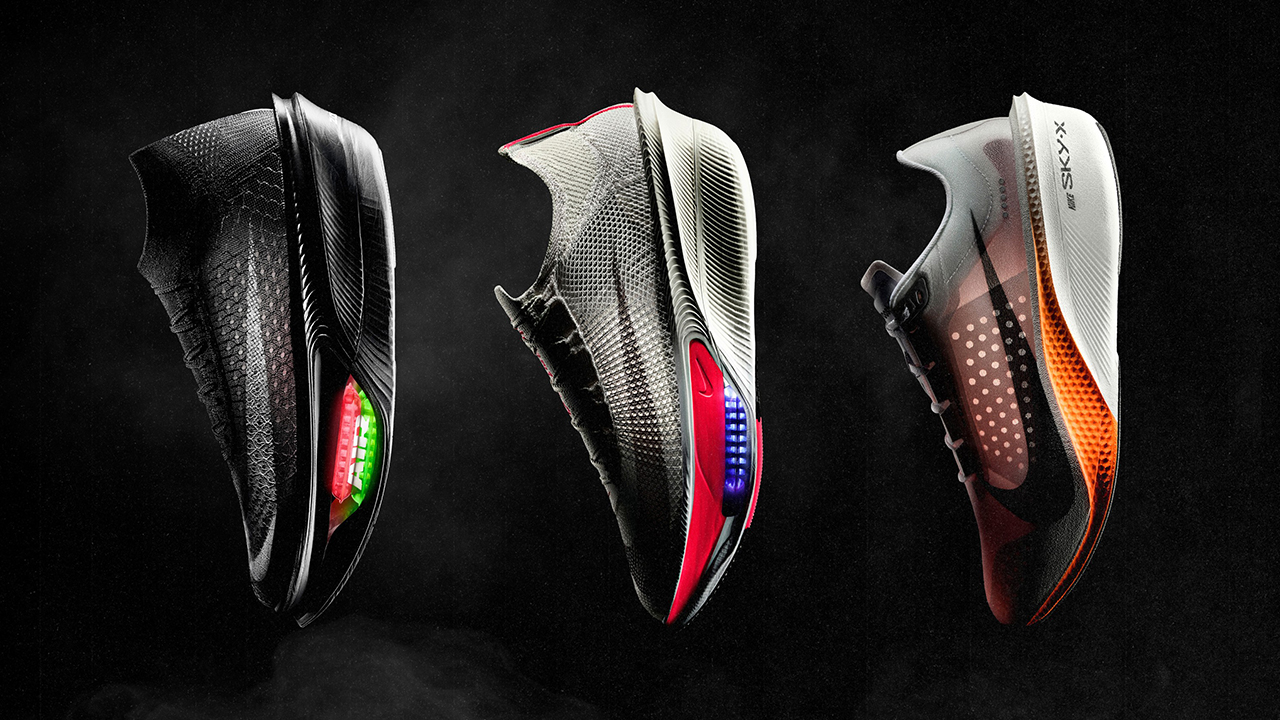
Nike introduced three shoes that work together as one lineup: the Nike Apex, the Alphafly 4, and the Swooshfly.
Nike calls it its most comprehensive race-day offering yet, adding a new structure to the road-running shoes already in its catalog.
The interesting part is how Nike has organized the lineup. Racing footwear is often presented as a hierarchy, with the fastest shoe sitting at the top and everything else somewhere beneath it. That can make the shoe wall feel a little like there is a bouncer deciding whether you have earned the good pair.
Nike’s approach is more welcoming. Each shoe has its own purpose, and runners can choose based on their goals, experience, and the kind of race day they want to have.
It’s an excellent news for anyone who has ever walked into a running store, picked up the most expensive shoe, and immediately started mentally explaining why the purchase was necessary.
Nike Apex
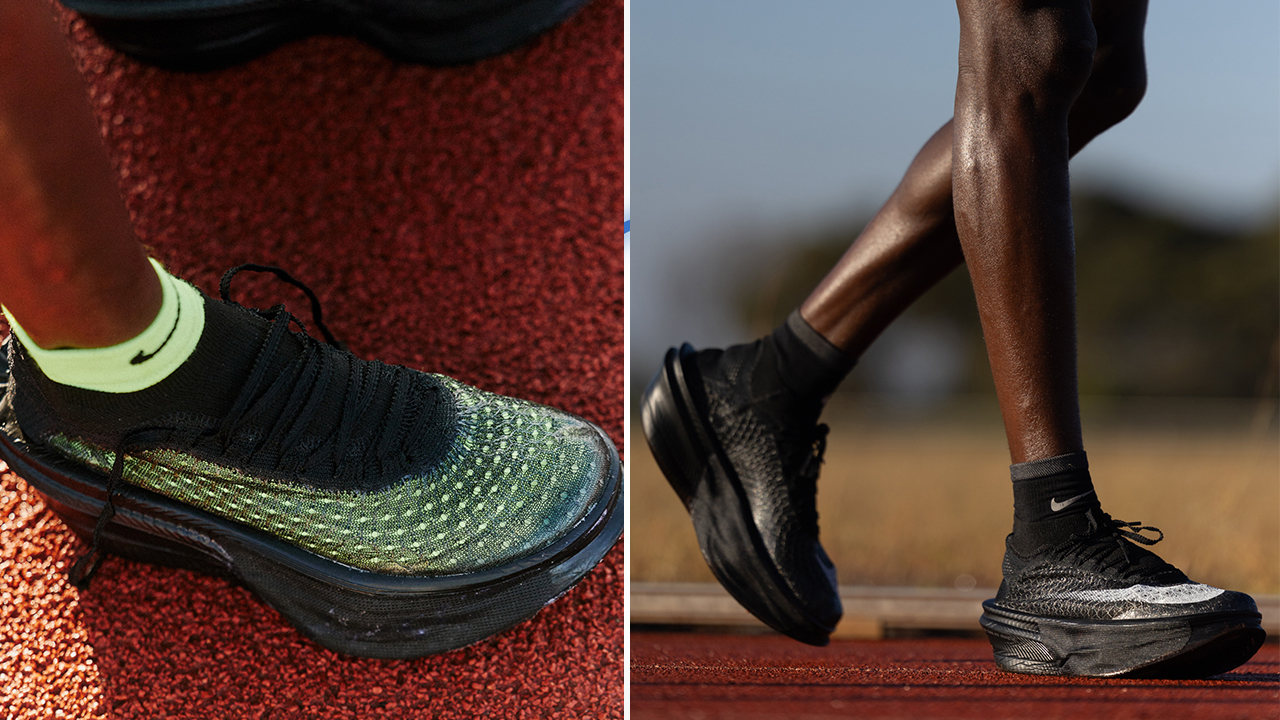
The Apex sits at the top of the range. Nike describes it as its most advanced expression of speed, made for runners chasing the edge of marathon performance.
If you’re training for a breakthrough result and every second counts, this is the shoe Nike is pointing you toward. It’s the serious one; the grown-up one. The shoe that enters the conversation when your race plan contains phrases such as “negative split” and “sub-three.”
It’s also the one most likely to make your current racing shoes suddenly feel very ordinary after you read the spec sheet.
This is how it starts, by the way. You read about the foam. Then, you look at the plate. Then, you watch one review and then, another. Suddenly, you are comparing marathon shoes at 1 o’clock in the morning and explaining to yourself that this is research.
Nike Alphafly 4
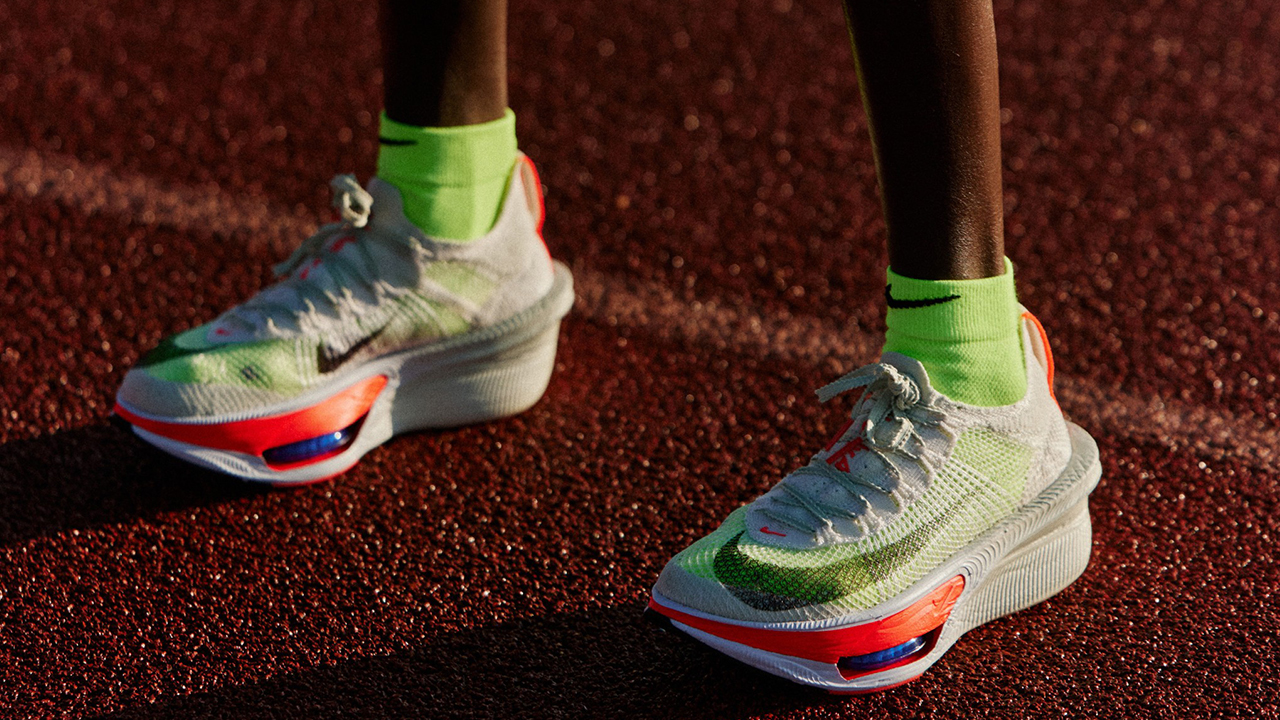
The Alphafly 4 is designed for a wider group of runners. According to Nike, it balances responsiveness, comfort, stability, and efficiency over distance, bringing race-day speed into reach for more athletes.
If you already have a few finish lines behind you and a personal best in your sights, this is where Nike says you fit. It’s the sensible choice, by which I mean the one you can probably explain at checkout without needing a detailed financial presentation afterward.
The beauty of having a race-day system is that you can also stop treating the fastest shoe as the only shoe worth wanting. Your race history, distance, goals, and preferences all get a seat at the table.
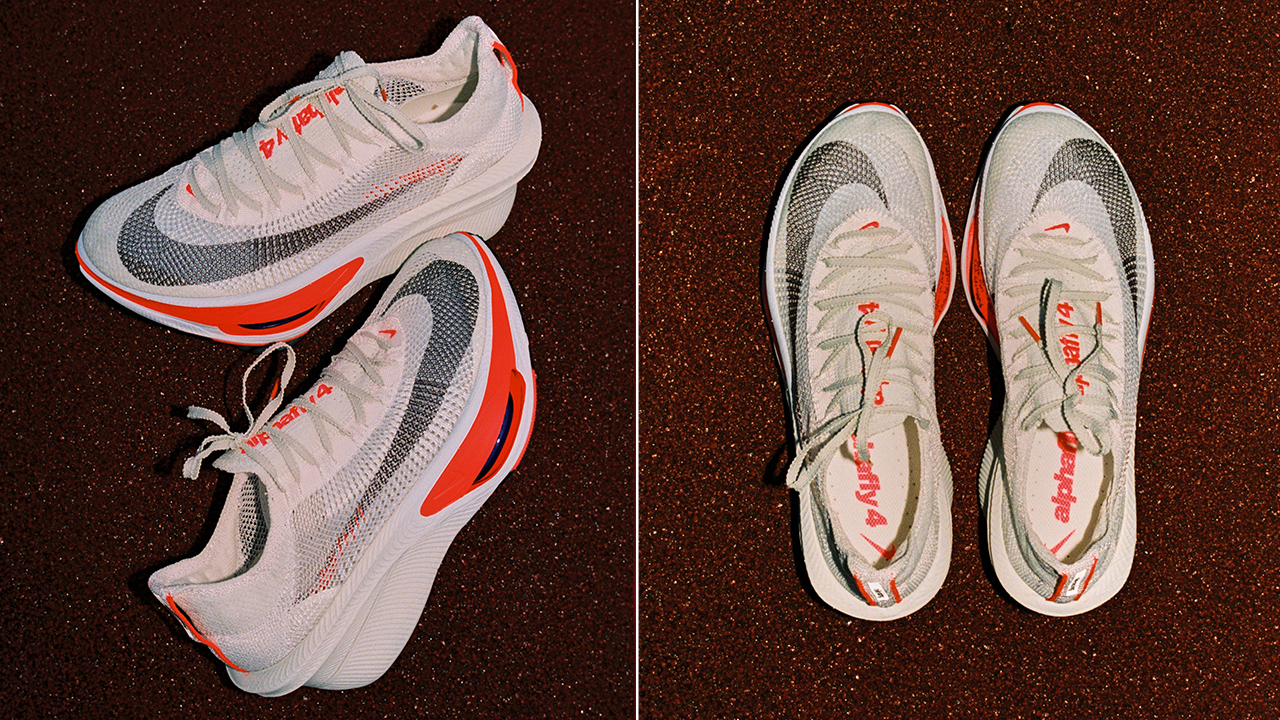
Of course, I still believe every runner deserves at least one shoe that makes them walk around the house for no reason after putting it on.
Nike Swooshfly
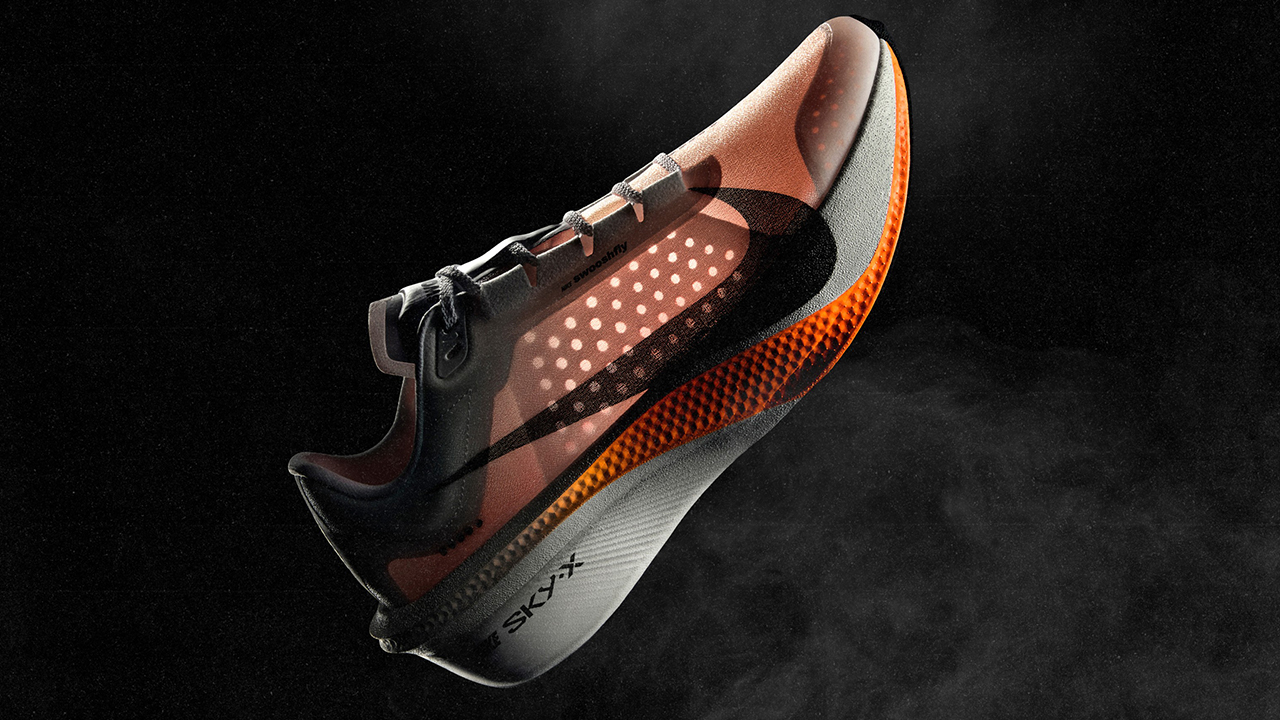
The Swooshfly is the entry point to the system. Nike positions it as an invitation to race day, with cushioning designed to help runners feel confident and ready for a distance they have not raced before.
If your first starting line is coming up, this is the shoe Nike made with you in mind. I like that idea because race-day nerves are very real.
You can have the training plan, the race belt, the gels, the carefully selected playlist, and enough screenshots of the course elevation profile to qualify as cartography, and you can still feel nervous when you get to the start line.
A shoe that feels approachable can be part of making that first race feel less intimidating. And once you finish? Well, congratulations. You are now a ~certified~ runner, which means you can begin looking at shoes for your next race.
Where these shoes came from?
Nike says each shoe began with a runner’s problem. That problem was studied at the Nike Sport Research Lab, translated into product design, and tested with athletes before the shoes reached a starting line.
That’s a lot of homework before anything makes it onto a shelf. It also explains why Nike talks about the three shoes as a system rather than three separate products.
The lineup draws from more than 50 years of Nike’s racing history, beginning with co-founder Bill Bowerman’s earliest handcrafted spikes and continuing through the original super shoes that helped reshape modern racing more than a decade ago.
Today, that history comes together through athlete insight, scientific research, and technology designed to improve running economy.
What’s under the hood?
Behind every glamorous race-day photo is an alarming amount of engineering, testing, data, sweat, and people whose job is apparently to figure out how much faster humans can become when you put the right materials under their feet.
Technically, the system brings together Nike’s proprietary Air Zoom platforms, advanced foams, and engineered plates. Nike says each combination has been developed around the needs of its intended runner, with different approaches to comfort, confidence, efficiency, and speed.
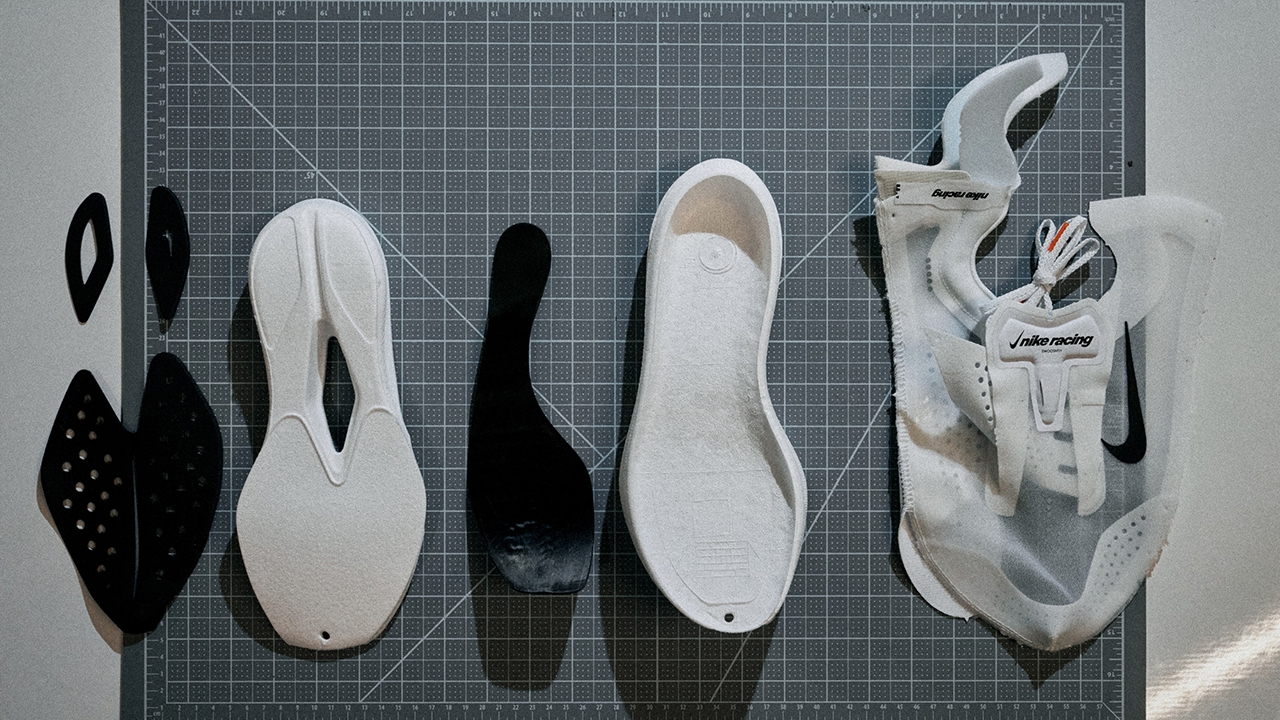
This is where the spreadsheet part of your brain can take over. Foam density. Plate geometry. Cushioning. Responsiveness. Weight. Running economy.
Meanwhile, another part of your brain is saying, “Yes, but does it look good with my race kit?” Both are valid considerations.
The bigger point is that the fastest shoe on paper isn’t automatically the best shoe for every runner. A marathoner chasing a personal record may want something very different from someone standing at their first 10K start line. The event may be the same, but the reason for being there can be completely different.
That’s what makes Nike’s new system interesting. It treats race day as something that belongs to every kind of runner, from the athlete chasing seconds to the person who is still figuring out what racing feels like.

When your internet ruins the moment

A Morning with the Galaxy Wellness Club

Dragon’s Dogma 2: Dark Arisen launches with new Official Pawns

Score PhP 22,000 in guaranteed freebies when you pre-order the iPhone 18 Pro at Beyond the Box

Sony unveils world’s 1st Eclipsa Audio-certified mic for smartphones

vivo X500 Series launches with major imaging upgrades

OPPO Find X10 Pro Max is the first phone with a triple 200MP camera system

TECNO CAMON Slim 5G: Price, availability in the Philippines

BYD says that way better EV batteries are coming next year

HONOR Magic9 Pro Max launches in China with ARRI-powered imaging


-
 Philippines2 weeks ago
TECNO CAMON Slim 5G: Price, availability in the Philippines
-
 Reviews2 weeks ago
TECNO CAMON Slim 5G review: Slim on size, big on surprise
-
 News2 weeks ago
Apple wants to release new iPhones more regularly
-
 News2 weeks ago
vivo X Fold6 makes global debut with 200MP camera and 6900mAh battery
-
 Reviews2 weeks ago
HONOR 600S review
-

 Gaming2 weeks ago
Ghost of Yōtei Complete Edition review: More of a great thing
-
 Philippines2 weeks ago
HONOR 600S price, availability in the Philippines
-

 Philippines2 weeks ago
Bambu Lab opens first Authorized Store in the Philippines