
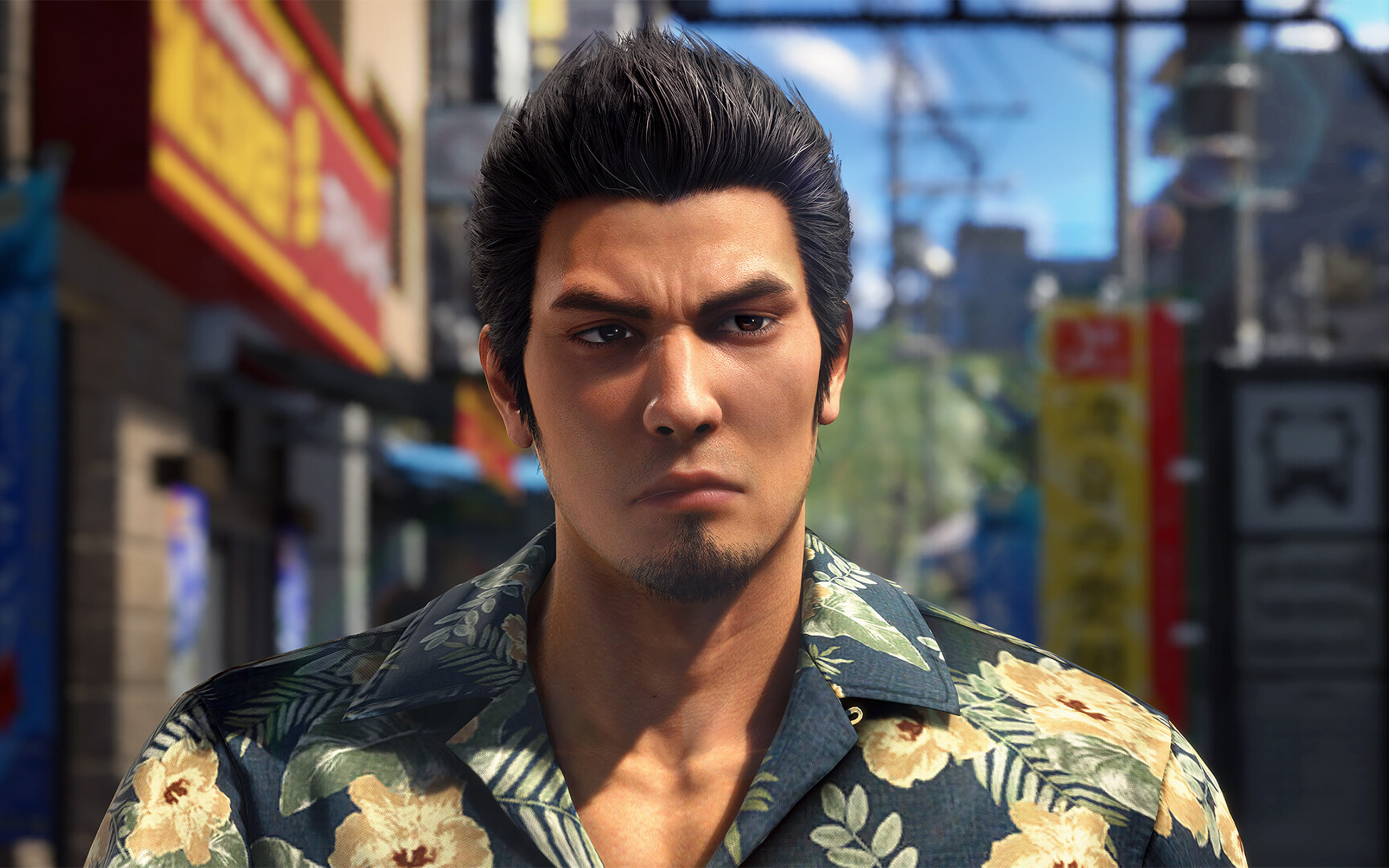


Nothing can beat the burden of being a remake or a remaster. Besides providing an enjoyable experience by itself, a remake or a remaster constantly has to justify its own existence: Why did this piece of media need to be rereleased? For some, it’s a no-brainer, such as the ongoing Final Fantasy VII remake series. For others, it’s a lot less clear, such as the many, many times there’s been an uber-mega-definitive edition of The Last of Us and Skyrim.
Now the third of its kind, Yakuza Kiwami 3 is inching perilously close to a point where it’s hard to justify why we need another remade Yakuza.
Continuing the series
Yakuza Kiwami 3 is a remake of the third entry in the Like a Dragon series. The original Yakuza 3 was the first one in the entire series to be developed for the PlayStation 3 era. Compared to the first two games, it features a lot more content and, on its own, can be considered a modern RPG by today’s standards.
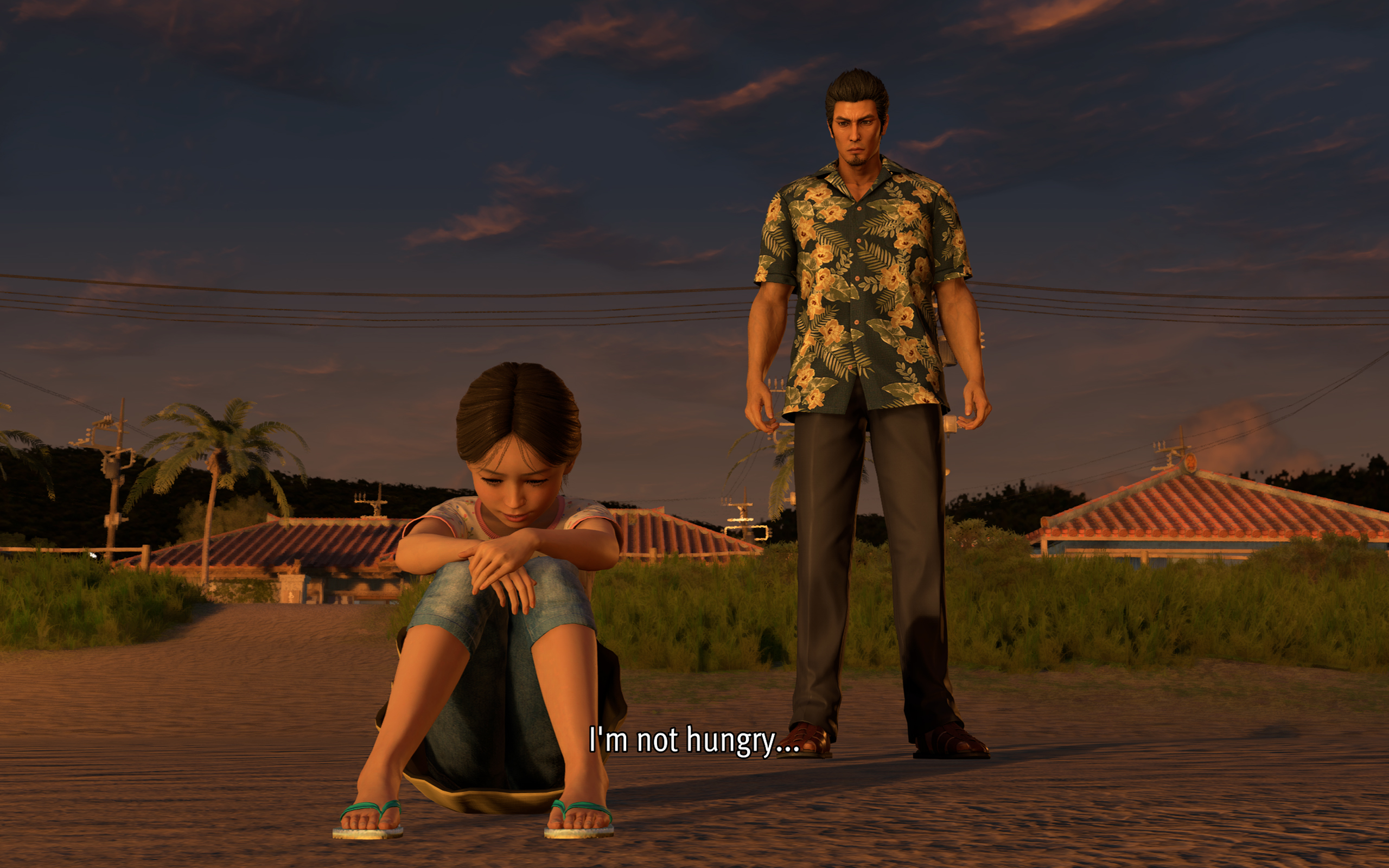
Story-wise, it’s also a turning point for the series. Though Kazuma Kiryu already took the young Haruka under his wing by this point, Yakuza 3 is the first where the series protagonist tasted a life outside of the criminal underworld.
Being such an important milestone for the franchise, a Kiwami remake seems like the best or the worst idea.
(For reference, “Kiwami” refers to an ongoing series of remakes that rebuilds the classic Yakuza games with a new engine that began in Yakuza 0.)
When a new coat of paint doesn’t really help
Yakuza 0 came out in 2015. That means the studio has been using the same engine for over ten years. The engine is starting to overstay its welcome, especially in the Kiwami series.
Despite being built with PlayStation 3 technology, Yakuza 3 still had its limitations. For one, 1080p was just becoming a standard by then. Cutscenes had to be smaller and, thus, more tightly shot. But ultimately, the limits resulted in a more cohesive game that maximized what it worked with. Yakuza 3’s Kamurocho feels alive, and you never know what’s waiting behind the next corner.
Sadly, Yakuza Kiwami 3 does not take advantage of better hardware to update how the game feels. Cutscenes were splashed with a new coat of paint, but the composition remains the same. As a result, they look so empty with so much white space.
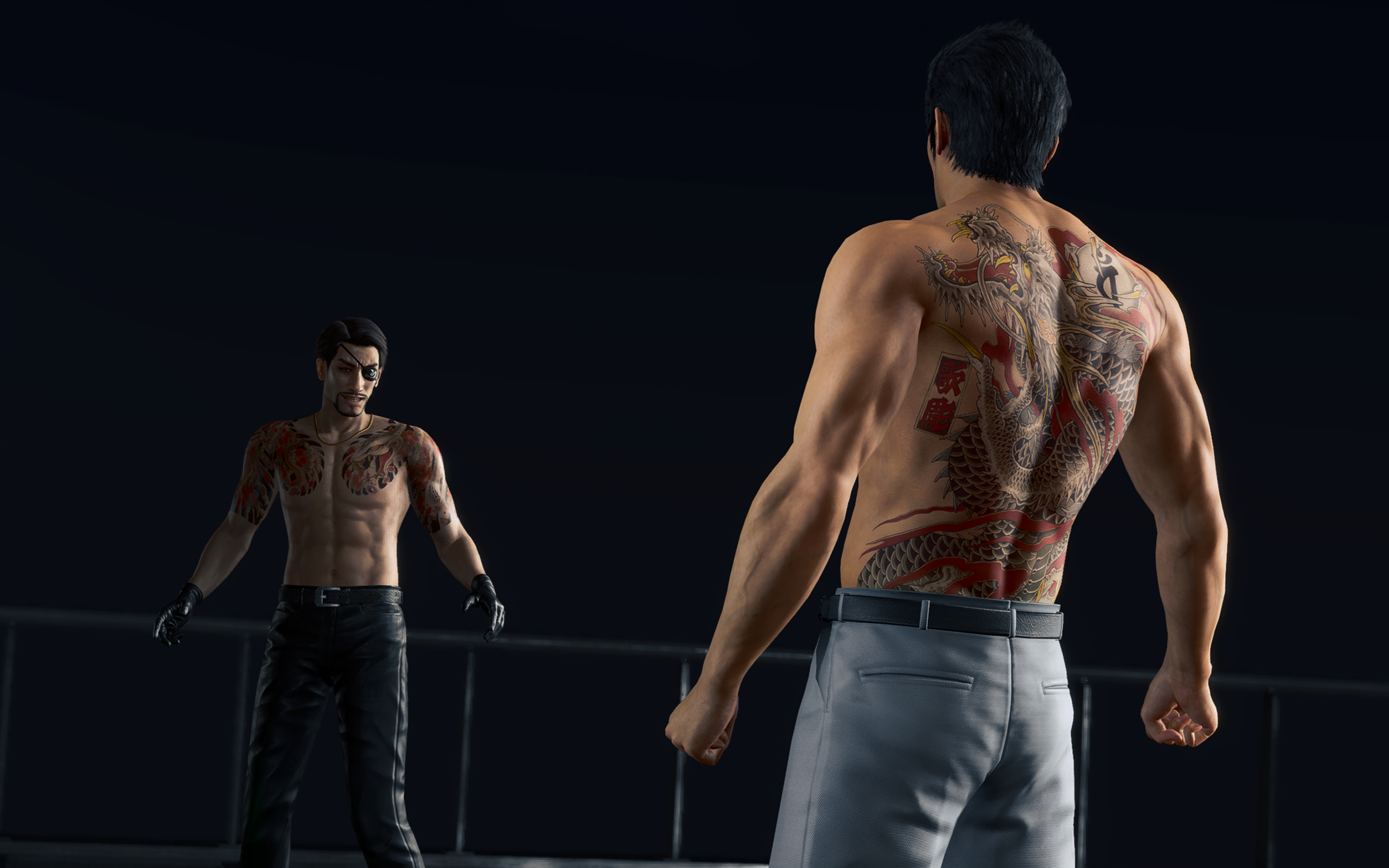
They could have added some clouds.
The “improved” Kamurocho also doesn’t feel all that updated. There’s a palpable sense of sameness as you explore through the game. Even Okinawa looks like just an extension of Tokyo. In the more modern games, exploring was rewarding. Even if the game tells you where missions are, there are new sights and new stores to just look at.
Kamurocho is a central piece of every Like a Dragon game. But I don’t think it has to be static, even if it’s just a remake.
That, and I’m just tired of seeing the same character models every time I boot up a Yakuza game.
A few controversial model changes
To be completely fair, the main characters did get some updates. And, of course, there are a few elephants in the room.
First up is Rikiya, the upstart yakuza from Okinawa. From other media, Rikiya is listed as being around 20 to 21 years old. Now, I’m not a good judge of age based on looks, but the old Rikiya from the original game really doesn’t look like he’s in his early 20s.
Yakuza Kiwami 3 has a new model for Rikiya, one based on Japanese actor Sho Kasamatsu. Others have criticized this decision because the new models looks so different from the original. In my opinion, the change just makes sense; he looks much younger and brasher, just as his character dictates.
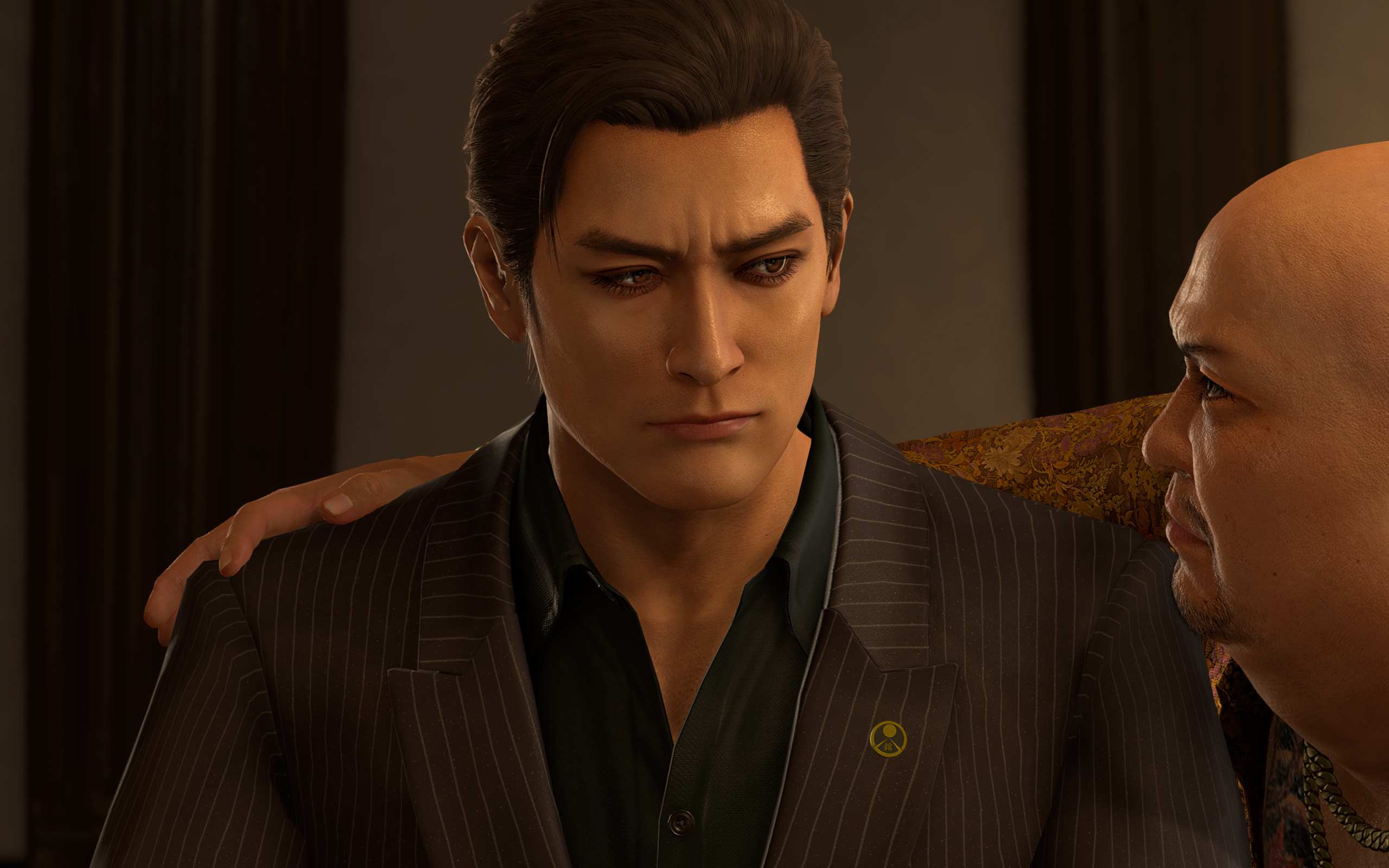
Mine also looks like a Japanese George Russell now.
The other change, however, goes beyond just narrative disagreements. Hamazaki, one of the main antagonists in the game, also received a dramatic change. In contrast to his more thug-like looks in the original, the new Hamazaki looks smarmier and more cunning. The problem lies in their choice of actor, Teruyuki Kagawa, who’s had sexually charged issues in the past.
Strangely, the studio hasn’t responded in a way that’s consistent with how they responded to similar issues in the past. Previously, they halted sales just to deal with an issue with a voice actor. This time, the studio’s response boils down to: “Hamazaki is a creep, so we got a creep to play him.”
*shrug*
A pared down experience
Anyway, on to the gameplay.
Despite the concerns I’ve had with how this remake played out, I still had so much fun. My total playtime, according to Steam, is just a little less than 60 hours. This is also the first review game that I’ve earned all achievements for, before its release. It’s inaccurate to say that it’s a bad game because it hasn’t justified itself as a remake.
Compared to the original, Yakuza Kiwami 3 offers a shorter but tighter experience. While the old one had over a hundred and a dozen substories, the remake has only 31 substories to its name.
The remake is perfectly paced. There are hardly any points when I felt that the game was an endless grind.
Dark Ties, the secondary game focused on Yoshitaka Mine, is just as balanced. It has only three main chapters, 13 longer substories, and around 50 bite-sized activities. The story itself just tells how Mine got into the yakuza life and his relationship with Tsuyoshi Kanda (but we’ll get into the story later).
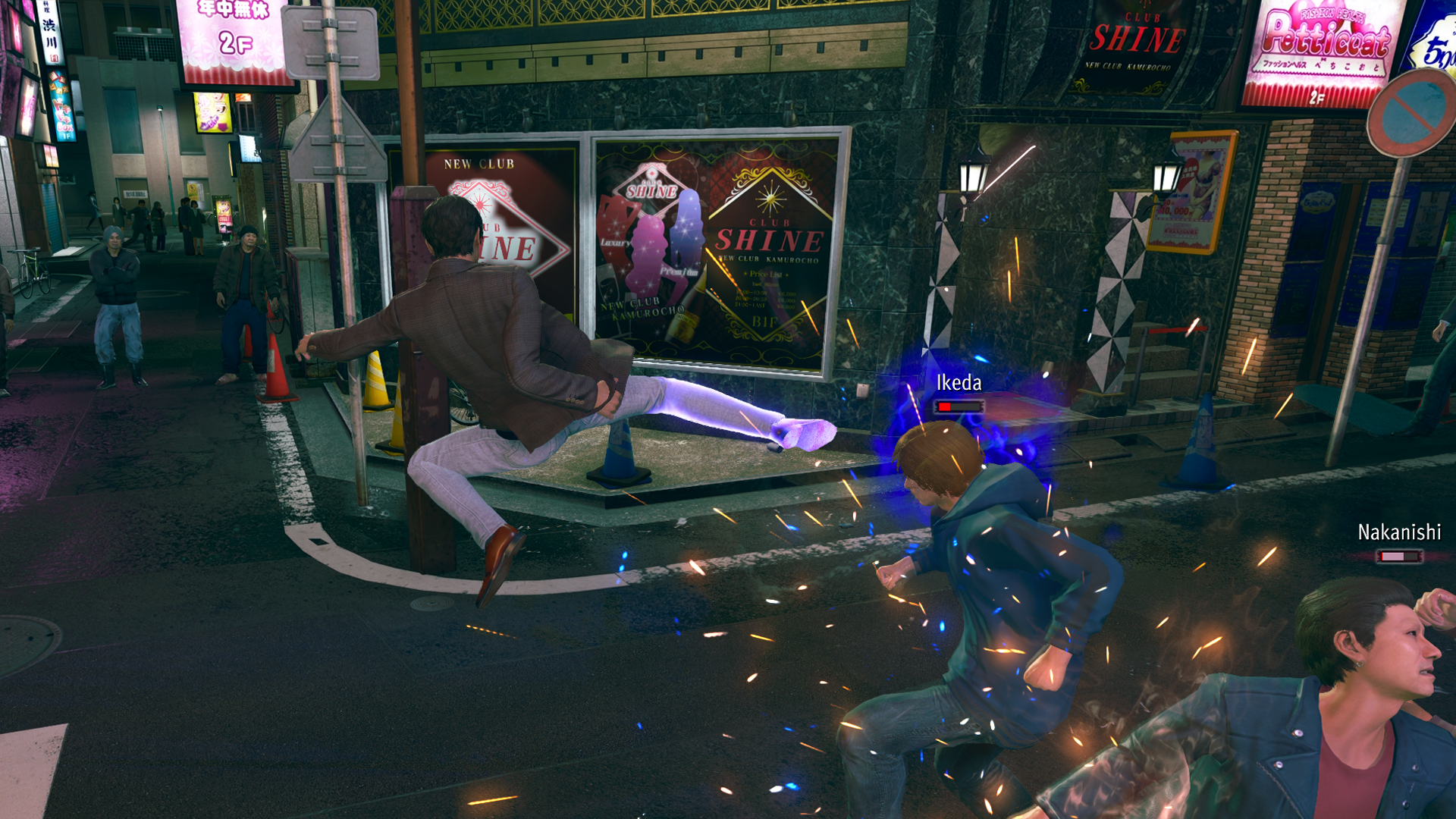
Mine’s fighting style feels smoother than Kiryu’s. He uses quick jabs, kicks, and grapples, similar to Judgment’s Yagami. For me, it’s more enjoyable to beat people up, compared to Kiryu’s slower beat-em-up approach.
Character-wise, Mine is also much colder. Seeing him go through the usual shenanigans of Yakuza’s insane substories is funnier and is much more refreshing because I’ve seen Kiryu go through the same schtick so many times in the past. It’s even funnier that his main goal is to help Kanda rebuild his reputation by doing good deeds around town while pretending to be him.
The side content is much better
As with every Yakuza game, Yakuza Kiwami 3 has secondary game modes that can suck in hours of your time. This time, the main game has two new ones: Morning Glory and Bad Boy Dragon.
Morning Glory is a Stardew-Valley-type mode where Kiryu manages the orphanage of the same name. By doing various minigames, such as sewing and cooking, he increases his reputation as a dad with the kids under his wing.
In the past, I’ve had problems with the franchise’s more laidback game modes, such as Infinite Wealth’s awful Animal Crossing island game. This one, however, is a perfect length. There’s a bit of a grind, but it’s short enough to be completed in one or two sittings.
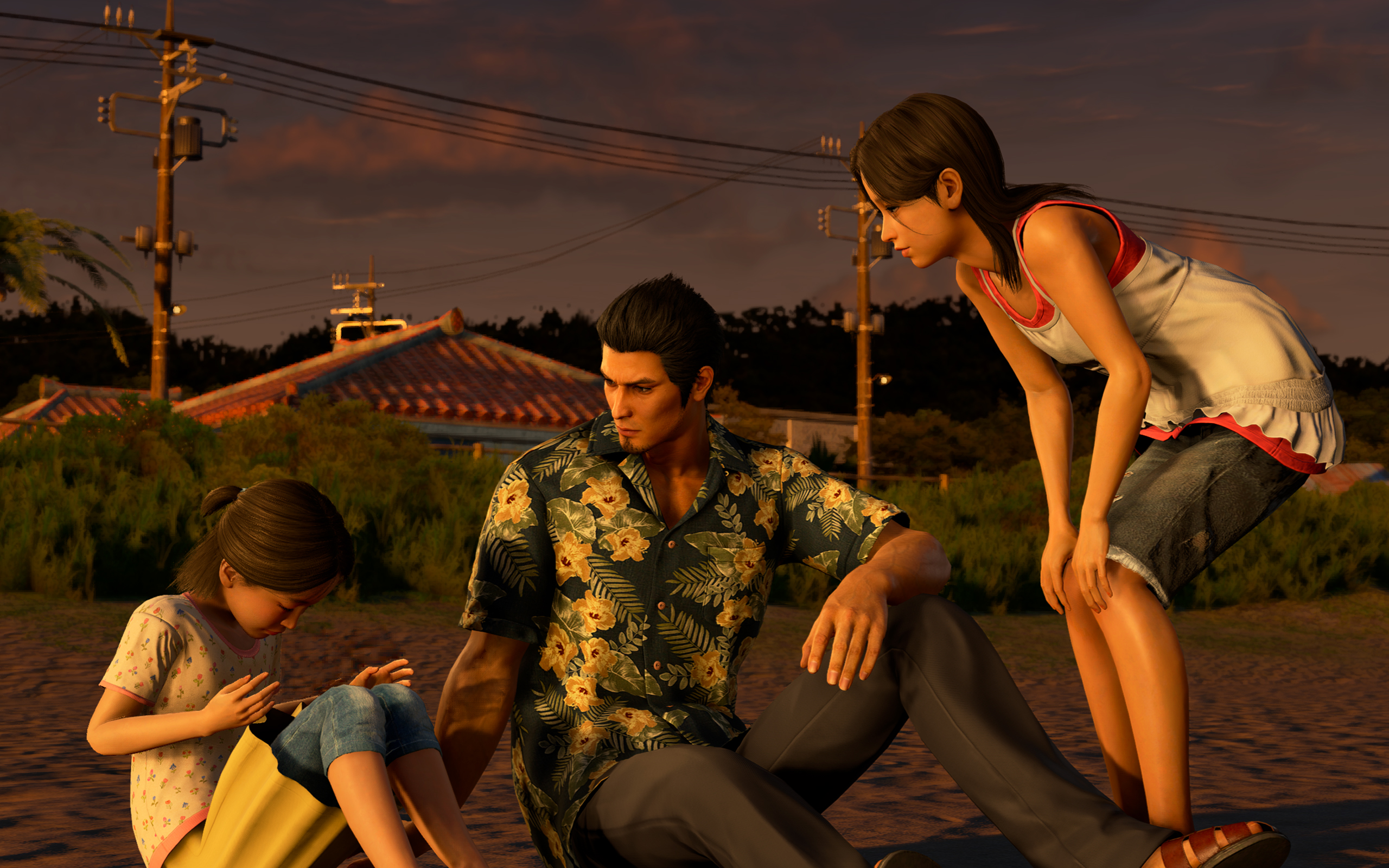
Morning Glory feels more fleshed out.
The same goes for Bad Boy Dragon. In this one, Kiryu helps a female biker gang become the best biker gang in all of Japan. The gameplay is very similar to Pirate Yakuza’s Pirate Showdowns. It’s all about beating stronger and stronger gangs in combat.
Dark Ties has its own side content called Survival Hell, a dungeon crawler mode. Enemies get stronger with every level, so you have to collect “Gospels” that bolster your strength while inside the dungeon. Once again, it’s much shorter than previous modes of the same type.
All of them are enjoyable without dragging too much of your time. It also helps that you can earn big money by completing these modes. For example, completing Survival Hell’s hardest dungeon can net you over 25 million yen at least.
But, again, do we need the remake?
These are all well and good, but we still haven’t answered whether or not Yakuza 3 really needed a remake.
As I played through the game, it became clearer why we’ve gotten to this point. There are subtle to not-so-subtle changes to the story.
Ultimately, it helps with the continuity between games. It’s like the Rebuild of Evangelion but for the Yakuza franchise. However, I can’t help but wonder if fan service was a stronger motivator than building a more cohesive story.
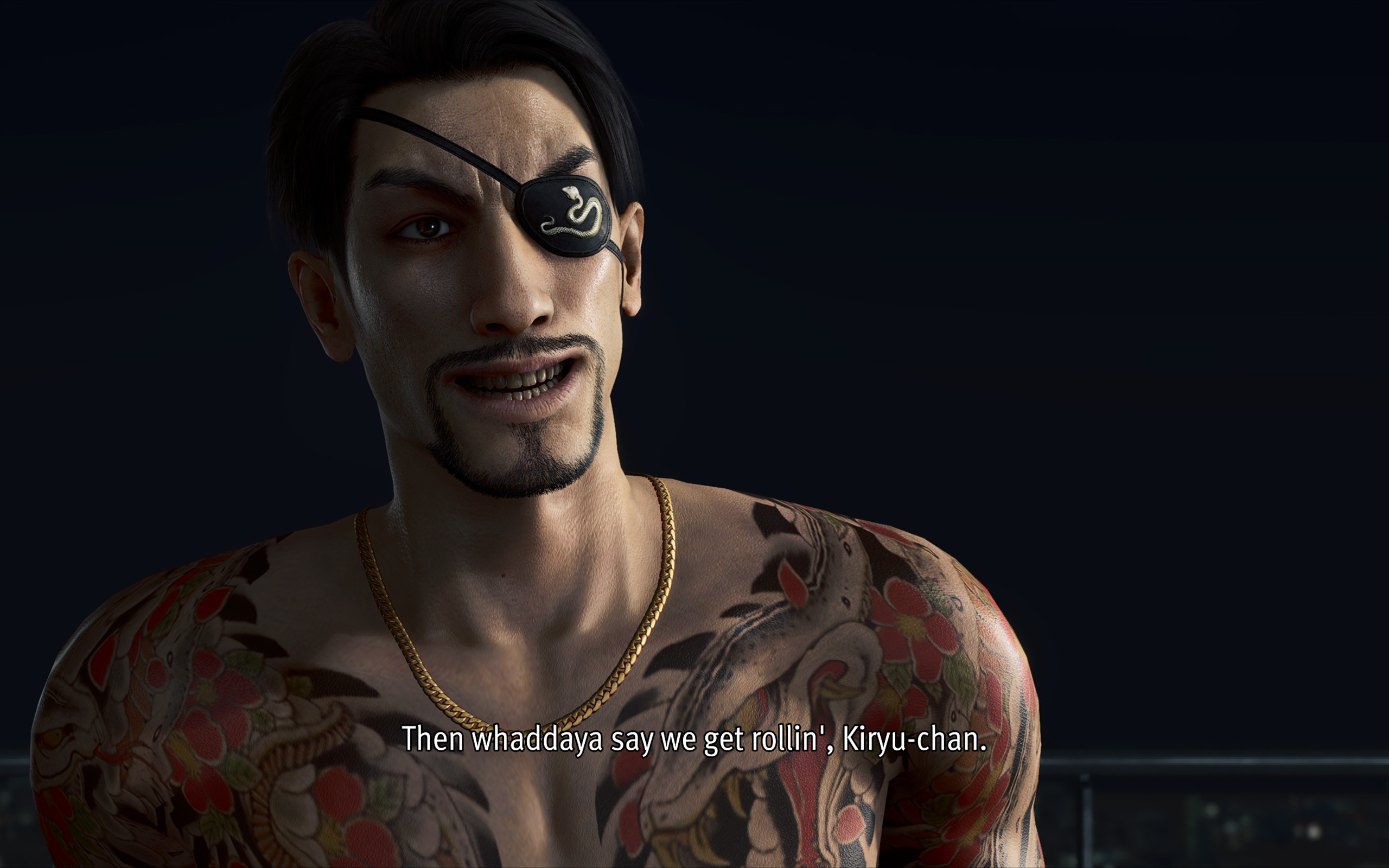
For example, one of the new substories in the main game involves a fortune teller. When she tells Kiryu’s fortune, she references a major plot point in Infinite Wealth, a game that’s set so far into the future from the events of Yakuza 3. It feels a reference just for the sake of making a reference.
The franchise is getting to the point where there are more references and tapping into old wells than introducing new stories and characters.
Is Yakuza Kiwami 3 your PlayMatch?
As its own game, Yakuza Kiwami 3 & Dark Ties works well as its own game. By now, the franchise has perfected the Yakuza formula. It knows how to deliver an enjoyable experience. I wouldn’t have spent 60 hours on it, if it was a bad game.
However, with a reskin that doesn’t stand out from its predecessors and all the self-references, the game struggles as a remake. If you haven’t played the original, the remake is good to get you up to speed with the franchise’s story. However, if you enjoyed the original, there’s hardly any compelling reason to play through this pared-down version again.
Well, except maybe for the Dark Ties content.

I’ve never played the original Ocarina of Time. Every time I’ve tried through Nintendo Switch Online, I was always put off by the dated graphics and the aging control system. Still, I can’t ignore that the title is universally considered as one of the best games of all time. So, when the remake came out, I couldn’t pass on the chance.
After finishing the remake, there’s little else you can use to describe 2026’s Ocarina of Time other than a true labor of love. This isn’t just a simple cash grab; it’s a genuine attempt to reintroduce an all-time classic to a new audience, young and old alike.
Welcome to 2026, Ocarina of Time
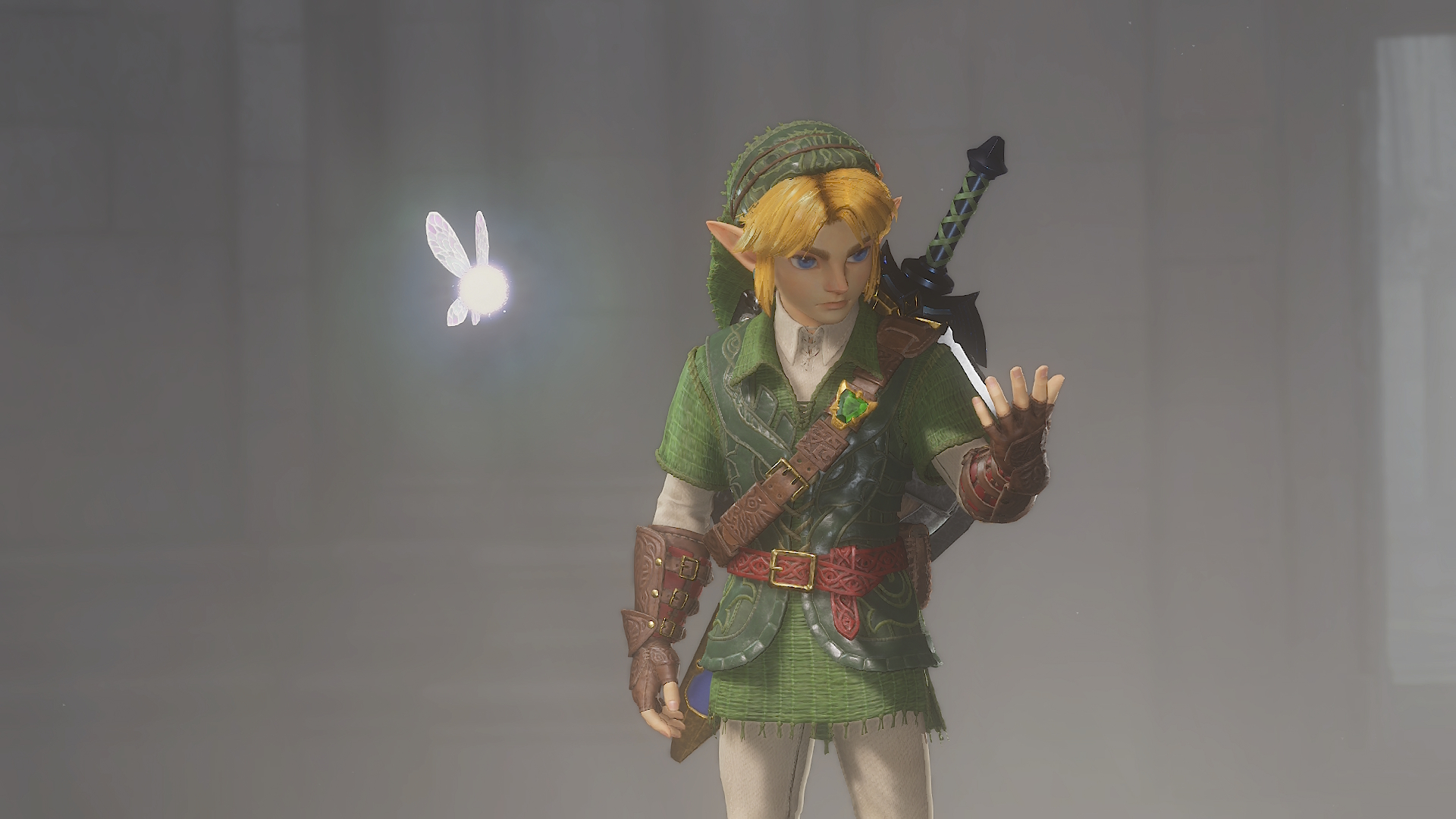
Dated graphics is no longer an issue in the remake. Whereas the original was plagued with blocky characters and wide open rooms, the remake adds smooth curves and flavorful environments that can put even Breath of the Wild to shame.
It’s apparent that, even when transposed to 2026 standards, Ocarina of Time features a dynamic world where every corner feels like it’s hiding secrets and Easter eggs. It feels like a playground, albeit more linear than the platformer styles of Donkey Kong Bananza and Mario Odyssey. Even the vast Hyrule Field looks ripe for exploration in this remake.
The characters themselves are lovingly brought to life. Every character was remade from scratch, turning them more lifelike while retaining the cartoonish charm of the original. Even adult Link looks drastically different from his child version.
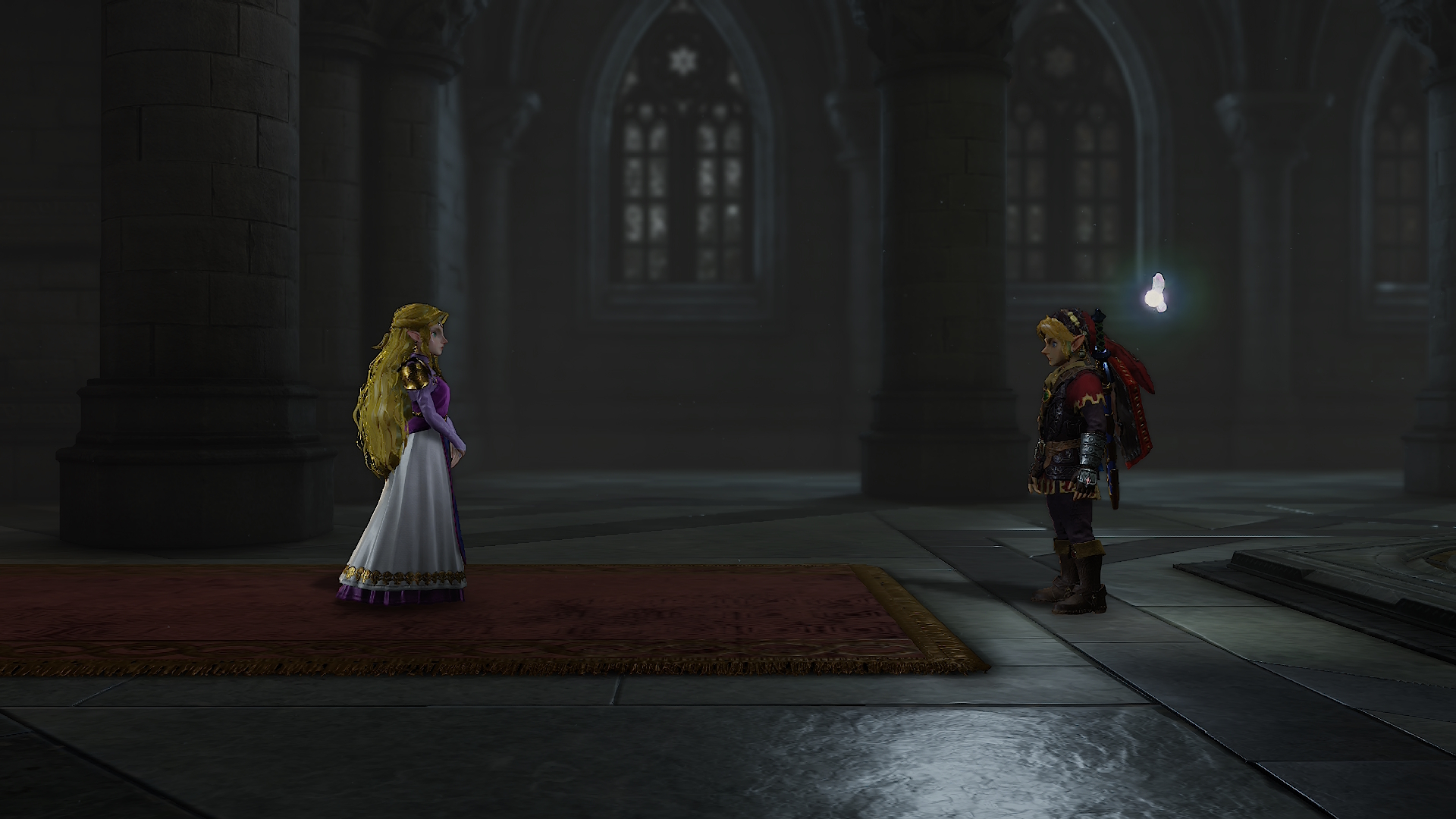
Graphics aside, the real star of the show is the animation. Making everything look more realistic affords more time to improve how the world moves. Every blade of glass flutters with the wind. Objects (and enemies!) react precisely according to how you attack them. (For example, a sign is sliced exactly from the direction it’s attacked.)
Characters, too. Link, for example, pauses to catch his breath when he’s playing his ocarina. Characters fidget when idle.
And, finally, cutscenes are completely remade, turning them into the more epic style of Breath of the Wild or Tears of the Kingdom. Moments can feel more grandiose and rewarding. Reveals are treated like plot twists.
A smooth game for the Switch 2
Despite being an almost exact translation of the original, the remake’s system feels smoother, as if dropping the clunk of yesteryear’s console. This is a true Switch 2 game. It’s so easy to pick up both on handheld and on docked. The addition of motion controls and Zelda Notes adds that much flavor to the experience.
Now, I’ve heard complaints that Nintendo dumbed down the experience to be easier for younger audiences. While I’ve found this to be half true, I still found the right amount of challenge, especially when it comes to combat. Boss fights are treated with respect, as if they were bosses from Dark Souls. Which, in itself, is a huge full-circle moment, since the original Ocarina of Time is a progenitor for a lot of action RPGs like Dark Souls.

As for what stays, though, the puzzles are still enjoyable to solve. The colorful history of puzzle-solving in platformers hasn’t dulled the charm of the original puzzles in the remake. That just goes to show how timeless Ocarina of Time is. It’s satisfying to solve the game’s secrets. Although, admittedly, there were a few that felt too contrived for comfort.
Still one of the best stories in gaming history
There are several reasons why Ocarina of Time is considered one of the best games of all time. Yes, everyone can continue praising the graphics (for its time), the mechanics, and even the audio. But the same can also be said for its story.
To be fair, Ocarina of Time’s story isn’t that revolutionary, especially today after tons of RPG plots already. Then again, it doesn’t need to be. It’s a classic after all.
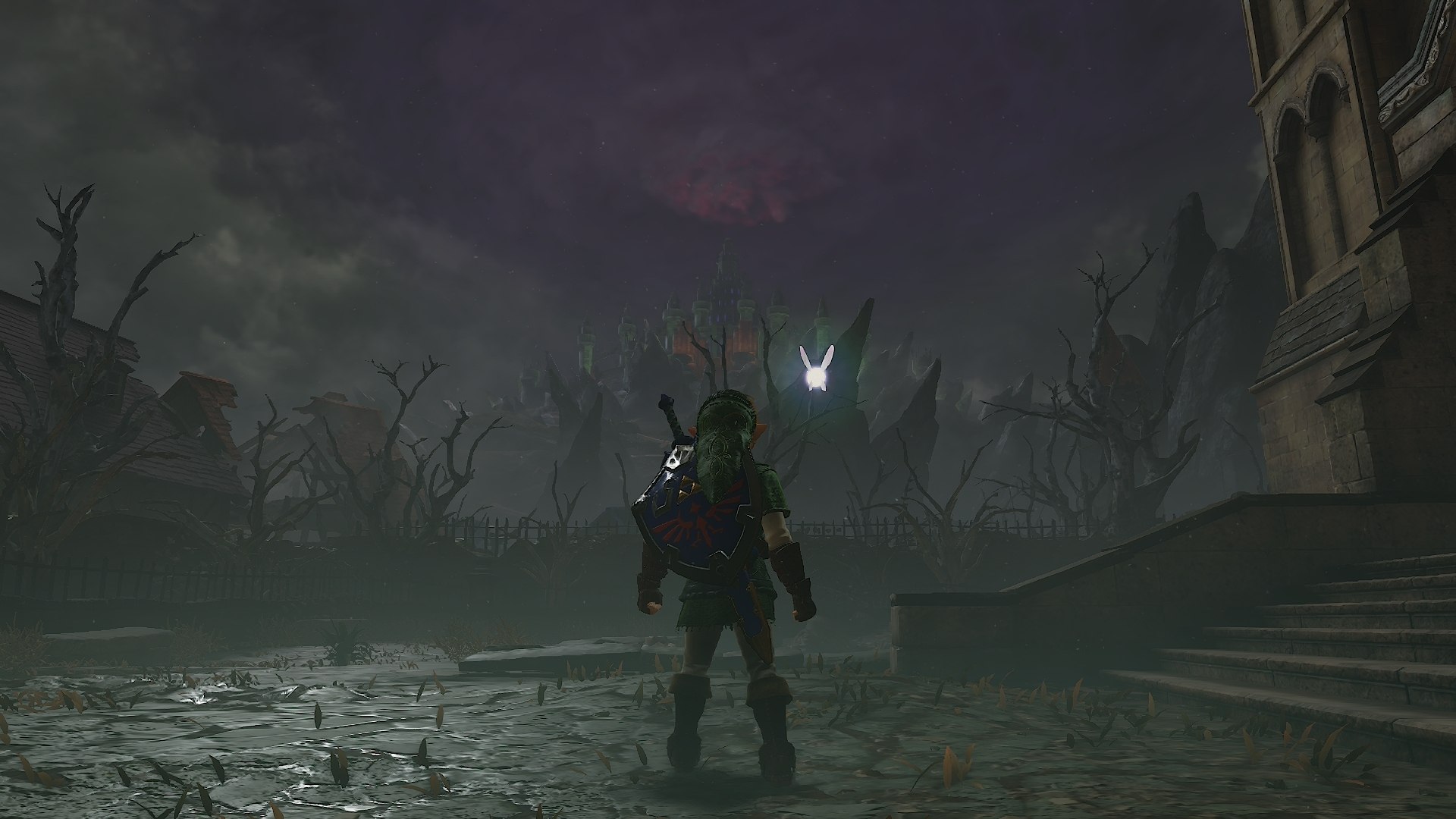
Once again, Link is the chosen one, tasked to be the only one who can save Hyrule from Ganondorf. Along the way, he has to find special pieces that can grant him the necessary power to defeat the big evil. If you’ve played a Legend of Zelda game in the past, this should be familiar to you. Heck, if you’ve played an RPG in the last two decades, this should tug at your heartstrings, too.
The remake, however, makes this much livelier, going back to how the renewed graphics brings new life to the dated game. For example, Saria, one of the beloved characters you meet early in the game, is rendered with a more lifelike and relatable face, attaching herself to Link’s story. It’s much easier to feel the connection between character. So, especially in Saria’s case, every character’s transitions through the plot has more weight.
Is 2026’s The Legend of Zelda: Ocarina of Time worth playing?
Yes, absolutely. Of course, I can’t speak much from the perspective of an older gamer revisiting Hyrule. But, as a newer visitor to Ocarina of Time, the remake is an incredibly fun caper that breaks the shackles of aging machinery, while elevating its core elements into today’s age.
The original Ocarina of Time is already a classic. However, the remake elevates this even further, making one of the best games of all time into what it should already be: a timeless classic.

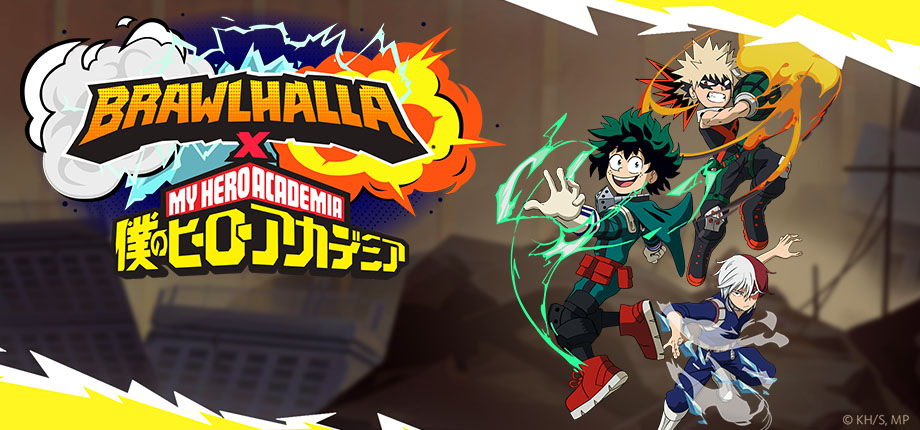
Ubisoft announced a new Brawlhalla x My Hero Academia crossover event launching on December 9.
The collaboration brings the anime’s eccentric cast to Brawlhalla as playable characters. This includes Izuku Midoriya, Katsuki Bakugo, and Shoto Todoroki.
The integration was first revealed during this year’s annual Brawlhalla World Championship Expo in Atlanta, Georgia, with an exclusive announcement trailer.
Inspired by the first two seasons of the anime, players can expect to see their favorite MHA characters engage in combat with the following features:
- Izuku Midoriya – The series protagonist joins the game with his persistent nature
- Katsuki Bakugo – Always ready to prove himself, Bakugo will be right at home in Brawlhalla
- Shoto Todoroki – Todoroki will duel it out in the arena with a first-of-its-kind asymmetry to accommodate his fire and ice powers
More details about the crossover will be revealed closer to launch.
Gaming
Five new (and better) games you can play instead of GTA VI
There are so many worlds to explore besides Vice City.
In case you’ve been living under a rock, everyone right now is head over heels playing Grand Theft Auto VI. If you’re not playing the most anticipated game of the decade yet, it’s probably because of a few reasons: no console to play it on, no 60fps mode, or the insane price tag. Now, if you fall under any of these reasons, here are a few (arguably better) games you can sink your teeth into, instead.
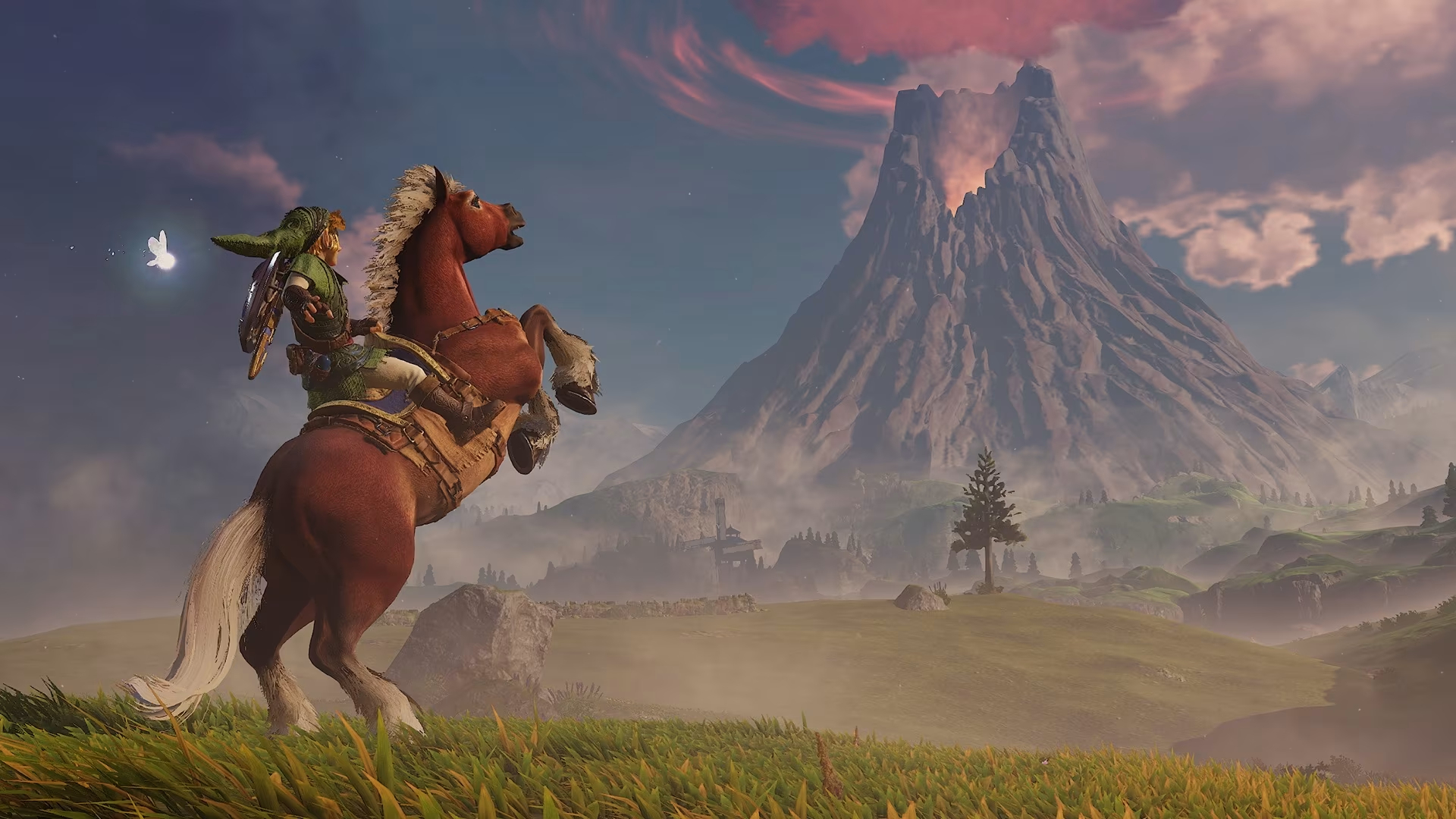
The Legend of Zelda: Ocarina of Time
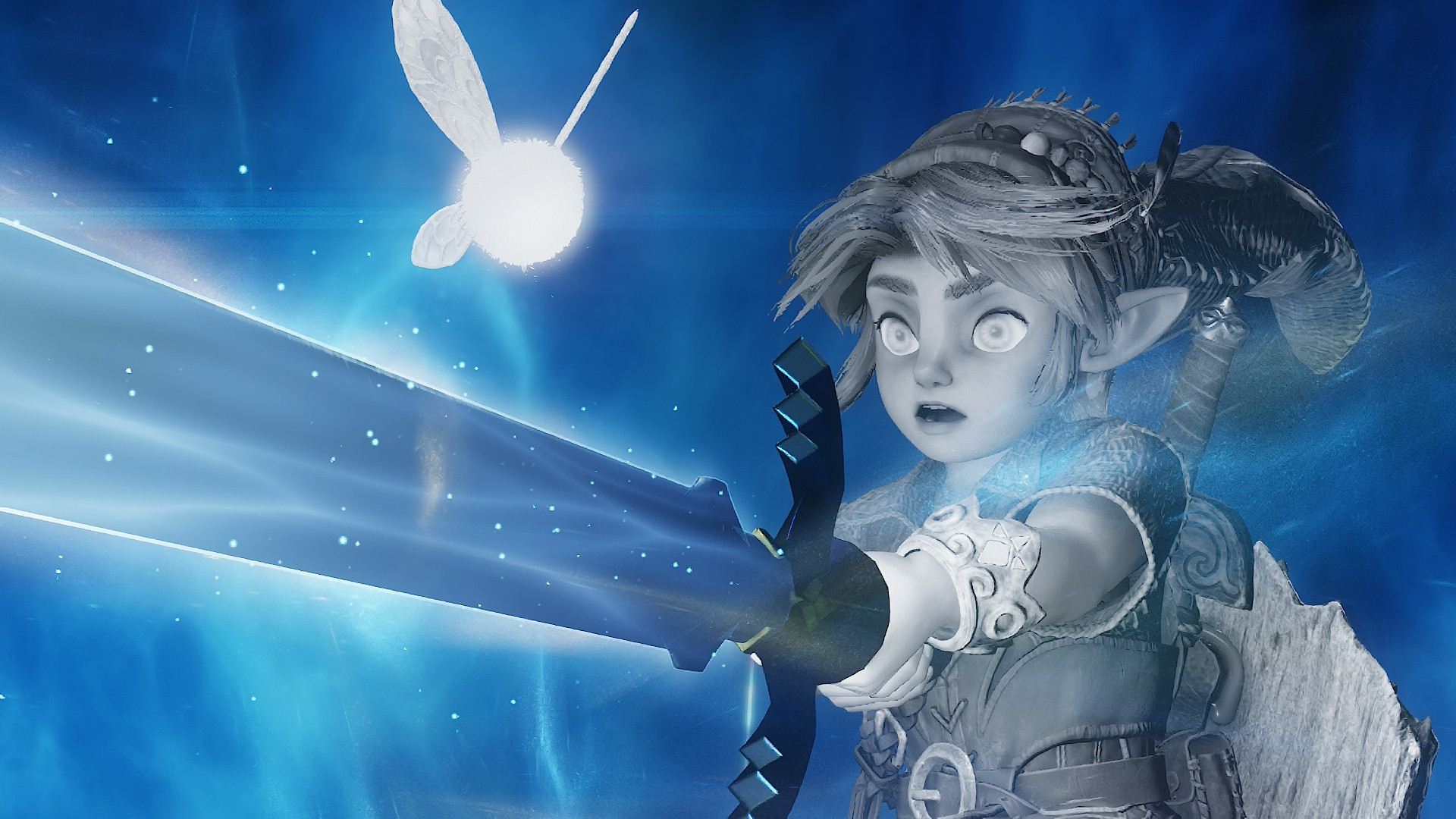
Let’s get the obvious out of the way first. Ocarina of Time is one of the best games in history. Though released in 1998, the original title still holds up to scrutiny. And now, the 2026 remake reintroduces the game to a newer audience.
And make no mistake: The Ocarina of Time remake is just as good as the original. It uses every bit of the Switch 2 to bring Hyrule to life, while retaining the original’s seamless gameplay. The only catch, however, is, like Grand Theft Auto VI, you’ll need a console to play this masterpiece.
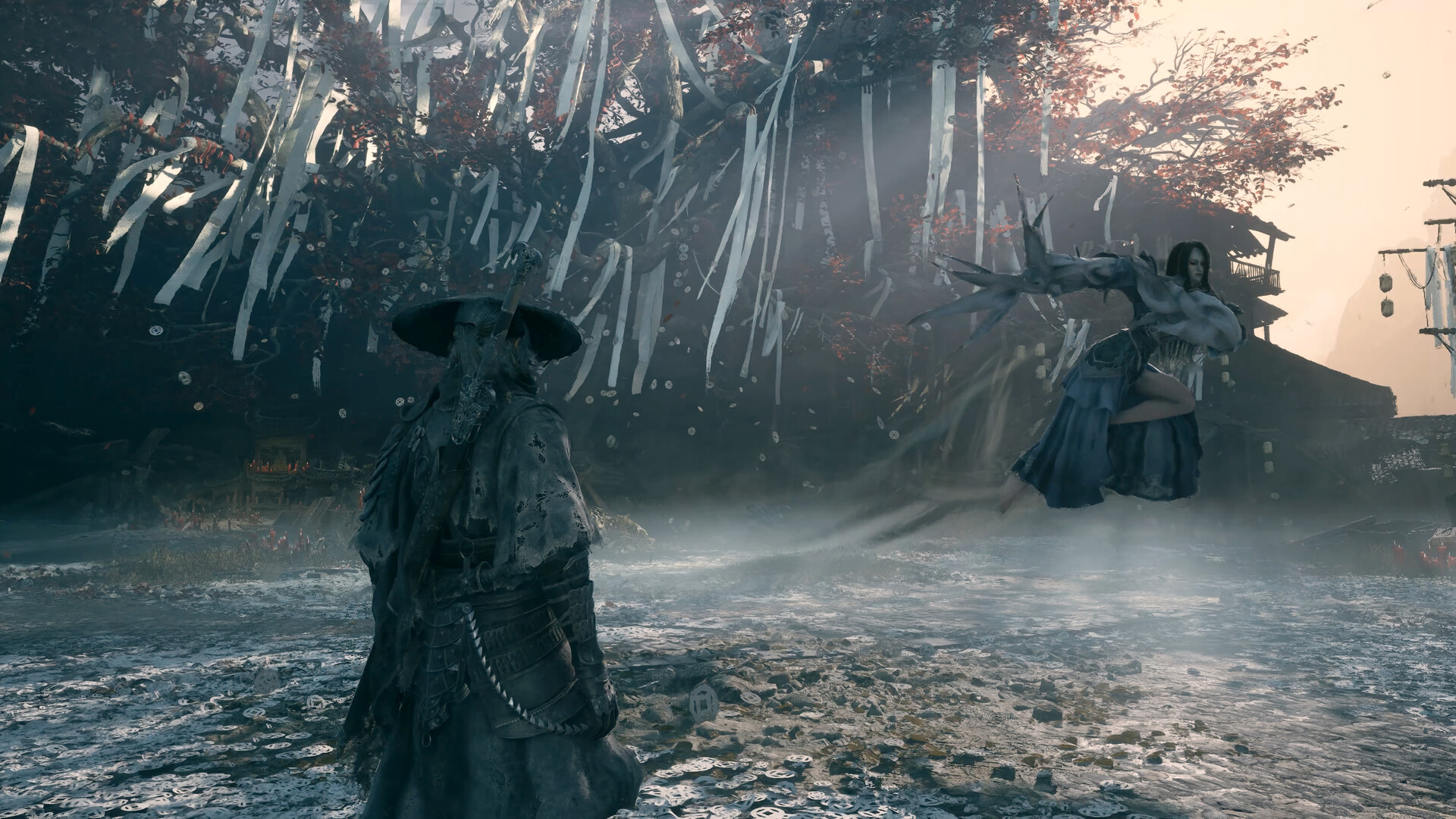
Phantom Blade Zero
Now, if you prefer bashing your head over difficult bosses, Phantom Blade Zero will give you a challenge. If you’re a fan of the action RPG genre, the title continues the Chinese trend started by Black Myth: Wukong.
It’s not as mythological as Wukong, though. Soul, an elite assassin, is betrayed by his own Order and framed for the death of one of their own. After suffering a fatal wound, the assassin has a little over two months to discover the conspiracy behind his betrayal. The game is available on PC and PlayStation.
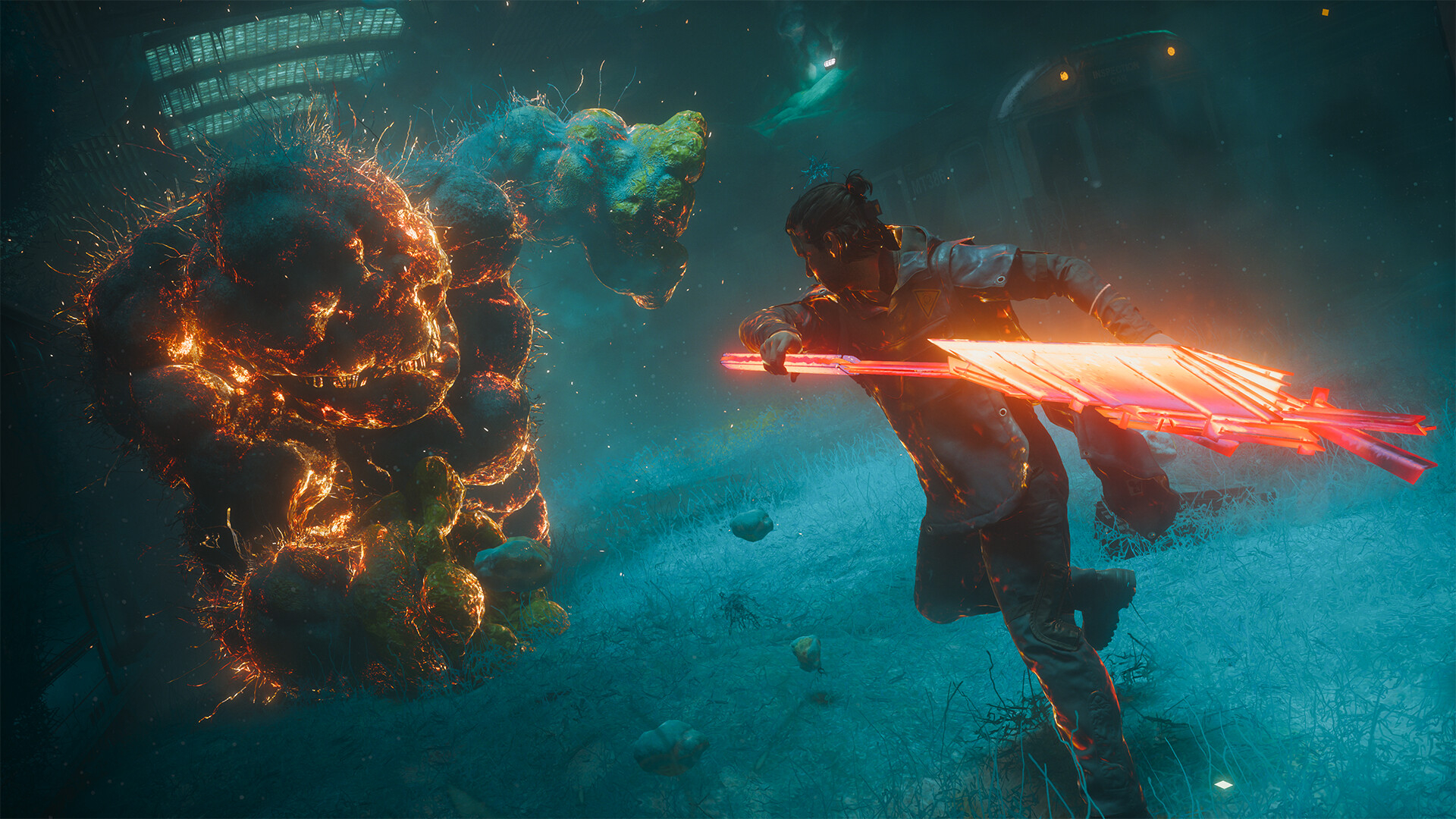
Control Resonant
Continuing the story of critically acclaimed Control, Control Resonant gives players control Dylan Faden, a superpowered individual and the sister of original protagonist Jesse Faden. Like his sister, Dylan must save the world from supernatural forces, while trying to save his sibling.
Again, much like the original game, Control Resonant flew under the radar but still proved to be an intensely satisfying game with the original’s unique combat and eerie atmosphere.
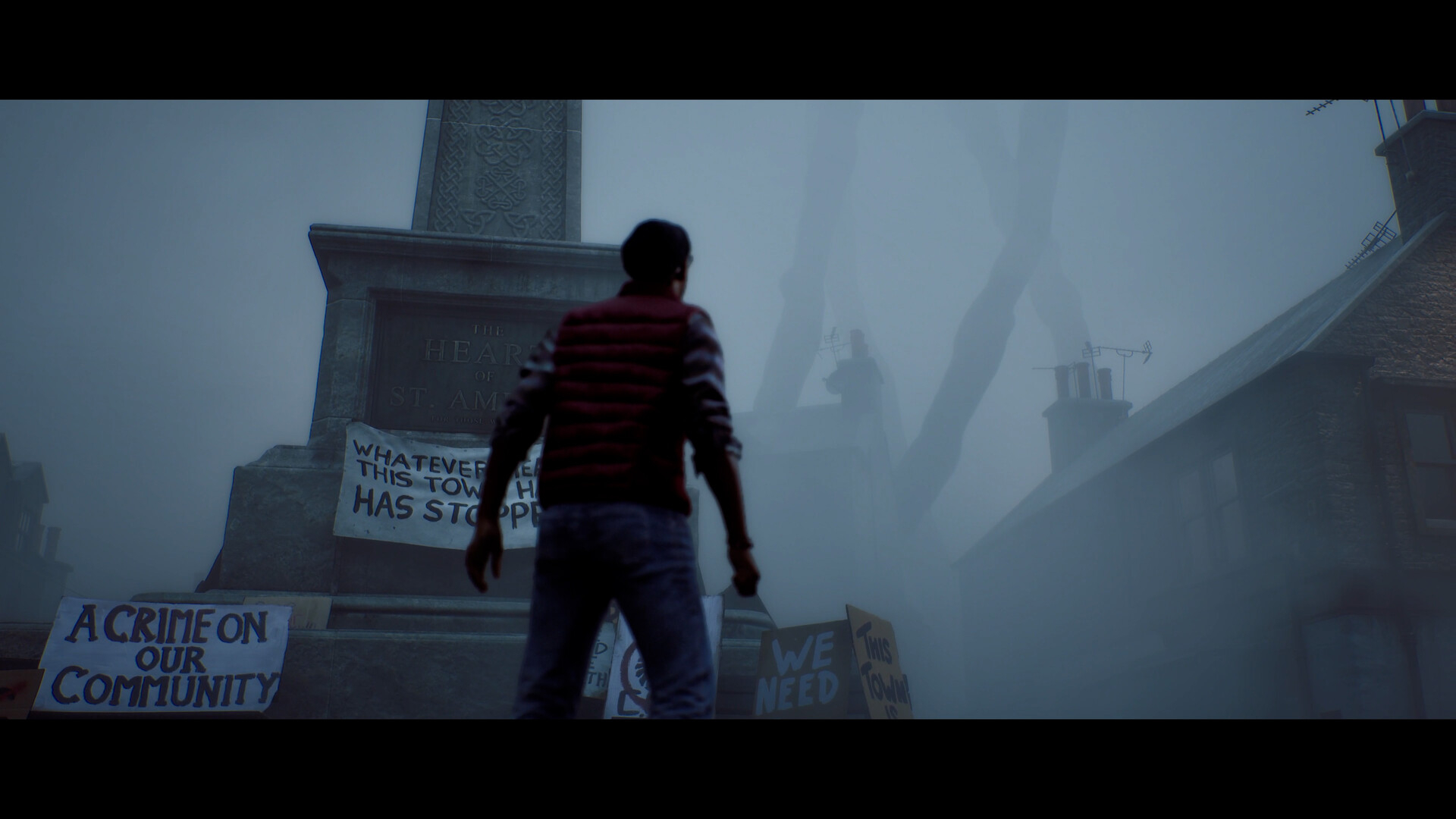
Silent Hill: Townfall
Speaking of eerie atmospheres, let’s not forget one of the creepiest franchises in gaming history. Silent Hill: Townfall once again features a protagonist waking up in a town plagued by mist. Simon Ordell finds himself in the mysterious Scottish town of St. Amelia. Here, amid all the monsters, he finds Zoe Ellis and Richard Shaw, two survivors also trying to make their way through the treacherous town.
Like other games in the franchise, Townfall features terrifying horror while its protagonists struggle through their pasts. If horror is your thing, the new Silent Hill should be your go-to.
9 Kings
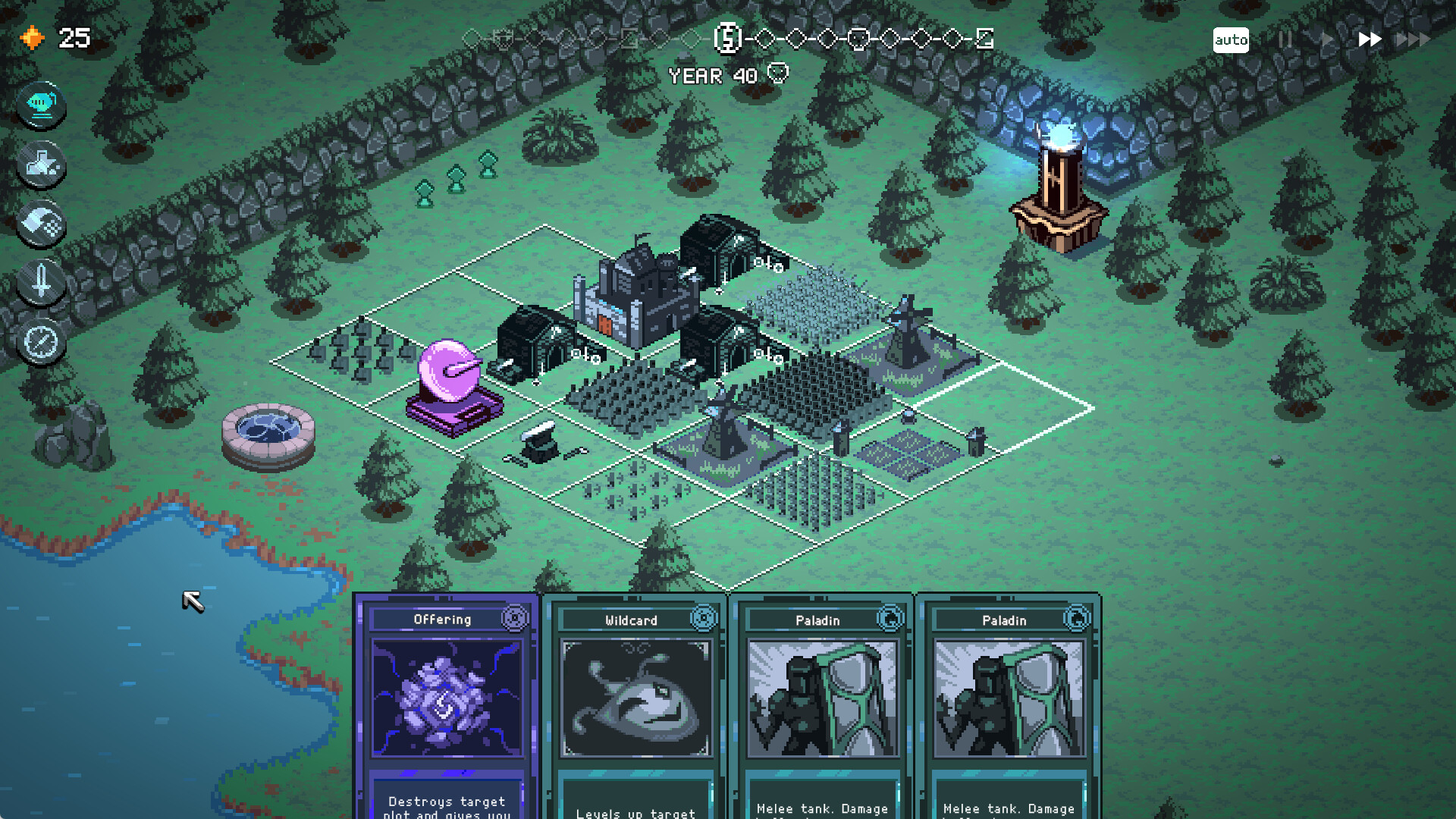
Now, let’s leave behind the world of AAA games. 9 Kings is a small but just-as-fun title that can provide hours and hours of entertainment. It’s difficult to explain what the title is without going through all the genres it plays around with: roguelike, deck-building, base-building, and tower defense. The simple goal is to build up your kingdom while protecting against hordes of enemies.
It’s not story-based like the other entries on this list, but it’s just as entertaining. I’ve heard it described as a cool mix between Teamfight Tactics and Balatro.
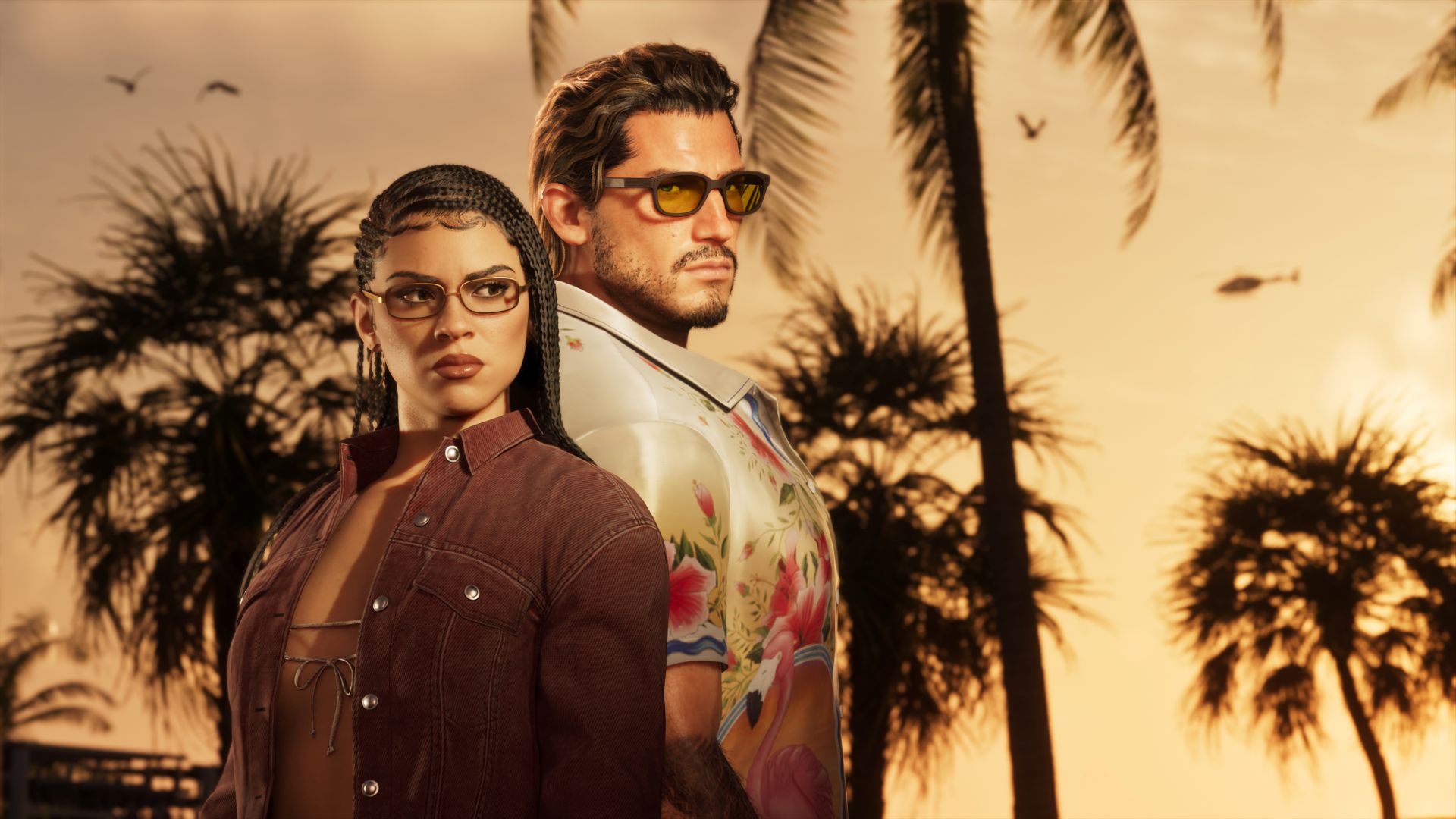
As you can probably read through reviews today, Grand Theft Auto VI might go down as one of the best titles in history. Regardless, it’s not for everyone. If your flavor gaming goes through a different gamut than the Rockstar Games formula, these games will be for you.

Now Playing: The Legend of Zelda: Ocarina of Time (2026)
It's a true labor of love.


My latest fashion accessory happens to play music
The JBL Soundgear Clips are the finishing touch my outfits needed!


Fujifilm instax Pal 2 review
A tiny digital camera that’s all about the keepsakes.
Now Playing: The Legend of Zelda: Ocarina of Time (2026)

Huawei found guilty of conspiracy to steal trade secrets, bank fraud

Avengers: Doomsday releases final trailer

Smart Postpaid Plans+ offers zero lock-in

HONOR Magic9 Pro Max brings ARRI cinematic imaging to Malaysia

Your coffee nook is getting a makeover with Starbucks’ holiday collections

Sticker season is back, and so is the planner your ~friends~ might fill in for you

Wild Rift Patch 7.3, celebrates K/DA comeback

ROG G700 review: The best prebuilt PC you can get off the shelf

vivo X500 Pro Max review: 500+ hours later


-
 Reviews1 week ago
vivo X500 Pro Max review: 500+ hours later
-
 Gaming6 days ago
Five new (and better) games you can play instead of GTA VI
-
Cameras3 days ago
Fujifilm instax Pal 2 review
-
 Accessories2 weeks ago
Secretlab brings Pikachu, Gengar, and Eevee to its Pokémon gaming chair collection
-

 Smartphones1 week ago
Spotlight: OPPO Find X10 Pro Max
-
 Smartphones6 days ago
The iPhone Duo is replacing my Kindle
-

 Tablets2 weeks ago
Infinix XPAD 30 launches, comes with AI features and expansive display
-

 Buyer's Guide1 week ago
Buyer’s Guide: 2026 Amazon Kindle