
News
Not OK, Google: Assistant will be exclusive to Pixel


Google came out with the Pixel and Pixel XL smartphones this week, with one of their main attractions being Android 7.1 Nougat, which no other phone has for now.
And while we expect the software update to roll out later this year (presumably to Nexus and Android One devices first; the beta version will launch later this month), it’s imperative to talk about Nougat on Pixel because both handsets will reportedly have some software features that may not be found anywhere else. Features you’ll want to use with regularity, or at least try out.
Android Police has put together a list of “Pixel-exclusive and non-exclusive changes” that are baked into Android 7.1 Nougat. The list is surprisingly long — well, for a small tick up on the upgrade ladder — so take a deep breath before reading through the entire change log. Oh, and spoiler alert: You won’t like what you read, for reasons we’ll explore later.
Pixel-specific features:
- Pixel Launcher—swipe up for all apps, new Search Box, date/weather header on home
- Google Assistant
- Unlimited original quality photo/video backup to Google Photos
- Smart Storage—when storage is full, automatically removes old backed up photos/videos
- Phone/Chat support (new support tab in settings), screen-share functionality
- Quick switch adapter for wired setup from Android or iPhone
- Pixel Camera:
- Electronic Image Stabilization (“video stabilization”) 2.0
- Pro Features
- White Balance Presets
- Exposure Compensation
- AE/AF Locking
- Viewfinder grid modes
- HW-accelerated (on Qualcomm Hexagon coprocessor) HDR+ image processing
- Smartburst
- Sensor Hub processor with tightly integrated sensors (accel, gyro, mag) + connectivity (Wi-Fi, Cell, GPS)
- Cosmetic
- Solid navbar icons with home affordance for Assistant
- SysUI accent color theming
- Wallpaper picker with new wallpapers and sounds
- New setup look and feel
- Dynamic calendar date icon
Android 7.1 features (not Pixel-specific):
- Night Light (this shifts the color temperature of your screen a la iOS’ Night Shift mode or f.lux)
- Touch/display performance improvements
- Moves (Fingerprint swipe-down gesture—opt-in)
- Seamless A/B system updates
- Daydream VR mode
- Developer features:
- App shortcuts/shortcut manager APIs
- Circular app icons support
- Keyboard image insertion
- Fingerprint sensor gesture to open/close notification shade
- Manual storage manager Intent for apps
- Improved VR thread scheduling
- Enhanced wallpaper metadata
- Multi-endpoint call support
- Support for various MNO requirements
- PCDMA voice privacy property
- Source type support for Visual Voicemail
- Carrier config options for managing video telephony
- Manual storage manager – identifies apps and files and apps using storage
So yeah, in case it wasn’t already clear, Google Assistant — the voice-activated digital assistant honed and refined by years of us using Google services, the single product Tuesday’s keynote address hinged on — won’t be coming to non-Pixel handsets and tablets.
Which is a head-scratcher, to say the least, because Google executives devoted much of their speech to outlining a future powered by voice. They conveniently left out the part about that future depending upon the general population choosing the Pixel over the similarly priced Samsung Galaxy S7 or Apple iPhone 7, or even the OnePlus 3.
It should’ve been the other way around — the benefits of Google’s artificial intelligence needs to reach all Android devices going forward, not just two. Regardless of whether or not people are ready and willing to have conversations with their phone.
However, Google isn’t closing down possibilities with Pixel’s best features, including Assistant. Some features could trickle down to other devices running Android Nougat; Google could release a diluted app version of Assistant that could be installed onto Androids and iPhones. That might happen in 2017. Speaking to TechCrunch, a Google spokesperson said: “Our goal is to make the Google Assistant widely available to users, and we’ll continue to launch new surfaces over the course of the next year.”
[irp posts=”8575″ name=”Android made downloading from Google Play much easier”]
Source: Android Police
Image credit: NPR









Sony is bringing back one of its iconic Walkman-era headphones with the MDR-3R. The new wired headphones modernize the original MDR-3 with USB-C connectivity and updated features.
Introduced in 1979, the original Walkman and MDR-3 headphones helped popularize portable music listening. The MDR-3R carries that legacy forward with a familiar design and modern conveniences.
The headphones retain the original’s lightweight, open-ear construction. They also feature interchangeable blue and orange ear pads. Sony even gives the packaging and instruction manual a design inspired by the original model.
The MDR-3R connects to compatible smartphones and other devices through USB-C. Users can listen to music without charging, pairing, or installing updates. A built-in microphone and in-line remote also make calls and playback controls more convenient.
Sony equipped the headphones with the same 23mm driver units as the original MDR-3. The company also tuned them to closely reproduce the original’s sound signature. They deliver balanced audio, natural vocals, and the emotional richness associated with Sony headphones.
Sony MDR-3R gets a Stranger Things edition
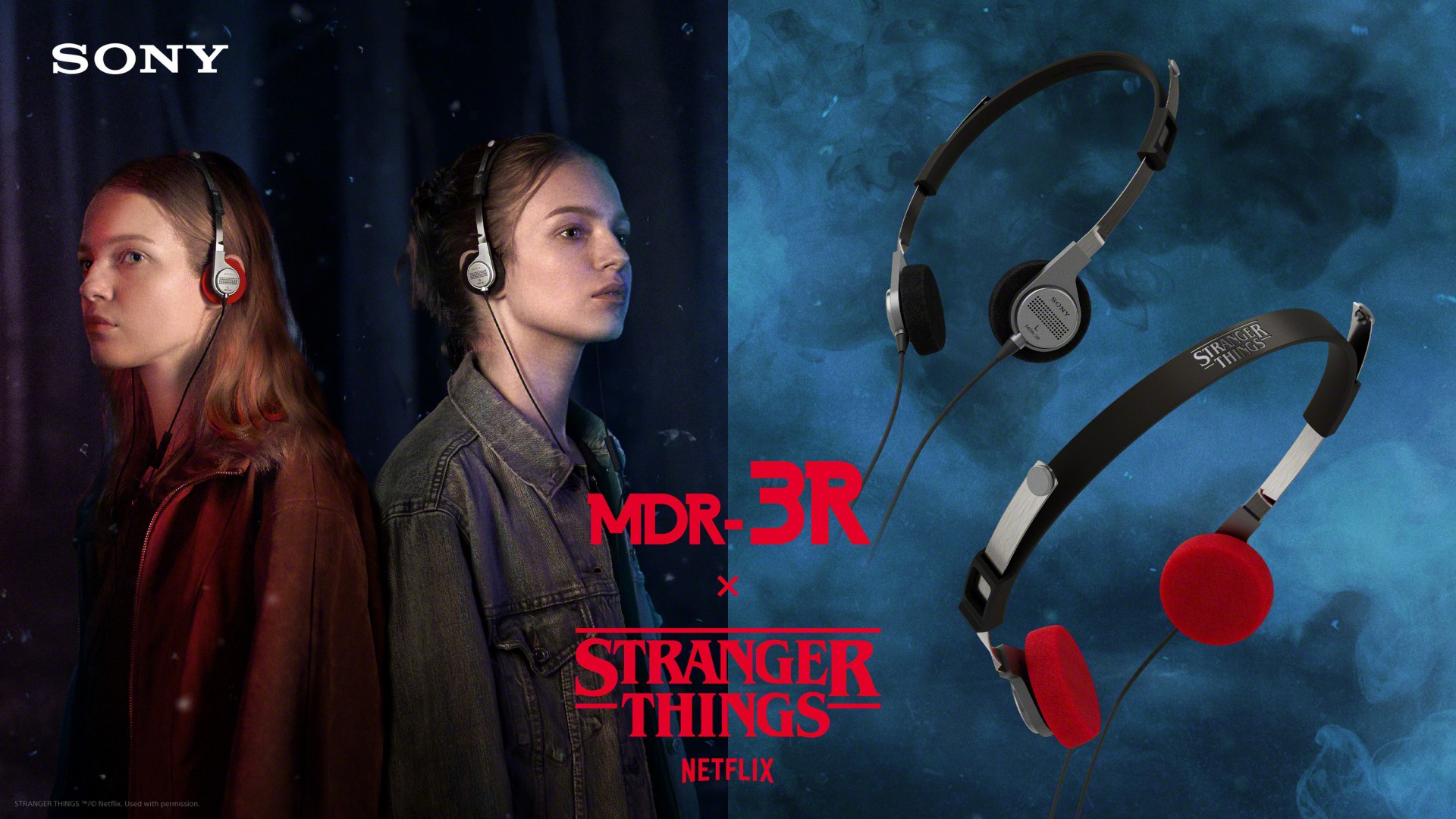
Sony is also launching a special MDR-3R Stranger Things Edition. The collaboration celebrates the 1980s inspiration shared by the Walkman era and Netflix’s popular series.
Inspired by Max’s signature headphone style and the mysterious Upside Down, the special edition features exclusive design details. These include an engraved Stranger Things logo and custom packaging.
Sony also considered environmental impact when developing the headphones. Approximately 25 percent of the plastic used in the product comes from recycled materials. The packaging is also plastic-free.
Price and availability

Sony has opened preorders for the MDR-3R and MDR-3R Stranger Things Edition. Availability and pricing vary by market.
In the United States, the standard MDR-3R costs US$59.99, while the Stranger Things Edition costs US$79.99. The standard model is available through Sony and authorized retailers.
In Singapore, both models will launch in December 2026. The standard MDR-3R costs SG$89, while the Stranger Things Edition costs SG$129. Both are exclusive to Sony Stores and Sony Store Online.
In the Philippines, Sony has yet to announce local pricing and availability. Based on US pricing, the headphones would cost approximately PHP 3,500 for the standard edition and PHP 4,700 for the Stranger Things Edition, before local taxes and retail adjustments.
Entertainment
The Fellowship of the Ring in Concert finally arrives in Manila
The run goes from March 4 to 6 at Solaire.


As far as films in concert go, The Lord of the Rings is the classic experience for fans. Since 2008, the concert experience has been touring the globe, enamoring fans of the series with live renditions of Howard Shore’s iconic soundtrack. Now, the experience is finally arriving in Manila. The Lord of the Rings: The Fellowship of the Ring in Concert will run in the Philippines from March 4 through 6 next year.
There’s a reason why the iconic trilogy is the classic experience for films in concert. Besides being a legendary film franchise, the series features Howard Shore’s Academy Award-winning score. Fans will likely still recognize the dulcet strings of the Shire or the grandiose crescendo of the Fellowship.
From March 4 to 6, The Fellowship of the Ring in Concert will run at The Theatre in Solaire. Under the baton of Reuben Blundell, the concert will star the 96-member Filharmonika Orchestra, the Philippine Madrigal Singers’ 100-member adult choir and 50-member boys’ choir, and soloist Malena Rampi.
Film Community Philippines members can get exclusive pre-sale access from November 9 to 11. Meanwhile, public ticket sales will start on November 20 via TicketWorld.com.ph.
SEE ALSO: Kingdom Come devs are working on a Lord of the Rings RPG

Can you believe that it’s been over eight years since Bethesda announced The Elder Scrolls VI. Since then, we’ve seen neither hide nor hair of the upcoming title. Today, the studio has mercifully revealed a tiny bit more about the game including its title and setting.
Historically, the Elder Scrolls franchise is not known for its numbering. It’s not The Elder Scrolls III, IV, and V; it’s Morrowind, Oblivion, and Skyrim. Now, we know what The Elder Scrolls VI will be called — Sentinel.
The name is also a huge clue as to where the game will take place. Besides being the name of the game itself, Sentinel is also the capital of Hammerfell, a region in northwest Tamriel. The teaser, which shows a sword being uncovered from a pile of sand, confirms this. After all, the Alik’r Desert is one of the region’s highlights.
Now, Hammerfell is not a new region for players. The region, especially the titular Sentinel, was previously featured in The Elder Scrolls II: Daggerfall. Obviously, not a lot of gamers would have played this classic game before, so a return will introduce the region to a lot more modern players.
Unfortunately, despite throwing us a bone with the name and the setting, Bethesda did not reveal when the title is coming. Given that Grand Theft Auto VI is launching very soon, the time is ripe for the launch of another much-awaited title.
SEE ALSO: The Elder Scrolls IV: Oblivion Remastered is out now


Apple iPad mini OLED review
Has the mini gone PRO?!

ROG G700 review: The best prebuilt PC you can get off the shelf
This PC will make you stop worrying about specs.

HP OMEN Max 16 review: Gamer-maxxing in deep black
Peripherals deemed necessary to max this out

Sony revives classic Walkman headphones with USB-C MDR-3R

IKEA, Xbox launch nine-piece YXSTABY gaming collection

Smart Infinity launches PureVoice

The Fellowship of the Ring in Concert finally arrives in Manila
Apple iPad mini OLED review

OPPO Find X10 Series launches globally October 21

Your coffee nook is getting a makeover with Starbucks’ holiday collections

vivo V80 debuts with ZEISS cameras

Garmin Enduro 4 promises up to 320 hours of battery life

Dragon’s Dogma 2: Dark Arisen launches with new Official Pawns


-
 Lifestyle5 days ago
Your coffee nook is getting a makeover with Starbucks’ holiday collections
-

 Lifestyle7 days ago
Sticker season is back, and so is the planner your ~friends~ might fill in for you
-

 Gaming5 days ago
Wild Rift Patch 7.3, celebrates K/DA comeback
-
Gaming1 week ago
ROG G700 review: The best prebuilt PC you can get off the shelf
-

 Gaming1 week ago
PlayStation unveils Prism Collection
-
 News2 weeks ago
Apple unveils its biggest iPad mini update yet
-

 Laptops1 week ago
Apple unveils MacBook Pro with PROLED XDR display and Touch
-

 Gaming1 week ago
FromSoftware’s The Duskbloods delayed to 2027