
Entertainment
5 movies to watch to get you in the mood for fall
It’s the season to chill!


Okay, let’s admit it: Fall (or Autumn) is the best season ever. Who can’t resist that chill weather that makes us snuggle and cozy up in bed with warm drinks? Or walking around town wearing plaid, boots, and stylish coats? How about going a trip outdoors, hiking in the middle of woods turning to shades of red, orange, and gold?
To put it simply, fall is about finding comfort in transition. It’s loving every bit there is in change — in style and the weather. If you can’t feel it yet, here’s how to fall in love with the fall season once again. Get those thick, heavy blankets and watch this to get you in the mood:
When Harry Met Sally
Set in fall, When Harry Met Sally is a romantic comedy film for grown-ups, tackling — and celebrating — friendship between men and women, and how it’s an essential ingredient for love to succeed. In addition, it’s flaunting that 80s fashion, New York during autumn, and hair goals for every woman (which got us thinking how much hairspray did they use for it?).
Watch it on Amazon Prime.
Rushmore
A classic Wes Anderson film, Rushmore is a movie you can watch whatever stage you’re going through: When your world is falling apart, when your crush isn’t into you, or when you just want to raise your middle finger as a response to everything. Yes, this film has all that mood. Rushmore isn’t just about growing up, it’s about delving in the reality of life and adulthood.
Watch it on Hulu.
Coraline
When Pussycat Dolls sang the line “Be careful what you wish for ’cause you just might get it,” I felt that. And it’s obviously what Coraline felt in the film, Coraline. A stop-motion masterpiece, its complex animation and story will make you wonder if it’s a kids show at all. Coraline teaches us that perfection isn’t everything, and things aren’t always what they seem to be. It’s also a call to stop neglecting the people that matter, and urges you to spend more time with them.
Watch it on Amazon Prime.
Becoming Jane
Being pressured to marry a wealthy man she doesn’t love, we’ve all seen it in different films. However, Becoming Jane is inspired by the life of the Jane Austen, a revered British author who — in the story — chooses the path of writing and going after the person she loves. It’s certainly the romantic film you need to watch this fall, especially if you want to fall in love again.
Watch it on Amazon Prime.
Coco
Coco isn’t just a feel-good animated film that can move you, or another preview of Mexico’s rich culture. It’s a movie that reminds us of history, of knowing and remembering your family and those who came before us. It’s about keeping their memories alive, and passing down the legacies and traditions that made us who we are.
In addition, it’s set on Mexico’s holiday — Día de Muertos — where autumn is at its peak and the festival is rich in colors. To sum it up, Coco is a celebration of family and love told through rich visuals that’s definitely a treat to your heart and eyes.
Watch it on Netflix.
Bonus: Gilmore Girls
Gilmore Girls may not be a film, but it’s certainly a series worth watching to get you in the mood for fall — especially if you’re in the mood for binge-watching. Gilmore Girls is a relatable show tackling romance and life. It’s also filled with food porn and yummy treats, and of course, coffee.
Watch it on Netflix.







Entertainment
Linkin Park: Unshatter is the band’s kintsugi
Raw, visceral, honest approach on grief, starting again, and moving forward


When Linkin Park understandably went on an immediate hiatus in 2017 following the tragic death of its frontman Chester Bennington, it felt to millions of fans as though an important part of their lives had been taken away.
For the longest time, the one thing the rock band did exceptionally well was to put into their songs all the untold, unexpressed feelings, emotions, and thoughts of several generations.
That deep resonance made the music stick. When 2017 happened, many felt that connection was gone for good.
Linkin Park: Unshatter magnifies what handling grief looks like from the inside out. It starts with the band members themselves and radiates outward to the community that carried them.
It goes without saying that grief has no single roadmap. And for band co-founder and co-lead vocalist Mike Shinoda, moving forward began with a simple and almost accidental question put out into the open: “What if Linkin Park didn’t have to end?”
Starting again

The documentary-concert film opens with a cinematic rush: a sweeping shot of the Allianz Parque (now Nubank Parque) in São Paulo, Brazil, where Linkin Park is set to perform as part of their From Zero World Tour.
A quick montage follows, capturing the concert day feel as it commences. Viewers get thrown straight onto the stage as “Somewhere I Belong” ignites the crowd.
Then, the mood then shifts abruptly, pulling everyone backward to late 2022 inside Shinoda’s studio.

Here, alongside original members Joe Hahn and Dave “Phoenix” Farrell, the cinematic scale melts away into an unscripted, intimate creative slate. This is where the true documentary tone takes over.
If you have been preoccupied with everyday undertakings, Unshatter acts as an essential catch-up material for the behind-the-scenes evolution that transpired from 2022 to 2024.
It delivers a wealth of candid footage rarely seen outside of close circles, offering fans a fresh perspective right in the eye of the storm. It’s been billed as such, and it does not disappoint.
Part of what makes it grounded and emotionally connecting is the chronological storytelling. As with starting again, you don’t know what is about to happen yet.
The progression, which includes moving from Shinoda’s private quarters to EastWest Studios, the rehearsals and promotional photoshoot, and everything in between, takes you to the build-up and makes every step feel real before the 2024 breakthrough.
Raw, visceral, honest

You can feel the complete absence of a script in these early studio sessions. Shinoda spent the latter half of the previous decade performing on his own, and speaks candidly about how exhausting it was to constantly look backward or perform for “tributes.”
There was no sudden lightbulb moment either. Three veterans simply chose to gather and think things through with a level of organic randomness.
This mirrors how processing grief unfolds in the real world. For Shinoda, much like how he would later describe new new vocalist Emily Armstrong’s voice and personality, the core approach was about being raw, visceral, and honest.
All three knew grief was there. It had been enveloping them all these years and they thought moving away from what defined their lives would do good.
At some point, survival meant acknowledging reality first and then carrying on from there.
Triple lenses

The documentary’s narrative spine relies on three distinct lenses: the OG holdovers, the new members and the uniqueness of Brad Delson’s dynamic with this new iteration.
After the opening third of the film heavily focuses on the OG trio, the arrival of Armstrong and Brittain in the middle act expands the horizon.
Brittain, particularly, initially stepped in as a guitarist to complement Shinoda’s structural ideas. He bares his lifelong fandom on camera, and even offers a striking thought which Shinoda mentions towards the end: that the music industry and the world in general is simply better with Linkin Park in it.
Much like newcomers finding their footing in a sports franchise, Emily and Colin quickly worked together often to hasten the integration process.
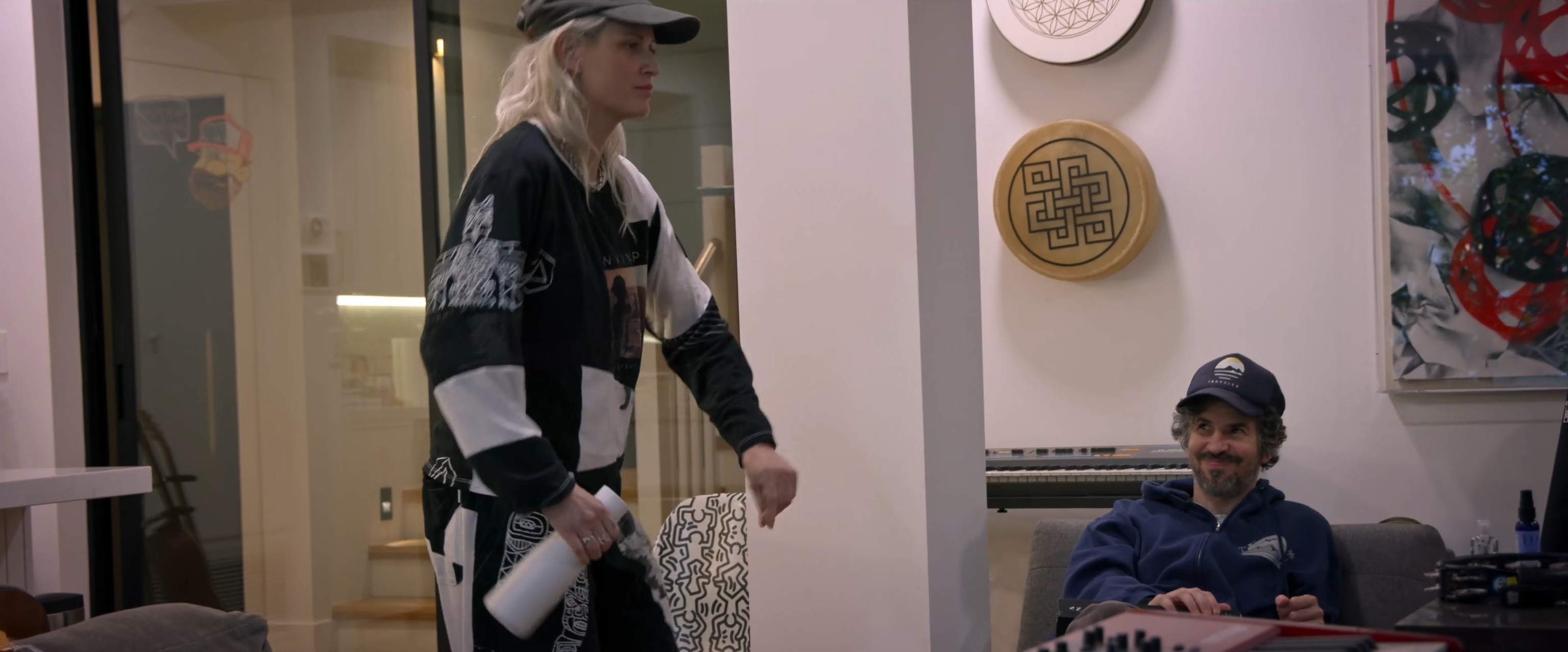
Later, Delson is introduced as someone initially reluctant to the thought of restarting Linkin Park. Such resistance was acknowledged though he warms up to the idea and rejoins the fold in the latter stages.
His role changes to an anchor, as if a coaching consultant helping run a franchise at the highest level without necessarily being on the sidelines every single night.
Shinoda was open about the tension this could have caused, weighing whether a non-touring lead guitarist might disrupt the momentum and progress of the comeback build-up.
Yet the film consistently highlights how mature, open, and thoughtful those internal conversations were.
Delson’s eventual return made Colin slide into the drummer role. The transition was handled with surprising economy on screen, much like the brief, respectful nod given to former drummer Rob Bourdon’s departure.
Emily rises From Zero
Armstrong shares the middle act with Brittain, but her journey demands its own lens. And the documentary captures this duality of carrying the inherent weight of stepping into the shoes left by an icon and her energetic personality in the studio as she dances, vocalizes, and throws her soul into the process.
Much has been chronicled about Armstrong’s electrifying voice and the shoes she has had to fill, but the documentary chose to present her entry in a more natural manner.

Rather than being angled towards succession, the documentary spends a huge chunk showing her fit with her new bandmates. There is also a side to it where she is driven to prove herself coming from Dead Sara as a relative “unknown” before the 2024 surprise comeback.
A particular solemn moment captures this stripped down feel, as with the movie in general, even further: Emily singing a radically different rendition of “Heavy Is The Crown” with Shinoda playing the piano.
It’s far different from the high energy final version that has been out for years now, showing the fragile baby steps the band took.
Mike asking Emily at one point if she is open to touring also forces you to reflect on how differently the comeback could have unfolded.
This lens tackles the setlist realities. Songs from One More Light were basically untouchable. The meticulous work required to adjust keys and match Armstrong’s skill set were also shown.
Unshatter is the band’s kintsugi
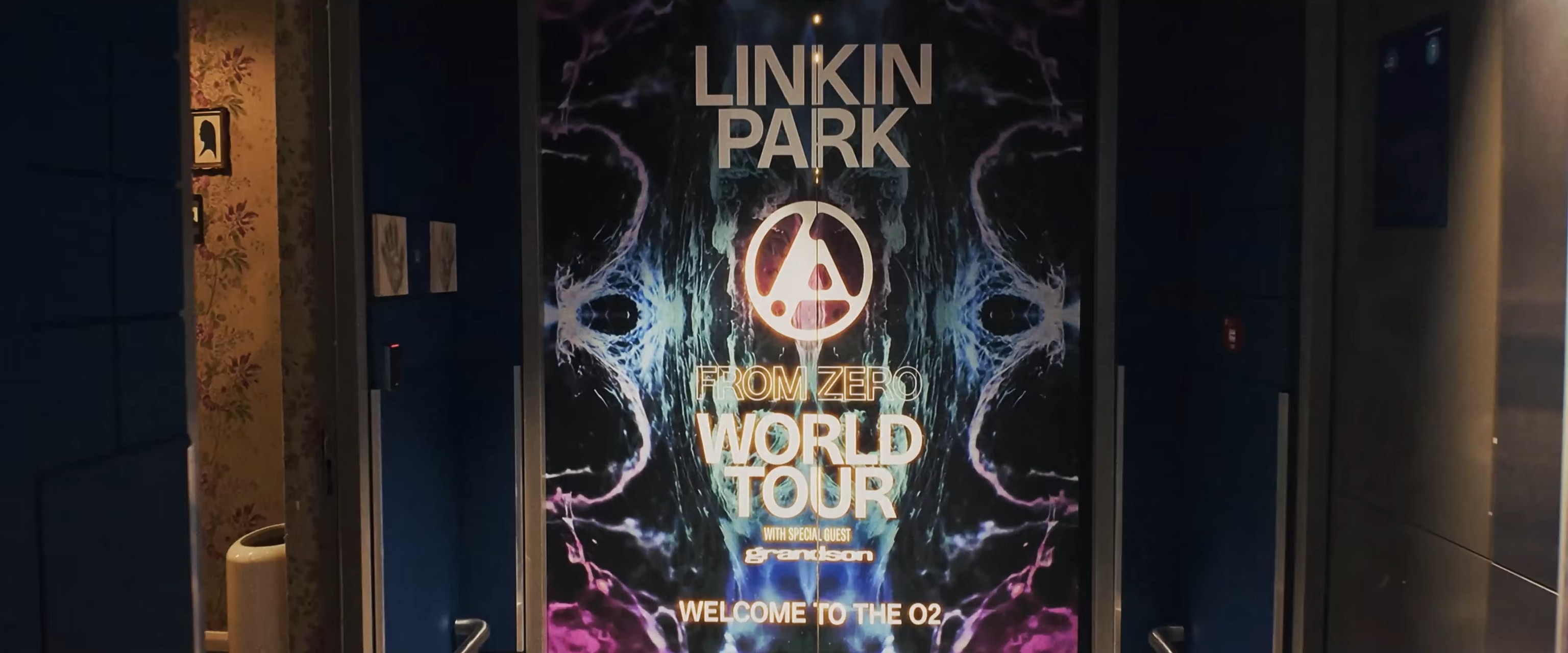
One neat inclusion features blink-182’s Mark Hoppus, listening to a freshly completed mix of “Unshatter.” Having an industry contemporary validate in real-time that something special has clicked adds massive weight to the proceedings.
You can visibly see how genuinely flattered Shinoda gets when Hoppus tells him he got goosebumps.
The moment acts as the emotional bridge to the film’s ultimate metaphor, as expounded on by Delson towards the end: Linkin Park’s comeback is the band’s kintsugi.
This is, of course, the Japanese pottery tradition of putting broken pieces back together using a gold filling.
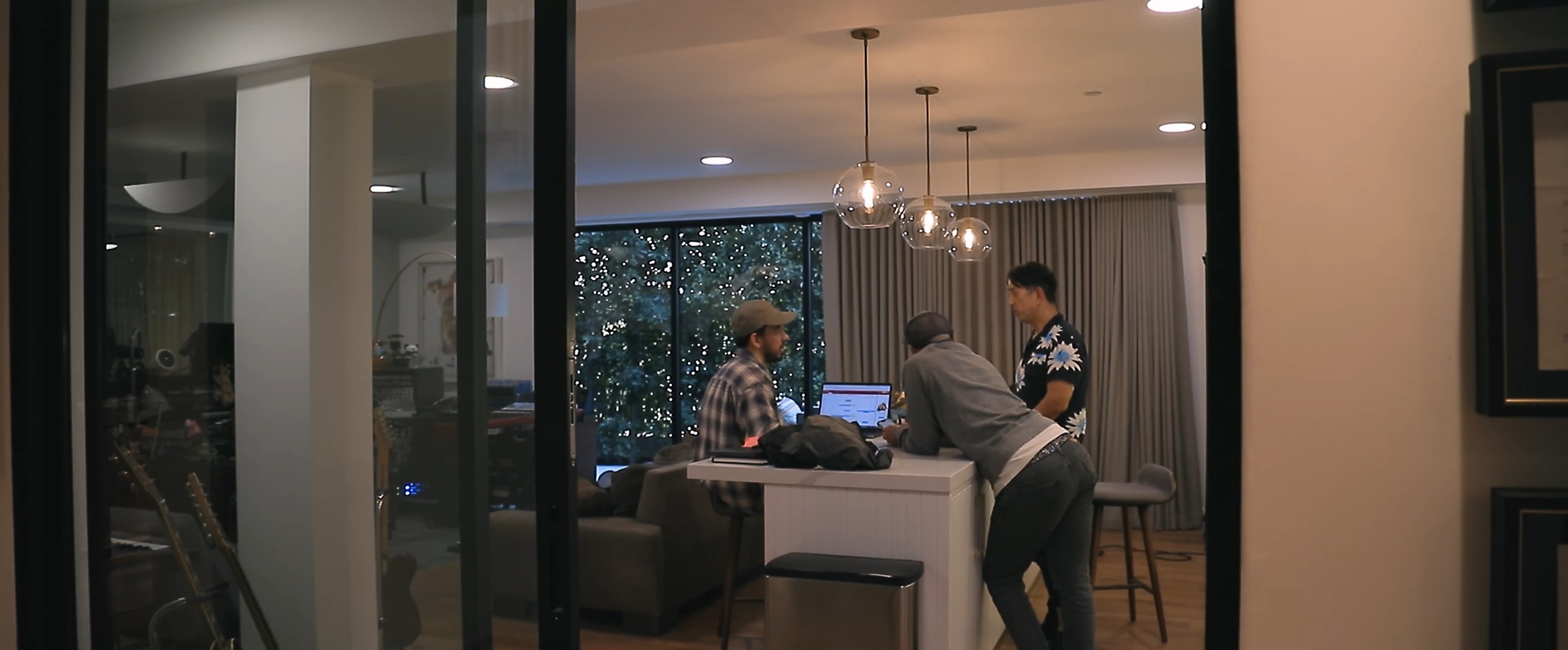
Though “Unshatter” wasn’t officially released until 2025, it served as the blueprint for the secret work Linkin Park poured years into.
In one of its most artfully executed transition moments, the film cuts right at the chorus of “The Emptiness Machine” from the high-stakes, breathless tension of their 2024 comeback launch event at Warner Studios, throwing viewers right back into the roaring Allianz Parque.
This was preceded of course by one of the final resonant glimpses of unsuspecting long-time fans transported to Warner Studios in anticipation of what was then only billed as a private gathering.
Proper documentary-concert film
Linkin Park: Unshatter strikes a wonderful balance between candid moments and electrifying concert sequence.
The live performance scenes were woven in seamlessly. Cinematography looked sharp: quick cuts, drone shots, sheer fan emotion. Towards the end, Hahn has his own immersive on-stage camera angles of his teammates.
Yet it never stretches too thin. You wouldn’t want to watch just a live concert. Make no mistake, in a large screen format and with accompanying cinematic audio, the energy just reverberates harder.
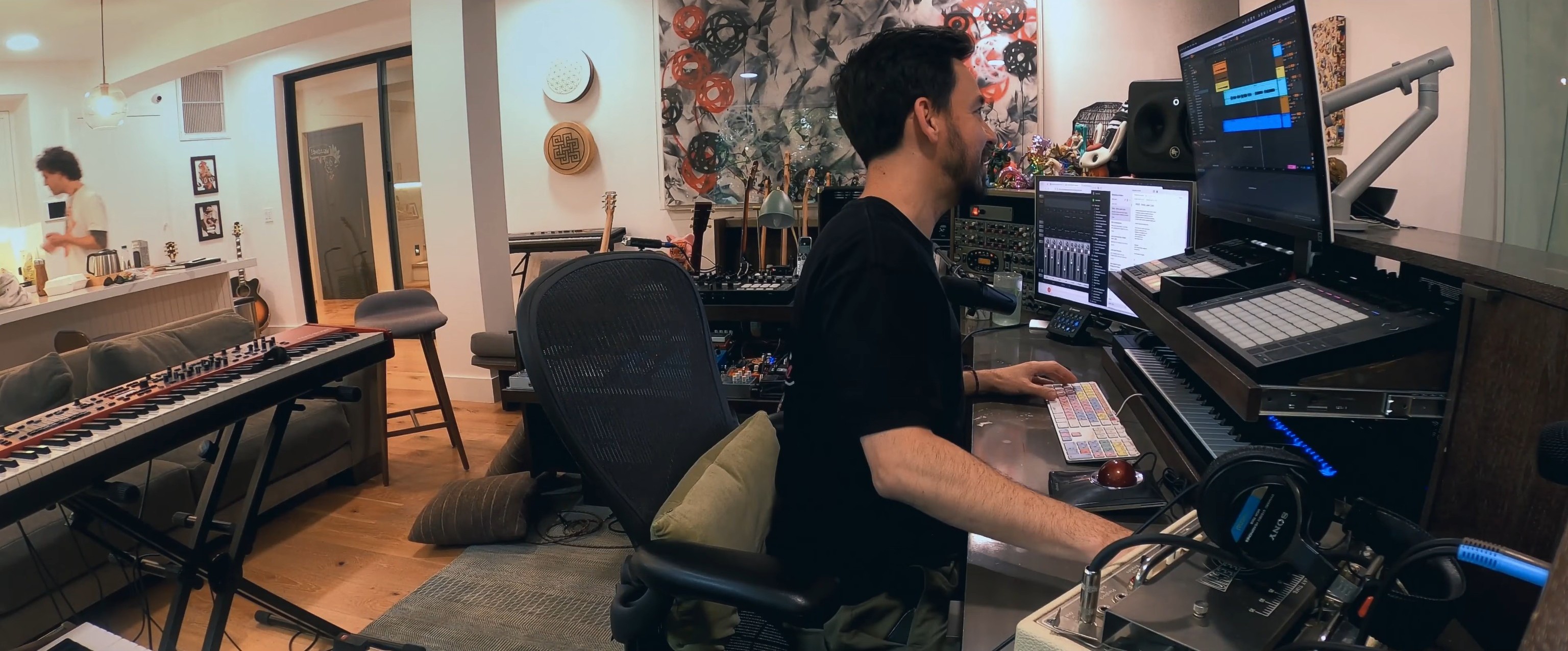
The film ends with the aftermath of the live performance of “Bleed it Out” as fireworks erupt across the stadium sky, before it fades into a final line to cap the comeback journey.
An old archival clip of Chester and Mike performing “Esaul”, the earlier version of “A Place For My Head” with lyrics still different also plays as a final touch.
That clip encapsulates the beginnings of one of the century’s most successful rock bands. Decades after, a restart happened.
It was about moving forward, acknowledging grief, but realizing you can make something beautiful while carrying that history with you. The only way to “unshatter” was to be raw, visceral, and honest about what’s going on.
Computers
Lenovo tech behind DreamWorks Animation hit ‘Forgotten Island’
Partnership powers modern demands of animation production


DreamWorks Animation’s Forgotten Island has definitely become a big screen hit, debuting with a 100% Rotten Tomatoes score and being well received particularly by a large Filipino fanbase.
And behind the movie is DreamWorks Animation’s partnership with tech giant, Lenovo. The collaboration is helping power the former’s production slate, including the studio’s animated feature inspired by Filipino culture, mythology, and experiences.
In 2025, DreamWorks expanded its relationship with Lenovo by naming the company its preferred compute services, workstation, and solutions provider.
Such partnership brings together Lenovo workstations, high-performance infrastructure, data center technology, and services to support the demanding needs of modern animation production.
It is a collaboration that builds on years of work between the two companies. DreamWorks has used Lenovo workstations as part of workflows across the studio.
Lenovo infrastructure has also supported the large-scale computing requirements involved in creating animated worlds and characters.

Still in cinemas, Forgotten Island follows lifelong best friends Jo and Raissa, voiced by Grammy and Academy Award winner H.E.R. and Filipino actress Liza Soberano.
As the two prepare to take different paths after high school, they unexpectedly find themselves transported to Nakali, a fantastical island populated by magical and mythological creatures rooted in stories from their Filipino families.
The film is written and directed by Academy Award nominee Joel Crawford and Januel Mercado and produced by Academy Award nominee Mark Swift, the filmmaking team behind Puss in Boots: The Last Wish.
Its voice cast also includes Dave Franco, Jenny Slate, Manny Jacinto, Dolly de Leon, Jo Koy, Ronny Chieng, and Lea Salonga.
Entertainment
SEGA, Netflix announce Crazy Taxi film adaptation
1st in planned slate of film adaptations, including Sonic and STRANGER THAN HEAVEN

SEGA and Netflix have announced a new Crazy Taxi film adaptation. This will usher in a new collaboration era with the parties also developing adaptations for Sonic and STRANGER THAN HEAVEN.
Such a slate of future adaptations reflects the range of SEGA’s library as it draws on Netflix’s experience bringing beloved game worlds to new audiences.
The first project features Crazy Taxi, which will be written by Dan Gregor and Doug Mand. The beloved writing duo was behind the 2025 reboot of The Naked Gun.
Also on board to help helm the production are the same visionaries behind the Sonic franchise: Neal H. Moritz, Toby Ascher, and Toru Nakahara.
Crazy Taxi has been an arcade hit since 1999, putting players behind the wheel of a fearless cabbie racing the clock through chaotic city streets.
There’s flying off ramps, dodging traffic, and chasing tips with punk-rock energy that has become the series’ signature.
The latest title in the franchise, Crazy Taxi: World Tour, is set for a 2027 release. You can watch its trailer below:







Linkin Park: Unshatter is the band’s kintsugi

Bambu Lab opens first Authorized Store in the Philippines

Lenovo tech behind DreamWorks Animation hit ‘Forgotten Island’

Samsung joins the clip-on earbud trend with the Galaxy Buds On

vivo X Fold6 makes global debut with 200MP camera and 6900mAh battery

HUAWEI Pura X View is 2026’s first WIDE slab-type smartphone

The CAMON Slim 5G is TECNO’s latest ultra-slim smartphone

iPhone 18 Pro series: Price, availability in the Philippines

vivo X500 Series launches with major imaging upgrades

iPhone 18 Pro series: Price, availability in Singapore


-
 News2 weeks ago
vivo X500 Series launches with major imaging upgrades
-

 News2 weeks ago
OPPO Find X10 Pro Max is the first phone with a triple 200MP camera system
-

 Automotive7 days ago
BYD says that way better EV batteries are coming next year
-

 News2 weeks ago
vivo introduces OriginOS 7 with smarter multitasking and AI features
-

 News6 days ago
HONOR Magic9 Pro Max launches in China with ARRI-powered imaging
-

 Accessories2 weeks ago
70mai launches the A900 series with 4K front, rear recording
-

 Smartphones7 days ago
TECNO CAMON Slim 5G teases an ultra-slim design ahead of launch
-

 Smartphones1 week ago
When TECNO-logy meets Tonino Lamborghini legacy