
News
Not even Nokia phones are safe from AI features
Users have to pay for the AI after 180 days, too.

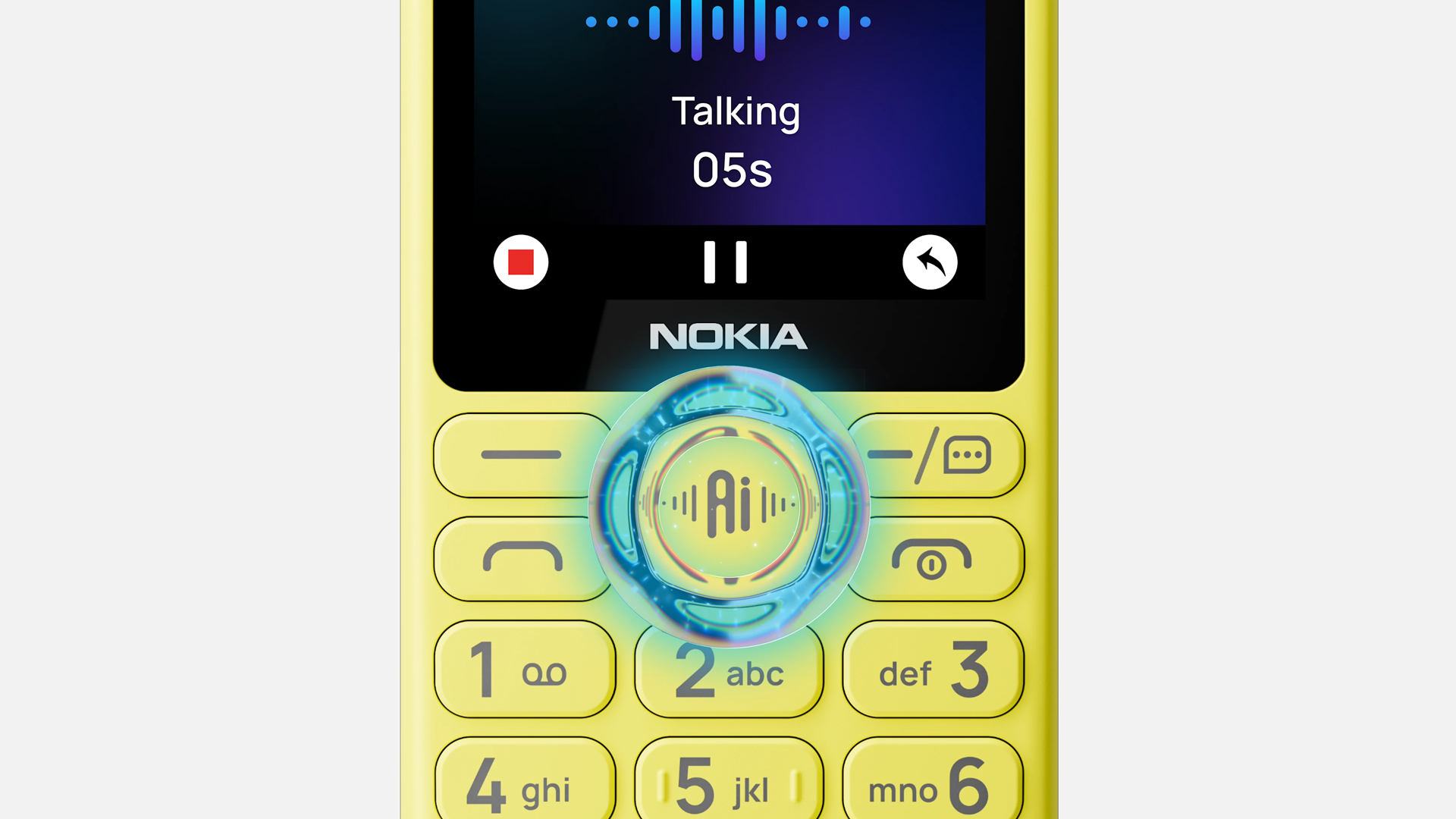
Did you mistakenly assume that the only way to escape the deluge of AI is to go for a more budget-friendly smartphone? With major brands infusing their phones with AI, it’s a reasonable assumption. However, a batch of new Nokia phones proves that even the budget market isn’t safe from artificial intelligence.
Recently, Nokia, thanks to HMD, is launching four new phones: Nokia 200 4G, 210 4G, 215 4G 2nd Edition, and 235 4G 2nd Edition. It’s easy to get bogged down on the detailed specs of all four phones, but it’s even easier to focus on the ginormous AI button present on all of them.
All four phones are powered by Sikey AI. Pressing that big button lets users ask basic queries, so it’s more a voice assistant in essence than anything. However, when it’s literally a giant button, it’s also a very hard sell.
Even worse, the AI is free for only 180 days. Users will need to subscriber afterwards and on a separate smartphone (because the Nokia doesn’t have apps) to continue using the features. Otherwise, the AI logo turns into something completely useless.
In other news, all four phones are pleasantly dumb. The Nokia 215 and the 235 have a 2.8-inch IPS display, while the 210 4G and the 215 4G have 2.4-inch QVGA displays. All four models have everything you need from a simple communication device.




Accessories
Samsung joins the clip-on earbud trend with the Galaxy Buds On
But it’s exclusive to South Korea for now.
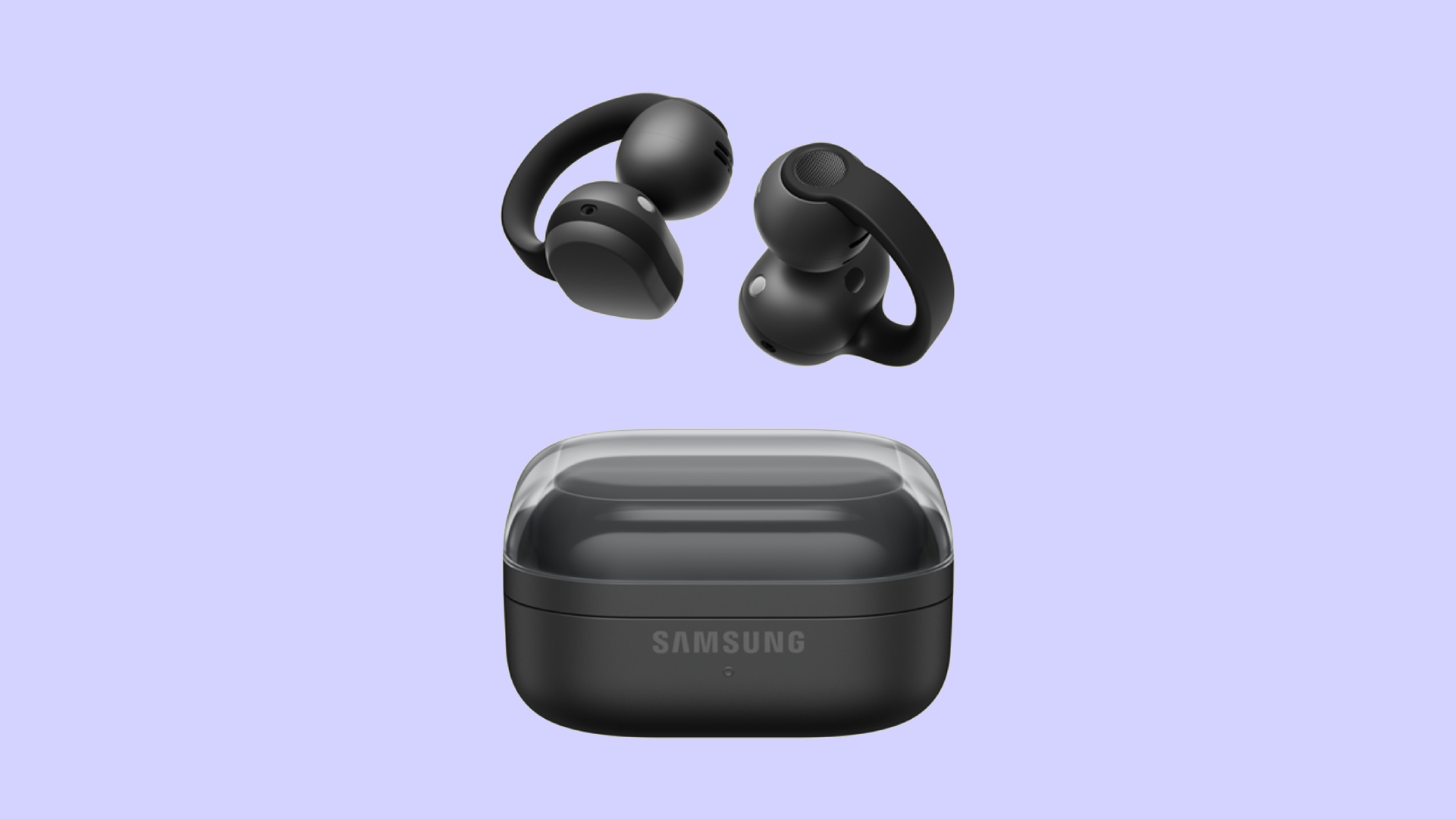
Audio wearables have been getting makeovers as of late. Besides the traditional form factors, the segment is experimenting with bone conduction and clip-on headphones. Today, Samsung is joining that trend with the Galaxy Buds On.
Debuting in South Korea, the Galaxy Buds On is Samsung’s first-ever clip-on earbuds. You’re likely familiar with how these earbuds look like, having seen them grace the ears of many a passerby today. Instead of plugging right into your ear canals, they actually do clip onto your earlobes. Samsung’s take, however, is a little bit heftier, which the brand claims gives it a wider surface area to balance the weight for your ears.
Additionally, the new earbuds has a TwinBoost speaker system. While the system adds better bass to the earbuds, it also adds automatic voice adjustments to better attune the sound according to your environment. It also has an Audio Leakage Reduction feature, so others won’t be able to hear what you’re listening to.
The Galaxy Buds On has a charging case almost identical to the Galaxy Buds4 case. Powered by the Snapdragon S7 Gen 1 Sound Platform, the earbuds can reportedly last up to 9.5 hours on a single charge.
Right now, the wearable is exclusive to South Korea, but Samsung says that a global rollout will happen in the future. In South Korea, the Galaxy Buds On costs KRW 299,000 (or approximately US$ 220).
SEE ALSO: Galaxy Buds4 Pro review: I thought I was done with in-ears
News
vivo X Fold6 makes global debut with 200MP camera and 6900mAh battery
With 200MP camera and 6900mAh battery

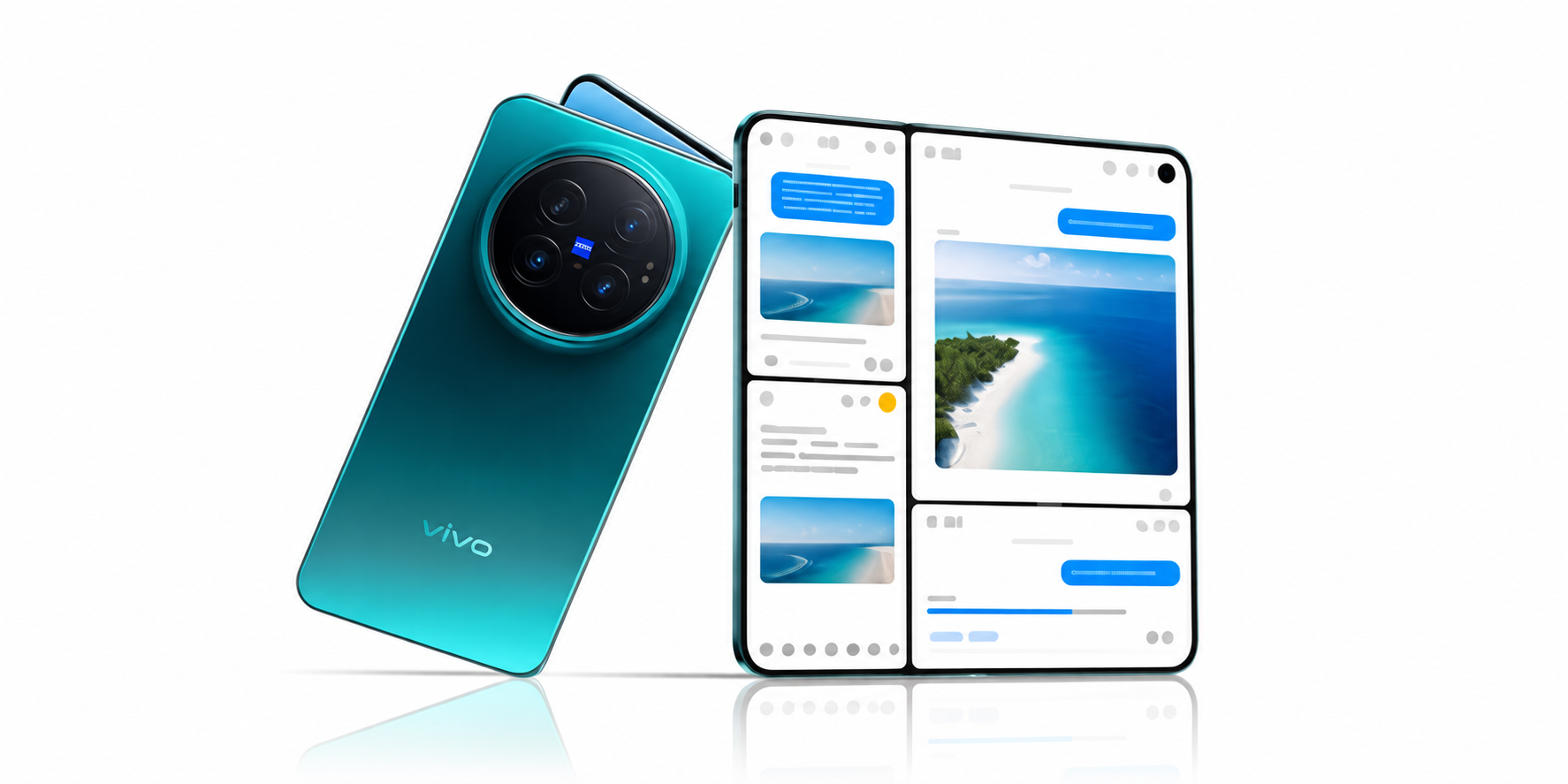
vivo has officially launched the X Fold6 globally. It combines a slim foldable design with productivity features, flagship imaging, and a large 6900mAh battery.
The X Fold6 runs OriginOS 7 Fold, which introduces Multi-Task Workbench with Origin Workbench and Multi-Split Screen. Users can display and resize up to four windows simultaneously, while AI Cross-App Drag allows content to move directly between apps.
Productivity with AI
The foldable also includes AI-powered productivity tools. AI Meeting Assistant provides speaker transcription and summaries through AI Recorder, while AI Captions adds real-time subtitles during online meetings. AI File Manager organizes files with features such as Topics, Smart Naming, AI Summary, and Column View. There’s also AI Reader Mode that reformats PDFs into an eBook-style layout.
vivo also equips the X Fold6 with Jovi, an AI agent designed to handle tasks across smartphones and PCs. It can search and understand materials, generate content, and complete office workflows through voice commands. It also supports scheduled and recurring tasks.
For users who want to replace a computer for lighter workloads, vivo Office Kit enables cross-device collaboration. Desktop Mode turns the foldable into a desktop-like workspace when connected to a compatible monitor or TV.
6900mAh large battery
The X Fold6 packs a 6900mAh BlueVolt Battery with 80W FlashCharge, 40W Wireless FlashCharge, and wireless reverse charging. Its 5th-Gen Silicon Anode Technology allows vivo to fit the large battery into a slim foldable body, while its 3rd-Gen Semi-Solid-State Battery is designed to maintain performance in temperatures as low as -20°C.
Despite its battery capacity, the X Fold6 measures as little as 4.4mm when unfolded and weighs 228g in Prism Black. The Horizon Blue version measures 4.8mm and weighs 235g. Both variants feature a 2.5D flat-edge metal frame and ultra-narrow bezels.
For photography, the foldable features a 200MP ZEISS main camera with a Samsung HPB large sensor, ZEISS T* coating, and optical image stabilization. It is paired with a ZEISS APO telephoto camera with a Sony LYTIA 602 sensor, 3x periscope design, telephoto macro capability, and up to 100x ZEISS HyperZoom.
The camera system also introduces Stage Mode for telephoto concert and live performance photography. It supports 4K 60fps Dolby Vision video, while Motion Portrait 2.0 uses subject tracking and portrait processing to capture moving subjects.
Powered by MediaTek
The X Fold6 uses the Dimensity 9500 Super Edition flagship platform and features an 8.02-inch inner display alongside a 6.51-inch cover display. Both screens use 8T-LTPO technology with a 1–120Hz adaptive refresh rate, adaptive dimming, up to 5,000 nits local peak brightness, and a minimum brightness of 1 nit.
The foldable also carries IPX8 and IPX9 water resistance and IP5X dust resistance. Its 1+4 Communication Chipset is designed to improve cellular and Wi-Fi connectivity, while Data Store allows users in select markets to purchase local data plans directly on the device across 129 countries and regions.
Gaming
The regular PlayStation 5 is getting an AI upscaling feature
The feature debuts with Wolverine and Ghost of Yotei.

If you’re an owner of a regular PlayStation 5, watching a PS5 Pro owner might touch you with a tinge of jealousy. Besides the upgraded console’s better hardware, it also has something called the PlayStation Spectral Super Resolution (PSSR), which uses AI to improve resolution and framerate. Unfortunately, that feature isn’t available on the regular console. But Sony is throwing the classic console a bone today by adding Quick Spectral Super Resolution (QSSR), which does the same as PSSR but on the older machine.
Since the introduction of PSSR, fans and developers alike have asked whether the older console can have a version of the technology. Developed with AMD, QSSR is an AI upscaling feature that improves performance for modern games on the PlayStation 5. For now, the feature is debuting first on Ghost of Yotei and Marvel’s Wolverine via a set of patches. Moving forward, Sony will also allow its developers to add the feature for their respective games.
Now, the choice of games is deliberate. Marvel’s Wolverine is still fresh on everyone’s mind. Meanwhile, Ghost of Yotei has just released a Complete Edition, which packs in a new story expansion and a roguelike mode. You don’t even need to Complete Edition or the corresponding paid upgrade to enjoy the new feature.
SEE ALSO: Ghost of Yōtei Complete Edition review: More of a great thing






Linkin Park: Unshatter is the band’s kintsugi

Bambu Lab opens first Authorized Store in the Philippines

Lenovo tech behind DreamWorks Animation hit ‘Forgotten Island’

Samsung joins the clip-on earbud trend with the Galaxy Buds On

vivo X Fold6 makes global debut with 200MP camera and 6900mAh battery

HUAWEI Pura X View is 2026’s first WIDE slab-type smartphone

The CAMON Slim 5G is TECNO’s latest ultra-slim smartphone

iPhone 18 Pro series: Price, availability in the Philippines

vivo X500 Series launches with major imaging upgrades

iPhone 18 Pro series: Price, availability in Singapore


-
 News2 weeks ago
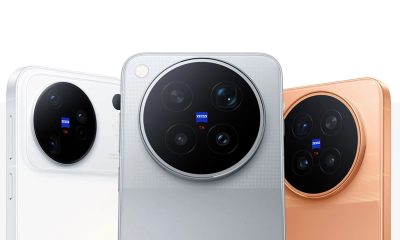
vivo X500 Series launches with major imaging upgrades
-

 News2 weeks ago
OPPO Find X10 Pro Max is the first phone with a triple 200MP camera system
-

 Automotive7 days ago
BYD says that way better EV batteries are coming next year
-

 News2 weeks ago
vivo introduces OriginOS 7 with smarter multitasking and AI features
-

 News6 days ago
HONOR Magic9 Pro Max launches in China with ARRI-powered imaging
-

 Accessories2 weeks ago
70mai launches the A900 series with 4K front, rear recording
-

 Smartphones7 days ago
TECNO CAMON Slim 5G teases an ultra-slim design ahead of launch
-
 Smartphones1 week ago
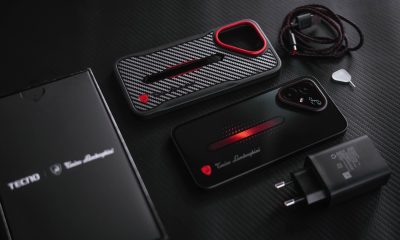
When TECNO-logy meets Tonino Lamborghini legacy