
Lifestyle
Traveling with advanced eSIM
Better than local tourist SIM Cards?


eSIM technology being more widely available has opened up a new connectivity option for travelers. Frequent or otherwise. That’s where Advanced eSIM saw an opportunity.
Advanced eSIM says their mission is “to enable companies to deliver better connectivity solutions to telecommunications subscribers”
Right now, how their service works is you go to their website, select your country of destination, and purchase the eSIM plan that fits your needs. The plans range from 1GB for 7 days all the way up to 50GB for 30 days. Costs vary per plan, per country.
You can view the countries and plans here.
After purchasing your preferred eSIM bundle, you simply have to download the QR Code and scan it on the smartphone you’ll be using on your trip. Next step is installation.
Here is a quick guide on how to install Advanced eSIM:
Access eSIM Settings
On most smartphones, go to “Settings” > “Cellular” or “Mobile Data” > “Add Cellular Plan.”
Scan QR Code
Scan/upload the QR code provided with your eSIM information. Alternatively, you may need to enter the eSIM activation code manually.
Follow On-Screen Instructions
Depending on your device and carrier, you may need to follow on-screen instructions to complete the activation process. This typically involves confirming your plan and agreeing to terms and conditions.
Restart Your Device
After successfully adding the eSIM, restart your device to activate it.
Our experience
Two members of the GadgetMatch team were fortunate enough to have been provided with bundles during our work trips in March and April.
Below we detail our experience using Advanced eSIM.
Rodneil’s Bangkok Business Trip
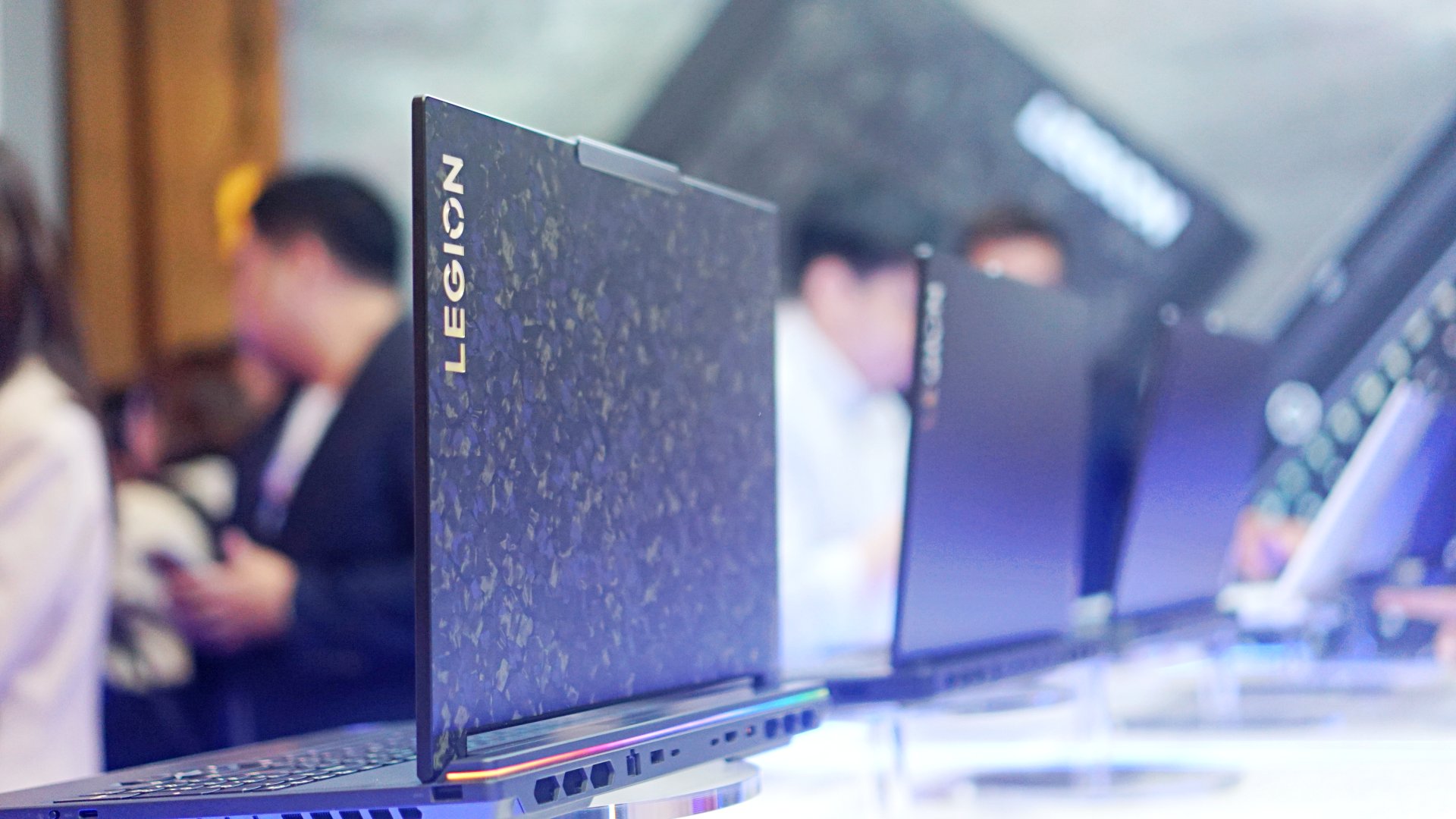
Lenovo Innovate 2024
I initially wanted to use the Advanced eSIM on an Android Foldable. Specifically, the OPPO Find N3. However, I had issues installing and kept getting an error message saying that the phone is unable to detect the eSIM.
Don’t let that discourage you though, if you’re an Android user. I know of peers in the industry who have successfully used eSIMs on their Android smartphones. My issue may have been device specific.
With that initial install failing, I instead moved the eSIM to my iPhone 14 Pro Max. My iPhone has up to eight (8) eSIM slots but only one can be active at a time. That means I had to deactivate the one I use in my home country.
That said, getting the eSIM to work wasn’t instantaneous. It took the bus ride from the airport to the hotel before it started working. That’s roughly around two hours if memory serves right.
So, to get it to work you have to make sure that:
- The eSIM is active.
- It is the default SIM for Cellular Data.
Once it was active and working, everything was incredibly breezy. I used the eSIM like I would a tourist SIM card purchased at the airport.
Throughout the nearly week-long work trip, I went about my days like usual. I continued liaising with members of the GadgetMatch team to make sure things are running smoothly. With it, I also kept in touch with our partners and clients as much as I could while handling the coverage for the brand the flew us to Bangkok, Thailand.
I even resorted to using the eSIM instead of the provided Wi-Fi connection to upload photos and videos for post processing by our team. It was a quick turnaround that we were able to post the reel immediately.
@gadgetmatch AI, Yoga, and Legion. Everything was in full display at #LenovoInnovate24 #Innovate24 #Lenovo @Lenovo @Lenovo Legion
The advantage
One thing I didn’t have to worry about is that I could use the eSIM as the hotspot. There are other existing eSIM services which have this limitations. With Advanced eSIM, the data allocation is for you to use and abuse.
Just make sure you keep an eye on your consumption so you don’t exceed your limit. It’s best to keep tabs on what you usually use the data for when on the go so you have a good ballpark of how much data you use when out and about.
MJ’s Shenzen and Hong Kong Adventure
View this post on Instagram
Even with the eSIM technology being around for over five years now, I still haven’t fully wrapped my head around its concept when traveling.
I still like the feeling of heading to a booth inside the airport to buy or pick-up my local SIM which I’ll use for the country I’m visiting.
There’s an exuberant joy in removing the SIM card tray from my smartphone, knowing that I’ll be connected to the Internet and then I’ll be able to share the sights I see to the world, err, folks who follow my social media accounts.
But when you’re in a country where you don’t know the language spoken, it’s best to come prepared.
Easy set up
Equipping my iPhone its first eSIM, I thought it would’ve been daunting compared to when I do it on an Android smartphone. But Advanced eSIM made it easy for someone with only three functioning brain cells.
When traveling, I don’t have enough bandwidth to think of other details since I’m already preoccupied with the itinerary. It was kind of a gift from the universe to have the connectivity part of my travel handled easily.
View this post on Instagram
I was traveling to Shenzhen, China via Bus from Hong Kong, so when I departed Manila, I didn’t have any Internet connectivity. When I reached the border of Shenzhen and Hong Kong, that was when I automatically connected to the Internet since the Advanced eSIM coverage I have was only meant for China.
With 10GB of Data, I wasn’t sure if it would be enough to cover my one-week stay. The WiFi connection in China was extremely slow (for me, personally) to upload my social media content, especially when using VPN.
Using Advanced eSIM’s 5G connectivity, however, helped me upload real-time for my followers to see.
View this post on Instagram
A welcome surprise
Five days later, I was exiting China through a Bus once more while heading to Hong Kong. I have prepared another eSim through my HONOR Magic6 Pro, since I know the coverage for my Advanced eSIM is only within China.
To my surprise, I had trouble connecting my eSIM on the Android smartphone and the Advanced eSIM still worked while in Hong Kong. This allowed me to enjoy being connected for two more days while exploring Ngong Ping Village and Hong Kong Disneyland.
View this post on Instagram
The next day, I suddenly lost connectivity while on the way to the airport. Luckily, the airport has WiFi and my plane was departing in an hour, so I didn’t have to worry about connecting to the Internet.
I realized later on that I actually consumed the 10GB of mobile data. Still in disbelief that constantly watching on TikTok and Instagram Reels, and uploading videos for my stories took at least a week to fully consume the mobile data plan.
Nevertheless, the experience with Advanced eSIM was so convenient. I think I found the data plan that will help me with my travels, and I’m excited to use it when I travel across Southeast Asia soon.
Should you use Advanced eSIM?
Although both our members had trouble using an Android smartphone with the eSIM, we’re fairly confident these were device-specific things more than Advanced eSIM thing. That said, we will certainly test it and the future and update this article as needed to see if any more issues with Android smartphones persist.
All things considered, using Advanced eSIM was relatively easy and convenient. The cost varies per country, amount of data, and number of days covered. There are plenty to choose from so we’re confident you’ll find a plan that fits your trip’s needs. It’s so reliable that we’ve gone out of our way to recommend it to some of our clients and partners who frequently host overseas trips.




Entertainment
UNDERTALE: The Determination Symphony gets two more shows
Both shows will be held on the next day.


The Philippines has an unquenchable love for game-based concerts (so *wink wink* please bring more of them). Though these concerts do generate a lot of hype, the drawback is that they often sell out way before most fans can grab tickets. If you’re an UNDERTALE fan, that experience might be rocking you right now, as both shows have already sold out. But fear not: UNDERTALE: The Determination Symphony has just opened two more shows.
Late last month, Film Concerts PH, in partnership with SOHO Live, announced UNDERTALE: The Determination Symphony happening on October 17. As expected, both shows, at 3pm and at 7pm, sold out very quickly after sales opened.
Today, the concert experience is opening two more shows on the next day, October 18. Like the original date, the two shows will happen at 3pm and at 7pm, allowing more fans to experience the concert.
The concert will be performed by the Filharmonika Orchestra and conducted by Thanapol Setabrahmana. Personally curated by creator Toby Fox and developed by Lambert Jackson with Materia Music, the concert experience showcases the game’s most recognizable tunes laid over gameplay footage playing simultaneously. Plus, for the world tour, the experience will have expanded scoring.
Tickets are available through Ticketmelon. Both dates will be held at The Proscenium Theater in Makati.
SEE ALSO: UNDERTALE: The Determination Symphony hits Makati in October

As of today, the entirety of the Marvel Cinematic Universe will take around 650 hours to watch. So, if you wanted to catch up with everything before this December’s Avengers: Doomsday, you would need to allot around 5 hours per day to watch content from Marvel. For a lot of us, that sort of commitment is completely untenable. Thankfully, Marvel has released an official watchlist, paring the list down to something much more manageable.
Before the MCU got as big as it is today, it was fun to do a movie marathon heading into a major Marvel release. For example, when Avengers: Endgame came out, some theaters held continuous marathons lasting a few days. Take note that this was before Marvel officially included every TV show and legacy movie (like the X-Men universe).
Now, heading into Avengers: Doomsday, Marvel will not ask you to devote the rest of your year just for homework. Instead, here’s an official list you can use to catch up:
- X-Men
- X2
- Captain America: The First Avenger
- The Avengers
- Avengers: Infinity War
- Avengers: Endgame
- Loki
- Shang-Chi and the Legend of the Ten Rings
- Spider-Man: No Way Home
- Black Panther: Wakanda Forever
- Captain America: Brave New World
- Deadpool & Wolverine
- Doctor Strange in the Multiverse of Madness
- Thunderbolts
- The Fantastic Four: First Steps
Compared to the extensive list of everything Marvel, this official list is much more manageable, especially since there’s only one show (Loki). It’s also a veritable who’s who of the MCU, so it’s hard to get bored.
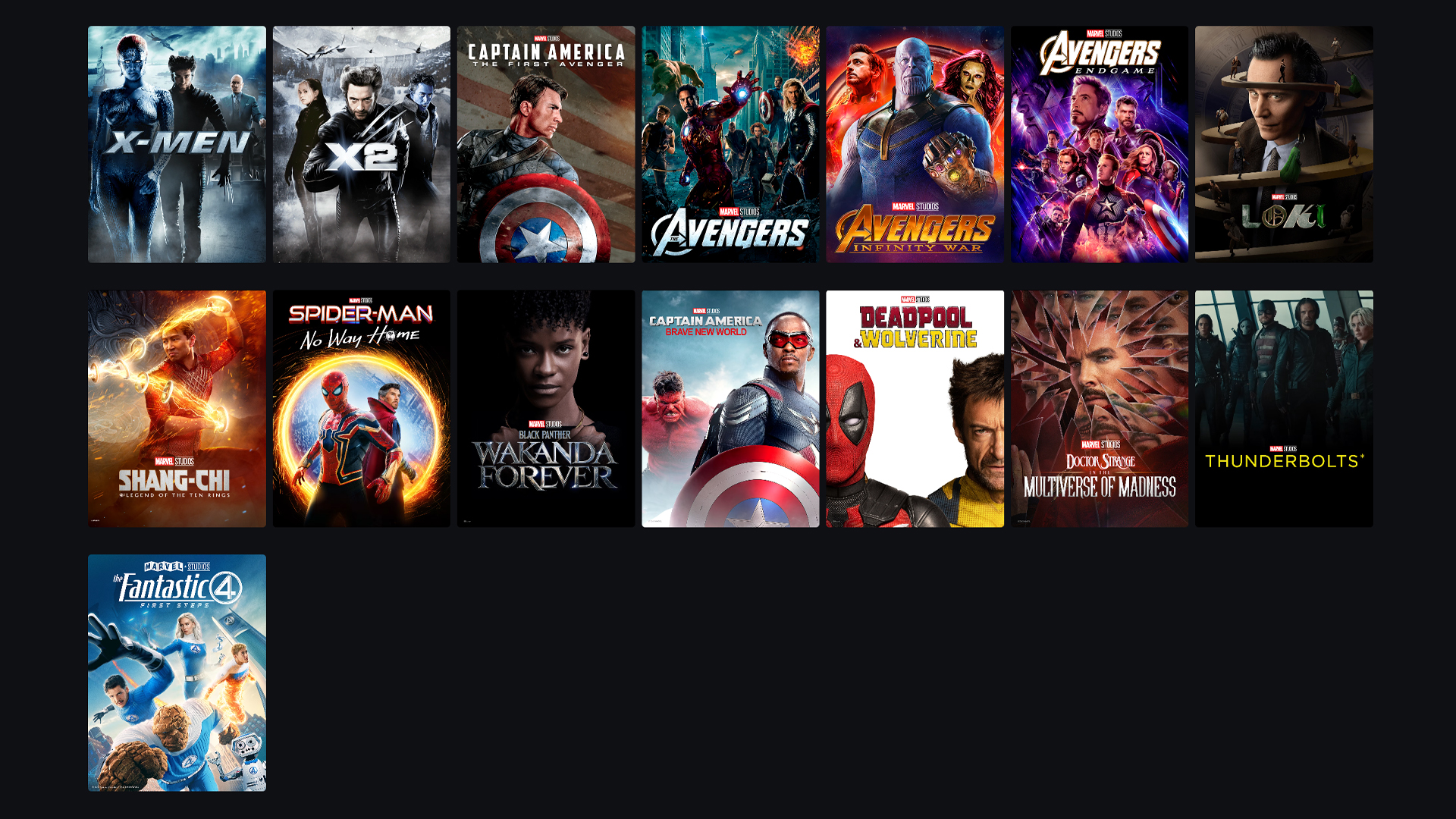
The official list as seen on Disney+
There are, however, a few surprises and spoilers. For one, if you’ve been avoiding the teasers and trailers, the X-Men films might be a shock to you. Likewise, the inclusion of the critically panned Brave New World is interesting.
The exclusions are just as noteworthy, too. Though the two earliest X-Men films are included, the list doesn’t add Days of Future Past, one of the first Marvel films to use time travel. Thor: Love and Thunder isn’t on here, despite Love, Thor’s adopted daughter, appearing in the trailers. Brand New Day is also missing, but that’s likely because the movie isn’t on Disney+ yet.
Avengers: Doomsday premieres in cinemas on December 18. Four months should be enough time to catch up on these titles.
Entertainment
Marvel Studios unveils new X-Men cast
Adam Driver, Inde Navarette, more join Sadie Sink for film set for May 2028


At the D23 Disney fan event, Marvel Studios has officially unveiled the cast of the new X-Men movie, which has been announced for a May 5, 2028 premiere.
Marvel Studios head Kevin Feige and director Jake Schreier were joined onstage by Sadie Sink, who made her debut as Jean Grey in Spider-Man: Brand New Day, for the showcase.
The trio then welcomed Sink’s new co-stars: Kit Connor as Scott Summers/Cyclops, Christopher Abbott as Professor Charles Xavier, Samara Weaving as Emma Frost, Inde Navarrette as Rogue, and Maya Boyd as Storm.
Finally, Adam Driver crashed the panel with one final video surprise, where he revealed that he will be playing a very sinister figure named Nathaniel Milbury, a.k.a. Mister Sinister.
Mister Sinister has been a recurring antagonist throughout various X-Men media, including in Season 2 of the 1992 animated series and in the first season of X-Men ’97.
Now, he will serve as the main villain in the new X-Men film that jumpstarts the Marvel Cinematic Universe’s Mutant Saga.
Given the initial cast, this X-Men reboot will be set in the earlier stages of the team’s lifecycle, taking audiences back to how the school built its foundation for a faithful setup based in the comics. Although within the MCU chronology, it will be set in the present day.
The rebooted X-Men film is now the third confirmed feature film in the post-Multiverse Saga MCU, after Black Panther 3 and Ghost Rider.
-
 Laptops2 weeks ago
ROG STRIX G16 Review: Building for the moment
-

 Singapore6 days ago
REDMI Note 17 Series focuses on long-term reliability
-

 Laptops2 weeks ago
30 days later with the ASUS ExpertBook Ultra: Like seeing an ex
-
 News6 days ago
realme 16T to come with 8,000mAh battery, 7-year battery health guarantee
-

 Philippines2 weeks ago
Smart opens HUAWEI Pura 90s Series pre-orders with exclusive freebies
-
 News2 weeks ago
TCL expands mobile lineup with latest NXTPAPER series
-

 Gaming2 weeks ago
Marvel Wolverine Limited Edition PS5 bundle SEA pricing
-
 Reviews1 week ago
Samsung Galaxy Z Fold8 Review