
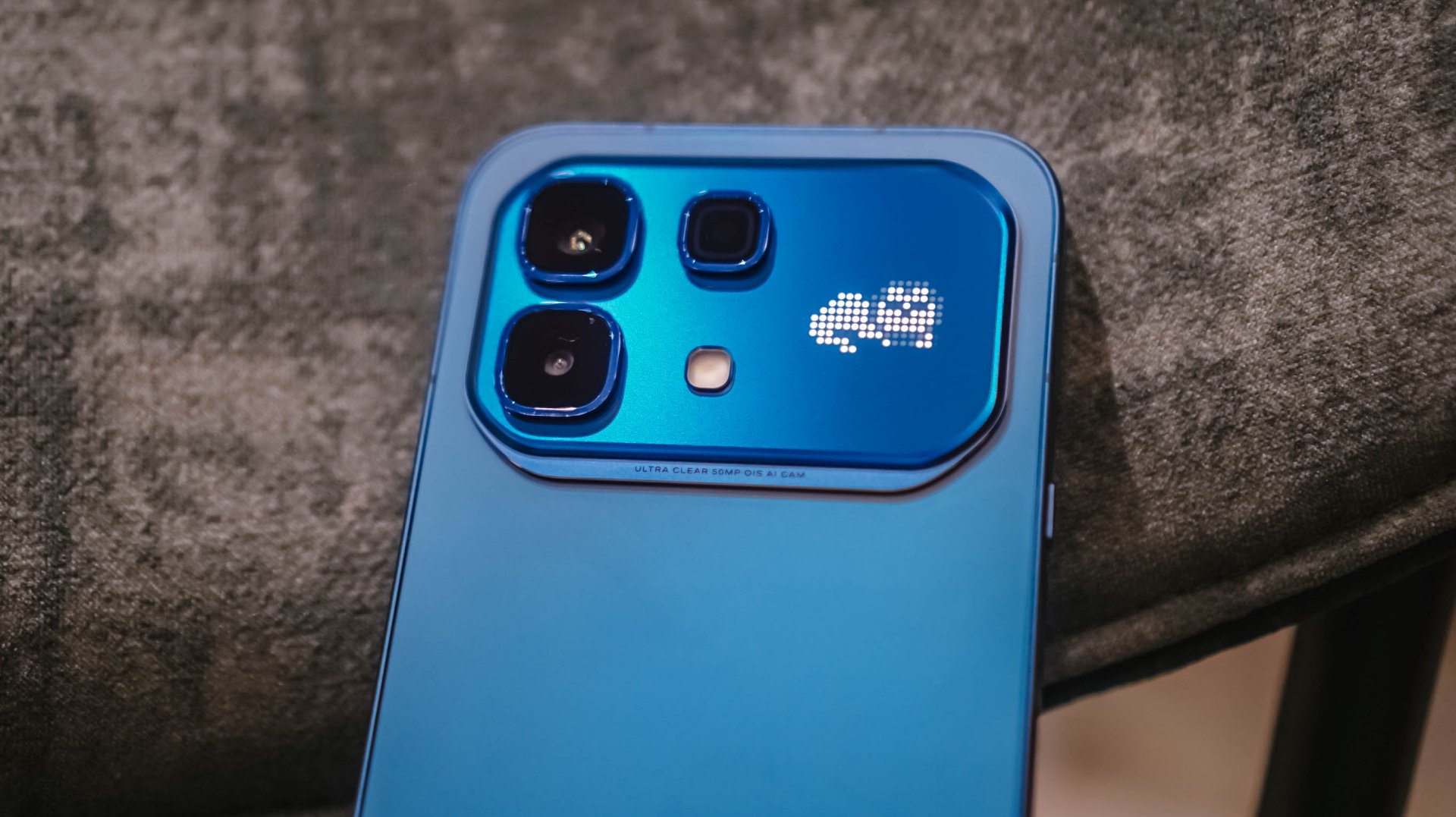
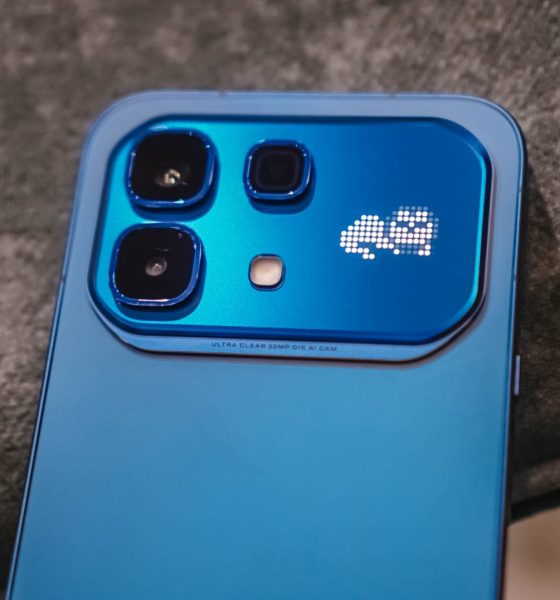

We’ve only just started seeing the Infinix NOTE 60 Pro, and I have to be honest — this one didn’t walk into the room quietly.
Sometimes you go on a first date and immediately think, “You remind me of someone.” That’s the NOTE 60 Pro for me.
So in this edition of Match Pulse, here’s what stood out so far — the good, the questionable, and the things I’m still figuring out.
First Look
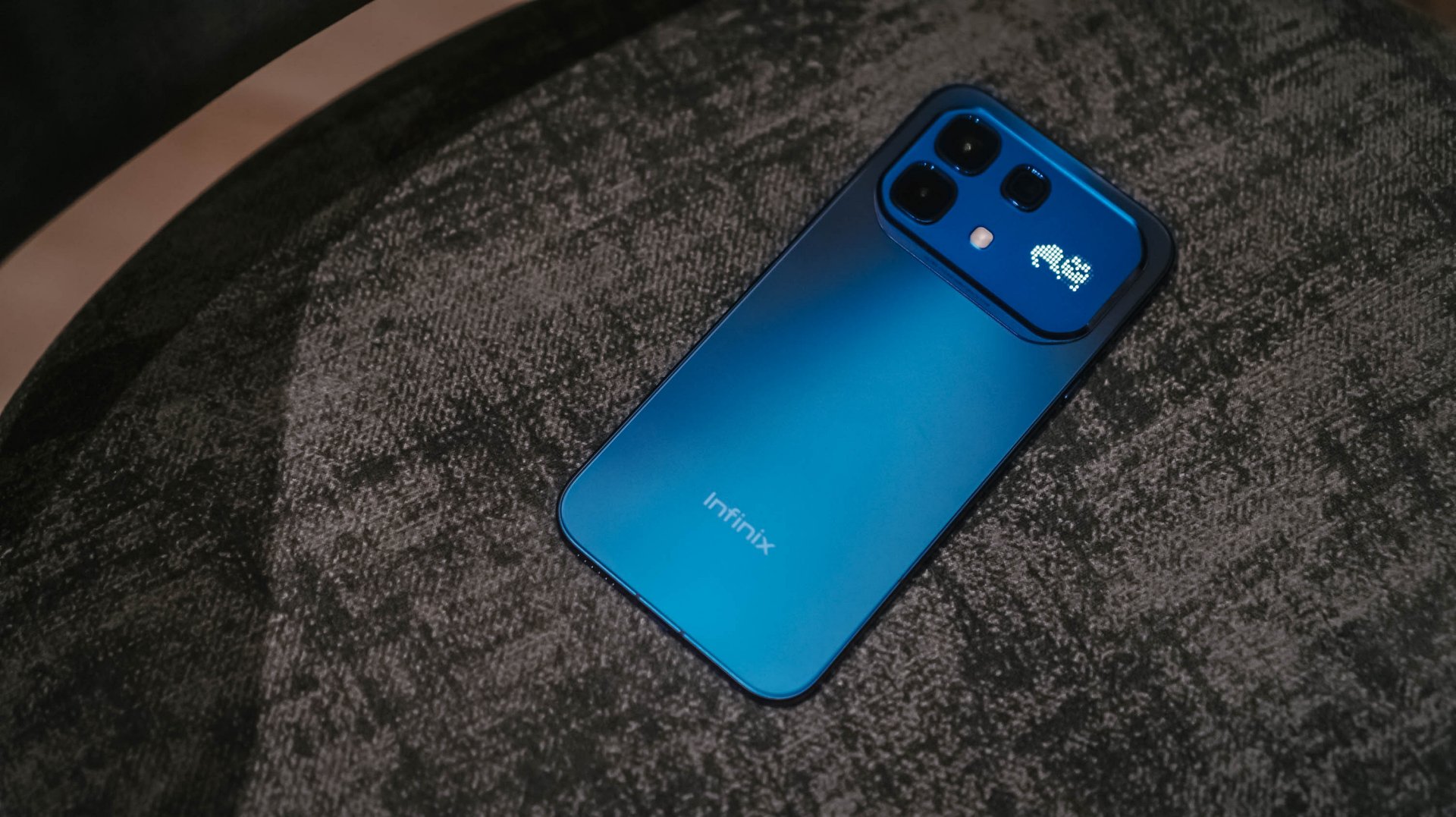
Let’s address the elephant in the room.
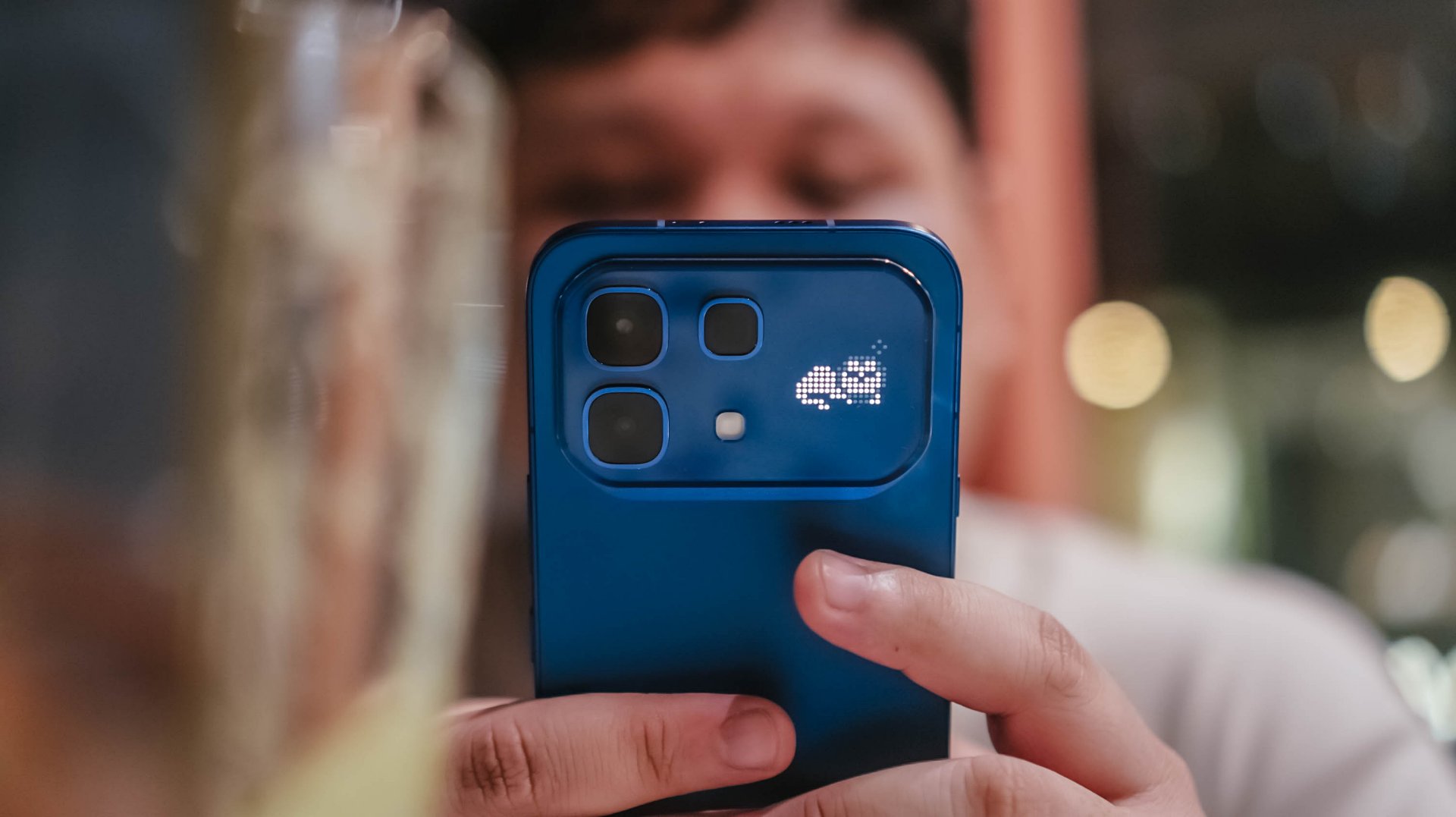
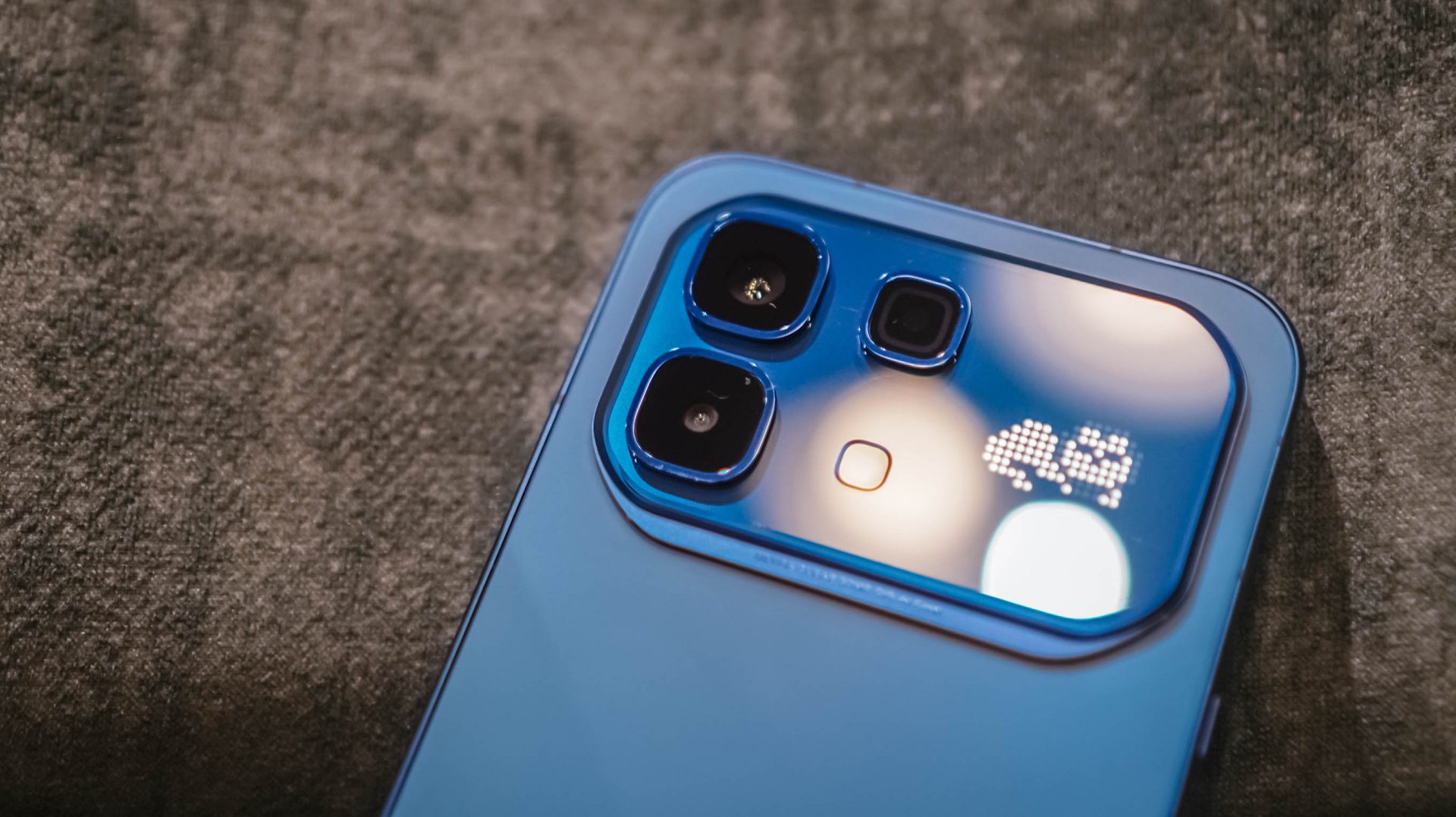
The back design pulls heavily from the iPhone playbook. The camera layout, the proportions — even the default lock screen aesthetic feels familiar. And not in a subtle way.
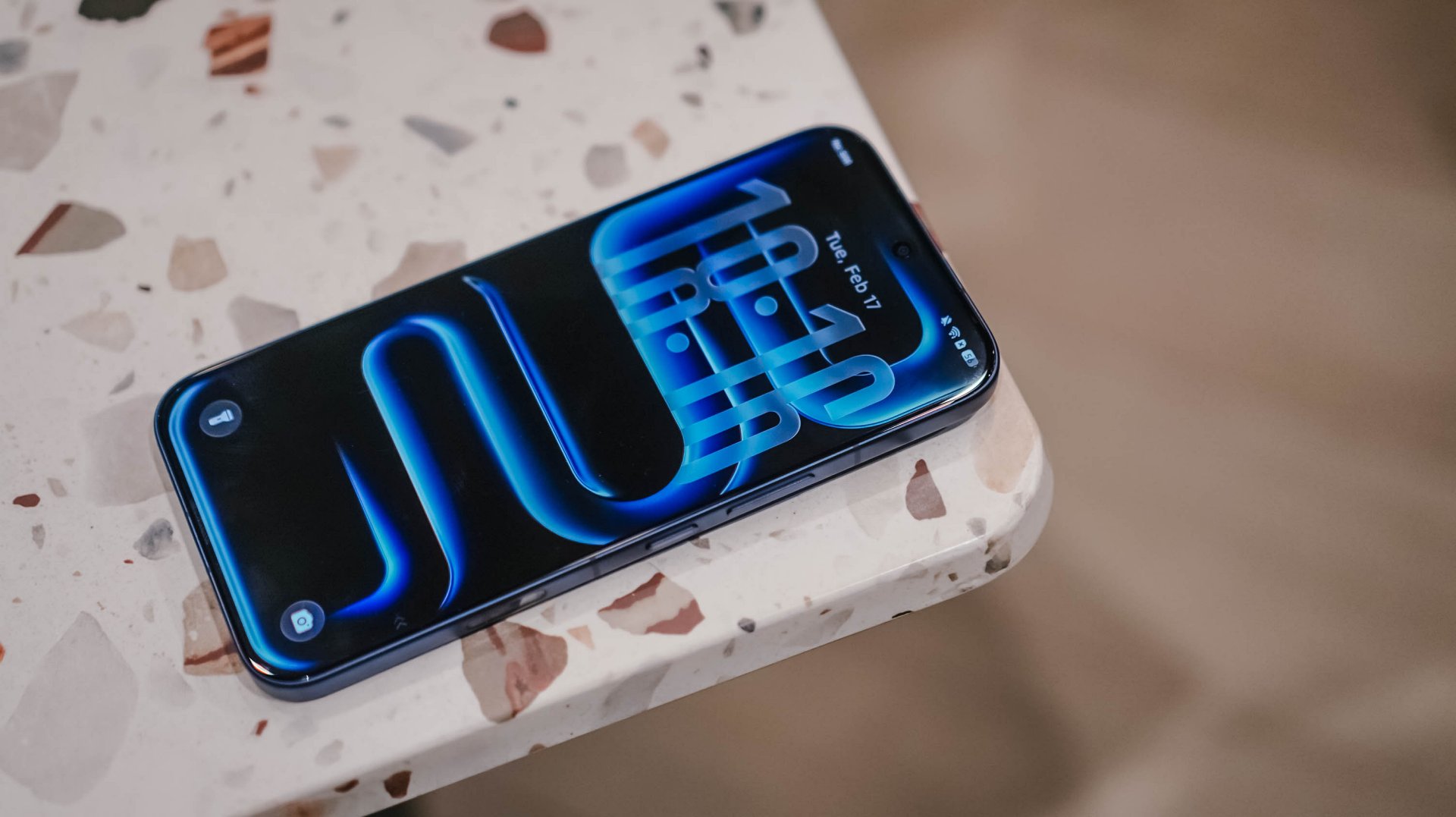
To be fair, Infinix isn’t alone here. A lot of Chinese smartphone brands borrow from Apple’s design language. But there’s always a fine line between inspiration and imitation. When it leans too close to the latter, it can feel a little tacky.
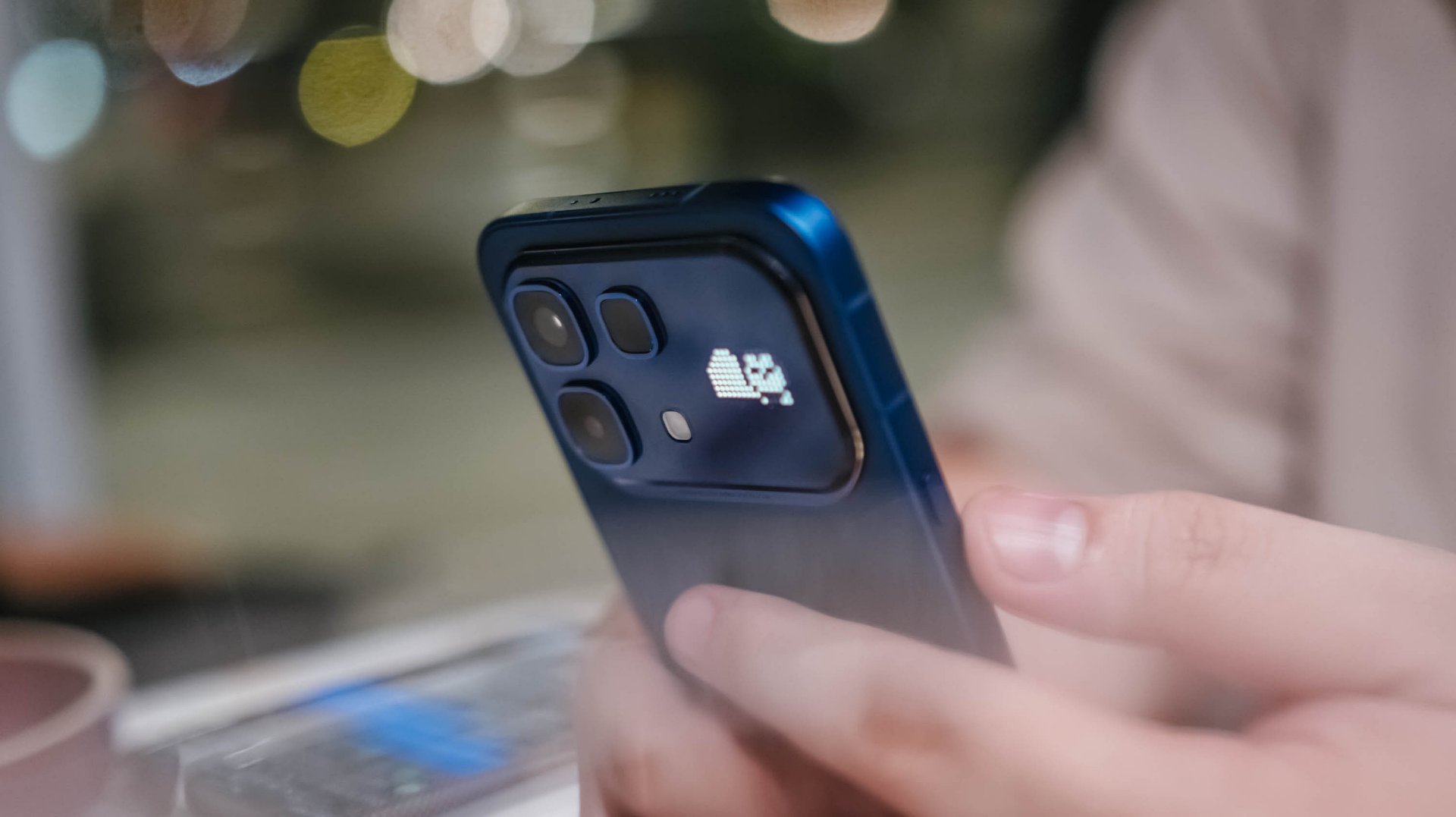
To its credit, Infinix tries to differentiate the NOTE 60 Pro with its Active Matrix Display. It’s an interactive LED strip embedded across the camera module that lights up for notifications, shows the time, and even runs small animations and pixel pets.
It’s cute and playful.
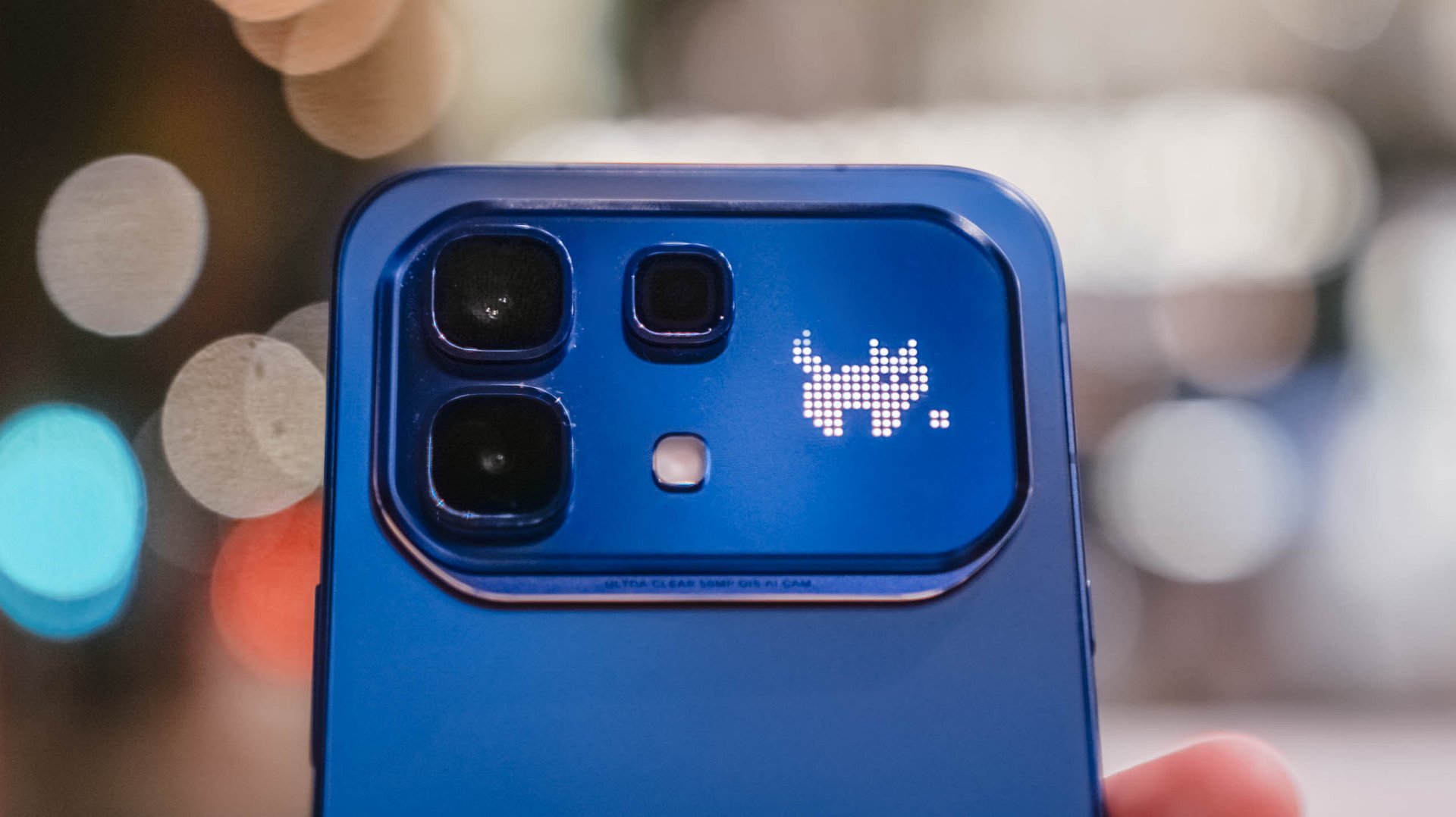
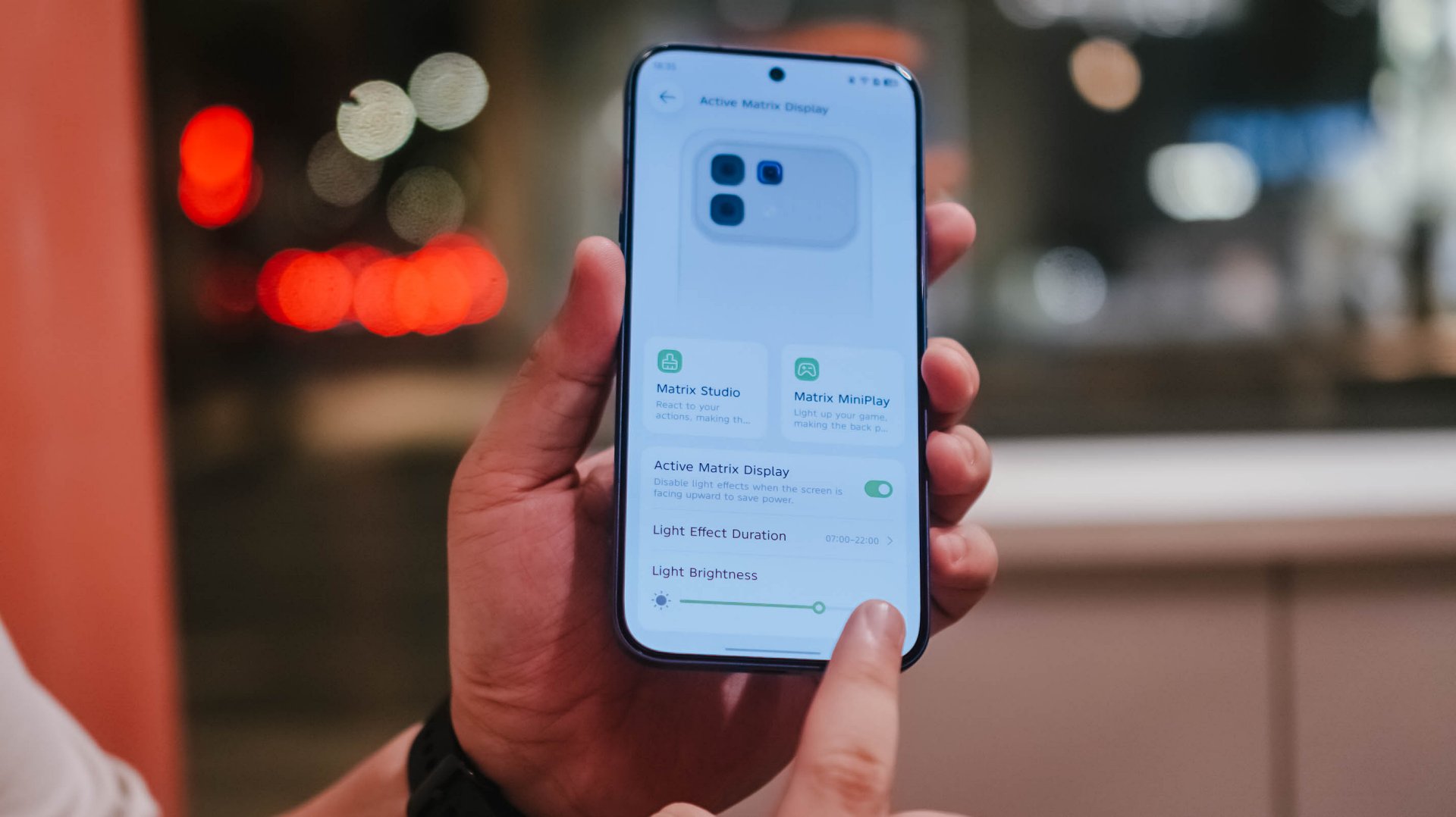
Right now, though, it feels more like a gimmick than a defining feature. I haven’t spent enough time with it to know whether it becomes genuinely useful or something you admire once, then forget about.
In hand, the phone feels… fine.
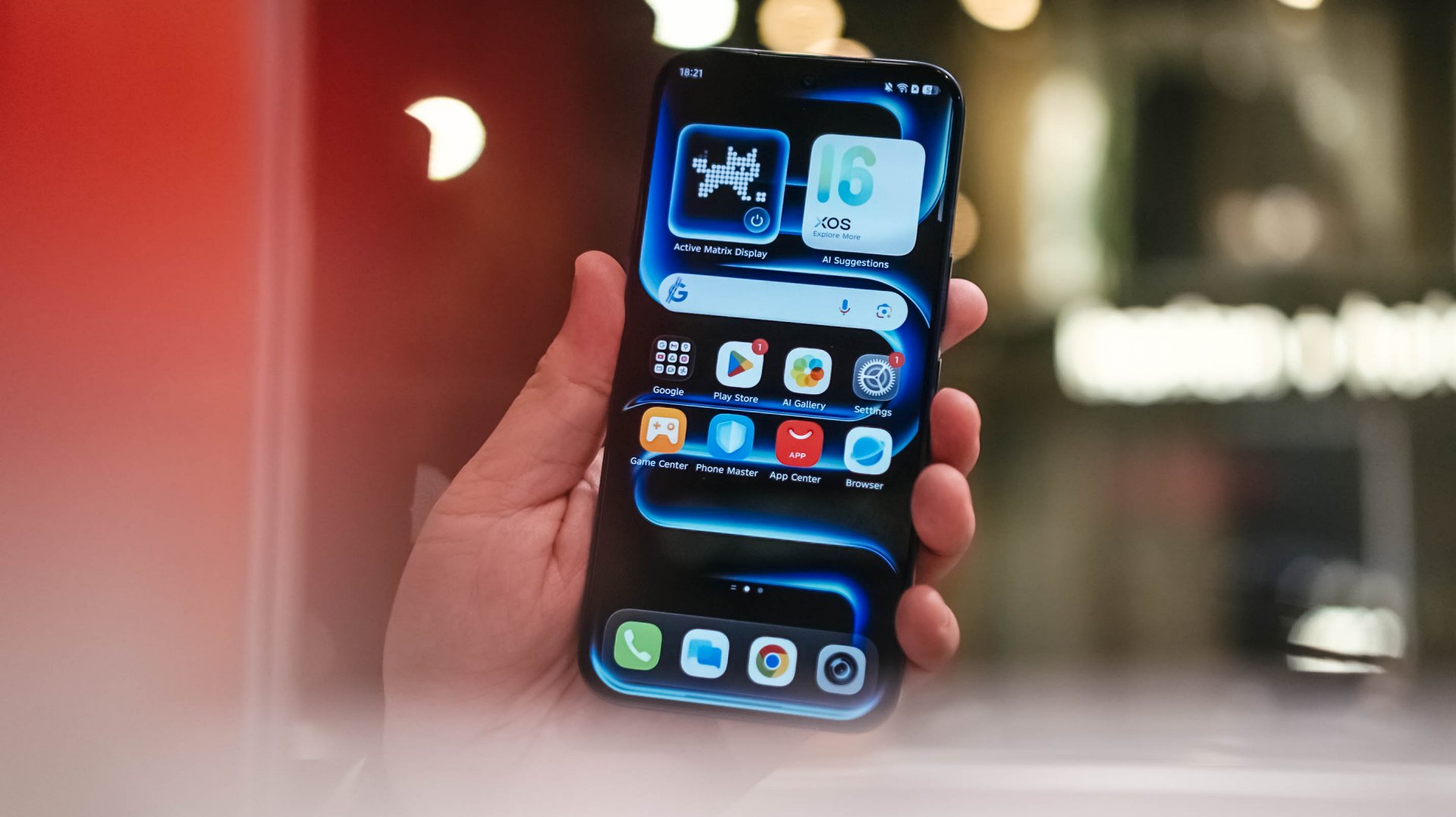
Not bad. Not exceptional. Just firmly midrange. The metal frame and contoured edges help, but the overall feel doesn’t quite cross into premium territory. It’s comfortable, inoffensive, and familiar — which is both its strength and its limitation.
There are also more buttons than usual. An extra button sits on the right side, echoing what we’ve seen from Apple and even devices like the HONOR Magic8 Pro. On the left, another button triggers Infinix’s AI assistant, Folax, with a long press.
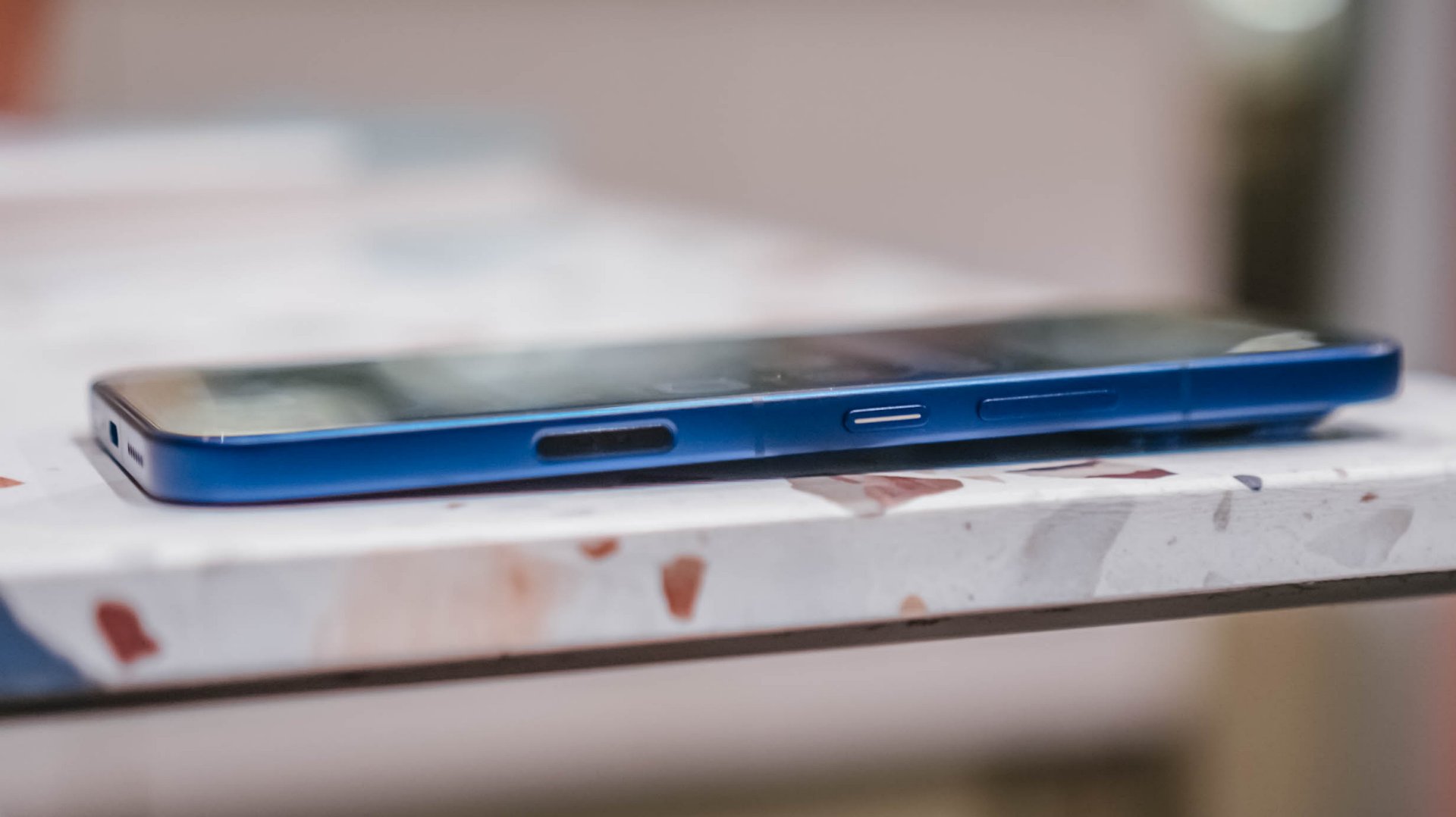
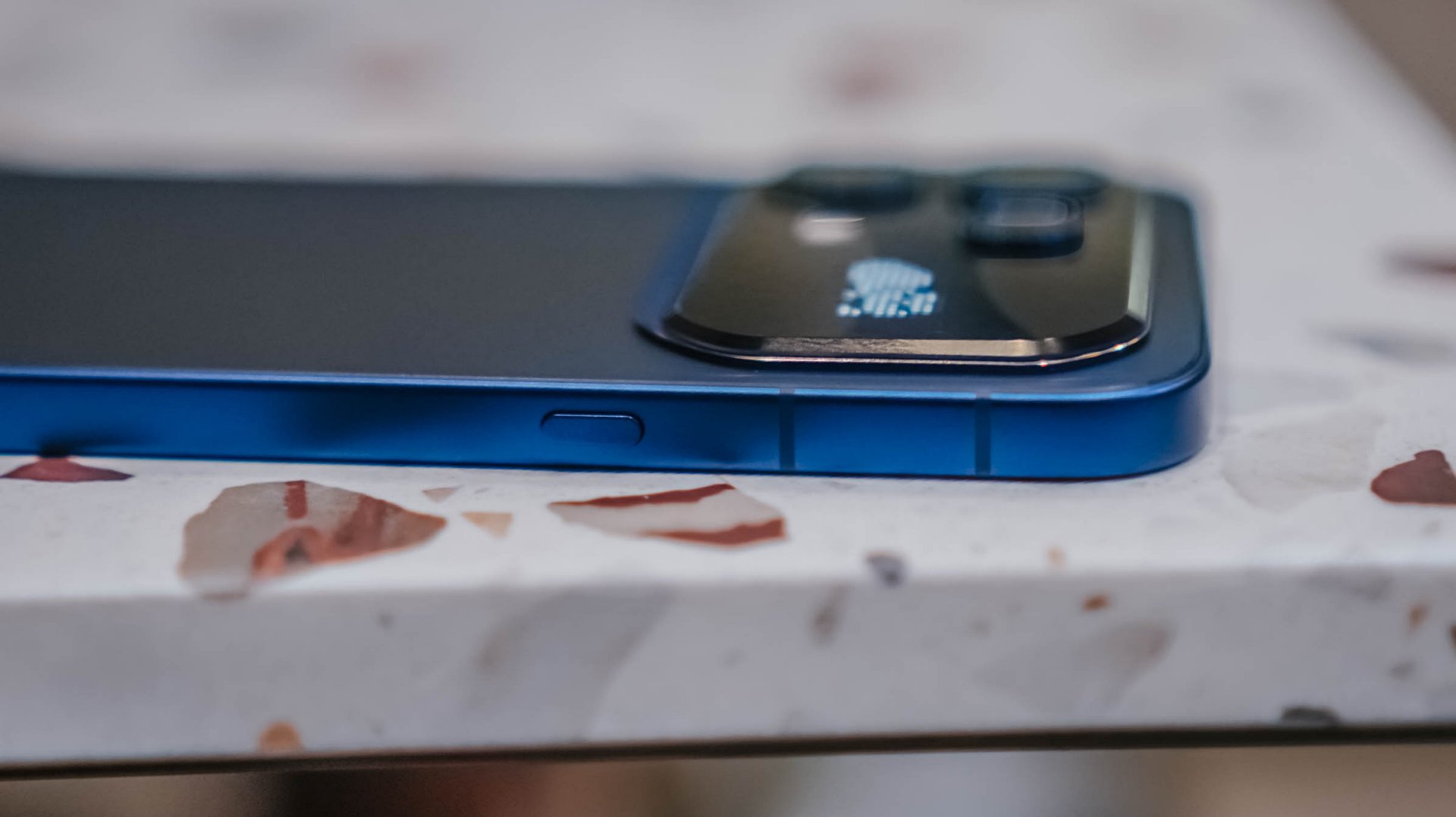
It’s a lot of physical shortcuts. Whether that translates to convenience or clutter will depend entirely on how much you lean into them.
First Date
This is the first Infinix phone powered by the Snapdragon 7s Gen 4 5G, and that’s a notable shift for the brand.
In use, the phone feels quick and stable. Apps launch without hesitation, multitasking is smooth, and the system holds up well even when you start doing more than one thing at a time. CPU and GPU improvements are clearly there, and the phone is tuned to support up to 120FPS gaming in titles like Mobile Legends: Bang Bang.
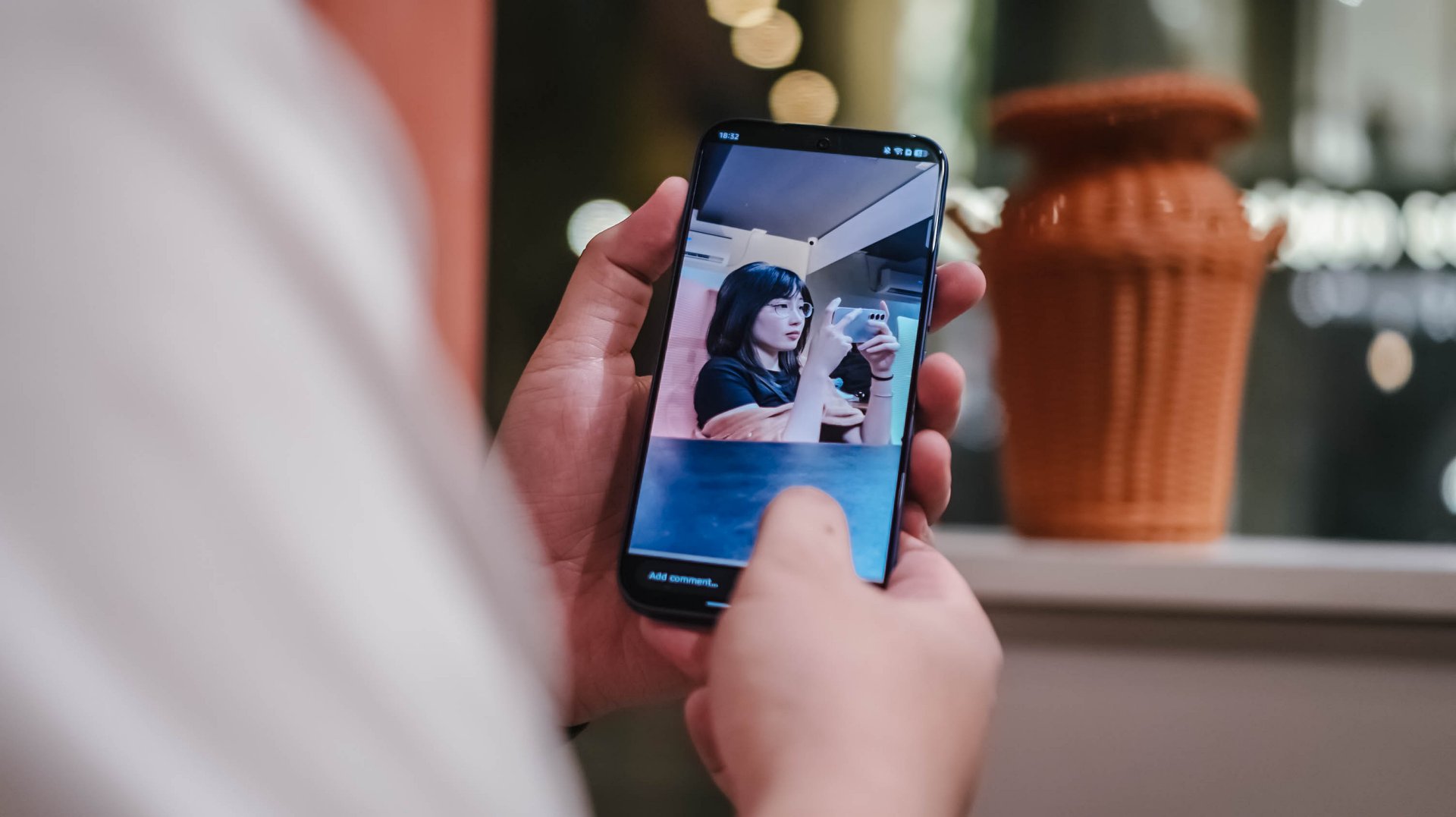
Brigida on the Infinix NOTE 60 Pro’s screen.
The 144Hz 1.5K display is one of its strongest traits. It’s bright, fluid, and genuinely enjoyable for content consumption. Brigida showed up on screen in one of our shots, and the clarity immediately stood out — sharp details, lively colors, no distractions. It’s an easy panel to appreciate.

Paired with JBL-tuned stereo speakers, the NOTE 60 Pro makes a solid case for itself as a media-first phone. If you watch a lot, scroll a lot, or play a lot, this is where it shines most confidently.
The cameras are less compelling.
The 50MP main camera tends to lean bright. Images come out clean but a little flat, often brighter than my personal taste would prefer. It’s perfectly usable, but it doesn’t feel particularly expressive or memorable.
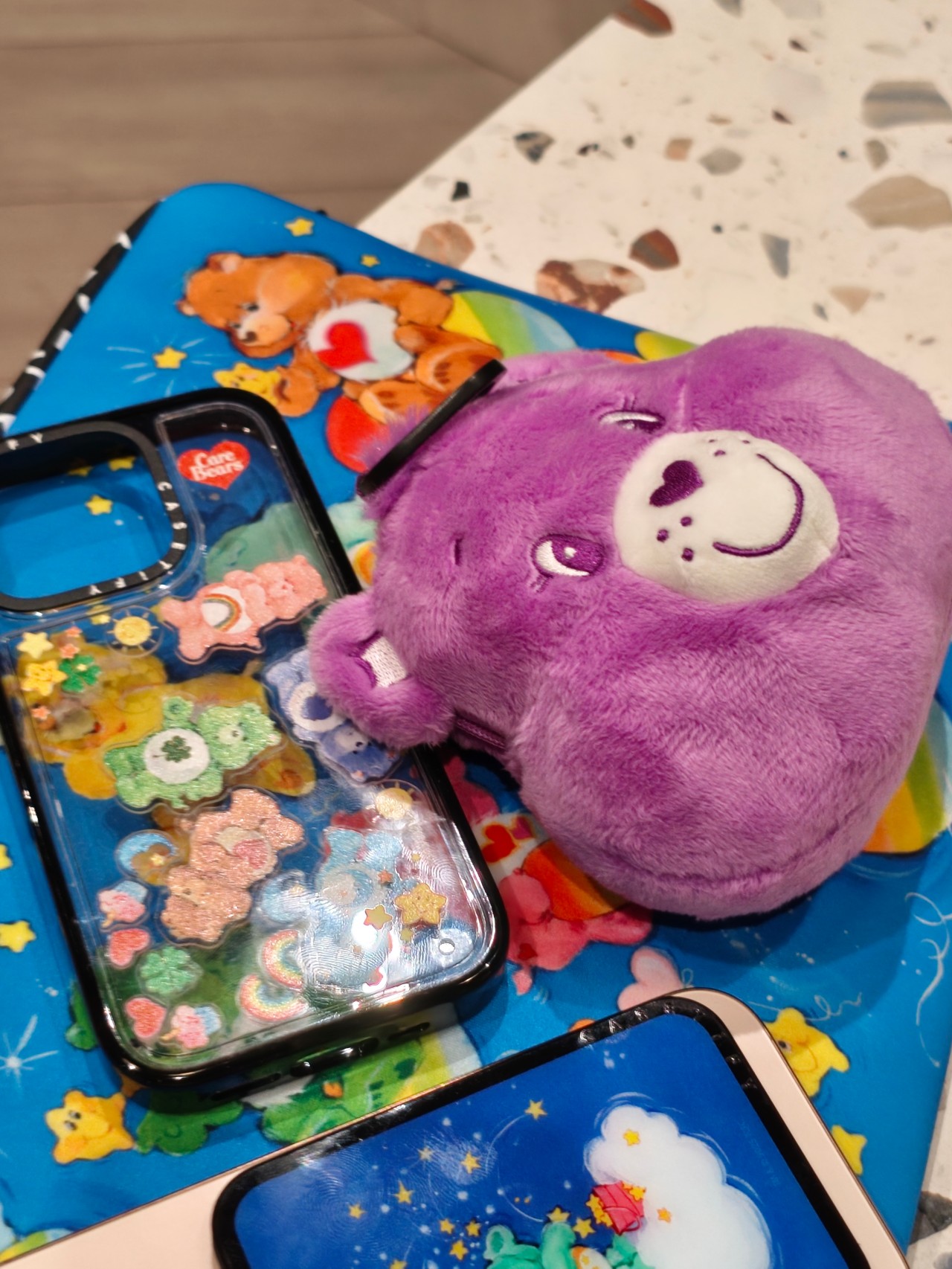
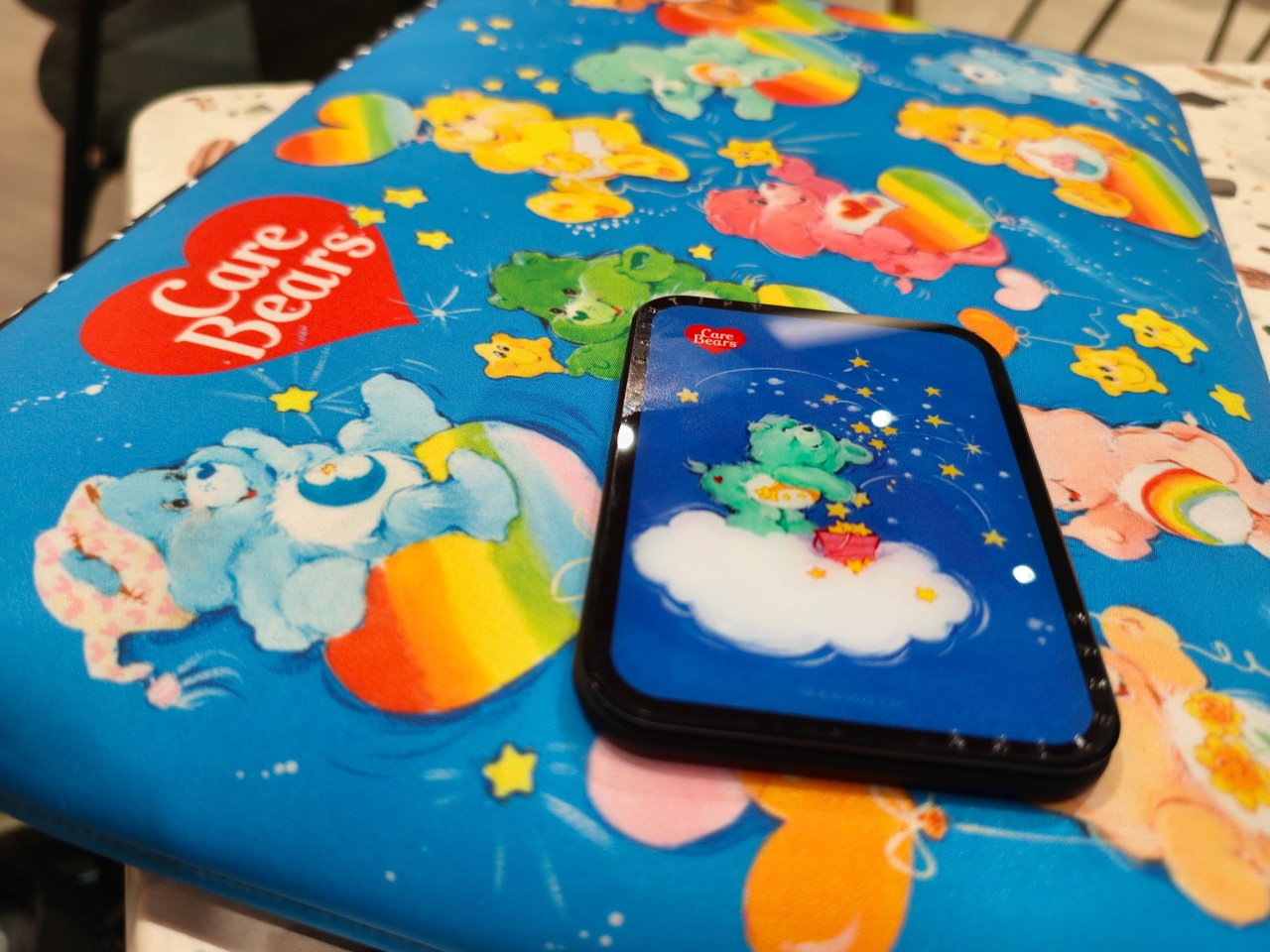

Battery life, at least on paper, looks promising. A large capacity battery paired with aggressive wired charging and even wireless charging suggests endurance won’t be an issue. But that’s something that needs time to really validate.
First Impressions
So, is there a spark?
I’m still undecided.
The Infinix Note 60 Pro feels ambitious. It wants to offer high refresh rates, gaming-ready performance, flashy design elements, and features you don’t always expect in this segment — all at once.
That ambition is admirable. But right now, it also feels like a phone still searching for its clearest identity.
Is it about performance?
Is it about visual flair?
Is it about borrowing familiar design cues and remixing them with playful extras?
Maybe it’s a bit of everything.
At the moment, the Note 60 Pro feels like a first date that tries very hard to impress. There’s a lot to like, a few things to question, and just enough intrigue to warrant a second look.
We’ll need more time to see where this goes.
Infinix NOTE 60 Pro specs
| Category | Details |
|---|---|
| Display | 6.78-inch 1.5K Ultra HDR Display |
| 144Hz refresh rate | |
| Up to 4500 nits peak brightness | |
| Corning® Gorilla® Glass 7i | |
| Processor | Snapdragon 7s Gen 4 5G |
| Cooling | 3D IceCore Vapor Chamber Cooling |
| Rear Camera | 50MP Night Master Main Camera (OIS) |
| 8MP Ultra-Wide | |
| 4K video recording (30fps) | |
| Front Camera | 13MP |
| Audio | JBL-tuned dual stereo speakers |
| Battery | 6500mAh or 6000mAh (market dependent) |
| Charging | 90W wired fast charging |
| 30W wireless charging | |
| Bypass charging support | |
| Operating System | XOS 16 (based on Android 16) |
| Software Support | 3 years OS updates |
| 5 years security updates | |
| Connectivity | 5G, LTE |
| Wi-Fi | |
| Bluetooth | |
| eSIM support (region dependent) | |
| Durability | IP64 splash and rain resistance |
| Frame | Metal frame |
| Special Features | Active Matrix Display (rear LED interface) |
| Halo Light status indicator | |
| One-Tap multifunction button | |
| Advanced health monitoring | |
| IR Blaster | |
| Dimensions | 162.36 × 77.17 × 7.36mm (Torino Black) |
| 162.36 × 77.17 × 7.45mm (other colors) | |
| Weight | 201.7g |
| Colors | Torino Black (Pininfarina edition) |
| Frost Silver | |
| Mist Titanium | |
| Deep Ocean Blue | |
| Solar Orange | |
| Mocha Brown |





I sometimes admittedly fall into the trap of having some good ideas in my head but never actually writing them down.
And specially in this era where you can easily be distracted by the pace of life, the external stimuli, and pretty much just stressful moments, it pays to have a companion to help you become organized.
Otherwise, those thoughts I mentioned about would just fly above my head.
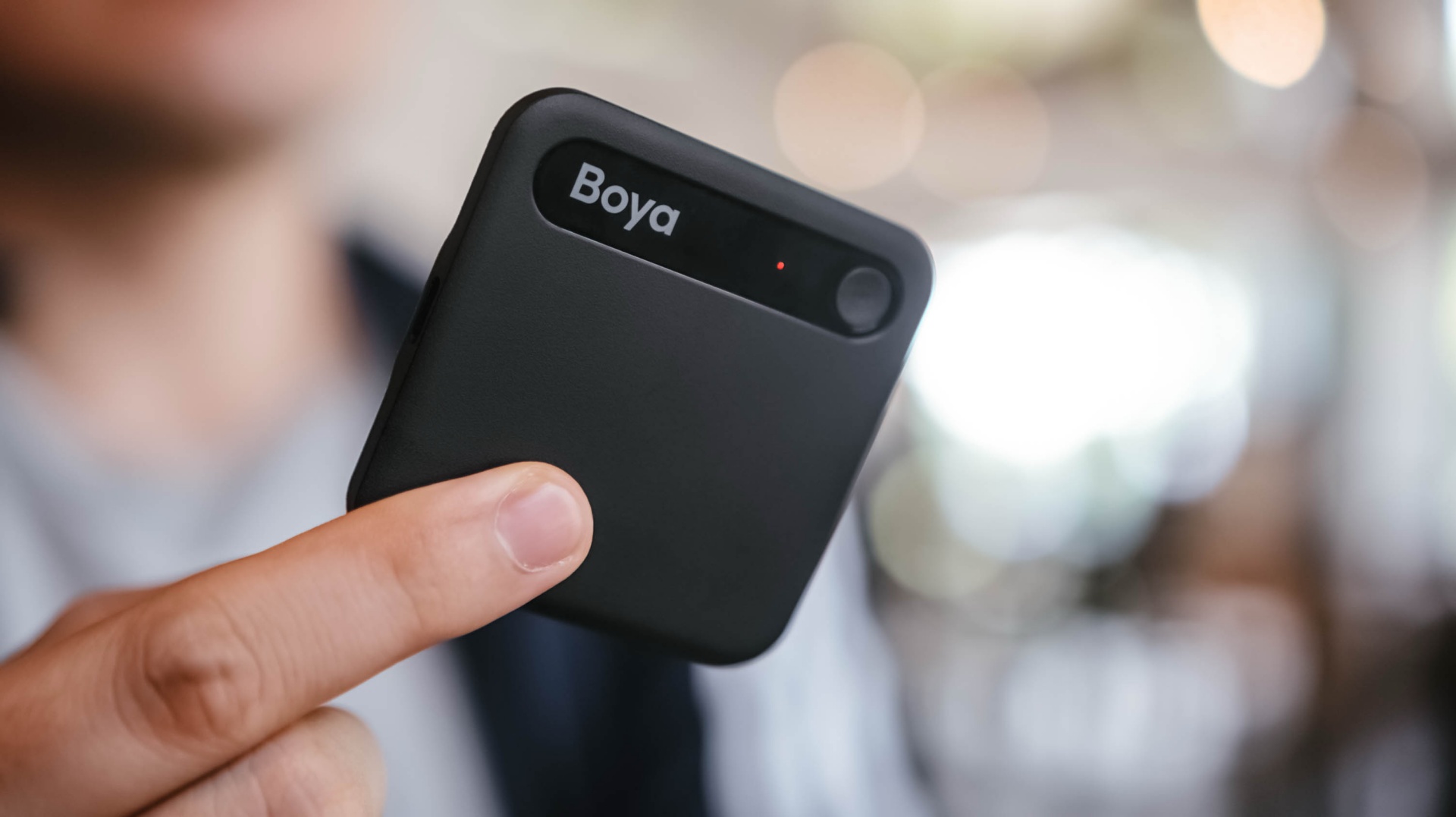
That’s where the Boya Notra Neo comes in. It’s a pretty straightforward portable AI recorder. As its slogan suggests, it’s for meetings, calls, and ideas.
It’s Boya’s more accessible, more affordable answer to the earlier Boya Notra.
Everyday AI note-taking made accessible
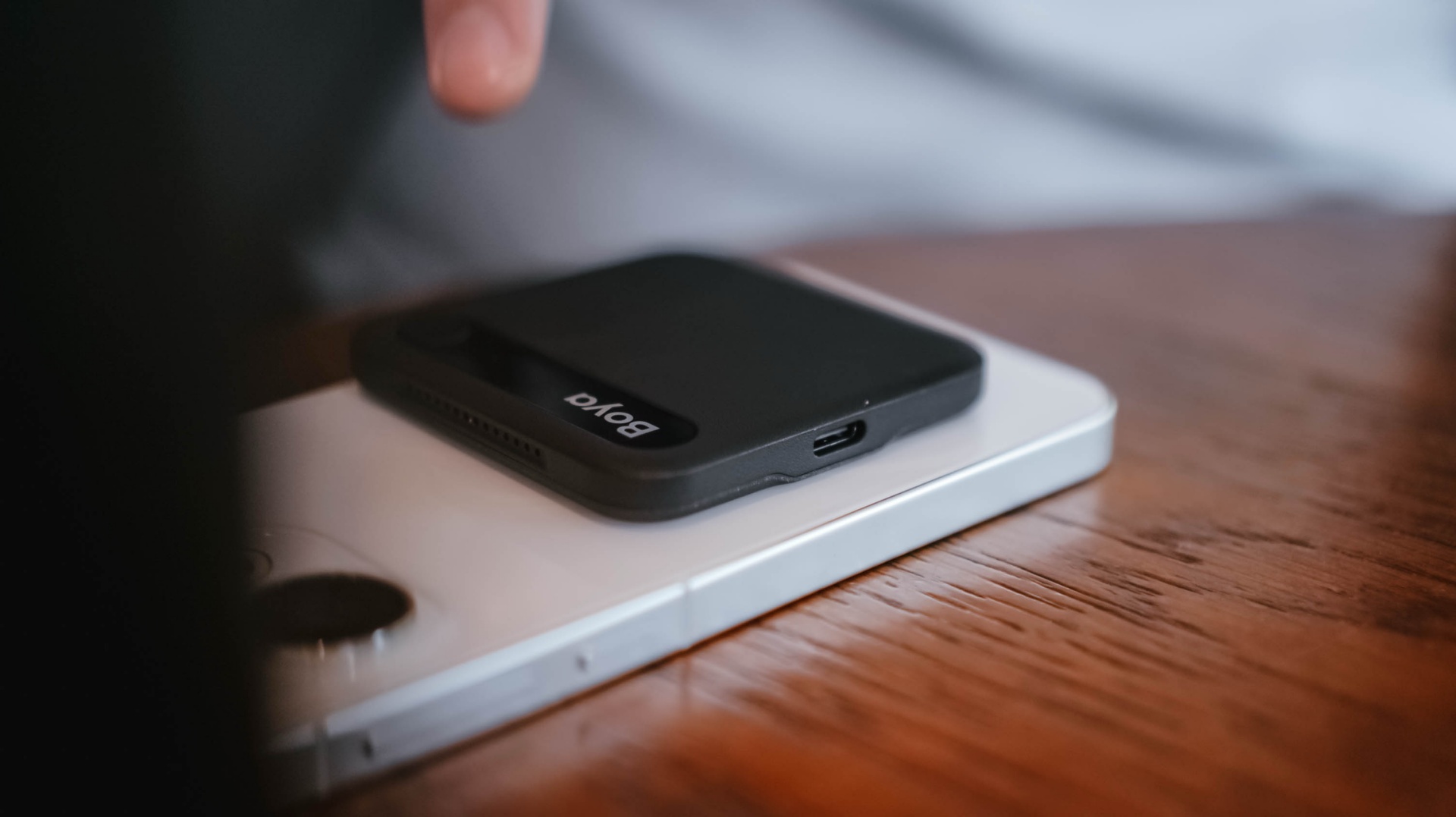
The Neo is incredibly lightweight and something you can sneak into your pocket easily.
I’ve been only able to use it a couple of times in casual settings, when ideas start to flow naturally in the middle of conversations.
Honestly, it’s great to have a companion device for such scenarios.
Although by default, your initial thought when such ideas arise is “Write that down”, sometimes, we are either pre-occupied or distracted by what’s in front of us.
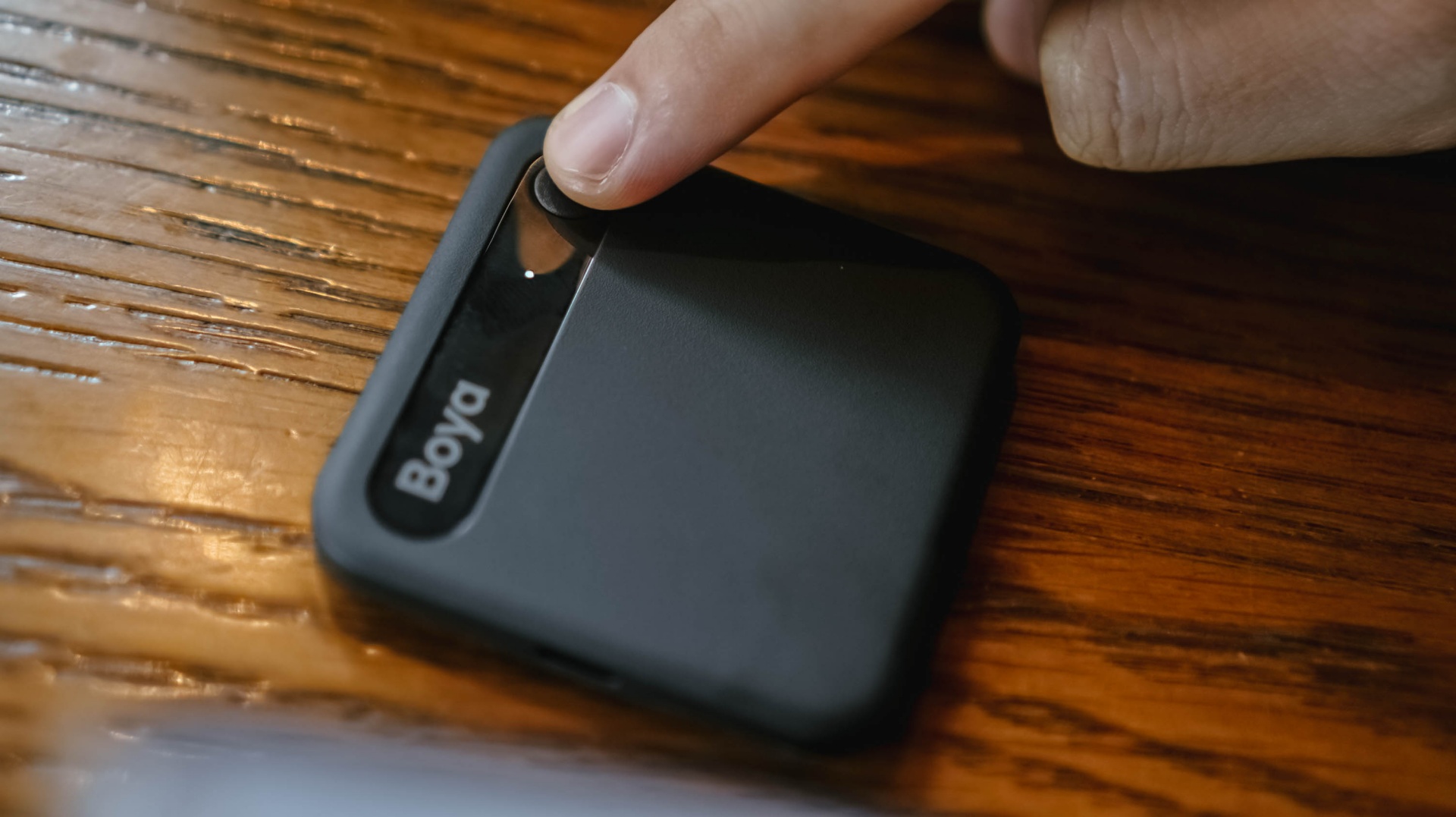
The Boya Notra Neo makes sure we don’t miss note-taking. One tap and it will automatically record audio.
This convenience translates to school group meetings and projects to even more professional settings.
Then, there are journalists like me who occasionally have to interview resource persons and attend press conferences, so this recorder comes in handy.
There are three recording modes to suit real-time needs: Ambient, Phone Call, and Bluetooth.
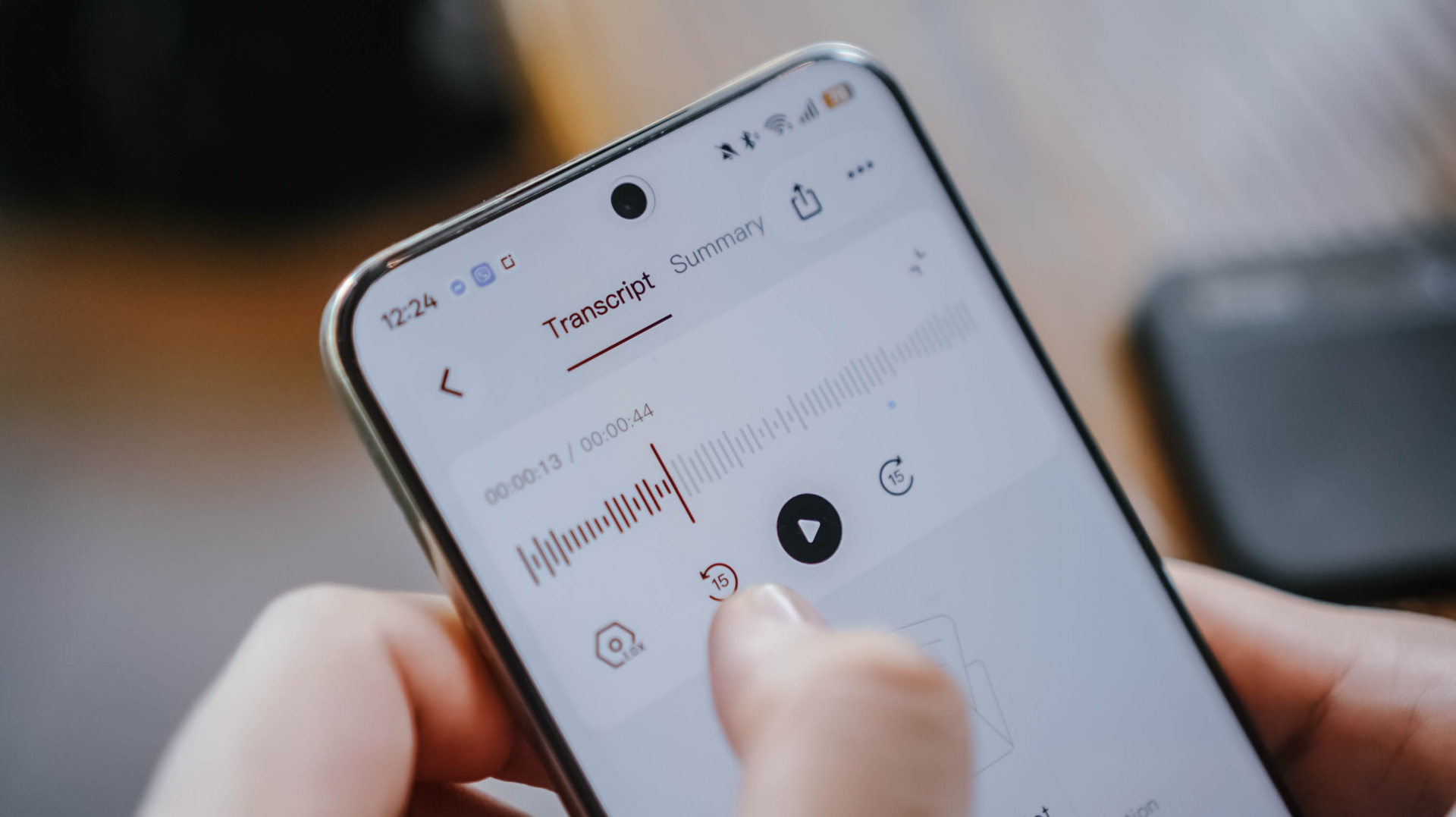
Post-handling of audio recordings are likewise a breeze. Through the Boya OS app, you can connect the device via Bluetooth to sync previous recordings.
If you’re not initially connected to the internet, the device will still be able to record a considerable length with its built-in 8GB memory.
Then, you can just sync the recordings to your device. You can then transcribe the recording on the app with its easy-to-understand interface.
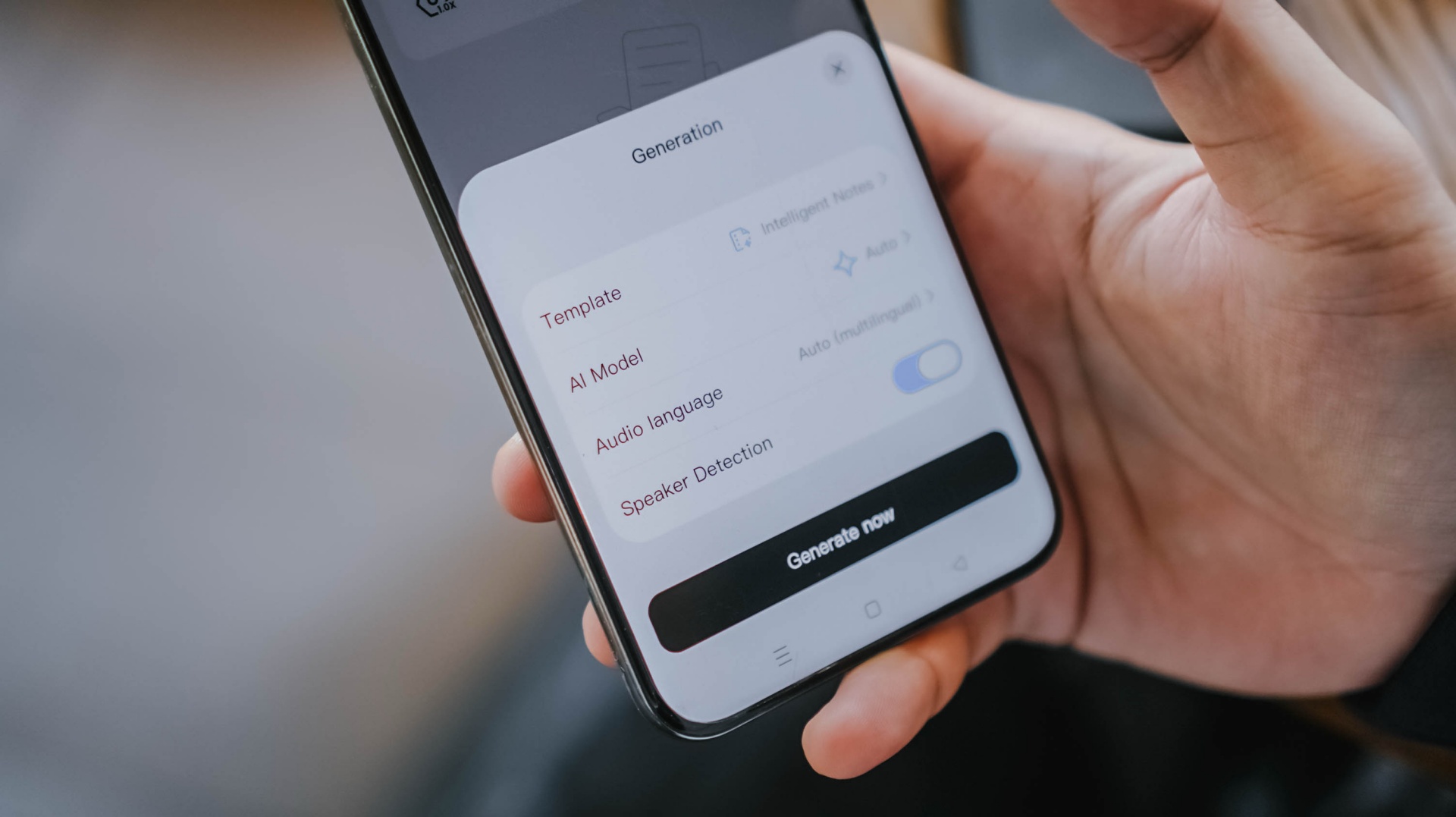
You can even choose from over 140 languages, the style of the transcription from 60 professional templates, and the AI model to help you with generating the text.
Beyond that, you can generate a summary or a mind map to quickly review what has been discussed, be it a meeting, a quick call, or a brainstorming session. You can likewise do an AI search across the recording to find more important notes or quotes and their timestamps.
Boya Notra Neo now available for pre-orders
The Boya Notra Neo is now available for pre-orders, ahead of its September 4 launch at IFA 2026.
Pre-ordering now entitles customers to a discount, so they can get the recorder for just US$ 69.99 (SRP: US$ 79.99).
Customers can purchase here.
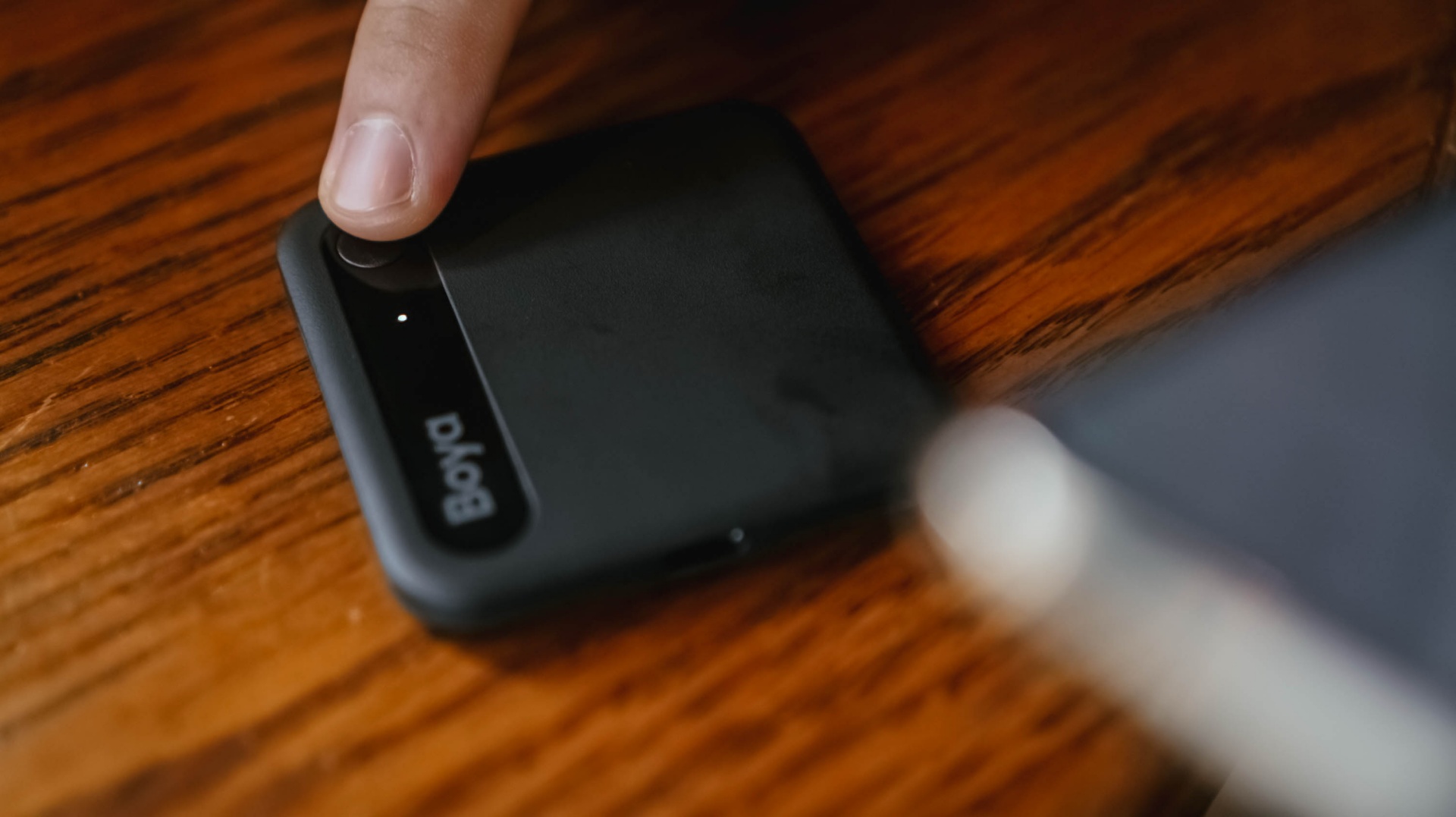
What’s good about the Notra Neo is its ample free recording minutes per month, as it is meant for everyday casual recording to begin with.
This allowance resets every month, so you can start using the device for free.
Subscriptions, on the other hand, are available for those needing more minutes and access to other features.
And oh, there are four colors to choose from to match your smartphone and fashion sense.
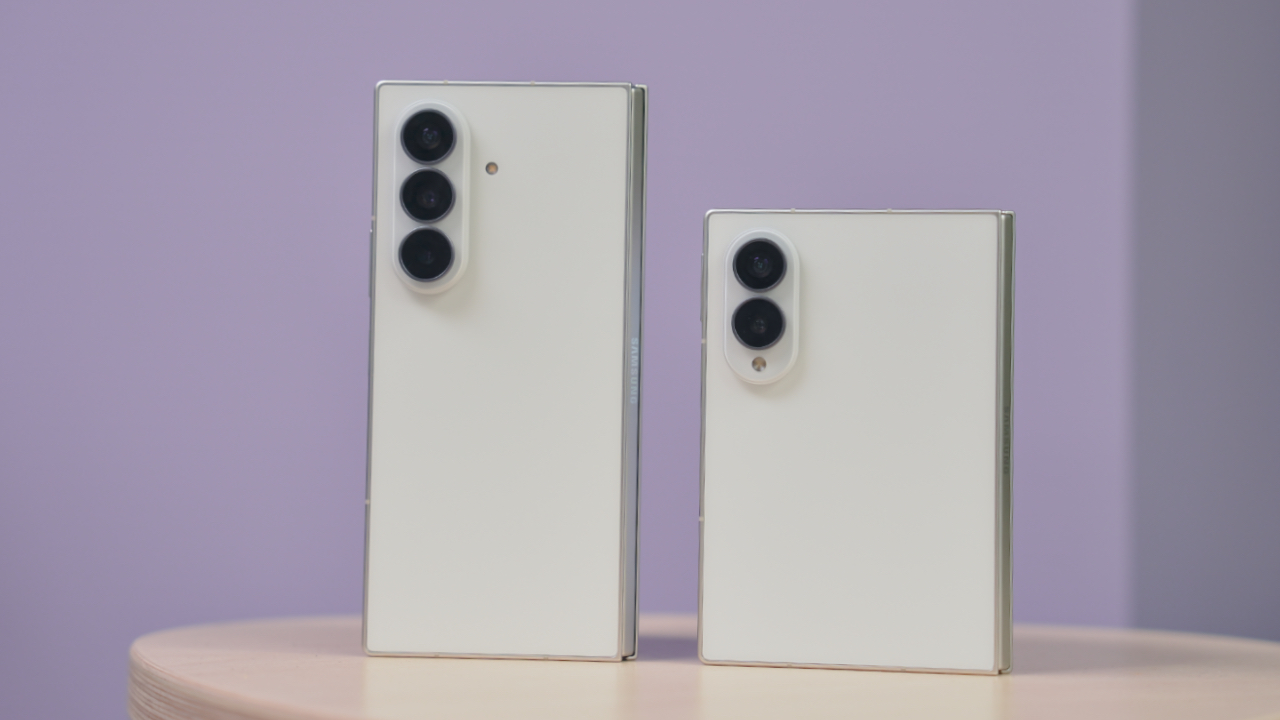
Samsung surprised everyone by introducing not one, but two book-style foldables this year. Alongside the Galaxy Z Fold8 Ultra, the company also unveiled the all-new Galaxy Z Fold8, offering users two distinct takes on the foldable experience.
We’ve only spent a short time with both devices, so this isn’t a full comparison. Think of this as a quick side-by-side look at what immediately stood out during our first hands-on.
In the hand

The biggest difference becomes apparent before you even unfold either device.
Folded shut, the Galaxy Z Fold8 immediately feels more natural in the hand. It’s easier to grip, feels better balanced, and slips into a pocket more comfortably. If you’ve been waiting for a foldable that behaves more like a conventional smartphone when closed, the Fold8 leaves a strong first impression.
The Galaxy Z Fold8 Ultra, on the other hand, feels more familiar. It carries forward the traditional book-style Fold experience with a larger footprint that longtime Fold users will instantly recognize.
When it’s time to work
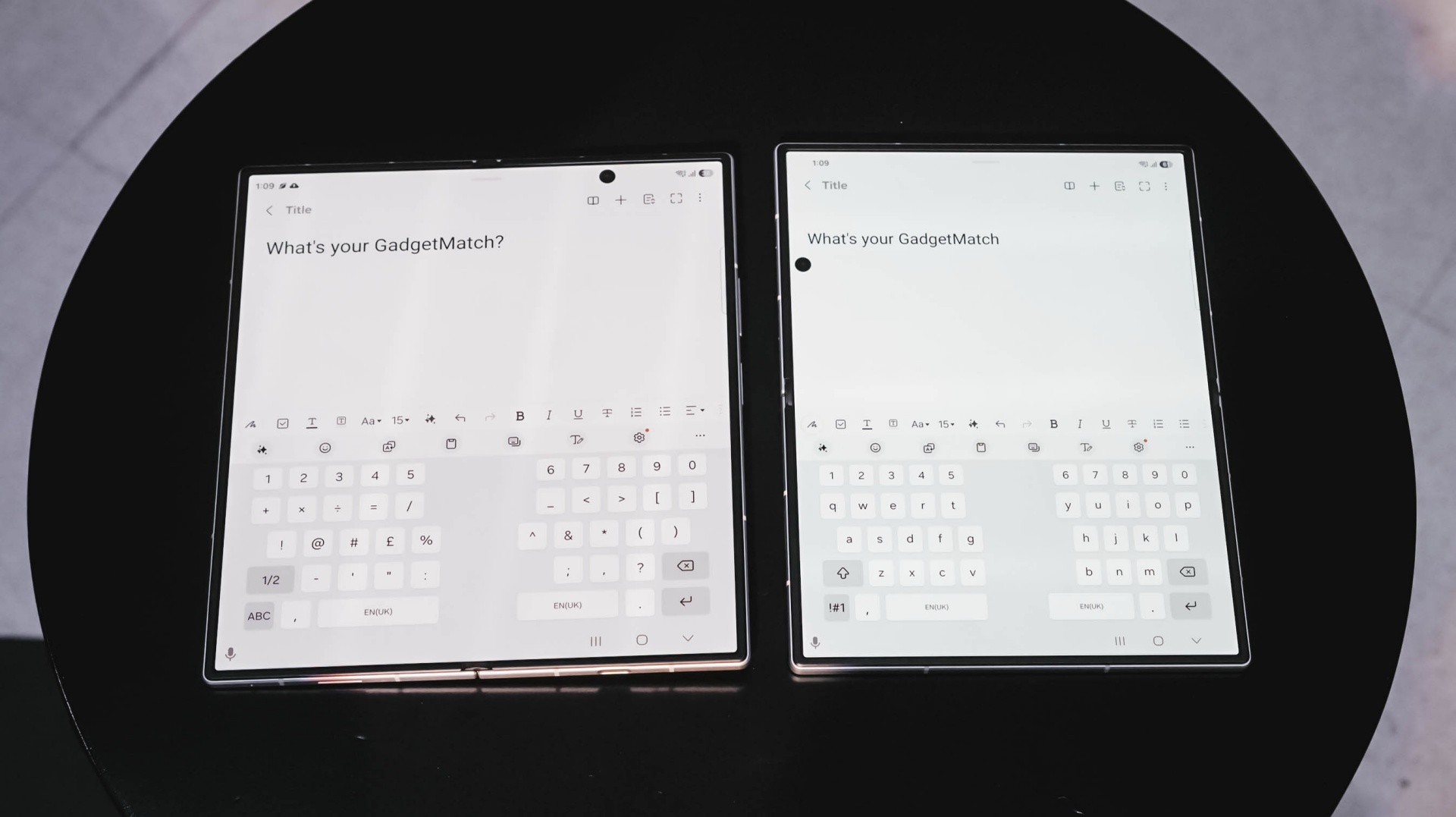
Once unfolded, the gap narrows considerably.
Both devices offer enough room to comfortably write, edit documents, answer emails, or multitask without feeling cramped. During our hands-on, neither device felt noticeably better for productivity.
The same goes for typing. Both provide enough keyboard space to comfortably write articles, answer emails, or even draft letters you’ll never send.
At least from our limited time with both devices, there’s no clear winner here.
Watching videos

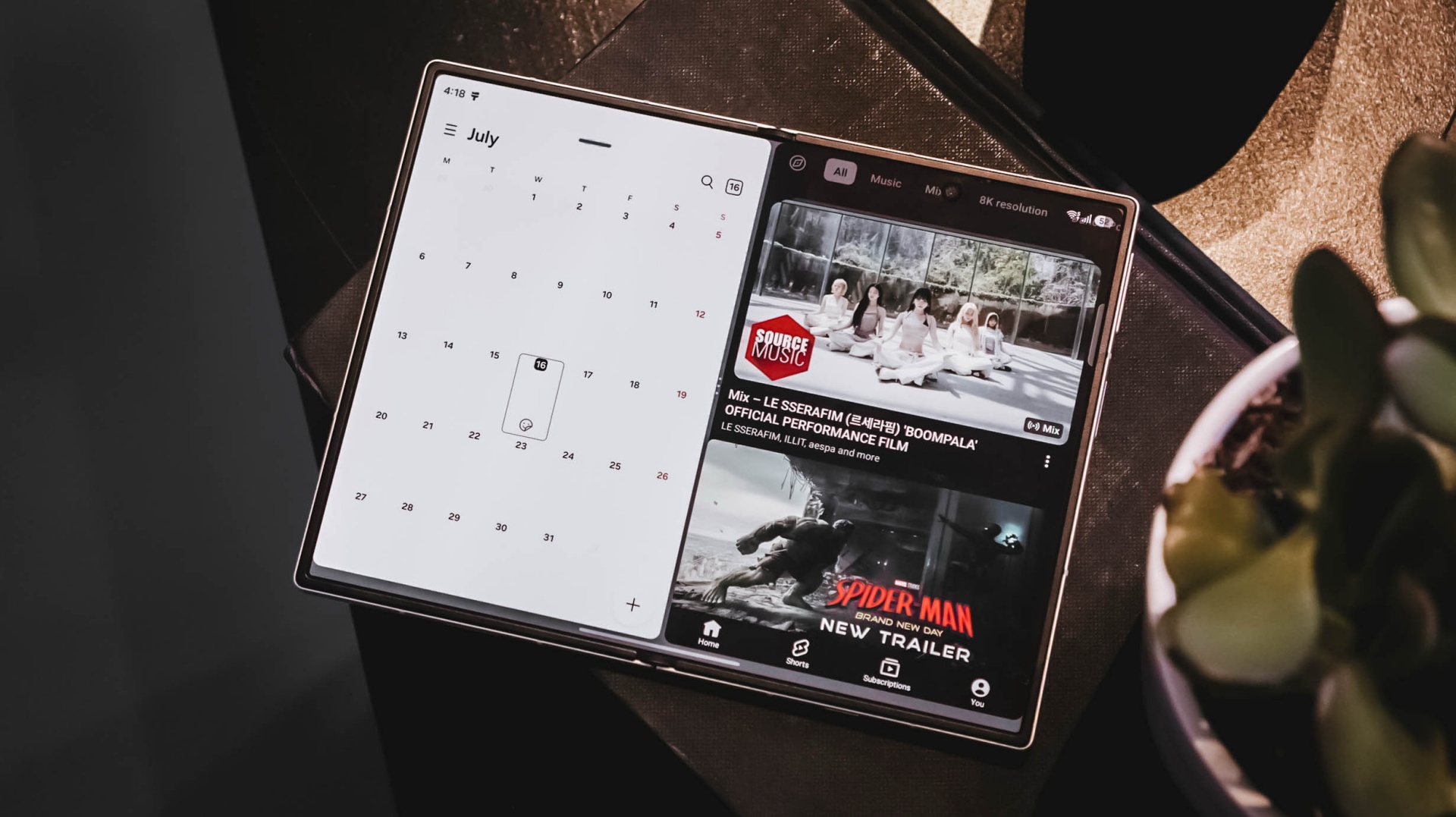
Media consumption is where the Galaxy Z Fold8 stands out.
Its wider display makes videos feel more at home, with fewer black bars when watching content like YouTube. It’s a subtle difference, but one that’s immediately noticeable once both devices are unfolded side by side.
The Ultra still offers a larger display overall, but its proportions remain closer to what we’ve come to expect from traditional book-style foldables.
The hinge

Samsung’s two foldables also differ slightly in how they open and close.
The Galaxy Z Fold8 Ultra’s hinge feels firmer and more deliberate. It comfortably holds its position across multiple angles, making Flex Mode feel a little more reassuring.
The Galaxy Z Fold8, meanwhile, feels smoother throughout the motion. Once it reaches a certain point while opening or closing, it naturally continues the movement on its own instead of holding intermediate angles as firmly as the Ultra.
Neither approach is inherently better. They simply offer a different feel in everyday use.
First impressions

After a brief hands-on, it’s clear that Samsung isn’t positioning these devices as direct replacements for one another.
The Galaxy Z Fold8 Ultra continues to refine the company’s established Fold formula. The Galaxy Z Fold8, meanwhile, explores a different direction—one that prioritizes a more familiar in-hand feel while keeping the productivity benefits that make foldables unique.
It’s still too early to draw conclusions about cameras, battery life, or long-term performance. Those answers will have to wait until we’ve spent more time with both devices.
For now, these are the differences that stood out most after our first look.
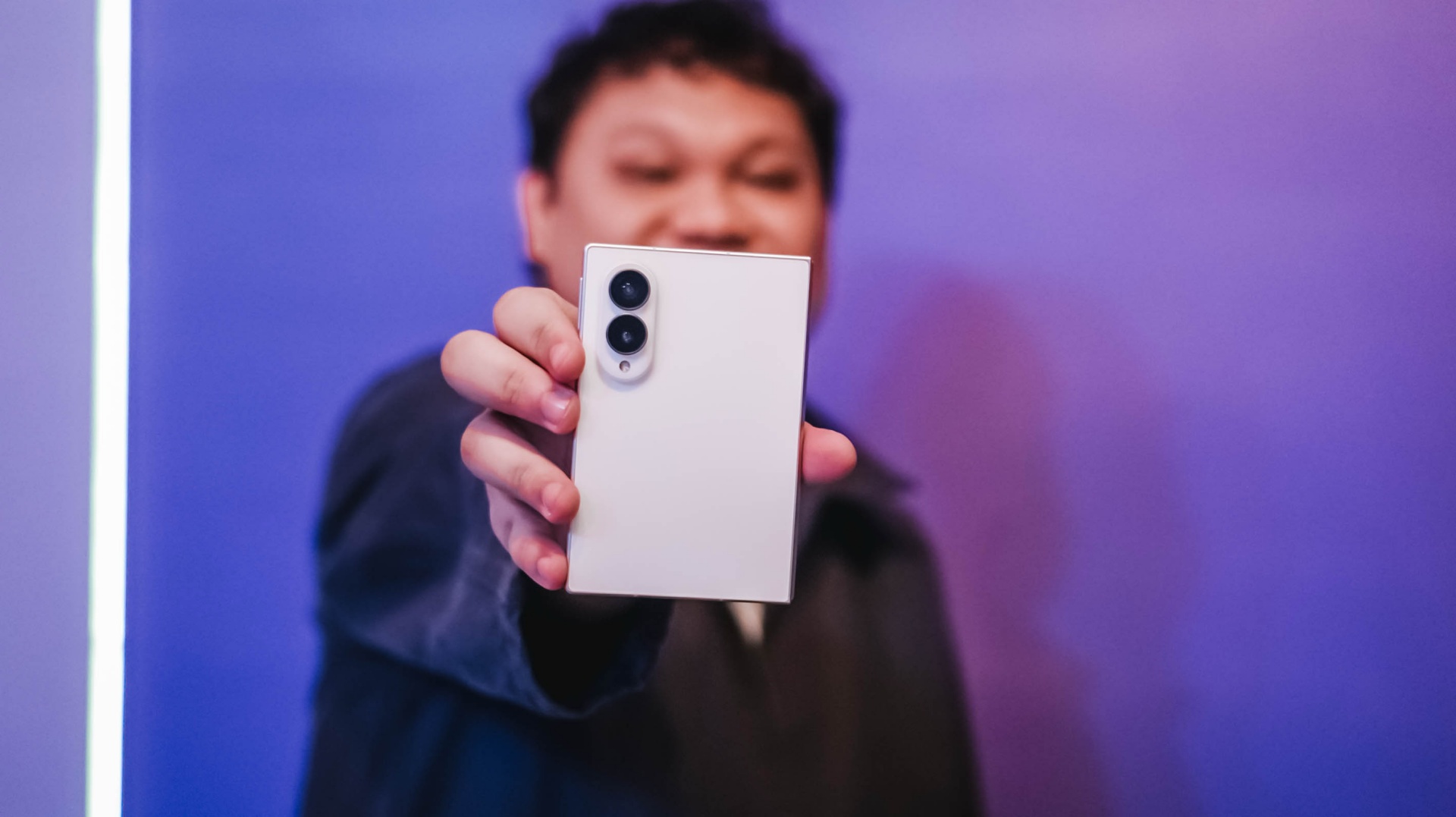
The moment the Galaxy Z Fold8 rested on my palm, I smiled.
Not because it was new. Not because it folded. Not because I was at Galaxy Unpacked (I wasn’t.
I smiled because it finally felt real.
Months ago, I wrote about why wide foldables genuinely excite me. At the time, the Galaxy Z Fold8 was little more than leaks and speculation. I remember feeling eager anticipation with cautious optimism. I wanted Samsung to build this device because I genuinely believed there was room for a different kind of Fold.
The moment someone finally handed it to me, all the experiences I had built up in my head suddenly had something tangible to latch onto.
I remember thinking, “Yes. This is it. This is exactly it.”
It was real. It was one of those rare moments where reality met expectations. And somehow, it even exceeded them.
More than just a wide foldable
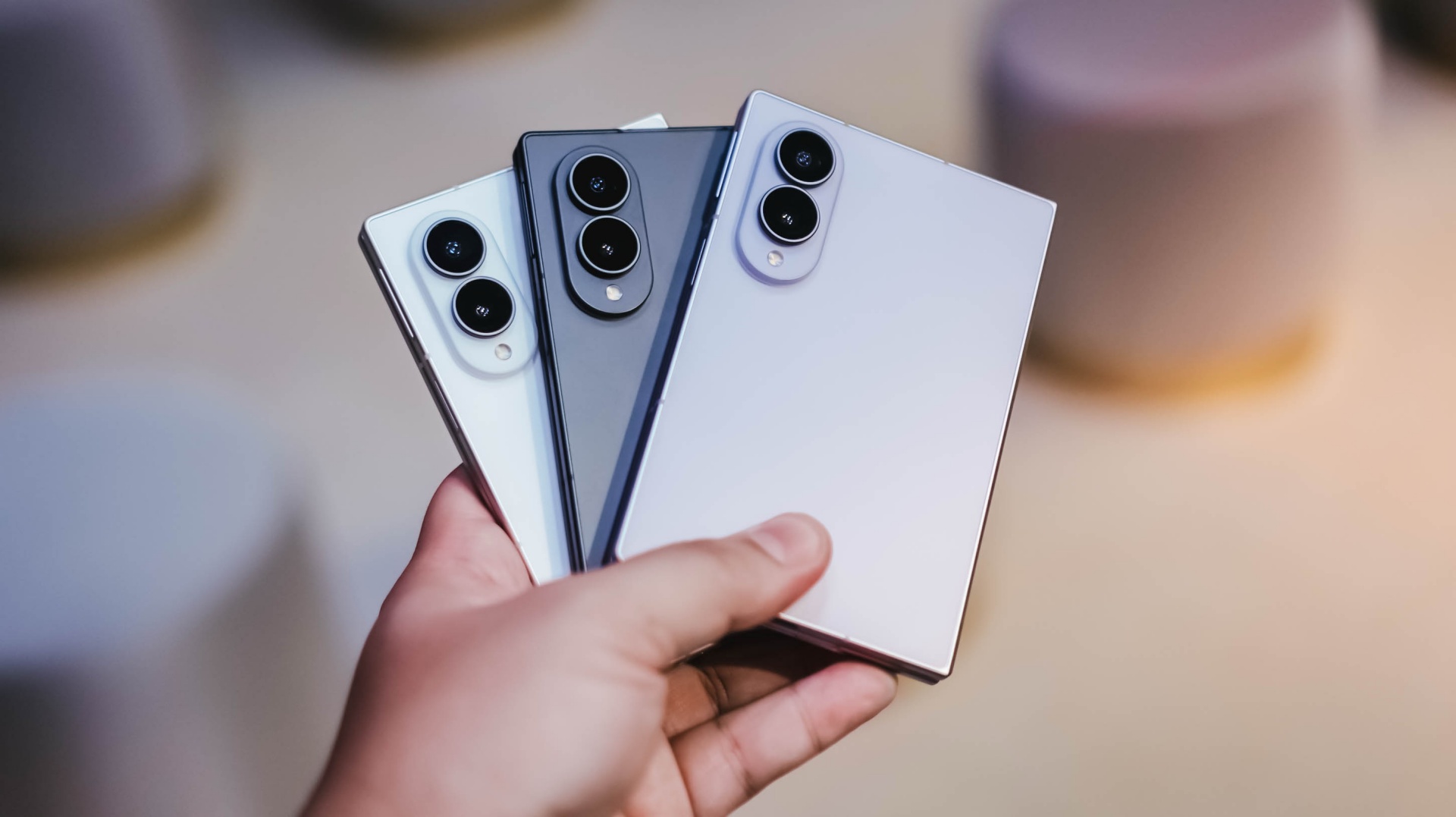
The first thing that struck me wasn’t a spec sheet. It was how the Galaxy Z Fold8 felt.
It’s smaller, thinner, and lighter than I expected. Folded shut, it sits naturally on my palm. It’s balanced. I can browse, swipe, and scroll exactly the way I would on any other smartphone. It never feels awkward or top-heavy.
Then I unfold it.
Suddenly, I have enough room to write comfortably without feeling cramped by the keyboard. I can review articles, respond to emails, and work on documents without constantly wishing I had just a little more screen space.
Turn it sideways and videos feel equally at home. There’s less wasted space and fewer compromises than I’ve come to expect from smartphones.
I keep coming back to one word: Natural.
It surprised me not because Samsung made a foldable that’s easier to use. But because using it felt instinctive.
Maybe we’ve been thinking about smartphones the wrong way
For the longest time, we’ve accepted that smartphones should look like… well, smartphones.
A long rectangular slab that fits in your pocket.
But that’s not really how I use mine anymore. In fact, I rarely use my smartphone as a phone.
It’s where I coordinate conversations across multiple messaging apps. It’s where I answer emails. It’s where I write. It’s where I edit articles, review reels before they go live, leave comments for the team, catch up on news, and occasionally lose myself scrolling through photos and clips of Momo, Chaewon, or whoever happens to make my day a little lighter.
Somewhere along the way, the phone call became secondary. My smartphone quietly became my Palm PC.
Once I looked at it that way, the Galaxy Z Fold8 started making even more sense.
It isn’t trying to be a regular smartphone that unfolds into a tablet. It feels like it’s designed around how many of us already use our devices today.
The part that excites me most

What excites me isn’t that Samsung finally made a wider foldable. It’s that Samsung was willing to try.
The safest thing the company could have done this year was release another refinement of its existing Fold. It would’ve been thinner. Faster. Smarter. We’d all nod in approval before moving on to the next launch.
If Samsung had launched only the Galaxy Z Fold8 Ultra this year, I honestly think it would’ve been an underwhelming announcement.
Instead, Samsung challenged an assumption. It looked at a category it has helped define and asked if there was another way to approach it.
Samsung didn’t invent this form factor. It simply has the scale to make more people pay attention to it. It gives this form factor a legitimate chance to reach more people than ever before. And I’m genuinely excited to see where that leads.
Why this one feels different

New technology should be exciting.
Not simply because it’s new, but because it either solves an obvious problem or asks us to look at something familiar from a different perspective.
The best products leave you thinking, “You know what? That actually makes sense.”
That’s exactly how I felt after spending time with the Galaxy Z Fold8.
Maybe it won’t change how everyone uses a smartphone. But it changed how I think about one. And after waiting for this moment for so long, that’s more than enough.
On my way home, there was one thought I couldn’t shake. I wanted to hand it to someone. Not another journalist. Not someone looking for benchmark scores or camera samples. Just someone whose opinion I genuinely value. Someone who prefers lighter devices.
Someone I’d simply say, “I can’t wait for you to try this. I think this matches how you work and how you use your smartphone.”
Maybe that’s the highest compliment I can give the Galaxy Z Fold8. For all the conversations around AI, performance, cameras, and thinner designs, what I’ll remember most is much simpler.
For the first time in a long time, a piece of consumer tech made me smile the moment I picked it up. Sometimes, that’s the reminder I need about why I fell in love with this industry in the first place.

REDMI Note 17 Pro review: What a rollercoaster ride!
The serious series of ups and downs are NOTEworthy of your attention

Insta360 Luna Ultra review: My new solo coverage camera
Changed my workflow

TECNO MEGAPAD 2 review: Eyes on the size
The MEGA pad for two base users

NBA, Salmon team up for multi-year partnership

realme 16T 5G with 8000mAh battery, IP69 Pro rating launches in PH

Dune: Awakening gets new PS5 gameplay, movie DLC

CAPTAIN TSUBASA 2: WORLD FIGHTERS is out now

Samsung Galaxy S26 FE brings Galaxy AI upgrades
TECNO MEGAPAD 2 review: Eyes on the size

VinFast debuts two-wheeler models, opens 21 e-motorcycle showrooms

REDMI Note 17 Series focuses on long-term reliability

OnePlus officially leaves the United States and Canada

Xiaomi debuts SkyNomad Series featuring new Kunlun platform


-
Reviews1 week ago
TECNO MEGAPAD 2 review: Eyes on the size
-
 Singapore2 weeks ago
REDMI Note 17 Series focuses on long-term reliability
-
 News2 weeks ago
realme 16T to come with 8,000mAh battery, 7-year battery health guarantee
-

 News1 week ago
HUAWEI Pura X View is 2026’s first WIDE slab-type smartphone
-
 Accessories1 week ago
Jackery expands Explorer Series portable power stations
-
 Cameras1 week ago
30 days with the DJI Osmo Pocket 4P
-

 Gaming2 weeks ago
Now Playing: Assassin’s Creed Black Flag Resynced
-

 Gaming1 week ago
NBA 2K27 expands MyCAREER, MyPLAYER, MyNBA, more