
Apps
20 Things every Pokémon Trainer should know


It has only been a week since the official release of Pokémon Go – an augmented-reality smartphone game that lets you catch pokémon, or fantasy creatures of all shapes and sizes, in the real world – but its impact has been overwhelming.
While the global rollout has been slow, the game has already spawned countless memes, news reports, and crazed fans that congregate in the hundreds all in search of shiny new pokémon.
The overnight success of the game has added billions of dollars to parent company Nintendo’s market value, perfect timing, really, as the Pokémon franchise celebrates its 20th anniversary this year.
With many playing the game for the first time, we thought we’d put together a cheat sheet for everyone wanting a quick and easy guide to the wonderful world of Pokémon. 20 tidbits, one for every year of Pokésitence.
Let’s go!
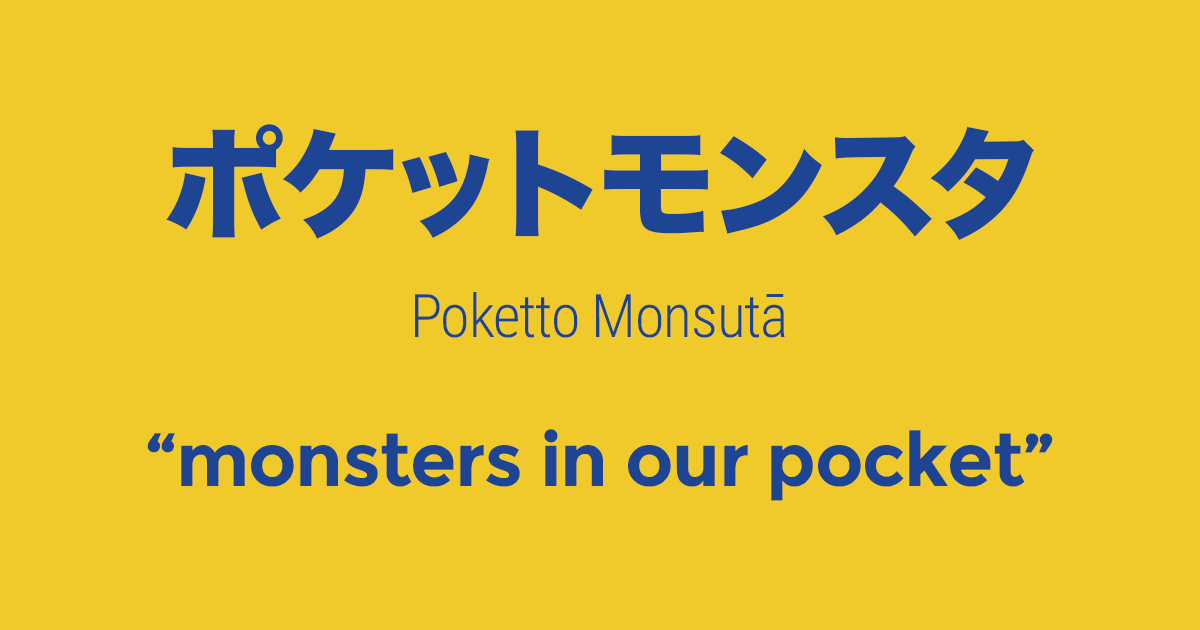
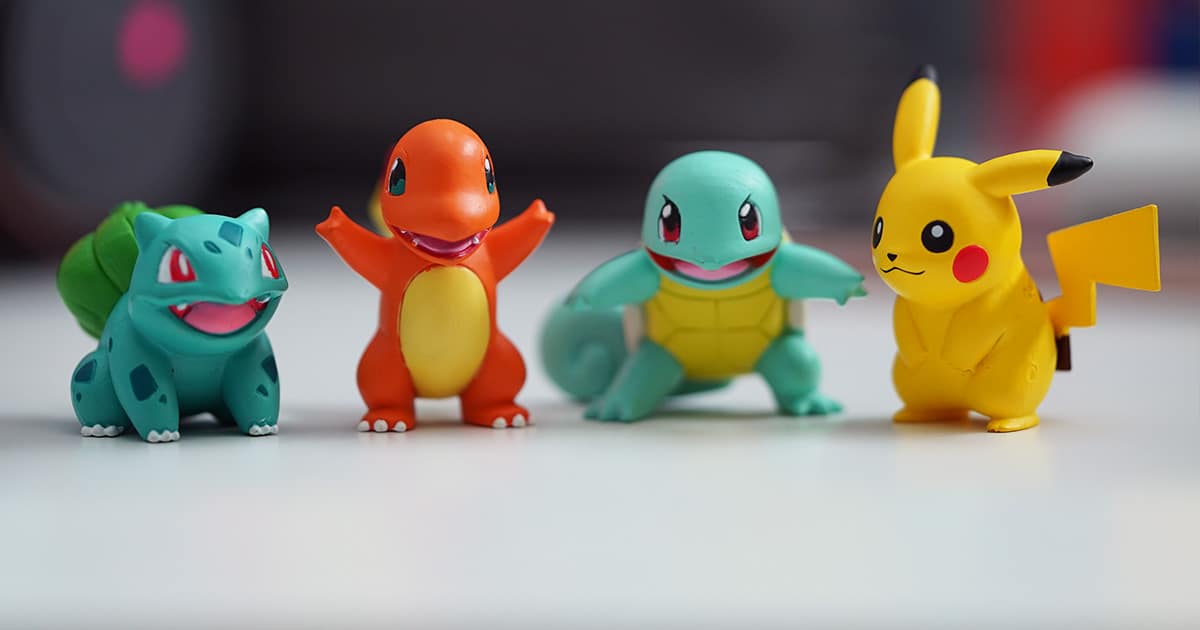
1. Pokémon is short for pocket monsters or Pokétto Monsutā in Japanese. In Katakana, it is written ポケットモンスタ, which literally means, “monsters in our pocket” – because, as we all know, you catch and store pokémon in pocket-sized containers called Poké Balls.
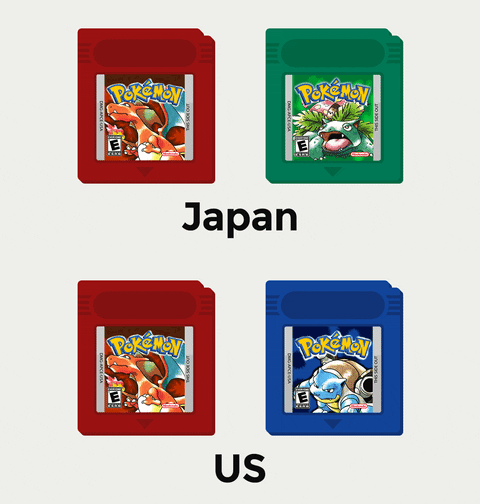
2. The first Pokémon games were Pokémon Red and Pokémon Green (Pokémon Red and Blue in the US). They came out in 1996 on the Nintendo Game Boy. Despite their colorful names, the games were initially played in black and white. Pokémon Go brings gameplay to the real world, sorta. Using your smartphone’s camera, you can track down and catch pokémon as if they were right in front of you. How crazy exciting is that?
3. Pokémon Go was released by the Pokémon Company in celebration of its 20th anniversary this year (2016). The game runs on both iPhones and Android phones. In just a week, the app has been downloaded more times than Tinder and has more daily active users than Twitter.
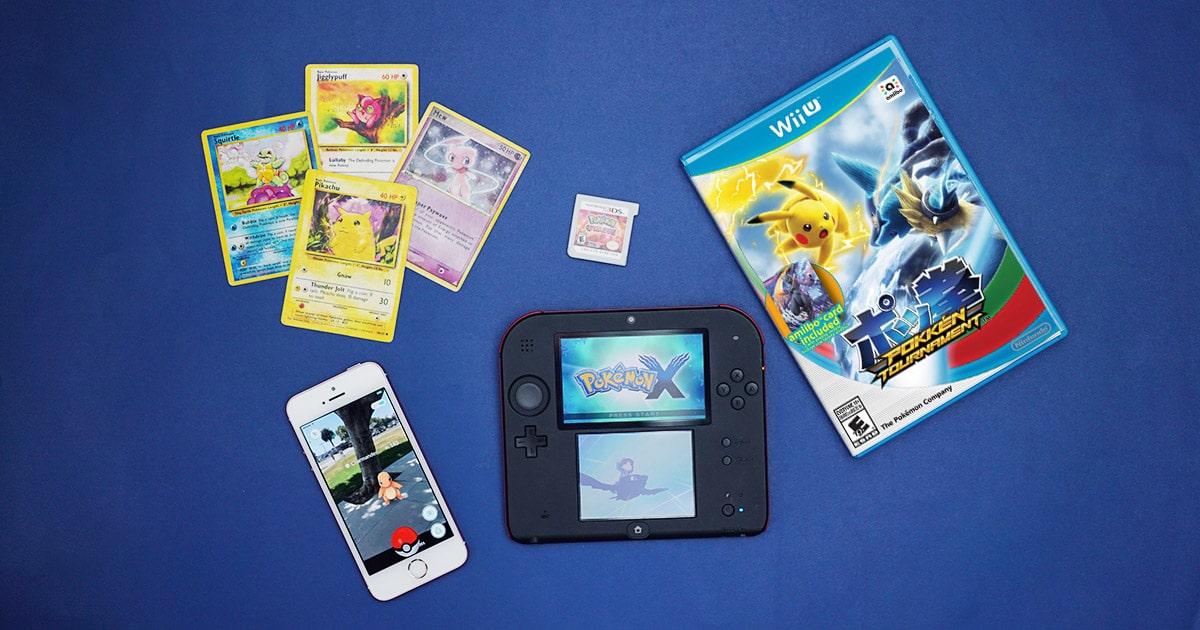
4. The Pokémon franchise includes over 70 games (including spinoffs), 19 movies, a long-running TV series, and a trading card game.
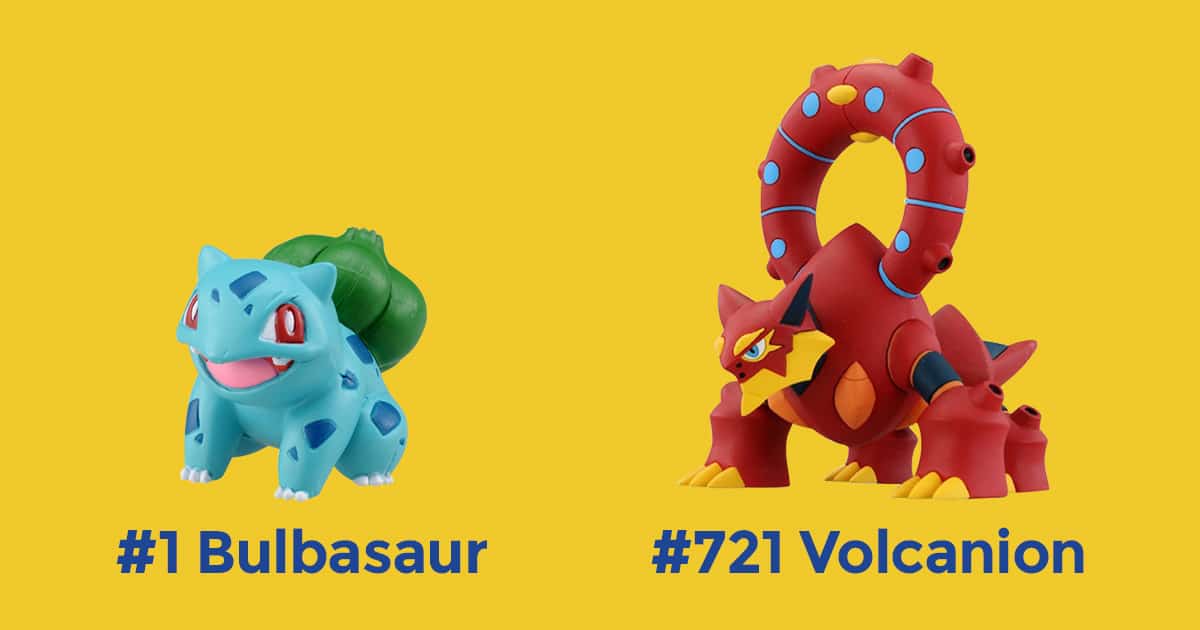
5. There were only 151 original pokémon. But hundreds more were introduced (discovered) with every new generation. There are 721 pokémon today. Bulbasaur is pokémon number 1, Volcanion is number 721. Expect a few hundred more to be added to the list when Pokémon Sun and Pokémon Moon are released this November.
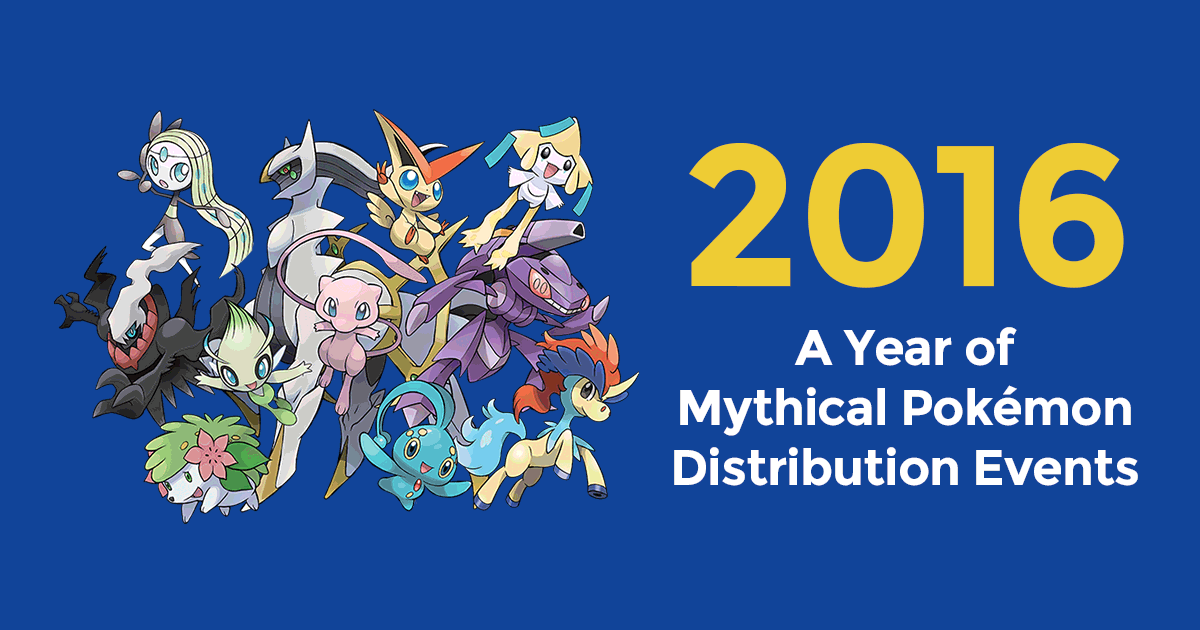
6. While the original theme song for the Pokémon TV show is “Gotta Catch ‘Em All,” you can’t catch all pokémon. There are a handful of mythical pokémon that are only available via special events; some require being at a certain place during a specific time period. In celebration of Pokémon’s 20th anniversary, mythical pokémon are distributed every month (of 2016) via the internet and in-store cards.

7. Speaking of catching them all, while the popular phrase (and song lyric) appears to describe the objective of all Pokémon games, there’s more to the games than just collecting. As the song goes, “To catch them is my real test; to train them is my cause.” The best pokémon trainers know that to defeat other trainers, it is important to know your pokémon and how best to train them.
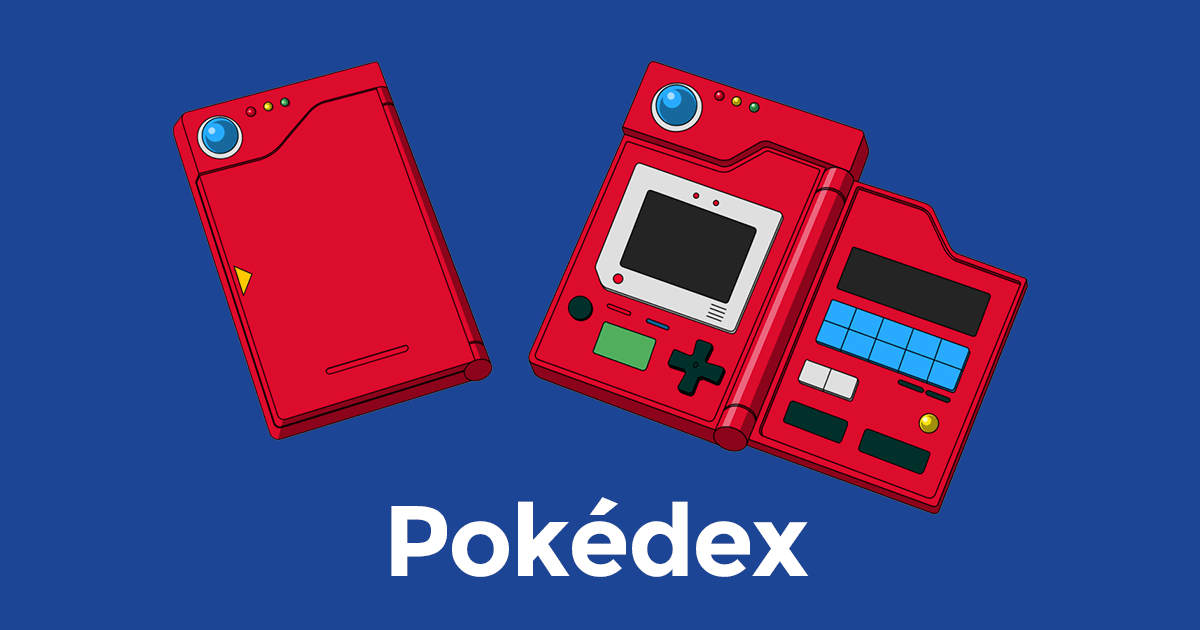
8. Now, let’s say you’ve started collecting pokémon. How do you identify and keep track of them? With the Pokédex of course. Given to players at the start of every game, the Pokédex is a digital almanac of sorts, which serves as a database of all pokémon you’ve caught. Similar to smartphones, we’ve seen an evolution of Pokédex design. The current model has a touch-screen panel and a Mission Impossible-like transparent screen for scanning pokémon.

9. Pokémon names differ in countries like Japan, Germany, and France. Jigglypuff, for example, is called Purin in Japan, which is literally a fluffy, wobbly custard pudding dessert, just like the character.

10. The most iconic of all the pokémon has to be Pikachu, the cuddly yellow creature with pointy ears. While there has been plenty of speculation as to what kind of creature Pikachu is, overwhelming evidence suggests Pikachu is actually a mouse, not a cat, as some assume.

11. Some pokémon take several forms. In the games, Pikachu evolves into the more powerful Raichu if you give it a Thunder Stone. Pikachu also has a pre-evolution form called Pichu, which evolves into Pikachu only when it has reached a certain level of friendship with its trainer.
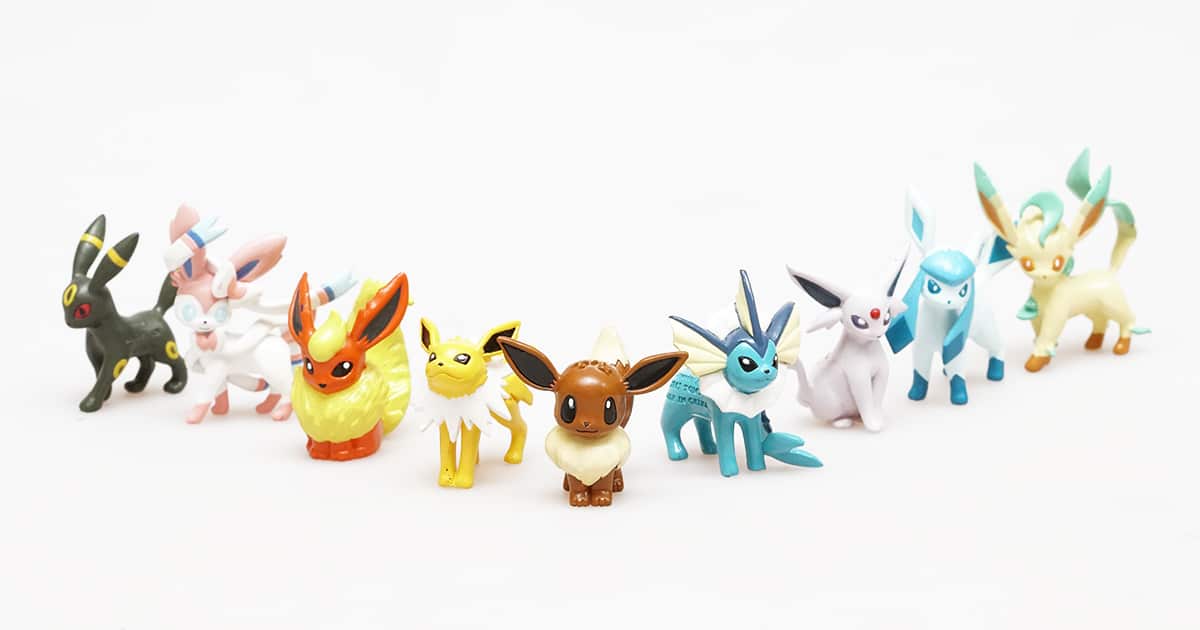
12. One pokémon in particular, Eevee, can evolve into 8 different pokémon, depending on a variety of factors: the type of evolution stone used; the time of day; its surroundings and more. Eevee can become Flareon (fire), Vaporeon (water), Jolteon (electric), Espeon (psychic), Umbreon (dark), Leafeon (grass), Glaceon (ice), or Sylveon (fairy). Will the upcoming games introduce a new Eevee type? We hope so!
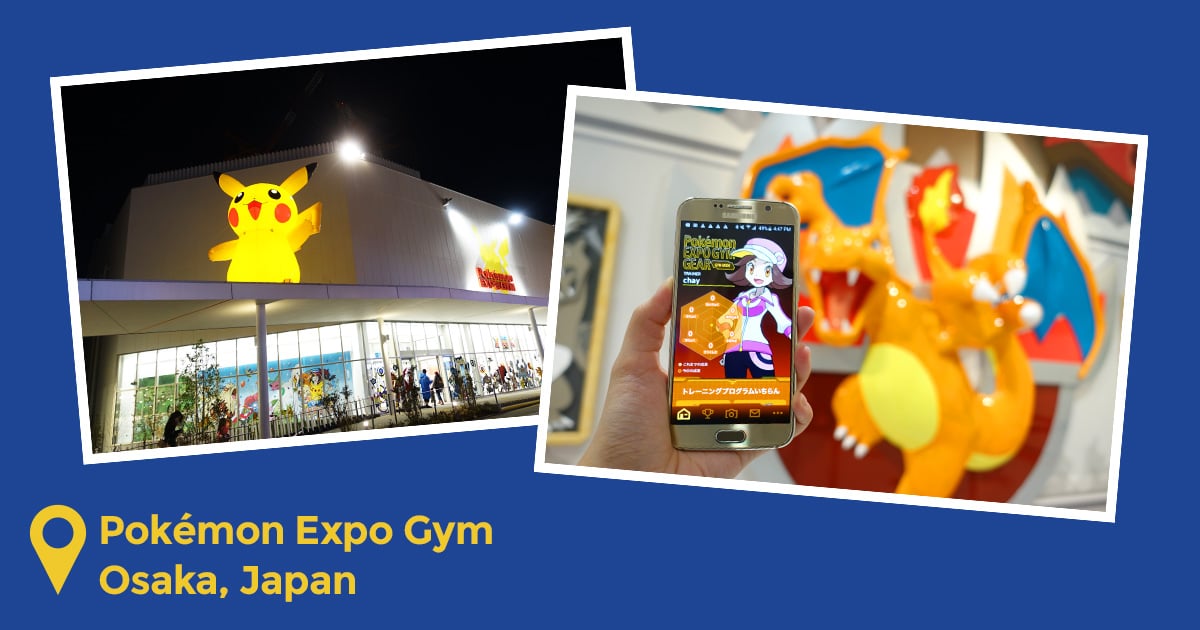
13. You heal worn out pokémon at Poké Centers, buy items at Poké Marts, and battle opponents at Poké Gyms. There’s a real-life Poké Gym in Osaka, Japan. And in Pokémon Go, Poké Stops are where you can pick up items like Poké Balls.

14. Most pokémon have a gender, either male or female, and can be bred. Female pokémon lay eggs, which eventually hatch when you carry them around long enough. If you don’t have two pokémon of opposite genders, the genderless Ditto can step in and breed with most (not all, as some pokémon don’t breed).
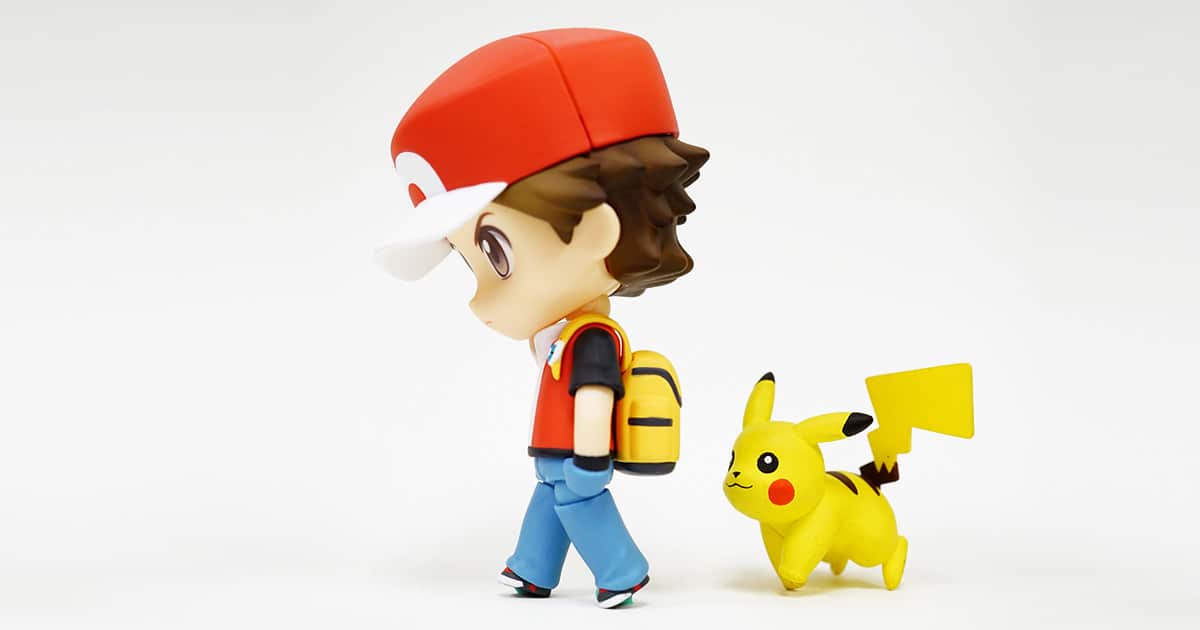
15. Ash is the protagonist in the Pokémon anime. In Japan, fans know him as Satoshi, a clear reference to Pokémon creator Satoshi Tajiri. There’s a theory that everything currently happening in the Pokémon TV show (now over 800 episodes strong, and still airing) is only taking place in Ash’s dream. In the very first episode, which aired in 1997, Ash was electrocuted by Pikachu. Some believe this placed him into a coma, hence the super-long dream, and thus explaining why Ash hasn’t aged one bit even after 19 years.
16. In the third episode of the Pokémon TV anime, there was an earthworm. Non-pokémon creatures appear very rarely in the show. You can see it at the 9:38 mark.

In the episode, Pidgeotto is seen eating an earthworm.
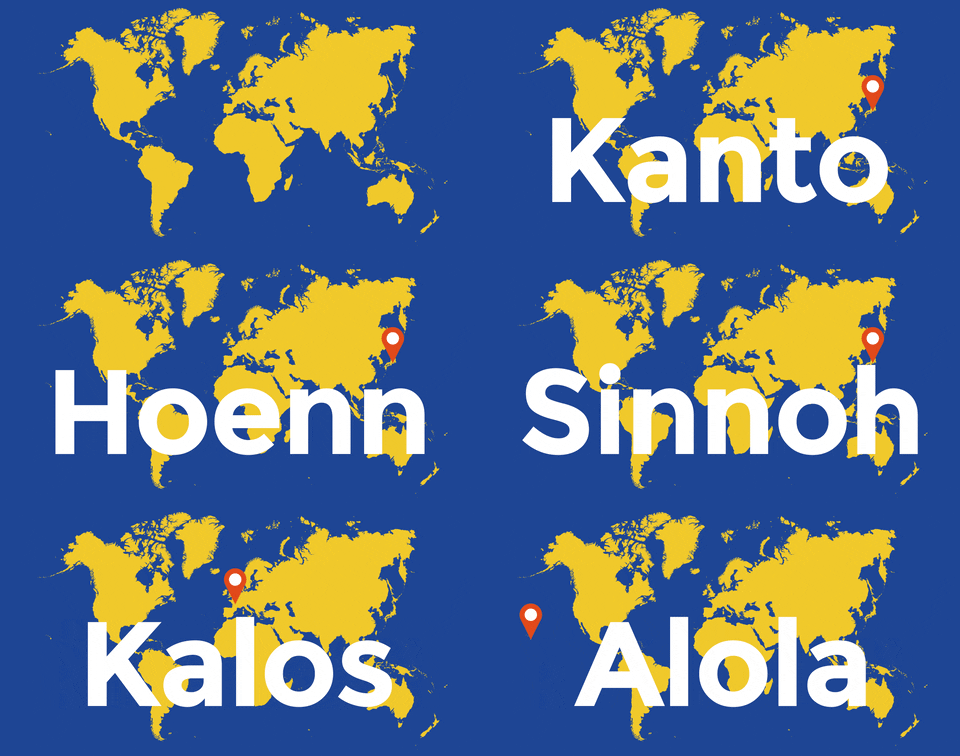
17. The pokémon regions in the game are actually based on real locations. Kanto, Johto, Hoenn, and Sinnoh are all places in Japan. There’s also Unova in the US, Kalos in France, and the new region, Alola in Hawaii.

18. Here’s how some of your favorite pokémon got their names: Ekans and Arbok are Snake and Kobra spelled backwards; Koffing and Weezing’s were originally going to be called NY and LA because of the heavy pollution in those US cities; Hitmonchan and Hitmonlee are named after Jackie Chan and Bruce Lee; Abra, Kadabra, and Alakazam’s US names are based on the magic chant “abracadabra”; Alakazam’s Japanese translation is Foodin, likely a homage to the great magician, Harry Houdini.

19. Filipino singer and actor Billy Crawford sang the theme song for the first Pokémon movie released in 1998. The movie’s soundtrack includes songs from Britney Spears, Christina Aguilera, N*SYNC, M2M, and 98º Degrees, but Billy really was the very best back then, like no one ever was.
20. Meowth is the only pokémon that can talk (we’re not including legendary pokémon that communicate with humans using telepathy). He taught himself how to talk to impress a female Meowth. Smooth.
This feature was a collaboration between Michael Josh Villanueva, Jv Ruanto, Chay Lazaro. Michael Josh still plays Pokémon on his Nintendo DS, Chay grew up on the TV show and playing cards, and Jv… well let’s just say we would have believed it if he said he wrote the entire Bulbapedia.
Image sources: 5a, 5b, 6, 8, 9, 10, 11a, 11b, 11c, 12, 13, 14, 15, 18a, 18b, 19, 20
[irp posts=”7858″ name=”Pokémon Sun and Moon out now”]





Apps
Apple’s best feature to cure motion sickness is finally on Android
Google copies a good page from Apple’s playbook.

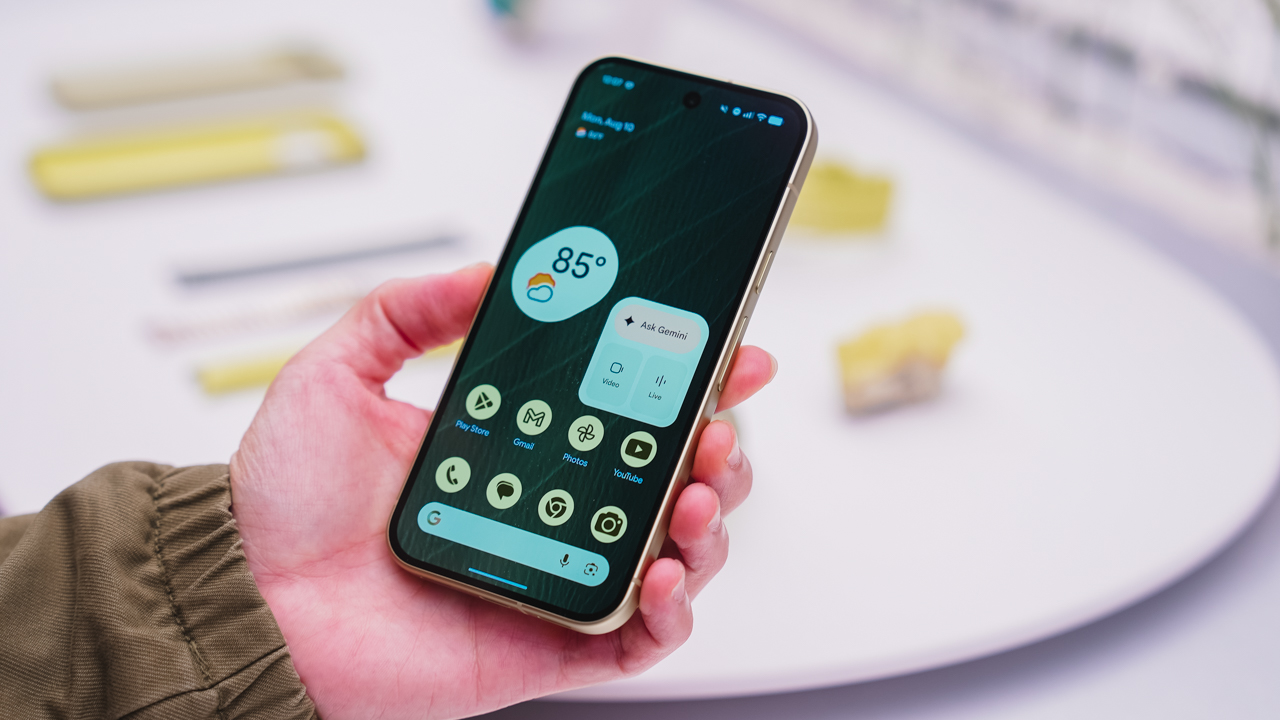
As an Android user, I’ve been jealous of iPhone users for a while now, but it’s not for the reason you might think. See, I’m ridiculously prone to motion sickness when I’m not driving. So, when I discovered that Apple has a software-based cure called Vehicle Motion Cues, I wanted it immediately. Now, Android does have third-party apps that do the same thing, but they’re not as good as a fully native version. Well, those dark, nauseating days are about to come to an end. Android 17 is finally getting a similar tool called Motion assist.
Before that, let’s rewind for a bit. What do these features do? How can they cure motion sickness?
Whenever you open Vehicle Motion Cues or Motion assist, the interface spawns a series of dots on the screen. These dots respond to movement. For example, if the vehicle turns to the left, the dots also go to the left, mimicking the movement. Without cues like this, the stationary nature of the screen clashes with our brain’s perception of movement. The disparity creates that feeling of nausea. Basically, our eyes are desperately trying to focus on the static screen, but our brains are telling us that we should be seeing motion. Having moving dots reorients our brain and places the phone inside our perception of movement.
Now, you can enable the same feature on your Android 17 device through Settings > All services > Motion assist under Personal & device safety. You can also set it so that the feature turns on automatically when the phone detects that you’re in a moving vehicle. Finally, you can also tweak the shape, color, and opacity of these dots.
Android 17’s Motion assist is rolling out now to compatible devices.
SEE ALSO: These are the best Android 17 features (if you hate AI)

Disney is rolling out its new Disney+ app to markets that have been using a separate, Hotstar-derived version of the service.
The change is already happening across several regions, with Southeast Asia among the markets affected. Disney+ subscribers in the Philippines, Malaysia, Thailand, Indonesia, and other countries will transition to the newer app experience as Disney works toward a more unified global platform.
For Philippine subscribers, Disney+ has confirmed that the migration will happen on October 7, 2026.
The company notified subscribers this week that the existing app will eventually be replaced by a new Disney+ app. No action is required yet, and subscribers can continue using the current app until Disney provides further instructions.
The migration is part of a broader effort to bring Disney+ users onto the same core platform.
From Hotstar to a global Disney+ app
The distinction between the old and new experiences goes back to Disney’s international expansion.
Disney used a Hotstar-derived version of its streaming platform in several markets, including the Philippines, Malaysia, Thailand, Indonesia, South Africa, and markets across the Middle East and North Africa.
That version provided a localized Disney+ experience, but it operated separately from the main Disney+ platform used across many other international markets.
Disney began simplifying its streaming brands in 2025. In Southeast Asia, Disney+ Hotstar was rebranded simply as Disney+, while the Star general-entertainment brand was replaced by Hulu. At the time, Disney said the rebrand would bring a more consistent Disney+ experience, although the available content would remain tailored to each market.
The next step is now happening at the app level.
Egypt began moving to the new Disney+ app on September 2, followed by Indonesia on September 3. South Africa is scheduled for September 9, while Thailand is set to follow on September 16. Malaysia and the Philippines are scheduled for October 7.
This makes the Philippine migration part of a much larger transition rather than an isolated local update.

A more familiar Disney+ experience
The new app brings affected markets closer to the current Disney+ experience elsewhere.
Disney redesigned the global app earlier this year with a new For You homepage, improved personalization, redesigned navigation, more prominent profiles, and additional content hubs. Depending on the market and subscription, the interface can also surface Disney+, Hulu, and ESPN sections.
Disney has also been expanding the platform’s international language support. In July, the company added 17 languages, bringing Disney+ to 58 audio languages, with the user interface available in more than 30 languages and subtitles or closed captions available in as many as 42. The expansion included Thai, Indonesian, Malay, Arabic, Hindi, Tamil, and Telugu.
The company has described these updates as part of its effort to make Disney+ a more accessible and localized service for audiences around the world.
The migration also brings practical changes for subscribers.
In the Philippines, Disney says existing subscribers can continue using their current account and subscription. However, profiles, watchlists, and viewing history will not transfer to the new platform. Philippine subscribers will therefore need to set up their profiles and watchlists again after moving to the new app.
The subscription itself does not require an additional charge because of the migration. Existing billing cycles will also remain in place.
The catalog will still depend on where you are
Moving to the global Disney+ app does not mean every country will suddenly receive the same library.
Disney continues to operate its streaming service according to regional content rights. Its own Help Center notes that content availability can differ by country or region, and that some titles may not be available in a subscriber’s current location.
That means a subscriber in the Philippines, for example, will still see a catalog determined by the rights Disney has for the Philippine market. The same applies to subscribers in Thailand, Indonesia, Malaysia, South Africa, or any other market making the transition.
What is becoming more global is the platform itself.
That brings Disney+ closer to the model used by other major streaming services, where subscribers can use a common app experience across markets while the actual catalog changes depending on where they are.
The distinction is particularly relevant for people who travel. Disney’s global Help Center says subscribers abroad can stream content available in the country or region they are visiting, meaning the service’s location-based availability rules still apply even on the unified platform.
Disney has been signaling this direction for some time. In 2025, the company said its redesigns were leading toward a “fully integrated unified app experience” in 2026. The latest migrations appear to be the next major step toward that goal.
For subscribers in the remaining Hotstar-derived markets, then, the biggest change isn’t necessarily what’s available to watch.
It’s where and how they access Disney+.
Apps
Canva teams up with SB19 to turn A’TIN’s passion into creativity
Campaign lets fans access assets, editable templates, more
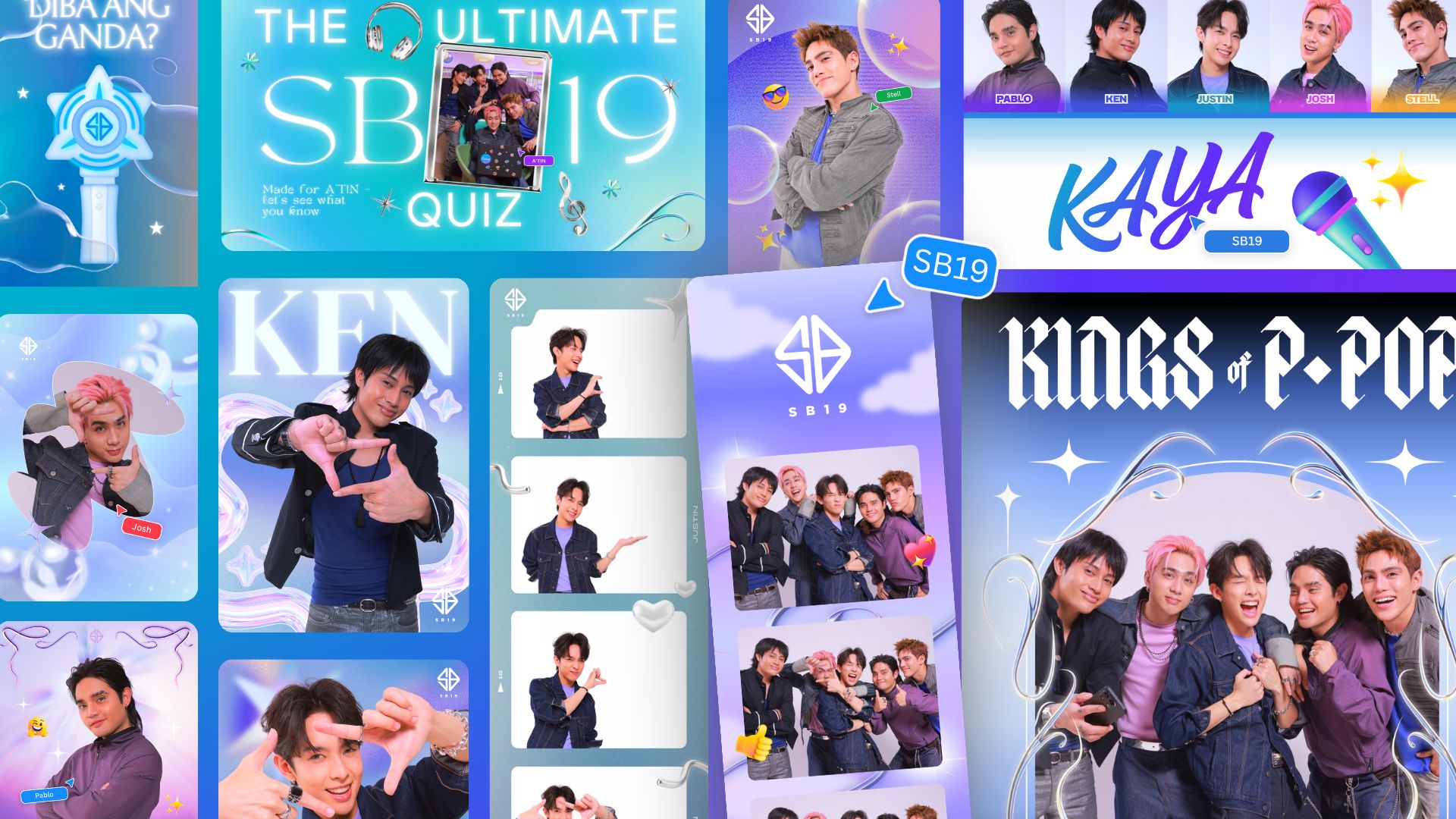
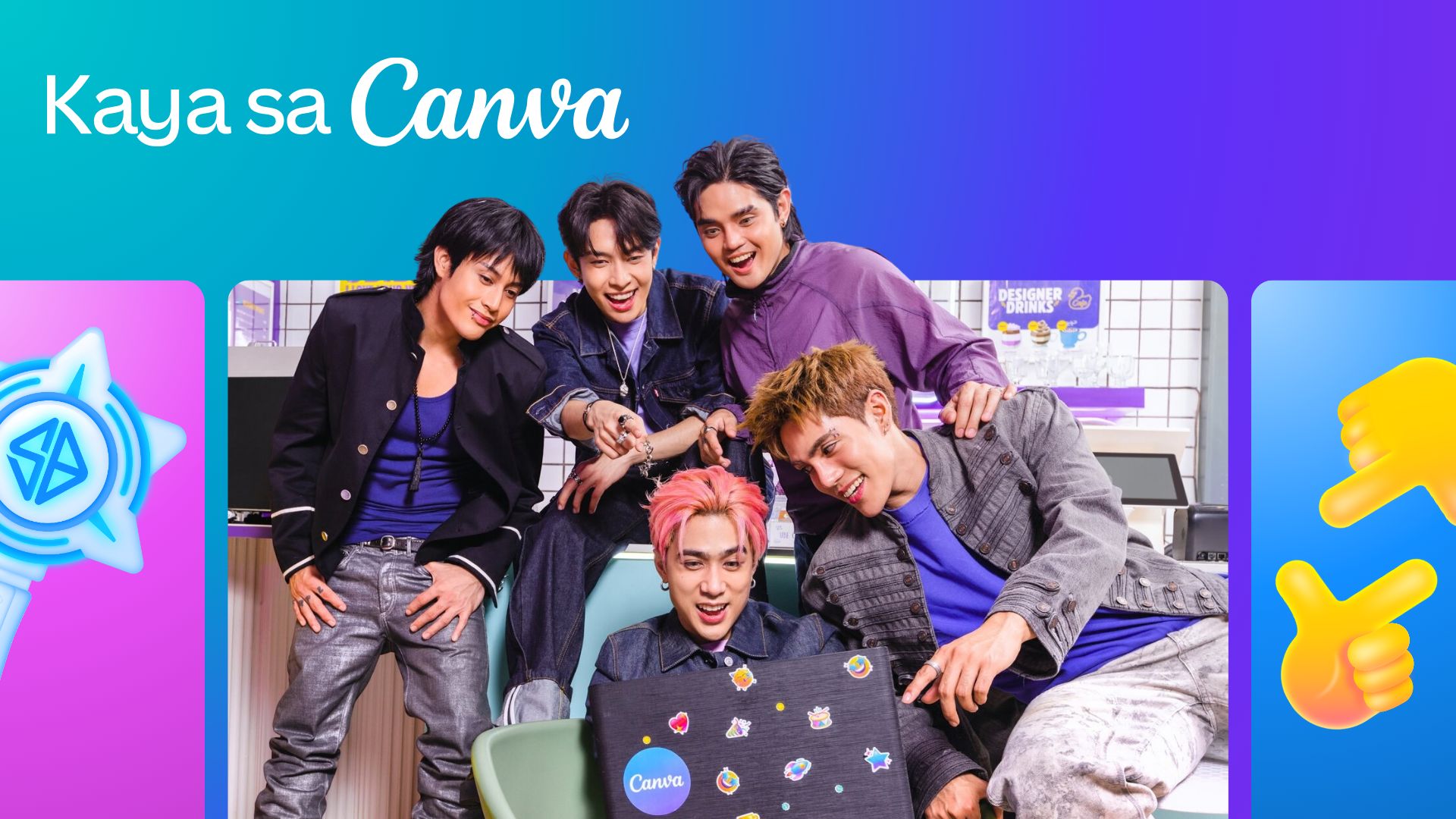
Canva Philippines has joined forces with SB19 and Sony Music Entertainment to launch the “Kaya sa Canva” campaign.
This first-of-its-kind initiative is aimed at transforming the popular Filipino boy band’s fanbase into creators by giving them access to official design assets, exclusive templates, and powerful creative tools.
That’s of course as fans have a way of creating artwork, banners, and more outputs to honor their idols.
As such, the partnership enables the A’TIN (SB19’s fanbase) to access the Canva-exclusive SB19’s Creative Hub.
This dedicated space lets fans access assets, including SB19-inspired sticker packs, custom typography, and editable templates inspired by the group.
Fans around the world will initially have access to templates for photo-booth strips, wallpapers, posters, and videos.
The campaign will then expand with Canva-exclusive assets celebrating the group’s New Era, as well as their latest single, “Lawless”.
Meanwhile, the original song “KAYA” is accompanied with an upbeat music video, doubling as a love letter to A’TIN and a masterclass in Canva’s tools.
Every visual and animation is fan-inspired, a celebration of the creativity, passion, and dedication that’s defined in the community from day one.

DJI Lito X1 review: Is this the best lightweight drone for creators?
Making a strong case as a travel companion and a capable B-cam!


REDMI Note 17 Pro Max review: A new breed born from AI greed
Welcome to the new normal


Marvel’s Wolverine review: When the claws come out
A brutal, cinematic superhero adventure
DJI Lito X1 review: Is this the best lightweight drone for creators?

Now Playing: Resident Evil

HONOR, Fidesmo partner for contactless payments across Europe, Middle East

Ford revs up Truck Month with extended 5-star care offers
REDMI Note 17 Pro Max review: A new breed born from AI greed

TECNO MEGAPAD 2 review: Eyes on the size

realme 16T 5G with 8000mAh battery, IP69 Pro rating launches in PH

HUAWEI Pura X View is 2026’s first WIDE slab-type smartphone

REDMI reveals the refreshed Note 17 and Note 17 Pro series

REDMI Note 17 Series: Price, availability in Singapore


-
 News2 weeks ago
HUAWEI Pura X View is 2026’s first WIDE slab-type smartphone
-

 News2 weeks ago
The CAMON Slim 5G is TECNO’s latest ultra-slim smartphone
-

 News1 week ago
iPhone 18 Pro series: Price, availability in the Philippines
-

 IFA 20262 weeks ago
TECNO’s POVA 8 Pro gets a stealthy makeover
-

 Automotive2 weeks ago
Ford’s new Everest lineup brings V6 engine to the top, tech down the line
-

 Gaming2 weeks ago
Now Playing: Elden Ring Tarnished Edition
-

 Singapore1 week ago
iPhone 18 Pro series: Price, availability in Singapore
-

 Philippines2 weeks ago
Smart cuts 5G Home WiFi price