

Sleek. Understated. Incredibly lightweight.
The Zenbook S13 OLED takes the helm for ASUS’ contender when it comes to thin, stylish laptops. With its top-of-the-line specs, premium appeal, and price point — it clashes with one of the best value laptops in the market.
Taking on the Apple Macbook Air M1, the Zenbook S13 OLED positions itself as a daily driver to consider. A machine to accompany you in your everyday tasks and then some.
A thin and stylish top-of-the-line laptop
The Zenbook S13 OLED aims to capture Apple’s demographics for the Air M1: People who want to do a bit of everything while on the go.
From students that are back-and-forth to their unis to young professionals who are looking for a device that handles their everyday needs. Both machines aren’t aimed toward staunch tinkerers or incidental gamers who need demanding hardware to keep up with their activities.
Nevertheless, both machines are capable of handling everyday tasks. They’re able to multitask and perform light to moderate usage of creative software for photography, video editing, and illustration. How so?
The Zenbook S13 OLED uses up to an AMD Ryzen 7 6800U processor with a 512GB SSD and an option for 8GB or 16GB RAM. For an average user, the computing power provides a smooth, seamless experience.
Against the Air’s madness

Apple uses the M1 chip for the Air M1, which houses an 8-core CPU and 7-core GPU. It’s insanely powerful that even with a thin design (without a fan), I was able to mass-edit photos on Lightroom, handle complex designs on Adobe Photoshop and Illustrator, and even edit short videos for my Reels.
In fact, the Macbook Air M1 has been my daily driver for almost two years. It’s one of the best-value laptops in the market, even with the presence of the Macbook Air M2.

Switching to the Zenbook S13 OLED for a month gave me the opportunity to experience what it’s like to use a Windows laptop again, check how it fares against my current daily driver, and see how far ASUS has come.
Comparison
I’ll be upfront right away. From an Apple user’s perspective, the Zenbook S13 OLED is pretty much on par with the Air M1 when handling everyday tasks.
Streaming your favorite tunes while multitasking between 20 tabs is a total breeze.
It’s as if I was using expensive Windows machines like the higher-end Yoga and Dell XPS 13. But comparing the Zenbook S13 OLED against the Macbook Air M1 will entail a lengthy discussion.
It has different operating systems, uses different chipsets and hardware, and of course, different ecosystems. Sometimes, it boils down to user preference. What are we familiar with? What do we enjoy using?

In terms of raw power, since they’re pretty much the same, we listed down parameters that can be a factor in having a pleasant experience on a daily driver.
But if you want a full rundown of benchmarks for the Zenbook S13 OLED, GadgetMatch’s good friend Tom the TechChap spectacularly presented it in his video.
Display
The S13 prides itself on an HDR-certified OLED display. While it’s the same 13.3-inch panel with a 16:10 aspect ratio as the Macbook Air M1, the S13 outperforms Apple’s notebook with its 2.8K resolution and vivid display.
It’s worth noting that the Air M1 uses a Liquid Retina display, which still uses IPS technology. Watching on the S13 is obviously magnificent. Like other OLED panels, the colors are vivid; the blacks are deep; the contrast is sharp; the overall picture quality is breathtaking.
When you pair it with its Dolby Atmos speakers, any video content is easily pleasurable to feast your eyes and ears on.
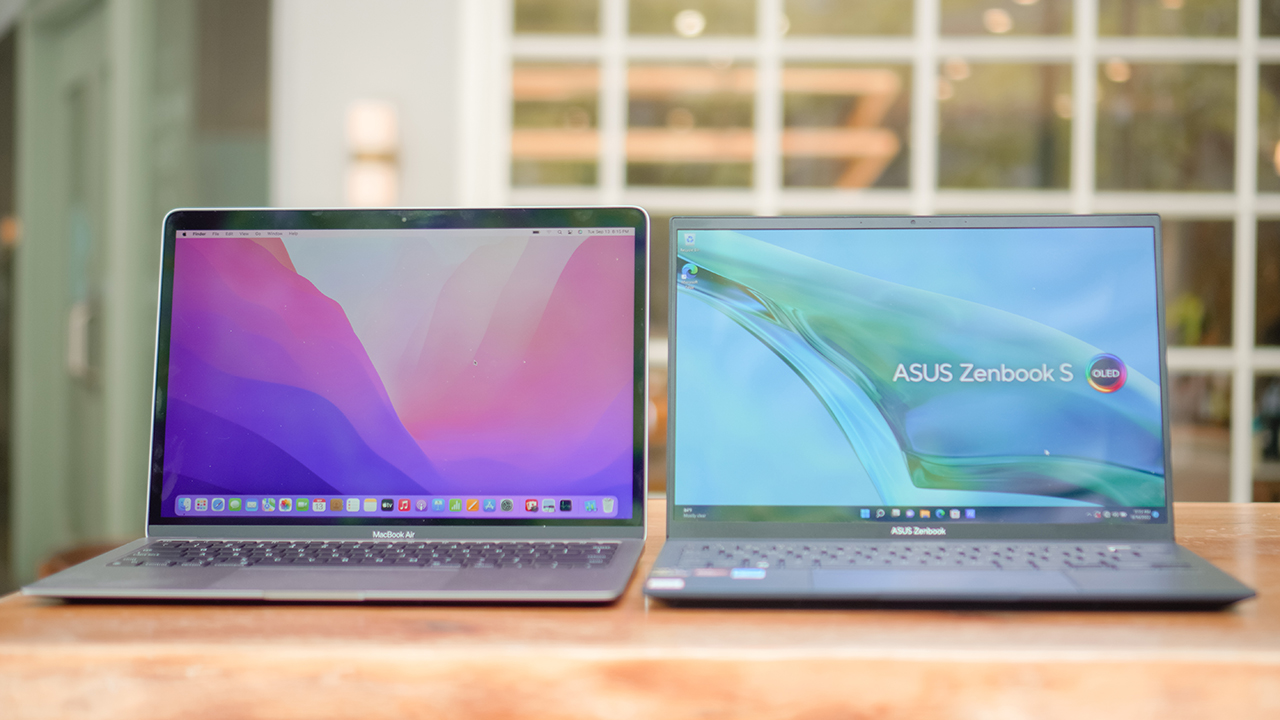
But if you take on creative tasks, the Macbook Air M1 presents better colors. As a designer, it’s important to work on a canvas that accurately displays colors — which will be perceived differently depending on the screen or panel you’re watching on.
Working on a device with a vibrant panel makes it difficult to manage expectations for your creative outputs.
I’ve used Windows laptops that used to parade their vibrant displays before, and it was difficult to rely on my eyes for the quality. I had to be rigid by closely relying on exact hex codes for accuracy.

But, that’s only for creative professionals who need to deal with color accuracy. For younger professionals who need to prepare reports, presentations, and documents — a vibrant display like the S13 is ideal for acing your pitch.
I used to be a gung-ho artist in an advertising agency. Trust me, clients react positively when the colors pop. Having lively and vivacious material presented on your screen will always appease your client’s senses.
Design
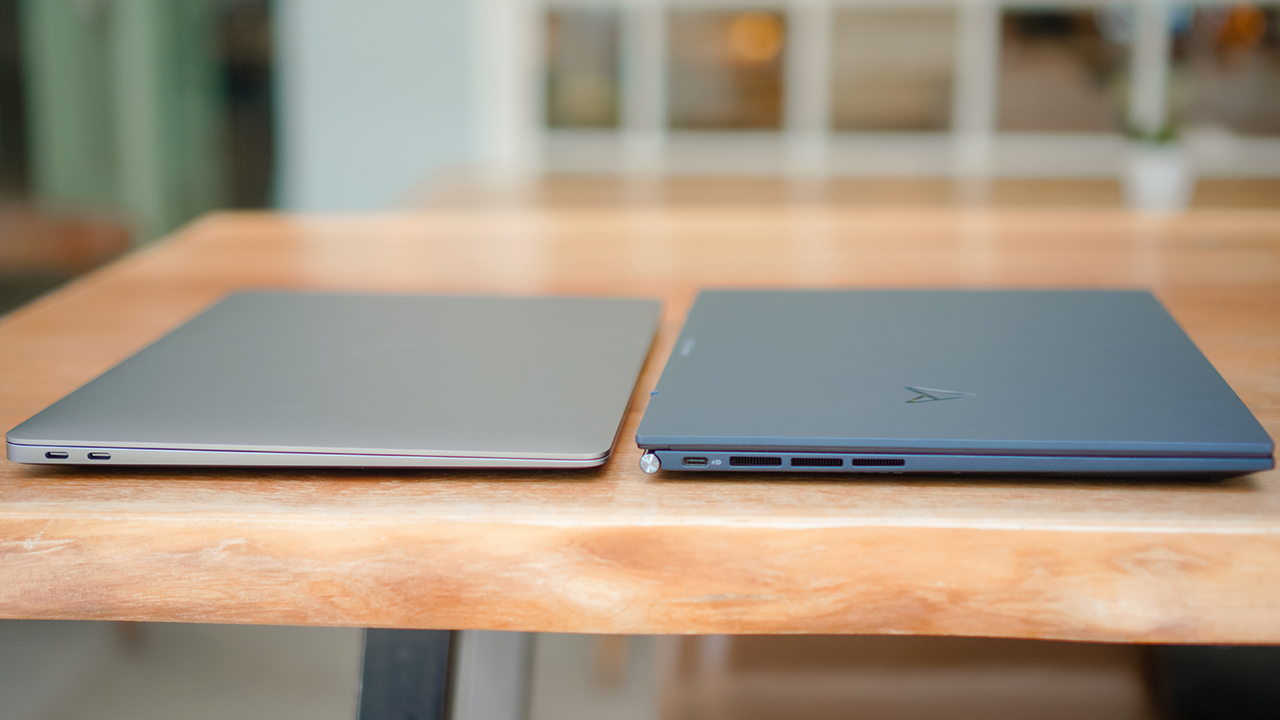
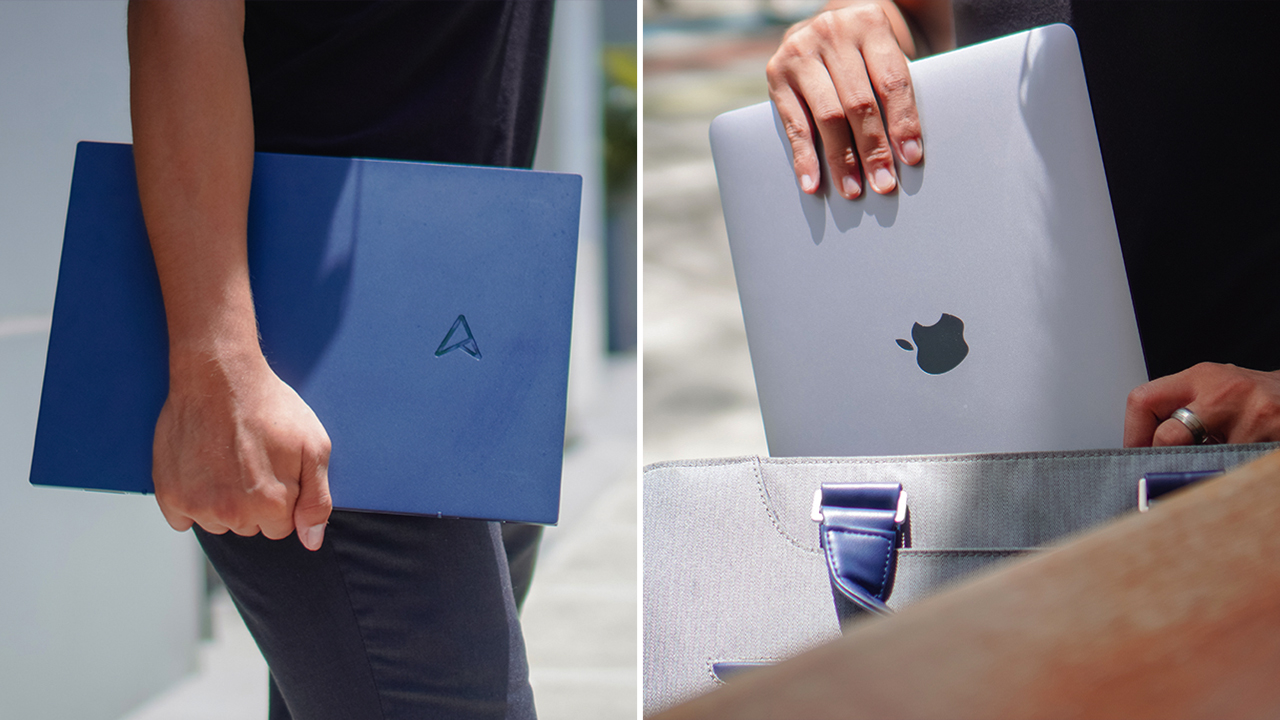
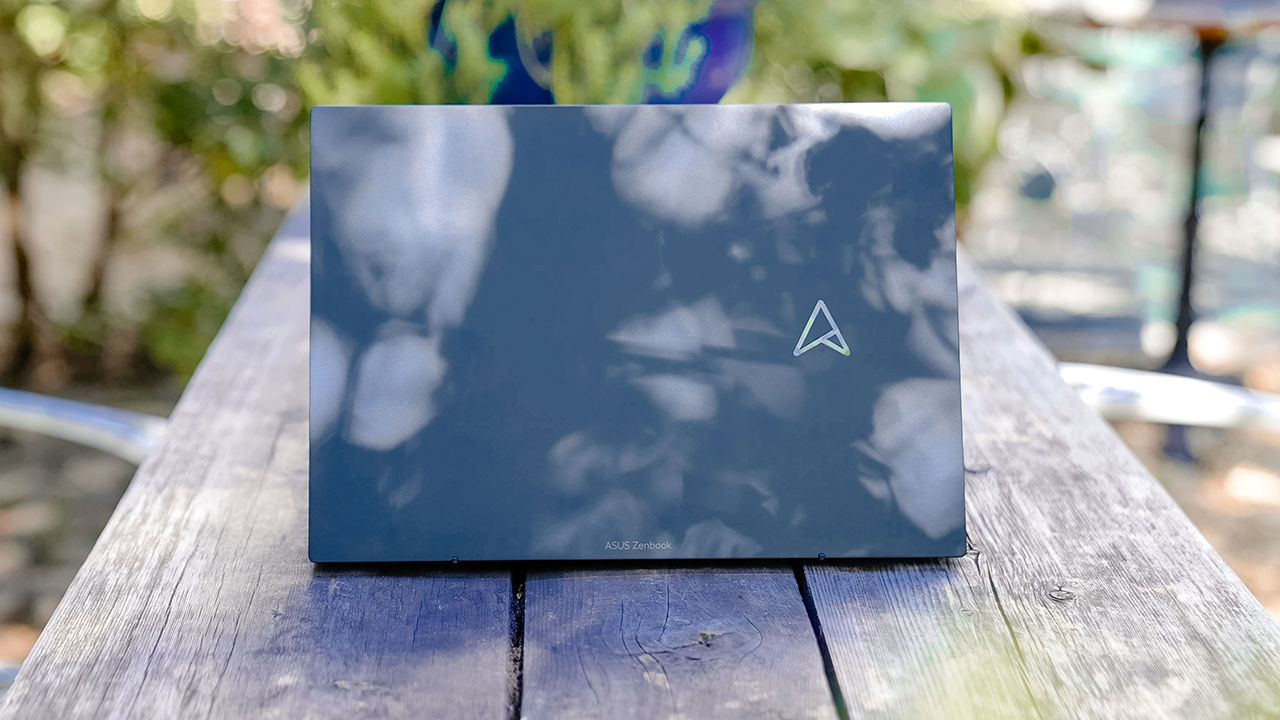
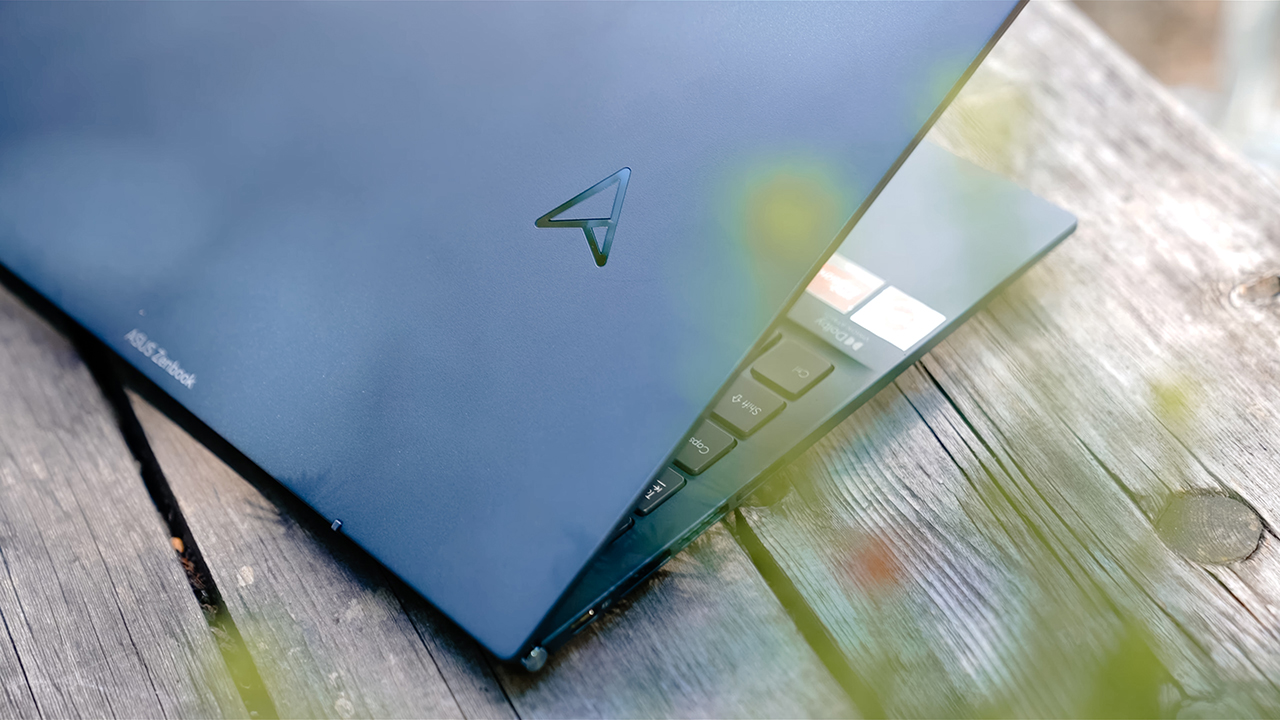
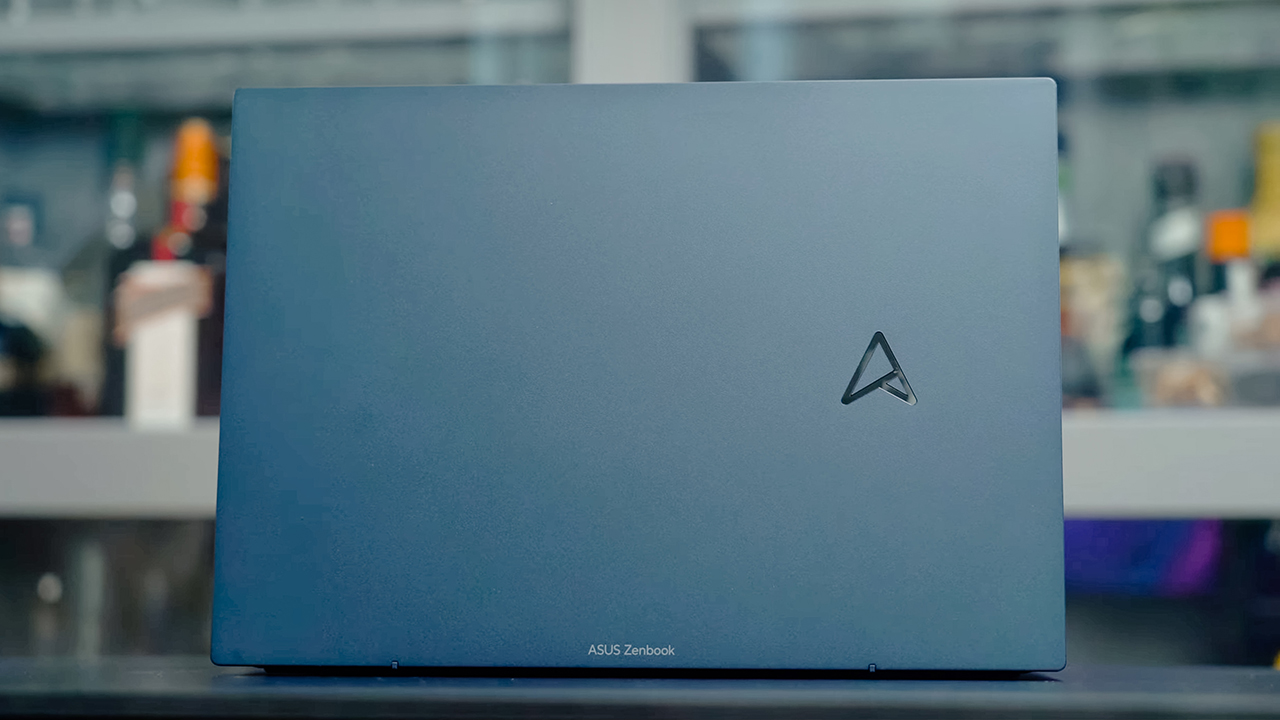
The Zenbook S13 OLED and the Macbook Air M1 look stylish at a glance. With iconic symbols etched on their minimalist lid, both devices exude a premium vibe.
The key differences will be felt when you touch and hold it. The Air M1 has a smooth exterior while the S13 is slightly textured. In terms of aesthetics, the Air M1 gives a delicate air (pun intended).

Even when you carry it, the Air M1 weighs a tad heavier (1.24kg) than the S13 (1kg). While the magnesium-aluminum material used in the S13 made it lightweight, it somehow made it feel cheaper.
Although, I really enjoyed carrying the laptop wherever I work. Plus, it’s easy to slip in totes and bags. You’ll barely feel its weight on your shoulders.
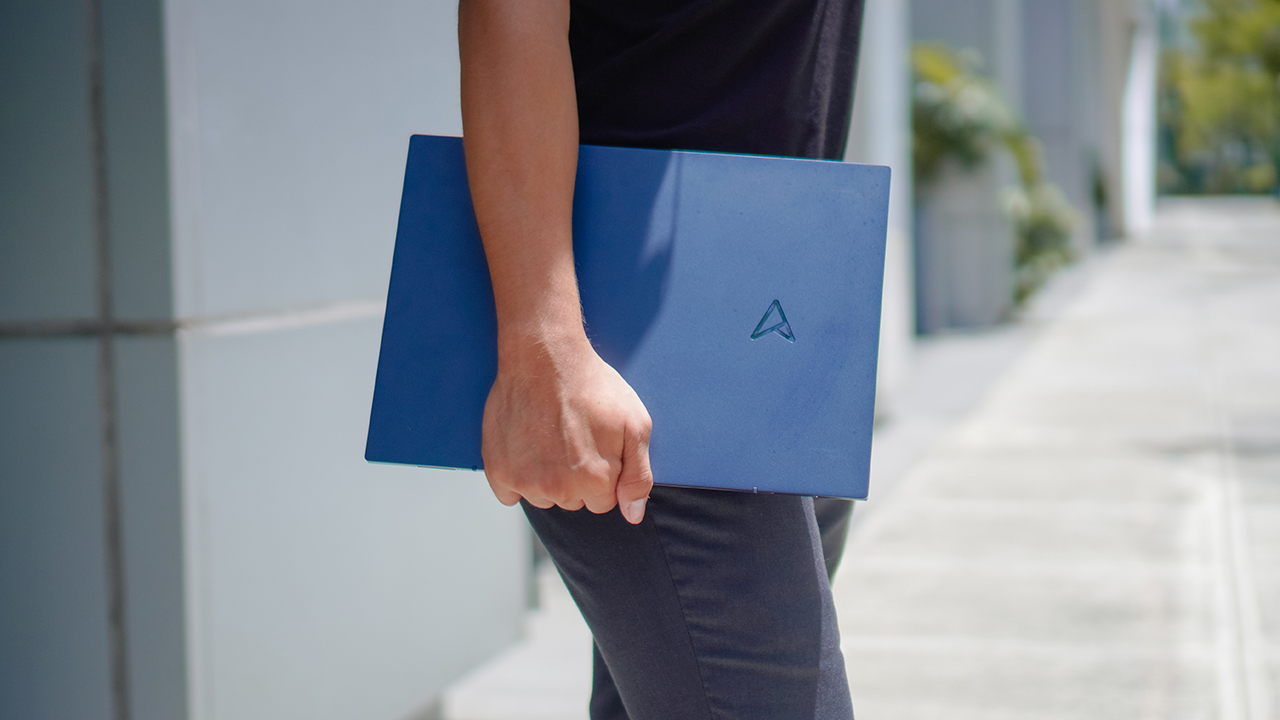
Aside from being incredibly lightweight, the S13 measures 14.9mm thin as compared to the Air M1 at 16.1mm. It just so happens that the Air M1 has a wedge-like design, giving a thinner impression.
Keyboard
Typing on the S13 is as smooth as the Air M1. The most noticeable difference would be the ErgoSense design that makes it slightly elevated for a better typing feel.
And of course, the sound it produces — it’s more clickety and annoying to my liking. Some people would prefer the sounds of their keys clicking, but definitely not me.

Since Apple ditched the butterfly mechanism for its keyboards, the Air M1 now uses a scissors mechanism that allows it to have a stable key feel. It’s quieter.
And with 1mm of key travel, it can handle keyboard warriors’ insane typing speed without the annoying sound of pressing keys.
To put it simply, both keyboards perform exceptionally. It will still boil down to user preference. Which one do you like? A softer feel, or the sound of clicking keys that make you feel you’re productive and accomplishing something?
Touchpad
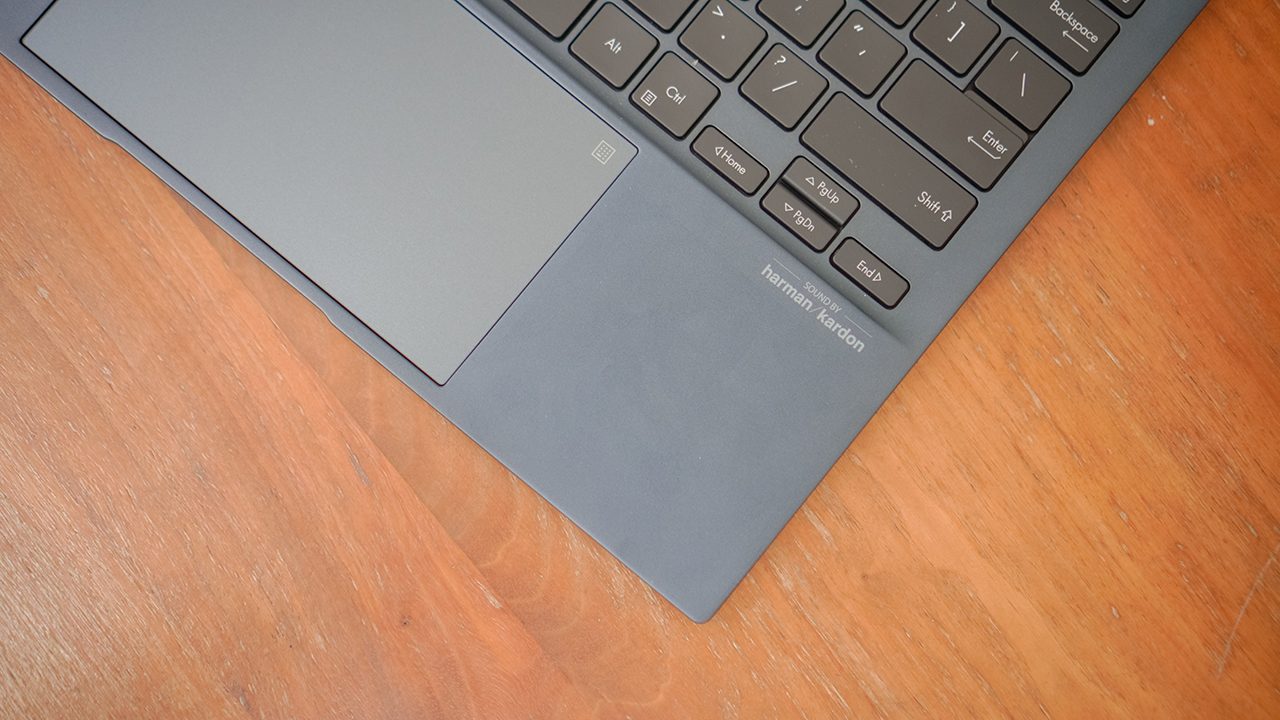
Personally, I prefer the Air M1’s trackpad. Even my old MacBook gives me a smooth-track experience. Forget mouse and/or pen tablets, I can use the pen tool on Photoshop with just the trackpad alone.
I can’t say the same for the S13. When it comes to Windows laptops, it’s still Dell’s XPS line that has the best trackpad that can be on par with the MacBooks.
But for what it’s worth, the S13 gives a decent track feel for its touchpad. With a soft press on the icon found on the upper right, it will activate ASUS’s proprietary NumberPad.
In case you’re unfamiliar with the NumberPad, it’s an LED-illuminated numeric keypad that makes it easy to compute numbers on your excel sheets.
It’s intelligent enough that you can still use the touchpad for cursor control even if you have the NumberPad activated. Switching it can be fairly quick: just press the icon softly again.
Battery
Onto the most important part: your machine’s everyday life. We all know how annoying it is to have your laptop die on you when you have an urgent task and you’re outdoors.
Just imagine being in a cafe without any sockets on. It should be a crime, ‘no?
But changing policies will take time, as you have to call out your lawmakers for that. Thankfully, laptops nowadays carry more power even with a slim figure.

Depending on your usage, both the Air M1 and S13 OLED can last you more than your 8-hour shift.
Although, the Air M1 is more energy-efficient despite consistently running software like Adobe Photoshop and Final Cut Pro. But charging it isn’t as quick as you wanted it to be — even with a dedicated fast charger.
On the other hand, the Zenbook S13 OLED lasts about nine to 11 hours with average use. What I like about the S13 is the option to choose different modes that adjust to your usage and preference.
You can opt for Performance Mode which results in shorter battery life or even Battery Saver which makes your machine more efficient but without feeling like you’re losing speed and power.
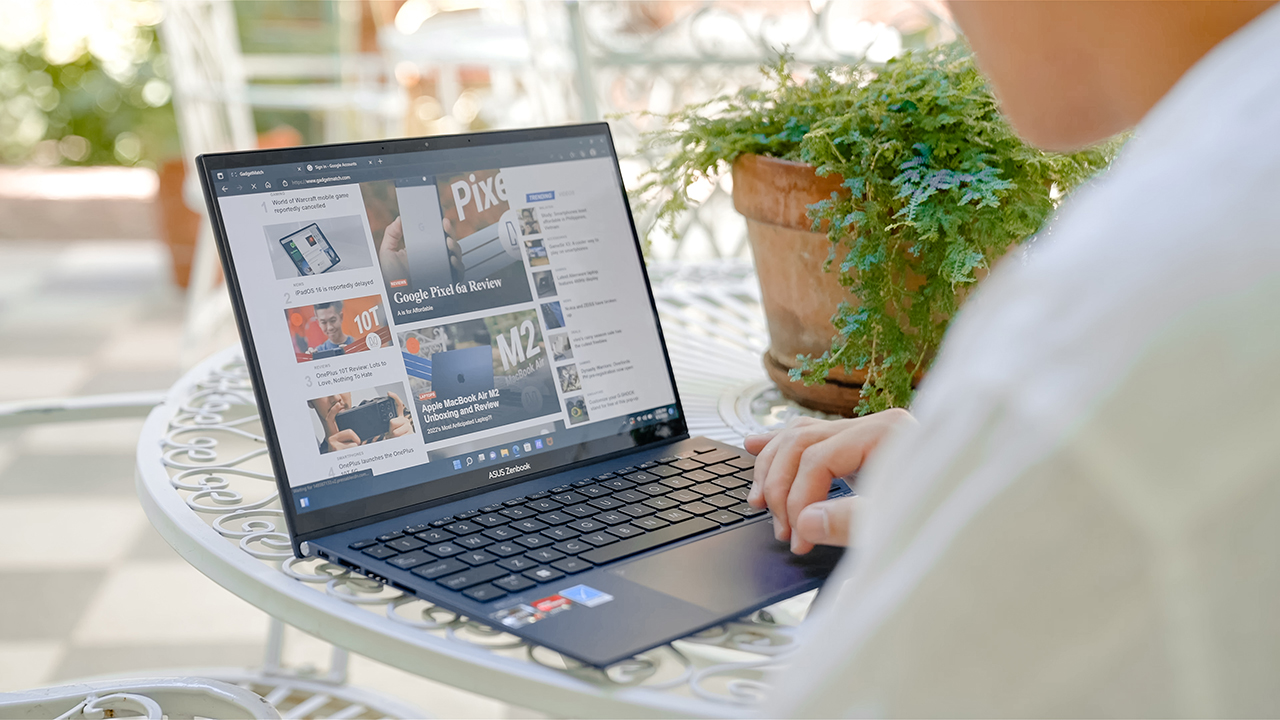
But regardless of what you choose to do with it, the S13 will last you a good long while. Plus, it comes with a 65W USB PD charger so you can fill up your juice quickly.
Connectivity
The Zenbook S13 OLED is starting to look like a MacBook when it comes to port selection.

On the left, the Air M1 sports two USB-C ports while there’s only one on the S13.
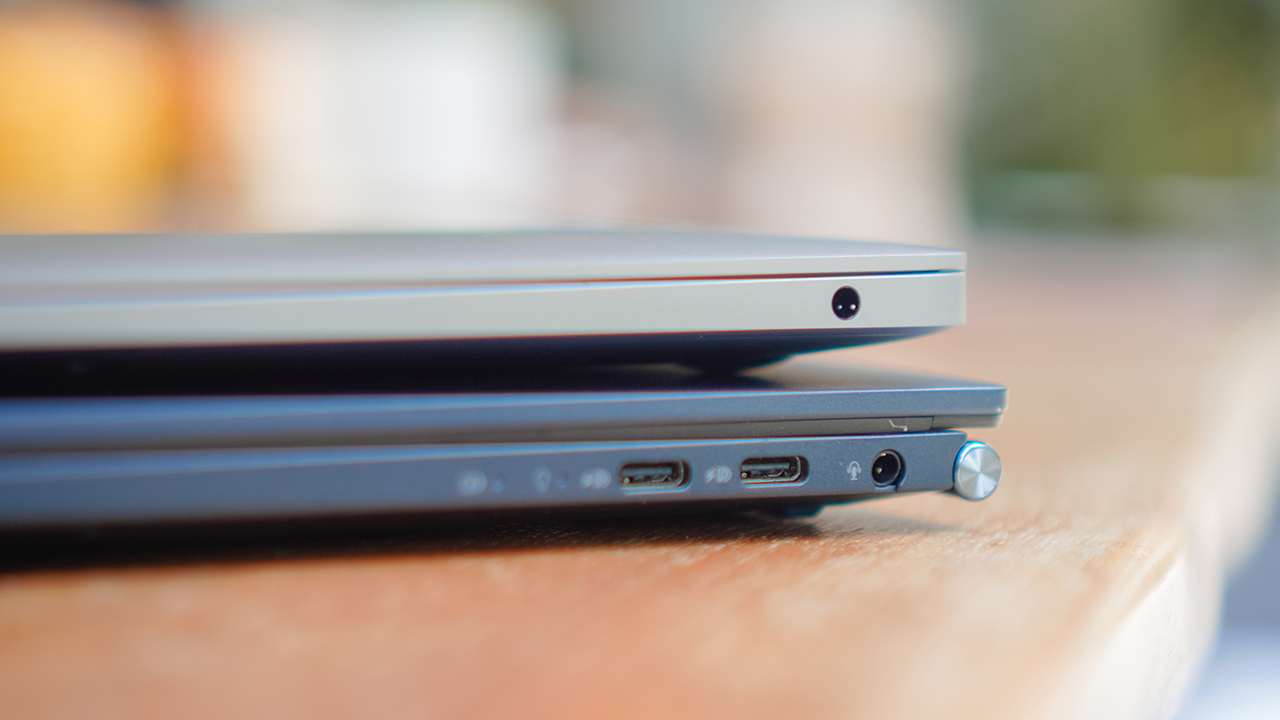
Meanwhile, the right side has two more USB-C ports and a headphone jack for the S13 as compared to the Air M1 which only has an audio jack.
Having one more USB-C port on the S13 gives it a bit of an edge against the Air M1. The only problem here is both laptops will require the user to use more dongles for other ports needed.
What’s there to like about the Zenbook S13 OLED?
I’ve been a fan of Zenbook laptops, even before I switched to Macbook, and I’ve closely followed them throughout the years. Frankly, it’s incredible to see how far they’ve come.
That said, there are a few things that I like about the Zenbook S13 OLED that I can’t find in my Macbook Air M1 — and even in its successor, the Air M2.

First is the sleek polish and undertone. ASUS has a knack for making things look and feel premium even if they don’t use extravagant materials. They strike the balance between elegance and price.

Next is the ability to lay the screen flat, which makes it easy to present stuff rather than moving the laptop to face your colleagues or clients while on a table.
Not that I’m lazy, but when you’re presented with an easier option, you’re supposed to pick that one, right?

It also has AI Noise Cancellation and real-time webcam optimization that makes client calls and video meetings clear and concise.
There’s also a feature I really like — the ASUS Antibacterial Guard.
It’s a surface treatment that inhibits the growth of bacteria by more than 99% over a 24-hour period. Simply put, the S13 helps keep surfaces clean and sanitary, in addition to repelling smudges and dirt.
I just like a hygienic laptop.

Lastly, the overall experience gave me a Macbook-like speed and performance but on a Windows machine and at a price point that doesn’t cost an arm and a leg. Maybe, just an arm.
I’ve used Dell’s XPS and Lenovo’s high-end Yoga lineup and they’re pretty much on par with the Macbook experience, but they do cost a lot. The retail price is actually higher than my daily driver’s.
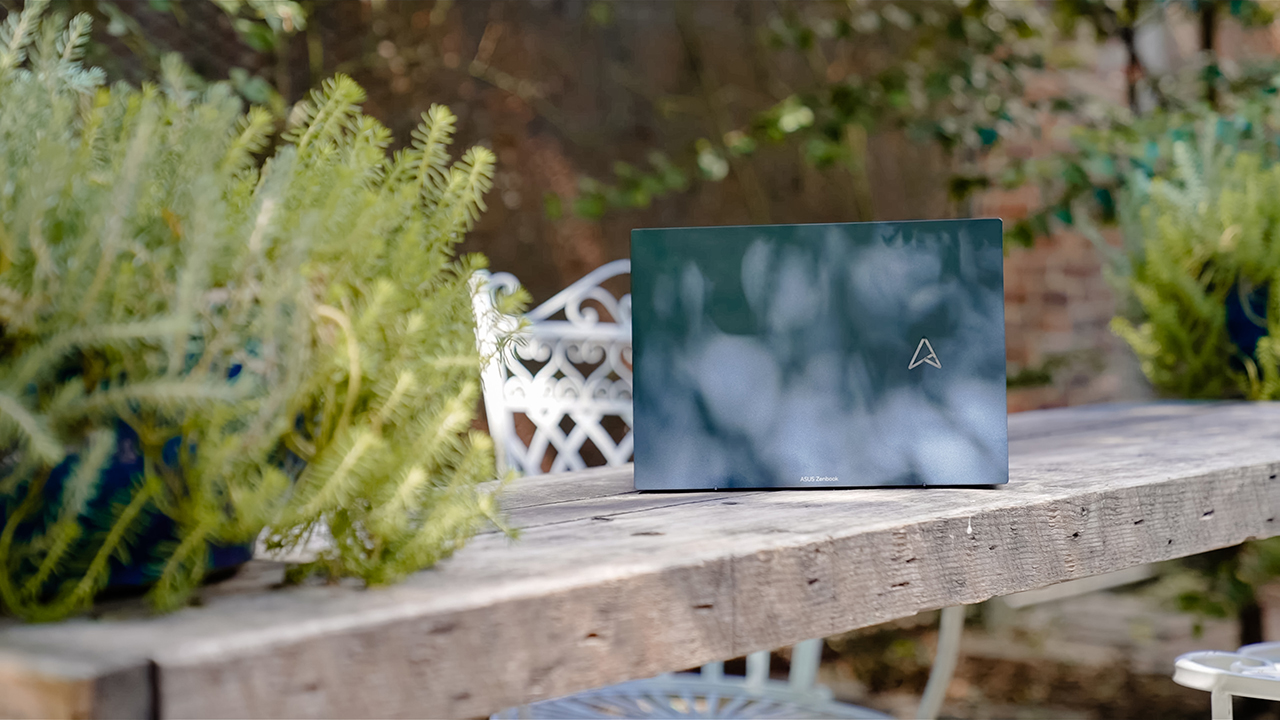
To be able to balance everything — power, design, battery, panel, and price — makes the Zenbook S13 OLED an attractive machine that’s worth your attention.
Which one is your GadgetMatch?
Between the Zenbook S13 OLED and the Macbook Air M1, it is difficult to decide which is better as both machines have advantages over the other; however, the user experience is still quite different.
The Zenbook S13 OLED is ideal for young professionals crunching numbers on their excel sheets, and working remotely and/or on the go to discuss business and manage client relations.
It’s an exemplary companion for those trying to live the fly, corporate life, or the freelancers who juggle 6-8 clients every day to make that six-digit figure.
It has the right balance for everything a young professional might need.

The Air M1, on the other hand, suits professionals who do a bit of creative work, content creators who don’t require heavy computing power, students in college or graduate school, or people who need to balance work and school.
Regardless of the machine you choose, you can never go wrong with Zenbook or Macbook. Just make sure to pick one that matches your lifestyle, personality, and needs. And of course, if it’s within your budget.
Price and availability: ASUS Zenbook S13 OLED
The price points for the ASUS Zenbook S13 OLED vary between variants, colors, and specs. Here’s how much they cost in the Philippines:
| Variant | Color | Specs | SRP |
| UM5302TA-LV464WS | Ponder Blue | 13″ 2.8K 16:10 OLED / AMD Ryzen 5 6600U / 8GB LPDDR5 / 512GB PCIE4 SSD / AMD Radeon Graphics / Windows 11 Home with Office Home & Student 2021 | PHP 63,995 |
| UM5302TA-LV532WS | Aqua Celadon | ||
| UM5302TA-LV539WS | Refined White | ||
| UM5302TA-LV540WS | Vestige Beige | ||
| UM5302TA-LV484WS | Aqua Celadon | 13″ 2.8K 16:10 OLED / AMD Ryzen 7 6800U/ 16GB LPDDR5 / 512GB PCIE4 SSD / AMD Radeon Graphics / Windows 11 Home with Office Home & Student 2021 | PHP 76,995 |
From September 15 to October 31, 2022, purchases of Zenbook S13 OLED laptops lead to a raffle entry. Get a chance to win a limited edition Zarah Juan Zen Tote worth PhP 8,500.
The ASUS Zenbook S13 OLED will also be available in Home Credit partner stores nationwide for PhP 4,533.00 per month with 0% interest and up to 12 months of flexible payment terms.


Features
Why the OPPO Reno15 5G series is a creator’s essential
4K Ultra-Steady, 50MP groufies, and AI edits in one device.
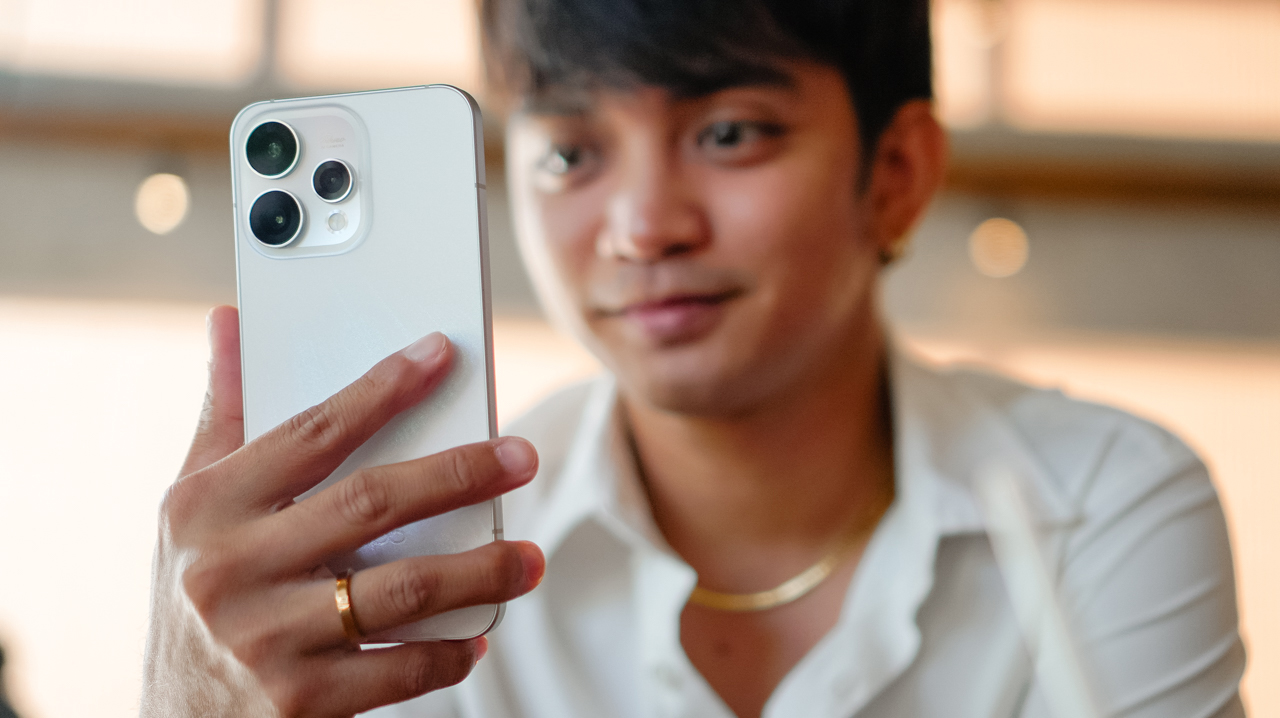
There are two kinds of travel essentials: the ones you pack because you have to, and the ones you pack because they make the story better.
Often, we feel forced to choose between traveling light and bringing the bulky gear necessary to document the trip properly.
On your next trip, the OPPO Reno15 5G Series eliminates that compromise. With a thoughtful mix of hardware and software, it becomes your pocket-sized production crew, ready to capture life as it unfolds.
The crew in your pocket
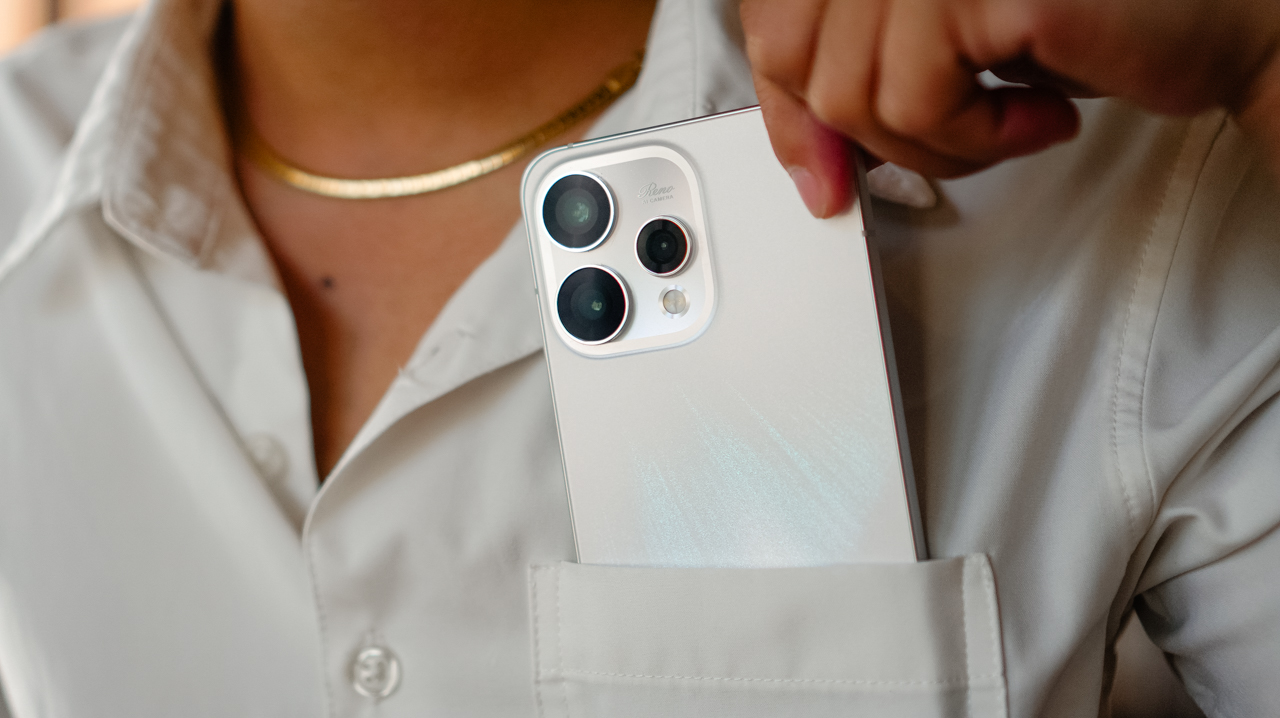
The first rule of travel is to keep things light, but for a creator, “light” cannot mean lower quality.
Whether you are navigating crowded night markets or chasing the golden hour on a steep, adventurous rooftop, the 4K Ultra Steady feature ensures your footage looks composed even when the environment is chaotic.
View this post on Instagram
This stabilization changes the energy of a travel vlog, turning handheld montages into polished, cinematic clips that are ready for a Reel the moment you hit save.
View this post on Instagram
Capturing everything and everyone
Travel stories are built on shared memories, but too often, the person behind the lens is left out.
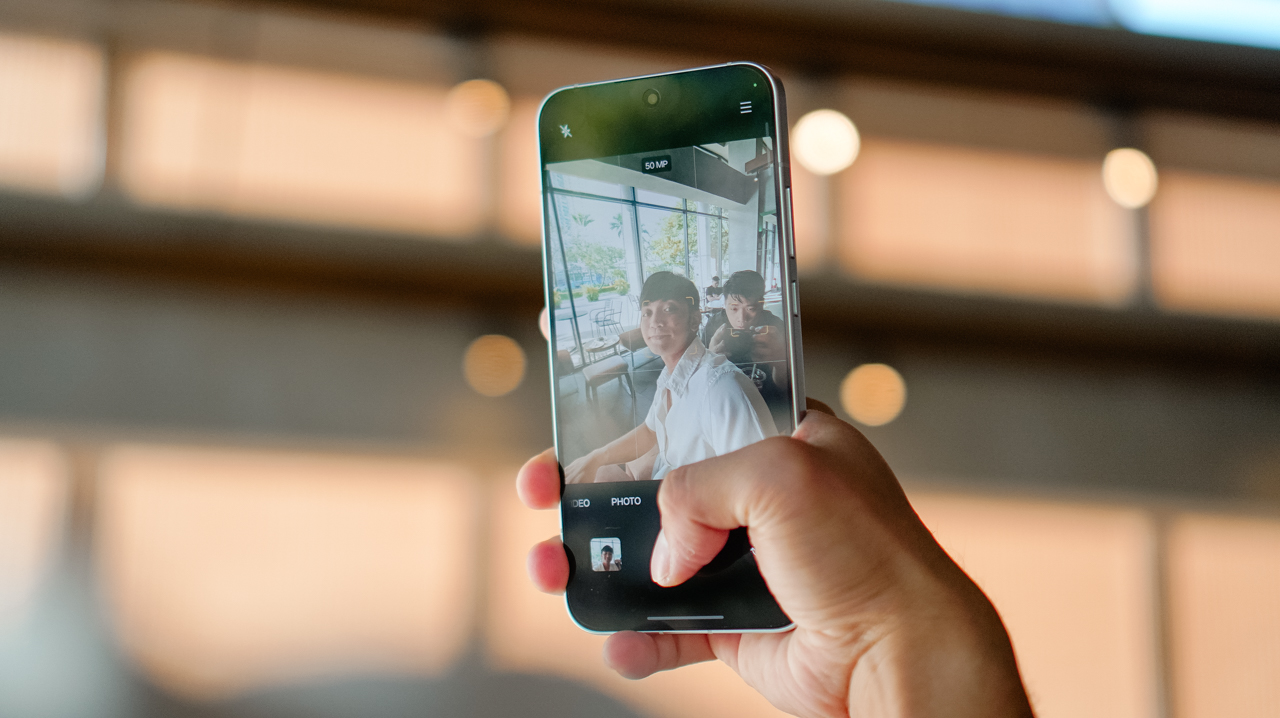
Group shots often become a messy scramble to squeeze everyone into a tight frame. The 50MP Selfie Camera changes that outcome with its 0.6x ultra-wide-angle mode
It captures the entire group with sharp detail across the frame, ensuring no one is relegated to the blurry edges.
Even if you need to crop the image later for a specific social media layout, faces remain clear and the background stays defined.
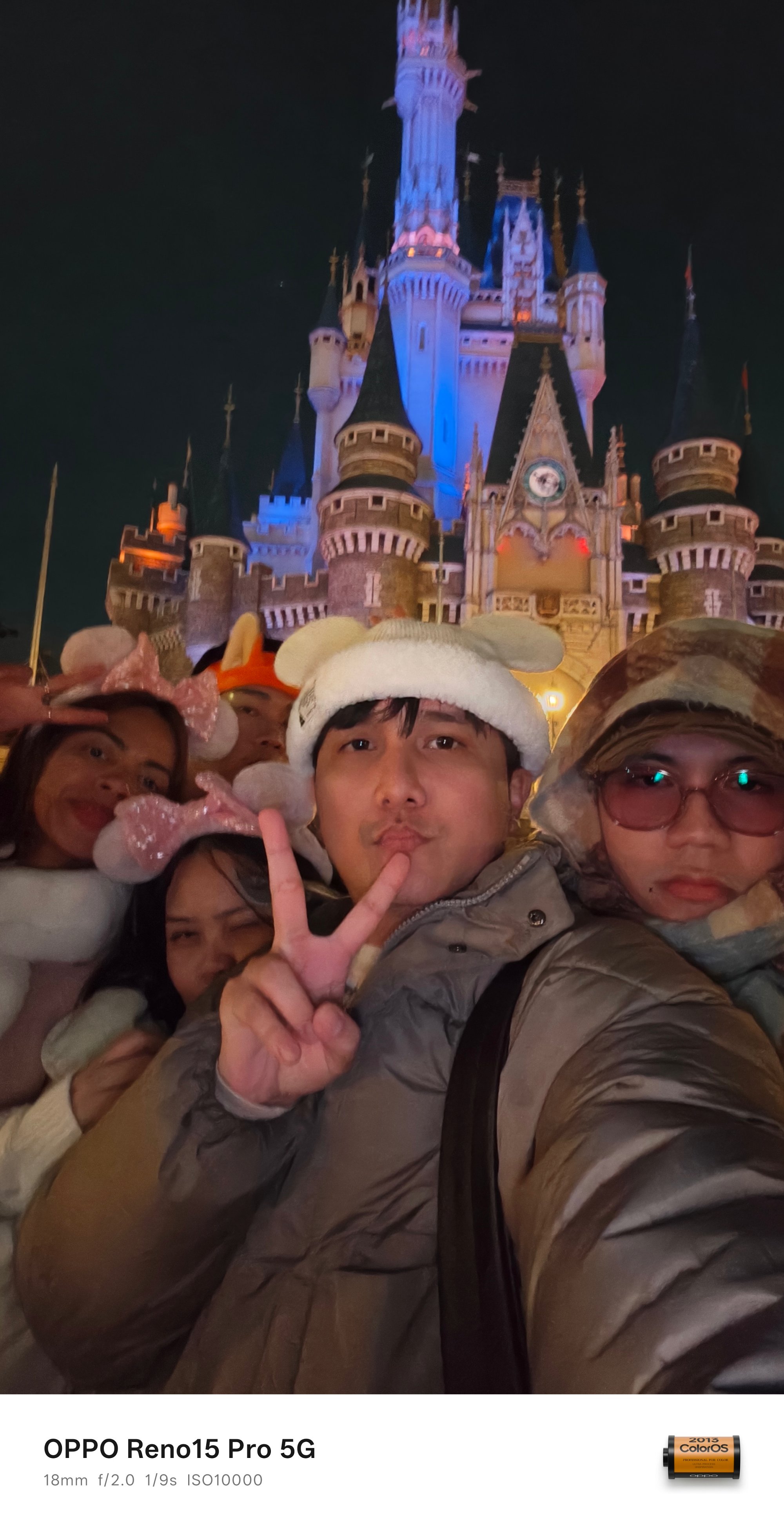


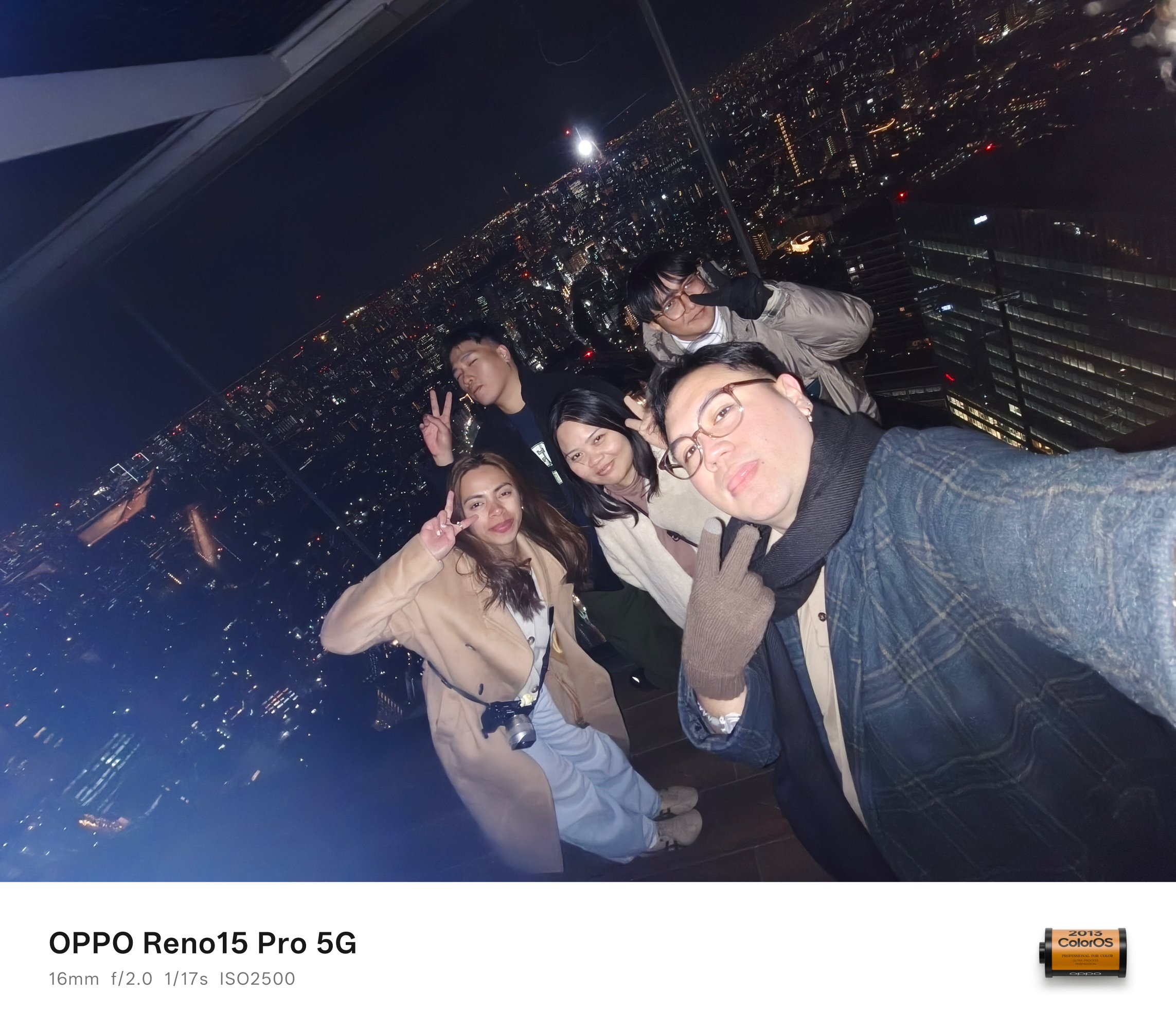


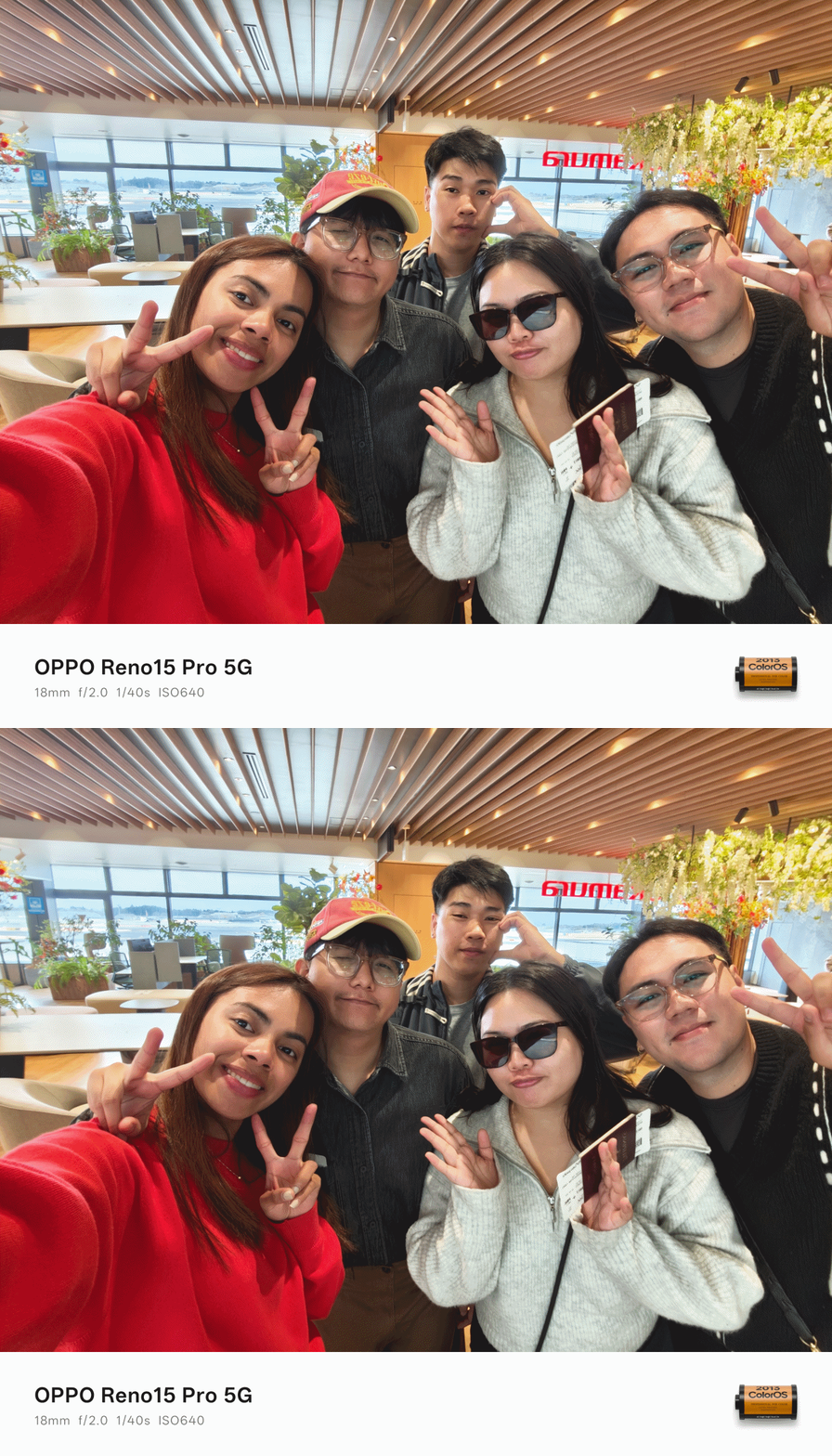


The result is a “groufie” that feels complete and professional
Scroll-stopping memories
We often summarize our trips through collages: layered photos that tell a single story.

The AI Motion Photo Popout tool brings a new dimension to these memories. With a few taps in the Gallery, the subject separates from the background to create a sophisticated, layered effect.




These edits serve as the perfect foundation for Instagram Story covers, Reel thumbnails, or high-quality personal wallpapers.
It’s a subtle digital adjustment that makes a visible difference in how your audience experiences your journey.
Reliability for the modern creator.
A smartphone is no longer just a gadget; it is a creative partner. The OPPO Reno15 Series 5G features a sleek design that looks at home beside a passport or a boarding pass.

It’s light enough for long days of exploration but polished enough for high-end city trips. The reliable battery life supports early flights, full-day itineraries, and even late-night uploads.




You’ll spend less time searching for an outlet and more time capturing the moments that matter.
Which OPPO Reno15 Series 5G is your GadgetMatch?
The series offers variants designed to fit your specific creative style.
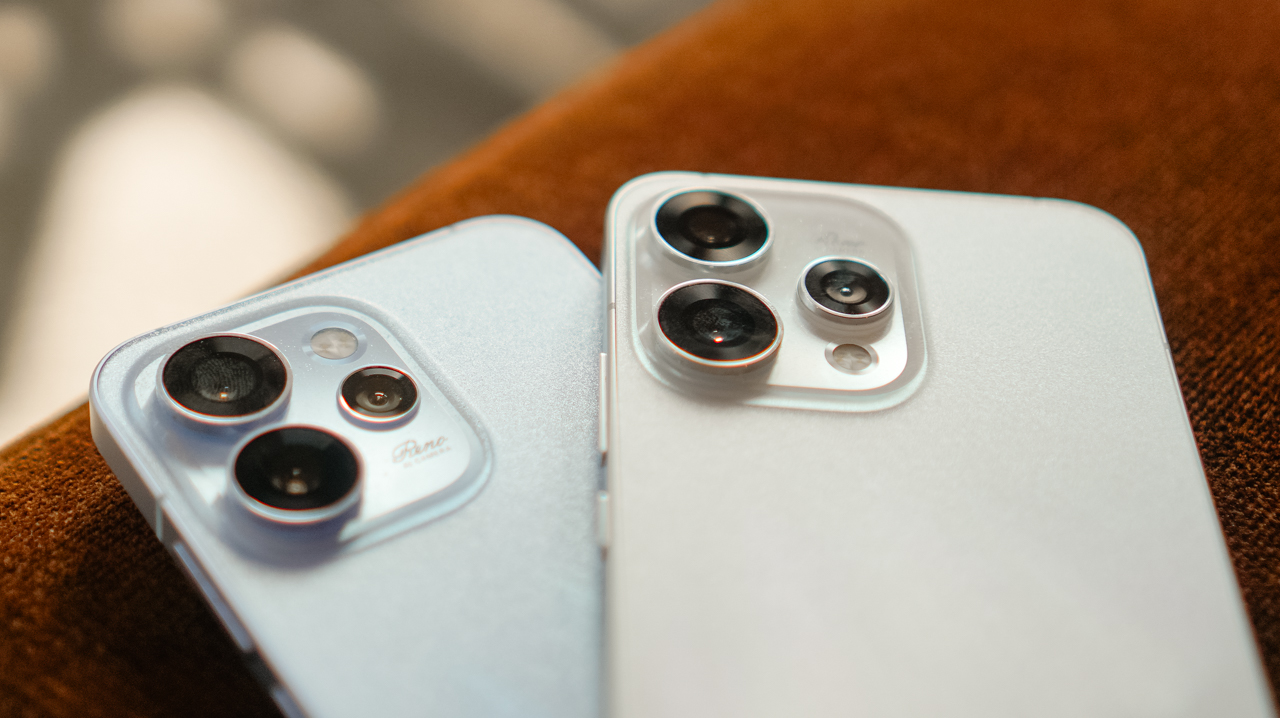
Pick the OPPO Reno15 5G if you want a balanced everyday companion, and if you want flexibility and reliability without overcomplicating the process.
There’s the OPPO Reno15 Pro; the choice for creators where photography and videography are the main event, offering enhanced tools in a compact form.

But if you’re a value-conscious traveler who wants a practical entry point that provides core camera and AI features, then the OPPO Reno15 F 5G is your GadgetMatch.
Whichever you choose, the series proves that a travel accessory can do more than complement an outfit. It preserves your stories because it doubles as a content creator’s must-have tool.
The OPPO Reno15 Series 5G is now available in OPPO stores nationwide and the OPPO Online Store.
SEE MORE: The art of being in and behind the frame | OPPO Reno15 Pro: Camera Review

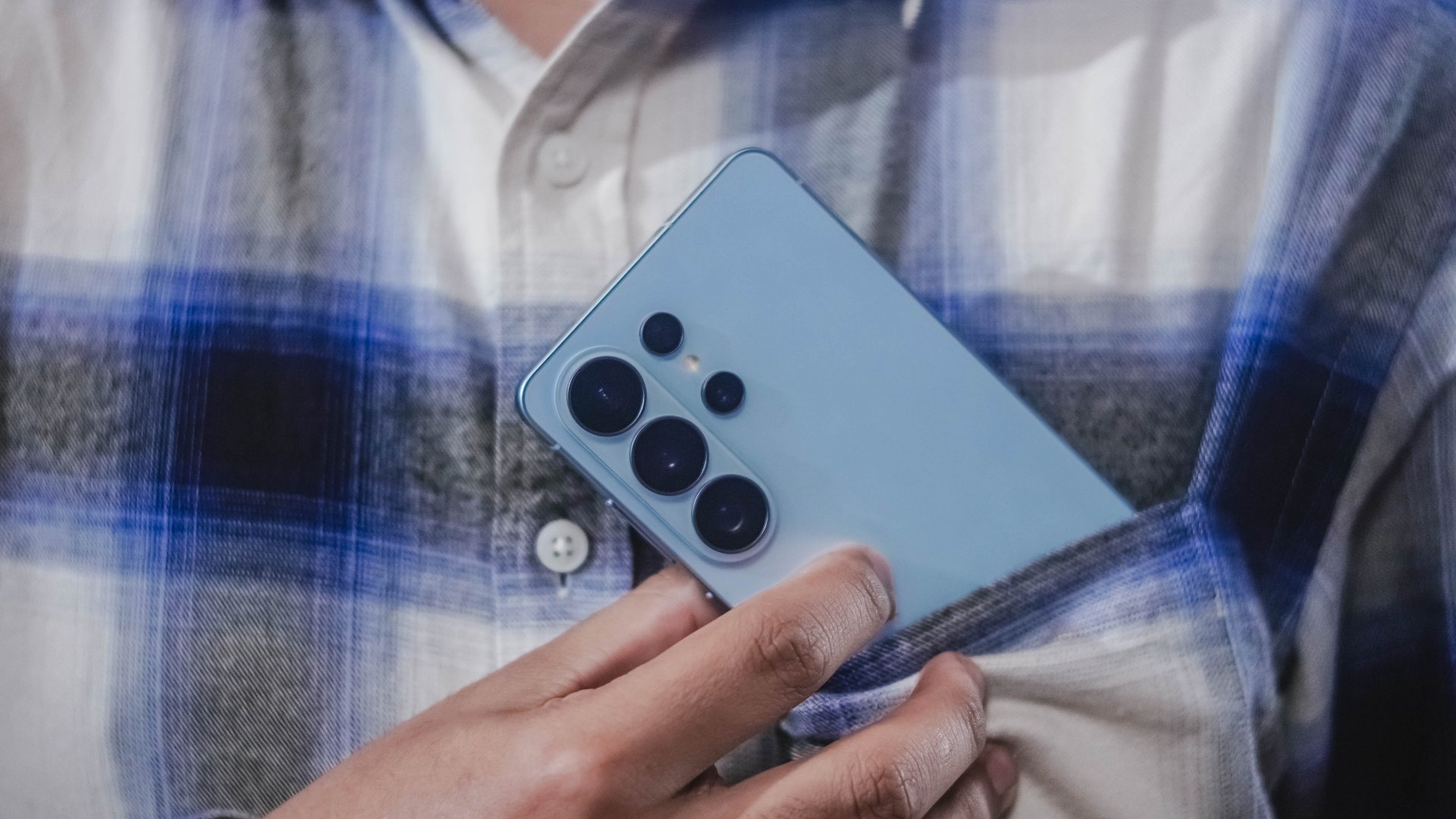
@gadgetmatch A phone that does more… so you can focus more on the moments that matter. The Galaxy S26 Ultra lets Galaxy AI handle the small stuff so you can stay present for the moments that matter. Also great for the occasional KPop concert video. Pre-order until March 17 and get double storage worth up to PhP 14,000. https://www.samsung.com/ph/smartphones/galaxy-s26-ultra/buy/ #GalaxyS26Ultra #EverydaywithGalaxyAI @samsungph ♬ original sound – GadgetMatch
Here’s the dream: a phone that helps you stay on top of things, so you can focus more on what matters.
That’s basically the idea behind Galaxy AI on the Samsung Galaxy S26 Ultra.
Instead of adding more things to do, the phone helps take care of the small stuff for you. Things like reminding you what’s next, or surfacing the information you need right when you need it.
So you spend less time digging through apps and more time actually doing the things you planned to do.
Editing photos is easier too. With Photo Assist, you can just describe the change you want… and Galaxy AI fills in the rest.
And if you’re cleaning up a video, Audio Eraser can reduce background noise — even from clips on third-party apps like Instagram or YouTube.
The point isn’t to make your phone the center of attention. It’s to make it helpful enough that you can forget about it for a while. Until something worth capturing happens.
And when things get a little chaotic — like concerts, street performances, or just life moving fast — Super Steady Video helps keep your shots level.
That’s definitely coming with me to the next K-pop concert.
The Galaxy S26 Ultra. Smarter phone. Slightly less stressed me.
Pre-orders are open now — with double storage for early buyers, plus additional discounts and installment offers from participating banks.
Which is great… because apparently I shoot way too many videos.
For more than a decade, the smartphone industry has been defined by a familiar race. More megapixels. Faster processors. Bigger batteries. Thinner designs. Being first. Being the most. And being the fastest.
The industry rewarded brands that appeared to be chasing specs. Bigger numbers meant progress. At least on paper.
But if you ask Samsung, the days of chasing specs may no longer define the future of Galaxy smartphones.
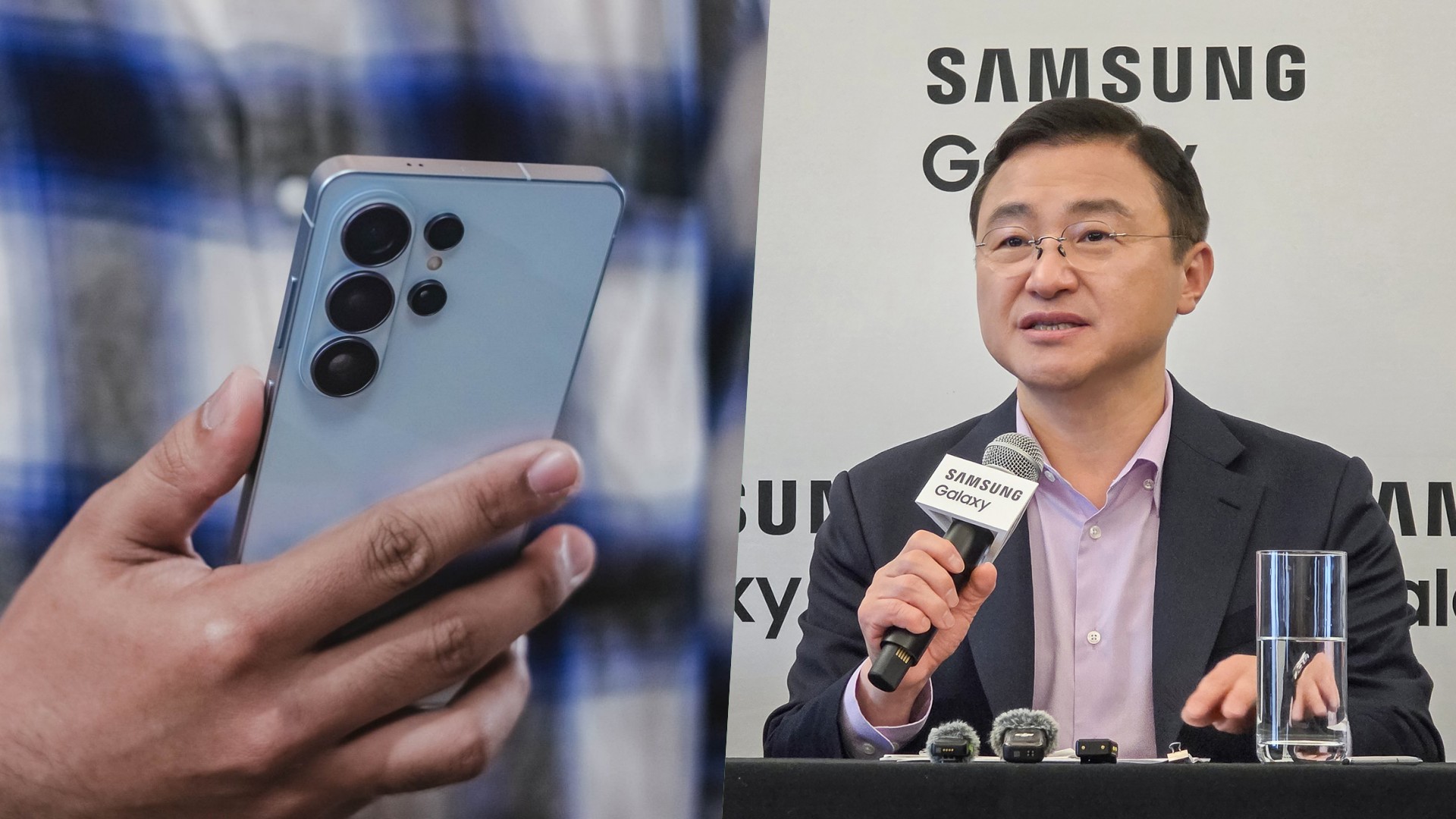
During a regional roundtable following the launch of the latest Galaxy devices, I asked TM Roh how the company decides when it’s time for a major hardware upgrade if it isn’t simply chasing specs.
His answer revealed how Samsung now approaches the future of its flagship smartphones.
According to Roh, hardware upgrades are increasingly tied to how well they support Galaxy AI.
“To make Galaxy AI run smoothly, it must be backed by strong hardware,” Roh said during the session, speaking through a translator. He added that Samsung develops its hardware, software, and AI capabilities together — and that major upgrades tend to arrive only when the company reaches what he described as the “desired level of excellence.”
(Quotes are approximate translations.)
“To make Galaxy AI run smoothly, it must be backed by strong hardware.”
(Approximate translation from TM Roh during the roundtable)
In short, Samsung says it’s no longer chasing specs for the sake of winning spec-sheet battles. Not anymore.
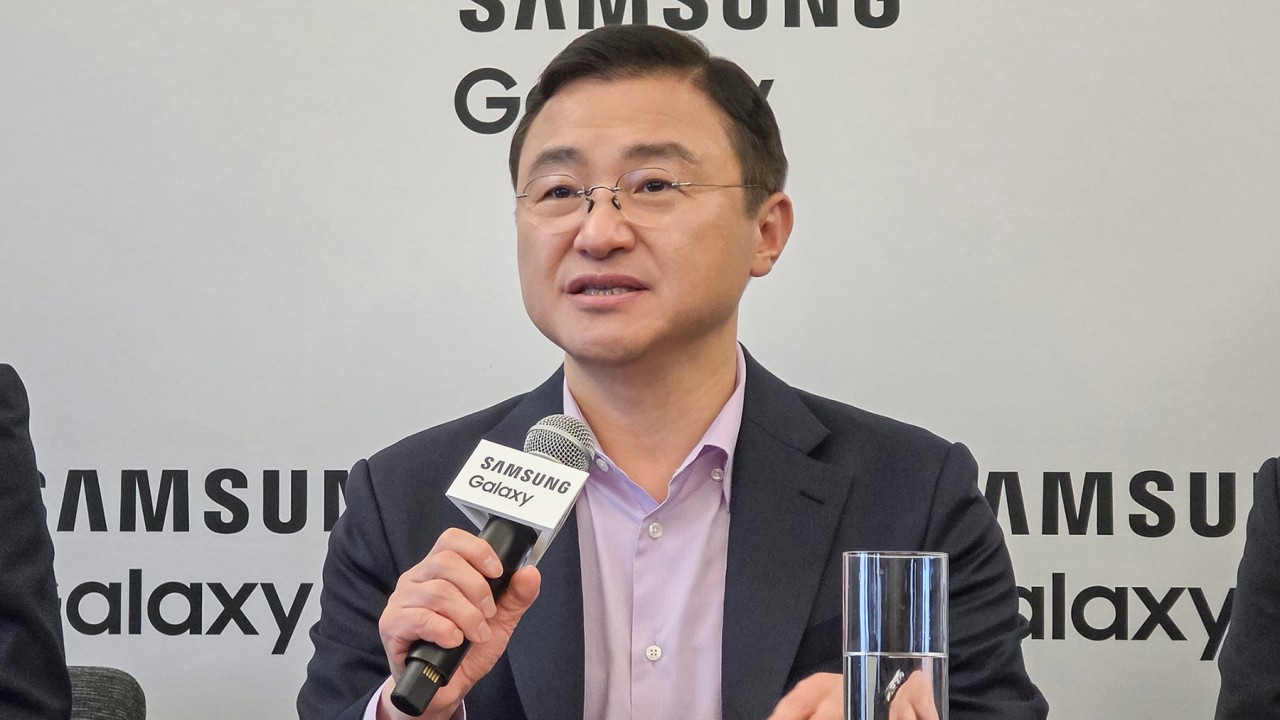
Samsung CEO TM Roh answering questions at a media roundtable in San Francisco
When hardware stops chasing numbers
Hardware innovation still matters. But Samsung increasingly frames those improvements as tools that enable smarter software experiences.
During the roundtable, Roh pointed to Samsung’s custom application processors, which now include stronger neural processing capabilities designed to handle AI workloads more efficiently. Dedicated hardware is also being introduced to strengthen privacy and security — including technologies embedded directly into the display. (See: Privacy Display)
Even cameras, historically one of the biggest battlegrounds for smartphone innovation, are evolving in the same direction.
Roh noted that while sensors and lenses remain important, modern smartphone photography now relies heavily on AI-powered image processing working alongside the hardware. This could also explain why, as of writing, Samsung has resisted the extra telephoto lens accessories that is prevalent with other brands.
The shift is subtle but important. Instead of emphasizing bigger numbers on spec sheets, Samsung positions hardware upgrades as part of a broader system designed to support intelligent software.

Why Samsung gets dunked on online
That philosophy, however, exists in tension with how smartphones are often discussed online.
In a landscape driven by benchmark charts and viral comparisons, incremental refinement rarely generates the same excitement as dramatic hardware leaps. Over the past few years, the Galaxy S series has occasionally become an easy target for criticism — especially as rival Android manufacturers compete to deliver the biggest numbers, the fastest charging speeds, or the thinnest designs.
The temptation in tech media, particularly on platforms like YouTube, is often to dunk on Samsung rather than examine the nuance behind its approach. Spectacular upgrades and dramatic spec sheets make better thumbnails.
Yet listening to Samsung executives across multiple briefings reveals something interesting: the messaging is remarkably consistent. Whether discussing cameras, processors, or ecosystem features, the company repeatedly returns to the same principle. Hardware innovation matters most when it unlocks a better overall experience.
A company that knows its role
That consistency suggests Samsung knows exactly who it is in the smartphone industry.
As the largest Android smartphone manufacturer globally, Samsung occupies a position where competitors often measure themselves against it. Many brands differentiate by pushing aggressive specifications or experimenting with bold hardware changes.
In many ways, everyone else is punching up.
Scale changes priorities. When you’re building devices for hundreds of millions of users, the focus shifts toward reliability, ecosystem integration, and increasingly, AI-powered experiences that work consistently across products.
Why Southeast Asia matters in Samsung’s AI strategy
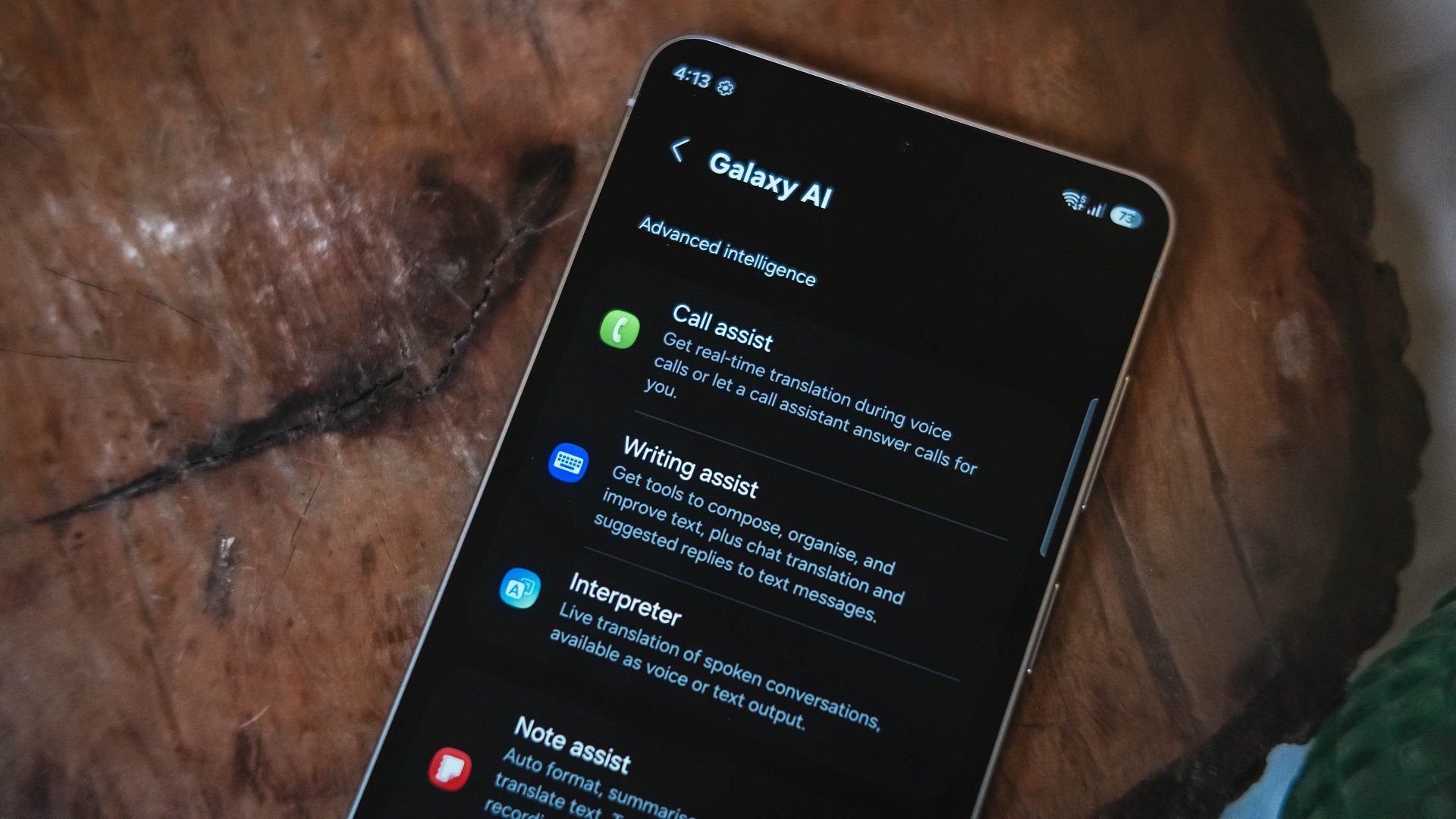
During the roundtable, Roh also emphasized the importance of Southeast Asia and Oceania to Samsung’s AI strategy.
According to the company’s internal research, the region ranks among the most receptive markets for AI-powered mobile features. Younger demographics and heavy social media usage are driving adoption.
In markets where smartphones are central to communication, content creation, and digital services, AI-powered tools — from translation features to image editing — have found strong traction.
That context helps explain why Samsung continues to position AI as the defining layer of its next-generation devices.
Is the smartphone spec race ending?
For years, smartphone makers built their identities around chasing specs.
Bigger numbers meant better phones. Faster chips meant progress.
Samsung, it seems, is chasing something else.
Whether that bet ultimately reshapes the smartphone experience remains to be seen. But if Roh’s comments are any indication, the next major leap in Galaxy hardware won’t happen simply because the numbers can go higher.
It will happen when Samsung believes the experience — not the spec sheet — is ready to move forward.


Galaxy Buds4 Pro review: I thought I was done with in-ears
This Buds4 you


WWE 2K26 lets you live out all the fantasy matches you could want
But you have to play for hours and hours to unlock everyone.

The HONOR X8d is serviceable
Steady but slow?

More iPhone switchers this year than Android switchers, report says

Marvel’s Wonder Man greenlit for a rare second season

Apple’s WWDC 2026 will be from June 8 to 12
Galaxy Buds4 Pro review: I thought I was done with in-ears
WWE 2K26 lets you live out all the fantasy matches you could want


-
 Reviews1 week ago
POCO X8 Pro Max review: A new beast from the far east
-

 News1 week ago
POCO X8 Pro Series: Price, availability in the Philippines
-

 Laptops2 weeks ago
Apple MacBook Neo Review
-

 Apps2 weeks ago
Google Maps is finally getting a 3D mode
-

 Features2 weeks ago
Galaxy AI on the Samsung Galaxy S26 Ultra
-

 Entertainment2 weeks ago
The internet is thirsting over the One Piece Season 2 cast
-

 Automotive2 weeks ago
BYD is reportedly considering an F1 team
-

 Gaming2 weeks ago
Resident Evil Requiem will get a story expansion