
News
ASUS ZenFone 6 goes all out with Snapdragon 855 and new Flip Camera
A different approach to avoid the notch


ASUS‘ entry to the 2019 smartphone game may be a little late this year, but the Taiwanese company made sure that it’ll be worth it. True to their new “Defy ordinary” tagline, ASUS’ new smartphone is unlike anything we’ve seen before.
First and foremost, the ZenFone 6 is now ASUS’ main flagship phone. The ZenFone lineup started as a modest budget lineup from 2014 and it took five generations for it to become ASUS’ primary high-end phone — no need for “Z” or “Deluxe” monikers.
Since the ZenFone 6 is now a full-blooded premium smartphone, it has all the bell and whistles you’d expect from a 2019 flagship phone with a few extra surprises. For starters, it has an All-Screen NanoEdge display that’s free of any notch or hole-punch for the front-facing camera. The phone features a 6.4-inch IPS panel with a Full HD+ resolution, topped with Gorilla Glass 6.

ASUS ZenFone 6 | GadgetMatch
Inside, the phone is rocking a Snapdragon 855 chip paired with up to 8GB of memory and up to 256GB of storage using UFS 2.1. In order to keep up with the phone’s speed, ASUS has once again redesigned ZenUI (now called ZenUI 6) and it’s almost like pure Android. Additionally, ASUS has promised to bring Android Q when it launches later this year and even Android R in the future.
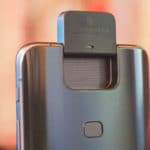
Perhaps the most important aspect of the ZenFone 6 is its cameras. In order to get rid of any display cutouts, ASUS resorted to a new and rather unique motorized Flip Camera. With this approach, the ZenFone 6’s main camera is also its selfie shooter.

ASUS ZenFone 6 | GadgetMatch
ASUS’ Flip Camera houses a 48-megapixel Sony IMX586 sensor with an f/1.79 aperture and 6p lens. It’s accompanied by a secondary 13-megapixel ultra wide-angle shooter with real-time distortion correction, dual-LED flash, and laser AF system.
With the main camera acting as the front camera at the same, the ZenFone 6 is practically the ultimate selfie phone.
-

- ASUS ZenFone 6 | GadgetMatch
-
- ASUS ZenFone 6 | GadgetMatch
The device stays true to the traits of a ZenFone including the large 5000mAh battery — one of the biggest we’ve seen in a flagship-specced phone. ASUS has no special fast charging tech, but the ZenFone 6 supports the universally available Quick Charge 4.0 standard through USB-C.
The rest of the phone’s features include stereo speakers with dual NXP amplifiers, 3.5mm headphone jack with Hi-Res Audio output, rear-mounted fingerprint sensor, and Face Unlock.
The ZenFone 6 will be shipping in Europe on May 25 starting at EUR 499 or roughly US$ 560 for the base variant with 6GB of memory and 64GB of storage. The 6GB+128GB configuration will go for EUR 559 (US$ 625), while the top 8GB+256GB model is priced at EUR 599 (US$ 670). It will only be available in four Asian markets: Japan, Indonesia, Hong Kong, and India.
SEE ALSO: ASUS ZenFone Max (M2) Hands-on: Still a great budget contender






News
Shokz OpenFit Pro launches at Power Mac Center, brings open-ear noise reduction
Open-ear, now quieter

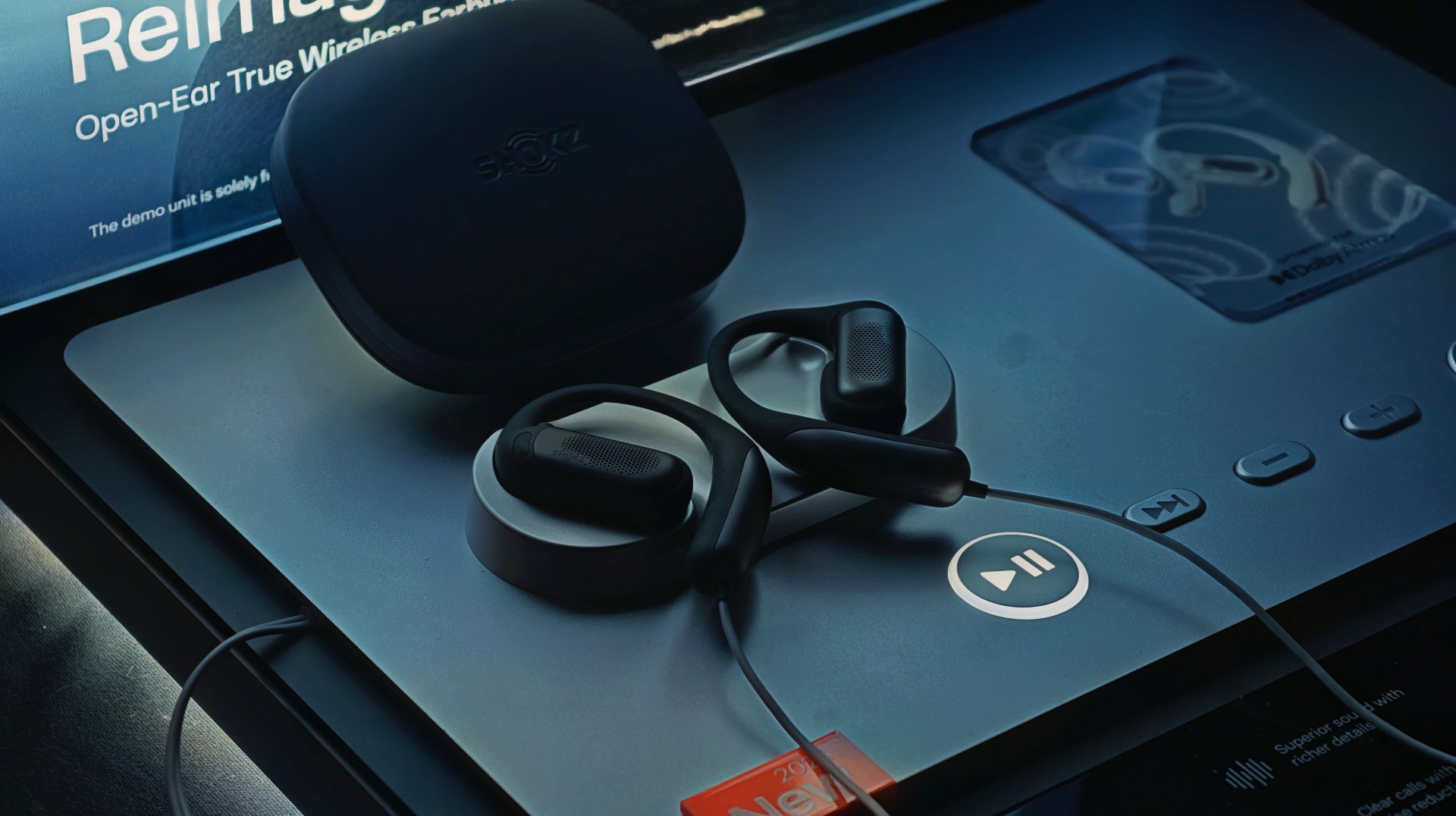
There’s a certain kind of listener this is built for. The kind who wants music on, but not the world off.
That’s exactly where the new Shokz OpenFit Pro steps in. Now officially available at Power Mac Center, the latest from Shokz pushes open-ear audio further with a feature that feels almost contradictory at first: noise reduction—without shutting you out.
It’s a balancing act. And from what we’ve seen at the launch, it’s one Shokz is leaning into hard.
Open-ear, but with focus when you need it
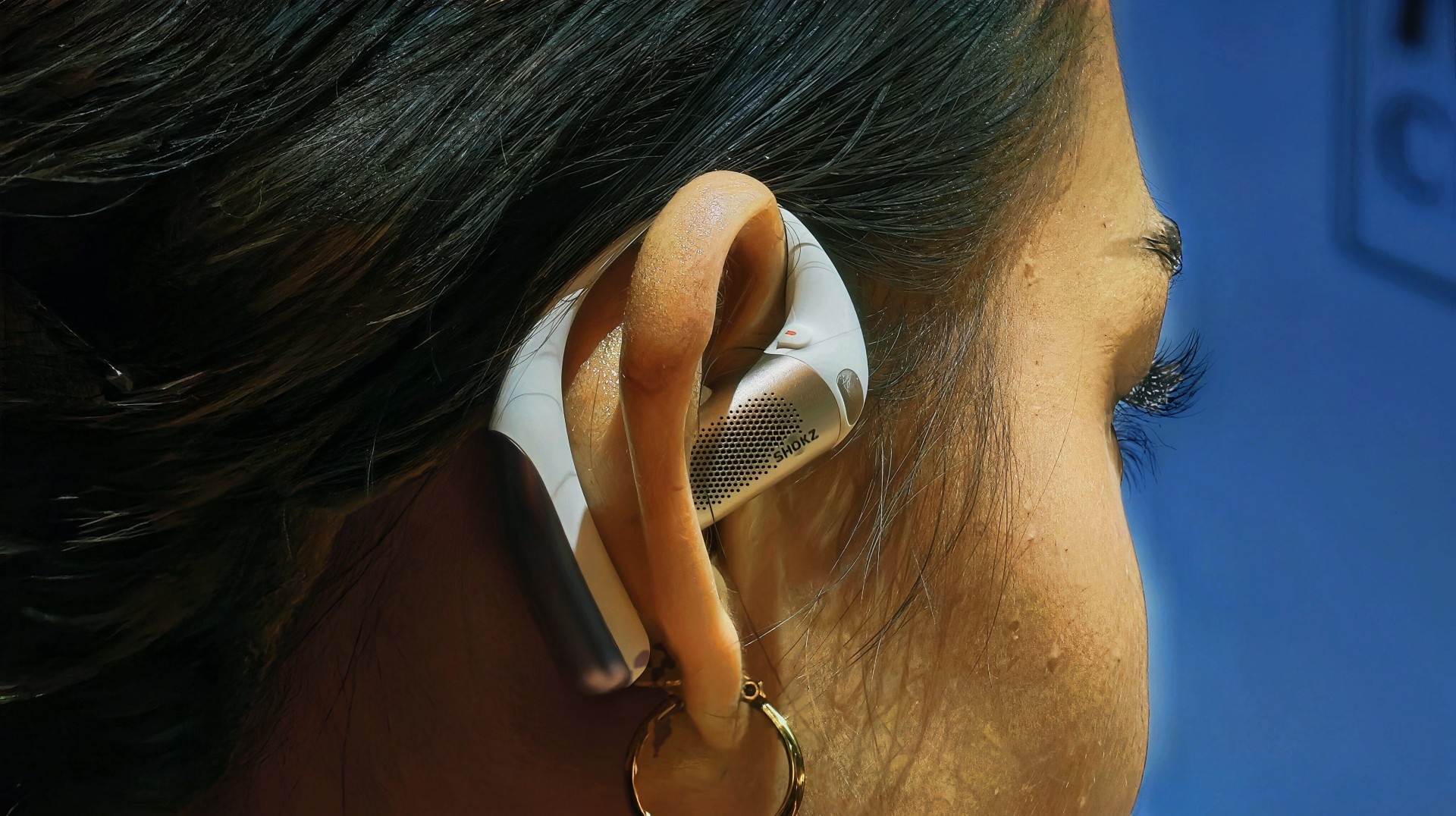
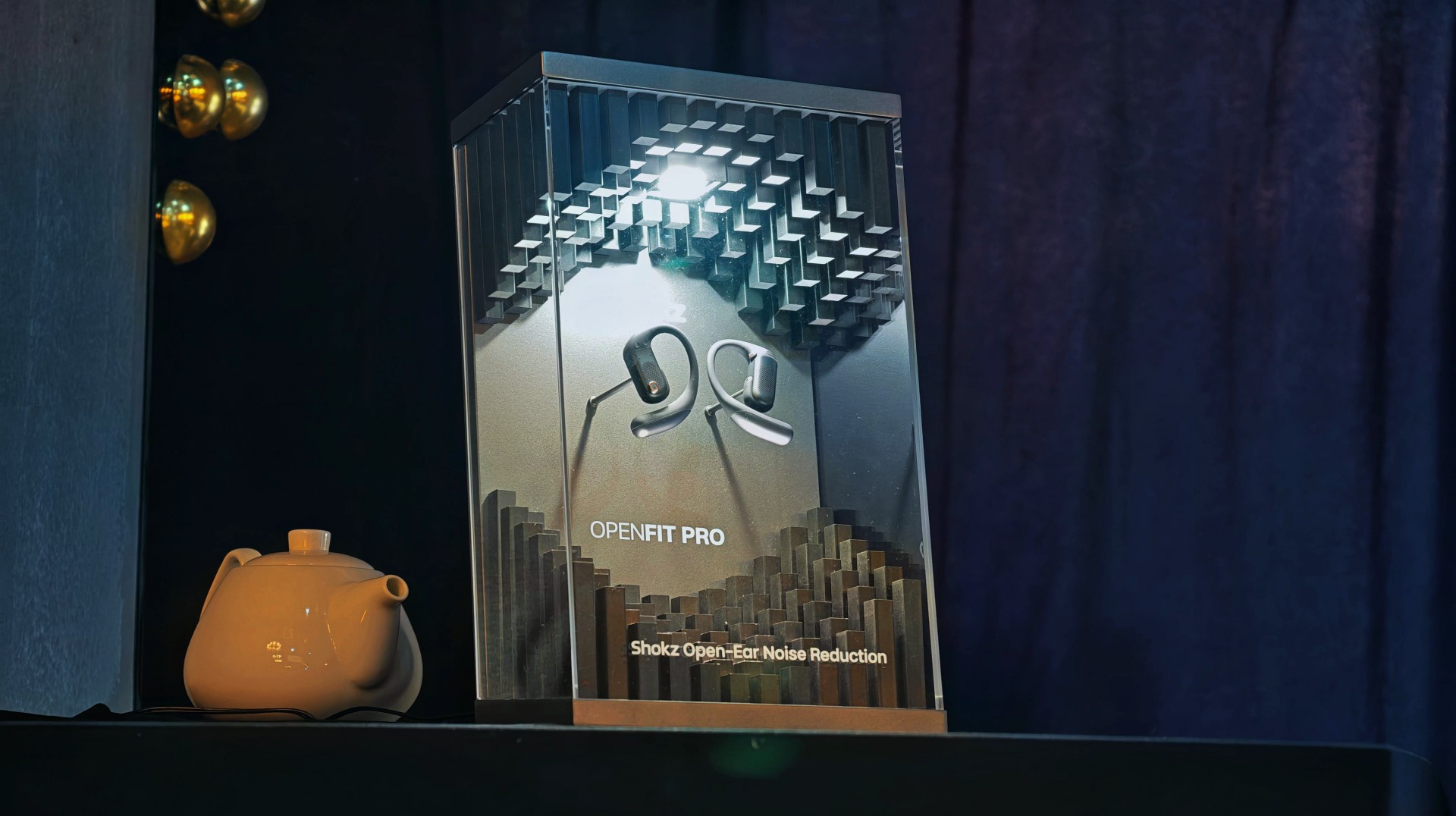
The headline feature here is Open-Ear Noise Reduction—a first for Shokz.
Instead of sealing your ears like traditional ANC earbuds, the OpenFit Pro keeps its signature open design. You still hear your surroundings, but now you can dial in a “focus mode” when things get too noisy.
It works through a triple-mic system paired with an ear-adaptive algorithm, which predicts in-ear noise and counters it with reverse sound waves. The result isn’t total silence, but a cleaner listening experience in places like offices, gyms, or busy streets.
It’s not about isolation. It’s about control.
Bigger sound, richer detail
Shokz is also going after better sound this time.
The OpenFit Pro uses a new Shokz SuperBoost™ dual-diaphragm driver, designed to deliver deeper bass and more detailed highs while keeping distortion low. The 11 × 20 mm driver performs like a larger speaker, giving it more room to breathe compared to typical open-ear buds.
There’s also Dolby Atmos support with head tracking, adding a more immersive layer—especially for supported content.
Built to stay on, all day

Comfort is still a big part of the pitch.
The earbuds use Ultra-Soft Silicone 2.0 and a flexible nickel-titanium ear hook that adapts to different ear shapes. They’re designed to stay secure whether you’re working out, walking, or just going through your day.
The build leans premium too, with an ultra-slim aluminum unibody design that keeps things lightweight and clean.
Calls, battery, and everyday extras

On the practical side, the OpenFit Pro checks a lot of boxes:
- AI-powered triple-mic system for clearer calls (with wind resistance up to 25 km/h)
- Up to 50 hours total battery with the case
- Up to 12 hours listening time (6 hours with noise reduction on)
- 10-minute quick charge = up to 4 hours playback
- Qi wireless charging support
- Multipoint pairing, smart wear detection, and Bluetooth 6.1
It’s also IP55-rated, making it suitable for workouts and light rain.
A different take on listening
Open-ear audio has always been about awareness and comfort.
With the OpenFit Pro, Shokz is trying to add a third layer: focus on demand.
It doesn’t replace traditional noise-cancelling earbuds. It doesn’t try to. Instead, it gives you the option to stay present—while still tuning the noise down when it matters. And for a lot of people, that might be the better everyday choice.
Price and availability
The Shokz OpenFit Pro retails for Php 14,990 or PhP 2498.33/mo for six months with select credit cards. It’s available in Power Mac Center locations nationwide.
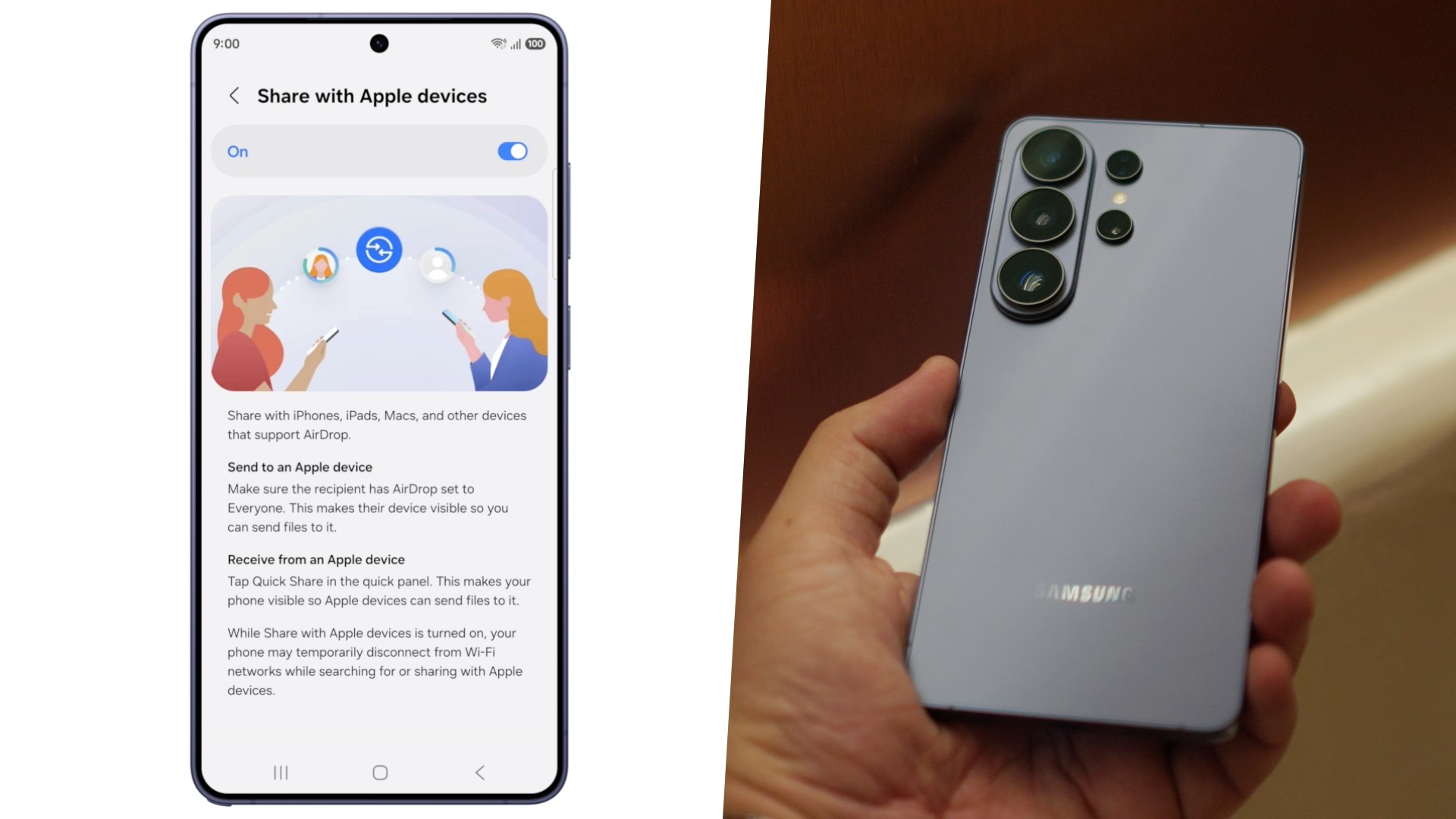
Samsung is making it easier for Galaxy users to share files across devices with the introduction of AirDrop support to Quick Share on the Galaxy S26 series.
The update allows Galaxy S26 users to send and receive files more seamlessly, expanding Quick Share’s functionality beyond Samsung’s own ecosystem. It’s a notable step toward improving interoperability, especially for users who frequently interact with devices outside the Galaxy lineup.
The feature begins rolling out on March 23, starting in Korea. Samsung says availability will expand to additional markets including Europe, Hong Kong, Japan, Latin America, North America, Southeast Asia, and Taiwan. As with most rollouts, timing may vary depending on the region.
For now, AirDrop support is exclusive to the Galaxy S26 series. Samsung notes that support for other devices will be announced at a later date.
Expanding what Quick Share can do
Quick Share has long been Samsung’s answer to Apple’s AirDrop — offering fast, wireless file transfers between Galaxy devices. Over time, Samsung has expanded compatibility to include Windows PCs and select Android devices.
With this update, the experience becomes more flexible. Users can expect fewer limitations when sharing photos, videos, and documents, particularly in mixed-device environments.
While Samsung has not detailed the exact technical implementation, the move signals a broader push toward making Galaxy devices easier to use alongside other platforms.
A software-driven upgrade for the S26
The addition of AirDrop support reinforces one of the key themes behind the Galaxy S26 series: improving everyday usability through software.
Launched in February, the Galaxy S26 lineup — consisting of the Galaxy S26, Galaxy S26+, and Galaxy S26 Ultra — focuses on refinement rather than dramatic hardware changes. Samsung has leaned heavily into what it calls “effortless intelligence,” with features powered by Galaxy AI designed to simplify daily tasks.
These include tools like Now Brief and Now Nudge, which surface contextual suggestions, as well as AI-powered editing features such as Photo Assist and Audio Eraser. Privacy also plays a bigger role this year, with the Galaxy S26 Ultra introducing a built-in Privacy Display that limits viewing angles in public spaces.
On the hardware side, the Galaxy S26 Ultra is powered by the Snapdragon 8 Elite Gen 5 for Galaxy processor, paired with a redesigned vapor chamber for improved thermal performance. It also introduces faster 60W charging, a bump from the previous generation.
Making sharing more seamless
With AirDrop support coming to Quick Share, Samsung is addressing a common friction point for users: moving files between different ecosystems.
It may not be the most headline-grabbing feature, but it’s one that could have a meaningful impact on day-to-day use — especially for users who regularly share content across devices.
As the feature rolls out globally, it further positions the Galaxy S26 series as a device focused on practical improvements that make the overall experience smoother and more connected.
News
nubia to launch new Neo 5 series gaming phones on March 28
Head to SM Megamall for activities, guest appearances, surprises

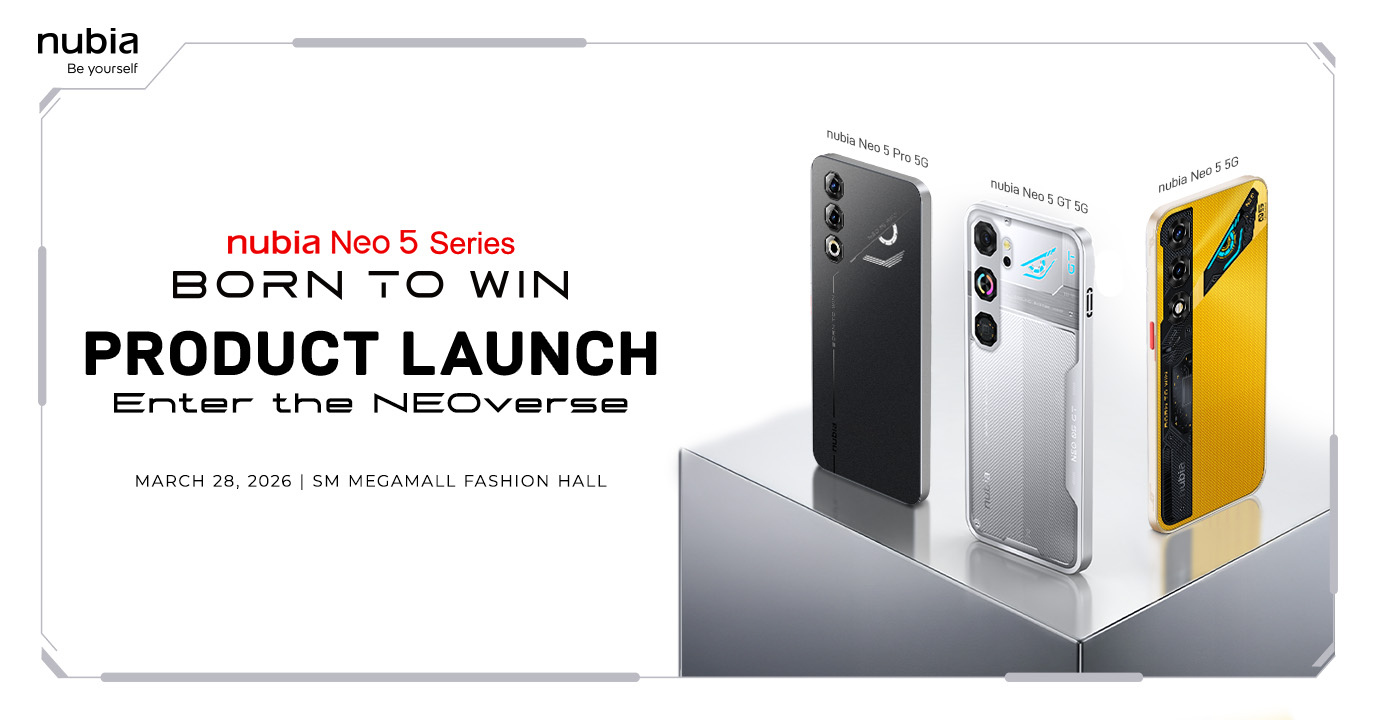
nubia Philippines will officially launch the nubia Neo 5 series gaming smartphone on March 28 at their “Enter The NEOVerse: Born To Win” event. It will be held at the SM Megamall Fashion Hall in Metro Manila.
The nubia Neo 5 series’ design and details will be unveiled during the event. It is inspired by the REDMAGIC Gaming Lab, which is behind the REDMAGIC’s high-performance gaming ecosystem.
The nubia Neo 5 series will introduce a bold gaming-centric aesthetic, paired with performance-driven specs.
Customers can expect a sleek, futuristic styling, as well as powerful hardware engineered to elevate everyday mobile gameplay.
Across the lineup, users can expect high refresh rate displays, powerful processors, advanced cooling systems, and the familiar gaming triggers from the previous series.
It does look like nubia is adding AI-powered gaming optimization to give players an extra edge for every competitive match.
All these, of course, minus the flagship price tag.
Enter the NEOverse
At nubia’s launch event, the activity area will be transformed into a gaming-inspired universe.
Guests can explore interactive zones, participate in challenges, and experience the nubia Neo 5 series firsthand. They can also unlock exclusive rewards and prizes.
Moreover, the event will feature appearances from nubia ambassadors Sanya Lopez and ONIC Philippines.
From there, there will be 1v1 gaming sessions with ONIC PH players, as well as a special “Play” segment featuring a yet-to-be-revealed cosplayer.
nubia will also offer event-exclusive deals for early shoppers during the launch. Customers can enjoy up to seven premium freebies per nubia Neo 5 model. This is available for the first 100 customers.
Furthermore, nubia will officially announce its TikTok Super Brand Week, as well as partnerships with Yanlala and Geely.


WWE 2K26 lets you live out all the fantasy matches you could want
But you have to play for hours and hours to unlock everyone.

The HONOR X8d is serviceable
Steady but slow?

POCO X8 Pro Max review: A new beast from the far east
That "Pro Max" naming superlative is more than justified
WWE 2K26 lets you live out all the fantasy matches you could want

Shokz OpenFit Pro launches at Power Mac Center, brings open-ear noise reduction

How the Ford Ranger is powering community resilience

God of War: Sons of Sparta takes a more contained approach to Kratos

Samsung brings AirDrop support to Quick Share with Galaxy S26 series


-
Reviews6 days ago
POCO X8 Pro Max review: A new beast from the far east
-

 News6 days ago
POCO X8 Pro Series: Price, availability in the Philippines
-

 Laptops2 weeks ago
Apple MacBook Neo Review
-

 Apps2 weeks ago
Google Maps is finally getting a 3D mode
-

 Features2 weeks ago
Galaxy AI on the Samsung Galaxy S26 Ultra
-

 Entertainment2 weeks ago
The internet is thirsting over the One Piece Season 2 cast
-

 Automotive2 weeks ago
BYD is reportedly considering an F1 team
-

 Gaming2 weeks ago
Resident Evil Requiem will get a story expansion