
Computers
Apple unveils Studio Display and all-new Studio Display XDR
Powering up the desk.

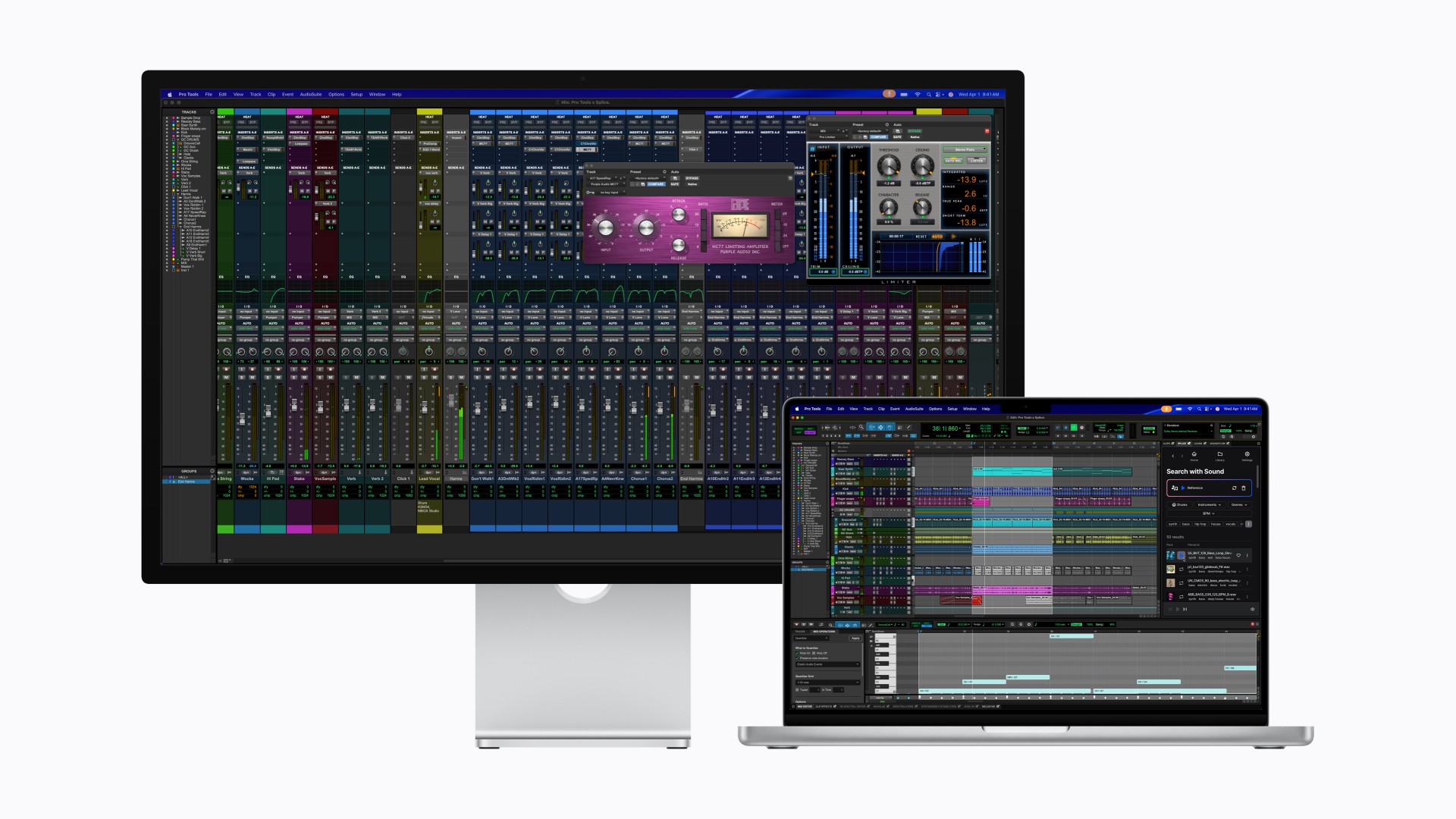
After taking the MacBook Pro to Super Saiyan levels, Apple is now doing the same for the display it pairs with.
With its latest Studio Display family, Apple is splitting the lineup into two clear tiers. The regular Studio Display already feels powered up. The all-new Studio Display XDR transforms.
If this were Dragon Ball Z logic, the Studio Display is Super Saiyan. The Studio Display XDR is Super Saiyan Blue — calmer, more controlled, and operating on an entirely different plane.
A strong base form
The new Studio Display sticks to what already worked: a 27-inch 5K Retina panel with over 14 million pixels, 600 nits of brightness, and P3 wide color. It’s sharp, bright, and more than capable for photo editing, design work, music production, and daily tasks.
Apple upgrades the experience around the screen, too. There’s now a 12MP Center Stage camera with improved image quality and Desk View support. The three-mic array and six-speaker system return, this time with deeper bass and Spatial Audio support.
Connectivity jumps to Thunderbolt 5, allowing users to daisy-chain up to four Studio Displays for nearly 60 million combined pixels. It also delivers up to 96W of charging power for a connected MacBook Pro.
It’s the dependable powered-up form. Strong. Confident. Already more than enough for most creators.
The controlled transformation
Then there’s Studio Display XDR.
This is where Apple goes full Super Saiyan Blue.
The 27-inch 5K Retina XDR panel uses a mini-LED backlight with over 2,000 local dimming zones. It pushes up to 1000 nits of SDR brightness and 2000 nits of peak HDR brightness, alongside a 1,000,000:1 contrast ratio. Highlights hit harder. Blacks stay deep. Blooming stays minimal.
The display also adds Adobe RGB support on top of P3, covering more than 80 percent of Rec. 2020 for HDR workflows. For video editors, colorists, and print professionals, this shifts the XDR from “great display” to “reference-grade tool.”
Motion gets smoother, too. A 120Hz refresh rate with Adaptive Sync dynamically adjusts between 47Hz and 120Hz, reducing latency and making everything from scrubbing timelines to gaming feel more fluid.
Apple even introduces DICOM medical imaging presets and a Medical Imaging Calibrator for diagnostic radiology use in the U.S., pending FDA clearance. It’s a reminder that this panel isn’t just about aesthetics. It’s about precision.
Built for the pro desk
Both displays share the same upgraded 12MP Center Stage camera, studio-quality microphones, six-speaker Spatial Audio system, and Thunderbolt 5 connectivity. The XDR model goes further with up to 140W charging power and additional downstream ports, effectively acting as a high-speed hub.
Pricing and availability
In the U.S.
The new Studio Display starts at $1,599 (U.S.) and $1,499 for education, while the Studio Display XDR begins at $3,299 (U.S.) and $3,199 for education. Both models can be pre-ordered starting tomorrow, March 4, with availability beginning March 11 in select Apple Store locations and authorized resellers.
In Singapore
Pre-orders open on March 9 via apple.com/sg/store and the Apple Store app. Pricing starts at S$2,199 for the Studio Display (S$2,059 for education). The Studio Display XDR begins at S$4,499 (S$4,359 for education).
Optional accessories such as the Magic Keyboard, Magic Trackpad, and Magic Mouse remain available in white and black color options. Apple also offers nano-texture glass and adjustable stand configurations for professional setups.
The message from Apple is consistent: the base Studio Display remains a strong professional companion, while the Studio Display XDR targets workflows demanding reference-grade performance and HDR capability. Pre-orders go live soon, with deliveries and in-store availability following in mid-March.
In the Philippines
Customers can pre-order starting March 4 at apple.com/ph/store.
Studio Display starts at ₱104,999, and ₱97,990 for education. Studio Display XDR replaces Pro Display XDR and starts at ₱219,999, and ₱212,990 for education.
Additional technical specifications, including nano-texture glass and a choice of stand options, are available at apple.com/ph/store.
Magic Keyboard with Touch ID and Numeric Keypad (from ₱10,490), Magic Trackpad (₱6,990), and Magic Mouse (₱5,490) in black or white color options are available at apple.com/ph/store.





Computers
Lenovo tech behind DreamWorks Animation hit ‘Forgotten Island’
Partnership powers modern demands of animation production


DreamWorks Animation’s Forgotten Island has definitely become a big screen hit, debuting with a 100% Rotten Tomatoes score and being well received particularly by a large Filipino fanbase.
And behind the movie is DreamWorks Animation’s partnership with tech giant, Lenovo. The collaboration is helping power the former’s production slate, including the studio’s animated feature inspired by Filipino culture, mythology, and experiences.
In 2025, DreamWorks expanded its relationship with Lenovo by naming the company its preferred compute services, workstation, and solutions provider.
Such partnership brings together Lenovo workstations, high-performance infrastructure, data center technology, and services to support the demanding needs of modern animation production.
It is a collaboration that builds on years of work between the two companies. DreamWorks has used Lenovo workstations as part of workflows across the studio.
Lenovo infrastructure has also supported the large-scale computing requirements involved in creating animated worlds and characters.

Still in cinemas, Forgotten Island follows lifelong best friends Jo and Raissa, voiced by Grammy and Academy Award winner H.E.R. and Filipino actress Liza Soberano.
As the two prepare to take different paths after high school, they unexpectedly find themselves transported to Nakali, a fantastical island populated by magical and mythological creatures rooted in stories from their Filipino families.
The film is written and directed by Academy Award nominee Joel Crawford and Januel Mercado and produced by Academy Award nominee Mark Swift, the filmmaking team behind Puss in Boots: The Last Wish.
Its voice cast also includes Dave Franco, Jenny Slate, Manny Jacinto, Dolly de Leon, Jo Koy, Ronny Chieng, and Lea Salonga.
Computers
ROG brings out the ultra-stylish G1000 gaming desktop
Plus, here’s a couple of sleek transport options from ROG.


Despite how much higher prices are going today, there are still so many options if you want a PC for yourself. However, only a handful of brands will offer you quite as much style doing so as ASUS. Today, ROG has revealed the new G1000 gaming desktop.
For the first time ever in a prebuilt PC, the ROG G1000 comes with a built-in AniMe Holo, a holographic fan with customizable visuals using Armoury Crate and Aura Sync. Additionally, the holographic fan is inside its own chamber, preventing it from interfering with the main system. Instead, the desktop uses the ROG Thermal Atrium, which uses three fans to channel fresh air through a 420mm AIO liquid cooler.
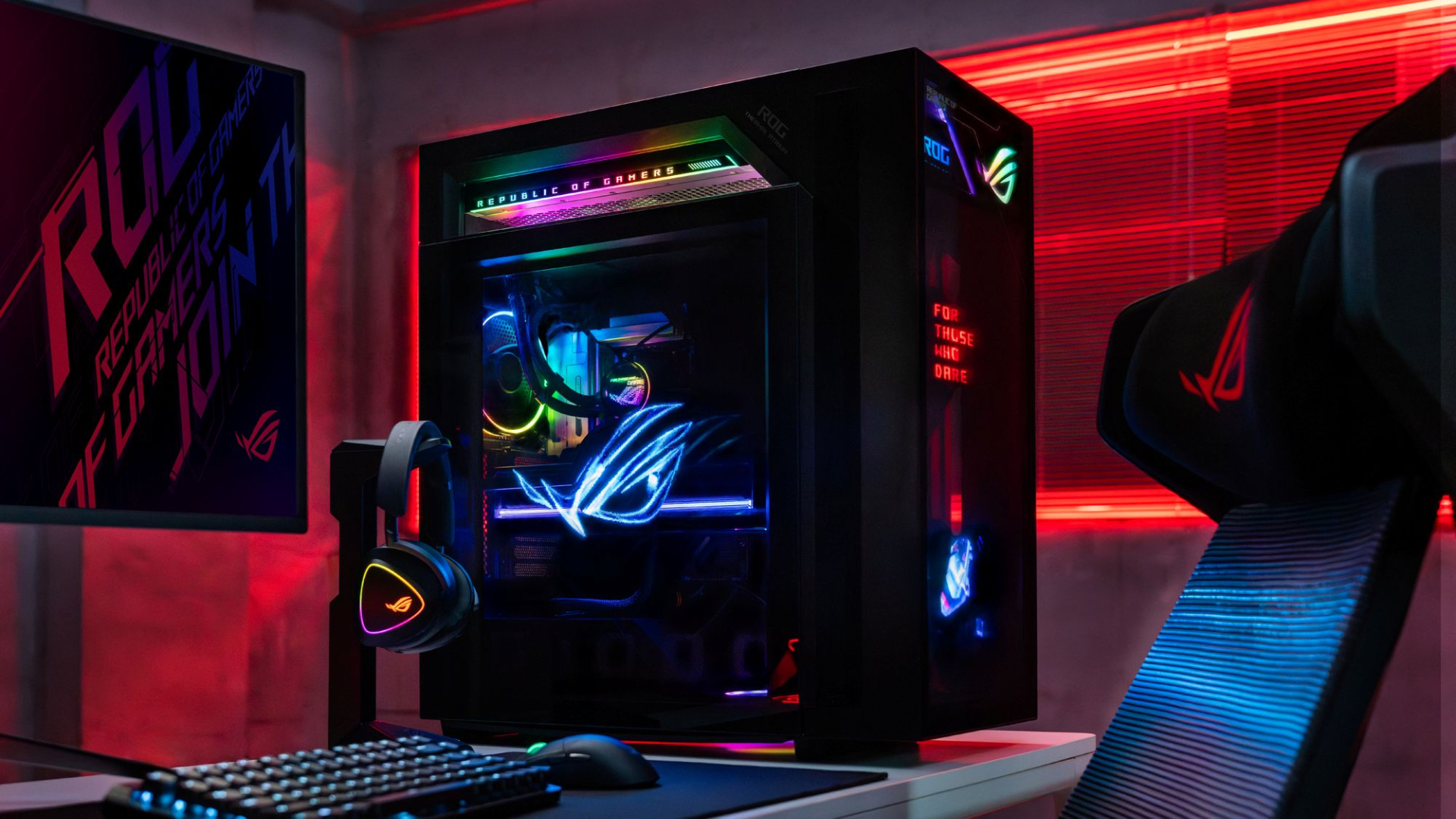
Now, the ROG G1000 isn’t just a pretty face. Inside, the 104L desktop comes with a Ryzen 7 9800X3D processor. It also comes equipped with the ROG Astral GeForce RTX 5080, up to 128GB DDR5 memory, and 1TB SSD for storage. New purchases will also come with a gaming keyboard and mouse, a year of Microsoft 365 Basic, Office Home 2024, and an ASUS No. 1 Quality and Service warranty.
The ROG G1000 will be available from ROG Exclusive Stores and will start at PhP 399,995.
Celebrating ROG at 20
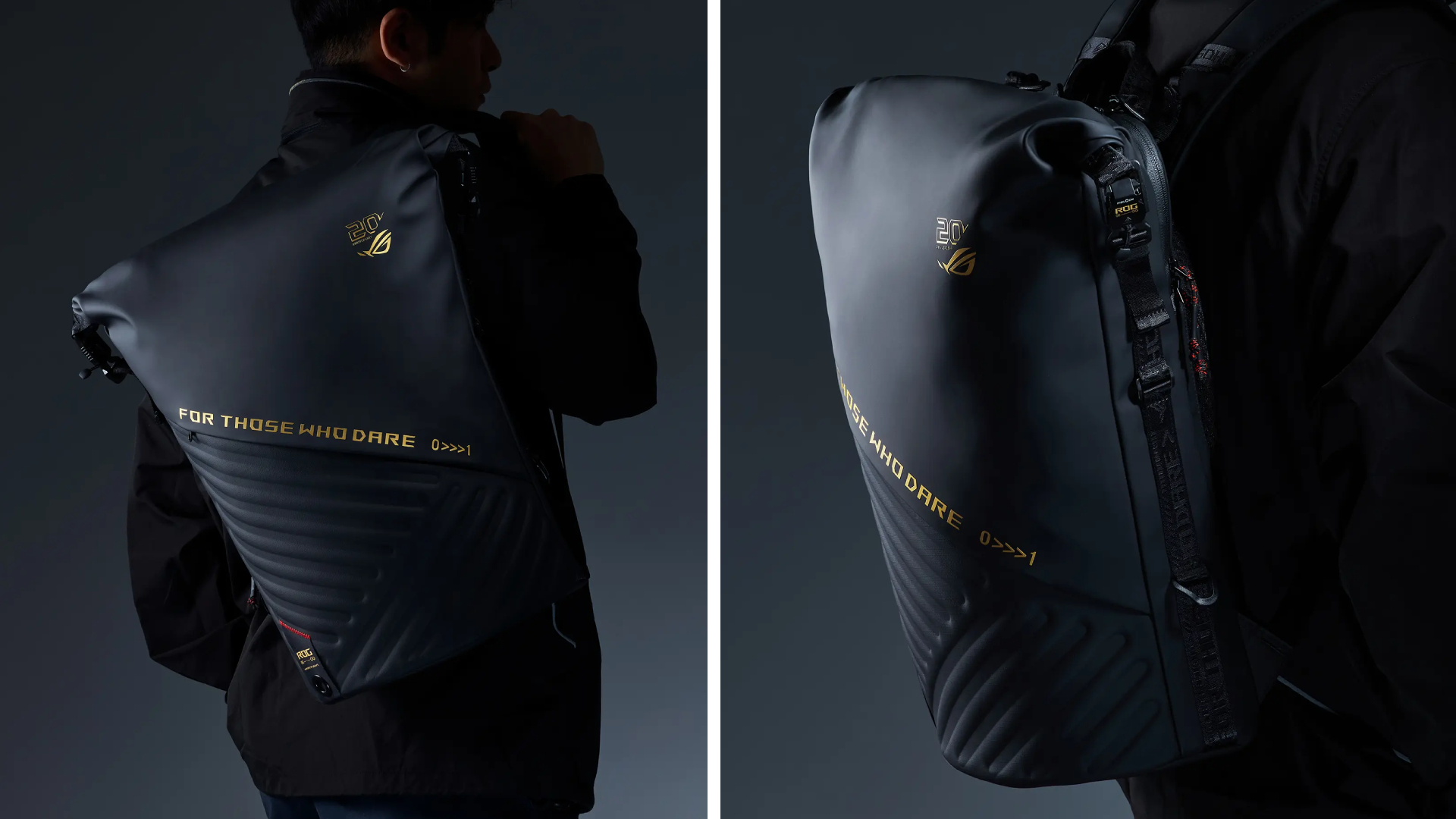
Besides the new desktop, ROG is also launching a couple of storage and transport options for your prized gaming possessions. The ROG SLASH Backpack Edition 20 is a sleek backpack that can fit an 18-inch laptop with enough room for peripherals and accessories. It also comes with a custom FIDLOCK Magnetic quick-release, black-and-translucent-gold buckle. It will be available next quarter for PhP 10,995.
Meanwhile, the ROG SLASH Hard-Case Luggage Edition 20 is designed specifically for transporting your hard-earned gaming devices. The light-but-durable aluminum frame comes with a specialized compartment for laptops, handhelds, and accessories. It also has removalbe foam dividers to better customize the case for your needs. Finally, it has 360-degree silent skate wheels for smoother rolling. The luggage will be available starting next quarter for PhP 15,995.


Acer is expanding its storage lineup with the PA100 Portable SSD. It’s a compact external drive designed for users who need faster storage across multiple devices.
The PA100 uses USB 3.2 Gen 1 connectivity. It reaches sequential read speeds of up to 560MB/s and write speeds of up to 430MB/s. This makes it suited for everyday tasks such as transferring large files, backing up content, managing documents, and moving media between devices.
Up to 2TB of portable storage
The PA100 comes in three capacities: 500GB, 1TB, and 2TB. This gives users options depending on whether they need extra space for documents and schoolwork or larger collections of photos, videos, and project files.
Acer also designed the drive with mobility in mind. The PA100 has a slim 9mm profile and a lightweight build, while its reinforced construction is designed to withstand everyday travel and handling.
The drive comes with a 2-in-1 USB-C to USB-C and USB-A cable. This allows it to connect to compatible PCs, tablets, smartphones, and other devices without requiring a separate adapter. It also supports major operating systems and USB-C mobile platforms.
Designed for everyday use
Power efficiency is another focus. Acer says the PA100 uses less than 3W during operation, while idle power consumption can drop to as low as 0.62W.
The drive also features an optimized thermal design to help maintain stable performance during extended transfers and daily workloads.
The Acer PA100 Portable SSD is backed by a three-year limited warranty. Pricing and availability may vary by market.






‘Street Fighter’ delivers pure arcade nostalgia

Your Samsung fridge might know what’s for dinner

Now Playing: Shin Godzilla

The new Apple TV 4K might be the smartest TV you can own

Apple unveils a new smart home hub called the HomeView

vivo X500 Series launches with major imaging upgrades

OPPO Find X10 Pro Max is the first phone with a triple 200MP camera system

TECNO CAMON Slim 5G: Price, availability in the Philippines

BYD says that way better EV batteries are coming next year

HONOR Magic9 Pro Max launches in China with ARRI-powered imaging


-
 News2 weeks ago
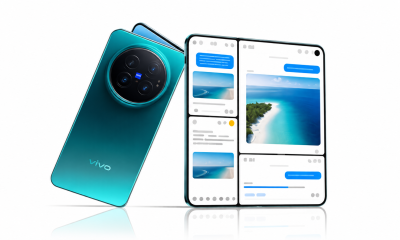
vivo X Fold6 makes global debut with 200MP camera and 6900mAh battery
-

 Philippines2 weeks ago
Bambu Lab opens first Authorized Store in the Philippines
-

 News1 week ago
OPPO Find X10 Series launches globally October 21
-
 Features1 week ago
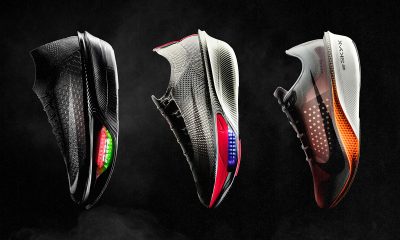
Nike’s new race-day system, explained
-

 News1 week ago
Sony teams up with Hello Kitty for exclusive limited-edition collection
-

 Computers2 weeks ago
Lenovo tech behind DreamWorks Animation hit ‘Forgotten Island’
-

 Philippines2 weeks ago
Smart opens iPhone 18 Series pre-orders in the Philippines
-

 Wearables6 days ago
Garmin Enduro 4 promises up to 320 hours of battery life