


Apps
Trying out the Gixo Fitness App: A personal fitness trainer on your smartphone
Get fit on your phone!

I know how demanding working out can be. Especially for those who are just about to start their fitness journey, it can get pretty hard learning even just the basics. And then, there’s also getting yourself to the gym — believe me, I know how it feels to drag my feet out the door on the way to an exercise class.
What if you could make it all easier for you? Saddle up, ladies. This is an app that will allow you to get exercising all through your smartphone.
Introducing: The Gixo Fitness App
Like most exercise apps, Gixo will allow you to pick out different workouts depending on your exercise preference.

Because I was in the middle of a crazy work week when I tried out the app, I figured yoga would be a great way to clear my mind and get my body relaxed.

I picked out a class I liked and it was as simple as that. Of course, there were different classes available ranging from kickboxing to strength training, to HIIT, and even weight training — perfect if you’re not into only one activity.

Since I was working out to an app, this meant I got to exercise anywhere! I set up a yoga mat in a corner of that week’s office space-slash-studio (like I said, busy work week!) and started the class.

It was a very relaxing 15-minute class, just what I needed to refresh my mind and get the blood flowing.

For a mid-week work breather, these short classes are perfect. But, if you want a more intense workout, Gixo still delivers. There are different fitness levels and class length also vary with some classes running up till 60 minutes.
As good as this all sounds, however, it’s not even Gixo’s best workout feature.
Trying out a live class
Gixo’s strength lies in the fact that you can sign on for live classes. You heard that right: You can look through a number of different scheduled classes and join whatever tickles your fancy.

These live classes are headed by actual coaches that will instruct you as you go. For this beginner class, Coach Aaron was facilitating.

The beauty of it all is that this isn’t just a person who will talk you through the exercise — watching a YouTube video can do that! The app actually allows you to communicate with the coaches during class via chatting. Communication is two-way which allows for more interactive classes.

So how it works is you have a live coach facilitating a class and based on what you signed up for, you can follow along and ask questions. On the screen, you’ll have your coach and exercise visuals to help you along.

You can also turn on your phone camera so your coach can check in on you and give you comments about your form and the actual workouts you’re on.

And because it’s highly involved, you also get to input the number of reps or even change workout locations — perfect for coached running classes!


Changing to an outdoor location switches up the workout screen
Though I’ve used fitness apps (and a lot of them) before, I’ve never really had a live coach walk me through things via an app. In fact, I don’t think any other exercise app offers the same thing. It’s a pretty cool fitness innovation, really, and I’m still geeking over how no one has thought about this setup before.
For those who want even more fitness motivation, there are also exercise challenges that span weeks that you can sign up for. Gixo allows you to pick out a set time for weekdays and weekends and you simply follow along
Final verdict
So will the Gixo app actually get you those rock hard abs you’ve always dreamed about? Well, yes and no.
The whole experience can seem pretty weird at first but it doesn’t take long for you to get used to the setup. Think of it as video calling your fitness coach; you basically get the same interaction without having to leave the comfort of wherever you are. Gixo basically takes away one big step from the working out equation and, as we all know, any help in the exercise department is a big help.

Some would contend that having and being on your phone during workouts is counterproductive. But, think about it: You’re still working out and it’s an app that will allow you these workouts anywhere at your own convenience. There’s literally no excuse now because you only need to fire up Gixo on your phone and you get live, personal fitness exercise training right then and there. Talk about not having excuses! In addition, Gixo will send you workout summaries so you’re always reminded of just how much exercising you’re actually doing.
Of course, the bottom line is that Gixo can only do so much. It’s up to you to do those exercises and get your body in tip-top shape with the inclusion of those abs you dream about so much. To be perfectly honest, though, Gixo already does a lot: It’s an app that has someone literally watching you (in a non-freaky, coaching way) while you do your exercises. If that’s not making it easy for you to meet your fitness goals, I’m not entirely sure what will.

Apps
Google Photos can now censor your kid’s face better
The new Redact feature can censor sensitive information.


Censoring photos is heavy work. Either you stick on random emojis or draw an indiscriminate splotch of doodles to cover sensitive information. It’s an imperfect art but an essential one to protect privacy. Today, Google Photos is getting a Redact feature which can censor sensitive bits with pixelated blocks.
An addition to the Markup tool, Redact acts like a nifty pen that can hide information that you don’t want seen. Unlike a ghastly emoji or a splotch, the censored bar mixes better with the surrounding elements. In the example that Google used, a censored license plate blends well with the car it’s attached to, making the photo look more cohesive. Besides license plates, it’s the perfect tool for covering other information like phone numbers, addresses, and the faces of your loved ones.
Google Photos is also rolling out Moods, a set of filters that give photos a nostalgic look, including a 2000s night digicam vibe that’s popular today. There are also 15 new Remix templates to add more creation options.
Both the Redact and the Moods features will roll out to Android users starting today. The new Remix templates, however, will be limited to some countries on both Android and iOS.
SEE ALSO: Google will force Android users to use Gemini next month
Apps
Smart launches LiveSmart App for exclusive deals
Exclusive deals, cashback, and bill payments in one app.

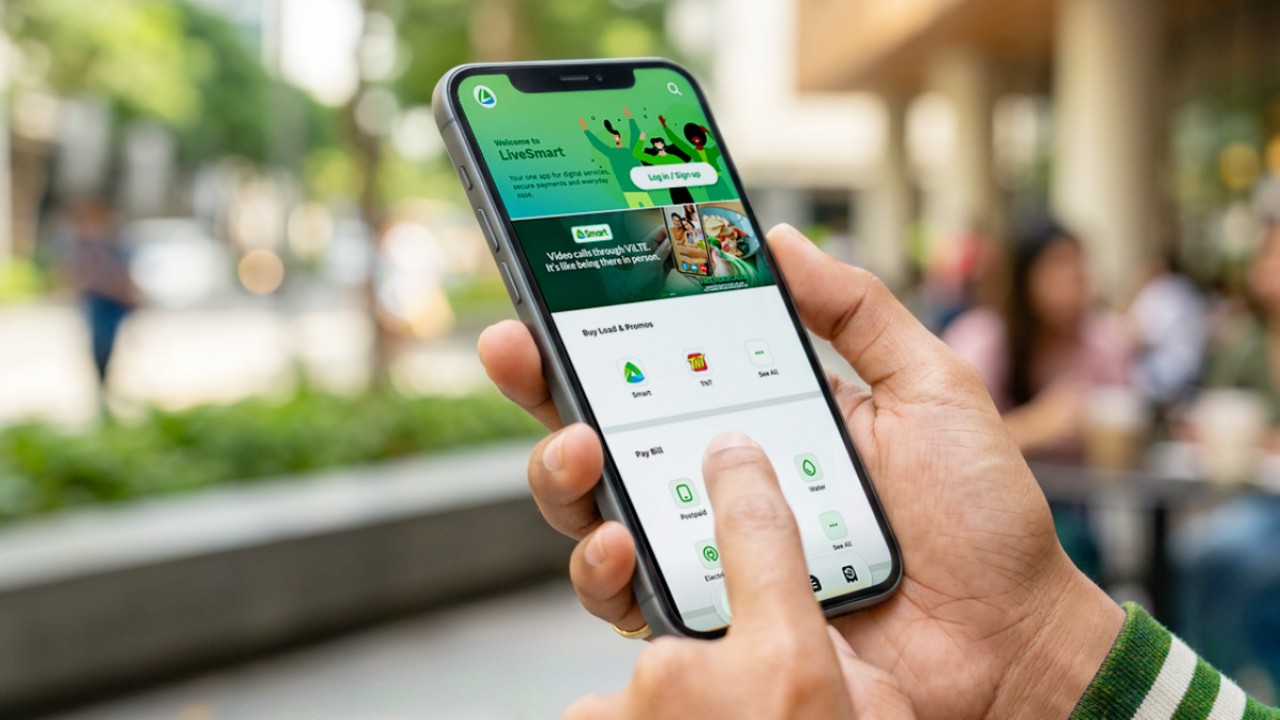
Smart Communications, Inc. (Smart) and TNT have launched the LiveSmart App, a new platform that combines loading, bill payments, exclusive offers, and other everyday transactions in one app.
The app is available on the Google Play Store and Apple App Store. It is open to Smart, TNT, and subscribers of other mobile networks.
The LiveSmart App gives users access to exclusive deals and savings. These include cashback offers, discounted Smart and TNT data packages, and limited-time access to AI.Smart.
“Filipinos are becoming more deliberate about where they spend and how they can get more value from every peso,” said Lloyd R. Manaloto, FVP and OIC for Smart. “The LiveSmart App is designed to help make those everyday decisions a little smarter, by giving users convenient ways to load, pay bills, and access exclusive savings and offers in one place.”
Exclusive deals and perks
Smart and TNT are rolling out several offers on the LiveSmart App starting September 18.
Smart and TNT subscribers can get 5% cashback when they purchase load or pay their Smart Postpaid bill through the app.
The app also offers data packages at exclusive prices. Smart Prepaid subscribers can get Power All 109 for PHP 105, while TNT subscribers can get Saya All 109 for PHP 105.
Users who download the LiveSmart App may also receive limited-time free access to AI.Smart.
AI.Smart combines multiple AI models, including AWS Nova, ChatGPT, Claude, Google Gemini, and Thinking Machines, in one workspace. Users can use it to generate images, create presentations, draft documents and spreadsheets, and get help with schoolwork, content creation, and other projects.
To claim the free AI.Smart credits, users need to tap the AI.Smart banner in the LiveSmart App. They then need to create an AI.Smart account using their Smart or TNT number.
Smart says users can also expect more exclusive deals and perks from lifestyle partners as it expands the LiveSmart App.
Powered by Smart 5G
The LiveSmart App runs on Smart’s network. Smart 5G supports activities such as video streaming, gaming, and real-time social media sharing.
The company said Ookla recently recognized its network for the Best Mobile Video Experience in the Philippines for the first half of 2026. Smart recorded a Video Score of 72.82, which it said was the highest among mobile operators in the country.
The LiveSmart App is now available on the Google Play Store and Apple App Store. Users can learn more about the app through Smart’s website.
Apps
Apple’s best feature to cure motion sickness is finally on Android
Google copies a good page from Apple’s playbook.
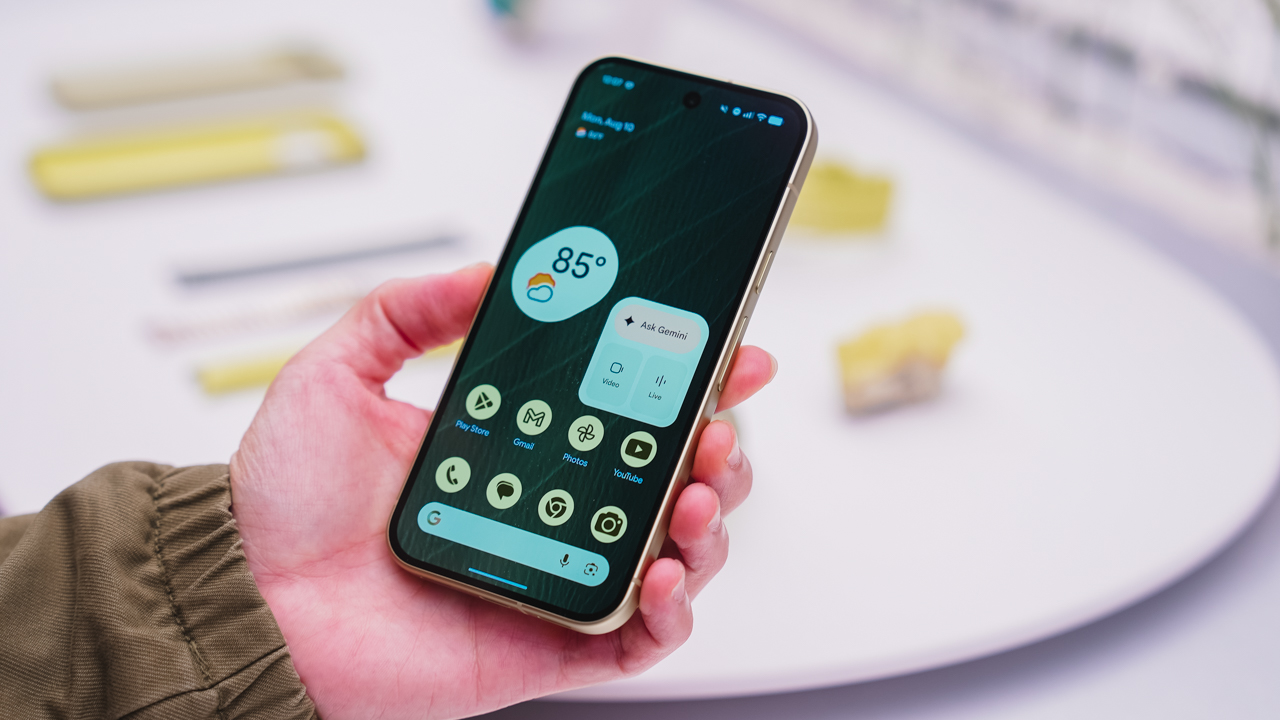
As an Android user, I’ve been jealous of iPhone users for a while now, but it’s not for the reason you might think. See, I’m ridiculously prone to motion sickness when I’m not driving. So, when I discovered that Apple has a software-based cure called Vehicle Motion Cues, I wanted it immediately. Now, Android does have third-party apps that do the same thing, but they’re not as good as a fully native version. Well, those dark, nauseating days are about to come to an end. Android 17 is finally getting a similar tool called Motion assist.
Before that, let’s rewind for a bit. What do these features do? How can they cure motion sickness?
Whenever you open Vehicle Motion Cues or Motion assist, the interface spawns a series of dots on the screen. These dots respond to movement. For example, if the vehicle turns to the left, the dots also go to the left, mimicking the movement. Without cues like this, the stationary nature of the screen clashes with our brain’s perception of movement. The disparity creates that feeling of nausea. Basically, our eyes are desperately trying to focus on the static screen, but our brains are telling us that we should be seeing motion. Having moving dots reorients our brain and places the phone inside our perception of movement.
Now, you can enable the same feature on your Android 17 device through Settings > All services > Motion assist under Personal & device safety. You can also set it so that the feature turns on automatically when the phone detects that you’re in a moving vehicle. Finally, you can also tweak the shape, color, and opacity of these dots.
Android 17’s Motion assist is rolling out now to compatible devices.
SEE ALSO: These are the best Android 17 features (if you hate AI)






Lenovo tech behind DreamWorks Animation hit ‘Forgotten Island’

Samsung joins the clip-on earbud trend with the Galaxy Buds On

vivo X Fold6 makes global debut with 200MP camera and 6900mAh battery

Smart opens iPhone 18 Series pre-orders in the Philippines

The regular PlayStation 5 is getting an AI upscaling feature

HUAWEI Pura X View is 2026’s first WIDE slab-type smartphone

The CAMON Slim 5G is TECNO’s latest ultra-slim smartphone

iPhone 18 Pro series: Price, availability in the Philippines

iPhone 18 Pro series: Price, availability in Singapore

vivo X500 Series launches with major imaging upgrades


-
 News2 weeks ago
vivo X500 Series launches with major imaging upgrades
-

 News1 week ago
OPPO Find X10 Pro Max is the first phone with a triple 200MP camera system
-

 Automotive5 days ago
BYD says that way better EV batteries are coming next year
-

 Singapore2 weeks ago
Epson Lifestudio Grand Plus EH-LS970B with 4K projection, more launches
-

 News2 weeks ago
vivo introduces OriginOS 7 with smarter multitasking and AI features
-
 News5 days ago
HONOR Magic9 Pro Max launches in China with ARRI-powered imaging
-
 Accessories2 weeks ago
70mai launches the A900 series with 4K front, rear recording
-

 Smartphones6 days ago
When TECNO-logy meets Tonino Lamborghini legacy