
News
Google pushes AI tools to help Filipinos stay safe online
Google highlights new AI tools for safer internet use.

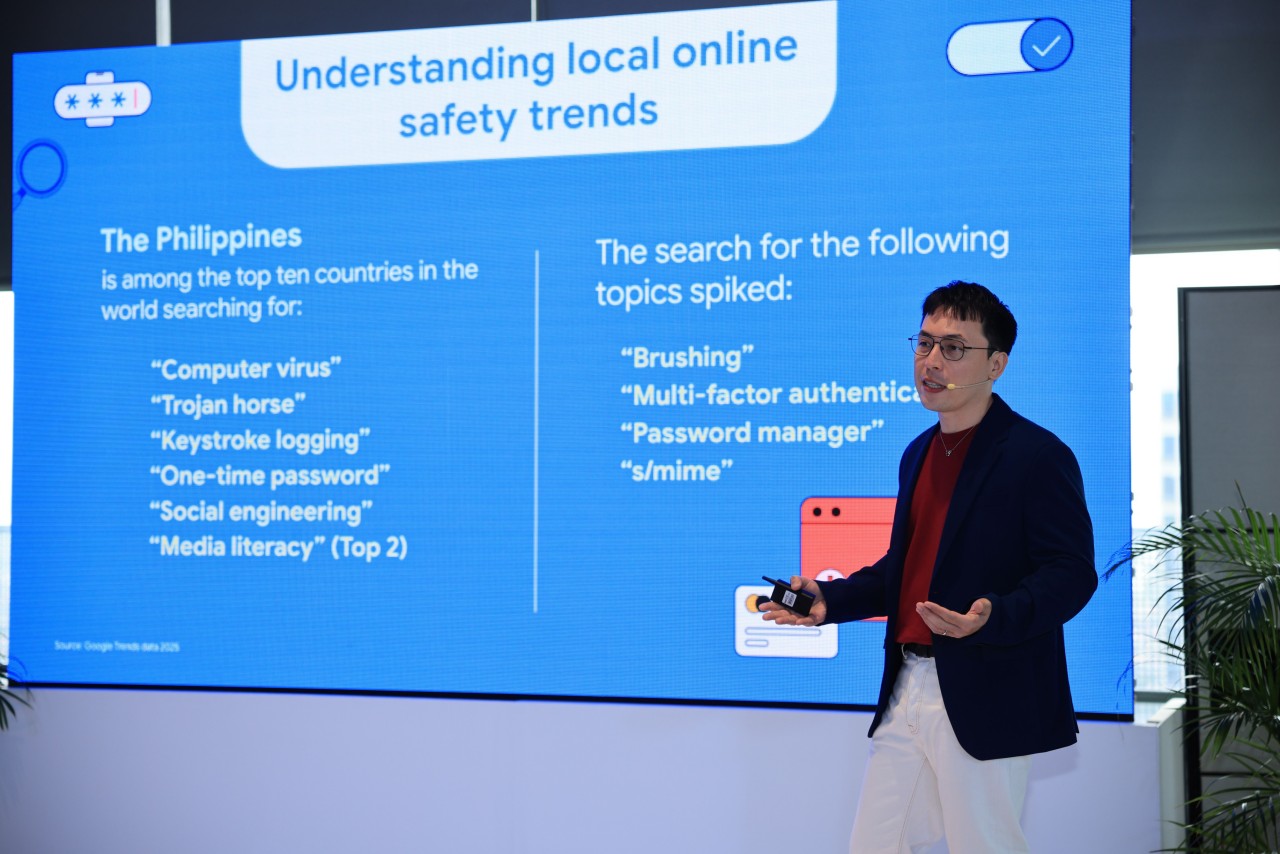
Google Philippines is marking Safer Internet Day 2026 by highlighting how artificial intelligence can help Filipinos stay safe online.
Under the theme “sA Internet, Ingat!”, Google showcased new and updated tools designed to make digital safety easier, faster, and more intuitive for Pinoy users of all ages.
During the event, Google PH Head of Communications and Public Affairs Mervin Wenke discussed how AI-powered features across Search, Android, and Gemini can help users spot scams, verify content, and protect their devices in real time.
Using AI to spot misinformation
As AI-generated content becomes more common, Google says critical thinking is now a core digital skill.
To help users evaluate what they see online, Google recommends the SIFT method: Stop, Investigate the source, Find better coverage, and Trace claims back to the original context.
Supporting this are tools built directly into Google Search:
- About this image, which shows where an image came from and how it has been used online
- SynthID, a technology that embeds digital watermarks into AI-generated content to help identify manipulated media and deepfakes
Together, these tools aim to give users more context before they trust or share what they see.
Fighting scams with Circle to Search and Lens
Scams remain one of the biggest online threats in the Philippines, often arriving through SMS or social media messages.
Google is now using AI in Google Lens and Circle to Search to help users detect scams instantly. Users can take a screenshot of a suspicious message and scan it with Google Lens, or long-press the home button on Android and circle the text on screen.
Google AI then analyzes the content in real time and alerts users if the message is likely a scam.
Stronger protection for lost or stolen phones
Google is also strengthening Android security in case devices fall into the wrong hands. New and upgraded features include:
- Theft Detection Lock, which uses on-device AI to detect sudden motion patterns linked to snatch-and-run thefts and automatically locks the screen
- Biometric Identity Check, adding extra protection for sensitive settings
- Failed Authentication Lock, which secures the device after repeated incorrect login attempts
These features are designed to protect personal data even when a phone is physically stolen.
Tools for kids and families
For younger users, Google emphasized the importance of building healthy digital habits early. Parents can use:
- Family Link to manage screen time, approve app downloads, and apply content filters
- Be Internet Awesome, an educational program that teaches kids to be smart, alert, strong, kind, and brave online
- YouTube Shorts Timer, which lets parents set time limits for short-form videos, including the option to block Shorts during homework time
Google says the Shorts timer is an industry-first parental control focused on short-form content.
Encouraging deeper learning with Gemini
As AI becomes more common in education, Google says it wants students to learn how to think, not just how to get answers.
Through Guided Learning in Gemini, students are encouraged to work through problems step by step. The feature is designed to support logic and critical thinking, positioning AI as a learning companion rather than a shortcut.
Google says these updates reflect its broader goal for Safer Internet Day: helping Filipinos navigate the AI era with confidence and peace of mind.






News
Power Mac Center SM Aura is now an Apple Premium Partner store
With a new protection plan dubbed as “1Protect” for your precious new iPhones


Power Mac Center has upgraded its SM Aura branch into an Apple Premium Partner (APP) store. The “APP” designation is the highest tier for reseller stores worldwide.
Originally opened in 2014, the redesigned store now houses its retail space, training center, and a service center in one.

The new space also puts more emphasis on learning. Free group demos will be held every Friday to Sunday. These will cover topics such as iPad creativity, or camera features, personalization, and Continuity for the latest iPhone series.
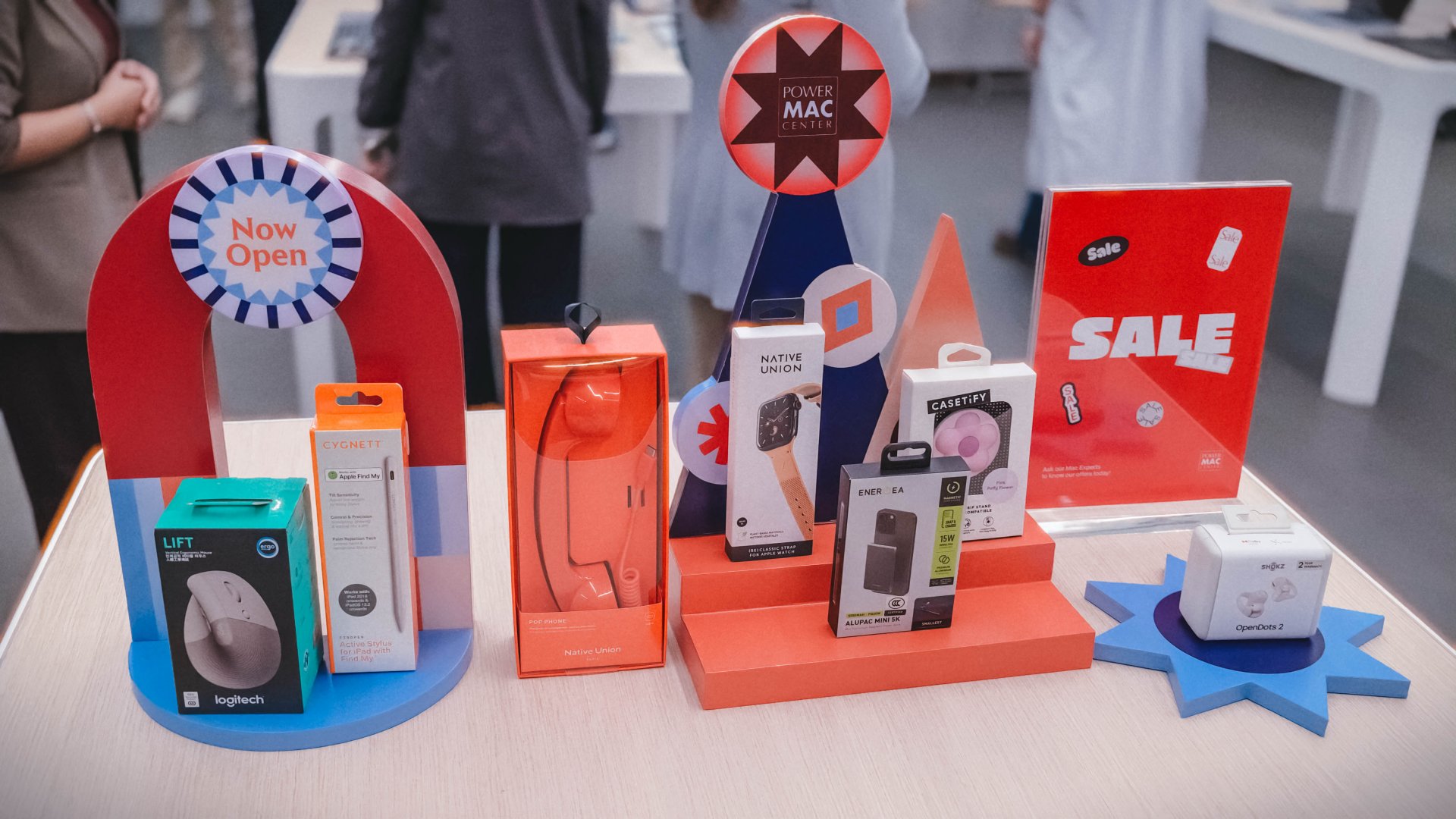
To celebrate the opening, customers can also score discounts on select Apple devices and accessories until September 27, 2026.
Deals include up to:
- ₱PhP 36,000 off MacBook Pros
- PhP 19,500 off iPads
- PhP 3000 off Apple Watches; and
- PhP 11,000 off iPhone models
There are also service discounts until September 25. Plus, new iPhones purchases here are also covered with 1Protect coverage options.
ICYMI, it’s a partnership between PMC and Bolttech. It’s basically a new way to protect your precious new iPhones.
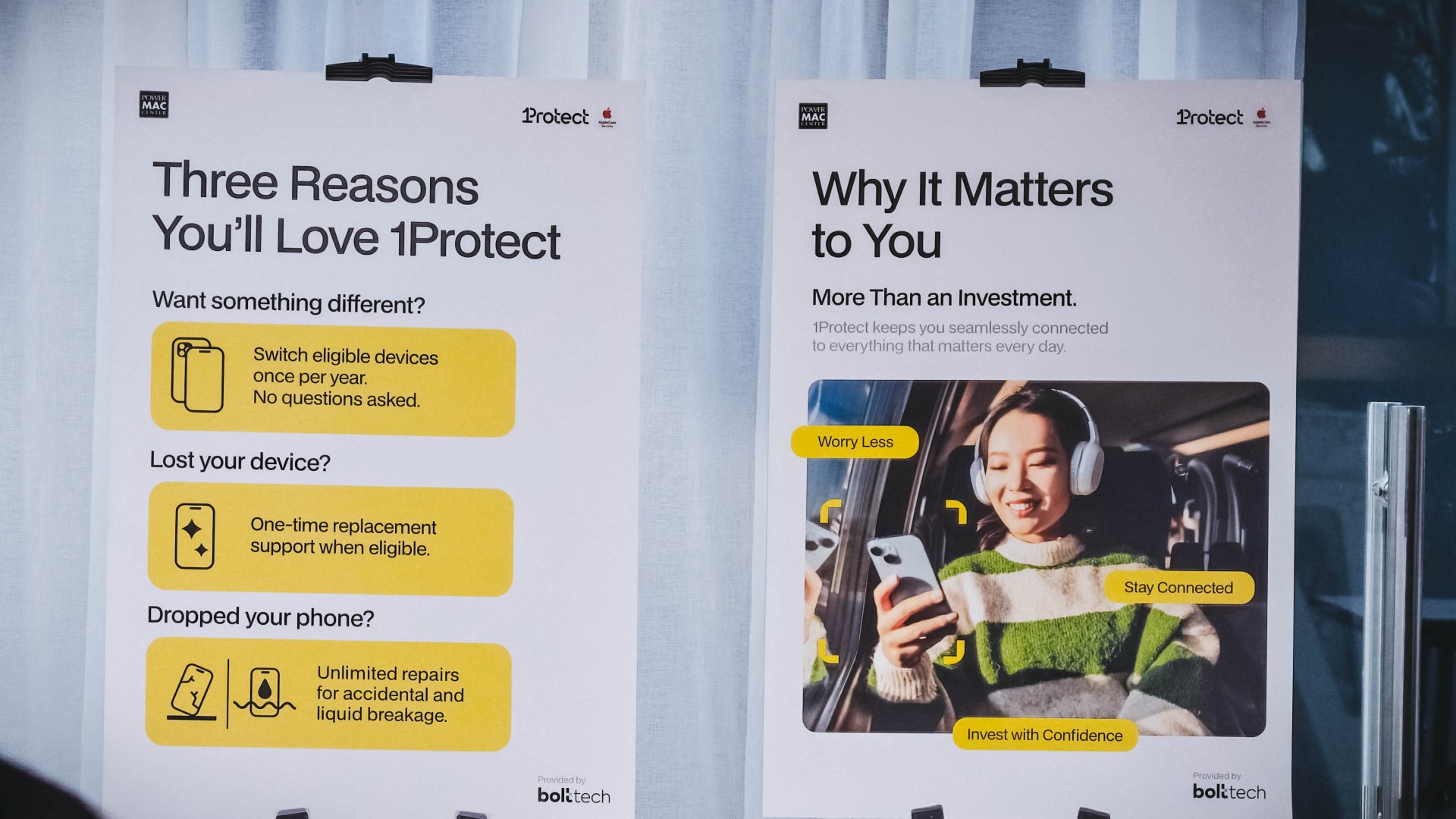
Your regular one-year warranty does not cover accidental drops and water damage. Purchasing this new coverage plan (good for one year) gives you an unlimited dose of that.
Parts are guaranteed original and is an official part of AppleCare Services.
This protection program also covers one-time unwarranted exchanges (or change of mind returns) from micro scratches to color options. It will even replace your iPhone (of the same model and configuration) if it was stolen once.

There’s also the 1 Infinite loyalty program. Members can earn points from purchases and redeem them for devices, accessories, services, and training.
The Power Mac Center SM Aura APP store is located on Level 2 and is open daily from 10AM to 10PM.


The stage is set for next year’s smartphones. Both MediaTek and Qualcomm have unleased their upcoming flagship chipsets for the coming generation. If you’re looking for the Qualcomm side of things, go here. But if you’re looking for MediaTek, then you’re in the right place.
The Dimensity 9600 Pro adopts the 2nm process mode, which makes MediaTek one of the first companies to use it. The chip itself features a 2+3+3 All Big Core CPU. Specifically, it has two C2-Ultra cores going up to 4.55GHz, three C2-Pro cores going up to 4.35GHz, and three C2-Pro ones going up to 3.1GHz. This configuration can reportedly achieve 17 percent better single-core performance and 15 percent higher multi-core performance.
Besides all that power inherently built in, the chipset also has the G2-Ultra NX GPU. This GPU can deliver 27 percent higher peak performance, 24 percent lower power consumption, 18 percent faster raytracing, and gaming at up to 185 frames per second.
Finally, the chipset has the Imagiq 1290 ISP. With this engine, the processor can handle 60fps motion capture and 4K240 direct-output ultra-slow-motion video.
Alongside the Dimensity 9600 Pro, MediaTek is also launching the Dimensity 9600M, a slightly more lightweight option of the Pro that deliver flagship level performance to more users outside of that price point.
Smartphones that will come with the Dimensity 9600 Pro and 9600M will launch sometime in the fourth quarter.
SEE ALSO: MediaTek unveils Dimensity 9500s, 8500 mobile processors

The end of the year always heralds the next step of processors for next year’s smartphones. Besides the oodles of phone rumors we’ll have before the year ends, these new processors give us a powerful hint of what the new machinery can do. Today, Qualcomm has unveiled that next generation, announcing the Snapdragon 8 Elite Gen 6 and the Snapdragon 8 Elite Extreme Gen 6.
Yes, this time, the Snapdragon flagship chipset will come in two flavors. Let’s start with the Snapdragon 8 Elite Gen 6.
The “base” model of the duo has an octa-core Oryon CPU with two prime cores going up to 5GHz. It also has an Adreno GPU that touts 35 percent faster performance compared to the previous generation. Additionally, the chipset has a 16MB Flex Cache which can supposedly leverage the cache better to deliver better single-threaded performance.
The Snapdragon 8 Elite Gen 6 will also have a new Spectra ISP. The engine can support single image capturing at 320 megapixels, or 64 megapixels with a triple rear camera combo. It also supports 8K video capturing at 30fps. Further, Intelligent Pixel Control features better contextualization skills so the camera can more accurately detect what you’re taking a photo or video of.
Finally, the X105 5G modem offers the usual array of 5G connectivity options but also goes up to supporting Bluetooth 6 and Wi-Fi 8.
Meanwhile, the Snapdragon 8 Elite Extreme Gen 6 offers much of the same as the duo’s regular model. However, it features 18MB of high performance memory, video recording that goes up to 60fps at 8K resolution, and new Matrix Cores that boost frame generation for gaming.
As expected, both models will appear in new smartphones from later this year to next year.
SEE ALSO: Qualcomm is raising its prices this year


DJI Lito X1 review: Is this the best lightweight drone for creators?
Making a strong case as a travel companion and a capable B-cam!


REDMI Note 17 Pro Max review: A new breed born from AI greed
Welcome to the new normal


Marvel’s Wolverine review: When the claws come out
A brutal, cinematic superhero adventure

CRISIS CORE -FINAL FANTASY VII- REUNION physical edition now available for Switch 2

Smart launches AI.Smart, an affordable AI workspace

A Discord ban won’t save your kids

When your body talks, the Galaxy ecosystem listens

Power Mac Center SM Aura is now an Apple Premium Partner store

realme 16T 5G with 8000mAh battery, IP69 Pro rating launches in PH

HUAWEI Pura X View is 2026’s first WIDE slab-type smartphone

REDMI reveals the refreshed Note 17 and Note 17 Pro series

REDMI Note 17 Series: Price, availability in Singapore

The CAMON Slim 5G is TECNO’s latest ultra-slim smartphone


-
 Hands-On2 weeks ago
Apple iPhone 18 Pro Series Hands-on
-

 News3 days ago
vivo X500 Series launches with major imaging upgrades
-
Gaming2 weeks ago
Marvel’s Wolverine review: When the claws come out
-

 Gaming1 week ago
BlizzCon 2026 announces World of Warcraft: Forever and Diablo V
-

 Singapore5 days ago
Epson Lifestudio Grand Plus EH-LS970B with 4K projection, more launches
-
Reviews1 week ago
REDMI Note 17 Pro Max review: A new breed born from AI greed
-

 First Look2 weeks ago
First Look: Apple iPhone Duo
-

 Entertainment2 weeks ago
PH to celebrate 1st ever National Cinema Day; movies start at less than $2