
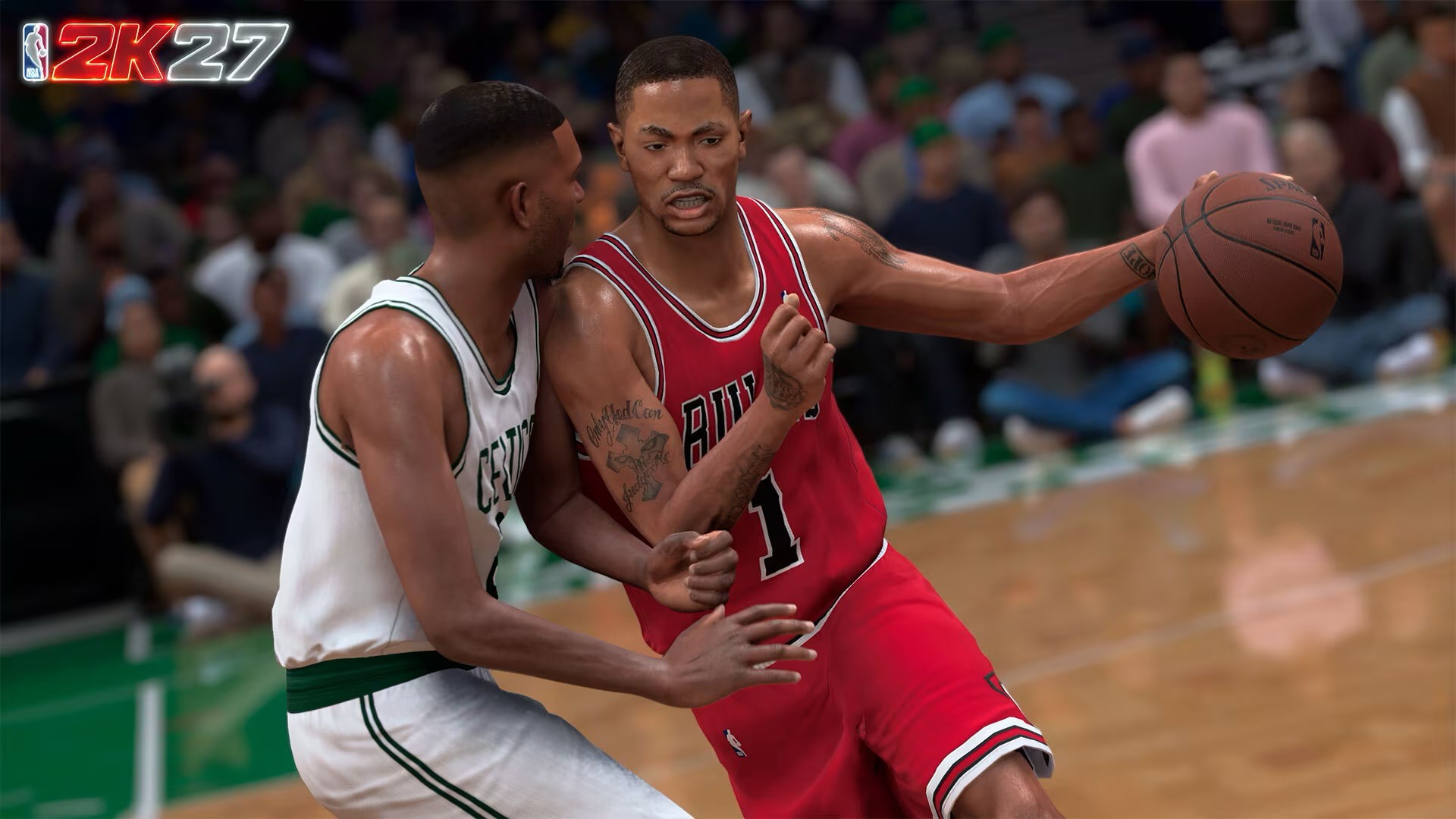

If NBA 2K27 were a player, he’d be someone getting out of his rookie contract and coming back from the summer with improved defense and finishing.
Same player, but with some significant tweaks.
The general controls are the same, but there are notable changes to player collision and physics. Those changes have a real impact on how you finish shots around the rim and how you play defense.
There are also new modes you can sink your teeth into, although these could definitely use more training to reach their full potential.
That’s really the story of NBA 2K27.
It doesn’t reinvent NBA 2K. It makes the basketball better.
Call the play
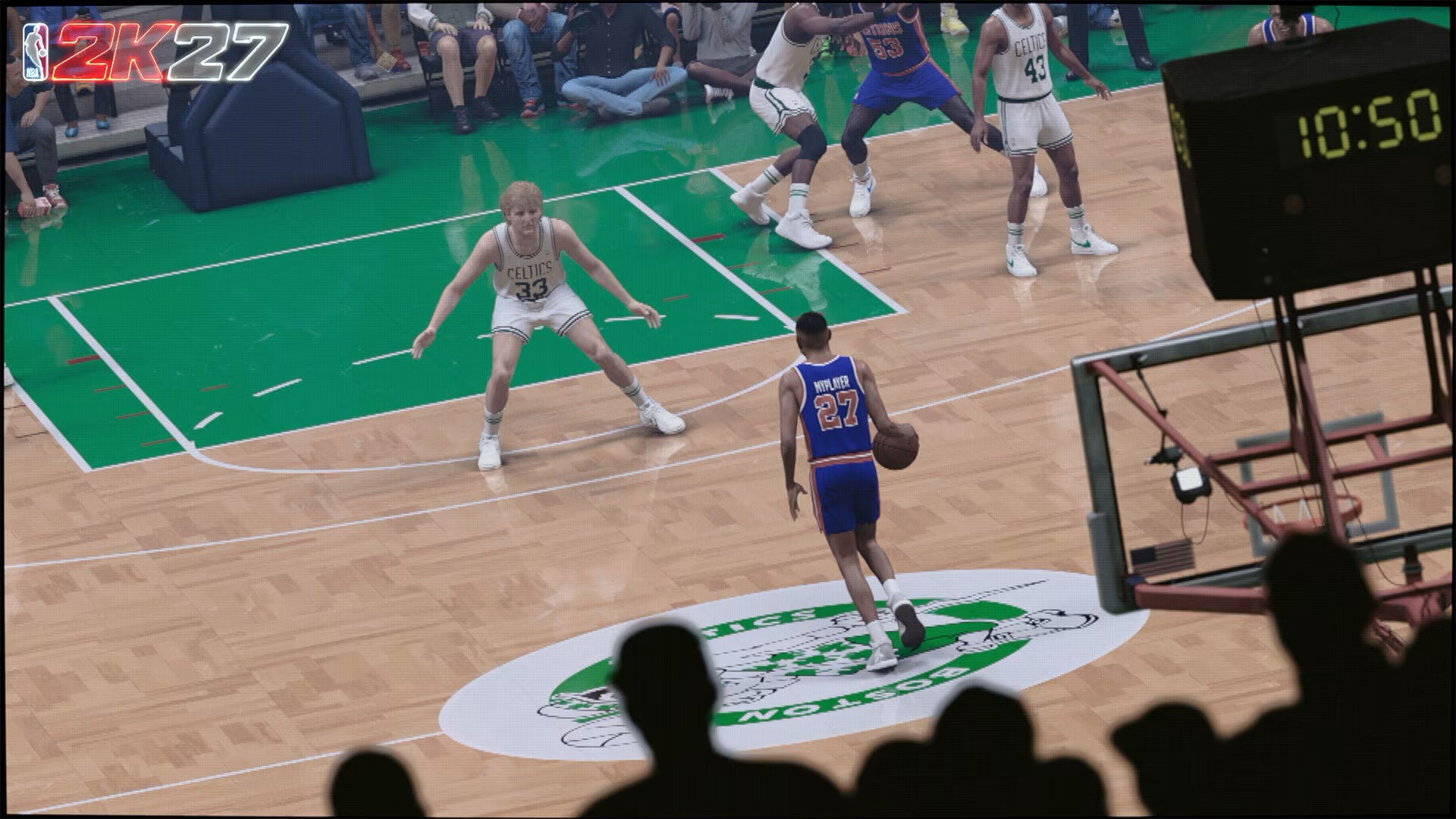
The core gameplay changes are immediately noticeable.
The pace is slower. The game feels more deliberate. It feels even more like a real basketball simulation than something arcadey.
You’ll definitely feel the change during the first few hours, especially if you’re playing on Superstar or Hall of Fame. You have to be more precise with what you’re doing, whether you’re attacking the rim, looking for a shot, or trying to stay in front of your man.
But if you’ve been playing basketball simulation games for years, the adjustment isn’t particularly difficult.
I’ve been playing all the way back from NBA Live 97 before switching over to NBA 2K12. I’m familiar with how these games work, and NBA 2K27 doesn’t completely throw that foundation out the window.
If you’ve been playing NBA 2K since the ProPLAY era, a lot of the controls and animations will feel familiar.
The changes are most obvious when you’re looking for them. After a few games, though, they start fading into your normal gameplay. You naturally adjust to the new feel and speed.
Take it to the rack
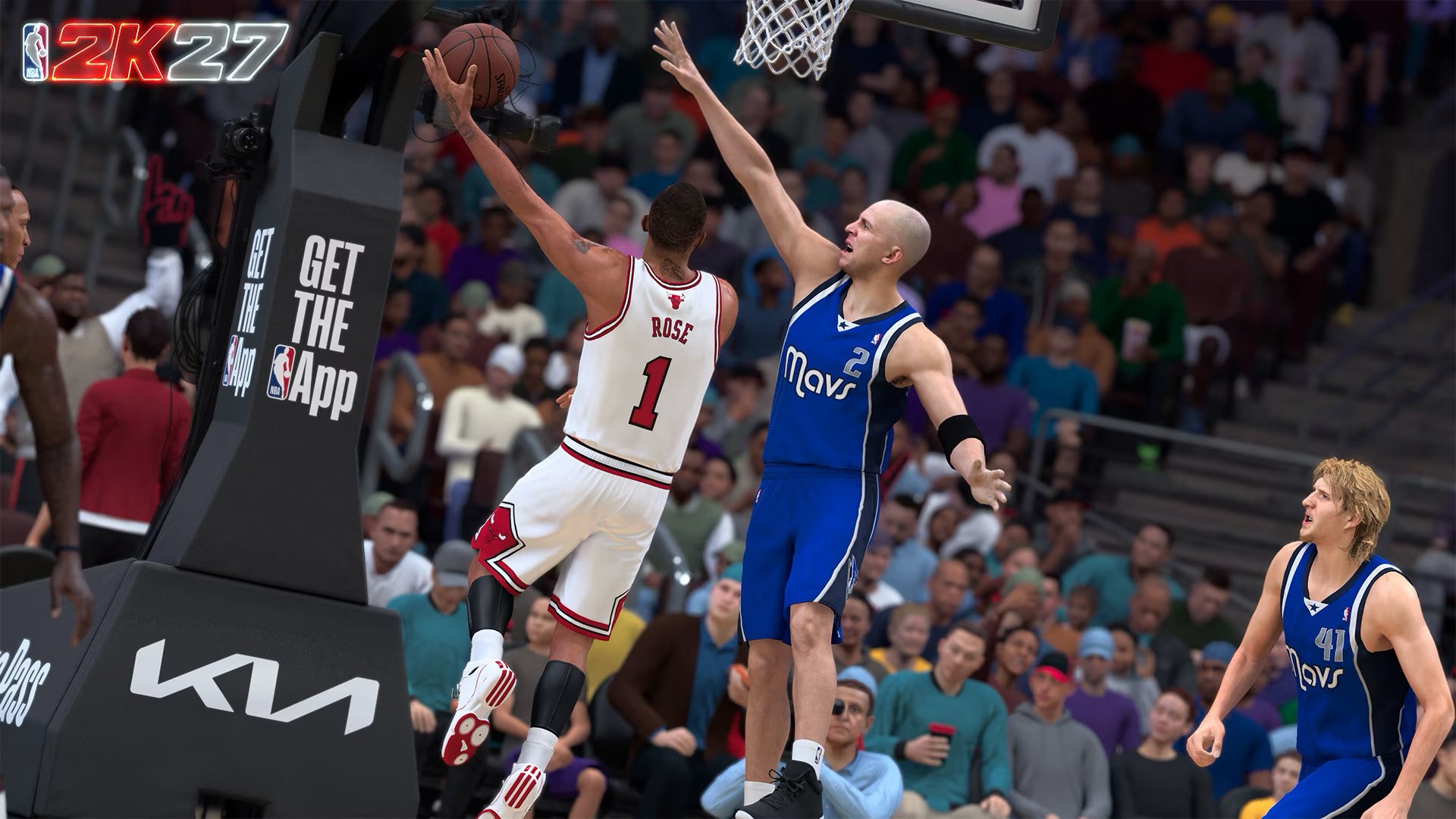
The biggest adjustment for me has been finishing.
When I first got my hands on the game, I was attacking the rim with reckless abandon.
The results weren’t great.
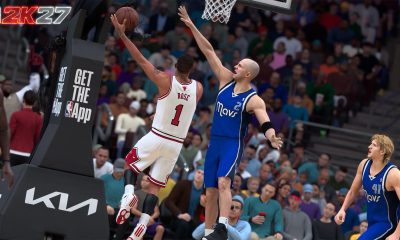
NBA 2K27’s changes to player collision, the Dynamic Layup Engine, and the way contact plays out around the basket mean you can’t just assume you’ll get the same result every time you drive.
You have to be more methodical.
You need to know the ability of the player you’re controlling. That means understanding their ratings, their animations, and the defense you’re going up against.
My play style was never that of a layup mixmaster, so I’m admittedly having a tougher time getting a feel for this.
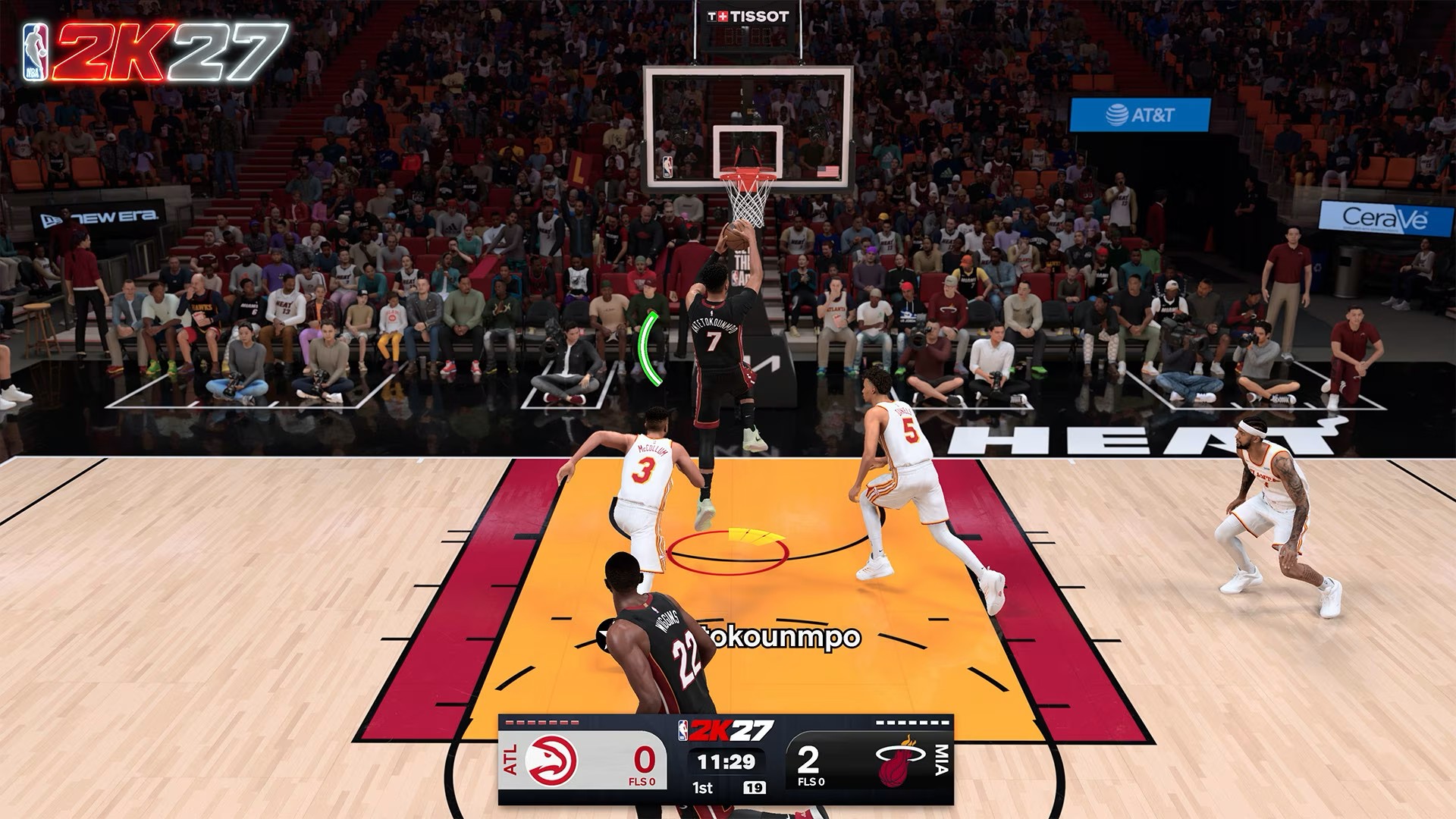
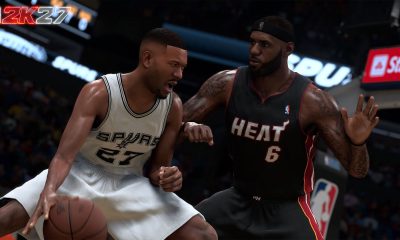
Even with players I regularly use, like Vince Carter, Derrick Rose, and Giannis Antetokounmpo, some of the layups and close-to-the-rim shots still feel awkward.
But the tools are there.
You just have to figure out when to use them.
That’s where NBA 2K27 starts feeling like actual basketball. You find where you can create an advantage, attack that point, and then adjust depending on how the defense reacts.
The Dunk Meter also gets a logic-driven overhaul, which means you can’t simply rely on forcing your way to the rim and expecting a highlight every time.
You have to read the situation.
Lock him up
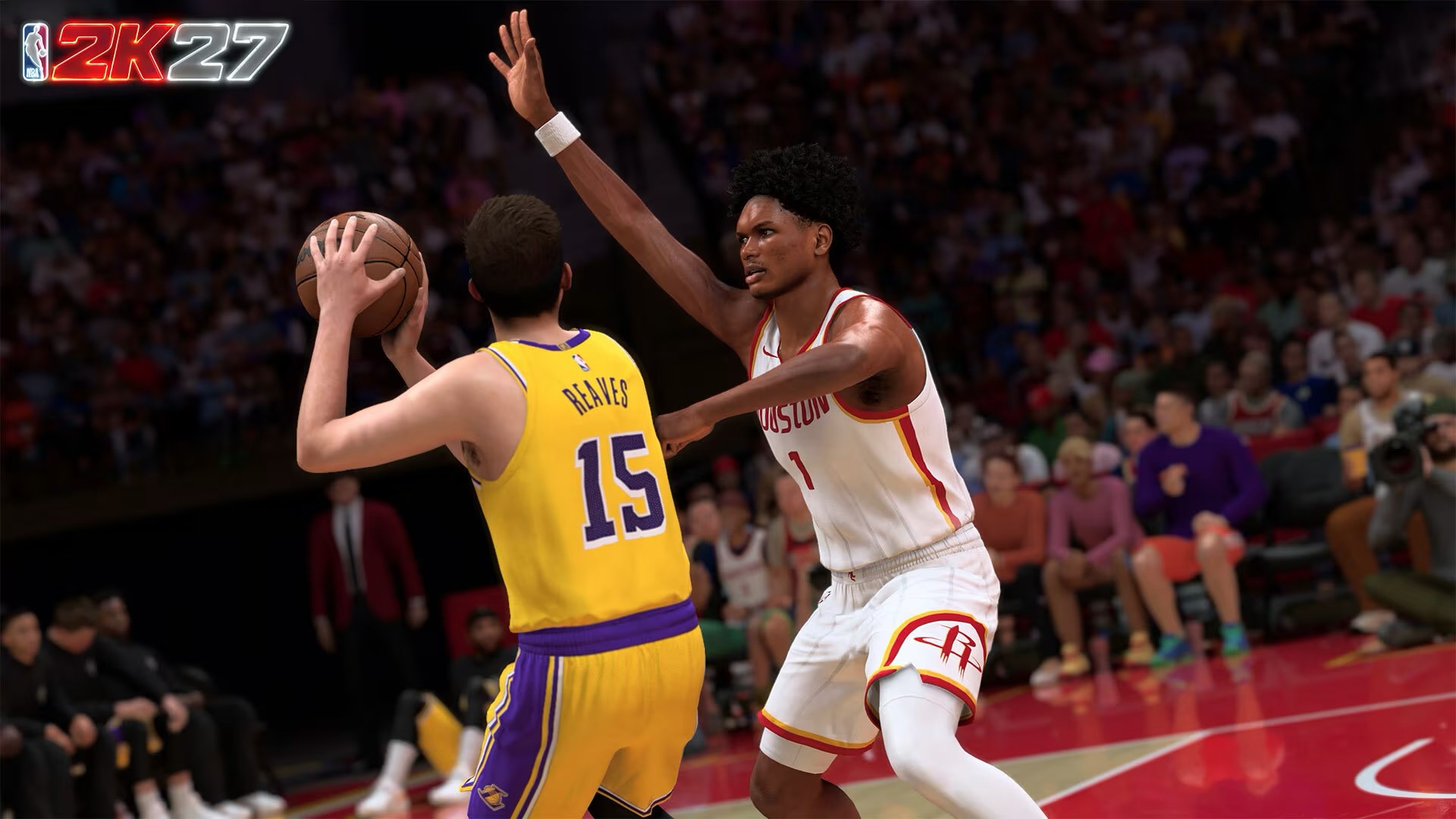
Defense is another area where I immediately felt the difference.
The AI feels smarter.
Where it used to take a while for the AI to lock in on a player who was on fire, it now makes adjustments more quickly, especially at higher difficulties.
Help defense also feels less arbitrary. It reacts to the pace of the game and adjusts accordingly.
That’s important because it makes defending feel less like you’re fighting the game and more like you’re actually reacting to what’s happening on the floor.
It also happens to fit my play style.
I’m much more interested in shot contests and blocks than steals. My MyPLAYER build reflects that too. I tend to favor a higher block rating over steals.
NBA 2K27 gives that approach more room to breathe.
Position yourself properly. Time your jump. Read the play.
You can rack up blocks.
The improved collision system plays a big part in that, as does the redesigned hands-up defense and better contest feedback. There are more situations where you can actually feel like you made the defensive play instead of simply hoping the animation goes your way.
Find your rhythm
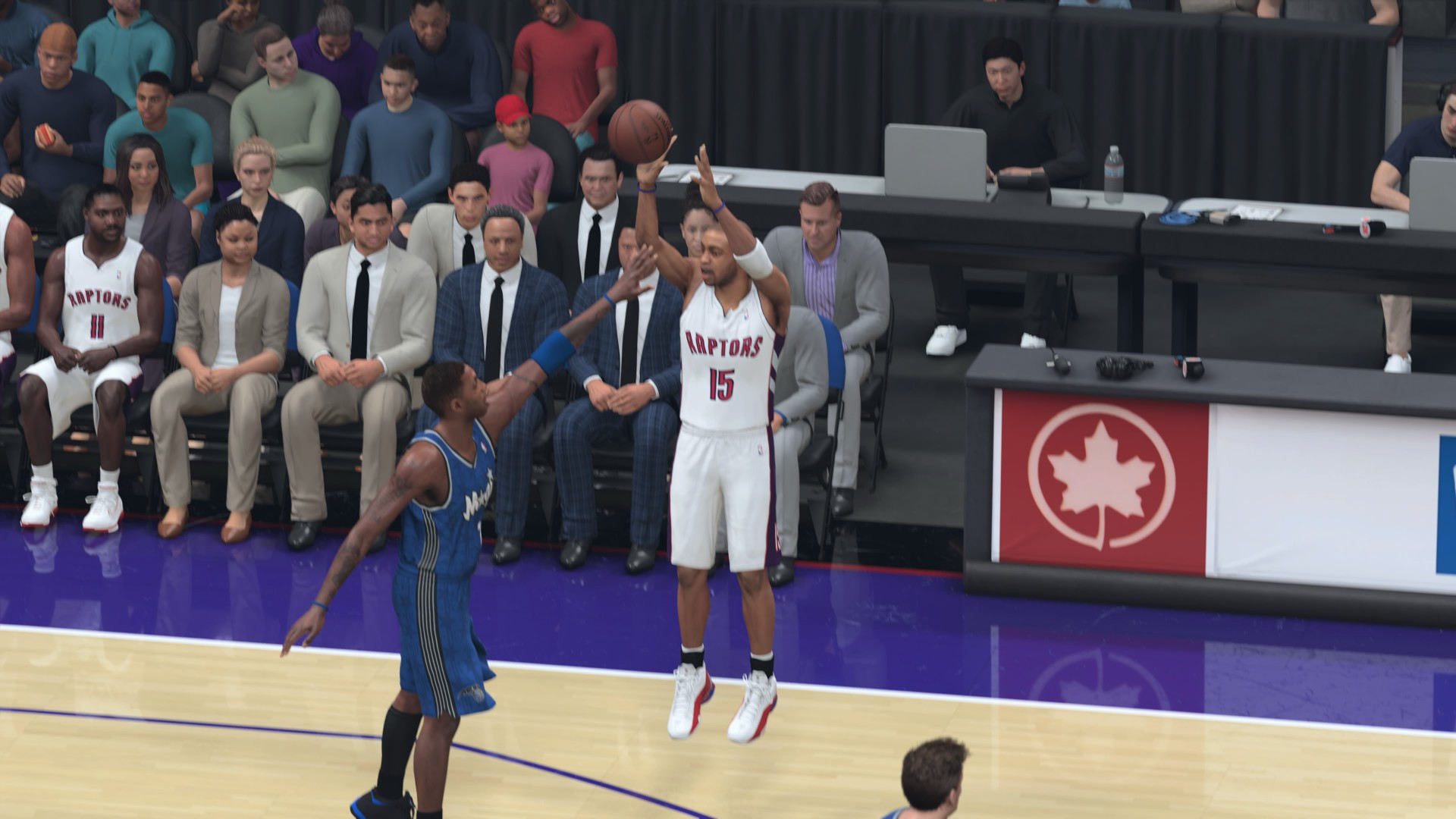
Shooting is a little different for me because I basically have two experiences with it.
In MyCAREER, I’m a deadshot.
I’ve been using mostly the same shooting animations, so I have them down to a tee whether I’m using the button or Rhythm Shooting.
Quick Play and MyNBA are trickier.
There, I’m constantly adjusting to the timing of every player I use.
But I appreciate that there’s no randomness to the shooting. It behaves pretty much exactly as 2K described it.
You have to hit the green window.
That window expands or tightens depending on the player’s ratings and the intensity of the shot contest.
So when I miss with a player I’m not familiar with, I don’t immediately feel like the game cheated me.
I probably just missed.
That’s the kind of consistency I want from a basketball simulation.
Let him cook
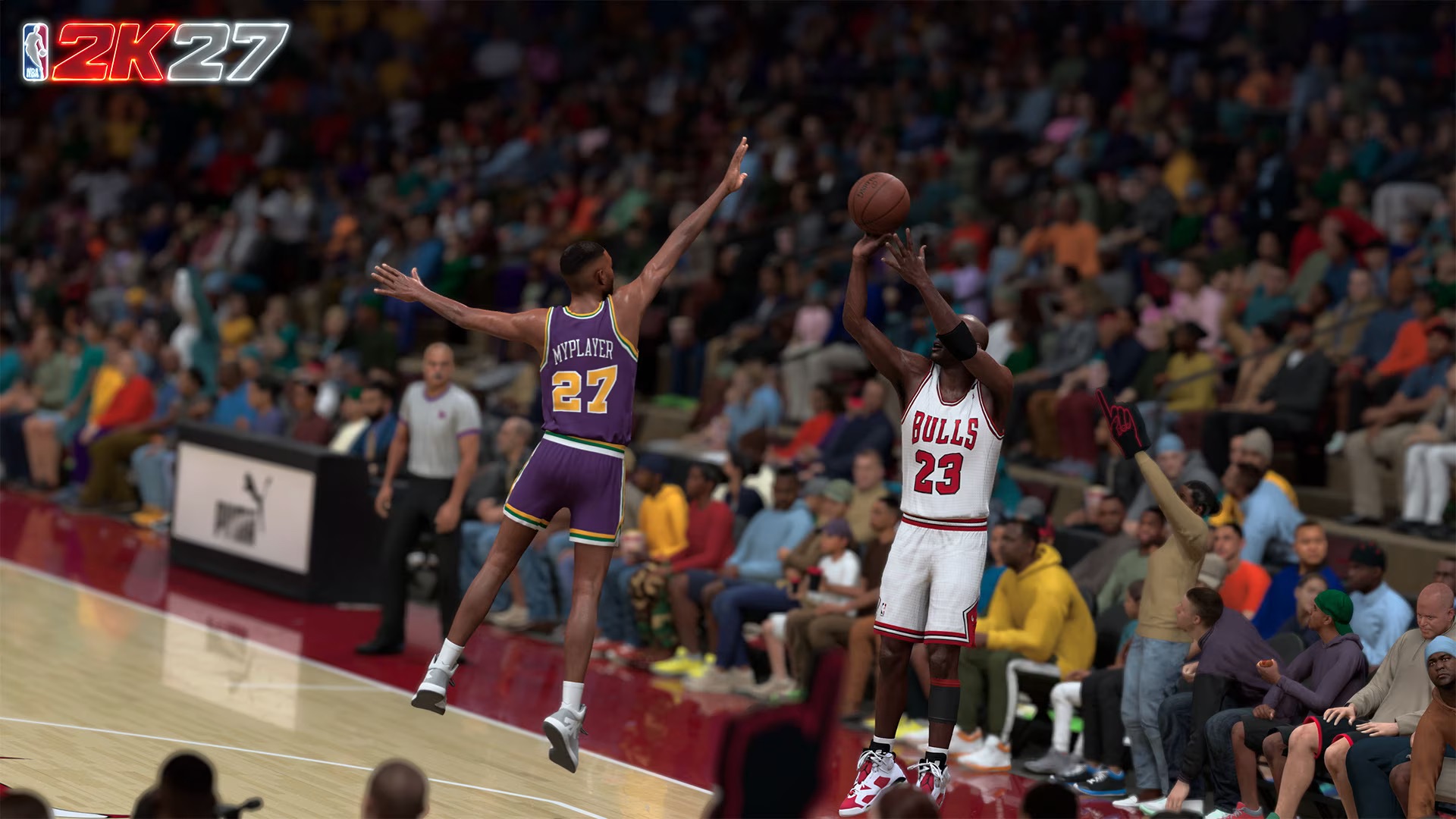
The slower pace also changes how you approach offense.
You can’t always just run your favorite action and expect it to work the same way it did last year.
The game wants you to pay attention.
That doesn’t mean every possession suddenly turns into some high-level basketball chess match. It’s still NBA 2K. You can still get into your rhythm, call the plays you like, and let your best players cook.
But when the game gets tighter, especially at higher difficulties, you have to make better reads.
There’s a significant amount of computation happening where both your own skill and the stats of the player you control affect the outcome of each action and play.
In that regard, the game feels balanced.
My brother and I used to play against each other a lot when we were younger. One of his biggest complaints was that things in the game didn’t behave the way they would in real life.
I used to think it was mostly about learning the physics of the game.
His criticism still made sense from a development standpoint, though.
And I think NBA 2K27 is closer than ever to things in the game behaving the way they would in real life.
Make the right read
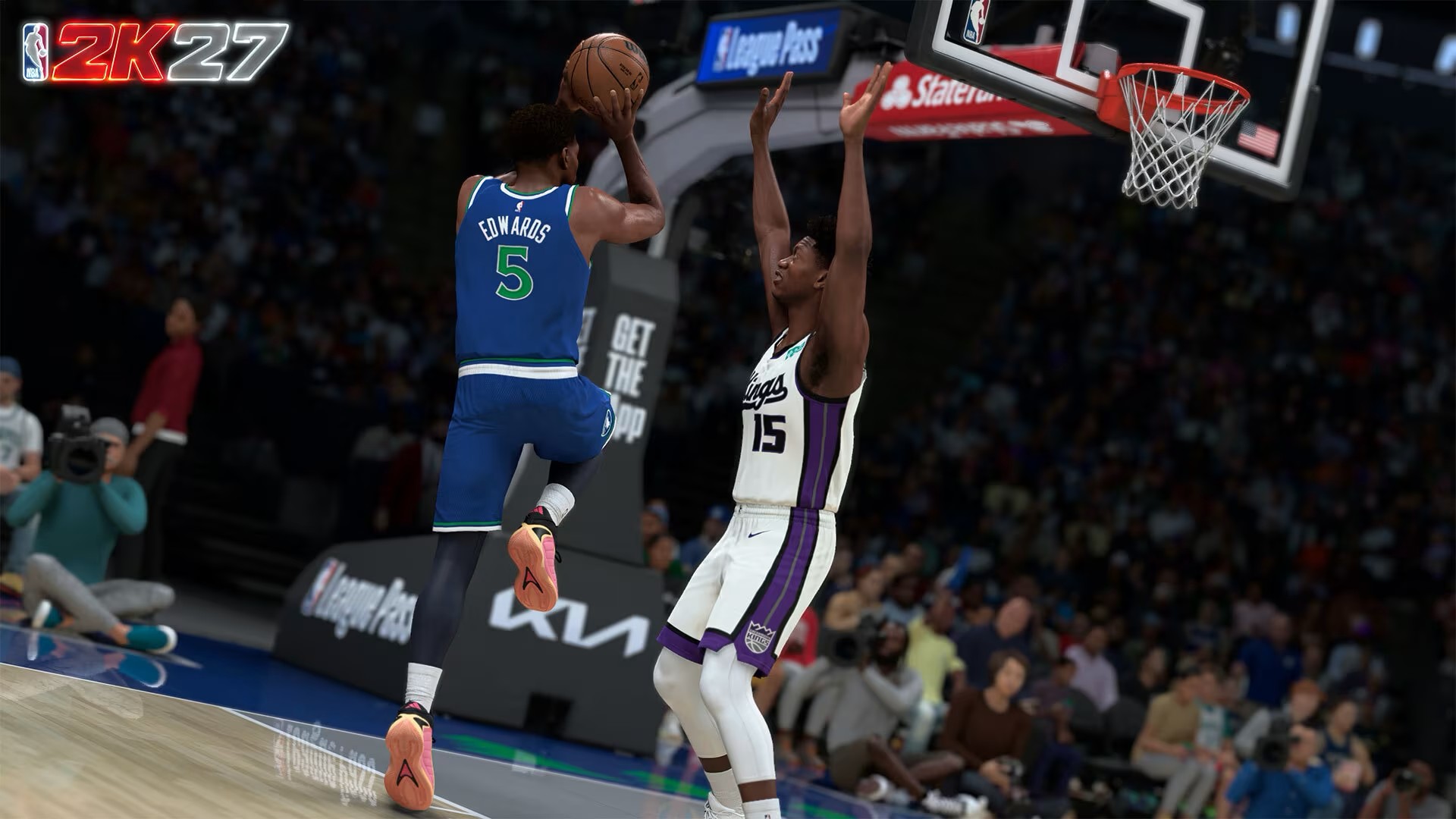
That balance is also why the new gameplay takes some getting used to.
You can be good at NBA 2K and still have to respect what your player can actually do.
You can have an elite player and still make the wrong decision.
And you can have a great matchup and still attack the wrong part of the floor.
The game gives you the tools. It’s up to you to find the advantage.
That’s especially true around the rim.
If you’re going to attack, you need to understand the player you’re using and the defender in front of you. If the defense closes one option, you need to find another.
That sounds obvious when talking about actual basketball.
It feels surprisingly refreshing when a basketball game makes you think about it in the same way.
Running the floor
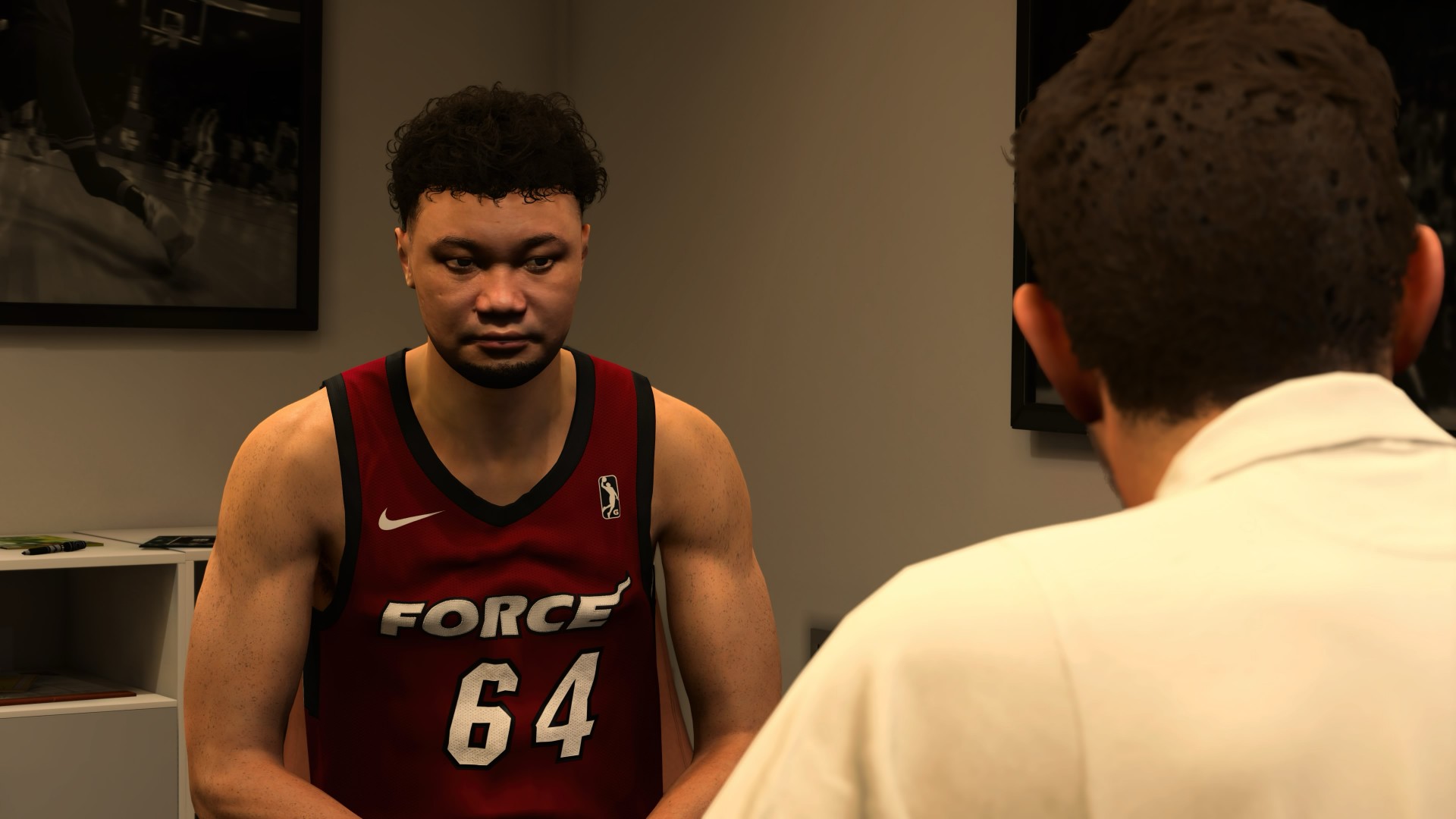
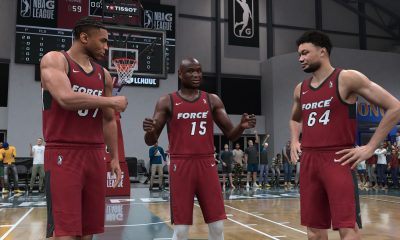
MyCAREER is where I spent the most time outside of straight-up basketball.
I put around six to seven hours into Fire & Concrete and, even while writing this review, I was still dying to get back and finish the story.
It’s nothing too new or major, but it’s been engaging enough.
There’s also more basketball this time around. The experience is mostly cutscenes and basketball, which I actually appreciate. As someone who likes story and RPG elements, I do wish there was more to it, but I also understand why 2K is leaning harder into the basketball.
Most players probably just want to hoop.
I do wish MyCAREER would give us more meaningful paths into the NBA, though.
I haven’t reached the Draft in my own playthrough, but I’ve seen videos showing that you can essentially choose where you play anyway.
That’s generally fine, but I liked the idea of previous MyCAREER games having target teams, workouts, interviews, and ways to influence where you end up.
That’s a real process draftees go through.
I’d like to see more of that.
Running Mate
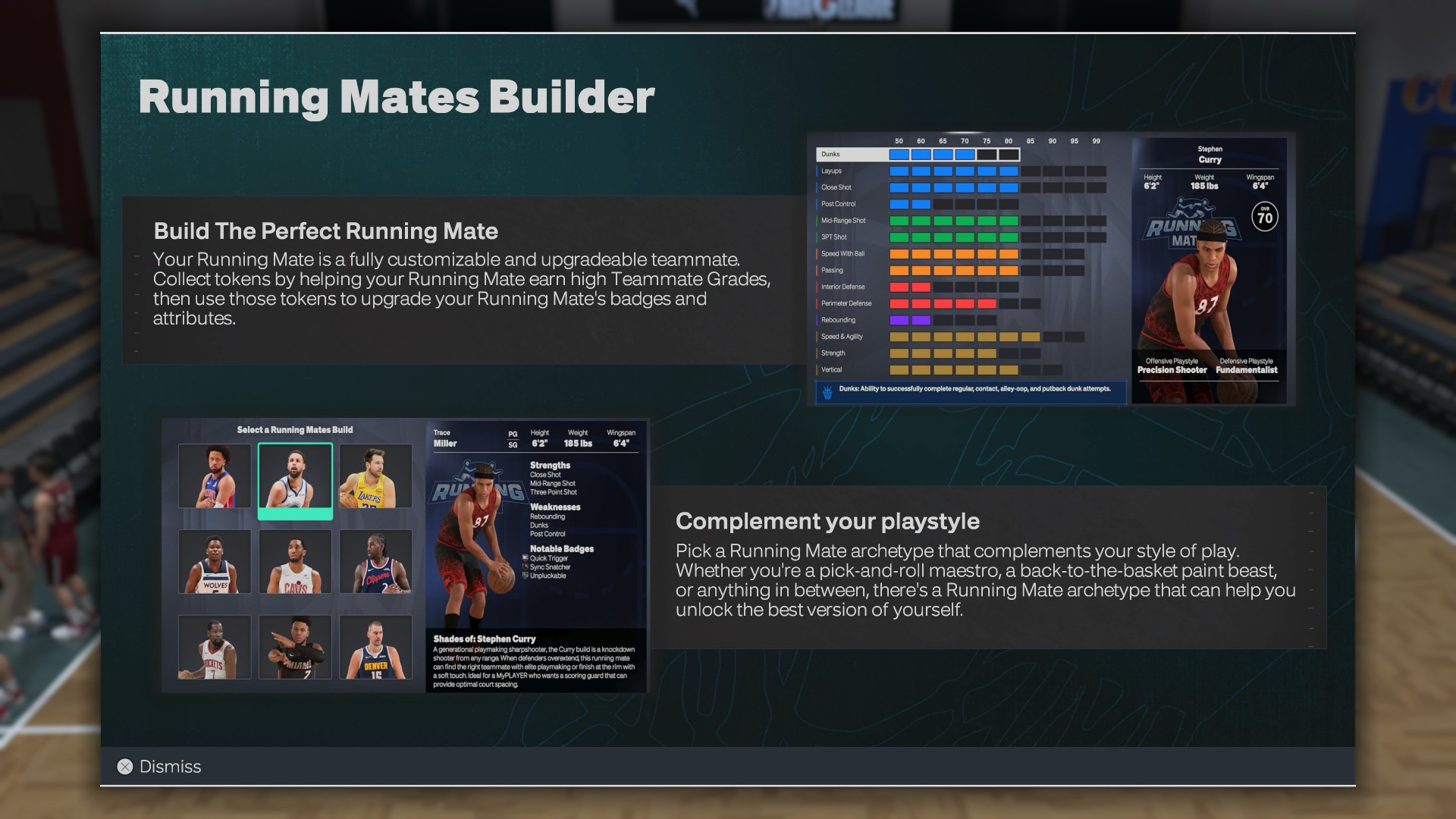
The Running Mate system is a nice new wrinkle. I completely forgot about it when I was building my MyPLAYER because I was so focused on making my own build as self-sufficient as possible.
My archetype is an “Athletic Iso Savant,” molded around Kaede Rukawa from Slam Dunk, although my actual play style leans more toward Mitsui.
Then I had to pick a Running Mate for Trace Miller.
There are nine archetypes inspired by NBA stars, with three options each for guards, wings, and bigs. Ultimately, I went with the Giannis build because it felt closest to Hanamichi Sakuragi, who would have been Rukawa’s actual running mate had Slam Dunk continued.
The Running Mate objectives were annoying at first.
But they did force me to think beyond my own player and actually use the tools 2K gives you to play within a team.
I also spent around three hours in the MyPLAYER Builder, exploring my own builds, prebuilt options, and builds I found online. I like the new badge-led approach because it feels a lot like the passive buffs you’d find in an action RPG. You build around the badges that fit how you want to play, then use Badge Tokens and other systems to further shape that build.
I haven’t spent much time with female MyPLAYERs yet, but I absolutely intend to. I’m planning to play The W with another Iso Savant build: Dance Machine Momo.
The second unit
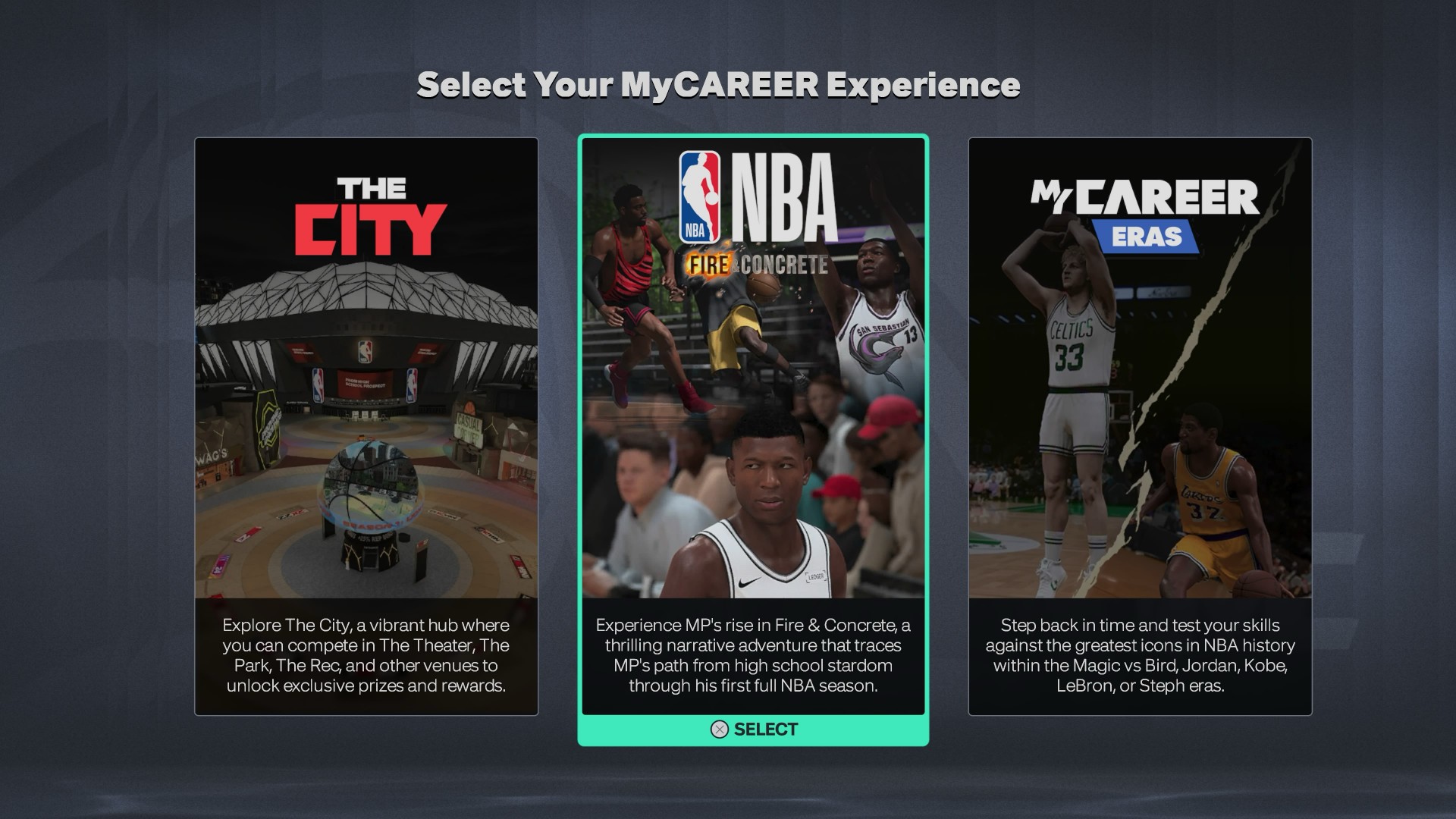
Progression is still where NBA 2K27 loses some points with me.
It’s still very much pay to— I wouldn’t necessarily say win, but pay to have a better experience.
Starting at level 60 is insufferable for those first few games. If you want to avoid spending, your best bet is to grind some VC through places like Casual Corner and get your player somewhere around 73–75.
After that, progression starts feeling more reasonable.
I also didn’t get enough time with Co-op MyCAREER to properly judge the experience with another player. Certain personal circumstances got in the way of me actually hooping with a Player 2.
From what I did experience, though, it adds another interesting wrinkle to MyCAREER. Some early objectives require both players to perform well, which gives the mode a different dynamic from playing through the story alone.
MyCAREER Eras is another story.
I haven’t played enough of it to give it a proper verdict, but there’s one part of the mode that immediately disappointed me.
I think it’s highway robbery that you can’t just take your current leveled-up build and jump into another era.
You can take the build, yes.
But you still need to get VC, either by grinding or buying, to level that MyPLAYER up for that save.
If it’s the same build, I should be able to take that same leveled-up player into another era.
How else am I gonna help Allen Iverson get a ring?
The Hoop ‘What If’
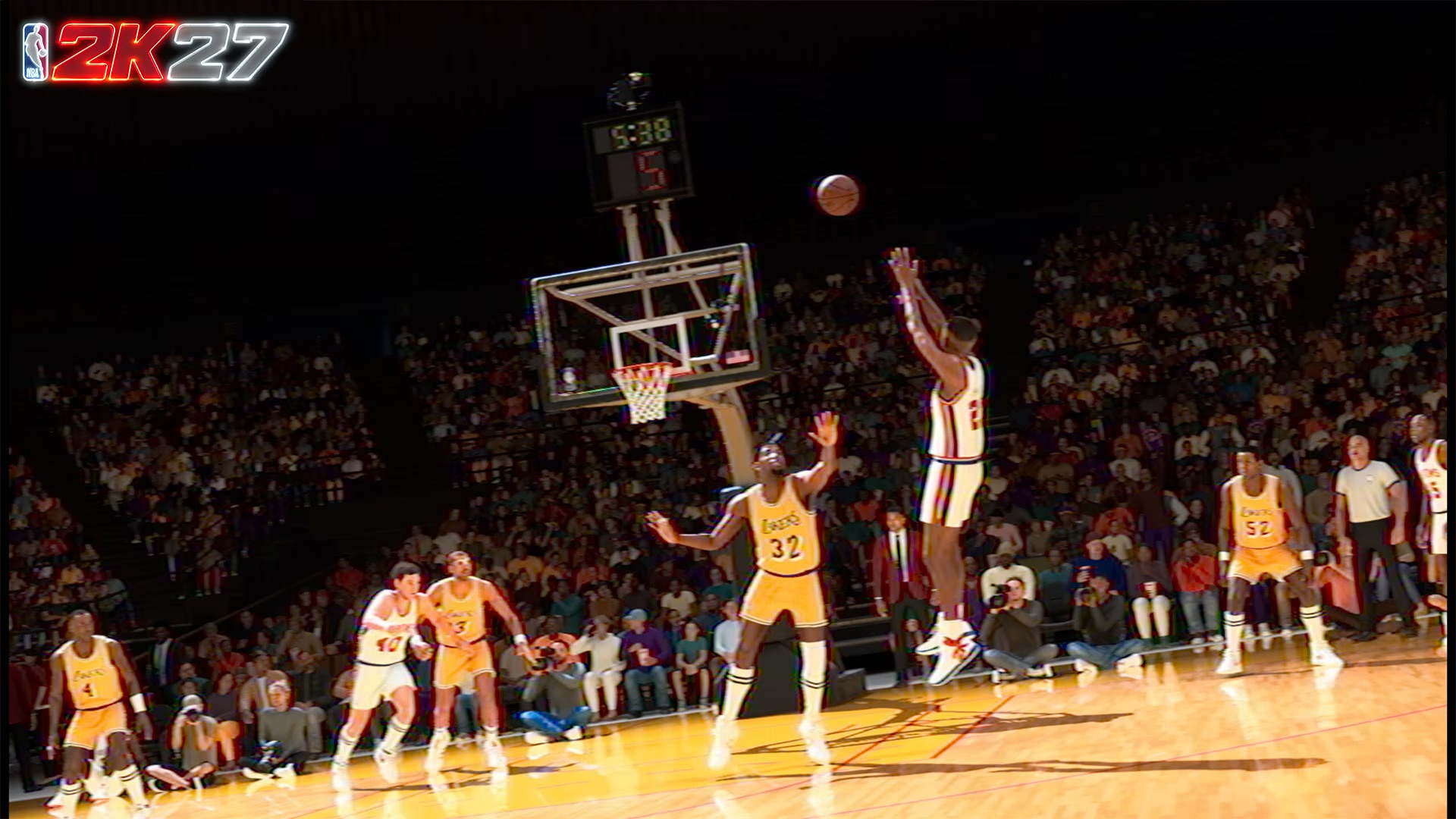
MyCareer Eras
MyNBA is my ‘What If”.
This is the mode where I usually take Jason Kidd’s Nets, add Vince Carter, keep Richard Jefferson, change up the rest of the players, and try to get them a ring.
The Kidd, Vinsanity, and the Bald Eagle.
This is also where I give D-Rose a ring and imagine what his career might have looked like if he never suffered those devastating injuries.
I’m particularly fond of the 2000s NBA, so I’ll sometimes build around the 7-seconds-or-less Suns or reunite Stephon Marbury with Kevin Garnett sooner.
That’s what I love about MyNBA.
It’s where I can rewrite NBA history however I want.
NBA 2K27 gives me more room to do that.
The biggest addition for me is the expanded number of teams and assets you can move around in Trade Proposals. That’s something I’ll get a lot of mileage out of because I’m already planning a full Kobe Era What If.
I previously used one save file for one focus team. This time, I think I’ll go all in on a couple of saves. One starting in 2002-03 and another a season or two later.
I still wish there was a simpler way to jump into a specific season, though.
I want to drop into 2005-06 with the correct rosters.
The players are already in the file.
Why can’t I just pick the season?
MyNBA Legacy
MyNBA Legacy is a much bigger commitment.
I tried it, but dipped out pretty quickly. It feels like a mode that needs more attention than I could give it during this review period.
My first instinct was to pick a retired legend and drop him into the modern NBA.
You can technically do that, but it’s a roundabout process. You’d have to add a Classic Team where that player is part of the roster and build a custom league around it.
That also means adding his teammates and creating a weird imbalance when all I really wanted was the player.
I didn’t get far enough into Legacy to properly judge the generational mechanic either. From what I’ve seen, it feels more like a G Leaguer than a regular NBA rotation player.
I’d still try a long Legacy save, though.
There’s enough here for me to be curious.
Same old ball game
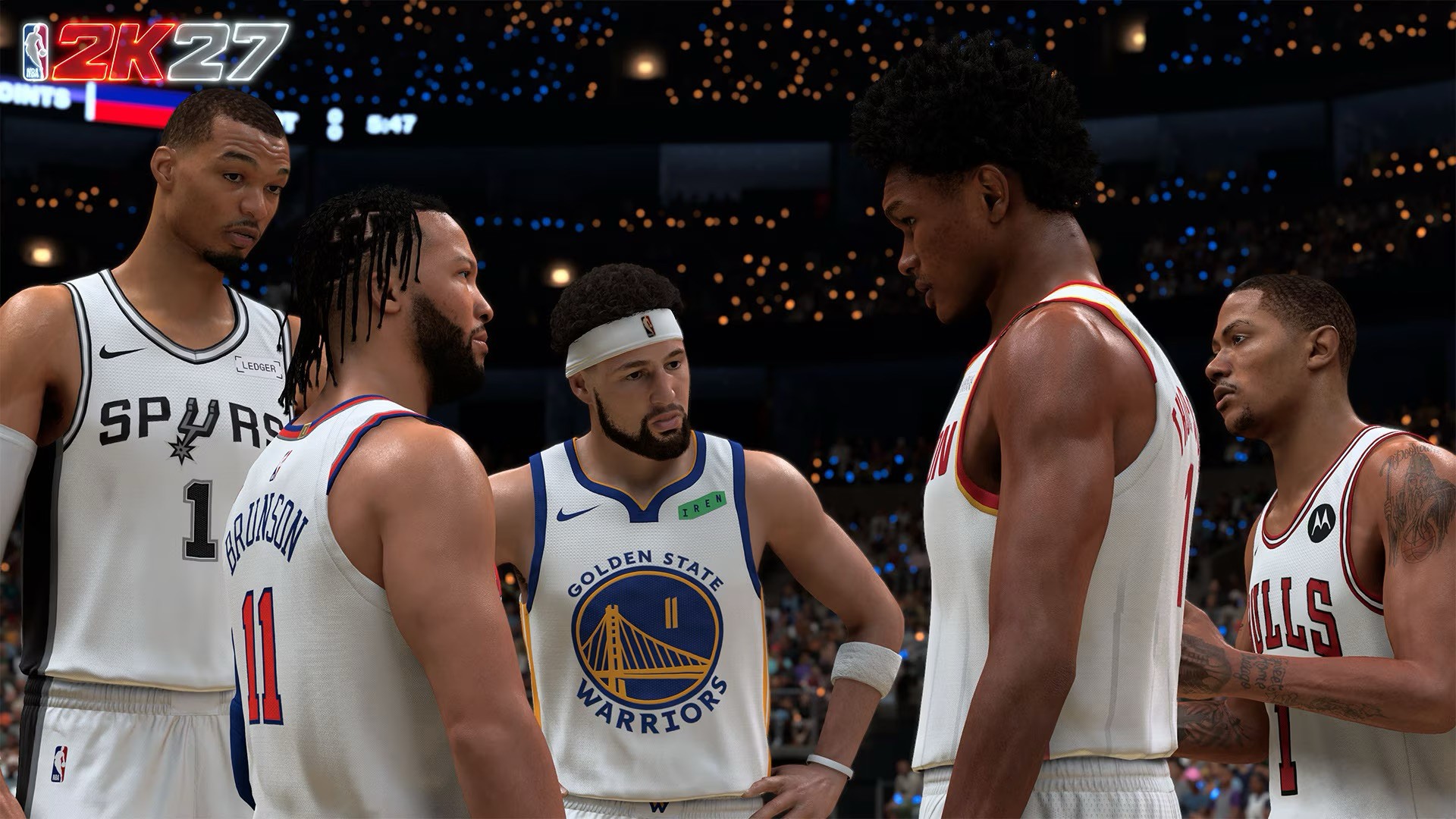
This is ultimately where NBA 2K27 gets complicated.
The basketball is better.
The rest of NBA 2K feels much more familiar.
The City is basically the same experience for me. The nighttime and neon redesign looks nice, but it also feels like a copy-paste of the last two or three years.
Casual Corner is a genuinely useful addition for someone like me, though. I consider myself a casual online player, and having a place to grind and advance my specialization without jumping straight into the deep end worked wonders.
The general menus are familiar too.
The home menu looks almost exactly like NBA 2K26, with minor changes to the look, colors, and featured players.
None of this is particularly egregious.
But you notice it after enough annual releases.
There’s an argument to be made that NBA 2K could work as a live-service game with major annual software updates instead of an entirely new release every year.
I don’t know what that would do to the business or how players would react.
But as we get closer to the next generation of consoles, I think it’s at least worth looking into.
The same goes for roster management.
I remember back in the 2000s and early 2010s when I memorized every player because I had to manually handle player movement myself. Now, I don’t necessarily want to go back to that. I just want an easier way to keep the game current.
And then there’s the Kobe-Pau Lakers.
Why are those teams still not part of Classic Teams?
That’s a HUGE and GLARING missed opportunity.
Don’t reach for the check
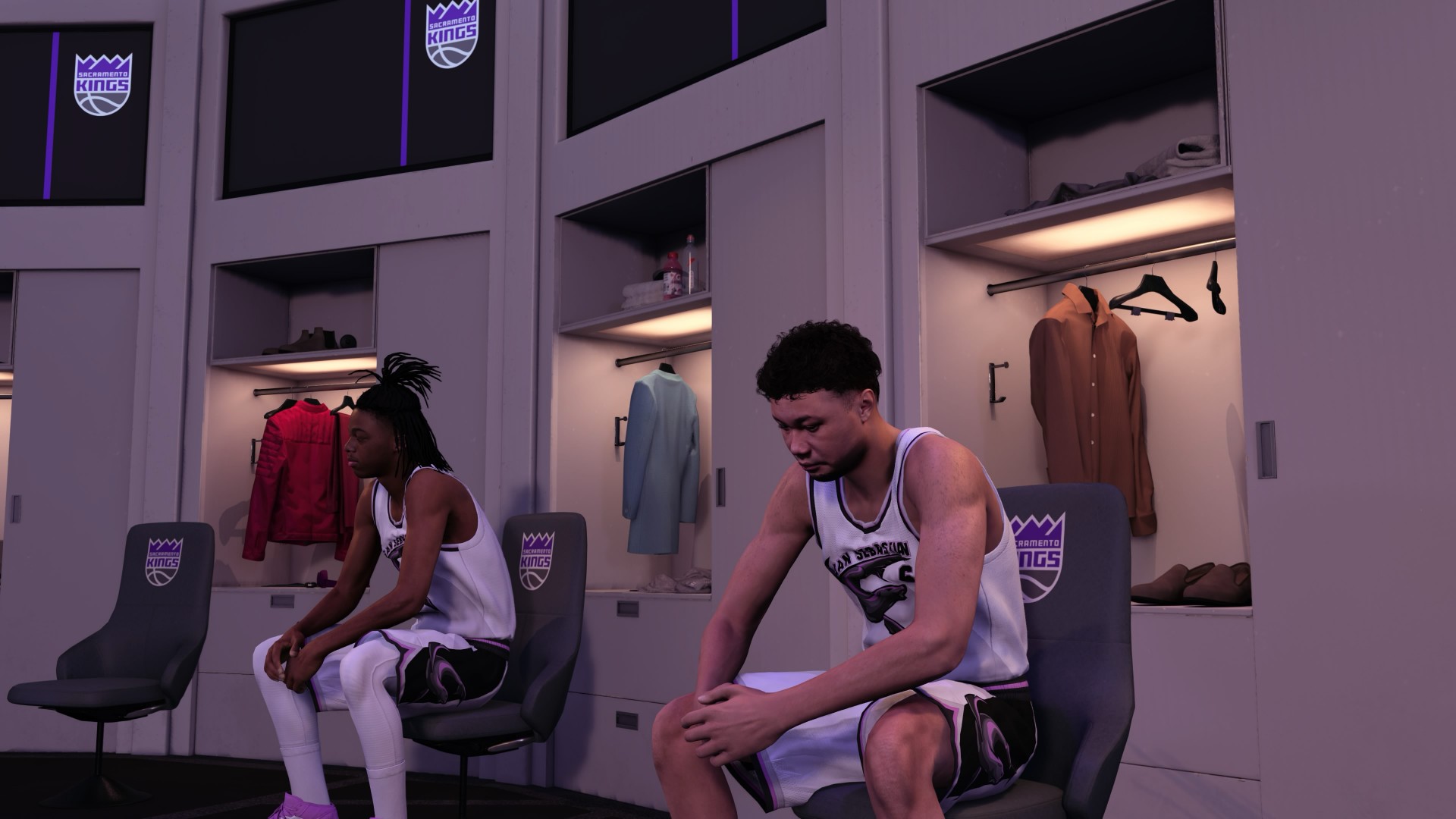
If you already own NBA 2K26, the strongest reason to upgrade is the gameplay.
The collision system changes how you attack the rim, how shots at the basket play out, how blocks happen, and how shot contests feel.
The smarter AI helps too.
So does the slower pace.
All of it pushes NBA 2K27 closer to the kind of basketball simulation I’ve always wanted it to be.
But if you’re short on funds, don’t make this a priority.
Wait for the inevitable Christmas or All-Star Weekend sale.
NBA 2K27 is still very much NBA 2K.
It doesn’t reinvent the franchise. The City isn’t suddenly a revelation. The menus aren’t going to make you feel like you’re playing a brand-new game. Some of the modes still feel like they need more time and attention.
But the actual basketball?
That’s where 2K made the right investments.
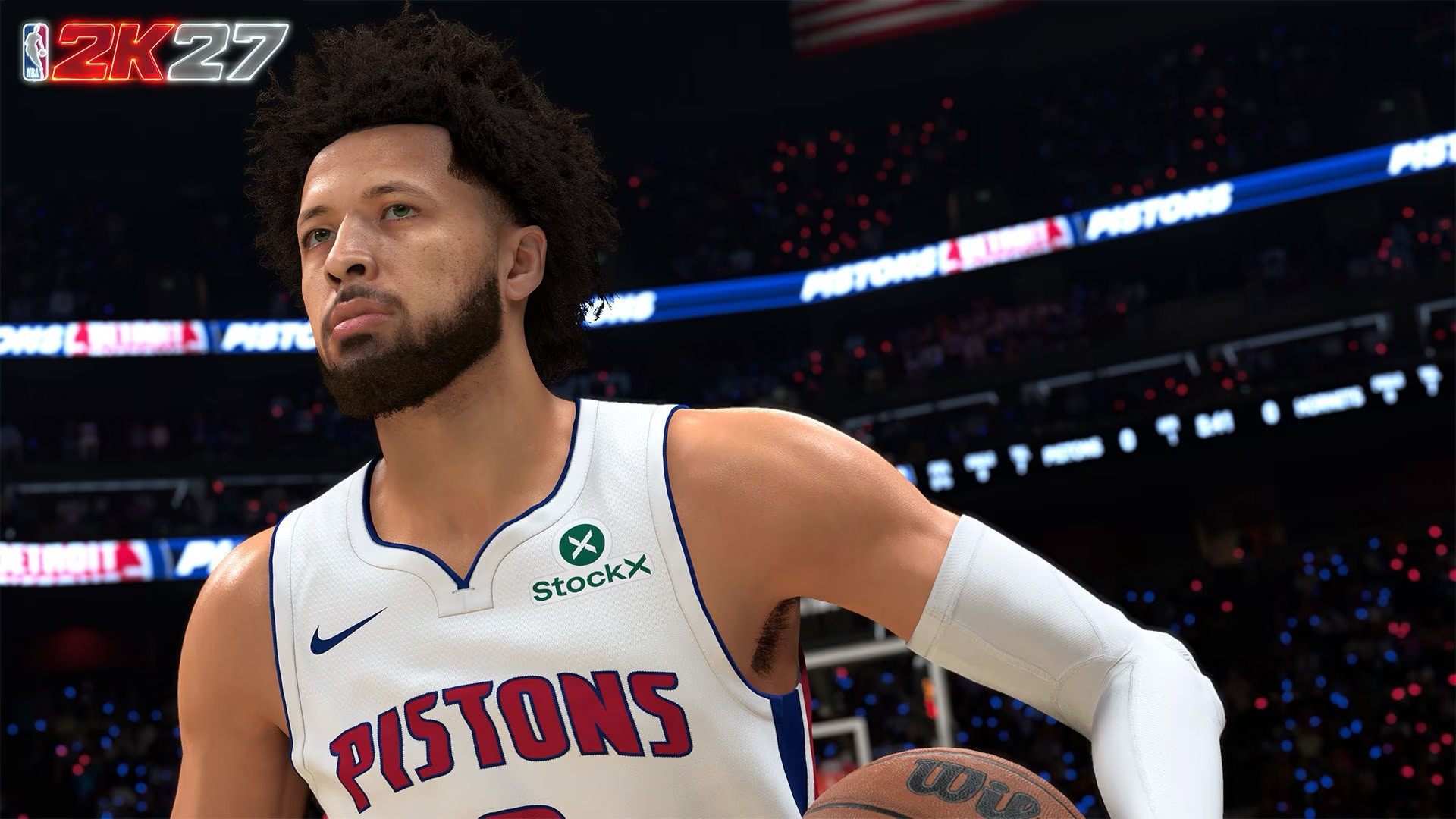
NBA 2K27 is a two-way layup mixmaster that’s a borderline perennial All-Star.
I’m giving the game a Swipe Right because as a basketball simulator, it remains uncontested.
There are certainly many things they can improve in terms of presentation, rosters, and keeping other game modes more interesting and engaging, rather than just focusing on the ones that have people spending on Virtual Currency.
But it’s still a joy to play if you’re a hoop head.
You can recreate NBA moments however you want. Maybe it’s something that just happened on a random Tuesday. Maybe it’s getting your favorite NBA star an elusive championship.
That’s what keeps me coming back.
And NBA 2K27 gives me a better basketball game to do it with.




Gaming
KINGDOM HEARTS Collection [I–III] now available on PS5, Switch 2
All-in-one collection launches

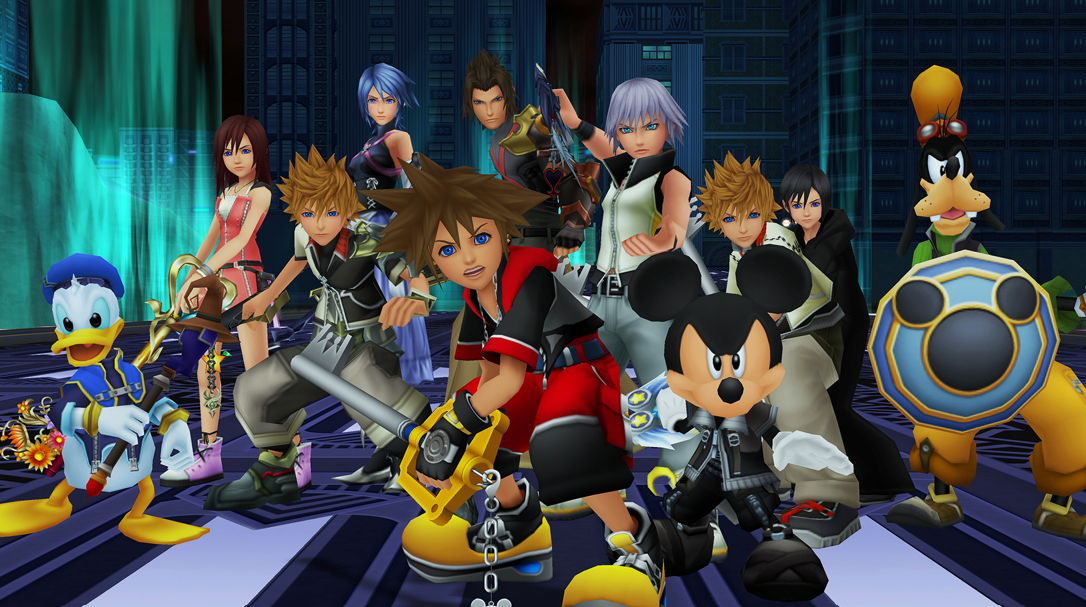
The KINGDOM HEARTS Collection [I–III] is now available on PlayStation 5, Nintendo Switch 2, Xbox Series X|S, and PC. Bandai Namco Entertainment Asia and Square Enix announced the collection’s launch on October 15, 2026, alongside the release of physical editions for PS5 and Nintendo Switch 2 in Southeast Asia.
The collection bundles three releases: KINGDOM HEARTS -HD 1.5+2.5 ReMIX-, KINGDOM HEARTS HD 2.8 Final Chapter Prologue, and KINGDOM HEARTS III + Re Mind (DLC). These include multiple games and cinematic compilations from the franchise, offering newcomers and returning fans a convenient way to experience Sora’s adventures.
The collection is available on Nintendo Switch 2, PS5, Xbox Series X|S, Steam, Xbox on PC, and the Epic Games Store. Individual titles are also available, while KINGDOM HEARTS -HD 1.5+2.5 ReMIX- will be available natively on the original Nintendo Switch.
Try Kingdom Hearts III for free
Newcomers can also try the free KINGDOM HEARTS III + Re Mind (DLC) demo on Nintendo Switch 2. It features two playable sections inspired by Disney’s Hercules and Disney-Pixar’s Toy Story.
Progress from the opening section through the early stages of Olympus carries over to the full game. However, save data from the Toy Box section does not transfer.
The Nintendo Switch 2 version also supports Japanese voiceovers through a separately downloadable Japanese Voice Pack DLC.
Platform-exclusive Keyblades
Players who purchase eligible editions of the collection or KINGDOM HEARTS III + Re Mind (DLC) can receive a platform-exclusive Keyblade.
- Nintendo Switch 2: Long Night
- PlayStation 5: Midnight Blue
- Xbox Series X|S: Phantom Green
The physical edition requires an internet connection to download additional game data. Digital pre-orders on PS5 and Xbox Series X|S also included 48-hour early access.
Players who own digital versions of the games on Nintendo Switch (Cloud Version), PS4, or Xbox One are eligible for discounts on digital purchases of the corresponding releases on Nintendo Switch 2, PS5, and Xbox Series X|S.
Nintendo Switch Cloud Version owners can also transfer their save data to Nintendo Switch 2. Other platforms do not support save data transfers.
The KINGDOM HEARTS series will celebrate its 25th anniversary in 2027.
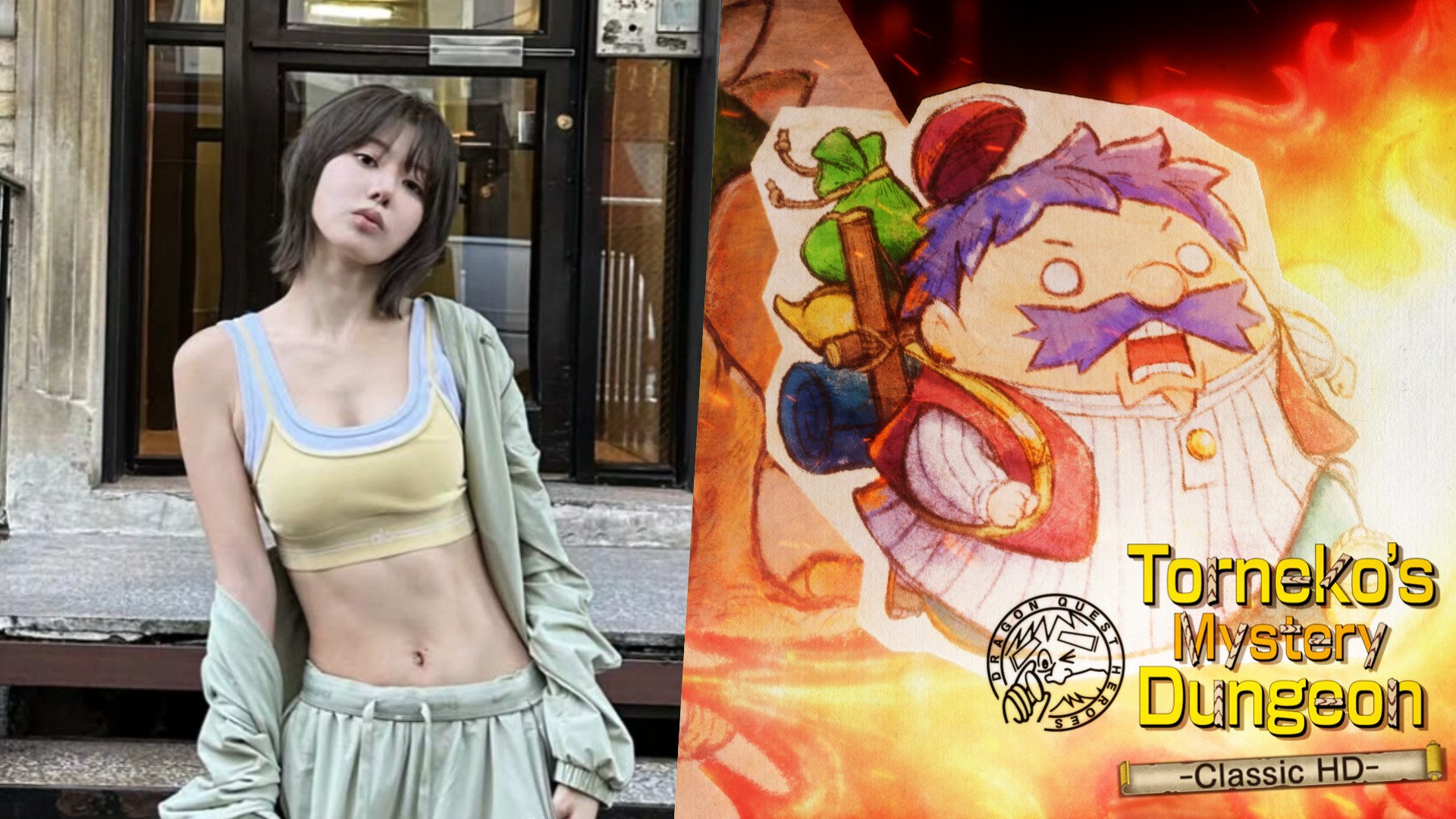
LE SSERAFIM member Sakura has a game recommendation for Nintendo Switch 2 owners, and it is an unexpected pick for fans looking for something to play.
During a fan send-off at the group’s PUREFLOW tour stop in Newark, New Jersey, a FEARNOT reportedly asked Sakura which Switch 2 game she would recommend. She pointed the fan toward Torneko’s Mystery Dungeon, a classic RPG from Square Enix.
The Newark concert took place at the Prudential Center on October 8, 2026. The game Sakura mentioned is now available internationally as Dragon Quest Heroes: Torneko’s Mystery Dungeon -Classic HD-.
What is Torneko’s Mystery Dungeon about?
The game follows Torneko Taloon, a merchant from Dragon Quest IV who dreams of becoming the world’s greatest weapons dealer.
Torneko hears rumors of a mysterious dungeon filled with incredible treasures. He ventures inside to collect valuable items, bring them home, and expand his shop.
The premise is straightforward, but surviving the dungeon is another story. Each expedition brings a new layout, different items, and new monsters. Torneko must make it out alive if he wants to keep the treasures he finds.
Source: Official Dragon Quest website
What kind of game is it?
Torneko’s Mystery Dungeon is a turn-based roguelike dungeon crawler with RPG and resource-management elements.
Every step counts as a turn. When Torneko moves, enemies move too. Players must decide when to fight, when to use items, and when to retreat. Poor decisions can quickly turn a promising run into a disaster.
Death also carries a hefty penalty. Torneko loses the items collected during a failed expedition and returns to the first floor at Level 1. However, successfully bringing items home helps expand his shop and provides a sense of long-term progression.
The game originally debuted in Japan in 1993. Its Classic HD release brings the pioneering dungeon crawler to international audiences with updated visuals, an official English localization, and adjustable difficulty options.
The game is available on Nintendo Switch 2, Nintendo Switch, PlayStation 5, Xbox Series X|S, and PC.
How long does it take to beat?
According to HowLongToBeat estimates reported by M4 Games, the main story takes around 7.5 hours to complete. A playthrough that includes additional content takes approximately 16 hours.
Those estimates offer a useful starting point, but the game’s procedural dungeons and punishing mechanics can affect how long individual players need to finish it.
What do critics and players think?
Torneko’s Mystery Dungeon -Classic HD- has received a mixed-to-positive response from critics.
Review aggregator listings put its critical reception around the high 60s to low 70s out of 100, depending on the platform and the aggregator. RPGFan awarded it an 80/100, praising its strategic dungeon runs, charming Dragon Quest monsters, and satisfying progression.
However, the game also shows its age. Critics have pointed to dated presentation, limited quality-of-life improvements, and pacing issues. Its demanding mechanics may also frustrate players who prefer more modern, forgiving roguelikes.
The general sentiment is that the core gameplay remains engaging, particularly for fans of classic RPGs and dungeon crawlers. However, this is a 1993 game at heart, and its remaster does not completely modernize the experience.
Sources: RPGFan, CriticDB, Steam player reviews
Would you play it because of the game or because of Sakura?
Let’s be honest. A recommendation from Sakura might be enough to make some FEARNOTs curious about a game they would otherwise overlook.
From a gameplay perspective, Torneko’s Mystery Dungeon -Classic HD- offers a glimpse into the roots of a genre that continues to thrive today. Its turn-based combat, randomly generated dungeons, and risk-reward loop could appeal to players who enjoy methodical RPGs.
Still, the game isn’t necessarily for everyone. Its old-school design and punishing mechanics may require some patience, especially for players accustomed to more modern dungeon crawlers.
Personally, I’d be tempted to give it a shot because of Sakura. 👀
Whether the game itself can keep me playing is another question. But if a FEARNOT is looking for a new Switch 2 game and Sakura recommends this one, that might be reason enough to take a closer look.
Would you play Torneko’s Mystery Dungeon because of the gameplay, or because Sakura recommended it?
Gaming
Just Dance: Decades of Hits out now, with 35 iconic songs across eras
Travel through time and share the joy of rediscovering iconic moments
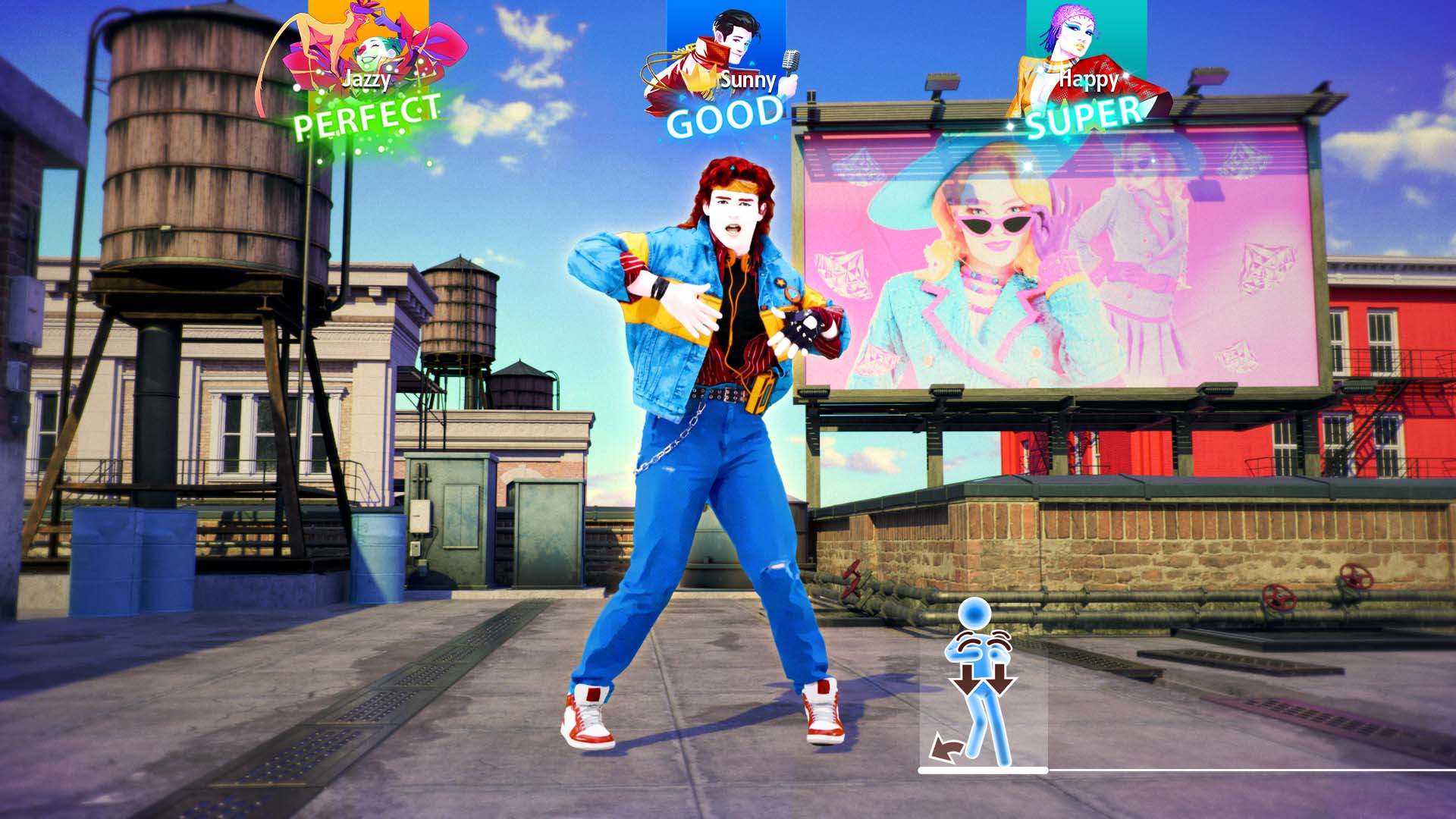
Just Dance: Decades of Hits is officially out now on Nintendo Switch, PlayStation 5, and Xbox Series X|S.
This gives players the opportunity to have unforgettable moments of fun with friends and family as the title brings every era to one dance floor.
Just Dance: Decades of Hits brings together 35 iconic songs across six different decades into one title.
Here’s the complete list:
1970s
- Mamma Mia by ABBA
- Come and Get Your Love by The Heartliners
- ABC by Groove Century
- Crocodile Rock by Elton John
- The Singing Garden by Hyacinth
1980s
- It’s Tricky by RUN DMC
- Uptown Girl by Billy Joel
- Into the Groove by Madonna
- Jump by Metal Russell
- Celebration by Equinox Stars
1990s
- Wannabe by Spice Girls
- Just A Girl by No Doubt
- Around the World by Daft Punk
- Sing Hallelujah! by Dr. Alban
- Coconut by SMiLE.dk
2000s
- Stronger by Britney Spears
- Bye Bye Bye by *NSYNC
- No Scrubs by TLC
- Feel Good Inc. by Gorillaz
- Starlight by The Superman Lovers (feat Mani Hoffman)
- In Too Deep – Sum 41
2010s
- Turn Down for What by DJ Snake & Lil Jon
- Danza Kuduro by Don Omar feat. Lucenzo
- Hello by Martein Solveig & Dragonette
- Santa Tell Me by Ariana Grande
- Give Me Everything by Pitbull featuring Ne-Yo, Afrojack and Nayer
2020s
- Manchild by Sabrina Carpenter
- NUEVAYoL by Bad Bunny
- Midnight Sun by Zara Larsson
- drop dead by Olivia Rodrigo
- MORE & MORE by TWICE
- HOT TO GO! By Chappell Roan
- Across All Time by Lyra Gigavolt
- Supersonic by Lyra Gigavolt
- Hi Lyfe by Cult of Sound
New Adventure Mode
Aside from the songs and visuals, an all-new Adventure Mode is likewise included. These experiences are all designed to immerse players in the spirit that made each decade unforgettable, from the funky ’70s disco floors and electrifying ’80s rock scene to the glossy 2000s pop and beyond.
The game lets players travel through time and share the joy of rediscovering iconic moments with friends and family.
The game’s Nintendo Switch 2 Edition will release on November 10. Meanwhile, those who own both Decades of Hits and the 2023-2026 editions of Just Dance will be able to access all their songs in one place on the same console.




GrabCar Group Ride now splits the fare automatically

Sony unveils three premium Walkman music players

iPhone Duo Philippines: Prices, installments, and where to buy

KINGDOM HEARTS Collection [I–III] now available on PS5, Switch 2

TECNO CAMON Slim 5G gets launch discounts, free MagBadge

vivo X500 Series launches with major imaging upgrades

OPPO Find X10 Pro Max is the first phone with a triple 200MP camera system

TECNO CAMON Slim 5G: Price, availability in the Philippines

TECNO CAMON Slim 5G review: Slim on size, big on surprise

HONOR Magic9 Pro Max launches in China with ARRI-powered imaging


-

 News1 week ago
OPPO Find X10 Series launches globally October 21
-
 News2 weeks ago
Sony teams up with Hello Kitty for exclusive limited-edition collection
-

 Features2 weeks ago
Nike’s new race-day system, explained
-

 Wearables1 week ago
Garmin Enduro 4 promises up to 320 hours of battery life
-

 Gaming2 weeks ago
The Ace Combat 8: Wings of Theve launch event is happening this week
-
 News2 weeks ago
iPhone 18 series breaks records in Vietnam as pre-orders triple
-
 Gaming7 days ago
Dragon’s Dogma 2: Dark Arisen launches with new Official Pawns
-
 Deals7 days ago
Score PhP 22,000 in guaranteed freebies when you pre-order the iPhone 18 Pro at Beyond the Box