
Automotive
Nissan Futures 2018: Electrifying the Future
Exciting times ahead!


Nissan wants to reshape the future of mobility by electrifying it.
Just recently, we caught a glimpse of what’s ahead as imagined by the Japanese company at the Nissan Futures event in Singapore. Think of it as a thought leadership platform that aims to gather both industry stakeholders and media.
Not only that, electric vehicle experts and government representatives from different parts of the ASEAN region were also present to participate and engage in panel discussions.
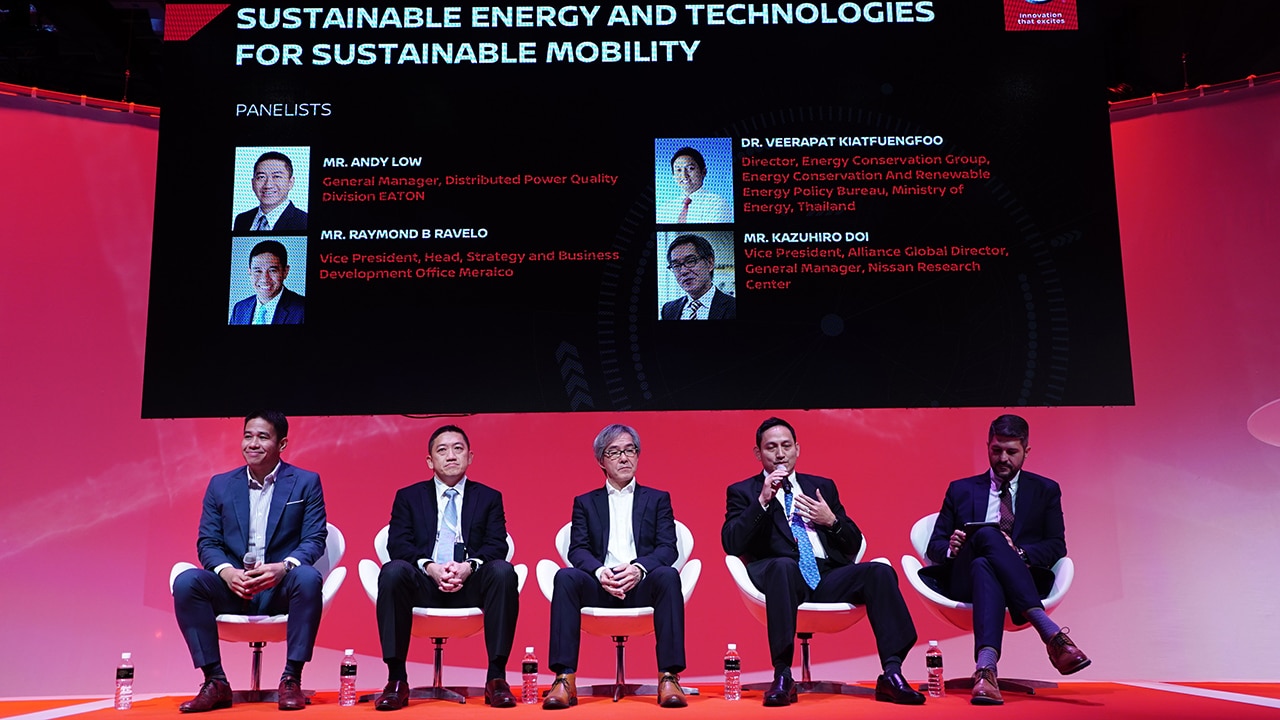
Although what most people were probably looking forward to the most was the chance to see Nissan’s newest technologies in action during the test drive. But apart from that, the event was to discuss Nissan’s goal to transition our everyday way of life into a connected, more efficient, and smarter future.
This was the first time an event like this was held in the Asia and Oceania region so it got us excited to see what the company had in store for us.
Benefits of Electric Vehicles
Before we dive into anything, let’s first get a grasp of what an electric vehicle (EV) is and what its benefits are.
EVs have zero tailpipe emission — meaning they don’t give out fumes harmful to both the air and people. They are virtually noiseless, unlike internal combustion engines. EV users also save a lot on maintenance since having a battery-powered motor has less moving parts than a conventional engine. Wear-and-tear would also be minimized.
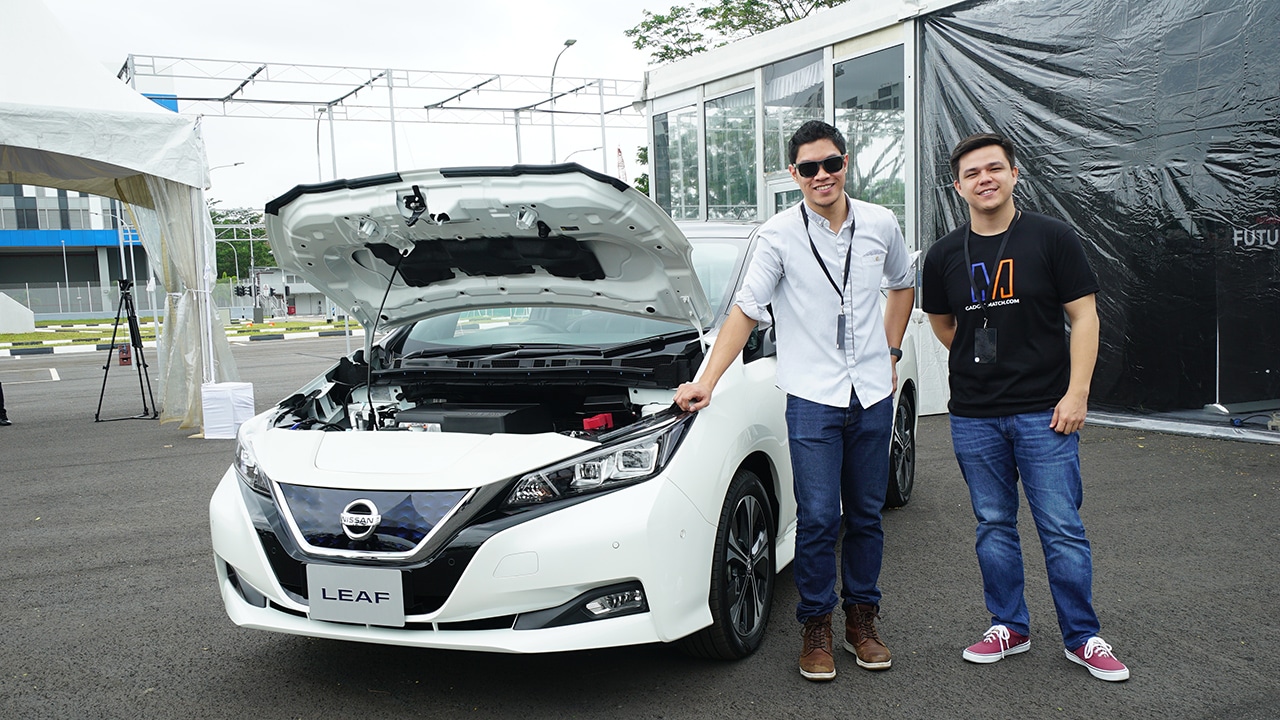
2018 fully electric Nissan Leaf
Most importantly, they reduce dependence on oil.
EVs are an integral part of a cleaner and more sustainable environment. For some, just knowing that they’re doing their part to save the earth is reason enough to get an electric vehicle.
So with that out of the way, let’s now get to what Nissan Futures is working on for Southeast Asia.
Electrification in Southeast Asia
Among the topics discussed was the status of Southeast Asia and its readiness for adapting an electrified future. It’s a fact that while car ownership from this region is high, electrification of the automotive sector is relatively slow to take off.
This is why Nissan commissioned Frost & Sullivan, a global growth consulting company to conduct the study “Future of Electric Vehicles in Southeast Asia.”
There were 1,800 respondents in ASEAN, revealing that 37 percent of prospective buyers are open to considering an electric vehicle as their next car and customers specifically in the Philippines, Thailand, and Indonesia emerged as the most enthusiastic about adapting electric cars.
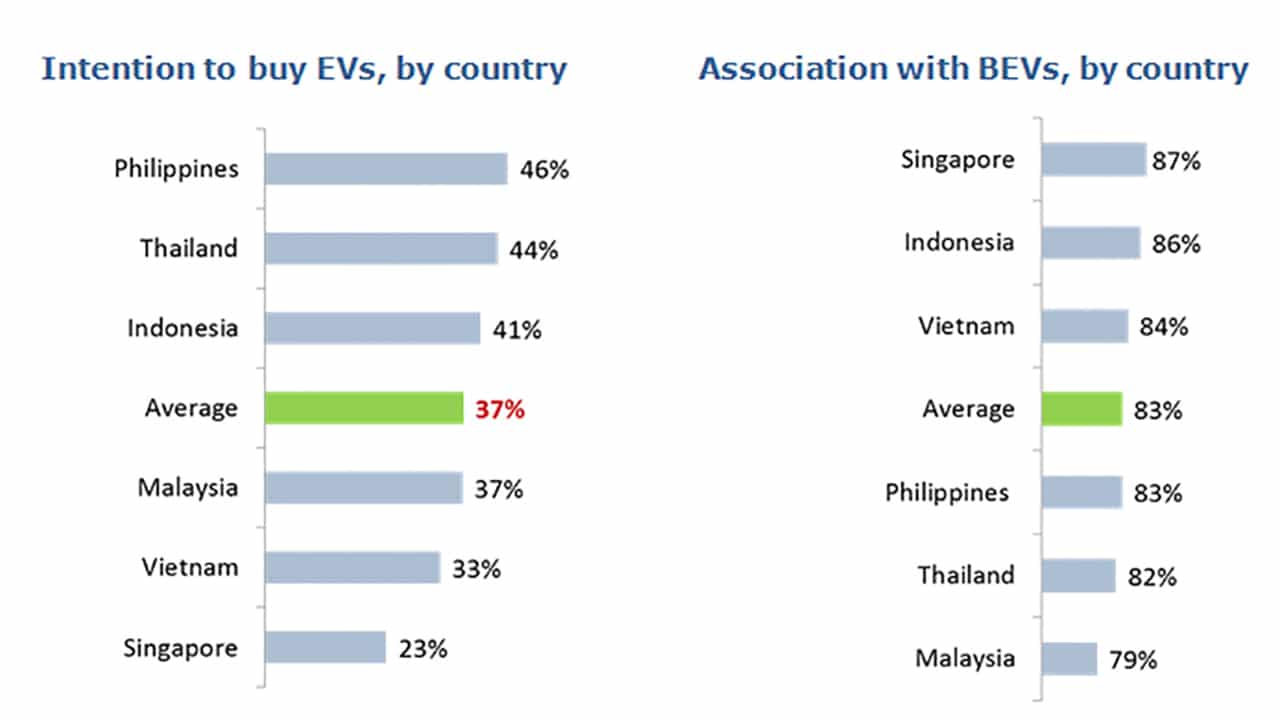
This came as a surprise to most people and because of these findings, Nissan actually gave us their word to look into bringing the technology to these countries sooner than originally planned.
Key Factors for EVs to Take Off
What does it require for EVs to take off? Well, as taken from the same survey, more people will make the switch to EVs if they were offered incentives.
Three in four people in Southeast Asia are ready to jump from conventional cars to EVs if taxes are waived. And about 70 percent of them will also welcome adaptation if charging stations are installed in apartment buildings.

Power stations for apartments and establishments
This means that the government will play a huge role in making these dreams a reality. Right now, not all countries in the region are capable of establishing infrastructures to support electric vehicles.
This is also the main reason why the new Nissan Leaf will not be available in all targeted ASEAN countries right away (see the countries here).
Shaping the Future
So how exactly does Nissan plan to shape the connected future? The keywords are Nissan Intelligent Mobility.
It basically determines how the company’s cars are powered, driven, and integrated with society.
Nissan Intelligent Mobility is already present in some of their vehicles. The auto-parking technology, 360-degree view, connected data — all emerged from this DNA.
During the event, Nissan showed off more of its new technology through interactive displays.

EPORO robots mimic the movement of schools of fish
We were first introduced to these robots called EPORO. Although they remind us of a crossover between Wall-E and Eve, these robots weren’t made to just be cute. These were designed and based off of schools of fish that move together in the same direction, never touching one another, and avoiding obstacles with single collective motions.
Using the same principle, when an obstacle presents itself to block its path, the robot will stop and so would all the others behind it. Nissan envisions to use the same algorithm on their vehicles so they can communicate with one another on the road and avoid colliding with other cars.
It’s not yet perfect, as we’ve seen them get confused once or twice. But with tweaks and updates, Nissan says this should take care of safety concerns when self-driving cars are the norm.

Charging port for the new Nissan Leaf
The company also talked about Alliance Connected Cloud, a shared technology in vehicle connectivity through a platform shared by Nissan, Renault, and Mitsubishi. The connected cloud will store data for customers to enjoy a variety of services.
Further developed by Microsoft, Nissan told us to expect added functionalities in different departments — security and safety included.
And finally, we were introduced to Nissan’s e-Powertrain.
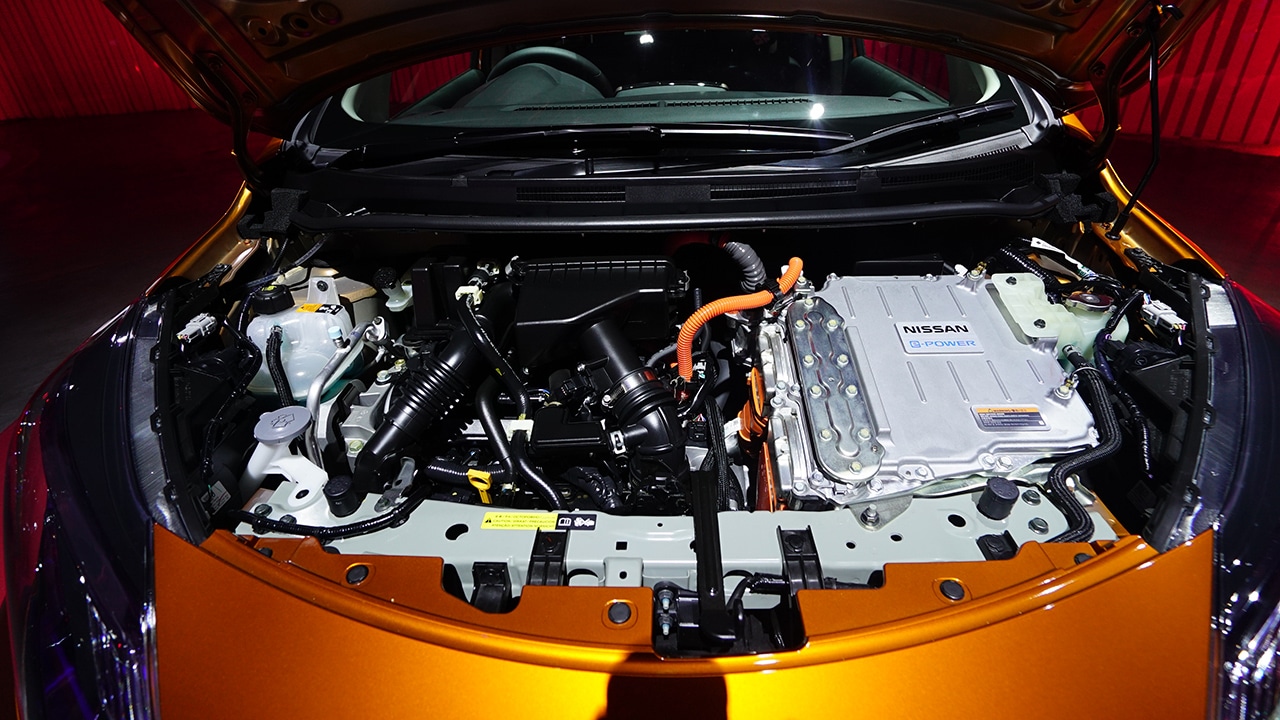
e-Power on the Nissan Note
e-Power can be confusing since it sits between the usual combustion engine and an electric vehicle but it’s not quite a hybrid. Instead, the small engine doesn’t make the wheels turn but simply charges the battery whenever the juice runs out. It is still the electric motor that makes the car move.
This is what was installed on the Nissan Note also on display. For countries that aren’t that prepared to go fully electric yet, e-Power might be Nissan’s solution for now.
Test Drive
The second day was more of a hands-on with not one, not two, but three Nissan cars on the Nanyang Technological University’s Center of Excellence for Testing and Research of AVs or simply, CETRAN.
It’s basically a small test circuit for autonomous vehicles to ensure safe and seamless integration onto public roads. For this activity, there were two variants of the Nissan Note: one with a normal combustion engine and one with e-Power just so we could compare the two. While the last vehicle to test out was the fully electric 2018 Leaf.

Nissan Note with e-Power
Unlike its gasoline counterpart, the Note with e-Power is quiet as you’d expect on an electric vehicle. The engine only works once the battery is low but even then, it’s been reported to be efficient. According to the Japanese fuel efficiency test, the Note e-Power can reach 32.7 kilometers to a liter.
Then we got inside the 2018 Nissan Leaf.
It’s been an icon for the Japanese carmaker since it became very popular when the first model came out. In fact, the predecessor was one of the best-selling EVs of all time — with over 300,000 units sold worldwide. For this new model, the company is proud to claim the title as the most advanced, yet accessible 100 percent electric vehicle on the planet.
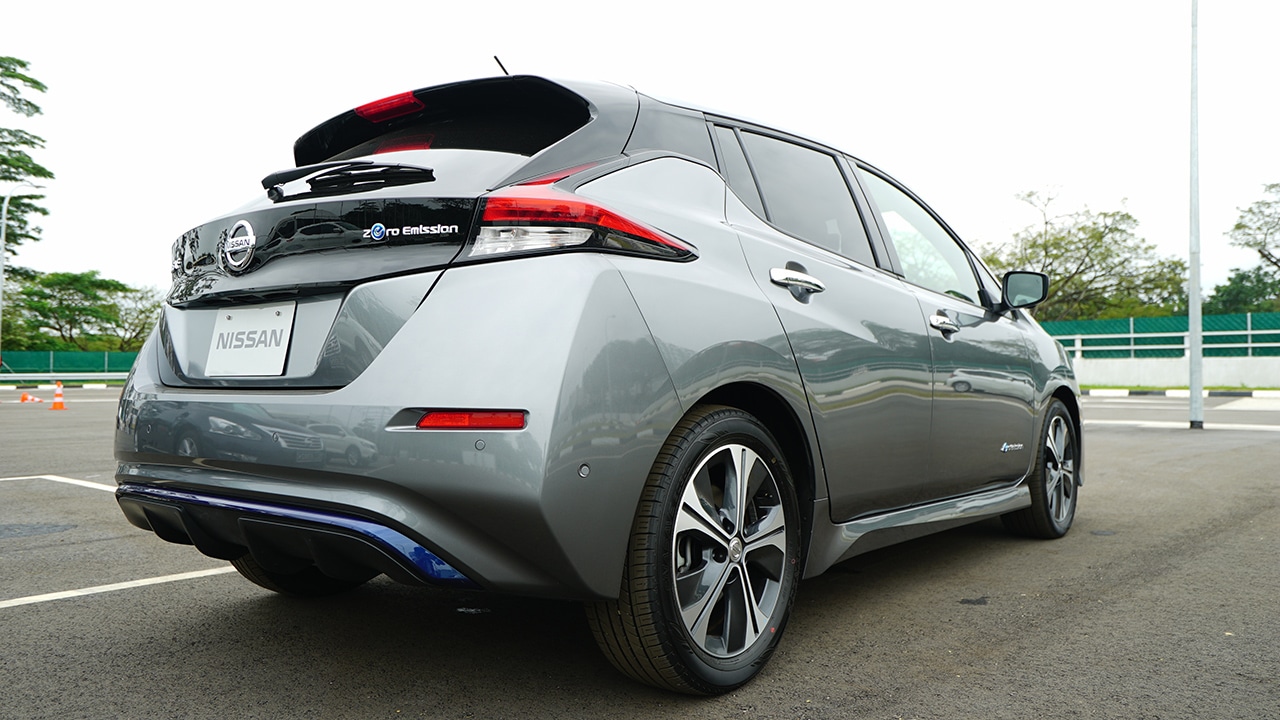
The new Leaf has an improved design and now features a clear-cut curve for its rear bumper
The new Leaf features increased power and range from its 2010 predecessor. It also carries a new electric powertrain that delivers 110kW of output and 320Nm of torque, improving acceleration.
A jolt of power from a full stop is what they’ve been proud of achieving and we got to put it to the test while at the track.
Driving the Leaf was very nimble and response time on the gas pedal was so impressive that the car almost pounces as soon as you hit the accelerator.
Nissan is also introducing new features to the 2018 Leaf. The e-Pedal has been tweaked to act both as a gas pedal and brakes for a sort of one-pedal driving. Stepping on the gas accelerates the car just like a normal vehicle would, but letting go of the pedal brings the car to a complete stop.
It was designed to help during heavy traffic so the driver wouldn’t need to keep on switching between the gas and brakes from time to time. We were also able to clear corners without hitting the breaks so the potential to reinvent driving is really there.
Another demonstration on the Leaf was its ProPILOT Park feature.
It’s the company’s version of self-parking wherein you only need to press the ProPILOT Park button and the car will automatically detect the space to park in. It takes a while for it to park — about one to two minutes but it does the job easily especially for those who find it a bit challenging when it comes to parking the vehicle.
Conclusion
From all these we can see that Nissan, just like other big automotive companies, has some pretty serious plans to reinvent how people move from one place to another. Statistics from the survey might show that some countries in the ASEAN region are not yet ready to jump fully on the EV bandwagon, but it’s good to know that Nissan still has solutions in mind like the e-Power on the Note.
It was also pretty evident during the event that Nissan has the tech to back up and build an entirely new ecosystem for transportation (and they already look promising), but companies like them also need to work very closely with the government of targeted countries in order to fully prepare for a connected city.
So how long until we live the envisioned life? Well, Nissan claims that we will be in a massively connected environment by the year 2020 — that’s if everything goes according to their timetable. Exciting times ahead indeed!





Automotive
BYD’s high-end brand Denza launches in the Philippines
The debut starts with the Denza D9, a full-size MPV.

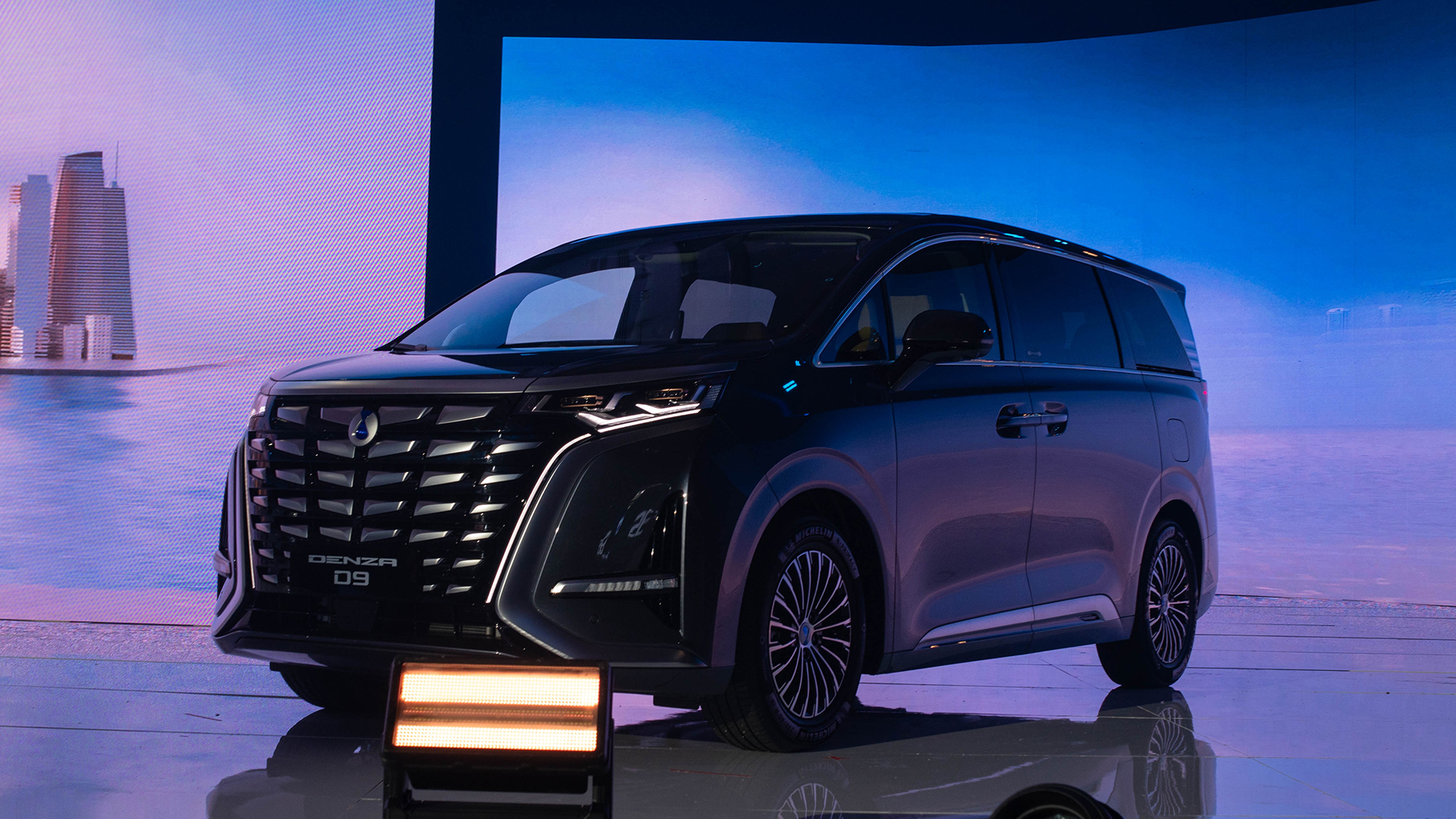
The BYD family in the Philippines just got bigger. After testing the waters and succeeding gracefully with the main brand, the Chinese automotive company is bringing in a new brand to the country: Denza.
Denza started off as a brand co-owned by both BYD and Mercedes-Benz (then known as Daimler). BYD’s meteoric success eventually led to Denza’s concurrent rise as well. Eventually, Mercedes-Benz relinquished all but 10 percent of the brand’s total shares to BYD in 2021. Then, in 2024, the German company withdrew entirely, leading to Denza being completely owned by BYD today.
The brand is known for delivering high-end PHEVs to several markets, which now includes the Philippines. The stint will start off with its ever-popular full-size MPV, the Denza D9.
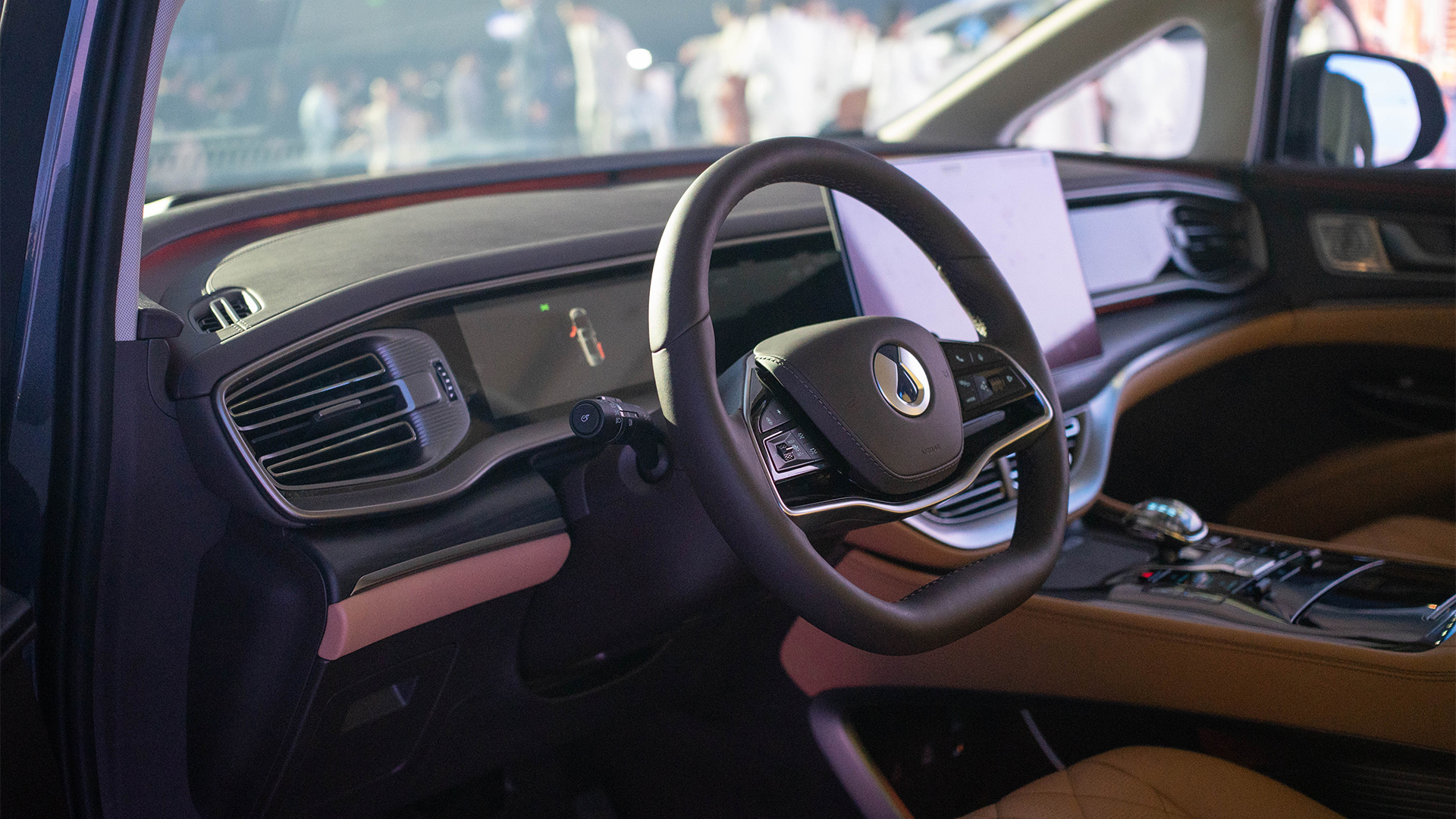
Introducing the Denza D9
Prior to today’s launch, I already saw the Denza D9 plowing through the streets. The sizable MPV already made quite an impression, to say the least.
Up close, the Denza D9 has a bold front fascia, exuding modern elegance and sleek body lines.
Inside, the car prioritizes comfort for all passengers with luxurious captain seats. Those seats feature a ten-way electric adjustment six-way adjustable headrests, and leg rests. They also come with seat ventilation to get through an intensely sunny day. Finally, each seat comes its own LED panel for maximum control.
The DiSus system keeps the car balanced throughout any situation. The drive will remain comfortable even during high-speed cornering, full-throttle acceleration, and sudden braking. It will also come with nine airbags to keep all passengers protected.
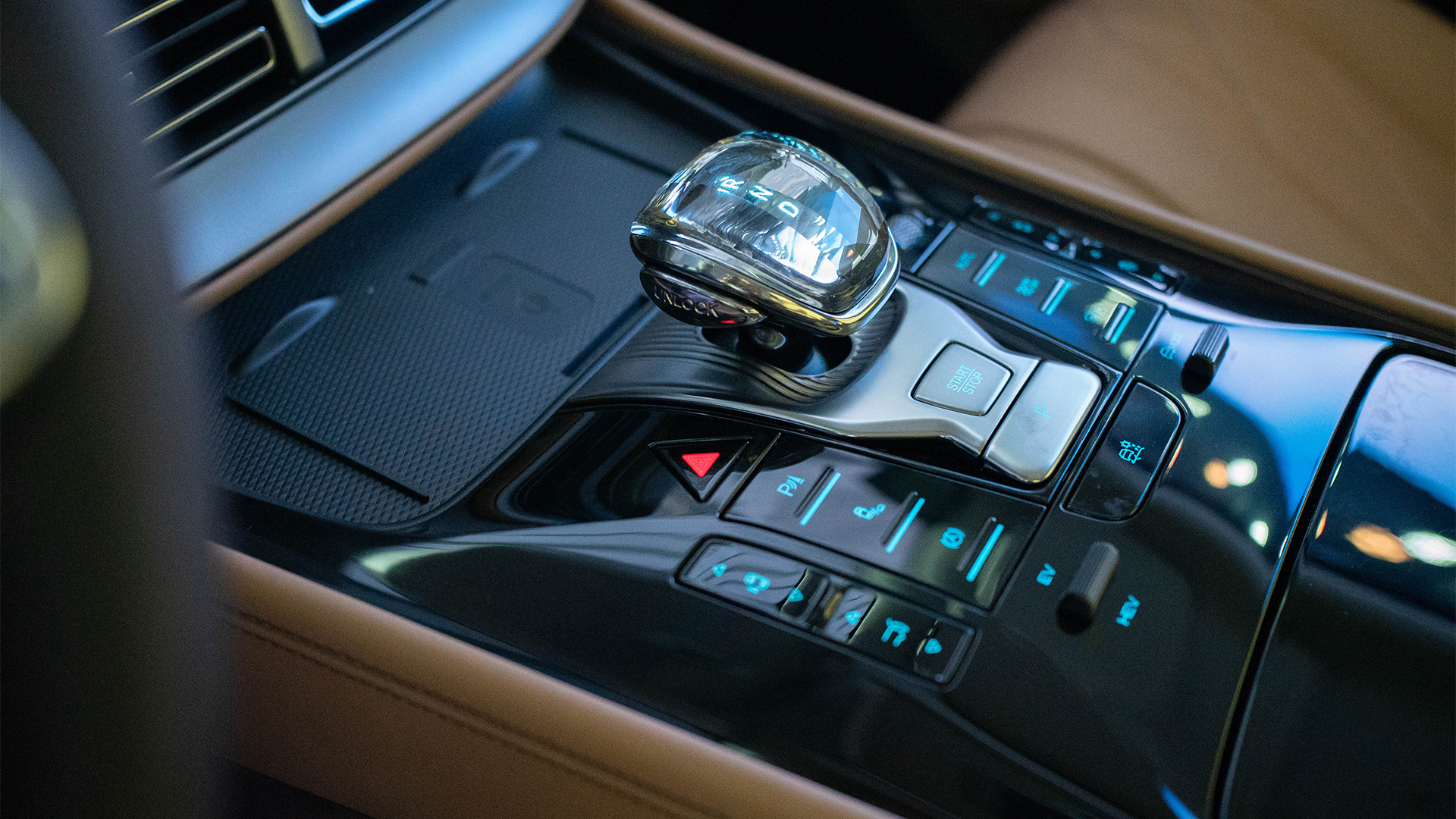
Price, availability
The Denza D9 is available now in Cosmos Black, Arctic White, Whale Sea Blue, and Starry Sky Grey. It will cost PhP 4,298,000.
Additionally, the MPV will have an exclusive premiere price of PhP 3,998,000 for the first 300 customers.
Automotive
VinFast updates battery subscription policy for large upfront savings
Up to 20% upfront savings with a battery subscription model

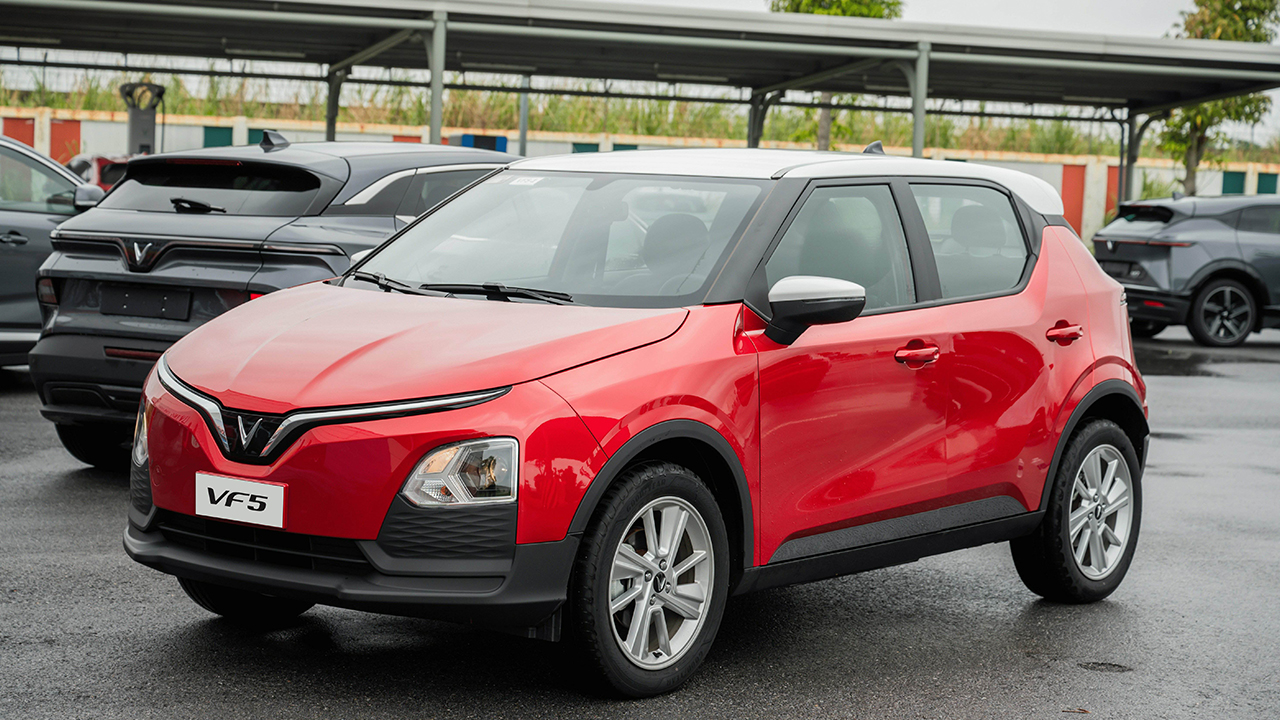
VinFast has updated its battery subscription policy for the Philippine market, offering consumers up to 20% savings in upfront costs.
In addition to the traditional vehicle purchase with battery included, customers can own a VinFast EV under a battery subscription model.
This option offers a more attractive initial investment, with upfront costs reduced by up to 20% — depending on the model.
Battery subscription fees are applied flexibly, starting from PhP 1,600 per month, based on actual distance.
For instance, the VinFast VF3 can be purchased at PhP 590,000 under the battery subscription model rather than PhP 745,000. The monthly subscription fee then starts at PhP 1,600.
Meanwhile, for the VF6 and above variants, the monthly costs start at PhP 2,350. Customers can also save more than PhP 1.5 million on the VF 9 Plus.
Flexible financial tool
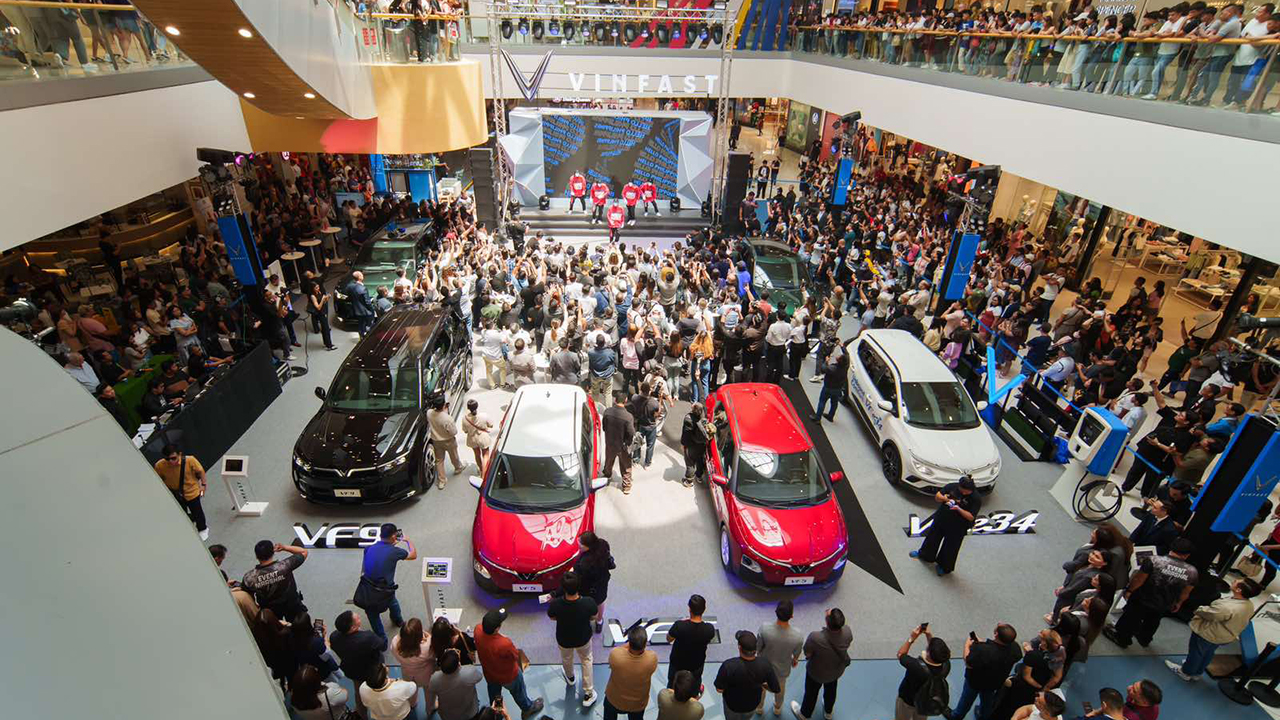
Positioned as a “lifetime battery warranty” solution, the battery subscription policy is a flexible financial tool that optimizes cash flow. It is likewise a long-term commitment to consumers.
VinFast assumes full responsibility for battery performance throughout the subscription period. This includes maintenance, repairs, and free replacement when battery capacity drops below 70 percent.
In the event of battery damage caused by an accident, VinFast will handle the issue under the battery subscription policy. This helps minimize financial risks for customers.
The pioneering policy reinforces VinFast’s customer-centric commitment, advancing green mobility in the market.
Meanwhile, customers who opt for the traditional vehicle purchase with battery included, VinFast can still offer comprehensive aftersales benefits. This includes a battery warranty of up to 10 years or 200,000 kilometers.
The dual approach allows interested consumers to be in control of the ownership model that best suits their needs and personal financial capabilities.

BYD Group premium sub-brand DENZA is officially entering the Philippine market.
The move marks a strategic shift to capture the luxury “new energy vehicle” (NEV) segment, beyond the company’s existing mass-market offerings.
This expansion follows a period of rapid growth for BYD in the Philippines under its distributor, ACMobility.
By introducing DENZA, the group aims to offer a tiered ecosystem of electrified transport that ranges from budget-friendly options to high-output luxury ones.
The sub-brand’s initial lineup could possibly include the high-end MPV, DENZA D9.
It features a triple-motor system and high-capacity batteries that provide significant electric-only range before the gasoline generator engages.
Potentially, SUVs DENZA B5 and DENZA B8 will also be introduced locally, positioned as plug-in hybrid EVs.
Offerings under the DENZA sub-brand will be distributed locally by BYD Philippines Corp.
Advanced technology, comfort
DENZA’s entry focuses on “passenger-centric engineering” rather than traditional luxury excess.
The vehicles will feature two of BYD’s flagship technologies: the DiSus system and e3 platform.
The first is an intelligent body control system that manages vehicle motion to balance executive-level ride comfort with sharp handling.
Meanwhile, the e3 Platform is a high-performance architecture utilizing a three-motor drivetrain.
This setup lets drivers pull off advanced maneuvers such as “crab-walking” and “compass turns,” while enhancing stability during high-speed travel or emergency situations.
Strategic presence
DENZA will establish a dedicated retail network separate from standard BYD showrooms to support its positioning.
The sub-brand is planning four initial locations in Makati, Greenhills, Alabang, and Cebu.
Once it officially rolls out, DENZA expects to compete against luxury vans like the Toyota Alphard and Lexus LM.


Now Playing: Iron Lung
The premise will leave you wanting for more.


Infinix NOTE Edge: Stellar at street photography
Despite trailing in other specs, the Infinix NOTE Edge was built for point-and-shoot photography.


OPPO Reno15 Pro: Camera Review
Why is this even considered a "Reno"?

Resident Evil Requiem is out now

Unboxing: HONOR Magic8 Pro Photography Kit

Tales of Berseria Remastered is out now on consoles and PC

Pokémon Winds and Pokémon Waves will launch in 2027

ITZY’s YUNA is Infinix’s first ever global brand ambassador

Breaking up with Adobe Photoshop after 20 years

TECNO will showcase the CAMON 50 and POVA 8 series at MWC 2026

PlayStation, LE SSERAFIM Chaewon team for the ‘Love of Play’ campaign

VinFast updates battery subscription policy for large upfront savings

The art of being in and behind the frame


-

 Accessories2 weeks ago
Apple AirTag 2 Review
-

 First Look1 week ago
Match Pulse: Infinix NOTE 60 Pro
-

 Cameras1 week ago
Osmo Pocket 4 makes a surprising appearance in public
-
Camera Walkthrough7 days ago
OPPO Reno15 Pro: Camera Review
-

 Gaming2 weeks ago
Star Wars: Galactic Racer shows off new gameplay at State of Play
-

 News1 week ago
iPhone 17 Pro Max is somehow the most traded-in phone today
-

 Gaming1 week ago
LG unveils UltraGear evo, redefines 5K gaming with AI Upscaling
-

 News1 week ago
HUAWEI launches Mate X7, MatePad 11.5 S 2026, FreeClip 2