
News
Everything we know about the Realme X2 Pro
It’s launching on October 15


Realme X was launched a couple of months back and the company has already followed it up with the Realme XT. Now, they’re scheduled to launch the Realme X2 Pro on October 15 in China as well as Spain.
It’ll be Realme’s first flagship and executives have been teasing it on Weibo for quite some time. In a signature Realme move, they’ve already revealed many features and exact specifications of the phone. Today we also got our hands on the phone’s official renders.

It will be powered by the latest Qualcomm Snapdragon 855+ chipset and come with a 90Hz display. Realme claims it’ll be the first one to offer these features in this segment, hinting it could be priced cheaper than the OnePlus 7T.
Other interesting features include a battery with 50W SuperVOOC Flash Charge support. According to the company, this technology will juice up the battery in just over 30 minutes. Realme also confirmed that the device will boast dual stereo speakers with support for Dolby Atmos.

Realme X2 Pro will also sport a quad-camera setup consisting of a 64-megapixel primary lens, a 13-megapixel telephoto sensor with 3x optical zoom, an 8-megapixel wide-angle lens, and a 2-megapixel depth sensor. The front will have a 16-megapixel selfie shooter.
It will run Android Pie out-of-the-box and have 6GB RAM with 64GB of storage, but there won’t be a slot for microSD card.
Xiaomi unveiled the K20 series in July and it’s a premium offering over the Redmi series. It’s safe to assume Realme intends to grab this market and considering their history with aggressive pricing, we might be in for a surprise!







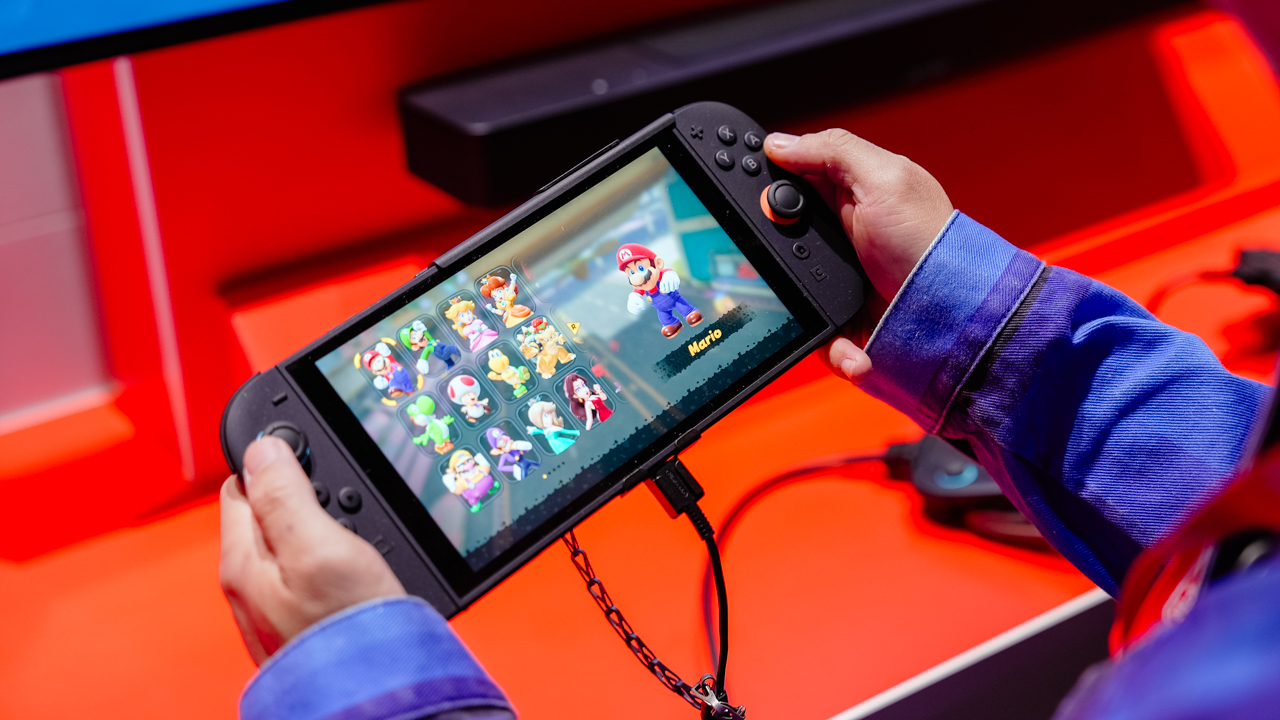
Filipino Nintendo fans, the wait is finally over! Nintendo eShop and Nintendo Switch Online are launching in the Philippines on November 10.
If you’re in the Philippines (or any other country without the service, for that matter), owning a Switch 2 comes with a modicum of difficulty. The country does not have access to Nintendo’s online services, prompting users to buy physical cartridges or switch their region to supported countries, which unfortunately leads to lopsided pricing.
Around the launch of the Switch 2, Nintendo promised that these online services will soon launch in more countries, including the Philippines. Finally, that date is nigh. On November 10, users can access the Nintendo eShop to purchase games digitally, and Nintendo Switch Online to play with friends online.
Besides that, we don’t know much else. There are still a lot of questions unanswered. For example, how will the games’ prices compare to prices in other regions? Since users in the country are forced to switch to another country’s store, they are also subservient to that particular country’s taxes and fees.
Either way, it’s a huge win for Filipino gamers, who no longer have to pretend they’re Singaporean or American just to access online games.


Apple has unveiled a redesigned iPad mini, introducing an OLED display, a faster processor, and improved durability. The update brings significant changes to Apple’s smallest tablet while retaining its compact form factor.
The new iPad mini features an 8.5-inch OLED display, up from the previous model’s 8.3-inch LCD screen. The upgrade promises deeper blacks, improved contrast, and a better viewing experience for videos, games, and other content.
Apple has also equipped the tablet with its A20 Pro chip, delivering improved performance and enhanced capabilities for artificial intelligence tasks.
Bigger OLED display, improved performance
The new iPad mini features a Super Retina XDR OLED display with a peak brightness of 1,200 nits for HDR content. It can also reduce its brightness to just 1 nit, making it more comfortable to use in darker environments.
Apple has reduced the tablet’s thickness to 5.4mm while retaining its compact design. The redesigned model also features slimmer bezels.
For video calls, the tablet features a 12-megapixel Center Stage front-facing camera positioned along its landscape edge. This makes video calls more convenient when using the tablet horizontally.
The new model also introduces IP67 water and dust resistance, offering additional protection against everyday accidents.
Improved AI capabilities
The A20 Pro chip powers the new iPad mini, bringing improvements to CPU and graphics performance.
Apple says the processor delivers up to 60 percent faster multithreaded CPU performance and up to 4.5 times faster AI performance compared with the previous generation.
These improvements support Apple’s expanding Apple Intelligence ecosystem and its latest Siri capabilities.
The upgraded hardware should also benefit users who edit photos, multitask across applications, and run demanding games on the compact tablet.
Pricing and availability
The new iPad mini starts at US$699 for the Wi-Fi model and US$849 for the Wi-Fi + Cellular variant in the United States.
In Singapore, the tablet starts at S$999 for the Wi-Fi model and S$1,229 for the Wi-Fi + Cellular version. Eligible customers can get the Wi-Fi model starting at S$929 with education pricing.
In the Philippines, the new iPad mini starts at PhP 49,990 for the Wi-Fi model and PhP 59,990 for the Wi-Fi + Cellular variant. Eligible customers can purchase it with education pricing starting at PhP 45,990.
The tablet comes in midnight and starlight finishes, with 128GB, 256GB, and 512GB storage configurations.
In the United States, preorders begin October 28, 2026, with availability starting November 6. Singapore preorders open October 29, with availability also beginning November 6.
Apple has yet to announce a specific preorder or release date for the Philippines. The company says the new iPad mini will be available soon through its Philippine online store and authorized resellers.
Enterprise
Google illegally destroys 250,000 trees for a single AI data center
This is what we stand to lose with data centers.


In the Philippines, it’s illegal to cut down a single tree without a permit. It’s a constant reminder that the preservation of nature should be a civil, besides being a moral, obligation. And yet, corporations are seemingly immune from obligations and morals. Google, the company that used to stand for “Don’t be evil,” shows off its true colors by illegally cutting down 250,000 trees in Finland for a datacenter.
As first reported by The Guardian, Finland is now staring at 330 hectares of land suddenly denuded of around 250,000 valuable trees, all thanks to Google. A local ecologist has also said that the company killed a further 150,000 trees at a separate site.
The environmental desecration is part of Google’s multibillion-dollar push to build data centers all over the world for artificial intelligence. Google has since been ordered to stop the development in the country after Finland found that the company acted without securing the needed assessments and permits to clear the area.
Google brushed away the report by saying that they acted “on the best understanding we had of the legislation at the time.” The company also said that they are protecting the water quality at the affected sites and committed to replanting trees across 130 hectares, a pale comparison to the total area affected.
Other AI companies are also trying to weasel their way into other countries to build data centers. An example is the controversial Pax Silica in the Philippines. Finland now stands as a cautionary tale against the unimpeded and unsupervised growth of data centers for a service that no one asked for.
Don’t be evil, my ass.


HP OMEN Max 16 review: Gamer-maxxing in deep black
Peripherals deemed necessary to max this out


vivo V80 review: Good phone, tough sell
A capable travel companion


Ghost of Yōtei Complete Edition review: More of a great thing
Picking up where Atsu left off

Nintendo eShop will finally launch in the Philippines

Apple unveils its biggest iPad mini update yet

TechLife’s Pad Neo SE is coming with a 10.1-inch screen built for learning

Visa: 79% of Filipinos want to learn about stablecoins

CASETiFY Match: Finding the right case for your Galaxy Z8 Series phone

TECNO CAMON Slim 5G review: Slim on size, big on surprise

TECNO CAMON Slim 5G: Price, availability in the Philippines

HONOR Magic9 Pro Max launches in China with ARRI-powered imaging

BYD says that way better EV batteries are coming next year

HONOR 600S review


-

 News2 weeks ago
vivo V80 debuts with ZEISS cameras
-

 Philippines2 weeks ago
TECNO CAMON Slim 5G gets launch discounts, free MagBadge
-

 News2 weeks ago
Samsung: Galaxy Z Fold8 demand rose because of iPhone Duo
-
Reviews1 week ago
vivo V80 review: Good phone, tough sell
-

 Features2 weeks ago
I don’t want a phone that unfolds — the Galaxy Z Fold8 gets why
-

 News6 days ago
OPPO Find X10 Series: Price, availability in the Philippines
-

 Buyer's Guide1 week ago
iPhone Duo Philippines: Prices, installments, and where to buy
-

 Gaming1 week ago
KINGDOM HEARTS Collection [I–III] now available on PS5, Switch 2