
News
Galaxy AI expands to 22 languages, adds Filipino and Gujarati
AI-powered suite now covers languages spoken by nearly 74% of the world


Samsung has announced that Galaxy AI has expanded by adding two new languages: Filipino and Gujarati.
Filipino is used daily by an estimated 87 million people and is the national language of the Philippines.
Gujarati, meanwhile, is spoken primarily by citizens of the Indian state of Gujarat. An estimated 62.5 million speak the language.
Both new languages were developed in close collaboration with Samsung Research Centers in Indonesia and India, respectively.
With the new update, Galaxy AI will now support a total of 22 languages. The database now accounts for languages spoken by nearly 74% of the global population, or roughly 5.9 billion people.
This strengthens Samsung’s ongoing commitment to lowering language barriers and bringing meaningful mobile AI experiences to more people.
Samsung users in even more regions can now access Galaxy AI’s suite of intelligent features designed to make communication and productivity easier and more intuitive.
This includes Live Translate for real-time, two-way voice and text translations for calls. There’s also Interpreter, which translates in-person conversations instantly through a split-screen view.
Other AI-powered features include Chat Assist, Note Assist, Transcript Assist, and Browsing Assist.
Such features were created with deep linguistic understanding and regional insight to ensure Galaxy AI adapts naturally to the ways people communicate.
Galaxy AI expanding at unprecedented pace
Samsung added that Galaxy AI has quickly become part of daily routines for millions of users around the world.
At the Galaxy AI Forum, Samsung shared that more than 70% of Galaxy S25 users regularly engage with Galaxy AI and Google Gemini features.
In the Philippines, there have also been a double-digit increase in Galaxy AI appeal, based on a consumer study conducted from August to September 2025.
In particular, the study found out that 40% of Filipinos find Live Translate and Call Assist “appealing”.
Since its debut with the Galaxy S24 series, Galaxy AI has been expanding at an unprecedented pace. Samsung is on track to bring the suite to over 400 million devices by the end of 2025.
The suite is not limited to Samsung’s flagships like the S series and Z foldables; users on A series devices and some of the company’s tablets also feature Galaxy AI.






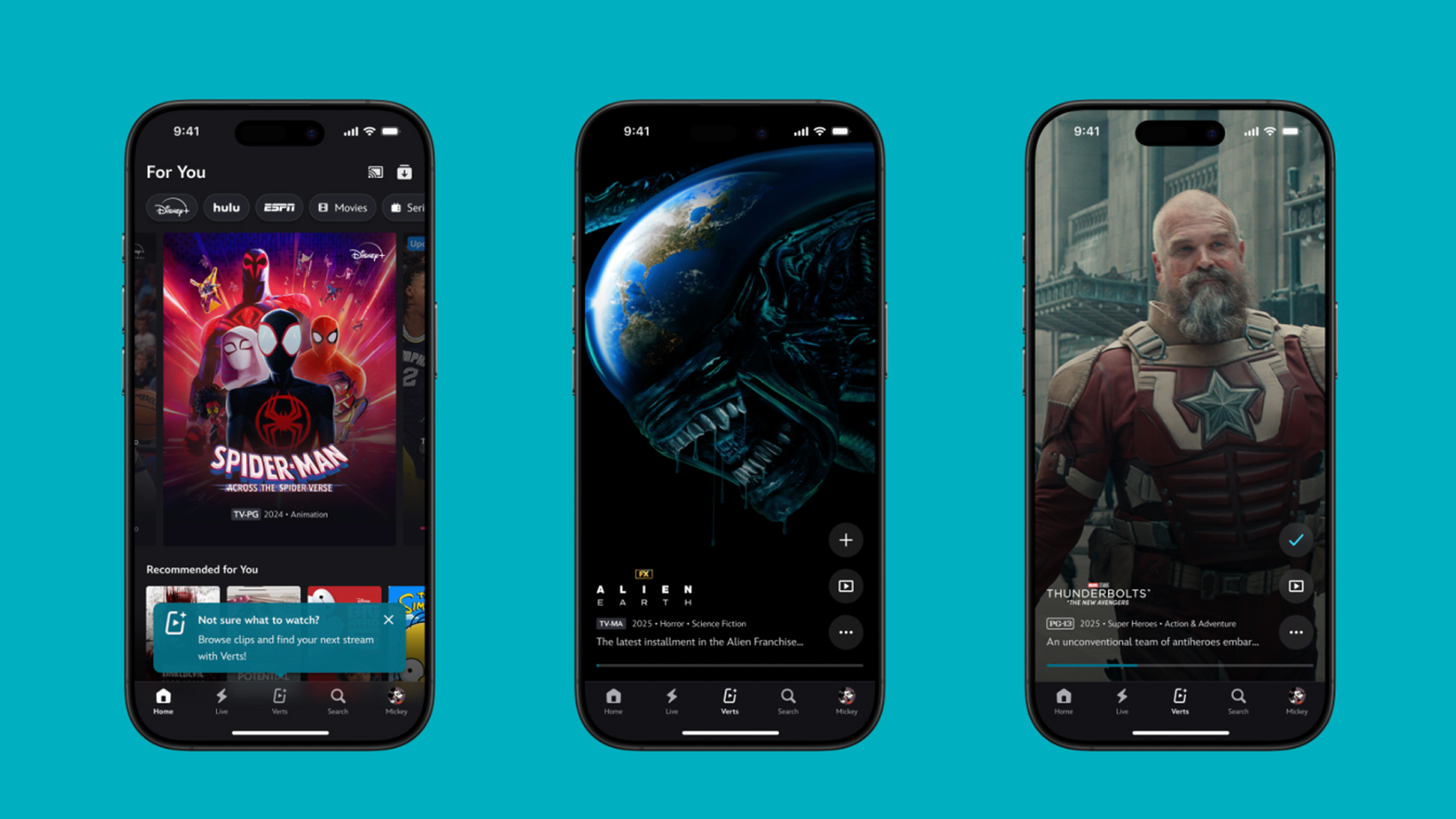
TikTok has changed how we consume media. Everything is now vertical. Even the most established streaming services, often a bastion for traditionally horizontal content, is adopting the different format. Now, Disney+ is getting a vertical feed called Verts.
Like its contemporaries, Verts presents a continuous feed of content but tailored to show the plethora of titles from the Disney+ library. This might include the first scenes of shows or notable highlights. The hope, of course, is to direct users to the longform content.
Directly from the Verts feed, users can easily add the respective title to their watchlist or go straight to the title’s page. In turn, the feed is accessible from the homepage since it has its own tab.
According to Disney, early experiments with the feature have driven engagement to available content. Right now, the feed is mostly for clipping enticing content from shows. However, the platform will experiment further with the format for new ways to tell stories.
Though Verts surely stands for “verticals” in this case, “adverts” might fit better as its full government name. Still, it might be a useful tool if you’re figuring out what to watch for the night.
Currently, Verts is available for Disney+ subscribers in the United States. Disney also has plans to expand the feature to ESPN for sports-related content.
SEE ALSO: Live NBA action on Disney Plus now available in the Philippines

Some of today’s navigation apps are living in the future. Instead of a two-dimensional map, these apps render the user’s surroundings in 3D. It’s a nifty upgrade that helps drivers more accurately visualize directions on the fly. Finally, Google Maps is getting a much-needed upgrade and will take navigation to the third dimension.
In a new update rolling out today, the new Immersive Navigation feature will bring your surroundings to life. The 3D view creates a render of the surrounding buildings, overpasses, and terrain around the car. It takes the guesswork out of navigation by showing precisely where to turn and what landmarks to look out for.
In the same vein, you can now use Street View to preview your destination before you arrive. Google Maps will also highlight your destination’s entrance, side of the street, and nearby parking.
Outside of how the map is visualized, Google Maps is also infusing its service with Gemini. The new Ask Maps feature will let you engage with the app in a conversational manner. For example, if you’re in the middle of a long drive, you can now ask Maps where the best place is to stop over and have a coffee break. Ask Maps will provide directions, a potential itinerary, and even helpful links to book a reservation ahead of time.
Now, availability for both of these features is still a bit limited. Immersive View is rolling out today to compatible devices and vehicles in the United States. Further, availability will expand over the coming months.
Meanwhile, Ask Maps is available now in the United States and India for Android and iOS. A desktop version is coming soon.
SEE ALSO: Google Maps is finally getting a power saving mode
Entertainment
KPop Demon Hunters is officially getting a sequel
Maggie Kang and Chris Applehans will return to write and direct.


This feels like a formality at this point. Netflix and Sony have officially confirmed that KPop Demon Hunters is getting a sequel.
If you feel like you’ve read this exact title before, then you’re not alone. Since its massive success last year, the hit animated film constantly spawned talks of a potential franchise. It probably helped that the title quickly became Netflix’s most-watched film of all time. From the last we’ve heard of the rumors, Netflix was reportedly eyeing a 2029 premiere for the sequel.
Now, it’s official. As posted by Netflix itself, KPop Demon Hunters will get a sequel soon. Even better, the follow-up will be written and directed by the same duo, Maggie Kang and Chris Applehans.
Kang, who celebrated the first movie’s ability to tell a Korean story, says that there’s a lot more to explore in the film’s universe. “There’s so much more to this world we have built and I’m excited to show you. This is only the beginning,” she said.
Right now, the plot’s sequel is still unknown, especially since the Saja Boys were defeated in the first film.
Given how big the original movie got, the sequel is no surprise. Besides bagging the top spot on Netflix’s charts, the film also got an eventual release in theaters. KPop Demon Hunters is up for a potential Oscars win after it was nominated for Best Animated Feature. Its hit song, “Golden,” is also nominated for Best Original Song.
SEE ALSO: KPop Demon Hunters is now Netflix’s most-watched movie



Disney+ launches a TikTok-coded vertical feed called Verts

Google Maps is finally getting a 3D mode

KPop Demon Hunters is officially getting a sequel

Bringing Care-a-Lot to my daily carry

Galaxy AI on the Samsung Galaxy S26 Ultra


-
 Reviews2 weeks ago
TECNO CAMON 50 Ultra review: End of an era?
-

 MWC 20262 weeks ago
Infinix NOTE 60 Ultra makes a motorsport-inspired debut
-

 MWC 20262 weeks ago
TECNO launches the all-new CAMON 50 series
-

 MWC 20262 weeks ago
TECNO showcases cool concepts at MWC 2026
-

 MWC 20262 weeks ago
TECNO unleashes Tonino Lamborghini collection
-

 Computers2 weeks ago
AMD announces Ryzen AI 400, AI 400 PRO series at MWC 2026
-
 MWC 20262 weeks ago
HONOR unveils Robot Phone concept at MWC 2026
-
 MWC 20262 weeks ago
TECNO debuts latest devices, HiOS 16, upgraded Ella at MWC 2026