

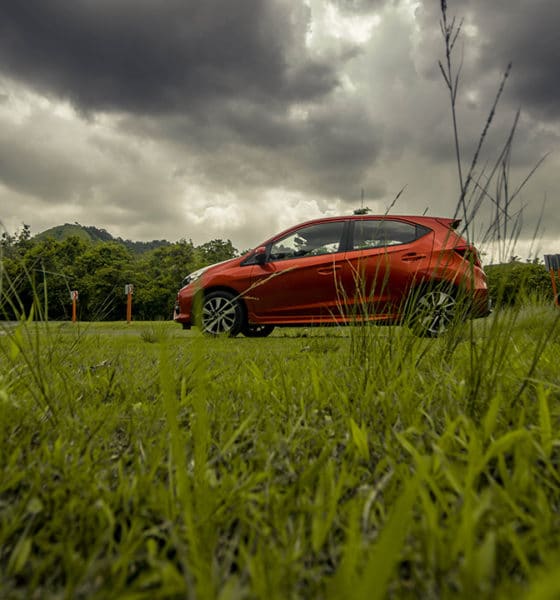

For millennials and young professionals, choosing which car to buy could be a tough choice to make. For some, it has to pass certain requirements like fuel efficiency, ride comfort, space, if it looks good, and more importantly if it fits the budget. This is what first came to my mind when we got to test the 2019 Honda Brio RS. I think it has all the criteria most of us need for our daily commute and I’ll tell you why.
At first glance, it will give you the impression of a baby Jazz as it follows traditional Honda design cues. It looks far better than its competing compact hatchbacks and is definitely a big design upgrade than the previous generation Brio. From the front, this car looks aggressive and masculine for its size. The rear, however, still leans on the conservative side. Together with its sporty side skirts, the side profile is sleek with forward-tilting character lines giving it a sense of action and speed.






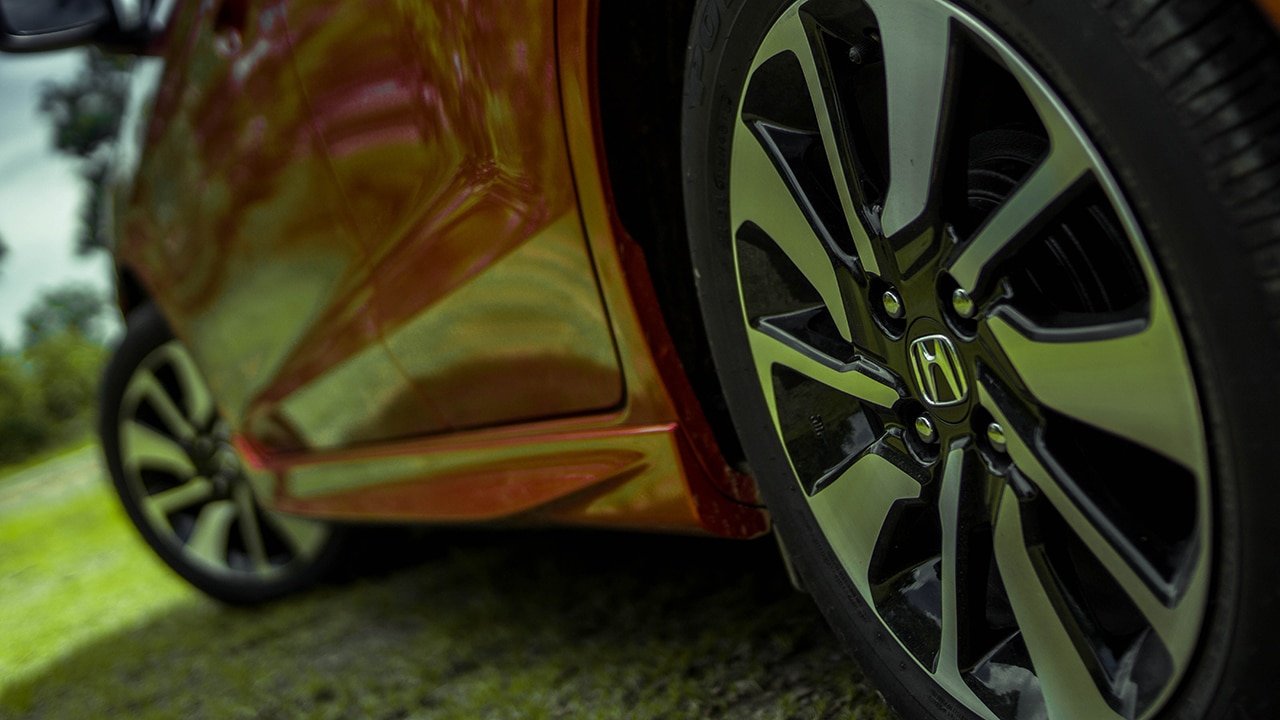
Being an RS variant, there are additional design upgrades which include the black roof, blacked-out honeycomb grille, a rear spoiler with mounted third brake light, 15-inch RS design alloy rims, and of course, the bright red RS badges plastered all over. These positively add to the sportiness of the vehicle.
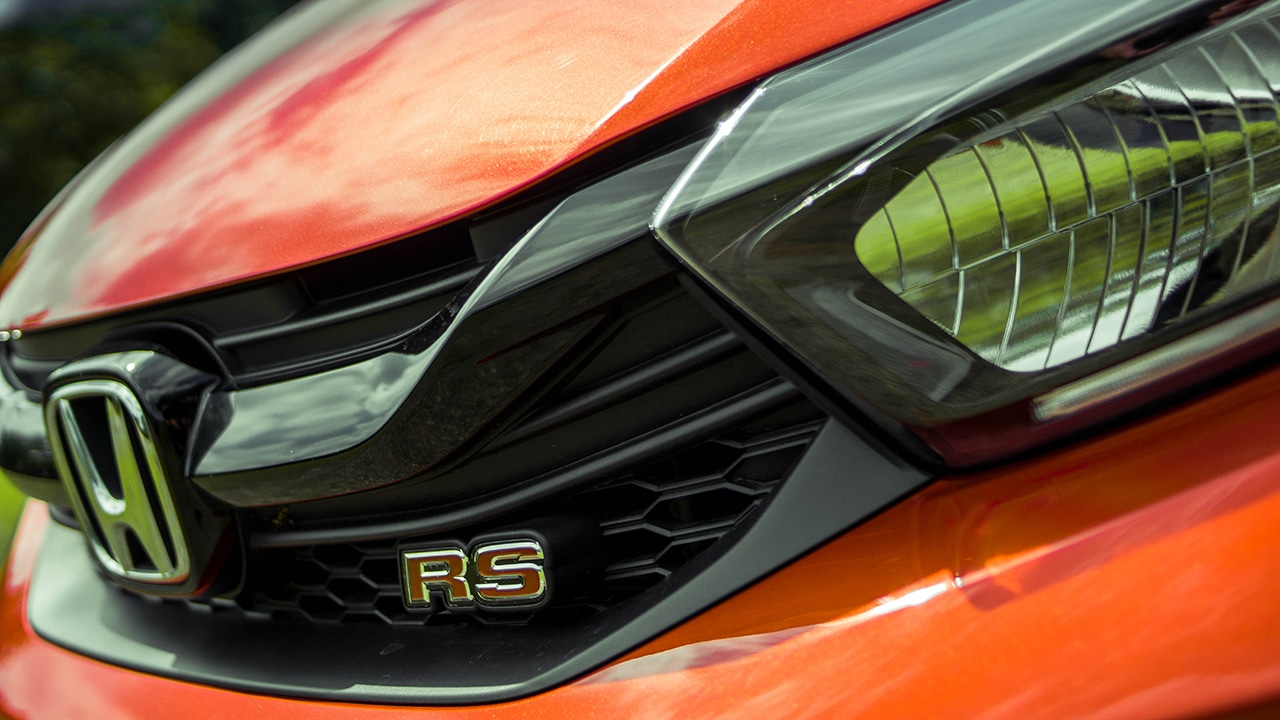
Its Phoenix Orange Pearl body looked glowing hot when the sun hits and we like it
Hopping in, you will immediately notice the orange accents running through the air vents, glove box, and side panels, plus the orange stitching and patterns on the seats. Next, we see the 7-inch touch-enabled infotainment system at the center of the dash which is connected to six speakers. Although that’s the case, we still weren’t impressed with the sound quality as it felt a bit short on bass.
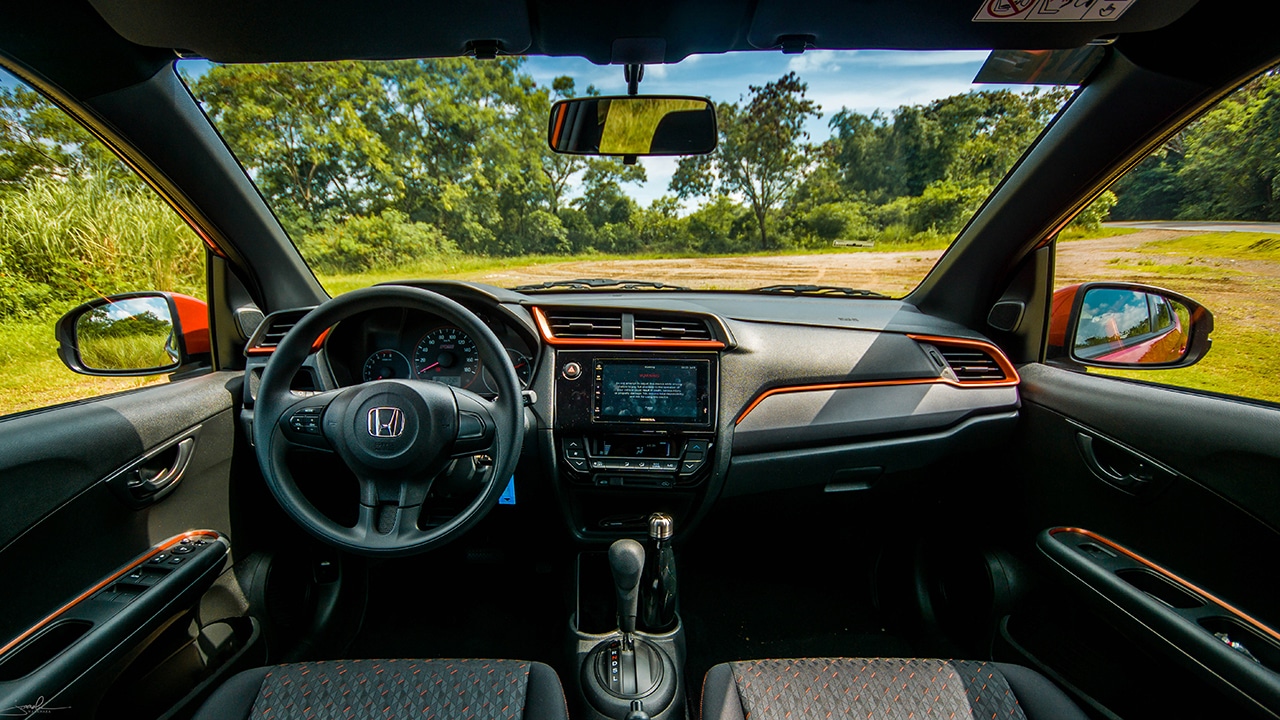
Whether as the driver or passenger, you are seated in a low orientation and feel very close and planted to the ground. The height of the steering wheel and dashboard takes some getting used to if you always drive tall cars. But don’t get the idea that it’s cramped up inside. The seats up front are spacious with plenty of headroom to spare while at the back we have a decent amount of legroom for the average Asian. The trunk was large enough to carry our equipment along with other stuff. It was impressively spacious for a car this size.
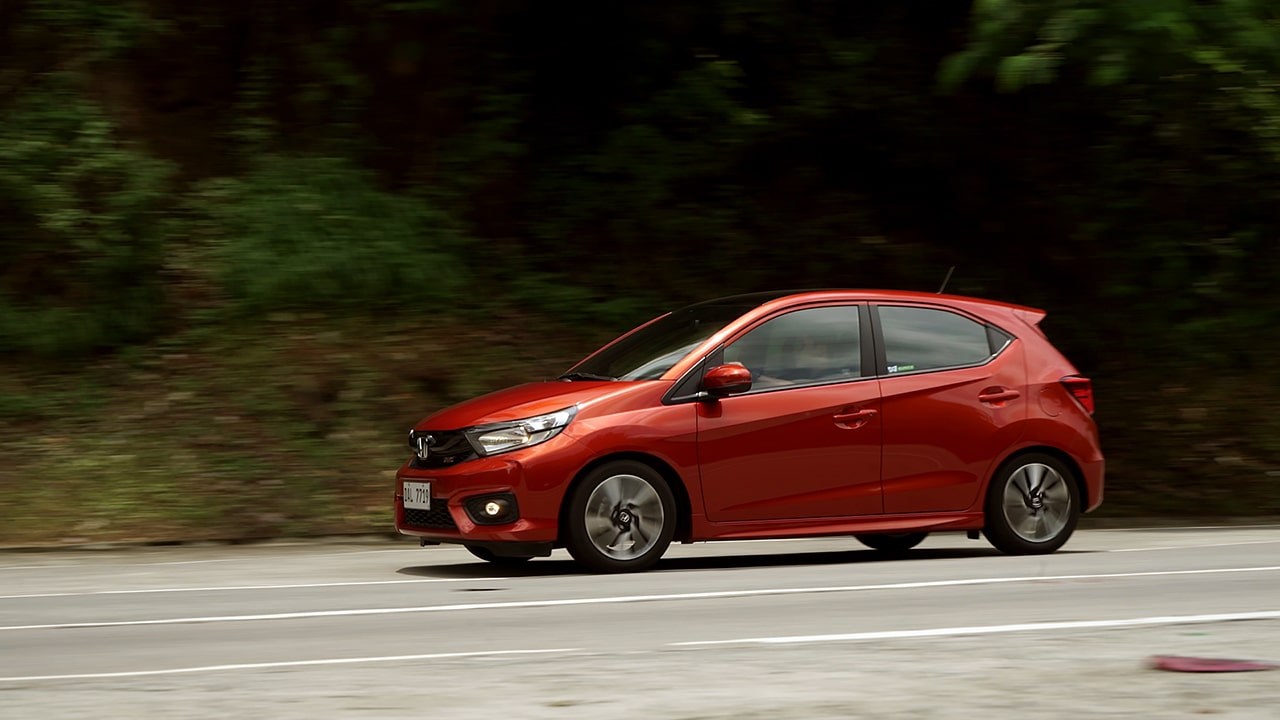
We drove to our favorite scenic route of the Sierra Madre mountains, putting the car through its paces. The Brio is powered by a 1.2-liter SOHC i-VTEC engine which I think is sufficient enough for a car this small. It is then mated to a Continuously Variable Transmission (CVT) with sport mode and the company’s Earth Dreams Technology.
This car gives you a smooth and quiet ride even at high speeds. The cabin is astonishingly quiet with very minimal wind noise and vibrations. Thanks to its CVT implementation, this car is so smooth that I didn’t realize I was already going 90 on a 50kph road.
You cannot ask it to drive like its more spirited cousins, though. It is not the fastest accelerating car and pushing down the gas pedal when overtaking or driving up a steep road takes the CVT some time to adjust and you won’t get that instant punch you were expecting.
The Brio also lacks traction control and other basic features like rear sensors and reverse camera. It doesn’t even have a center console box and an armrest, but these are things we can brush aside. In terms of fuel efficiency, we were able to average 11.1km/liter which is not bad considering we drove it aggressively through the winding and steep roads of Tanay, Rizal. Steering was light and handled tight corners remarkably. Overall, this car gets the job done. It gets you where you need to go and is reliable, economical, safe, and don’t forget that it’s such a looker.

Will I recommend the Brio RS? In the city, this car would be perfect. Although it’s not the most powerful more so for long drives. I can tell you one thing, though, it sure is fun to drive. I’m actually not a big fan of small hatchbacks but it all boils down to the company’s target market. The Brio is tuned to be sporty and modernly stylish so it might appeal to those looking for something that looks fun and doesn’t break the bank.
With those, I could confidently say that the Brio RS has the edge over its small hatchback competitors in terms of performance and design. You won’t go wrong with this car.







Automotive
VinFast updates battery subscription policy for large upfront savings
Up to 20% upfront savings with a battery subscription model

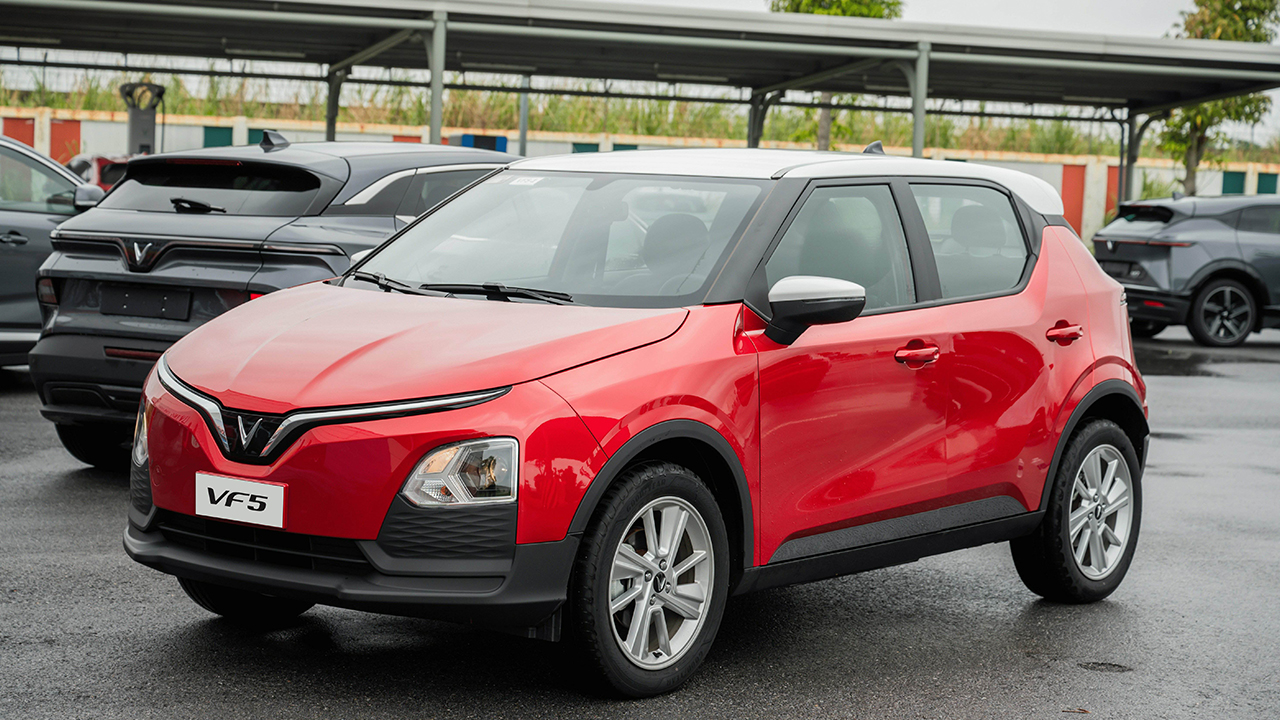
VinFast has updated its battery subscription policy for the Philippine market, offering consumers up to 20% savings in upfront costs.
In addition to the traditional vehicle purchase with battery included, customers can own a VinFast EV under a battery subscription model.
This option offers a more attractive initial investment, with upfront costs reduced by up to 20% — depending on the model.
Battery subscription fees are applied flexibly, starting from PhP 1,600 per month, based on actual distance.
For instance, the VinFast VF3 can be purchased at PhP 590,000 under the battery subscription model rather than PhP 745,000. The monthly subscription fee then starts at PhP 1,600.
Meanwhile, for the VF6 and above variants, the monthly costs start at PhP 2,350. Customers can also save more than PhP 1.5 million on the VF 9 Plus.
Flexible financial tool

Positioned as a “lifetime battery warranty” solution, the battery subscription policy is a flexible financial tool that optimizes cash flow. It is likewise a long-term commitment to consumers.
VinFast assumes full responsibility for battery performance throughout the subscription period. This includes maintenance, repairs, and free replacement when battery capacity drops below 70 percent.
In the event of battery damage caused by an accident, VinFast will handle the issue under the battery subscription policy. This helps minimize financial risks for customers.
The pioneering policy reinforces VinFast’s customer-centric commitment, advancing green mobility in the market.
Meanwhile, customers who opt for the traditional vehicle purchase with battery included, VinFast can still offer comprehensive aftersales benefits. This includes a battery warranty of up to 10 years or 200,000 kilometers.
The dual approach allows interested consumers to be in control of the ownership model that best suits their needs and personal financial capabilities.

BYD Group premium sub-brand DENZA is officially entering the Philippine market.
The move marks a strategic shift to capture the luxury “new energy vehicle” (NEV) segment, beyond the company’s existing mass-market offerings.
This expansion follows a period of rapid growth for BYD in the Philippines under its distributor, ACMobility.
By introducing DENZA, the group aims to offer a tiered ecosystem of electrified transport that ranges from budget-friendly options to high-output luxury ones.
The sub-brand’s initial lineup could possibly include the high-end MPV, DENZA D9.
It features a triple-motor system and high-capacity batteries that provide significant electric-only range before the gasoline generator engages.
Potentially, SUVs DENZA B5 and DENZA B8 will also be introduced locally, positioned as plug-in hybrid EVs.
Offerings under the DENZA sub-brand will be distributed locally by BYD Philippines Corp.
Advanced technology, comfort
DENZA’s entry focuses on “passenger-centric engineering” rather than traditional luxury excess.
The vehicles will feature two of BYD’s flagship technologies: the DiSus system and e3 platform.
The first is an intelligent body control system that manages vehicle motion to balance executive-level ride comfort with sharp handling.
Meanwhile, the e3 Platform is a high-performance architecture utilizing a three-motor drivetrain.
This setup lets drivers pull off advanced maneuvers such as “crab-walking” and “compass turns,” while enhancing stability during high-speed travel or emergency situations.
Strategic presence
DENZA will establish a dedicated retail network separate from standard BYD showrooms to support its positioning.
The sub-brand is planning four initial locations in Makati, Greenhills, Alabang, and Cebu.
Once it officially rolls out, DENZA expects to compete against luxury vans like the Toyota Alphard and Lexus LM.
Automotive
Ford Philippines kicks off the year with Drive Now, Pay Later
Get offers up to three months of free amortization!
Ford Philippines opens the year with a strong push for drivers ready to start fresh. Introducing Drive Now, Pay Later, the program is designed to make stepping into a new Ford feel lighter and more timely.
At the center of the offer are two of Ford’s most in-demand nameplates. Customers can take home the Ford Everest Trend today with three months of free amortization.
Meanwhile, the Ford Ranger lineup brings even more flexibility. The Ranger Wildtrak 4×2 comes with four months of free amortization, and the Ranger Sport 4×4 is offered with three months free.
These offers allow buyers to drive their new vehicle now and begin bank financing only after several months. This eases the transition into ownership at the start of the year.
More ways to save this January
Beyond deferred payments, Ford Philippines is extending a wide range of January offers that focus on value and flexibility.
The Ford Everest comes with cash savings of up to PhP 95,000 this month, alongside an all-in option priced at PhP 69,000 on select variants for customers seeking simpler entry costs.
Across the Ranger lineup, buyers can enjoy cash discounts reaching up to PhP 155,000 or opt for a PhP 69,000 all-in down payment on select variants.
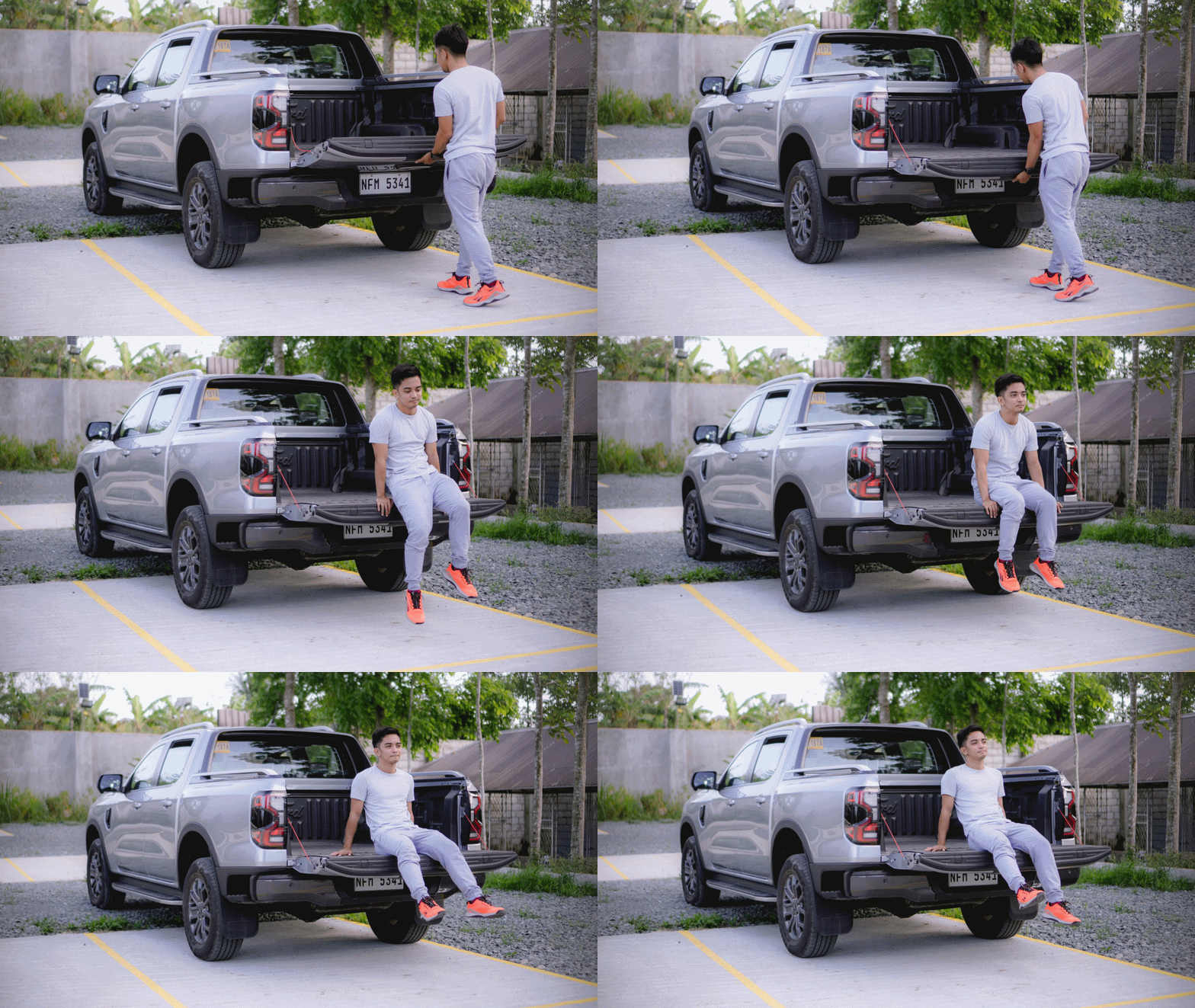
The Ranger XLS AT remains one of the most accessible ways to enter the lineup, with a starting price of PhP 1,379,000.
Performance-focused customers can also take advantage of extended January offers for the Ford Raptor. Options include cash discounts or bundled savings with the 5-Star Care Package, depending on the variant.
Electrified and premium options
For drivers ready to explore electrified mobility, the Territory Hybrid Trend starts at PhP 1,399,000. This January, customers may choose between a PhP 20,000 discount or a complimentary three-year Scheduled Service Plan.
Ford’s larger SUVs are also part of the month’s offerings. The Ford Explorer is available with a PhP 99,000 all-in option or 0 percent interest with 20% down payment for 60 months. The Ford Bronco carries the same flexible choices, too.
Availability
The Drive Now, Pay Later program runs across all Ford dealerships nationwide until January 31, 2026. Customers can visit Ford Philippines’ official website or social media channels to explore the full details.


The art of being in and behind the frame
An OPPO Reno15 5G review


Now Playing: Yakuza Kiwami 3 & Dark Ties
How old should a game be before it gets a remake?


TECNO MEGABOOK K16s 13th review: No-frills beneath those grills
All-around laptop without messing around
The art of being in and behind the frame

New Resident Evil Requiem trailer teases a return to the RPD

Jason Momoa will star in upcoming Helldivers film adaptation

Metal Gear Solid: Master Collection Vol.2 launches August 27 on PS5

TECNO POVA Curve 2 5G packs an 8000mAh battery

Infinix NOTE Edge debuts: High-end features for accessible pricing

POCO M8 Pro review: Goin’ loco over this POCO

HONOR X9d 5G review: Tougher, more long-lasting and optimized

Redmi Note 15 Pro+ 5G review: The midrange fashion piece

Mijia Smart Audio Glasses review: Immerse yourself in the music


-

 Apps2 weeks ago
Breaking up with Adobe Photoshop after 20 years
-

 Gaming2 weeks ago
PlayStation, LE SSERAFIM Chaewon team for the ‘Love of Play’ campaign
-

 Accessories2 weeks ago
Sony WF-1000XM6 was accidentally leaked online
-

 Reviews2 weeks ago
nubia V80 Max: Long battery, marginal upgrades, casual budget phone
-

 Gaming2 weeks ago
Zenless Zone Zero Version 2.6 launches February 6 with idol group debut
-

 News3 days ago
TECNO will showcase the CAMON 50 and POVA 8 series at MWC 2026
-

 Gaming1 week ago
My Hero Academia: All’s Justice: A familiar Final War, made playable
-

 Gaming1 week ago
New Civilization VII update will address everyone’s biggest issue