
Health
From zero to export, here’s how India ramped up PPE making
US and China are its biggest trade partners


With a 1.3 billion population, India is a highly dense country. The imposition of a sudden lockdown meant critical equipment like PPE (Personal Protection Equipment), masks, and other medical equipment were in low supply. Due to the global outbreak, imports were also difficult to find since the demand was too high.
The initial cases of Coronavirus were detected in the Chinese city of Wuhan in November 2019. While the outbreak was limited initially, it gradually spread across China, followed by other countries, and reached a critical stage in March.
Many countries implemented a strict lockdown to curb the spread of the virus. While these curfews helped reduce the spread of the virus, it also handicapped industries because the normal flow of goods and production was adversely affected. Adding to this, developing countries were worse hit because their healthcare system is weak and under-equipped.
India rising to the occasion
However, India was able to find a home-grown solution. The country went on to start exporting Coronavirus goods within a few months. California-based financing company Drip Capital released a detailed report that gives us an insight into India’s production response to the Coronavirus pandemic.
The report considered 14 categories of medical-related products that were shipped between January and July of 2020. The data is directly compiled from India’s Directorate-General of Foreign Trade (DGFT). These categories include textiles, disinfectants, test kits, soap, rubber, gloves, footwear, and other medical equipment.
In a nutshell, the industry clocked a growth of US$ 150 million when compared to the same period last year. The country was in a lockdown state for almost two months. PPE demand among medical workers, contact tracers, and other essential workers was extremely high. The textile category alone contributed to the growth of US$ 40 million, followed by test kits at US$ 26 million, disinfectants at US$ 28 million, and soap at US$ 12 million.
PPE production in full swing
What’s even more interesting is, India had zero domestic manufacturing capacity for PPEs in January. A few restrictions were placed on exports in January due to a shortage of inventory, and a complete ban was placed in March. The government released massive tenders to encourage domestic production, and the country was making 700,000 to 800,000 PPE kits a day by June.
Once domestic demand was fulfilled, the government opened up exports, and a milestone was reached in October when India delivered 1.8 million N95 masks to the US. The effect is quite easily visible as the country exported goods worth US$ 539 million in the first seven months of 2020.
In comparison, India exported goods worth US$ 532 million in the whole of 2019. Hence it’s safe to assume this year’s exports shall be almost twice that of last year.
70 percent of all exported goods originated from Gujarat, Maharashtra, Tamil Nadu, and Karnataka. On the other hand, India’s top trade partners were spread across the globe. The US single-handedly imported goods worth US$ 98 million, followed by China at US$ 37 million, Germany at US$ 30 million, and the Netherlands at US$ 22 million.
Indian goods were in high demand in smaller countries like the UAE, Singapore, Thailand, Sri Lanka, Vietnam, and Hong Kong. A natural edge that Indian goods have is their pricing. Being a developing economy with a substantial population engaged in agriculture and textile, PPE was a perfect commodity that helped grow small scale industries.






Health
Spring reset: Growing more at home with Auk Mini
From kitchen counter experiment to everyday habit

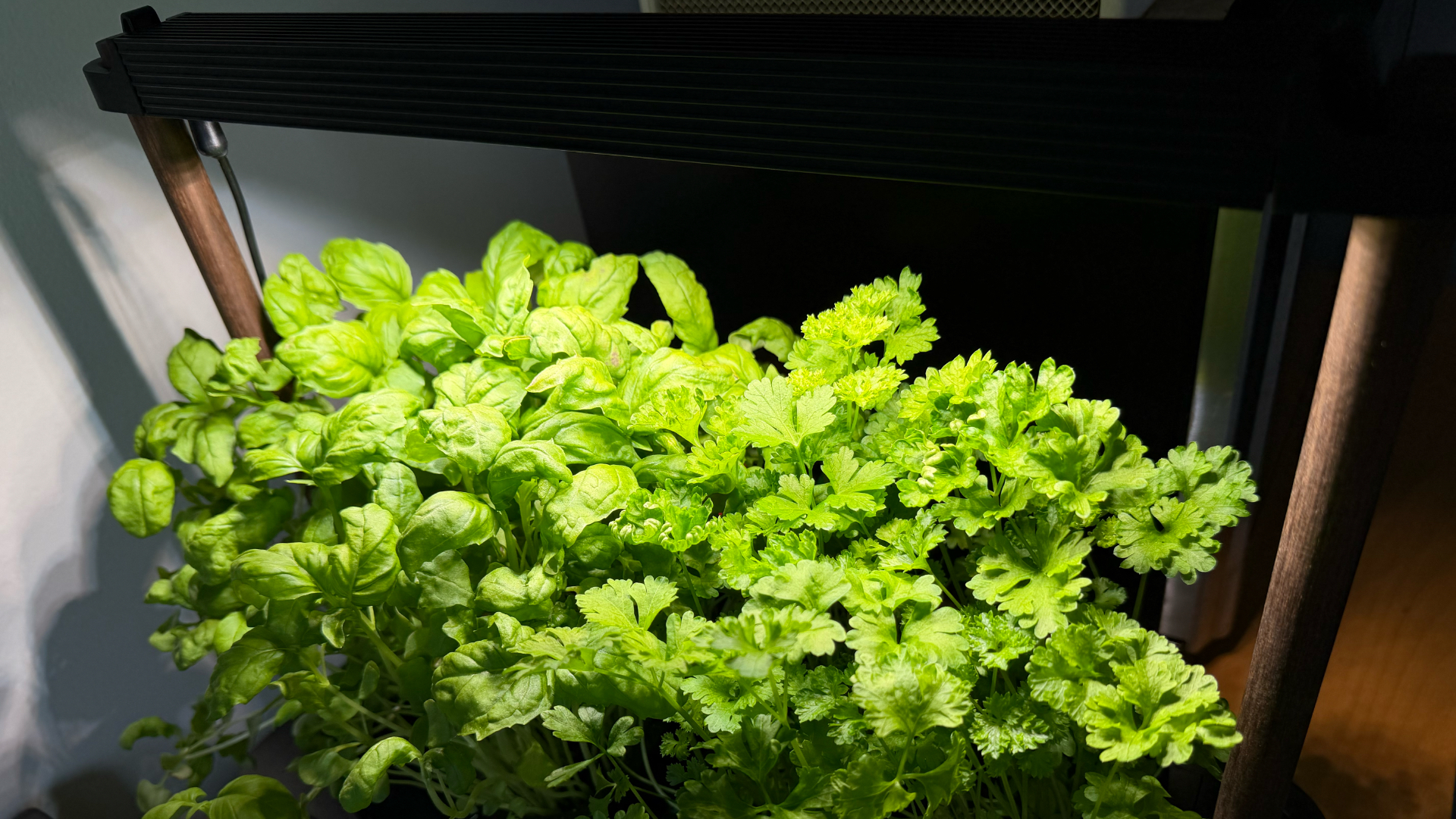
Spring and summer rolling around almost always makes me want to reset something in my routine.
A few years ago, it was growing broccoli sprouts in a jar. Getting the Auk Mini over Christmas felt like the natural next step.
From sprouts to something more
Starting with sprouts was easy. After having them at a family gathering, it clicked that I could actually grow something, even in our small apartment. Anyone, including my husband can do it on the kitchen counter, and upkeep takes less than a minute a day. Watching something grow and actually eating it made me realize how nice it is to have fresh greens around all the time.
The Auk Mini builds on that. Instead of just one thing in a jar, now I have herbs growing consistently at home.
Getting started was easy
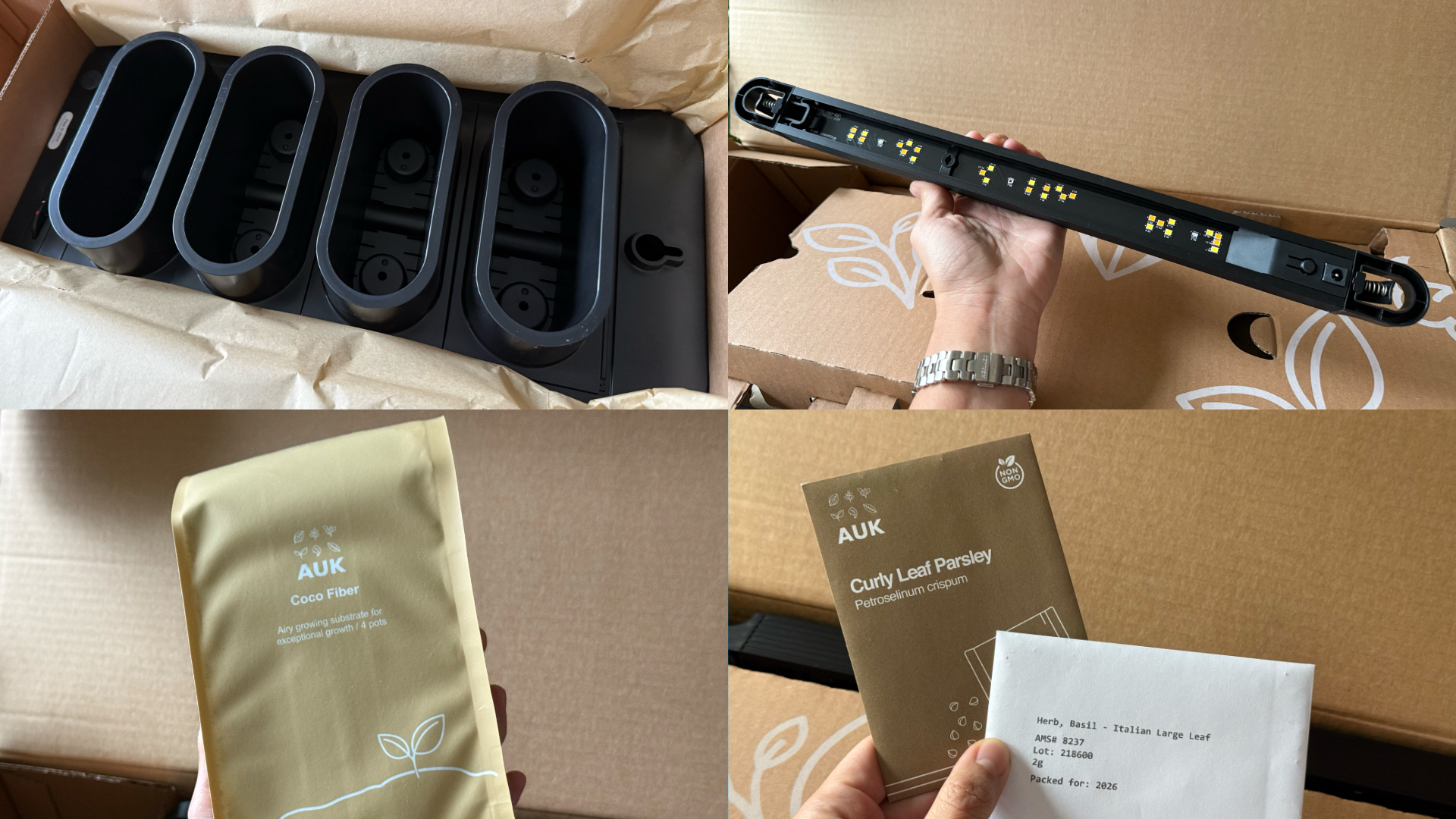
This was the part I was most unsure about, but it ended up being very straightforward. Setup took a few minutes, the instructions were clear, and nothing felt overly technical. The kit comes with everything you need to start: Auk Mini itself, seeds for planting, coco fiber, and nutrients that you add to the water to support both growth and flavor.
Once it’s up and running, it mostly takes care of itself. The lighting system handles what the plants need throughout the day, and the watering system keeps everything consistent. I have been away on trips, and I still come home to herbs that are healthy and fresh, waiting to be trimmed and added to my food.
It fits real life and small spaces
Fresh herbs growing beside my microwave
Living in a New York apartment, space is limited. While there are community gardens I could participate in, it’s not as convenient as having access to your own, especially when you’re in the middle of a snowstorm or a heatwave.
The Auk Mini sits beside my microwave, on a table that used to be my desk. It doesn’t feel like I added a new project to my life – it just blends in. I have the black and walnut version, which works well with the rest of my space, but it also comes in white, with oak or cork as other finishes, if you want something lighter.
Watching and competing
My husband and I set it up together and turned it into a challenge: who would harvest first?
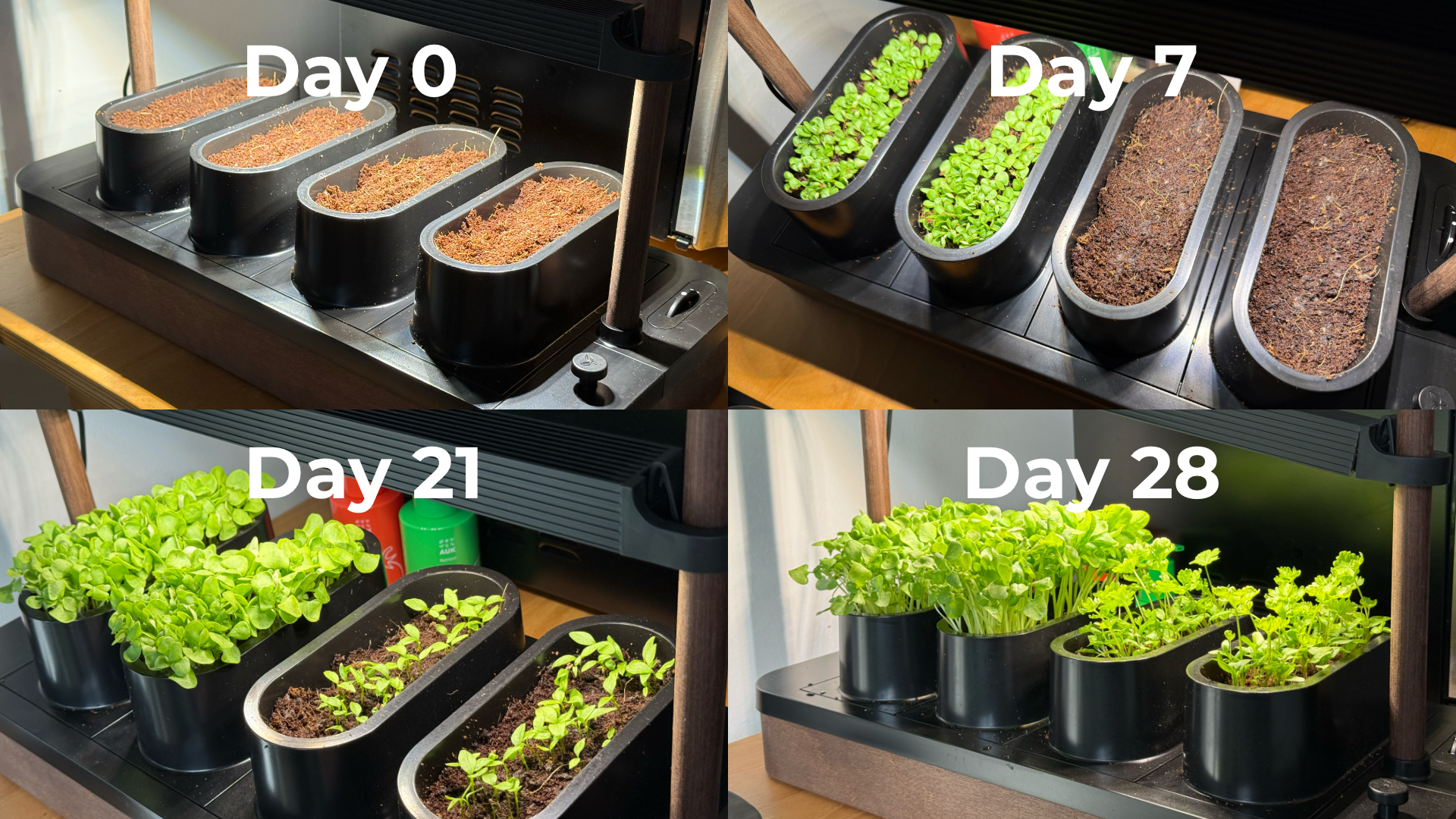
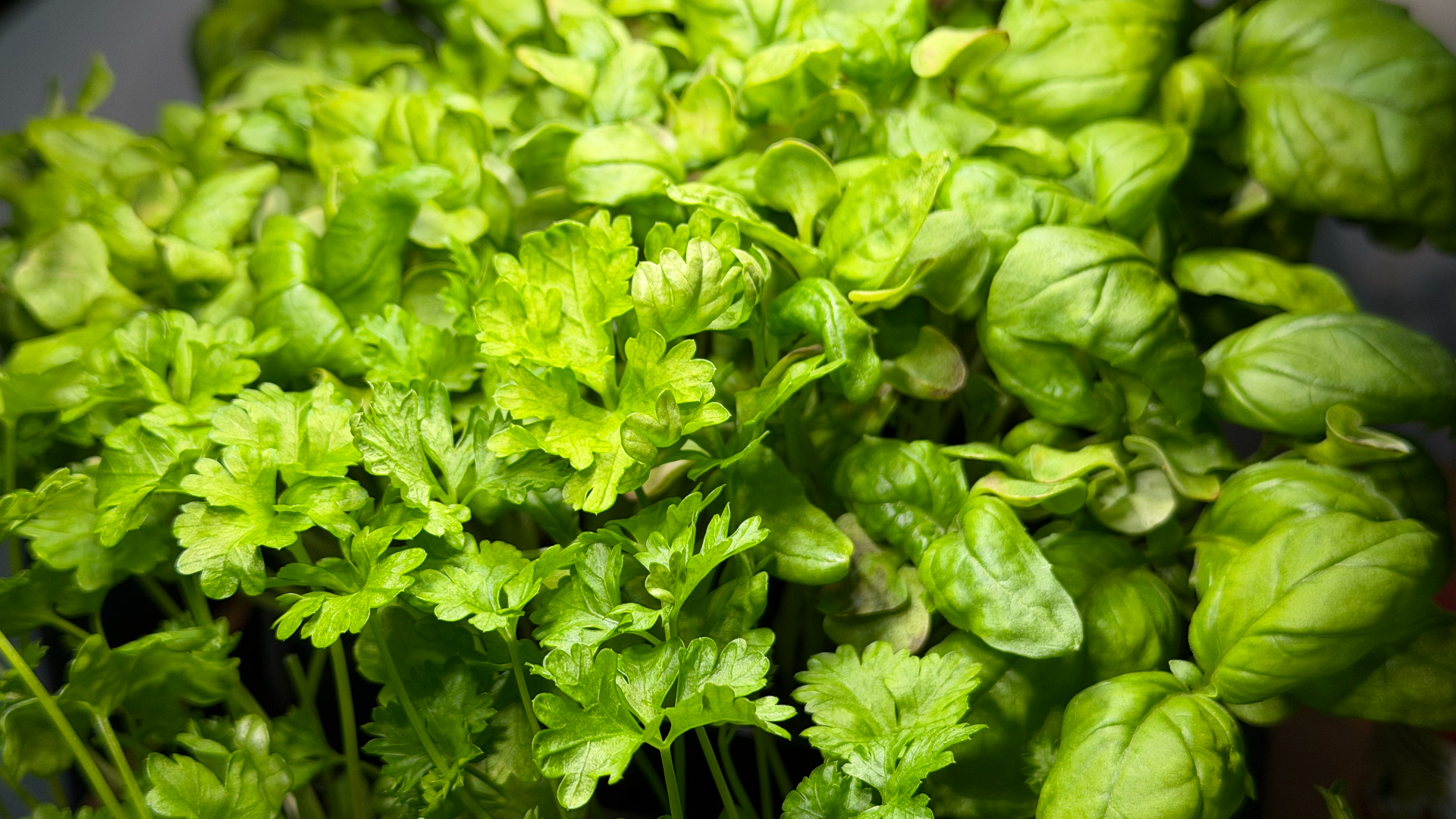
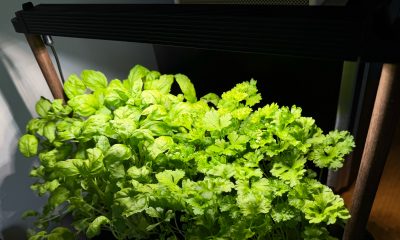
Our kit came with basil and parsley. He planted basil, which sprouted first. I took on parsley, which grew much slower and wasn’t ready for harvest until a little over six weeks later. The competition was a small thing, but it made the whole process more fun. We started paying attention to growth day by day, and it’s satisfying when you finally get to use what you grew.
One thing we learned pretty quickly is that different plants grow at different speeds, which can make lighting placement a little tricky in a shared setup like the Auk Mini. Since the basil grew faster and taller, we had to angle the light unevenly so it wouldn’t burn the basil while still giving the parsley enough exposure to catch up.
It changed how I use herbs
Basil and parsley used to be something I added as garnish. Now I’m using them all the time because they’re right within arm’s reach.

Learned to be creative and made pasta from scratch, made better with fresh herbs
I’ve been making sauces, marinades, pesto, even building meals and cocktails around them. It’s expanded the flavors we use in home cooking, and forced me to experiment instead of defaulting to our go-to recipes inspired by East Asian cooking. In fact, the biggest hurdle I’ve encountered is not having enough recipes in my repertoire that use herbs.
Even when a dish doesn’t call for it, I’ll cut some and add it anyway. Every time I did, it made the dish better. When something is always available and always fresh, you naturally start using more of it. And if you trim it properly, it just keeps growing back. It doesn’t go bad or get forgotten in the fridge.
You can grow anything you want
One of my favorite things about Auk Mini is that it’s not a proprietary system. They do offer other kits like a chili and tomato set or an Italian cuisine mix, but you can also grow your own choices.
I joined a Facebook group of Auk growers, and it’s been inspiring to see how others are using and expanding their indoor gardens. It makes me excited to try things that are harder to find or expensive in the U.S., especially vegetables and herbs I grew up with, like pechay, moringa, lemongrass, pandan, and kangkong.
A small step toward something bigger
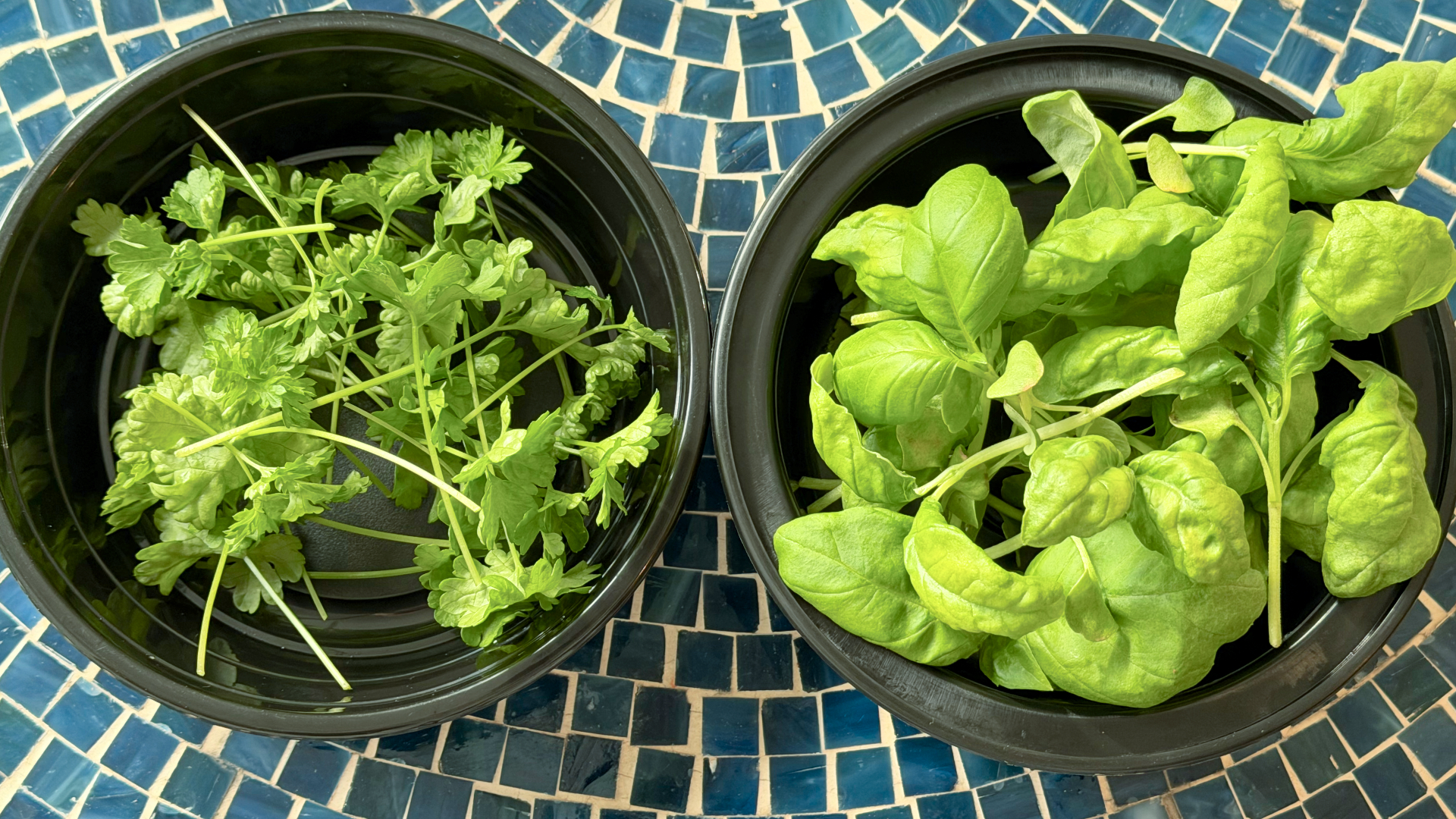
Constant fresh herbs within reach
Growing herbs indoors reminds me of something from years ago. In university, I did an immersion program in a low-income community. We recommended sustainable food systems for the stay-at-home moms we met — including hydroponics systems — both as a source of extra income and fresh food.
That experience stayed with me, but I never acted on it. This feels like a small, techie version of that idea: a hydroponic system that works in real life, in a small space, and is easy to keep up with.
Is the Auk Mini your GadgetMatch?
Starting with sprouts showed me I could easily grow something. The Auk Mini showed me I can keep going and expand it. Now I have fresh greens ready whenever I need them.
It starts at $239, which isn’t the cheapest way to get into hydroponics. If you don’t use herbs on the daily like I do, the cost is even harder to justify. But that’s also why I recommend it even more. It’s convenient, it’s fresh, and at the same time it challenges you to be more creative with food.
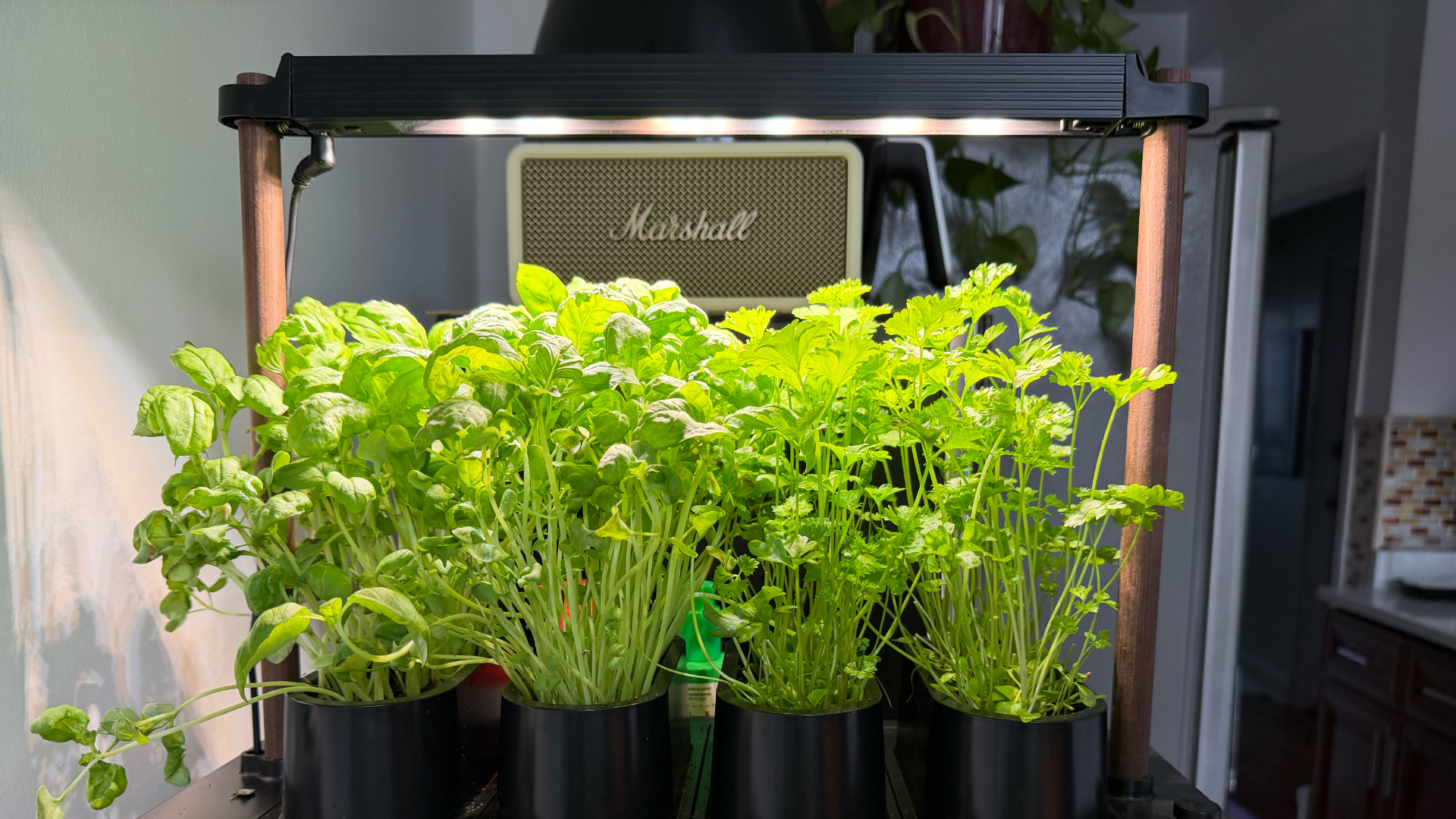
Basil and parsley keep growing in the Auk Mini after multiple harvests
Auk Mini’s ease of setup and maintenance, and flexibility make it worth it, especially if you don’t know where to start. It was a great hobby to start the year with, and an even better habit I’ve kept building on five months on. It’s given me confidence I can grow my own food for the rest of my life, one way or another.
Health
AIA Philippines rethinks what it actually means to be healthy
Move from just thinking about wellness to actually doing something about it


AIA Philippines recently hosted its first-ever Rethink Healthy Influencer Summit, bringing together over 200 creators, health experts, and advocates to flip the script on traditional wellness.
The goal was to prove that being healthy isn’t about extreme lifestyle overhauls, but about the small, brave choices we make every day.
The summit follows a recent study by AIA Philippines which shows that Filipinos are becoming more proactive. We are moving away from “enduring” health issues and toward a “ready” approach, understanding that our responsibility to our families starts with taking care of ourselves.

Breaking the “enduring” cycle
One of the biggest hurdles in local healthcare is the tendency to delay care until it becomes an emergency.
MediCard CEO Julian Mengual pointed out that many people wait until a health scare happens before they take action. This “enduring” habit doesn’t just hurt our bodies; it creates a massive financial burden later on.
AIA Life Planner Grace Quinto emphasized that having a plan — whether it’s an emergency fund or insurance — is actually an act of love for your family. It gives you the freedom to seek help early without the fear of draining your savings.

Real talk on mental wellness and burnout
The conversation got vulnerable during the mental wellness session with brand ambassador Wil Dasovich, MindNation co-founder Cat Triviño, and psychologist Dr. Francine Bofill. They tackled the reality of being “high-functioning” while struggling internally.
Wil shared that his most meaningful connections happen when he shows his setbacks, not just his highlight reel. The takeaway was clear: you don’t have to wait until you hit rock bottom to ask for help.
Mental wellness should be a regular maintenance thing, not a last resort.
Authenticity over perfection
Celebrity couple Nico Bolzico and Solenn Heussaff joined TikTok’s Charissa Kow to discuss how online content shapes our habits.
Solenn noted that real influence comes from honesty, while Nico reminded everyone that the “perfect” lives we see online are exhausting and, frankly, not real.

By being authentic about their own health journeys, they hope to inspire a culture where people feel empowered to express themselves without the pressure of being flawless.
Strength is about showing up
To close out the summit, Physical: 100 winner Amotti shared a grounded perspective on fitness.
For him, strength isn’t about being the most extreme person in the gym; it’s about consistency. By building simple routines for waking up, eating, and moving, health becomes a natural rhythm rather than a chore.

At the end of the day, the Rethink Healthy movement is about giving you the confidence to start. As AIA Philippines Chief Marketing Officer Melissa Henson put it, the focus is on turning intention into action.
Health is within reach, you just have to take that first brave step.
Features
Why this AI-powered eye health exam is the only reading you need this season
Forget astrology and scary clinics; the future of preventive health is waiting for you in a Vision Express branch!
They say the eyes are the windows to your soul. They never lie.
You can always tell when someone is truly thriving because their eyes radiate a certain spark. A glimmer that suggests they are actually winning at life.
But a doctor I once dated (briefly, for research purposes, mostly) told me that eyes are also a sneak peek into your physical survival. A quick check-up can reveal underlying illnesses before they even knock on your door.
The problem is that hospitals and clinics feel intimidating. Most of us avoid check-ups because we’re terrified of what we might find. Ignorance feels like bliss until reality finally catches up.
When I heard Vision Express (VEX) was reimagining eye care through AI, my inner “orange cat” curiosity took over. I dressed up, booked a ride, and headed to Greenbelt 5 in Makati City to see if technology could make health feel less like a chore and more like… well, a treat.
Sanctuary for my senses
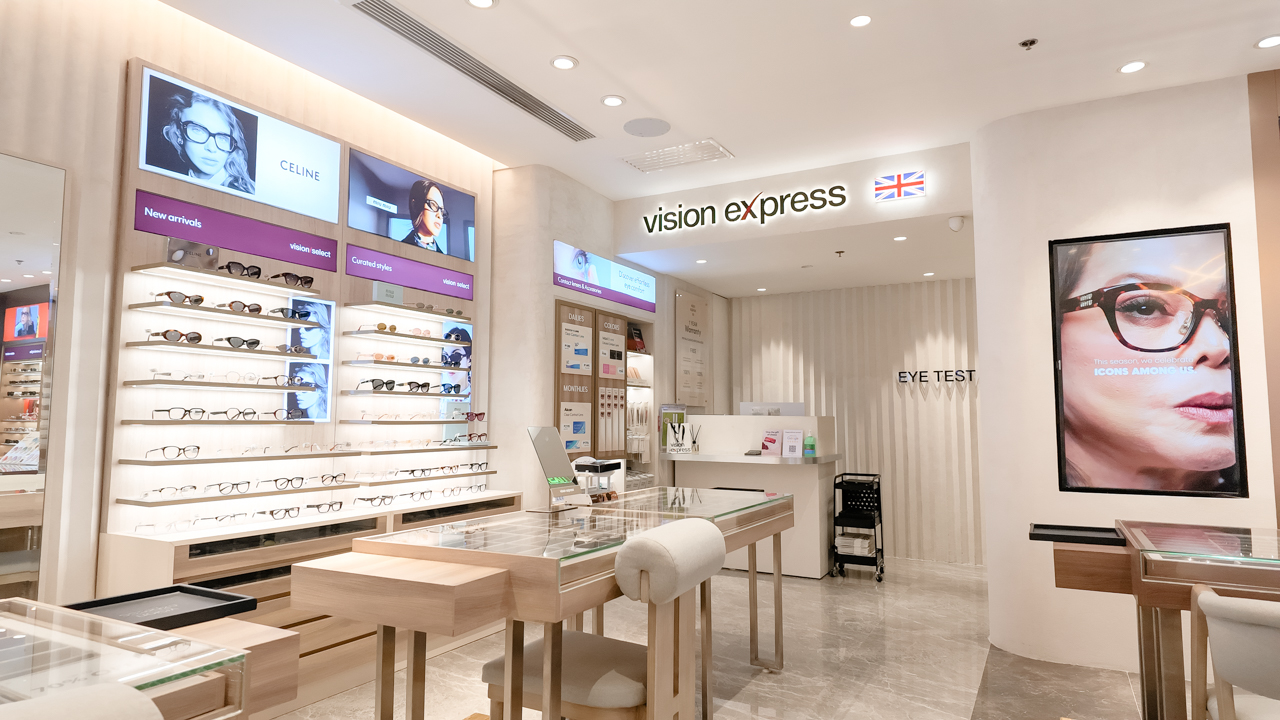
The VEX branch in Greenbelt 5 feels less like an eyewear store and more like a prestige lounge. Even with brands like Dior, Gucci, and Cartier shouting from the shelves, the atmosphere remained inviting.
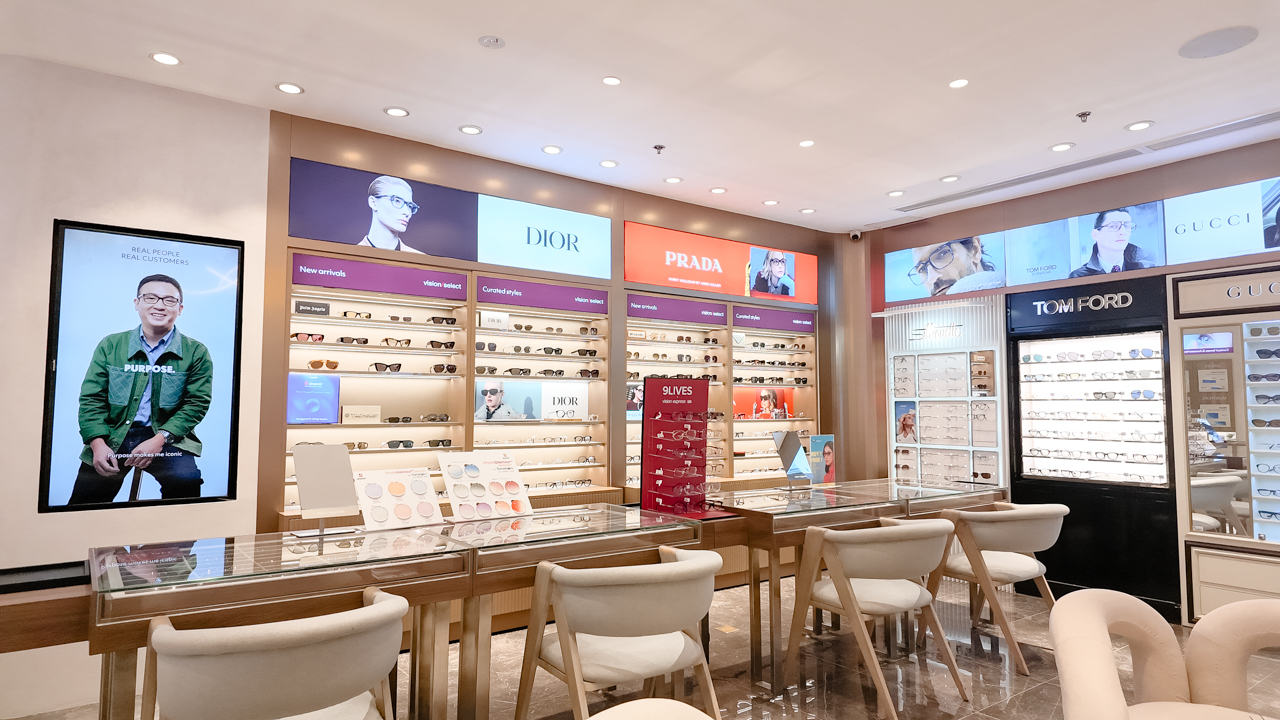
It lacked that “peasant-profiling” energy you sometimes get in luxury boutiques. I just walked in and gasped at the aesthetic. I’d say I immediately felt at home.
While I waited for the Vision7 program, I detoured to the AI Styling Studio. If we’re being honest, shopping for frames is a high-pressure exercise in self-doubt.
You’re constantly asking, “Does this make my face look too round?” or “Is this too much?”
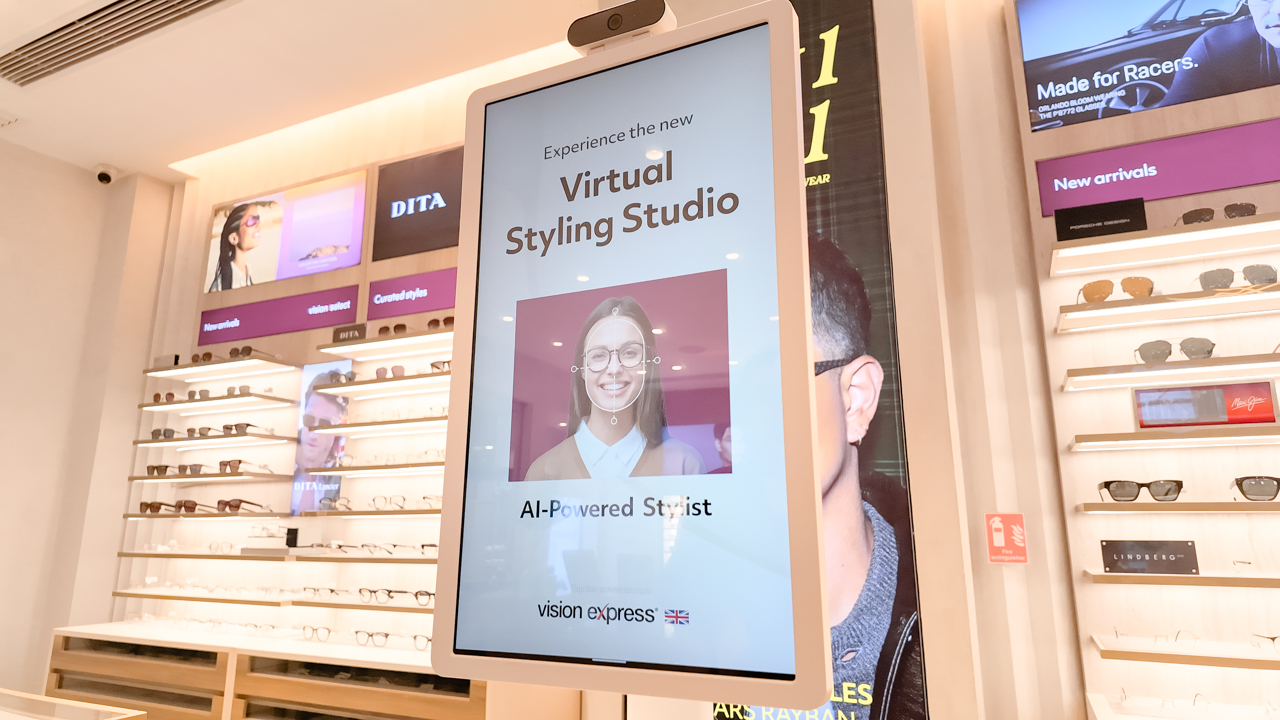
This AI tool acts like a personal shopper with an objective eye. It’s like ordering McDonald’s at a kiosk, but instead of a chicken sandwich, you get a face shape analysis.
The machine measured my jawline, temple, and the gaps between my eyes with the precision of a fitting for a modeling gig. It concluded I have a round face — or oval, if I tuck my bangs away.
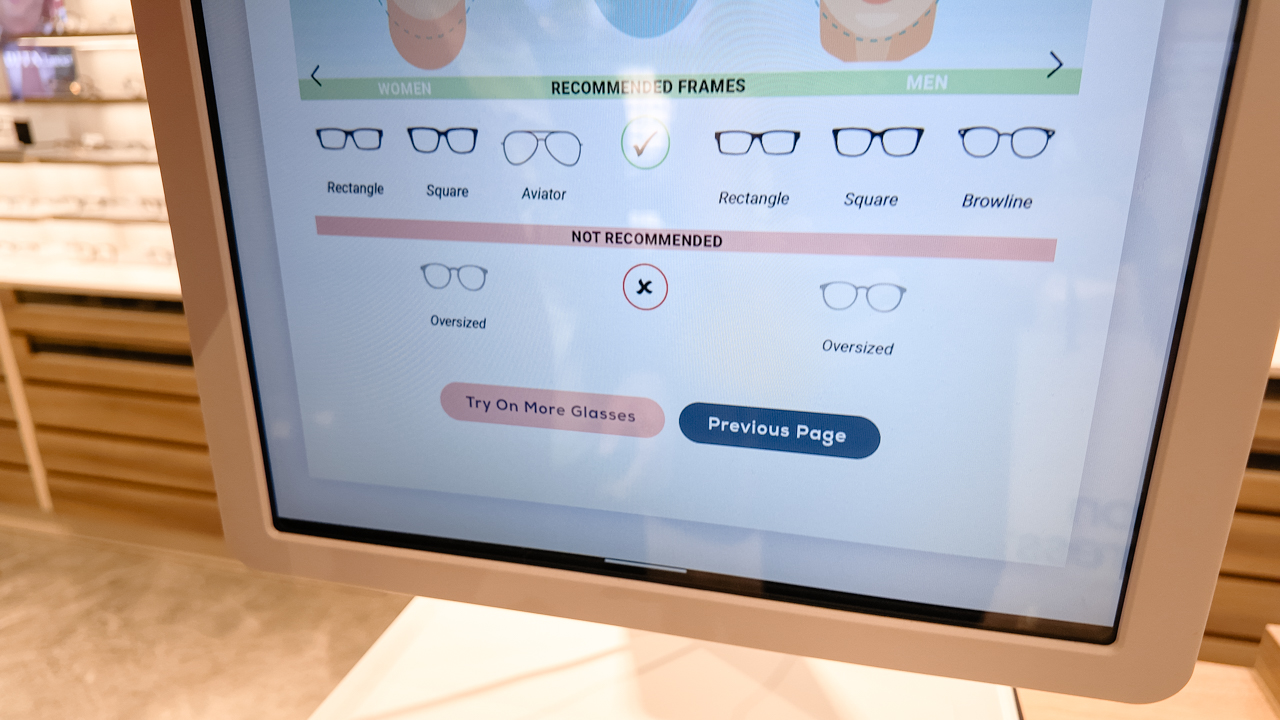
The AI suggested square or rectangular frames. Since I’ve spent years badgering friends to tell me if my sunglasses look okay, having a non-judgmental computer give me the green light was a massive relief.
Seeing the bigger picture
Currently, you can access the full Vision7 program for free. I started by filling out my history on a tablet, feeling very much like an official patient (but a fashionable one).
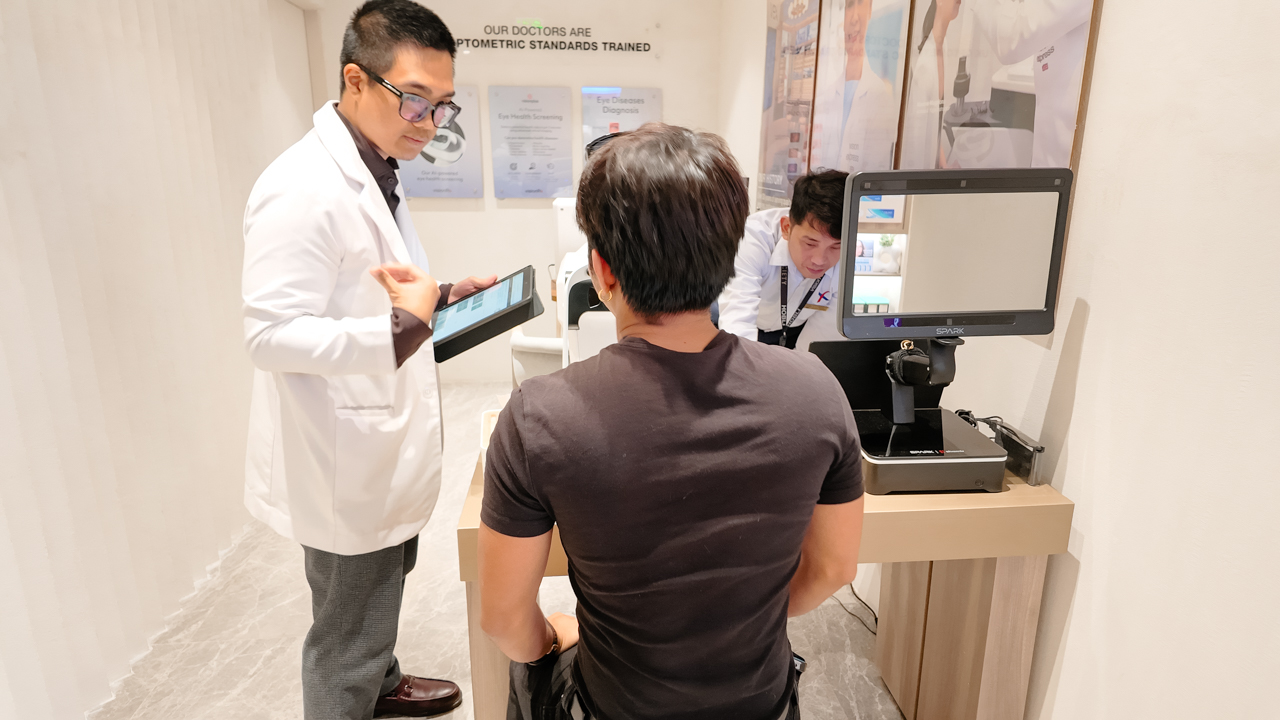
Dr. Daniel, the optometrist, guided me through the process. As a self-proclaimed “professional yapper,” I quickly learned he was VEX’s top doctor for 2025. His expertise (and, let’s be real, his charm) made the technical bits go down smoothly.
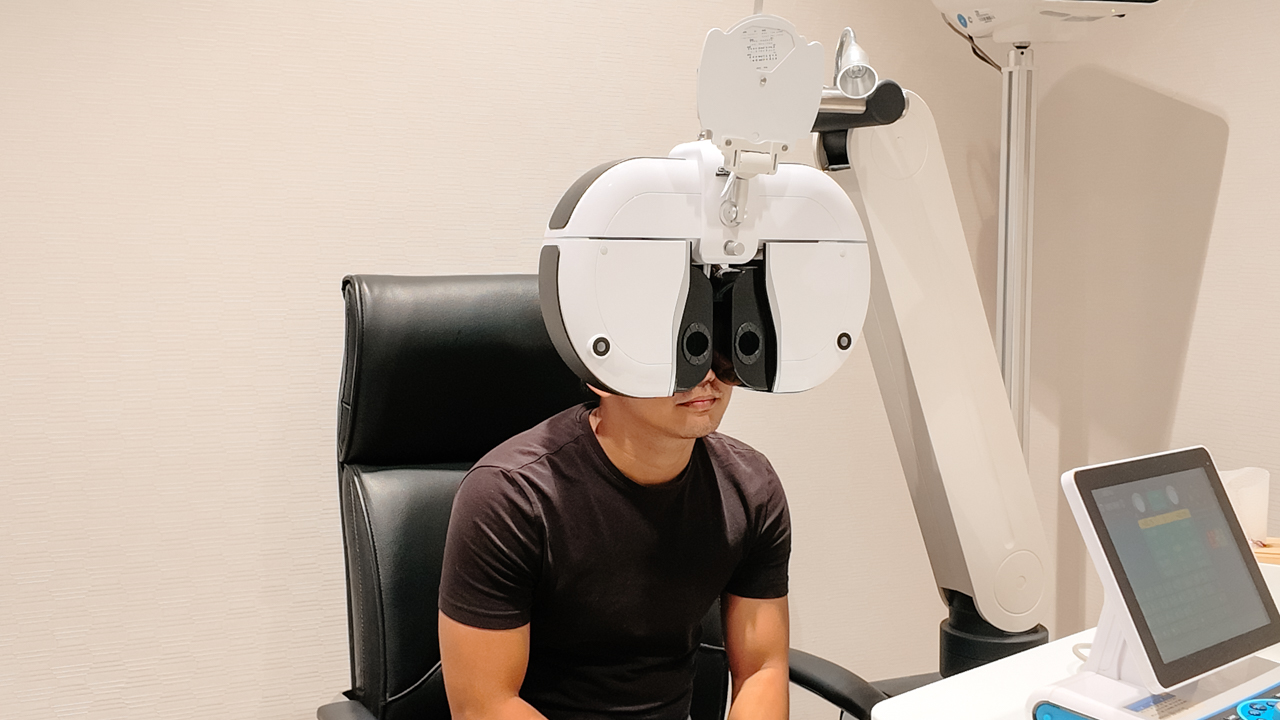
We moved through Objective and Subjective Refraction using their state-of-the-art autorefractometer to check for current eye-grade errors. Thankfully, my vision is still perfect after I stopped wearing correction glasses in 2024.
The three-minute miracle
The real magic happened during the Binocular Vision assessment with VisionPlus. In just three minutes, the system used retinal imaging and machine learning to generate a clinical health report.
I’ll admit, I was nervous. Despite my “perfect” vision, family history is a ghost that haunts your medical charts.
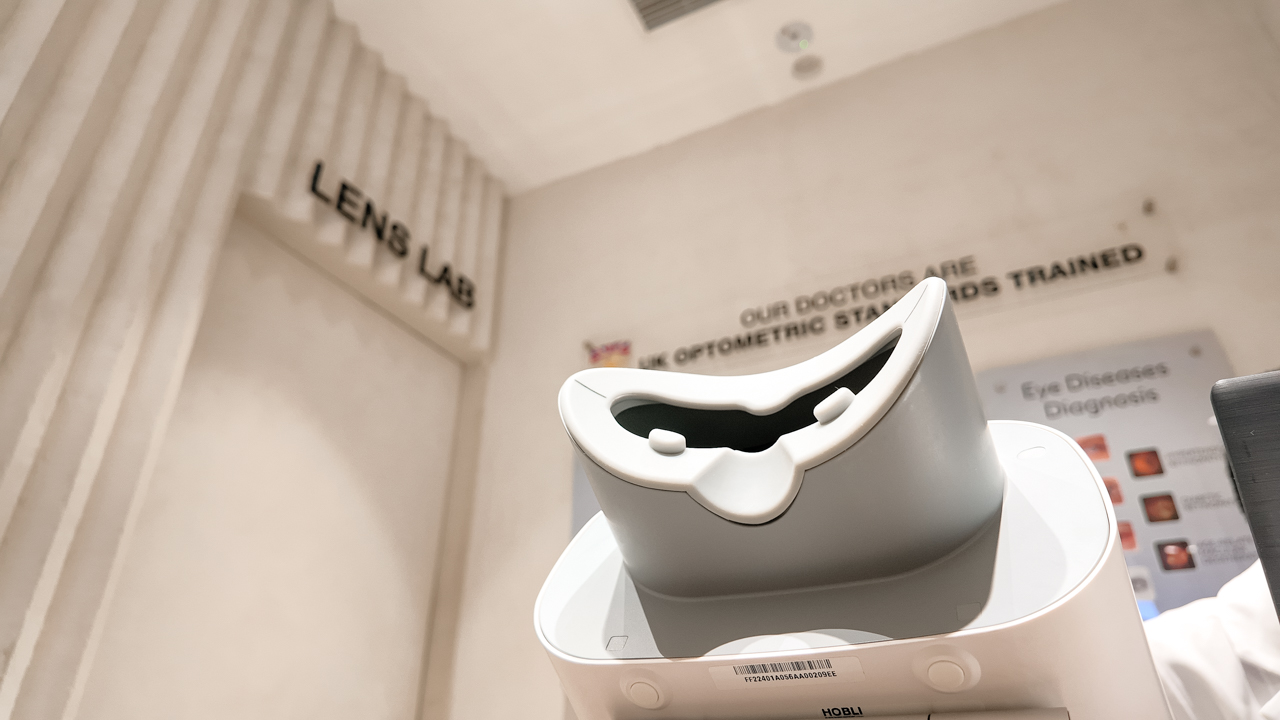
I watched as the AI screened for systemic conditions: hypertension, diabetes, and even early signs of cognitive decline or cardiovascular risks.
Surprisingly, the results came and showed I am “Low Risk” across the board. The system even tagged me as “Very Low Risk” for things as serious as cardiac arrest, provided I maintain my current lifestyle.
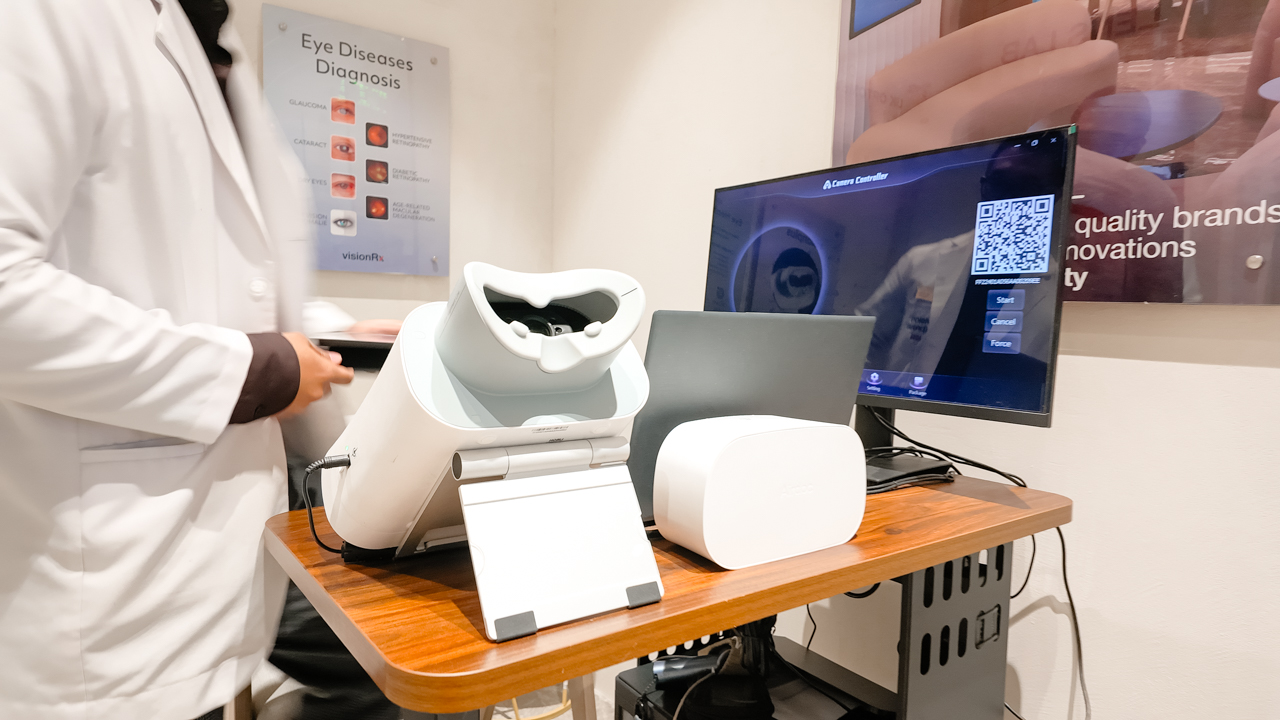
The report, which landed instantly in my inbox, gave me tailored advice on diet and sports. It turned out my athletic lifestyle and love for good food weren’t just fun: they were working.
Redefining the retail visit
Unlike traditional checks that only care about your lens prescription, this experience felt like a preventive-health intervention hidden inside a shopping trip.
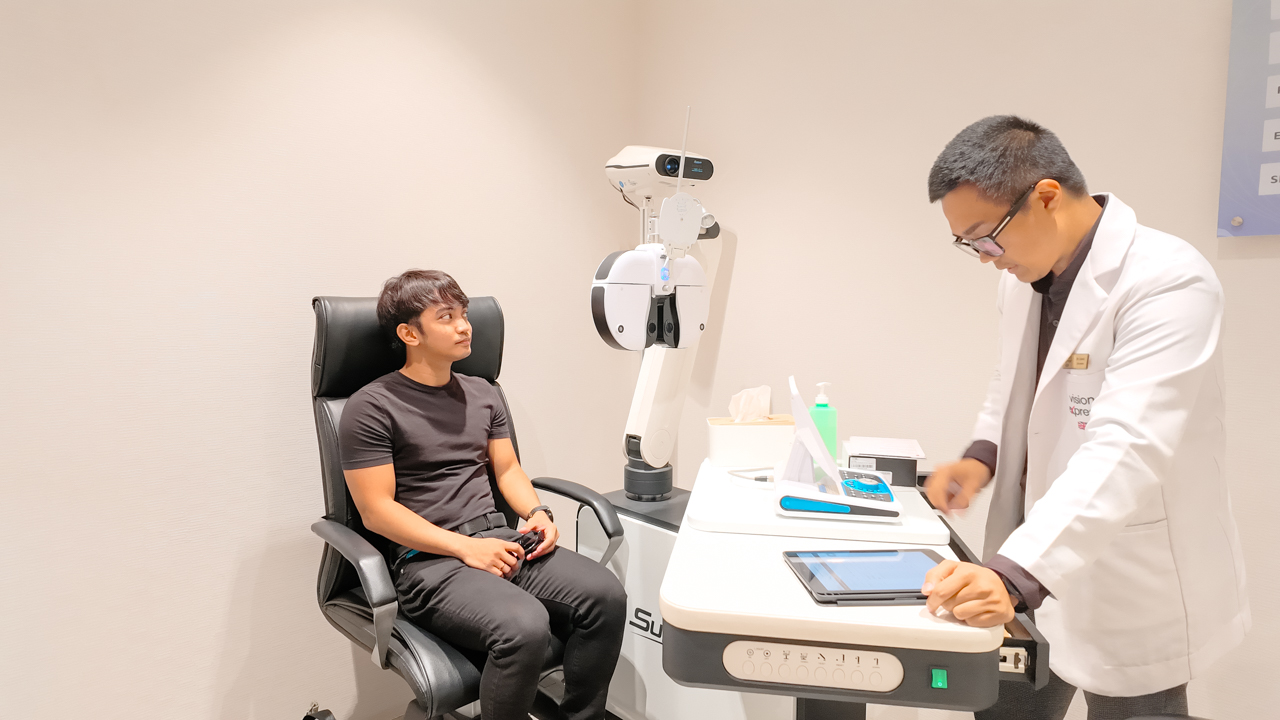
It proved that an eye exam can be a powerful window into your total health, made easy through clinical-grade AI.
In a world where AI can feel cold or intimidating, this is its most human use case: giving us the clarity to live our lives without fear.
I walked out with a clean bill of health, a clear mind, and yes, I might have lingered just a second longer at the Gucci frames on my way out. After all, I needed to celebrate my health in style.
Try out VisionPlus at Vision Express’s branches at SM Cebu, SM City Cebu, Ayala Cebu, Ayala Glorietta 2, Ayala Greenbelt 5, Ayala One Bonifacio High Street, Ayala Alabang Town Center, SM Mall of Asia, SM North EDSA – The Block, The Podium, and Ortigas Greenhills Mall.

Spring reset: Growing more at home with Auk Mini
From kitchen counter experiment to everyday habit

UGREEN MagFlow Air review: Airy Yet Mighty
Slim and light power bank with a strong suit and core

The Infinix GT 50 Pro has the most inspired design for a gaming phone
Liquid cooling that actually shows the liquid cooling.

Anker’s soundcore Liberty 5 Pro series is powered by an AI chip

Samsung’s SECRET That Made OLED Even Better

Recap: Google I/O 2026

Meta quietly launches Forum app for Facebook Groups

PlayStation increases the prices of PlayStation Plus

OPPO Find X9 Ultra lands in PH: Price, availability, pre-order perks

vivo Y Series launches in Singapore with bigger battery, durability upgrades

HONOR 600 Pro review

OPPO Find X9s now official in PH: Price, availability, pre-order info

Saros review: Returnal’s difficulty is back and better than ever


-
 Reviews1 week ago
HONOR 600 Pro review
-

 Singapore2 weeks ago
Sony Xperia 1 VIII arrives with AI Camera Assistant, bigger telephoto sensor
-

 Reviews2 weeks ago
vivo X300 FE review: Don’t judge the camera by its cutout
-
 News2 weeks ago
HONOR Magic8 Pro gets Android 17 Beta 3 support early
-

 Gaming2 weeks ago
SEGA/ATLUS, animate launch year-long collaboration featuring popular IPs
-
 Accessories3 days ago
The UGREEN Nexode Air 65W is the only charger I travel with now
-

 Convenient Smart Home2 weeks ago
Spotlight: The Tech Behind Every Screen You Use
-

 News1 week ago
Xiaomi is making it easier for customers in the PH to shop