


Automotive
Ford Ranger Wildtrak 4×2: Big-boy truck for the family
It’s handsome, techie, and a safe ride

The moment I was given the keys to the all-new 2021 Ford Ranger Wildtrak 4×2, my first thoughts were of slight disappointment over two things: First, I wished this were a Ranger Raptor. Second, I hoped I had the keys to the 4×4. Little did I know that all those gripes and disappointments would be left behind as soon as I drove away from the facility I picked this up from.
Spoiler Alert: I finally get the appeal of Ford Trucks and why they are up there as one of the biggest sellers of passenger trucks in the market.

What’s new
There are very subtle changes made for the 2021 Ford Ranger Wildtrak 4×2 from its predecessor. Those very changes set the tone for this truck to become a future best seller in its own right. The exterior now features an upgraded honeycomb grill, giving it a more menacing look and reinforcing its appeal towards the rugged truck market.
Ford calls this color on the 2021 Ford Ranger Wildcatter, Saber and is exclusively available to the Wildtrak variant. Black chrome trimmings now adorn the vehicle’s front skid plate, side mirrors, door handles and those slick 18 inch alloy wheels shod in 265/60/r18 tires. The tires are rated for highway and road use but taking it down the beaten path shouldn’t pose much of a problem

You do have the usual truck paraphernalia such as the functional roof rack up top to accommodate more luggage. That is if the huge bed space up back isn’t enough for you, but the devil is surely in the details. The black sports bar in the rear, with the body colored stripe adds to its macho appeal and the huge, chunky step board proves that macho can also be a gentleman.
Courtesy lights below the side mirrors help you see where you are going as you step out of the vehicle but the best small detail on the 2021 Ford Ranger Wildtrak 4×2 would be that coveted Black Ford Badge. If some brands have their red badges set aside for the sporty versions of their cars, Ford has dibs on black, and it is glorious.

Techie interior
Getting inside the 2021 Ford Ranger Wildtrak, easily, I might add thanks to grab handles on the A-Pillar and the aforementioned stepboard, you will be greeted by the plush leather interior with that Saber gold contrast stitching.
The seats also feature the Wildtrak badge embossed into it for good measure. Gone are the days of trucks being solely relegated to more agricultural duties, this truck aims to replace your family sedan.
Thanks to giant cupholders, center console and the high-resolution screen next to the speedometer, which can provide you with all the information that you need at a moment’s notice, this truck is the farthest thing from being a farm tool, and we’re just getting started.
The 2021 Ford Ranger Wildtrak is as technologically endowed as the best of them and can most definitely be worthy as your next GadgetMatch! Ford Sync 3 technology not only integrates the epic 8-inch touchscreen infotainment screen with the 6 booming speakers, but it does so in a way ever so seamlessly.
This truck of all things is the easiest to pair with your smartphone thanks to Android Auto and Apple CarPlay.

Once you’ve completed the initial setup which takes literally a few seconds, it then automatically detects your phone and uses your navigation and media apps and takes on them like a champ. I tell you, Sync 3 is a revelation and isn’t a nerfed version of just screen mirroring. It totally integrates your connected way of life on the road.
Big-boy truck
After taking in all the tech the 2021 Ford Ranger Wildtrak has to offer, you can’t avoid the fact that you just tower above almost every vehicle on the road. Thanks to the 232mm of ground clearance and the high seating position, visibility is just incredible and gives you more confidence traversing our hazardous roads.
You can always manually adjust the seats and steering wheel to find the perfect driving position for you, but that doesn’t deter from the fact that you now are on a big-boy truck.

The ride quality is definitely fit for a king as the 2021 Ford Ranger Wildtrak features a suspension setting made for one.
In the past, I remember my uncle driving his old, rickety truck around with bags of sand in the back just to improve the ride quality. Not with the Wildtrak! The front, double wishbone suspension, typically found in your favorite sporty compact sedans works well in tandem with the finely tuned leaf springs in the back.
It absolutely felt like I was driving in the clouds during highway cruising as well as stop and go traffic. The suspension is also stiff enough to handle corners, quick evasive maneuvers thanks to the light, electronic steering mechanism.

Plenty of power
All that icing on the cake gives way for the cherry on top of this very capable truck. Ford has given the 2021 Ranger Wildtrak 4×2 the Single-Turbo version of their 2-liter Common Rail Direct Injection Diesel Engine.
Just push on the start button and you’ll start to feel the distinct rumble of the diesel engine. But thanks to powerful sound insulation, nary a noise. You might call this a watered-down version of the Bi-Turbo engine on the Ranger Raptor, however your butt-dyno will prove you otherwise.
There is plenty of power on tap thanks to the 10-Speed automatic transmission and shifts smoothly as the power management system selects the best gear for the situation.

This proves beneficial for fuel consumption as city driving nets an average of 9 km/l on an average of 30km/h and highway runs at an astonishing 14 km/l at an 80km/h average. Keep in mind that these numbers can certainly vary, but with all that power at your disposal, it’s easy to keep things sane.
Why drive like a madman when you can take it easy and let others gawk at your own personal handsome-truck!
Safety is a priority
You also get a whole slew of safety features that come standard on the 2021 Ford Ranger Wildtrak. Six (6) Airbags, Anti-lock Brakes with Brake Force Distribution, Parking Sensors, a Rear-View Camera, Iso-Fix Anchors all come as standard. This truck offers so much more under its sleeve that will put executive sedans to shame.
Features such as Autonomous Braking Pre-Collision Assist with Pedestrian Detection, Lane Keeping Aid with Lane Departure Warning, Adaptive Cruise Control with Forward Collision Alert, Hill Launch Assist and the magic Active Park Assist feature that takes the anxiety out of parallel parking create the perfect vehicle for safety.

A fantastic overall package
I never got to test the 2021 Ford Ranger Wildtrak’s Towing and Hauling capabilities but that just goes to show you how much trucks have evolved over the years. I am certain that this truck is very much capable of carrying on the tasks of its forebears but that is no longer the point of passenger pick-up trucks these days.

It would be nice to have the option when hauling is necessary but for about 99% of this truck’s use, it should stand as the perfect family car. And it definitely does, quite tall and proud in fact!. The Wildtrak Starts at PhP 1,545,000 which, if you ask me, is a total steal considering the overall package.
Is the 2021 Ford Ranger Wildtrak 4×2 your Gadgetmatch? It very well just might be!







Automotive
Inside Xiaomi’s world of possibilities
A visit to Xiaomi’s Beijing campus reveals how the technology giant is imagining a more connected way of living.


The first time I encountered Xiaomi, I was tinkering with the Xiaomi Mi Max 2 and Mi Mix 2 in 2017. Yes, that was almost a decade ago. They were among the first gadgets I worked on after I took the leap into the world of consumer technology journalism.
That career move eventually turned my curiosity about shiny new things into an actual profession. (My younger self would be delighted to know that shopping for gadgets could, in fact, become part of the job description.)
Back then, I was far more familiar with writing travel essays and lifestyle features. Consumer technology was an entirely different playground. At that time, Xiaomi was beginning to spread its wings beyond China. Its smartphones were reaching more markets and earning attention for their hardware and competitive pricing.
In 2026, I found myself in Beijing, walking through the company’s sprawling headquarters. Autumn foliage surrounded me, along with futuristic electric vehicles and enough technology to make any gadget enthusiast feel a ~little~ giddy.
The Xiaomi Science and Technology Park was a fitting backdrop for this full-circle moment. What began with a handful of smartphones I once had to familiarize myself with has grown into a global technology company. Its ambitions now cover personal devices and smart homes, and they extend to electric mobility.
Catching the right wind
The park was inaugurated in July 2019 as the company’s global headquarters in Beijing’s Haidian District. It spans approximately 340,000 square meters across eight interconnected buildings.
The campus brings together Xiaomi’s core research and development, along with its software engineering and executive operations.

My visit coincided with Beijing’s autumn season, which made the grounds particularly picturesque. Golden ginkgo leaves shimmered against the crisp sky, while vibrant maples and fiery red smoke trees added splashes of color to the modern architecture.
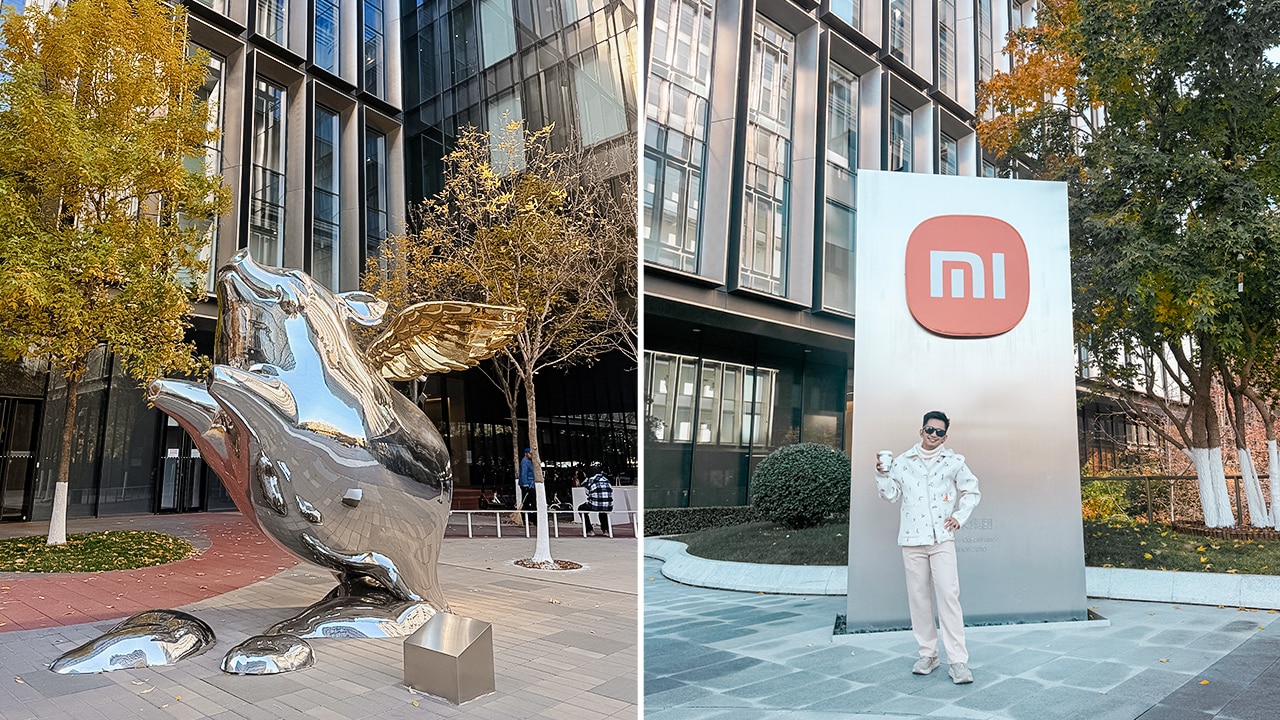
It made me want to put my phone away for a moment and simply appreciate being somewhere beautiful. Eventually, something unexpected stole my attention: a metallic pig with wings.
Known as “The Flying Pig,” the sculpture was first installed in 2021. It represents founder Lei Jun’s business philosophy.
“Even a pig can fly if it catches the right wind.”
The idea speaks to timing and market momentum. For Lei Jun, it captures how Xiaomi positioned itself during the early 2010s mobile internet boom, when the industry was going through a massive transformation.
The philosophy resonated with me more than I expected. I’ve always believed that a little luck can go a long way, although it helps when you’ve done the work before the opportunity arrives. You have to build the foundation and develop your capabilities so you can take advantage of the moment when it comes. After all, you can catch the right wind, but you still need wings.
The pig also reflects Xiaomi’s willingness to chase seemingly impossible ambitions. Since the company has expanded from smartphones into electric vehicles, it’s an amusingly fitting mascot. Apparently, pigs can fly. They can also drive now.
A little electricity, a lot of ambition
Inside the campus, I gravitated toward the in-house café, tucked beside enormous floor-to-ceiling windows that overlook the colorful autumn landscape. The contemporary, understated space invites you to linger over coffee, even with an entire itinerary waiting.
I ordered an oat latte and paid with GCash through Alipay. It was a small reminder of how seamlessly technology has become part of everyday transactions. With a warm cup in hand, I settled in to admire three electric vehicles displayed nearby.
Behind them was a showcase of Xiaomi’s wider ecosystem, with tablets, laptops, wearables, accessories, and smartphones. It was familiar territory for someone who has spent nearly a decade writing about consumer technology.

Still, my attention kept wandering back to the cars. Xiaomi built much of its global identity around smartphones, so its automotive push is one of its most fascinating developments.
The vehicles on display showed how the company is applying its technology expertise to a different industry, with software and connectivity mattering as much as the hardware itself.
And if the cars were anything to go by, Xiaomi wasn’t planning a subtle entrance.
A pink car made for the Elle Woods
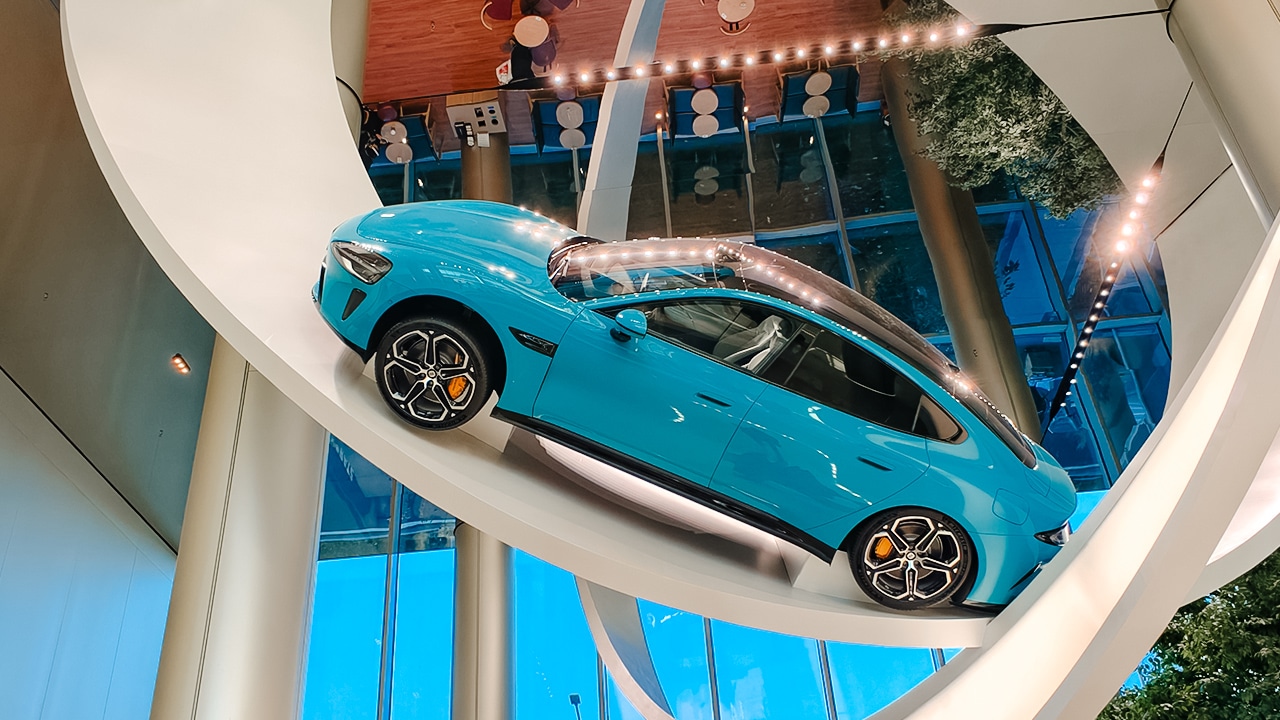
First on display was the Xiaomi SU7, the company’s first electric vehicle. The electric sports sedan entered a competitive market alongside established names such as the Tesla Model 3 and Porsche Taycan. Xiaomi says it secured nearly 90,000 firm orders within the first 24 hours of launch, at an introductory starting price of RMB 215,900.
The unit at the campus came in Dawn Pink, and I was immediately sold on the color. The finish debuted on the YU7 in June 2025 and later made its way to the sedan lineup.
View this post on Instagram
It’s inspired by golden sunlight hitting snow-capped mountains at sunrise. It has a soft blush-pink base layer beneath a clearcoat infused with fine light-gold metallic flakes. Depending on the light, the finish shifts subtly between warm rose and champagne gold.
It’s a rather sophisticated shade of pink. Think Elle Woods after graduating from Harvard Law, building a successful career, and deciding that her next major purchase should have four wheels and serious horsepower. (I’d happily take it for a spin!)
The SUV gets a performance makeover
Xiaomi later expanded its lineup with the YU7, its first all-electric SUV, which entered the market in 2025 as a competitor to the Tesla Model Y. In May 2026, the company introduced the YU7 GT, positioned as the performance-focused flagship of the SUV lineup.
The example on display came in Crimson Red, a fitting choice for a vehicle with considerably more visual aggression. It has flared wheel arches, a unified front splitter, an active rear diffuser, carbon fiber mirror housings, and 24K gold carbon fiber badges.
View this post on Instagram
Inside, the cabin pairs suede and leather sport upholstery with heated, ventilated, and massaging seats across both rows. It also runs Xiaomi’s HyperOS-powered Human x Car x Home ecosystem, which connects the vehicle with the company’s wider range of smart devices.
It’s an interesting take on a performance SUV. The exterior is sporty and the hardware appears to match, while the interior still looks after the important business of keeping everyone comfortable. Apparently, even a performance car understands that we all deserve a little pampering.
Room for the whole family, and then some
Further up the lineup is the Xiaomi SkyNomad, officially unveiled in July 2026 ahead of its China launch in September.
It marks Xiaomi’s entry into the large family SUV segment and the extended-range electric vehicle category. Its proposition revolves around the idea of a mobile living space, with an interior designed to accommodate longer journeys and the practicalities of family travel.
View this post on Instagram
The SkyNomad is built on Xiaomi’s Kunlun Architecture, which began development in 2023. It has a completely flat floor and five extended sliding rails. The second-row seats can slide, rotate, and recline into zero-gravity lounging positions.
The cabin also extends the Human x Car x Home philosophy into a larger living space. Features include a nine-liter heating and cooling compressor refrigerator, a 21.4-inch rear entertainment display, and an audio system with up to 25 speakers.
On the tech side, Xiaomi lists assisted-driving capabilities powered by a 700 TOPS NVIDIA Drive Thor chip and LiDAR. It also reports a 650 to 750mm water-wading capability and an emergency water-floating function.
It’s an interesting direction for Xiaomi’s automotive ambitions. The company is looking past the idea of a vehicle as a way to get from one place to another and exploring how the cabin itself can extend the connected home.
At this rate, the family road trip might come with its own refrigerator and cinema screen. A comfortable place to nap is included. I can already see the appeal.

Building an ecosystem that moves with you
Xiaomi’s Human x Car x Home philosophy became even more relevant once the company entered the automotive industry. The strategy connects its smartphones and smart home devices with its vehicles so they can work together as one ecosystem.
For Lei Jun, the automotive venture represents the “last major entrepreneurial project” of his life. It’s backed by a 720,000-square-meter manufacturing base equipped with more than 700 industrial robots.
At peak efficiency, the production line can roll out a finished vehicle every 76 seconds. Let that sink in for a moment. Before I’ve even decided what to order for lunch, Xiaomi could have another electric vehicle rolling off the line.
During our visit, we also got to see the machinery behind that production. Xiaomi says approximately 91 percent of the factory is automated, and watching it was quite an experience.
Large industrial robots moved components into place in motions that almost looked choreographed, and they synchronized so well that the entire line seemed to have its own rhythm.

I’ve always found industrial robots fascinating, especially when they take on physically demanding or hazardous work. I could probably spend another afternoon watching them do their thing.
Human oversight still has a place, though. Workers continue to inspect and supervise production to make sure the finished vehicles meet the company’s standards, which is a reminder that the human eye remains part of the process even in a highly automated factory.

One ecosystem, an entire lifestyle
Beyond the machinery, what interested me most was how the automotive venture fits Xiaomi’s larger ambitions. The Human x Car x Home strategy is about making technology feel like a continuous part of everyday life, with your smartphone as the control center and your electric vehicle extending the connected experience onto the road.

Think about how much of your day already revolves around technology. Your smartphone wakes you up, your wearable tracks your activity, your appliances help run your household, and your car gets you where you’re going.
Xiaomi wants these experiences to feel like parts of the same connected lifestyle, with HyperOS helping the products work together across different scenarios.

It’s an ambitious proposition for a company that many consumers first came to know through its smartphones. Xiaomi is moving from supplying the gadgets we carry to wanting a place in the environments we inhabit.
Perhaps the biggest lesson here is that the future of technology lies in making the devices we already live with work better together. And if the “flying pig” is any indication, the sky isn’t even the limit.
Automotive
Porsche Cayenne Electric launches in the Philippines
Porsche’s electric SUV arrives locally.

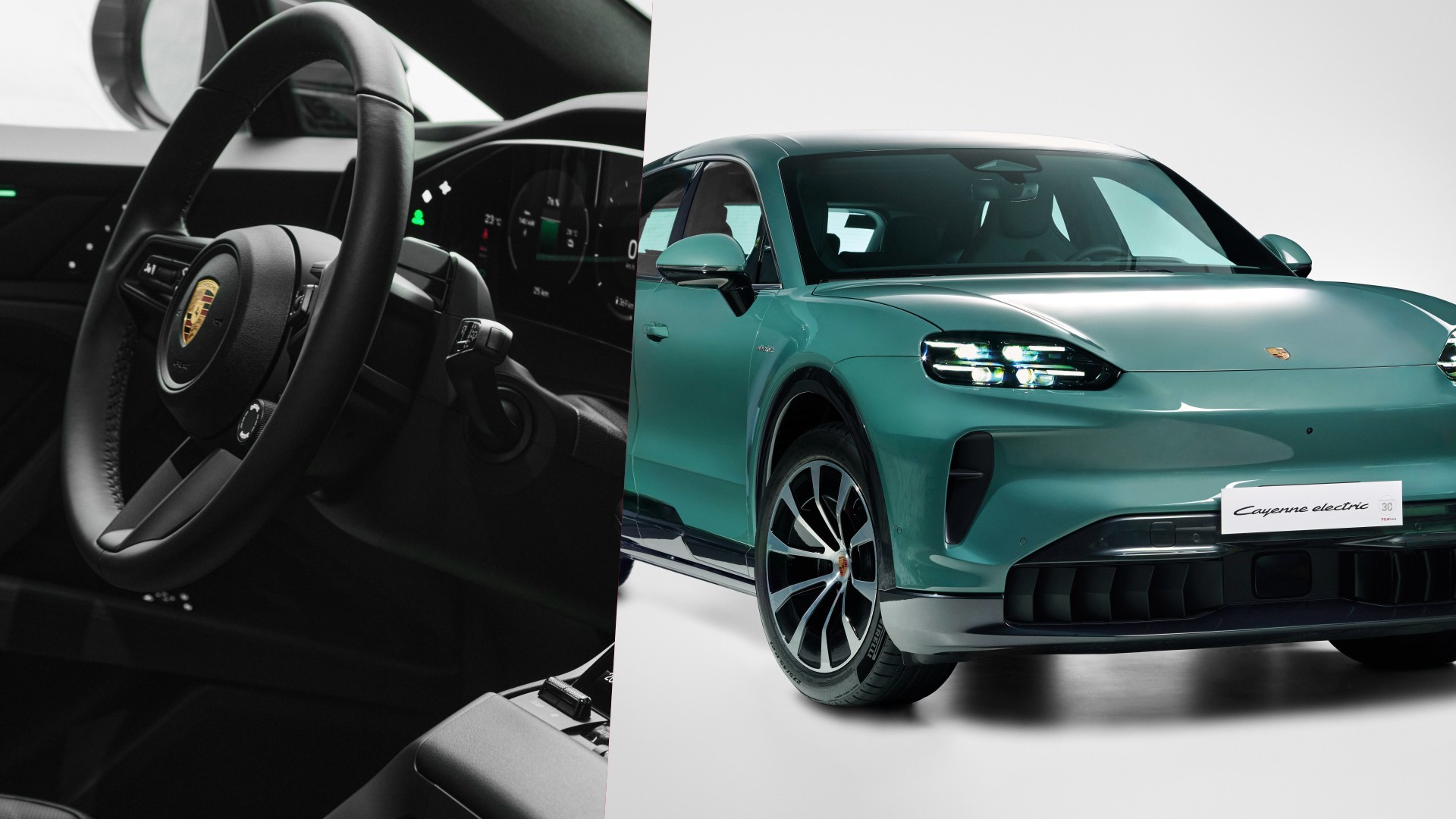
Porsche has introduced the all-electric Cayenne in the Philippines, expanding its flagship SUV lineup with a fully electric powertrain. The new model joins the existing gasoline and plug-in hybrid variants, giving buyers more options as the brand expands its electric vehicle lineup.
The launch also coincides with Porsche’s 30th anniversary in the Philippines, marking another milestone for the German automaker in the local market.
Porsche Cayenne Electric delivers up to 642km of range
The Philippine-spec Cayenne Electric features a dual-motor, all-wheel-drive powertrain paired with a 113kWh battery. It produces up to 325kW (442PS) and 835Nm of torque with Launch Control activated.
Porsche claims the electric SUV can accelerate from zero to 100km/h in 4.8 seconds. It also offers a driving range of up to 642 kilometers based on the WLTP testing cycle.
The Cayenne Electric supports DC fast charging at up to 400kW. This allows for faster charging at compatible high-powered charging stations. For home charging, the SUV comes with an 11kW onboard AC charger.
Digital cockpit and adjustable rear seating
The Cayenne Electric features a 3,023mm wheelbase, providing additional room for passengers. Its rear seats offer 150mm of fore-and-aft adjustment and up to 18 degrees of backrest tilt, allowing occupants to prioritize legroom or cargo space.
Inside, the SUV introduces Porsche’s Flow Display, a curved OLED interface that serves as the centerpiece of its digital cockpit. An optional 14.9-inch passenger display is also available for entertainment and navigation-related functions.
The cabin combines these digital features with a configurable seating layout designed to balance passenger comfort and practicality.
Porsche Cayenne Electric features adaptive air suspension
The Cayenne Electric comes with adaptive air suspension and Porsche Active Suspension Management (PASM) as standard. Buyers can also opt for rear-axle steering and an active-hydraulic chassis leveling system.
Its driver-assistance and parking features include Adaptive Cruise Control, Lane Change Assist, ParkAssist with a 2D surround-view system, automated parking functions, and driver attention monitoring.
By offering the electric Cayenne alongside its combustion-engine and plug-in hybrid counterparts, Porsche continues to give customers a choice of powertrains while expanding its electric vehicle portfolio in the Philippines.
Porsche in the Philippines
Porsche Center Philippines has served as the official importer and distributor of Porsche sports cars in the country since 1996. Its offerings include the latest Porsche models, Porsche Lifestyle products, genuine parts, and after-sales services.
Automotive
Psst! You can test drive BYD and DENZA EVs for free this week, but not for long
Four days of EV displays, test drives, and a first look at the DENZA Z9 GT.

BYD Cars Philippines and DENZA Philippines are opening Super Experience Week to the public starting October 8, 2026.
The event runs until October 11 and gives visitors a hands-on look at the brands’ latest EVs and plug-in hybrids, along with test drives and a few previews. Admission is free.
BYD brings its plug-in hybrids and safety program
BYD’s showcase at the BGC Amphitheater will feature the Sealion 6 DM-i and the Tang DM-i. The brand’s full lineup will be on display at the BGC Garden, where visitors can also take the cars out for test drives.
BYD is also running its “Drive Electric, EV Safety Program” at the event. It’s aimed at helping new and prospective owners learn more about EV use as the community in the Philippines continues to grow. BYD says visitors can also get exclusive offers on all of its models, but only during Super Experience Week.
DENZA shows its premium lineup and a first look at the Z9 GT
DENZA is the centerpiece of the event. The brand is displaying its D9, B5, and B8, positioned as premium smart mobility with an emphasis on design, in-car tech, electrified performance, and comfort.
The main draw is an exclusive preview of the DENZA Z9 GT. The Philippine launch is targeted for the first quarter of 2027, and reservations are already open for customers who want to register their interest before it arrives.
The weekend moves to 5th Avenue
On October 10 and 11, the event expands to 5th Avenue, which will host a dedicated performance and advanced mobility showcase. A special exhibition will feature YANGWANG models, BYD’s ultra-luxury new energy vehicles.
The DENZA B5, DENZA B8, and BYD Shark 6 DMO will also be on show in a street exhibition throughout the weekend.
Test drives across both the BYD and DENZA lineups will be available for the duration of the event, so visitors can check out the tech, performance, and comfort of each model firsthand.





HONOR Watch 6 Pro launches globally

The iPhone Duo is replacing my Kindle

Five new (and better) games you can play instead of GTA VI

Instagram adds ability to edit a recently posted Story

GTA VI Review Round-up: International and Southeast Asia

Your coffee nook is getting a makeover with Starbucks’ holiday collections

OPPO Find X10 Series: Price, availability in the Philippines

HP OMEN Max 16 review: Gamer-maxxing in deep black

OPPO Find X10 Series: Price, availability

Sticker season is back, and so is the planner your ~friends~ might fill in for you


-

 Reviews3 days ago
vivo X500 Pro Max review: 500+ hours later
-

 Accessories1 week ago
Secretlab brings Pikachu, Gengar, and Eevee to its Pokémon gaming chair collection
-

 Gaming1 week ago
Nintendo eShop launches in the Philippines
-

 Gaming1 week ago
GTA VI pre-loading now available on PS5, Xbox
-

 Smartphones3 days ago
Spotlight: OPPO Find X10 Pro Max
-

 Tablets6 days ago
Infinix XPAD 30 launches, comes with AI features and expansive display
-

 Computers2 weeks ago
ASUS and ROG Grand Tech Fair 2026 offers holiday deals
-

 Philippines4 days ago
Xiaomi teases 18 Pro Series with innovative rear display