

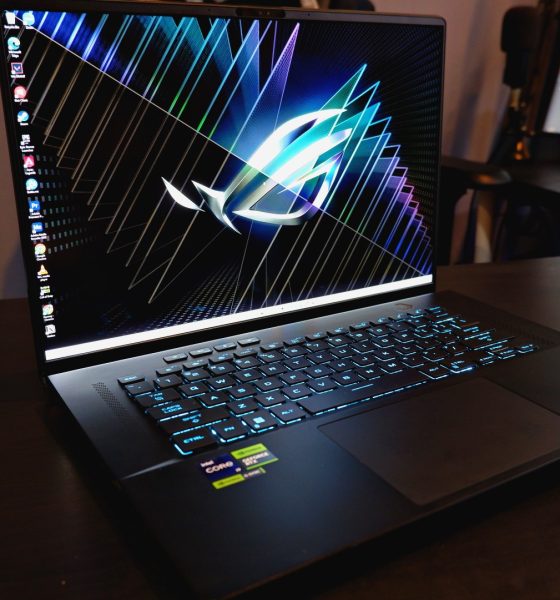
Gaming
ASUS ROG Zephyrus M16 review: Styling on the competition
A huge flex of your gaming prowess and wallet capacity

As they say in 2023, “if it ain’t broke, just upgrade it a little” and ASUS ROG is living by this with their latest line of laptops for the year. In this case, a lot of the upgrades are more internal with the goal of boosting gaming performance as a whole. On the outside, there would be tiny adjustments to fit all the upgraded hardware easily.
Such is the case for the 2023 version of the ASUS ROG Zephyrus M16, a gaming machine with all the right tools for a competitive gaming experience. It’s a laptop that hinges well on its power when delivering excellent performance, mostly due to the hardware inside it. For this year, nothing much has changed on the outside and every little thing inside got some form of an upgrade.
Do these upgrades make the ASUS ROG Zephyrus M16 a better gaming laptop overall?
The outside they didn’t change

Upon unboxing the device, the first thing you will notice is, well, there’s really nothing different from last year’s model. It comes in a rather subtle Off-Black colorway, in a chassis that is a bit heavy to bring around. As usual, all of the ports can be found on either side, with a full array of USB–As, USB-Cs, an HDMI 2.1 port, and even a microSD card reader.
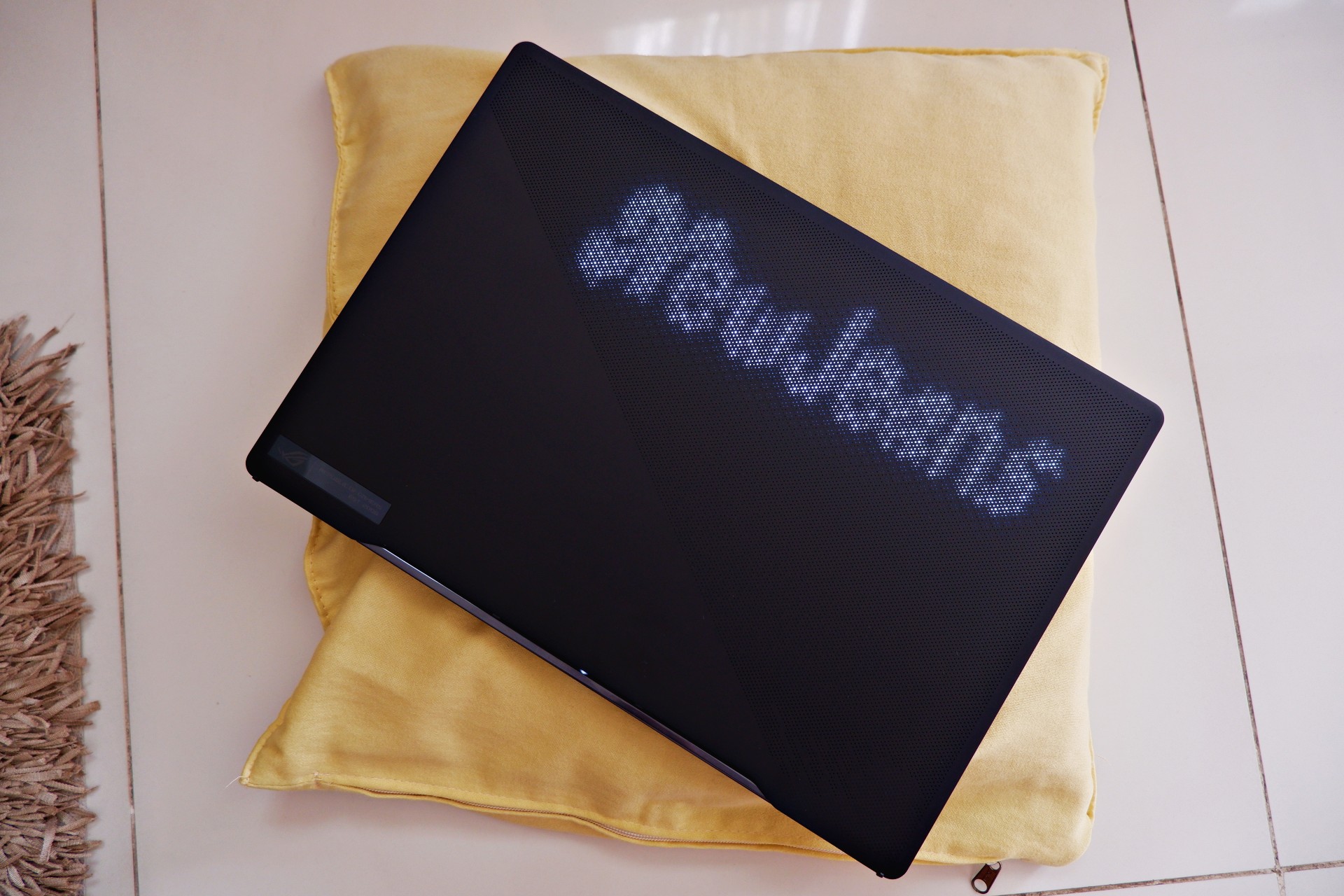
Plastered on top of the lid is an innovation of the ROG in the AniMe Matrix. Unlike previous iterations, this one is a bit brighter than before, and also comes with more features to show off your individuality to others. Also, this version of the Matrix now has its own Virtual Pet mode, which does look great on the LED light-powered lid.
Overall, the exterior looks pretty much the same as before. Even with some minor tweaks and adjustments to hardware placement plus the AniMe Matrix, there’s really nothing else they did differently. The inside, however, is a totally different story.
Boosted internal upgrades
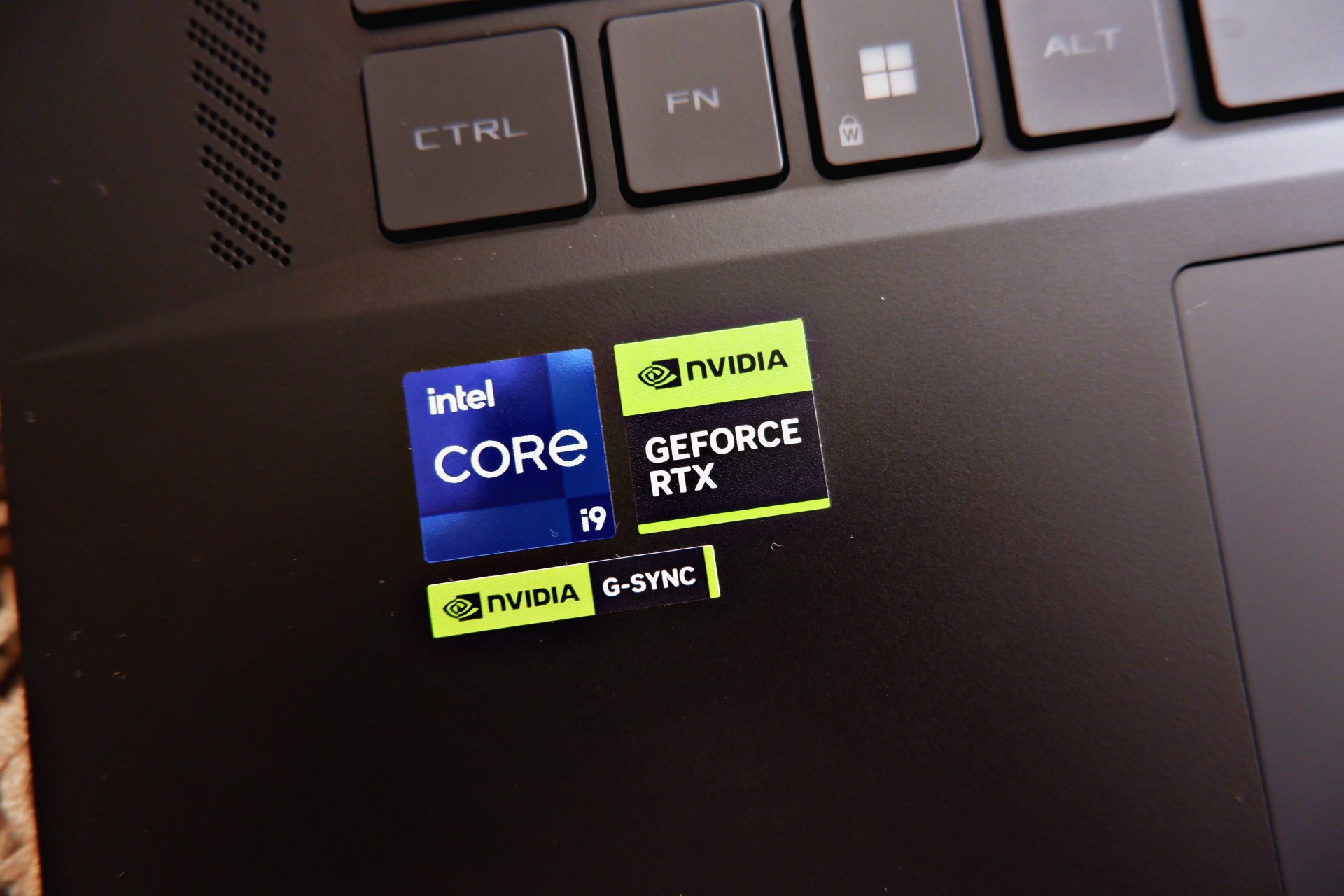
A chunk of the upgrades were given to the internals in order to fully bring out the device’s new found power. For starters, the ROG Zephyrus M16 comes with an 11th-gen Intel Core i9 processor and 64GB of RAM — a near perfect fit for any kind of task. Also, it comes with a powerful NVIDIA RTX 4090 and 2TB worth of SSD storage, which is great for playing and storing a library of competitive and casual games.

Even the device’s display received a considerable upgrade in the form of the 16-inch WQHD Nebula Display that comes with a 240Hz refresh rate. Ideally, every application, video, and game that loads up comes with near-perfect colors at the right brightness. Another thing is that the display supports G-SYNC so less stuttery frames when playing your favorite games.

When putting everything together, this device packs more than a punch for every task you throw at it. Whether you’re catching up on your favorite shows, playing and streaming your gaming content, or you’re editing multiple high-resolution videos, the ROG Zephyrus M16 does these all without a hitch.
Ray tracing and gaming done right
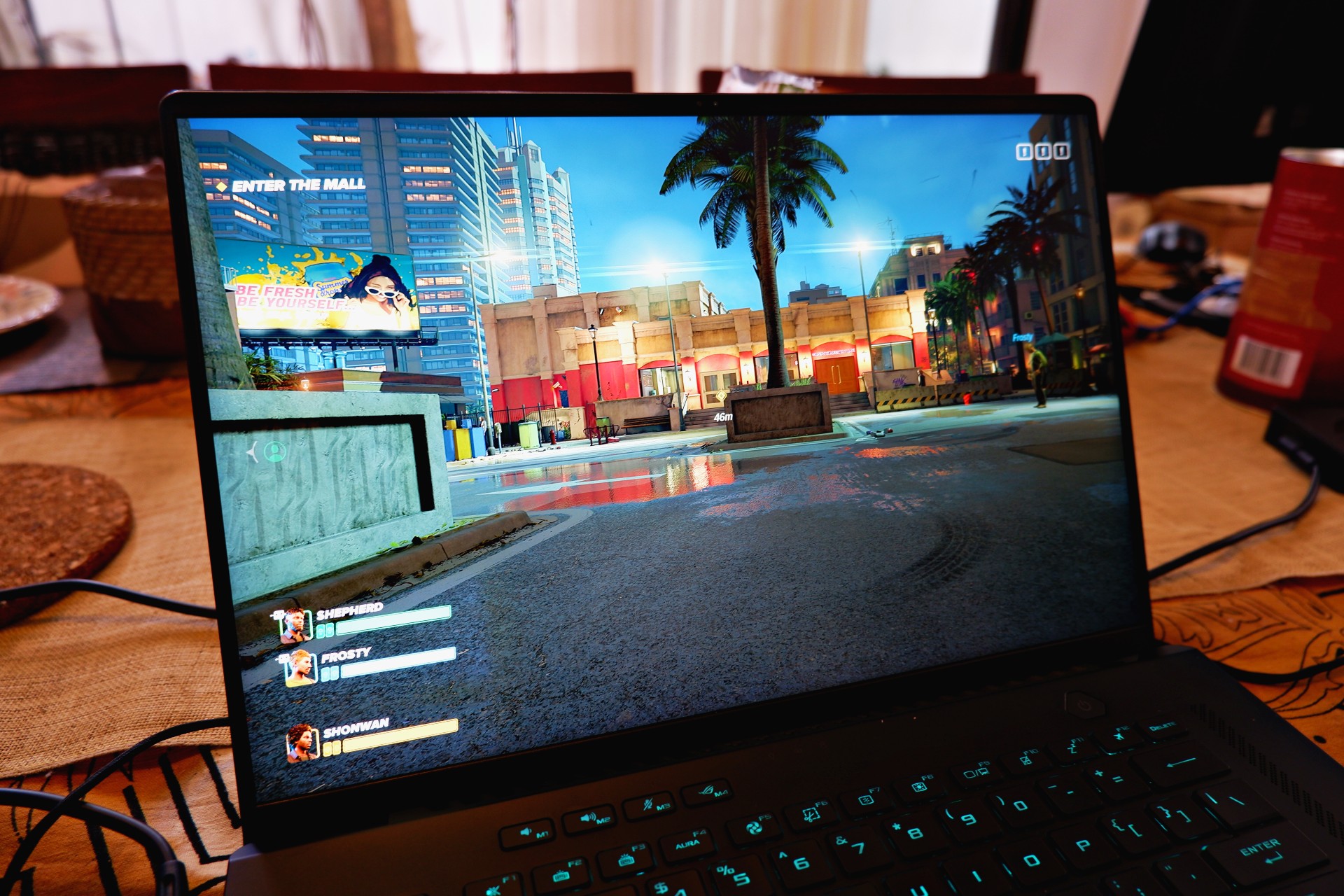
Another aspect the ROG Zephyrus M16 improves on is its gaming capabilities with the RTX 4090 inside. The expectation here is that the gaming experience would be significantly better, especially on the ray tracing front. However, previous versions of an RTX GPU for laptops have produced rather subpar results when ray tracing is used in-game.
This time, that’s not the case as games that support ray tracing looked stunning and hit respectable frame rates. From our tests, frame rate went up to around 50 to 58 FPS for supported games like Fortnite, Shadow of the Tomb Raider, and Cyberpunk 2077. At these rates, there were no observable drops in graphic quality, which made the experience more immersive and less jittery than before.
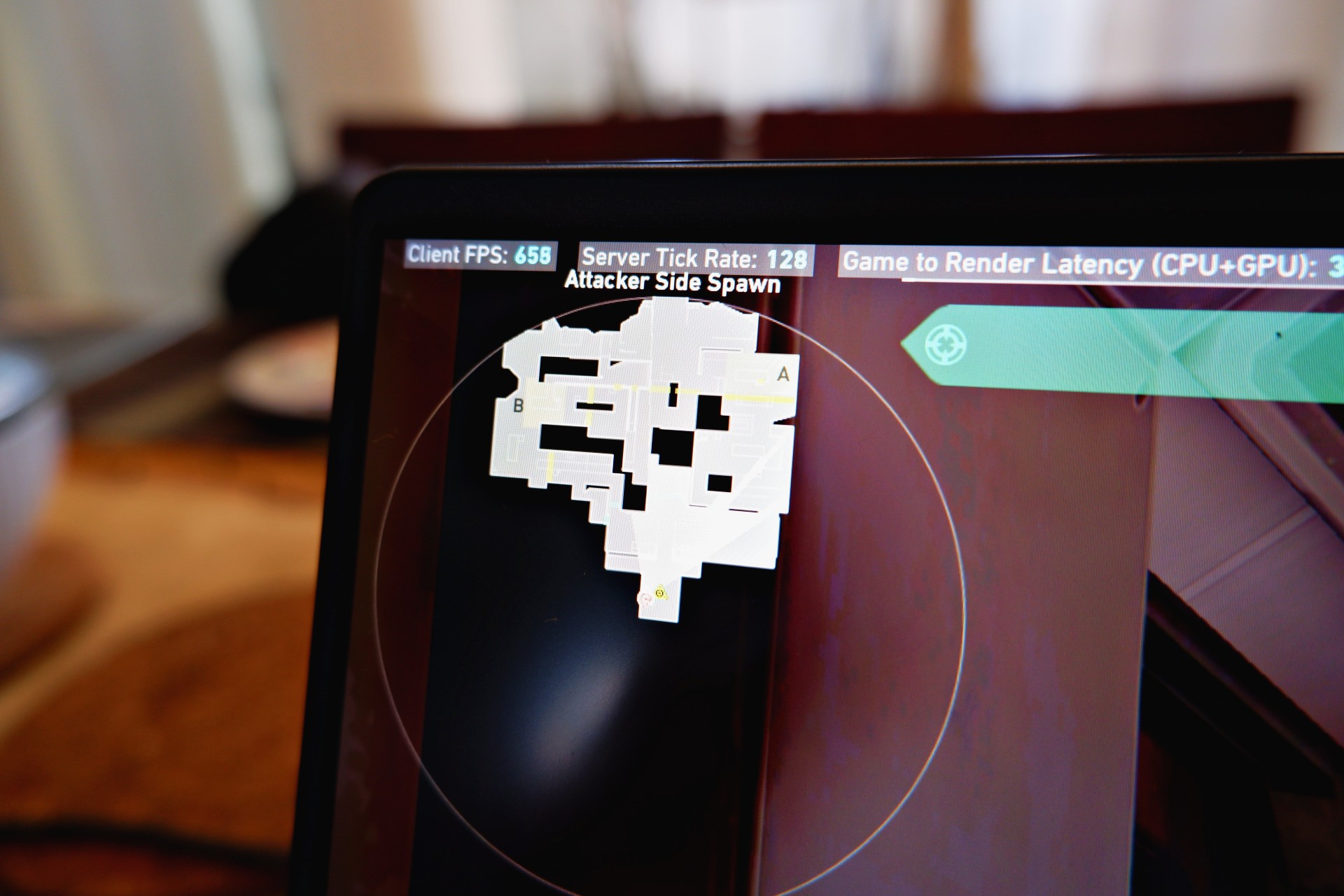
Even without this setting turned on, frame rates on most titles were excellent. Competitive shooters and battle royale games peaked at 240 FPS on their highest settings, which is what you’re expecting out of an RTX 4090. Also, the 240Hz G-SYNC-compatible display supported each game you play with little to no pixels out of place during crucial moments.
Even the best can overheat

Alas, even with all the power packed into one device, it can only do so much to keep everything cooled down. For laptops like the ROG Zephyrus M16, you should expect extreme heat during and after playing intense games as it performs better every hour. In this case, however, there were a few things that made the experience not as pleasant as one would think.

For the most part, the ROG Zephyrus M16 boasts a CoolZone Keyboard Design feature that ideally distributes warmth evenly when using the keyboard. Unfortunately, most of the heat was still packed around the four most commonly used keys for gamers, the WASD keys. Other parts of the keyboard were also warm, but not as much compared to those four keys in particular.
The only few good points about this device on the cooling front are that it doesn’t immediately heat up after opening it, and it cools down easily. It’s a relief that you adjust the settings through Armoury Crate, especially to set up certain applications to follow specific power settings.
Can only go so far

In terms of overall battery life, the ROG Zephyrus M16 fares decently in that regard considering the hardware it carries. From our tests, the device lasts a good seven hours running on a full battery for most use cases. Of course, gaming on it full time cuts that time significantly to just an hour and a half on average. For the price this device comes in, it’s definitely decent but there are longer lasting options out there.
Charge times for this device aren’t too shabby either, with the 280W adapter requiring at least two hours to fully charge the device. It also comes with a 100W USB Type-C charger, which is great for charging other USB-C supported devices. However, charge time with this one took seven hours to fully charge the ROG Zephyrus M16.
Is this your GadgetMatch?

At PhP 339,995, the 2023 version of the ASUS ROG Zephyrus M16 provides a great gaming experience through and through. All the upgraded internals had pushed this device to be an all-around powerhouse for whatever you throw at it. Even without any difference from the last iteration, minor improvements to the AniMe Matrix allow you to show off your personality a little bit more.
As expected, heat and battery length stand out as key considerations when you’re using this for a lengthy amount of time. After our tests, these were not total dealbreakers given the internal hardware that the device carries. Although, there is potential for it to greatly affect the experience, especially on the go.

Overall, the ROG Zephyrus M16 was always designed to be one of the best gaming laptops out there, and this iteration is just no different. There are more affordable options for this model, with one of them at PhP 169,995 for the RTX 4070 model. Even so, that’s still an impressive piece of work that will elevate the gaming experience further.
More information on the ROG Zepyhrus M16 here. | Buy here.




How do you review one of the greatest games of all time?
Elden Ring is one of those games that needs no introduction. Launched in 2022, the difficult fantasy RPG rapidly skyrocketed into the year’s top spot. Then, it got even better with 2024’s Shadow of the Erdtree, a sizable DLC that packed in a new map with new challenges. Now, I’ve reviewed both and found them well worth the price of admission. So, what else is there to say?
Well, late last month, Elden Ring launched its much-awaited port for the Switch 2 through a Tarnished Edition, a bundle that conveniently pairs the base game with the DLC in one package. In an instant, there are now two new things to talk about: How well does the game perform on a Switch 2? What does the Tarnished Edition add?
Is Elden Ring worth getting for the Switch 2?
Compared to the original Switch, the second Switch features a way better processor. Games aren’t locked to the limitations of yesteryear: 720p resolution, 30fps. However, the Switch 2 still isn’t the best console for chasing performance. Personally, I’ve been using it almost exclusively for first-party Nintendo games and older (and smaller) titles.
That said, Nintendo has grandiose dreams for its latest console. Starting with Cyberpunk 2077, the console wants to be a home for modern games, too, and Elden Ring is the perfect candidate for that.
Naturally, a Switch 2 port can fill fans with consternation especially after they’ve experienced the legendary game on more powerful consoles. Is the Switch 2 a good match?
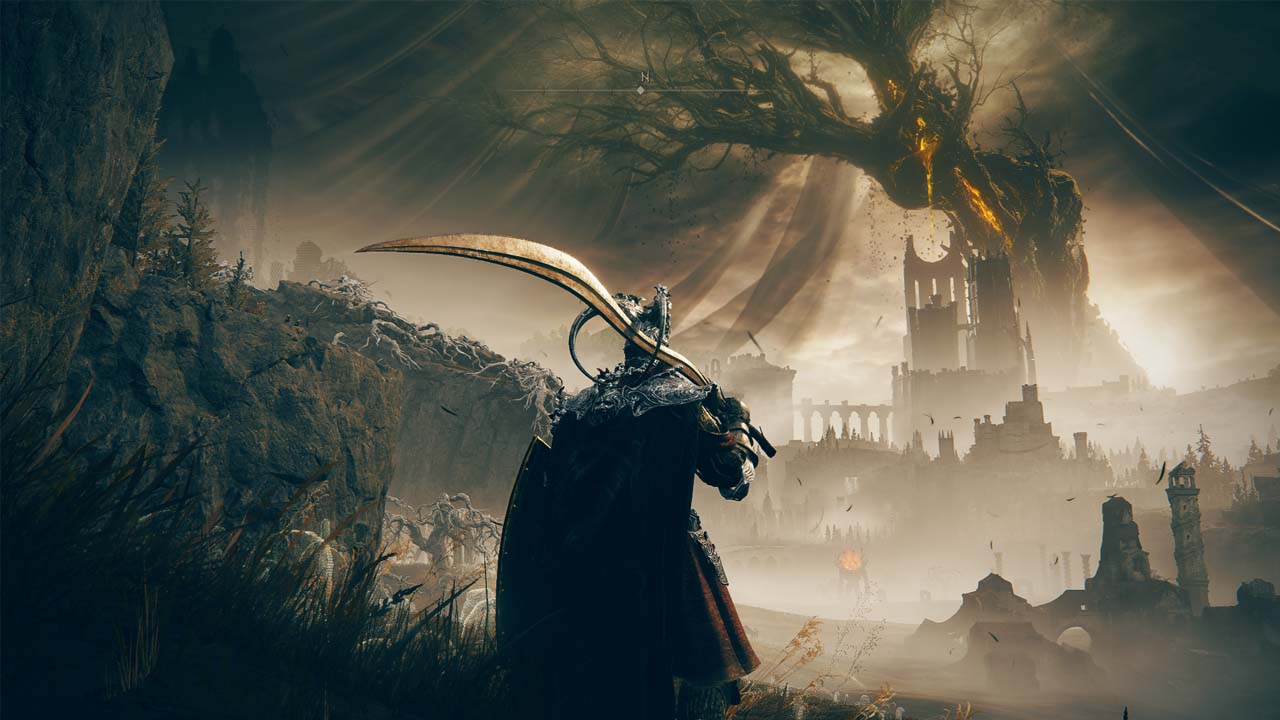
Yes, if you don’t mind playing at 30fps. Unfortunately, Elden Ring is locked to only 30fps on the console. Though a good chunk of the population is clearly fine with the framerate, it’s a bit of a struggle for me especially in handheld mode.
Maybe it’s my aging eyes, but having a game so close to my face but locked at 30fps doesn’t make for a good time. I got dizzy pretty quickly. It also didn’t help that the handheld mode had several stutters.
As with other games on the platform, docked mode had significant improvements. Sure, it’s still locked at 30fps, but a consistent framerate is much better than a stuttering one. Despite the downgrade, the Switch 2 can handle the game well.
Is the Tarnished Edition worth getting?
Most FromSoftware games will get a complete edition eventually. All of the Dark Souls titles got one, and Elden Ring is no exception.
The biggest difference here is that the Tarnished Edition is technically exclusive to the Switch 2. It’s the only package available for the console. It includes the base game, the expansion pack, two new starting classes, new skins for Torrent, and new armors. It’s the most comprehensive way to play the entirety of Elden Ring, excepting Nightreign.
If you’re on another platform, the Tarnished Edition updates — the new classes, skins, and armors — are available only through a Tarnished Pack purchased separately. Is it worth the price?

The most exciting part of the update is the addition of two new classes: Heavy Knight and Idus Knight. For me, I prefer the Heavy Knight, a hardy class focused on heavy armor, endurance, and strength. It’s a very straightforward class for those who prefer direct damage. Idus Knight, on the other hand, focuses on dexterity and faith, if you prefer playing with quicker attacks and miracles.
The rest, in my opinion, is just cherry on top. The new armor and customization options are nice to have, but I don’t have a strong feeling that it’s worth the price of an extra DLC.
Is Elden Ring Tarnished Edition your PlayMatch?
As I said, it’s hard to review the special edition or a port of a universally acclaimed game. Focusing on the minutiae of performance and slight upgrades doesn’t feel like it does Elden Ring justice. The game earned 2022’s Game of the Year for a reason.
That said, I can’t recommend Elden Ring and Shadow of the Erdtree enough. If you haven’t played it yet and only have a Switch 2, the Tarnished Edition gets a Swipe Right and a Super Swipe.
However, if you’ve already finished the game and have no intention of playing it elsewhere (especially on a potentially weaker platform), this gets a Swipe Left. You can shell out a few bucks for the Tarnished Pack, though, if you really want to support the game.
SEE ALSO: Elden Ring review: Should you play the hardest game of 2022?

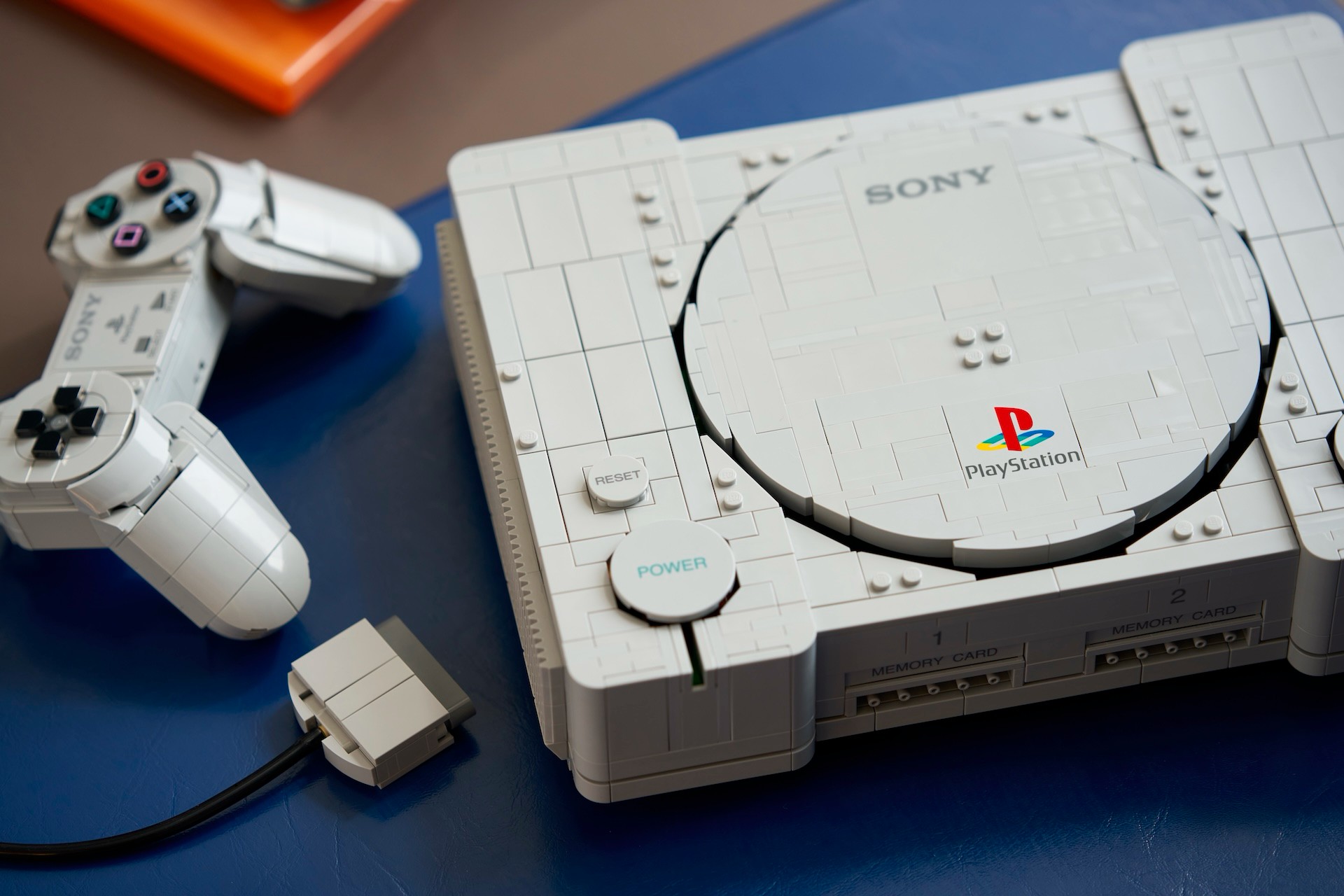
Remember the original PlayStation? The gray box that introduced an entire generation to 3D gaming is now getting rebuilt — one LEGO brick at a time.
LEGO and PlayStation have revealed the LEGO PlayStation, a 1,911-piece set that recreates the original console and its controller in near 1:1 scale.
The set celebrates more than 30 years of PlayStation history. Once built, the console measures over 6cm high, 26cm wide, and 19cm deep.
It isn’t just a static display piece, either. You can press the Power and Open buttons, while the included original-style controller can plug into the front of the console.
And if that wasn’t nostalgic enough, there’s more hiding inside.
There are two games inside
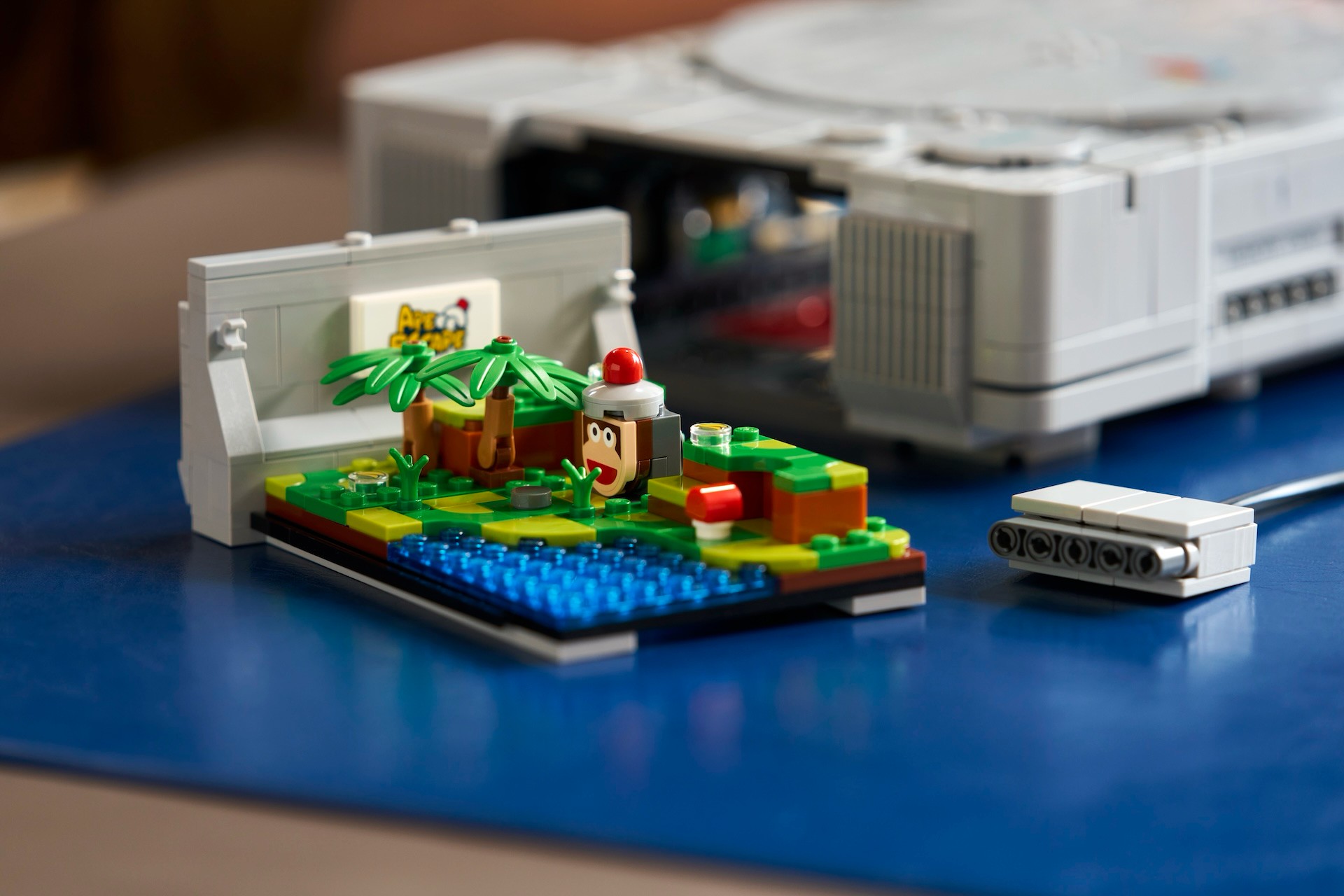
Opening the LEGO PlayStation reveals two miniature dioramas inspired by classic games from the original PlayStation era.
The first pays tribute to Gran Turismo, which debuted on PlayStation in 1997. It recreates a miniature racing scene with tiny cars and customizable elements.
The second takes inspiration from Ape Escape, which launched in 1999. Its island-themed diorama includes the game’s iconic monkey helmet, complete with a swappable blue or red light.
Both dioramas can be removed from the console and displayed separately.
LEGO also opted for the original PlayStation controller instead of the later DualShock. That makes sense for a set centered on the hardware that launched the PlayStation brand in 1994.
Coming this October
The LEGO PlayStation carries product number 72306 and is designed for builders aged 18 and up.
LEGO Insiders get early access starting October 1, 2026. Everyone else can pick it up beginning October 4 through LEGO.com, LEGO Stores, and select retailers.
The set costs $179.99 in the US, €159.99 in Europe, and £139.99 in the UK.
PlayStation will also sell it through PlayStation Direct starting October 1 in select markets, including the US, UK, France, Germany, Austria, Belgium, Luxembourg, the Netherlands, Italy, Spain, and Portugal.
At nearly 1:1 scale, with working buttons, a plug-in controller, and two games hiding inside, the LEGO PlayStation is more than another piece of gaming memorabilia.
It’s basically a tiny reminder of where PlayStation started — just don’t expect it to play your old discs.
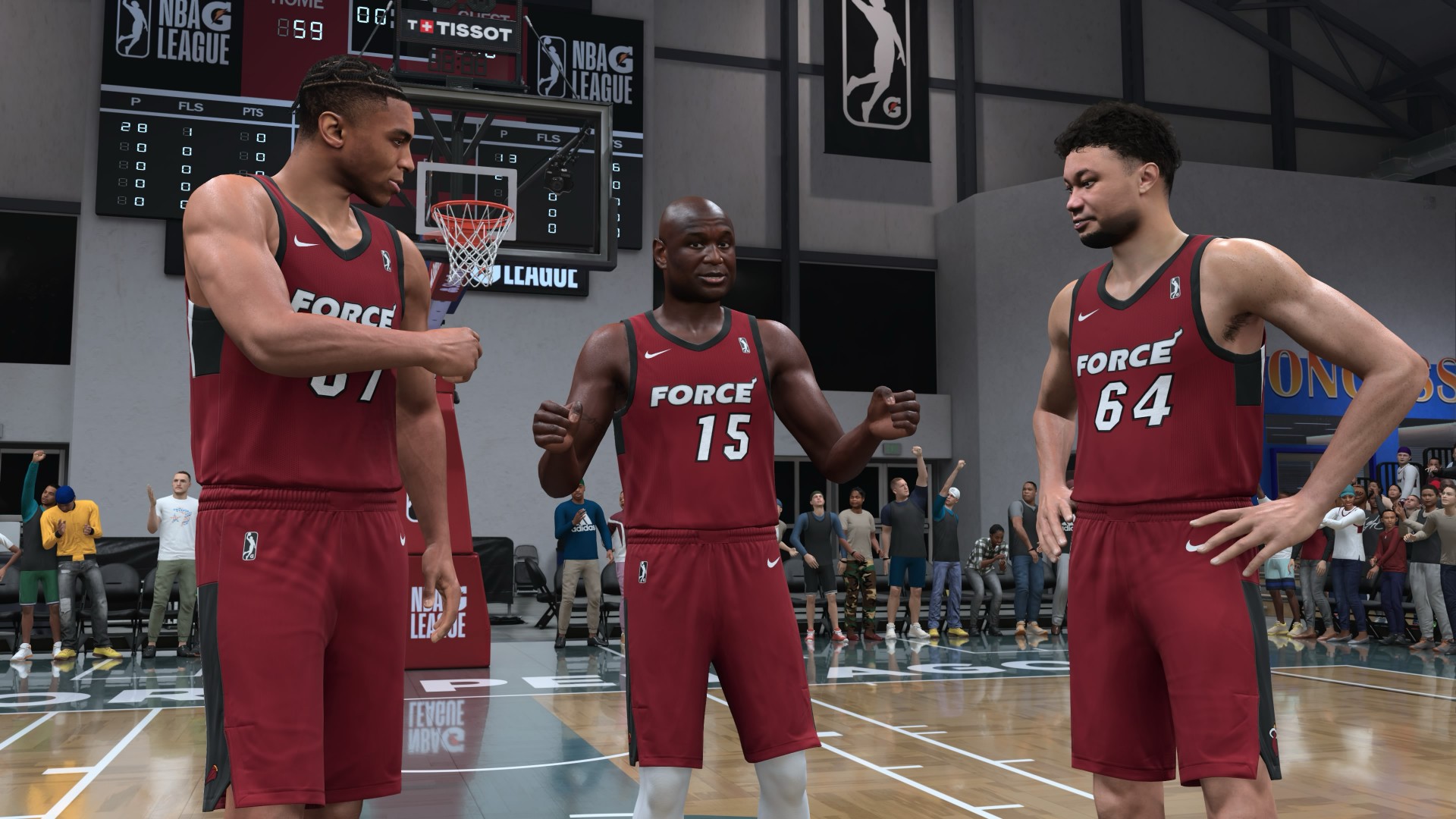
Six or seven hours into NBA 2K27’s MyCAREER, I found myself thinking about what happens next.
Not just the next chapter of Fire & Concrete. I mean what happens after I make it to the NBA. What kind of career can my player actually have?
That question kept getting louder the more I played.
NBA 2K has spent years refining the fantasy of building your own player. We’ve had different stories, progression systems, and ways to get into the league. Now, MyCAREER Eras lets us drop that player into some of the most iconic periods in NBA history.
But I think there’s a bigger idea hiding in there.
What if MyCAREER actually let me live a career?
I don’t mean making the mode longer for the sake of it. Give the basketball enough room to tell the story.
I don’t want less basketball. I want the basketball itself to become the RPG.
Fire & Concrete has a good foundation
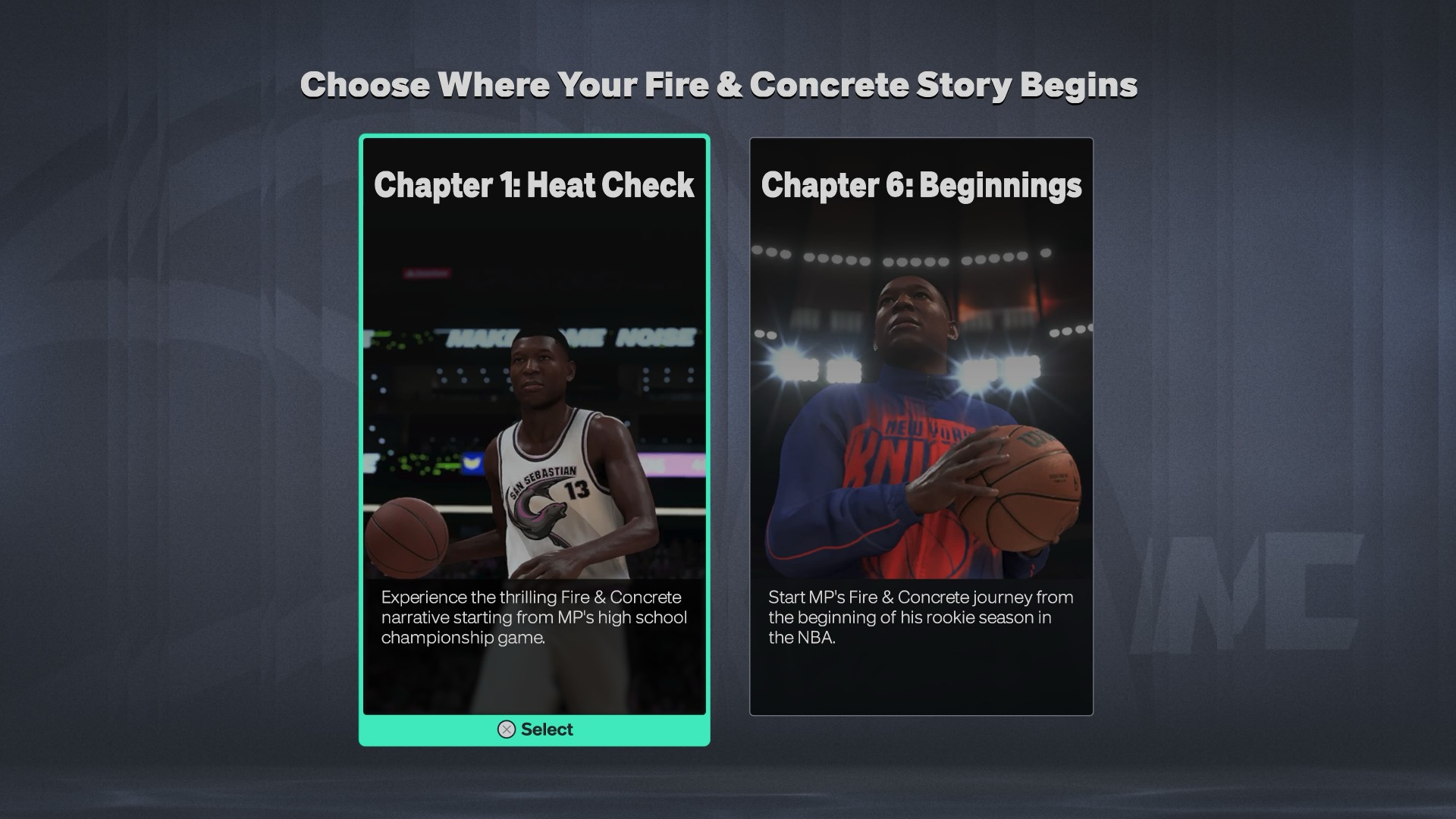
I’m still making my way through Fire & Concrete, but the fact that I was itching to get back to it tells me something.
It’s nothing too new or major, but it’s engaging enough. There’s more basketball this time, too. For the most part, you’re watching cutscenes or playing basketball.
I get why 2K has gone in that direction. Most NBA 2K players probably want to spend more time hooping than walking around doing side activities.
Still, there is room for more.
I’d love for the story to stretch into the NBA portion of MyCAREER instead of ending once you make it there. Give me choices that actually shape my career.
Even the little things could use more personality. I miss the days of Freq and Prez. Calling everyone MP for years just doesn’t have the same personality.
Give me less SGA and more Great Barrier Thief.
Let me earn my way into the NBA
The Draft could also be a much bigger part of the fantasy.
I haven’t reached it in my own playthrough yet, but I’ve seen that you can choose where you play anyway. That’s convenient, but I’d rather have more of a process.
Give me target teams. Let teams express interest. Put me through workouts and interviews, then let my performances influence where I land.
Maybe I dominate a workout and move up a team’s board. Maybe I struggle and fall to the second round. And maybe I don’t get drafted and have to fight through the G League.
Multiple paths would make each MyCAREER feel different.
More importantly, my path to the NBA should affect the career that follows.

Make the basketball part of the RPG
I don’t want NBA 2K to become a giant RPG where I’m spending hours managing menus and relationships instead of playing basketball.
The basketball itself should be the RPG.
Start me somewhere. Maybe I’m a fringe rotation player or a second-round pick. Perhaps I’m a highly touted lottery selection.
Then let me play my way forward.
Year one could be about earning a rotation spot. Year two might mean becoming a starter. By year three, perhaps I’m an All-Star. Later seasons can bring bigger expectations, roster changes, injuries, championships, and the question of what kind of player I want to become.
That’s progression that means something beyond XP and VC.
SEE ALSO: NBA 2K27 review: A two-way All-Star
Running Mate shows the potential
The Running Mate system gave me a glimpse of what this could look like.
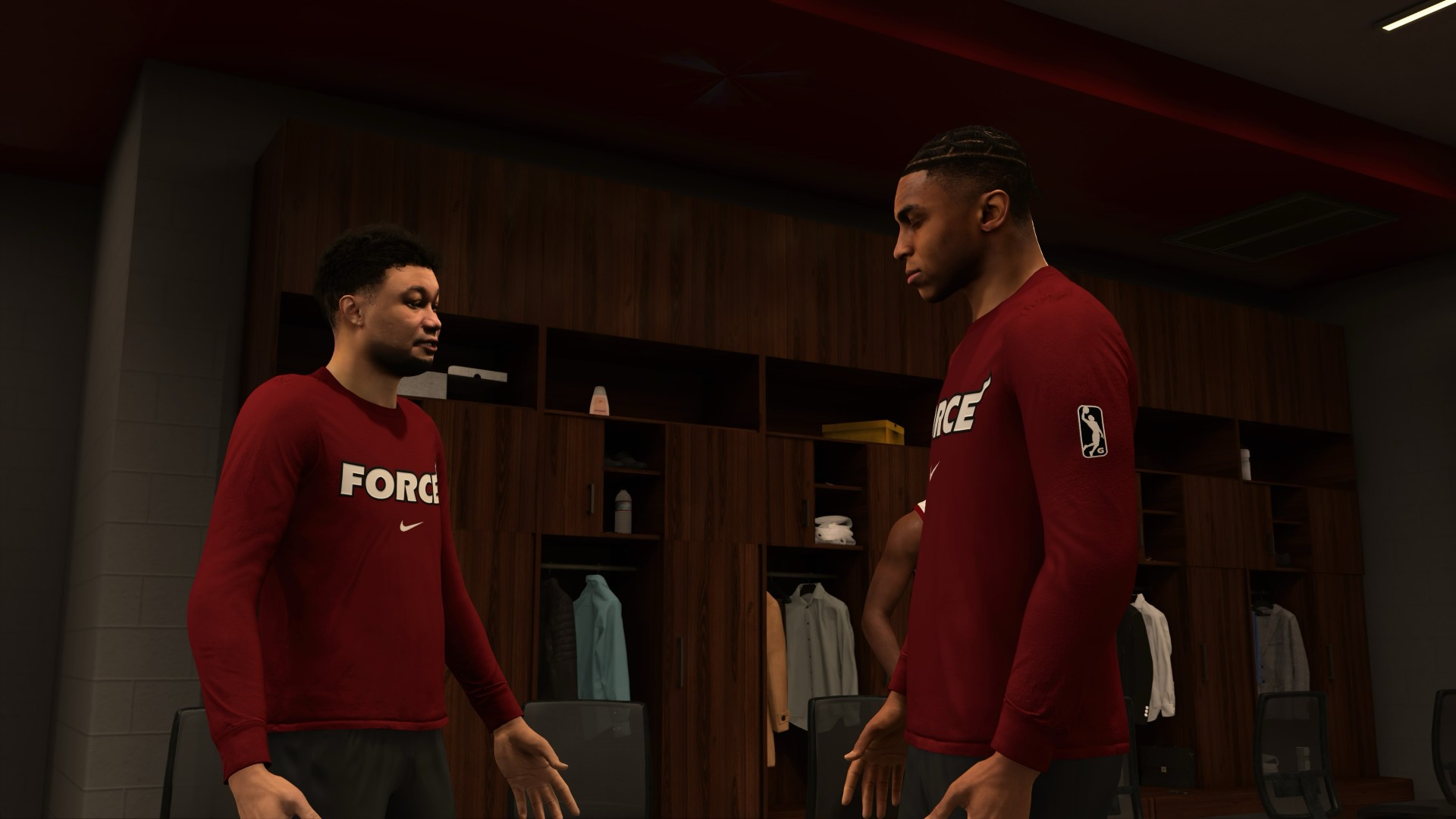
At first, I found the objectives with Trace Miller annoying. Then I realized they were forcing me to be more deliberate and play better team basketball.
That’s a pretty neat tutorial for someone like me, especially since I built an Athletic Iso Savant who would rather create his own shot.
The co-op MyCAREER concept points in the same direction. I didn’t get enough time with a second player to properly judge it, but even the early objectives made me think about being a better teammate.
Imagine if those relationships evolved over several seasons. Your Running Mate could become a lifelong teammate, get traded, or force you to adjust your game as the roster changes.
The career itself can create the drama.
Let the progression breathe
The starting rating of 60 is rough. If you don’t want to spend extra, you can grind activities like Casual Corner to reach the 73–75 range, where your player starts feeling like an actual NBA prospect.
But I’m not convinced the answer is simply starting everyone higher.
A 60 rating can make sense. The bigger issue is balancing progression for different kinds of players.
Some people have time to grind every game. Others don’t. Some will spend to speed things up. Others won’t.
NBA 2K27 already has Key Games, which lets you move through a season faster. The tradeoff is slower progression if you only play those.
I think that can work.
Want to become a Rookie MVP? Put in the work. Play more games. Perform better.
Want a more realistic career? Take your time and build your role naturally over several seasons.
That’s where MyCAREER Eras could really shine.
MyCAREER Eras is the Hail Mary
Introducing MyCAREER Eras showed me a potential time-travel, player-locked sandbox that’s waiting to be expanded upon.
I look at those historical eras and immediately think:
How else am I gonna help Allen Iverson get a ring?
That’s the kind of fantasy I want from NBA 2K.
The problem is that I can’t simply take my leveled-up build and jump into another era without having to level that build again through grinding or buying VC.
That’s the part that really rubbed me the wrong way.
If MyCAREER Eras is supposed to be an offline historical sandbox, it feels like the perfect place to take some of the live-service friction away.
Let me pick an era. Let me pick a year. And then let me bring in my player at the rating I’ve already earned.
Then let me play.
The City can remain the online, competitive side of NBA 2K. That’s clearly what a lot of players want, and that’s fine. It’s just not really my thing.
Give me an offline MyCAREER Eras sandbox focused on playing basketball and building a career.
And make it long.
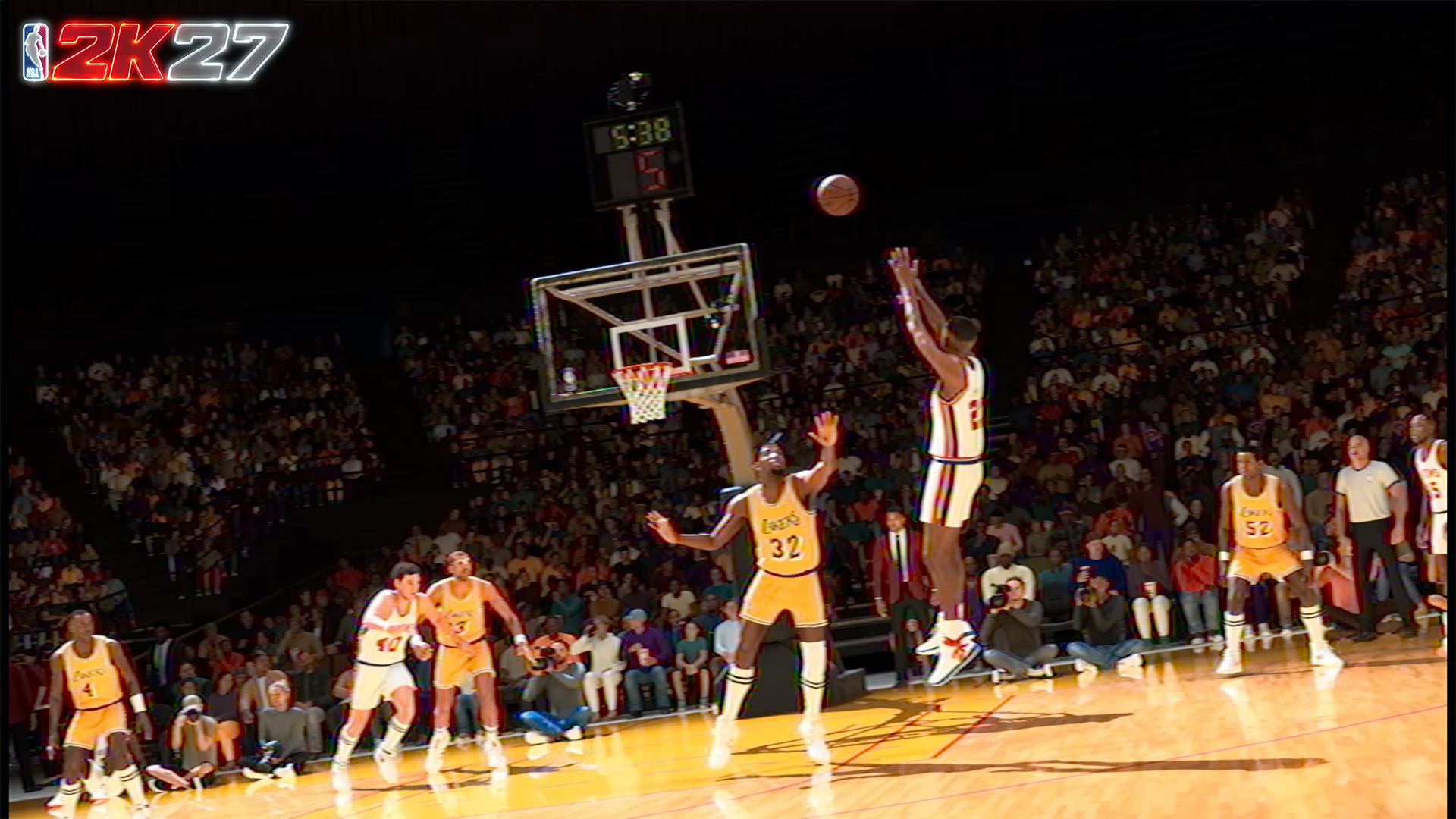
What if I could stay for five years?
This is probably the biggest change I’d want.
Let me play a full five-year NBA career with my player. Not because 2K needs to artificially stretch the mode, but because the career itself should evolve.
Maybe I start as a nobody and finish as a franchise player. Perhaps I get drafted by the wrong team and have to fight for a bigger role. Maybe I never become a superstar and instead become a sixth man who wins a championship.
Maybe I become D-Rose’s Running Mate to a championship or two.
That’s where the fantasy becomes personal.
My suggested tweaks still need work. I’m not pretending I’ve figured out the perfect version of MyCAREER.
But MyCAREER Eras showed me something bigger than the feature itself: 2K has the beginnings of a time-travel, player-locked sandbox just waiting to be expanded.
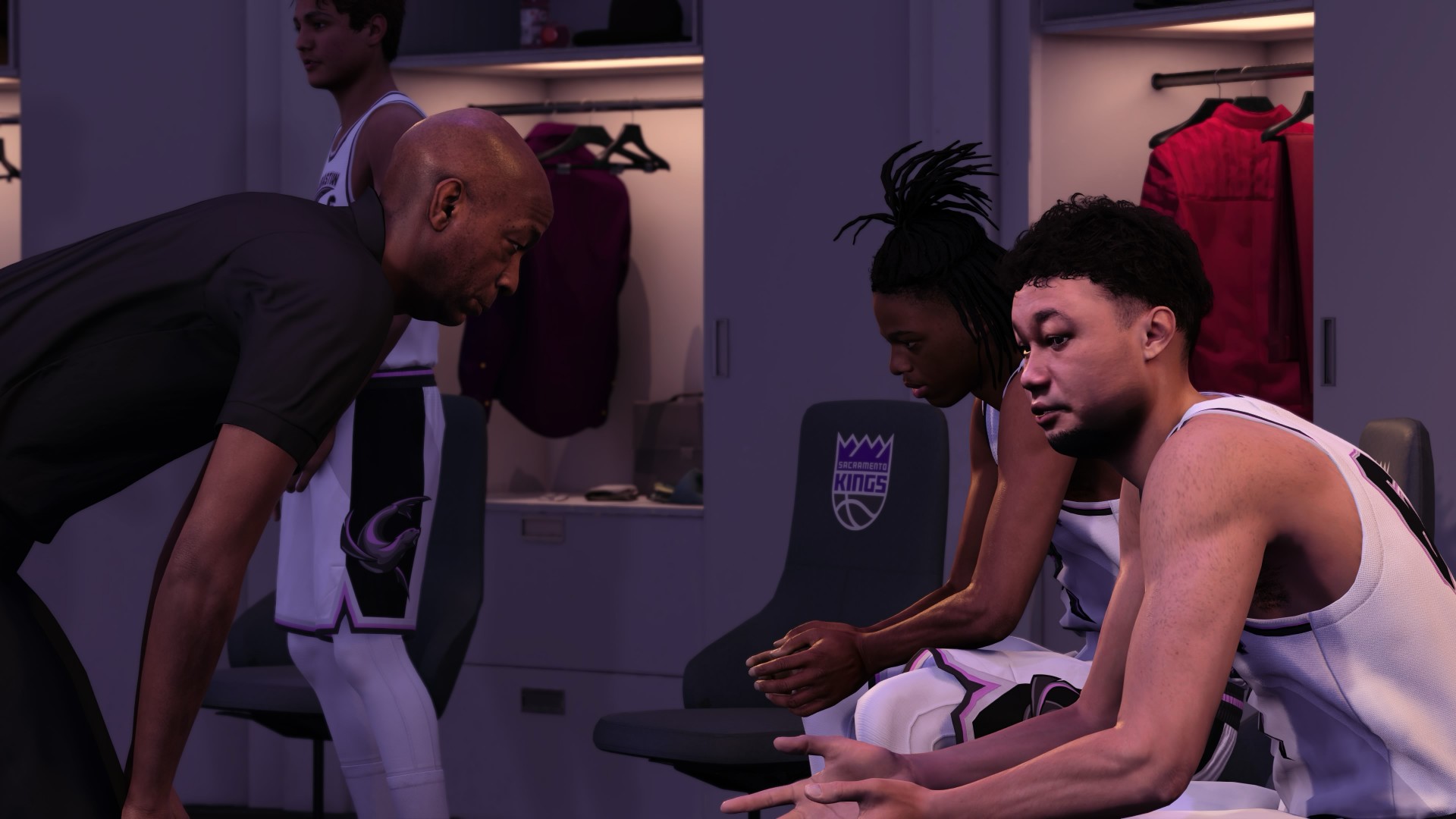
You’ve already made me care about my player. Now let me actually have a career.
Give me the basketball, the choices, and the time.
Then let me see where my career takes me.





LG’s AI Home vision comes to life at IFA 2026 with innovative showcase

Ford’s new Everest lineup brings V6 engine to the top, tech down the line

Xiaomi makes IFA debut, showcasing ‘Human x Car x Home’ ecosystem

TCL showcases expanding AI technologies at IFA 2026

XGIMI announces AURA 3 Series 4K 120Hz UST projectors

TECNO MEGAPAD 2 review: Eyes on the size

realme 16T 5G with 8000mAh battery, IP69 Pro rating launches in PH

REDMI Note 17 Series focuses on long-term reliability

realme 16T to come with 8,000mAh battery, 7-year battery health guarantee

HUAWEI Pura X View is 2026’s first WIDE slab-type smartphone


-
 News1 week ago
realme 16T 5G with 8000mAh battery, IP69 Pro rating launches in PH
-

 Singapore1 week ago
REDMI Note 17 Series: Price, availability in Singapore
-

 News1 week ago
REDMI reveals the refreshed Note 17 and Note 17 Pro series
-

 Cameras1 week ago
Insta360 Luna Ultra review: My new solo coverage camera
-

 Reviews1 week ago
REDMI Note 17 Pro review: What a rollercoaster ride!
-

 News2 weeks ago
HONOR Magic V6: Price, availability in the Philippines
-

 Features6 days ago
The designated photographer’s new favorite phone: OPPO Reno16 Series 5G
-

 Automotive2 weeks ago
Tesla involved in recalling over 4 million electric cars