
News
The Xiaomi Pad 7S Pro is the second tablet that runs XRING O1
Following the footsteps of the Xiaomi Pad 7 Ultra


Just a month after the revelation of the Xiaomi Pad 7 Ultra, Xiaomi Pad 7S Pro follows its footsteps and is the second Xiaomi tablet that runs their very own XRING O1 SoC.
Pro Pad
From the name itself, the mouthful Xiaomi Pad 7S Pro 12.5 is a Pro-grade tablet that comes right after its Ultra cousin.
Xiaomi definitely targets the new M4 iPad Air with its remarkable 5.8mm thin profile and heft of 576 grams (or lack thereof).

Next, it has 12.5-inch 144Hz LCD panel with 3.2K resolution and 3:2 Aspect Ratio.
While not an OLED or mini LED display, it’s still a punchy display with up to 1000 nits of peak brightness.
Full DC dimming is also supported for utmost eye comfort.

There’s also another variant that offers a Matte Glass version for those who love reading.
To make it the better entertainment device, the Xiaomi Pad 7S Pro features a six-speaker surround sound system as opposed to the iPad Air’s quad sound setup.

Graphics by Vincenz Lee | GadgetMatch
As mentioned earlier, it’s powered by Xiaomi’s first-gen XRING O1 3nm SoC that supports speeds of up to 3.4GHz.
That’s backed by a large 10,610mAh battery as well sa 120W HyperCharge support — a rarity among tablets these days.

This tablet also has a 50MP f/1.8 rear shooter and 32MP f/2.2 front camera mainly for video calls, web conferences, or just plain ol’ selfies.

Xiaomi also made its own version of Apple’s Magic Keyboard for the Pad 7S Pro with a floating and adjustable stand, plus a glass touchpad.

Lastly, this second XRING-powered tablet runs HyperOS 2.0 based on Android 15 that’s specialized for multitasking and full-on productivity.
Seamless connectivity with Mac is also supported.
Pricing and Availability
The Xiaomi Pad 7S Pro comes in four different color choices; Blue, Black, Purple, and Beige

In China, the base version of the Xiaomi Pad 7S Pro costs less than half the price of the M4 iPad Air (CNY 3299 vs 6999).
Pricing and configuration are as follows:
- 8+256GB = CNY 3299 (US$ 460 / EUR 400 / GBP 340 / SG$ 590 / PhP 26,265 / INR 39,570)
- 12+256GB = CNY 3599 (US$ 500 / EUR 435 / GBP 370 / SG$ 650 / PhP 28,660 / INR 43,160)
- 12+512GB = CNY 3899 (US$ 545 / EUR 470 / GBP 400 / SG$ 695 / PhP 31,041 / INR 46,760)
- 16+512GB = CNY 4099 (US$ 570 / EUR 495 / GBP 420 / SG$ 730 / PhP 32,640 / INR 49,160)
- 16+1TB = CNY 4499 (US$ 639 / EUR 400 / GBP 460 / SG$ 800 / PhP 35,820 / IN R53,960)
It’s currently available in China starting today. Global availability was never mentioned — much like in any China-based launch event.





News
St. Peter reunited people with their deceased loved ones through tech
The new “If Heaven Could Write” campaign generates letters from the imagined perspectives of loved ones.


Grieving can take many forms. Sometimes, it manifests through a desire to hear a loved one again. We look at their old clothing, a gust of wind, or a butterfly, and imagine them talking to us one more time. This year, St. Peter, through the power of technology, gave 11,000 people that chance through its new “If Heaven Could Write” campaign.
During St. Peter Deathcare Week, which ran from October 27 through November 2, the deathcare provider started the “If Heaven Could Write” campaign, an interactive digital experience that offered participants a chance to reunite with their deceased loved ones. It was available in 37 St. Peter Chapels and 76 cemeteries nationwide.
Upon scanning a QR code which took them to a portal, participants answered questions about their loved ones. Then, the portal generates a personal letter from the imagined perspective of the participant’s loved one, giving them one more chance to converse.
Of course, an imagined letter can’t replace someone who passed away. Still, the experience affords us a way to grieve and process the loss. No, the letter isn’t really from your loved one, but you can imagine what they would have said while reading through it. And sometimes, that’s all we need.
Though St. Peter Deathcare Week has already come and gone for the year, those interested can still participate in the campaign through its link.
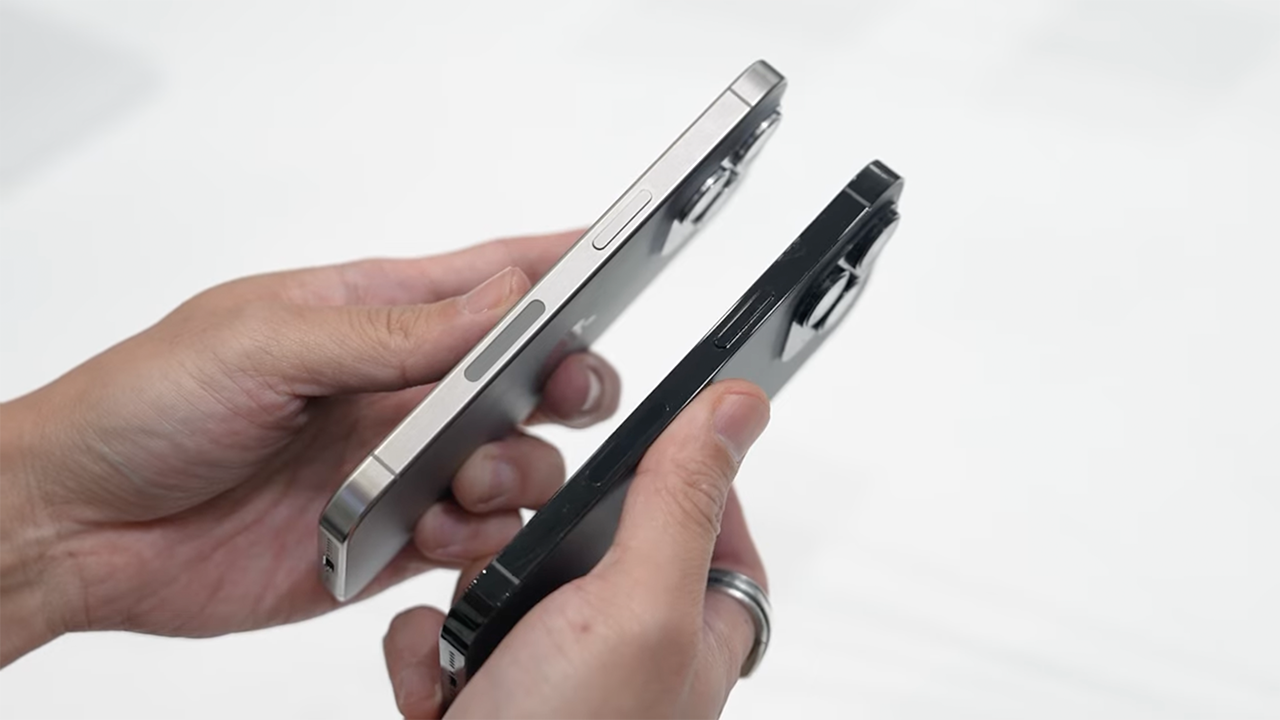
In a world with a love-hate relationship with extra buttons on a phone, Apple has gone to the deeper end and included two buttons in the latest iPhones: the Action Button and the Camera Control. Next year, Apple might consolidate the two buttons into one, ridding itself of the Action Button.
According to a Weibo leak from Instant Digital, Apple will merge the two buttons starting with next year’s iPhones. Though technically a new button in itself, the merged version will, based on the leak, retain more Camera Control than the Action Button.
Of course, both functions can coexist in the same button. The Camera Control activates with a single press, while the Action Button needs a longer press. In the merged button, a single press can still open the camera and a longer press can activate whatever the user sets it to.
Both buttons have had a storied past. The Action Button came in 2023, replacing the Ring/Silent Switch. Meanwhile, the Camera Control debuted a year later, offering control over the camera with a capacitive button. The current iterations retain both buttons on the same phone.
Personally, as someone used to creating content, the Camera Control button is ultimately a boon to get those shots quickly while in the moment. Retaining that functionality is definitely worthwhile.
Enterprise
NVIDIA CEO admits to having an affair with alleged Chinese spy
The company is currently investigating the allegations.
In one of the craziest headlines this year, NVIDIA CEO Jensen Huang has admitted to having an affair with an alleged Chinese spy.
Over the weekend, a heavy allegation claimed that the NVIDIA CEO had a relationship with a person actively involved in Chinese intelligence. Since Huang is involved in business globally, the accusation isn’t a light one. In fact, it’s serious enough that Huang admitted to the affair late this past Sunday.
In an internal letter reported by Associated Press, the CEO acknowledged the existence of the affair with a business executive. Of note, Huang did not confirm the executive’s ties to Chinese intelligence. NVIDIA, however, will conduct its own investigations regarding the allegations. Despite the allegations, Huang will remain as the company’s CEO. The company is also confident that the alleged spy did not compromise NVIDIA’s secrets.
According to The New York Times, the executive, Alice Huang, was reportedly feeding information back to Beijing, despite being an executive of the Singapore-based Megaspeed, which is already a serious customer of NVIDIA.
Now, NVIDIA is currently in a prime position when it comes to the industry today. Formerly a huge proponent of gaming peripherals, the company is now one of the biggest names in AI hardware, allotting a lot of its products for data centers. Huang’s allegations come at an interesting time.


Apple iPad mini OLED review
Has the mini gone PRO?!

ROG G700 review: The best prebuilt PC you can get off the shelf
This PC will make you stop worrying about specs.

HP OMEN Max 16 review: Gamer-maxxing in deep black
Peripherals deemed necessary to max this out

How to change your Nintendo eShop region

When innovation meets culture

St. Peter reunited people with their deceased loved ones through tech

ICYMI: PKL 2026 belongs to BOOM Esports

GTA VI pre-loading now available on PS5, Xbox

Your coffee nook is getting a makeover with Starbucks’ holiday collections

vivo V80 debuts with ZEISS cameras

vivo V80 review: Good phone, tough sell

OPPO Find X10 Series: Price, availability in the Philippines

TECNO CAMON Slim 5G gets launch discounts, free MagBadge


-
 Lifestyle1 week ago
Your coffee nook is getting a makeover with Starbucks’ holiday collections
-

 Lifestyle2 weeks ago
Sticker season is back, and so is the planner your ~friends~ might fill in for you
-

 Gaming1 week ago
Wild Rift Patch 7.3, celebrates K/DA comeback
-

 News6 days ago
Sony revives classic Walkman headphones with USB-C MDR-3R
-

 Gaming2 weeks ago
PlayStation unveils Prism Collection
-

 Laptops2 weeks ago
Apple unveils MacBook Pro with PROLED XDR display and Touch
-

 Gaming2 weeks ago
FromSoftware’s The Duskbloods delayed to 2027
-

 Gaming2 weeks ago
Demon Slayer: The Hinokami Chronicles 2 launches on Switch 2