
Features
There’s a real-life pokémon gym—and this is what it looks like


Ever since the phenomenal rollout of the augmented-reality smartphone game Pokémon Go a few weeks ago, pokémon trainers have already discovered more than one virtual pokémon gym in the U.S. and across Europe.
In Go’s version of pokémon gyms, pokémon can be trained and trainers can claim them either by assigning a pokémon or battling a rival team who has claimed one. Of course, all this only happens on your smartphone.
But somewhere in Japan—where it all started—is a real-life pokémon gym where anyone can physically train, play, and interact with (virtual) pokémon. That means you, pokémon trainer!

A first, and so far the only one of its kind in the world, the Pokémon Expo Gym (PEG) opened in November 2015 in Osaka as part of Expocity, a massive shopping and entertainment complex.
It’s a 70-minute commute from Osaka Castle. You get off at the Banpaku-Kinen-Kōen Station; a giant inflatable Pikachu will welcome you upon arrival.

The Pokémon Expo Gym is right across this Gundam store.

Inside the gym is a small cafe that sells Pokémon-themed snacks.

We’ve seen healthier menus than this.

You can also take home this Pikachu tub filled with popcorn.

Just like Pokémon Centers in other parts of Japan, the Pokémon Expo Gym has a store that sells a sea of plush toys. Because, really, who wouldn’t want one?

Cuteness overload!
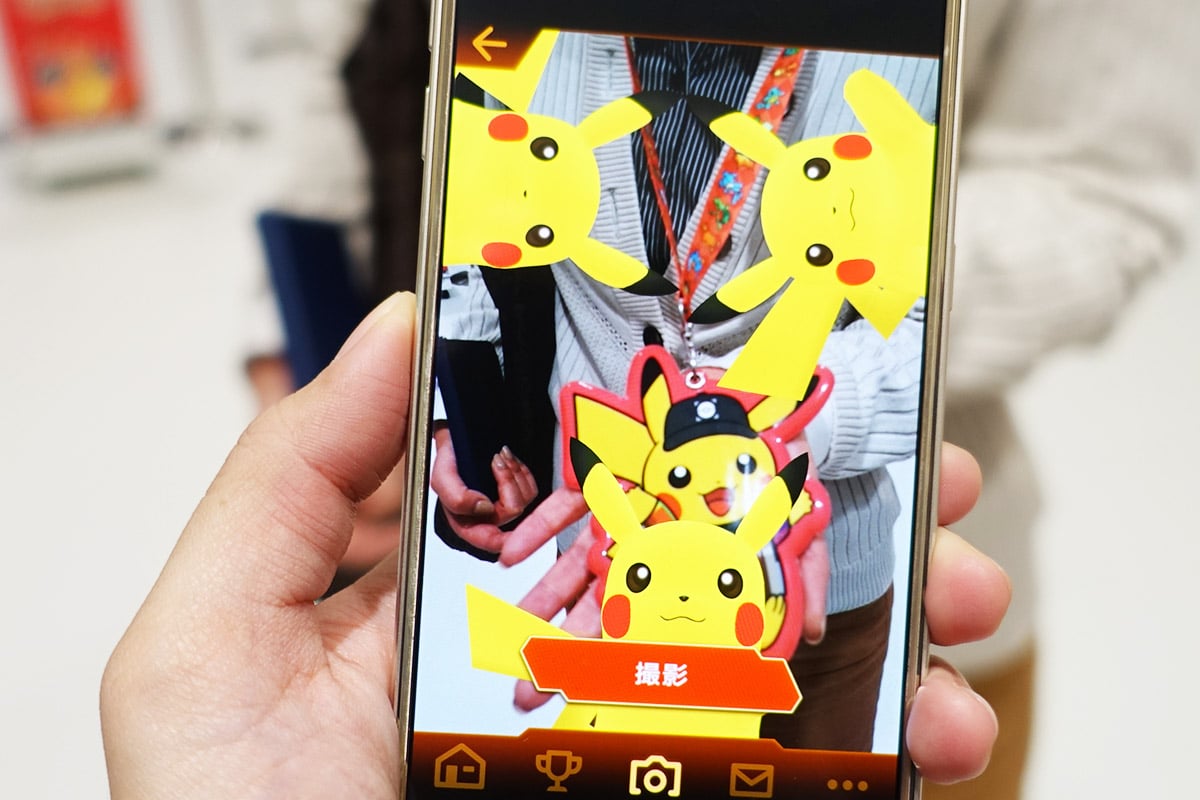
There are also some AR-enabled merchandise that are not available in any other Pokémon stores, like this ID tag.
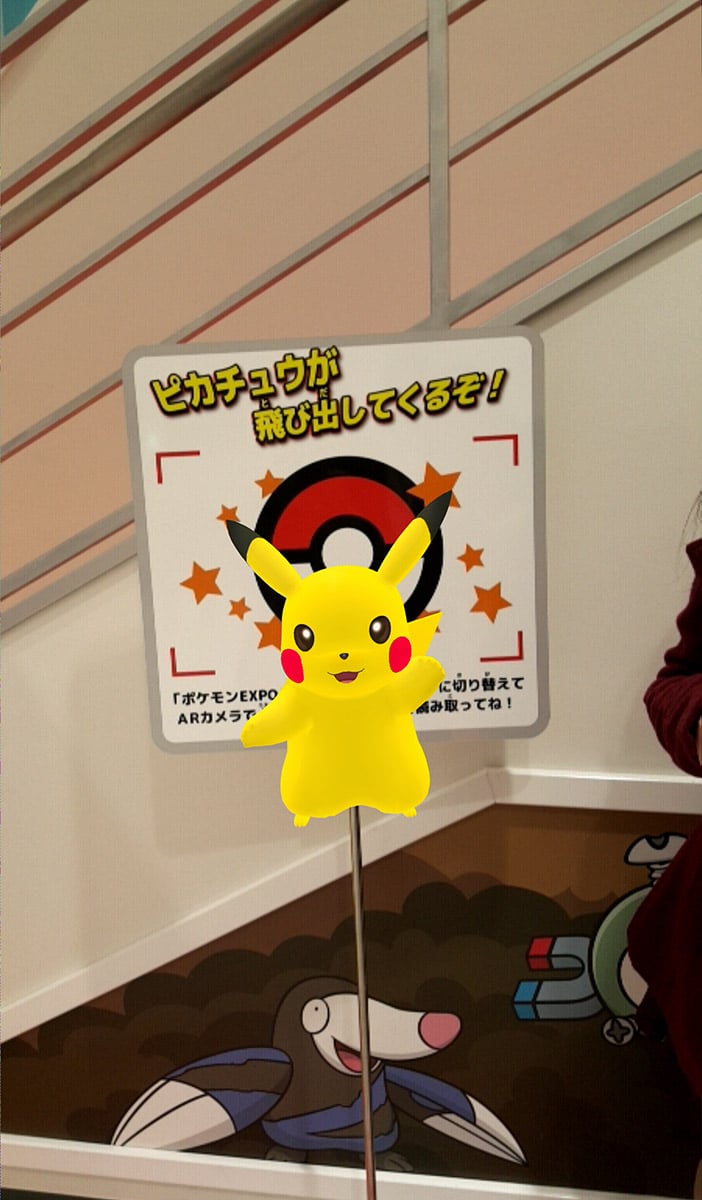
There are signs (in Japanese) around the gym with AR codes that activate with the PEG Gear app. Yep, that Pikachu popped out of that pokéball signage.

The gym’s real attraction, though, is an arcade-like facility beyond this gigantic pokéball. To get in, you need to buy a membership card called PokéPera for 500 yen.
Sadly, a membership at the world’s only real-life pokémon gym doesn’t increase your chances of catching rare creatures in Pokémon Go. But who knows what pokémon you can catch here once the app finally rolls out in Japan?

If you plan on trying out the facilities, you will have to top up your card with yen.
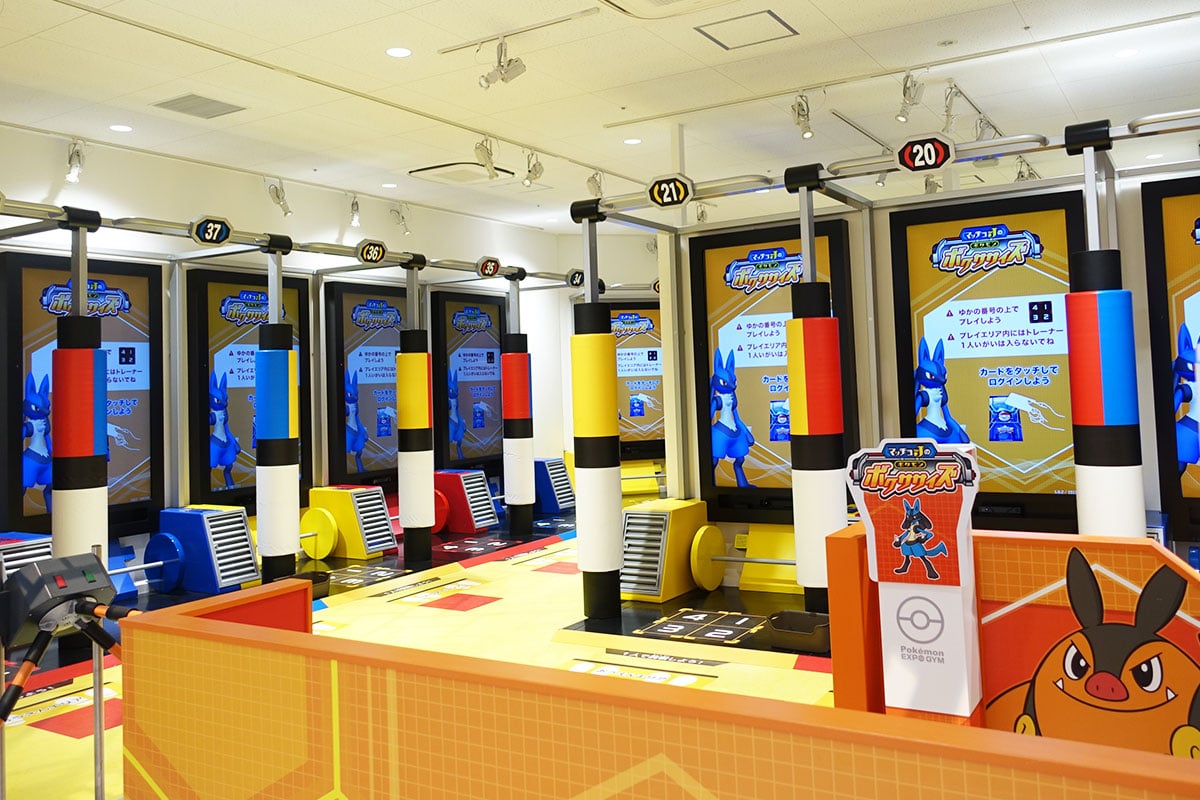
Macho J’s Boxercise, for example, costs 400 yen for one game that lasts for 3 minutes.

Here’s my friend Leslie getting physical with Macho J.

Aside from making Pikachus pop out, the PEG Gear app will also record your results inside the gym. I obviously have a long way to go to become a pokémon master. Sigh.

Gardevoir’s Control Score involves catching pokémon using a stylus and monitors.

There are other attractions where you can interact and talk with the pokémon. In case you’re going through some times, you can learn to punch like Machamp and get some life advice at Machamp’s Counseling Room.
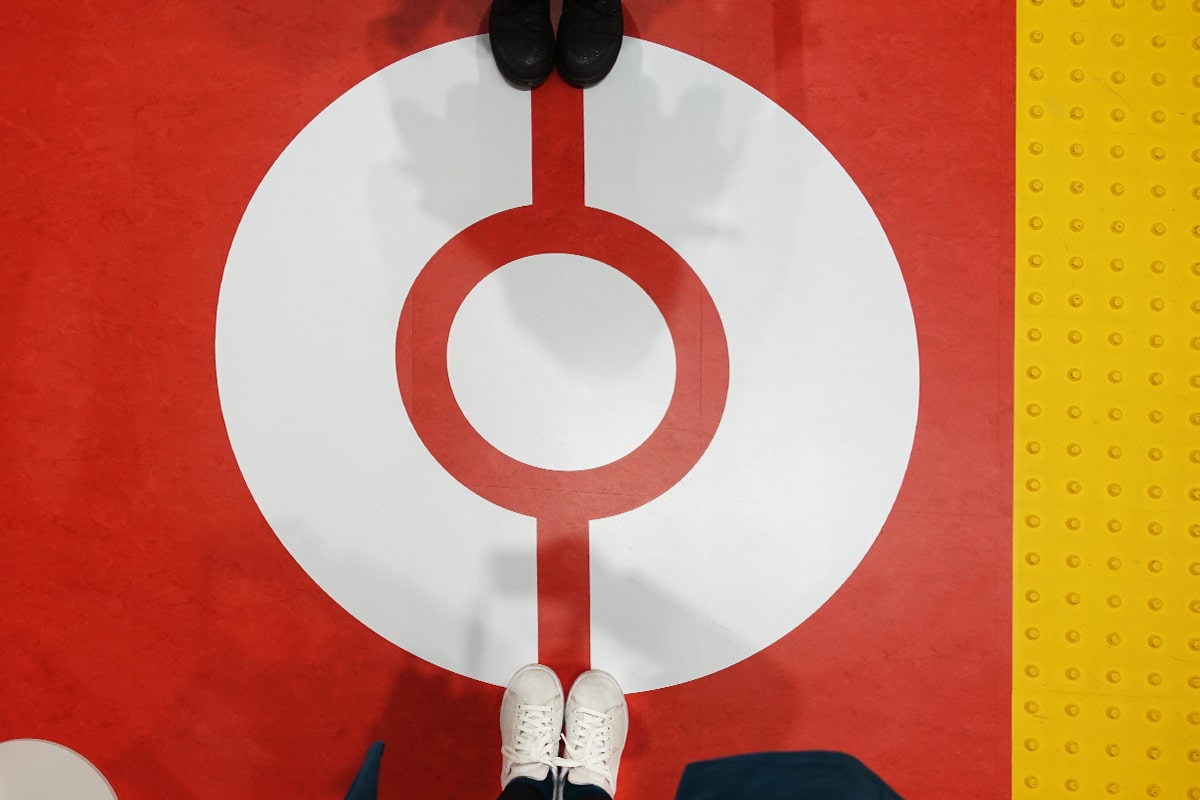
The entire gym is decorated with Pokémon elements to give you all the #feels. Floors are painted with pokéball icons.

The walls also have murals like this one.
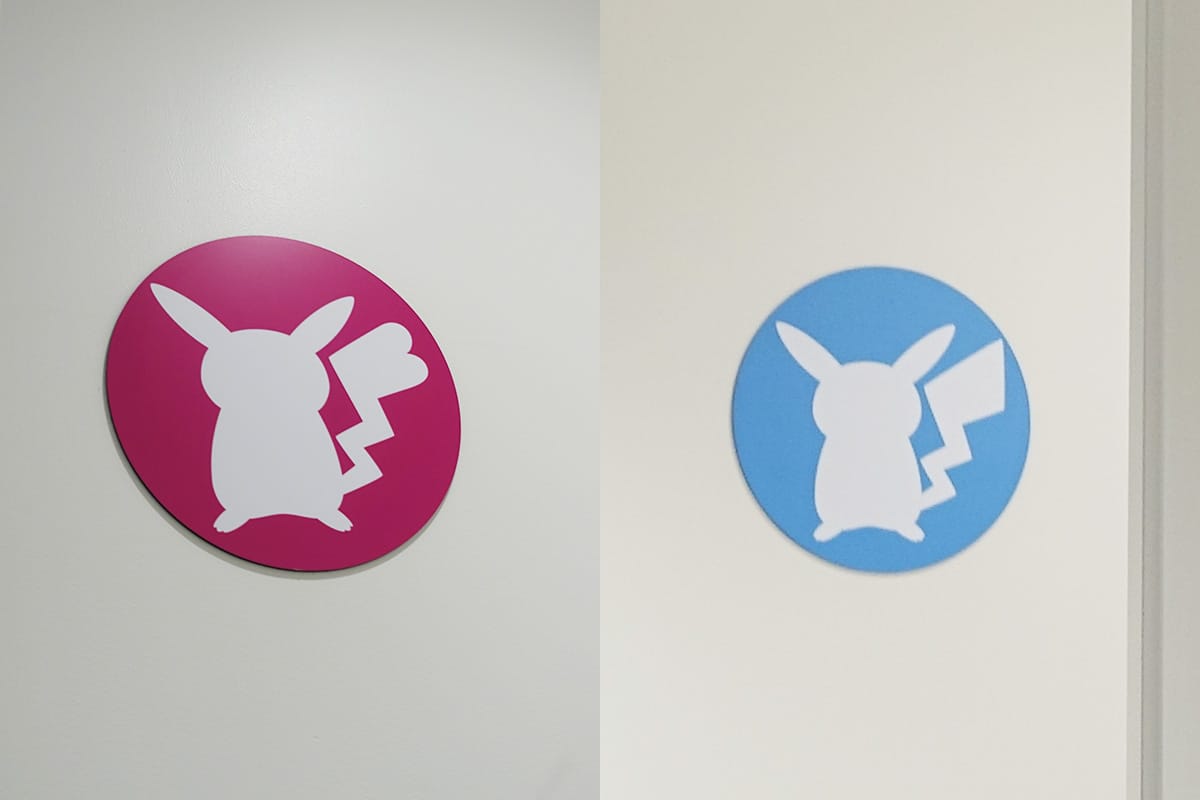
Even the toilet signs are Pikachu silhouettes.

If you ever find yourself traveling across Osaka — with half a day and more than 4,000 yen to spare — a visit to the Pokémon Expo Gym is a must. Whether you’re a die-hard Pokémon fan or not, this actual pokémon gym is something everyone can appreciate.
1 USD = 106 JPY
[irp posts=”10698″ name=”Pokémon Generation 2 is out”]






For years, the pitch for a foldable smartphone was remarkably simple: look, it folds.
That was enough when the category was new. Samsung had to prove that a smartphone could have a hinge, bend in half, and still work like a phone.
Eight years later, that is no longer the interesting part.
The question has shifted from can a smartphone fold? to what does folding actually let people do?
For Samsung, the answer increasingly seems to be about making the phone fit the person, rather than asking the person to adapt to the phone.
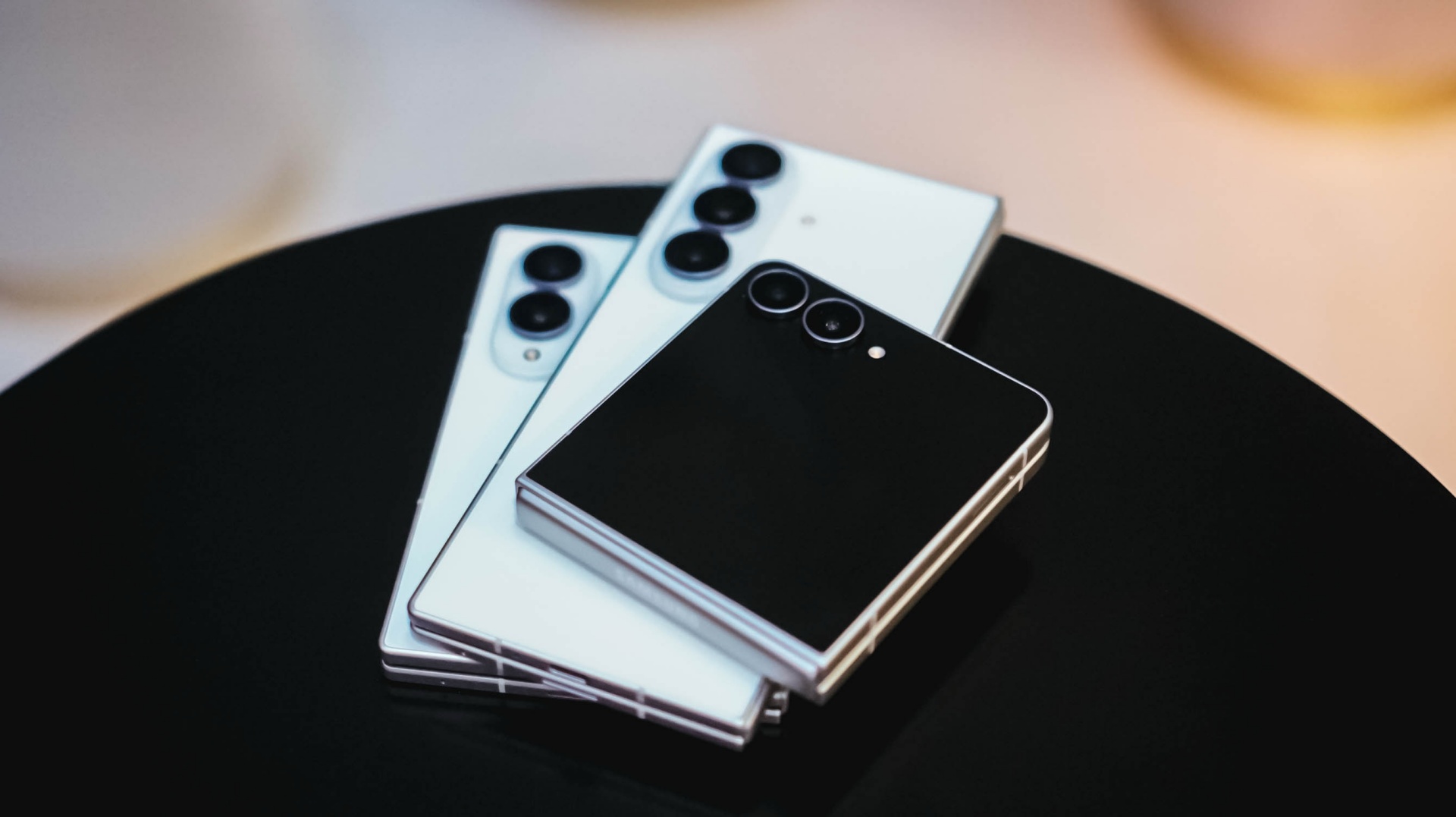
That shift is reflected in the latest Galaxy Z lineup. The Galaxy Z Fold8, Galaxy Z Fold8 Ultra, and Galaxy Z Flip8 don’t simply offer different specifications or screen sizes. Samsung sees them as different expressions of how people use their phones — whether that means watching, working, creating, communicating, or simply carrying the device around.
Jun Guevara, Head of Corporate Marketing at Samsung Philippines, says this reflects a broader change in how people think about smartphones.
“Before, it’s always about the specs — what the camera is like, how big or heavy it is, what’s the process, etc. But now with AI in the picture and it becomes more personal, contextual and action-oriented, people will expect their devices to adapt more closely to what they are trying to do.”
That makes the foldable form factor particularly interesting.
A foldable can be compact when portability matters, then become larger when more space is useful. It can change how you interact with the same device depending on the task at hand.
In other words, the screen doesn’t have to stay the same just because the phone does.
Eight years of listening
Samsung’s foldable journey began with a much more fundamental problem: convincing people that the concept was viable in the first place.
The company says it has spent more than seven years making thousands of engineering decisions across materials, displays, hinges, software, and overall design. But some of its most important lessons didn’t come from the lab.
They came from people actually using foldables.
Durability, in particular, became a major area of focus. Samsung says real-world usage helped inform improvements to display durability, crease visibility, the opening experience, materials, and overall device thickness and weight.
That accumulated experience has also changed what people expect from a foldable.
Consumers now judge them against the same fundamentals they expect from any flagship: can it hold up, can I carry it comfortably, is it powerful enough, and will it remain useful over time?
For Samsung, that means the foldable experience can’t be reduced to the hinge or the display. It has to work as a whole.
That sounds obvious. But it is also a meaningful shift.
The novelty of folding can get someone to try a device once. Making it a daily driver requires everything around the fold to work naturally.
That may be the biggest lesson from Samsung’s years of listening: people don’t use their phones in exactly the same way. So why should every foldable be designed to serve them the same way?
There isn’t one way to fold
Samsung isn’t trying to establish a single “best” foldable. Instead, its latest Galaxy Z lineup is built around different ways people want to use their phones.
The Galaxy Z Fold8 Ultra is positioned as the most capable option of the three. Samsung describes it as a device for people who need to do more, combining expansive multitasking and pro-level creation with its most advanced foldable design.
The Galaxy Z Fold8 takes a slightly different approach. Samsung sees it as the next evolution of the traditional Fold, balancing flagship performance with greater everyday usability and an immersive viewing experience.
Then there’s the Galaxy Z Flip8, which goes in the opposite direction. It is about portability, quick interactions, personal expression, and bringing AI experiences closer to the moments when you actually need them.
The distinction is important because Samsung isn’t arguing that everyone needs the biggest screen or the most powerful foldable.
Instead, it is arguing that there should be a foldable that makes sense for you. Your foldable match, if you will.
“We do not believe a single foldable form factor can meet the needs of every user,” Guevara says.
That idea runs through Samsung’s broader approach to the category. When evaluating new form factors, the company says it starts with real-world user value — whether a design meaningfully improves portability, productivity, content consumption, multitasking, or AI experiences.
The hardware, in that sense, is becoming a means to an end.
The right screen for the right moment
This is where Samsung’s vision for foldables starts to extend beyond simply having more screen.
Guevara describes a future where the mobile experience becomes less about having one fixed screen and more about having the right screen for the right moment.
Need something pocketable? Keep it compact.
Need more room to work? Open it up.
Want a more immersive viewing experience? Give yourself a larger canvas.
Want a quick interaction? Use the screen that’s already available.
The physical flexibility of a foldable gives AI more ways to respond to those situations, too. Samsung sees larger displays enabling deeper multitasking and content experiences, while cover screens can make interactions more glanceable and immediate.
“The mobile experience will become less about one fixed screen and more about giving users the right screen for the right moment.”
That also explains why Samsung isn’t predicting that foldables will replace traditional smartphones altogether.
Bar-type phones will remain important because they’re familiar, powerful, and portable. The point isn’t necessarily to eliminate one form factor in favor of another.
It’s to give people more choice.
And, perhaps more importantly, to make that choice feel right.
Technology in action
Samsung’s partnership with Spider-Man fits into that idea in an interesting way.
Rather than treating the devices purely as technology products, Samsung describes its cultural collaborations as “Technology in Action.” The goal is to place its products inside stories and narratives where their different capabilities can be demonstrated in context.
In the Spider-Man partnership, that means seeing a Galaxy Z Flip used for portability, a Galaxy Z Fold used for seeing the Spider-tracker map bigger, and a Galaxy Watch notifying Ned Leeds that Spider-Man is in the vicinity.
It’s a very literal demonstration of Samsung’s argument: the form factor matters because of what it lets people do.
A Flip can disappear into a pocket. A Fold can give you more room to work. A Watch can help you stay connected without reaching for your phone.
In that sense, Spider-Man becomes more than a backdrop for the latest Galaxy Z devices. It’s a way for Samsung to show its technology in action, inside a story about connection, community, and self-expression.
Making the foldable fit
There is still a perception that foldables are niche products.
Samsung doesn’t see it that way anymore.
Guevara points to repurchase rates for the previous generation — 32 percent for Fold7 and 37 percent for Flip7 — as evidence that once people adopt foldables, many choose to stay with the category. He also points to Fold7 attracting more former Ultra users, suggesting the category is expanding beyond its traditional early adopters.
Whether foldables eventually become the default smartphone remains to be seen.
Samsung isn’t betting on that, either.
Instead, it is betting on something more flexible: that people will choose devices that match how they actually live.
That’s a different proposition from the one Samsung made when the first Galaxy Fold arrived.
Back then, the company had to prove that a smartphone could fold.
Now it has to prove that a foldable can belong in everyday life.
And after eight years of engineering refinement and listening to how people actually use these devices, Samsung believes the next step isn’t making people adapt to the foldable.
“Our goal is not to make users adapt to foldables. It’s to make foldables fit more naturally into how people work, watch, create and communicate.”
It’s making the foldable match them.
Perhaps that’s where the Galaxy foldable story is heading next.
Not toward a phone that can do everything.
But toward a phone that knows when to become what you need.
Features
The designated photographer’s new favorite phone: OPPO Reno16 Series 5G
Built for the moments you’ll want to remember

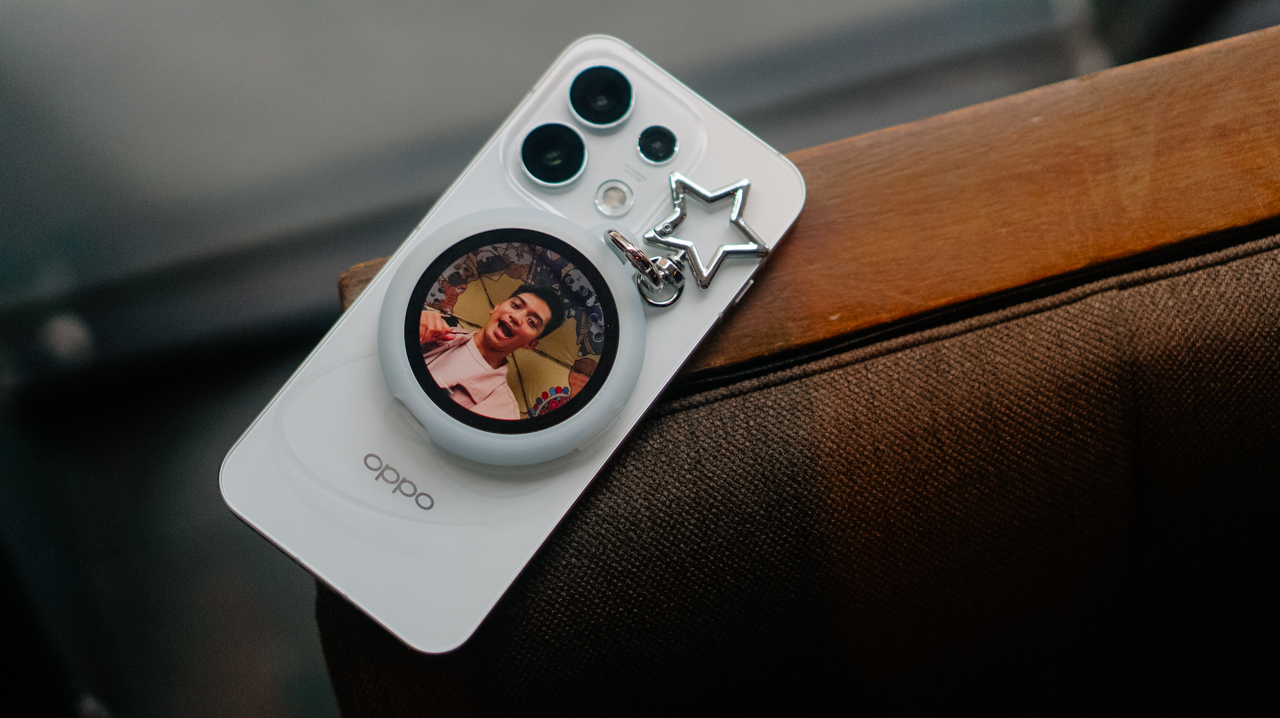
Every friend group has a designated photographer.
The one who reminds everyone to take a group photo before leaving, asks for one more shot “just in case,” and somehow ends up with a camera roll full of memories while appearing in very few of them.
I’ve been slipping into that role for a while now, and lately, I’ve been doing it without a camera.
I’ve relied entirely on the OPPO Reno16 Series 5G and its Pocket Studio experience to document coffee runs, hangouts, and everything in between.
Capturing the moments between the milestones

When people think about documenting their lives, they often focus on the headline moments. Like the ones worth posting for the ‘gram.
What often gets overlooked is everything around them, like the early morning coffee run before everyone’s fully awake, or the laughter that breaks out during a random conversation.
So is the roadside stop that turns into an impromptu photo session. These are the moments that tell the real story of an experience.
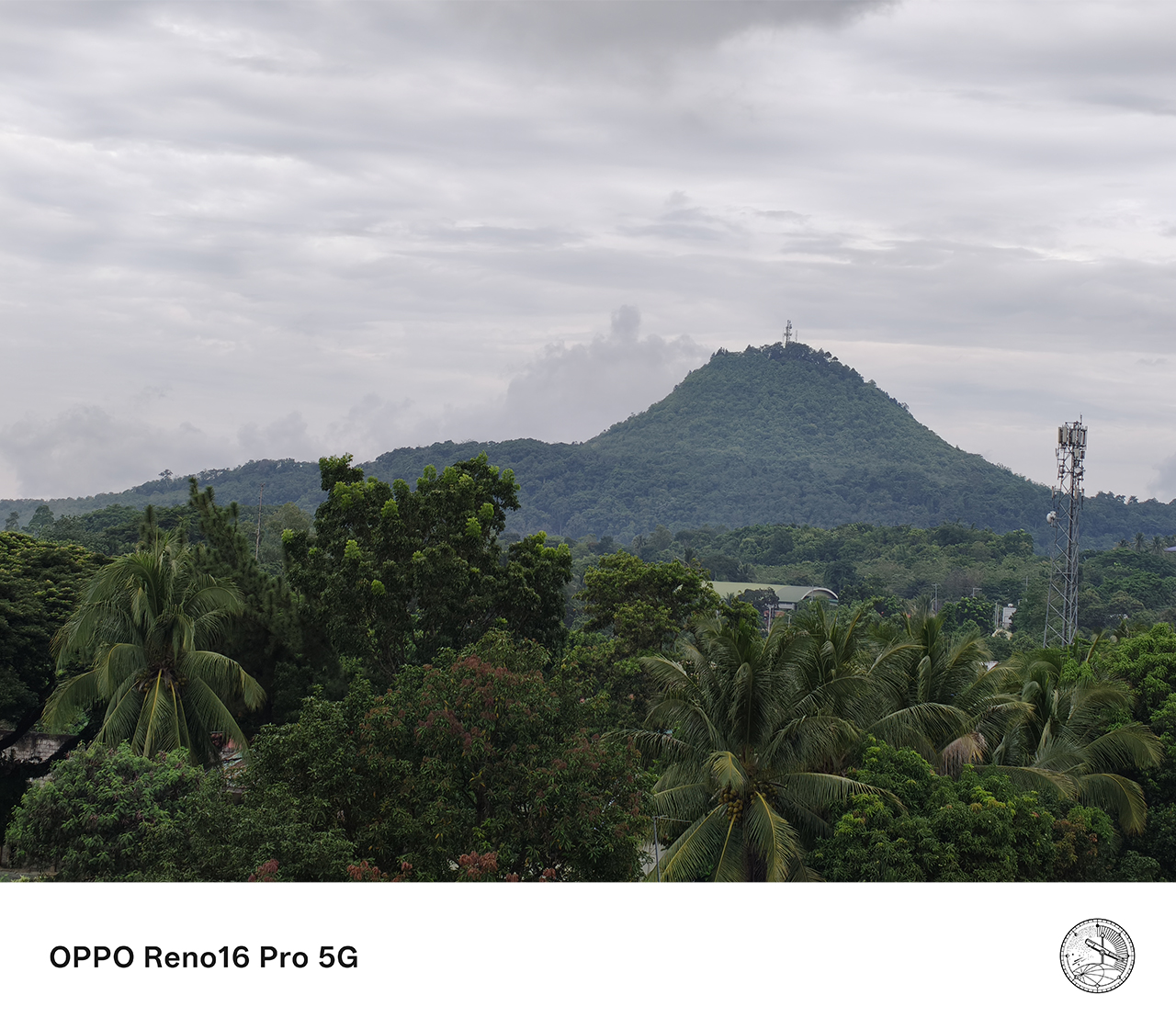
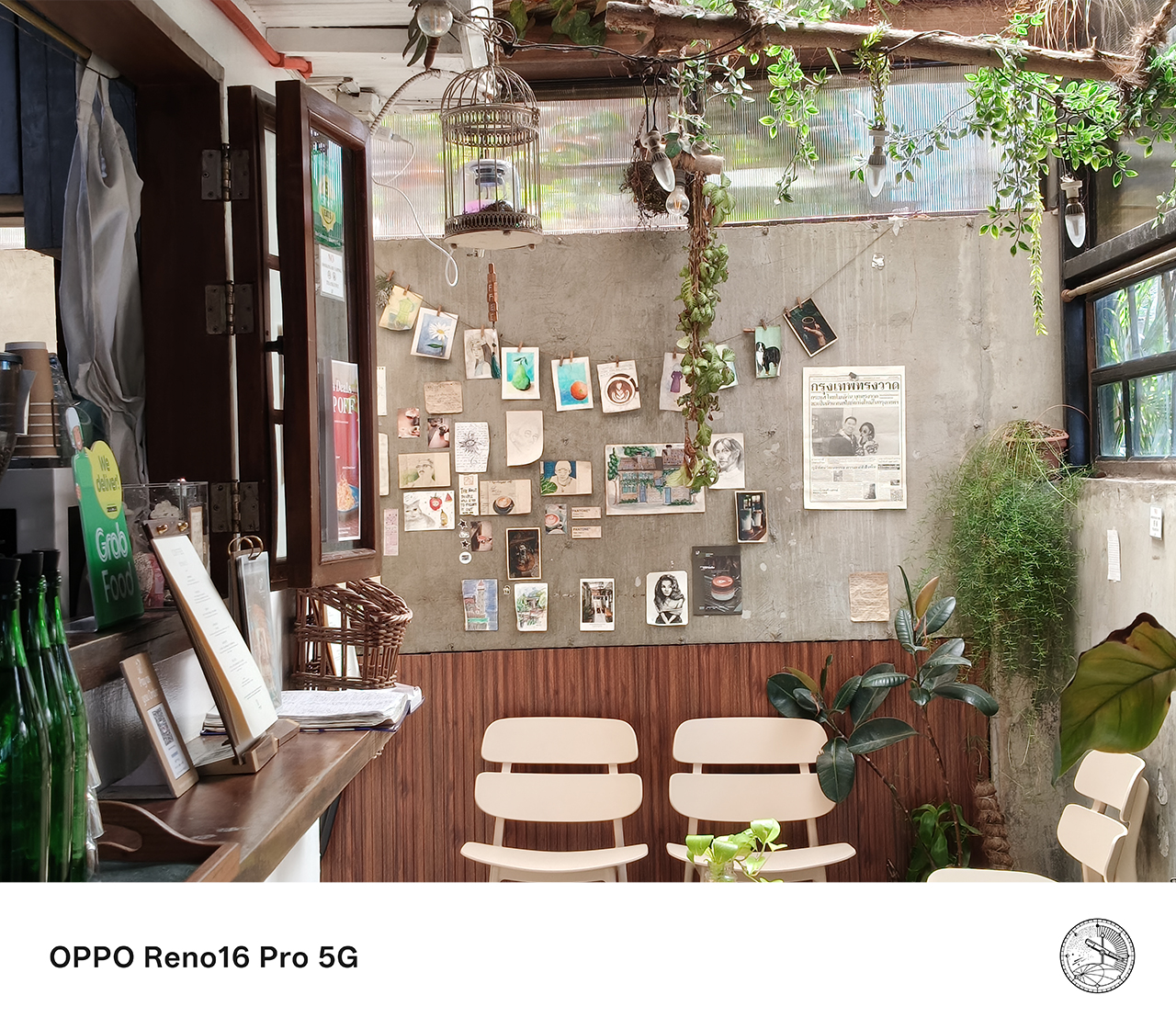


Pocket Studio, the OPPO Reno16 Series 5G’s signature content creation experience, feels built for exactly this kind of moment.
Instead of treating photography and videography as separate tasks, it creates a seamless workflow that lets users capture, create, edit, and share content directly from their smartphone.
The feature makes it easier to preserve moments that matter, even the small, unplanned ones with people who may or may not stay in my life. Either way, I’ve got a memory I can cherish.
Finally, the designated photographer gets to be in the photo
One of the biggest challenges of being the group’s unofficial photographer is that you’re usually the one left out of the shot.

The OPPO Reno16 Series 5G addresses this through its integration with the OPPO Bubble and the Camera Remote View feature.

Instead of relying solely on the front camera, Camera Remote View lets users preview and control shots while using the smartphone’s rear camera system. The result is a sharper, more detailed image, especially for group photos and selfies.
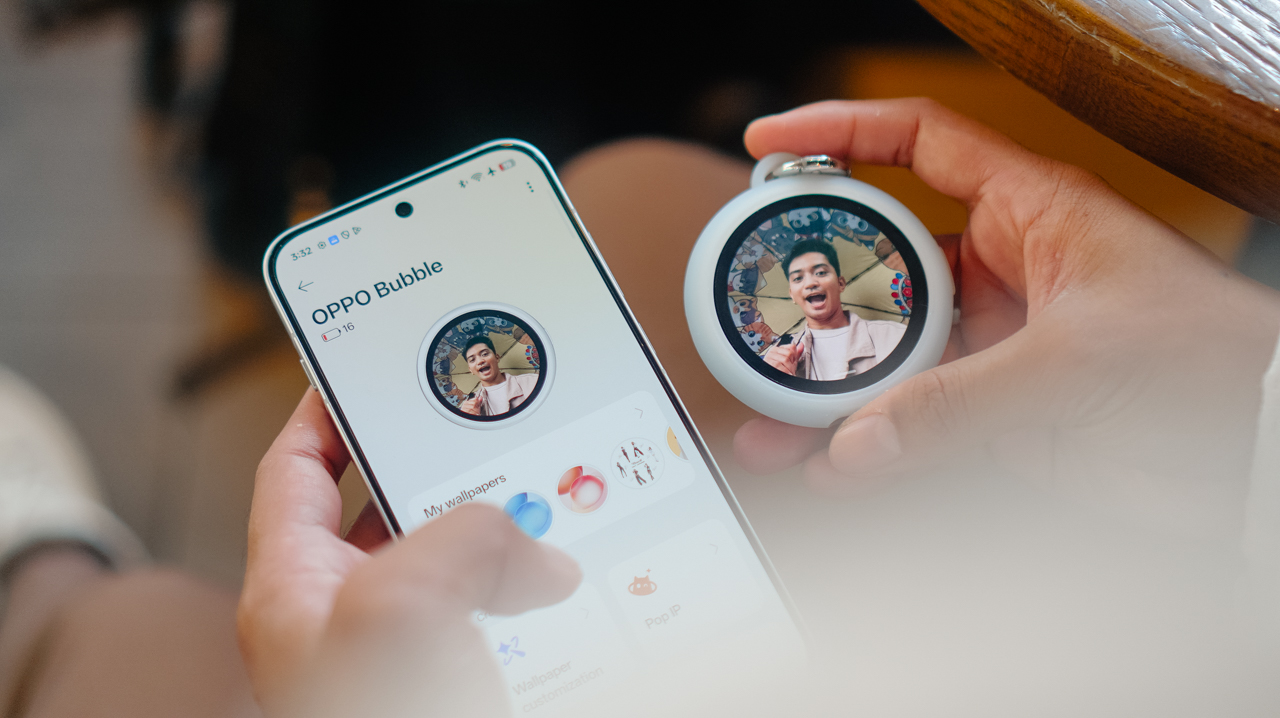
This has become one of the most useful features for gathering everyone together. Camera Remote View made it easy to capture higher-quality photos while making sure nobody had to stay behind the camera.




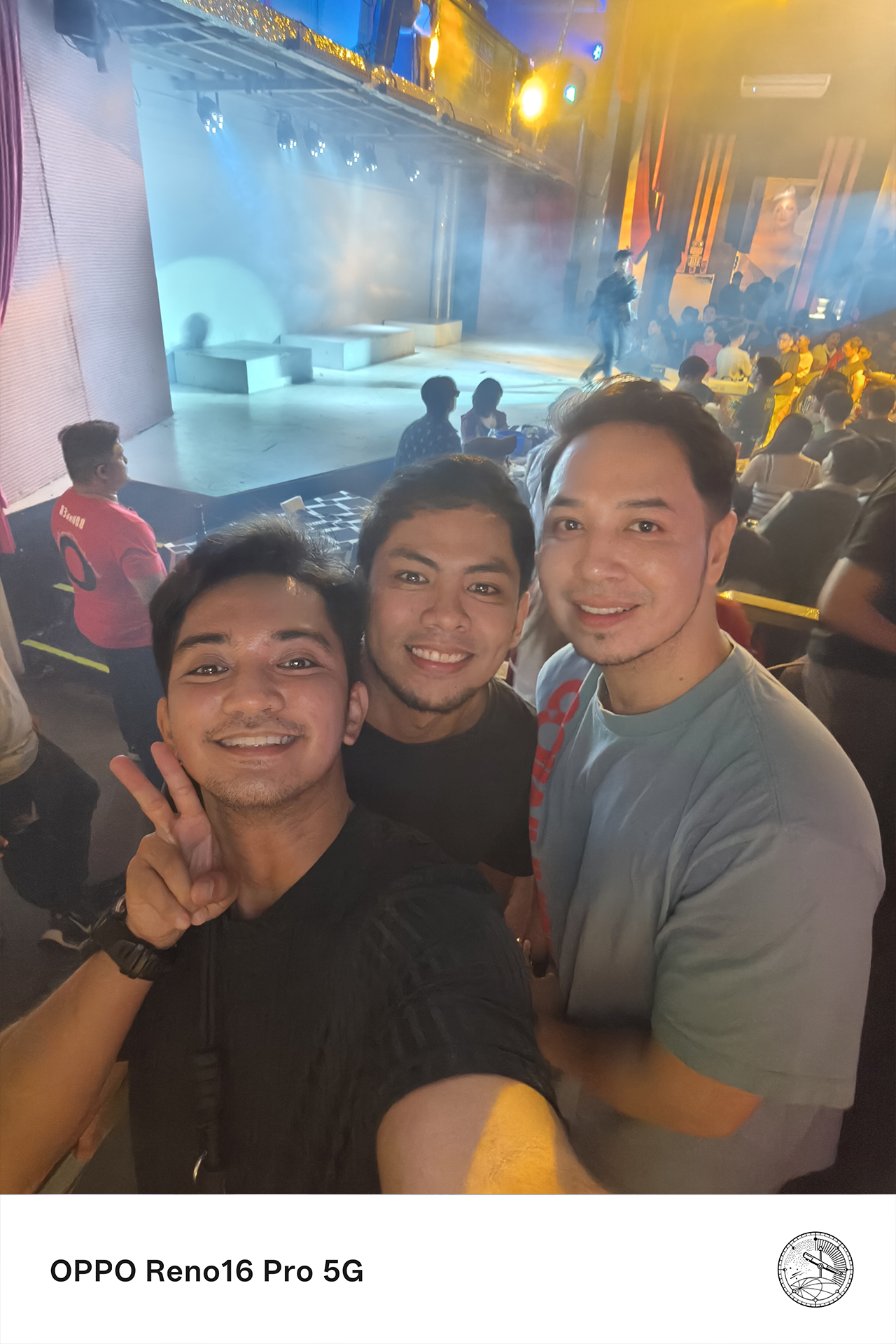

For someone who is usually responsible for documenting everyone else’s memories, that small change makes a surprisingly big difference.
Flagship-quality results without carrying extra gear
There was a time when documenting properly meant bringing multiple devices.
I used to carry a camera for photos and a separate device for video, then edit everything later on a laptop. Now, the experience feels remarkably different.
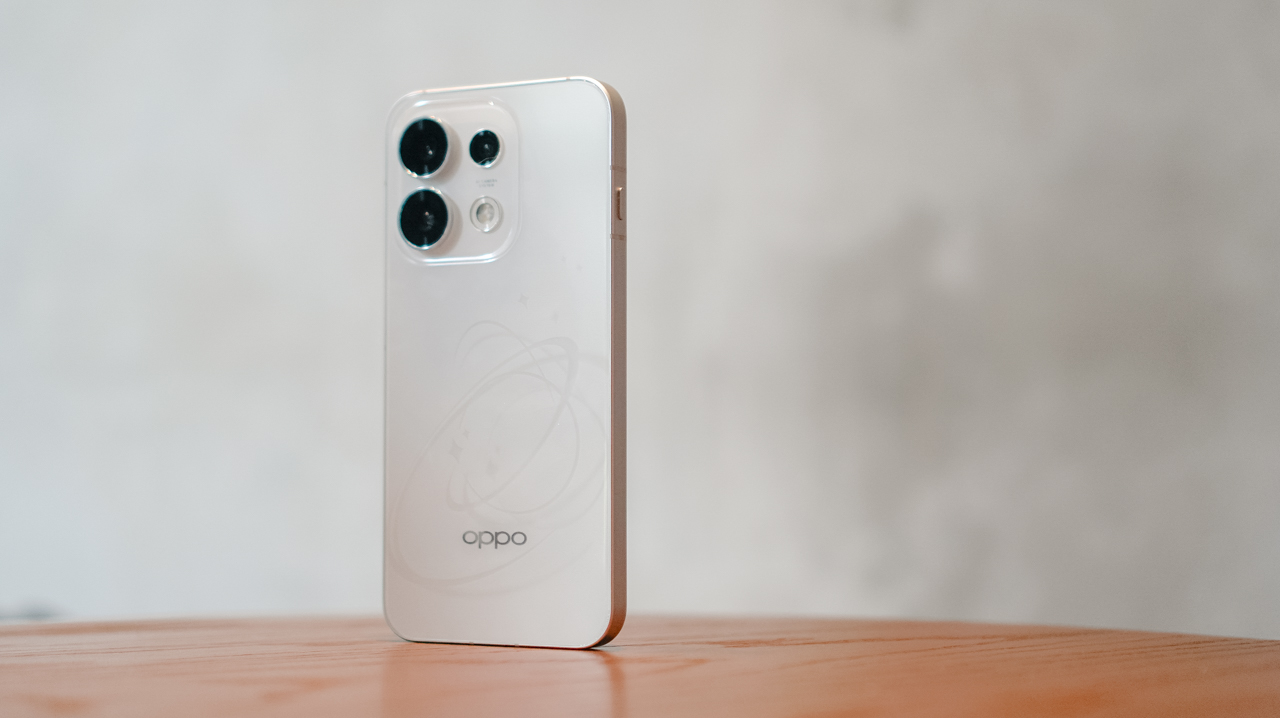
The OPPO Reno16 Series 5G delivers pro-level photo and video quality, good enough to leave the extra gear behind for most everyday moments.
From detailed landscapes and vibrant food photography to candid portraits and dynamic action shots, the Reno16 Series consistently produces content that feels polished and social-ready straight from the device.

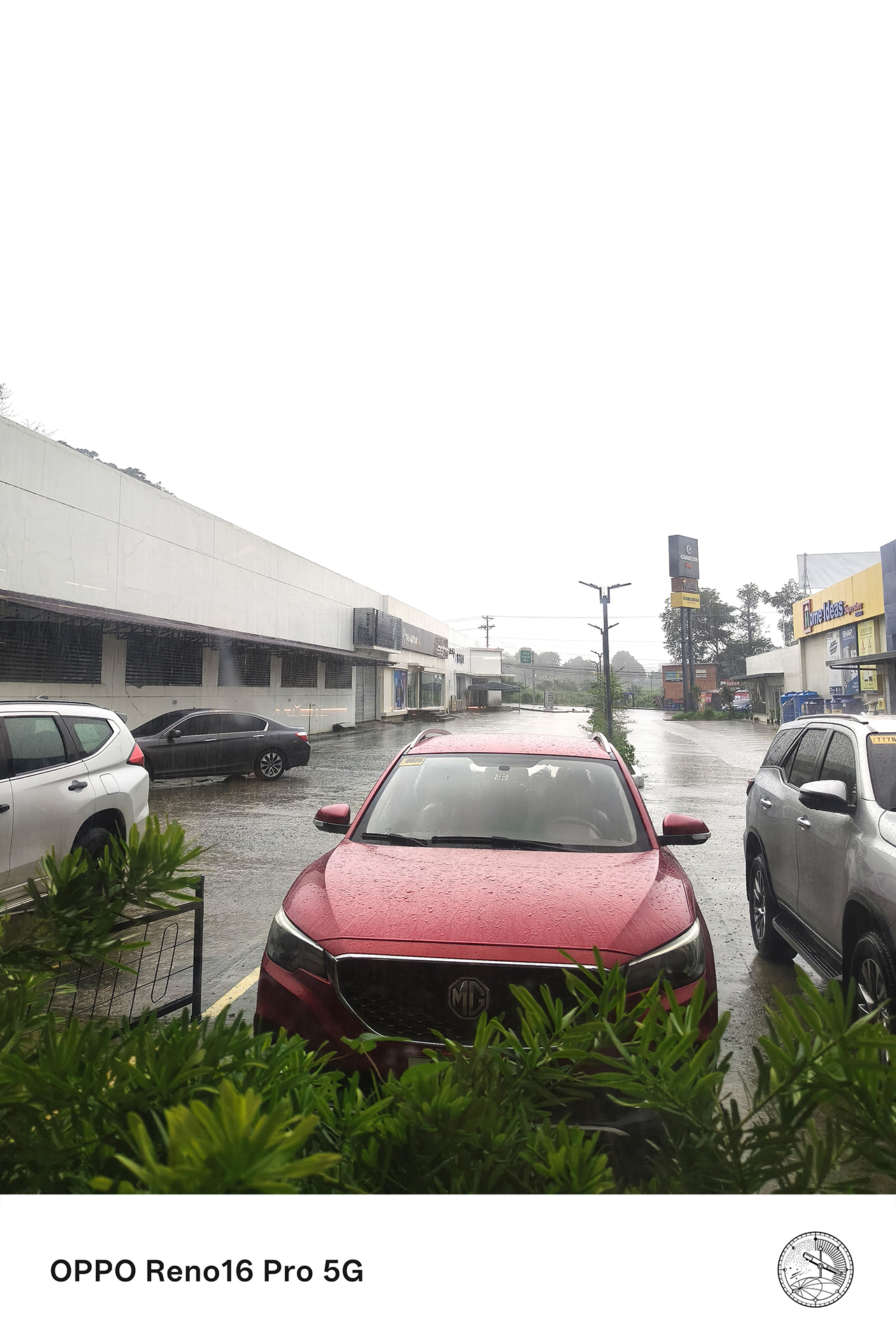

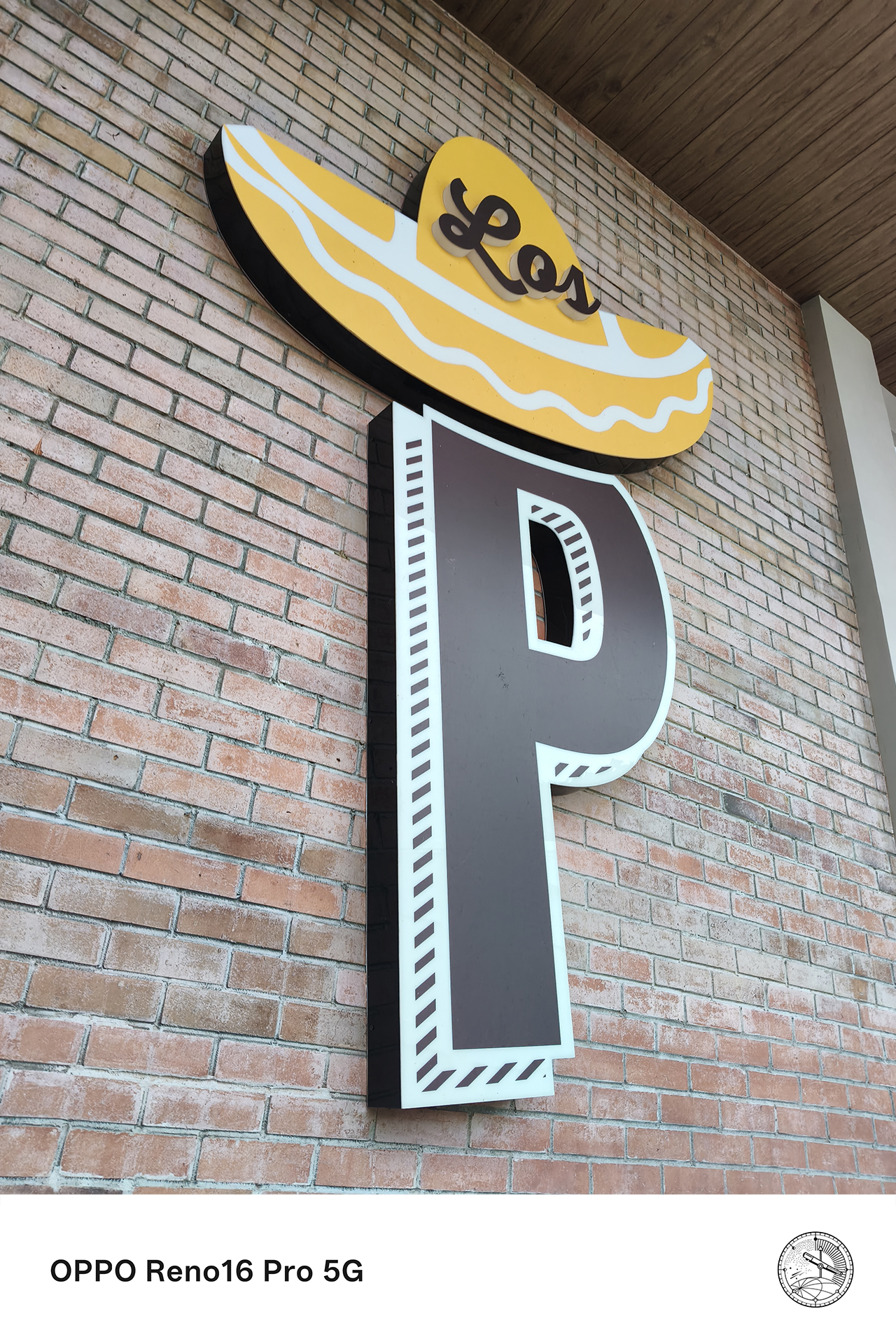

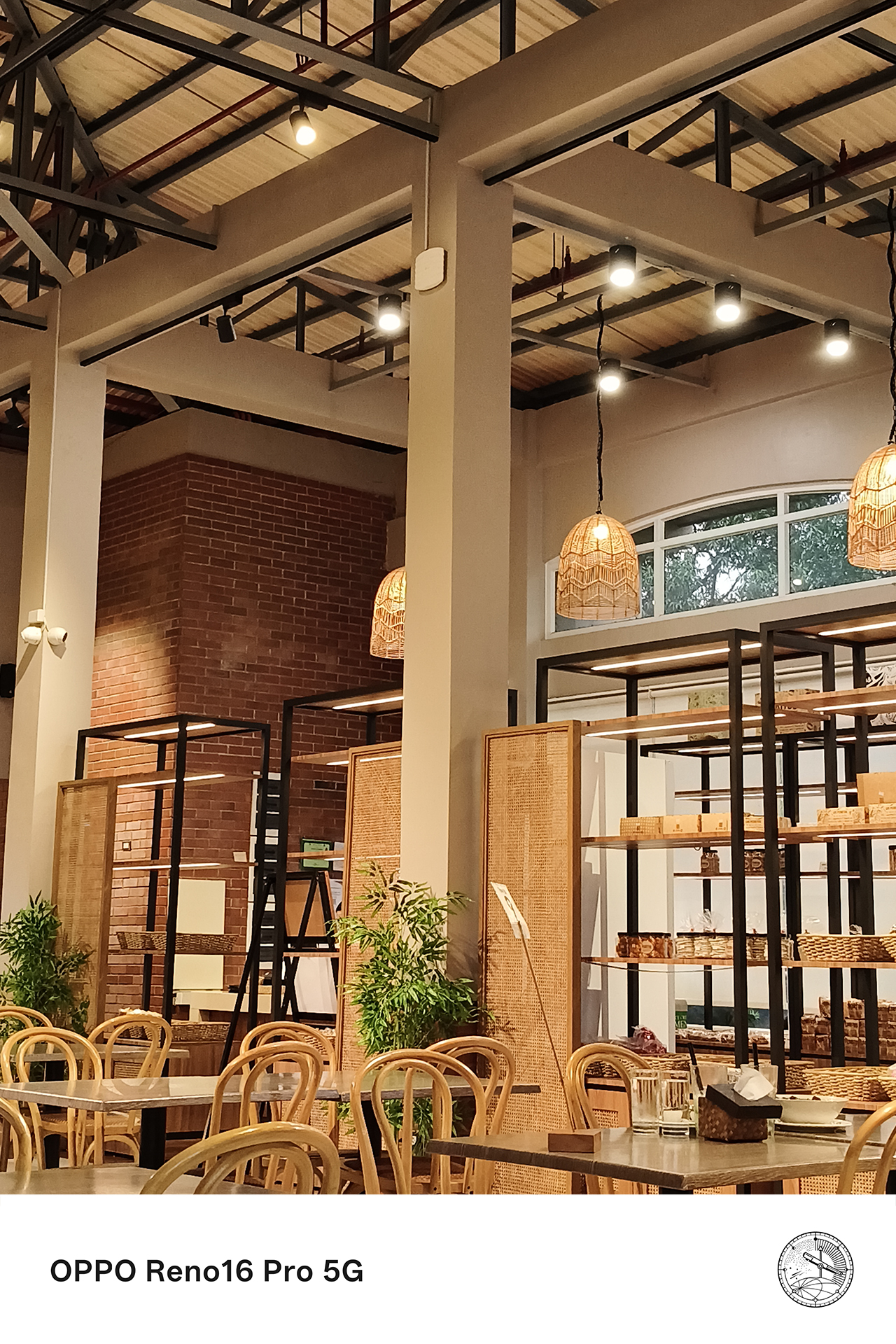
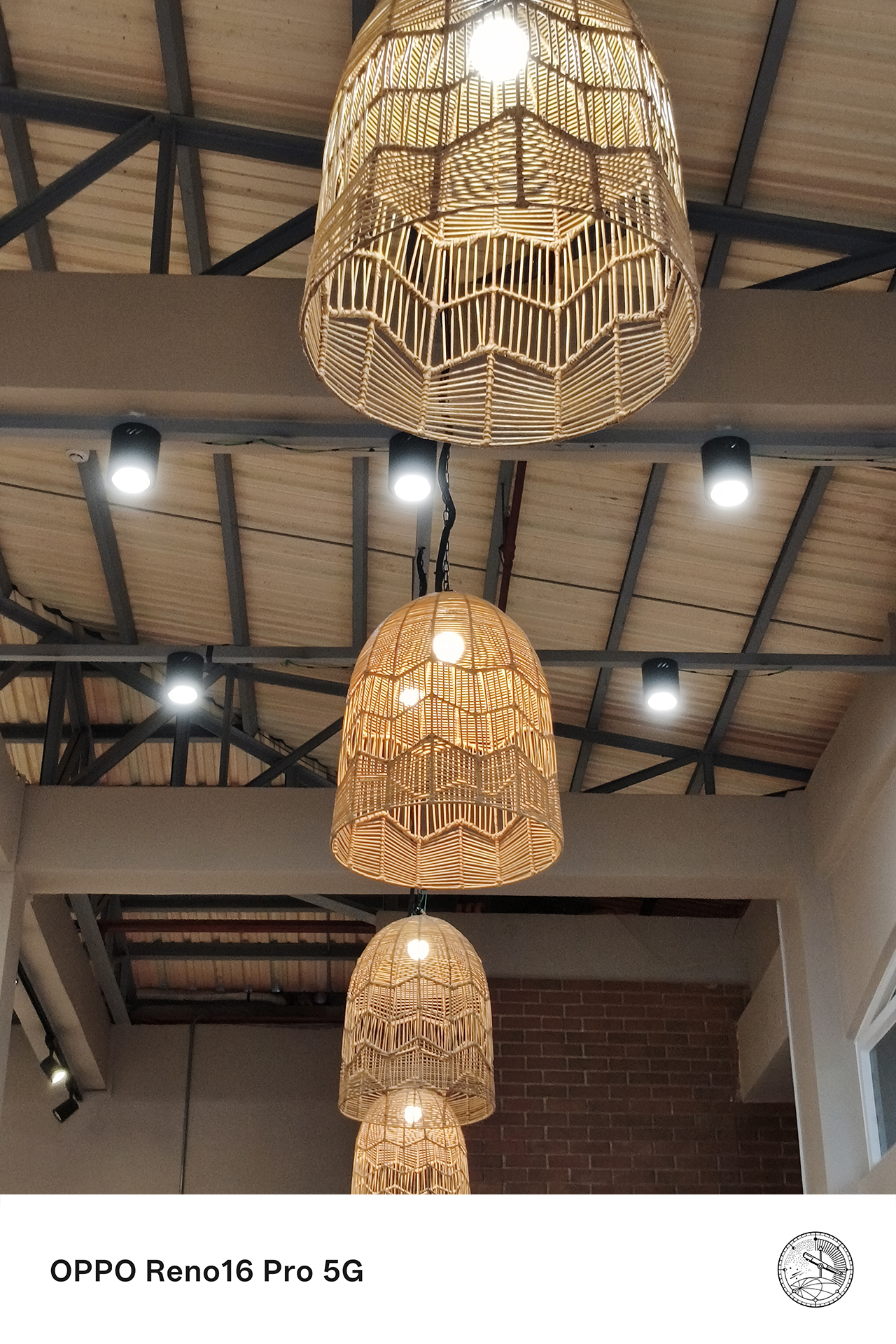

This is particularly valuable for the moments that happen without warning. The ability to instantly capture high-quality content without switching between devices meant fewer missed opportunities and more authentic memories preserved.
Telling richer stories from multiple perspectives
The best content pulls viewers into the experience itself.
This is where the combination of premium camera hardware, multiple shooting perspectives, and AI-powered creative tools like the AI Portrait Glow from the AI Editor improves the Pocket Studio experience.






Wide shots help establish the atmosphere of a place. Close-up details bring viewers into the moment. Some video clips add movement and energy, and some portraits capture emotion. Together, these elements create a more complete story.

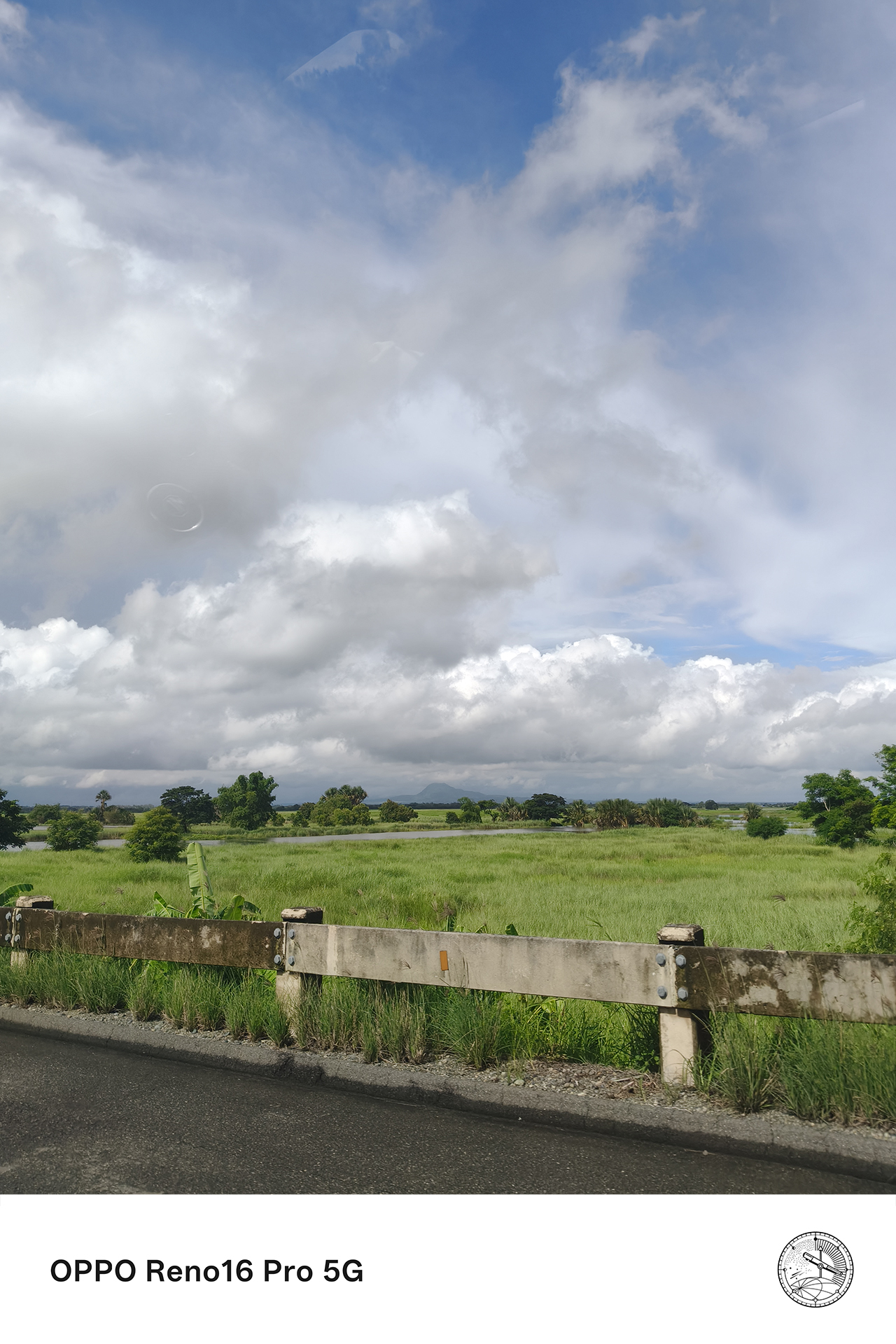
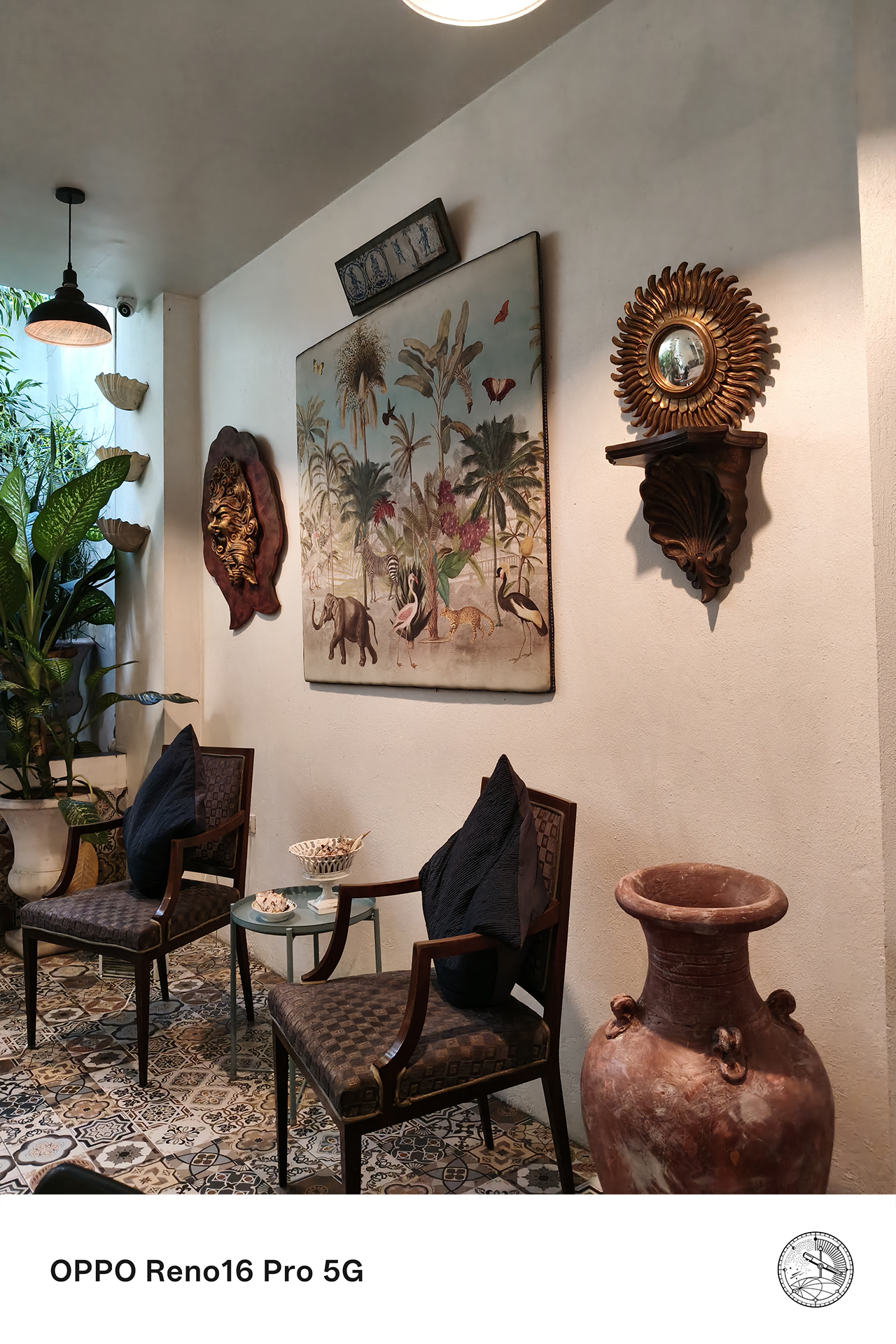

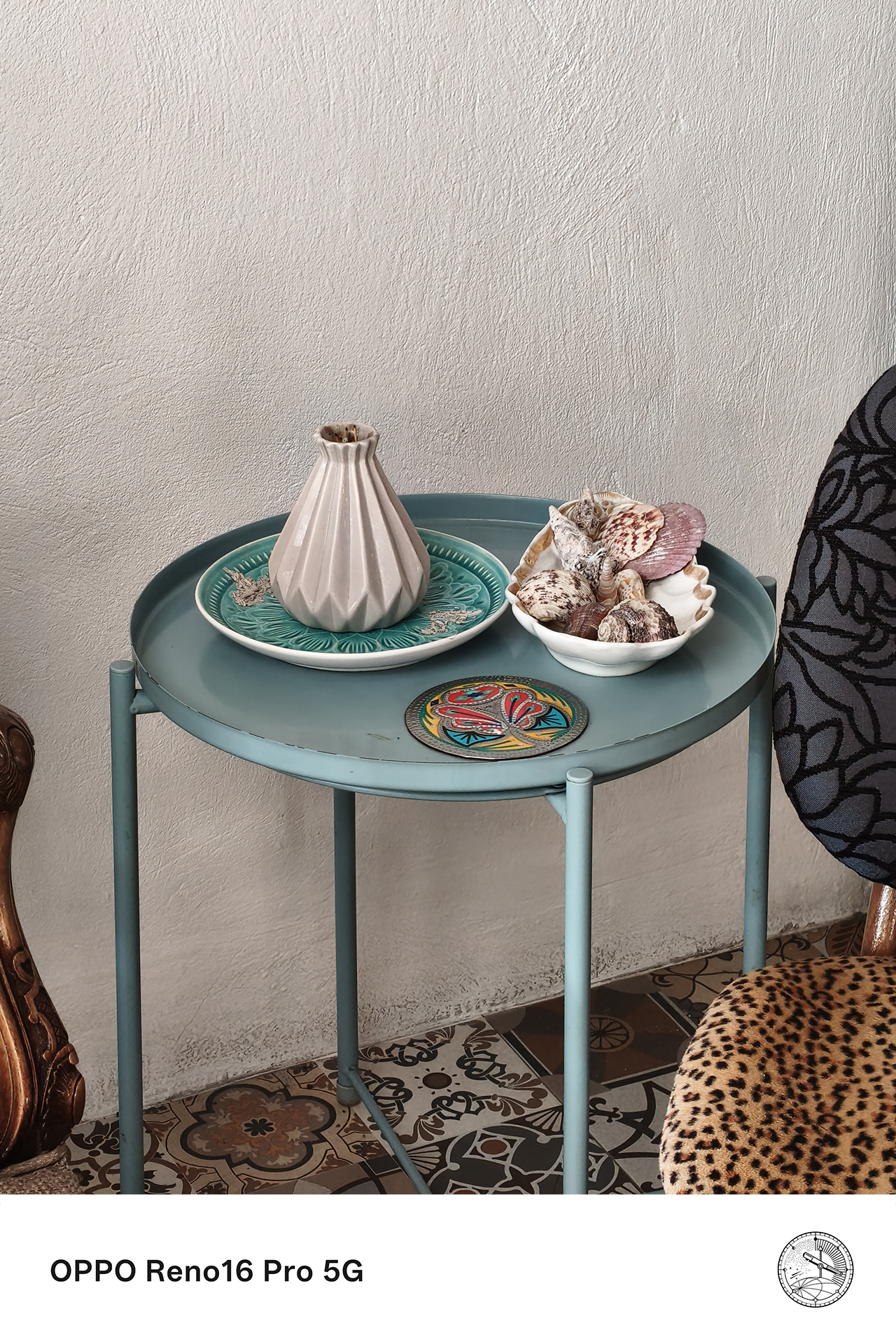

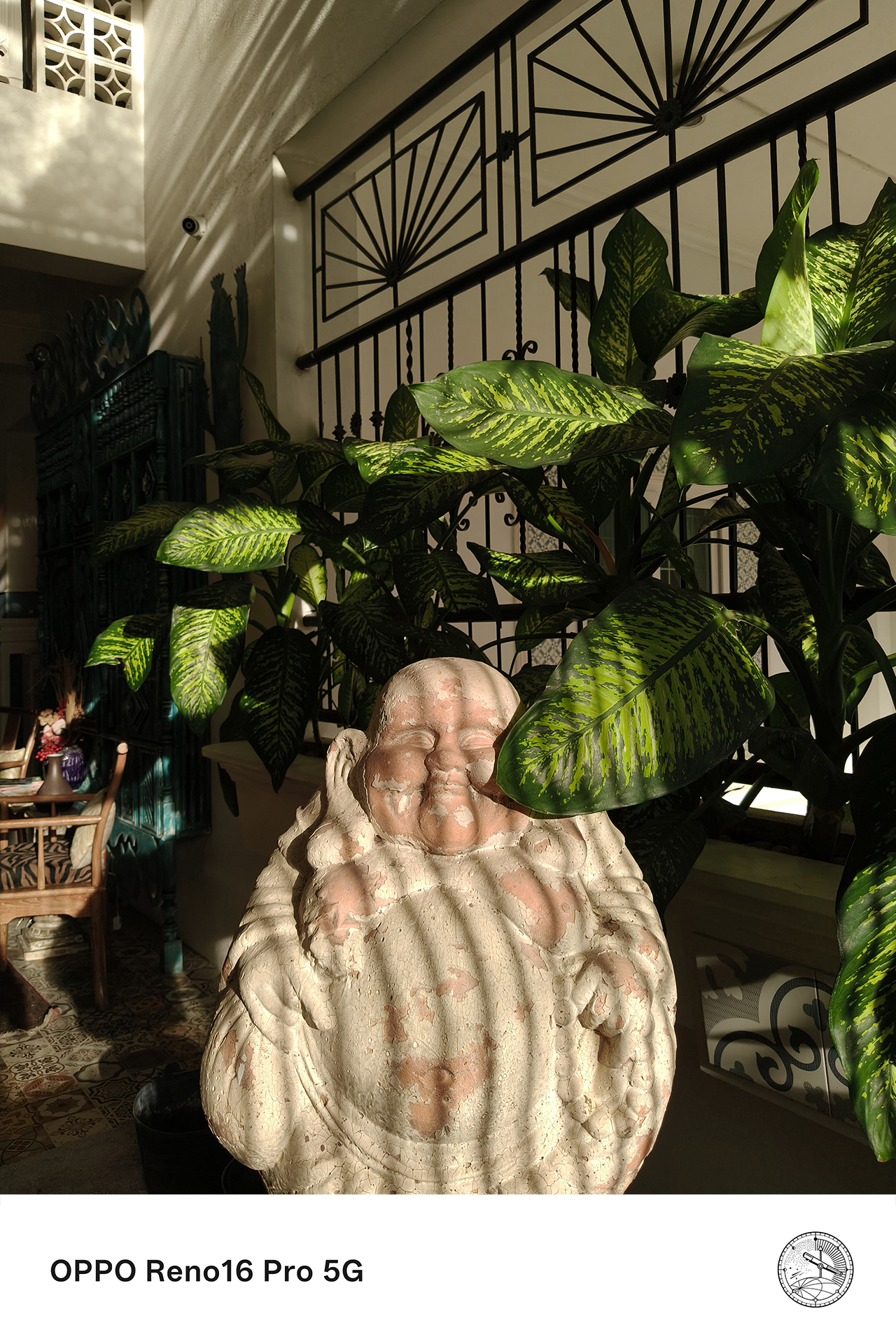
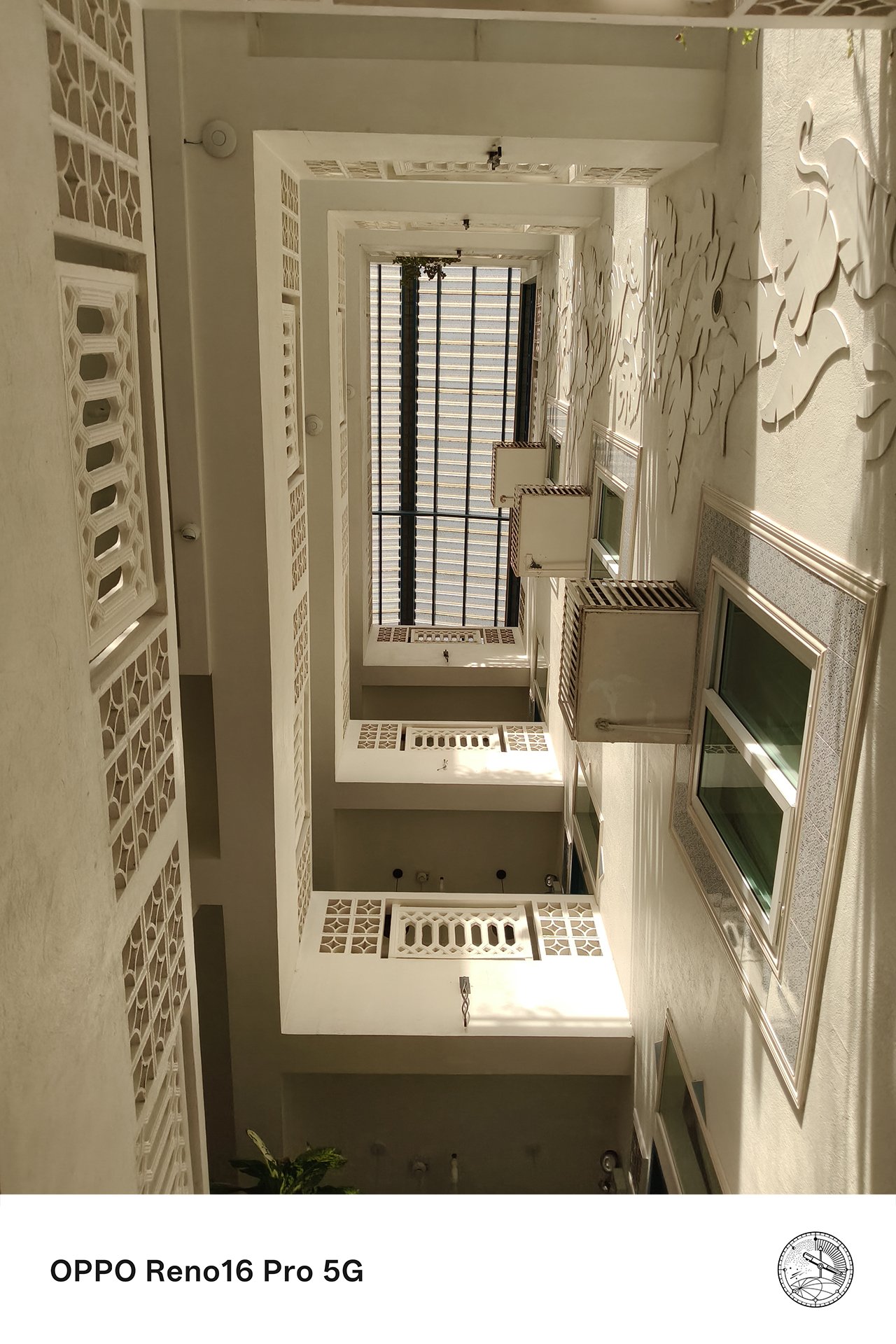
Over the past few weeks, that’s meant capturing everything from scenic views to candid conversations over coffee.

Rather than spending hours moving files between devices or navigating complicated editing workflows, Pocket Studio makes it easy to transform those moments into polished content ready for social media.
For anyone who enjoys documenting life as it happens, that simplicity is part of the appeal.

The moments you’ll actually want to remember
The moments that weren’t planned end up becoming the ones worth keeping. Those are the experiences that stay with us long after they’ve happened.
With Pocket Studio, the OPPO Reno16 Series 5G transforms those moments into memories that look every bit as good as they felt in real life.
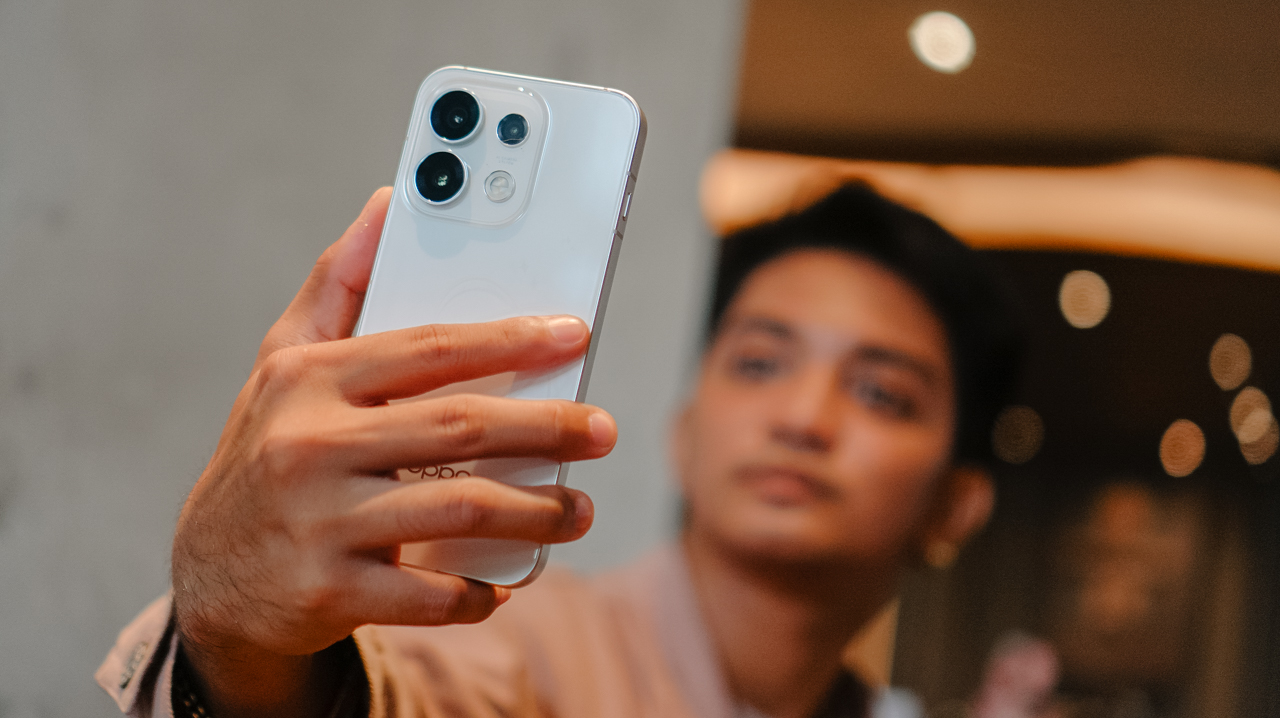
Through flagship-quality photos and videos, AI-powered creative tools, and features like Camera Remote View with the OPPO BUBBLE, the Reno16 Series makes capturing, creating, and sharing life’s most memorable experiences remarkably effortless.
For the designated photographer, it might just be the easiest way yet to make sure every moment, and everyone in it, gets remembered.
Price, availability

The OPPO Reno16 Series 5G is now available nationwide across all OPPO stores, official e-commerce platforms, and partner telco providers:
OPPO Reno16 F 5G
- 8GB+128GB: PhP 44,999
- 8GB+256GB: PhP 49,999
OPPO Reno16 5G
- 12GB+256GB: PhP 59,999
OPPO Reno16 Pro 5G
- 12GB+256GB: PhP 74,999
Flexible payment options at up to 24 months 0% interest are likewise available through Home Credit and select credit cards.
This feature was produced in collaboration between GadgetMatch and OPPO Philippines.
Reviews
REDMI Note 17 Pro review: What a rollercoaster ride!
The serious series of ups and downs are NOTEworthy of your attention

Xiaomi’s REDMI Note 15 series was introduced at the very beginning of 2026.
Six months in, they finally welcomed one of its successors in the lineup. But what is it like against its older sibling?
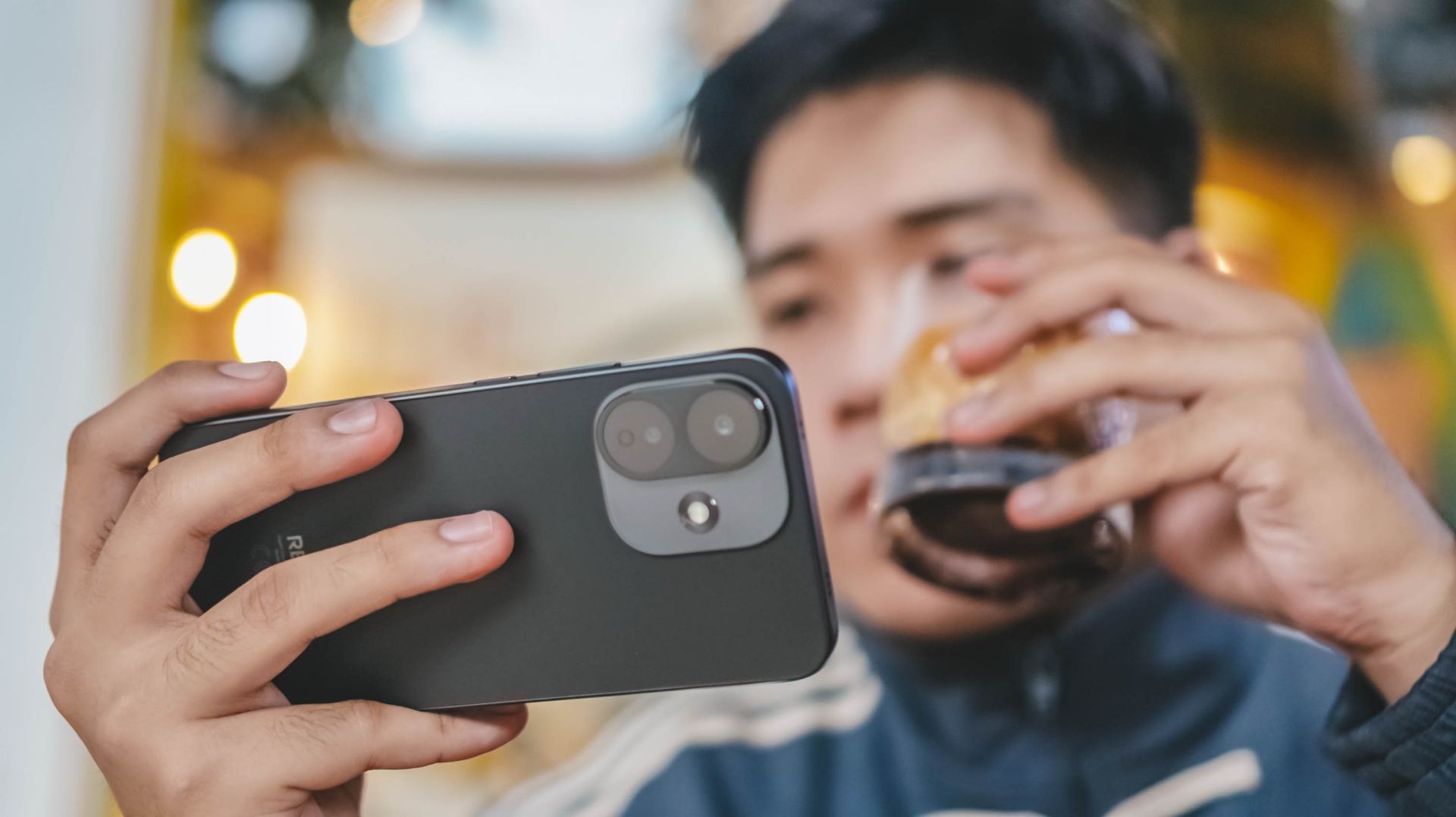
Well, buckle up your seatbelts as we enter and ride the latest REDMI Note 17 Pro rollercoaster ride 🎢
Slow yet steady start
As the hydraulics disengage, the ride starts its initial push.
That immediate start is comparable to binging Our Sticky Love on this phone — Netflix’s freshest K-Drama as of writing.
At first, you’ll be mesmerized by both Ahn Ha-young and Jung Hae-in’s hot AF visuals.
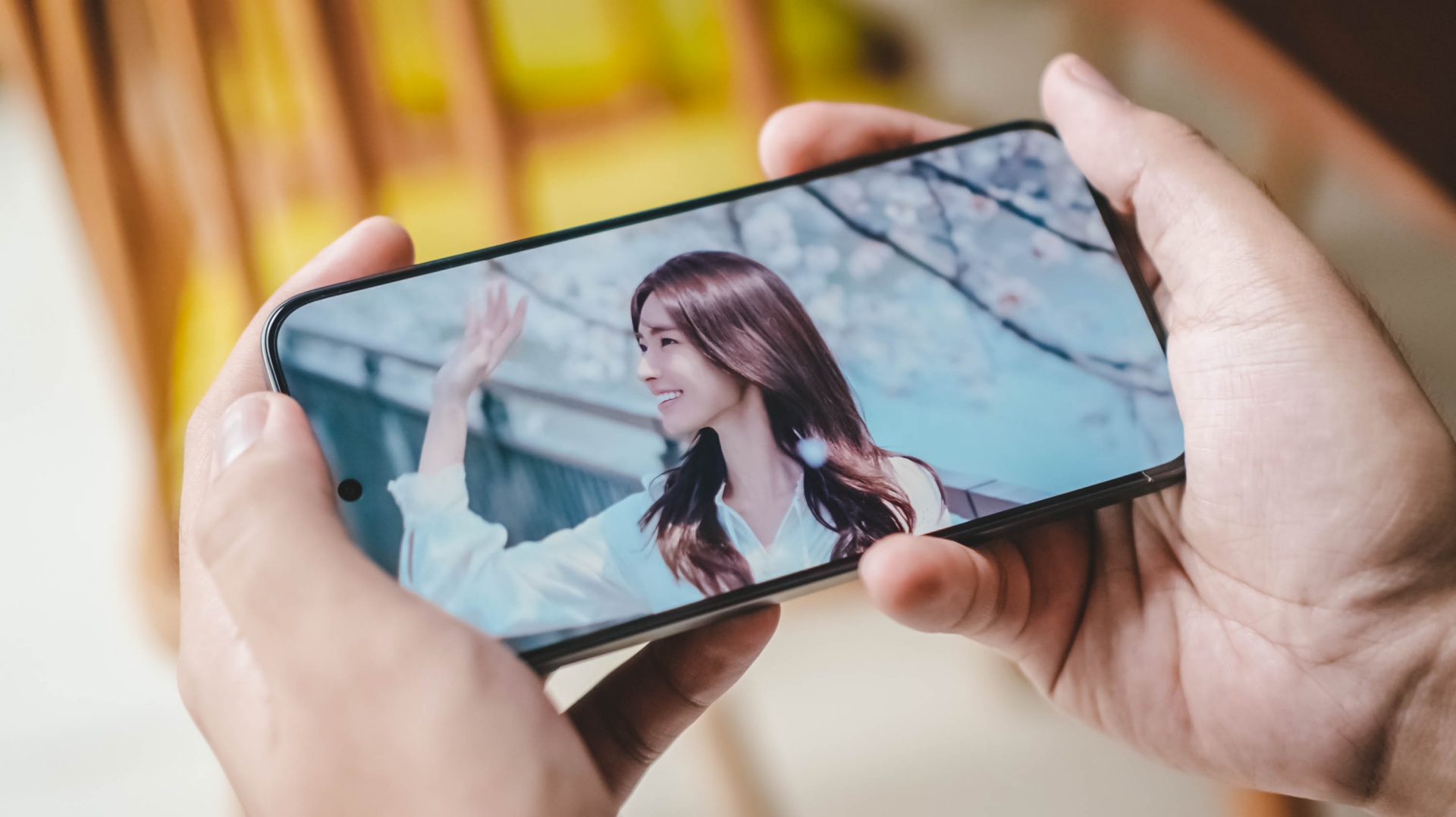
But, the more you fall deeper to the story, the more it gets complicated. This series has a story sequence where it’s least predictable.
Much like any rollercoaster ride, there are a lot of ups and downs where you least expect it to happen.
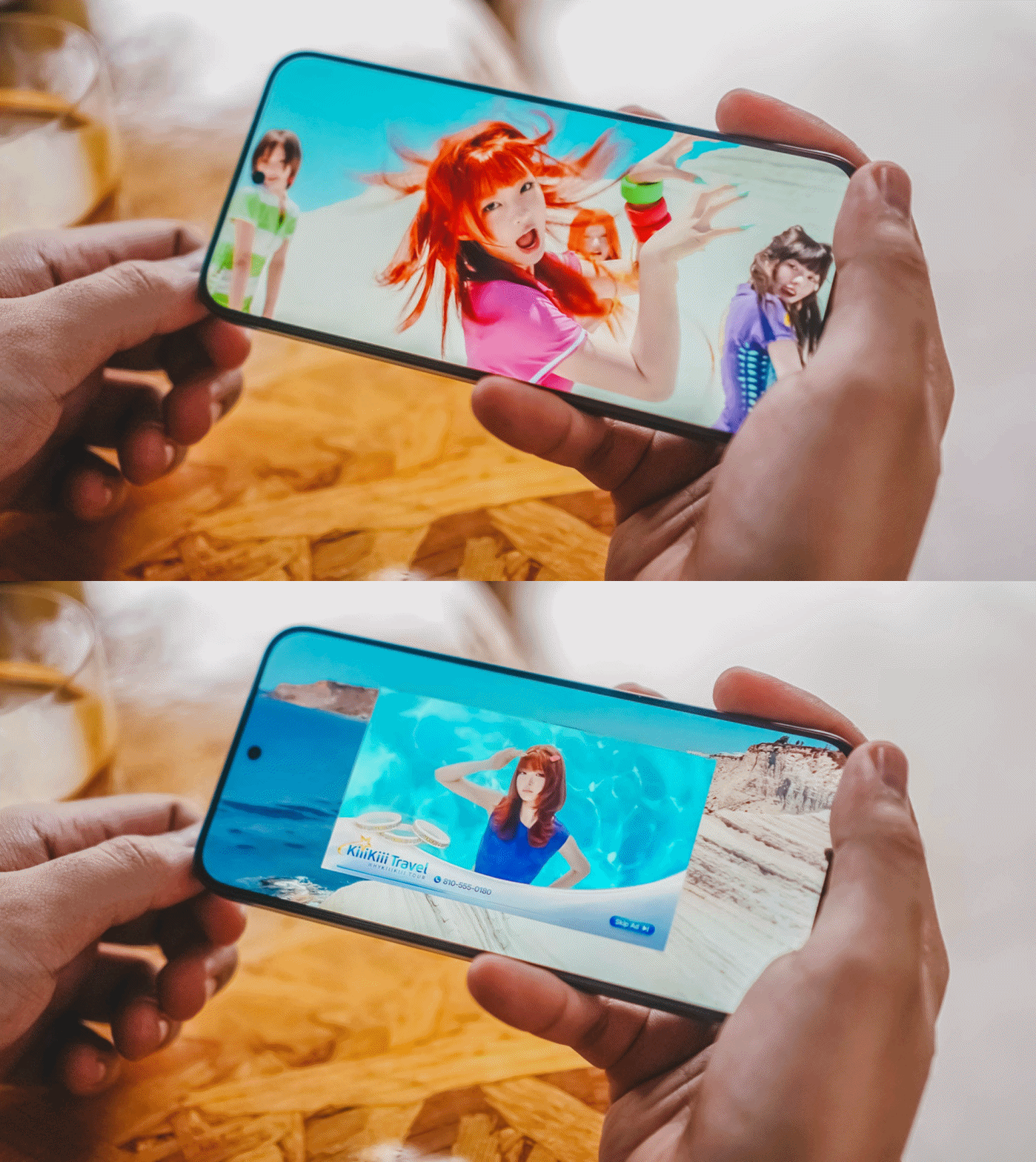
The opposite can be said with its display. It’s still the same 6.83-inch 120Hz CrystalRes AMOLED display found on its predecessor.
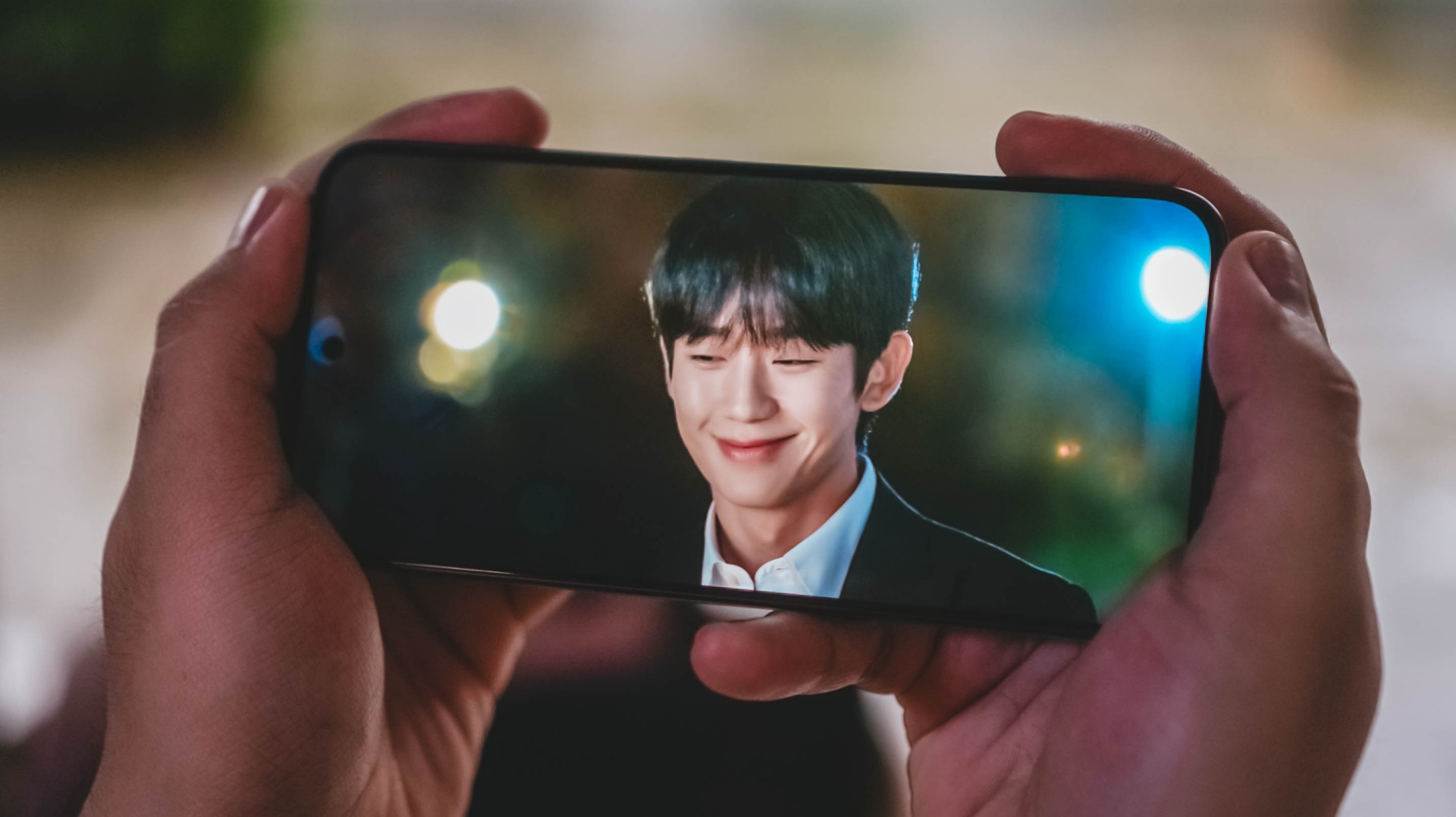
That isn’t necessarily a bad thing as it’s still a very vibrant and immersive screen regardless — 1.5K display resolution, 12-bit Color Depth, 68 Billion Colors, DCI-P3 Wide Color Gamut.
There’s even the usual TÜV Rheinland Blue Light, Flicker-Free, and Circadian Friendly certifications to protect one’s eyes against the harmful night light.
Go Eun-sae (or Go Ji-won)’s divine beauty radiate more than the cherry blossoms behind her.
Moreover, Jang Tae-ha’s smile is as bright as it could ever be.
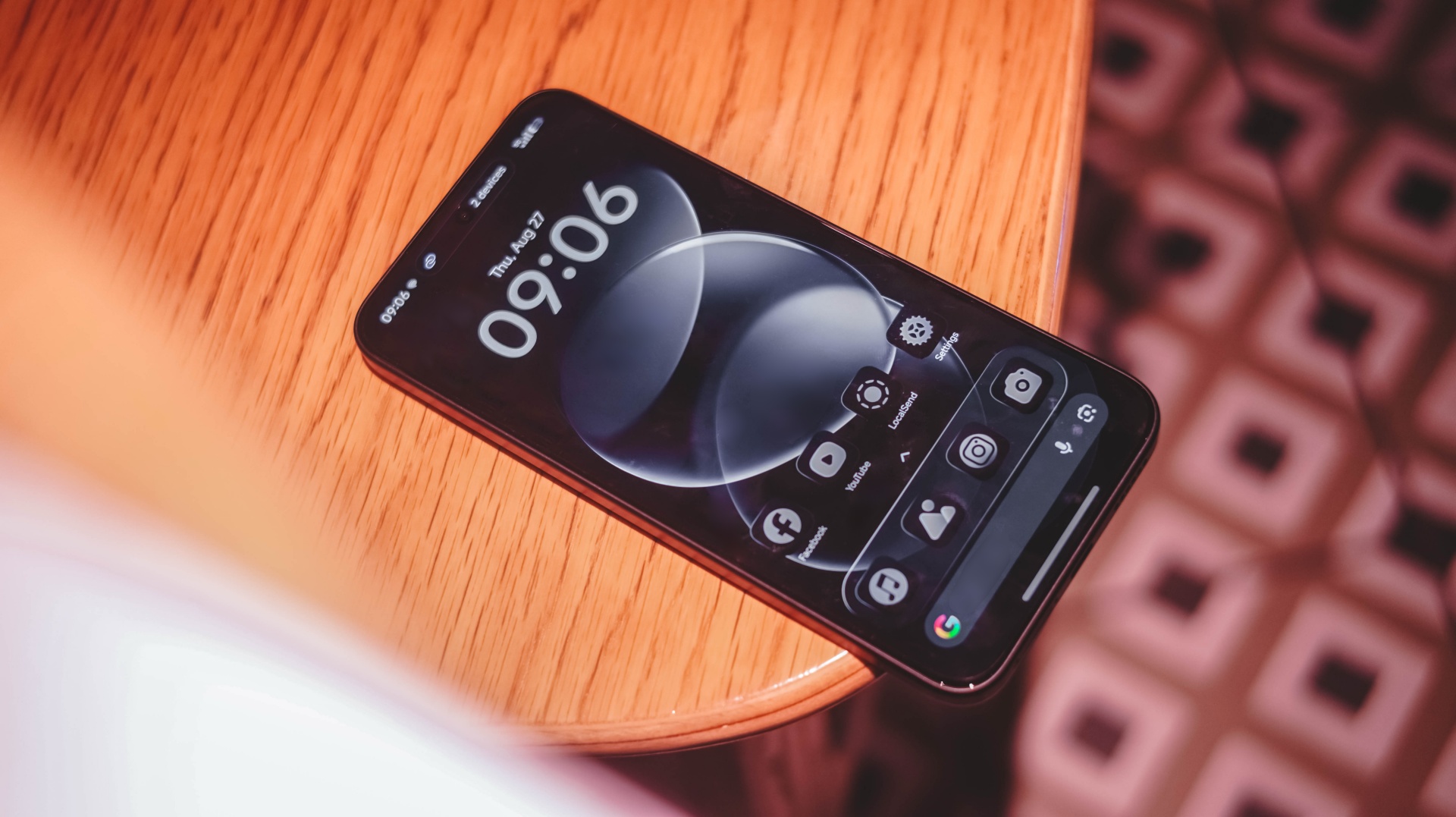
Speaking of, there’s actually a minor bump in brightness: from 3200 nits up to 3500 nits.
Though that gradual increase meant there isn’t enough disparity between the last and latest Note Pro midrangers.

Still, that brightness is enough to be mesmerized by ARTMS (that are all #BornStunner) even under harsh sunlight.
Boost to the top
The build-up continues with the speaker situation on the REDMI Note 17 Pro.
It wouldn’t be a complete review experience without having to play the latest K-Pop releases around.
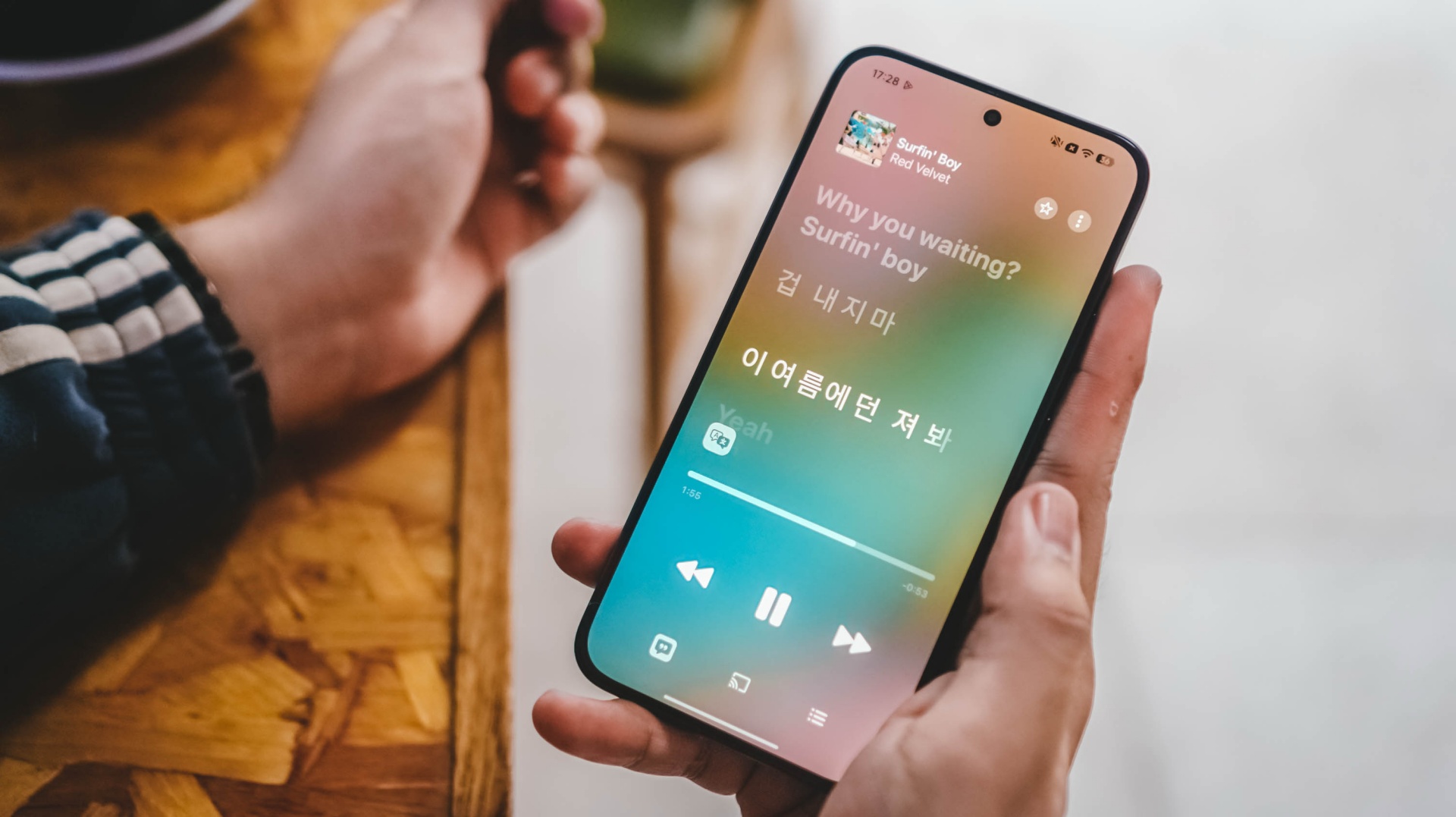
After more than two years since the celestial Cosmic title track, now is the best time to celebrate Red Velvet’s grandest comeback with Surfin’ Boy.
With support for Dolby Atmos, I can truthfully hear each and every members’ ethereal vocals in this latest comeback track.
Even playing it outside my room, I can still hear and easily differentiate the voices of Irene, Seulgi, Wendy, Joy, and Yeri all thanks to that 300% volume boost.

Another added testament to its powerful speakers is none other than KiiiKiii’s highly-addictive Pop Off Pop Off.
Aside from the strong and steady vocals of the 5th-gen quintet, the thumpy bass and beat drops can clearly be heard in its 2008-coded chorus (plus music video!)
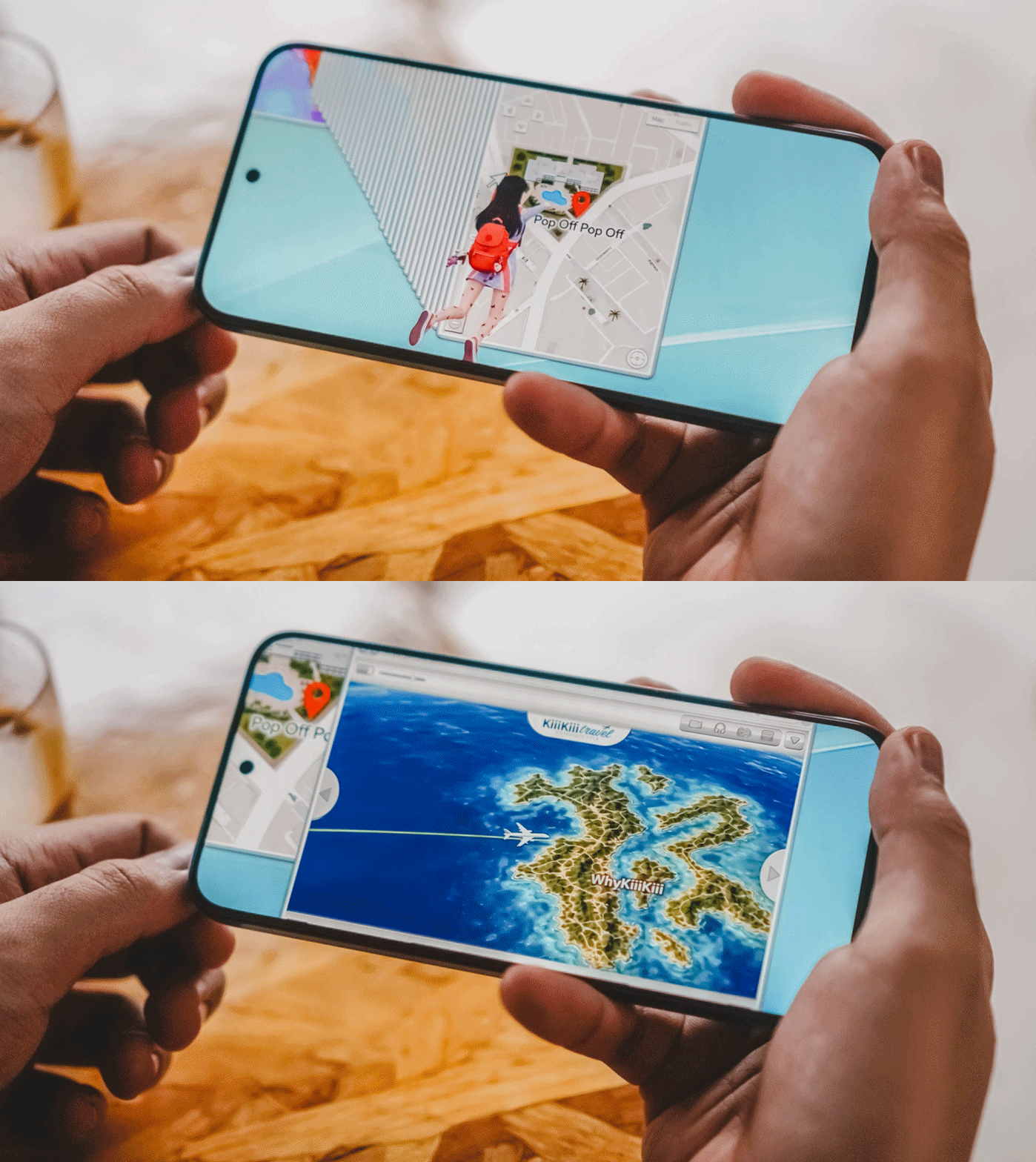
Oh, what a nice time to be alive as a K-Pop girl group stan!
The first drop
After that first momentum, the rollercoaster’s first drop is to be expected.
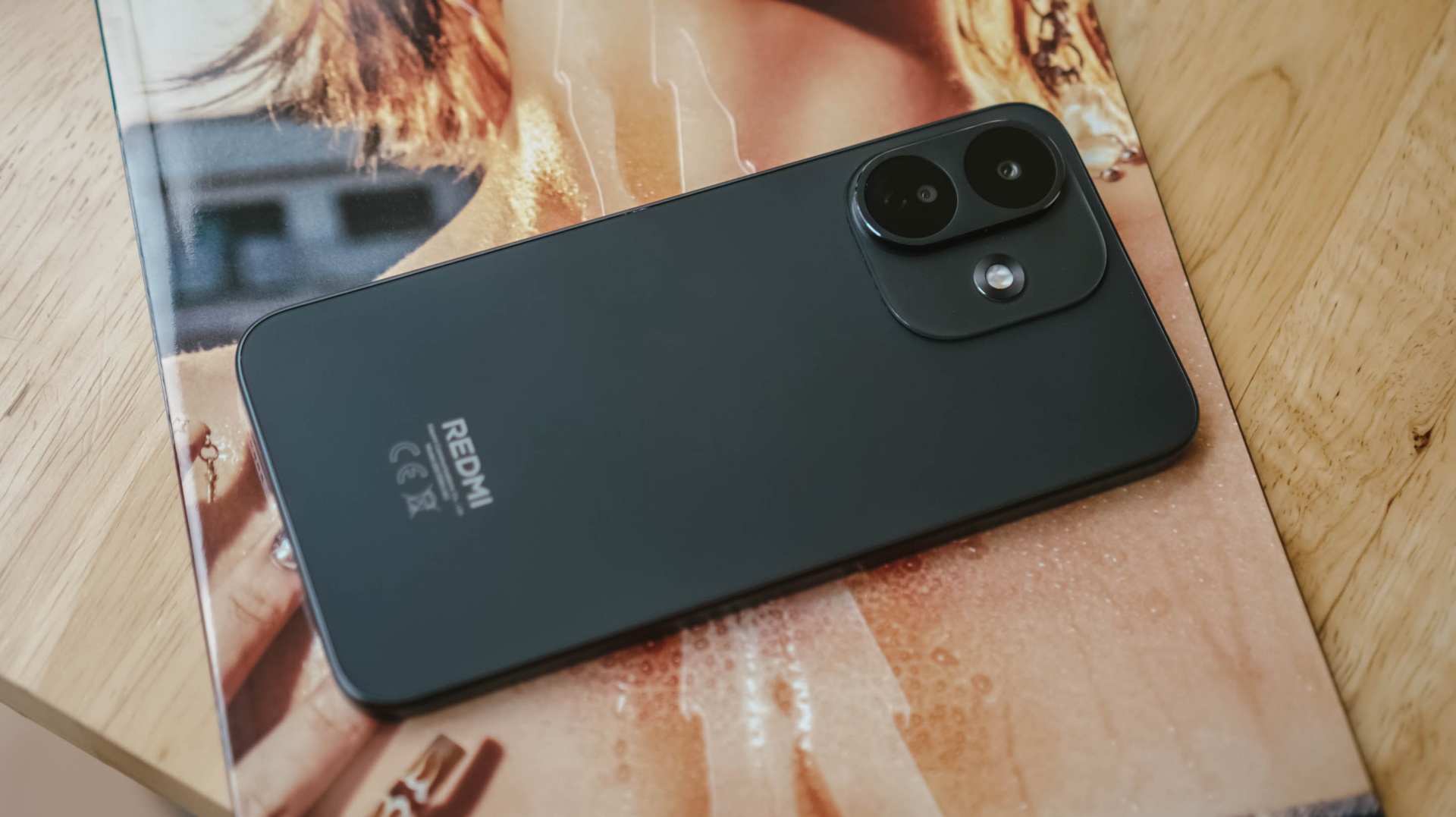
The design of the REDMI Note 17 Pro deserves to be compared to the ride’s first drop.
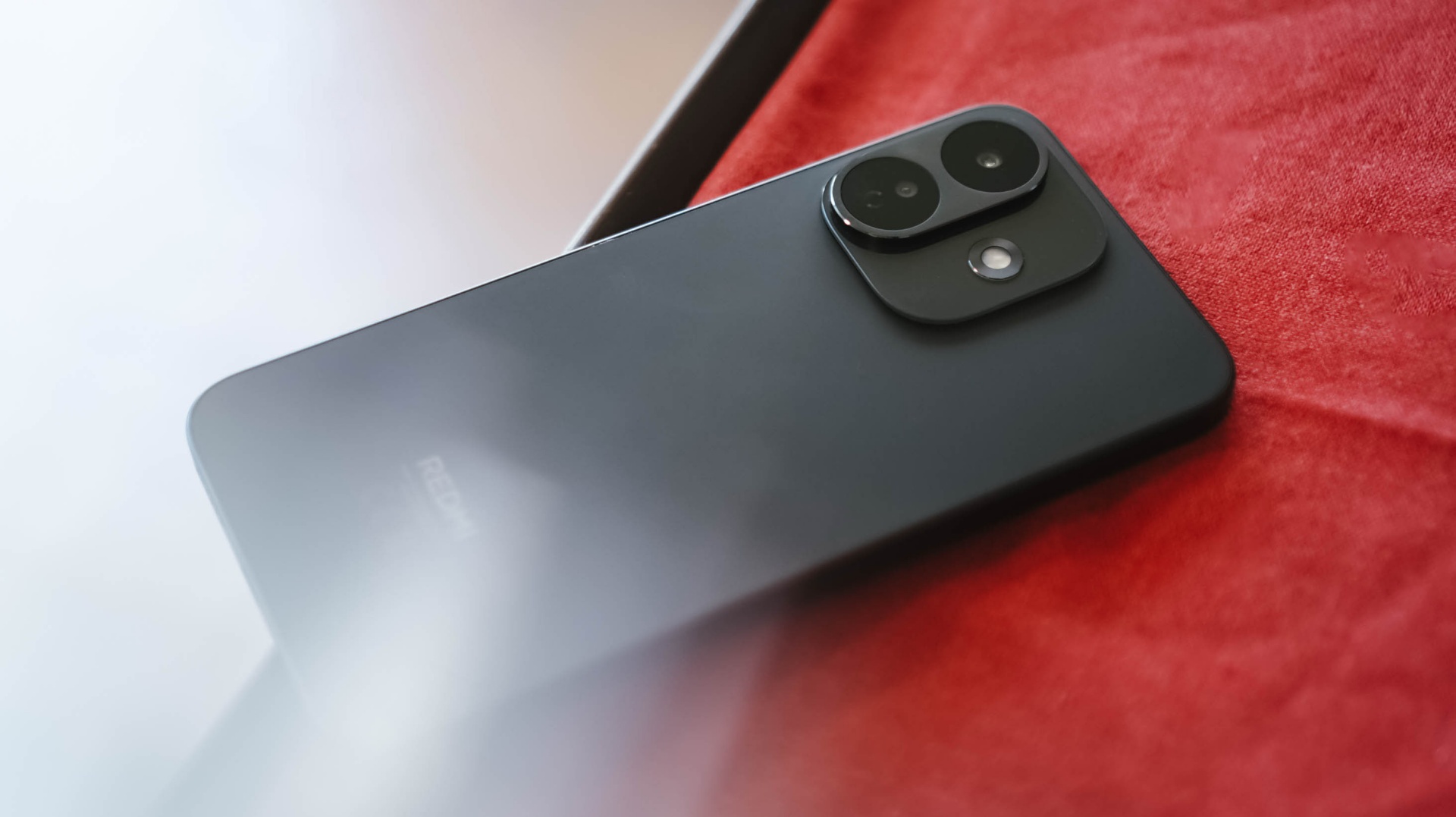
Xiaomi went back to the drawing board and decided to scrap its signature styling.
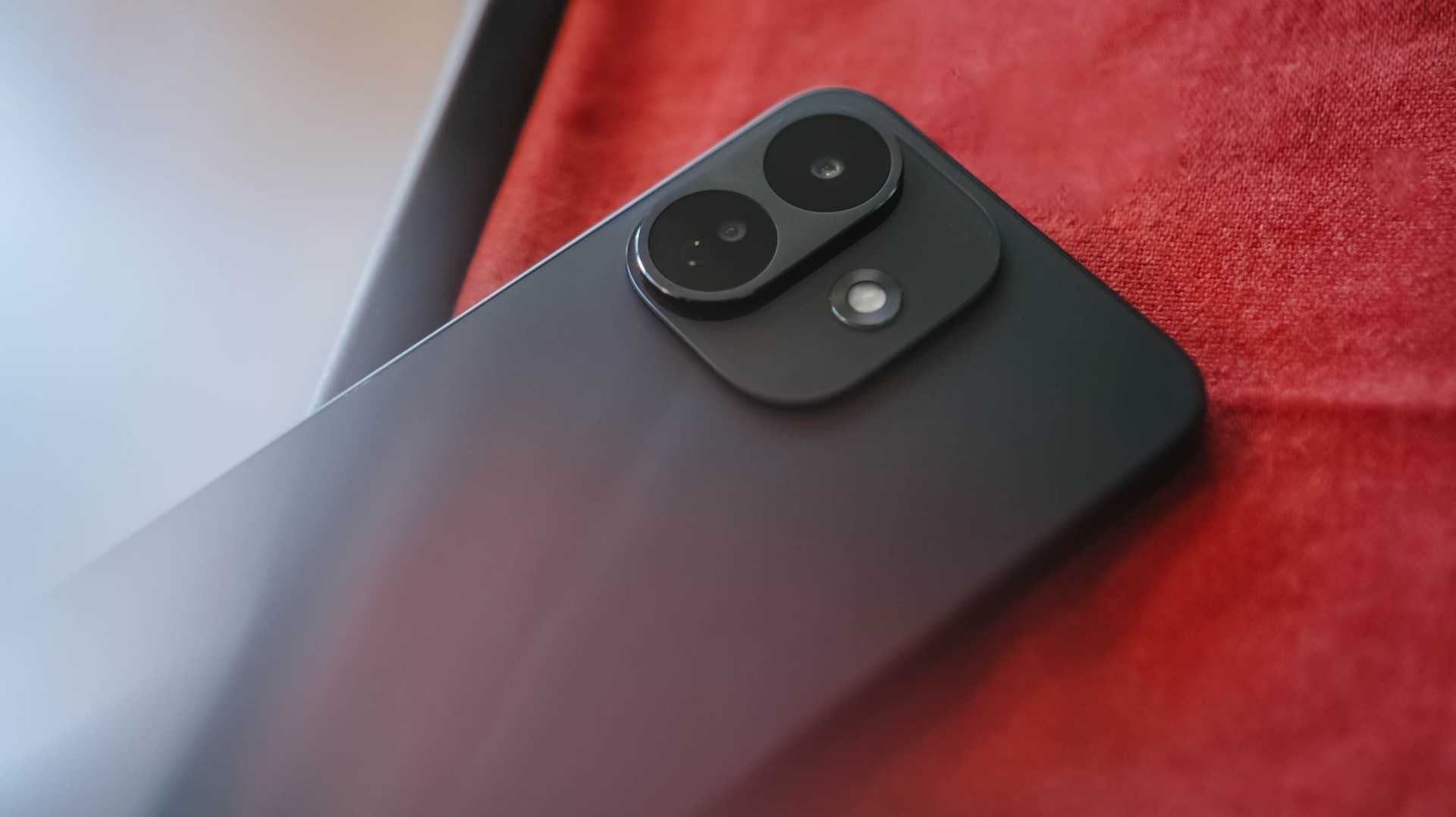
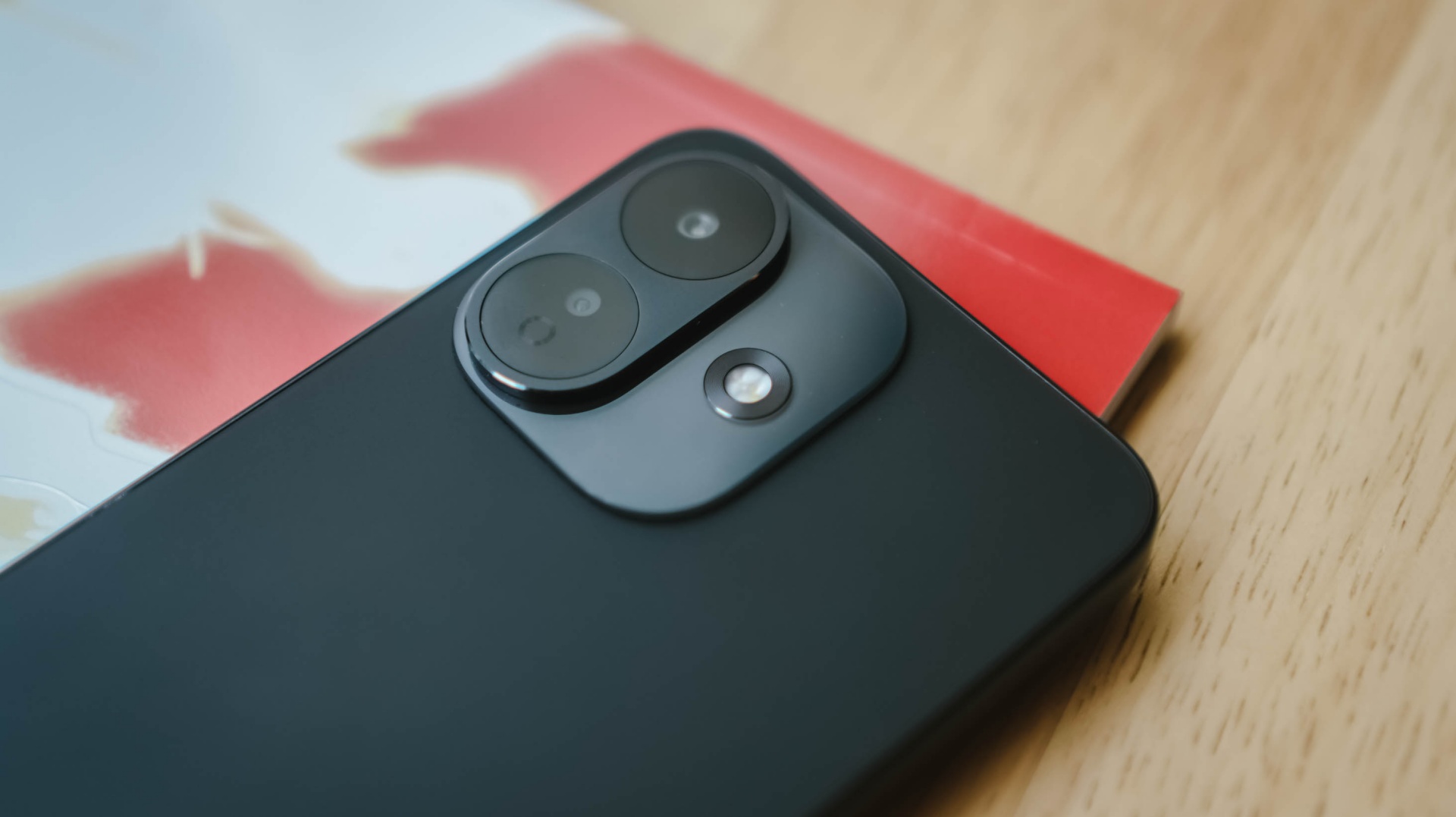
What replaced that large and symmetrical camera island? A left-justified camera cutout.
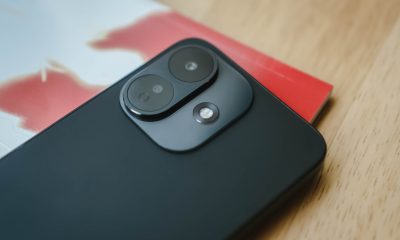
Two lenses are enclosed in a protruding oval bump made of metal. Meanwhile, the flash unit is placed at the right side of the cutout just above that glass surface.

Put a case on, one would mistook it for a base iPhone 16 Plus.
While design is (and will always be) preferential, it’s personally more of a drop than cop considering how I witnessed the design evolution of REDMI’s Note series over the years.
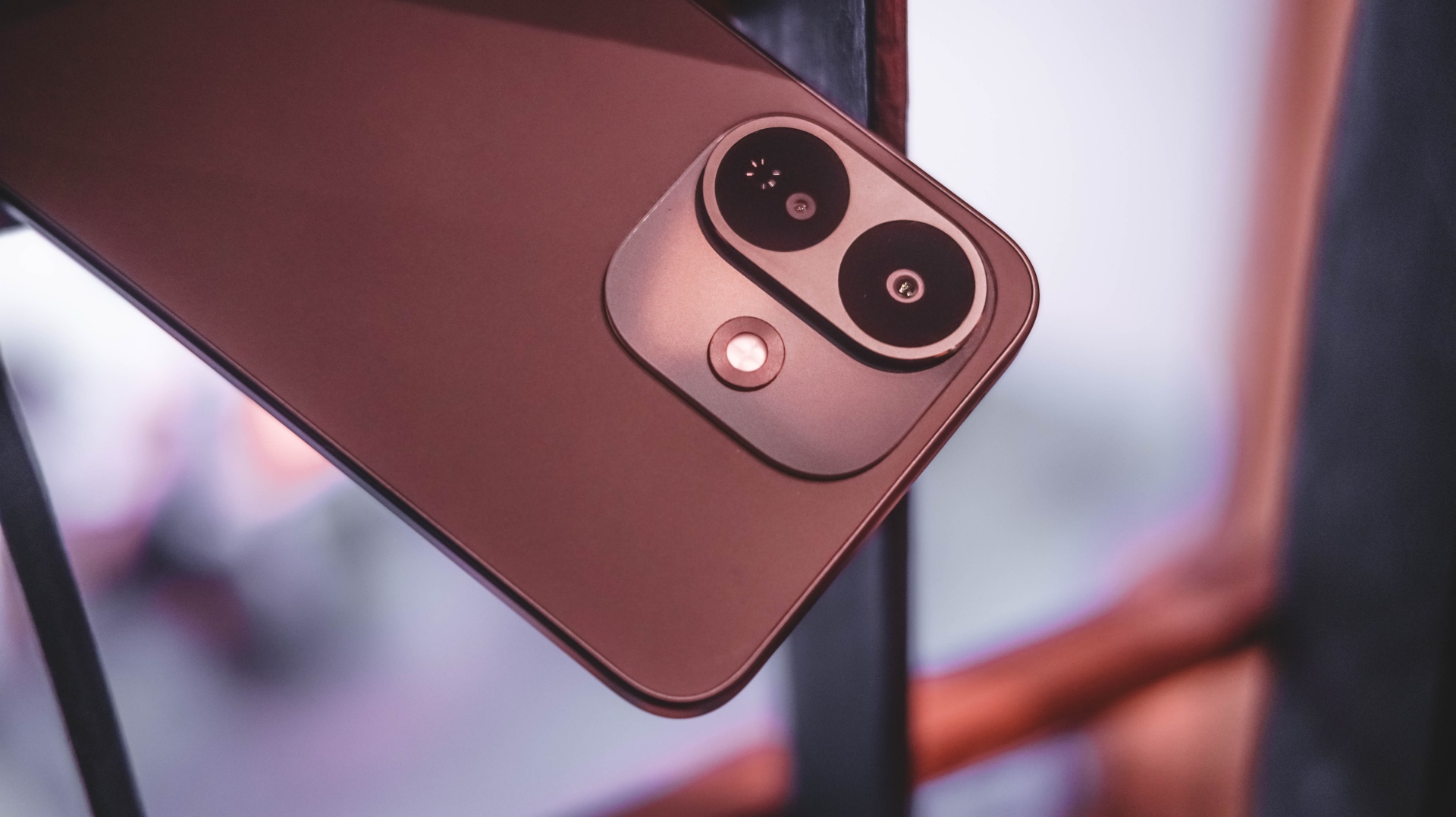
Despite all that, I still enjoyed the phone’s ergonomics. The flat displays and trims might mean sharper edges. However, it doesn’t feel too abrupt when held for long.
And with the less exciting Black colorway I rock, I’m just glad the back finish isn’t made of glass. This metal backing is resistant against unwanted finger smears.
Into the loop
For the longest time, Xiaomi isn’t consistent with the chips they put in their REDMI Note Pro models. The REDMI Note 17 Pro isn’t an exemption to this.
Last two models in a row, the REDMI Note 14 Pro and 15 Pro relied on MediaTek’s Dimensity 7300 Ultra and 7400 Ultra respectively. Prior that, the Note 13 Pro was using the Snapdragon 7s Gen 2.
Now that it got mentioned, Xiaomi goes back to Qualcomm after two generations.
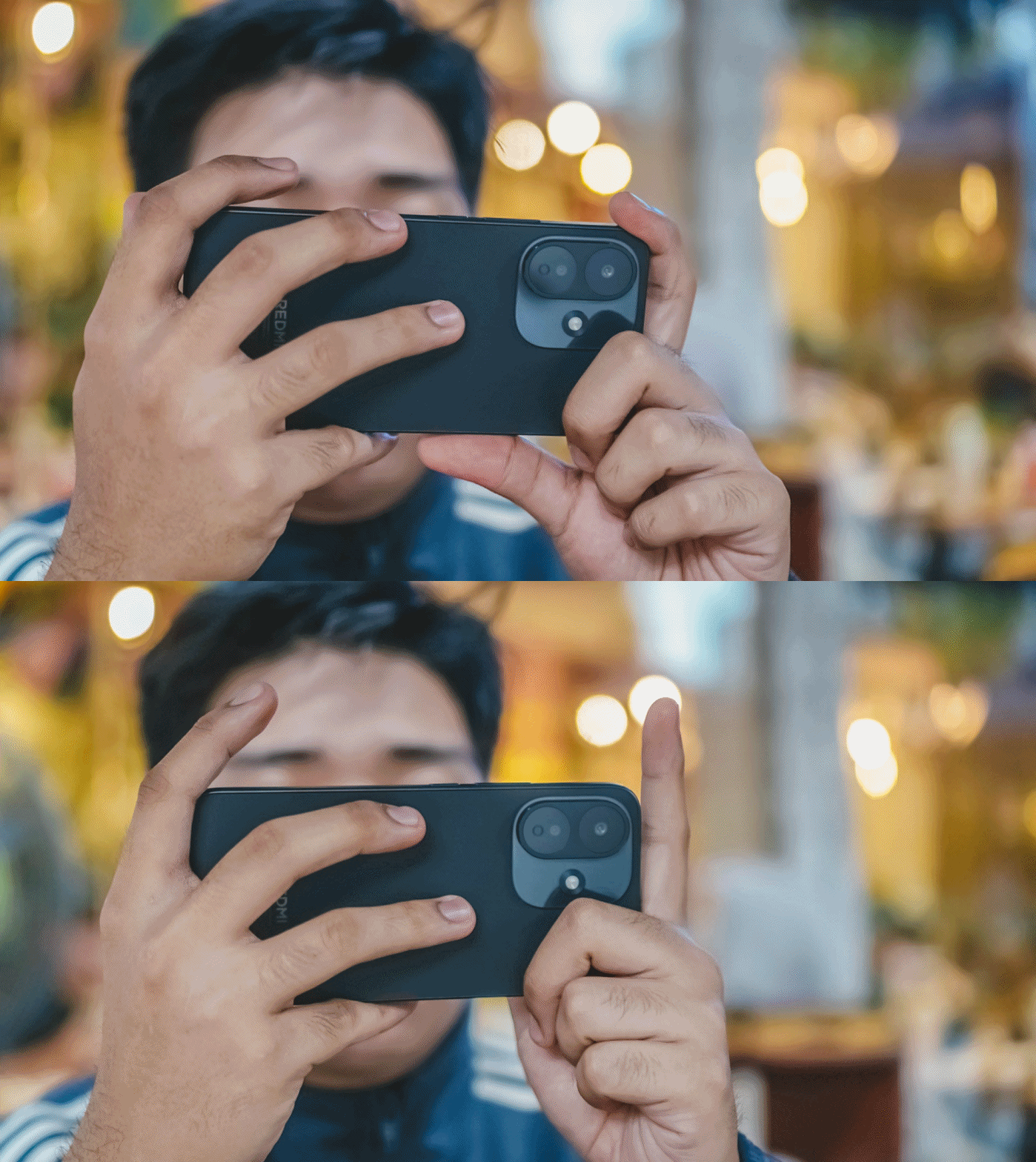
Albeit, for the first time ever, it’s equipped with a lower-grade Snapdragon 6s Gen 4. This change somehow became a “downgrade.”
While we don’t do benchmarks here, notable websites prove that Note 15 Pro’s Dimensity 7400 performs better over the “newer” Note 17 Pro.
During my testing, there isn’t much to prove.
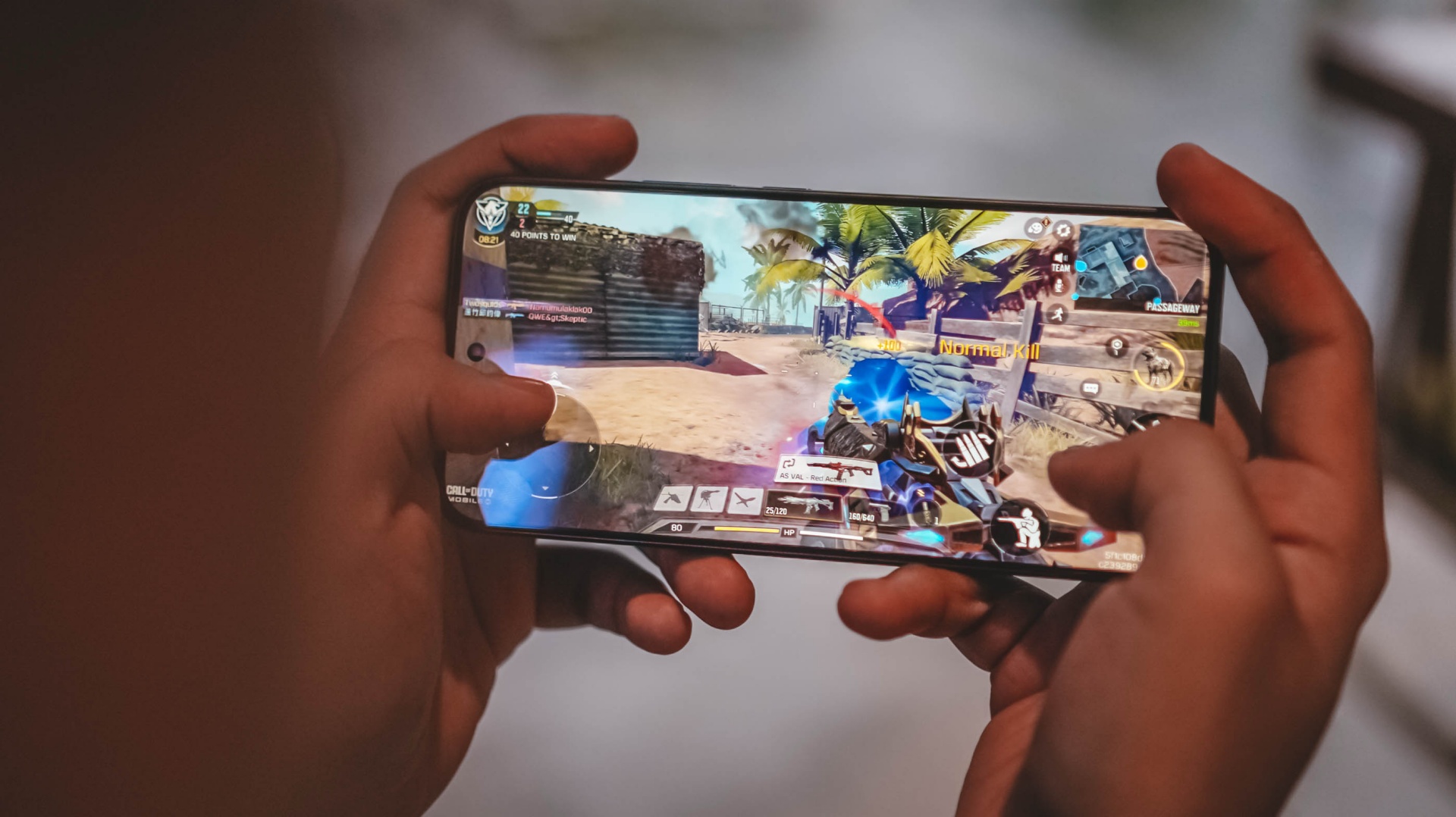
It will still depend on what you’re trying to play. Less demanding games such as Call of Duty: Mobile (CoDM) were capable to run in modest settings.
Meanwhile, higher-end games like Racing Master meant stuttering and jittering when pushing it to its highest graphics settings.
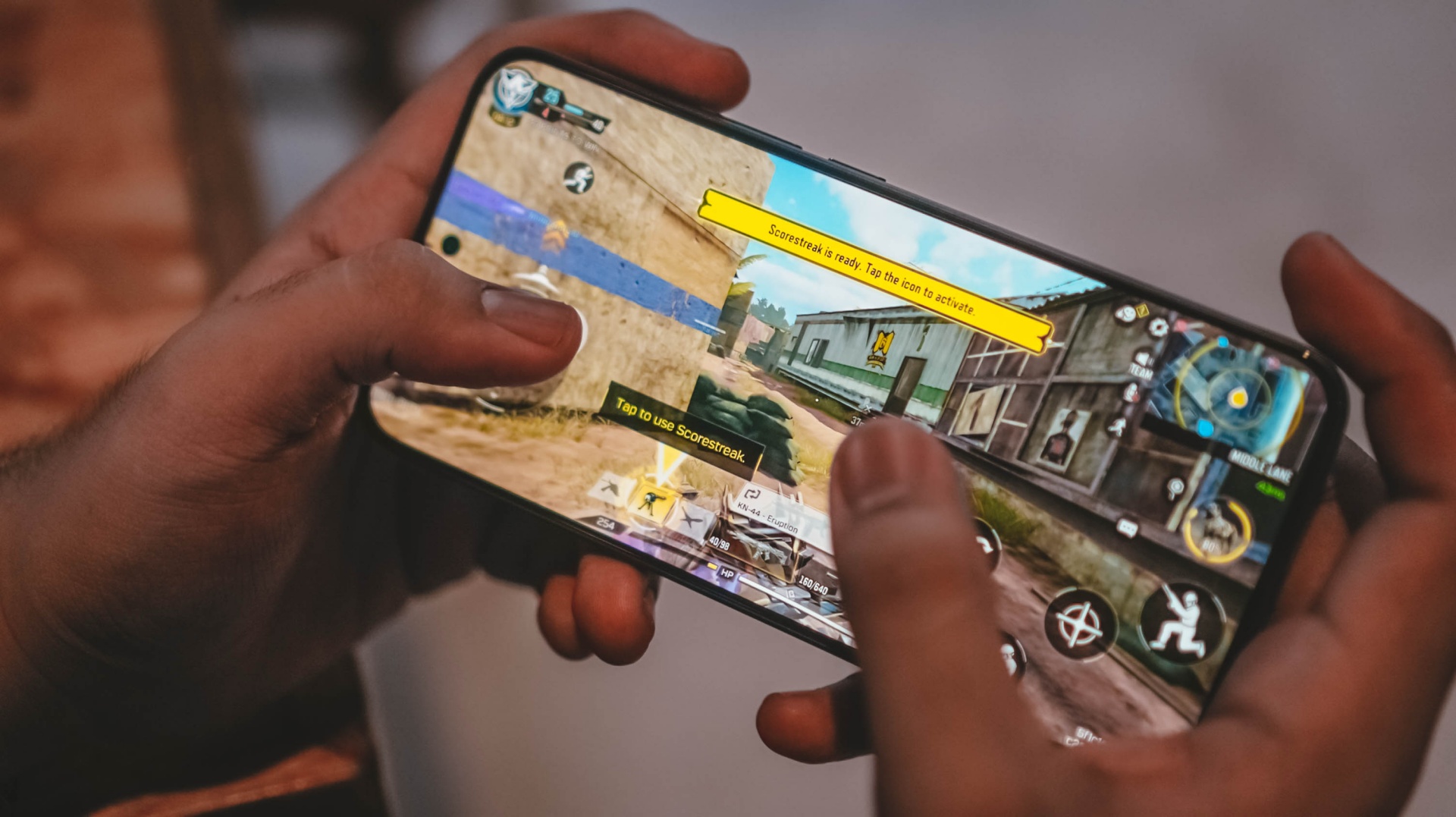
Moreover, the Note 17 Pro produces unwanted heat over an hour or two of playing.
Specs-wise, the 256GB model I possess boasts the faster UFS 3.1 protocol.
The lower 128GB storage relies on a slower UFS 2.2 standard. Fortunately though, there’s a lone LPDDR4X memory whether you choose between 6, 8, or 12GB.
To make it confusing though, the 12GB variant is only available in a 256GB storage. On the other hand, choosing the 512GB storage only gives you a limiting 8GB RAM.
Despite that, this 6GB I have was still able to open basic apps without a hitch. Switching between them was also a breeze.
One huge push
REDMI is aiming to push its “Titan Durability” strength even further with the Note 17 Pro.
Remember that display? That’s protected by Corning’s Gorilla Glass Victus 2. ICYMI, that glass protection is mostly found on just higher-end flagship smartphones.
That doesn’t even end there! Beneath it lies a reinforced design structure that can withstand 3-meter drops.
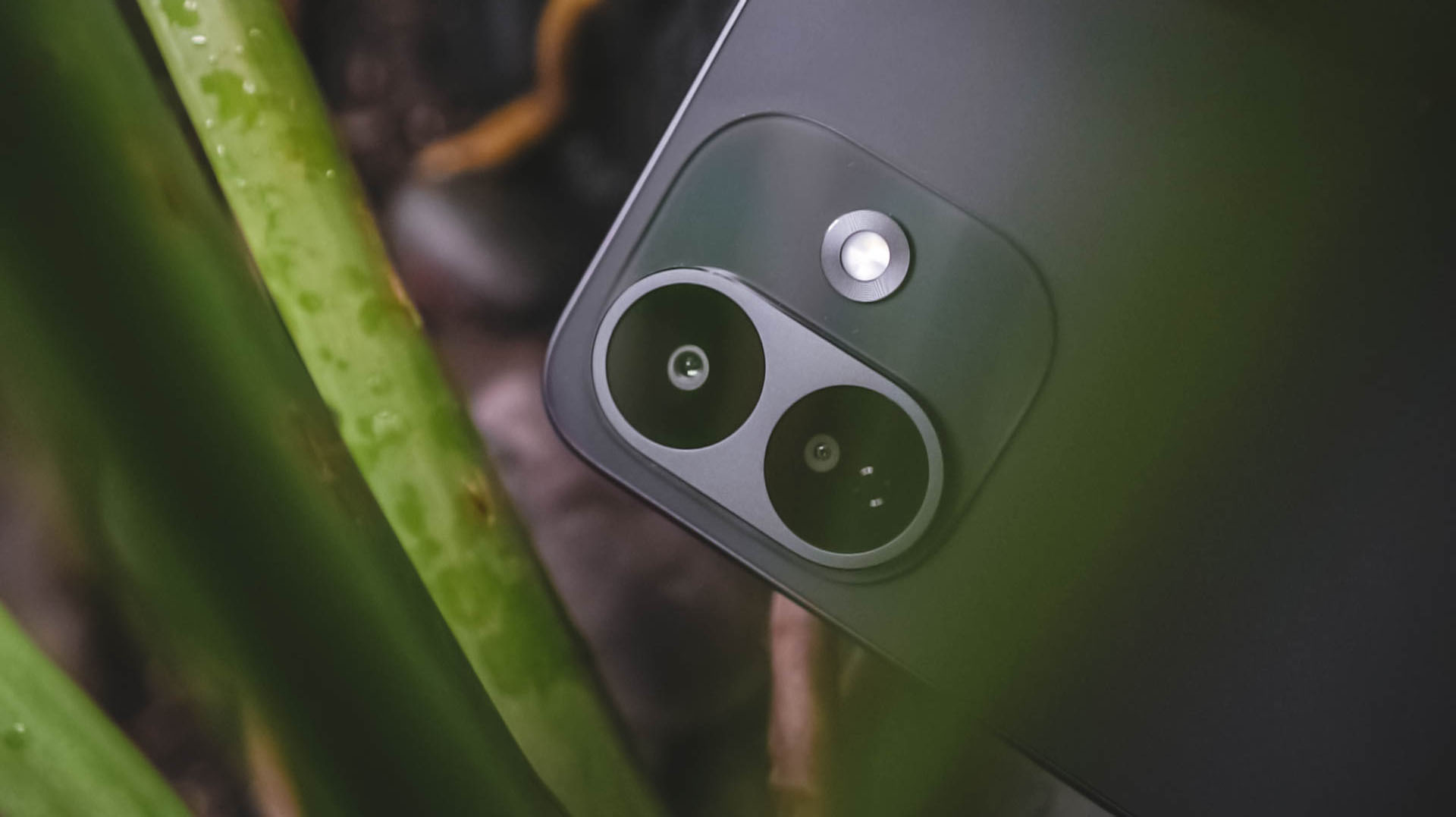
Whether you drop the phone on a marble or granite floor, it can totally withstand it more than the standard height level.
Pushing the ride further before reaching the peak? None other than the inclusion of quadruple IP ratings: IP66, IP68, IP69, and IP69K.
Such rating protects it from unwanted sand, dust and other minute particles. As well as the unwanted rain water, deep fresh water immersion, and even high-pressure water jets.
It’s worth mentioning that this is the industry’s first smartphone with TÜV SÜD’s 5-star Titan Quality certification — all acing battery performance as well as water and dust resistance.
Up to the very peak
Despite some losses aforementioned, the REDMI Note 17 Pro isn’t a total wreck.
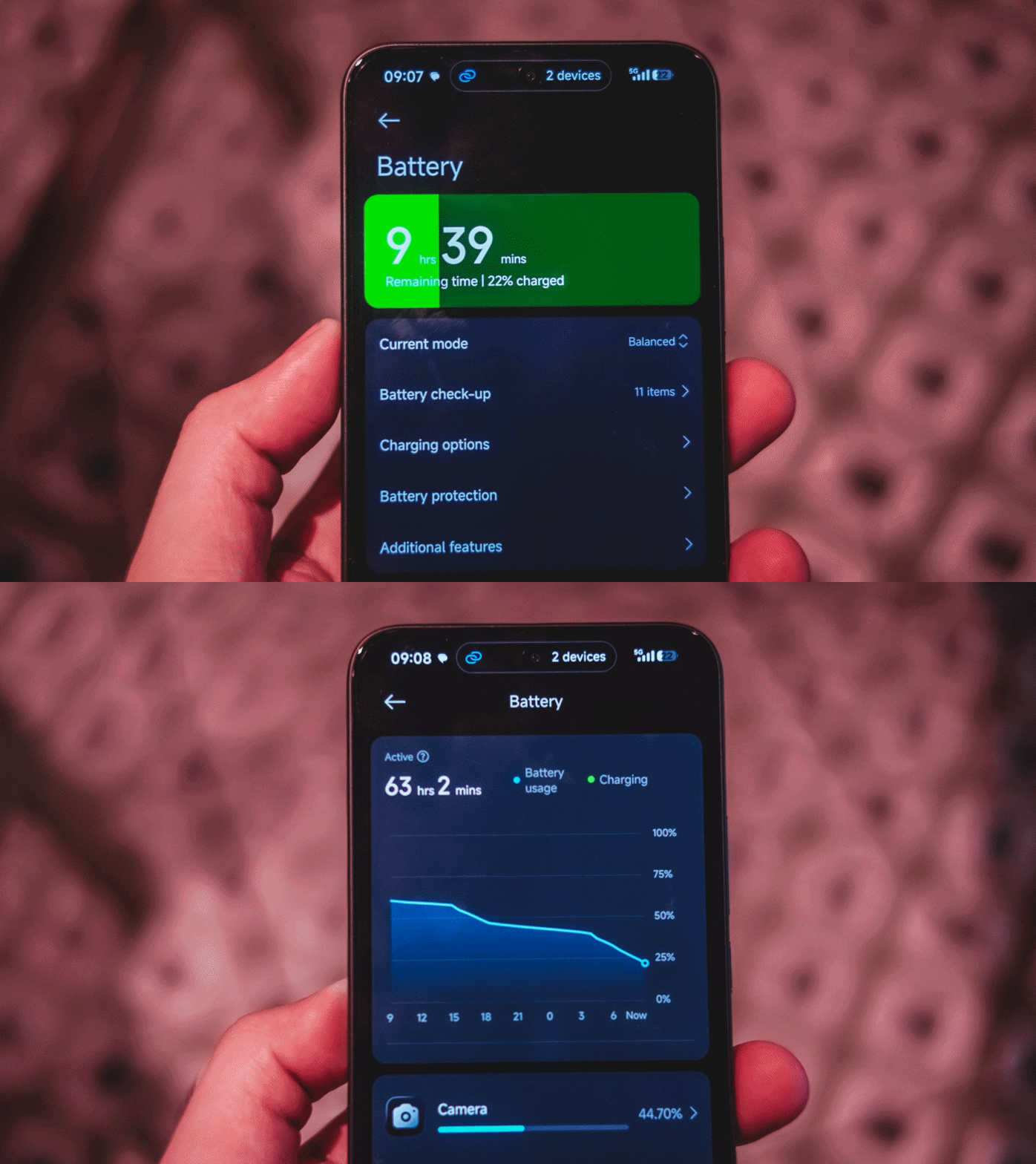
The biggest improvement lies beneath its chassis. From the 6580mAh battery of its predecessor, it got a significant bump to a 8340mAh capacity.
I don’t mind the added thickness as long as I get a THICC-er battery (7.96mm versus 8.6mm, respectively).
From binge-watching, game testing, multitasking, and even making it as my personal hotspot, the REDMI Note 17 Pro was able to squeeze in a full day of use.
Given you use it for lighter tasks with less screen on-time, you’d instantly get two or more days of standby.
Upon observation though, it deducts around 3 to 5 percent even just on standby. Maybe Xiaomi’s lack of optimization against background apps? Or worse: these unnecessary hyper-bloatware that keep popping off in the notifications drawer.
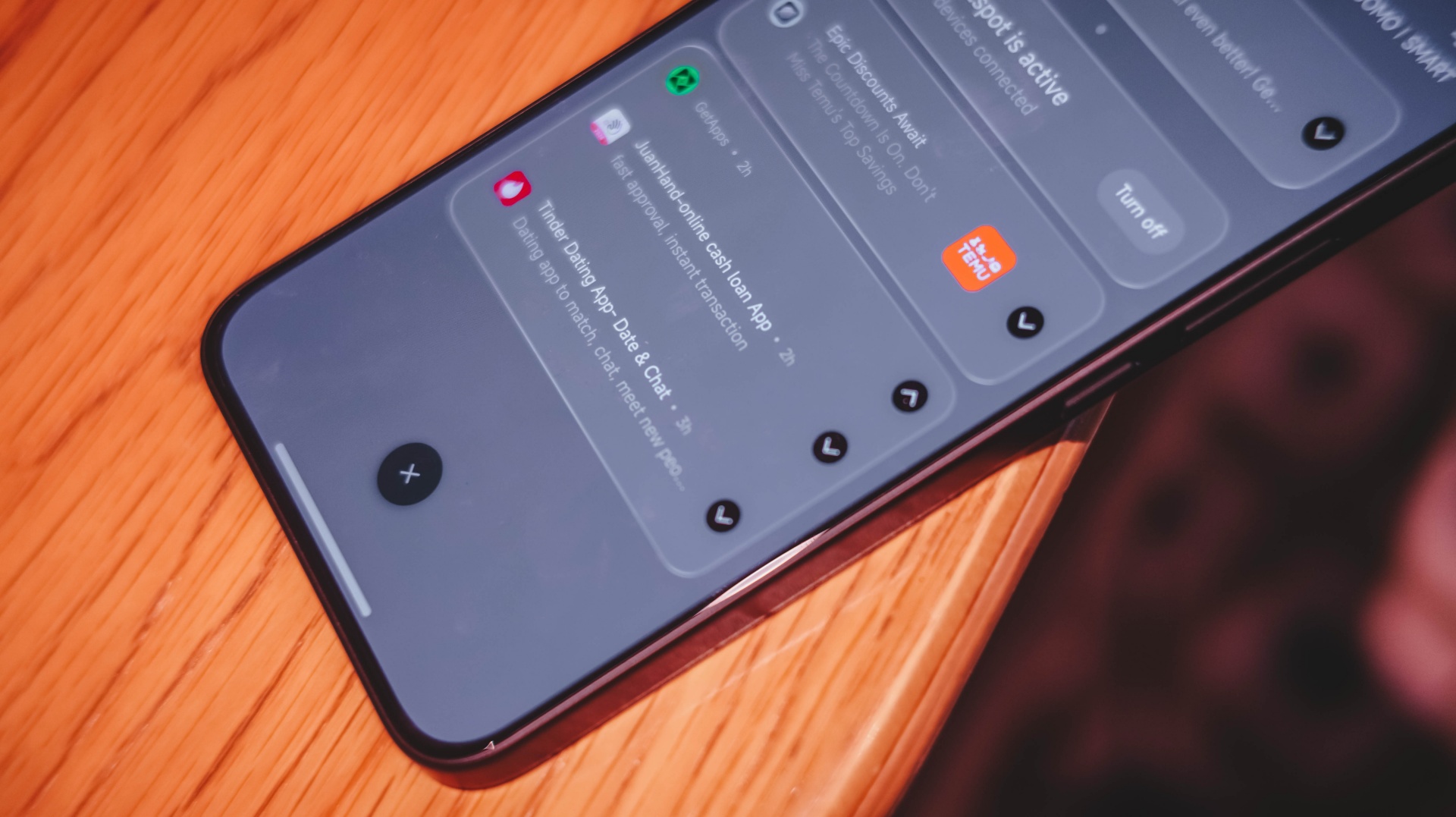
Hopefully, battery consumption against off-screen background apps would be lessened the moment Xiaomi rolls out the highly-anticipated HyperOS 4 months after this write-up.
If the battery completely dies, the REDMI Note 17 Pro has an upgraded 67W Fast Charging capability. That’s in contrast to the 45W speeds of the previous Note Pro model.
The phone that came to me is a European unit. Thus, it does not ship with a proprietary Xiaomi charger and cable out of the box.
If you’re living in Asia, having a bundled one is highly likely.
Luckily, I was able to keep one 100W brick inside my cabinet. I even compared it to the 100W GaN charger plus high-speed USB-C cable I use every day.
My GadgetMatch Charge Test proves there’s a stark difference — probably with the lack of proper USB-C PPS support.
Xiaomi 100W Charger +
|
UGREEN 100W Uno + ADATA
|
|
START TIME (from 0%) |
6:27AM |
4:27PM |
3 minutes |
3% |
1% |
5 minutes |
6% |
3% |
10 minutes |
12% |
7% |
15 minutes |
18% |
16% |
30 minutes |
37% |
31% |
45 minutes |
54% |
48% |
1 hour |
71% |
66% |
1 hour 15 minutes |
86% |
82% |
1 hour 30 minutes |
– |
92% |
END TIME (100%) |
5:52PM
|
8:23AM
|
With that 30-minute gap, the REDMI Note 17 Pro was able to fill up faster by using Xiaomi’s very own charging brick and cable.
Down to the final destination ☠️
As the timeless saying goes: “The higher you climb, the harder you fall.”
After that big battery boost comes at the cost of its camera system.
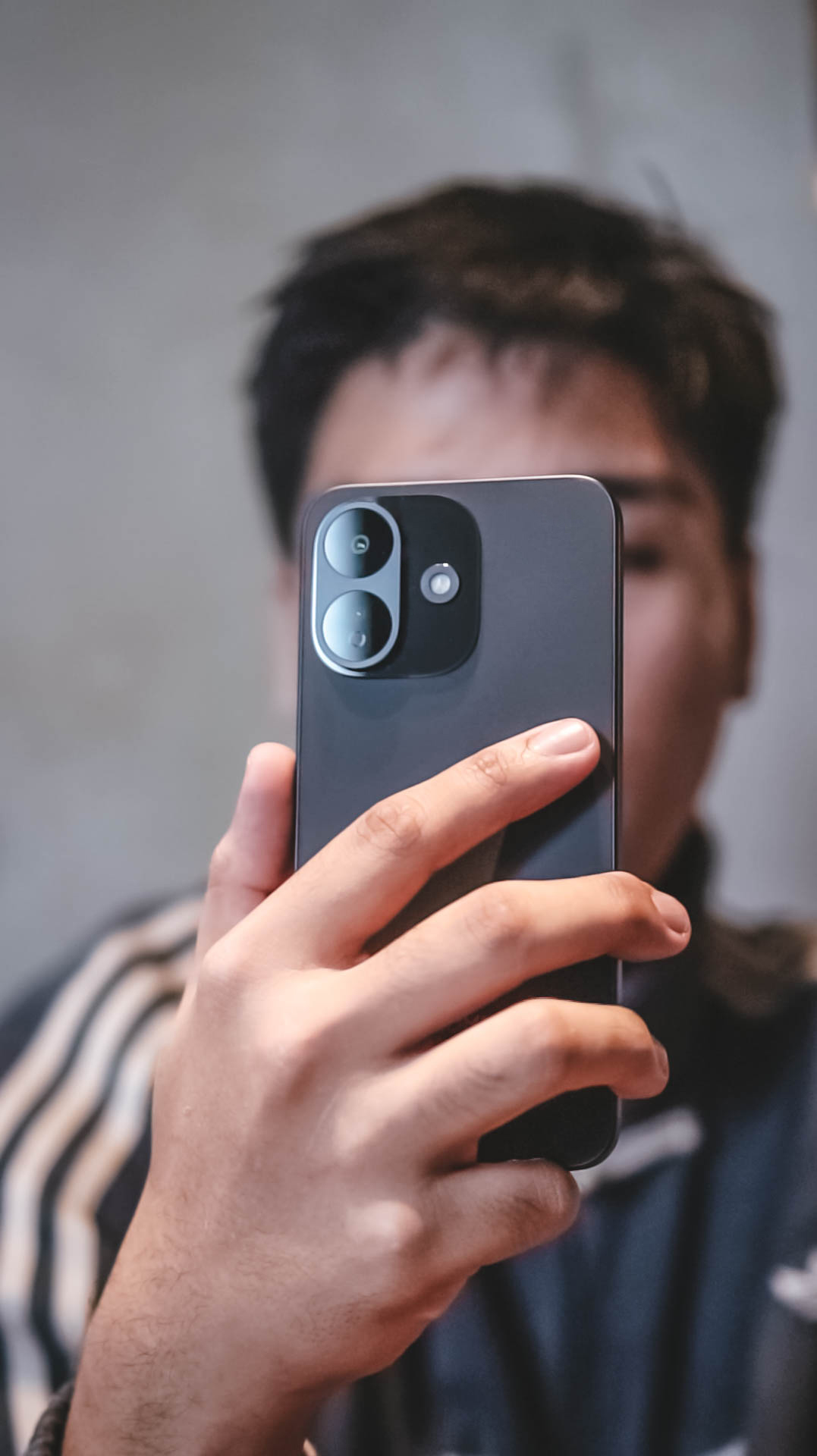
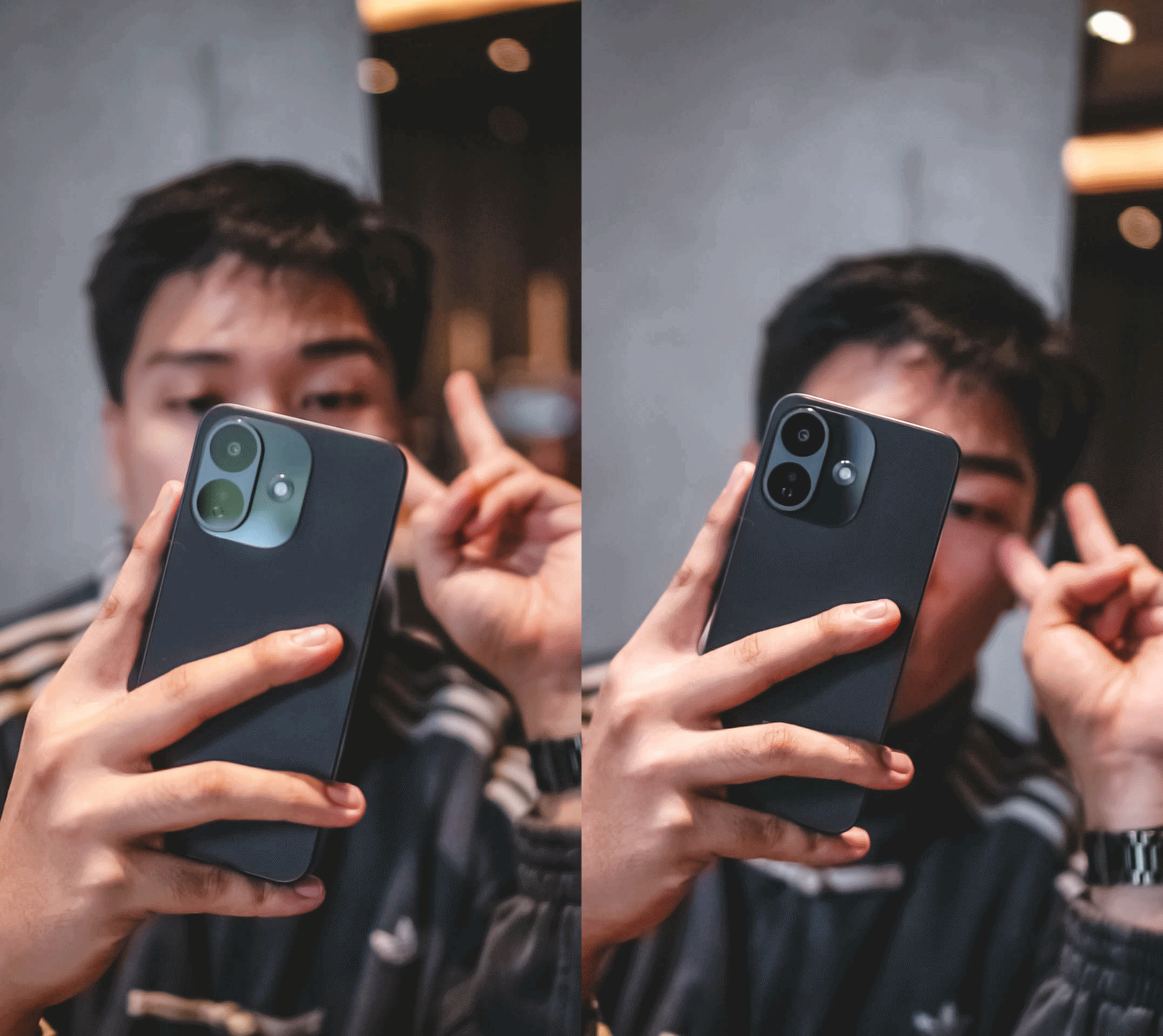
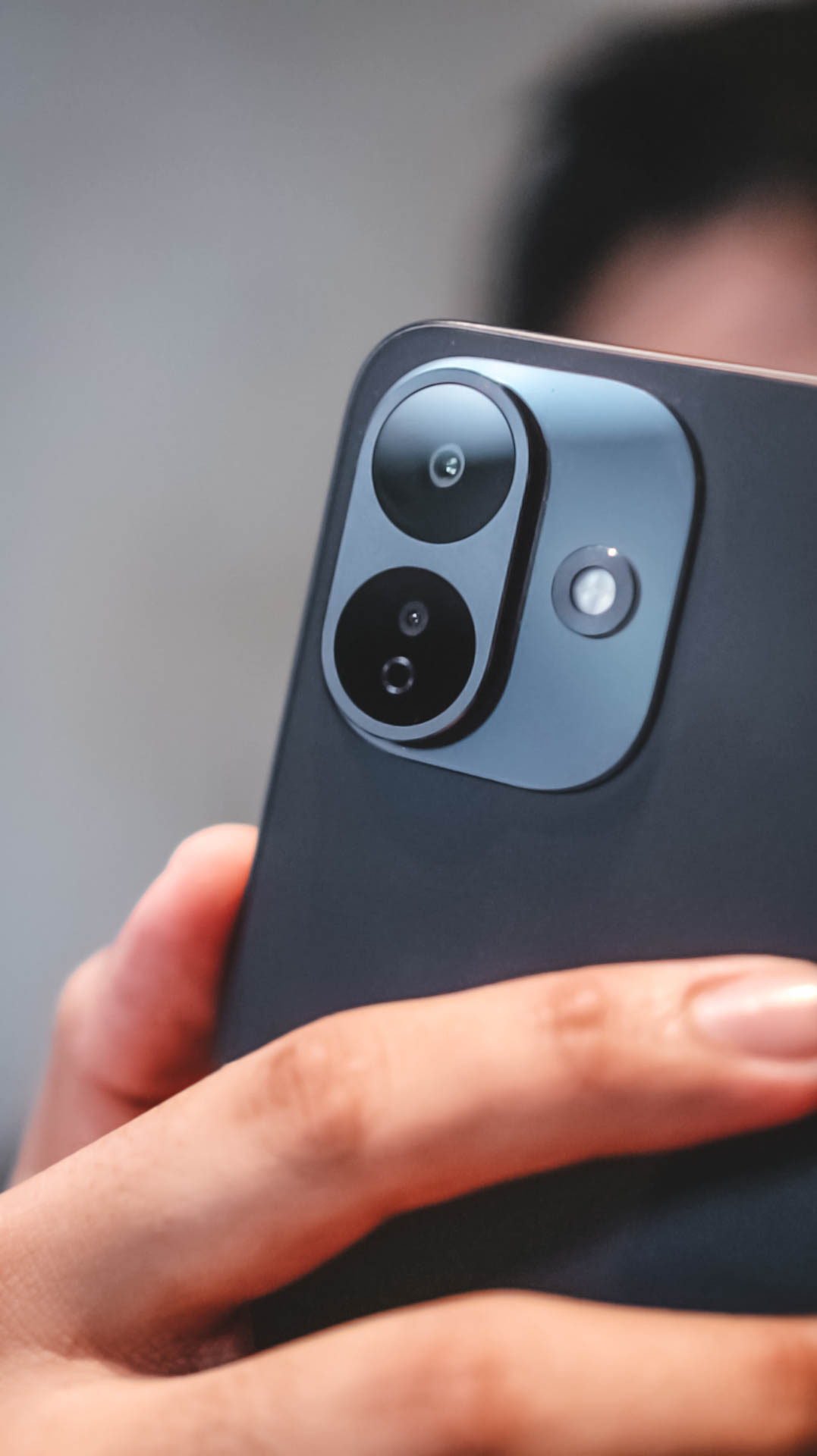
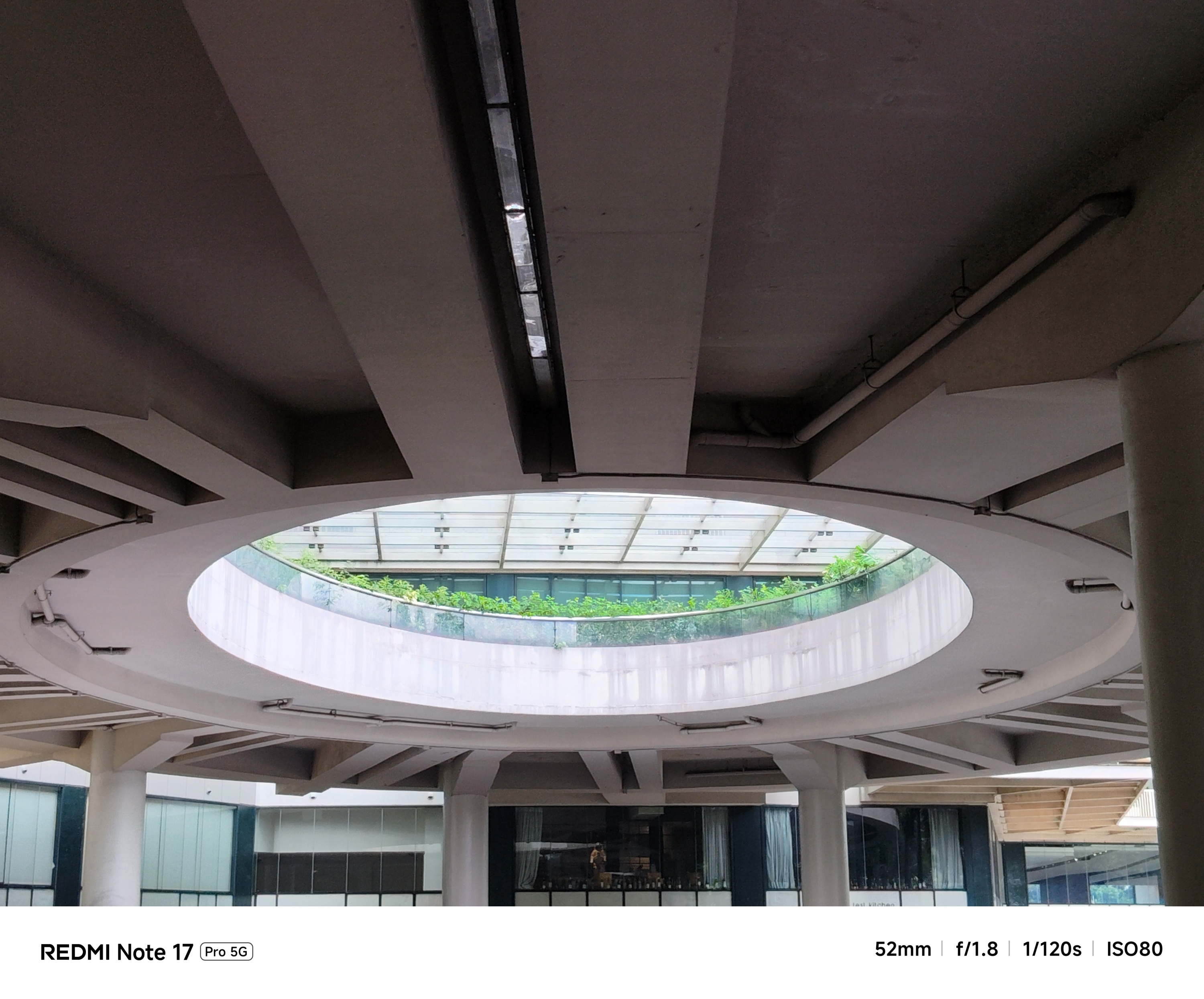
While we always say numbers aren’t everything, it’s too hard to ignore that Xiaomi decided to downgrade the main camera, too.
From that massive 200MP 1/1.4-inch primary sensor all down to just a 50MP 1/2.76-inch shooter.
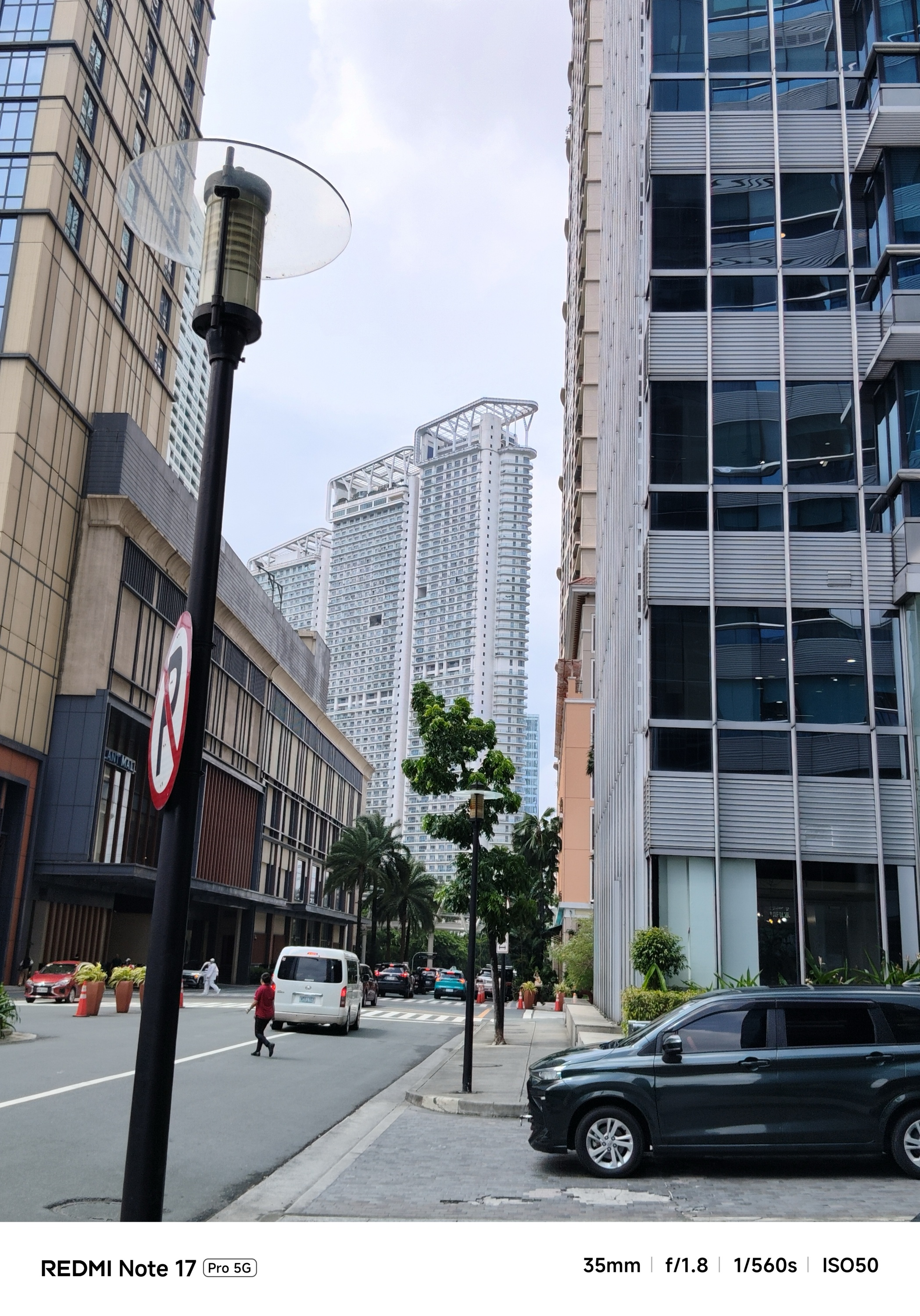

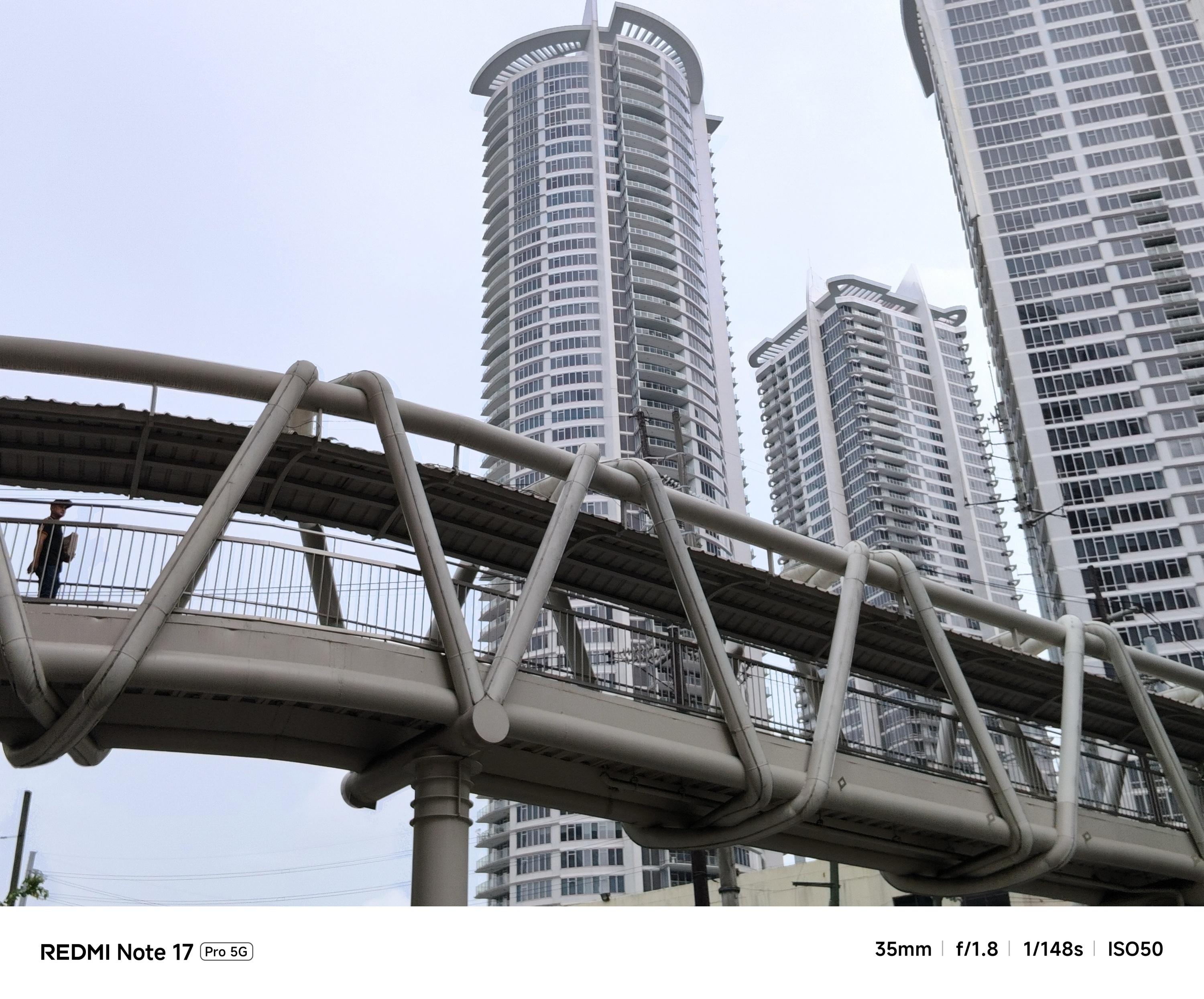
Even though camera output still results into a binned 12MP shot, that degraded sensor still matters a lot.

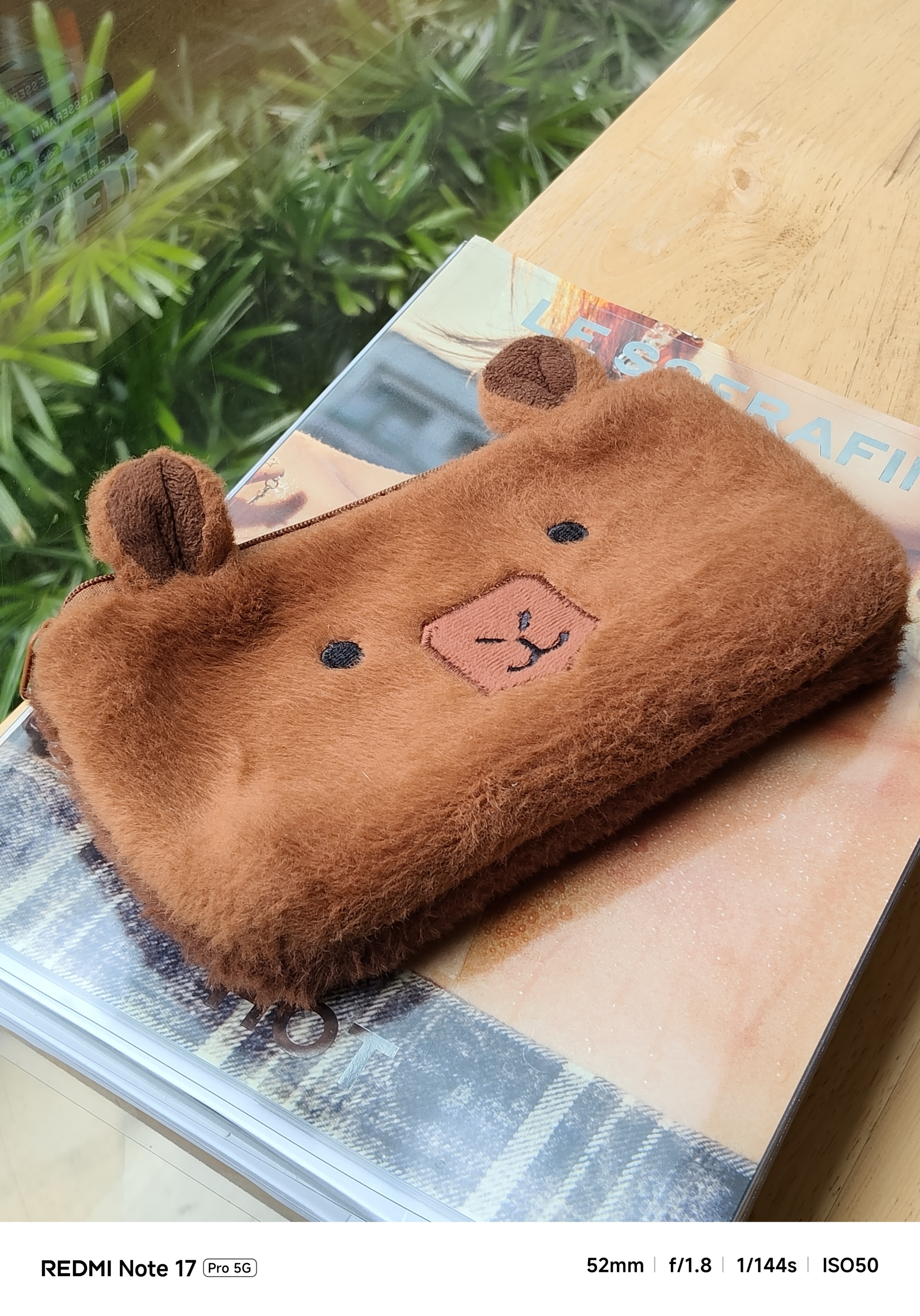
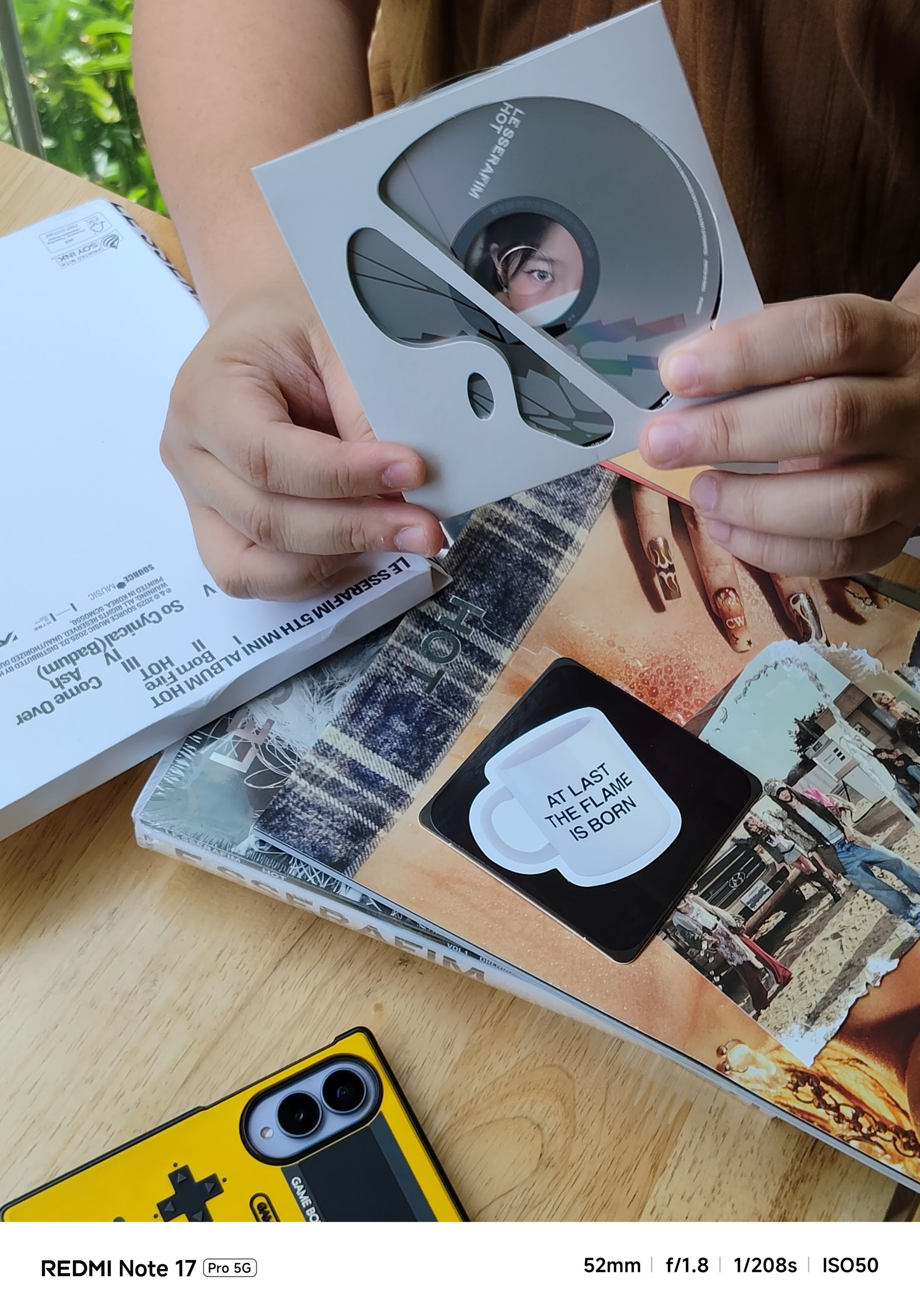

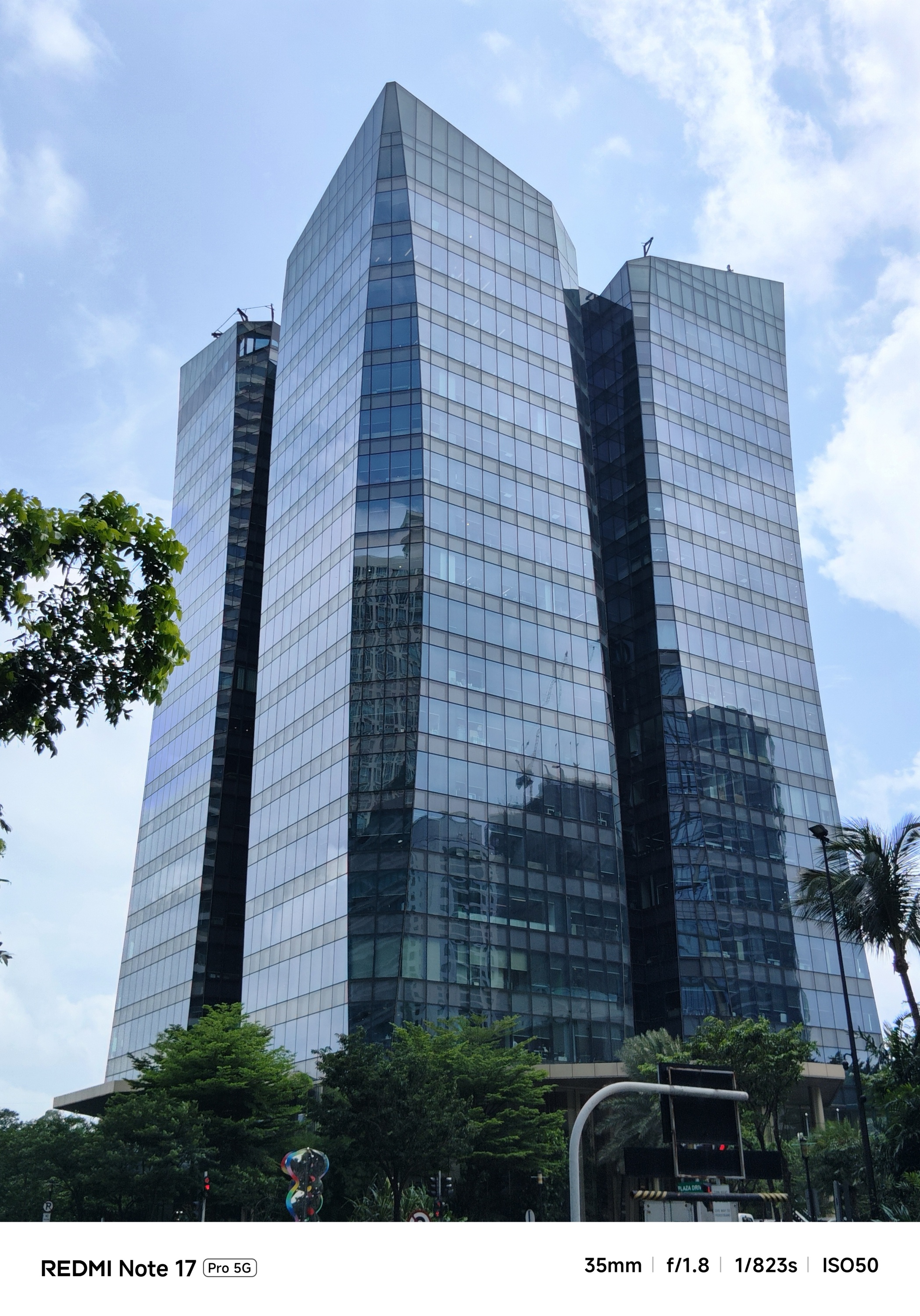
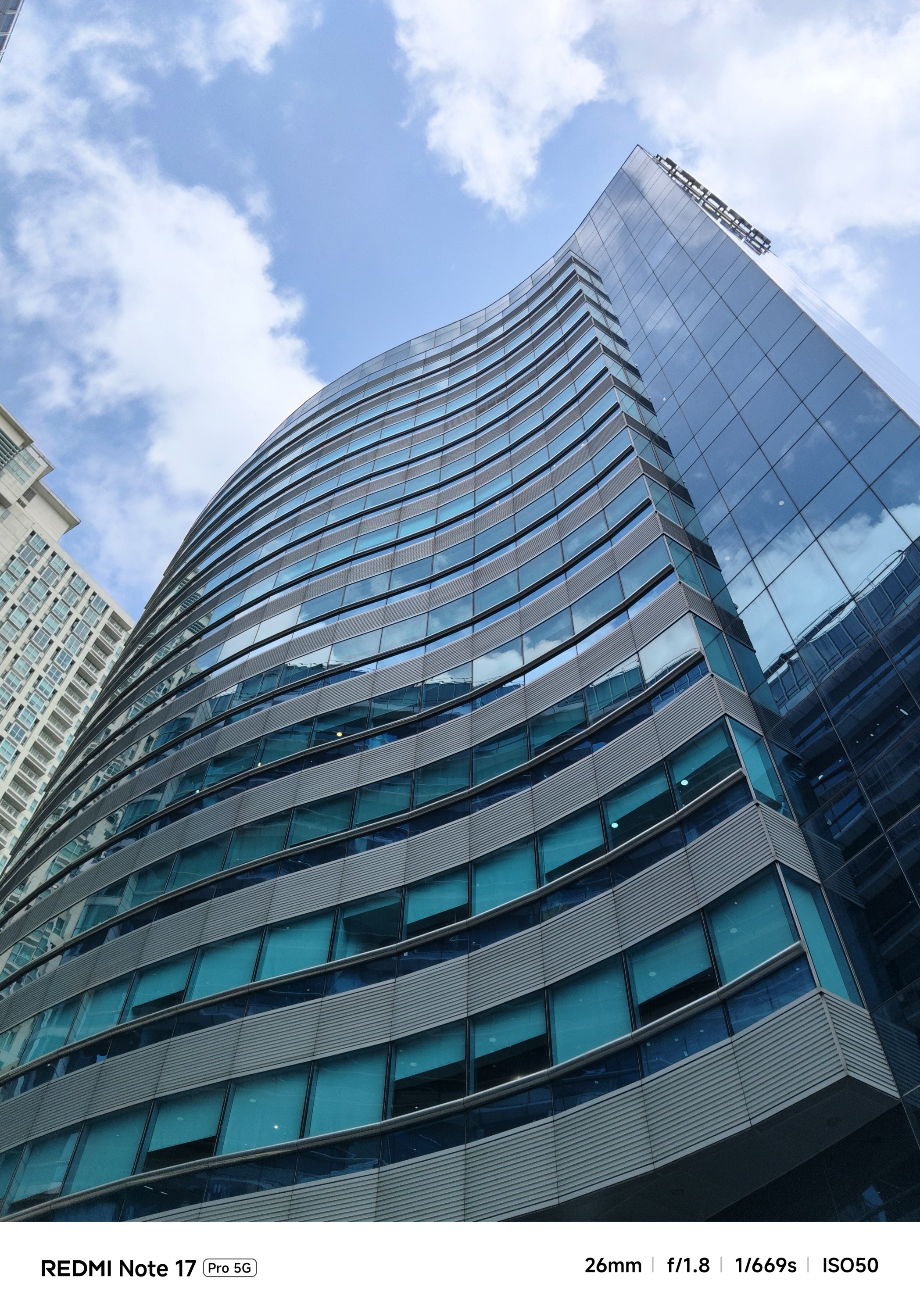
During the day, it won’t matter as much to most users.

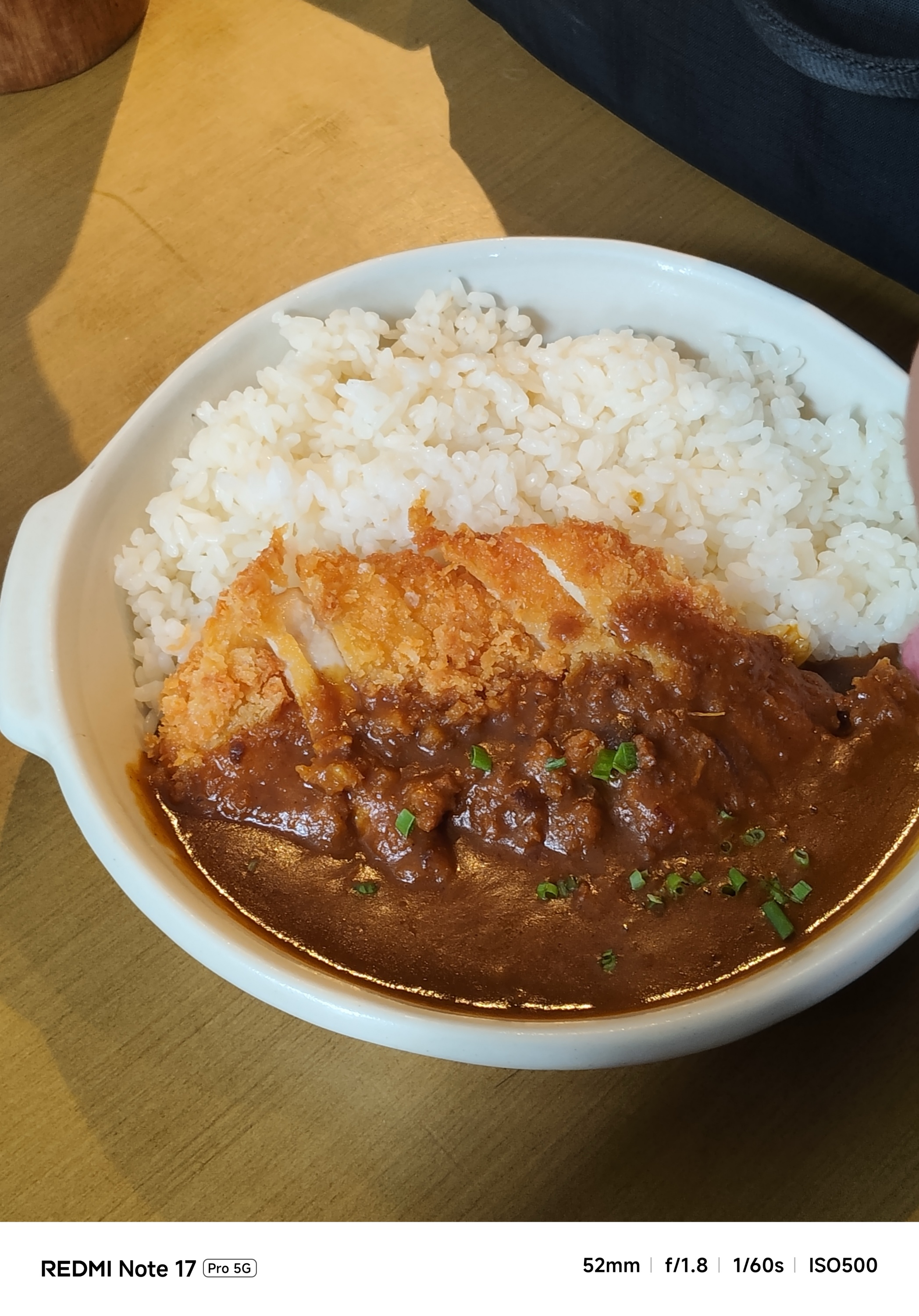
Honestly though, it’s a mixed bag of results.

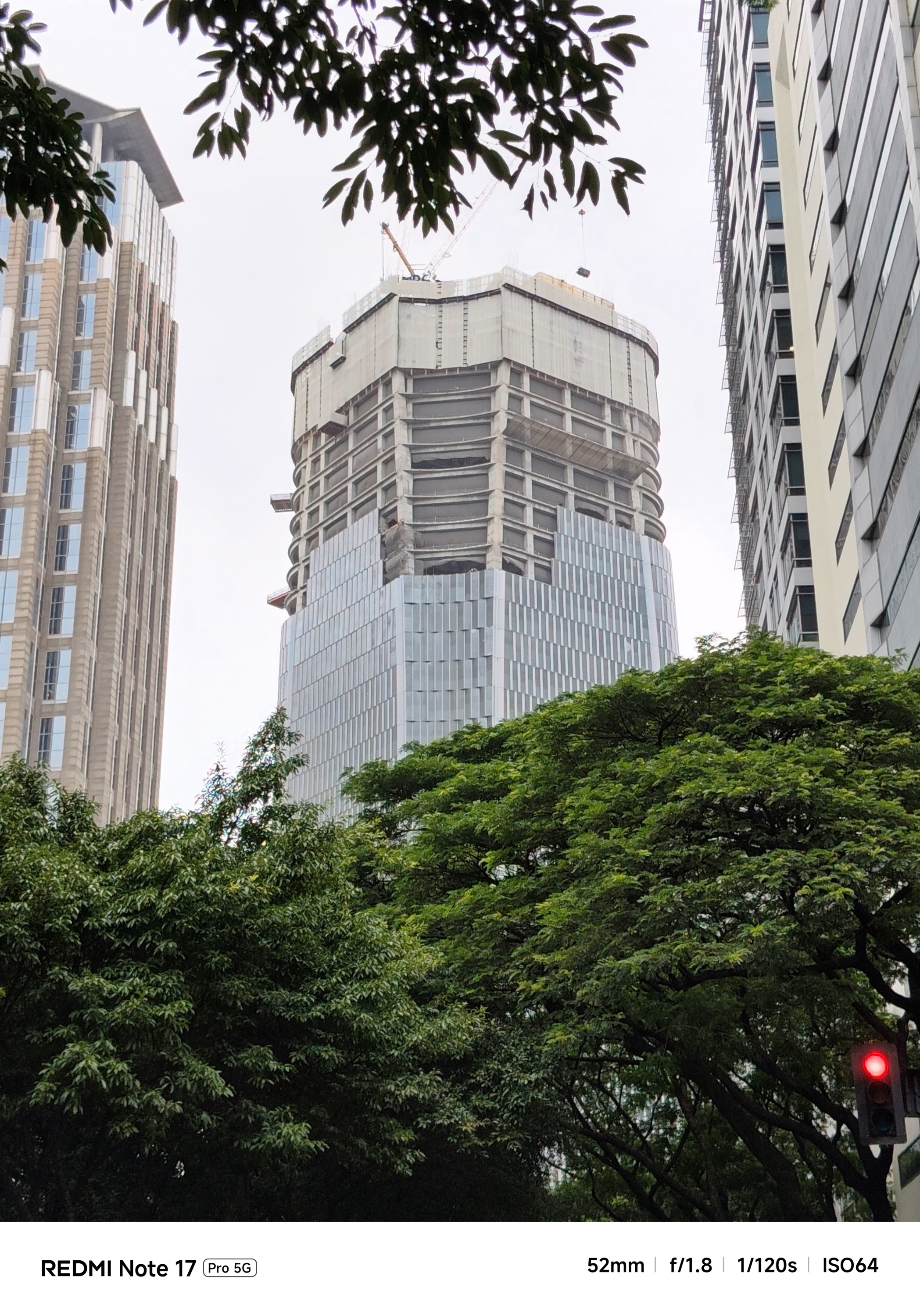
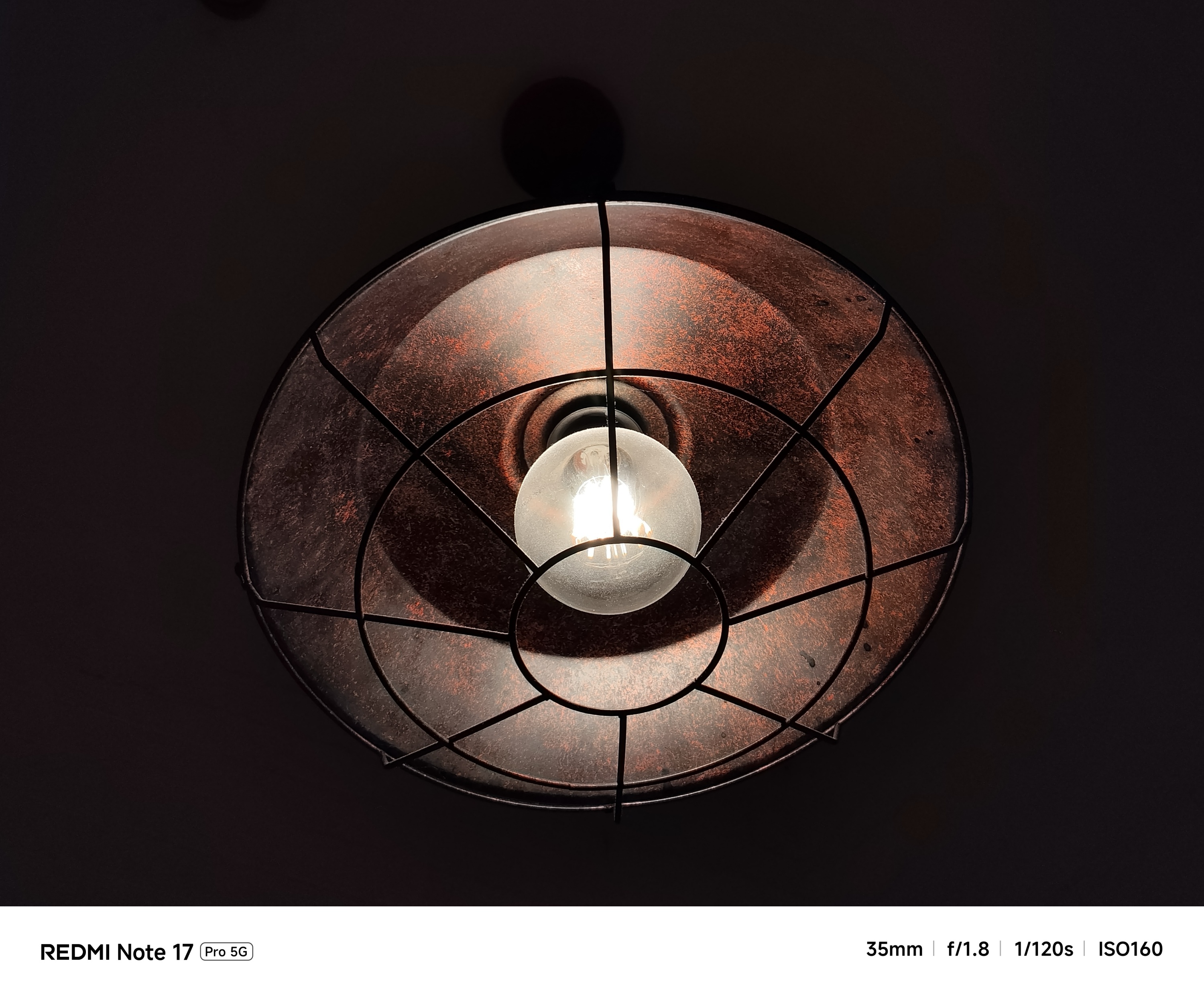
Taking the camera indoors or where there’s absence of natural light makes it struggle.

Shooting steadily gives you a hit or miss result — like how it did with my beautiful catto.
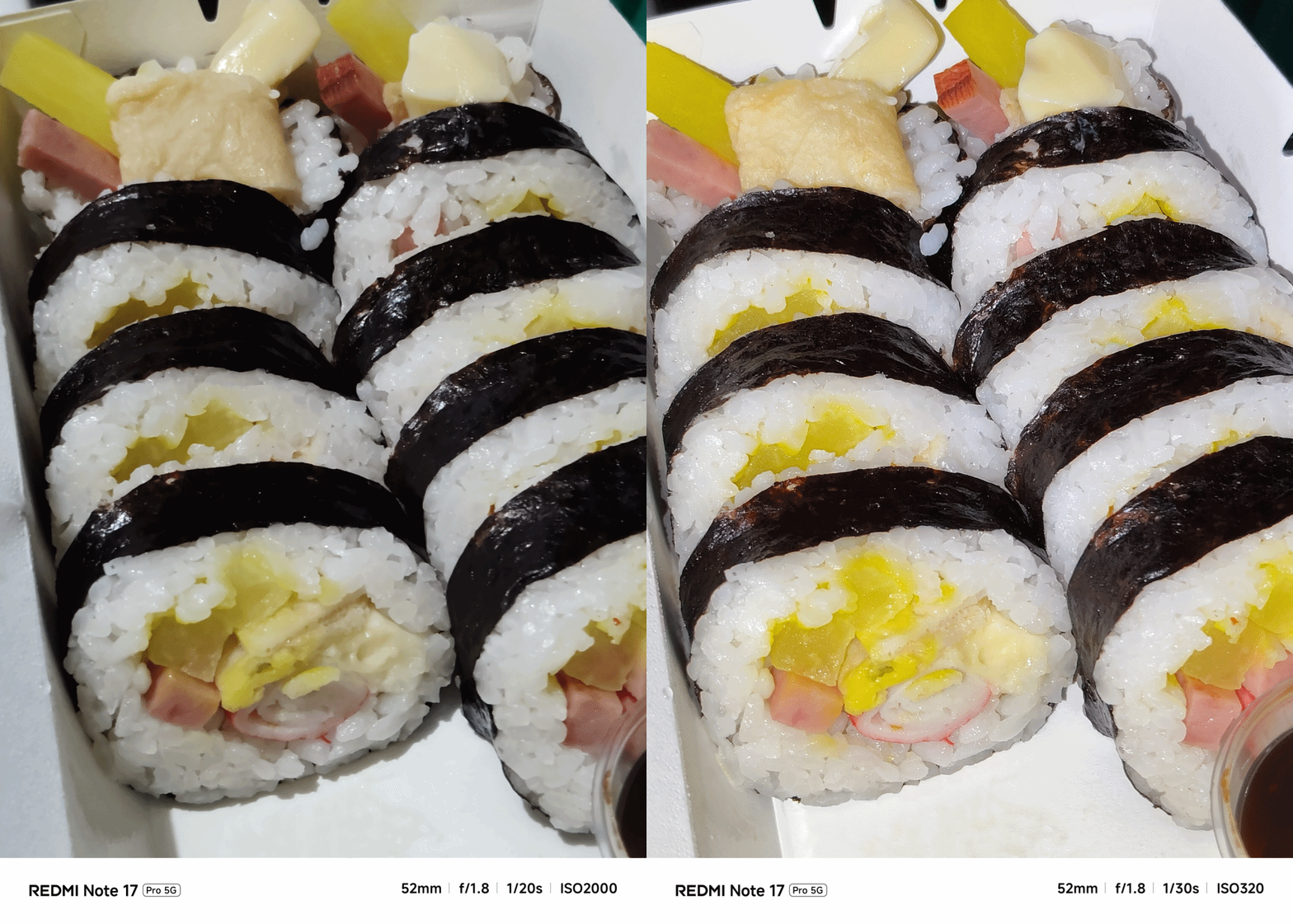
However, a split-second press at the shutter release gives you two inconsistent output — at least in EV (Exposure Value), contrast, and even shadows altogether.


Most of the time, it’s just purely a huge miss.
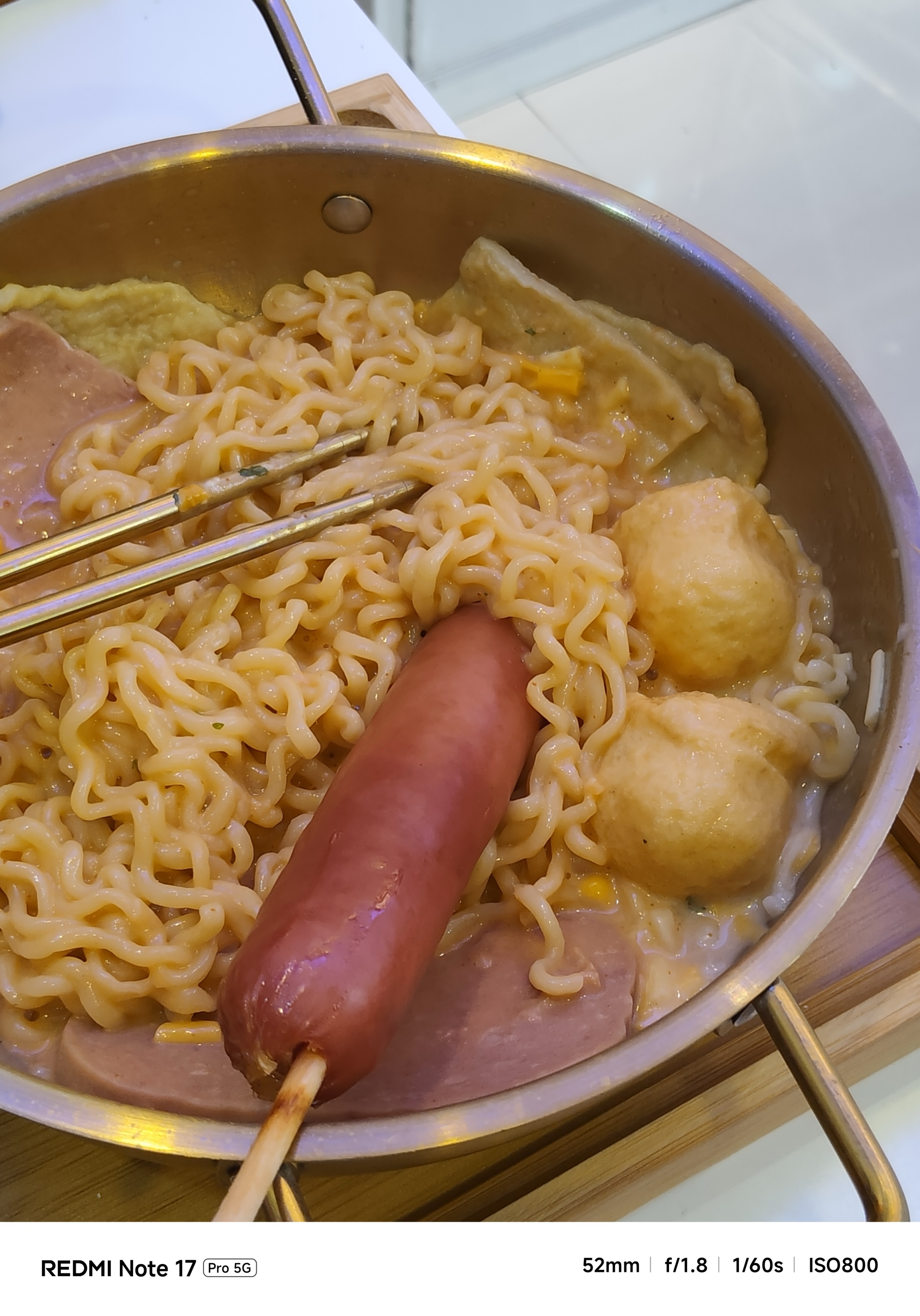

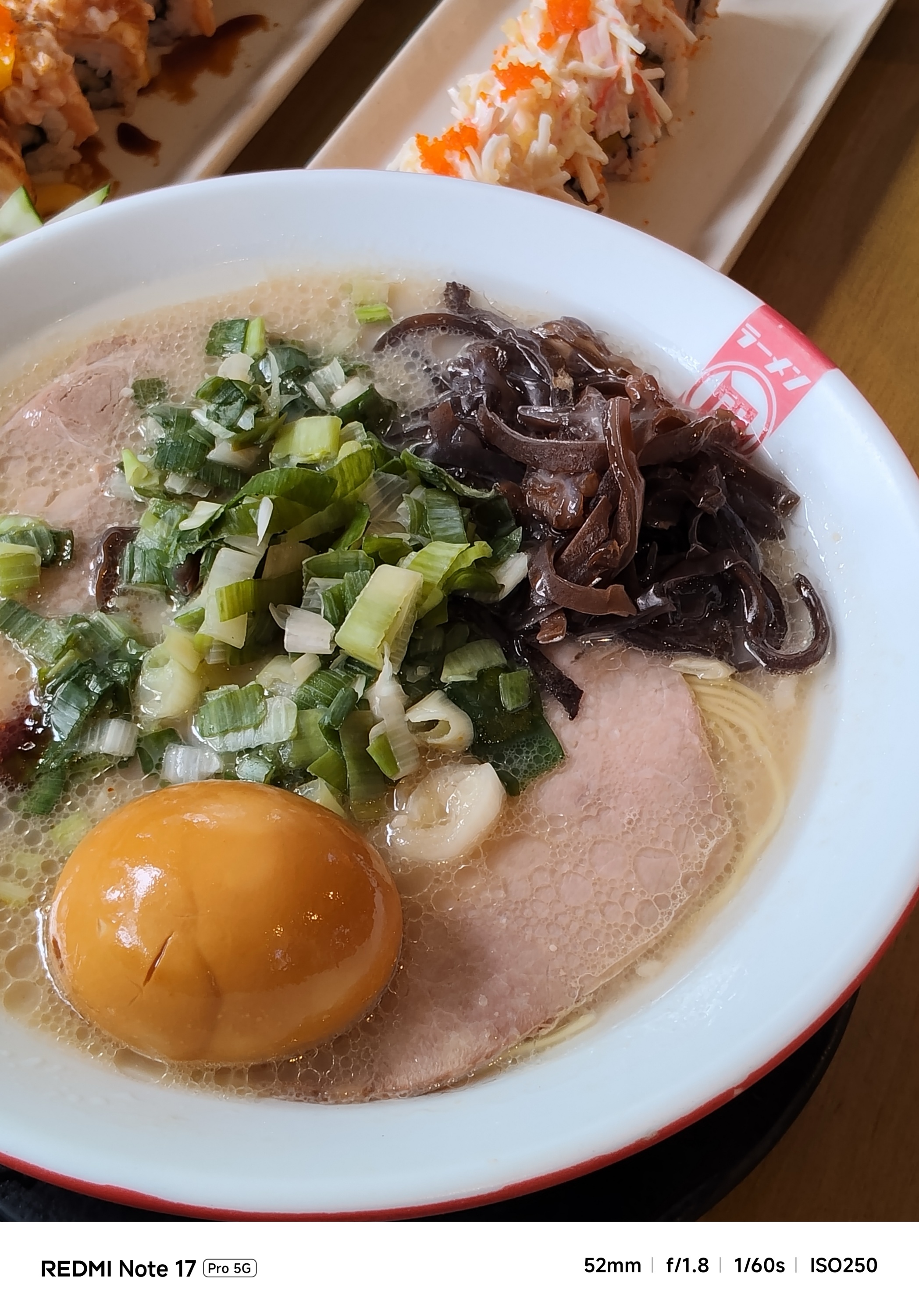
That’s most prominent when taking food shots.
I either had to swipe through its built-in camera filters or turn on the flash just to make them look appetizing.


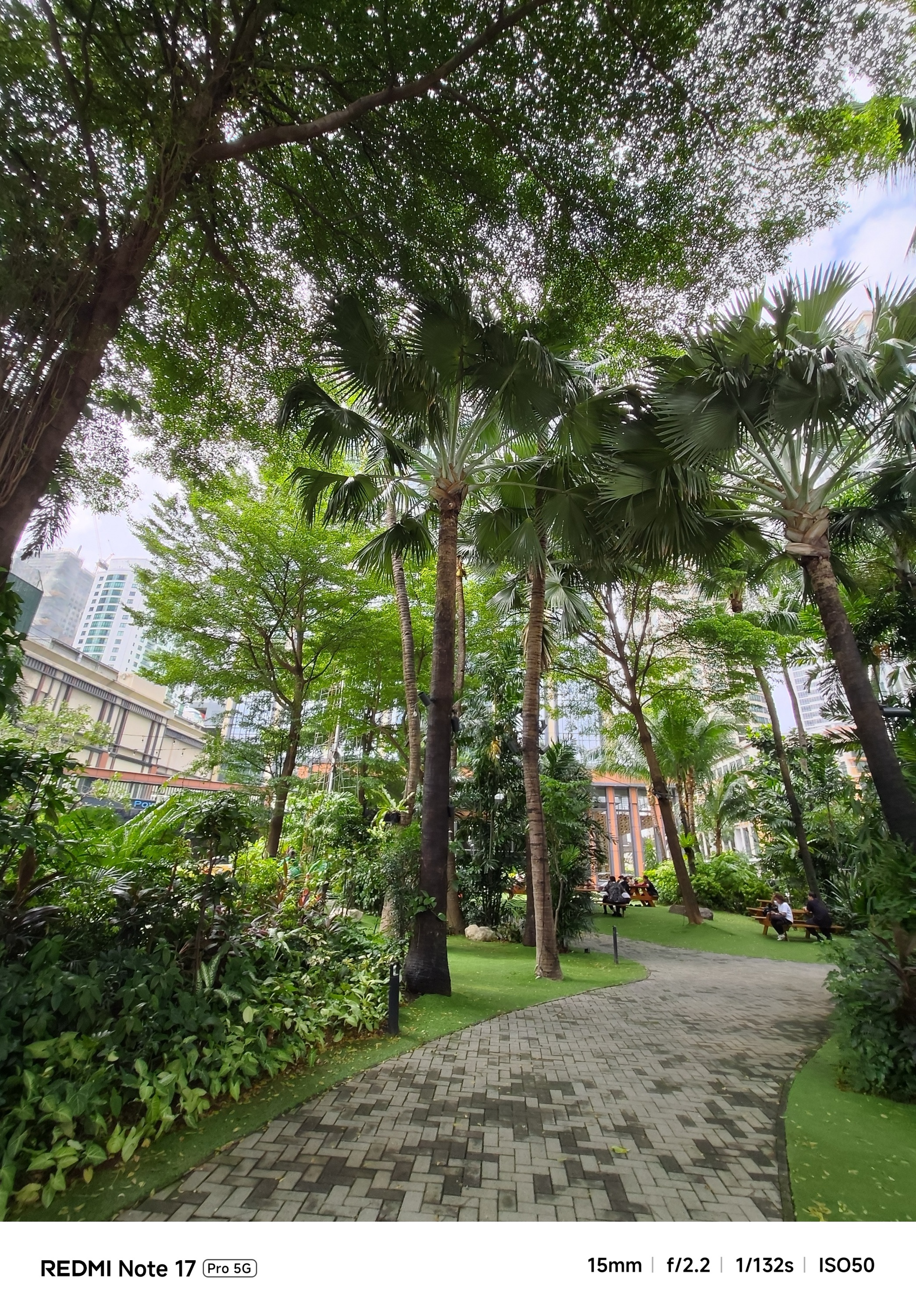
If that’s how its primary camera performs, its 8MP UWA (Ultra-Wide Angle) lens is negligible — as long as you don’t pixel-peep.

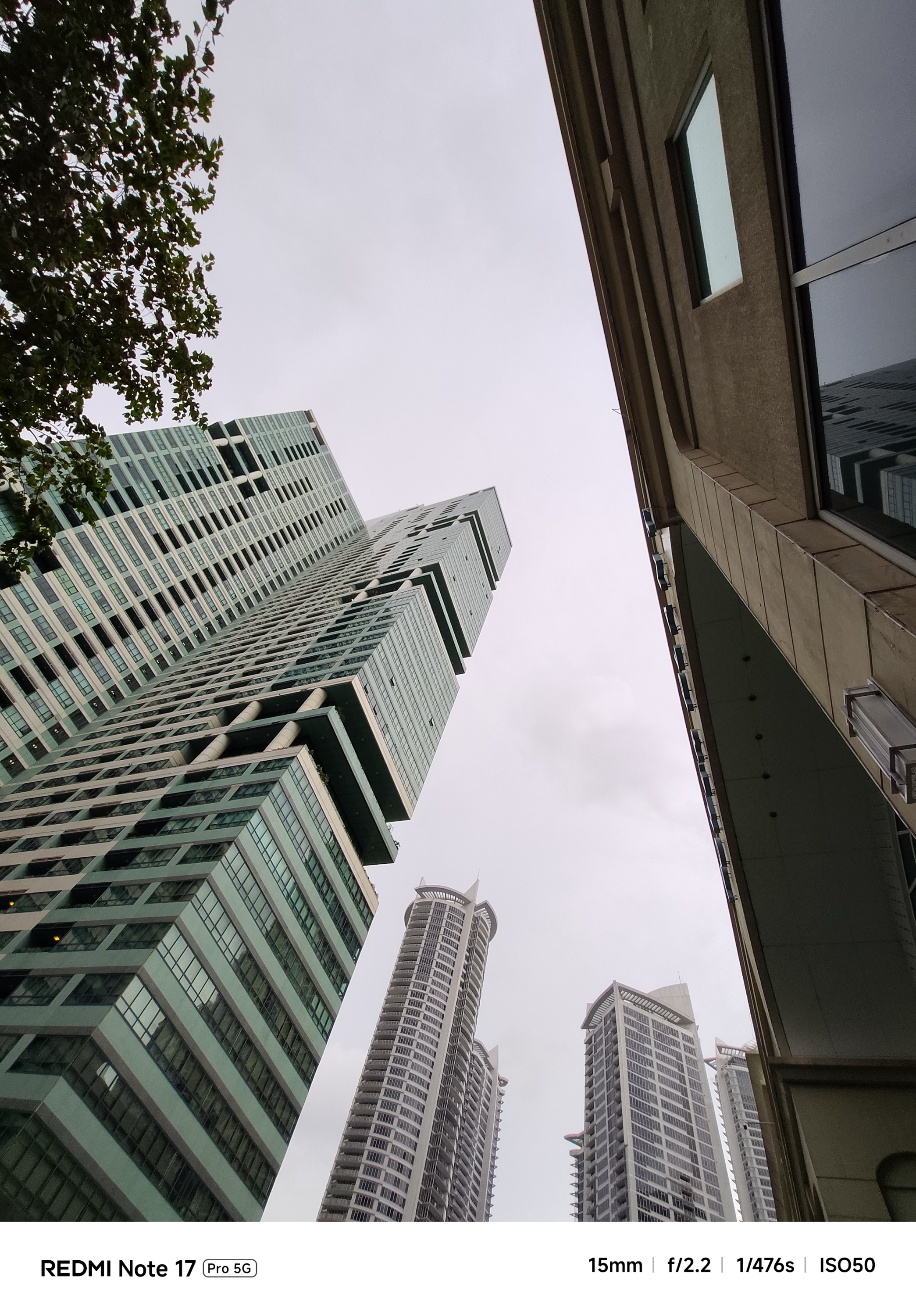
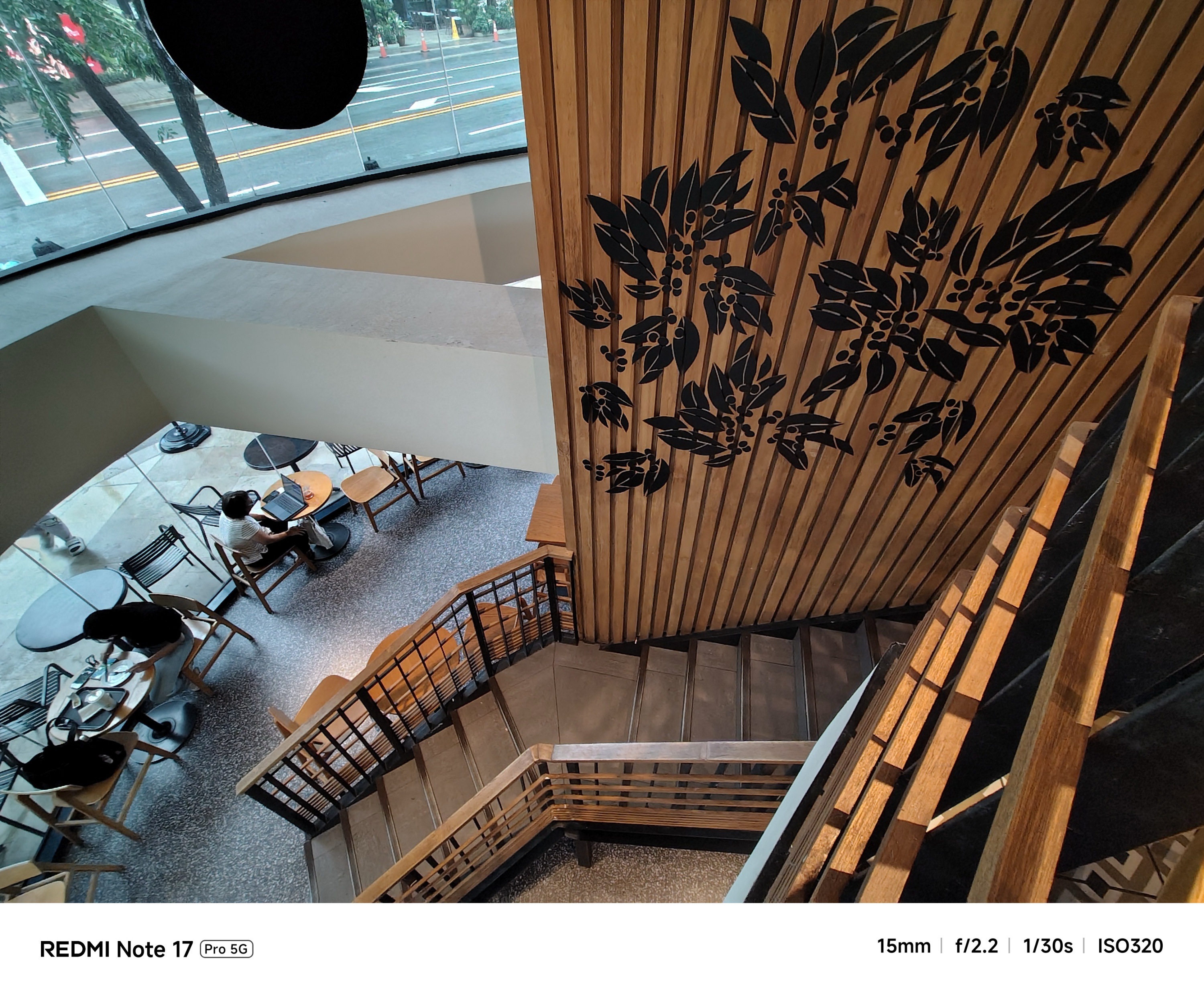
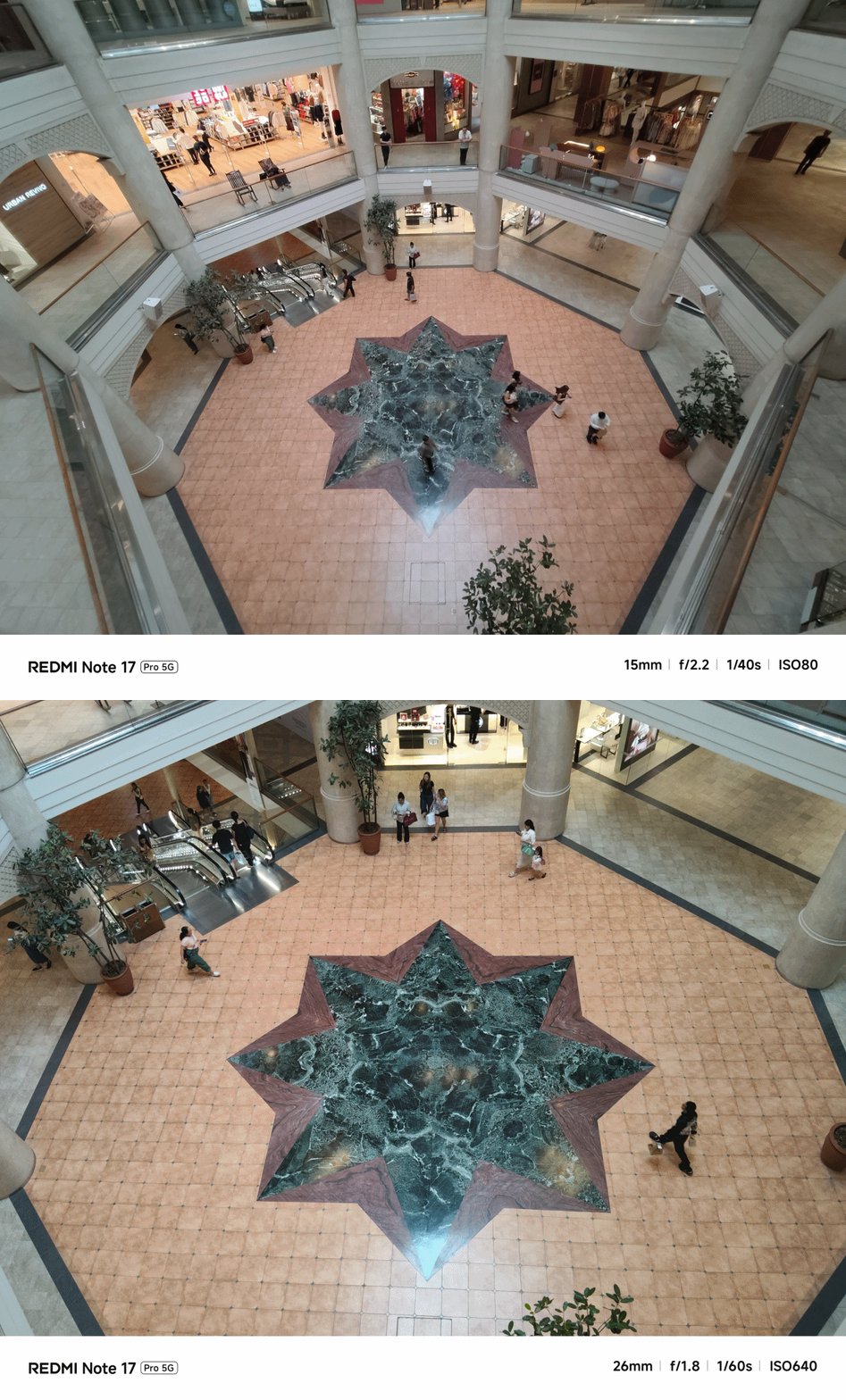
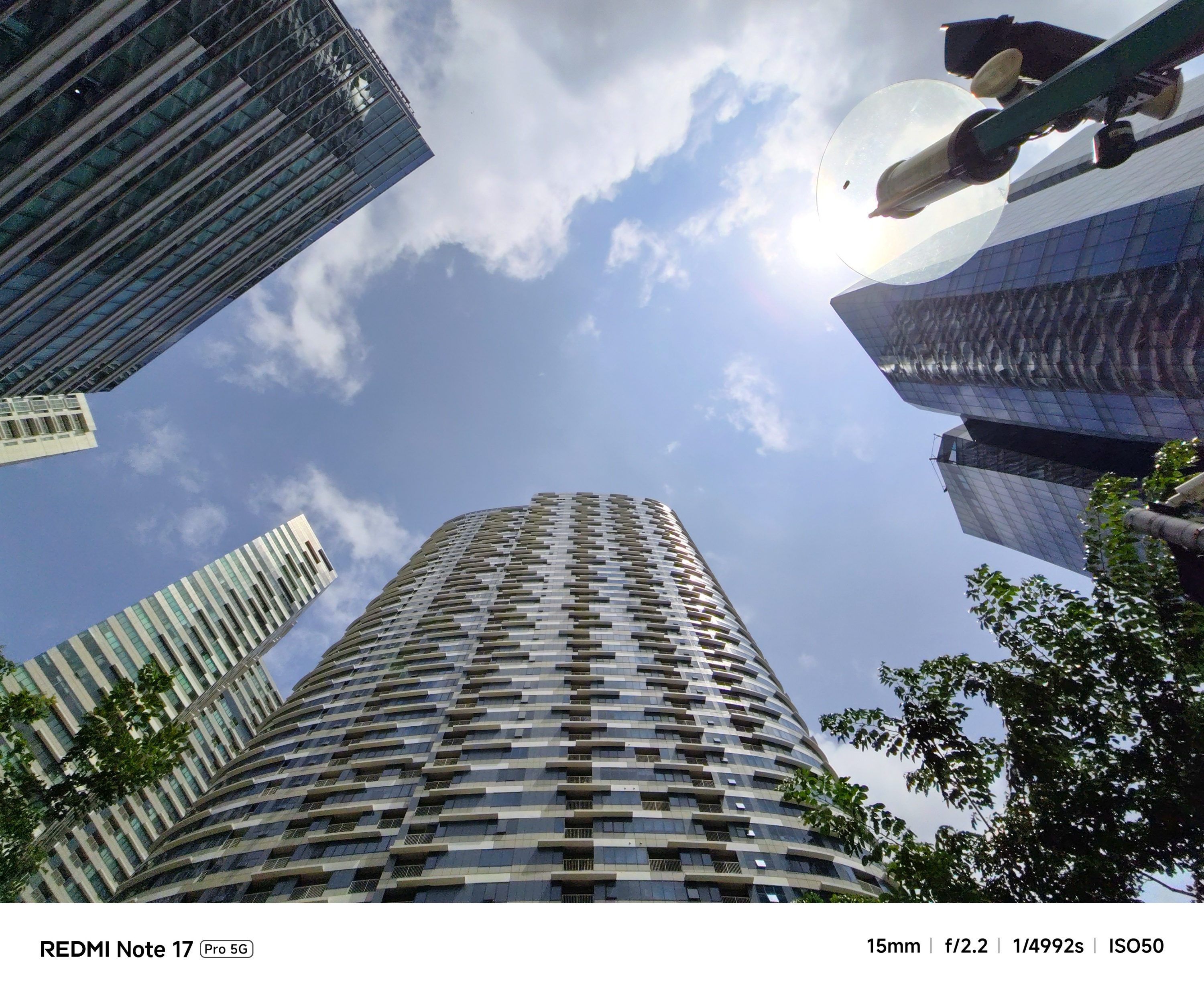
Going beyond 2x zoom? Don’t get your hopes too high.
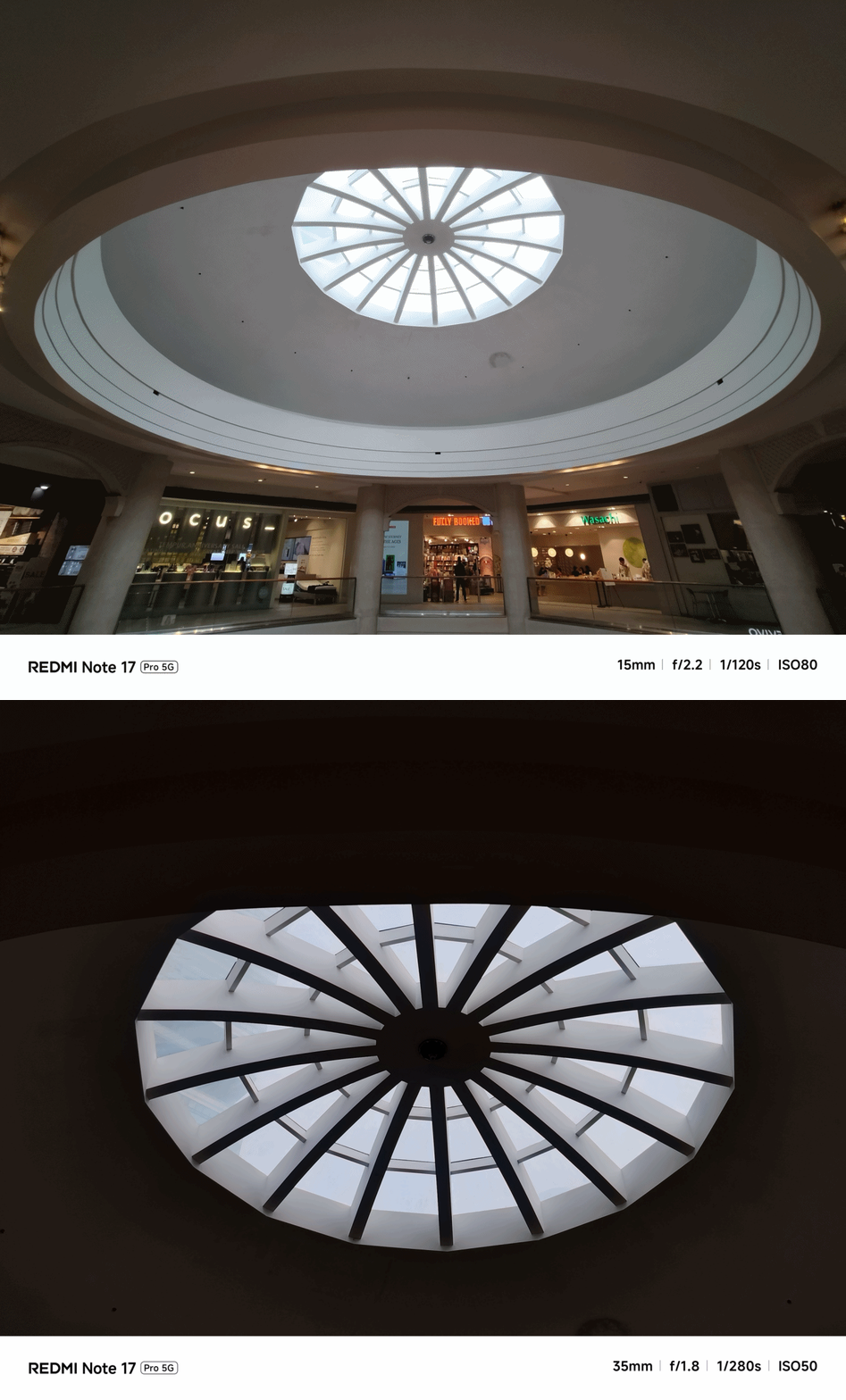
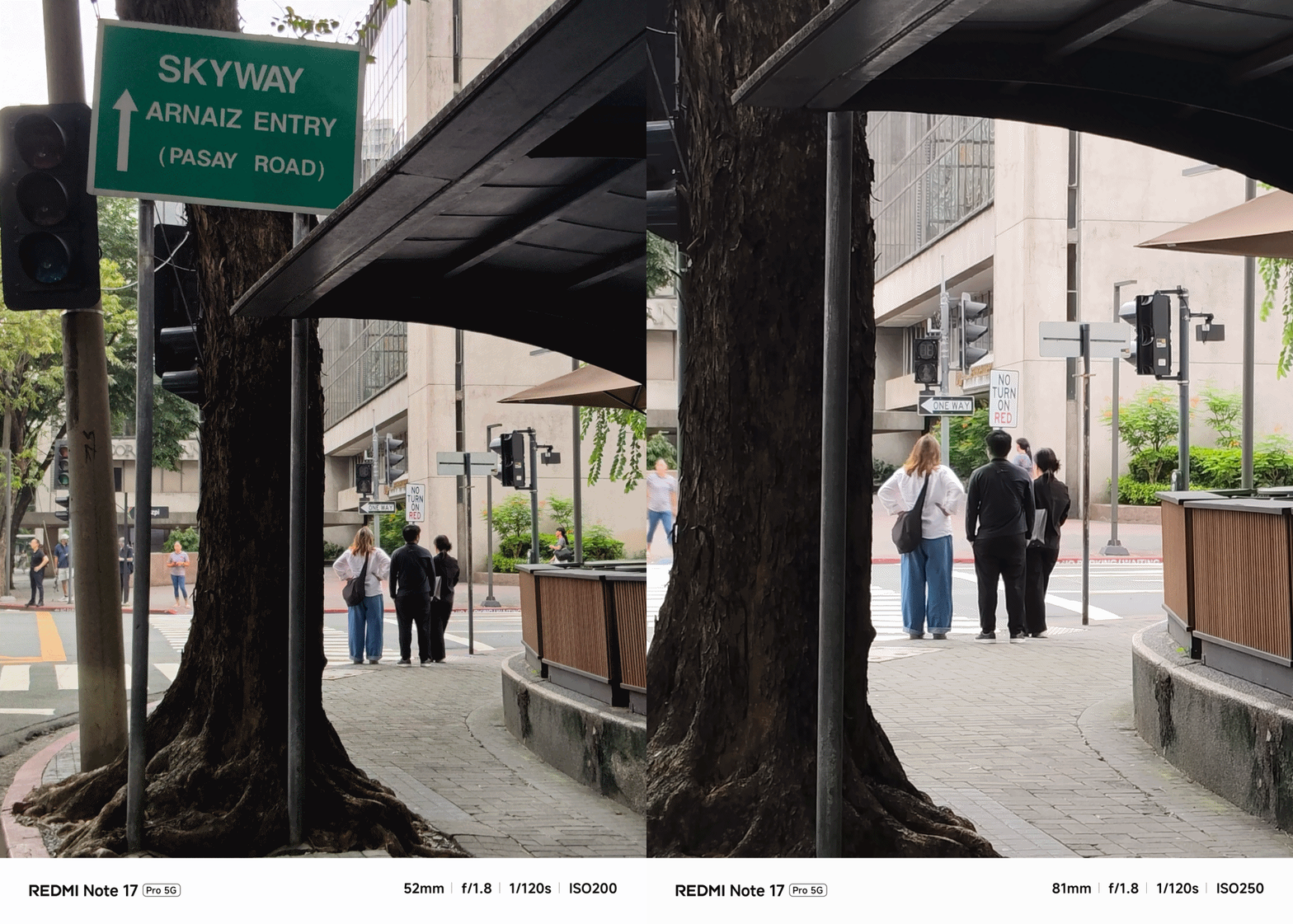

Even with the presence of AI algorithms, the smaller sensor size of the main camera cannot truly compensate that final image quality.

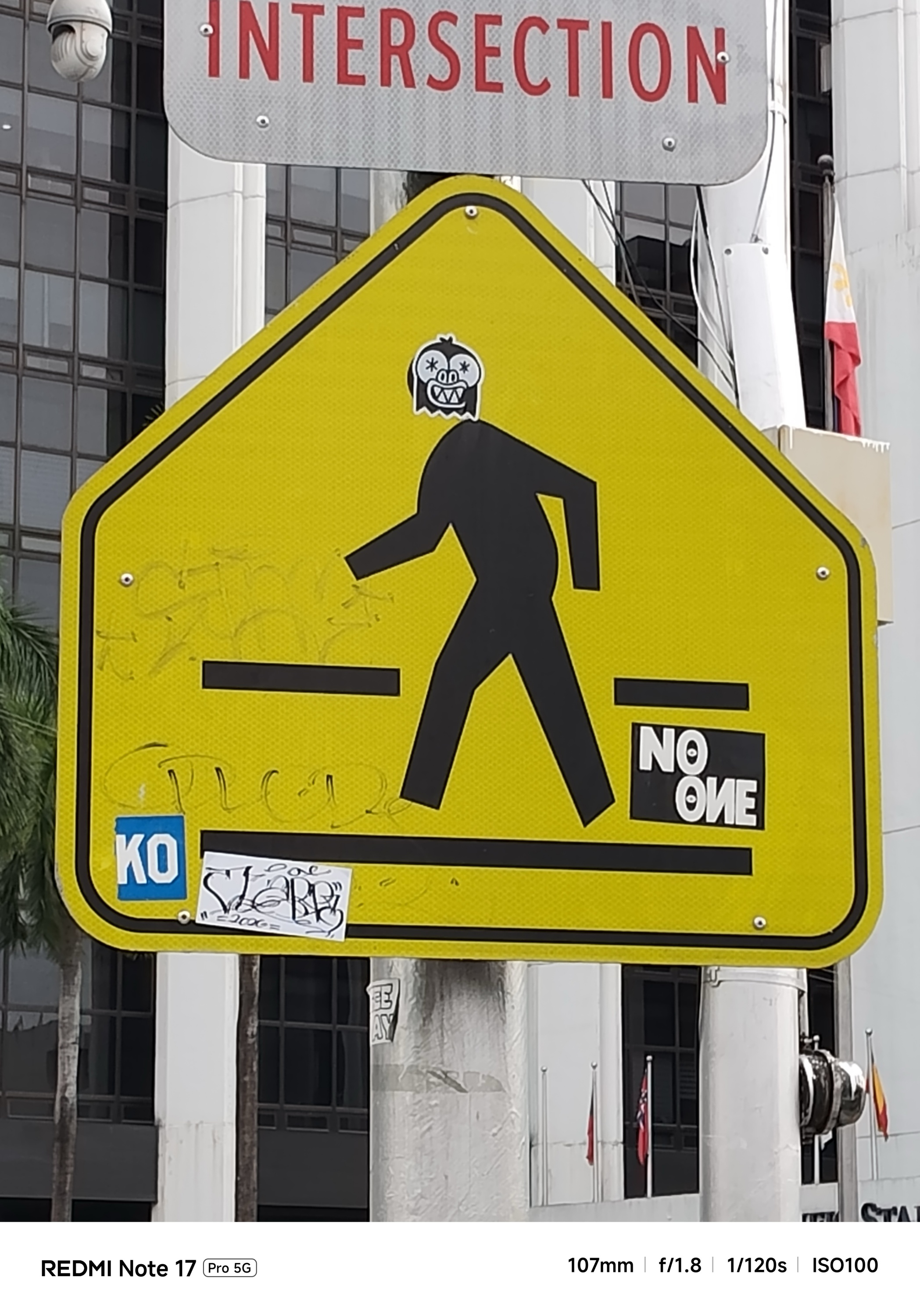
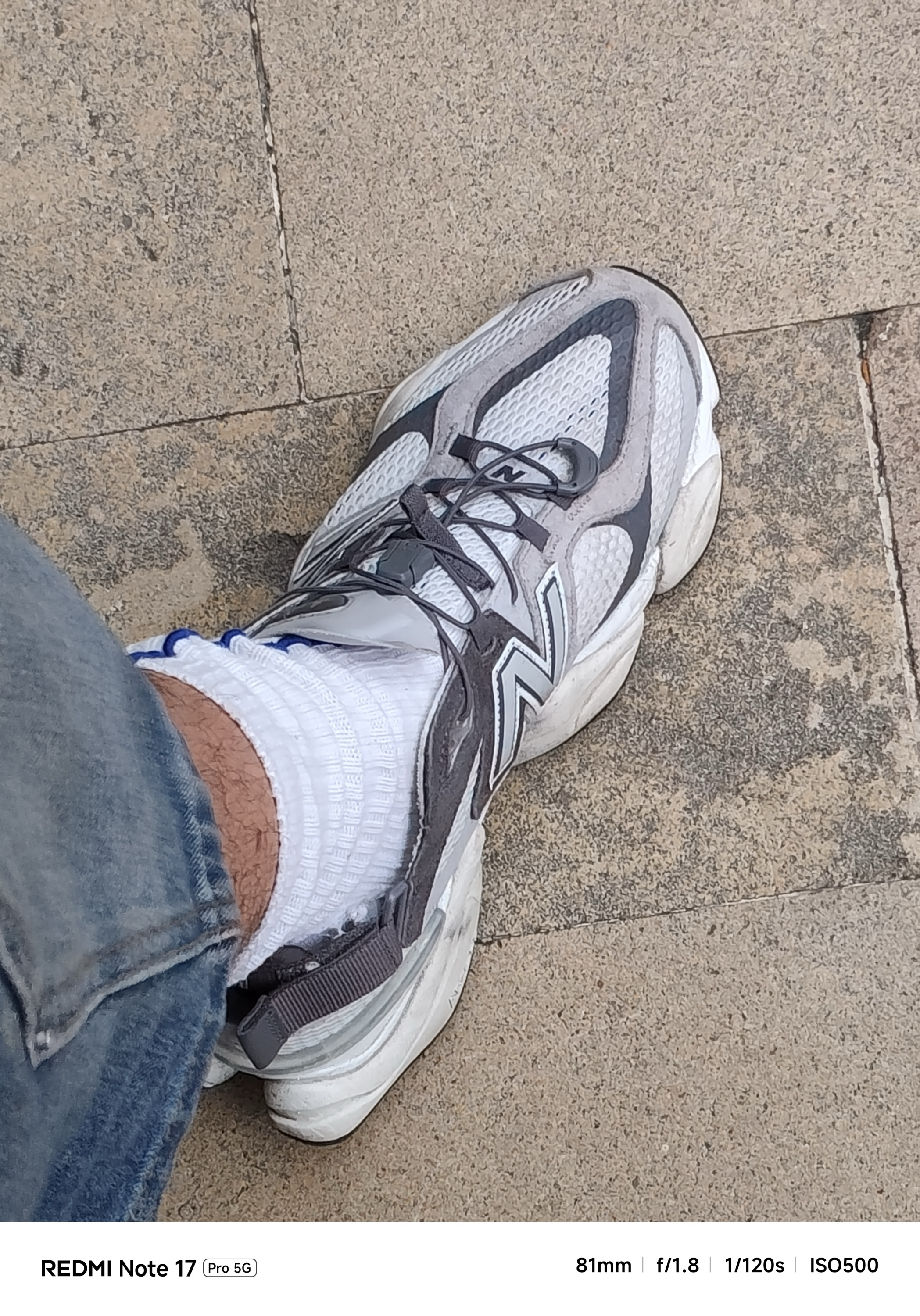
Again, manage your expectations if you’re eye-ing to rock this product.

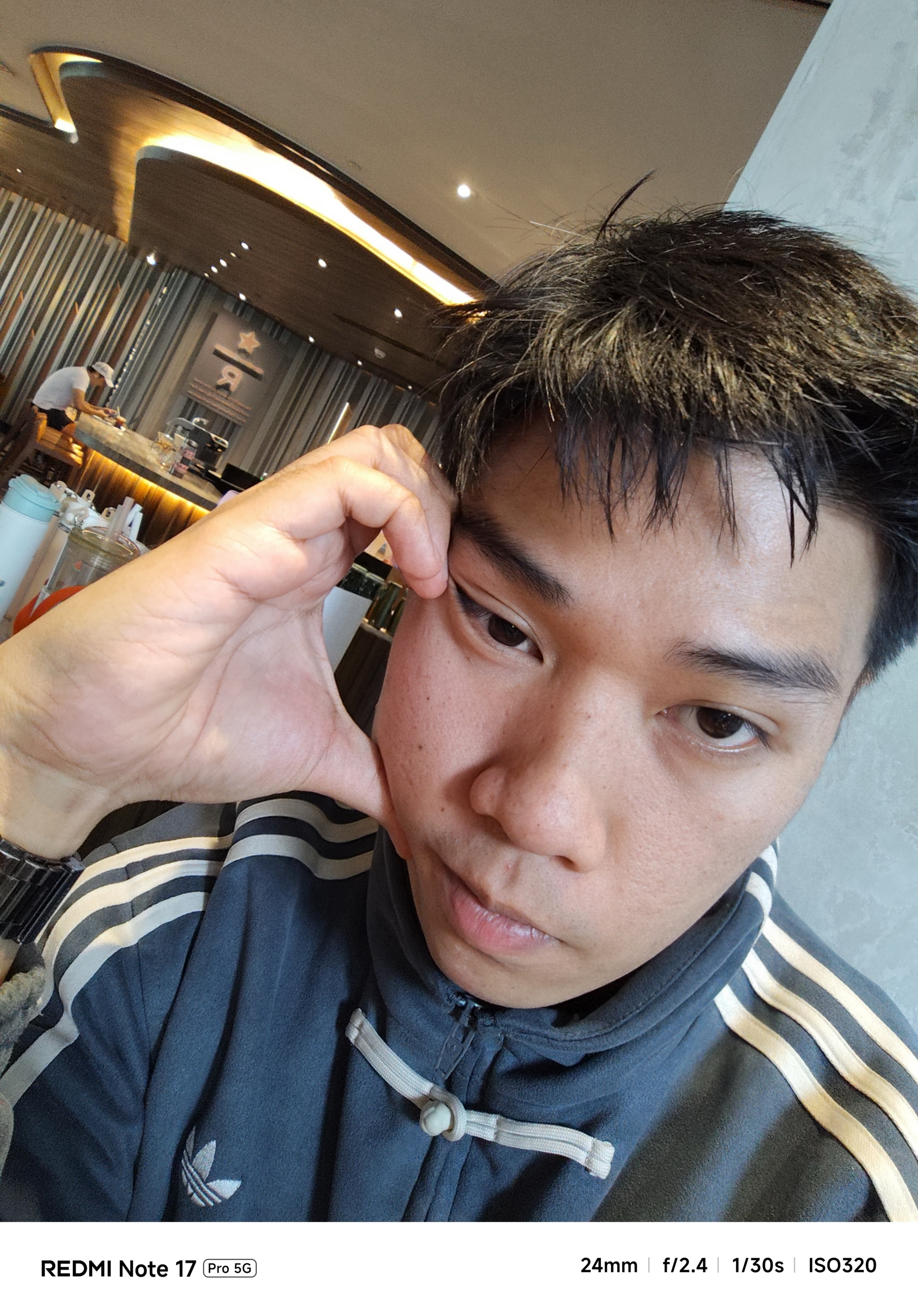
Although selfies look natural as it can be, the bad news is that, it also got downsized from 20MP f/2.2 to a 16MP f/2.4 shooter.
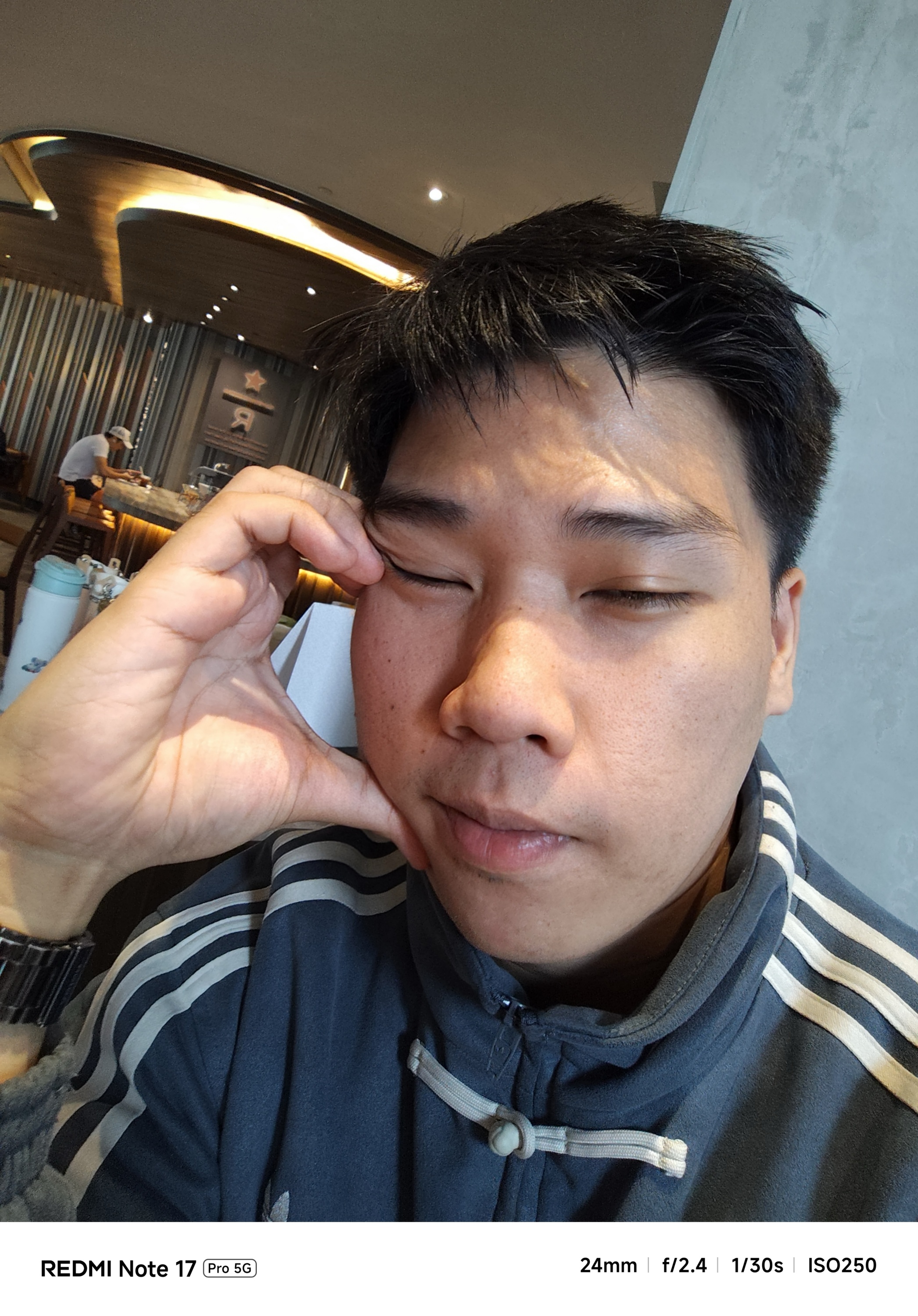
What a way to end this rollercoaster ride.
Is the REDMI Note 17 Pro your GadgetMatch?
The REDMI Note 17 Pro itself is like any rollercoaster ride. Some may love the adrenaline rush. Others just tried the thrills and will never ever come back again.
Putting our matchmaking magic into context, the REDMI Note 17 Pro is a Swipe Left for most things considered. From its massive design change, slightly-downgraded chipset, and a main camera shooter that also took a downfall.

But, if you heavily consider battery life and faster charging over anything else, the REDMI Note 17 Pro is a soft Swipe Right.
Personally, I can attest how its long-lasting endurance made me worry less about being near in any plug outlet. Also, the carefree mindset of not always having to bring bulky power banks with me whenever I’m out for a day.
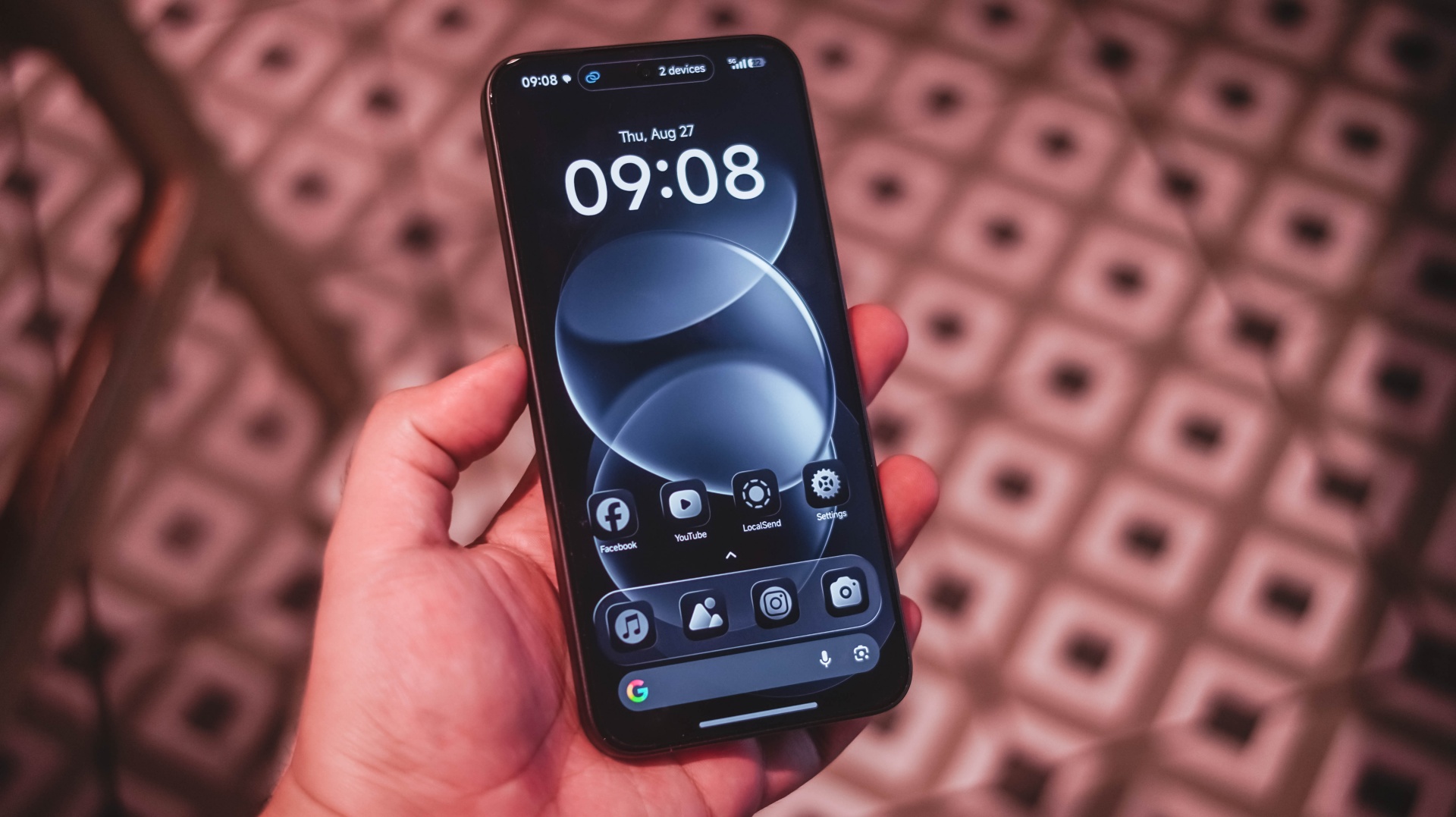
Moreover, that dazzling display paired with powerful audio are perfect complement to that boost in battery capacity — especially for any power user like me and you.
Now, with a base price of US$ 399 / SG$ 599, it’s a ride or die situation for REDMI and its existing community.





Sony resurrects the WH-1000XM4 with a refreshed model

HUAWEI Mate XT 2 tri-fold launches with Kirin 9050 Pro

HUAWEI Pura X View is 2026’s first WIDE slab-type smartphone

How Samsung folds the Galaxy into people’s lives

The CAMON Slim 5G is TECNO’s latest ultra-slim smartphone

TECNO MEGAPAD 2 review: Eyes on the size

realme 16T 5G with 8000mAh battery, IP69 Pro rating launches in PH

REDMI Note 17 Series focuses on long-term reliability

realme 16T to come with 8,000mAh battery, 7-year battery health guarantee
HUAWEI Pura X View is 2026’s first WIDE slab-type smartphone


-
 News1 week ago
realme 16T 5G with 8000mAh battery, IP69 Pro rating launches in PH
-
 News20 hours ago
HUAWEI Pura X View is 2026’s first WIDE slab-type smartphone
-
 News2 weeks ago
REDMI reveals the refreshed Note 17 and Note 17 Pro series
-

 Singapore2 weeks ago
REDMI Note 17 Series: Price, availability in Singapore
-
 Cameras2 weeks ago
Insta360 Luna Ultra review: My new solo coverage camera
-
 Reviews2 weeks ago
REDMI Note 17 Pro review: What a rollercoaster ride!
-

 Features1 week ago
The designated photographer’s new favorite phone: OPPO Reno16 Series 5G
-
 Cameras6 days ago
DJI Osmo 360 II review: Going all-in on the ecosystem