

I normally get gaming laptops in some matte black finish. Something about that color screams “gamer” to me, especially with its subdued vibe. Getting it in any other color just draws too much attention, especially when you want to game in peace.
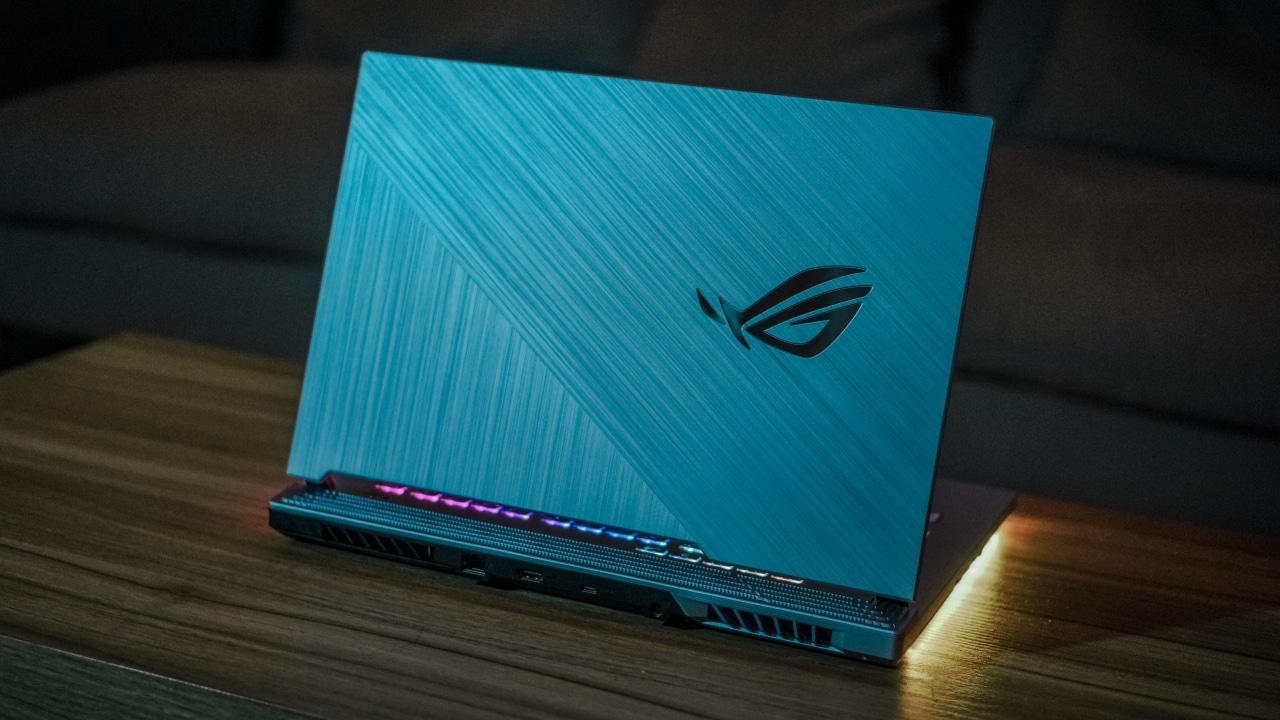
Then I turn to the ASUS ROG Strix G G531, and no the “G” does not stand for “Glacier Blue. It comes in two colors: the usual black finish and a special Glacier Blue variant — which I have. Let’s face it, underneath this icy cold Glacier Blue variant is one powerful machine from the hardware to a wide selection of ports.
But is this really all for show?
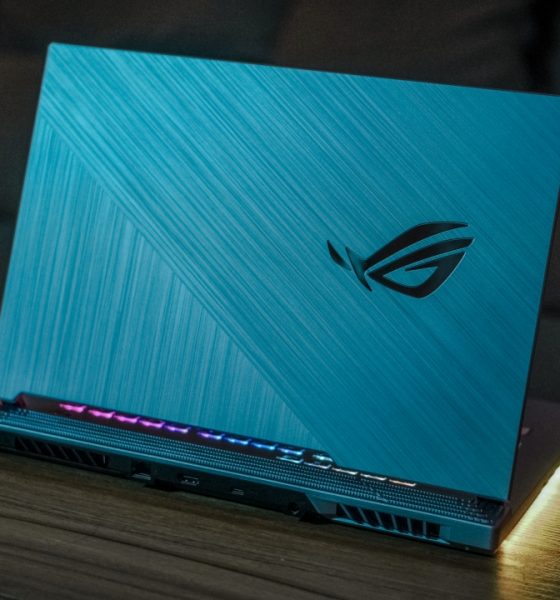
This particular unit comes in a special Glacier Blue finish

It comes with an NVIDIA RTX 2060 inside

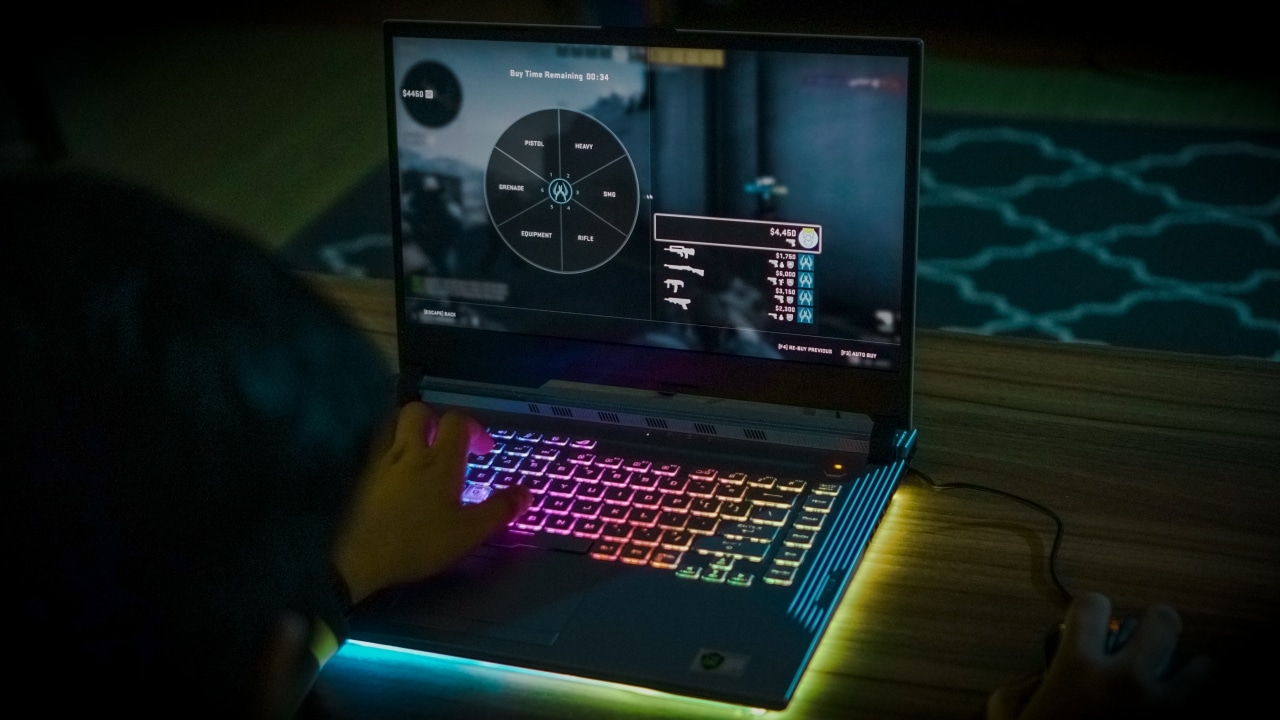
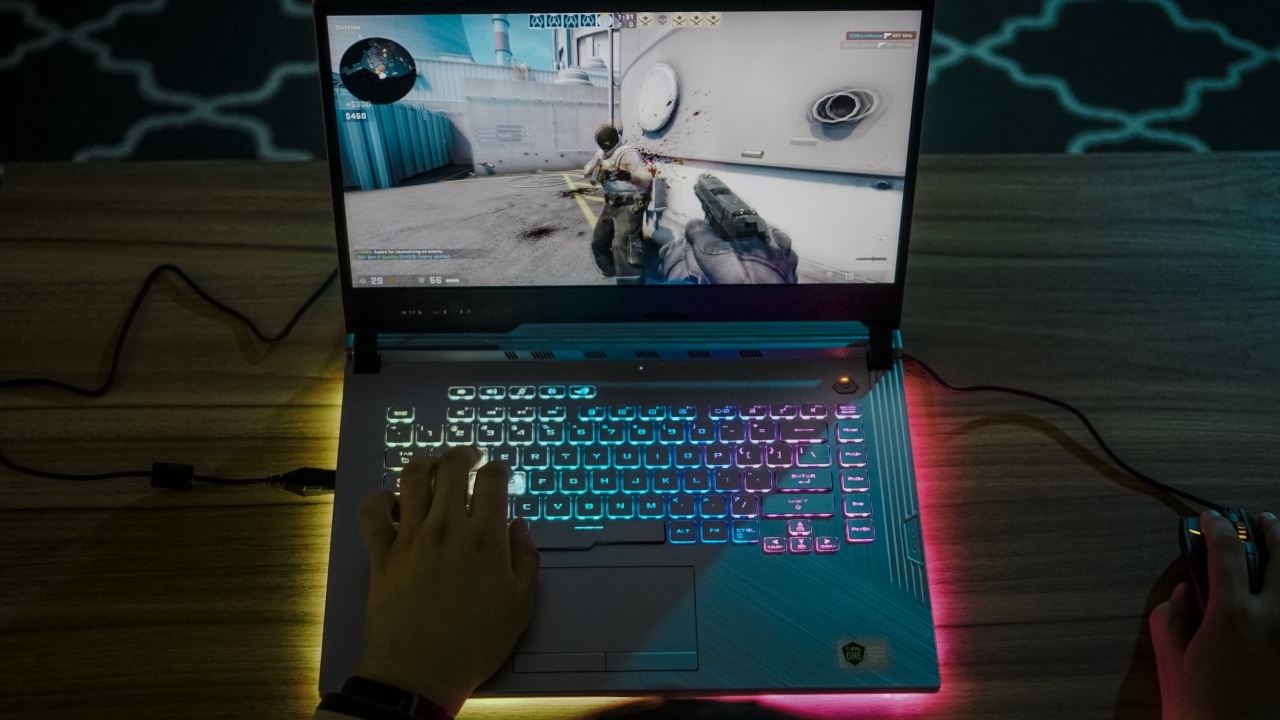
It has an RGB-lit system, from the bottom to the keyboard panel

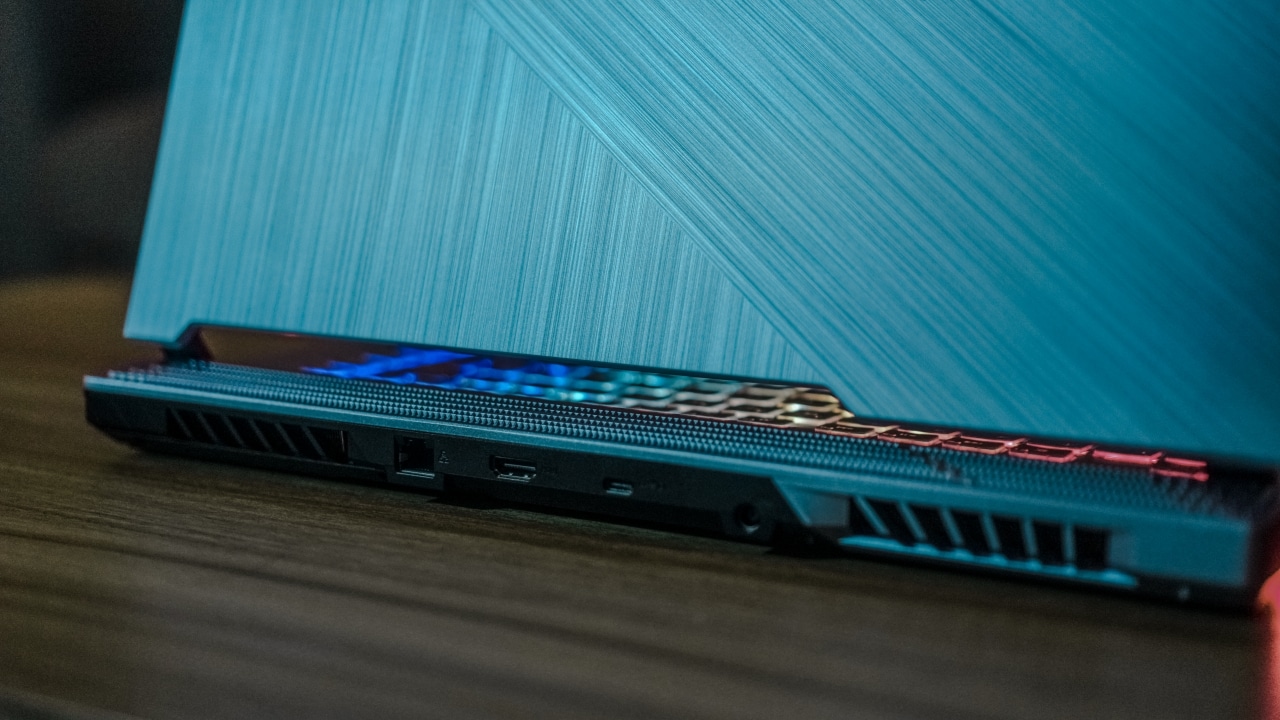
Connectivity, display and power input ports are placed at the back

Power beneath aesthetics
As expected, overall performance for the ASUS ROG Strix G is phenomenal. For working professionals like myself, 16GB of RAM is already a huge luxury to have. All that power enables greater productivity, especially when you need multiple applications opened all at once. It’s an excellent choice for productivity enthusiasts.
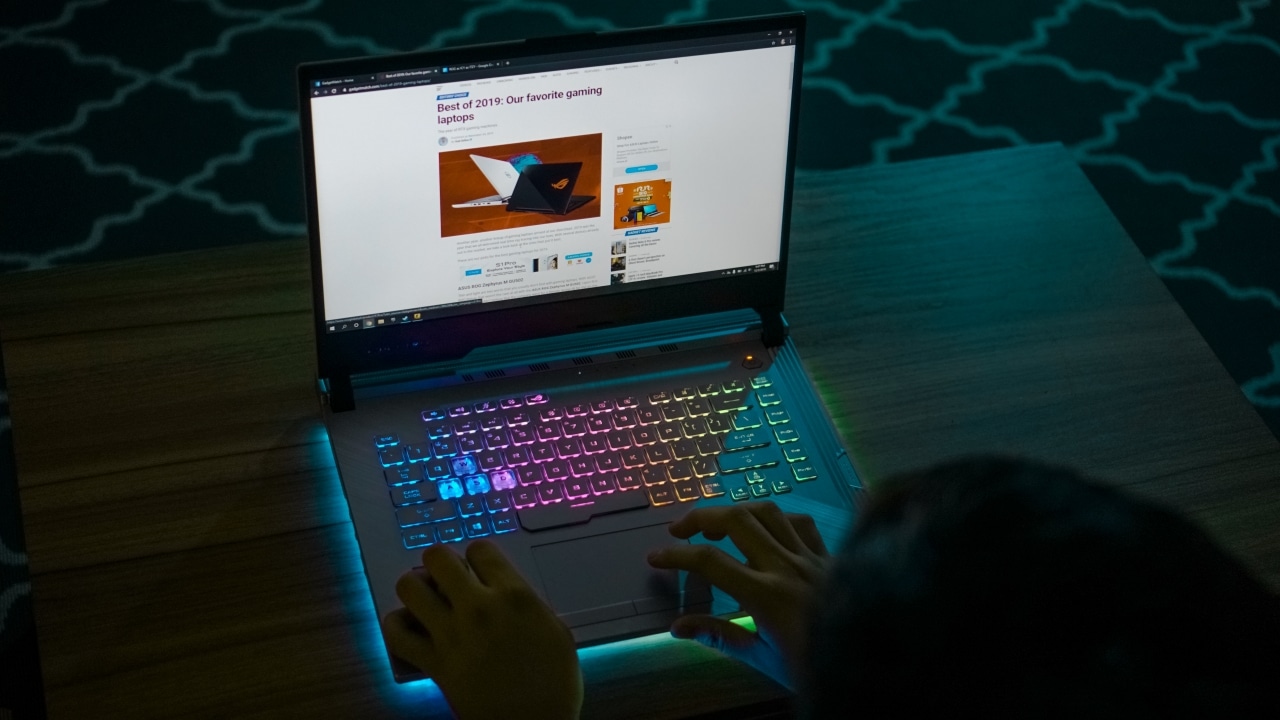
Coupled with a 512GB SSD storage plus 1TB of added storage further bolsters this machine. All that storage can handle applications for professionals, content creators, and gamers alike. Fast read times on the hard disk complements the 16GB RAM nicely. Basically, I get to open 30 tabs of Google Chrome, Adobe Photoshop and Premiere Pro, and the system is still fast enough to run.
Gaming with ice in your veins
It’s no surprise that an NVIDIA RTX 2060 is powerful. I don’t even have to go into detail just how great its power can be. On this device, however I have mixed feelings over it. First off, it plays your usual graphic-heavy games pretty well. Fortnite: Battle Royale records close to xx FPS set on Epic, while Apex Legends peaks at 57 FPS set close to maximum.
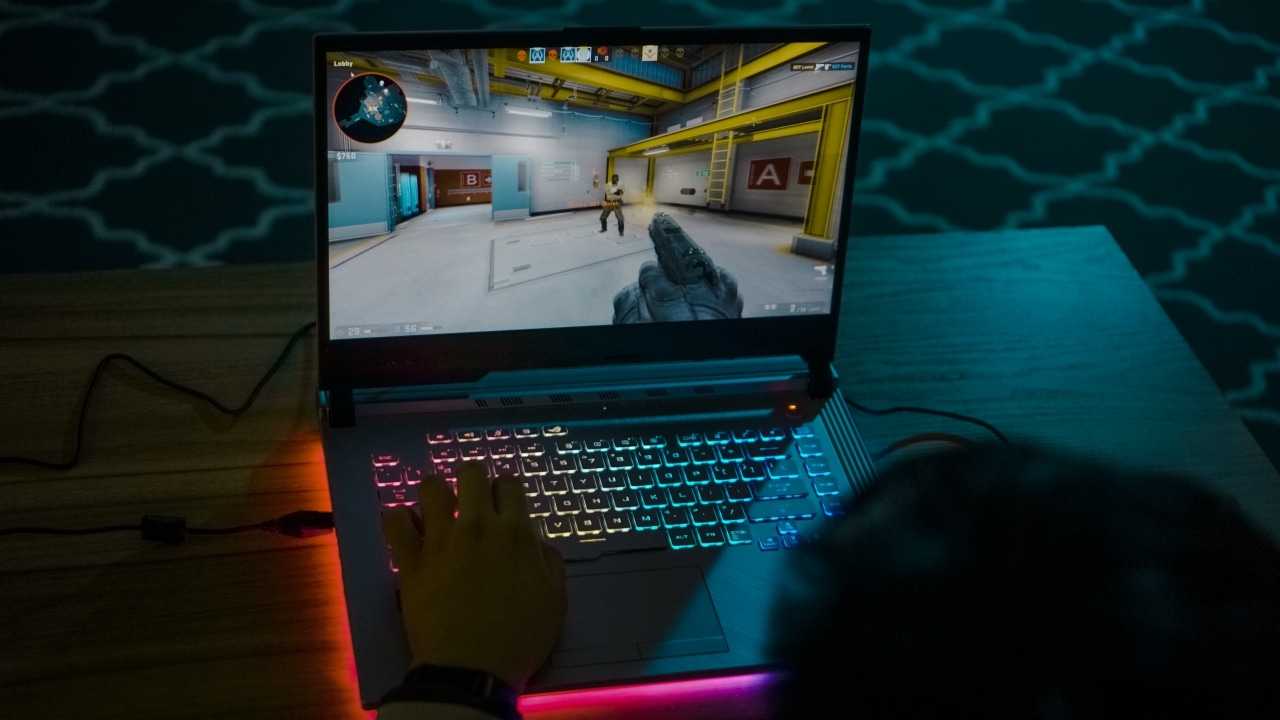
Even on games with minimal graphical power required, the GPU performs above and beyond. Frames load smoothly especially during high leverage moments when you’re really into the game. My eyes kept up with what’s happening every time I get into some intense build battle with sweaty players online.

However, I felt that the RTX 2060 could do more with other hardware present. This laptop only comes with a 120Hz refresh rate, which is pretty decent. However, it literally caps a lot of your games to a threshold for your frame rate. ASUS actually has laptops similar in hardware to the ROG Strix G that offer displays with higher refresh rates. It would have been nice to offer a 144Hz refresh rate to this laptop instead of just to its 17-inch brother.
Properly cooled so you don’t accidentally burn yourself
With gaming laptops like the ROG Strix G, a great cooling system is a must. I’ve tested a lot of cooling systems for gaming laptops in the past, so I’m already expecting a hot mess. Except that, well the ROG Strix G actually proved me wrong.
The dual-fan cooling system blasts hot air at the back and at the right side (the side without any ports). The device heats up as expected when you’re going full on gamer mode or when you open heavy duty applications. What I found great about it is that the moment you stop using those applications, the device cools down relatively fast.

On most gaming laptops, I waited for an hour to an hour and 25 minutes before I wouldn’t accidentally burn myself a bit. With the ROG Strix G, it cools down in a matter of 30 to 45 minutes. Furthermore, only the top portion of the main chassis heats up, leaving your keyboard to remain cool. It stays as cool as its Glacier Blue color suggests, and to me it’s fantastic that ASUS designed it this way.
Other features that are either red hot or ice cool
For this device, anything cool is preferably how you want it. For example, I’m personally a fan of the way they integrated RGB into the laptop. From the keyboard to the three sides of the device, this device demands attention. Not everyone would like it, especially when you’re out in a Starbucks somewhere. You can dial the colors down — as long as you get the black one.
Another thing I liked about the ROG Strix G is its overall build. Putting all the display, power, and connectivity ports at the back of the device was a nice touch. To me, it keeps a lot of the wires out of the way on a normal desk setup. Also, I love the way they did the hinge for the lid and body.
But, there is one thing that proves to be red hot, it’s close to being a red flag — the laptop’s battery life. I only got around close to five hours for productive use, with that time cut in half when gaming. I literally need to bring the charger around if I want to work for longer hours.
Putting it all together
At PhP 99,995, the ASUS ROG Strix G G531 in Glacier Blue fuses aesthetic and performance together. Performance-wise, this gaming laptop provides just the power you need for any task. Gaming on it full time is where it truly excels, all thanks to the NVIDIA RTX 2060 inside.
On top of all of that, it cools down faster after playing for a long time, something not a lot of gaming laptops possess. The overall build supplements proper cooling for the device so you don’t have to worry about things heating up unexpectedly.
Overall, this is one wonderful device to have for productive and gaming use. If you don’t mind adding a little style to your gaming habit, consider getting this cool Glacier Blue variant.






Valve has been embroiled in an odd war as of late. A few weeks ago, the New York Attorney General filed a lawsuit against the gaming company for allegedly encouraging children to gamble through loot boxes primarily found in Counter-Strike 2. Today, Valve is fighting back by declaring how little its loot boxes have to do with gambling.
For years, governments have had a problem with loot boxes. To them, the mechanic makes it too easy for gamers to fall into a gambling addiction. In essence, loot boxes are earnable packs that contain a single or a number of random items that the player can use for their game. Most of the time, these items are purely cosmetic and don’t give a gameplay advantage.
Like Blizzard before it, Valve is also defending its loot boxes as non-essential to how players engage with their games. “There is no disadvantage to a player not spending money,” their statement reads.
Additionally, Valve says that their loot boxes are no different from Pokémon cards and Labubu blind boxes. As such, the company is also defending their users’ right to transfer obtained items to other users, as with two players trading cards or Pop Mart figurines.
Now, these items have monetary value in the market. In the same way, a rare Counter-Strike 2 skin can fetch thousands of dollars. However, Valve says that they are already proactive in shutting down accounts made only to gamble and avoiding pro-gambling businesses.
Valve is capping off its statement by saying that the NYAG is forcing the company to collect more information from its users, especially those using VPNs to prevent being located in New York. The company says that it will continue to protect user data, despite the demand.

What is an Xbox? For the past year and a half, Microsoft will tell you that anything can be an Xbox. Now, with Project Helix on the horizon, Xbox wants to bring the idea of playing anywhere to the next level. Microsoft will start rolling out its new Xbox Mode to PCs in April.
Since the very first device out in the market, handheld consoles have changed how people play games. Naturally, a lot can already be said about the portability and the convenience of its hardware. But the software needs a special shoutout, too.
Though they are essentially PCs at heart, these consoles are built explicitly for gaming. Fiddling around with Windows isn’t ideal. Instead, they have special software that can collate all of a user’s games into one hub.
The new Xbox Mode, adapted from the ROG Xbox Ally X’s Xbox Full Screen Experience, will do just that but on an actual PC. As announced via an official blog post, Xbox will release the new mode to Windows 11 devices in April, starting with select markets. Like the software used in handheld consoles, Xbox Mode should include all the available games from the Game Pass, Steam, and the Epic Games Store.
Right now, the feature will likely go up against Steam’s Big Picture Mode, which does the same thing but only for Steam titles. However, it should also transition neatly to Project Helix. Xbox is now ramping up the development of its next-generation console codenamed Project Helix. The upcoming machine will be a high-end PC and a gaming console rolled into one, making it perfect for Xbox Mode.
SEE ALSO: Project Helix is Xbox’s next console, and it plays PC games
Gaming
Resident Evil Requiem will get a story expansion
There’s no word yet on when the story expansion will drop.


Resident Evil Requiem, Pokémon Pokopia, and Slay the Spire 2. Between these three, gamers today are eating well and good. Or rather, they’re not, because of how addicting of a time sink these titles are. The latter two especially are built to be played over and over for weeks and months. Now, Resident Evil Requiem is working on something, so you also won’t forget about it in a few months’ time.
Via an official post on Resident Evil’s social media platforms, Capcom has confirmed that a story expansion is coming to the horror game. Currently, the base game doesn’t take long to beat, especially when compared to other RPGs today. The expansion should add more content to explore the story’s world.
Right now, Capcom can’t share a timeline for the update’s launch. However, in the meantime, the developers are cooking up a few minor updates to keep the game alive. For one, the game will receive performance updates to improve the smoothness of gameplay and fix bugs. It will also get a photo mode for all you Leon-holics out there.
Finally, in May, the base game will get a “minigame” added to the main game. There’s no word as to what this minigame is, so we’ll have to wait for when it drops.
Resident Evil Requiem is out now on all major platforms. The game features the survival horror style of the modern Resident Evil games, while serving up the classic action gameplay with the return of Leon S. Kennedy as a co-protagonist with Grace Ashcroft.
SEE ALSO: Resident Evil Requiem is out now



Disney+ launches a TikTok-coded vertical feed called Verts

Google Maps is finally getting a 3D mode

KPop Demon Hunters is officially getting a sequel

Bringing Care-a-Lot to my daily carry

Galaxy AI on the Samsung Galaxy S26 Ultra


-

 Reviews2 weeks ago
TECNO CAMON 50 Ultra review: End of an era?
-

 MWC 20261 week ago
Infinix NOTE 60 Ultra makes a motorsport-inspired debut
-

 MWC 20262 weeks ago
TECNO launches the all-new CAMON 50 series
-

 MWC 20262 weeks ago
TECNO showcases cool concepts at MWC 2026
-

 MWC 20262 weeks ago
TECNO unleashes Tonino Lamborghini collection
-

 Computers2 weeks ago
AMD announces Ryzen AI 400, AI 400 PRO series at MWC 2026
-

 MWC 20262 weeks ago
HONOR unveils Robot Phone concept at MWC 2026
-

 MWC 20262 weeks ago
TECNO debuts latest devices, HiOS 16, upgraded Ella at MWC 2026