


Automotive
Audi’s Holoride is a VR experience like no other
Back seat car rides will never be the same again

It had been a long day, but I could still barely contain my excitement as a fancy car whizzed me down the interstate to a race track on the outskirts of Las Vegas, one chilly evening before the start of the 2019 Consumer Electronics Show.
While the in-seat back massage made me wish the ride was longer, I also couldn’t wait to get there. Tonight would be my first time in an e-Tron, Audi’s new fully electric SUV, and my first taste of what Audi calls the future of mobility, one with entertainment content at its center.

It’s an interesting proposition, one I’m more than willing to chew on. With self-driving vehicles on the horizon, tonight, instead of getting behind the wheel, I take a back seat, put on a VR headset, and trade my current reality for one that promises to be more exhilarating.
Called “Rocket’s Rescue Run,” it’s the first title in a collaboration between Marvel and Disney and Audi’s new spin off venture Holoride, that aims to make VR entertainment a mainstay in cars of the future.
As the e-tron’s driver steps on the accelerator, in my alternate universe my ship surges through space. I’m joined by my sidekick Rocket Raccoon, and together we team up to help Iron Man take down a mob of Thanos’ space goons.
 I’ve had many VR experiences before, but none like this. As soon as the SUV pulls away, the whole experience makes perfect sense. Every twist, every sharp turn, every bit of acceleration or sudden brake is matched by the same sensation in the game. For the entire 5-minute ride, my body is tricked into believing this reality. Not an easy feat for an utterly nitpicky tech journalist, I can only begin to imagine how big of a technical challenge it was to pull off.
I wield my laser gun like a pro, take down an evil mothership, and celebrate our victory with fireworks. The experience ends, and the e-tron stops. Reluctantly, I take off my headset. It feels like I’ve just been on a theme park ride, but from the privacy of my own car — well, not really, but I wish — and without standing in an hour-long line. I was pleasantly surprised to find out that during my adventure the e-tron reached speeds of up to 90mph. We’ve navigated plenty of sharp turns, too, but I don’t feel so woozy.
 Supposedly matching the car’s movements to the virtual reality experience helps in mitigating nausea. As I get out, I thank my driver, but also can’t help but imagine a world that’s driver-optional.
At CES, we saw Audi’s vision of the future, a concept car called the Aicon, with an interior that resembles more of a lounge than a current automobile. As with Holoride, the development of Aicon represents a shift in the idea of mobility, one that’s ushered in by a focus on passengers instead of drivers. Together, Aicon and Holoride make perfect sense in a future world of fully autonomous vehicles. If no one is driving, what else are we to do?
Anything you want to, apparently. Cars are now seen as multi-purpose spaces, just another room that we occupy as we travel from place to place: be it a relaxation pod, a meeting room, or your own private cinema.
The team behind Holoride is most invested in the latter, creating entertainment experiences that are just long enough to fill the entire duration of your trip. They’re calling it “elastic content,” VR games and adventures that automatically adjust to congestion and shortcuts, so that you’re never left without something to occupy you.
“Together, Aicon and Holoride make perfect sense in a future world of fully autonomous vehicles.”
Soon, Holoride plans to open its technology to more car manufacturers, content creators, and game developers. The goal is for a wide range of immersive experiences, customized to events in the real world like traffic jams or stop lights, and for those experiences to be available in more car brands. Apart from games, like the one I played, the company is also planning movies, interactive features, and educational tours. Indeed, the type of content you could enjoy is limited only by the imagination.
A few minutes later, I find myself getting another back massage inside another chauffeured Audi A8, making our way back into downtown Las Vegas. These days, when I do travel by car, the experience is similar to this, albeit less fancy. I’m bored, maybe antsy or impatient, in the back seat, with only my phone and social media to distract me. I hadn’t given it much thought till today, but in a world where one constantly thirsts for something to capture one’s attention, I can certainly see how “content will be a major driving force for the mobility experience of the future.”
The day is almost over and I am exhausted. I recline my chair, close my eyes, and enjoy the back massage for a few minutes more. I dream I am back in the e-tron, and wonder when this future will arrive, what it would be like if the next Avengers movie was interactive, and most importantly, what it would be like to watch it from the back seat of a fully autonomous Audi.



BYD Group premium sub-brand DENZA is officially entering the Philippine market.
The move marks a strategic shift to capture the luxury “new energy vehicle” (NEV) segment, beyond the company’s existing mass-market offerings.
This expansion follows a period of rapid growth for BYD in the Philippines under its distributor, ACMobility.
By introducing DENZA, the group aims to offer a tiered ecosystem of electrified transport that ranges from budget-friendly options to high-output luxury ones.
The sub-brand’s initial lineup could possibly include the high-end MPV, DENZA D9.
It features a triple-motor system and high-capacity batteries that provide significant electric-only range before the gasoline generator engages.
Potentially, SUVs DENZA B5 and DENZA B8 will also be introduced locally, positioned as plug-in hybrid EVs.
Offerings under the DENZA sub-brand will be distributed locally by BYD Philippines Corp.
Advanced technology, comfort
DENZA’s entry focuses on “passenger-centric engineering” rather than traditional luxury excess.
The vehicles will feature two of BYD’s flagship technologies: the DiSus system and e3 platform.
The first is an intelligent body control system that manages vehicle motion to balance executive-level ride comfort with sharp handling.
Meanwhile, the e3 Platform is a high-performance architecture utilizing a three-motor drivetrain.
This setup lets drivers pull off advanced maneuvers such as “crab-walking” and “compass turns,” while enhancing stability during high-speed travel or emergency situations.
Strategic presence
DENZA will establish a dedicated retail network separate from standard BYD showrooms to support its positioning.
The sub-brand is planning four initial locations in Makati, Greenhills, Alabang, and Cebu.
Once it officially rolls out, DENZA expects to compete against luxury vans like the Toyota Alphard and Lexus LM.
Automotive
Ford Philippines kicks off the year with Drive Now, Pay Later
Get offers up to three months of free amortization!

Ford Philippines opens the year with a strong push for drivers ready to start fresh. Introducing Drive Now, Pay Later, the program is designed to make stepping into a new Ford feel lighter and more timely.
At the center of the offer are two of Ford’s most in-demand nameplates. Customers can take home the Ford Everest Trend today with three months of free amortization.
Meanwhile, the Ford Ranger lineup brings even more flexibility. The Ranger Wildtrak 4×2 comes with four months of free amortization, and the Ranger Sport 4×4 is offered with three months free.
These offers allow buyers to drive their new vehicle now and begin bank financing only after several months. This eases the transition into ownership at the start of the year.
More ways to save this January
Beyond deferred payments, Ford Philippines is extending a wide range of January offers that focus on value and flexibility.
The Ford Everest comes with cash savings of up to PhP 95,000 this month, alongside an all-in option priced at PhP 69,000 on select variants for customers seeking simpler entry costs.
Across the Ranger lineup, buyers can enjoy cash discounts reaching up to PhP 155,000 or opt for a PhP 69,000 all-in down payment on select variants.
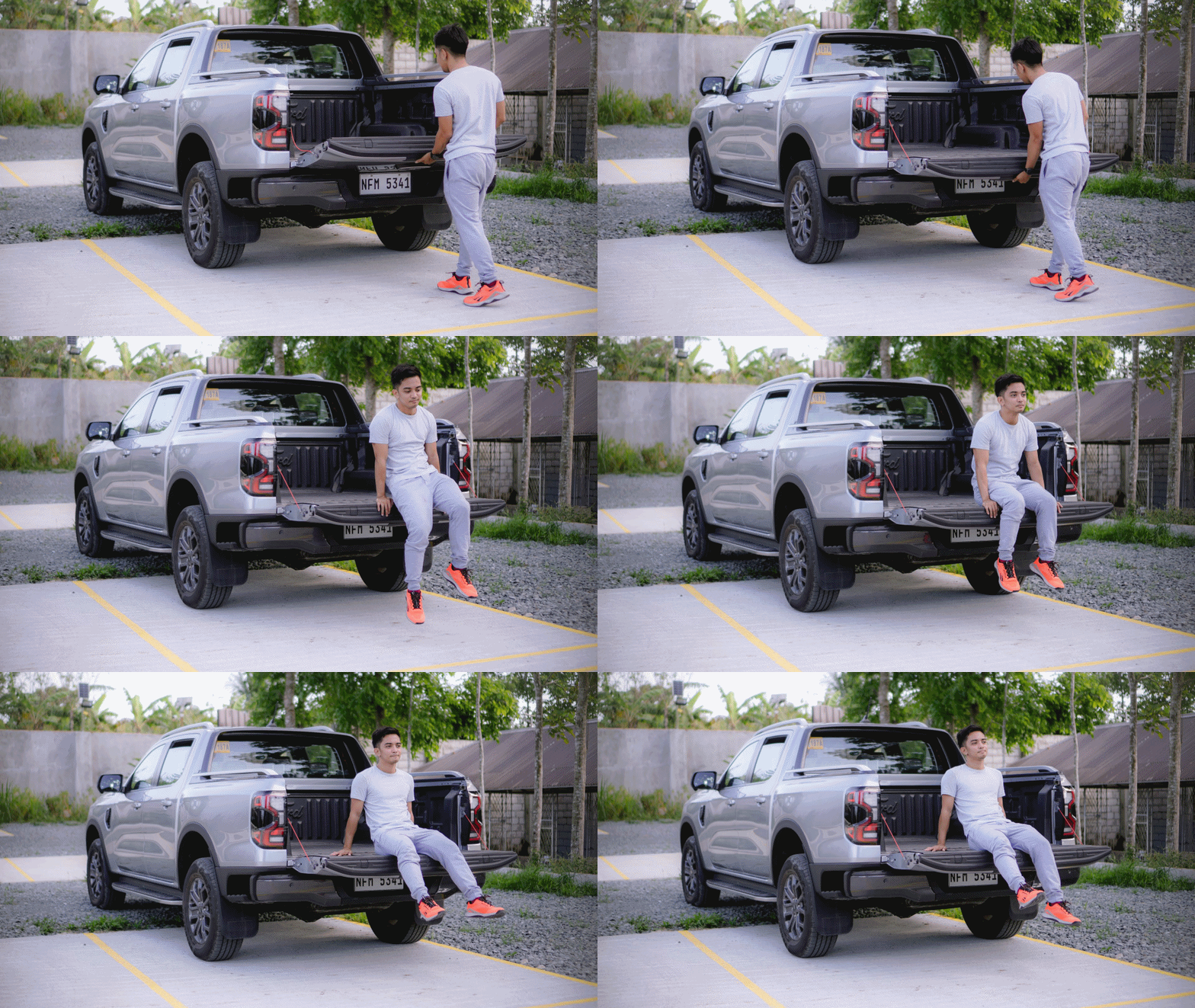
The Ranger XLS AT remains one of the most accessible ways to enter the lineup, with a starting price of PhP 1,379,000.
Performance-focused customers can also take advantage of extended January offers for the Ford Raptor. Options include cash discounts or bundled savings with the 5-Star Care Package, depending on the variant.
Electrified and premium options
For drivers ready to explore electrified mobility, the Territory Hybrid Trend starts at PhP 1,399,000. This January, customers may choose between a PhP 20,000 discount or a complimentary three-year Scheduled Service Plan.
Ford’s larger SUVs are also part of the month’s offerings. The Ford Explorer is available with a PhP 99,000 all-in option or 0 percent interest with 20% down payment for 60 months. The Ford Bronco carries the same flexible choices, too.
Availability
The Drive Now, Pay Later program runs across all Ford dealerships nationwide until January 31, 2026. Customers can visit Ford Philippines’ official website or social media channels to explore the full details.

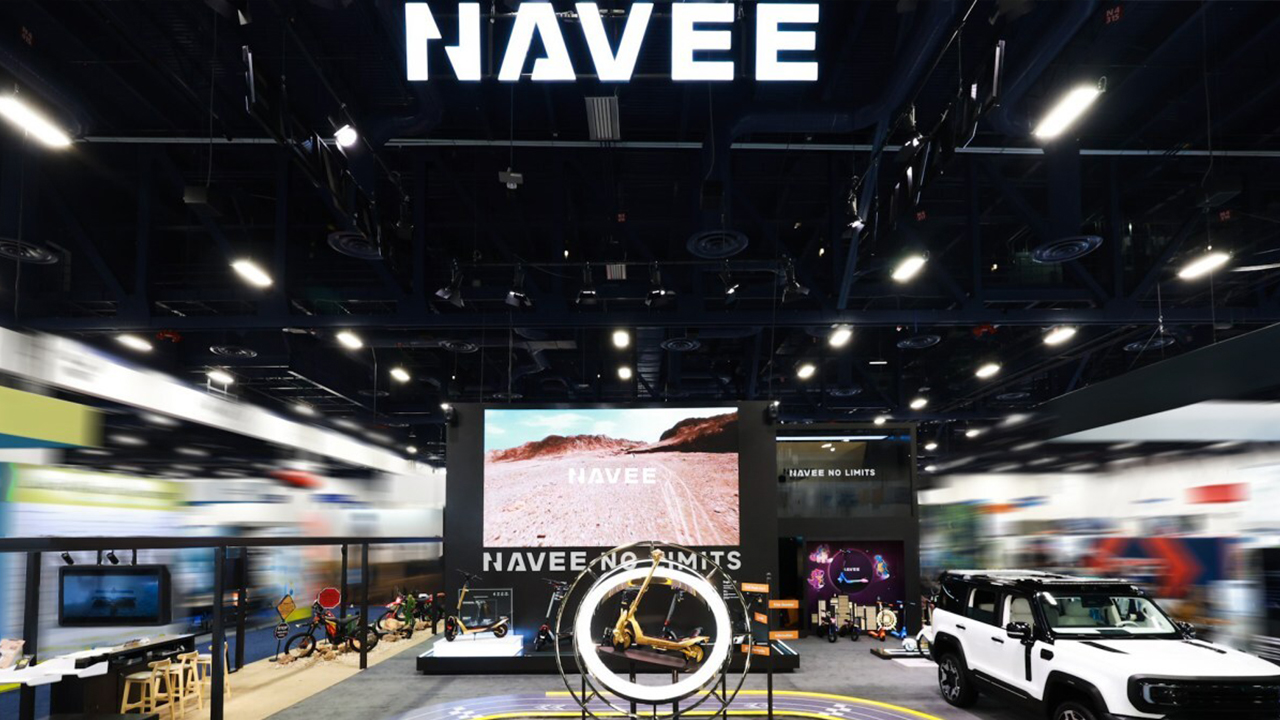
At CES 2026, NAVEE signaled a clear shift in direction. Known for smart urban mobility, the global brand used the Las Vegas stage to show how its technology now stretches beyond city streets and into outdoor living, recreation, and adventure.
Rather than focusing on a single hero product, NAVEE presented a growing ecosystem built around intelligent engineering and lifestyle flexibility. The message was simple and confident. Mobility today is not limited to commuting. It is part of how people move through work, play, and downtime.
A smarter take on electric mobility
Leading NAVEE’s CES lineup was the UT5 MAX electric scooter. Built on the UT5 platform, it was designed with both urban reliability and outdoor capability in mind.
With a range of up to 100 kilometers and support for fast charging and external batteries, the UT5 MAX feels ready for longer rides, varied terrain, and real-world use that goes beyond short city hops.
The focus here is practicality. It’s a scooter that fits daily routines while also making room for spontaneous outdoor plans.

Technology finds its way onto the fairway
NAVEE also stepped into a more unexpected space with the Birdie 5X electric golf push cart. An evolution of the Birdie 3X, this new model introduces ultra-precise UWB-powered automatic follow.
The result is a smoother, more intuitive experience on the course, where the tech quietly supports the game rather than distracting from it.
It’s a clear example of how NAVEE is applying intelligent mobility thinking to lifestyle-specific environments.
From land to water, and everything in between
The outdoor expansion didn’t stop on the road or the green. NAVEE revealed the WaveFly Flyer Car, a playful take on water-based mobility designed to bring a sense of adventure to lakes and coastal settings.
Alongside it was a high-end electric camping wagon built for hauling gear, supplies, and everything that comes with outdoor weekends.
Together, these products paint a bigger picture. NAVEE is positioning itself as a brand that supports movement across different terrains and moods, from utility to leisure.
A broader vision for mobility
What stood out at CES 2026 was not just the hardware, but the intention behind it. NAVEE is building toward a future where intelligent mobility blends naturally into everyday life, whether that means navigating city streets, spending time outdoors, or finding new ways to enjoy familiar activities.
As the brand continues to grow its portfolio, the direction is clear. Mobility is no longer confined to getting from point A to point B. It’s becoming part of how people experience their lifestyle, wherever that may take them.

Now playing: Final Fantasy VII Remake INTERGRADE on Switch 2
Final Fantasy VII Remake, handheld again


HONOR X9d 5G review: Tougher, more long-lasting and optimized
Beyond all the marketing, it's a compelling all-around smartphone that actually works well


Redmi Note 15 Pro+ 5G review: The midrange fashion piece
Work-ready and style-friendly!

nubia joins durability competition with launch of V80 Max

How a low-impact workout can turn your resolution into a habit

Nintendo’s latest toy is Super Mario Wonder’s Talking Flower

You can now race as teams in Mario Kart World’s Knockout Tour
Now playing: Final Fantasy VII Remake INTERGRADE on Switch 2

HONOR X9d 5G launches in the Philippines: Price, preorder, availability

HONOR WIN headlines the first 10,000mAh smartphone with built-in fan

OPPO A6 Pro: Adequate tool, no definitive punch

POCO M8 Pro review: Goin’ loco over this POCO

HONOR Magic8 Pro review: What sorcery is this?


-
 Reviews2 weeks ago
POCO M8 Pro review: Goin’ loco over this POCO
-
 News1 week ago
Infinix NOTE Edge debuts: High-end features for accessible pricing
-
Reviews1 week ago
Redmi Note 15 Pro+ 5G review: The midrange fashion piece
-

 Reviews2 weeks ago
Mijia Smart Audio Glasses review: Immerse yourself in the music
-
 CES 20262 weeks ago
Best of CES 2026: AI Everything!
-
 Features1 week ago
Can the REDMI Note 15 Pro+ 5G Survive?
-
 News2 weeks ago
REDMI Note 15 Series unveiled: Price, availability in the Philippines
-

 CES 20262 weeks ago
Spotlight: ASUS Zenbook at CES 2026