
Automotive
No terrain too deep for this Shark
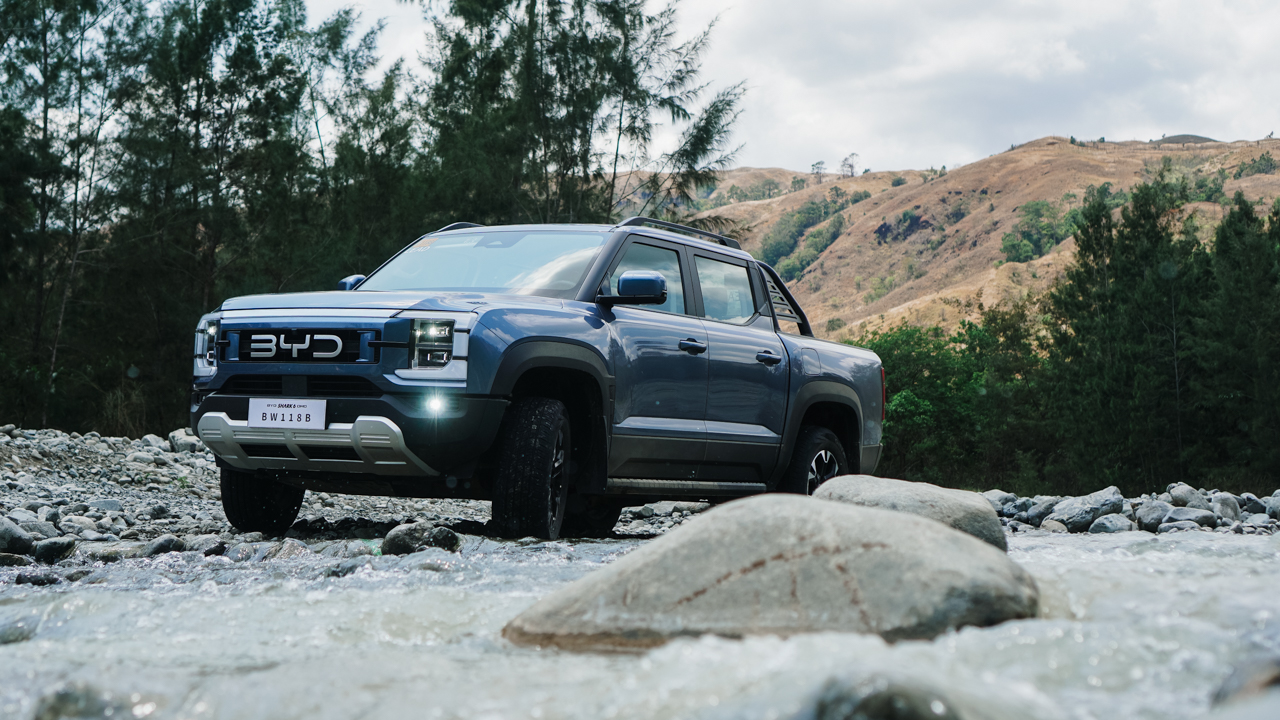
The BYD Shark 6 DMO gave me the confidence to conquer any terrain.

I’ve always loved driving pickup trucks.
Not just because they dominate the road with a presence that says, “my way or the highway,” but because they promise adventure.
A pickup truck is built to withstand whatever I throw at it. Whether that’s a spontaneous road trip or a full-fledged off-road expedition.
But as much as I love the trail, I’ve never been completely confident behind the wheel when the pavement disappears.
Unlike running through rough terrain, where every step is my own, off-roading demands trust. Not just in myself but in the machine I’m driving.
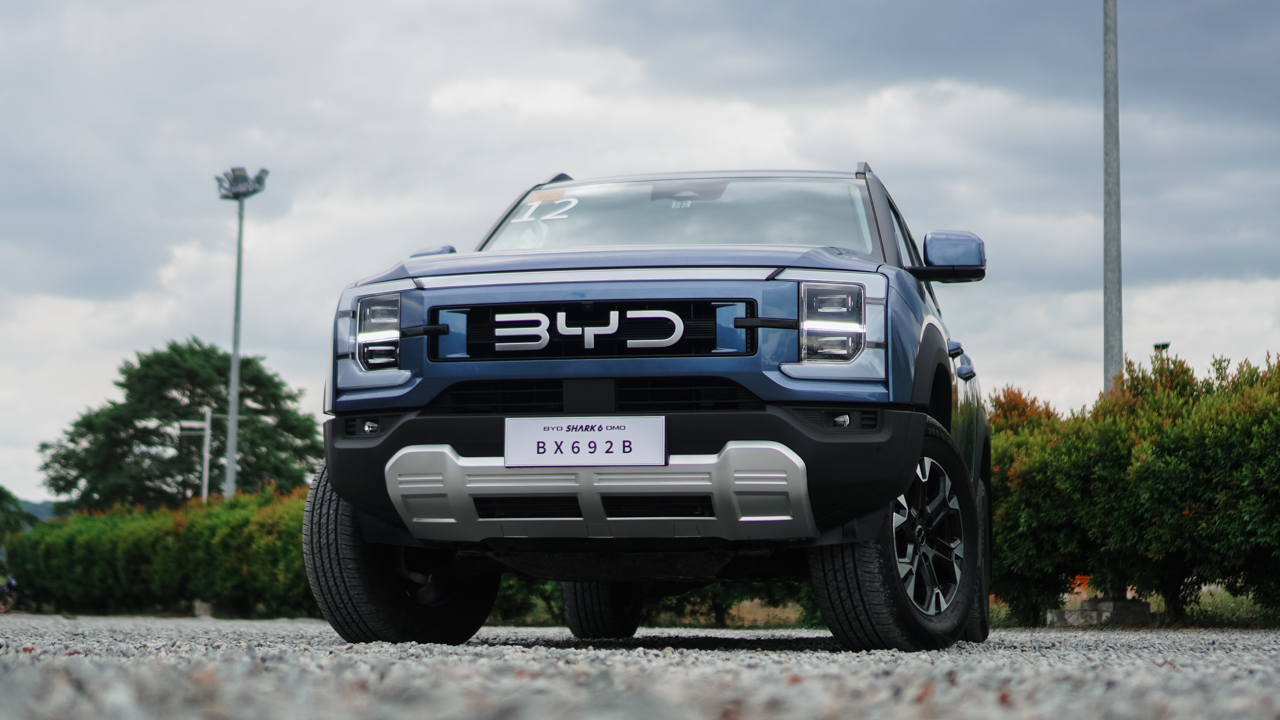
That all changed over two days with the BYD Shark 6 DMO.
Inside a familiar battlefield
Our journey started at Seda Vertis North, where we set off for Alviera in Porac, Pampanga. It’s a destination estate I hold close to my heart.
It’s the battleground where I’ve crushed personal records at the Spartan Race year after year (and where I plan to do it again soon).
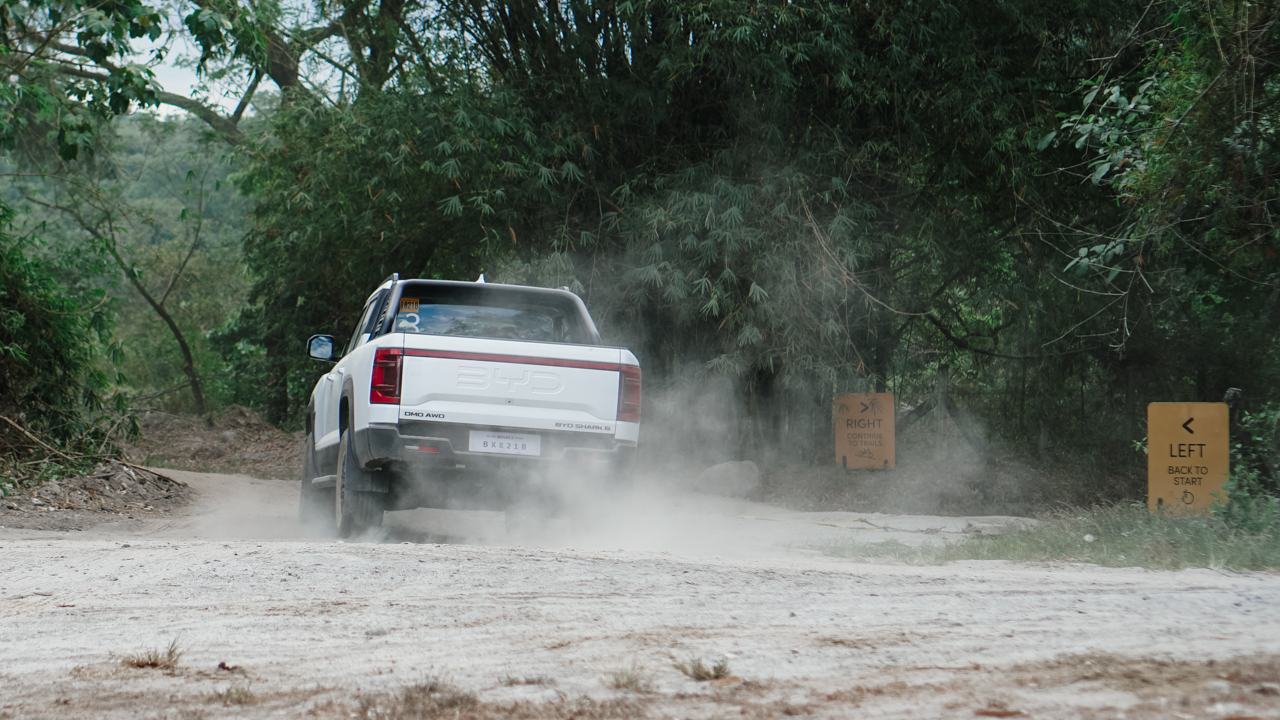
Alviera’s terrain is the perfect storm of challenges. Rugged soil, jagged rocks, mud, and lahar left behind by Mount Pinatubo’s 1991 eruption. If anything could test the Shark 6 DMO, it was this.
Whether behind the wheel, in the backseat, or lounging on the truck bed, the ride remained effortless.

BYD’s Dual Mode Off-Road (DMO) system worked seamlessly, letting the Shark 6 DMO adapt to shifting surfaces with ease. I played with the electric and hybrid power, finding the optimal torque as I drove it through its battlefield.

Its Dual Wishbone Suspension absorbed every bump, keeping the ride smooth, while the high ground clearance meant no second-guessing obstacles ahead.
Fun fact: I misjudged a stone that was supposed to help me transition from the road to the off-road path and ended up bumping into the gutter, but we barely felt it.
Inside, it was another world entirely. The cabin was comfortably quiet, sealing us while the trail outside raged in dust and debris. It was the kind of insulation that made me forget we were off-roading at all.

By the time we pulled into Widus Hotel Clark for the night, I realized something else. I wasn’t just impressed. I was confident. For the first time, I trusted a pickup to handle what lay ahead.
Chasing breathtaking views
The next morning, we hit the road by sunrise, heading towards Daang Kalikasan Viewpoint in Mangatarem, Pangasinan.
This leg was different. Here, the challenge wasn’t just terrain but elevation. We tackled a near-endless incline leading to one of the most breathtaking views I’ve ever seen.

I’ve raced across countless mountain ranges, but this felt different. Pangasinan’s hidden paradise was revealing itself to me.
The climb was relentless, but the Shark 6 DMO didn’t break a sweat. We were on full electric mode as we ascended, opting to switch to hybrid power and use regenerative braking to keep energy flowing when we descend.
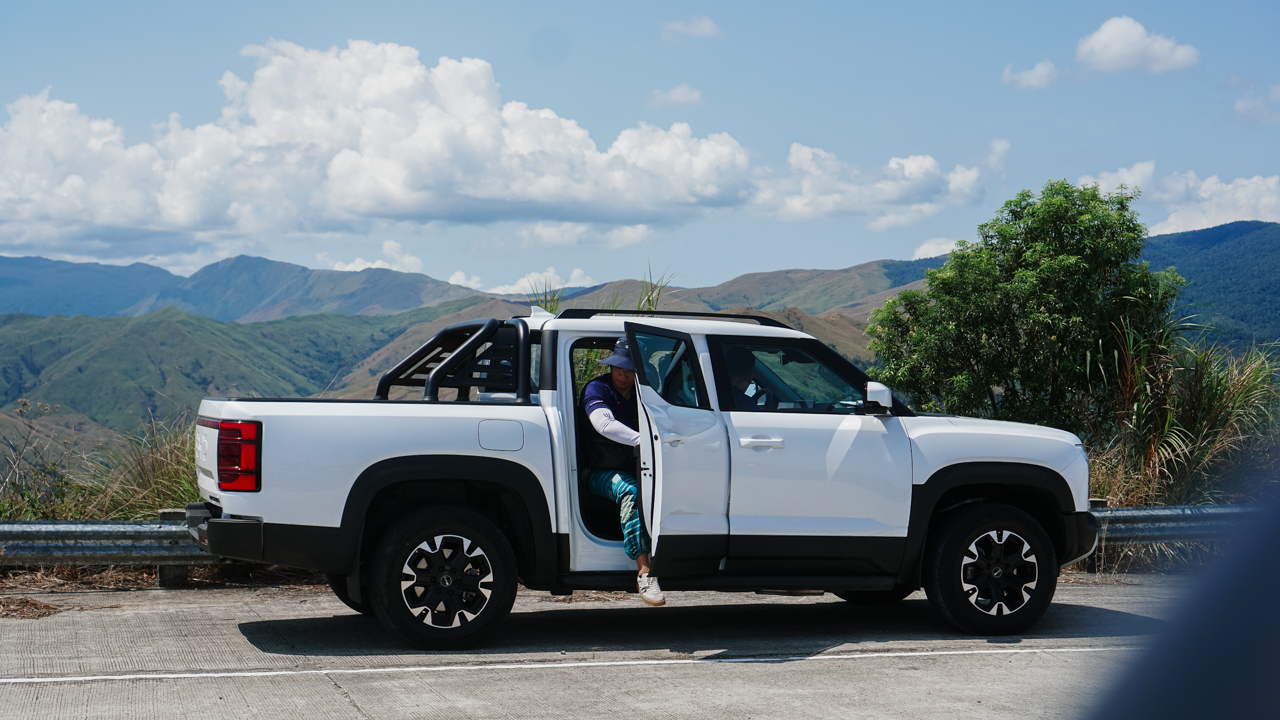
But nature wasn’t as forgiving. The month of March in the Philippines is hellish, with the sun beating down mercilessly. Sweat poured down my back, my skin stung under the midday sun, and the open landscape offered no relief.
However, it was an entirely different season inside the Shark 6 DMO.

Even without tinted windows, the cabin stayed cool thanks to BYD’s climate control system. We didn’t even have to crank the AC past 20°C. It was like stepping into an oasis after wandering the desert.
Finding moments of stillness
By the second day, I expected more tough climbs, and the Shark 6 DMO delivered. Its intelligent all-wheel drive handled the terrain like a pro, gripping the earth with unwavering control.
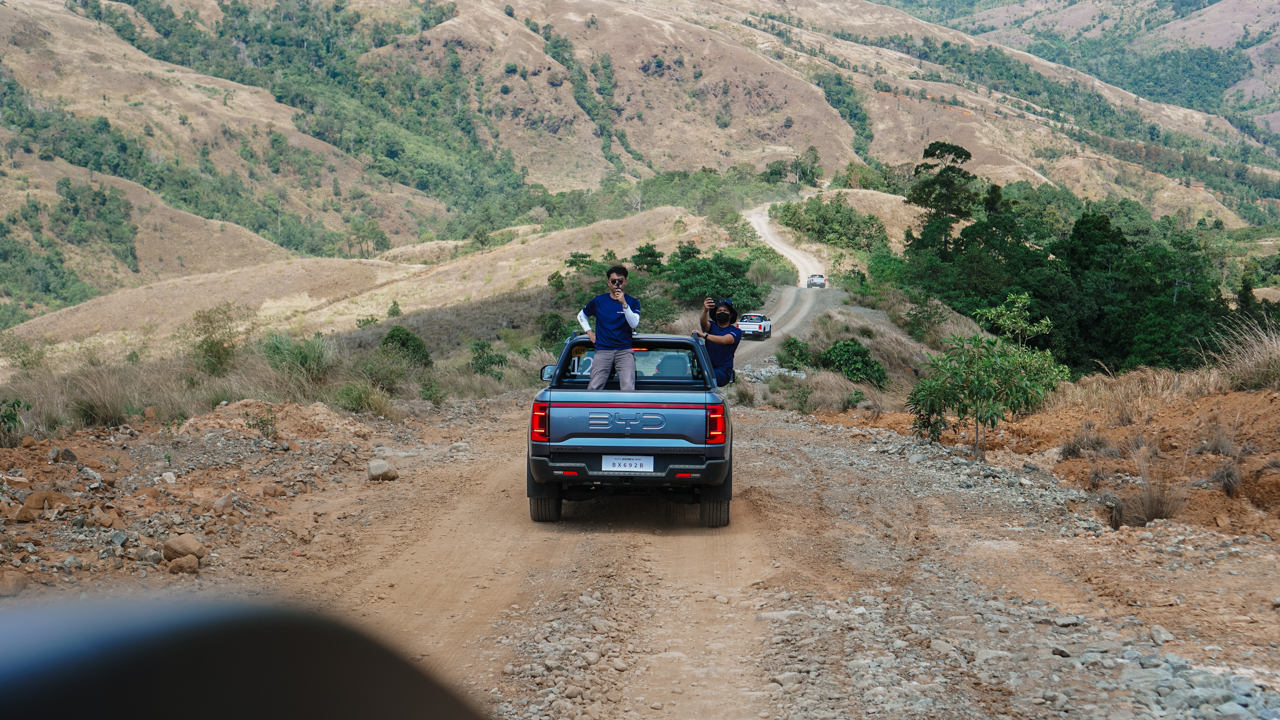
Feeling bold, I stood in the truck bed to take in the view. It was a rare privilege to experience untouched landscapes in complete silence. Dust swirled around us and the heat was punishing, but I didn’t care. This was a moment worth enduring.
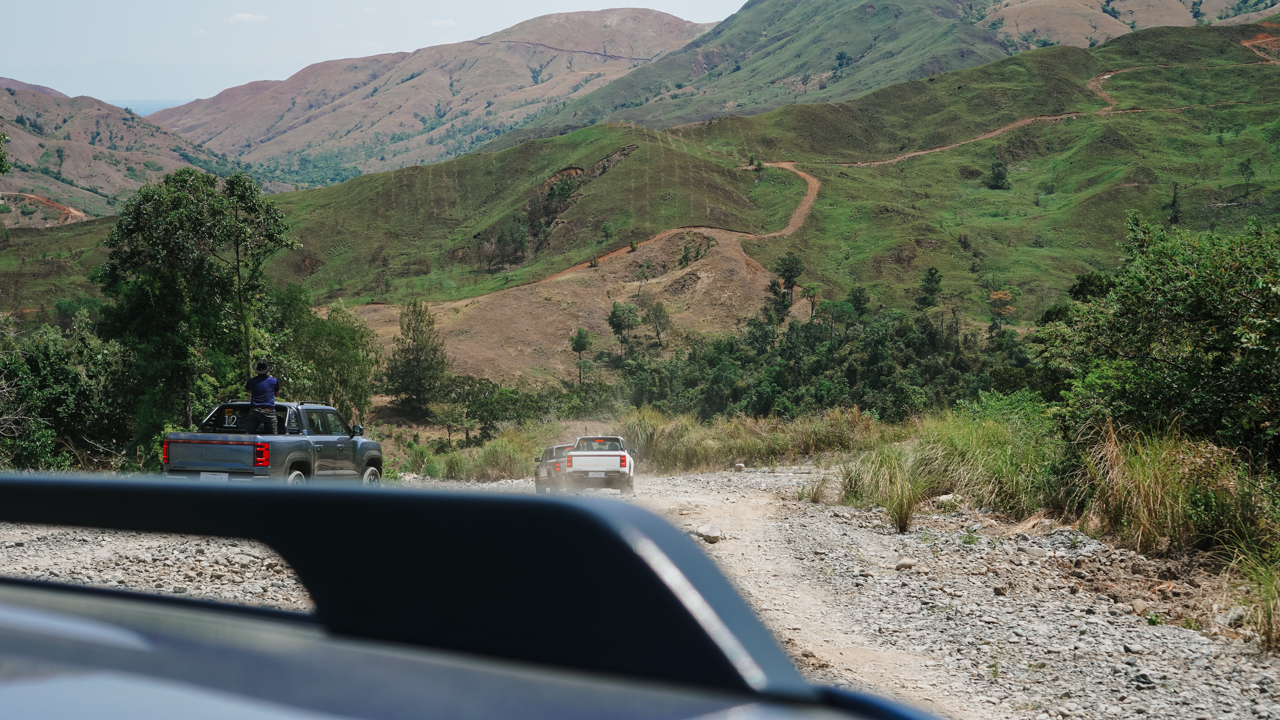
Crossing sandy banks and rock beds, the Shark 6 DMO moved effortlessly, adjusting to any terrain it takes. Then we reached Mangatarem River.
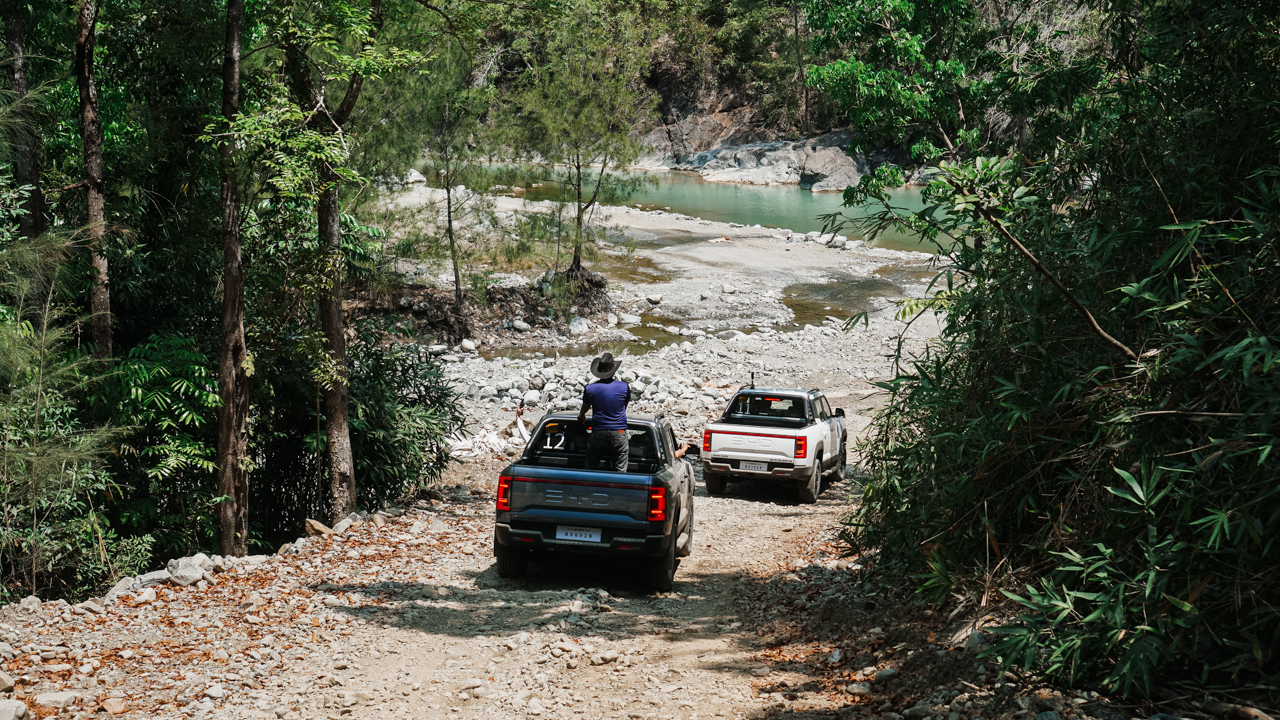
Here, BYD showcased its Vehicle-to-Load (V2L) feature, powering an entire outdoor setup including a portable air conditioner and a sound system.
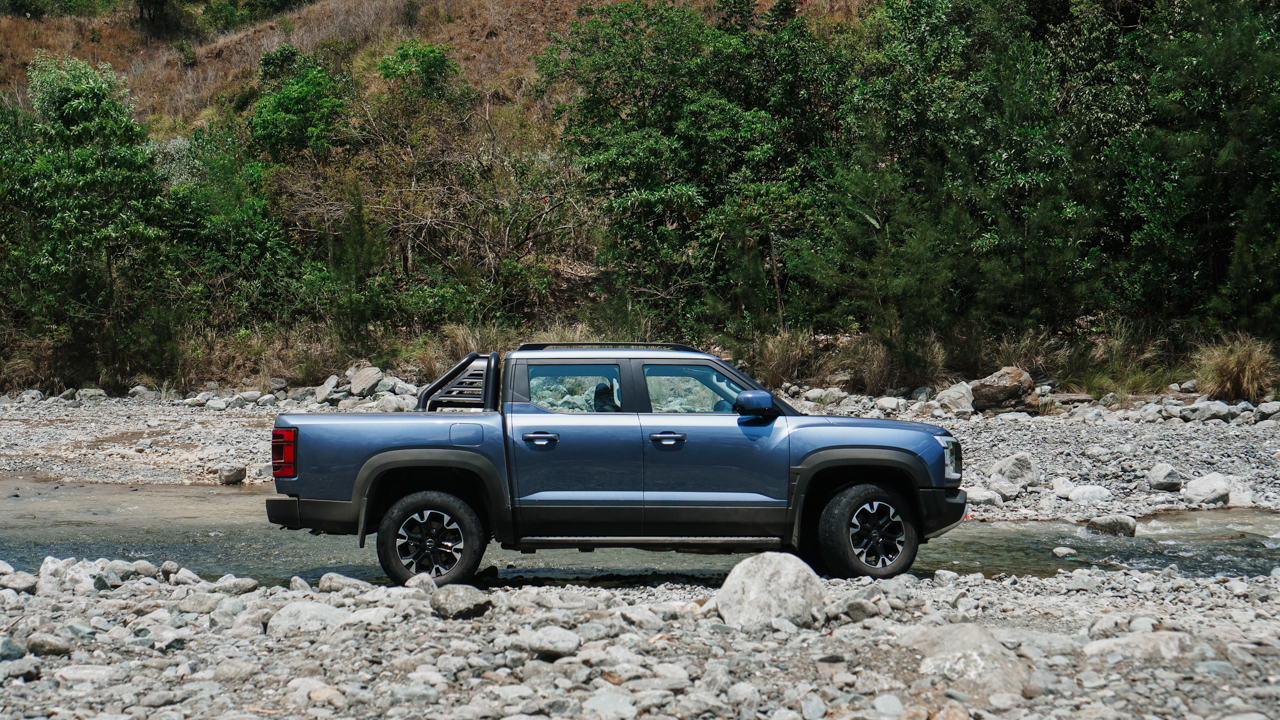
As we sat by the water, the Shark 6 DMO transformed from an off-road beast into a mobile basecamp. When the aircon battery drained, the truck recharged it instantly.
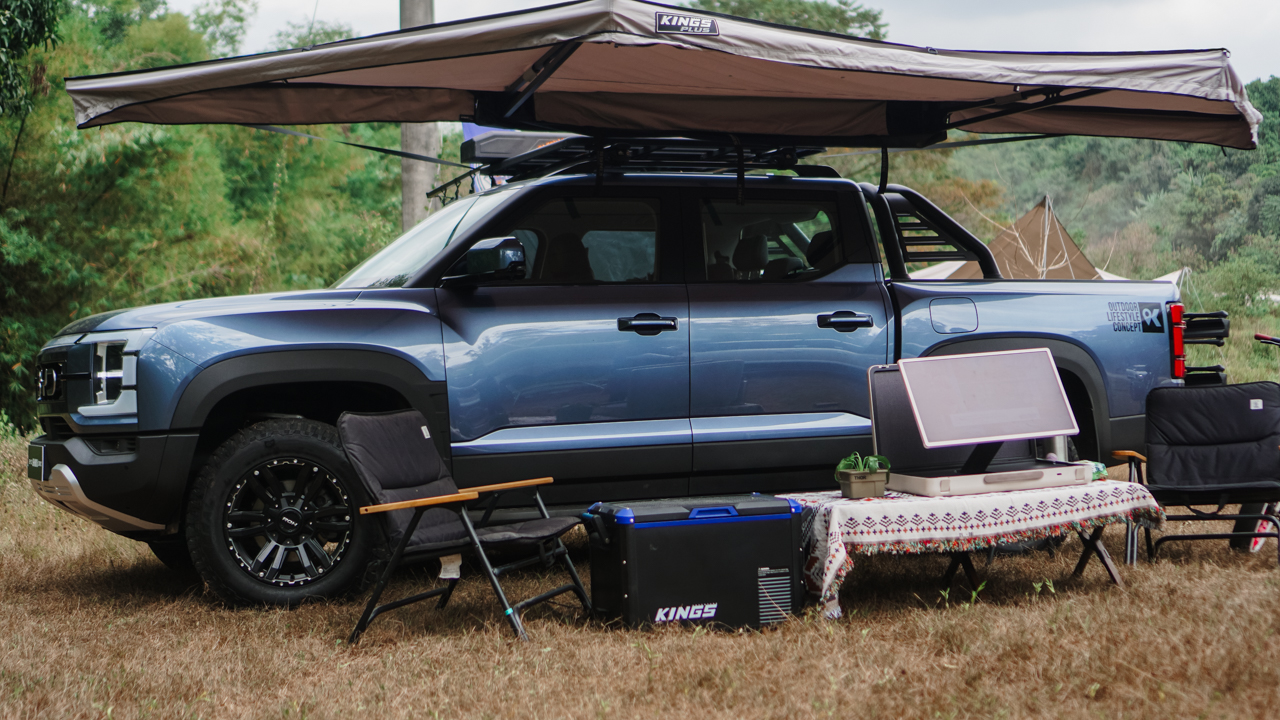
And just like that, we had a cool, shaded tent by the river which made it perfect for an impromptu karaoke session, though we kept it low to respect nature’s peace.
Taming the freeway
The last stretch of the journey wasn’t through rugged landscapes but the open freeway, making it a different kind of test.
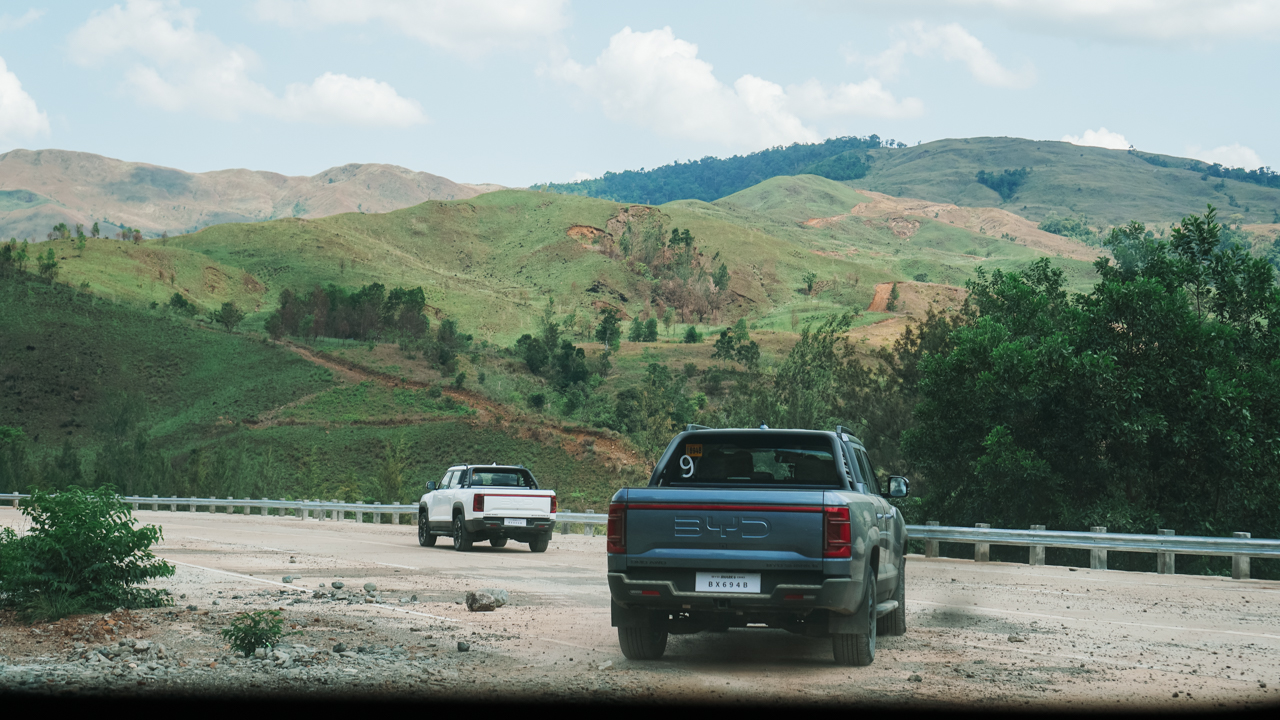
Falling behind at a tollgate mishap at Tarlac-Pangasinan-La Union-Expressway (TPLEX), we had to catch up to the convoy fast.
With 430 horsepower under my control, I floored the BYD Shark 6 DMO, effortlessly overtaking slower vehicles. High-speed stability was impeccable, while lane-keeping assist and blind-spot monitoring worked like a silent co-pilot, keeping me in check.
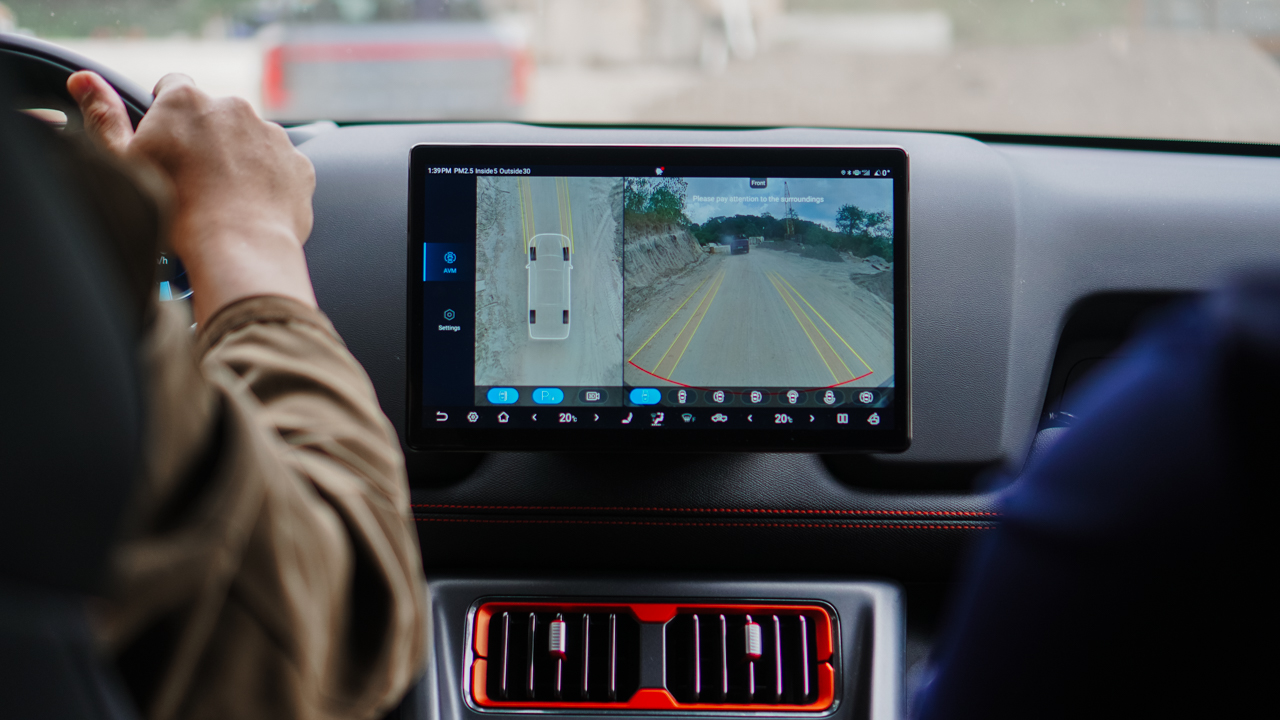
The 360-degree surround-view camera, usually a tool for tight corners, became my eyes on the road, ensuring no surprises as we closed the gap.
At the heart of it all was the 12.8-inch rotating infotainment screen, which became my command center for maps and music.

What should have been a stressful sprint turned into an adrenaline-fueled game of precision and control. The Shark 6 DMO didn’t just keep up; it delivered.
The ride home was exhilarating, adrenaline-pumping, yet somehow I felt victorious as I’ve truly tested what this machine — and I — were capable of.
A drive to remember
Driving is only half the experience. As we took turns in both the front and the back seats, especially on the last leg of driving, there was no fatigue on my body compared to when we drove the BYD Seal 5 DM-i for 800km in three days.
The memory foam seats provided excellent lumbar support, and the rear seats had a slight recline function that made it perfect for stretching out.

There was ample legroom, enough to fit my large backpack, and the panoramic sunroof made our interior feel even more spacious.
Whether behind the wheel or on the backseat, the experience was nothing short of luxurious.
Built for trust
Over the course of two days, the BYD Shark 6 DMO proved itself worthy not just an off-road beast, but as a comfortable companion for the long haul.
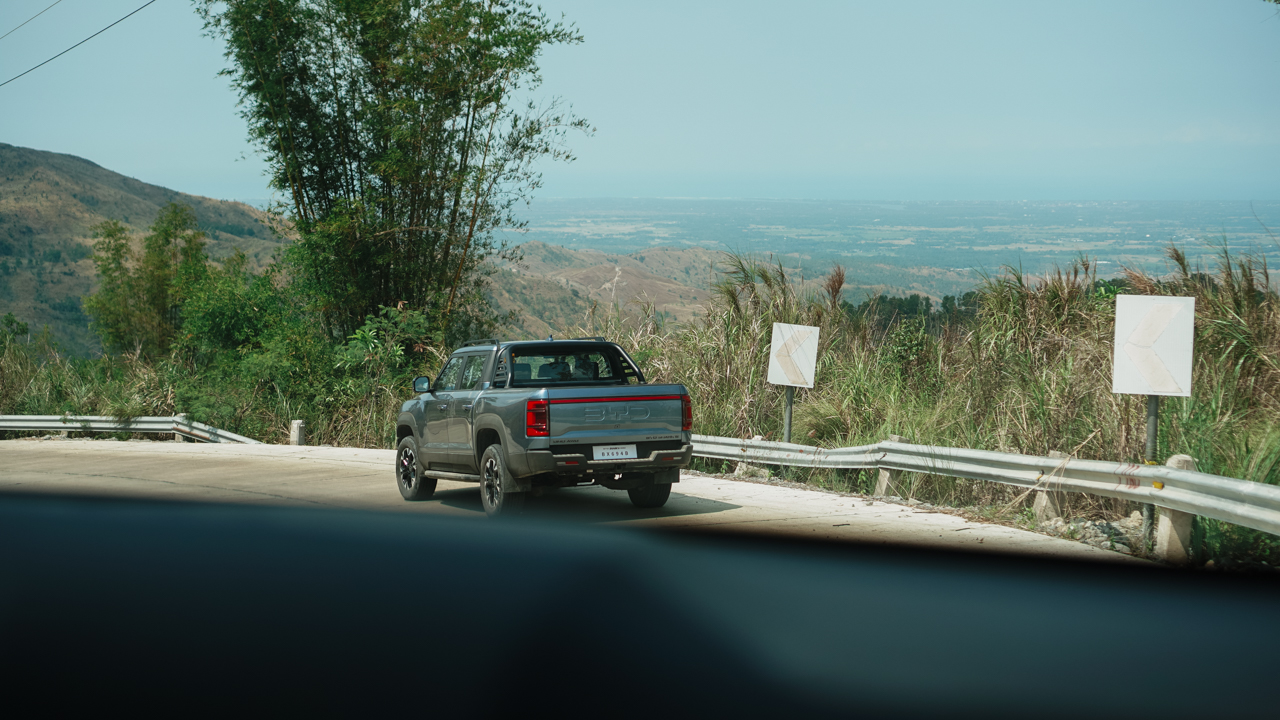
Somewhere between conquering rugged climbs and high-speed chases, I realized the drive wasn’t just about testing the Shark 6 DMO. It was about testing myself.
I’ve always loved pickup trucks for their promise of adventure, but this drive gave me something more: Trust.
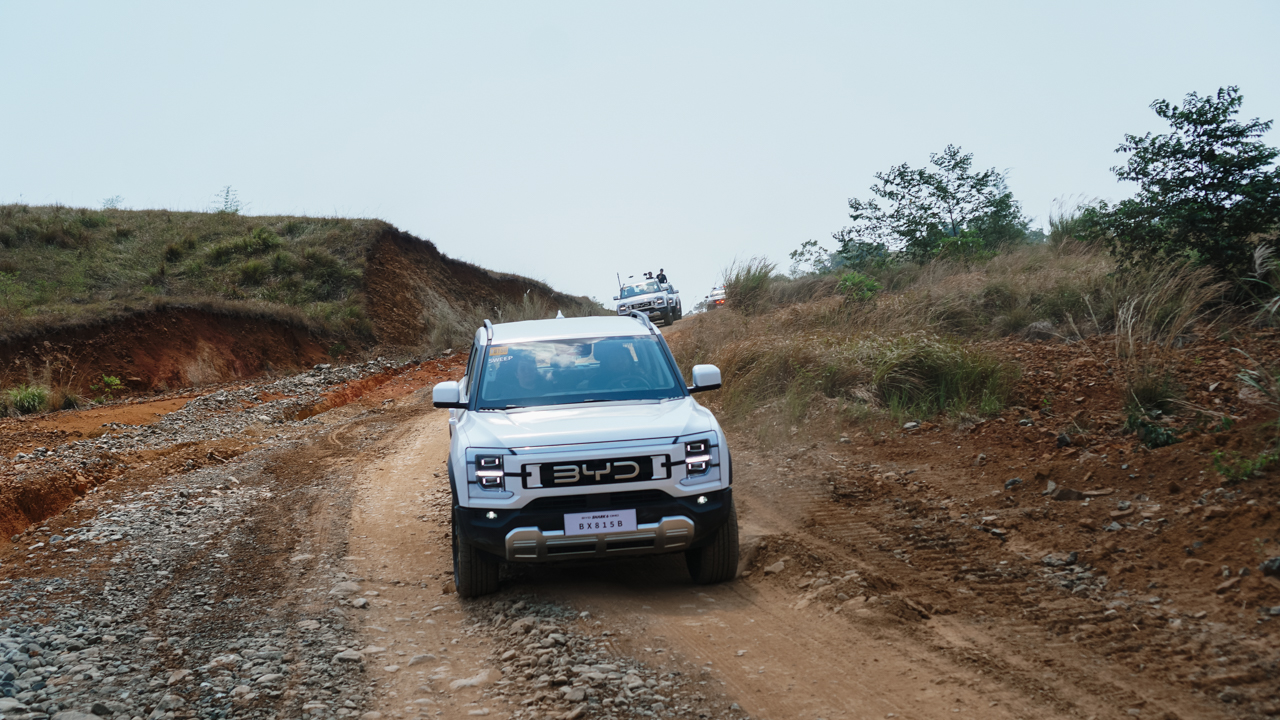
Trust in the machine, in the terrain, and most importantly, in my own ability to take on the unknown.
Because confidence isn’t just about horsepower or torque. It’s about knowing that whatever lies ahead, you and your vehicle are ready to take it on.

The BYD Shark 6 DMO is a machine built to conquer on- and off-road. It’s a showcase of confidence and capability. It proved it could handle anything thrown its way. But more importantly, it showed me that I could, too.




BYD is lighting up the electric vehicle segment. For a while now, the Chinese automotive brand has been offering affordable alternatives to the so-called giants of the market, in turn becoming a giant itself. The company has since entered other segments, including the luxury market, through its sub-brands Denza and Yangwang. Now, it’s reportedly considering an all-new venture: the world of Formula One.
The new Formula One season saw the debuts of Audi and Cadillac to the racing grid, proving that the sport isn’t averse to expanding beyond the usual ten teams. Naturally, entering the sport is not an easy process, but for the right brand, it could be a very lucrative opportunity.
According to a source from Bloomberg, BYD is currently evaluating an entry into Formula 1. Right now, the Chinese company has not made a decision, but it is an idea floating around.
Besides the rigorous entry process, owning an independent racing team can cost BYD hundreds of millions of dollars per year. It’s not a cheap sport.
That said, there are other ways for the brand to enter the grid. One of the more cost-effective options is to become a title sponsor of an existing team by providing funding and technical expertise without the stress of managing a team directly.
Alternatively, the brand can also skip the red tape by buying an existing team. Audi, for example, entered the current grid by buying the team from Sauber. Of the current grid, Alpine is reportedly considering putting the team up for sale, making it a potential target for newcomers.
Outside of F1, BYD might also have an easier time entering other competitions including the FIA World Endurance Championship.
SEE ALSO: This BYD car is now the world’s fastest car in the market
Automotive
Xiaomi Vision Gran Turismo makes global debut at MWC 2026
Tech giant becomes first technology brand in Vision GT program

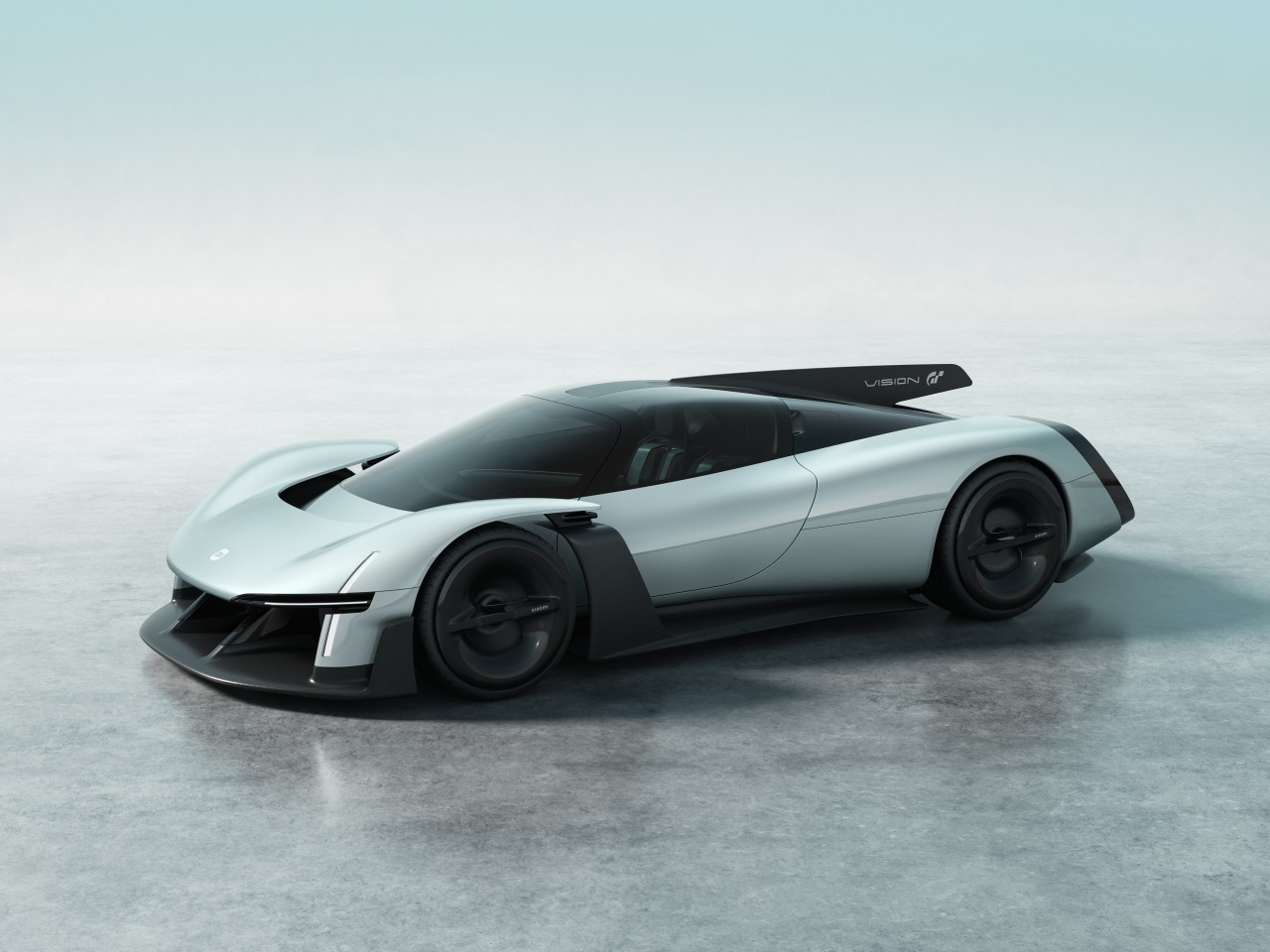
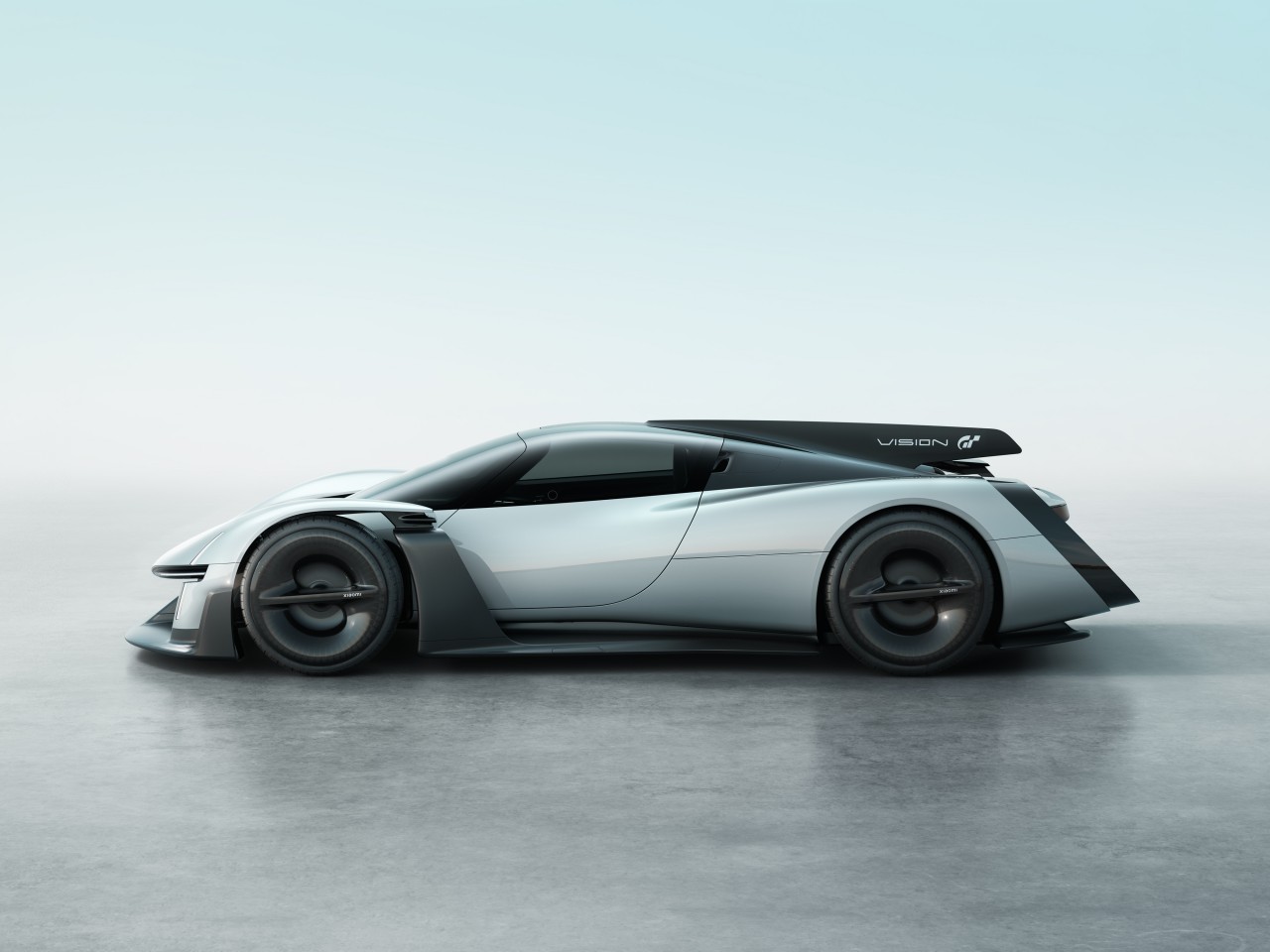
Xiaomi has unveiled the full-scale concept model of the Xiaomi Vision Gran Turismo or Xiaomi Vision GT at MWC 2026 in Barcelona, Spain. This marks the company’s official entry into the elite Vision Gran Turismo project.
Created for the legendary Gran Turismo franchise, the electric hypercar concept represents the first time a technology company has been invited to participate in the Vision GT program. Xiaomi now joins a select group of global automakers, becoming the 36th brand to take part and the creator of the 51st Vision Gran Turismo concept overall.
The project began at the GT World Series in London, where series producer Kazunori Yamauchi personally invited Xiaomi to design its own Vision GT car. For Xiaomi’s global EV design team, the opportunity meant rethinking hypercar development from a technology-first perspective, blending advanced aerodynamics with AI-driven intelligence.
Sculpted by the wind
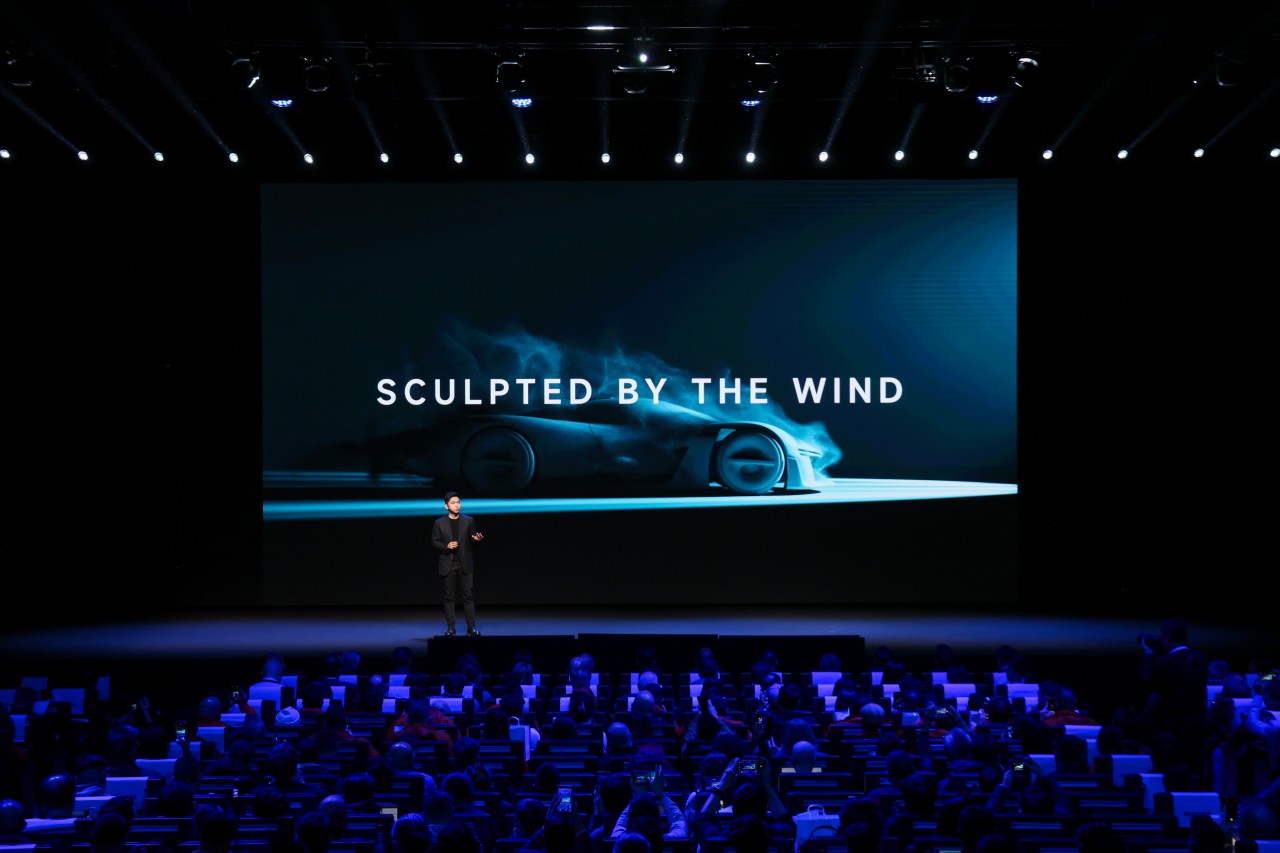
At the core of Xiaomi Vision Gran Turismo is aerodynamic balance. Instead of chasing extreme low drag or maximum downforce alone, Xiaomi pursued efficiency between the two.
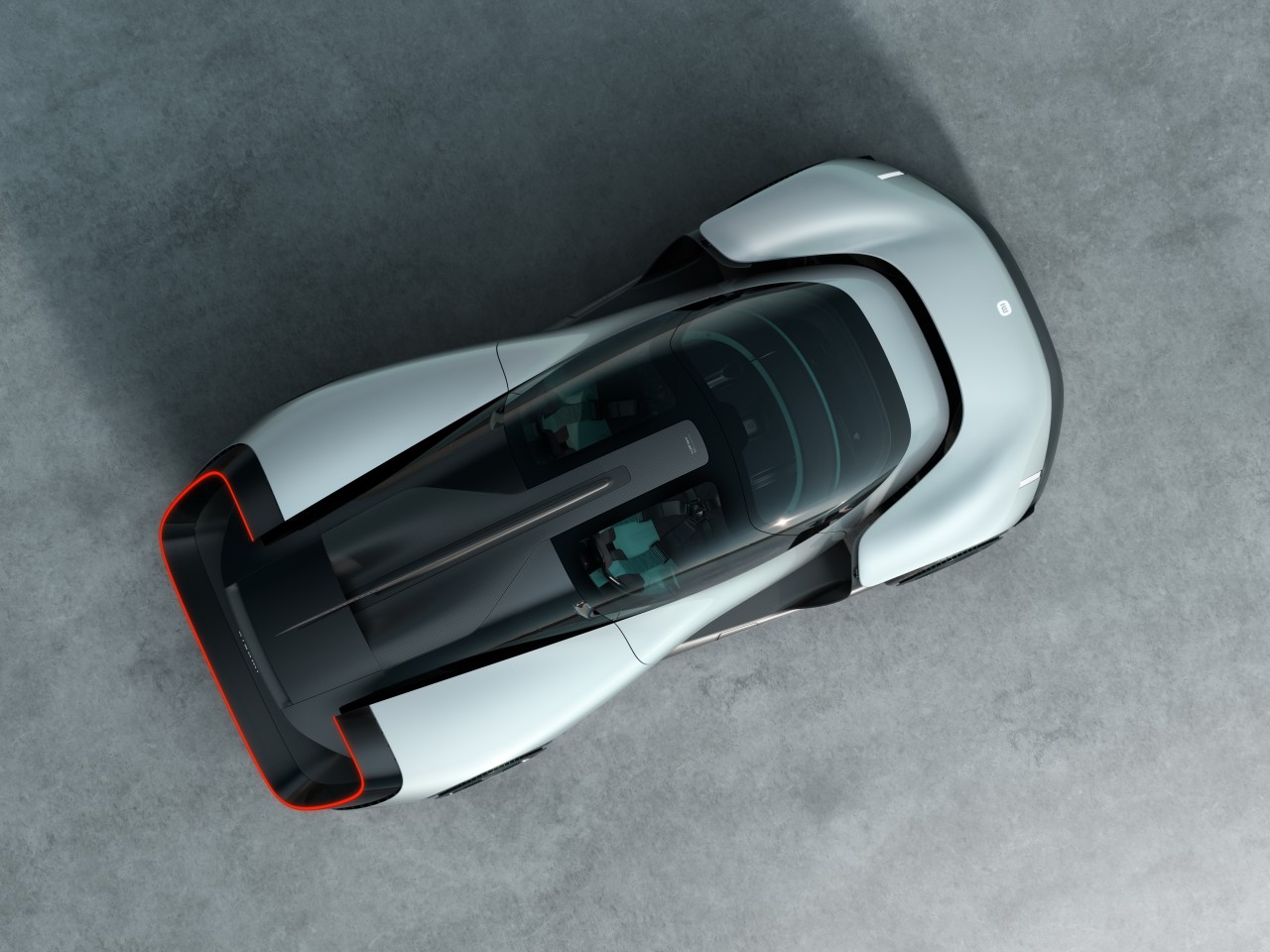
The concept follows a “Sculpted by the Wind” philosophy. Its teardrop cockpit silhouette, integrated air ducts, and airfoil-shaped structural elements guide airflow seamlessly from front to rear. The body avoids excessive add-ons, relying instead on built-in aerodynamic solutions.
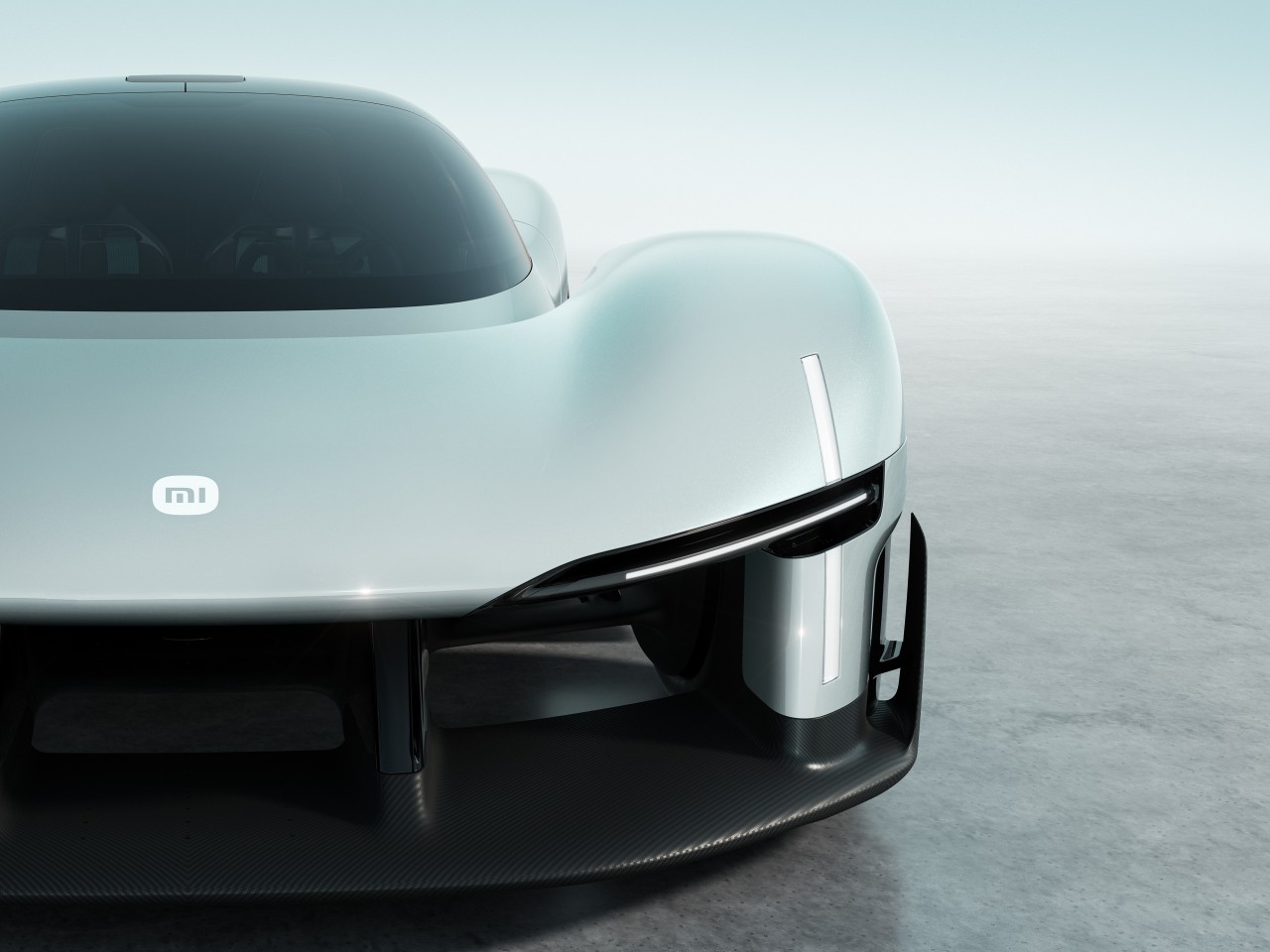
Signature design elements serve dual purposes. Cross-shaped headlights integrate into the airflow system, while the halo-shaped taillight sits within a massive rear air outlet. An Active Wake Control System surrounds the rear with micro-perforations that manage turbulent air using real-time speed and angle data.
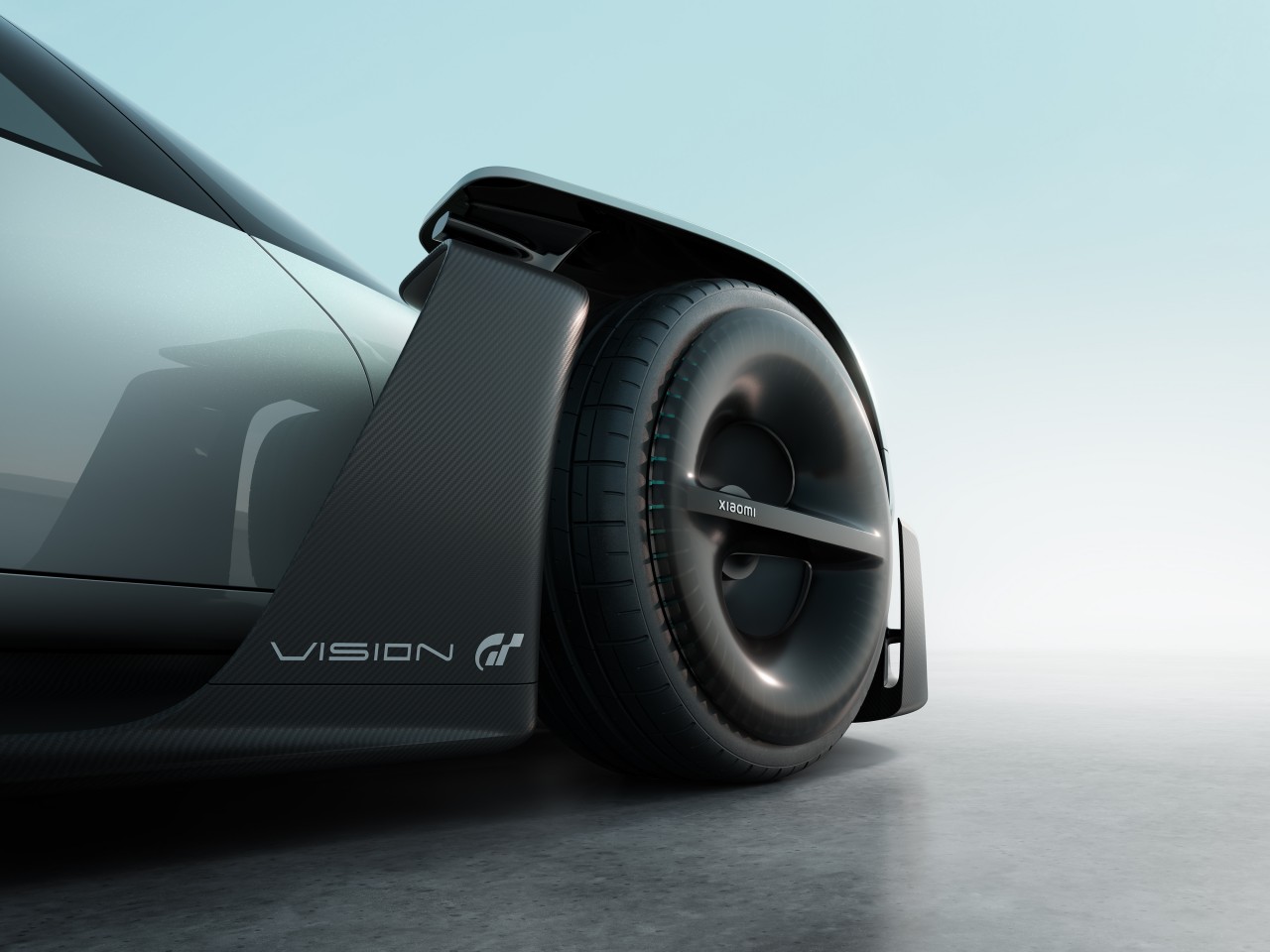
The Accretion Rims feature vortex-style wheel covers that remain visually stationary while the car is in motion, reducing drag from rotating surfaces. Internal turbine fins help cool the brakes during operation.
Through iterative simulation testing, Xiaomi says the concept achieves a drag coefficient of 0.29, downforce of negative 1.2, and an aerodynamic efficiency rating of 4.1 — figures that highlight balance rather than extremes.
A “sofa racer” interior
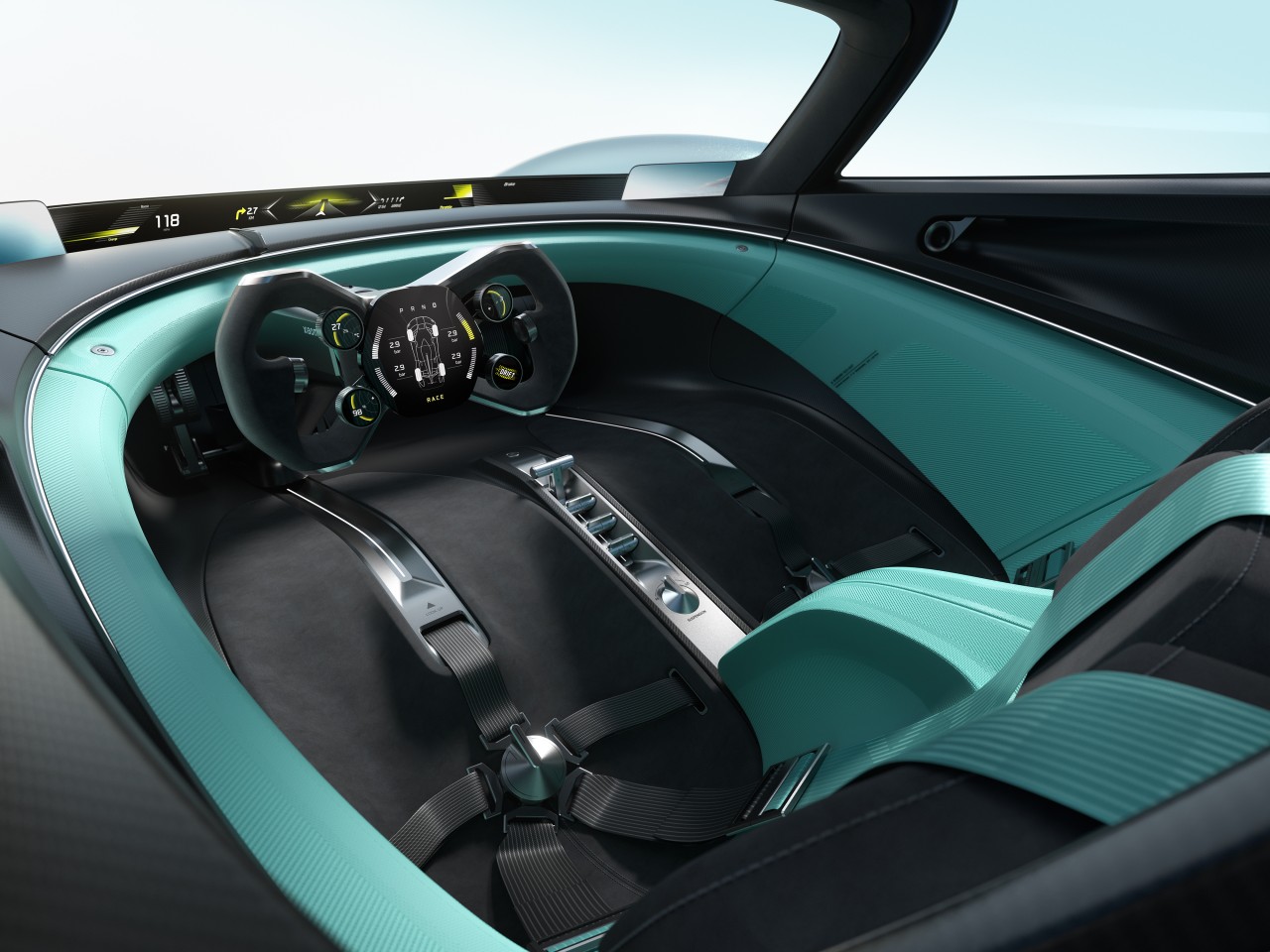
Inside, Xiaomi departs from the rigid, track-focused cabins typical of hypercars. The “Sofa Racer” concept emphasizes comfort without sacrificing control.
A ring-shaped cockpit architecture wraps around the driver, blending dashboard, doors, and seats into one continuous structure. Breathable 3D-knitted fabric materials aim to provide both support and warmth.
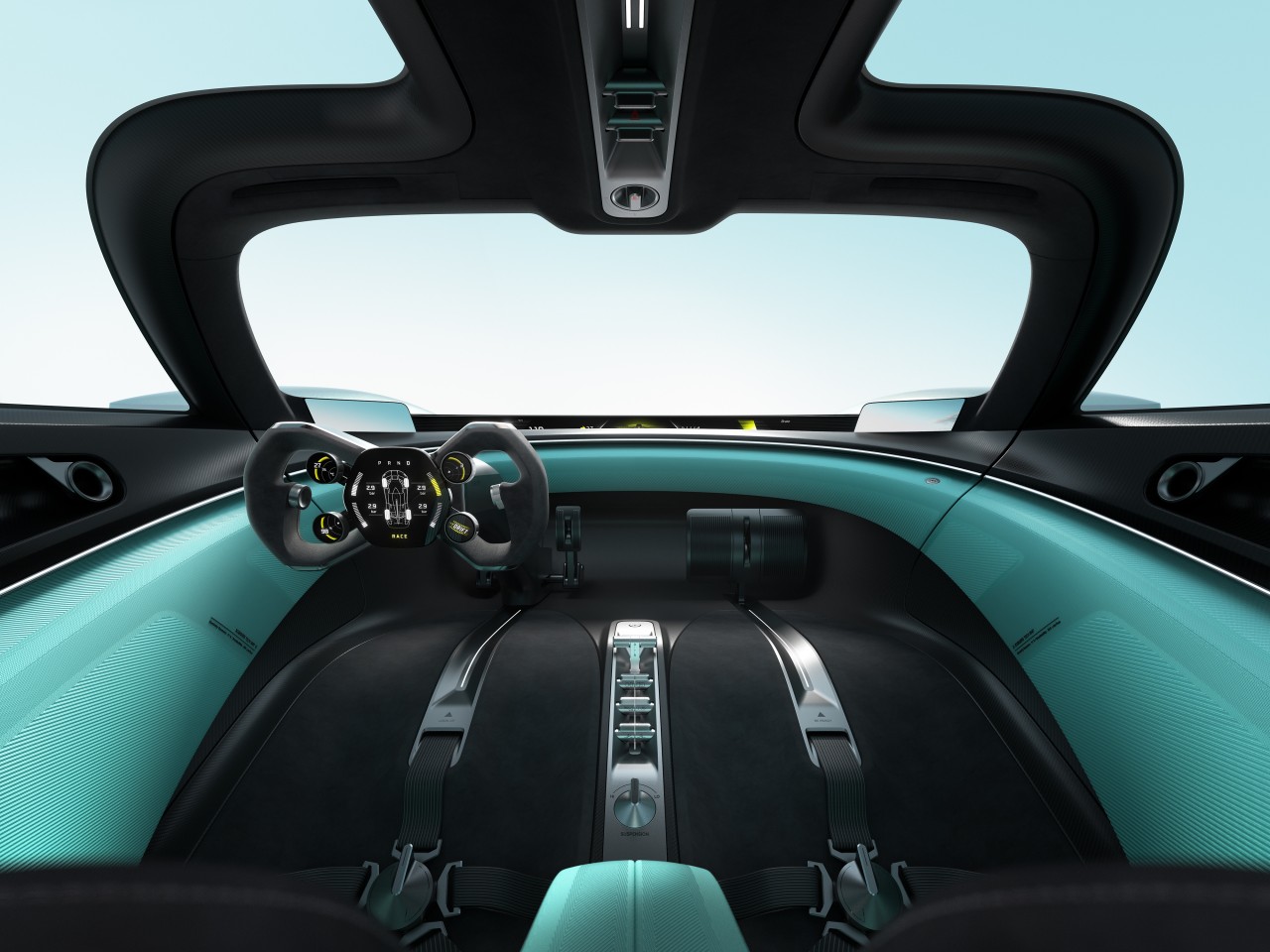
At the center is Xiaomi Pulse, an intelligent assistant integrated into the dashboard. Working alongside Xiaomi HyperVision and the company’s HyperOS platform, the system adapts displays and interactions based on driving mode and environmental data. Physical controls remain tactile and precise, including an infinite-shaped steer-by-wire wheel.
The concept also integrates into Xiaomi’s broader “Human × Car × Home” ecosystem. Powered by XiaoAi AI Assistant and the Xiaomi MiMo foundational model, the car connects with personal devices and smart home products, positioning itself as part of a unified digital lifestyle.
Xiaomi has also envisioned a companion driving simulator designed as furniture for the home, extending the Vision Gran Turismo experience beyond the vehicle itself.
Yamauchi praised the project, noting how the design successfully resolves the tension between low drag and high downforce. Further details about the car’s arrival in Gran Turismo 7 will be announced at a later date.
With its Vision Gran Turismo debut, Xiaomi signals a broader ambition: redefining the electric hypercar through AI integration, ecosystem connectivity, and aerodynamic precision.
Automotive
BYD’s high-end brand Denza launches in the Philippines
The debut starts with the Denza D9, a full-size MPV.

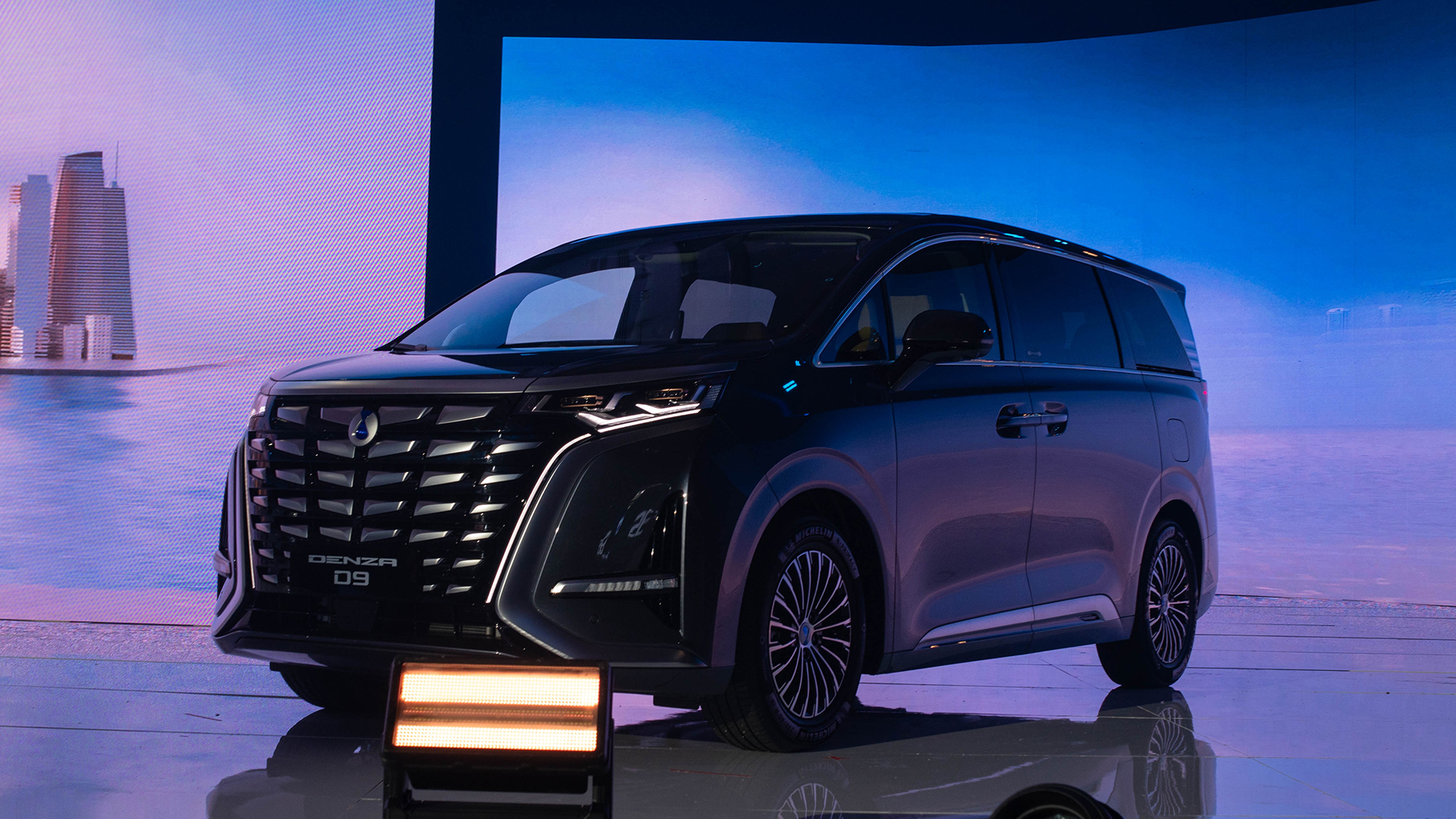
The BYD family in the Philippines just got bigger. After testing the waters and succeeding gracefully with the main brand, the Chinese automotive company is bringing in a new brand to the country: Denza.
Denza started off as a brand co-owned by both BYD and Mercedes-Benz (then known as Daimler). BYD’s meteoric success eventually led to Denza’s concurrent rise as well. Eventually, Mercedes-Benz relinquished all but 10 percent of the brand’s total shares to BYD in 2021. Then, in 2024, the German company withdrew entirely, leading to Denza being completely owned by BYD today.
The brand is known for delivering high-end PHEVs to several markets, which now includes the Philippines. The stint will start off with its ever-popular full-size MPV, the Denza D9.
Introducing the Denza D9
Prior to today’s launch, I already saw the Denza D9 plowing through the streets. The sizable MPV already made quite an impression, to say the least.
Up close, the Denza D9 has a bold front fascia, exuding modern elegance and sleek body lines.
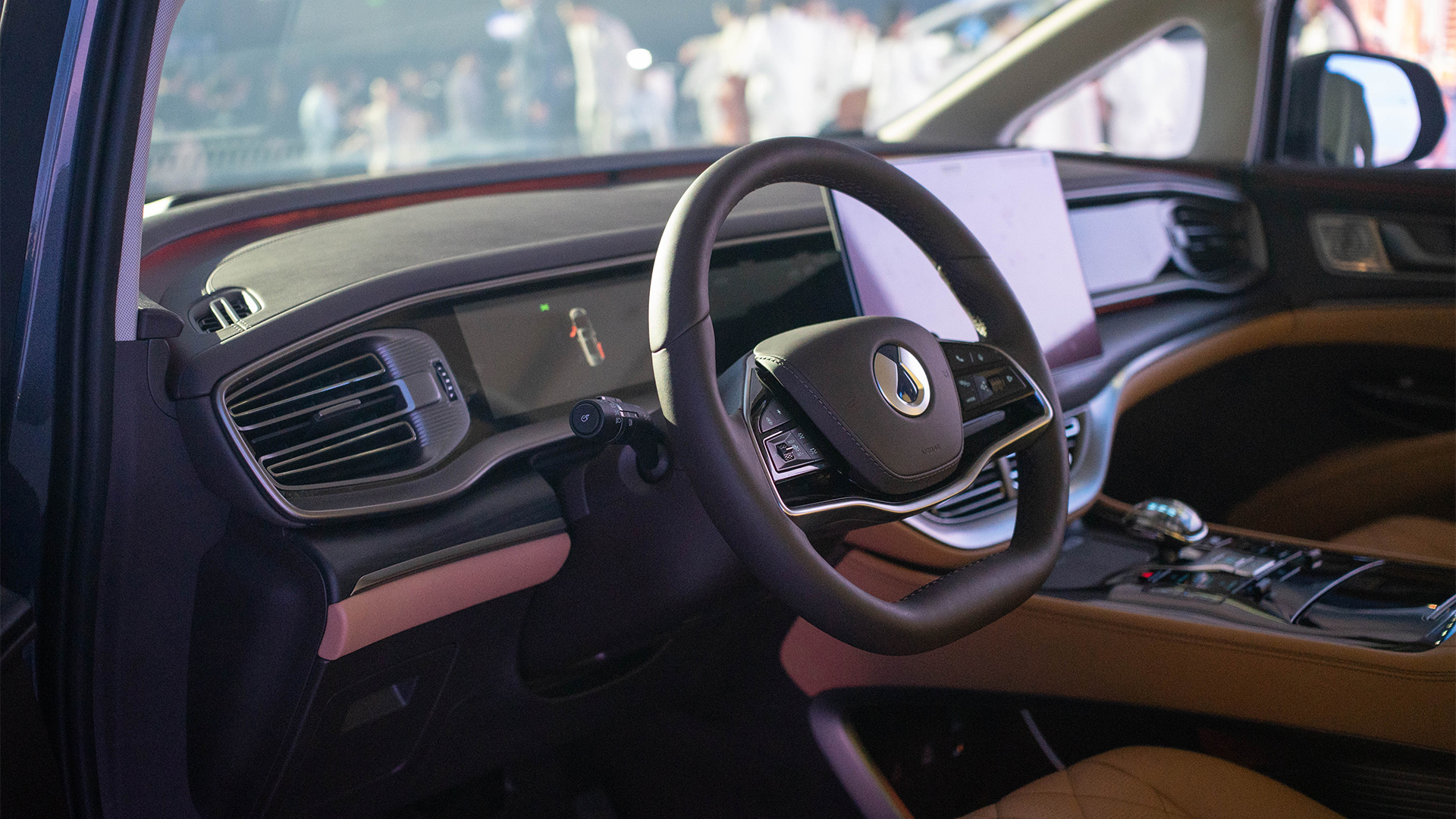
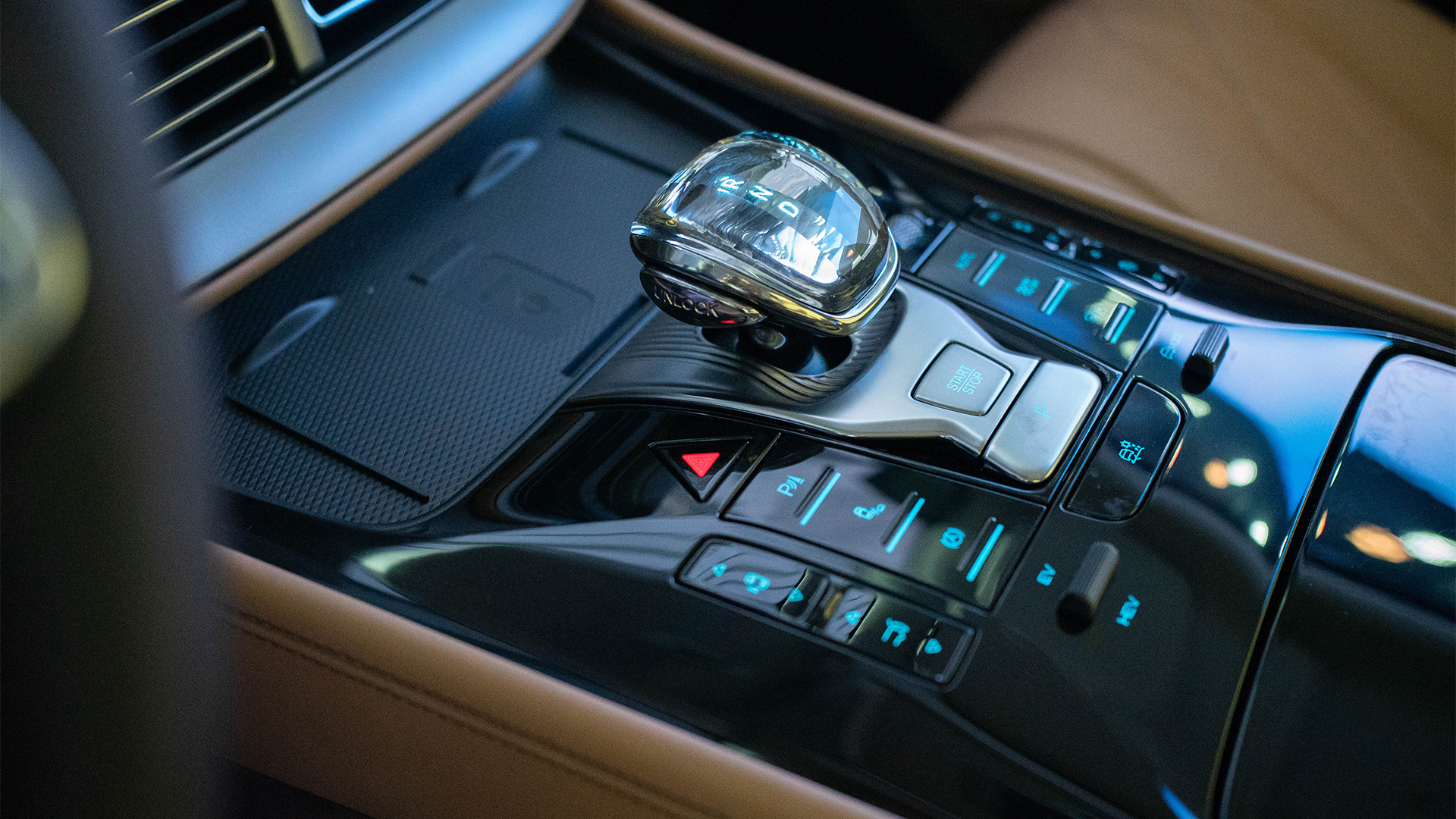
Inside, the car prioritizes comfort for all passengers with luxurious captain seats. Those seats feature a ten-way electric adjustment six-way adjustable headrests, and leg rests. They also come with seat ventilation to get through an intensely sunny day. Finally, each seat comes its own LED panel for maximum control.
The DiSus system keeps the car balanced throughout any situation. The drive will remain comfortable even during high-speed cornering, full-throttle acceleration, and sudden braking. It will also come with nine airbags to keep all passengers protected.
Price, availability
The Denza D9 is available now in Cosmos Black, Arctic White, Whale Sea Blue, and Starry Sky Grey. It will cost PhP 4,298,000.
Additionally, the MPV will have an exclusive premiere price of PhP 3,998,000 for the first 300 customers.



Disney+ launches a TikTok-coded vertical feed called Verts

Google Maps is finally getting a 3D mode

KPop Demon Hunters is officially getting a sequel

Bringing Care-a-Lot to my daily carry

Galaxy AI on the Samsung Galaxy S26 Ultra


-

 News2 weeks ago
Xiaomi 17 Ultra is now available outside China
-
 MWC 20261 week ago
Infinix NOTE 60 Ultra makes a motorsport-inspired debut
-

 Reviews2 weeks ago
TECNO CAMON 50 Ultra review: End of an era?
-
 MWC 20262 weeks ago
TECNO launches the all-new CAMON 50 series
-
 MWC 20262 weeks ago
TECNO showcases cool concepts at MWC 2026
-

 Reviews2 weeks ago
Xiaomi Pad 8 review: Slab that slaps!
-

 Reviews2 weeks ago
Forget the Phone: Xiaomi 17 Ultra Is A CAMERA!
-
 MWC 20262 weeks ago
TECNO unleashes Tonino Lamborghini collection