
Gaming
Civilization VII preview: Immersion takes center stage
Improving on a classic formula

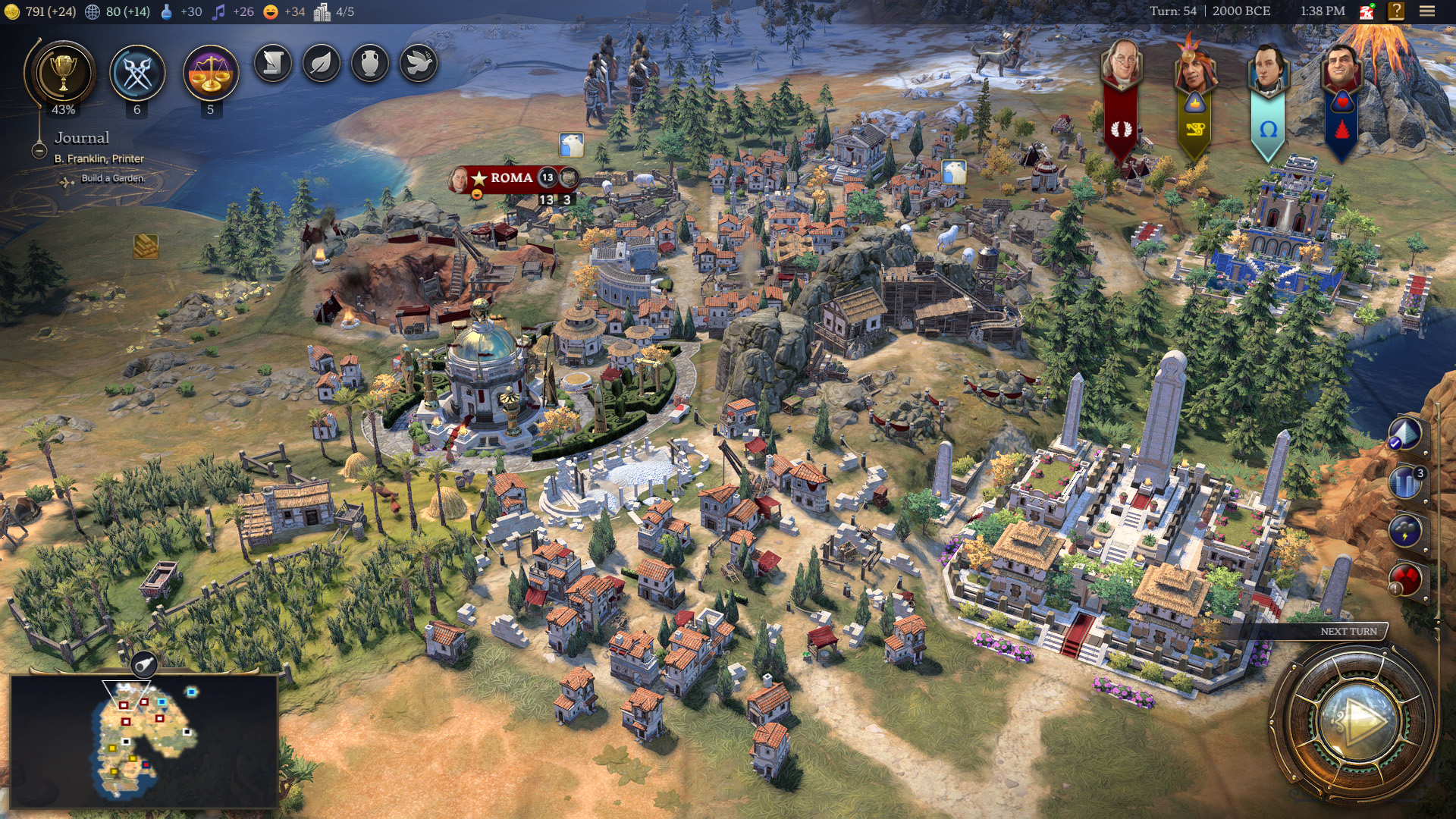
When I was seven years old, I got my very first video game: Civilization III. Because I was so young, I didn’t understand how to play most effectively. Still, my lack of game sense didn’t stop me from immersing myself in an alternate history where I could pit Greek hoplites against Aztec jaguar warriors. Immersion was key.
It wasn’t until Civilization VI that I fully understood the inner workings of a Civ game. The world turned into a set of manipulable numbers to secure victory. Immersion melted away. I was, however, still hooked. Even if I couldn’t imagine myself as the leader of a nation anymore, Civilization VI remains my most played game according to Steam.
Now, Civilization VII is reinventing the wheel once again. In recreating the iconic game’s systems, Firaxis has crafted something that expertly maneuvers between immersing the player in alternate history and allowing them to master the game’s mechanics.
Three games in one
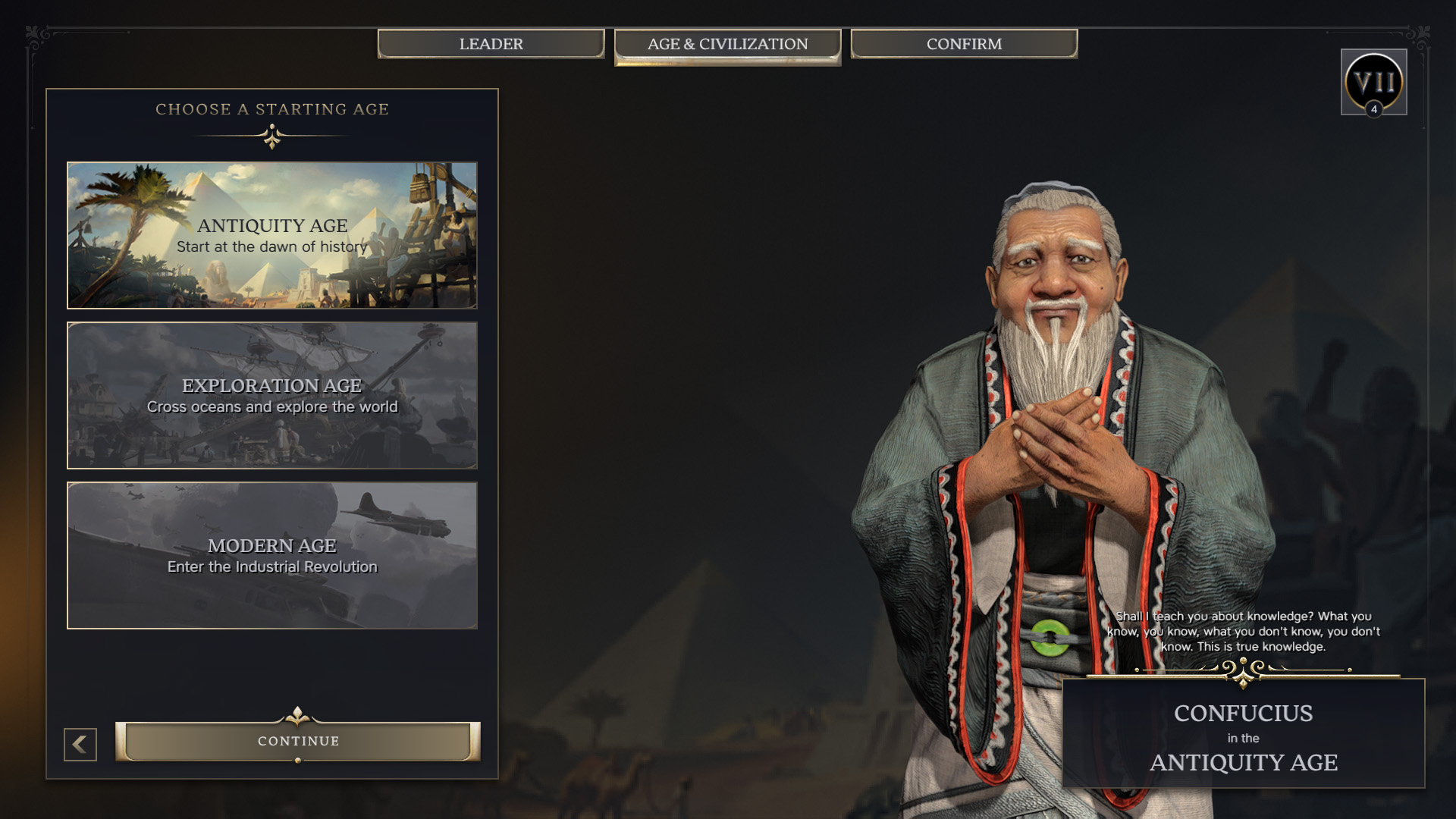
In the trailers and previews leading up to today, Civilization VII looked less like itself and more like a copy of other 4X games (which were, in turn, copying from Sid Meier’s series). Instead of the seamless transitions between eras that were characteristic of the series in the past, the new title pares everything down into three Ages. Plus, at the end of each Age, Civs can reinvent themselves into one more apt to the incoming Age. Humankind, anyone?
However, after playing the game for a day, I can safely say that calling Civilization VII a Humankind copy is terribly unfair. Each Age stands up for itself but still lets one build up from another. It’s a feat that Humankind was never able to do.
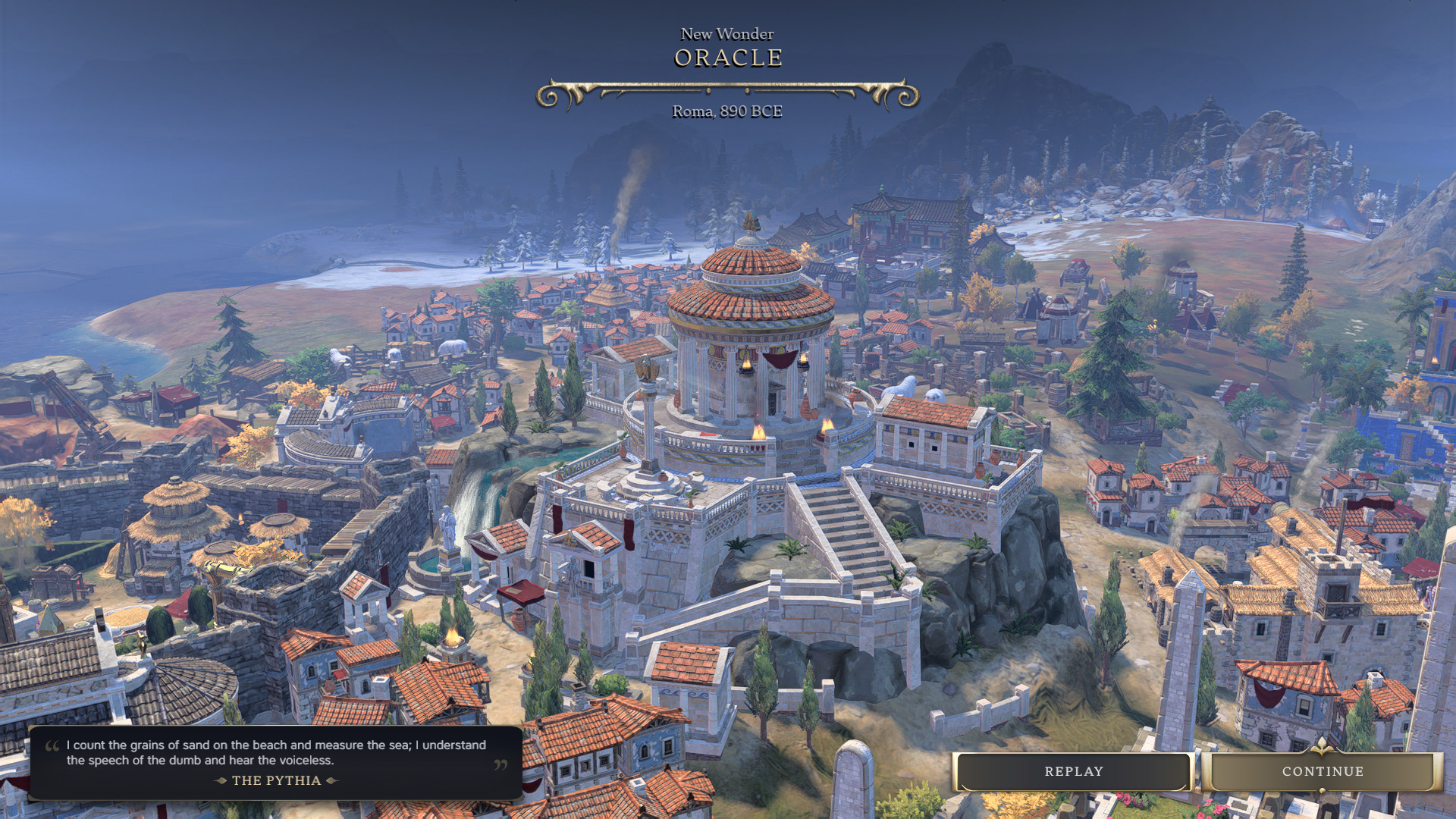
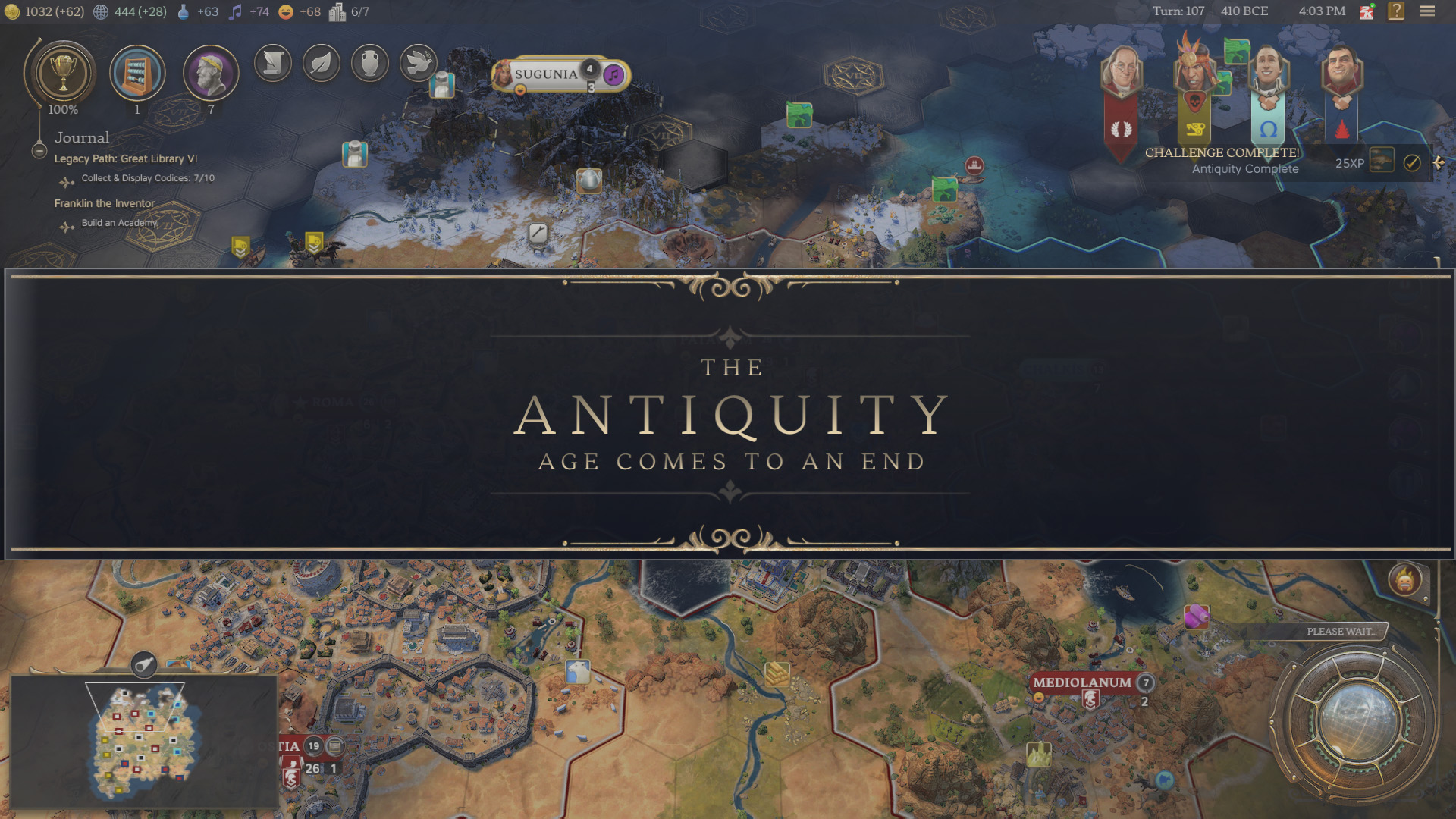
Plus, in making each Age stand out, it rekindles the epic transitions that were in Civilization III. Back then, the end of each era came with a transition screen that transformed old cities into new. Civilization VI did away with this entirely. The seventh game, on the other hand, has its own setup screen, making it an extremely big deal that the times are changing.
All their own Ages
I’ve only played through the Age of Antiquity and the Age of Exploration. However, just from those two, I can see how different each Age is.
In the Age of Antiquity, the game is about expanding throughout your entire starting continent. It’s a game that seasoned Civilization players will find familiarity with.
However, things change drastically in the Age of Exploration. In most of my games in the previous title, I almost never dabble in colonialism and exploration. I was perfectly content with turtling in my home continent. In most cases, I still won my game. In this game, however, the system forces you to engage in exploration. It is, after all, how you “win” that Age.
As such, the Age of Exploration feels like an entirely different game. However, it’s still based on the previous Age. Though it seems like a fresh start, it doesn’t make me feel that everything I did in the Age of Antiquity was for naught.
Making them feel different
Beside the systems themselves, one of the biggest reasons why each Age has its own identity is a better focus on visual and audio design. In Civilization VI, changes between the different eras were there but not pronounced. You might not have even noticed them.
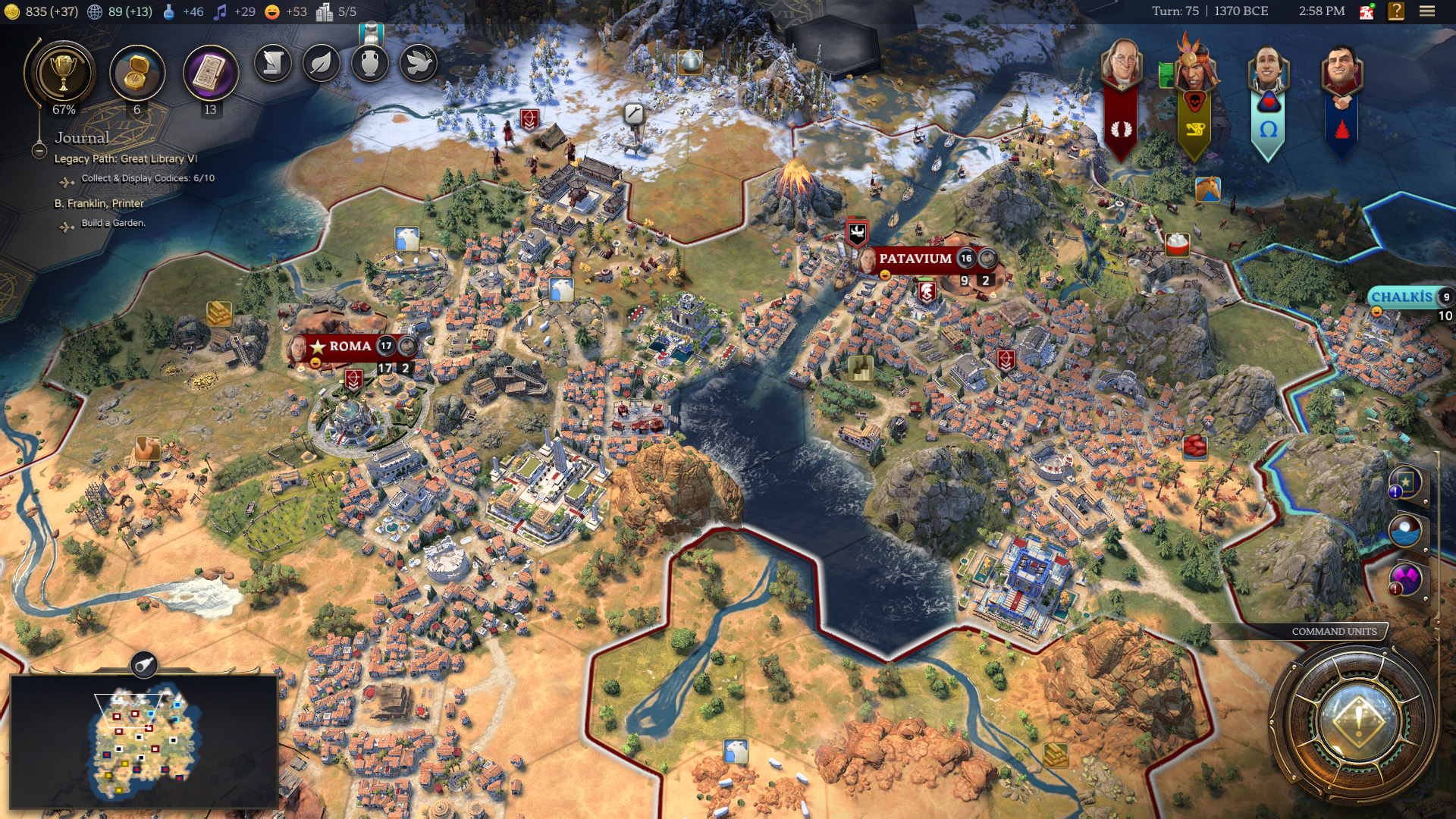
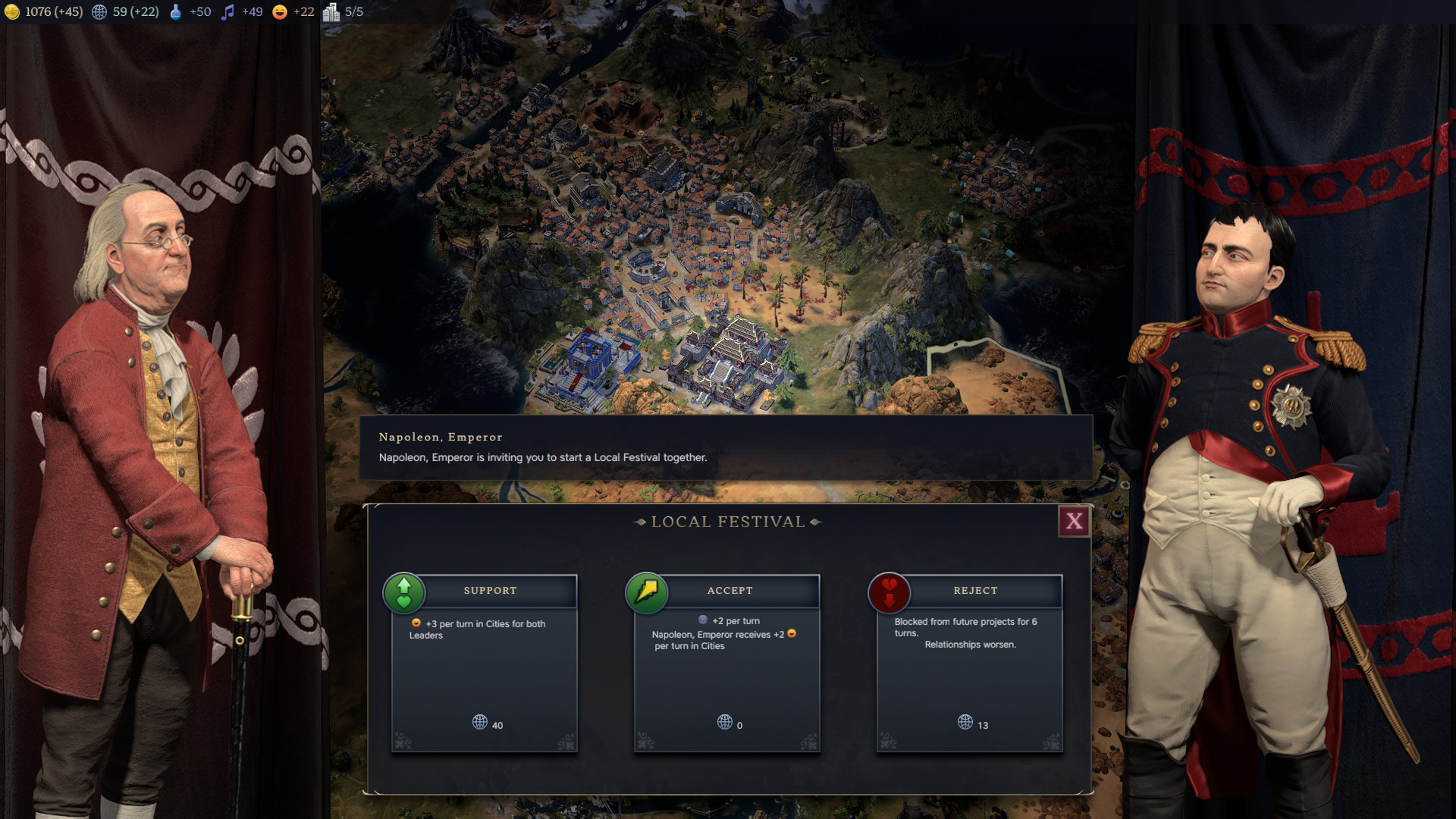
In Civilization VII, it’s more apparent. Your Civ’s buildings change in a much more blatant way to follow the time period. Additionally, buildings can change depending on the tile they’re settled on. For example, tundra-settled cities are more obviously covered in snow.
Another huge win is a much more identifiable soundtrack. Never mind the epic pieces composed by Christopher Tin, the franchise’s soundtrack since the fourth game has always felt like an afterthought. Sometimes I still listen to the third game’s soundtrack on loop. I don’t do that with the fourth through the sixth’s soundtracks. I think this changes with the seventh game. The new game’s soundtrack sounds more alive, more willing to immerse you in your chosen Civ’s culture.
Randomness in immersion
Another way that immersion slowly left the series is through an air of predictability. Everything could have been boiled down to numbers and charts. The sixth game was all about optimizing yields to outclass the opponent. Don’t get me wrong; having a more gameplay-focused system worked well for the series. But if you’re looking for a mix between an RPG and a strategy game, you’re better off somewhere else.
Civilization VII changes this by adding narrative events peppered throughout the experience. There’s a new and refreshing air of randomness. Though the rewards for participating in an event are quantifiable, the flavor text makes it worthwhile. You’re actually writing your Civ’s story while helping them get a leg up on their goals.
And these events are also steeped in the leader you chose. It’s not just a single set of random occurrences. An event can sometimes reflect your leader’s characteristics.
Bringing back the charm of the series
Civilization III remains one of my favorite games because of the nostalgia it brings from the countless hours I played it as a kid. Over time, the game matured, albeit still keeping its addictive nature. Today, Civilization VII feels like returning to an old toy where I can get lost for hours and hours roleplaying as an iconic figure or civilization from history.






Resident Evil Requiem is now available worldwide, marking the ninth mainline entry in Capcom’s long-running survival horror franchise.
The game launches today on PlayStation 5, Nintendo Switch 2, Xbox Series X|S, Steam, Epic Games Store, and GeForce NOW. Set 30 years after the Raccoon City Incident, the story returns players to the ruins of a city that defined the series’ legacy.
This time, players follow two protagonists: newcomer Grace Ashcroft, an FBI intelligence analyst investigating a string of mysterious deaths tied to her mother’s murder, and returning fan favorite Leon S. Kennedy. As their paths converge at the center of a new outbreak, both must confront the lingering trauma of Raccoon City and uncover the truth behind the incident that changed the world.
First-person or third-person
For the first time in the series, players can freely switch between first-person and third-person perspectives, blending immersive horror with more dynamic action. Multiple difficulty settings are available, including a Casual mode with aim assist and a Standard (Classic) mode that reintroduces the Ink Ribbon save system while playing as Grace.
Editions available
Resident Evil Requiem is available in Standard and Deluxe editions. The Deluxe edition includes five costumes, four weapon skins, two screen filters, two charms, and additional bonus content. A Premium Steelbook Edition bundles the Deluxe content with a limited-edition lenticular card, available while supplies last.
Capcom is also celebrating the launch with a slate of collaborations and collectibles. These include a themed Nintendo Switch 2 Pro Controller, the franchise’s first-ever amiibo figures of Grace and Leon arriving July 30, 2026, limited-edition watches designed with Hamilton, a one-of-a-kind Porsche Cayenne Turbo GT created as Leon’s in-game vehicle, and 1/6 scale collectible figures launching this fall.
Resident Evil Symphony of Legacy
To mark the series’ 30th anniversary, the Resident Evil Symphony of Legacy orchestral concert series will tour Japan, North America, and Europe later this year. Meanwhile, Resident Evil 7 biohazard Gold Edition and Resident Evil Village Gold Edition also arrive on Nintendo Switch 2 today, alongside a Generation Pack bundle exclusive to the platform.
With a return to Raccoon City and a new chapter in survival horror underway, Resident Evil Requiem ushers in what Capcom calls a new era for the iconic franchise.

Bandai Namco Entertainment has announced that Tales of Berseria Remastered is out now. It’s available on Nintendo Switch, PlayStation 5, Xbox Series X|S, and PC via Steam.
The remaster brings back the 2016 action RPG with visual and quality-of-life upgrades tailored for current-generation platforms. A new launch trailer accompanies the release. It offers a fresh look at Velvet’s journey, her party members, and her fateful clash with Altorius.
In celebration of the launch, fans in Southeast Asia can join an exclusive giveaway for a chance to win signed memorabilia from their favorite cast member. Details are available via Bandai Namco Entertainment Asia’s official Facebook and Instagram pages. A special video featuring the voice cast has also been released as part of the festivities.
A revenge story returns
Originally released in 2016, Tales of Berseria stood out as the first entry in the long-running franchise to feature a solo female protagonist. Players step into the role of Velvet. Her once gentle nature gives way to a burning desire for revenge after the death of her younger brother.
The remastered edition preserves the emotional weight of that story while refining the experience for modern hardware. Players can now toggle enemy encounters in fields and dungeons and view clearer destination icons for smoother navigation. The familiar Grade Shop is also unlocked from the start, allowing for a more flexible playthrough.
More than 70 pieces of DLC from the original release are included, ranging from character outfits inspired by previous Tales titles to helpful equipment for early adventures.
Game editions and bonuses
Tales of Berseria Remastered is available in both physical and digital formats. The Digital Deluxe Edition includes the base game, a Battle BGM pack, a digital artbook and soundtrack, and a Super Growth Support Herb Set.
Early purchasers and pre-order customers receive the Super Adventuring Assistance Set, which includes Apple Gel x10, Grape Gel x10, Life Bottle x10, and Panacea Bottle x10.
Physical copies also feature a reversible inlay with two different cover designs.
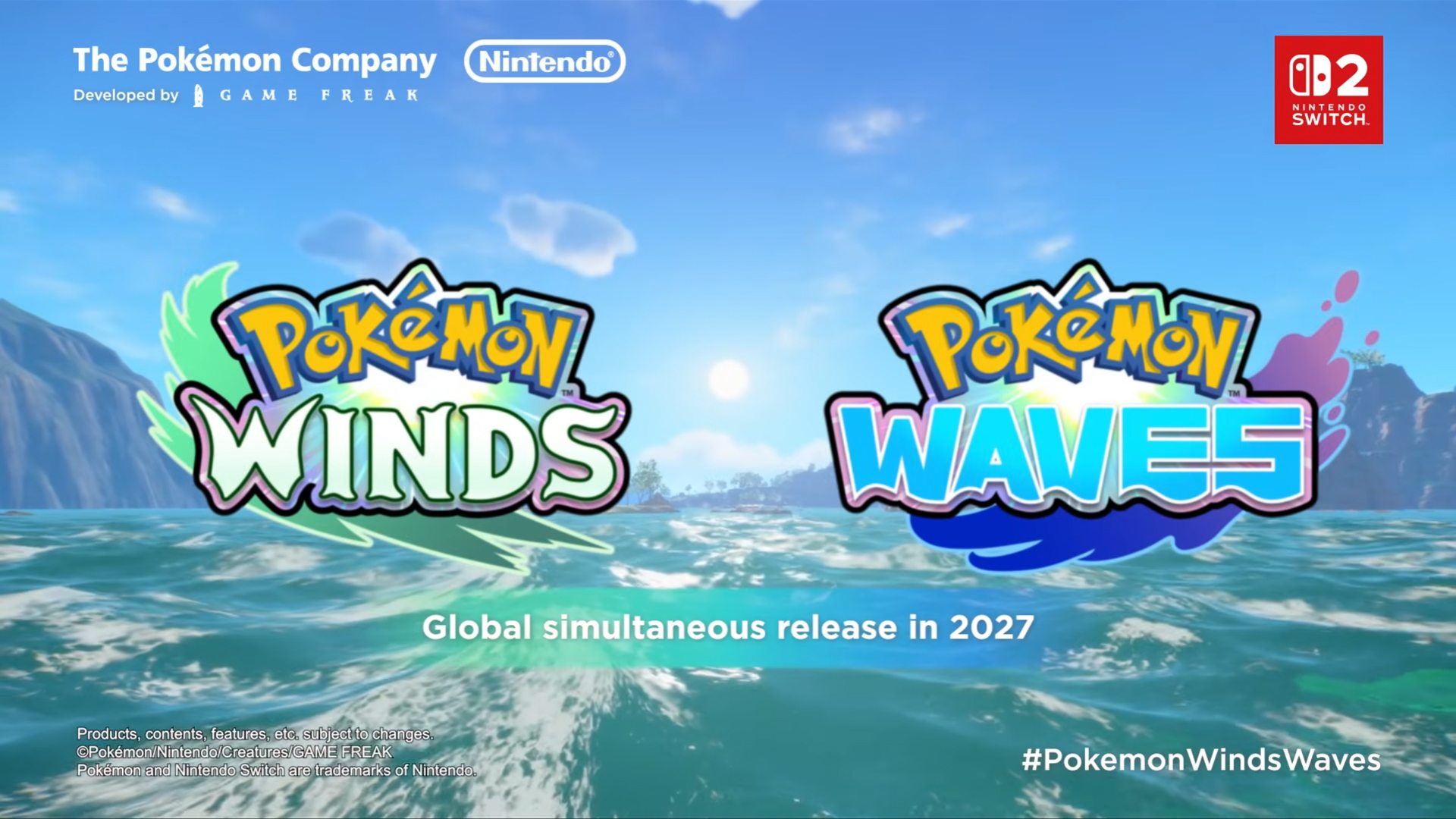
The tenth generation of Pokémon is here! Kicking off the franchise’s celebration for thirty successful years, The Pokémon Company announced the next mainline games: Pokémon Winds and Pokémon Waves.
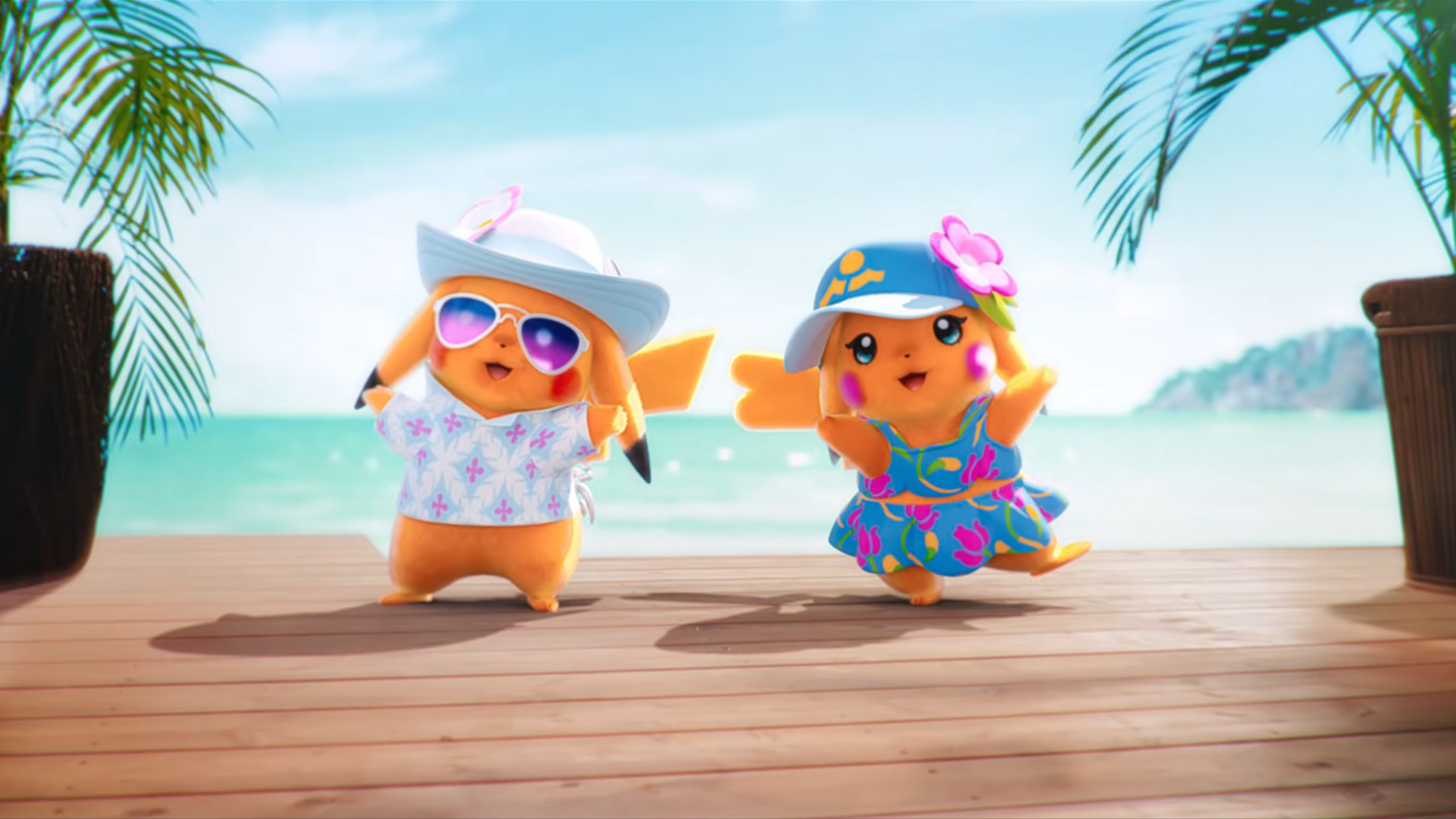
The announcement trailer started with a nostalgic reminiscing of a Pikachu across all the different generations over the years. A sudden knock on the door breaks the protagonist’s reminiscing. At the door are two Pikachu dressed in vacation clothes, standing outside a beach house on stilts.

Pokémon Winds and Pokémon Waves isn’t just another trip to another roaring urban-to-rural region. Rather, the generation’s yet-unnamed region wants you to take a vacation in a place inspired by Southeast Asia.
Because of its tropical locale, a lot of the Pokémon featured are more nature- and animal-based. You won’t see a lot of the newer creatures inspired by objects here.
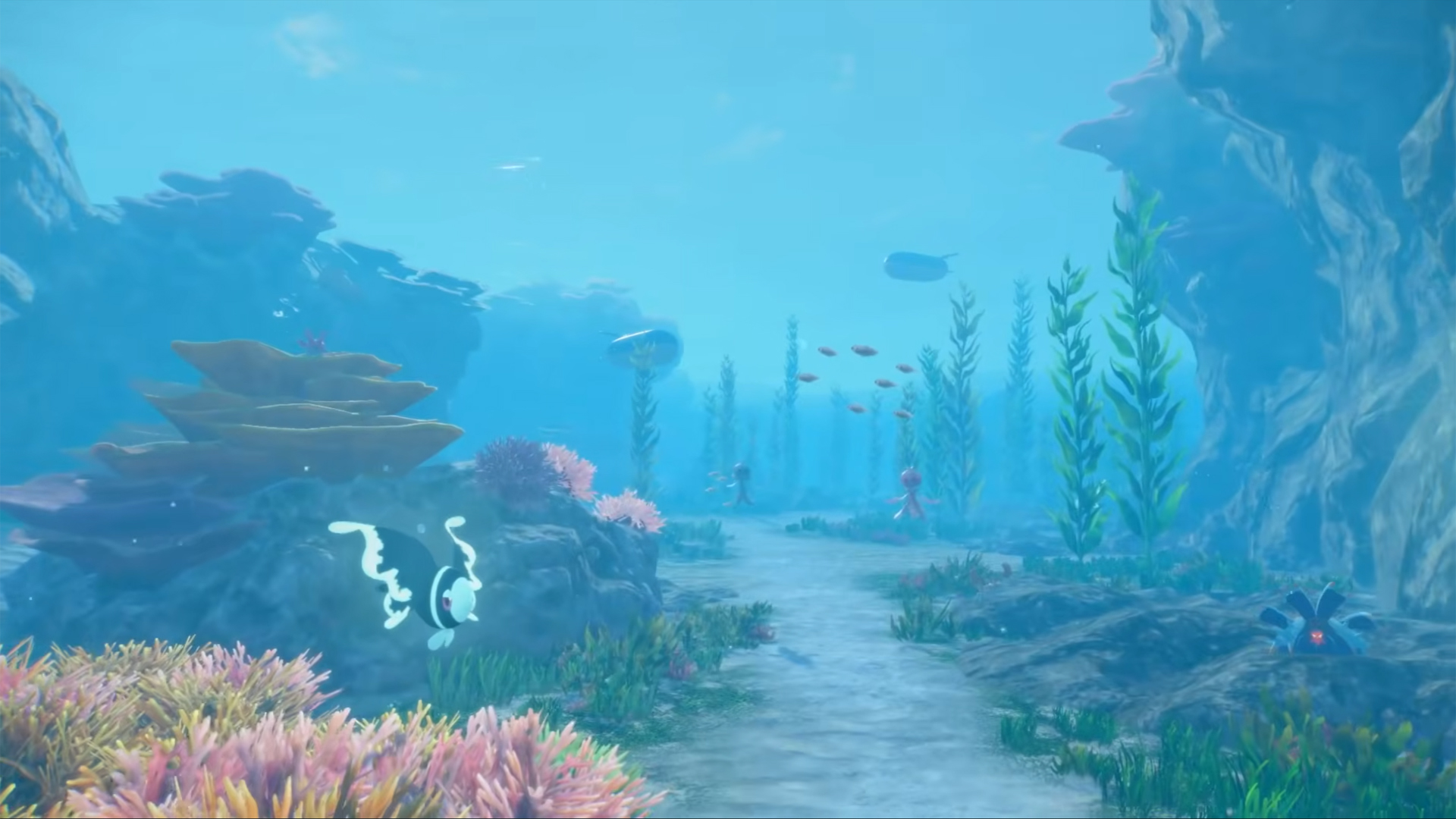
The region will also have a variety of biomes including a forest, a beach, and even an underground volcanic section. And, making a comeback for the first time in years, there will seemingly be an underwater biome filled with aquatic Pokémon.
Highlighting the new generation are three new starter Pokémon: Browt, the Grass-type bird Pokémon; Pombon, the Fire-type dog Pokémon; and Gecqua, the Water-type gecko Pokémon.

Pokémon Winds and Pokémon Waves will launch for the Nintendo Switch 2 in 2027.







vivo opens pre-orders for V70 in PH; discounts, more await

HONOR unveils Robot Phone concept at MWC 2026

HONOR partners with ARRI to bring cinematic image science to smartphones

HONOR pushes embodied AI vision at MWC 2026

HONOR MagicPad4 unveiled with 3nm Snapdragon 8 Gen 5


-

 News1 day ago
Xiaomi 17 Ultra is now available outside China
-

 Camera Walkthrough1 week ago
OPPO Reno15 Pro: Camera Review
-
 First Look2 weeks ago
Match Pulse: Infinix NOTE 60 Pro
-

 Cameras2 weeks ago
Osmo Pocket 4 makes a surprising appearance in public
-

 Gaming2 weeks ago
LG unveils UltraGear evo, redefines 5K gaming with AI Upscaling
-

 News2 weeks ago
iPhone 17 Pro Max is somehow the most traded-in phone today
-

 News1 week ago
HUAWEI launches Mate X7, MatePad 11.5 S 2026, FreeClip 2
-

 Gaming2 weeks ago
PlayStation 6 reportedly delayed to 2029 because of RAM shortage